沉靜何以不是空,與垂掛之物何以最像思念
——廖純沂〈思域・沉靜〉
撰文:王穆提(WANG MUTI)
人對「沉靜」的誤解,與人對「空白」的誤解幾乎一樣深。世人每每見少,便以為是缺;見淡,便以為是退;見靜,便以為無事發生。其實恰恰相反:凡真正深的沉靜,往往不是因為什麼都沒有,而是因為太多東西已經不必再喧嘩。它像一種經過淘洗的濃度,一種不再向外索取注意力、卻反而更能長久留人的內在重量。廖純沂這件〈思域・沉靜〉,於我眼中,正是這樣的作品。它沒有逼人驚歎,沒有急著以飽滿構圖佔滿視線,卻在一種低聲而持續的方式裡,使人慢慢走進去,直到發覺自己原來不是在看一幅葡萄圖,而是在看——一個靜靜承受時間的場所,如何讓思想像果實一樣垂掛下來。
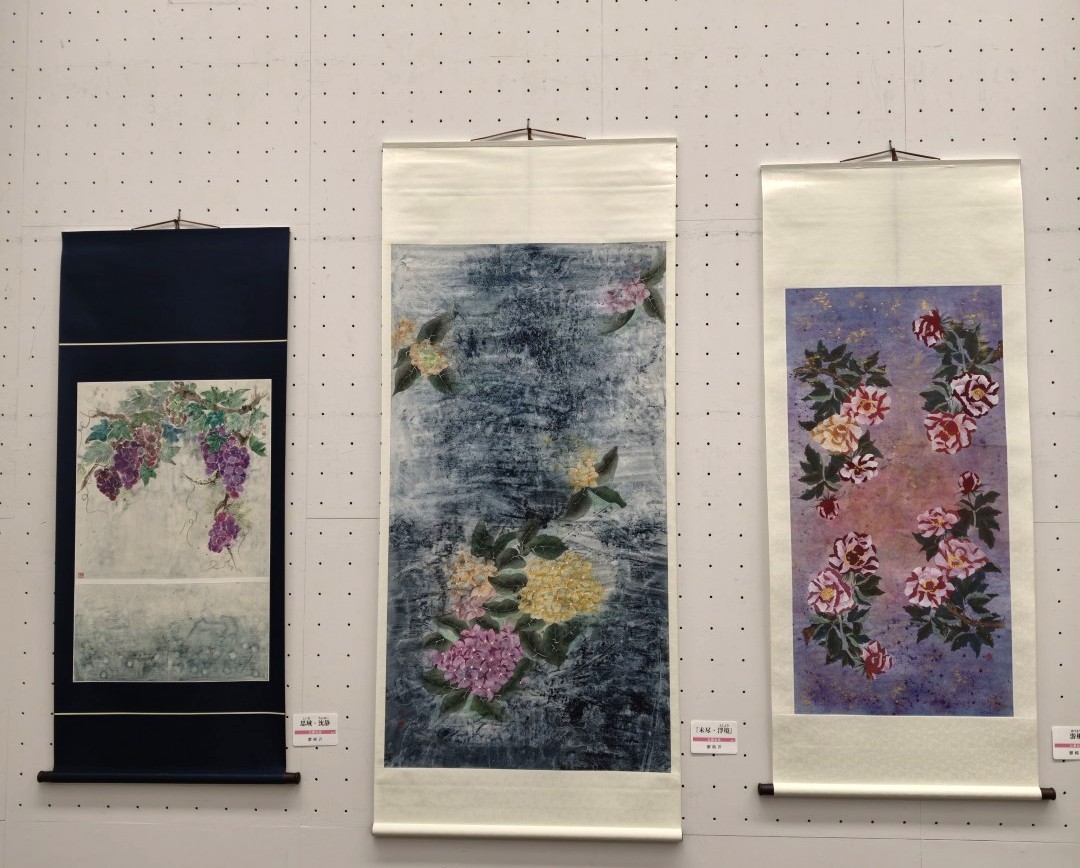
畫面上方,幾串葡萄依附於藤蔓與葉片之間,紫中帶赭,紫中帶紅,亦有未熟之處泛青;果粒飽滿而不誇張,並不像市場所見那種亮麗到幾乎失真的果品,而更接近一種被空氣、霧氣、光與水共同浸過的成熟。葉片青綠帶灰,枝蔓曲折而不狂放,蜷曲的藤鬚偶爾垂出,像手寫的線條,在空氣中留下微微顫動的軌跡。最特別的是,果實與藤葉大致居於上半部,而下半部幾乎是一整片沉靜的淡灰藍場域:像水面、像霧層、像歲月被沖淡之後留下的一層呼吸,也像一塊尚未被完全佔用的心地。觀者視線因此不會只停在葡萄的描繪技巧上,而自然被那下方的空處拉住,像往某個深處走去。也正因如此,這件作品雖然名為「思域」,卻並不是把思想畫成符號,而是把思想真正發生所需要的條件——一片內在的可安放之地——畫了出來。
我素來不大相信那些太急著把意思說完的作品。因為一件畫若什麼都替你想好了,觀者便只剩下接受,而沒有回應的餘地。真正能讓人久看者,往往不是它給了你多少答案,而是它留下了多少可供心靈進入的空隙。〈思域・沉靜〉正是這樣。它沒有塞滿,也不追求滿堂彩似的旺盛;相反地,它相當克制。葡萄並不占滿整幅,枝葉也有節度,甚至下半部那大片近乎空無的留白與淡墨,更像在刻意提醒觀者:此作所描寫的,並不是「葡萄之盛」,而是「盛之後,仍可安靜下來的境」。這便使我想起西田幾多郎所說的「場所」。
西田之所謂場所,從來不只是物理位置,而是使事物得以顯現、彼此相遇、而不互相吞沒的深層場域。若以此觀此作,則畫中真正的主角,未必是葡萄本身,而是那一整片承接葡萄、葉片、光點與觀看之心的淡灰藍場所。那不是被動的背景,而是一種積極的承載。葡萄之所以能靜靜懸掛,不是因為它們夠鮮豔,而是因為有這樣一個場所讓它們得以不必喧嘩而存在。若沒有那片沉靜的場,葡萄不過是果;正因有此場,它們才從自然之物轉為精神之物。於是,「思域」並不只是題名之美,而是一個真正被建立起來的視覺條件:觀看者站在畫前,會漸漸明白,自己所踏入的,不是葡萄園,而是一個思想得以垂掛、得以沉澱、得以不必立刻結論化的場所。
而若說西田讓我理解這件作品之所以成立的場所性,那麼巴舍拉則更能使人明白它的物質性為何如此動人。巴舍拉談水、霧、屋、角落與種種可供心靈居住的物質時,總提醒人:有些圖像之所以對人有深作用,不在於它們描繪得多準,而在於它們喚醒了人對某種內在質地的古老感受。〈思域・沉靜〉最強烈的物質感,不是葡萄皮面的光,而是整幅畫中那種輕微濕潤的靜氣。那些淡灰、白霧、稀薄藍意與紙面上的暈痕、細點,使畫面帶著一種近乎水氣般的緩慢質地。葡萄因此不是乾燥地被貼在紙上,而像漂浮在一個仍然有濕度、仍保有呼吸的空間中。這種濕性極其重要,因為思想本來也不是石頭般乾脆明確的東西;思想更像水霧,像緩慢浮起又慢慢沉下、既不斷散去又不斷凝成的形。
這使我愈發覺得,「沉靜」在此並不是一種心理形容詞,而是一種物質狀態。你看這些葡萄,並不覺得它們只是垂掛在那裡,而更像被時間溫柔地按住,被空氣輕輕托住,被熟宣的纖維與水墨礦物的沉著一起留住。它們不是驟然閃現的生命,而是經過了生長、飽滿、等待與成熟之後,終於抵達一種不再躁進的存在。也正因如此,它們才如此像思想:真正的思想,不是第一時間的反應,而是那種在內裡慢慢形成、慢慢變重、最後自然垂下來的東西。葡萄會垂,因其飽滿;思想也會低垂,因其成熟。若如此說來,此作中的葡萄並不只是水果,而是思之結晶——一顆顆被時間養大、被內在含義撐滿的果實。
到了這裡,我又不免想到柏格森。柏格森總提醒我們,真正的時間不是鐘錶上的分秒,而是內在綿延。畫中的葡萄之所以動人,不在它們描得寫實,而在它們顯然帶著綿延——帶著從花至果、從青至熟、從日光到霧光、從旺盛到靜定的一整段生命纍積。你不是在看「某一刻的葡萄」,而像在看一段時間如何沉澱成葡萄。這便使畫中的果實不只是當下的物件,而是綿延的形體。每一粒果實裡,彷彿都藏著此前經歷過的所有光與雨;每一條藤蔓的彎曲,也像記錄著生長途中每一次遲疑與倚靠。於是,這些葡萄在畫裡不再只是成熟的表象,而成了時間可見的樣子。
然而,若只談時間,又還不足以說明此作的深。因為這件作品更微妙、也更高明的地方,在於它讓沉靜不等於封閉。畫面雖靜,卻不死;雖空,卻不冷。下方的大面積空處,尤其使我反覆出神。那裡幾乎沒有具體物件,但正因如此,它反而成了整幅畫最有精神重量的部分。這時候,我便想起莊子的虛與遊,也想起《老子》所言「有之以為利,無之以為用」。若借這一東方思路說,此作下方之空不只是留白,而是一種真正可用之無。葡萄掛在上,思想卻在下方那片虛裡發生。觀者不是只向上看那成熟之果,而也同時被下方那片柔霧似的空場牽住,像在心裡慢慢騰出一塊能承受沉靜的地方。這樣的空,不是無內容,而是內容尚未被粗暴地填滿之前最珍貴的狀態。人真正能思考,往往不是因腦中有多少東西,而是因心裡還留著一塊沒有被聲音占領的地方。廖純沂深知此理,所以她讓作品不是滿,而是留;不是炫示,而是停;不是把觀者往外拖,而是把觀者往內帶。
從另一面說,此作亦可由漢娜・鄂蘭那種關於思的理解來看。鄂蘭曾把真正的思視為一種撤退:不是逃離世界,而是從喧囂中暫時退開,讓自己能回到判斷、回到內在對話。〈思域・沉靜〉裡的葡萄,不正像這樣的思之形象嗎?它們沒有奔放地向四周擴張,而是低垂、安住、自持。葡萄從來不是昂首的果,它的姿態總帶著向下的重。正因這種向下,反而使它們更接近內在性的象徵:一切真正沉著之物,終究不是飄在高處,而是慢慢向內、向下、向重力之中安頓自己。思亦如此。不是所有快速的反應都叫思,真正的思常常像葡萄,需經過累積、沉默、等待,最後才以飽滿的重量垂下。
這也使我想到西蒙娜・薇依那種關於注意力的理解。薇依認為,真正的注意,不是意志的強迫,而是一種不向世界粗暴索取的凝視,是讓自己安靜下來,等待事物自行向你打開。廖純沂的這件作品,幾乎就是這種注意力的圖像化。它不激起獵取式的觀看,不逼迫觀者立刻發言;相反地,它要求你耐心、輕聲、慢慢地待在那裡。只有在這樣的等待中,你才會發現那些葡萄之間彼此微妙的色差、葉片深淺的變化、背景水痕般的浮動,以及那大塊留白如何不是空虛,而是像一面靜水,默默接住上方所有將落未落的東西。這種觀看方式,本身就是哲學性的:不是佔有,而是凝神;不是判斷,而是承接。
然而,我不願把這幅作品讀得過於莊嚴,以致忘了它其實還有一種極溫柔的親密。那些葡萄不是冷冰冰的概念載體,它們仍然可親,仍然帶著果實的柔潤、葉蔓的活氣與自然生長的愉悅。正因如此,作品中那片沉靜也不顯僵硬,而是一種近乎被生活浸過的靜。這就使它既可以進入哲學,又不離人的日常。人站在它前面,也許會想到葡萄藤下的陰影、下午的風、成熟果實的重量、或者某一種尚未說破卻在心中漸漸沉定的事情。這樣的畫,才真正高。它不把哲理掛在嘴邊,卻讓哲理從一串串實際的果實裡慢慢長出來。
我總要把對作品的感受最後還給自己。因為我從不以為我們在看畫時,只是在判斷畫;我們其實也在藉畫辨認自己此刻與世界的關係。〈思域・沉靜〉之於我,正像一個提醒:原來真正值得珍惜的狀態,未必是熱烈、未必是昂揚、未必是時時向外發光;有時反倒是這樣的時刻——一切都還活著,卻不必急;一切都已飽滿,卻不喧嘩;一切都在那裡,卻仍留有一大片讓心靈安放自己的空。人若能有這樣一段內在之地,便不怕世界多吵,因為自己仍有一方思域未被耗盡;人若能達到這樣一種沉靜,便不怕生命多變,因為自己仍有某些東西,如葡萄一般,靜靜地、自足地、帶著深沉的甘美垂在那裡。
所以,我看〈思域・沉靜〉,最終讀到的並不只是葡萄,而是一種被畫成葡萄的哲學: 思想不是尖銳的刀,而更像果實; 沉靜不是空白的缺,而是一塊足以承重的場; 成熟也不是張揚,而是懂得低垂。 若要用一句話作結,我會如此說:
廖純沂〈思域・沉靜〉所畫的,不只是藤上之果,而是思想如何在時間中飽滿,最後以一種不必喧嘩的重量,安靜地垂掛於世界之中。
廖純沂〈思域・沉靜〉以熟宣、水墨、礦物與複合顏料,構築出一個由葡萄、藤蔓與大片靜謐留白共同形成的內在場域。作品中的葡萄並非單純自然寫生,而更像經由時間沉澱後的思想形象:飽滿而低垂,成熟而不喧嘩。若借西田幾多郎的「場所」概念,可見畫面下方大面積空域並非背景,而是思想得以成立的深層空間;從柏格森的綿延時間來看,葡萄亦不只是當下之果,而是時間累積後的可見形體。整體而言,〈思域・沉靜〉不只描繪一串果實,而是呈現一種內在成熟如何在沉靜中獲得重量的存在狀態。
其他相關內容:
【現場直擊】【台日交流展】東京都美術館開館100周年記念《第14回東京現展》展場:日本國立東京都美術館
台灣參展藝術家作品藝術評論
東京都美術館開館100周年記念【14回東京現展】廖純沂〈未盡・浮境〉未盡之物何以最能久留人心
東京都美術館開館100周年記念【14回東京現展】廖純沂〈游相〉花何以不止於花,與形相如何在漂游中成立
東京都美術館開館100周年記念【14回東京現展】廖純沂〈思域・沉靜〉沉靜何以不是空,與垂掛之物何以最像思念
東京都美術館開館100周年記念【14回東京現展】王詮富〈八月閑步一色秋〉的季節哲學、門徑意識與水墨的開敞性 在黑暗中閑步:秋色如何不是顏色,而是一種存在的轉身
東京都美術館開館100周年記念【14回東京現展】 王詮富〈一念菩提開翠微〉的開顯、同體、綿延與空性 一念未起,萬根已動
東京都美術館開館100周年記念【14回東京現展】蔡梅芳〈戀戀紫藤〉的痕跡、綿延與生成 花影之遲遲不散,與記憶如何在解構之後重返
東京都美術館開館100周年記念【14回東京現展】 王穆提《聖境・阿里山》蒼翠的紀念碑
東京都美術館開館100周年記念【14回東京現展】王穆提《中道之光》裂隙中的永恆
東京都美術館開館100周年記念【14回東京現展】吳心荷〈散落骨骼(一)〉散落之骨,與人之未能完全集成於自身
東京都美術館開館100周年記念【14回東京現展】陳福祺〈咖啡心音〉的存在寓言 沸點、晶化與心之熔爐
東京都美術館開館100周年記念【14回東京現展】張素蘭〈一棵開花的樹〉的場所哲學、過程生命與靜默中的新生
東京都美術館開館100周年記念【14回東京現展】吳亞倫〈藍與黑的交響詩(雙併)〉論藍何以不只為藍,黑何以不只為黑
東京都美術館開館100周年記念【14回東京現展】張碧鄉〈艷冠群芳〉的器物哲學、生成美學與過剩的顯現
東京都美術館開館100周年記念【14回東京現展】趙玉燕〈熾烈〉論火中的身體,與人何以不能只是自己
東京都美術館開館100周年記念【14回東京現展】許秀珠〈403地震後的太魯閣〉山川之裂,與人如何在震後重新學會自身的位置
東京都美術館開館100周年記念【14回東京現展】江麗香〈秋聲賦〉彩墨中的時間書寫 水痕與秋聲
東京都美術館開館100周年記念【14回東京現展】江麗香〈流轉的歲月〉水之無言,而歲月常藉其形以自見
東京都美術館開館100周年記念【14回東京現展】謝文倩〈驚夢〉的夢之碎片、感覺邏輯與夜的顯現
東京都美術館開館100周年記念【第14回東京現展】黃淑卿〈群鷗處處來(台灣澎湖)〉群鷗之所以來,與人終於學會不把世界全算作自己
東京都美術館開館100周年記念【14回東京現展】黃淑卿〈燕尾與戴勝(台灣金門)〉論屋脊、禽鳥與地方何以不只是地理
東京都美術館開館100周年記念【14回東京現展】謝正瑜〈蓮池映相〉的感知哲學與靈性空間
東京都美術館開館100周年記念【14回東京現展】周若梅〈流光之舞〉,光何以有身,與人如何在流動中暫時成形
Why Silence is Not Emptiness, and Why Hanging Objects Most Resemble Thought
— On Liao Chun-yi’s Realm of Thought: Silence
Written by WANG MUTI
Humanity’s misunderstanding of "silence" is almost as profound as its misunderstanding of "emptiness." Whenever people see sparsity, they assume it is a lack; when they see paleness, they assume it is a retreat; when they see silence, they assume nothing is happening. In truth, the exact opposite is the case: whenever there is truly deep silence, it is rarely because there is nothing, but because too many things no longer need to clamor. It is a concentration refined by washing, an internal weight that no longer demands outward attention, yet is paradoxically more capable of retaining a person for a long time. Liao Chun-yi’s Realm of Thought: Silence, in my eyes, is precisely such a work. It does not force one to gasp in amazement, nor does it rush to occupy the vision with an overflowing composition. Instead, through a low-pitched yet continuous manner, it allows one to slowly walk into it, until one realizes that they are not merely looking at a painting of grapes, but are witnessing—how a place that quietly endures time allows thoughts to hang down like fruit.
In the upper part of the canvas, several bunches of grapes cling among vines and leaves—purple tinted with ochre, purple tinted with red, and immature spots flushed with green. The berries are plump but not exaggerated; they do not resemble the market produce that is bright to the point of unreality, but are closer to a maturity soaked collectively by air, mist, light, and water. The leaves are a greyish cyan-green, and the vines twist and turn without wildness. Curled tendrils occasionally droop down like handwritten lines, leaving faintly trembling trajectories in the air. The most distinctive feature is that while the fruit and vine leaves generally occupy the upper half, the lower half is almost entirely a silent, pale grey-blue field: it resembles a water surface, a layer of mist, a breath left behind after the years have been diluted, or a piece of mind-land that has not yet been fully occupied. The viewer’s gaze, therefore, does not solely rest on the depictive technique of the grapes, but is naturally caught by the void below, as if walking toward some depth. Precisely because of this, although the work is titled "Realm of Thought," it does not paint thought as a symbol, but rather paints the condition required for thought to truly occur—an internal place of placement.
I have never placed much faith in works that are too eager to finish expressing their meaning. If a painting figures everything out for you, the viewer is left with nothing but acceptance, with no room for response. What truly allows one to gaze for a long time is often not how many answers a work gives you, but how many crevices it leaves for the soul to enter. Realm of Thought: Silence is exactly this. It is not crammed full, nor does it pursue a booming vitality meant to draw a full house of applause; on the contrary, it is exceedingly restrained. The grapes do not occupy the entire canvas, the branches and leaves possess moderation, and even the large expanse of near-empty negative space and pale ink in the lower half seems to deliberately remind the viewer: what this work describes is not the "profusion of grapes," but the "state where, after profusion, one can still quiet down." This brings to mind the concept of "place" (basho) articulated by Kitaro Nishida.
Nishida’s concept of "place" was never merely a physical location; it is the deep field that enables things to manifest, to encounter one another, and to avoid mutually swallowing each other. Viewed through this lens, the true protagonist in the painting is perhaps not the grapes themselves, but that entire pale grey-blue place that catches the grapes, the leaves, the specks of light, and the viewing mind. That is not a passive background, but an active bearing. The grapes are able to hang quietly not because they are vividly colored enough, but because there is such a place that allows them to exist without the need to clamor. Without that silent field, grapes are merely fruit; precisely because of this field, they transform from natural objects into spiritual objects. Thus, "Realm of Thought" is not merely the beauty of a title, but a visual condition truly established: standing before the painting, the viewer will gradually realize that what they have stepped into is not a vineyard, but a place where thoughts can droop, settle, and refrain from immediate conclusion.
And if Nishida helps me understand the "place-ness" that establishes this work, then Gaston Bachelard makes it even clearer why its materiality is so moving. When Bachelard discusses water, mist, houses, corners, and various materials where the soul can reside, he always reminds us: the reason certain images have a profound effect on us is not how accurately they depict things, but how they awaken our ancient feelings toward a certain internal texture. The strongest material sense in Realm of Thought: Silence is not the gloss of the grape skins, but the slightly damp aura of stillness throughout the painting. The pale greys, white mist, thin traces of blue, and the bleeding marks and fine dots on the paper endow the canvas with a slow texture akin to water vapor. The grapes are therefore not dryly pasted onto the paper, but seem to float in a space that still possesses humidity and breath. This wetness is extremely crucial, because thought itself is not a dry, clear-cut thing like a stone; thought is more like water mist, a form that slowly rises and slowly sinks, continuously dispersing yet continuously congealing.
This makes me feel all the more that "silence" here is not a psychological adjective, but a material state. Looking at these grapes, one does not feel they are merely hanging there, but rather that they are gently pressed down by time, softly supported by the air, and retained together by the fibers of the sized Xuan paper and the composure of ink and mineral pigments. They are not suddenly flashing life, but existences that, after passing through growth, plumpness, waiting, and maturity, have finally arrived at a state free of rashness. Precisely because of this, they so closely resemble thought: true thought is not a first-moment reaction, but that which slowly forms inside, slowly becomes heavy, and finally hangs down naturally. Grapes droop because they are plump; thoughts droop because they are mature. Spoken this way, the grapes in this work are not merely fruit, but the crystallization of thought—berries nurtured by time and swelled by internal meaning.
Reaching this point, I cannot help but think of Henri Bergson. Bergson constantly reminds us that true time is not the minutes and seconds on a clock, but internal duration (durée). The grapes in the painting are moving not because they are painted realistically, but because they clearly carry duration—carrying an entire accumulation of life from flower to fruit, from green to ripe, from sunlight to misty light, from vigor to stillness. You are not looking at "the grapes of a certain moment," but are watching how a span of time settles into grapes. This makes the fruits in the painting not just objects of the present, but forms of duration. Within every berry, it is as if all the light and rain previously experienced are hidden; every bend of the vine seems to record every hesitation and reliance encountered during growth. Thus, these grapes in the painting are no longer merely the appearance of maturity, but have become the visible form of time.
However, speaking only of time is still insufficient to explain the depth of this work. For the subtler and more brilliant aspect of this piece lies in its insistence that silence does not equal closure. Though the canvas is still, it is not dead; though empty, it is not cold. The large expanse of empty space below causes me to repeatedly drift into reverie. There are virtually no concrete objects there, but precisely because of this, it becomes the most spiritually weighty part of the entire painting. At this moment, I am reminded of Zhuangzi’s void and wandering, as well as the saying from the Laozi: "Being brings advantage, but non-being brings utility." Borrowing this Eastern line of thought, the emptiness below in this work is not just negative space (liubai), but a truly usable "non-being." The grapes hang above, but the thought occurs in the void below. The viewer not only looks upward at the mature fruit, but is simultaneously anchored by that soft, mist-like empty field below, as if slowly clearing out a space in the heart capable of bearing silence. Such emptiness is not a lack of content, but the most precious state before content is brutally crammed in. That a person can truly think is often not because of how many things are in their mind, but because a place un-occupied by noise remains in their heart. Liao Chun-yi understands this principle deeply, so she makes the work not full, but reserved; not a flashy display, but a pause; not dragging the viewer outward, but leading the viewer inward.
From another angle, this work can also be viewed through Hannah Arendt’s comprehension of thinking. Arendt once viewed true thinking as a form of withdrawal: not an escape from the world, but a temporary stepping back from the clamor to return to judgment and internal dialogue. Do the grapes in Realm of Thought: Silence not resemble exactly this image of thought? They do not expand wildly in all directions, but hang low, abide, and hold themselves. Grapes have never been fruits that hold their heads high; their posture always carries a downward gravity. Precisely because of this downwardness, they come closer to the symbol of interiority: all truly composed things ultimately do not float on high, but slowly settle themselves inward, downward, and into gravity. Thought is the same. Not all rapid reactions are called thought; true thought often resembles grapes, requiring accumulation, silence, waiting, and finally drooping down with full weight.
This also brings to mind Simone Weil’s understanding of attention. Weil believed that true attention is not a compulsion of the will, but a gaze that does not brutally demand from the world; it is quieting oneself down and waiting for things to open themselves up to you. Liao Chun-yi’s work is almost the pictorialization of this attention. It does not provoke a predatory viewing, nor does it force the viewer to speak immediately; on the contrary, it demands that you stay there patiently, softly, and slowly. Only in such waiting will you discover the subtle color differences between the grapes, the variations in the depth of the leaves, the floating watermark-like background, and how that large negative space is not emptiness, but like still water, silently catching everything above that is about to fall but has not yet fallen. This mode of viewing is itself philosophical: it is not possession, but concentration; not judgment, but reception.
However, I do not wish to read this painting so solemnly as to forget that it actually possesses an extremely tender intimacy. Those grapes are not icy carriers of concepts; they remain approachable, retaining the softness of fruit, the vitality of vines, and the joy of natural growth. Precisely because of this, the silence in the work does not appear stiff, but is a silence almost steeped in life. This allows it to enter philosophy without departing from human daily life. Standing before it, a person might think of the shadows beneath the grapevines, the afternoon wind, the weight of mature fruit, or a certain matter that has not yet been spoken but is gradually settling in the heart. Only such a painting is truly sublime. It does not wear philosophy on its sleeve, yet allows philosophy to slowly grow out of clusters of actual fruit.
I must always ultimately return the feelings regarding an artwork back to myself. For I have never believed that when we look at a painting, we are merely judging it; we are actually using the painting to identify our present relationship with the world. Realm of Thought: Silence acts for me as a reminder: it turns out that the state truly worth cherishing is not necessarily passionate, not necessarily soaring, and not necessarily emitting light outward at all times; sometimes it is moments like this—when everything is still alive, but there is no need to rush; when everything is already full, but without clamor; when everything is there, yet leaves a vast void for the soul to place itself. If a person can have such an internal land, they need not fear how noisy the world is, for they still possess a realm of thought that has not been exhausted; if a person can achieve such a silence, they need not fear life's vicissitudes, for they still have certain things that, like grapes, hang there quietly, self-sufficiently, and with deep sweetness.
Therefore, when I look at Realm of Thought: Silence, what I ultimately read is not merely grapes, but a philosophy painted as grapes: Thought is not a sharp knife, but more like a fruit; Silence is not a blank lack, but a field capable of bearing weight; Maturity is not ostentation, but knowing how to hang low.
If I were to conclude in a single sentence, I would say it thus:
What Liao Chun-yi paints in Realm of Thought: Silence is not merely the fruit upon the vine, but how thought swells within time, and finally, with a weight that requires no clamor, hangs quietly within the world.
Summary Note: Liao Chun-yi’s Realm of Thought: Silence uses sized Xuan paper, ink wash, mineral pigments, and mixed media to construct an internal field formed collectively by grapes, vines, and a vast expanse of tranquil negative space. The grapes in the work are not a simple natural sketch, but function more like images of thought that have settled through time: plump and hanging low, mature yet un-clamorous. Drawing upon Kitaro Nishida’s concept of "place" (basho), the large empty area at the bottom of the canvas is not a background, but the deep space that enables thought to establish itself; viewed through Bergson’s duration, the grapes are not just fruits of the present moment, but visible forms of accumulated time. On the whole, Realm of Thought: Silence does not merely depict a cluster of fruit, but presents an existential state of how internal maturity acquires weight amidst silence.
沈静はいかにして空(くう)にあらず、垂れ下がる物はいかにして最も思考に似ているかについて
—— 廖純沂(リャオ・チュンイー)『思域・沈静』に寄せて
執筆:王穆提(ワン・ムーティ)
人間が「沈静」に対して抱く誤解は、「空白」に対する誤解とほとんど同じくらい根深い。世の人は往々にして、少ないものを見れば「欠けている」と思い、淡いものを見れば「後退している」と思い、静かなものを見れば「何も起きていない」と思い込む。実のところ、それは正反対である。真に深い沈静というものは、大抵の場合「何もないから」ではなく、「あまりにも多くのものが、もはや喧噪を必要としなくなったから」こそ生まれるのである。それは淘洗(洗い流し)を経た後の「濃度」のようなものであり、もはや外に向かって注意力を求めることはなく、むしろそれゆえにかえって人を長くとどまらせる「内的な重量」なのである。
廖純沂のこの『思域・沈静(しいき・ちんせい)』は、私の目に、まさにそのような作品として映る。それは鑑賞者に驚嘆を強いることなく、充実した構図で視界を占領しようと焦ることもない。むしろ、低く持続的な方式をもって、人にゆっくりと足を踏み入れさせる。そうして人はついに気づくのだ。自分は単なる葡萄(ブドウ)の画を観ているのではなく、――「静かに時間を受け止める『場所』が、いかにして思想を果実のように垂れ下がらせるか」を観ているのだと。
画面の上方には、蔓(つる)と葉の間に数房の葡萄が寄り添っている。紫の中に赭(しゃ)を帯び、紫の中に赤を帯び、未熟な部分には青みが差している。果実はふっくらとしているが誇張はなく、市場で見かけるような、ほとんど現実離れしたほどに鮮やかな果物ではなく、むしろ空気、霧気、光、水によって共同で浸されたような「成熟」に近い。葉は青緑に灰を帯び、枝蔓は曲折しながらも狂放(荒々しさ)はない。巻いた蔓の髭が時折垂れ下がり、それは手書きの線のように、空気の中に微かな震えの軌跡を残している。最も特徴的なのは、果実と藤の葉が概ね上半部に位置しているのに対し、下半部はほぼ一面の、沈静な淡灰青色(ペールグレーブルー)の磁場(フィールド)となっている点だ。それは水面のようでもあり、霧の層のようでもあり、歳月が薄まった後に残された「呼吸」のようでもあって、まだ完全には占有されていない「心の空き地」のようでもある。
それゆえ、鑑賞者の視線は葡萄の描写のテクニックにのみ留まることはなく、自然とあの下方の空虚(ボイド)に引き留められ、ある深みへと向かって歩みを進めるかのような感覚を覚える。まさにそれゆえに、この作品は「思域」と名付けられていながら、思想を記号として描くことはせず、思想が真に発生するために必要な条件——一つの内的な「安放(安置)の地」——を描き出したのである。
私はかねてより、意味を急いで語り尽くそうとする作品をあまり信用していない。なぜなら、画がすべてをあなたの代わりに考えてしまったなら、鑑賞者には「受容」しか残されず、「応答」の余地がなくなるからだ。真に人を長く観させる作品というものは、往々にして、どれだけの答えを与えたかではなく、どれだけ心が入り込める「隙間」を残したかにある。『思域・沈静』はまさにこれである。それは詰め込まず、満堂の喝采を浴びるような旺盛さを追求しない。逆に、極めて抑制されている。葡萄は画面全体を占領せず、枝葉にも節度があり、下半部のあの広大な、ほとんど空無に近い留白(余白)と淡墨は、意図的に鑑賞者に注意を促しているかのようである。——この作品が描写しているものは、「葡萄の繁栄」ではなく、「繁栄の後、なお静まることのできる境地」なのだ、と。これは私に、西田幾多郎のいう「場所(basho)」を思い起こさせる。
西田のいう場所とは、決して単なる物理的な位置ではなく、事物が顕現し、互いに出会い、かつ互いを呑み込むことのない深層の磁場を指す。この視点から本作を眺めるならば、画中の真の主人公は、必ずしも葡萄そのものではなく、葡萄、葉、光点、そして観る者の「心」を受け止める、あの一面の淡灰青色の「場所」である。それは受動的な背景ではなく、積極的な「承載(受け止めること)」である。葡萄が静かに垂れ下がっていられるのは、それらが十分に鮮やかだからではなく、これらが喧噪することなく存在できるような「場所」があるからだ。もしあの沈静な磁場がなければ、葡萄はただの果実に過ぎない。この磁場があるからこそ、それらは自然の物から「精神の物」へと転化したのである。したがって、「思域」とは単なる題名の美しさではなく、真に構築された視覚的条件なのだ。画の前に立つ者は、自分が踏み入れた場所が葡萄園ではなく、思想が垂れ下がり、沈殿し、すぐさま結論を出す必要のない「場所」であることに、次第に気づいていくのである。
もし西田がこの作品を成立させる「場所性」を理解させてくれるとすれば、ガストン・バシュラールは、その「物質性」がなぜこれほどまでに人の心を打つのかをさらに明らかにさせる。バシュラールが水、霧、家、隅っこ、そして心が居住できる様々な物質を語る際、彼は常に人間に念を押した。ある種の図像が人に深い作用をもたらす理由は、それがどれほど正確に描かれているかではなく、それが人間の中にある、ある種の「内的な質感」に対する古い感覚を喚起するからである、と。『思域・沈静』の最も強烈な物質感は、葡萄の皮面の光沢ではなく、画全体に漂うあの軽微な「湿り気を帯びた静気」である。あの淡灰、白霧、希薄な青のニュアンス、そして紙の上の暈し痕や細かな点は、画面に水気のような緩慢な質感をもたらしている。それゆえ葡萄は乾燥して紙に貼り付けられているのではなく、なお湿度があり、呼吸を保持した空間の中で漂っているかのように見える。この「湿性」は極めて重要である。なぜなら、思想というものも本来、石のように乾燥して明確なものではないからだ。思想はむしろ水霧に似ており、ゆっくりと浮かび上がり、ゆっくりと沈み、絶えず散りゆきながらも絶えず凝結する「形」なのだ。
このことは私に、「沈静」がここでは単なる心理的な形容詞ではなく、一つの「物質状態」であることをますます実感させる。これらの葡萄を観てほしい。それらは単にそこに垂れ下がっているのではなく、むしろ時間によって優しく押さえられ、空気によって軽く托され(持ち上げられ)、熟宣(ドーサ引きの画仙紙)の繊維と水墨や鉱物顔料の落ち着き(沈着)によって、共に引き留められているかのように思える。それらは突然明滅する生命ではなく、成長、飽満、待機、そして成熟を経た後に、ついに「もう焦燥することのない」存在へと到達したものなのだ。まさにそれゆえに、それらはこれほどまでに「思想」に似ているのである。真の思想とは、第一時間のリアクション(即時反応)ではなく、内面でゆっくりと形成され、ゆっくりと重みを増し、最後に自然と垂れ下がってくるものなのだ。葡萄が垂れるのは、それがふっくらと実っている(飽満である)からであり、思想が低く垂れるのもまた、それが成熟しているからである。そのように言うならば、本作の葡萄は単なる果物ではなく、思の結晶——時間によって育まれ、内なる意味によって張り詰めた(撐満された)果実たちなのだ。
ここまで来ると、私はアンリ・ベルクソンを思い出さずにはいられない。ベルクソンは常に私たちに、真の時間とは時計の上の分秒ではなく、内なる「持続(綿延/durée)」なのだと注意を促した。画中の葡萄が人の心を動かす理由は、写実的に描かれているからではなく、明らかに「持続」を帯びているからだ。——花から実へ、青から熟へ、日光から霧の光へ、旺盛から静定へという、一連の生命の蓄積を帯びているのである。あなたは「ある一瞬の葡萄」を観ているのではなく、一定の時間が「いかにして葡萄へと沈殿していったか」を観ているかのようだ。このことは、画中の果実を単なる「当下の物件」ではなく、「持続する形体」へと変える。一粒一粒の果実の中に、それまで経験してきたすべての光と雨が隠されているかのようであり、一本一蔓の屈曲にも、成長の途上での每一次の躊躇い(ためらい)と依存が記録されているかのようである。こうして、これらの葡萄は画の中で単なる成熟の表象であることをやめ、時間が可視化された姿となったのである。
しかし、時間だけを語るのでは、この作品の深さを説明するにはなお不十分である。なぜなら、この作品のさらに微妙で優れた点は、「沈静を閉鎖(閉じこもること)と同等にさせなかった」点にあるからだ。画面は静かであるが死んではおらず、空(くう)であるが冷たくはない。下方の広大な面積の空処は、特に私を幾度も出神(我を忘れさせる)させる。そこには具体的な物件はほぼ存在しないが、まさにそれゆえに、そこは画全体の中で最も「精神的重量」を持つ部分となっているのである。このとき、私は荘子の「虚」と「遊」を思い出し、また『老子』の「有之以為利、無之以為用(有るをもって利となし、無きをもって用となす)」を思い出す。この東洋的な思考を借りるならば、本作の下方の空(空きスペース)は単なる留白(余白)ではなく、真に「用いることのできる『無』」なのだ。葡萄は上に掛かり、思想は下方のあの「虚」の中で発生する。鑑賞者はただ上方にある成熟した果実を見上げるだけでなく、同時に下方のあの柔らかな霧のような「空なる場(空場)」に牽引され、心の中にゆっくりと「沈静に耐えうる空間」を空け広げていくかのようである。このような空は、内容が無いのではなく、内容が粗暴に詰め込まれる前の、最も貴重な状態なのだ。人間が真に思考できるのは、往々にして脳内にどれほどのものが詰まっているかではなく、心の中に「音に占領されていない場所」が残っているからである。廖純沂はこの理(ことわり)を深く知っている。それゆえ、彼女は作品を満たす(満)のではなく残し(留)、誇示する(炫)のではなく留まり(停)、鑑賞者を外へ引きずり出すのではなく内へと導いたのである。
別の側面から言えば、本作はハンナ・アーレントによる「思索」への理解からも見ることができる。アーレントはかつて、真の思索を一種の「撤退」と見なした。それは世界から逃避することではなく、喧騒から一時的に身を引き、自らを判断へ、内なる対話へと立ち戻らせることである。『思域・沈静』のなかの葡萄は、まさにこのような「思」の形象ではないか。それらは奔放に四方へと拡張するのではなく、低く垂れ、安住し、自立(自持)している。葡萄は決して頭を高く掲げる果実ではない。その姿は常に「下へ向かう重力」を帯びている。そしてこの下へと向かう姿勢こそが、むしろそれらを「内在性の象徴」へと近づけるのである。真に落ち着き(沈着)のあるものはすべて、結局のところ高いところに漂うのではなく、ゆっくりと内へ、下へ、重力の中へと自らを安頓(落ち着かせる)させるものなのだ。思索もまた同じである。すべての素早い反応が思索と呼ばれるわけではなく、真の思索とは往々にして葡萄のように、蓄積、沈黙、待機を経た後、最後に飽満な重量を伴って垂れ下がるものなのである。
これはまた、シモーヌ・ヴェイユによる「注意力」への理解をも思い出させる。ヴェイユは、真の注意とは意志による強制ではなく、世界に粗暴に要求することのない「凝視」であり、自分自身を静かにさせ、事物が自らあなたに向かって開かれるのを「待つこと」なのだと考えた。廖純沂のこの作品は、ほぼこの注意力の図像化(ピクトリアライゼーション)である。それは狩猟的な観看(見方)を喚起せず、鑑賞者に即座の発言を強いることもない。逆に、それはあなたに、忍耐強く、声を潜め、ゆっくりとそこに留まることを要求する。そのような待機の中で初めて、あなたはあの葡萄たちの間にある微妙な色の差、葉の深浅の変化、背景の水痕のような浮遊、そしてあの大胆な留白(余白)が空虚ではなく、静かな水面のように、上方から「落ちようとしてまだ落ちないすべてのもの」を黙々と受け止めていることに気づくのである。このような観看の方式は、それ自体が哲学的である。それは占有ではなく凝神(精神を集中させること)であり、判断ではなく承接(受け止めること)なのである。
しかし、私はこの作品をあまりにも荘厳に読み解くことで、これが実は「極めて優しい親密さ」をも持っていることを忘れたくはない。あの葡萄たちは冷え冷えとした概念のキャリアではなく、依然として親しみやすく、果実の柔潤さ、葉蔓の活気、自然な成長の愉悦を帯びている。だからこそ、作品の中のあの沈静も硬直したものではなく、ある種「生活に浸されたような静けさ」なのである。このことが、それを哲学に入り込ませつつも、人間の日常から離れることのないものにしている。この画の前に立つ人は、葡萄棚の下の陰影や、午後の風、成熟した果実の重み、あるいは未だ言葉には出していないが心の中で徐々に沈定(定まっていく)していく「ある事柄」を思い浮かべるかもしれない。このような画こそが、真に高みに達している。それは哲理を口にすることなく、哲理を一串一串の実際の果実の中からゆっくりと育て上げている(長出来している)のである。
私は常に、作品に対する感受を最後に自分自身へと還さねばならないと思っている。なぜなら、私たちが画を観るとき、それは単に画を判断しているだけではなく、実のところ画を借りて「自分自身が今、世界といかなる関係にあるか」を確認(識別)しているのだと信じているからだ。『思域・沈静』は私にとって、まさに一つの警告(リマインダー)のようである。——真に大切にすべき状態とは、必ずしも熱烈であることでも、高揚していることでも、常に外に向かって発光していることでもないのだと。時にはむしろ、このような瞬間こそが貴いのだ。すべてがまだ生きていながらも、急ぐ必要のない時。すべてがすでに満ちていながらも、喧噪のない時。すべてがそこにありながらも、心が自らを安放(安らげる)ための広大な空白を残している時。もし人間がこのような内なる地を持つことができれば、世界がどれほど騒がしくとも恐れることはない。なぜなら、自分にはまだ消費し尽くされていない「思域(思考の領域)」があるからだ。もし人間がこのような沈静に到達できれば、生命がいかに変転しようとも恐れることはない。なぜなら、自分にはなおいくつかの事柄が、葡萄のように、静かに、自足的に、深遠なる甘美さを伴って、そこに垂れ下がっているからである。
それゆえ、私が『思域・沈静』を観るとき、最終的に読み取るものは単なる葡萄ではなく、葡萄として描かれた「哲学」なのだ。
思想とは鋭い刃ではなく、むしろ果実に似ている。
沈静とは空白の欠落(不足)ではなく、重みに耐えうる「磁場(場)」である。
成熟とは誇張(張揚)することではなく、「低く垂れる術を知っていること」なのである。
もし一言で結ぶとするならば、私はこう言いたい。
廖純沂の『思域・沈静』が描いたものは、単なる藤の上の果実ではない。それは思想がいかにして時間の中で飽満(熟成)し、最後に喧噪を必要としない重量をもって、静かに世界の中へと垂れ下がるかという、その姿そのものなのである。
要約の分析: 廖純沂の『思域・沈静』は、熟宣(ドーサ引きの画仙紙)、水墨、鉱物顔料、そして複合顔料を用いて、葡萄、藤蔓、そして大面積の静謐な留白(余白)が共同で形成する「内なる磁場(フィールド)」を構築している。作品中の葡萄は単なる自然の写生ではなく、時間を経て沈殿した「思想の形象」に酷似している。——飽満でありながら低く垂れ、成熟しながらも喧噪を持たない。西田幾多郎の「場所(basho)」の概念を借りるならば、画面下方の広大な空域は背景ではなく、思想が成立するための深層空間として機能している。ベルクソンの「持続(綿延)」の観点から見れば、葡萄もまた単なる当下の果実ではなく、時間が累積した後の「可視的な形体」である。総じて、『思域・沈静』は単に一房の果実を描写したものではなく、内なる成熟がいかにして沈静の中でその重量を獲得するかという、一つの「存在状態」を開示する傑作である。