在黑暗中閑步:秋色如何不是顏色,而是一種存在的轉身
——王詮富〈八月閑步一色秋〉的季節哲學、門徑意識與水墨的開敞性
撰文:王穆提(WANG MUTI)
引言:八月何以已是秋?
人真正感到季節變化的時候,並不是曆法翻頁的那一刻,而是某一種氣息忽然變了:光線不再一味飽滿,顏色開始收斂,聲音像被遠一點的空氣吸走,連原本熟悉的路徑也彷彿被一層不可明說的陰影重新描過。那時候,人還未必敢說「秋天到了」,但身體已經先知道:某種退讓、某種沉靜、某種光與暗的互換,正慢慢接手世界。
王詮富的〈八月閑步一色秋〉於我眼中,正是一件關於這種「尚未完全抵達、卻已經籠罩一切」的作品。題名中最耐人尋味的,不只是「秋」,而是「八月」與「閑步」:八月,本該仍帶著暑氣,卻在畫中已被秋色接管;閑步,本該是輕鬆之行,卻在畫面中走入一種近乎幽暗、深邃、甚至帶著精神密度的空間。於是我愈看愈覺得,這件作品並非單純描繪一條小徑、一處院落、一角風景,而是在處理一個更深的問題:人如何在季節轉身之際,重新學會從黑暗中辨識世界。
寫意不是省略,而是讓世界保留其未說盡的部分
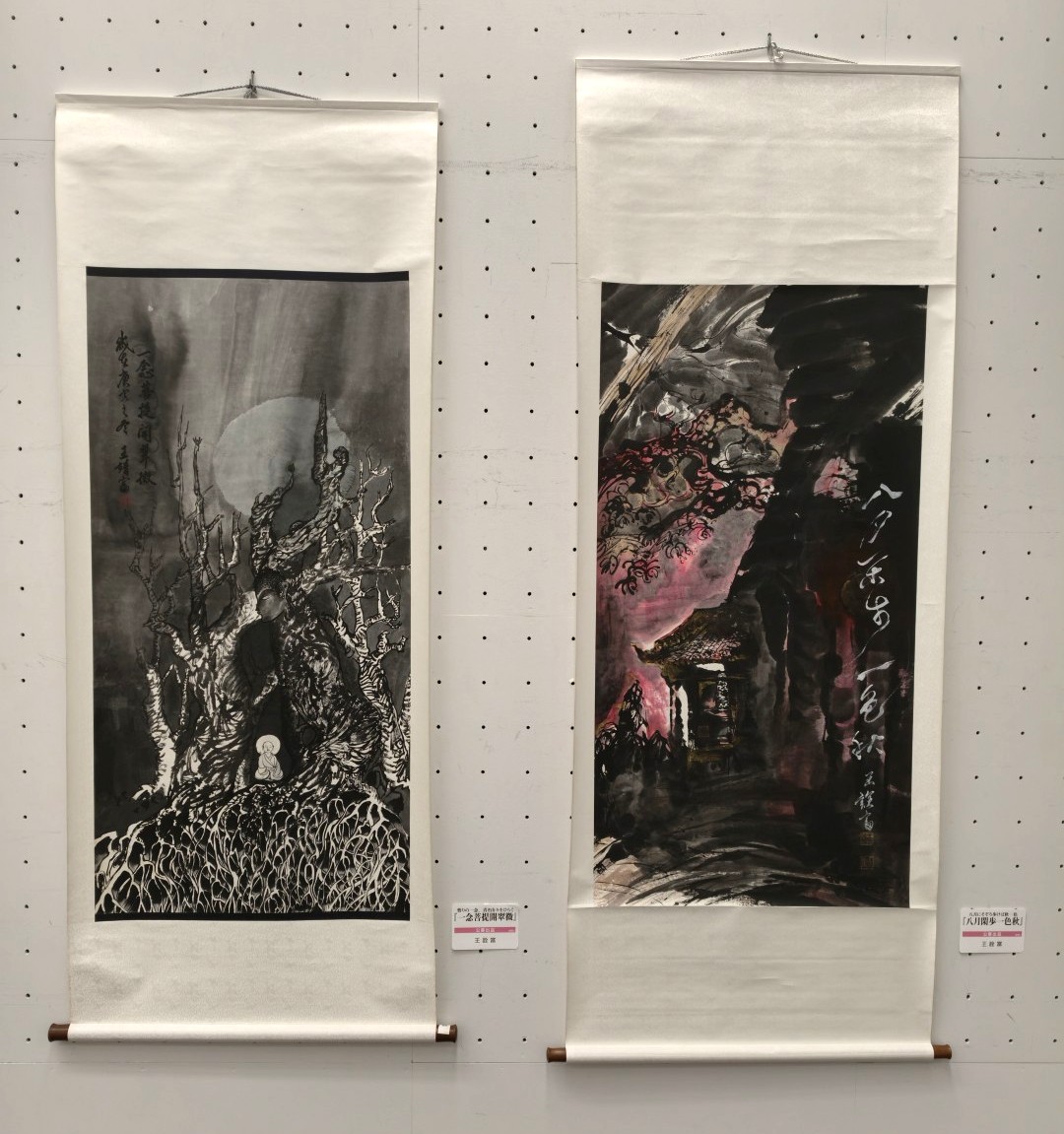
這件作品首先令人印象深刻的,是它極不討好觀看的方式。畫面並不明亮,不把場景完整交代,也不讓觀者迅速辨認出一個「景點」或「故事」。大面積的黑與灰墨自四周壓下,形成近乎包圍性的陰影;中央偏內則留下較亮的路徑或通道,帶著淡粉、赭紅與微微的暖光,像暮色中的地面,也像夕光在石路、水氣或牆面上的殘留。中景裡彷彿有一座門、一重院、一個開口;左邊可見近乎枝蔓或花叢般的細碎墨線,像植物,也像記憶在牆角滋生的紋理。整幅畫若按照片所示橫向觀看,有一種長卷般的推移感;若依題名與構圖內在的路徑意識理解,它又像把一段晚夏將盡的步行經驗,壓縮成一個既可進入又不可完全穿透的視覺場域。
這樣的寫意,並不是技法上的簡略,而是一種更高層次的保留。石濤說「筆墨當隨時代」,真正的「寫意」從來不是少畫幾筆,而是知道什麼不該被畫得太滿。王詮富這件作品的可貴,正在於它拒絕讓景物過早定型,於是世界仍保有它的未完成性。牆是牆,但不必完全像牆;花影是花影,但也可以是暈染、是記憶、是光影與墨色相互摩擦後留下的邊痕。觀者因此不能只用識別的態度來看,而必須讓自己的感官慢慢進入畫面裡那種幽暗、遲疑與微光共存的節奏。
也正是在這裡,作品開始有了哲學意味:它不是把世界說清楚,而是讓世界保持它的複義性。人真正遇見世界,往往不是在看得最清楚的時候,而是在這種半明半暗、半可辨半不可辨的狀態裡。因為唯有當事物不完全屬於我的命名,它才真正作為他者向我開放。
海德格:道路、開敞與黑暗中的顯現
若說這件作品的核心意象是什麼,我會說,是一條在黑暗中被慢慢打開的路。這條路並非單純地導向前方,而像是在畫面中被光一點點召喚出來。四周厚重的墨色不是背景,而是構成路徑得以成立的條件:沒有這樣的暗,路就不會顯現;沒有包圍,通過也不會具有意義。
海德格對「林中空地(Lichtung)」的思考,能很好地說明這件作品的內在結構。海德格認為,真理並非只是正確地描述事物,而是讓事物從遮蔽中被開敞出來。世界不是始終透明地放在眼前,而是總在顯現與隱藏之間擺盪。〈八月閑步一色秋〉正是在這個意義上成立:畫中最亮的部分不是全景,而是一條局部被照見的通道;最深的黑墨也不是空無,而是遮蔽本身。整件作品像在說:秋天不是把世界看得更清楚,而是使世界換一種方式顯現。
尤其中央近似門戶、院落或建築深處的明暗對比,讓人極難不把這件作品讀成一種「穿越」的經驗。人彷彿不是站在外部看景,而是已經走在其間。這裡的「閑步」因此並不只是散步,而更接近一種存在狀態:我們不是急著抵達,而是在走的過程裡,被周遭的明暗、冷暖、近遠慢慢改變。海德格曾說,道路並不只是連接兩點的工具,真正的路會讓人學會如何居住於世界。王詮富的這條秋路,也正不只是場景構成,而是一種對在世存在的隱喻:人在走,而走本身,已經是一種與季節共處的方法。
班雅明:門檻、黃昏與靈光的殘存
這件作品另一個極其重要的層次,是它強烈的門檻感。它不是白晝中的景,也不是純夜景,而是一種介於晚夏與初秋、白日與昏暗、外部與內部之間的狀態。畫面中的花影、路徑、牆體與深處的建築/門框,都像處於一種將要消失又尚未完全消失的時間裡。這種時間,不是鐘錶時間,而是場所自身的暮色時間。
班雅明曾對「門檻」有過敏銳的感受。對班雅明而言,門檻不是單純的邊界,而是一種最具經驗密度的場所:它連接內外、連接醒與夢、連接日常與神祕。〈八月閑步一色秋〉便正是一幅門檻性的作品。觀者所見不是完整世界,而是一個處於過渡中的世界;不是事情已經結束的秋,而是秋正在接管八月的那個瞬間。這使畫中的黑不只是黑,粉不只是粉,赭紅也不只是色彩點染,而都帶著一種「即將成為另一種時間」的意味。
這也讓作品具備一種近乎班雅明式的靈光。所謂靈光,不在於神祕玄虛,而在於一個事物仍保有距離、仍不肯被立即用光、看盡、消費掉的那種在場方式。今日很多畫急於把景觀說明白,於是很快也就看完了;而王詮富這件作品卻不然。它留下大量不能一眼判定的空間,因此觀者必須慢下來,甚至必須讓自己的視線與呼吸稍稍變得像「閑步」那樣。這種慢,正是靈光得以存在的條件。人在畫前,不是立刻掌握它,而是被它一點點接近。
巴舍拉:屋、角落與秋色的內在空間
我尤其喜歡這件作品裡那種近乎「巷內」或「庭院深處」的氣息。儘管畫面未必具象地交代一個明確建築,但那種牆、門、通道、陰影、花叢與深處微光的結構,已經構成一種可被巴舍拉閱讀的空間。巴舍拉在《空間詩學》中反覆提醒我們,房屋、角落、門、抽屜、屋簷等空間,之所以動人,不只是因為它們具有功能,而是因為它們和人的內在經驗有深刻對應:它們能容納秘密、記憶、遲疑、獨處與夢想。
〈八月閑步一色秋〉中的空間,正具有這種「內在化」的傾向。它不像大山大水那樣向外無盡展開,而更像把觀者引入一種有深度、有轉折、有角落、有停頓的地方。尤其左側近似花叢或藤蔓的細小墨線,與中央較亮處的路径形成內外呼應,使整幅畫既有自然,也有居住;既有草木,也有人的痕跡。這不是無人的荒野,而是一個人曾經走過、曾經停過、也許仍在其間緩行的地方。
也因此,畫中的秋不是宏觀季節,而是貼近身體的秋。不是高空遠樹的秋,而是牆角、地面、濕氣、院落深處慢慢發生的秋。巴舍拉若在此,大概會說,這不是「秋景」,而是一種秋色進入空間之後形成的內在房間。人不是去看秋,而是被秋悄悄住進來。這解釋了為何作品的題目是「八月閑步」,而不是「八月觀秋」:因為真正的秋,不一定要被觀看,它更可能是在行走中被感到。
利科與記憶:為何這條路看來像曾經走過?
這件作品最動人的地方之一,是它有一種奇異的熟悉感。觀者即使未曾真去過畫中的地方,也很容易感到:彷彿自己曾在某個傍晚、某條巷子、某個院落、某段花影與牆光交錯的小路裡,經歷過類似的空氣。這種熟悉感,不等於寫實,反而來自作品對具體細節的節制。它沒有把一切固定在客觀描述裡,於是留給記憶進入的空間變大了。
保羅.利科談記憶時,特別強調記憶不是複製,而是透過痕跡與再敘述重新生成。〈八月閑步一色秋〉正具備這樣的結構:它像一個場所,但又不像一個可被地圖定位的場所;它像一段經驗,但又不是單一故事的插圖。正因如此,觀者自身的生活經驗便不免被牽動進來。畫中的那條路,於是同時是畫家的路,也是觀者心裡那條曾在季節邊界上獨自行走過的路。
這種記憶性非常重要。它使作品從「好看的水墨」提升為一種能容納生命經驗的場。真正成熟的藝術,從來不是把作者的私人情境封閉起來,而是找到一種形式,讓別人的記憶也能住進去。王詮富在這件作品裡,正做到這一點:他畫的是一段具體秋路,最後卻成了一個更普遍的內在場域——人在其中想起的,不一定是他的八月,也可能是自己的八月。
水墨與秋:不是描寫顏色,而是描寫退場的方式
我願意說,這件作品最深的題目,其實不是「秋色」,而是秋如何來。秋在這裡不是金黃滿地,不是滿山紅葉,不是傳統符號化的季景標誌;它反而來得很暗、很深、很慢。它不是用飽滿色彩宣布自己,而是藉由黑的加深、粉的黯下、光的收斂、空間的向內折疊而成立。
這正是水墨最適合處理的季節哲學。若春偏向勃發,夏偏向充盈,秋則更接近收、斂、轉、退。水墨之所以特別適合寫秋,正在於它不是只描寫物的外表,而能描寫事物如何從明處退向暗處、從喧響退向靜默、從外放退向內藏。王詮富的墨色運用並不求工整,而是讓筆觸、渲染、擦抹與留白形成一種接近呼吸與步伐的節奏。這使秋不再只是色相,而是一種退場的方式:不是突然消失,而是慢慢轉身。
在這層意義上,題名中的「一色秋」格外高明。所謂「一色」,不是單一顏色,而是一種整體籠罩。它不是畫面裡某個局部變秋,而是整個空間、整種空氣、整個觀看方式都被秋化。這是比視覺更深的層次:不是看見秋,而是被秋包圍。
真正的閑步,不是走得慢,而是讓世界慢慢進來
如果要我為〈八月閑步一色秋〉下最後一個判斷,我會說:這件作品真正處理的,不只是景與季節,而是人在行走中如何被季節悄悄改寫。它畫出的不是客觀秋景,而是一種在黑暗中打開的路徑經驗;不是自然紀錄,而是一種存在的轉身。王詮富讓墨成為遮蔽,也成為開敞;讓道路既是空間結構,也是精神結構;讓八月不是夏之延長,而是秋之先聲;讓「閑步」不是散漫,而是重新學會用身體去讀世界。
我總覺得,真正的閑步,不是走得慢,而是讓自己不必急著解釋眼前所見,願意容許黑暗仍是黑暗,容許花影不必完全分明,容許一條路只在局部亮起。人若能這樣走,便會發現:秋從來不只是一個季節,它更是一種看待世界的方式——知道有些光必須在暗裡才顯得真,有些路必須在不確定裡才走得深,有些景只有當人不再急著佔有時,才真正向人打開。
若要用一句話總結這件作品,我會這樣說: 王詮富〈八月閑步一色秋〉所畫的,不是一段秋景,而是人在季節臨界之中,如何被世界重新教會「慢慢進入」的那一刻。
王詮富〈八月閑步一色秋〉以寫意水墨的方式構築出一個介於晚夏與初秋、光與暗、內部與外部之間的門檻性空間。作品並不以明確景物取勝,而透過大面積墨色包圍、局部赭粉與微光的開顯,使路徑、花影與深處建築在遮蔽中漸次浮現。若借海德格的「開敞」觀念來看,畫中之路不是單純空間結構,而是事物從黑暗中得以顯現的存在場所;班雅明所說的門檻與靈光,也幫助我們理解其黃昏式的時間密度與難以被迅速消費的在場感。從巴舍拉的空間詩學角度觀之,此作又將秋色轉化為一種可被居住的內在空間,使季節不只是外在景觀,而成為牆角、花影、地面與步伐共同構成的精神氣候。整體而言,〈八月閑步一色秋〉所描寫的不是秋景本身,而是人在季節轉身之際,如何重新學會以行走與感受進入世界。
其他相關內容:
【現場直擊】【台日交流展】東京都美術館開館100周年記念《第14回東京現展》展場:日本國立東京都美術館
台灣參展藝術家作品藝術評論
東京都美術館開館100周年記念【14回東京現展】廖純沂〈未盡・浮境〉未盡之物何以最能久留人心
東京都美術館開館100周年記念【14回東京現展】廖純沂〈游相〉花何以不止於花,與形相如何在漂游中成立
東京都美術館開館100周年記念【14回東京現展】廖純沂〈思域・沉靜〉沉靜何以不是空,與垂掛之物何以最像思念
東京都美術館開館100周年記念【14回東京現展】王詮富〈八月閑步一色秋〉的季節哲學、門徑意識與水墨的開敞性 在黑暗中閑步:秋色如何不是顏色,而是一種存在的轉身
東京都美術館開館100周年記念【14回東京現展】 王詮富〈一念菩提開翠微〉的開顯、同體、綿延與空性 一念未起,萬根已動
東京都美術館開館100周年記念【14回東京現展】蔡梅芳〈戀戀紫藤〉的痕跡、綿延與生成 花影之遲遲不散,與記憶如何在解構之後重返
東京都美術館開館100周年記念【14回東京現展】 王穆提《聖境・阿里山》蒼翠的紀念碑
東京都美術館開館100周年記念【14回東京現展】王穆提《中道之光》裂隙中的永恆
東京都美術館開館100周年記念【14回東京現展】吳心荷〈散落骨骼(一)〉散落之骨,與人之未能完全集成於自身
東京都美術館開館100周年記念【14回東京現展】陳福祺〈咖啡心音〉的存在寓言 沸點、晶化與心之熔爐
東京都美術館開館100周年記念【14回東京現展】張素蘭〈一棵開花的樹〉的場所哲學、過程生命與靜默中的新生
東京都美術館開館100周年記念【14回東京現展】吳亞倫〈藍與黑的交響詩(雙併)〉論藍何以不只為藍,黑何以不只為黑
東京都美術館開館100周年記念【14回東京現展】張碧鄉〈艷冠群芳〉的器物哲學、生成美學與過剩的顯現
東京都美術館開館100周年記念【14回東京現展】趙玉燕〈熾烈〉論火中的身體,與人何以不能只是自己
東京都美術館開館100周年記念【14回東京現展】許秀珠〈403地震後的太魯閣〉山川之裂,與人如何在震後重新學會自身的位置
東京都美術館開館100周年記念【14回東京現展】江麗香〈秋聲賦〉彩墨中的時間書寫 水痕與秋聲
東京都美術館開館100周年記念【14回東京現展】江麗香〈流轉的歲月〉水之無言,而歲月常藉其形以自見
東京都美術館開館100周年記念【14回東京現展】謝文倩〈驚夢〉的夢之碎片、感覺邏輯與夜的顯現
東京都美術館開館100周年記念【第14回東京現展】黃淑卿〈群鷗處處來(台灣澎湖)〉群鷗之所以來,與人終於學會不把世界全算作自己
東京都美術館開館100周年記念【14回東京現展】黃淑卿〈燕尾與戴勝(台灣金門)〉論屋脊、禽鳥與地方何以不只是地理
東京都美術館開館100周年記念【14回東京現展】謝正瑜〈蓮池映相〉的感知哲學與靈性空間
東京都美術館開館100周年記念【14回東京現展】周若梅〈流光之舞〉,光何以有身,與人如何在流動中暫時成形
Strolling in the Dark: How Autumn is Not a Color, but a Turn of Existence
—The Seasonal Philosophy, Threshold Consciousness, and Ink-Wash Openness in Wang Quan-Fu’s August Stroll in a Single Autumn Hue
By: WANG MUTI
Introduction: Why is August Already Autumn?
When one truly feels the change of seasons, it is not the moment the calendar flips to a new page, but rather when a certain atmosphere abruptly shifts. The light is no longer relentlessly saturated, colors begin to recede, sounds seem absorbed by a more distant air, and even familiar paths appear retraced by an unspeakable shadow. At that moment, one might not yet dare to say "autumn has arrived," but the body already knows: a certain yielding, a certain tranquility, a mutual exchange of light and dark is slowly taking over the world.
To my eyes, Wang Quan-Fu’s August Stroll in a Single Autumn Hue is precisely a work about this condition of "not having fully arrived, yet already enveloping everything." The most intriguing part of the title is not merely "Autumn," but "August" and "Stroll." August is supposed to still carry the summer heat, yet in the painting, it has already been commandeered by autumn hues; a stroll is meant to be a relaxing walk, yet within the frame, one steps into a space that is almost shadowy, profound, and laden with spiritual density. Thus, the more I look, the more I feel this artwork is not simply depicting a path, a courtyard, or a corner of a landscape. Instead, it addresses a deeper question: how humans re-learn to perceive the world from the darkness at the turning point of the seasons.
Xieyi (Freehand Expression) is Not Omission, but Allowing the World to Retain Its Unsaid Parts
What first strikes the viewer about this work is its highly uncompromising approach to being seen. The picture is not bright; it does not fully explain the scene, nor does it allow the viewer to instantly identify a "landmark" or a "story." Large areas of black and gray ink press in from the edges, forming an almost encompassing shadow; slightly inward from the center, a brighter path or passage is left bare, carrying hints of pale pink, ochre-red, and a subtle warm light. It resembles the ground in the twilight, or the residue of the setting sun on stone paths, moisture, or walls. In the midground, there seems to be a door, a courtyard, an opening; on the left, fine, fragmented ink lines resembling vines or floral clusters appear—like plants, but also like the textures of memory breeding in the corner of a wall. If viewed horizontally like a photograph, the painting possesses a scrolling sense of progression; but understood through the spatial consciousness inherent in its title and composition, it compresses the walking experience of late summer fading into a visual field that is both enterable and impenetrable.
Such Xieyi (freehand brushwork) is not a simplification of technique, but a higher level of reservation. Shitao once said, "Ink and brush should follow the times." True Xieyi has never been about painting fewer strokes, but knowing what should not be painted too fully. The preciousness of Wang Quan-Fu’s work lies exactly in its refusal to let the scenery take a definitive shape prematurely, thus allowing the world to retain its incompleteness. A wall is a wall, but it need not look exactly like a wall; the shadow of flowers is just that, but it can also be ink wash, memory, or the frayed edges left by the friction between light, shadow, and ink. Therefore, viewers cannot merely adopt an attitude of identification; they must let their senses slowly enter the rhythm of darkness, hesitation, and twilight coexisting within the painting.
It is precisely here that the work acquires its philosophical significance: it does not explain the world clearly, but allows the world to maintain its polysemy. When a person truly encounters the world, it is rarely when seeing it most clearly, but in this half-lit, half-dark, semi-distinguishable state. Because only when things do not entirely belong to our naming do they truly open themselves to us as the "Other."
Heidegger: Paths, the Clearing, and Manifestation in Darkness
If asked what the core imagery of this work is, I would say it is a path slowly opened up in the darkness. This path does not simply lead forward; rather, it feels as if it is being summoned bit by bit by the light within the frame. The heavy ink surrounding it is not merely the background, but the very condition that allows the path to exist: without such darkness, the path would not manifest; without the enclosure, passage would lack meaning.
Martin Heidegger’s contemplation on the "Clearing" (Lichtung) in the forest perfectly illustrates the inner structure of this piece. Heidegger believed that truth is not just an accurate description of things, but an unconcealment—bringing things out of obscurity into the open. The world is not always transparently laid out before us; it constantly oscillates between manifestation and concealment. August Stroll in a Single Autumn Hue is established in exactly this sense: the brightest part of the painting is not a panoramic view, but a partially illuminated passage; the deepest black ink is not a void, but the concealment itself. The entire work seems to say: autumn does not make us see the world more clearly; it makes the world manifest in a different way.
Particularly, the chiaroscuro effect in the center—resembling a doorway, a courtyard, or the depths of a building—makes it almost impossible not to read this work as an experience of "traversing." It feels as though the viewer is not standing outside looking in, but is already walking within it. The "stroll" here is therefore not just a walk, but closer to a state of being: we are not rushing to arrive, but in the process of walking, we are slowly altered by the surrounding light and dark, warmth and coldness, proximity and distance. Heidegger once said that a path is not merely a tool connecting two points; a true path teaches one how to dwell in the world. Wang Quan-Fu’s autumn path is not just a scenic composition, but a metaphor for being-in-the-world: one is walking, and the act of walking itself is already a way of coexisting with the season.
Walter Benjamin: Threshold, Twilight, and the Persistence of Aura
Another deeply significant layer of this artwork is its intense sense of a threshold. It is neither a daytime scene nor a pure nightscape, but a state suspended between late summer and early autumn, daylight and dusk, exterior and interior. The floral shadows, paths, walls, and the architectural structures/doorframes in the depths all seem to exist in a time that is about to vanish yet hasn't completely faded. This time is not clock time, but the twilight time intrinsic to the place itself.
Walter Benjamin had an acute sensitivity to the "threshold." To Benjamin, a threshold is not a simple boundary, but a site with the utmost density of experience: it connects the inside and outside, waking and dreaming, the everyday and the mysterious. August Stroll in a Single Autumn Hue is precisely a threshold artwork. What the viewer sees is not a complete world, but a world in transition; not an autumn that has settled, but the very instant autumn is taking over August. This makes the black more than black, the pink more than pink, and the ochre-red more than just strokes of color—they all carry the implication of "imminently becoming another kind of time."
This also endows the work with a nearly Benjamin-esque Aura. The so-called aura is not about mystical obscurity; rather, it is a mode of presence where an object retains its distance and refuses to be immediately consumed, seen through, or exhausted. Today, many paintings rush to clarify a landscape, resulting in them being quickly consumed by the eye. Wang Quan-Fu’s work does the opposite. It leaves vast spaces that defy immediate judgment, forcing the viewer to slow down, and even adapt their gaze and breath to the pace of a "stroll." This slowness is exactly the condition that allows the aura to survive. Standing before the painting, one does not immediately master it, but is slowly drawn into it.
Gaston Bachelard: House, Corners, and the Inner Space of Autumn
I am particularly fond of the atmosphere in this work that feels akin to "an alleyway" or "deep within a courtyard." Although the image may not figuratively detail a specific building, the structure of walls, doors, passageways, shadows, shrubbery, and faint light in the depths forms a space that can be read through Gaston Bachelard’s lens. In The Poetics of Space, Bachelard repeatedly reminds us that spaces like houses, corners, doors, drawers, and eaves are moving not just because of their function, but because they correspond deeply to human inner experience: they accommodate secrets, memory, hesitation, solitude, and dreams.
The space in August Stroll in a Single Autumn Hue possesses this tendency toward "internalization." It does not stretch endlessly outward like grand mountains and rivers; instead, it draws the viewer into a place with depth, turns, corners, and pauses. The fine ink lines on the left, resembling bushes or vines, interact with the brighter path in the center, creating an internal-external dialogue that gives the painting a sense of both nature and dwelling, both vegetation and human traces. This is not a deserted wilderness, but a place where someone has walked, paused, and perhaps is still lingering.
Therefore, the autumn in the painting is not a macro-seasonal phenomenon, but an autumn intimate with the body. It is not the autumn of distant trees against a high sky, but an autumn slowly unfolding in the corners of walls, on the ground, in the dampness, and deep within the courtyard. Were Bachelard here, he might say this is not an "autumn landscape," but an internal room formed once autumn colors enter a space. People do not go out to look at autumn; rather, autumn quietly moves into them. This explains why the title is "August Stroll" and not "Viewing Autumn in August": because true autumn does not necessarily need to be looked at; it is more likely to be felt while walking.
Paul Ricoeur and Memory: Why Does This Path Seem Familiar?
One of the most moving aspects of this artwork is its strange sense of familiarity. Even if the viewer has never been to the place depicted, they easily feel: as if they themselves had once experienced a similar air on a certain evening, in a certain alley, a certain courtyard, or along a path where floral shadows and wall light intersected. This familiarity does not equate to realism; rather, it stems from the work’s restraint regarding concrete details. It does not fixate everything in objective description, thus leaving greater room for memory to enter.
When Paul Ricoeur discussed memory, he specifically emphasized that memory is not a replica, but a regeneration through traces and re-narration. August Stroll in a Single Autumn Hue possesses exactly this structure: it feels like a place, but not one that can be pinpointed on a map; it feels like an experience, but not an illustration of a single story. Because of this, the viewer's own life experiences are inevitably drawn in. The path in the painting, therefore, is simultaneously the artist's path and the path in the viewer's heart that they once walked alone on the edge of the seasons.
This mnemonic quality is crucial. It elevates the artwork from a "beautiful ink painting" into a field capable of holding life experiences. Truly mature art never seals off the author’s private circumstances; instead, it finds a form that allows the memories of others to reside within it. Wang Quan-Fu accomplishes just that here: he painted a specific autumn path, but ultimately it becomes a more universal inner realm—what one remembers within it may not be his August, but their own August.
Ink Wash and Autumn: Not Describing Color, but the Way of Exit
I would venture to say that the deepest subject of this artwork is actually not "autumn colors," but how autumn arrives. Autumn here is not a ground covered in gold, nor mountains full of red leaves, nor the traditional symbolic markers of the season; instead, it arrives darkly, deeply, and slowly. It does not announce itself with saturated colors, but establishes itself through the deepening of black, the dimming of pink, the retraction of light, and the inward folding of space.
This is exactly the seasonal philosophy that ink wash (Shuimo) is best suited to handle. If spring leans toward bursting forth and summer toward overflowing, autumn is closer to gathering, retracting, turning, and retreating. Ink wash is particularly suitable for depicting autumn because it portrays not just the exterior of things, but how things retreat from the light into the dark, from noise into silence, from outward expression into inward concealment. Wang Quan-Fu’s application of ink does not strive for neatness, but allows brushstrokes, washes, rubs, and negative space to form a rhythm akin to breathing and pacing. This makes autumn no longer just a visual hue, but a mode of exiting: not suddenly disappearing, but slowly turning away.
In this sense, the phrase "a single hue" in the title is exceptionally brilliant. The so-called "single hue" is not a monotone color, but an overall envelopment. It is not that a certain part of the frame turns autumnal, but that the entire space, the whole atmosphere, and the very way of seeing are autumnized. This is a level deeper than the visual: it is not seeing autumn, but being surrounded by autumn.
True Strolling is Not Walking Slowly, but Letting the World Slowly Enter
If I were to offer a final judgment on August Stroll in a Single Autumn Hue, I would say: what this work truly addresses is not just scenery and seasons, but how a person is quietly rewritten by the season while walking. It paints not an objective autumn landscape, but the experience of a path opening up in the dark; not a record of nature, but a turn of existence. Wang Quan-Fu makes the ink both a concealment and a clearing; he makes the path both a spatial structure and a spiritual one; he makes August not an extension of summer, but the herald of autumn; he makes the "stroll" not an aimless wander, but a re-learning of how to read the world with the body.
I always feel that true strolling is not about walking slowly, but allowing oneself not to rush to explain what is in front of the eyes. It is the willingness to let darkness remain darkness, to let floral shadows remain indistinct, and to let a path light up only partially. If one can walk like this, they will discover: autumn has never been just a season; it is a way of looking at the world. It is knowing that some light only reveals its truth in the dark, some paths must be walked in uncertainty to go deep, and some landscapes truly open up to people only when they no longer rush to possess them.
To summarize this work in one sentence, I would say: What Wang Quan-Fu’s August Stroll in a Single Autumn Hue paints is not an autumn scene, but the exact moment on the threshold of seasons when the world re-teaches a person how to "slowly enter."
Summary:
Wang Quan-Fu’s August Stroll in a Single Autumn Hue constructs a threshold space between late summer and early autumn, light and dark, interior and exterior, using freehand ink wash. The work does not triumph through explicit scenery; instead, through the envelopment of large areas of ink and the localized manifestation of ochre-pink and faint light, the paths, floral shadows, and deep architecture gradually emerge from concealment. Viewed through Heidegger's concept of the "Clearing," the path in the painting is not merely a spatial structure, but an existential site where things manifest from darkness. Benjamin’s threshold and aura help us understand its twilight temporal density and a sense of presence that resists rapid consumption. From the perspective of Bachelard’s poetics of space, the work transforms autumn hues into a habitable inner space, making the season not just an external landscape, but a spiritual climate jointly formed by wall corners, floral shadows, the ground, and footsteps. Overall, August Stroll in a Single Autumn Hue does not depict an autumn landscape per se, but rather how, at the turning of the seasons, humans re-learn to enter the world through walking and feeling.
暗闇の中の閑歩:秋色はなぜ色ではなく、存在の転回なのか
——王詮富(ワン・チュエンフー)の〈八月閑歩一色秋〉における季節の哲学、敷居の意識、そして水墨の開け
文:王穆提(WANG MUTI)
はじめに:八月はなぜすでに秋なのか?
人が本当に季節の変化を感じるのは、カレンダーのページをめくった瞬間ではなく、ある種の気配が突然変わった時である。光はもはやただ力強いだけでなく、色は収束し始め、音は遠くの空気に吸い込まれたかのようになり、かつて馴染み深かった道でさえ、言葉にできない影の層によって描き直されたかのように見える。その時、人はまだ「秋が来た」とは言いきれないかもしれないが、身体はすでに知っている。ある種の譲歩、ある種の静寂、ある種の光と影の交代が、ゆっくりと世界を引き継ぎつつあることを。
私の目に映る王詮富の〈八月閑歩一色秋〉は、まさにこの「まだ完全には到達していないが、すでにすべてを覆い尽くしている」状態についての作品である。タイトルの中で最も興味深いのは「秋」ではなく、「八月」と「閑歩(散策)」である。八月は本来まだ暑さを伴っているはずだが、絵の中ではすでに秋色に支配されている。閑歩は本来リラックスした歩みであるべきだが、画面の中では暗く、奥深く、精神的な密度すら帯びた空間へと足を踏み入れている。ゆえに、見れば見るほど、この作品は単に一本の小道、一つの庭、風景の片隅を描いたものではなく、より深い問い——季節が転回する際、人は暗闇の中からいかにして世界を再認識するのか——を扱っているのだと思えてくる。
写意は省略ではなく、世界にその語り尽くせぬ部分を残させることである
この作品でまず印象に残るのは、極めて媚びない見せ方である。画面は明るくなく、風景を完全に説明することもなく、鑑賞者に「名所」や「物語」を即座に認識させることもない。広範囲にわたる黒と灰色の墨が周囲から迫り、包み込むような影を形成している。中央からやや内側には、淡いピンク、赤褐色、そしてかすかな暖かな光を帯びた、比較的明るい道や通路が残されており、それは暮れ泥む地面のようでもあり、石畳や水気、壁面に残る夕陽のようでもある。中景には門、庭、開口部のようなものがあり、左側には植物や、あるいは壁の隅で増殖する記憶のテクスチャーのような、蔓や花の茂みにも似た細かい墨の線が見える。写真を横から見るようにこの絵を眺めると、絵巻物のような推移感が得られる。一方で、タイトルと構図に内在する経路の意識に沿って理解すれば、それは晩夏の終わりを歩く経験を、入り込めるが完全には見通せない視覚の場へと圧縮したかのようでもある。
このような写意(自由な筆致)は、技法的な省略ではなく、より高い次元での保留である。石濤(せきとう)はかつて「筆墨は時代に従うべきだ」と語ったが、真の「写意」とは、決して描く筆数を減らすことではなく、何を描きすぎてはならないかを知ることである。王詮富のこの作品の尊さは、風景が早急に定型化されることを拒み、それゆえに世界がその未完成な状態を保ち続けている点にある。壁は壁であるが、完全に壁らしく見える必要はない。花の影は花の影であるが、それは滲みでもあり、記憶でもあり、光と影と墨色が擦れ合って残した境界の痕跡でもある。したがって、鑑賞者は単なる識別する態度で見ることはできず、自らの感覚を、暗闇、ためらい、そして微光が共存する画面のリズムにゆっくりと入り込ませなければならない。
作品が哲学的な意味を持ち始めるのは、まさにここからである。世界を明確に説明するのではなく、世界にその多義性を保たせているのだ。人が真に世界と出会うのは、往々にして最もはっきりと見える時ではなく、このような半明半暗、半分見分けがつき、半分見分けがつかない状態にある時である。なぜなら、事物が完全に私の命名に属さない時のみ、それは真の他者として私に向かって開かれるからだ。
ハイデガー:道、開け、そして暗闇の中の顕現
もしこの作品の核となるイメージは何かと問われれば、私は、暗闇の中でゆっくりと切り開かれた一本の道だと答えるだろう。この道は単に前へと導いているのではなく、画面の中で光によって少しずつ召喚されているかのようだ。周囲の重厚な墨色は背景ではなく、道が成立するための条件を構成している。このような暗さがなければ道は現れず、包囲がなければ通過することに意味は生じない。
ハイデガーの「森の開け(Lichtung)」に関する思索は、この作品の内的構造をよく説明している。ハイデガーは、真理とは単に事物を正しく描写することではなく、事物を隠蔽から「開け」へと導き出すことであると考えた。世界は常に透明な状態で目の前に置かれているのではなく、常に顕現と隠蔽の間で揺れ動いている。〈八月閑歩一色秋〉はまさにこの意味において成立している。絵の中で最も明るい部分は全景ではなく、局所的に照らされた通路であり、最も深い黒墨も虚無ではなく、隠蔽そのものである。作品全体がこう語りかけているようだ。「秋とは、世界をよりはっきりと見せるものではなく、世界に別の方法で現れるようにさせるものである」と。
特に中央の、門、庭、または建物の奥深くを思わせる明暗のコントラストは、この作品を「通過」の経験として読まずにはいられないようにする。人は外部に立って風景を見ているのではなく、すでにその間を歩いているかのようだ。ここでの「閑歩」は、単なる散歩ではなく、より存在の状態に近い。私たちは目的地を急いでいるのではなく、歩く過程で周囲の明暗、寒暖、遠近によってゆっくりと変えられていく。ハイデガーはかつて、道は単に二点を結ぶ道具ではなく、真の道は人に世界にいかに住まうかを学ばせると語った。王詮富のこの秋の道もまた、単なる風景構成ではなく、世界内存在に対するメタファーなのである。人は歩き、歩くことそれ自体が、すでに季節と共にある一つの方法となっている。
ベンヤミン:敷居、黄昏、そしてアウラの残存
この作品のもう一つの極めて重要な層は、その強烈な「敷居」の感覚である。これは真昼の景色でもなく、純粋な夜景でもなく、晩夏と初秋、昼と夕闇、外部と内部の間にある状態である。画面の中の花の影、道、壁、そして奥にある建物や戸枠は皆、消えゆく直前で、まだ完全には消え去っていない時間の中に存在しているかのように見える。この時間は時計の時間ではなく、場所自身が持つ黄昏の時間である。
ヴァルター・ベンヤミンは「敷居」に対して鋭い感受性を持っていた。ベンヤミンにとって敷居とは、単なる境界線ではなく、最も経験の密度が高い場所であった。それは内と外、覚醒と夢、日常と神秘を繋ぐものである。〈八月閑歩一色秋〉はまさにそのような敷居的な作品である。鑑賞者が見ているのは完全な世界ではなく、過渡期にある世界である。終わってしまった秋ではなく、秋が八月を引き継ごうとしている、まさにその瞬間である。これにより、絵の中の黒は単なる黒ではなくなり、ピンクは単なるピンクではなくなり、赤褐色も単なる点描ではなく、「もうすぐ別の時間になろうとしている」という意味合いを帯びるようになる。
これはまた、作品にベンヤミン的なアウラ(Aura)に近いものを備えさせている。アウラとは、神秘的で捉えどころのないものではなく、事物が依然として距離を保ち、即座に消費され、見尽くされ、使い切られることを拒むような在り方のことである。今日、多くの絵画は景観を明確に説明しようと焦るあまり、すぐに見終わってしまう。しかし、王詮富のこの作品は違う。一目では判断できない空間を大量に残しているため、鑑賞者は立ち止まり、さらには自らの視線と呼吸を「閑歩」のように少し緩めざるを得ない。この遅さこそが、アウラが存在し得る条件なのだ。人は絵の前に立ち、それを即座に掌握するのではなく、少しずつ絵の方から近づいてくるのを待つのである。
バシュラール:家、片隅、そして秋色の内在的空間
私がこの作品において特に好んでいるのは、その「路地裏」あるいは「中庭の奥」に近いような気配である。画面は必ずしも明確な建物を具象的に描いているわけではないが、壁、門、通路、影、花の茂み、そして奥の微光といった構造が、ガストン・バシュラールによって読み解かれ得る空間をすでに形成している。バシュラールは『空間の詩学』の中で、家、片隅、扉、引き出し、軒下といった空間が心を打つのは、それらが機能を持っているからだけでなく、人間の内的経験と深く対応しているからだと繰り返し指摘している。それらは秘密、記憶、ためらい、孤独、そして夢を収容することができるからだ。
〈八月閑歩一色秋〉の中の空間は、まさにこの「内在化」の傾向を持っている。それは雄大な山水のように外へ無限に広がるのではなく、むしろ深みがあり、曲がり角があり、片隅があり、立ち止まる場所へと鑑賞者を導き入れるかのようだ。特に左側にある、花の茂みや蔓にも似た細かな墨の線は、中央の明るい道と内的・外的な呼応を形成し、絵全体に自然と住居の両方を持たせている。草木もあり、人の痕跡もある。ここは無人の荒野ではなく、かつて誰かが歩き、立ち止まり、あるいは今もその中をゆっくりと歩いている場所なのだ。
それゆえに、絵の中の秋はマクロな季節ではなく、身体に寄り添う秋である。高い空と遠くの木々の秋ではなく、壁の隅、地面、湿気、中庭の奥でゆっくりと発生する秋である。もしバシュラールがここにいたら、これは「秋の風景」ではなく、秋色が空間に入り込んだ後に形成される内在的な部屋である、と言うだろう。人が秋を見に行くのではなく、秋が静かに人の心の中に住み着くのである。これが、なぜ作品のタイトルが「八月観秋(八月に秋を観る)」ではなく「八月閑歩」なのかを説明している。なぜなら真の秋は、必ずしも見られる必要はなく、歩く中で感じられることの方がずっと多いからだ。
リクールと記憶:なぜこの道はかつて歩いたことがあるように見えるのか?
この作品の最も心を打つ部分の一つは、ある種の奇妙な親近感である。鑑賞者が実際に絵の中の場所に行ったことがなくても、まるで自分自身がかつてある夕暮れ、ある路地、ある中庭、あるいは花の影と壁の光が交差する小道で、似たような空気を経験したことがあるかのように感じやすい。この親近感は、写実性と同じではなく、むしろ具体的なディテールに対する作品の抑制から来ている。すべてを客観的な描写に固定していないため、記憶が入り込む余地が大きくなっているのである。
ポール・リクールが記憶について語る際、彼は特に、記憶とは複製ではなく、痕跡と再物語化を通じて新たに生成されるものであると強調した。〈八月閑歩一色秋〉はまさにそのような構造を備えている。それは特定の場所のようであるが、地図上で位置を特定できる場所ではない。ある一つの経験のようであるが、単一の物語の挿絵ではない。だからこそ、鑑賞者自身の生活経験が必然的に引き込まれるのだ。絵の中のあの道は、画家の道であると同時に、鑑賞者の心の中にある、かつて季節の境界線上で一人歩いたあの道でもある。
この記憶性が非常に重要である。それは作品を「美しい水墨画」から、生命経験を収容できる場へと引き上げる。真に成熟した芸術とは、作者の個人的な状況を閉じ込めるものではなく、他者の記憶も住み着くことができる形式を見つけ出すものである。王詮富はこの作品でまさにそれを成し遂げている。彼が描いたのは具体的な秋の道だが、最終的にはより普遍的な内的領域となった。人がその中で思い出すのは、彼の八月とは限らず、自分自身の八月かもしれないのだ。
水墨と秋:色を描写するのではなく、退場の方式を描写する
あえて言うなら、この作品の最も深いテーマは実は「秋色」ではなく、秋がいかにしてやって来るかである。ここでの秋は、大地を黄金色に染めたり、山を紅葉で満たしたりするような、伝統的で記号化された季節の指標ではない。むしろ、暗く、深く、ゆっくりとやって来る。それは飽和した色彩で自らを宣言するのではなく、黒が深まり、ピンクがくすみ、光が収束し、空間が内側へと折り畳まれることによって成立している。
これこそが、水墨画が最も扱うのに適した季節の哲学である。春が芽吹きに偏り、夏が充満に偏るなら、秋は収束、抑制、転回、退行により近い。水墨画が秋を描くのに特に適しているのは、それが事物の外見だけを描くのではなく、明所から暗所へ、喧騒から静寂へ、外向から内蔵へと、事物がいかにして退いていくかを描写できるからである。王詮富の墨の使い方は端正さを求めておらず、筆致、にじみ、擦れ、余白が呼吸や歩調に近いリズムを形成している。これにより、秋はもはや単なる色相ではなく、一種の退場(フェードアウト)の方式となる。突然消えるのではなく、ゆっくりと振り返り、去っていくのだ。
この意味において、タイトルにある「一色秋」という言葉は格別に素晴らしい。いわゆる「一色」とは、単一の色ではなく、全体的な包み込みである。画面の中のある一部分が秋に変わるのではなく、空間全体、空気全体、そして視点そのものが秋化されるのである。これは視覚よりも深い次元だ。秋を見るのではなく、秋に包まれるのである。
真の閑歩とは、歩くのが遅いことではなく、世界をゆっくりと入り込ませることである
もし〈八月閑歩一色秋〉に最後の判断を下すとするなら、私はこう言うだろう。この作品が真に扱っているのは、単なる風景や季節ではなく、人が歩きながらいかにして季節によって密かに書き換えられていくか、である。それが描き出しているのは客観的な秋の風景ではなく、暗闇の中で開かれる道の経験であり、自然の記録ではなく、存在の転回である。王詮富は墨を隠蔽であると同時に開けとし、道を空間の構造であると同時に精神の構造とし、八月を夏の延長ではなく秋の先触れとし、「閑歩」を漫然と歩くことではなく、身体を使って世界を読むことを再び学ぶこととしているのだ。
私は常々思う。真の閑歩とは、歩くのが遅いことではなく、目の前の光景を急いで説明しようとせず、暗闇が暗闇のままであることを許し、花の影が完全に明瞭でなくてもよしとし、道が局所的にしか明るくならないことを許容できることである。人がそのように歩くことができた時、初めて気づくのだ。秋は決して単なる一つの季節ではなく、それは世界を見るための一つの方法であると。ある種の光は暗闇の中でこそ真実味を帯び、ある種の道は不確実性の中を歩まなければ深く入り込めず、ある種の風景は人が急いでそれを所有しようとしなくなった時にのみ、真に人に向けて開かれるということを。
この作品を一言で要約するなら、こう言うだろう。王詮富の〈八月閑歩一色秋〉が描いているのは、秋の風景の一部ではなく、人が季節の境界線上で、いかにして世界から再び「ゆっくりと入っていく」ことを教わるか、その瞬間である。
要約:
王詮富の〈八月閑歩一色秋〉は、写意水墨の手法を用いて、晩夏と初秋、光と影、内部と外部の狭間にある敷居的な空間を構築している。この作品は明確な景物を描くことではなく、広範囲にわたる墨色の包囲と、局所的な赤褐色と微光の顕現によって、道、花の影、そして奥深くの建物が隠蔽の中から次第に浮かび上がるようにしている。ハイデガーの「開け」の概念を借りれば、絵の中の道は単なる空間構造ではなく、事物が暗闇の中から現れ出る存在の場所である。ベンヤミンの言う敷居とアウラもまた、その黄昏のような時間の密度と、即座に消費され得ない現前の感覚を理解する助けとなる。バシュラールの空間の詩学の観点から見れば、この作品は秋色を人が住まうことのできる内在的な空間へと変換しており、季節を単なる外的な景観にとどめず、壁の隅、花の影、地面、そして歩みが共同で構成する精神的な気候としている。全体として、〈八月閑歩一色秋〉が描写しているのは秋の風景そのものではなく、人が季節の転回の際、歩くことと体験することを通して、いかに世界に入っていくかを再び学ぶ過程である。