日本《第24回 NAU21世紀美術連立展》
日本NAU21世紀美術連立展於1960年代後半,由當時代表性的前衛藝術家主導創立。其理念為跳脫傳統框架,強調創作者本身的個性與表現形式。本展自2006年開始固定於國立新美術館(日本全國最頂級的國家美術館)舉辦,至今已歷20多屆。
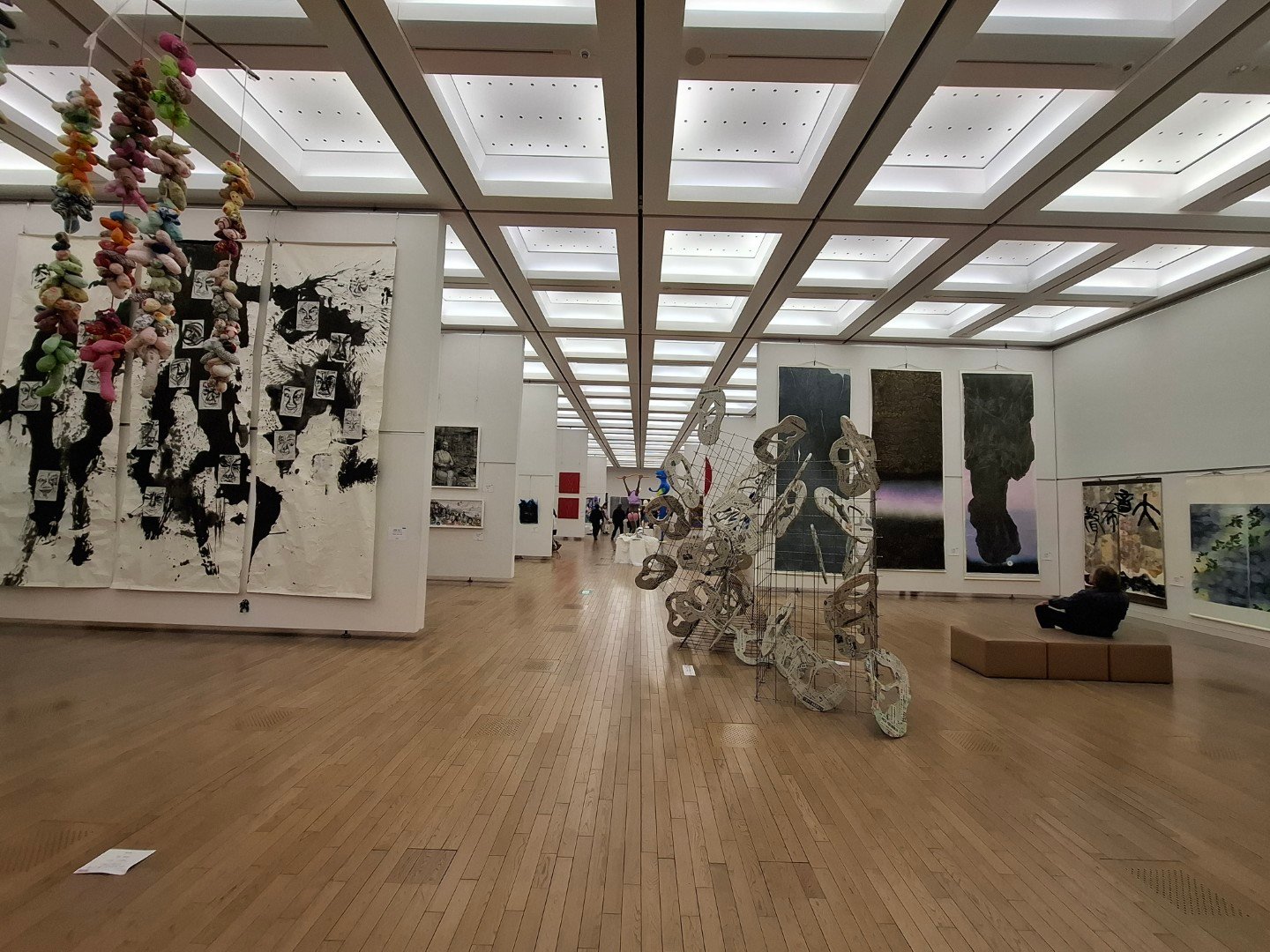
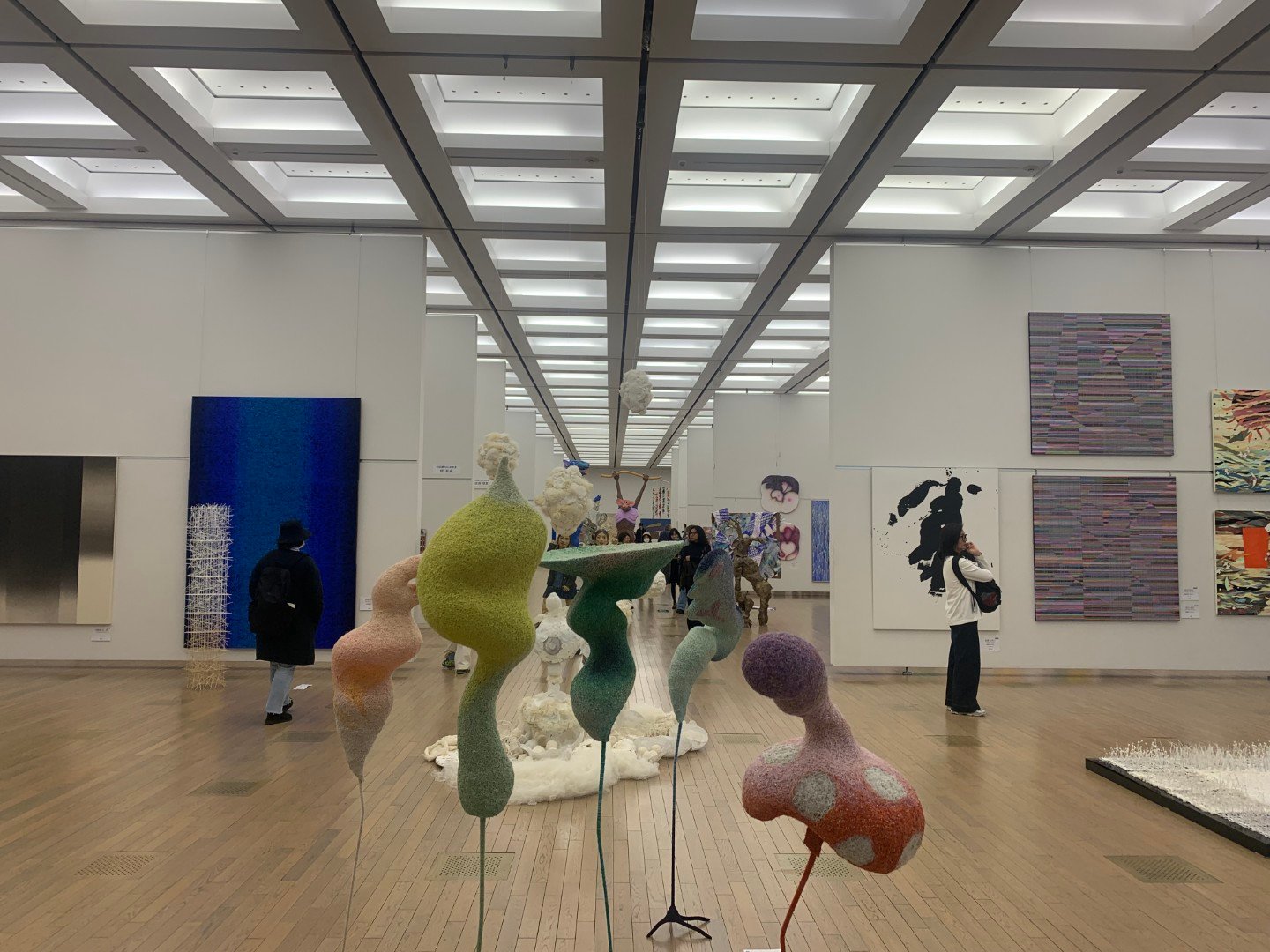
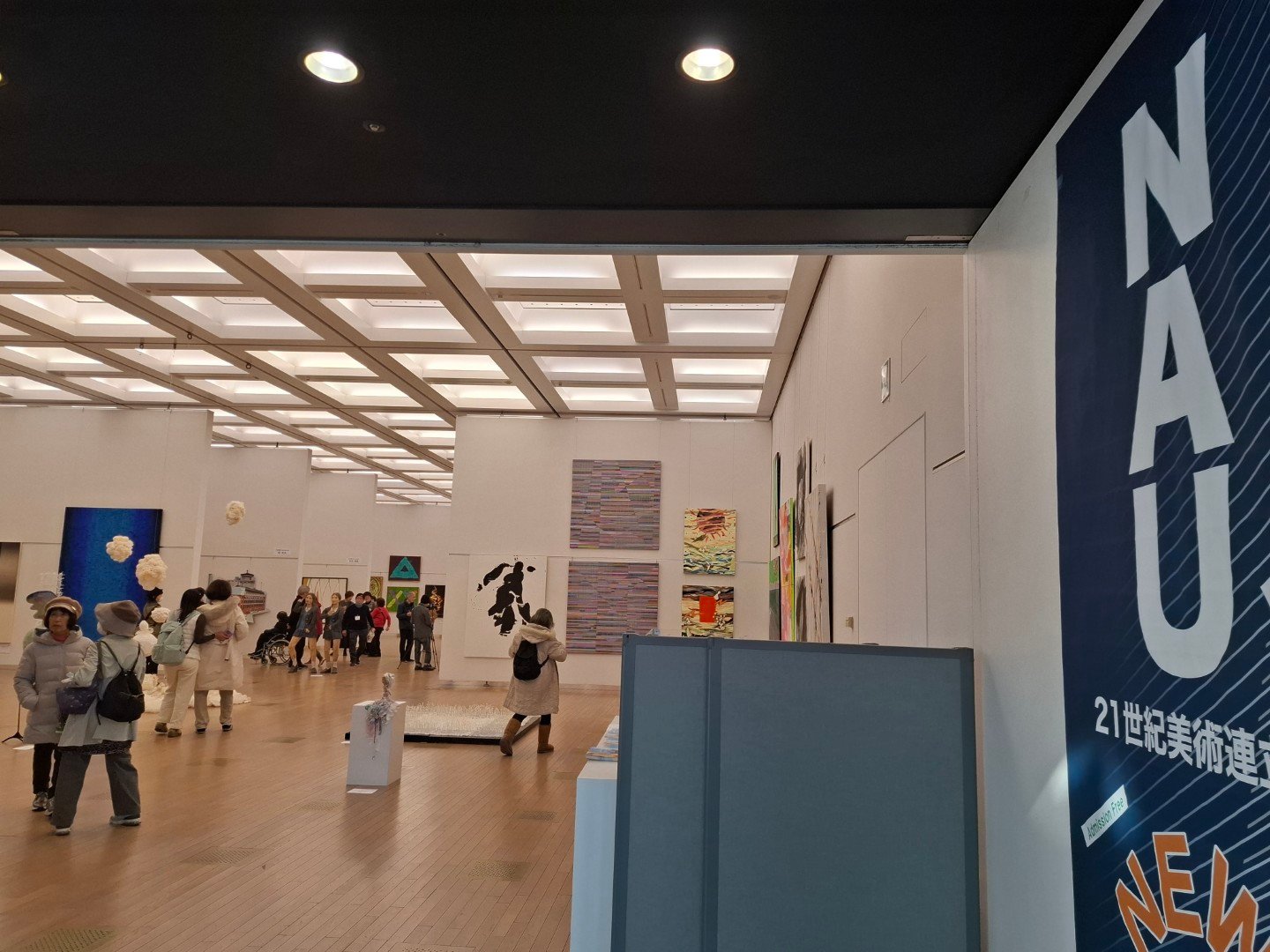
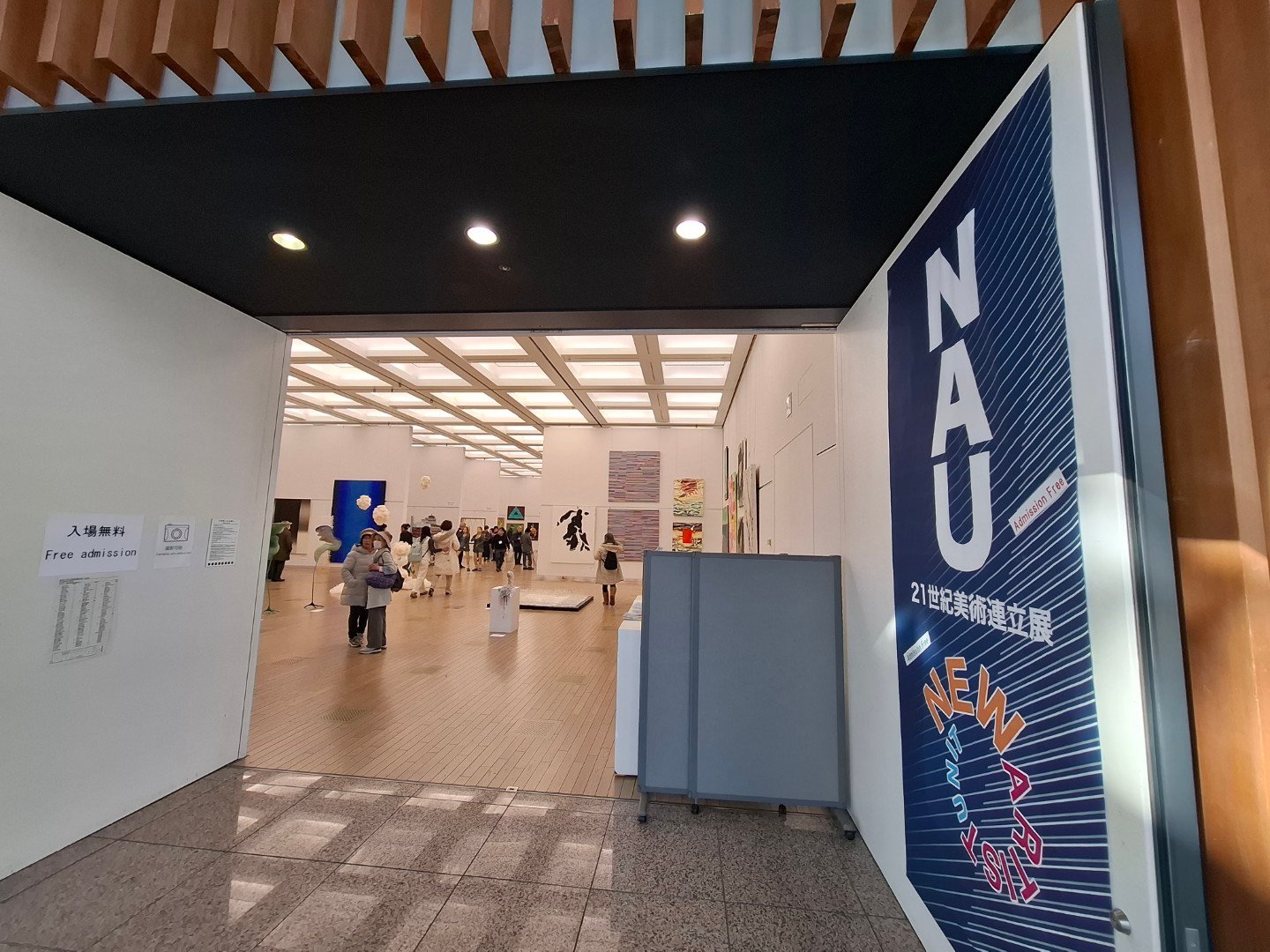
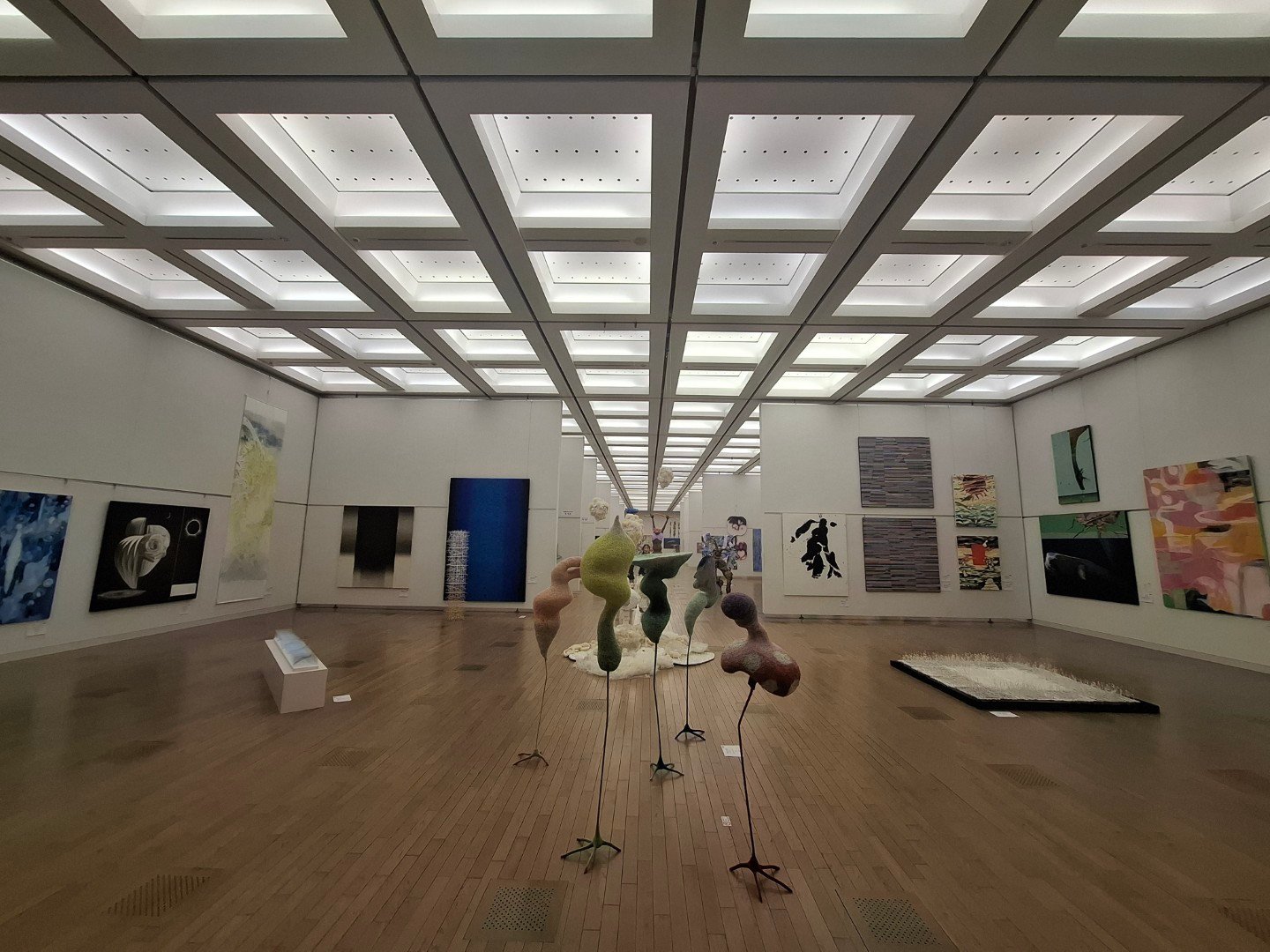
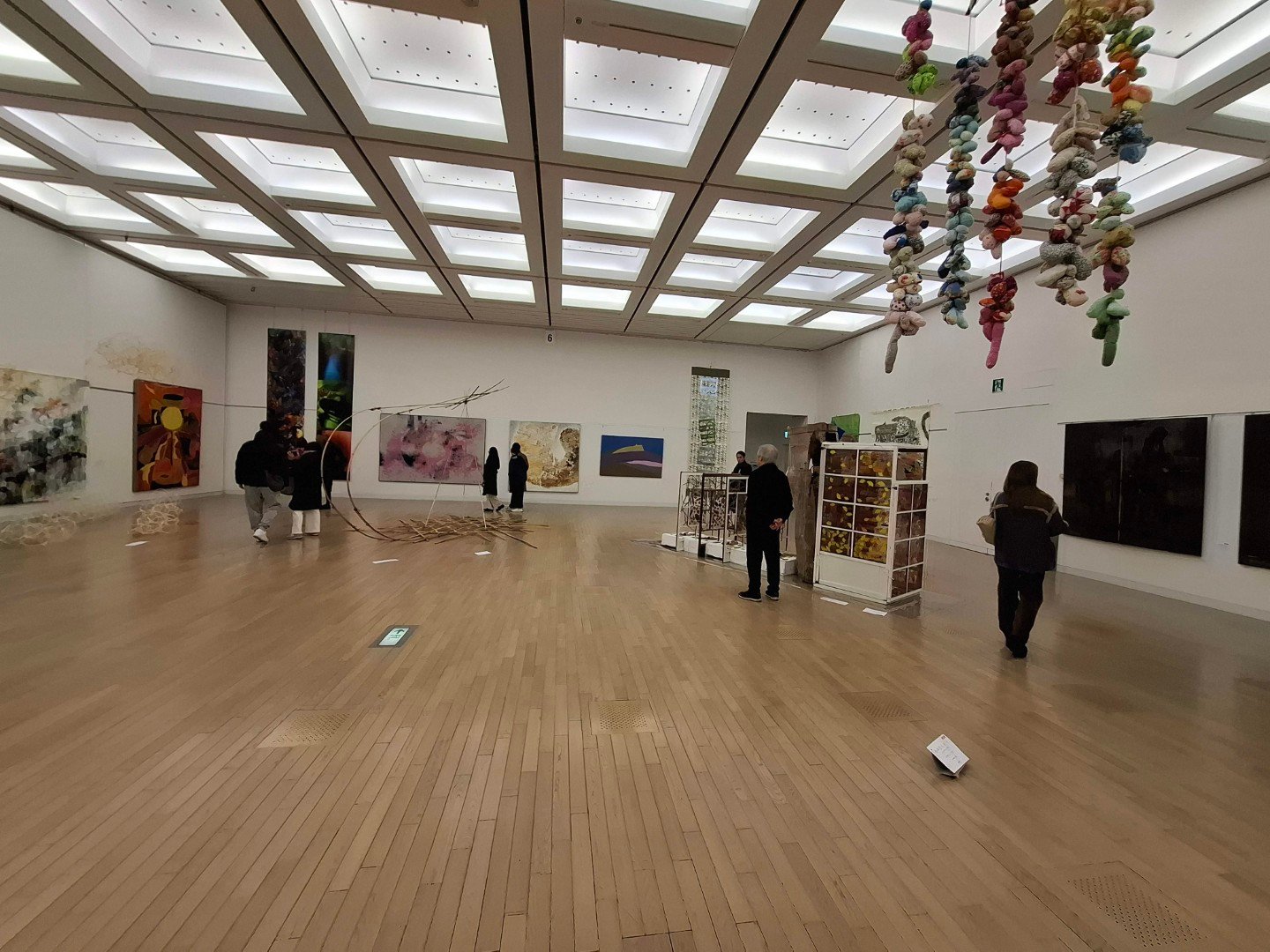
繼承日本戰後前衛藝術雙璧——「新達達」(Neo Dada)與「具體美術」(Gutai)反骨精神的第24回「 NAU 21世紀美術連立展」,將於2026年2月4日至15日,於日本最高等級展覽場域——國立新美術館(The National Art Center, Tokyo)盛大開展。本次展覽共有8位台灣優秀藝術家獲邀參展,他們將與來自日本及全球的頂尖創作者,在象徵日本當代藝術最高指標的舞台上,展開一場跨越國界與媒材的視覺對話。
參展成員除了來自日本NAU成員之外,還有來自日本墨人會(世界知名的現代書法家森田子龍、井上有一等創立,其作品屢受佳士得、蘇富比等真正國際藝術品拍賣獲得佳績)、太平洋美術會(日本最早的西洋畫藝術團體,歷史有一百二十多年)、日法現代美術會Salon Blanc、二紀會、每日書道會(日本最大書法團體)、一陽會、自由美術會、一墨會、CAF.N等藝術團體的審查員與成員等,實力堅強。
參展者背景涵蓋東京藝術大學、多摩美術大學、武藏野美術大學等日本頂尖學府,構成了嚴謹的師承與學術評論體系。
【現場直擊】【台日交流展】日本東京第24回《NAU21世紀美術連立展》-日本國立新美術館展(The National Art Center, Tokyo, NACT),影片拍攝製作:糸崎公朗
參展者:
The NAU 21st Century Art Joint Exhibition in Japan was founded in the late 1960s by leading avant-garde artists of the time. Its philosophy emphasizes breaking away from traditional frameworks and highlighting the individuality and expressive style of each artist. Since 2006, the exhibition has been held regularly at the National Art Center, Tokyo, one of Japan’s premier national art museums, and has now celebrated over 20 editions.
Participants:
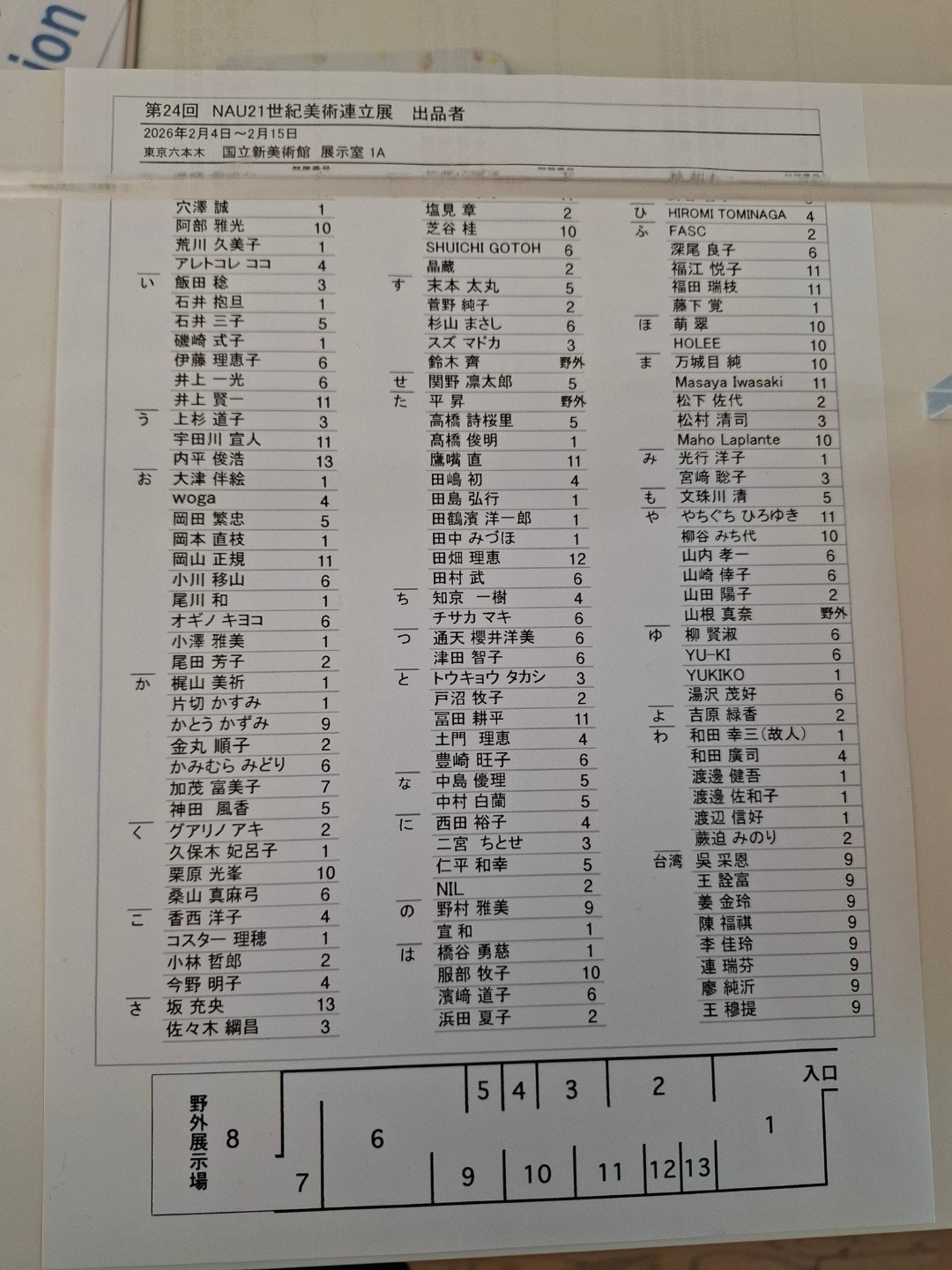
【出品者一覧】129名
青木洲子、浅野あかね、穴澤誠、阿部雅光、荒川久美子、アレトコレココ、飯田稔、石井抱旦、石井三子、磯崎式子、伊藤理恵子、井上一光、井上賢一、上杉道子、宇田川宣人、内平俊浩、大津伴絵、woga、岡田繁忠、岡本直枝、岡山正規、小川移山、尾川和、オギノキヨコ、小澤雅美、尾田芳子、梶山美祈、片切かすみ、かとうかずみ、金丸順子、かみむらみどり、加茂富美子、神田 風香、グアリノアキ、久保木妃呂子、栗原光峯、桑山真麻弓、香西洋子、コスター理穂、小林哲郎、今野明子、坂充央、佐々木綱昌、佐藤利予、シアカ章子、塩見章、芝谷桂、SHUICHIGOTOH、晶蔵、末本太丸、菅野純子、杉山まさし、スズマドカ、鈴木齊、関野凛太郎、平昇、高橋詩桜里、髙橋俊明、鷹嘴直、田嶋初、田島弘行、田鶴濱洋一郎、田中みづほ、田畑理恵、田村武、知京一樹、チサカマキ、通天櫻井洋美、津田智子、トウキョウタカシ、戸沼牧子、冨田耕平、土門理恵、豊崎旺子、中島優理、中村白蘭、西田裕子、二宮 ちとせ、仁平和幸、NIL、野村雅美、宣和、橋谷勇慈、服部牧子、濱﨑道子、浜田夏子、林和子、針谷智子、HIROMITOMINAGA、FASC、深尾良子、福江悦子、福田瑞枝、藤下覚、萌翠、HOLEE、万城目純、MasayaIwasaki、松下佐代、松村清司、MahoLaplante、光行洋子、宮﨑聡子、文珠川清、やちぐちひろゆき、柳谷みち代、山内孝一、山崎倖子、山田陽子、山根真奈、柳賢淑、YU-KI、YUKIKO、湯沢茂好、吉原緑香、和田幸三(故人)、和田廣司、渡邊健吾、渡邊佐和子、渡辺信好、蕨迫みのり、吳采恩、王詮富、姜金玲、陳福祺、李佳玲、連瑞芬、廖純沂、王穆提。
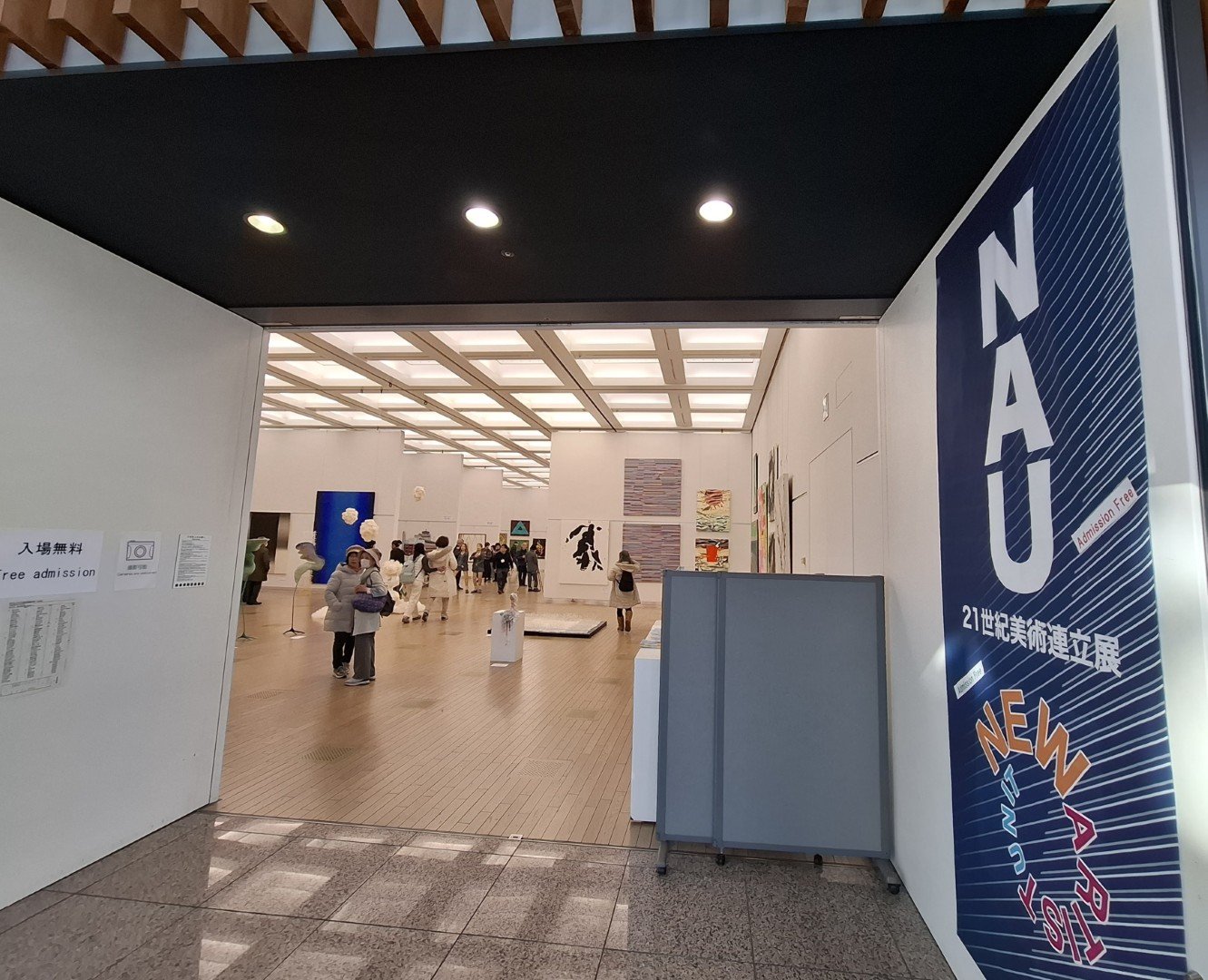
展覽內容:
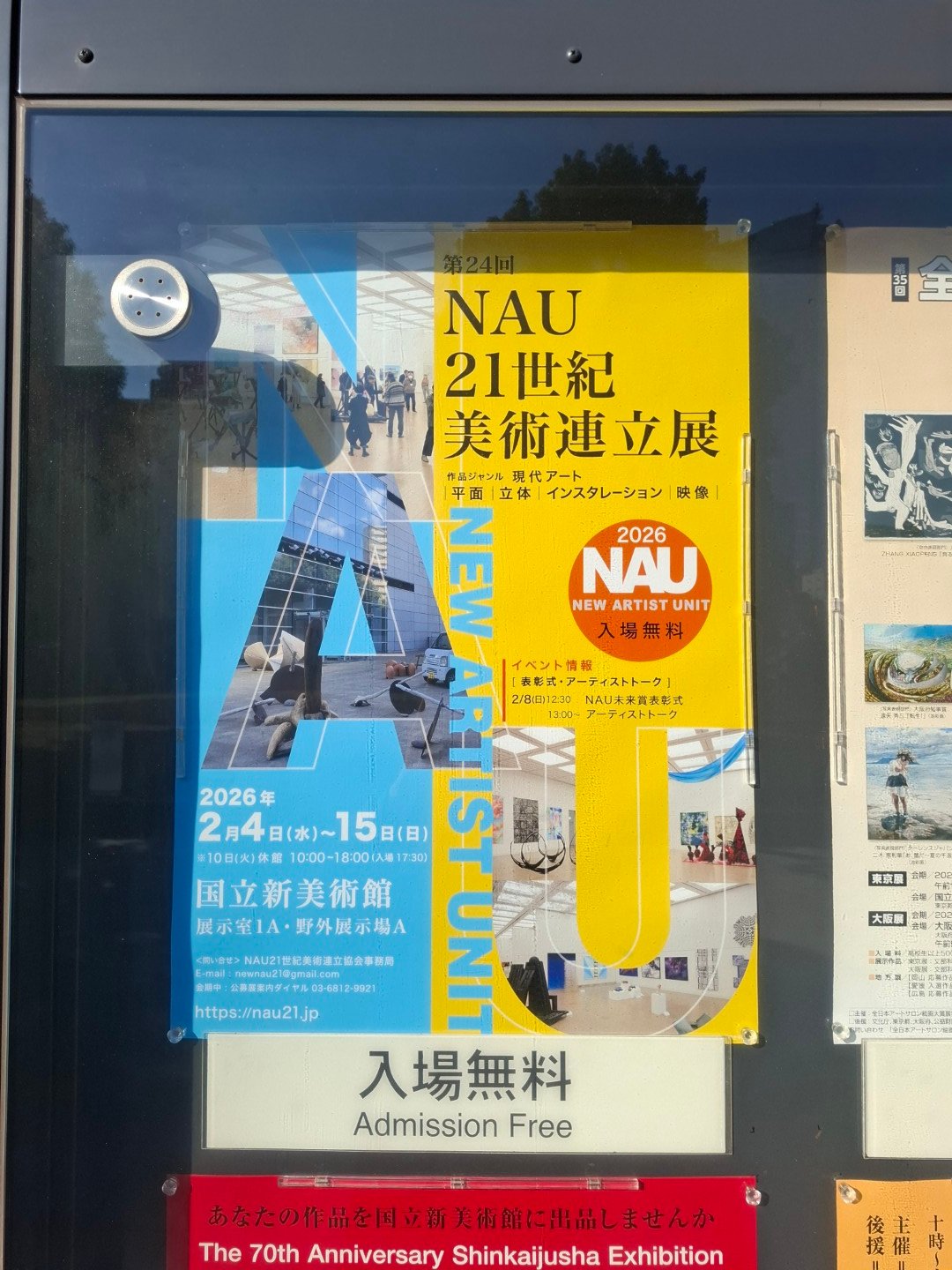
展覽期間:2026年2月4日(週三)至2月15日(週日),上午十點至下午六點,10日休館。
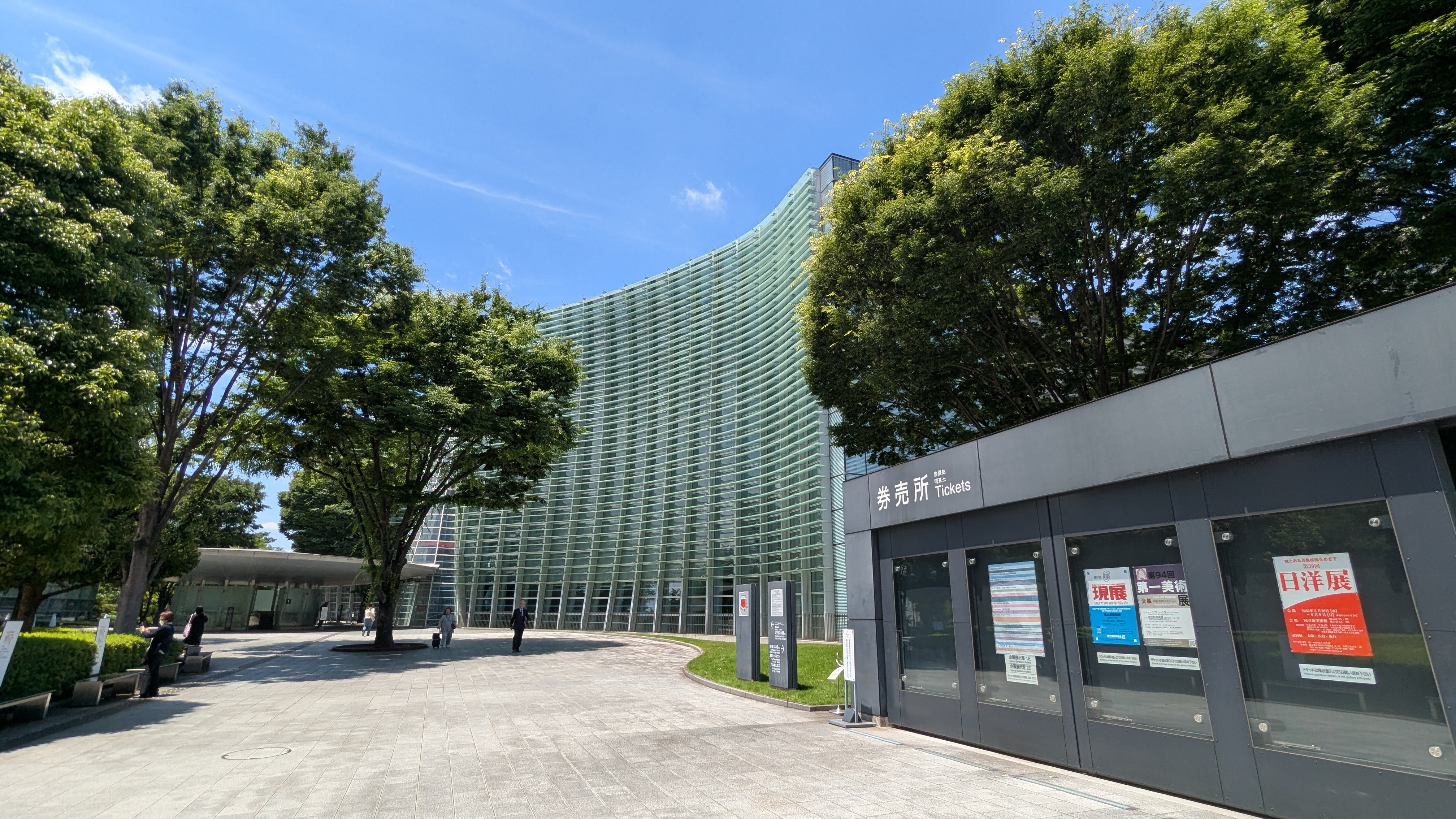
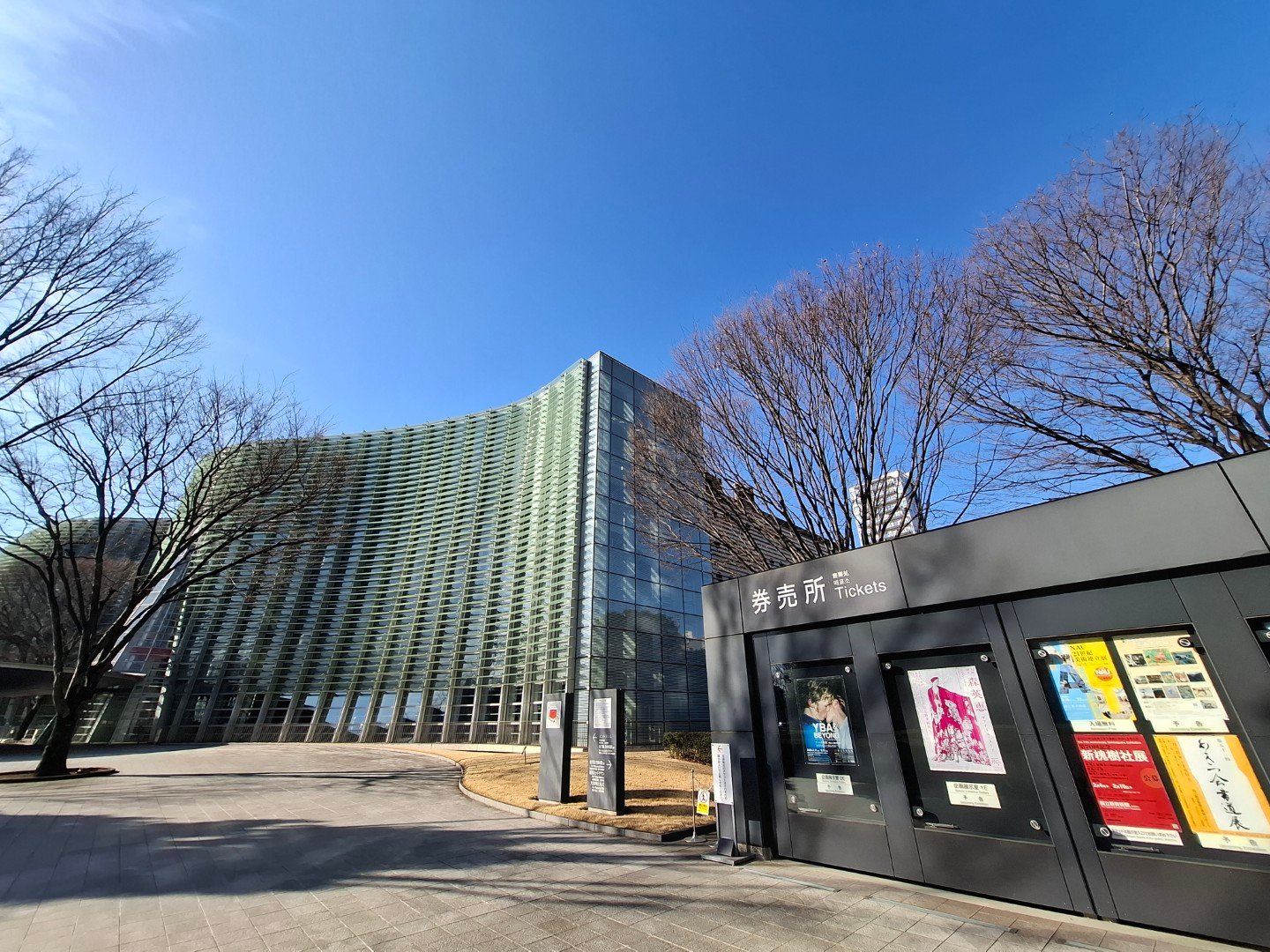
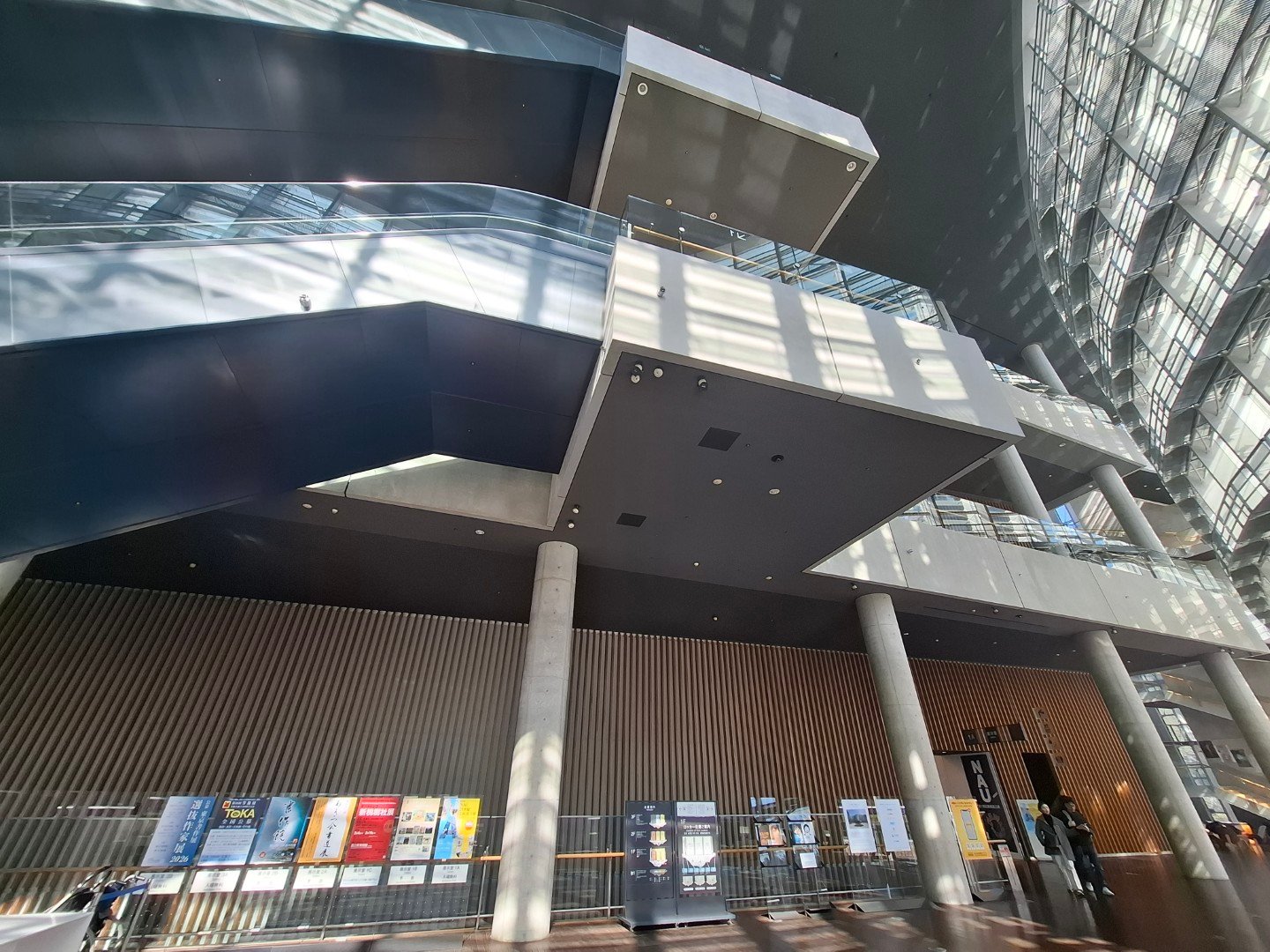
展覽地點:日本東京國立新美術館 展示室1A・戶外展示場A (日本最頂級的國立美術館,位於東京都六本木、乃木坂站直達)
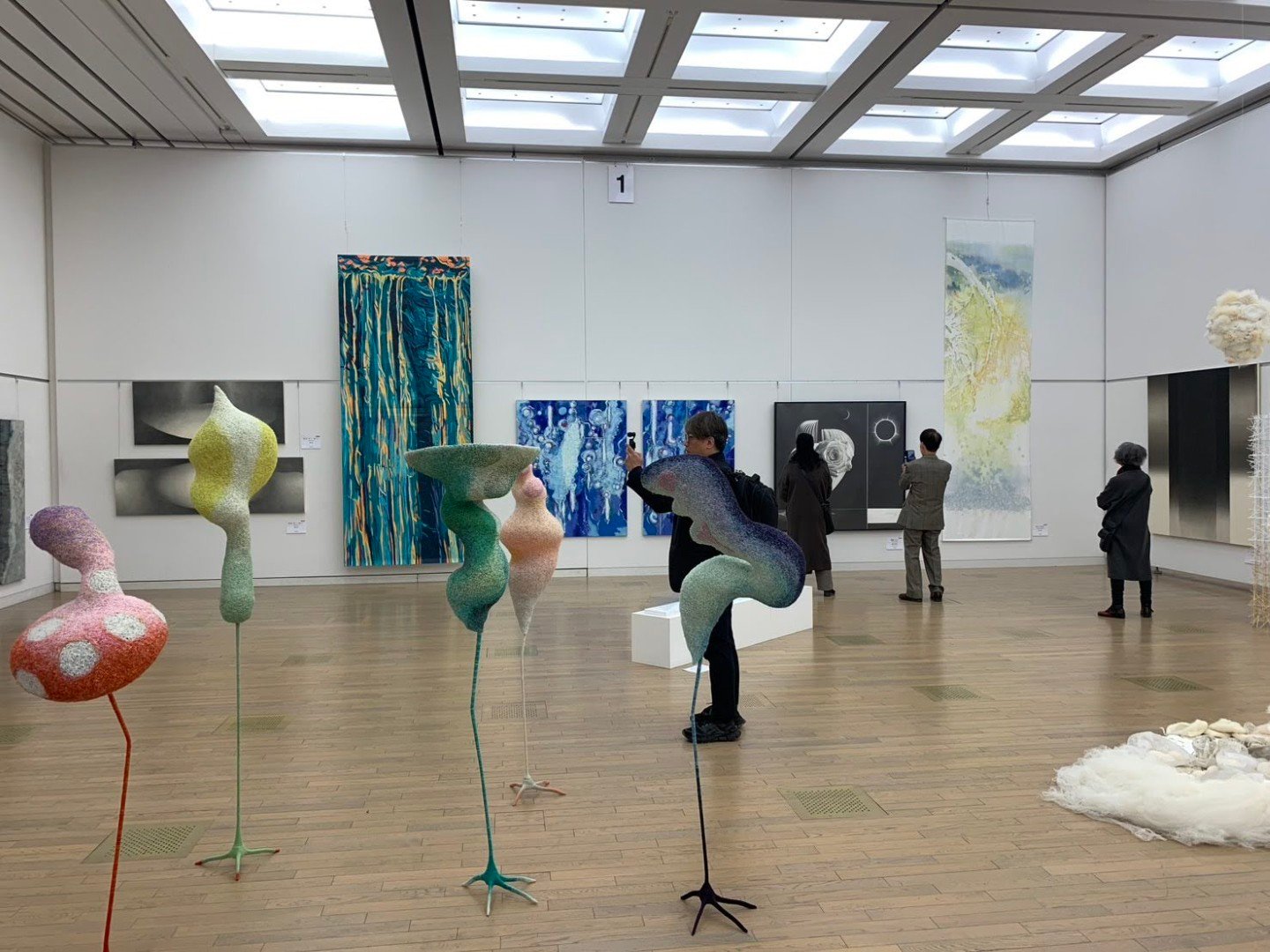
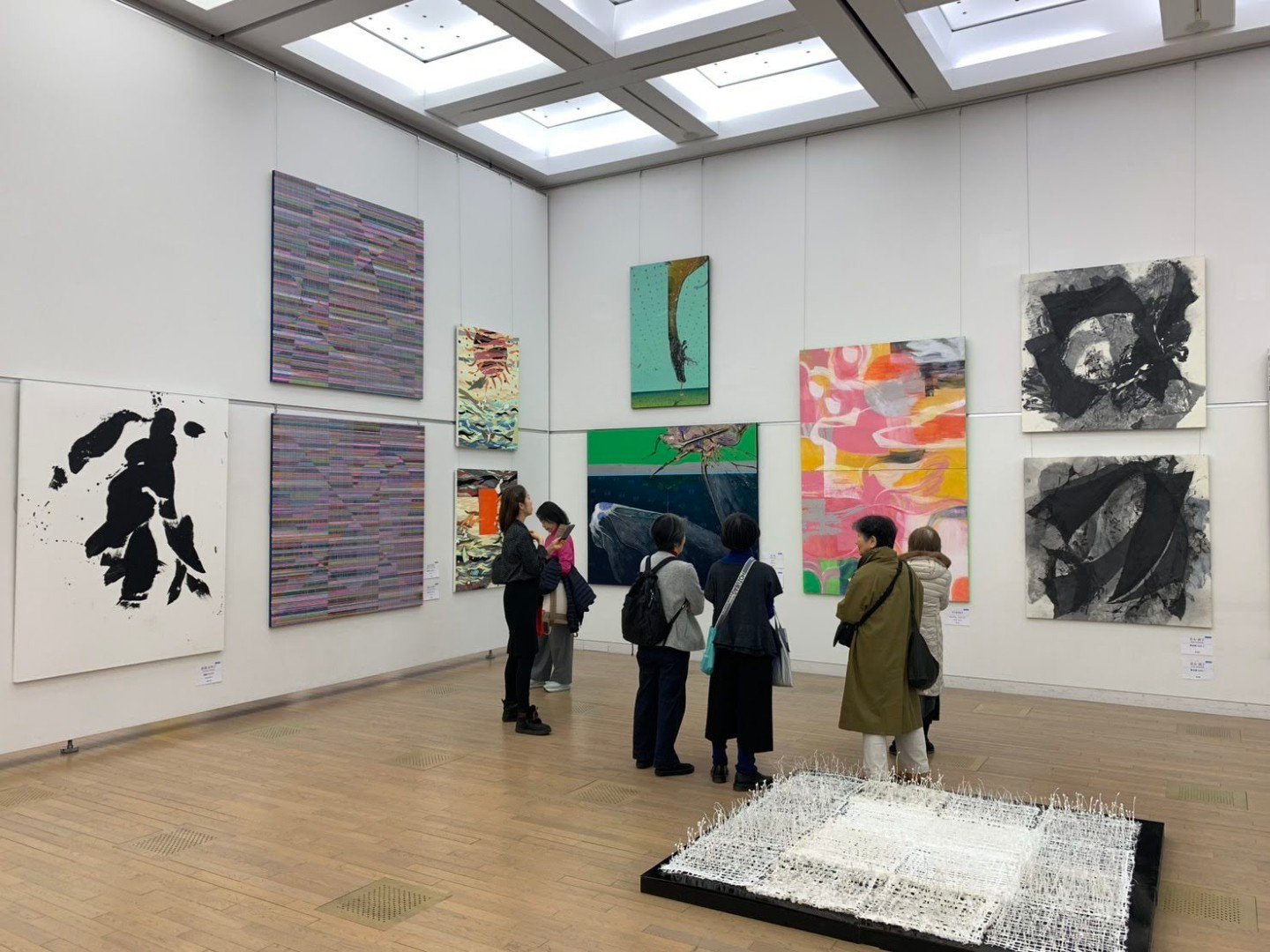
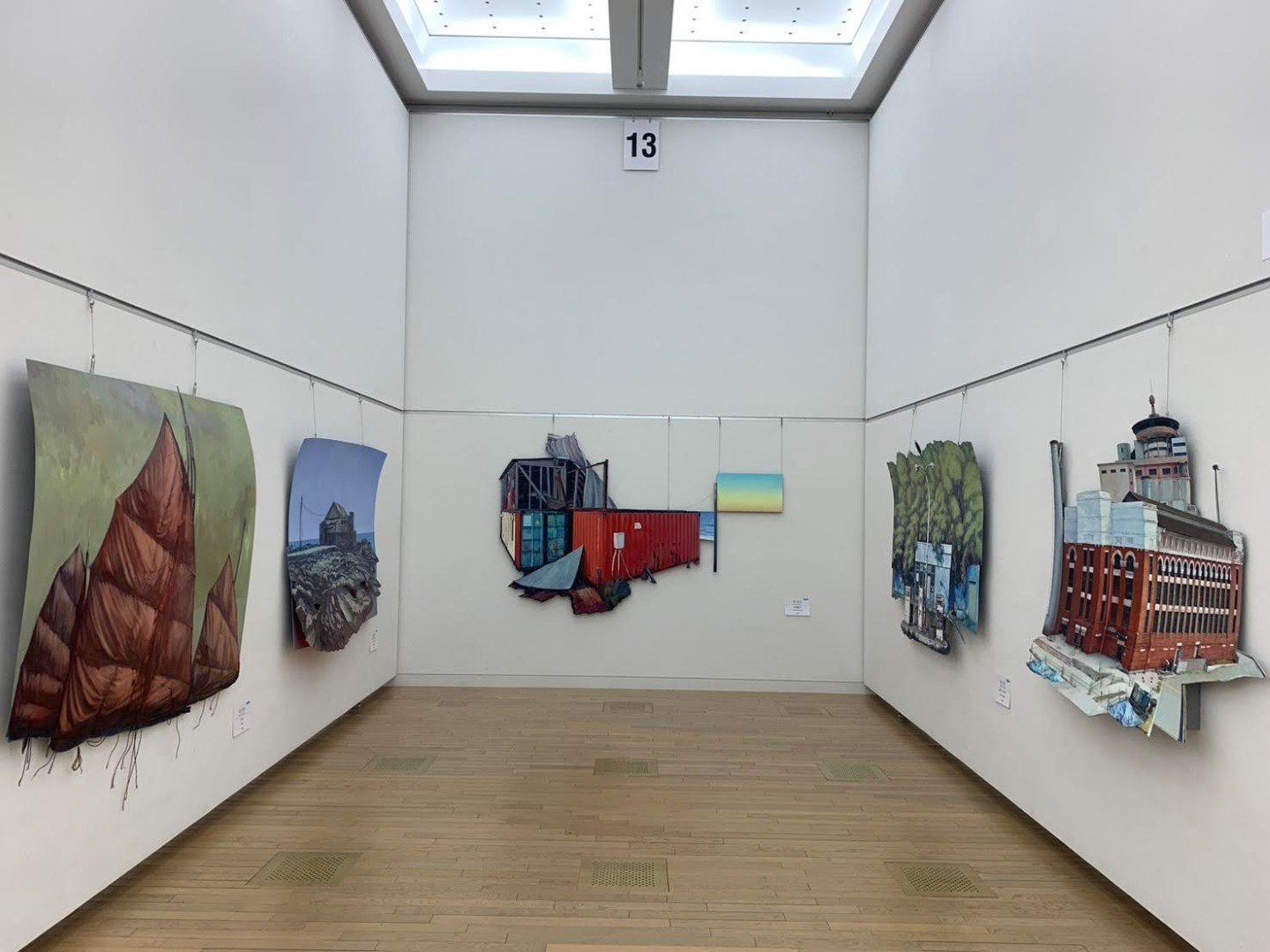
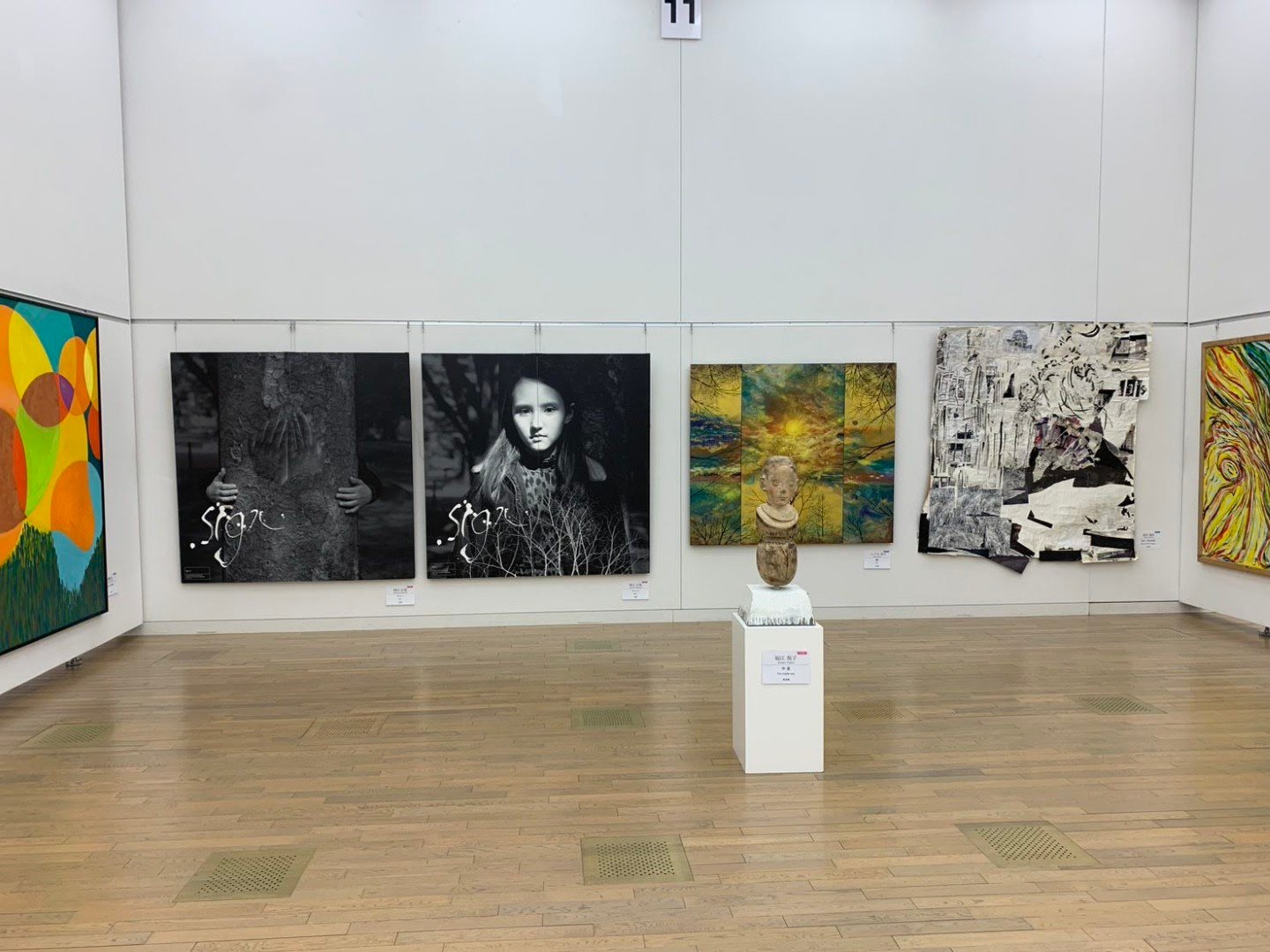
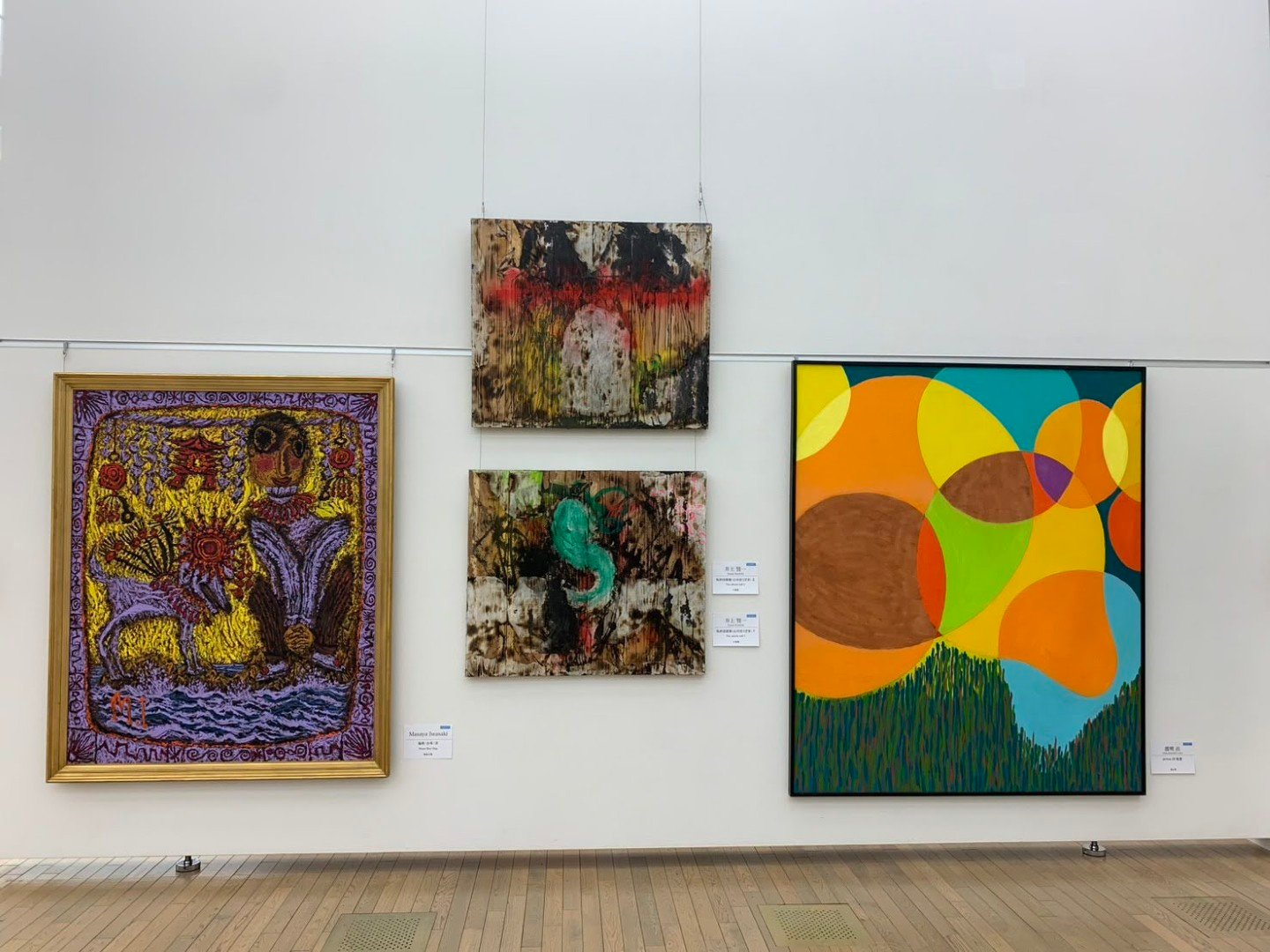
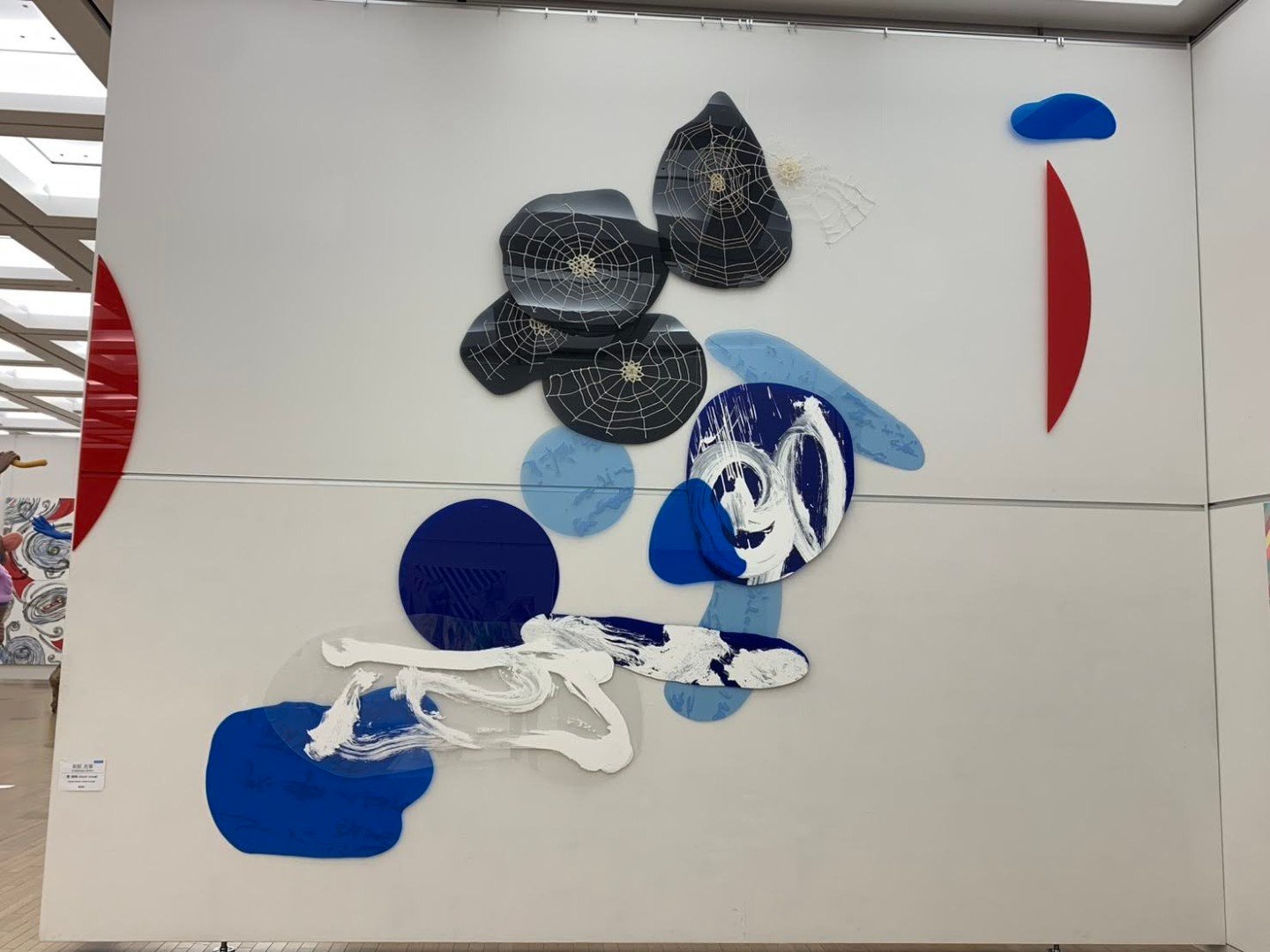
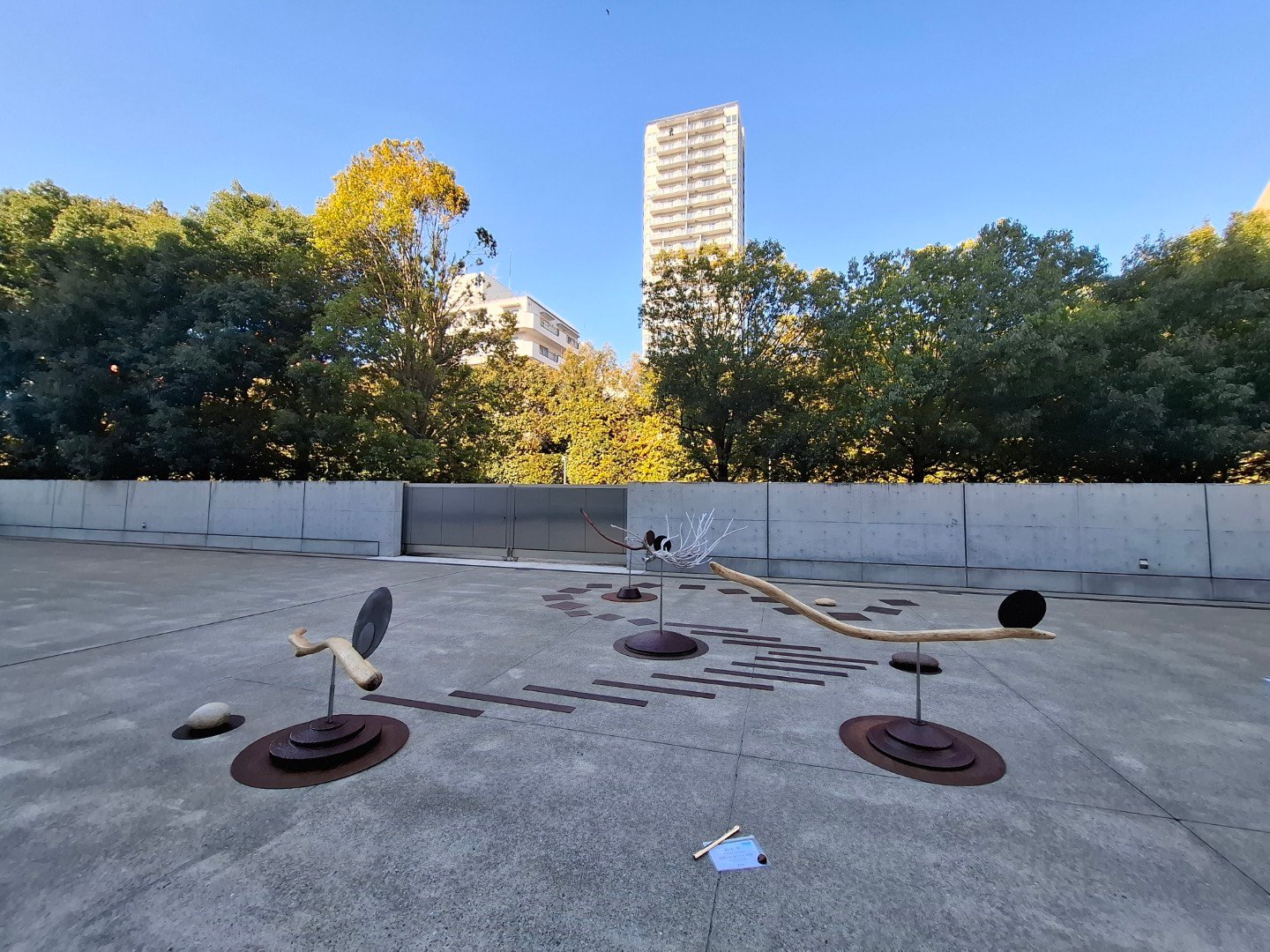
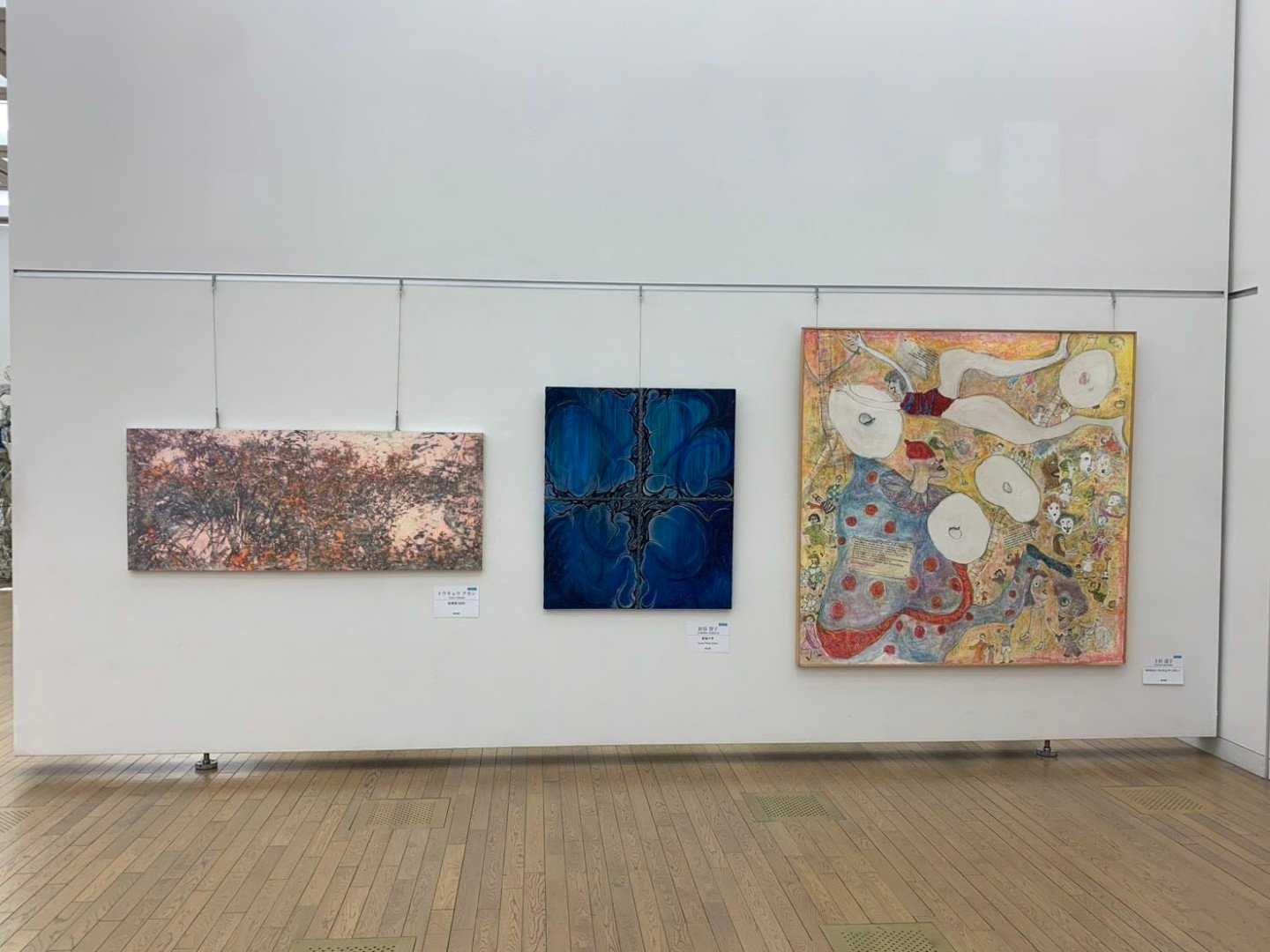
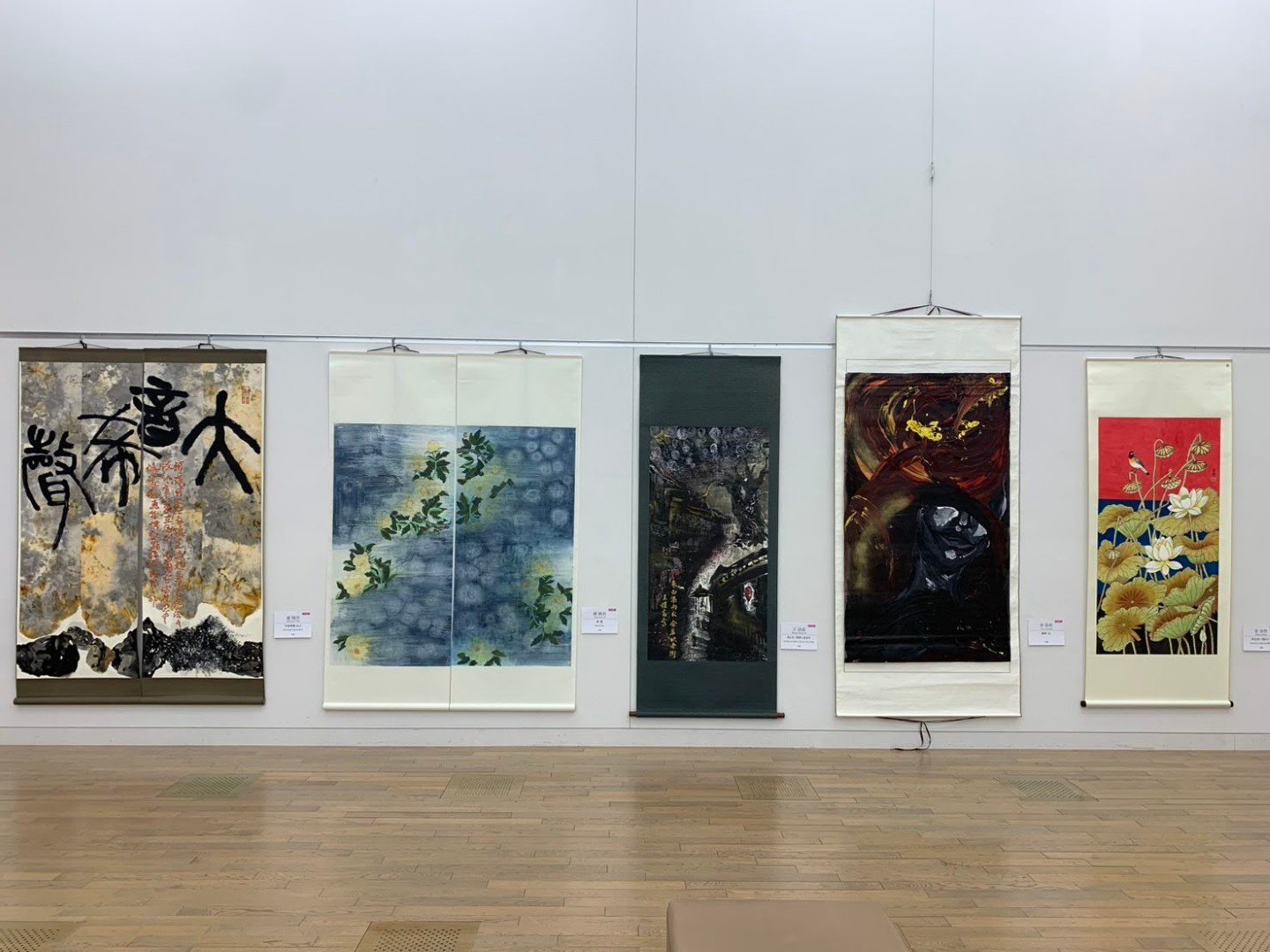
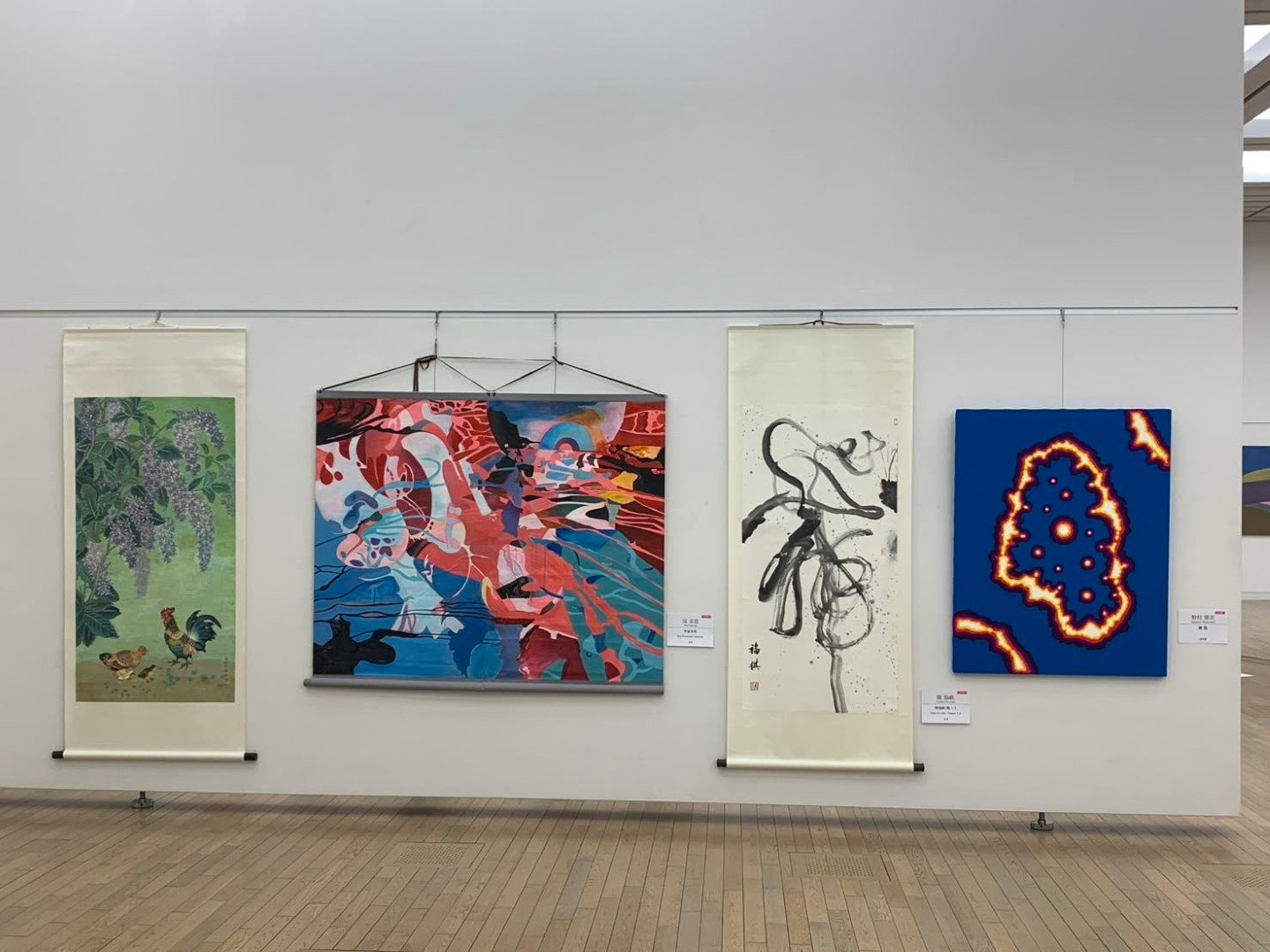
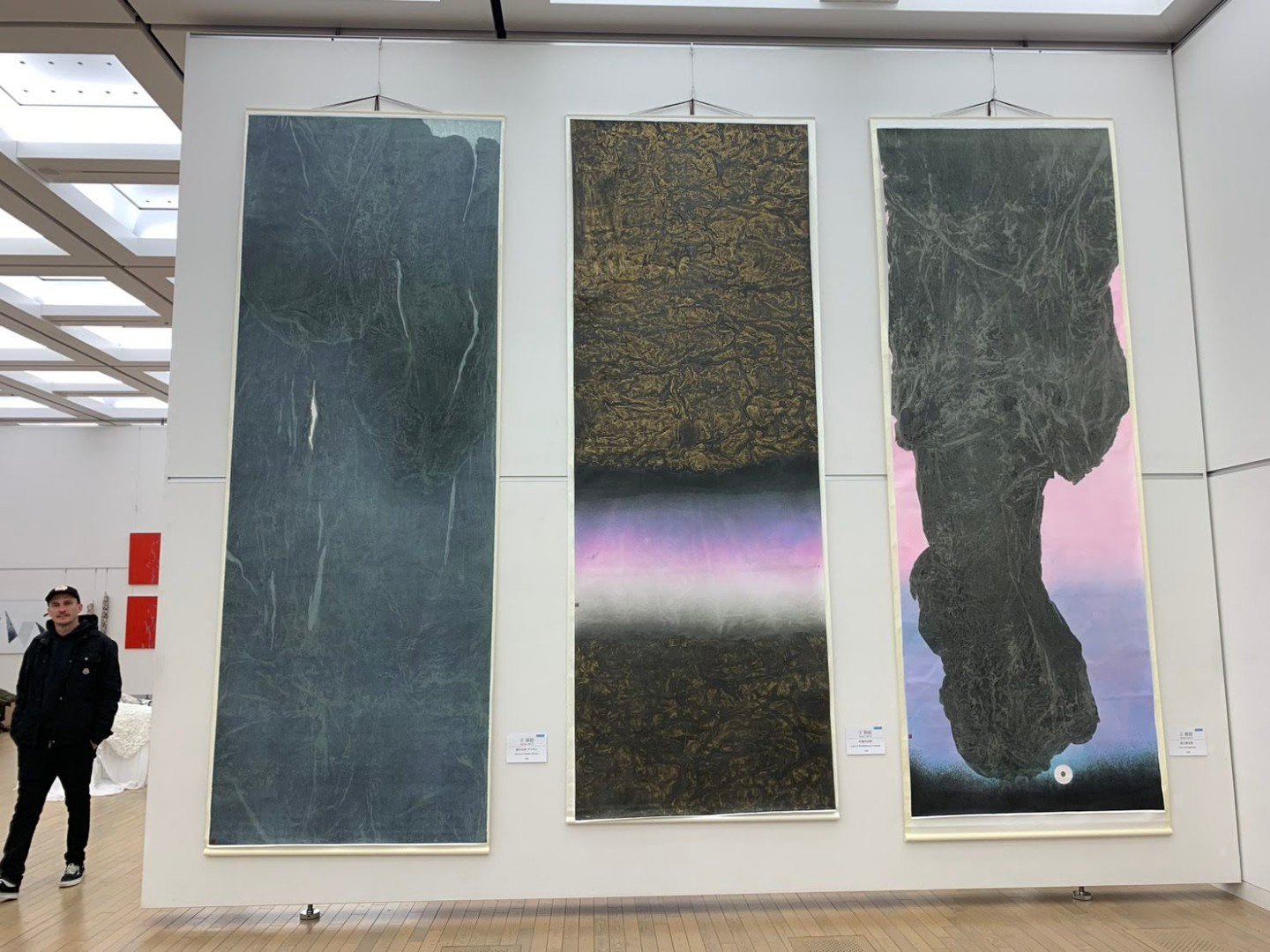
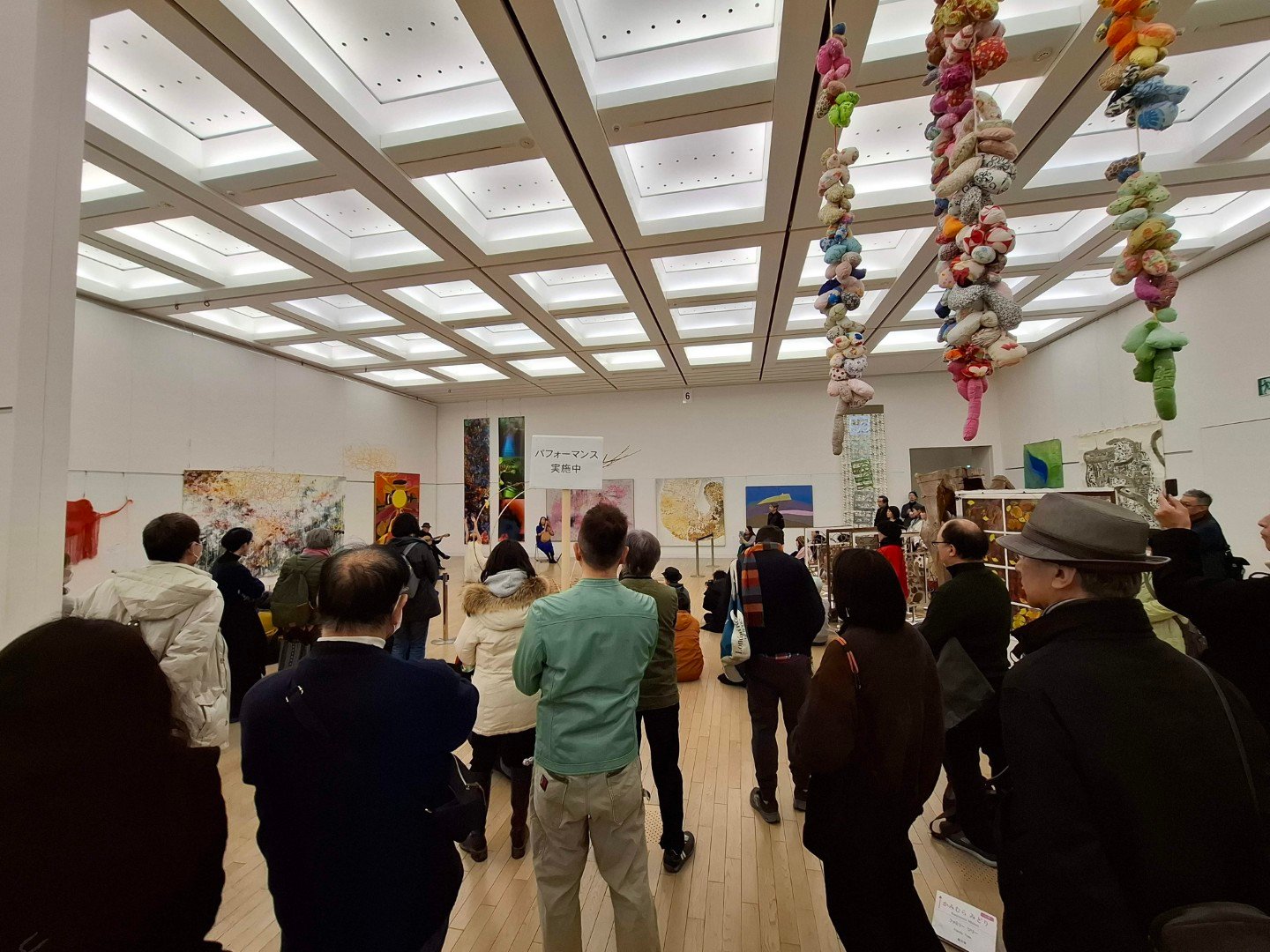
展覽活動:
2026年2月7日(週六)
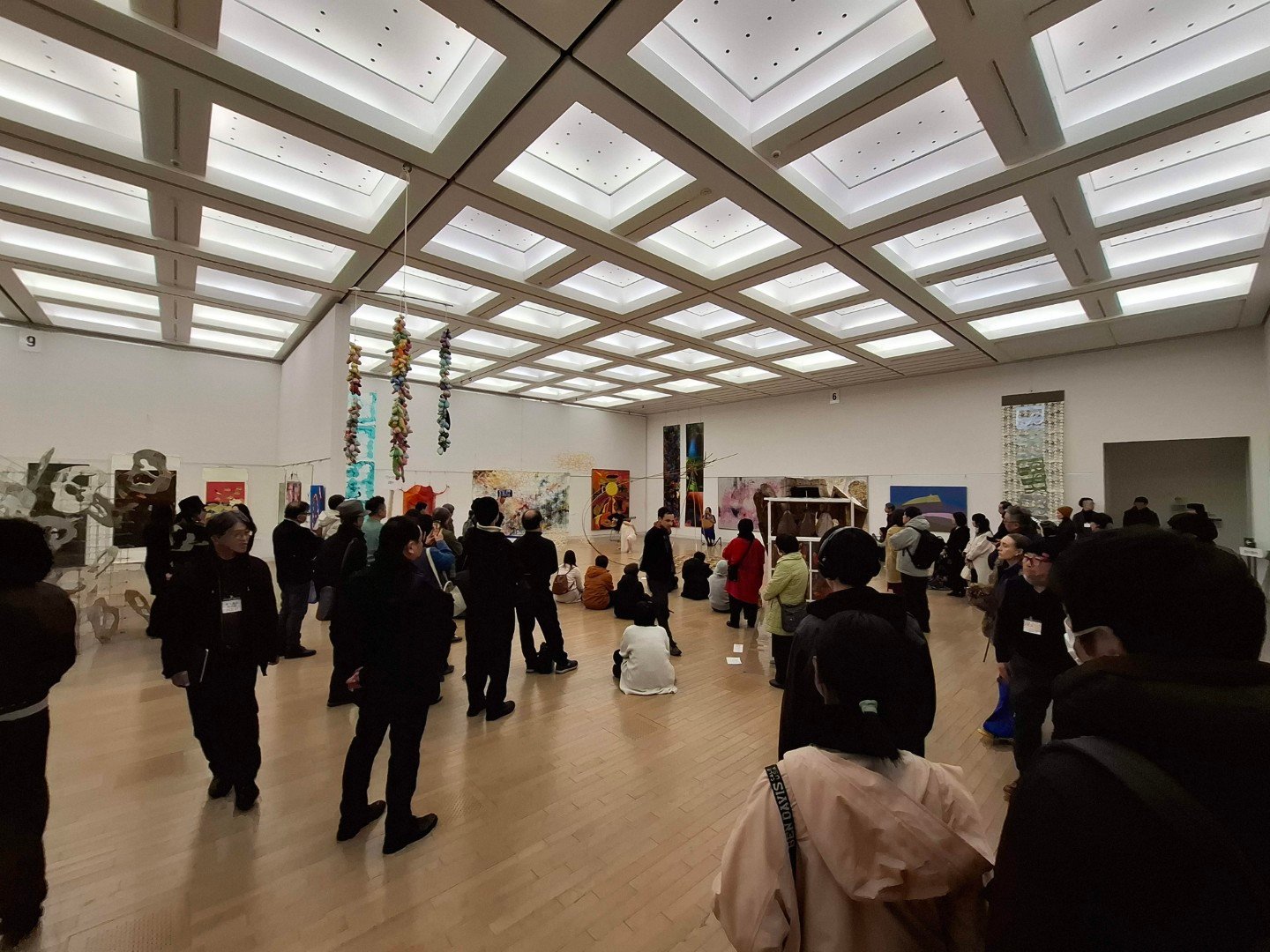
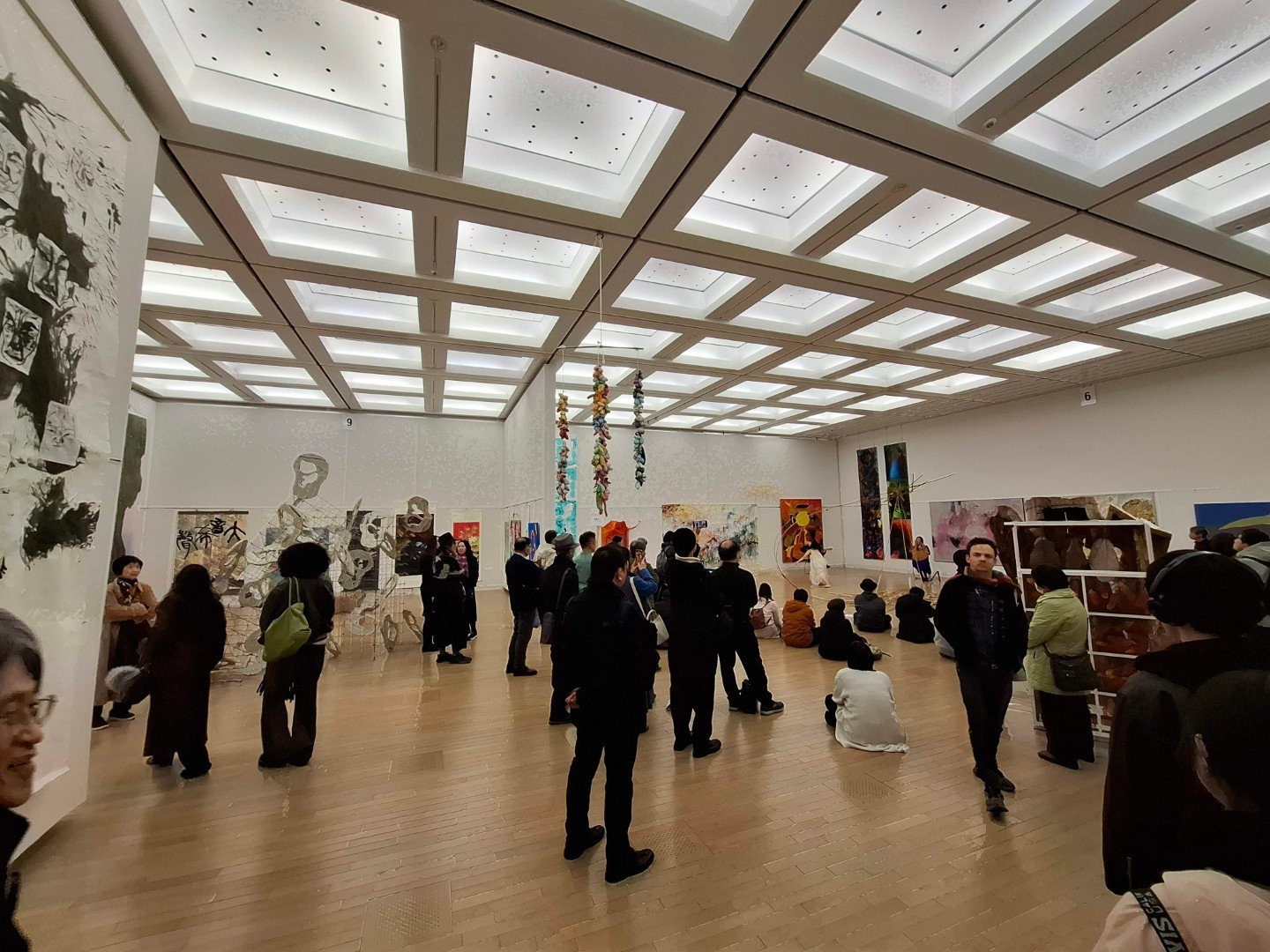
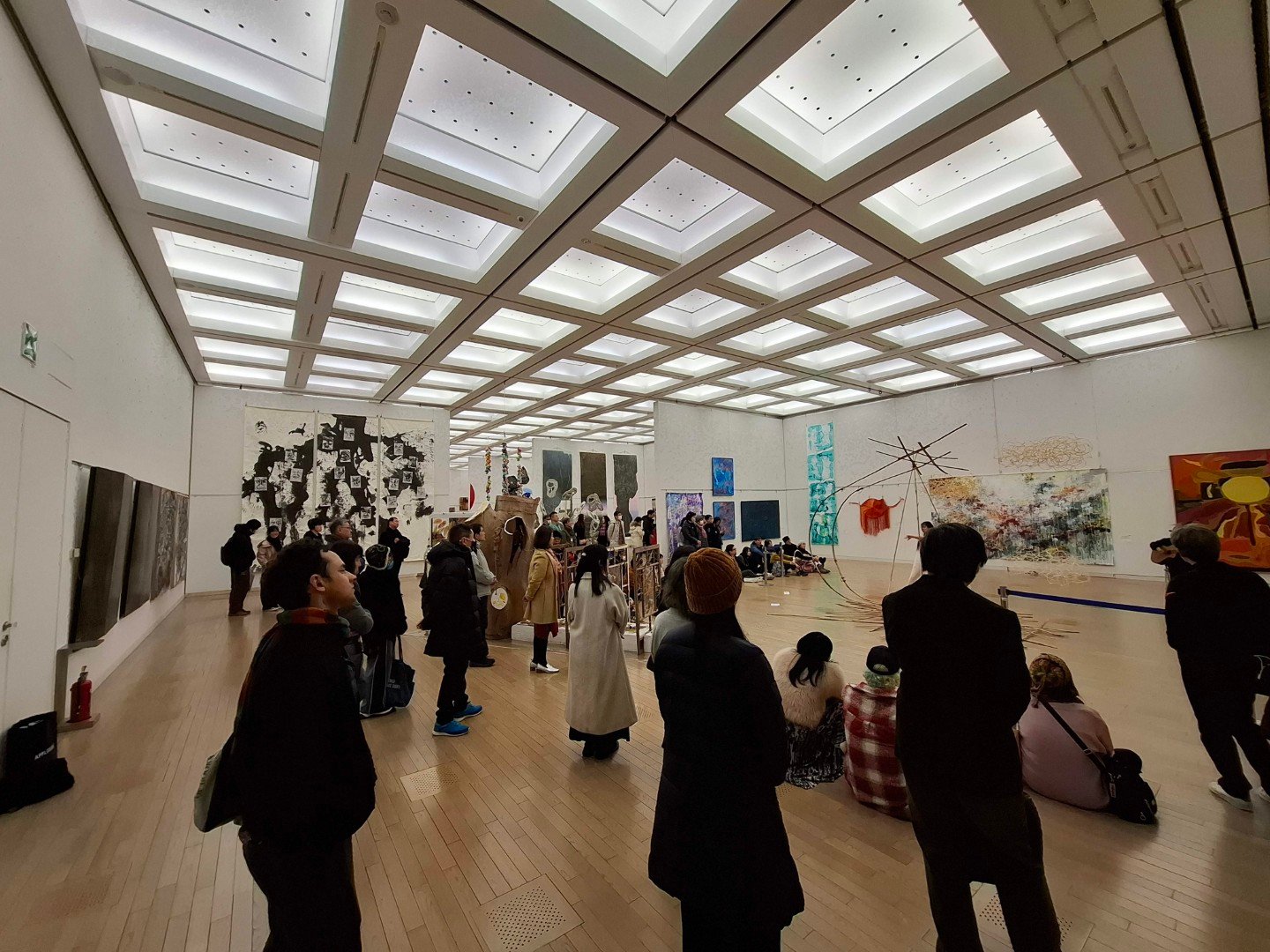
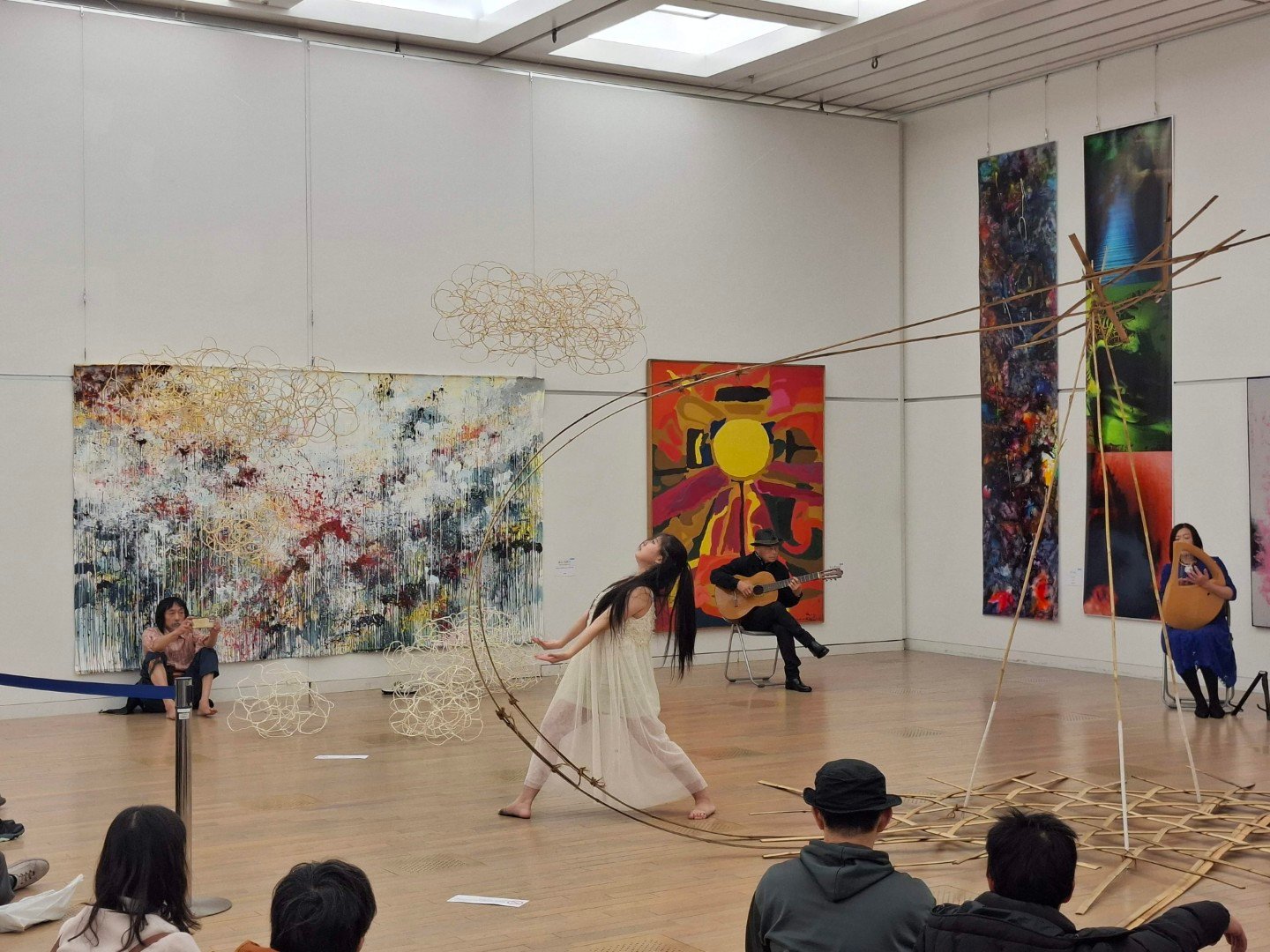
・參展者團隊的演出表演 16:00~
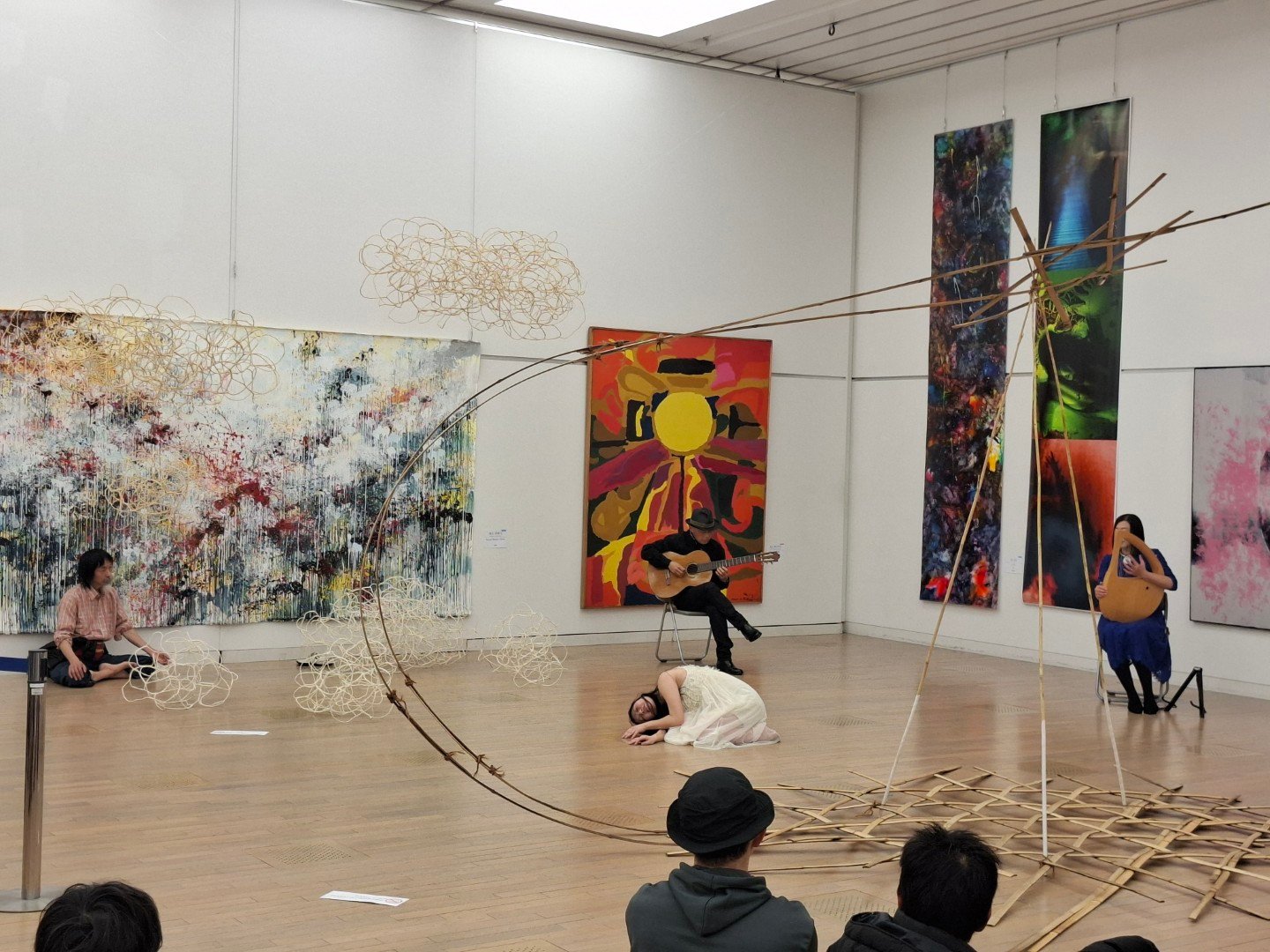
❶ 野村雅美 團隊(吉他、里拉琴、舞蹈)
❷ YU-KI 團隊(手碟、薩克斯風、+α)
・派對(於其他會場舉行) 18:00~(17:30 起可入場)
2026年2月8日(週日)
・典禮(頒獎儀式等) 12:30~
・藝術家座談/藝術家分享 13:00~
2026年2月15日(週日)
・參展者團隊的演出表演 15:00~
❸ YU-KI 團隊(手碟、吉他、舞蹈、聲響)
Exhibition Details
- Dates: February 4 (Wed) – February 15 (Sun), 2026, 10:00–18:00 (closed February 10)
- Venue: The National Art Center, Tokyo, Exhibition Room 1A & Outdoor Exhibition Area A (direct access from Nogizaka Station, Roppongi)
Events:
February 7, 2026 (Sat)
- Performances by participating teams 16:00–
❶ Masami Nomura Team (guitar, lyra, dance)
❷ YU-KI Team (handpan, saxophone, +α) - Party (held at another venue) 18:00– (doors open 17:30)
February 8, 2026 (Sun)
- Ceremony (awards, etc.) 12:30–
- Artist Panel / Artist Sharing 13:00–
February 15, 2026 (Sun)
- Performances by participating teams 15:00–
❸ YU-KI Team (handpan, guitar, dance, sound)


傳承日本「具體美術」精神、現在作為不分流派在世界發光的藝術團體「NAU」。
「NAU 21世紀美術連立展」以「新達達組織者」為基礎,「新達達組織者」於1960年代由荒川修作、 篠原有司男、赤瀬川原平、風倉匠等人組成,後來由反藝術領袖吉村益信與戲法藝術的頂尖專家岩永忠樹重組為前身「藝術家聯盟」(AU Artist Union)。2000 年,NAU 發起「NAU 21 世紀藝術展 - 初展」,作為不分流派的藝術家聯盟,一直延續至今。
荒川修作:日本紫綬褒章獲得者。法國藝術及文學勳章持有人。
篠原有司男:日本前衛藝術家,作品被現代藝術博物館,紐約、加拿大蒙特婁當代藝術博物館、法國里昂當代藝術館、東京都現代美術館, 東京、原美術館,東京等數十家美術館收藏。
赤瀬川原平:前衛藝術團體「新達達」和 「高赤中」的成員,曾獲獲第84屆芥川龍之介獎。
風倉匠:新達達主義組織者。曾受邀參加巴黎龐畢度中心舉辦的「日本前衛藝術1910-1970」展。
吉村益信:出生於大分市,1951年與後來成為世界知名建築師的磯崎新共同組成新世紀集團,並就讀於武藏野美術學校。從1955年開始,他繼續在未經審查的讀賣獨立展上展出自己的作品,並於1965年與篠原有司男等人組成新達達主義組織者,並在1960年因其“反藝術」的作品和表演而迅速受到關注。之後移居美國,在紐約舉辦個展和群展,1961年返回日本。回到日本後,他積極致力於動態藝術和光藝術,在日本當代藝術展上展出了“反物質:莫比烏斯上的光”,並在1970年大阪世博會上展示了他製作各種展館的技巧。隨後,他發布了《Pig・Pig・lib;》等流行普普藝術作品,並利用三維和二維等多種表現形式開展了豐富多彩的創作活動。

“NAU” is an art collective that inherits the spirit of Japan’s “Gutai Art” and now shines globally as a non-sectarian group.
The “NAU 21st Century Art Joint Exhibition” is based on the “Neo-Dada Organizers.” The Neo-Dada Organizers were formed in the 1960s by Shusaku Arakawa, Ushio Shinohara, Genpei Akasegawa, Takumi Kazakura, and others, and later reorganized by anti-art leader Masunobu Yoshimura and top performance artist Tadaki Iwanaga as the predecessor “Artist Union (AU Artist Union).” In 2000, NAU launched the “NAU 21st Century Art Exhibition – First Edition” and has continued as a non-sectarian artists’ union to this day.
Key Members:
- Shusaku Arakawa: Recipient of the Japanese Purple Ribbon Medal, holder of the French Ordre des Arts et des Lettres.
- Ushio Shinohara: Japanese avant-garde artist; works held in the Museum of Modern Art (New York), Montreal Museum of Contemporary Art (Canada), Lyon Contemporary Art Museum (France), Museum of Contemporary Art Tokyo, and Hara Museum of Contemporary Art, among others.
- Genpei Akasegawa: Member of the avant-garde groups “Neo-Dada” and “High Akachuu”; recipient of the 84th Akutagawa Ryunosuke Prize.
- Takumi Kazakura: Organizer of Neo-Dadaism; invited to the Pompidou Center in Paris for “Japanese Avant-Garde Art 1910–1970.”
- Masunobu Yoshimura: Born in Oita City; co-founded the New Century Group with architect Arata Isozaki in 1951 and studied at Musashino Art University. Exhibited at the Yomiuri Independent Exhibition from 1955 without censorship. Formed the Neo-Dada Organizers with Ushio Shinohara in 1965, gaining attention for his “anti-art” works. Lived in New York for solo and group exhibitions, returned to Japan in 1961, pursued dynamic and light art, presented “Anti-Matter: Light on a Möbius” at the Japan Contemporary Art Exhibition, contributed to various pavilions at Expo ’70 Osaka, later produced pop art works such as Pig・Pig・lib; and explored diverse creative expressions in 2D and 3D.
展覽場地:日本國立新美術館(The National Art Center, Tokyo, NACT)
「日本國立新美術館(The National Art Center, Tokyo, NACT)」 的定位為核心,比對法國、英國、美國、中國與台灣具有 相近層級、同等國家級地位、展覽性質相似(以大型企劃展為主、少典藏)」 的美術館。有日本最大級別的展覽面積(約14,000平方公尺),專門用來舉辦「超大型特展」、「國際巡迴展」以及「國內美術團體展(公募展)」。

一、日本國立新美術館的定位(基準) 日本國立新美術館是「國家級展覽型美術館」,以 大型特展、國際交流展、藝術團體公募展 為主,不以典藏為核心,屬於政府成立的「國家級展示平台」。有日本最大級別的展覽面積(約14,000平方公尺),專門用來舉辦「超大型特展」、「國際巡迴展」以及「國內美術團體展(公募展)」。

二、相對應國家之等級美術館
(一)法國(France) 與日本國立新美術館最接近的是:
- 功能與地位對應:大皇宮(Grand Palais)
- 相似點: 兩者都是國家級的「超級展覽館」。巴黎大皇宮主要功能也是舉辦大規模的臨時特展(如香奈兒大秀、大型藝術回顧展),本身不展示永久館藏。
- 等級: 國立新美術館在策展規模和國際合作能力上,與大皇宮是同一個級別。
- 現代藝術對應:龐畢度中心(Centre Pompidou)
- 雖然龐畢度有館藏,但國立新美術館的建築風格、對現代/當代藝術的關注度,以及作為「城市文化地標」的角色,與龐畢度相當接近。
- 〈東京 Palais de Tokyo〉(巴黎東京宮) 云:同為「展覽型」美術館,以當代藝術展覽為主,不以收藏為重點。
(註:羅浮宮與奧賽屬「大型典藏型」美術館,性質不同。)

(二)英國(United Kingdom) 最為接近的機構:
- 〈Tate Modern〉(泰特現代美術館) 云:以當代藝術展覽與國際大展著稱,國家級地位。
- 〈Royal Academy of Arts〉(英國皇家藝術學院展覽館) 云:其「夏季展」等大型公募與學術展的性質,和日本國立新美術館的「公募展平台」性質非常相似。
- 最精準對應:皇家藝術研究院(Royal Academy of Arts, RA)
- 相似點: RA 是英國極少數沒有永久展覽(主要靠特展)的頂級藝術機構,且它和國立新美術館一樣,都承擔著舉辦「公募展」(Summer Exhibition vs. 日本的日展)的傳統責任,是藝術家團體的核心據點。
- 等級: 極高,屬於國家一線藝術殿堂。
- 另一對應:黑沃美術館(Hayward Gallery)
- 倫敦著名的現代美術館,同樣沒有館藏,專注於策劃世界級的當代藝術特展。

(三)美國(United States) 美國美術館多為典藏型,但以下兩者在 國家級及大型展覽平台性質 上接近:
- 〈Smithsonian – Hirshhorn Museum and Sculpture Garden〉(赫希洪美術館) 云:以現代與當代展覽為主,強調國際大展。
- 〈MoMA〉(紐約現代美術館):雖為典藏型,但其國際企劃展規模與 NACT 相近於「級別」。
- 功能對應:軍械庫(Park Avenue Armory)或 The Shed
- 美國的國家級博物館(如華盛頓國家藝廊)多半是傳統收藏型。若要找「巨大空間、無館藏、舉辦巨型展演」的對應,紐約的軍械庫或新興的 The Shed 比較接近其運作模式。
- 展覽規模對應:大都會博物館(The Met)或 MoMA 的特展廳
- 若論「引進展覽的等級」,國立新美術館常是歐美頂級美術館(如大都會、泰特)在亞洲巡迴的首選場地,因此在展覽內容的精彩度上,它與美國一線博物館的特展區是同級的。
(四)中國(China) 中國最接近 NACT 性質的國家級美術館為:北京的中國美術館。

Exhibition Venue: The National Art Center, Tokyo (NACT)
The National Art Center, Tokyo (NACT) is positioned as a core exhibition facility in Japan. Its level and exhibition-oriented nature are comparable to national-level museums in France, the UK, the United States, China, and Taiwan (focused on large-scale temporary exhibitions rather than permanent collections). It has one of the largest exhibition areas in Japan (approx. 14,000 m²) and specializes in hosting “mega exhibitions,” international traveling exhibitions, and domestic art group exhibitions (open-call exhibitions).
1. Positioning of NACT (Benchmark)
NACT is a “national-level exhibition-oriented museum,” mainly hosting large-scale special exhibitions, international exchange exhibitions, and open-call exhibitions by art organizations, rather than emphasizing permanent collections. It serves as a government-established “national exhibition platform” with one of Japan’s largest exhibition spaces (approx. 14,000 m²), dedicated to mega exhibitions, international traveling shows, and domestic art group exhibitions.
2. Corresponding National-Level Museums Abroad
(a) France
- Function & Status Correspondence: Grand Palais
Similarity: Both are national “super exhibition halls,” mainly hosting large-scale temporary exhibitions (e.g., Chanel shows, major retrospectives) without permanent collections.
Level: Comparable in scale and international collaboration ability. - Modern Art Correspondence: Centre Pompidou
NACT’s architectural style, focus on modern/contemporary art, and role as a city cultural landmark are comparable. - Other: Palais de Tokyo
Exhibition-oriented contemporary art museum, collection not a focus.
※Louvre and Musée d’Orsay are large-scale collection-oriented museums, different in nature.
(b) United Kingdom
- Closest: Tate Modern – renowned for contemporary art and international exhibitions, national-level status.
- Similar: Royal Academy of Arts – Summer Exhibition and other large open-call exhibitions are very similar to NACT’s open-call platform.
- Most Accurate Correspondence: Royal Academy of Arts (RA)
Few permanent exhibitions (mainly special exhibitions), upholds the tradition of open-call exhibitions (Summer Exhibition vs Japan’s Nichi-ten), similar to NACT, top national art institution. - Other Correspondence: Hayward Gallery – London modern art gallery without collections, focuses on world-class contemporary art exhibitions.

(c) United States
- Many U.S. museums are collection-oriented, but the following are similar in national-level, large-scale exhibition platform terms:
- Smithsonian – Hirshhorn Museum and Sculpture Garden
- MoMA (Museum of Modern Art, New York): collection-based, but international exhibition scale comparable to NACT - Functional Correspondence: Park Avenue Armory, The Shed
Large spaces, non-collection-based, for mega exhibitions. - Exhibition Scale Correspondence: The Met or MoMA special exhibition halls
NACT is often the first choice for top-tier Western museum exhibitions in Asia, comparable in exhibition content and quality.
(d) China
- The Chinese National Art Museum in Beijing is most similar in nature to NACT.
台灣8位藝術家參展日本「第24回 NAU 21世紀美術連立展」 於東京國立新美術館
繼承「具體派」前衛血脈,台灣藝術力量進軍日本最高殿堂,展開跨越半世紀的藝術對話
【東京訊】
繼承日本戰後前衛藝術雙璧——「新達達」(Neo Dada)與「具體美術」(Gutai)反骨精神的第24回「 NAU 21世紀美術連立展」,將於2026年2月4日至15日,於日本最高等級展覽場域——國立新美術館(The National Art Center, Tokyo)盛大開展。本次展覽共有8位台灣優秀藝術家獲邀參展,他們將與來自日本及全球的頂尖創作者,在象徵日本當代藝術最高指標的舞台上,展開一場跨越國界與媒材的視覺對話。
參展成員除了來自日本NAU成員之外,還有來自日本墨人會(世界知名的現代書法家森田子龍、井上有一等創立,其作品屢受佳士得、蘇富比等真正國際藝術品拍賣獲得佳績)、太平洋美術會(日本最早的西洋畫藝術團體,歷史有一百二十多年)、日法現代美術會Salon Blanc、二紀會、每日書道會(日本最大書法團體)、一陽會、自由美術會、一墨會、CAF.N等藝術團體的審查員與成員等,實力堅強。
參展者背景涵蓋東京藝術大學、多摩美術大學、武藏野美術大學等日本頂尖學府,構成了嚴謹的師承與學術評論體系。
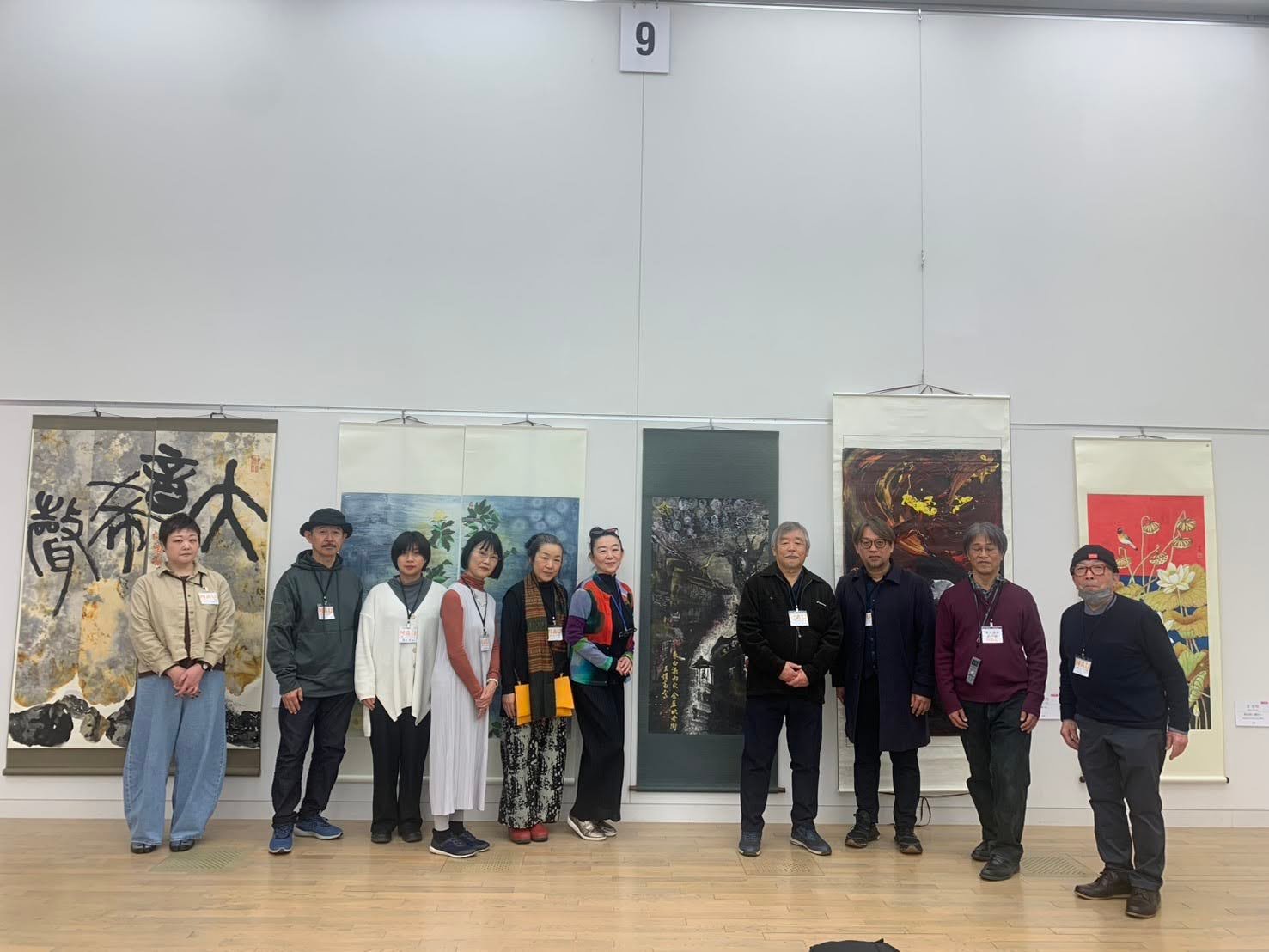
本次展覽共有8位台灣優秀藝術家獲邀參展,他們將與來自日本及全球的頂尖創作者,在象徵日本當代藝術最高指標的舞台上,展開一場跨越國界與媒材的視覺對話。
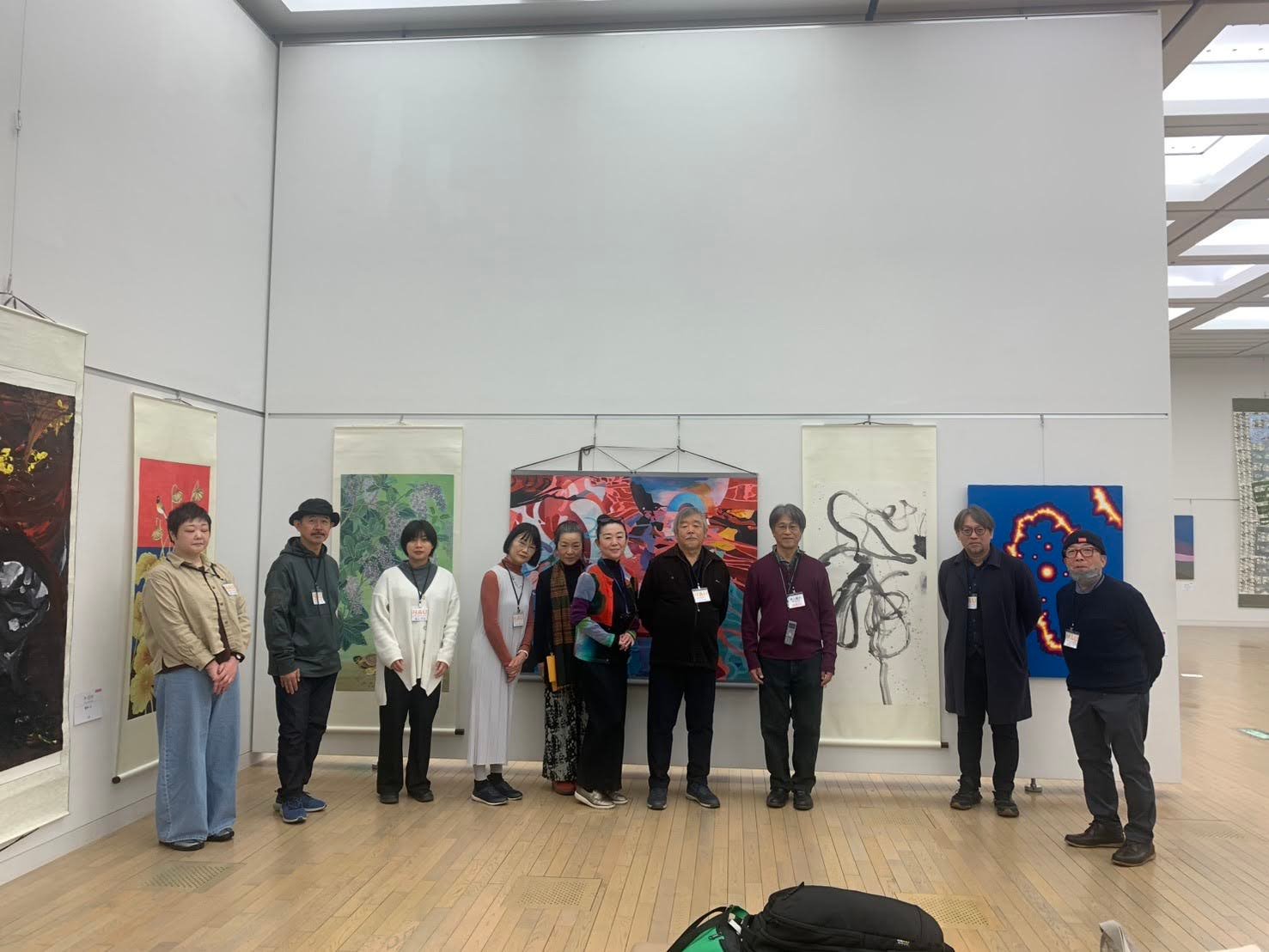
參展成員除了來自日本NAU成員之外,還有來自日本墨人會(森田子龍、井上有一創立)、太平洋美術會(歷史有一百二十多年)、日法現代美術會Salon Blanc、二紀會、每日書道會(日本最大書法團體)、一陽會、自由美術會、一墨會、CAF.N等藝術團體審查員與成員等,實力堅強。
NAU的歷史與精神
「NAU 21世紀美術連立展」源自1960年代日本前衛藝術運動,其思想根基來自「新達達主義組織者」(Neo-Dada Organizers),由荒川修作、篠原有司男、赤瀬川原平、風倉匠等人發起,後由反藝術領袖吉村益信與實驗藝術家岩永忠樹重組為「藝術家聯盟(AU, Artist Union)」。
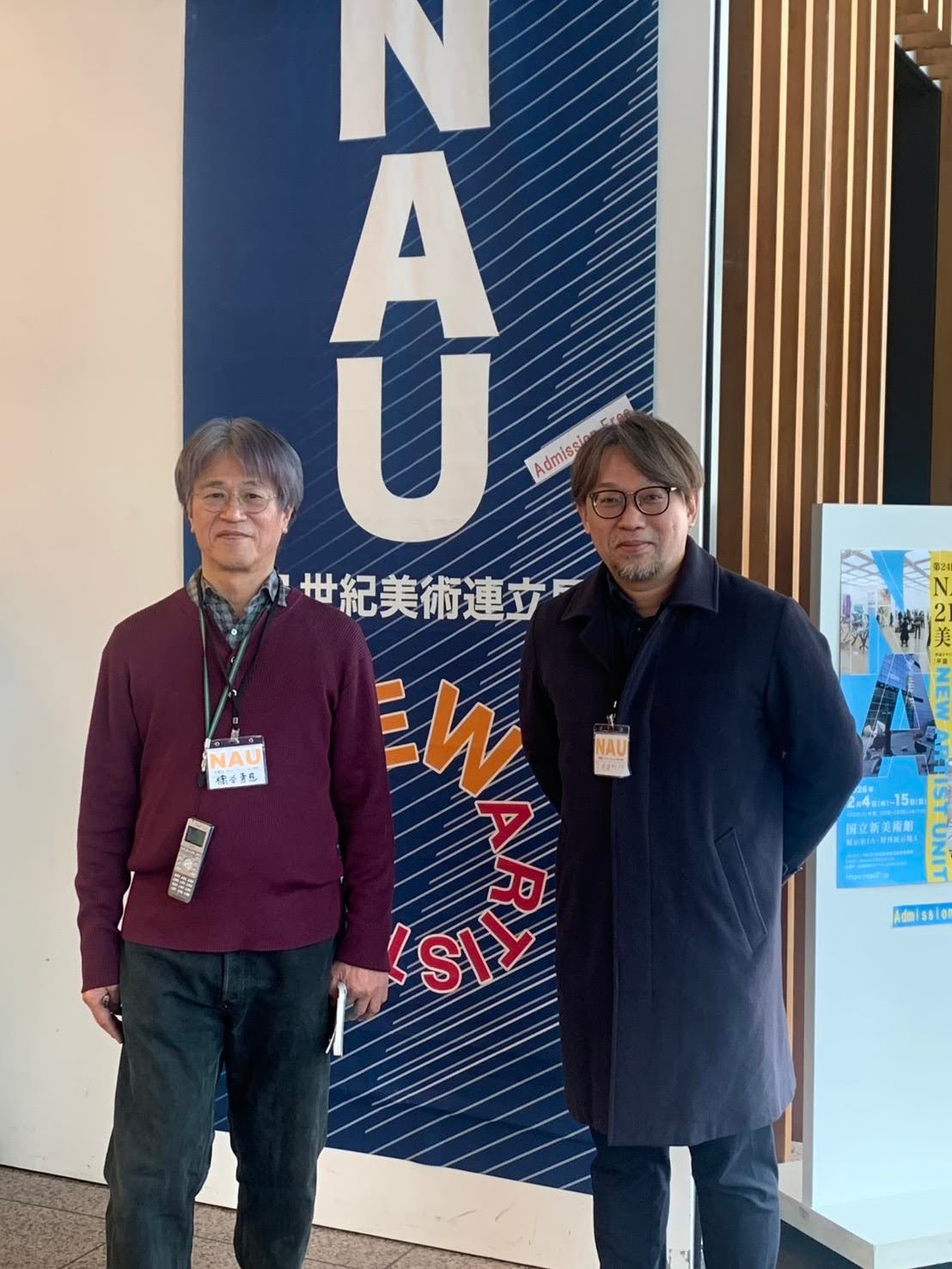
2000年,NAU正式發起《NAU 21世紀美術連立展》,以不分流派、強調創作者個性與實驗精神為核心理念,延續日本前衛藝術對「反框架」、「反權威」與「自由創作」的追求。
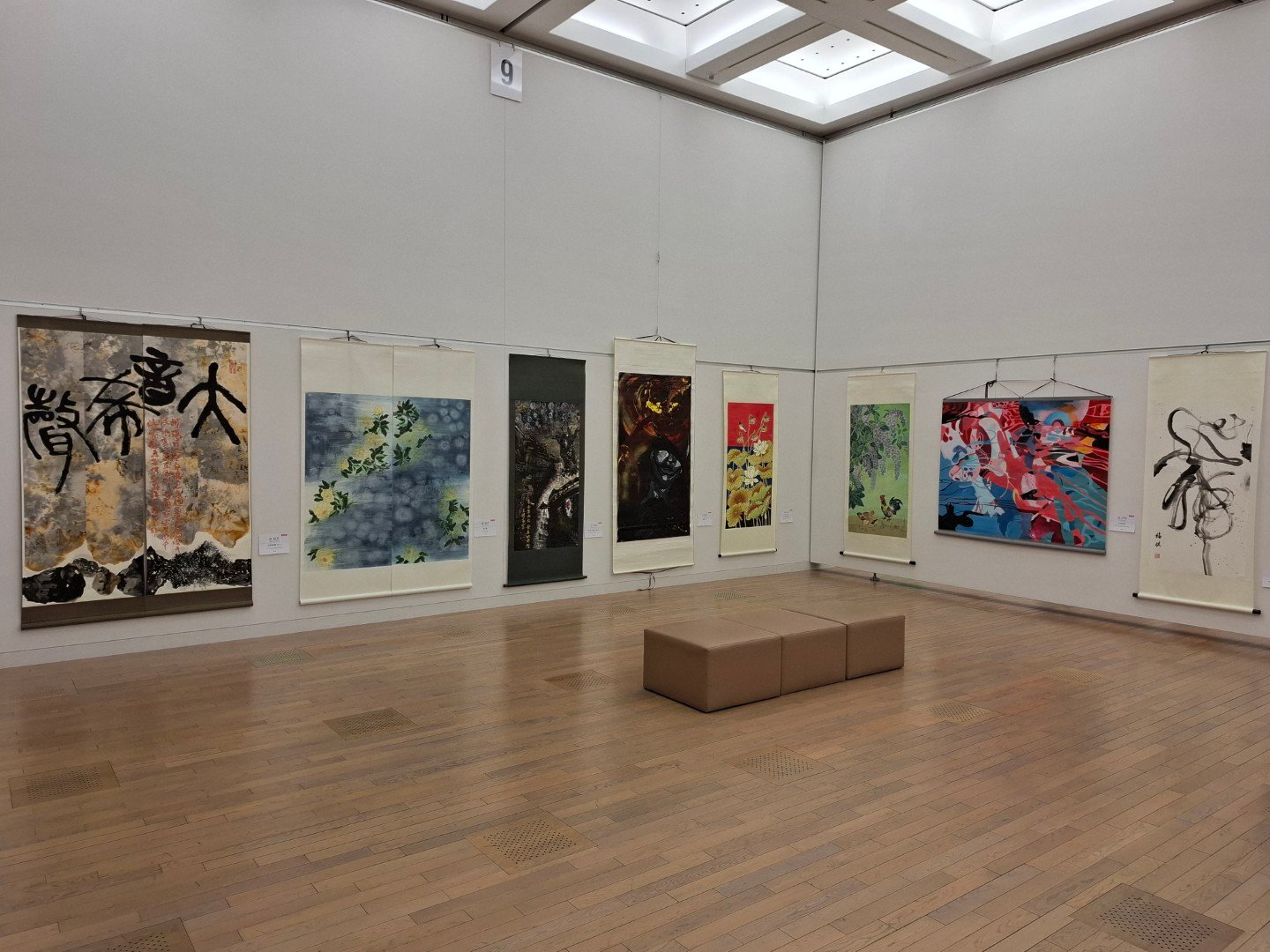
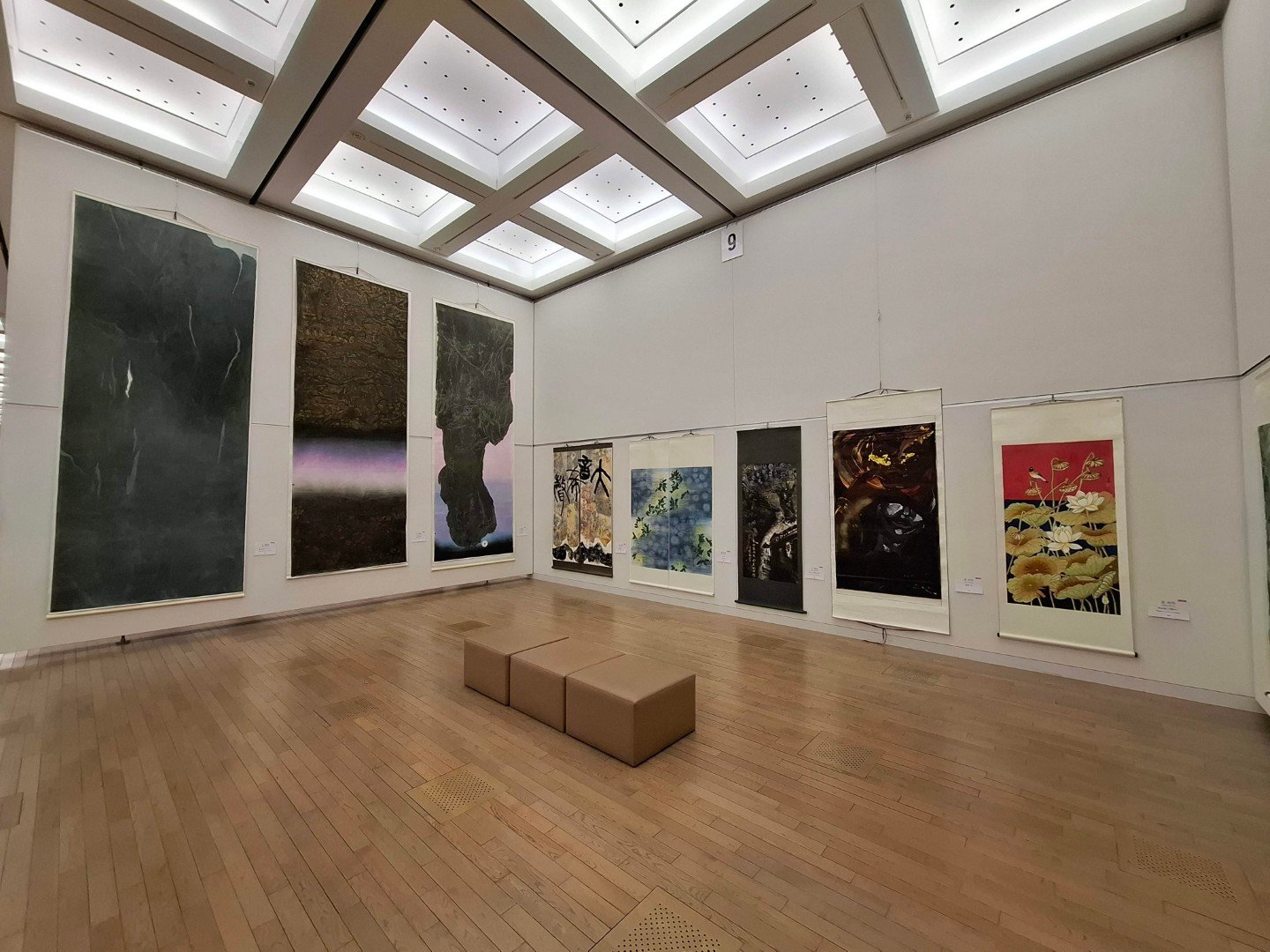
台灣代表團:8位跨世代、跨領域的藝術家
本次參展的8位台灣藝術家,創作領域涵蓋書法、膠彩、水墨、攝影及跨媒材裝置,展現了台灣藝術多元且深厚的文化底蘊:
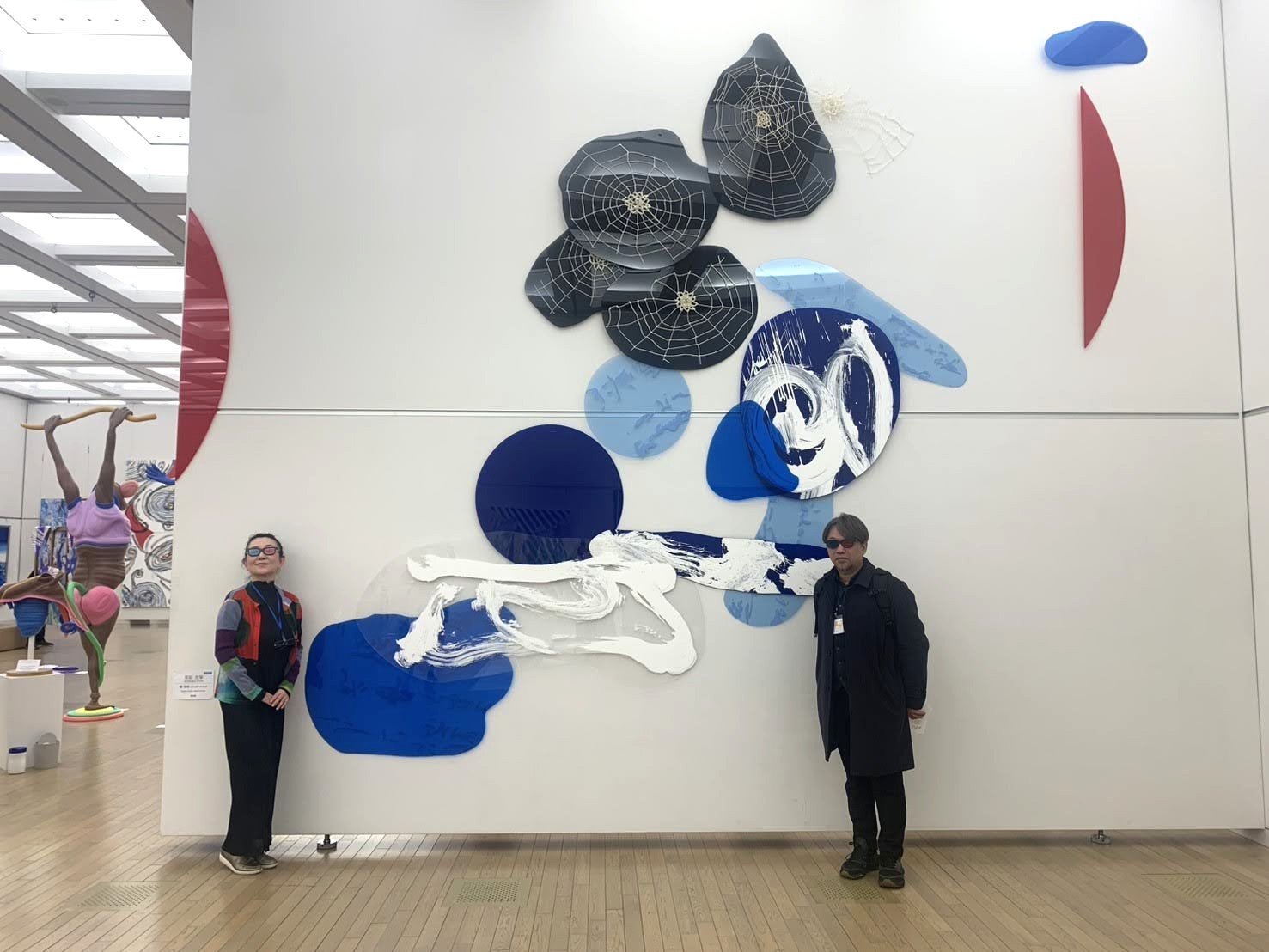
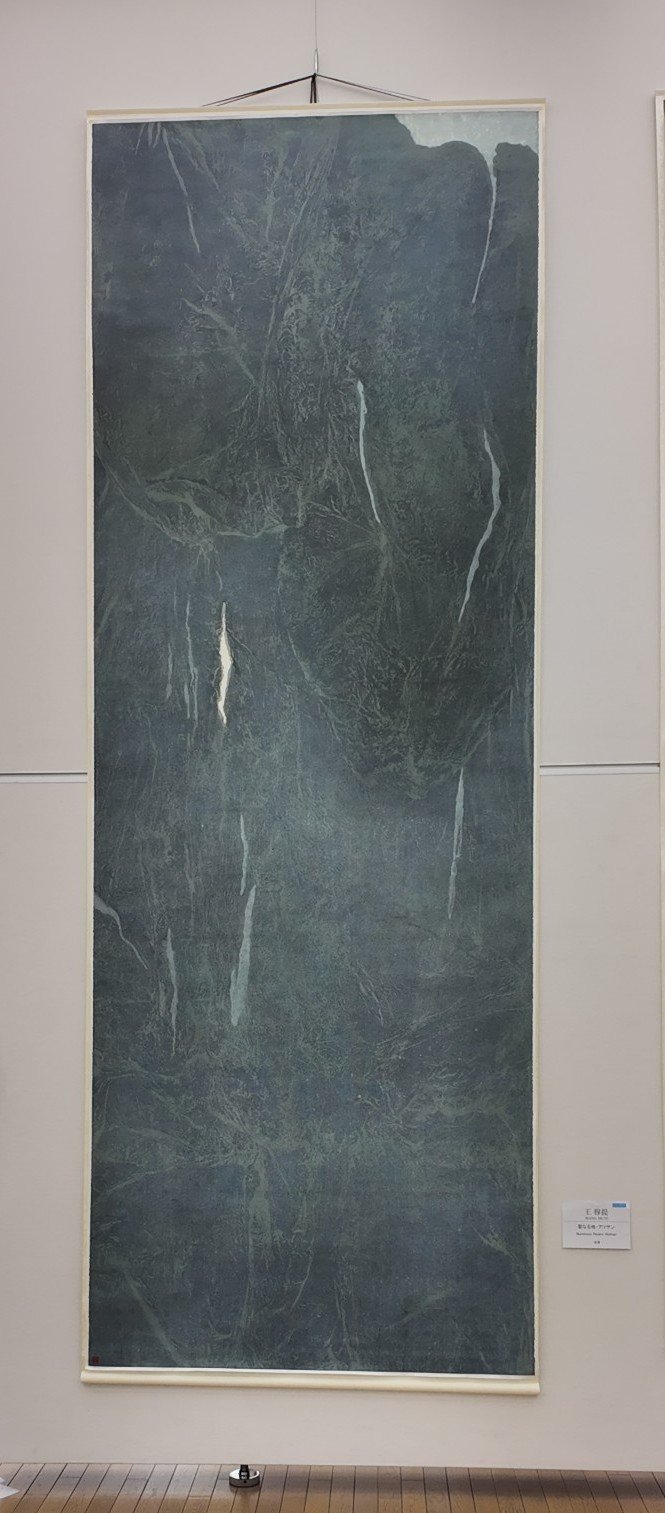
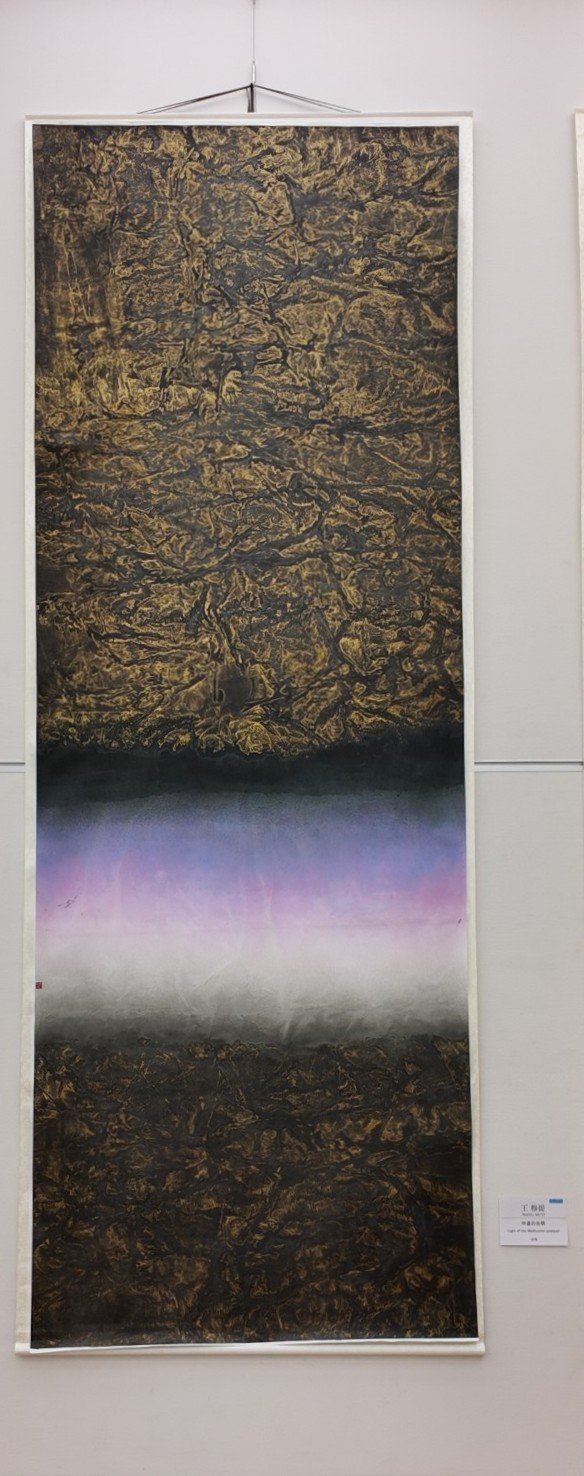
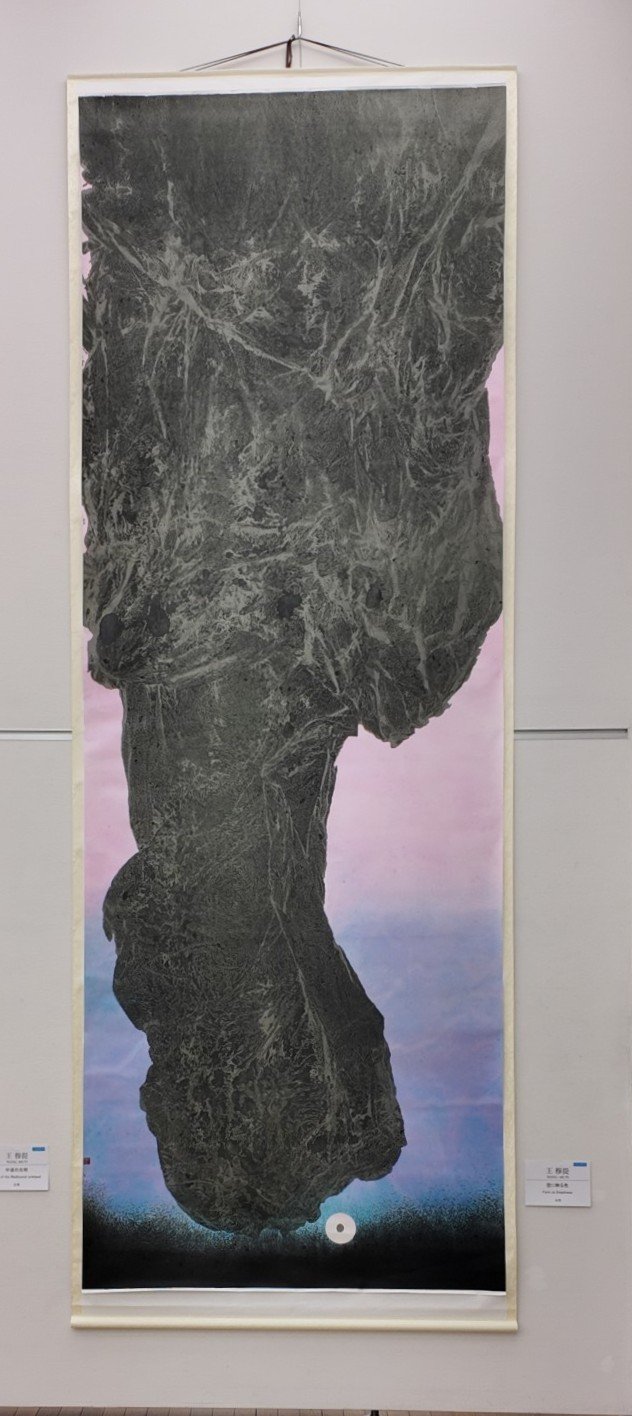
- 王穆提(Wang Muti):作為NAU台灣首位成員及日本現代美術家協會(現展)台灣聯絡所所長,他是台日藝術交流的關鍵推手。不僅協助建立龐大的藝術家數位資料庫,其創作更屢獲日本現展多項獎項肯定。(此次特別獲得獨立策展的個人空間展示,為台灣第一位在日本國立新美術館舉辦個展的藝術家。)
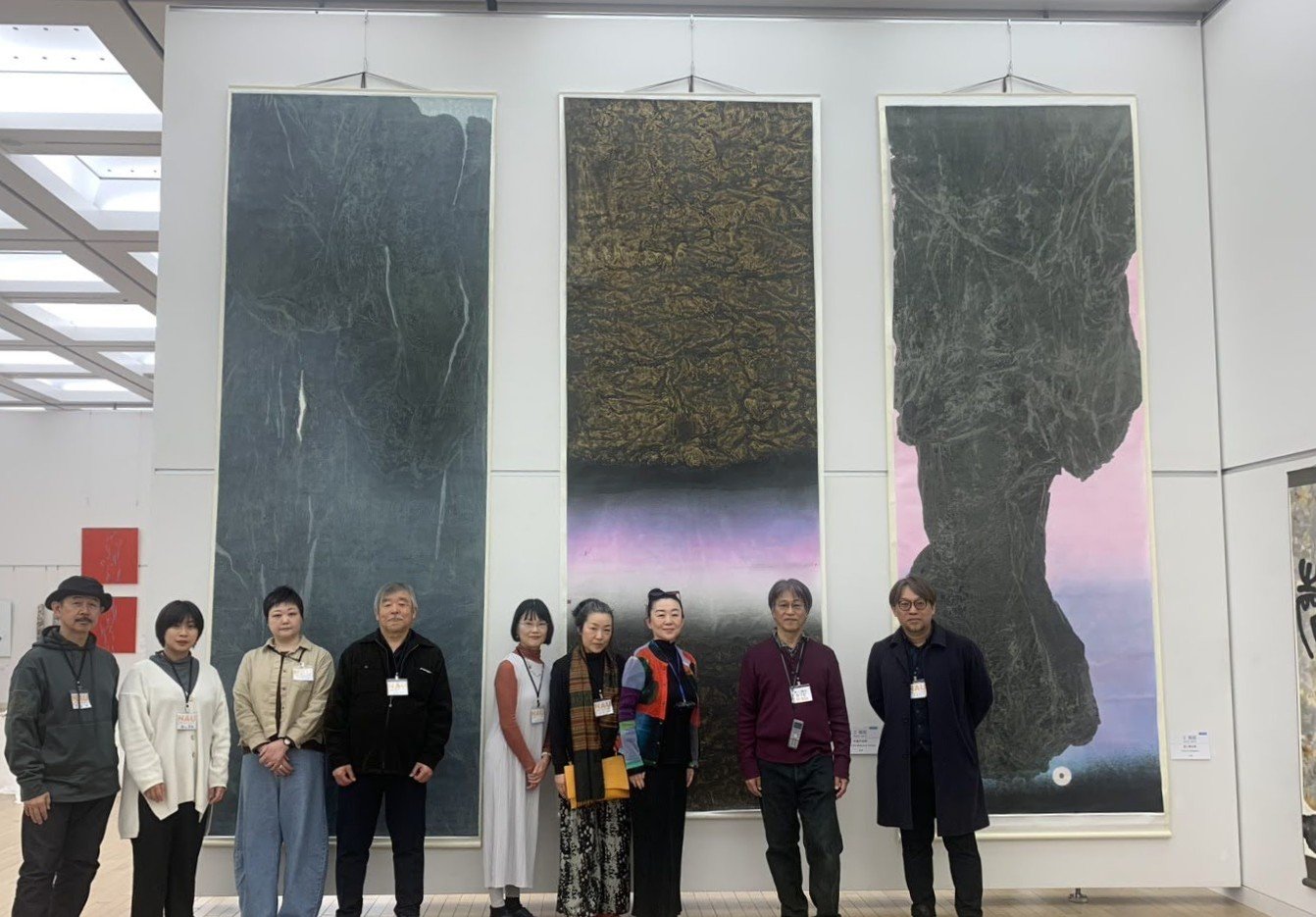
王穆提作為台灣藝術家於日本國立新美術館一樓1A大廳展廳中獲得獨立策展的個人展示空間,具備被日本藝術圈專業學術與實力指標肯定之意義,同時王穆提又獲得24回NAU21世紀連立展的最高賞:未來賞,未來可在日本國立新美術館展示三面牆面(約莫15公尺寬度)的作品,等於是獲得如上團體的肯定與支持。
- NAU未來賞的評選,由學藝委員與 4 名營運委員共計 5 人以投票形式進行,並依據總得分順位決定了 2 名未來賞得主。 NAU 21世紀美術連立協會學藝委員・九州產業大學名譽教授光行 洋子先生評論王穆提(Wang Muti)的作品:「『聖境・阿里山』,是在畫仙紙上繪製的 3幅山水畫連作。作品之間相互共鳴,在寬 5公尺的牆面上,以大膽的直式構圖建構出天空與岩石,在紮實的描寫力支撐下,以充滿動態感的構圖與深邃的色彩繪製而成。作品整體散發著清新的空氣感,是一件震撼觀者的力作。」
- NAU21世紀美術連立展委員曾經擔任過福岡亞洲文化獎委員會委員、亞洲美術家聯盟日本委員會代表、九州產業大學名譽教授暨前校長、九州產業大學的名譽教授、亞洲美術家聯盟日本委員會、日本美術家連盟會員、福岡市美術連盟等。曾經獲得福岡亞洲文化獎(日語:福岡アジア文化賞,英語:Fukuoka Prize)著名的藝術文化工作者,如、巴金、黑澤明、費孝通、侯孝賢、張藝謀、莫言、許鞍華、中村哲、徐冰、朱銘、蔡國強。
NAU21世紀連立展未來賞歷年得主皆為國際重要美術館與財團重要收藏之藝術家,如韓國國會議事堂、現代集團、三星 (SAMSUNG)集團、韓國通用汽車 (General Motors Korea)、韓國賓士 (Benz Korea)、日本銳跑 (Reebok Japan)、樂天 (Lotte)與日本各大美術館、畫廊、美國紐約、歐洲如法國、波蘭等各大美術館、畫廊代理收藏等。
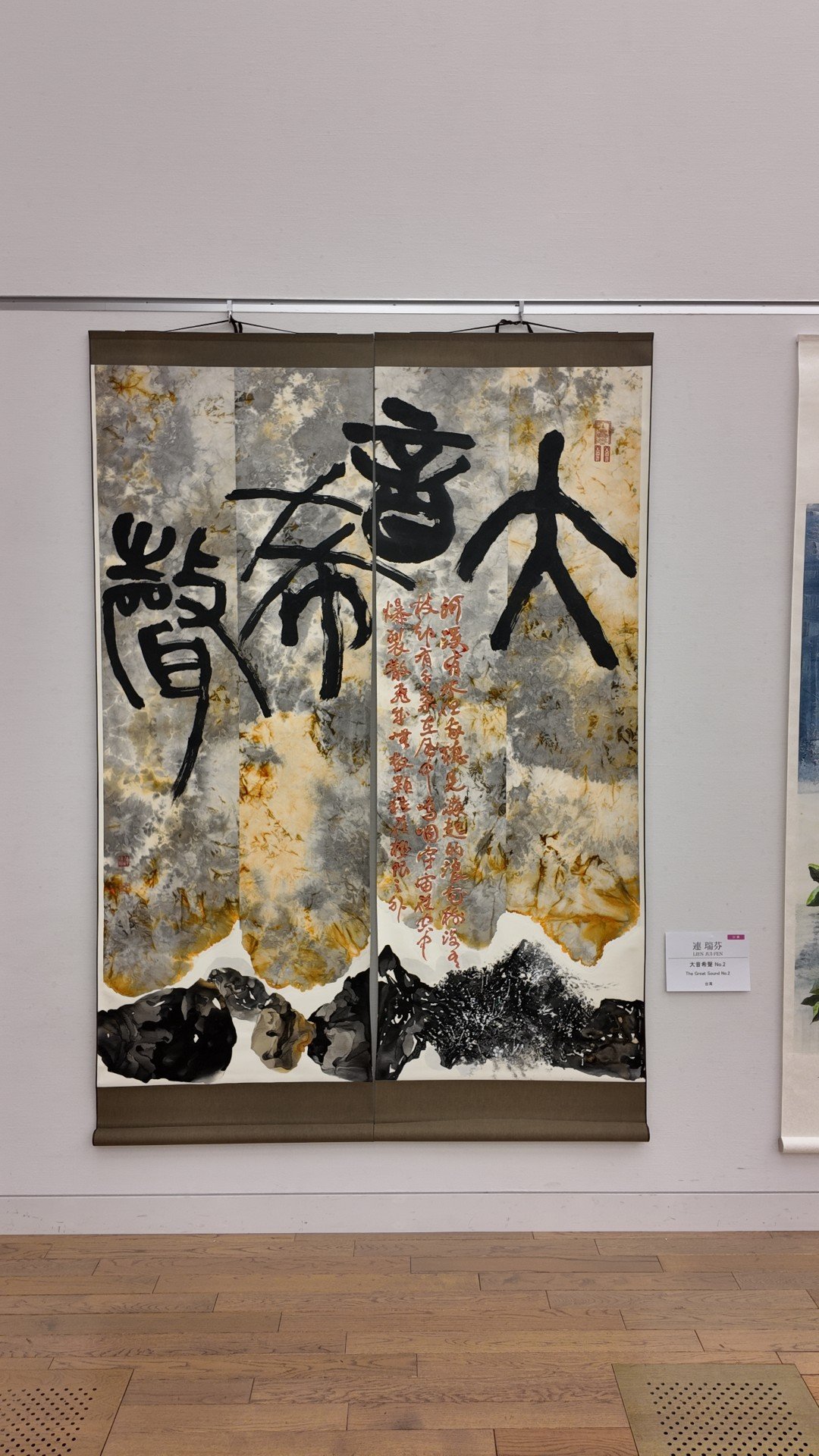
- 連瑞芬(LIEN Jui-Fen):臺灣澹廬文教基金會現任董事長(臺灣近代書法大家曹秋圃先生門人)、臺灣女書法家學會理事長,將傳統書法轉化為現代視覺語言,展現深厚的文化氣度。
- 陳福祺(CHEN FU-CHI):台灣本土攝影聯誼會會長、廣角攝影俱樂部會長,結合音樂調音師的敏銳聽覺與攝影視覺,其作品富含律動與音樂性,曾多次於法國巴黎及上海展出。
- 廖純沂(Liau, Chun-Yi):醫學博士跨界藝術,以書法與水墨展現理性與感性的平衡,積極參與國際展出。
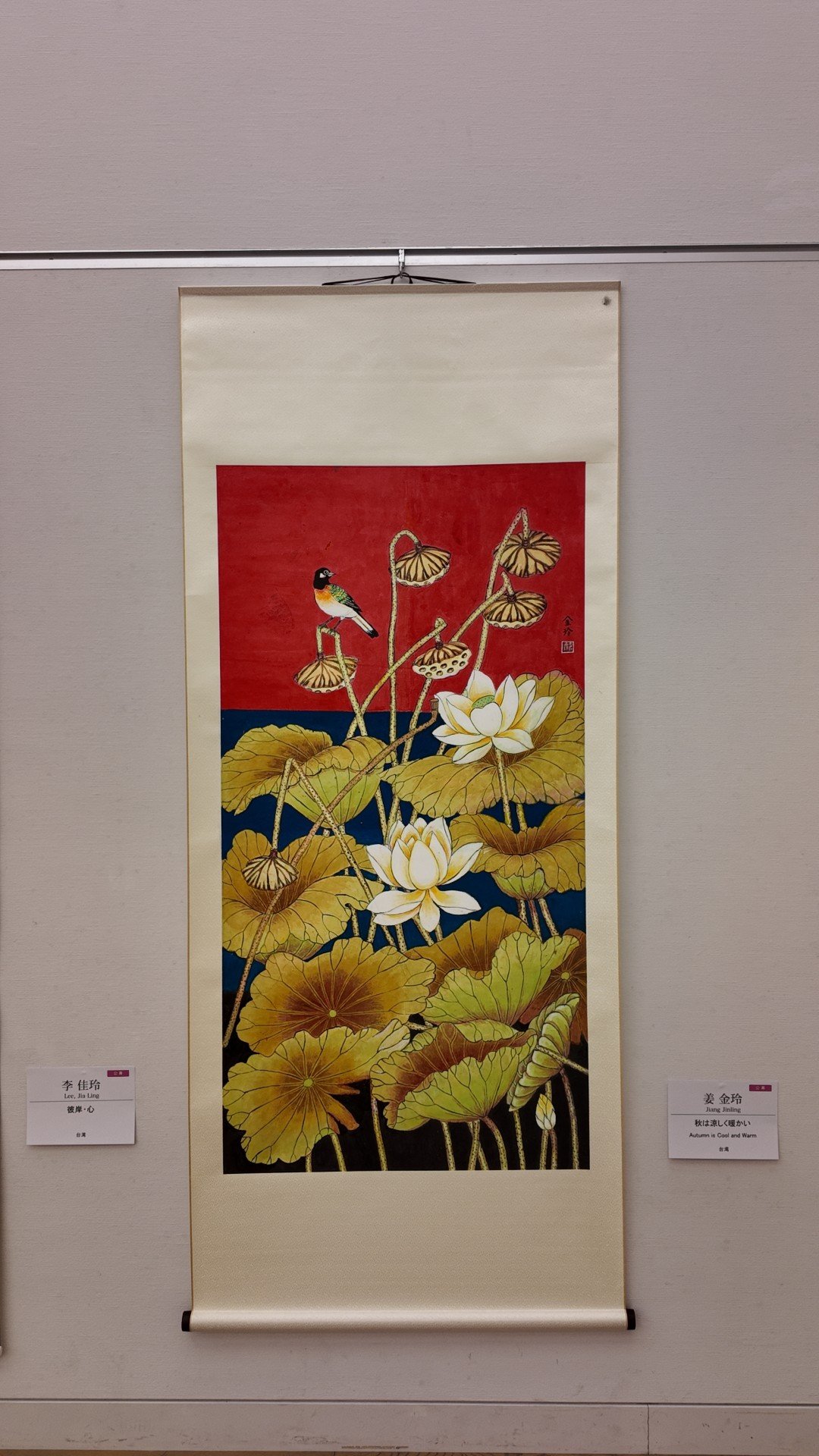
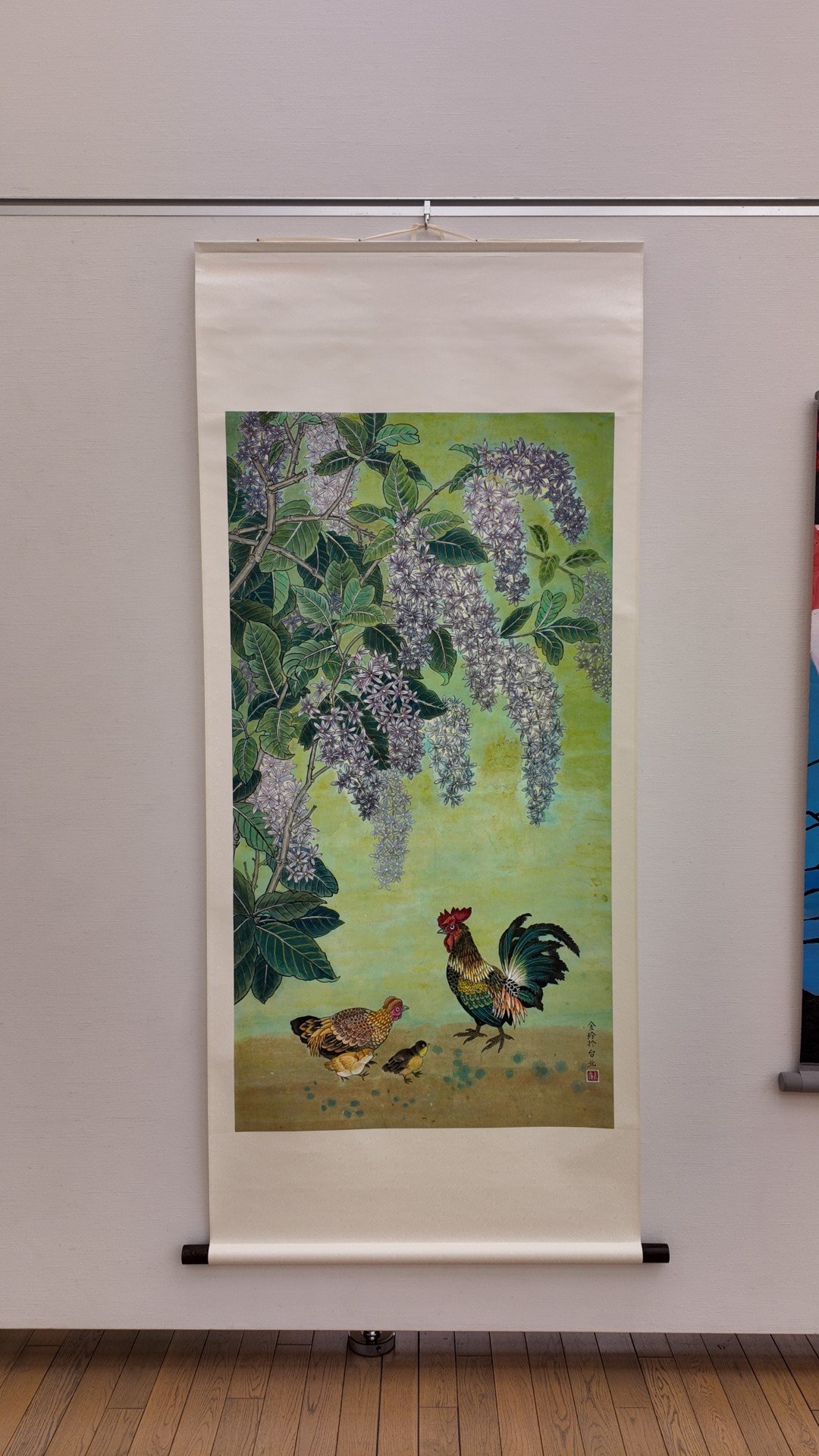
- 姜金玲(Jiang Jinling):師承膠彩畫大師,以細膩的膠彩技法融合新住民的文化視角,呈現獨特的美學觀點。
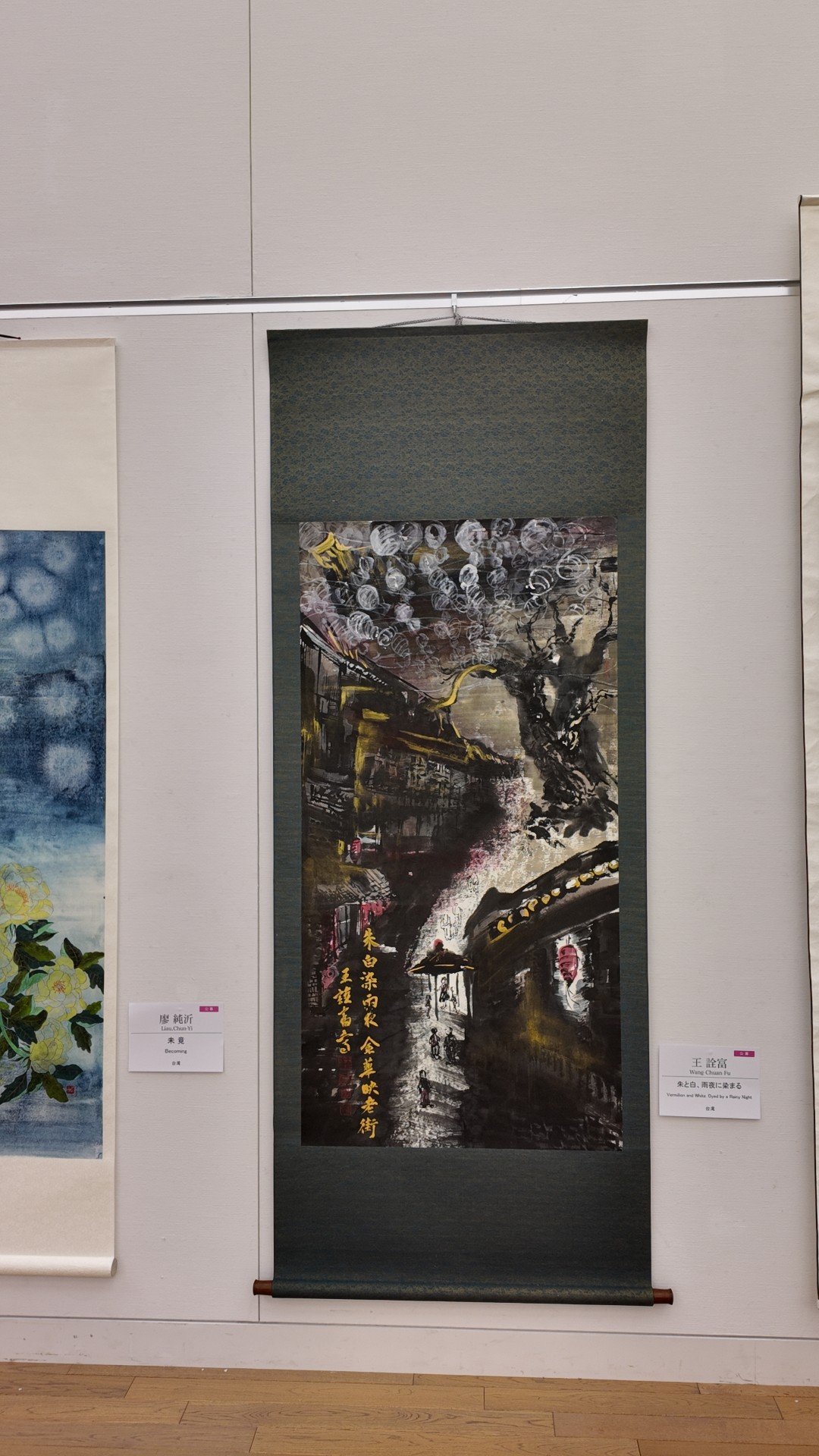
- 王詮富(WANG-CHUAN FU):北藝大美術碩士,致力於書畫藝術的現代性轉化與教學傳承。
- 李佳玲(Lee, Jia-Ling):皇墨藝藝術公司董事長,將藝術創作結合產業思維,展現當代藝術的多元應用可能。
- 吳采恩(Wu, Tsai En):台灣新生代藝術家代表,繼入選2025年日本第81回現展後,再次進軍國立新美術館,展現強大的創作爆發力。
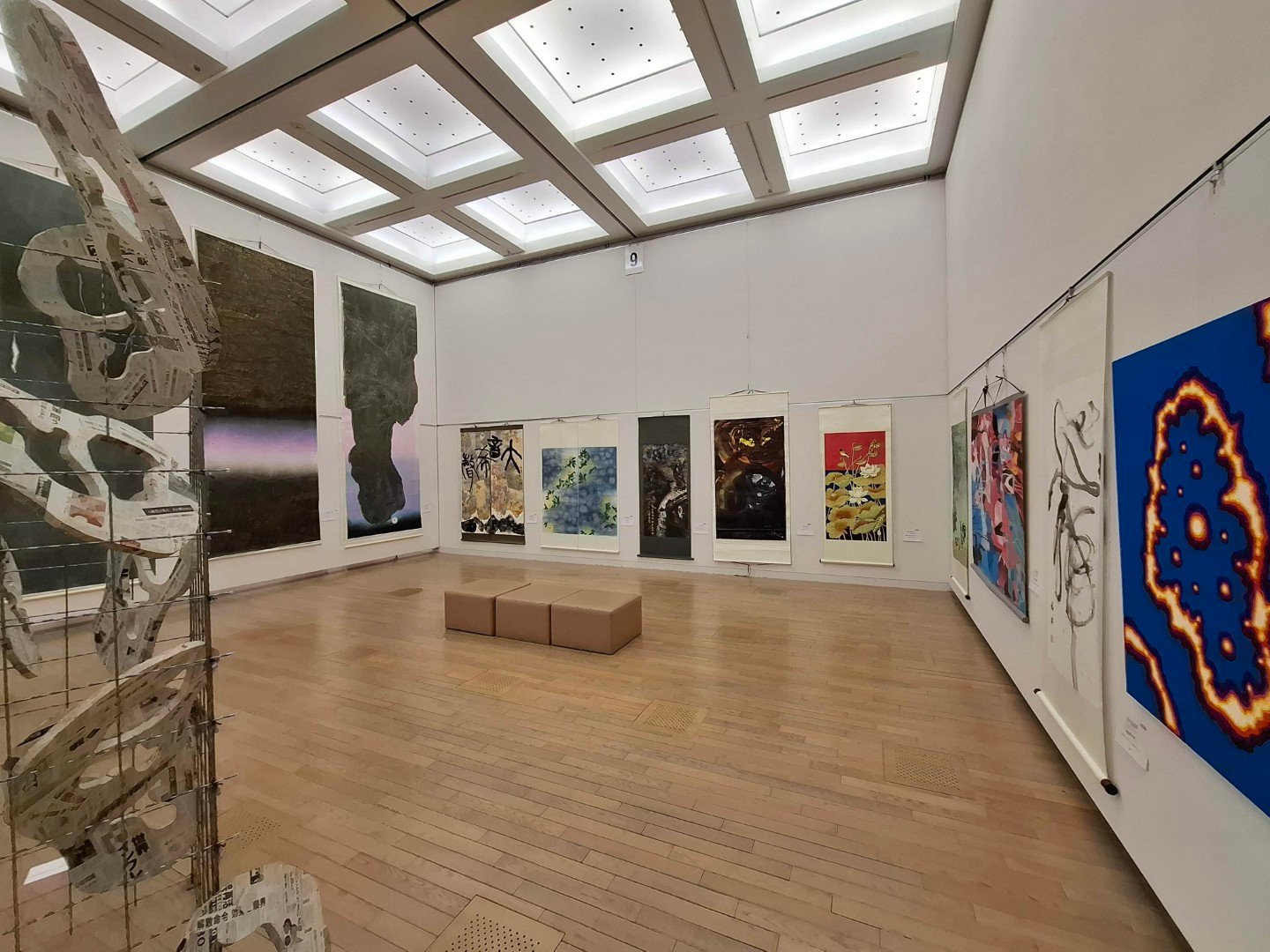
建構「團體—畫廊—學術」的生態系網絡
本次參展不僅是作品的展示,更是台灣藝術家接入日本龐大藝術生態系的重要契機。NAU展覽本身即是一個巨大的樞紐(Hub),參展成員有日本墨人會等,總共串連了三大核心層面:
- 團體層(G):透過NAU,連結了Salon Blanc、墨人會(戰後現代書法源流,為森田子龍、井上有一創立)、太平洋美術會以及Asia Artists Network等具影響力的藝術團體。
- 畫廊層(A):NAU成員活躍於東京核心畫廊帶,包括Gallery Hinoki(京橋)、K’s Gallery(銀座)及ACT(新宿),並延伸至巴黎與紐約的海外畫廊網絡。
- 學術層(S):參展者背景涵蓋東京藝術大學、多摩美術大學、武藏野美術大學等日本頂尖學府,構成了嚴謹的師承與學術評論體系。
台灣藝術家透過此次參展,不僅是在物理空間上進入了日本最高美術館,更是在國際藝術領域意義上,與日本戰後「具體派」與「新達達」的歷史脈絡,以及當代國際藝術、學術系統上取得了深度連結。
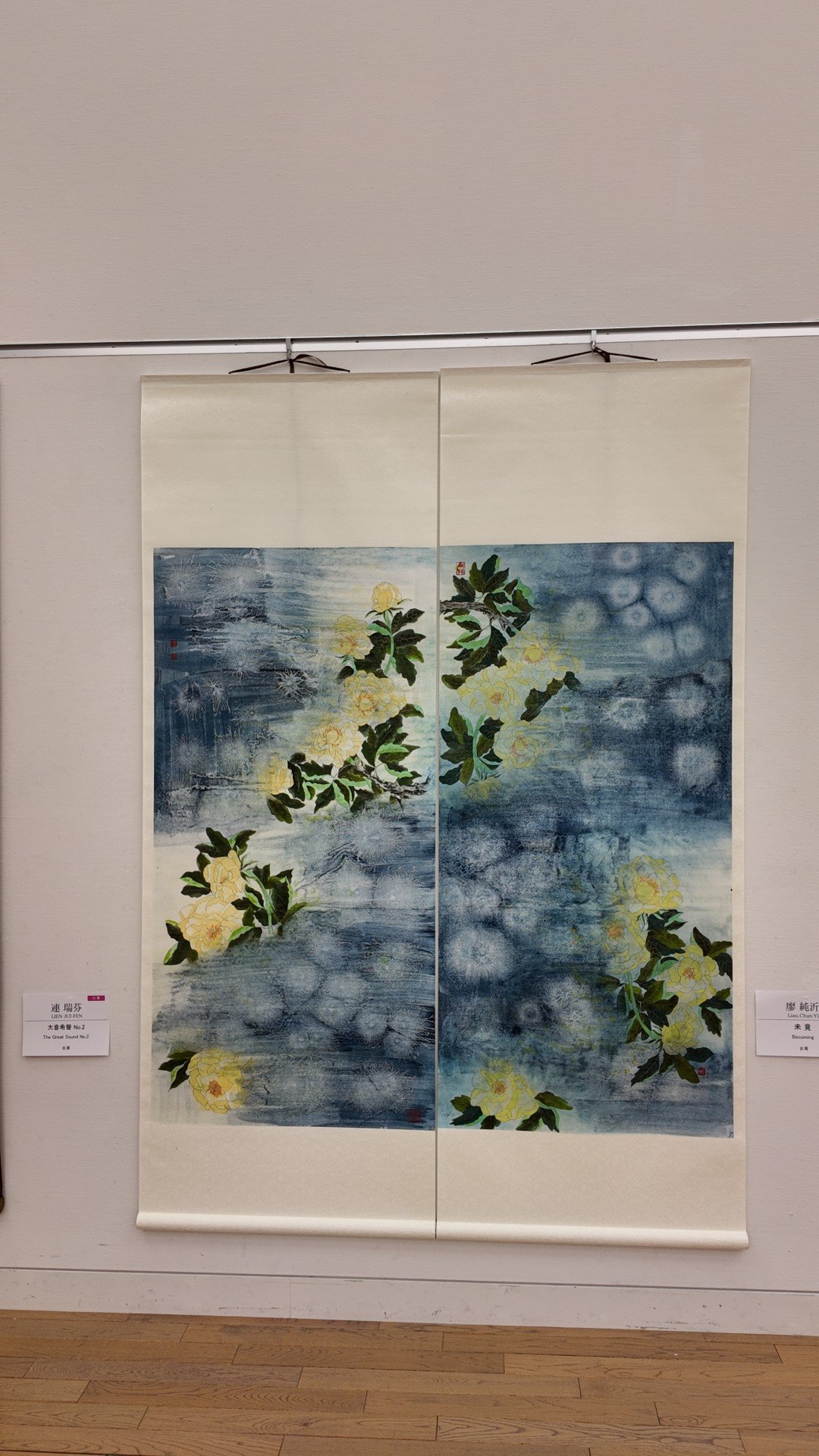
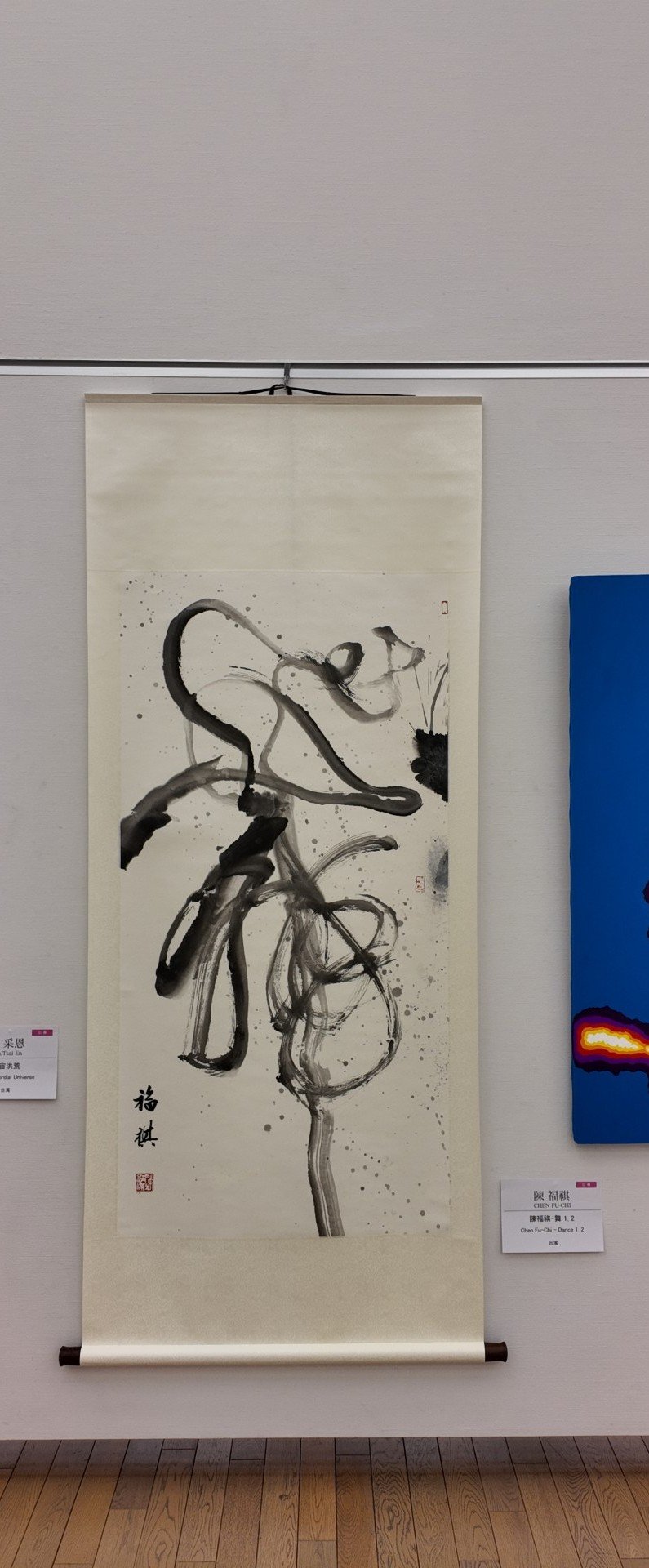
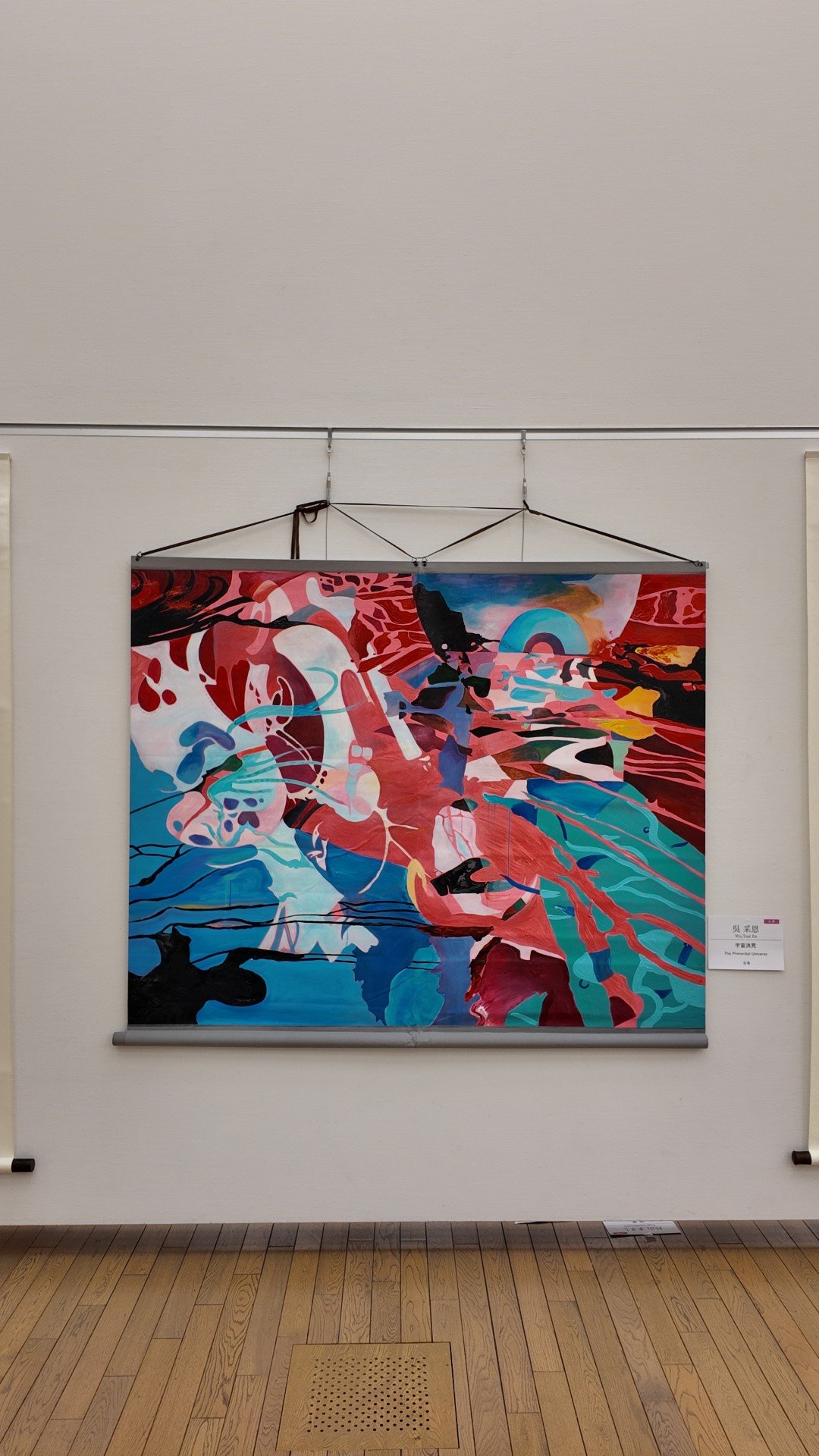
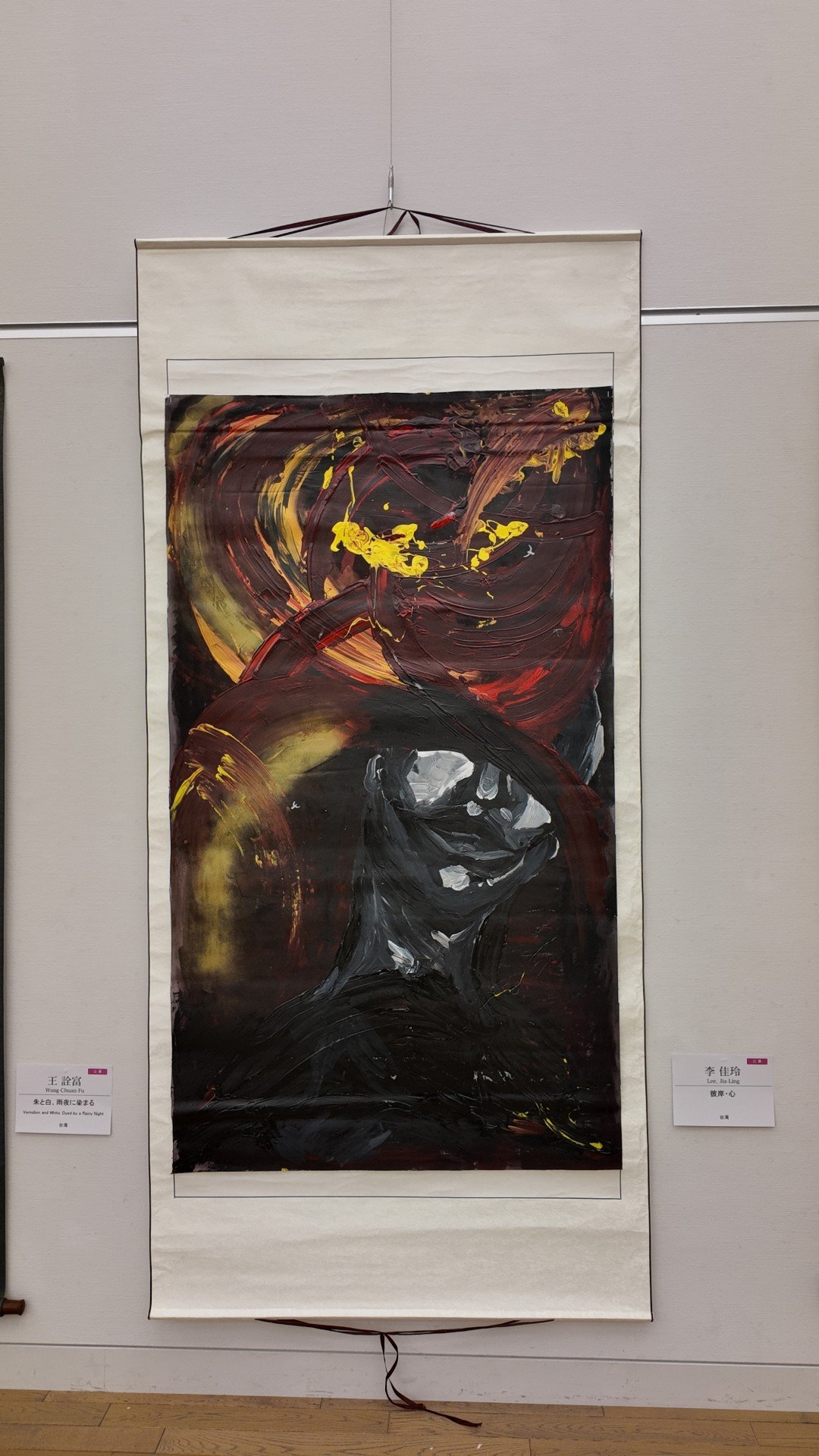
【展覽資訊】
- 展覽名稱: 第24回 NAU 21世紀美術連立展
- 展覽期間: 2026年2月4日(週三)至2月15日(週日)
- 展覽地點: 日本國立新美術館 展示室1A・戶外展示場A
- 地址: 東京都港區六本木7-22-2

參展藝術家概要:
青木洲子(Aoki Kuniko):師從白尾勇次(以沙龍・布朗美術協會會長身分,主導日法現代國際美術展。),日法現代美術展 法國大使館賞、文部科學大臣賞。
Akiko SIACCA:畢業於日本多摩美術大學,在美術館和畫廊舉辦約700場個展和聯展,本身是現代藝術家與日本銀座畫廊社長。
浅野あかね(Asano Akane):日本京都造形藝術大學西畫科,參展德國萊比錫Spinnerei藝術區 獨立聯合特展 (GALLERY DEN)、ART MELBOURNE (Mayumi International)。
穴澤誠(Anazawa Makoto):日本千葉縣展 縣知事獎,多次參展二紀展、現代Artist Center展。
阿部雅光(Abe Masamitsu):日本阿波和紙會館賞受賞紀念 阿部雅光版畫展。
荒川久美子(Arakawa Kumiko):日本東京造形大學繪畫系版畫組專攻。銀座東和畫廊、GINZA Gallery Artist Space、日韓交流藝術・Cosmos 展、Gallery 檜、Gallery SHIMIZU、Galerie Shimon、K’s Gallery個展、聯展數十回。
アレトコレココ(Aretokorekoko):日本京都市立藝術大學雕塑系。於Mint 神戶、MANIFESTO GALLERY、ART GALLERY UMEDA、伊勢丹新宿店 本館6樓 Art & Frame、阪神梅田本店 Hello Culture 2、京都同時代畫廊 等個展將近二十回,國立新美術館、兵庫縣立美術館、神戶北野美術館等聯展數十回。曾獲「Independent Tokyo 2022」評審特別獎(小林貴獎/INTERART 7)、「SICF23」評審獎(荒木夏實獎)等獎項。
飯田稔(Iida Minoru):日本東京藝術大學美術學部繪畫科油畫專攻,曾獲得[伊藤熹朔](https://www.eslite.com/product/1001357604948064)賞(日本舞台美術の巨人)
石井抱旦(Ishii Hotan):日本每日書道展審查員、前衛書道家。他將傳統漢字書法(Calligraphy)轉化為一種跨越國界的抽象視覺藝術。與傳統書家不同,他更強調墨跡在空間中的「立體感」與「精神爆發力」。他被視為將日本墨文化推向國際現代藝術舞台的重要人物。曾多次受邀至義大利、德國、法國等地展出,成功將日本「墨」的現代性介紹給西方觀眾。參與日本《墨潮》當代書道交流展,推動跨區域的當代書藝對話。
石井三子(Ishii Mitsuko):與雕塑家石井鶴造(其父)及石井白亭(其弟)皆為藝術世家。主要活躍於日本現代藝術領域,尤其在生活設計和古典美術方面有深入研究。日本現代藝術的代表人物之一。
磯崎式子(Isozaki Noriko):日本一陽會繪畫部委員。日本女子美術大學藝術學部藝術學科造形學專攻。於ギャルリ―志門、東京都美術館、黑龍江省美術館、東京文化會館個展聯展多次。曾獲得環太平洋展加拿大國際文化交流協會獎、一陽展一陽獎、準大賞、會員獎。
伊藤理恵子(Ito Rieko):日本武藏野美術學園研究科美術專攻,早期參展自由美術展,平澤國際藝術節、目黑現代美術展、韓日美術交流展。
井上一光(Inoue Ikko):日本立命館大學美術專攻。一墨會主宰、字統文字研究所所長、福岡文化聯盟會員、福岡市文化賞。
井上賢一(Inoue Kenichi):日本創形美術學校版畫系美術專攻。大谷地下美術展、TWO WEEKS IN THE SPRING、名栗湖戶外美術展。
上杉道子(Uesugi Michiko):日本當代藝術家,多次在シロタ畫廊(Shirota Gallery)舉辦個展與聯展。
宇田川宣人(Udagawa Nobuhito):日本東京藝術大學大學院 美術研究科 修士課程。日本九州產業大學名譽教授、美國賓州大學客座藝術家、福岡市美術聯盟理事長、福岡日英協會常任理事、亞洲美術家聯盟日本委員會代表。
内平俊浩(Uchihira Toshihiro):日本名古屋藝術大學美術學部雕刻科,畢業於KOBATAKE工房。Hands大賞展 審查員特別獎。在埼玉縣立近代美術館、新宿三越美術館、石川縣立美術館、名古屋市博物館、愛知縣立美術館舉辦個展、聯展。
woga:透過自動書寫筆記般的重複描繪,致力於表現自然風景與現象。於新宿眼科畫廊、The Artcomplex Center of Tokyo、Jun Kikuchi Graphic、The Artcomplex Center of Tokyo舉辦個展與雙人展多次。
岡田繁忠(Okada Shigetada):日本現代美術家。
岡本直枝(Okamoto Naoe):曾在日產汽車株式會社設計部工作約17年,之後於武藏野美術大學研究所研習纖維藝術,現為女子美術大學兼任講師。獲 Antonio Ratti 獎、澳洲雕塑學會日本交流展、Fiberart International(美國),獲最佳展出獎。
岡山正規(Okayama Masaki):日本京都藝術大學美術學部大學院構想設計研究所美術專攻。曾向日本哲學家梅原猛教授學習哲學,向依田義賢教授(黑澤明導演的編劇)學習劇本學,向關根勢之助、三尾公三教授學習製作。作品為克拉科夫國立美術館(波蘭)、華沙現代藝術中心(波蘭)等收藏。從系統形象論轉向作品存在論,通過「構想建築(Conception-Architecture)」的方法展開藝術實驗。作品探討繪畫、現代藝術、抽象藝術及肖像藝術的本體論與認知關係。
小川移山(Ogawa Izan):日本美術家/書作家/表現教育家/初心學舍主宰/埼玉縣國際交流協會會員/一般社團法人CCSC理事。曾獲日本書展準大賞、萬紅展千紫會賞等。作品為The Peninsula Tokyo、Joan 宮地之里、伊東小涌園、京都酒店、椿山莊收藏。
尾川和(Ogawa Kazu):曾參展日本上野之森大賞展、主体美術展、NAU 21世紀美術聯展2021 獎勵賞。NAU in Paris 展、NAU in NY 展。
オギノキヨコ(Ogino Kiyoko):日本現代纖維作家。自大學時期起,她便與同學朋友(如柴田容子、八鳥七緒、吉井美穂等)共同參與「よきなみ展」等群展,並曾參加台灣的台日交流展,在國內外活躍。她的作品在抽象畫及平面藝術領域受到肯定,透過個展與群展發表其獨特表現風格。

小澤雅美(Ozawa Masami):日本手工和紙藝術家,以自然素材(如楮、三椏)和手工漉紙技法創作作品聞名。曾在日本浜松的「うみいろ そらいろ」與「風のうし」等畫廊展覽多次。
尾田芳子(Oda Yoshiko):日本武藏野美術大學造形研究科美術專攻。日本新象作家協會會員。獲得新象展展賞/佳作賞,並入選日本損保Japan美術財團選拔展。
梶山美祈(Kajiyama Miki):日本京都精華大學研究所藝術研究科博士前期課程藝術專攻畢業。於Gallery Haneusagi及KUNST ARZT每年舉辦個展十多次。京展 松田賞受獎、神戶Meriken Park Oriental Hotel大廳「life」展覽與策劃、下町藝術祭・古民家計畫「時のはじまり」展覽,並參展多次聯展。
片切かすみ(Katagiri Kasumi):曾獲日本現代美術家展新人賞、美の起原展審查員獎(大杉賞)、Contemporary Art Room Gallery Online Competition “OPEN” 榮譽獎、INFLUENCE GALLERY Online Competition “September Art Competition” Merit Award。
かとうかずみ(Kato Kazumi):日本愛知縣立藝術大學美術學部大學院。創作足跡遍及世界100多個地點。曾於金屬藝術博物館、 Gallery砂翁、Norton Gallery、畫廊Door、藝術畫廊・繪具箱、古春堂畫廊、 東京都美術館舉辦個展、聯展多次。
金丸順子(Kanemaru Junko):現為日本NAU(21世紀美術連立展) 正式會員。她的創作長期聚焦於「內在風景」與「光影律動」的轉譯,作品頻繁展出於日本藝術殿堂——國立新美術館,是當代日本抽象畫界中,能將物質性與精神性優雅結合的代表人物之一。曾參展ギャラリー檜 (Gallery Hinoki) 年度精選展、GALLERY AND LINKS 81等。
かみむらみどり(Kamimura Midori):日本金城學院大學文學部社會學科。於新宿眼科畫廊、3331ArtsChiyoda、The Art complex Center of Tokyo、畫廊檜舉辦個展、聯展多次。曾獲得 「3331 千代田藝術祭 2014」鴻池朋子賞。
加茂富美子(Kamo Fumiko):日本武藏野美術大學造形學部 雕塑學科專攻,曾任職於千葉縣公立中學擔任美術科教師,舉辦個展多次。
神田風香(Kanda Fuka):日本書道教育學會 書學院(書道教育學科)。參展於國立新美術館,其作品因獨特的「線性美學」受到跨文化藝術評論家的關注。多次參展ギャラリー檜 (Gallery Hinoki) 、GALLERY AND LINKS 81 等展覽。
グアリノアキ(Guarino Aki):曾在法國美術學校學習藝術,並在歐洲進行創作活動,2019年起回到富山縣展開藝術活動。藝術家駐留計畫,土蔵のまち資料館(高岡市)、ART/X/TOYAMA in 富山,富山縣民會館、旅鳥藝術祭,舊小羽小學(富山市)。曾獲得美之祭典 越中藝術節2024 優秀獎。
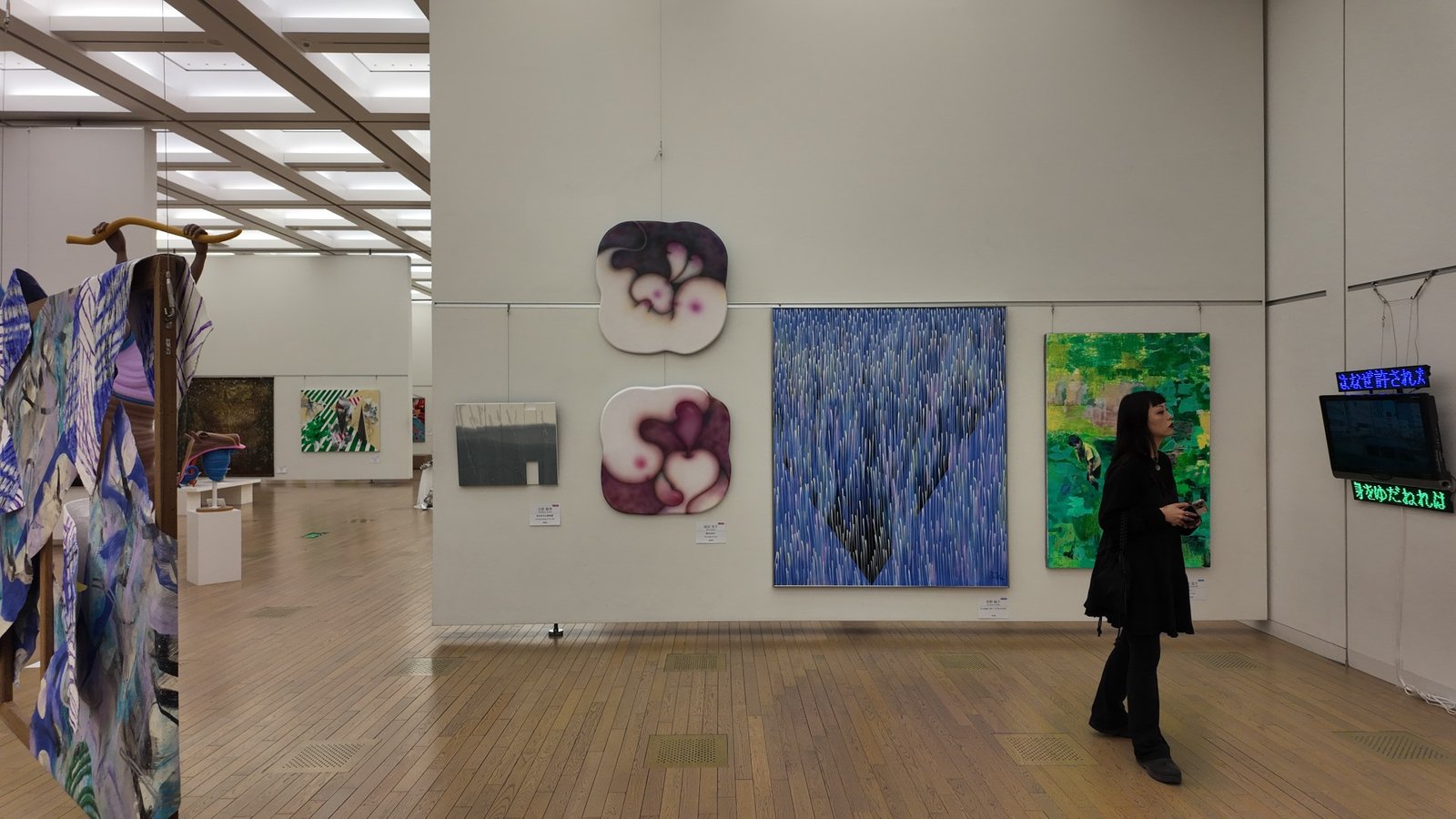
久保木妃呂子(Kuboki Hiroko):日本太平洋美術會繪畫部運營委員、會員、東京支部成員,該會成立1889 年,前身為明治藝術協會,是日本第一個西式繪畫團體,超過120年的歷史。曾多次參與《日仏現代国際美術展(Salon Blanc)》,於東京都美術館等重要展覽場域展出,亦持續於太平洋美術會年度展中發表新作。其創作風格沉穩而富有節奏感,展現日本當代抽象繪畫中,對於感性與形式之間平衡的細膩追求。
栗原光峯(Kurihara Koho):師從安部光鄉、森士鄉先生。榮獲「比利時・荷蘭美術賞展」優秀賞、日本文化藝術研究會會員、JIAS(日本美術家國際協會)會員、秋季沙龍展正會員。多次參展日本、法國、韓國、義大利等。
桑山真麻弓(Kuwayama Mayumi):日本大阪藝術大學工藝學科美術專攻,日本纖維藝術家。曾獲御堂筋燈光秀拍攝景點裝置最優秀賞、MILANO GENIUS(米蘭設計週)兩件作品獲獎、聖彼得堡國際花卉節第一名。日本橋高島屋S.C.本館6樓 美術畫廊、Art & Crafts Gallery gobangura等個展多次。並參加具體美術前輩「[嶋本昭三×AU](http://www.miu-art.com/2020/01/29/%E3%80%8Cvibrant%E3%80%8Dshozo-shimamotoxau-%EF%BC%A0whitestone-garrely-hong-kong-2019104-1117/)」Exhibition 2019 H Queenʼs展。
香西洋子(Kozai Yoko):日本現代美術家。長期參與於六本木藝術圈,推動日本當代美術的跨界對話與形式創新。多次參展ギャラリー檜 (Gallery Hinoki, Tokyo)、Art Gallery Yamate(橫濱)、GALLERY AND LINKS 81 (銀座)等展覽。
コスター理穂 / Riho Coster:日本武藏野美術大學 造形學部油畫科、摩洛哥國立美術學校 (Institut National des Beaux-Arts, Tétouan)。曾在日本銀座各大畫廊、摩洛哥舉辦個展、聯展多次。
小林哲郎(Kobayashi Tetsuro):日本武藏野美術大學油畫學科專攻,多次參展獨立美術展、上野之森美術館大賞展、ART BOX大賞展、墨繪展、風之會展・佛羅倫斯賞展獲獎作家展、世界堂繪畫大賞展、JAALA國際交流展等。
今野明子(Konno Akiko):日本當代女性藝術家。多次參展日本的現代美術展覽。創作主題多圍繞存在感、記憶的殘影、日常中被忽略的片段,以及女性視角下的感知經驗。

坂充央(Saka Mitsuhiro):日本多摩美術大學美術學部專攻,多次參展千葉多摩美會展之展覽與日本現代美術展。
佐々木綱昌(Sasaki Tsunamasa):日本鹿兒島大學美術科專攻,日本美術家聯盟會員、AJAC 會員。曾獲日本-法國當代美術世界展日法獎、西班牙美術獎展(歐洲美術俱樂部主辦)、美國美術獎展獲獎(美國・德州)、法國美術獎展(法國・瓦訥市)、第 1 屆損保 JAPAN 美術獎展。
佐藤利予(Sato Toshiyo):日本現代美術家。作品關注日常感知、內在情緒與時間層次,以細膩而克制的視覺語彙呈現,帶有安靜、沉思性的氣質。
塩見章(Shiomi Akira):日本東京藝術大學油畫科專攻,於MMG版畫工房擔任藝術總監。在日本小杉畫廊個展多次、代理畫廊為kaneko art gallery。
芝谷桂(Shibatani Kei):日本當代視覺藝術家,活躍於東京及關東地區。其創作涵蓋抽象繪畫及多媒材表現,注重色彩、形態與構圖的節奏感,作品呈現細膩而內省的視覺語言,強調觀者與作品之間的互動與感知共鳴。參展韓日美術家交流展「WAVE 25」(韓國‧首爾)、現代藝術國際展(AU 展)等展覽。
SHUICHI GOTOH:巴西聖保羅 Fundação Armando Alvares Penteado 大學美術科(FAAP 美術大學)、Hiko Mizuno Jewelry College(HIKO 水野珠寶學院)。日本珠寶設計師/畫家/巴西產彩色寶石專家。
晶蔵(Shozo):日本京都藝術大學研究所主修藝術學與文化遺產領域,研究「藝術中的知覺生成與創造」。參與亀山三年展(Kameyama Triennale)等藝術展、專注於藝術中的知覺生成與創造。
末本太丸(Suemoto Taimaru):日本藝術家。多次參加位於東京中央區指標藝廊Gallery Hinoki (ギャラリー檜)的選拔展。藝評界認為其作品在冷峻的當代藝術潮流中,保留了溫潤的人文質地。他不追求視覺的暴力,而是邀請觀者在層層色彩的疊加中,發現時間與記憶的重量。
菅野純子(Sugano Junko):日本武藏野美術短期大學 美術科油畫專攻。春陽展新人獎、多次在富山國際美術交流展、富山縣民會館美術館、韓日美術交流展、符拉迪沃斯托克視覺藝術雙年展(俄羅斯)、富山國際當代美術展展出。
杉山まさし(Sugiyama Masashi):日本現代美術家,大約在 2012 年,他以《裂開的大地與牛的吶喊》之類的作品舉辦個展,並且在 非洲藝術博物館 中也被列為相關作家。現代美術群展:在 2025 年 1 月舉辦的「日本第23回NAU21世紀美術連立展」與其他作家共同參展。
スズマドカ(Suzumadoka):日本現代美術家。

鈴木齊(Suzuki Hitoshi):日本東京學藝大學大學院美術教育專攻畢業(學部主修陶藝)、創作受到受到星野道夫著作《旅をする木》的啟發。東京都現代美術館「再一次的圖工時間」、「野口勇展」工作坊講師、在八重洲畫廊、羽村・Yutorogi、TAMA Art Walking、芽がでるプロジェクト W・S、奧多摩町立溪流之里美術館、國立新美術館、銀座 K’s Gallery、Gallery 檜 、東京都美術館舉辦個展、聯展。
関野凛太郎(Sekino Rintaro):日本大阪藝術大學(Osaka University of Arts)研究所藝術製作專業博士課程。Shell美術賞2017 學生特別獎、作品獲三菱商事Art Gate Program 入選並收藏、多次參展ART OSAKA、GALLERY ART POINT、Gallery Subaru、義大利M.A.D.S ART GALLERY。
平昇(Taira Noboru):日本當代視覺藝術家,活躍於東京及日本國內的藝文空間。其作品曾於東京銀座的藝廊舉辦個展,展示創作者的作品世界,並參與多場國內外群展,持續活躍於日本當代藝術圈。個展「平 昇 展」|銀座・コバヤシ畫廊(GALLERY KOBAYASHI)為日本國立新美術館收錄。
高橋詩桜里(Takahashi Shiori):日本九州産業大學大學院博士前期課程、多次參展NAU 21世紀美術連立展、亞洲美術家聯盟日本委員會展。

髙橋俊明(Takahashi Toshiaki):日本NAU21世紀連立展會長、日本東京學藝大學大學院修士課程繪畫講座。多次參展每日新聞社主辦《日本國際美術展》、岡本太郎紀念現代藝術大賞展、NICAF展、平福紀念美術館,並於日本東京銀座各大畫廊、巴黎、紐約舉辦個展、聯展。
鷹嘴直(Takanohashi Nao):多次參展富山國際現代美術展、符拉迪沃斯托克視覺藝術雙年展(俄羅斯)、CAF Nebula展。並曾在日本東京、新瀉、法國巴黎、美國紐約、波蘭格羅杰克、土耳其伊斯坦堡舉辦個展、聯展。
田嶋初(Tajima Hajime):師從日本大甕陶苑竹内彰(日本工藝會正會員、師從富本憲吉與近藤悠三)、多次在千種畫廊、cafe EARLY BIRD、ギャラリーヒロイ、O畫廊 UP・S、枇杷俱樂部畫廊與國立新美術館舉辦個展與聯展。
田島弘行(Tajima Hiroyuki):畢業於東京藝術大學油畫科,並於同校研究所版畫研究室深造。版畫個展於京王版畫沙龍、Poem 企劃展、地球堂畫廊、版畫協會展,油畫個人展覽於地球堂畫廊、さえぐさ畫廊、Gallery KINGYO藍畫廊、小杉畫廊等展出。
田中みづほ(Tanaka Mizuho):日本岐阜縣知事賞、《Quilt Japan》雜誌 評審賞,多次在銀座巷房、K's Gallery、新宿Co-op Hall、橫濱1010美術、橫濱FEI ART MUSEUM與座SILVER SHELL舉辦個展、聯展。

田畑理恵(Tabata Rie):日本東京學藝大學大學院聯合學校教育學研究科課程,擁有教育學博士學位。書法師從米島清鶴與金子卓義,抽象畫師從Steven Cushner。現任都留文科大學、山梨縣立大學兼任講師。曾在日本國立新美術館、巴黎Espace Sorbonne 4、美國Orchard Gallery、美國DC Corcoran College of Art + Design 校友畫廊舉辦個展。
田村武(Tamura Takeshi):2017年舉辦的 札幌國際藝術祭(Sapporo International Art Festival 2017) 中,以製作關係者/參與者身份列名。天神山藝術工作室駐地藝術家/參與者名單中,參與了該工作室的創意專案計畫。
知京一樹(Chikyo Kazuki):日本現代美術家。
チサカマキ(Chisaka Maki):日本現代美術家。
通天櫻井洋美(Tsuten Sakurai Hiromi):1947年生於名瀬市,小學五年級時,其兒童畫作品曾12次獲得全國獎項。1971年,首次參加關西獨立展,故池島勘治郎畫伯對其才華印象深刻,成為其學生。1973年,入選東京獨立展。1976年,獨立美術協會會友。她曾進行30多個國家的海外取材旅行,在日本舉辦24次個展,並於紐約舉辦4次個展。
津田智子(Tsuda Tomoko):日本現代美術家。
トウキョウタカシ(Tokyo Takashi):日本上智大學經濟學部經營學科,日本現代美術家。曾獲巴黎攝影大賽(PX3)、國際攝影獎(IPA)、藝術攝影獎(FAPA)、倫敦國際創意大賽、布達佩斯國際攝影獎,榮譽獎。多次在Gallery HINOKI舉辦個展。
戸沼牧子(Tonuma Makiko):日本東京藝術大學大學院油畫科修畢。每年在銀座K’s Gallery舉辦個展、聯展,亦曾參加CAF.N橫濱展。
土門理恵(Domon Rie):具有混合媒材與彫金藝術背景的日本當代藝術家,既有傳統美術訓練(油畫)、也具深厚的工藝與表現基礎。她的作品及創作活動跨越繪畫、雕金與裝置語彙;透過參與台日文化交流展、日本當代藝術聯展等活動,逐步在當代藝術圈建立實際展出經驗。
豊崎旺子(Toyosaki Okiko):日本美術家聯盟會員。曾多次在經堂畫廊、銀座 Futaba 畫廊、藤澤沙龍 Mercedes、銀座牧神畫廊、銀座 Atelier TK、Gallery Regalo、Gallery The Earth、O Gallery等舉辦個展、聯展多次。
中島優理(Nakajima Yuri):日本文化服裝學院畢業。參展上野之森美術館、河北美術展、C7畫廊、Gallery 五番街等舉辦8次個展。聯展版畫宮城展,以及其他多次群展。
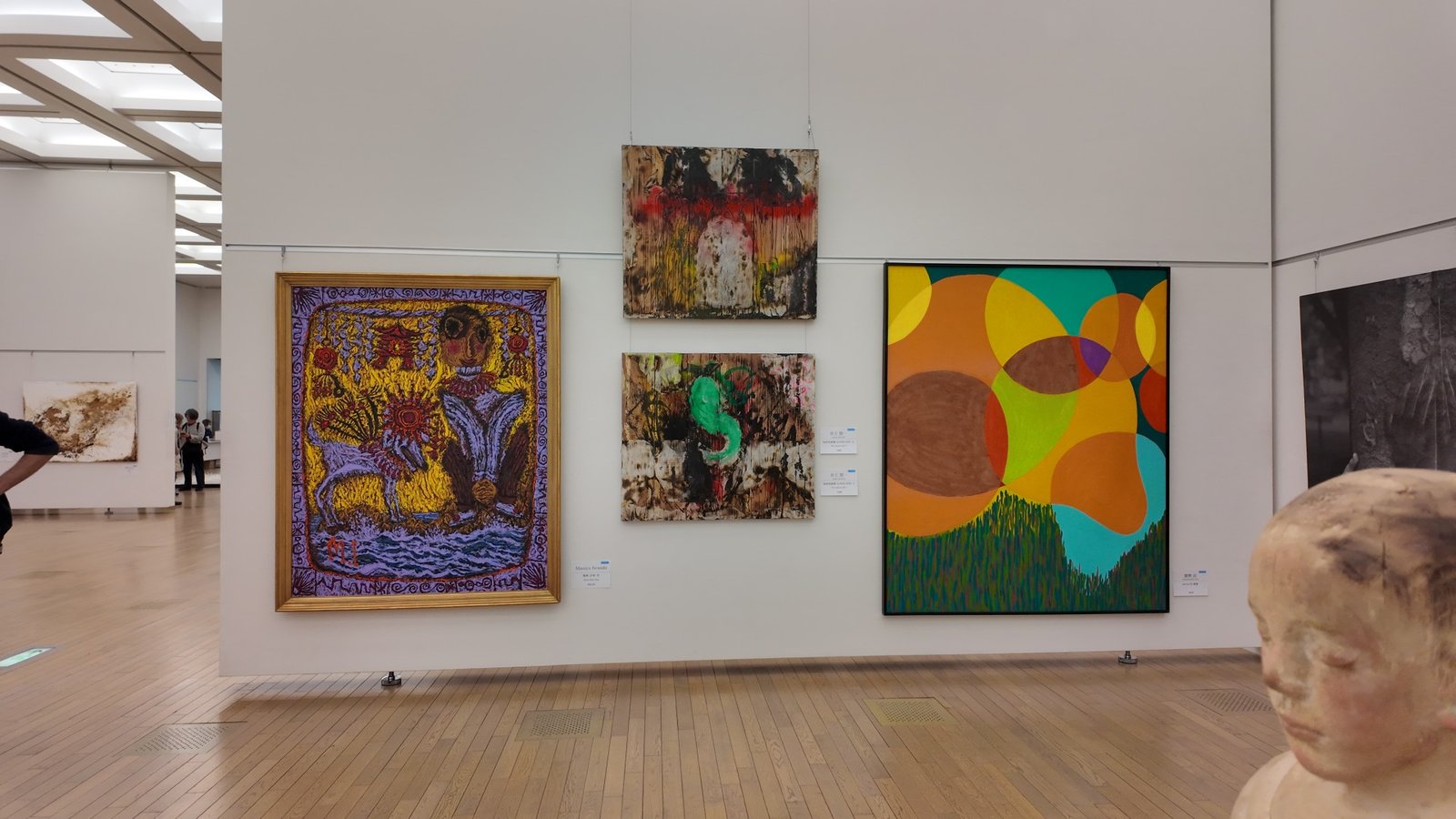
中村白蘭(Nakamura Hakuran):日本當代視覺藝術創作者,其作品曾出現在日本重要的藝術聯展與國際/跨文化交流展中。以**稀有絲綢與大相撲化粧廻し使用的絹糸**創作為素材進行「宇宙的胎動」等形式的實驗性裝置或媒材藝術。
西田裕子(Nishida Yuko):日本當代視覺藝術家,從事繪畫與影像/平面創作。其作品曾於東京等地舉辦個展、二人展以及當代美術聯展展示,關注觀者對作品的停留與感受,呈現細膩凝視的視覺語彙。主要展出包括 2021 年個展《ふと立ち止まる》、2024–25 年二人展及第 24 回《NAU 21 世紀美術連立展》參展等。
二宮ちとせ(Ninomiya Chitose):活躍於日本當代美術圈的視覺藝術創作者,其作品曾出現在日本重要的藝術聯展名單,顯示她的創作實踐及展出經驗。她以多樣視覺語彙進行表現,並在展覽中呈現富有個人特色的藝術作品。其作品曾參與具代表性的當代美術活動。
仁平和幸(Nihira Kazuyuki):一位以「色彩的構築性」與「光影的層次」為創作核心的日本當代藝術家。現為 NAU(21世紀美術連立展) 的正式會員。長年參加位於東京京橋地區ギャラリー檜 (Gallery Hinoki)的年度展。該畫廊是日本推廣中堅實力派藝術家的重要基地。
NIL:日本現代美術家。曾多次參展於Bar SiSi 築地、no.12 畫廊(澀谷)、國立新美術館、東京/日之出、P-KOEN(目黑)。
野村雅美(Nomura Masami):日本音樂家與藝術家。1986年起以即興吉他手身份開始活動。2002年起以抽象畫家身份發表作品。參與了個展、群展及現場繪畫(Live Painting)等多種展出活動。其以丙烯顏料創作的作品,被評價為「如宇宙般或如細胞般的畫作」

宣和(Senwa):坂元宣和的作品時常以從自然與風景中獲得靈感的動態色彩和構圖為其特徵,透過在畫廊舉辦個展以及參加「NAU」等主要聯展,持續地發表作品。以東京都內的畫廊為中心,定期舉辦個展。
橋谷勇慈(Hashiya Yuji):**日本NAU 21世紀美術連立展事務局局長**,日本名古屋大學電氣電子學科(**諾貝爾物理獎得主 赤崎勇研究室成員**)。多次在東京正光畫廊、Gallery HINOKI、Gallery Natsuka舉辦個展。日本–西班牙交流展、NAU 21世紀美術連立展(國立新美術館;東京)、CAF Nebula展(埼玉縣立近代美術館)。
服部牧子(Hattori Makiko):日本現代陶藝家、NHK文化岐阜日曜陶藝教室講師。多治見市美術展市長獎、1992年陶瓷設計製作團體「The Earth」(創始成員)、中日韓國際陶瓷博覽會、JCAA受獎作家七人展,紐約、巴黎、東京等地畫廊、美術館聯展。
濱﨑道子(Hamasaki Michiko):日本東京學藝大學書道科專攻。橫濱墨の美術館館長。銀座鳩居堂個展超過20回,多次於巴黎Galerie Grand Paris、坎城、倫敦、華沙・文化科學宮、西班牙巴達霍斯市舉辦個展與聯展。
浜田夏子(Hamada Natsuko):日本東京藝術大學美術學部油畫主修(師從脇田和、中谷泰),在椿近代畫廊、原宿竹下畫廊、Shirota Gallery、Gallery '90原宿表參道、Gallery Natsuka舉辦個展。多次參與地球色展,府中市美術館聯展。
林和子(Hayashi Kazuko):日本BKS會員。師承日本萬花鏡藝術家第一人師承山見浩司先生。於九州藝文館、門司三井俱樂部、東急Hands博多店、天神PARCO Hands Cafe、環境博物館、銀座Vivian舉辦個展、聯展多次。
針谷智子(Hariya Tomoko):日本現代陶藝家,愛知縣立瀨戶窯業陶藝專攻科。師承志賀重雄與川原康孝。曾於倫敦、巴黎舉辦個展。

HIROMI TOMINAGA:日本現代美術家,日本多摩美術大學 Tama Art University美術專攻,多次於日本銀座各大畫廊舉辦個展與聯展。富永的創作以大型畫作為特色,經常在個展與展覽活動中展示其作品,關注色彩、構圖與形式上的表現。
FASC:日本現代美術家。
深尾良子(Fukao Ryoko):日本女子美術大學藝術學部繪畫科西洋畫專攻。茨城縣展奬勵賞、茨城縣展特賞、新象展佳作賞、新象展協會賞。於すどう美術館、ギャルリー志門、銀座 K's Gallery個展多次。
福田瑞枝(Fukuda Mizue):插畫作品發表於現代思潮社出版的《日本不思議物語集成八》〈雨月物語・春雨物語〉。於村松畫廊、なびす畫廊、珈琲驢馬とオレンジ、PEACE RABBIT等個展多次。多次參展〈地球色展〉世田谷美術館區民畫廊展覽。
藤下覚(Fujishita Satoru):日本武藏野美術大學修了製作優秀賞展。於茶房よしつね家畫廊、Gallery 風、櫟畫廊、上尾市役所畫廊、Gallery 檜 e・F、K’s GALLERY、Art Gallery 月桂樹個展多次。主要獲獎:新構造展(草壁賞)、獨立美術協會展(新人賞)、上野之森美術館大賞展(雕刻之森美術館賞)、日本全國公開美術展秀作選(佳作賞,刊載於 bun-ten vol.49)
萌翠(Hosui):日本墨人會(創立者有[森田子龍](https://www.sothebys.com/zh/auctions/ecatalogue/2018/brushwork-iii-abstract-masters-hk0832/lot.123.html),以及[井上有一](https://www.christies.com.cn/zh/lot/lot-6001809)等人,為現代書法的起源團體)成員。墨人京都展墨人賞。每年參展墨人會展覽。
HOLEE:韓國梨花女子大學西洋畫科專攻。曾於韓國官勳美術館(首爾)、清談美術館(首爾)、川口綜合文化中心・LILIA(日本)、國立新美術館 NAU展 Booth個展舉辦個展。並於國立現代美術館/首爾、法國文化院/首爾、IN畫廊/首爾、Talay美術館/首爾、三井美術館/首爾、Gallery Metanoia/巴黎、The Nippon Gallery/紐約參與聯展。
万城目純(Manjome Jun):日本的跨界藝術家,以其在舞蹈、視覺藝術、影像、美術和身體表現等領域的多樣化創作而聞名,探索「身體與社會」的關係。他畢業於和光大學,其影像作品曾參加鹿特丹國際電影節、ICA電影院、MHKA美術館 (安特衛普) 等國際活動。
Masaya Iwasaki:日本現代美術家。曾於銀座Modern Art、Art Imagine Gallery、Gallery Knulp、Art Imagine Gallery、GALLERY ART POINT、國立新美術館、Galerie Métanoïa、The Nippon Club(紐約)舉辦個展、聯展多次。
松下佐代(Matsushita Sayo):日本現代美術家。曾參展熊本縣美術家聯盟展、Pangea。25周年紀念 紐約展(紐約)、Art International Zurich(蘇黎世)、亞洲美術家聯盟 日本委員會展(福岡,亞洲美術館)、NAU 21世紀美術連立展(東京,國立新美術館)多次。
松村清司(Matsumura Kiyoshi):日本現代美術家。作品風格以精細與現代感的繪畫及裝置為主。展覽呈現他最新創作的系列作品,透過材質與色彩的探索展現對自然與都市景觀的詮釋。
Maho Laplante:美國紐約藝術學生聯盟優秀獎學金、Lloyd Sherwood獎助金。並於紐約林肯中心 Cork Gallery、元麻布Gallery、The Rising Arts Gallery、Cabrillo Art Cave、國立新美術館、Galerie Métanoïa(巴黎)、Gallery Siacca舉辦個展、聯展多次。

光行洋子(Mitsuyuki Yoko):日本佐賀大學教育學部特設美術科繪畫專攻。九州產業大學名譽教授、日本美術家聯盟會員。擔任亞洲國際美術展副代表、福岡文化聯盟理事,並參與福岡縣美術協會洋畫部運營委員等工作。其作品主要收藏於福岡縣立美術館、福岡市美術館、福岡女子大美術館、田川市美術館,以及馬來西亞國立美術館、英國布萊頓大學等多個國內外美術館。
文珠川清(Monjugawa Kiyoshi):日本大學藝術學部美術學科美術專攻。Salon Blanc 美術協會、日法現代美術展執行委員長、日本美術家聯盟 會員。曾參展於德國 「Wallauer-Fachwerk 展」、韓國 「ICA國際現代美術展」、韓國 「白石大學美術館展」。
やちぐちひろゆき(Yachiguchi Hiroyuki):日本現代美術家。曾於國立新美術館、GALERIE SOL、飛之台史跡公園博物館、Bijutsu Kodo Seyo、GALERIE SOL、Gallery kingyo參展。
柳谷みち代(Yanagiya Michiyo):日本當代墨與書寫創作者,擅長以筆墨表現線條、空間與形式的關係,其作品在墨展、畫廊二人展及地方群展中呈現,展現出與傳統與當代表現語彙之間的結合。
山内孝一(Yamauchi Koichi):日本和光大學人文學部藝術學科美術專攻。曾於駒井畫廊、橫濱・神奈川縣民Hall、長野縣伊那文化會館、長野縣飯田創造館、長野縣飯田市・Art House、長野縣・飯田市立美術博物館、長野縣・辰野町立美術館個展、聯展多次。
山崎倖子(Yamazaki Sachiko):從井原優山(日本現代水墨畫會同人)、土屋範人。於Gallery 榧、iClub、Art Gallery 京橋、Gallery Miharaya、Art Salon Across、福岡市美術館、O Gallery、Gallery 坂舉辦個展數十回。

山田陽子(Yamada Yoko):日本當代美術界的文化交流推廣者與網絡建構者,擔任 Asian Artists Network(亞洲藝術家網絡) 社長。該組織致力於促進日本與亞洲各國藝術家的聯繫與合作,並透過其活動支援國際藝術計畫與展覽。
山根真奈(Yamane Mana):日本畢業於武藏野美術大學工藝工業設計學科陶藝專攻。於東京Visee Art Gallery、東京巷房個展多次。於妖怪物件競賽獲得境港市教育長獎、川口市美術展 市長獎。
柳賢淑(Ryu Hyun-suk):韓國 弘益大學美術大學院、法國 巴黎ACADÉMIE DE LA GRANDE CHAUMIÈRE(大茅舍藝術學院,1904年成立,莫迪利亞尼、夏卡爾、賈科梅蒂皆來自該校) 留學。收藏機構:韓國國會議事堂、現代汽車、三星 (SAMSUNG)、韓國通用汽車 (General Motors Korea)、韓國賓士 (Benz Korea)、日本銳跑 (Reebok Japan)、樂天 (Lotte)等。
YU-KI:日本フォトコミュニケーション®協会(Photo Communication® 協會)碩士課程。獲PCA賞、M84賞。曾於Artcomplex Center、Art Gallery M84、Space K(東京代官山)、渋谷マルイ、IAI Gallery、Gallery RDECO等個展多次。

YUKIKO:美國Emerson Umbrella Center for the Arts水彩專攻。曾於檜畫廊、水彩聯盟展、水彩人展、水彩人小品展、NAU 21世紀美術連立展、Element 2020、M.A.D.S. ART GALLERY,義大利米蘭、世田谷美術館舉辦個展、聯展多次。
湯沢茂好(Yuzawa Shigeyoshi):日本OBARA 美術研究所(師從 小原泫祐先生,曾創辦飯田市組成寫實主義美術家團體、美術研究所)。IIDA・B KEN成員。於AU(藝術家聯盟),在[具體美術](https://www.whitestone-gallery.com/zh-hant/pages/gutai)創始成員[嶋本昭三](https://www.christies.com/zh/lot/lot-5853195)的企劃下,於國內外參展多次,如東京、長野、新宿、韓國首爾等舉辦個展、聯展多次。
吉原緑香(Yoshihara Ryokka):日本現代美術家。作品在日法現代美術世界展(第25屆)中榮獲優秀獎,以及在第6回國際書畫展中獲得金獎,顯示她的創作已受到多方國際藝術評審的肯定。
和田幸三(Kozo Wada,deceased):2025年6月逝世。於日本橋巴里畫廊、日本橋 藝術廣場、銀座 シロタ畫廊、銀座 櫟畫廊、銀座 シロタ畫廊、座 Gallery NAMIKI、京橋 ギャラリー檜B・C等個展多次。【主要公募展】1972-1975 新象展、1977-1985 行動展。
和田廣司(Hiroshi Wada):活躍於日本現代美術界的當代藝術家,其作品風格涵蓋城市、建築、空間及抽象表現等主題,特別與日本現代美術重要展覽 NAU 21世紀美術連立展 有密切關係,多次受邀參展與推薦參與國際交流展覽。他的創作結合了東方傳統與當代視覺語彙,展現敏銳的形式構成與深刻的空間思考。
渡邊健吾(Watanabe Kengo):本現代美術家。曾多次參展ACT藝術大賞展、「第43回國際美術大賞公募展」獲得準大賞、於The Artcomplex Center of Tokyo、The Nippon Gallery at The Nippon Club、銀座長谷川畫廊、GALLERY ART POINT舉辦個展、聯展多次。

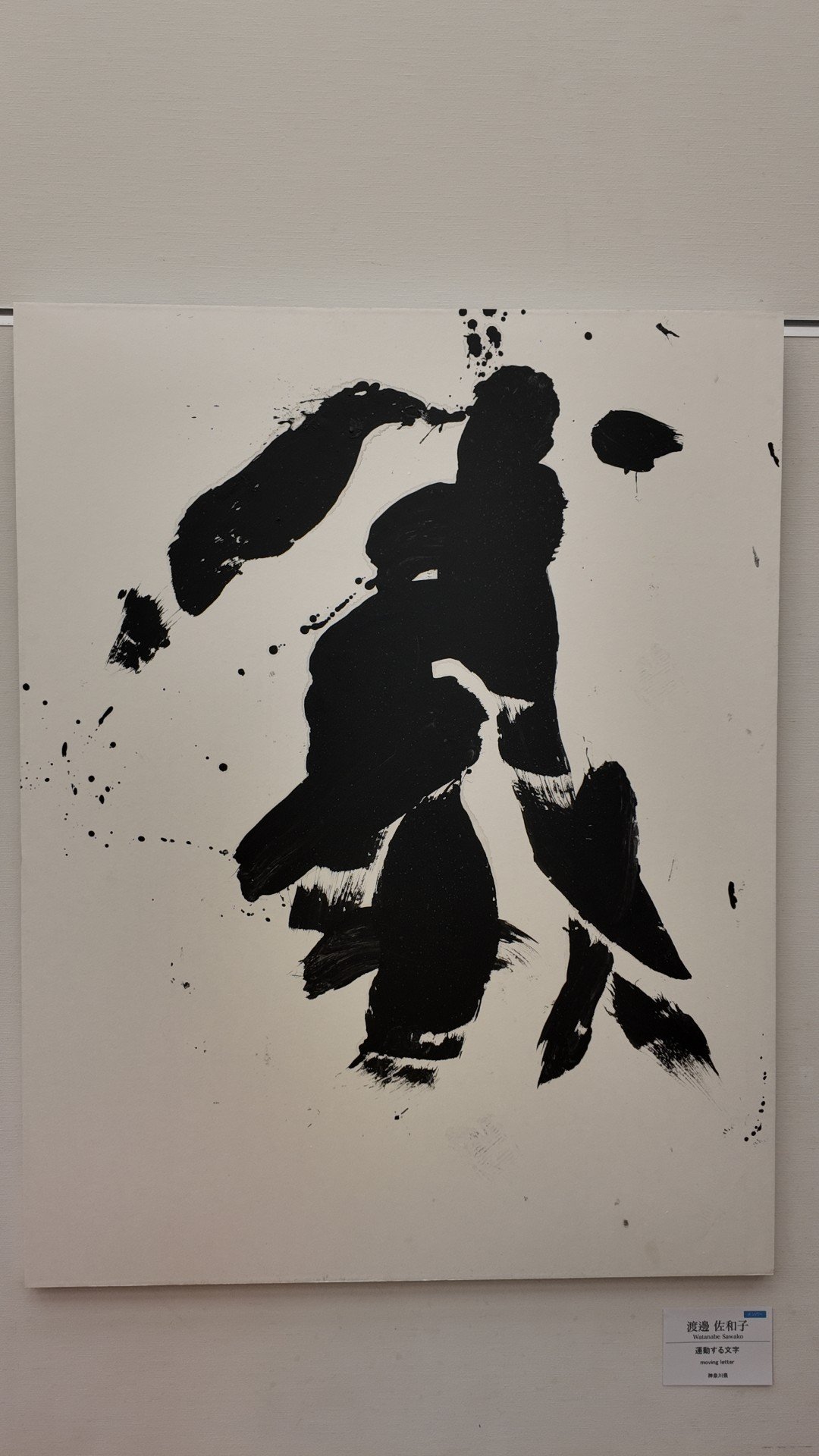
渡邊佐和子(Watanabe Sawako):日本NAU21世紀美術連立協會前會長、日本墨人會(日本戰後現代書法團體,由由森田子龍、井上有一、江口草玄等組成)成員。師從比田井南谷、森田子龍。於東京都美術館、小杉畫廊、大阪くらしの今昔館畫廊、Gallery 草、知恩院和順會館、京都市美術館別館、Gallery Hide and Seek、橫濱赤磚倉庫、京都市美術館、京都文化博物館舉辦個展、聯展多次。
渡辺信好(Watanabe Nobuyoshi):日本愛知縣立藝術大學研究所美術研究科美術專攻。曾於AC S名古屋、銀座村松畫廊、千葉ギャラリー睦舉辦個展多次。並曾多次參展A-21波蘭國際交流展、柏林–東京國際交流展、NAU 21世紀美術連立展多回。
蕨迫みのり(Warabisako Minori):活躍於日本當代藝術界的視覺藝術家,出身於東京,她的作品融合抽象表現與敘事性人物肖像,透過咖啡獨特的色調與質感描繪情感、生命力與自然元素,形成極具個人特色的藝術語彙,其作品在Saatchi畫廊長年展示。被St. Augustine Episcopal Church(紐約) 永久收藏。擔任 Azamara Cruises 藝術家駐村(Artist‑in‑Residence),以藝術家身份巡迴世界各地展出並留下作品。
福江悦子(Etsuko Fukue):日本真宗大谷派僧侶。北海道美術協會會友、在京都市美術館、札幌市民畫廊、釧路美術館、旭川市民文化會館、Hirama畫廊、TOOV Café(札幌)、小樽市立美術館、國立新美術館、Galerie 志門、等舉辦個展與聯展多次。ART TAIPEI 2024|台北世界貿易中心(由 L.c.m Gallery 參展)、PESCARART 2024|義大利佩斯卡拉→ 榮獲國際當代藝術獎(Premio Internazionale di Arte Contemporanea)-〈當藝術巧遇咖啡香〉|L.c.m Gallery 策劃(台北 George House)。
王穆提(Wang Muti):日本NAU21世紀美術連立協會台灣首位成員、日本現代美術家協會(現展)台灣連絡所所長。曾獲日本現展〈俊英作家展〉、東京現展獎勵賞、神奈川現展優秀賞。曾策展[日展審查員與台灣藝術家聯展、並策展台日交流展高規格展覽十多回。撰寫藝術評論刊登日本橫濱[《SAKURA》]並刊印5萬本、參與規劃日本台灣現代藝術家與台灣國立故宮博物院美術年鑑特輯、並曾與北京798等媒體合作。協助超過2,000位藝術家架設獨立的數位美術館資料庫專案。
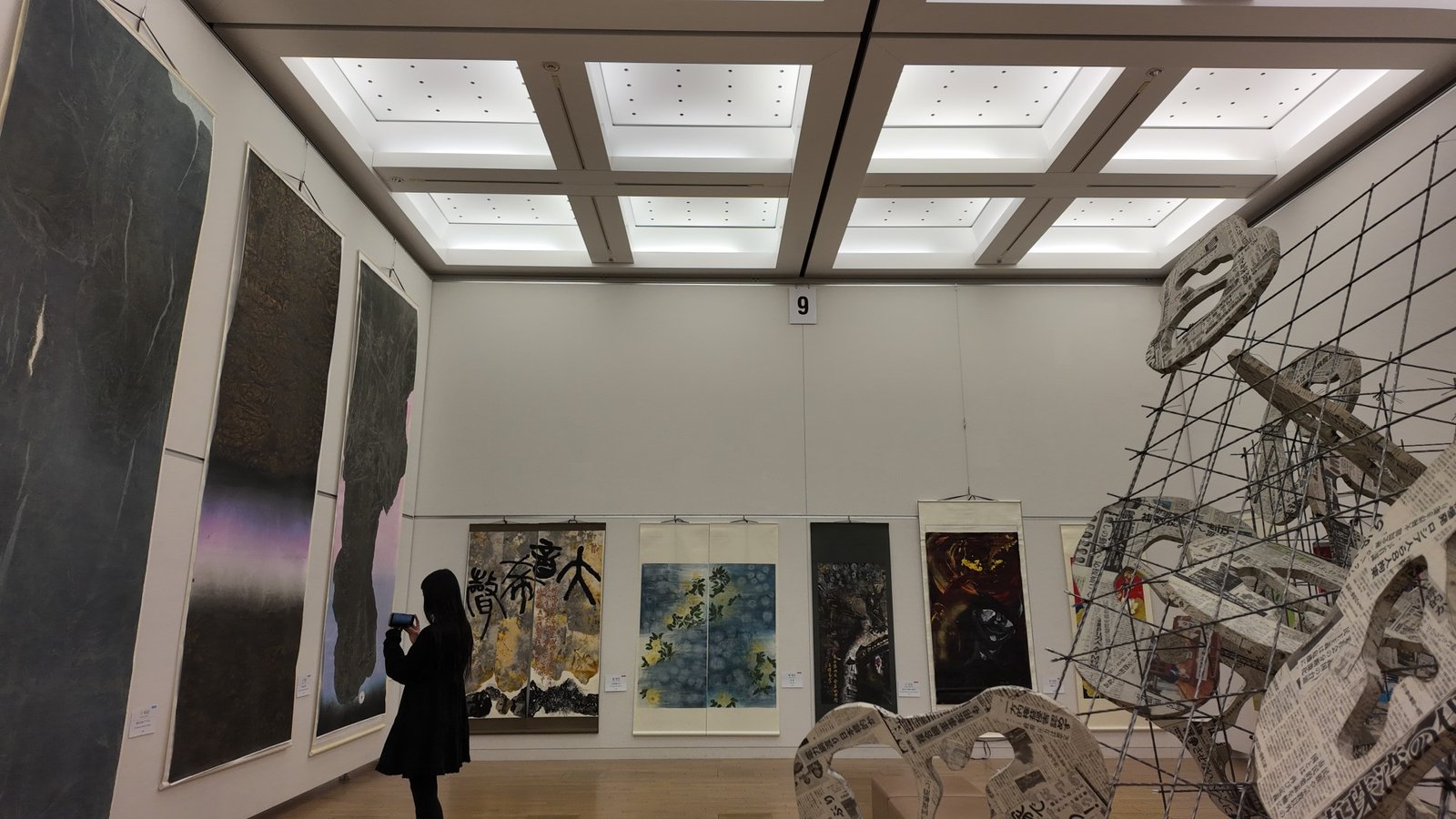
王穆提作為台灣藝術家於日本國立新美術館一樓1A大廳展廳中獲得獨立策展的個人展示空間,具備被日本藝術圈專業學術與實力指標肯定之意義,同時王穆提又獲得24回NAU21世紀連立展的最高賞:未來賞,未來可在日本國立新美術館展示三面牆面(約莫15公尺寬度)的作品,等於是獲得如上團體的肯定與支持。
- NAU未來賞的評選,由學藝委員與 4 名營運委員共計 5 人以投票形式進行,並依據總得分順位決定了 2 名未來賞得主。 NAU 21世紀美術連立協會學藝委員・九州產業大學名譽教授光行 洋子先生評論王穆提(Wang Muti)的作品:「『聖境・阿里山』,是在畫仙紙上繪製的 3幅山水畫連作。作品之間相互共鳴,在寬 5公尺的牆面上,以大膽的直式構圖建構出天空與岩石,在紮實的描寫力支撐下,以充滿動態感的構圖與深邃的色彩繪製而成。作品整體散發著清新的空氣感,是一件震撼觀者的力作。」
- NAU21世紀美術連立展委員曾經擔任過福岡亞洲文化獎委員會委員、亞洲美術家聯盟日本委員會代表、九州產業大學名譽教授暨前校長、九州產業大學的名譽教授、亞洲美術家聯盟日本委員會、日本美術家連盟會員、福岡市美術連盟等。曾經獲得福岡亞洲文化獎(日語:福岡アジア文化賞,英語:Fukuoka Prize)著名的藝術文化工作者,如、巴金、黑澤明、費孝通、侯孝賢、張藝謀、莫言、許鞍華、中村哲、徐冰、朱銘、蔡國強。
NAU21世紀連立展未來賞歷年得主皆為國際重要美術館與財團重要收藏之藝術家,如韓國國會議事堂、現代集團、三星 (SAMSUNG)集團、韓國通用汽車 (General Motors Korea)、韓國賓士 (Benz Korea)、日本銳跑 (Reebok Japan)、樂天 (Lotte)與日本各大美術館、畫廊、美國紐約、歐洲如法國、波蘭等各大美術館、畫廊代理收藏等。
連瑞芬 (LIEN Jui-Fen):現任臺灣女書法家學會理事長、澹廬文教基金會董事長、澹廬書會/傑閣書會/中華藝術研究院院務諮詢委員。曾於高雄明宗書法藝術館、文化大學大夏藝廊、高雄文化中心、新北藝文中心、帕帕拉夏藝文中心、新北市議會、世貿三館、大墩文化中心、國立國父紀念館舉辦個展多次。
姜金玲 (Jiang Jinling):台灣東海大學膠彩畫美術專攻,師從姜一涵和張貞雯。為台灣新住民,曾於山東與台北舉辦多次個展、聯展。
陳福祺 (CHEN FU-CHI):台灣本土攝影聯誼會會長/廣角攝影俱樂部會長、中華書道學會理事、中國藝術家協會監事、歷任台北巿鋼琴調音業職業工會理事長、台灣國家兩廳院長期簽約音樂會調音師。曾於上海國際攝影藝術展、法國巴黎國際藝術博覽會、台北世貿一舘、印度-台灣國際當代藝術舉辦個展與聯展多次,攝影書畫創藝作品常蘊含音樂性韻律動靜美。
廖純沂 (Liau,Chun-Yi):台灣中山醫學大學醫學研究所博士。中華民國書學會、台灣書法學會、中國書法學會、臺中市書法學會、台中藝術家俱樂部、雲林縣藝文學會等 社團之永久會員或一般會員。書法和水墨作品曾參與國內競賽,獲佳作及入選等獎項;積極參加國內、外,如日本國立新美術館、韓國首爾等書畫展出。
王詮富 (WANG-CHUAN FU):台灣台北藝術大學美術創作研究學碩士學位。台灣懷竹居書畫藝術學院藝術總監、樹人醫護專修講師。曾於台灣高雄文化中心舉辦個展多次。
李佳玲( Lee, Jia-Ling):台灣皇墨藝藝術公司董事長。曾於育達科技大學、松菸誠品時裝秀、苗北藝文中B1展覽藝廊、嘉義市國稅局、嘉義鐵道藝術村五號倉庫等舉辦個展、聯展多次。曾獲台灣全國學生美展西畫類、水墨類佳作。
吳采恩(Wu,Tsai En):台灣高雄師範大學美術系研究所美術專攻。曾被推薦於中國兩岸杭州美術學院、江西美術館、北京師大、台灣「藝術新聲」優秀學生作品交流展,以及韓國釜山等地展出。2025年,入選日本第81回現展,於國立新美術館(東京)展出。

Overview of the Participating Artist
Participating Artists of the 24th Exhibition (Including NAU 21st Century Art Federation Members and Recommended Juried Nominees):
- Aoki Kuniko: Studied under Yuji Shirao (who led the Japan-France Modern International Fine Arts Exhibition as the President of the Salon Blanc Art Association). Recipient of the French Embassy Award and the Minister of Education, Culture, Sports, Science and Technology Award at the Japan-France Modern Art Exhibition.
- Akiko SIACCA: Graduate of Tama Art University, Japan. Has held approximately 700 solo and group exhibitions in museums and galleries. She is a contemporary artist and the Director of Gallery Siacca in Ginza, Tokyo.
- Asano Akane: Graduate of the Western Painting Department at Kyoto University of the Arts. Participated in the Independent Joint Special Exhibition (GALLERY DEN) in the Spinnerei Art District, Leipzig, Germany, and ART MELBOURNE (Mayumi International).
- Anazawa Makoto: Recipient of the Prefectural Governor’s Award at the Chiba Prefecture Exhibition. Frequent participant in the Niki Exhibition and the Contemporary Artist Center Exhibition.
- Abe Masamitsu: Held the "Abe Masamitsu Print Exhibition" in commemoration of receiving the Awa Japanese Paper Hall Award.
- Arakawa Kumiko: Specialized in the Printmaking Course of the Painting Department at Tokyo Zokei University. Held dozens of solo and group exhibitions at Ginza Towa Gallery, GINZA Gallery Artist Space, Japan-Korea Exchange Art Cosmos Exhibition, Gallery Hinoki, Gallery SHIMIZU, Galerie Shimon, and K’s Gallery.
- Aretokorekoko: Graduate of the Sculpture Department at Kyoto City University of Arts. Held nearly twenty solo exhibitions at Mint Kobe, MANIFESTO GALLERY, ART GALLERY UMEDA, Isetan Shinjuku (Main Building 6F Art & Frame), Hanshin Umeda Main Store (Hello Culture 2), and Kyoto Dohjidai Gallery. Dozens of group exhibitions at the National Art Center, Tokyo, Hyogo Prefectural Museum of Art, and Kobe Kitano Museum. Recipient of the "Independent Tokyo 2022" Jury Special Award (Takashi Kobayashi Award / INTERART 7) and the "SICF23" Jury Award (Natsumi Araki Award).
- Iida Minoru: Graduate of the Oil Painting Course, Faculty of Fine Arts at Tokyo University of the Arts. Recipient of the Ito Kisaku Award (named after the giant of Japanese stage design).
- Ishii Hotan: Judge of the Mainichi Shodo Exhibition and avant-garde calligrapher. He transforms traditional Kanji calligraphy into a cross-border abstract visual art. Unlike traditional calligraphers, he emphasizes "three-dimensionality" and "spiritual explosiveness" of ink traces in space. Regarded as a key figure in bringing Japanese ink culture to the international contemporary art stage. Frequently invited to exhibit in Italy, Germany, and France, successfully introducing the modernity of Japanese "Sumishi" (ink art) to Western audiences. Participant in the "Echoes of the Tide" Contemporary Calligraphy Exchange Exhibition, promoting cross-regional dialogue in contemporary calligraphic arts.
- Ishii Mitsuko: From an artistic family, including her father, sculptor Ishii Tsuruzo, and her brother, Ishii Hakutei. Primarily active in the field of Japanese contemporary art, with deep research into lifestyle design and classical fine arts. One of the representative figures of modern Japanese art.
- Isozaki Noriko: Committee member of the Painting Department of Ichiyokai. Specialized in Plastic Arts, Department of Art Studies, Faculty of Arts, Joshibi University of Art and Design. Numerous exhibitions at Galerie Shimon, Tokyo Metropolitan Art Museum, Heilongjiang Provincial Art Museum, and Tokyo Bunka Kaikan. Recipient of the Pan-Pacific Exhibition Canada International Cultural Exchange Association Award, the Ichiyo Award, the Semi-Grand Prize, and the Member Award.
- Ito Rieko: Specialized in Fine Arts Research at Musashino Art School. Early participant in the Free Art Exhibition, Pyeongtaek International Art Festival, Meguro Contemporary Art Exhibition, and Korea-Japan Art Exchange Exhibition.
- Inoue Ikko: Specialized in Fine Arts at Ritsumeikan University. Leader of Ichibokukai, Director of the Zitong Character Research Institute, member of the Fukuoka Cultural Federation, and recipient of the Fukuoka City Cultural Award.
- Inoue Kenichi: Specialized in Printmaking at Sokei Academy of Fine Arts & Design. Participated in the Oya Underground Art Exhibition, TWO WEEKS IN THE SPRING, and Naguriko Outdoor Art Exhibition.
- Uesugi Michiko: Japanese contemporary artist who has held numerous solo and group exhibitions at Shirota Gallery.
- Udagawa Nobuhito: Master’s degree from the Graduate School of Fine Arts, Tokyo University of the Arts. Professor Emeritus at Kyushu Sangyo University, Visiting Artist at the University of Pennsylvania, Chairman of the Fukuoka City Art Federation, Standing Director of the Fukuoka Japan-British Society, and Representative of the Asian Artists Association Japan Committee.
- Uchihira Toshihiro: Graduate of the Sculpture Department, Faculty of Arts, Nagoya University of the Arts; graduated from KOBATAKE Studio. Recipient of the Jury Special Award at the Hands Grand Prize Exhibition. Held exhibitions at the Museum of Modern Art, Saitama, Shinjuku Mitsukoshi Museum of Art, Ishikawa Prefectural Museum of Art, Nagoya City Museum, and Aichi Prefectural Museum of Art.
- woga: Dedicated to expressing natural landscapes and phenomena through repetitive drawing resembling automatic writing. Held numerous solo and duo exhibitions at Shinjuku Ophthalmologist Gallery, The Artcomplex Center of Tokyo, and Jun Kikuchi Graphic.
- Okada Shigetada: Japanese contemporary artist.
- Okamoto Naoe: Worked in the Design Department of Nissan Motor Co., Ltd. for approximately 17 years before studying Fiber Art at the Musashino Art University Graduate School. Currently a part-time lecturer at Joshibi University of Art and Design. Recipient of the Antonio Ratti Award and the Best in Show Award at Fiberart International (USA).
- Okayama Masaki: Specialized in Fine Arts at the Graduate School of Concept Design, Kyoto University of the Arts. Studied philosophy under Professor Takeshi Umehara, screenwriting under Professor Yoshikata Yoda (screenwriter for director Akira Kurosawa), and production under Professors Seinosuke Sekine and Kozo Mio. Works are in the collections of the National Museum in Krakow (Poland) and the Center for Contemporary Art, Warsaw (Poland). Shifted from Systemic Iconography to Ontological Art, conducting experiments through the "Conception-Architecture" method. Explores the ontological and cognitive relationship between painting, modern art, abstract art, and portraiture.
- Ogawa Izan: Japanese artist / calligrapher / expression educator / Leader of Shoshin Gakusha / Member of the Saitama International Association / Director of CCSC. Recipient of the Semi-Grand Prize at the Japan Calligraphy Exhibition and the Chishikai Award. Works are in the collections of The Peninsula Tokyo, Joan Miyaji no Sato, Ito Kowakien, Kyoto Hotel, and Chinzanso.
- Ogawa Kazu: Exhibited at the Ueno Royal Museum Grand Prize Exhibition, Sh主体 Art Exhibition, and received the Encouragement Award at the NAU 21st Century Art Federation Exhibition 2021. Participated in the NAU in Paris and NAU in NY exhibitions.
- Ogino Kiyoko: Japanese contemporary fiber artist. Since university, she has participated in group exhibitions such as "Yokinami Exhibition" with peers like Yoko Shibata and Miho Yoshii. She has been active internationally, including Taiwan-Japan exchange exhibitions. Recognized in the fields of abstract painting and graphic art.
- Ozawa Masami: Japanese handmade Washi paper artist, famous for using natural materials (such as Kozo and Mitsumata) and traditional papermaking techniques. Exhibited frequently at galleries such as "Umiiro Sorairo" and "Kaze no Ushi" in Hamamatsu.
- Oda Yoshiko: Specialized in Fine Arts, Graduate School of Art and Design, Musashino Art University. Member of the Shinsho Artist Association. Recipient of the Exhibition Award / Honorable Mention at the Shinsho Exhibition; selected for the Sompo Japan Fine Art Foundation Selection Exhibition.
- Kajiyama Miki: Graduate of the Master’s program in Fine Arts, Graduate School of Art, Kyoto Seika University. Held more than ten solo exhibitions annually at Gallery Haneusagi and KUNST ARZT. Recipient of the Kyoten Matsuda Award; curated the "life" exhibition at the Kobe Meriken Park Oriental Hotel lobby and the "Toki no Hajimari" project for the Shitamachi Art Festival.
- Katagiri Kasumi: Recipient of the Newcomer Award at the Modern Japanese Artists Exhibition, the Jury Award (Osugi Award) at the Art Origin Exhibition, and Merit Awards in various international online competitions (Contemporary Art Room Gallery, INFLUENCE GALLERY).
- Kato Kazumi: Master’s degree from the Faculty of Arts, Aichi Prefectural University of Fine Arts and Music. Creative footprint spans over 100 locations worldwide. Numerous exhibitions at the Metal Art Museum, Gallery Sao, Norton Gallery, Tokyo Metropolitan Art Museum, and various galleries.
- Kanemaru Junko: Current full member of the NAU 21st Century Art Federation. Her work focuses on the translation of "inner landscapes" and "rhythms of light and shadow." Frequently exhibits at the National Art Center, Tokyo. One of the representative figures in Japanese contemporary abstract painting who elegantly combines materiality and spirituality.
- Kamimura Midori: Graduate of the Department of Sociology, Faculty of Letters, Kinjo Gakuin University. Numerous exhibitions at Shinjuku Ophthalmologist Gallery, 3331 Arts Chiyoda, and The Artcomplex Center of Tokyo. Recipient of the Tomoko Konoike Award at "3331 Chiyoda Art Festival 2014."
- Kamo Fumiko: Specialized in Sculpture, Faculty of Art and Design, Musashino Art University. Formerly a fine arts teacher in Chiba public middle schools. Has held multiple solo exhibitions.
- Kanda Fuka: Graduate of the Shogakuin (Calligraphy Education Department), Japan Calligraphy Education Society. Her work at the National Art Center, Tokyo, has gained attention from cross-cultural art critics for its unique "linear aesthetics."
- Guarino Aki: Studied art at a French art school and practiced in Europe. Returned to Toyama Prefecture in 2019. Artist-in-residence at the Tsuchikura Town Museum (Takaoka City). Recipient of the Excellence Award at the Etchu Art Festival 2024.
- Kuboki Hiroko: Executive Committee Member of the Painting Department of the Pacific Art Society (established in 1889, formerly the Meiji Art Association, the first Western-style painting group in Japan with over 120 years of history). Frequent participant in the Salon Blanc (Japan-France Modern International Art Exhibition) at the Tokyo Metropolitan Art Museum. Her style is steady and rhythmic, showcasing a delicate pursuit of balance between sensibility and form.
- Kurihara Koho: Studied under Mitsusato Abe and Shigou Mori. Recipient of the Excellence Award at the "Belgium-Netherlands Art Award Exhibition." Member of JIAS (Japan International Artists Association) and a full member of the Salon d'Automne.
- Kuwayama Mayumi: Graduate of the Craft Department, Osaka University of Arts. Fiber artist. Recipient of the Grand Prize for the Midosuji Illumination Photo Spot Installation and 1st Place at the St. Petersburg International Flower Festival. Participated in the "Shozo Shimamoto x AU" Exhibition 2019 in Hong Kong.
- Kozai Yoko: Contemporary Japanese artist active in the Roppongi art circle, promoting cross-border dialogue and formal innovation. Frequently exhibits at Gallery Hinoki (Tokyo) and GALLERY AND LINKS 81 (Ginza).
- Riho Coster: Graduate of the Oil Painting Course, Faculty of Art and Design, Musashino Art University, and the Institut National des Beaux-Arts, Tétouan, Morocco. Held numerous exhibitions in Ginza and Morocco.
- Kobayashi Tetsuro: Specialized in Oil Painting at Musashino Art University. Participated in the Independent Art Exhibition, Ueno Royal Museum Grand Prize Exhibition, and JAALA International Exchange Exhibition. Recipient of the Florence Award.
- Konno Akiko: Japanese contemporary female artist. Her themes revolve around existence, remnants of memory, overlooked daily fragments, and perceptual experience from a female perspective.
- Saka Mitsuhiro: Specialized in Fine Arts at Tama Art University. Frequent participant in the Chiba Tama Art Association Exhibition and other contemporary art shows.
- Sasaki Tsunamasa: Specialized in Fine Arts at Kagoshima University. Member of the Japan Artists Association and AJAC. Recipient of the Japan-France Award at the Japan-France Contemporary Art World Exhibition and the Sompo JAPAN Art Award.
- Sato Toshiyo: Contemporary Japanese artist whose work focuses on daily perception, internal emotions, and layers of time, presented through a quiet and contemplative visual vocabulary.
- Shiomi Akira: Specialized in Oil Painting at Tokyo University of the Arts. Art Director at MMG Print Studio. Represented by Kaneko Art Gallery.
- Shibatani Kei: Visual artist active in Tokyo and the Kanto region. Focuses on the rhythm of color, form, and composition. Emphasizes the interaction and perceptual resonance between the viewer and the work. Participated in the Korea-Japan Artists Exchange "WAVE 25" (Seoul) and AU exhibitions.
- SHUICHI GOTOH: Graduate of the Faculty of Arts, Fundação Armando Alvares Penteado (FAAP), São Paulo, Brazil, and Hiko Mizuno Jewelry College. Jewelry designer, painter, and expert in Brazilian colored gemstones.
- Shozo: Specialized in Art Theory and Cultural Heritage at the Graduate School of Kyoto University of the Arts. Researches "Perceptual Generation and Creation in Art." Participant in the Kameyama Triennale.
- Suemoto Taimaru: Artist whose work is noted for maintaining a warm humanistic quality amidst cold contemporary trends. Invites viewers to discover the weight of time and memory through layers of color.
- Sugano Junko: Specialized in Oil Painting, Musashino Art Junior College of Art and Design. Recipient of the Shunyo Exhibition Newcomer Award. Exhibited at the Vladivostok Visual Arts Biennale (Russia) and Toyama International Contemporary Art Exhibition.
- Sugiyama Masashi: Contemporary artist known for works such as "Cracked Earth and the Cry of the Bull." Listed as a related artist in the African Art Museum. Participating in the 23rd NAU 21st Century Art Federation Exhibition in January 2025.
- Suzumadoka: Contemporary Japanese artist.
- Suzuki Hitoshi: Graduate of the Master’s program in Art Education, Tokyo Gakugei University (specialized in ceramics). Inspired by Michio Hoshino's "The Traveling Tree." Workshop instructor at the Museum of Contemporary Art Tokyo. Numerous exhibitions at Ginza K’s Gallery and Gallery Hinoki.
- Sekino Rintaro: Doctoral candidate in Art Production, Graduate School of Osaka University of Arts. Student Special Award at the Shell Art Award 2017. Works collected by the Mitsubishi Corporation Art Gate Program.
- Taira Noboru: Contemporary visual artist active in Tokyo. His solo exhibition at Gallery Kobayashi in Ginza is archived by the National Art Center, Tokyo.
- Takahashi Shiori: Graduate of the Master’s program at Kyushu Sangyo University. Frequent participant in the NAU 21st Century Art Federation Exhibition.
- Takahashi Toshiaki: President of the NAU 21st Century Art Federation. Master’s degree from Tokyo Gakugei University. Exhibited at the Japan International Art Exhibition (Mainichi Shimbun) and the Taro Okamoto Memorial Contemporary Art Award Exhibition. Held exhibitions in Paris, New York, and Ginza.
- Takanohashi Nao: Participated in the Toyama International Contemporary Art Exhibition and the Vladivostok Visual Arts Biennale (Russia). Held exhibitions in Paris, New York, Poland, and Istanbul.
- Tajima Hajime: Studied under Akira Takeuchi (member of the Japan Kōgei Association). Exhibited at the National Art Center, Tokyo, and various galleries.
- Tajima Hiroyuki: Graduate of the Oil Painting Department, Tokyo University of the Arts, and the University's Printmaking Lab. Numerous print and oil painting exhibitions at Keio Print Salon and Kosugi Gallery.
- Tanaka Mizuho: Recipient of the Gifu Prefecture Governor’s Award and the "Quilt Japan" Jury Award. Exhibited at Ginza Kofou and FEI ART MUSEUM Yokohama.
- Tabata Rie: Ph.D. in Education from the Graduate School of Tokyo Gakugei University. Studied calligraphy under Seikaku Yonejima and abstract painting under Steven Cushner. Currently a lecturer at Tsuru University and Yamanashi Prefectural University.
- Tamura Takeshi: Listed as a producer/participant in the Sapporo International Art Festival 2017. Resident artist at Tenjinyama Art Studio.
- Chikyo Kazuki: Contemporary Japanese artist.
- Chisaka Maki: Contemporary Japanese artist.
- Tsuten Sakurai Hiromi: Born in Amami City. Student of Kanjiro Ikejima. Fellow of the Independent Art Association. Has traveled to over 30 countries and held 4 solo exhibitions in New York.
- Tsuda Tomoko: Contemporary Japanese artist.
- Tokyo Takashi: Graduate of Sophia University. Recipient of honorary awards at the Prix de la Photographie Paris (PX3), International Photography Awards (IPA), and London International Creative Competition.
- Tonuma Makiko: Graduate of the Oil Painting Department, Graduate School of Tokyo University of the Arts. Holds annual solo exhibitions at Ginza K’s Gallery.
- Domon Rie: Contemporary artist with a background in mixed media and metal carving. Her work spans painting and installation, with experience in Taiwan-Japan exchange exhibitions.
- Toyosaki Okiko: Member of the Japan Artists Association. Has held dozens of solo and group exhibitions at Ginza Futaba Gallery, O Gallery, and others.
- Nakajima Yuri: Graduate of Bunka Fashion College. Exhibited at the Ueno Royal Museum and various galleries.
- Nakamura Hakuran: Visual artist using rare silk and silk threads used for Sumo Kesho-mawashi to create experimental installations titled "Fetal Movement of the Universe."
- Nishida Yuko: Contemporary visual artist focusing on the viewer's gaze and moments of stillness. Participant in the 24th NAU 21st Century Art Federation Exhibition.
- Ninomiya Chitose: Active in the Japanese contemporary art circle, known for a unique visual vocabulary across representative contemporary art events.
- Nihira Kazuyuki: Contemporary artist focused on "constructive color" and "layers of light." Full member of NAU. Frequent participant in the annual exhibitions at Gallery Hinoki in Tokyo.
- NIL: Contemporary artist who has exhibited at the National Art Center, Tokyo, and various galleries in Shibuya and Meguro.
- Nomura Masami: Musician and artist. Active as an improvisational guitarist since 1986 and an abstract painter since 2002. His acrylic works are described as "cosmic or cellular."
- Senwa: Sakamoto Senwa’s works are characterized by dynamic colors and compositions inspired by nature and landscapes. Regularly holds solo exhibitions in Tokyo.
- Hashiya Yuji: Secretary-General of the NAU 21st Century Art Federation. Graduate of the Department of Electrical and Electronic Engineering, Nagoya University (Member of the lab of Nobel Laureate Isamu Akasaki). Numerous exhibitions at Gallery HINOKI and Gallery Natsuka.
- Hattori Makiko: Contemporary ceramic artist and NHK Culture Center lecturer. Recipient of the Mayor’s Award at the Tajimi City Art Exhibition. Founding member of the ceramic group "The Earth."
- Hamasaki Michiko: Specialized in Calligraphy at Tokyo Gakugei University. Director of the Sumi-no-Art Museum in Yokohama. Has held over 20 solo exhibitions at Kyukyodo, Ginza, and exhibited in Paris, London, and Warsaw.
- Hamada Natsuko: Specialized in Oil Painting at Tokyo University of the Arts (studied under Kazu Wakita). Numerous exhibitions at Shirota Gallery and Gallery Natsuka.
- Hayashi Kazuko: Member of BKS. Studied under Koji Yamami, Japan's leading kaleidoscope artist. Numerous exhibitions in Kyushu and Ginza.
- Hariya Tomoko: Contemporary ceramic artist. Studied under Shigeo Shiga. Has held solo exhibitions in London and Paris.
- HIROMI TOMINAGA: Graduate of Tama Art University. Known for large-scale paintings focusing on color, composition, and formal expression.
- FASC: Contemporary Japanese artist.
- Fukao Ryoko: Specialized in Western Painting at Joshibi University of Art and Design. Recipient of the Ibaraki Prefecture Exhibition Encouragement Award and the Shinsho Exhibition Association Award.
- Fukuda Mizue: Illustrator for the Ugetsu Monogatari series. Frequent participant in the "Earth Color Exhibition" at the Setagaya Art Museum.
- Fujishita Satoru: Graduate of Musashino Art University. Recipient of the Sculpture-no-Mori Museum Award at the Ueno Royal Museum Grand Prize Exhibition.
- Hosui: Member of Bokujinkai (founded by Shiryu Morita and Yuichi Inoue, the origin group of modern calligraphy). Recipient of the Bokujin Award at the Bokujin Kyoto Exhibition.
- HOLEE: Specialized in Western Painting at Ewha Womans University, Korea. Exhibited at the National Museum of Modern and Contemporary Art, Seoul, and Galerie Metanoia, Paris.
- Manjome Jun: Cross-disciplinary artist exploring the relationship between "Body and Society" through dance, visual arts, and film. Films screened at the International Film Festival Rotterdam and MHKA (Antwerp).
- Masaya Iwasaki: Contemporary artist who has exhibited at the National Art Center, Tokyo, and The Nippon Club, New York.
- Matsushita Sayo: Participant in Art International Zurich and the Asian Art Museum (Fukuoka).
- Matsumura Kiyoshi: Focused on precise contemporary painting and installation, interpreting natural and urban landscapes through material and color.
- Maho Laplante: Recipient of the Merit Scholarship at the Art Students League of NY. Exhibited at Lincoln Center Cork Gallery and the National Art Center, Tokyo.
- Mitsuyuki Yoko: Professor Emeritus at Kyushu Sangyo University. Member of the Japan Artists Association. Works collected by the National Art Gallery of Malaysia and the University of Brighton (UK).
- Monjugawa Kiyoshi: Graduate of Nihon University College of Art. Executive Chairman of the Japan-France Modern Art Exhibition. Member of the Japan Artists Association.
- Yachiguchi Hiroyuki: Exhibited at the National Art Center, Tokyo, and the Hinotodai Site Park Museum.
- Yanagiya Michiyo: Contemporary ink and calligraphy creator exploring the relationship between line, space, and form.
- Yamauchi Koichi: Specialized in Fine Arts at Wako University. Numerous exhibitions at the Iida City Art Museum and other venues in Nagano.
- Yamazaki Sachiko: Studied under Yusan Ihara. Has held dozens of solo exhibitions at the Fukuoka City Art Museum and other galleries.
- Yamada Yoko: President of the Asian Artists Network, dedicated to promoting international art projects and exhibitions across Asia.
- Yamane Mana: Specialized in Ceramics at Musashino Art University. Recipient of the Mayor’s Award at the Kawaguchi City Art Exhibition.
- Ryu Hyun-suk: Graduate of Hongik University, Korea, and Académie de la Grande Chaumière, Paris. Works collected by the National Assembly of Korea, Samsung, and Reebok Japan.
- YU-KI: Master's course graduate of the Photo Communication® Association. Recipient of the PCA and M84 Awards.
- YUKIKO: Specialized in Watercolor at Emerson Umbrella Center for the Arts (USA). Exhibited in Milan, Italy, and at the Setagaya Art Museum.
- Yuzawa Shigeyoshi: Studied under Genyu Obara. Member of IIDA・B KEN. Participated in numerous international exhibitions under the planning of Gutai co-founder Shozo Shimamoto.
- Yoshihara Ryokka: Recipient of the Excellence Award at the Japan-France Modern Art World Exhibition and the Gold Medal at the International Calligraphy and Painting Exhibition.
- Kozo Wada (Deceased): Passed away in June 2025. Held numerous solo exhibitions in Ginza and Nihonbashi; participant in the Shinsho and Kodo exhibitions.
- Hiroshi Wada: Contemporary artist focusing on urban, architectural, and spatial themes. A key member of the NAU 21st Century Art Federation.
- Watanabe Kengo: Recipient of the Semi-Grand Prize at the 43rd International Art Grand Prize Exhibition. Exhibited at The Nippon Club, New York.
- Watanabe Sawako: Former President of the NAU 21st Century Art Federation. Member of Bokujinkai. Studied under Nankoku Hidai and Shiryu Morita.
- Watanabe Nobuyoshi: Graduate of the Aichi Prefectural University of Fine Arts and Music. Participant in the A-21 Poland-Japan International Exchange Exhibition.
- Warabisako Minori: Tokyo-born artist using coffee to paint portraits and abstract works. Long-term display at Saatchi Gallery (UK) and permanently collected by St. Augustine Episcopal Church (NY). Artist-in-residence for Azamara Cruises.
- Etsuko Fukue: Monk of the Shinshu Otani-ha. Recipient of the International Contemporary Art Award at PESCARART 2024 (Italy). Exhibited at ART TAIPEI 2024.
- LIEN Jui-Fen: Current Chairperson of the Taiwan Women Calligraphers Association and the Tan-Lu Cultural and Educational Foundation. Numerous solo exhibitions at the National Sun Yat-sen Memorial Hall.
- Jiang Jinling: Specialized in Mineral Pigment Painting at Tunghai University, Taiwan. Studied under Jiang Yihan and Zhang Zhenwen.
- CHEN FU-CHI: President of two photography associations in Taiwan. Exhibited at the Shanghai International Photography Art Exhibition and the International Art Fair in Paris.
- Liau, Chun-Yi: Ph.D. from Chung Shan Medical University, Taiwan. Active participant in calligraphy and painting exhibitions at the National Art Center, Tokyo.
- WANG-CHUAN FU: Master’s degree from Taipei National University of the Arts. Art Director of Huaizhu-Ju Calligraphy and Painting Art Academy.
- Lee, Jia-Ling: Chairperson of Huang-Mo-Yi Art Company, Taiwan. Exhibited at Eslite Spectrum Songyan and other cultural venues.
- Wu, Tsai En: Master’s degree from National Kaohsiung Normal University. Selected for the 81st Genzten Exhibition at the National Art Center, Tokyo (2025).
- Wang Muti: First Taiwanese member of the NAU 21st Century Art Federation and Director of the Taiwan Liaison Office of the Modern Japanese Artists Association (Genzten). Recipient of the Genzten "Outstanding Artist" award and the Tokyo Genzten Encouragement Award. Curated over ten high-profile Japan-Taiwan exchange exhibitions. Contributed art criticism to the Yokohama magazine SAKURA (50,000 copies printed) and assisted over 2,000 artists in establishing independent digital museum databases.

參展成員學術評論與所屬藝術團體

【I. 策展宣言與組織哲學 (Curatorial Statement & Philosophy)】
NAU 的歷史與理念:從「原子化個體」到「根莖狀連立」的生態系
NAU History & Philosophy: From Atomized Individuals to Rhizomatic Unity
進入 21 世紀,藝術不再是孤立的象牙塔,而是橫向連結的有機網絡。NAU (New Art Unite / 21世紀美術連立展) 自創立以來,便試圖回應日本戰後畫壇長期僵化的「垂直社會(Vertical Society)」結構。傳統公募展體系往往受困於師徒制與嚴格的審查階級,這限制了當代藝術最珍貴的特質——自由意志與異質對話。
NAU 提出的 「連立 (Unite / Renritsu)」 概念,是一種激進的生態實驗,呼應了德勒茲(Gilles Deleuze)的「根莖(Rhizome)」理論。它主張在保留藝術家「本體論上的獨立性(Ontological Independence)」的前提下,進行跨領域、跨國界、跨世代的「水平連結」。在這裡,前衛書道的精神性、野獸派繪畫的物質性、以及數位影像的虛擬性,不再是互斥的流派,而是共同構成 21 世紀視覺景觀的有機組件。
第 24 回展覽,標誌著 NAU 從「日本國內的聯展」轉型為 「泛亞洲的藝術樞紐 (Pan-Asian Art Nexus)」。透過與台灣、韓國藝術團體的結構性結盟,NAU 正重新定義東亞當代藝術的邊界,證明藝術可以在「連立」中保有差異,在「對話」中生成新義。
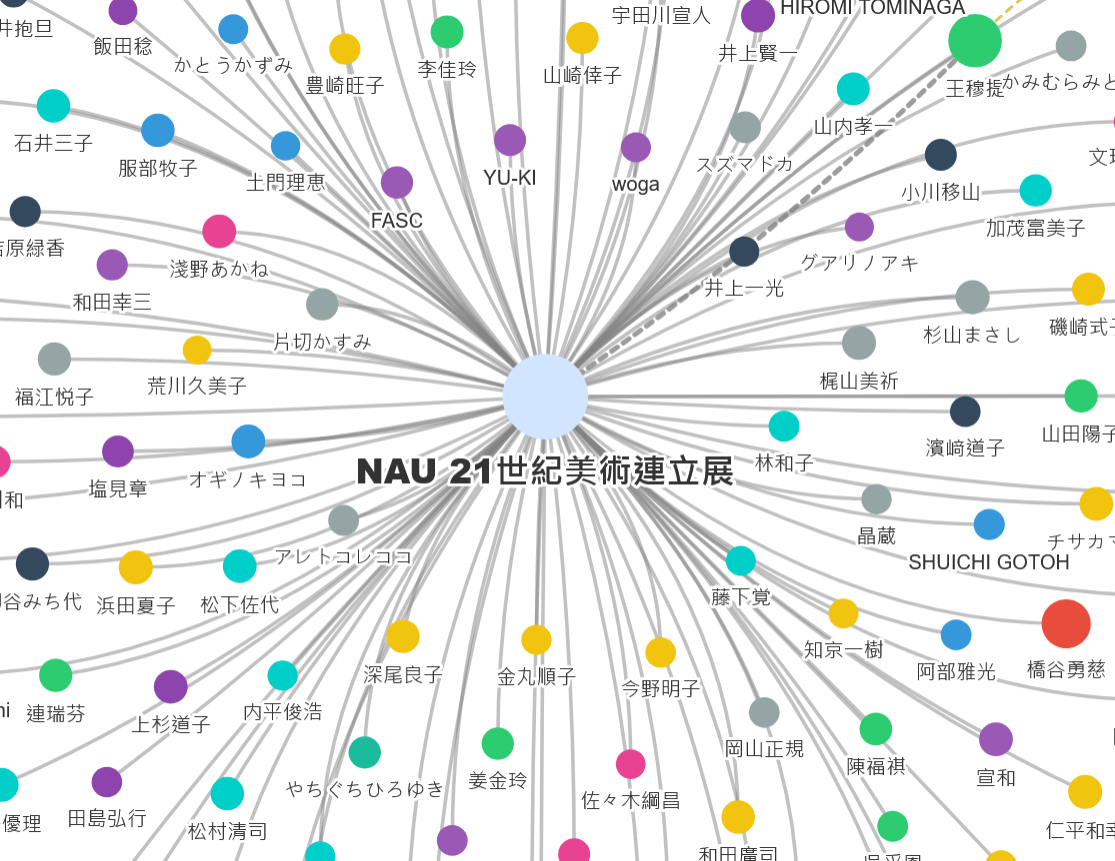
線上瀏覽:日本第24回 NAU 21世紀美術連立展:互動式藝術家網路圖譜 (Interactive Artist Network Map)
【II. 場域精神 (Venue Significance)】
國立新美術館:無牆的殿堂與對話的容器
The National Art Center, Tokyo: The Wall-less Cathedral of Dialogue
本次展覽選址於日本藝術的最高殿堂——國立新美術館 (The National Art Center, Tokyo),具有極高的象徵意義。
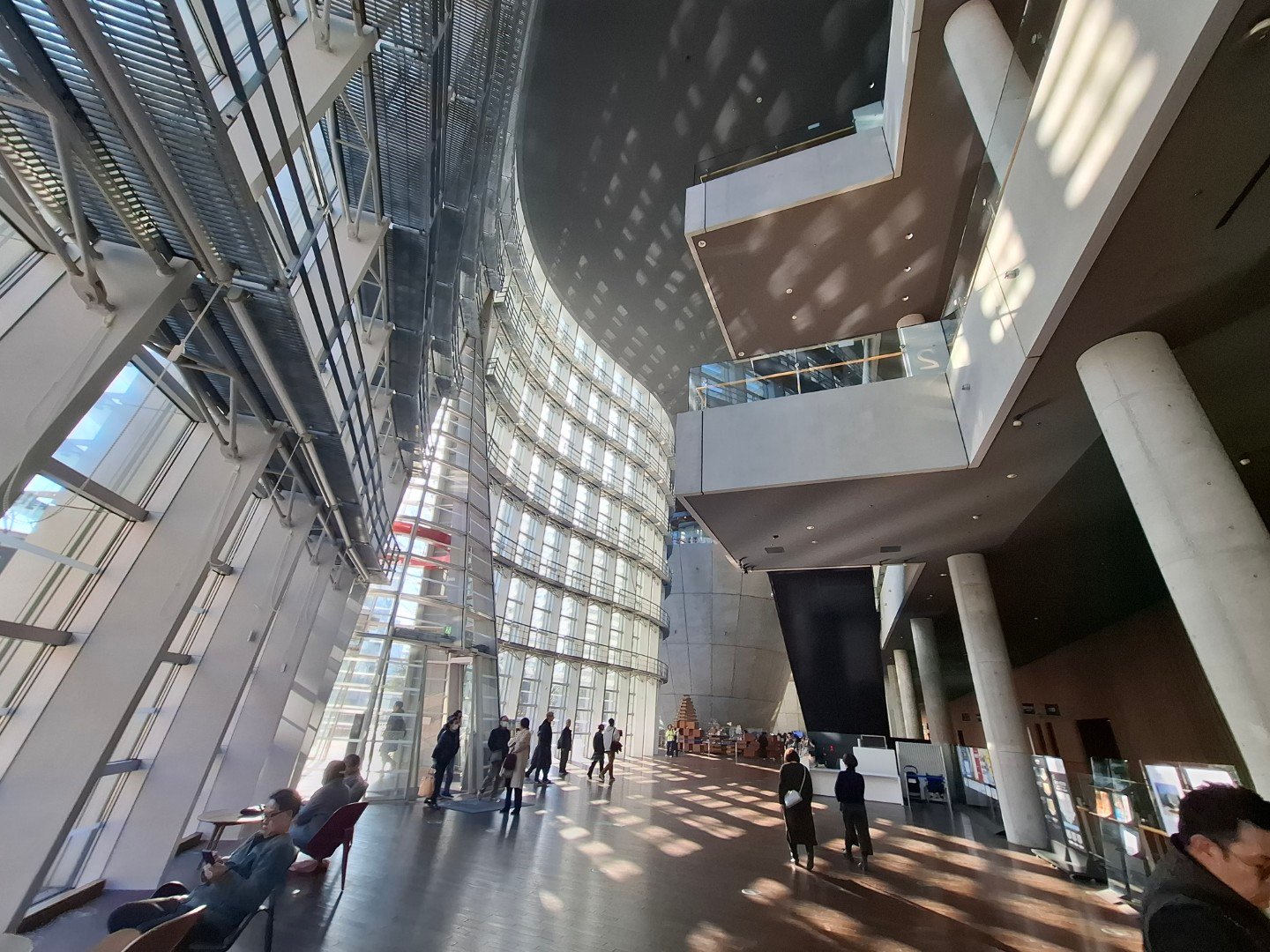
由建築大師黑川紀章 (Kisho Kurokawa) 設計的這座美術館,本身就是「共生 (Symbiosis)」哲學的體現。它沒有永久館藏(Permanent Collection),意味著它拒絕了歷史的定型,而永遠為「當下」的藝術表現敞開。其巨大的波浪狀玻璃帷幕與無柱展示空間,為 NAU 的大型裝置與空間書道提供了最完美的舞台。在此展出,意味著參展藝術家已經通過了嚴格的學術審查,進入了日本當代美術史的正規視野。這不僅是一個展示空間,更是一個將個人創作轉化為「公共記憶」的神聖場域。

參展藝術家之「藝術團體/參展畫廊/學術圈」分析串連
一、方法論與閱讀指引
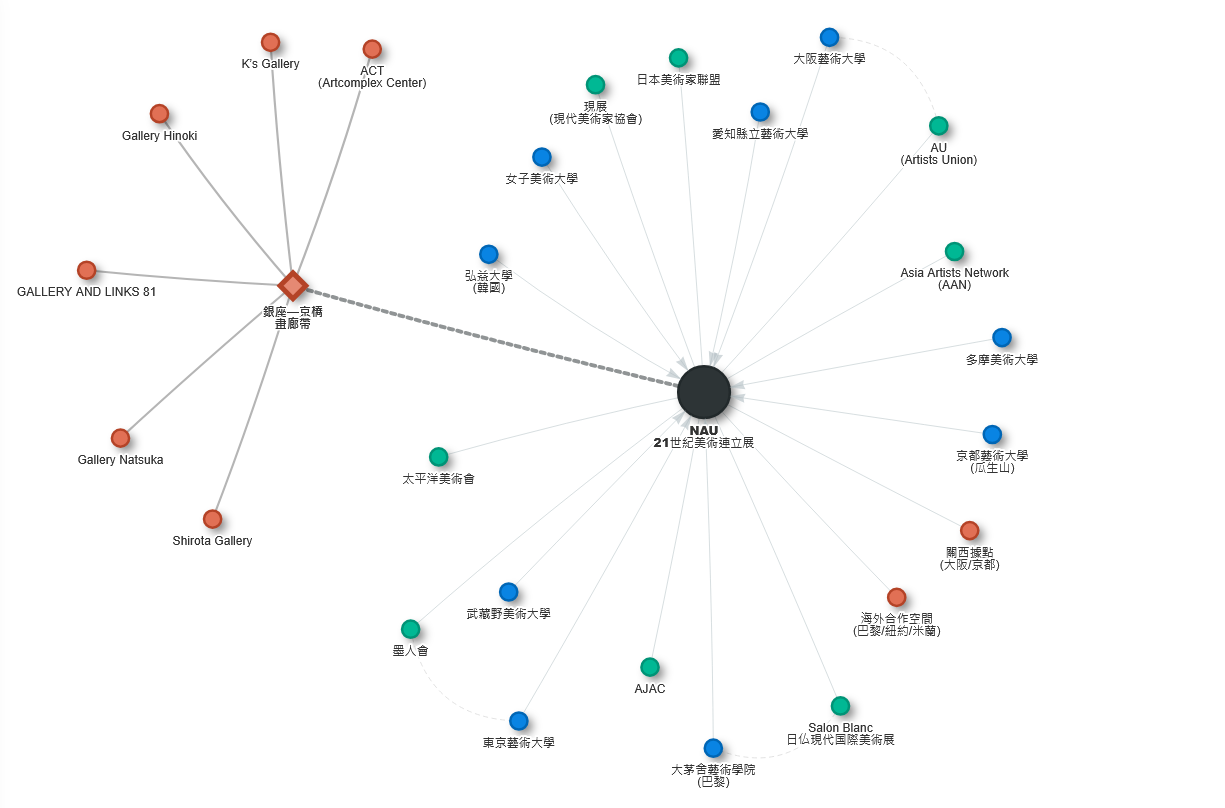
1) 三層結構的網絡分析框架
- 團體層(G):以 NAU(21 世紀美術連立展)為中心,向外延伸至 Salon Blanc(日仏現代国際美術展)、太平洋美術會、墨人會、AJAC、日本美術家聯盟、Asia Artists Network(亞洲藝術家網絡)、AU(藝術家聯盟)、現展(日本現代美術家協會) 等。
- 畫廊層(A):以東京銀座—京橋畫廊帶為核心節點(如 Gallery Hinoki、K’s Gallery、Shirota Gallery、Artcomplex Center of Tokyo(ACT)、Gallery Natsuka、GALLERY AND LINKS 81 等),並延伸至橫濱、名古屋、京都、大阪、以及海外(巴黎、紐約、米蘭等)的合作空間。
- 學術層(S):以 東京藝術大學、多摩美術大學、武藏野美術大學、女子美術大學、京都造形/京都藝術大學、愛知縣立藝術大學、大阪藝術大學、弘益大學(韓)、巴黎 Académie de la Grande Chaumière(法) 等為中心,串連師承脈絡(師徒制、研究室系統)與跨校互動(客座、雙聯、交流展)。
2) 節點與邊(Nodes & Edges)
- 節點(Nodes):藝術家、團體(協會/聯展組織)、畫廊(含美術館)、學術機構。
- 邊(Edges):
- 會員/成員/受獎(藝術家 ↔ 團體);
- 個展/聯展合作(藝術家 ↔ 畫廊/美術館);
- 學位/師承/研究/講師(藝術家 ↔ 學術機構);
- 策展/評審(藝術家/團體 ↔ 畫廊/美術館);
- 跨國交流(團體 ↔ 海外畫廊/美術館/學校)。
3) 網絡讀法
- 同心圓:以 NAU 為第一圈,向外是與 NAU 高頻互動之畫廊(如 Hinoki、K’s)、再外圈是與 NAU 參展藝術家有重疊的其他團體(如 Salon Blanc、太平洋美術會、墨人會、現展等)與海外節點(巴黎、紐約、米蘭)。
- 橋樑節點:能連接複數圈層的藝術家(例如具 NAU 會員身份、同時是其他大團體或海外平台的活躍者),或同時在學術與展覽兩端有強連結的策展人型藝術家。
- 媒材社群:書法/墨、纖維藝術、版畫、油畫/抽象、陶藝/雕刻、攝影等社群在畫廊與學術的交匯點上形成「媒材網絡」。
二、核心節點總覽
(G) 團體與聯展平台
- NAU(21 世紀美術連立展):本次分析之中心;大量藝術家以 NAU 會員或推薦入選者身份參展。
- Salon Blanc(日仏現代国際美術展):與法國機構、法國大使館獎項相關;名單中青木洲子、久保木妃呂子、文珠川清、吉原緑香等與此平台有交集。
- 太平洋美術會:日本最早西洋畫團體源流之一;久保木妃呂子為運營委員/會員/東京支部成員。
- 墨人會:日本戰後現代書法重要源流;萌翠、渡邊佐和子與此脈絡緊密。
- 現展(日本現代美術家協會):王穆提為台灣聯絡所所長;吳采恩 2025 年入選第 81 回現展。
- Asia Artists Network(亞洲藝術家網絡):山田陽子為社長;橫向串連亞洲圈合作。
- AU(藝術家聯盟):與具體美術創始成員嶋本昭三企劃有交集;湯沢茂好、桑山真麻弓等涉入。
- AJAC、日本美術家聯盟:Sasaki Tsunamasa 為 AJAC 會員;多位藝術家亦與日本美術家聯盟互動。

(A) 畫廊與美術館
- Gallery Hinoki(ギャラリー檜/京橋):NAU 藝術家高頻出現之東京核心畫廊節點。
- K’s Gallery(銀座):多位藝術家每年舉辦個展,與 NAU 社群重疊。
- Shirota Gallery(銀座):上杉道子、浜田夏子等活躍。
- Artcomplex Center of Tokyo(ACT):woga、渡邊健吾、YU-KI 等曾在此展出或獲獎。
- Gallery Natsuka/GALLERY AND LINKS 81/Gallery KINGYO/小杉畫廊:NAU 與首都圈畫廊帶的典型合作節點。
- 國立新美術館(六本木):NAU 展主場;多位藝術家亦在此參與其他大型公募或交流展。
- 海外節點:巴黎 Galerie Métanoïa、Espace Sorbonne 4;紐約 The Nippon Gallery、The Nippon Club;米蘭 M.A.D.S. ART GALLERY;首爾多個美術館與文化院等。

(S) 學術機構
- 東京藝術大學:田畑理恵(講師經歷/研究)、田嶋初/田島弘行/塩見章等油畫/版畫背景;宇田川宣人(藝研修士課程)。
- 多摩美術大學:Akiko SIACCA、HIROMI TOMINAGA、Saka Mitsuhiro 等。
- 武藏野美術大學:久保木妃呂子、Kobayashi Tetsuro、田畑理恵、山根真奈等。
- 女子美術大學:磯崎式子、深尾良子等。
- 京都造形/京都藝術大學:浅野あかね、晶蔵等。
- 愛知縣立藝術大學:YUKIKO(水彩聯盟等展歷)、針谷智子(瀨戶窯業專攻)背景相關。
- 大阪藝術大學:関野凛太郎(藝製作博士課程)等。
- 弘益大學(韓國)、梨花女子大學:HOLEE、柳賢淑等。
- Académie de la Grande Chaumière(巴黎):柳賢淑留學背景;連結法國美術教育傳統。
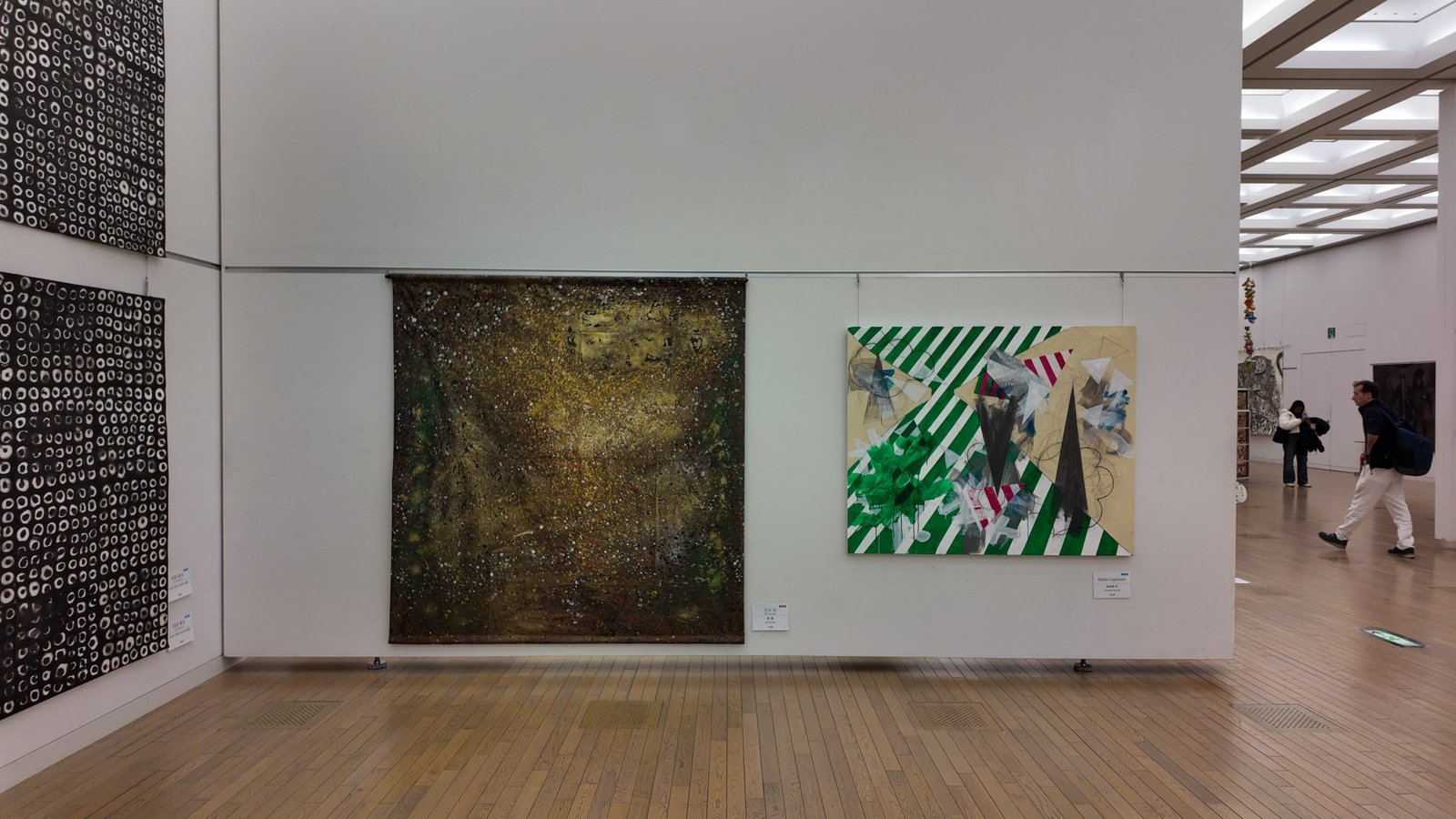
三、網絡結構:從 NAU 出發的「同心圓」與「橋樑節點」
1) 中心圈(NAU 直屬與高頻互動者)
- 髙橋俊明(NAU 會長):作為制度與展務的核心人物,是 NAU 網絡的中心樞紐,向東京銀座畫廊帶、國立新美術館、以及 NICAF/岡本太郎紀念現代藝術大賞展等其他大型平台延伸。
- 橋谷勇慈(NAU 事務局長):畫廊合作(Hinoki、Natsuka、正光畫廊)與海外交流(西班牙、日本—歐洲)之橋樑。
- 金丸順子、仁平和幸、神田風香、末本太丸、平昇、高橋詩桜里、戸沼牧子、Masaya Iwasaki、松下佐代、松村清司、Maho Laplante、杉山まさし、関野凛太郎、渡邊健吾、渡邊佐和子、渡辺信好、やちぐちひろゆき、野村雅美、宣和、西田裕子、二宮ちとせ、山田陽子 等:在 NAU 與銀座—京橋畫廊群之間形成高頻互動「社群核心」。
2) 橋樑節點(跨團體/跨國平台的關鍵連結者)
- 青木洲子:與 Salon Blanc(日仏現代国際美術展)的獎項鏈接(法國大使館賞、文部科學大臣賞),把 NAU 與法國平台緊密相連。
- 久保木妃呂子:太平洋美術會運營委員+NAU;並持續參與東京都美術館與 Salon Blanc,連通「日本西洋畫傳統脈絡—NAU—法國交流」。
- 渡邊佐和子:NAU 前會長+墨人會成員;把 NAU 與戰後現代書法源流接合。
- 桑山真麻弓:大阪藝術大學纖維+AU/具體系企劃參與;連接關西纖維—具體美術—海外(米蘭)設計週。
- 湯沢茂好:OBARA 美術研究所出身+ AU 參展;以具體美術企劃與地方研究所網絡連接 NAU。
- 柳賢淑(韓)/HOLEE(韓):韓國學術背景+首爾美術館群+巴黎畫廊;把 NAU 與韓國、法國兩端相連。
- 王穆提(台):現展台灣聯絡所所長+ NAU 台灣首位成員;連接 NAU—現展—台灣高校與文化機構—北京 798 等媒體平台,並以策展與資料庫建構(2,000+ 藝術家)強化跨國資料與宣傳流。
- 文珠川清:Salon Blanc 執行委員長+日本美術家聯盟會員;把 NAU 與日法平台的制度與評審層面串起來。
- Maho Laplante:紐約藝術學生聯盟獎學金+巴黎、東京展歷;連接 NAU 與美國—法國教育與展覽鏈。
- Akiko SIACCA:銀座畫廊社長+現代藝術家;把 NAU 與銀座畫廊經營網絡相互耦合。

四、畫廊帶(銀座—京橋)與 NAU 的「共振」
1) Gallery Hinoki(ギャラリー檜)為典型樞紐 多位 NAU 參展者長年在 Hinoki 舉辦個展/選拔展(例:末本太丸、金丸順子、神田風香、トウキョウタカシ(Tokyo Takashi)、橋谷勇慈、Masaya Iwasaki、渡邊健吾 等)。 Hinoki 的策展節奏常與 NAU 年度展期前後共振,形成「國立新美術館(聯展) ↔ 銀座—京橋(個展/二人展)」的雙軌節點。
2) K’s Gallery(銀座)—年度個展習慣 戸沼牧子、鈴木齊、深尾良子、浜田夏子 等在 K’s Gallery 的穩定個展節奏,使 NAU 藝術家在同一畫廊網絡中累積「作品語彙的連續性」與「收藏者社群的熟識度」。
3) Shirota Gallery(銀座)—現代至當代的串連 上杉道子、浜田夏子、Akiko SIACCA 等與 Shirota 的長期互動,把「銀座傳統畫廊運作方式」與「NAU 的當代實踐」互相對照。
4) ACT(Artcomplex Center of Tokyo)—新銳與競賽導向 woga、YU-KI、渡邊健吾 等在 ACT 的展出與大賞機制,為 NAU 社群釋放新血流動(競賽—聯展—個展—國立新美術館)的升級路徑。
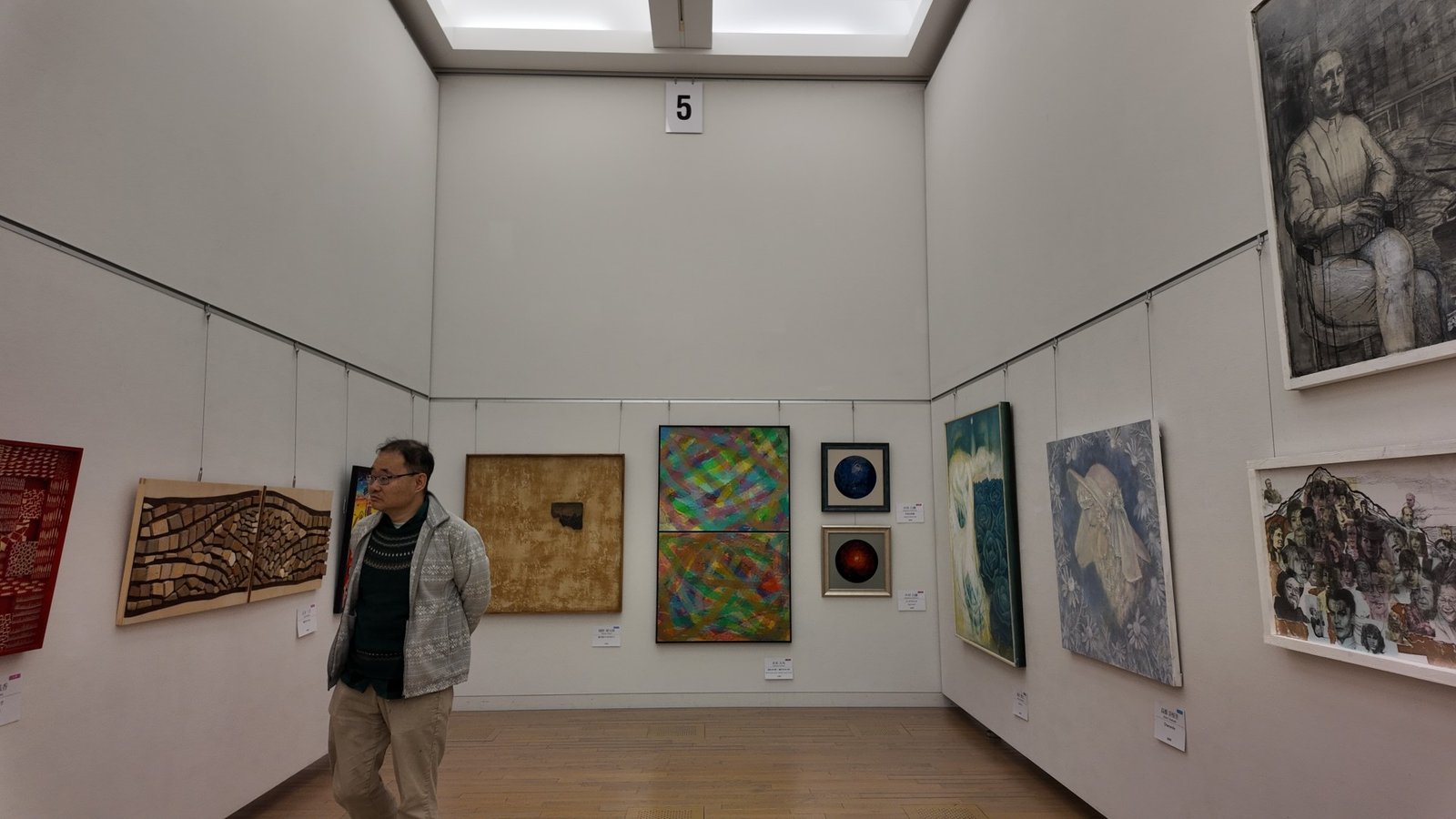
五、學術圈—師承脈絡與展場行動的相互增幅
1) 東京藝術大學(藝研、油畫、版畫)
- 宇田川宣人(藝研修士,九州產業大學名譽教授):學術職務+國際交流(美國賓州客座),把 NAU 與「學術評議—國際展務」連接。
- 塩見章(油畫科;MMG 版畫工房藝術總監):在學術技術面(版畫工房)與畫廊(Kaneko Art Gallery)之間形成「技術資源—展陳資源」的橋。
- 田島弘行(東京藝大油畫—版畫研究室):版畫與油畫雙線,對 NAU 的「多媒材共存」提供案例。
2) 多摩美術大學/武藏野美術大學—首都圈學術雙峰
- Akiko SIACCA、HIROMI TOMINAGA、Saka Mitsuhiro、Kobayashi Tetsuro、田畑理恵、山根真奈 等,透過首都圈兩大美術校系的師承與校友展、研究所系統,把 NAU 與「學術再生產機制」緊密聯繫。
- 田畑理恵:教育學博士+書法與抽象之跨域師承(米島清鶴、金子卓義/Steven Cushner),提供「東西方媒材語言融合」的示範路徑。
3) 京都系(京都造形/京都藝術大學)—地域型當代語彙
- 浅野あかね、晶蔵、アレトコレココ 等在京都系訓練與畫廊行動(京都同時代等)之間,形成「地域美術圈—國立新美術館」的跨區引力。
4) 愛知/大阪系—中部與關西的補強
- 関野凛太郎(大阪藝術大學博士課程;Shell 美術賞學生特別獎;Art Gate Program 收藏)等,連結企業收藏與拍賣、藝術博覽會(ART OSAKA)之路徑。
- 針谷智子(瀨戶窯業專攻):把陶藝工房體制與倫敦、巴黎個展接軌。
5) 海外學術與交流
- 柳賢淑(弘益大學/巴黎 La Grande Chaumière):韓國—法國—日本三角網絡。
- HOLEE(梨花女子大學西洋畫):首爾國立現代美術館、法國文化院與日本展務跨線;NAU 與韓國機構直連。
- Maho Laplante(紐約藝術學生聯盟):美國教育資源+東京與巴黎雙城展藝連動。

六、媒材社群與跨域串連
書法/墨(現代書藝)
- 石井抱旦(前衛書道家;每日書道展審查員):把「漢字書法」之筆墨美學轉化為跨國抽象視覺;與義大利、德國、法國展出經驗,將日本墨文化現代性導出國際舞台。
- 渡邊佐和子(墨人會成員;NAU 前會長):戰後現代書法源流與 NAU 的組織樞紐,聯通京都—東京墨藝圈。
- 萌翠(墨人會、墨人賞):京都墨人傳統與 NAU 當代聯展的「筆墨更新」。
- 柳谷みち代、山崎倖子:以筆墨線條美學連接畫廊二人展與地方群展,形成「小型展—大展」的階梯路徑。
- 濱﨑道子(書道科;橫濱墨の美術館館長):書藝館—銀座—海外城市(巴黎、坎城、倫敦、華沙、西班牙)之跨國串連。
- 林和子(BKS 會員;萬花鏡藝術師承):以「媒材擴充」介面連結書藝、工藝美學與公共空間展示。
纖維/工藝
- オギノキヨコ、岡本直枝、桑山真麻弓:從大學時期群展(よきなみ展)到台日交流展,再到米蘭設計週、美術節與大型商場美術空間(高島屋、美術畫廊)之「生活美學—當代語彙」接合。
- 針谷智子(瀨戶窯業):陶藝師承與倫敦、巴黎個展串連,凸顯「工房—畫廊—國際化」。
版畫/油畫/抽象
- 塩見章(版畫工房總監):技術資源中心;與小杉畫廊、Kaneko Art Gallery 之展出。
- 田島弘行(版畫研究室):油畫、版畫雙棲;京王版畫沙龍、地球堂、KINGYO 等展出實踐。
- 金丸順子、仁平和幸、佐藤利予、芝谷桂:在抽象語彙裡,透過 Hinoki、AND LINKS 81、Yamate(橫濱)等畫廊聚合,形成「抽象社群—銀座帶」。
攝影/影像
- トウキョウタカシ(Tokyo Takashi):PX3、IPA、FAPA、倫敦國際創意大賽、布達佩斯國際攝影獎等國際攝影競賽;把 NAU 與全球攝影平台相連。
- 野村雅美:音樂—繪畫—Live Painting 的跨媒介行動,形塑「現場性—抽象性」的影像美學。
- YU-KI:Photo Communication® 協會;東京代官山 Space K、RDECO 等展出,連接攝影社群與銀座畫廊。

七、跨國路徑的雛形
- 巴黎軸:Salon Blanc(法國大使館賞)— Galerie Métanoïa — Espace Sorbonne 4 — La Grande Chaumière(教育)。
- 紐約軸:The Nippon Gallery/The Nippon Club — Lincoln Center Cork Gallery — Emerson Umbrella 之水彩系統(YUKIKO)— 美國評審獎學金(Maho Laplante)。
- 首爾軸:國立現代美術館—法國文化院—多家美術館(HOLEE、柳賢淑)。
- 米蘭/歐洲設計週軸:桑山真麻弓(MILANO GENIUS)、M.A.D.S.(義大利米蘭)。
- 東歐—中歐軸:Okayama Masaki(波蘭克拉科夫國立美術館、華沙現代藝術中心收藏)。
- 北陸—富山—北海道地方軸:Sugano Junko(富山交流)/Guarino Aki(富山駐村與越中藝術節)/Etsuko Fukue(北海道美術協會—札幌、小樽展務)。
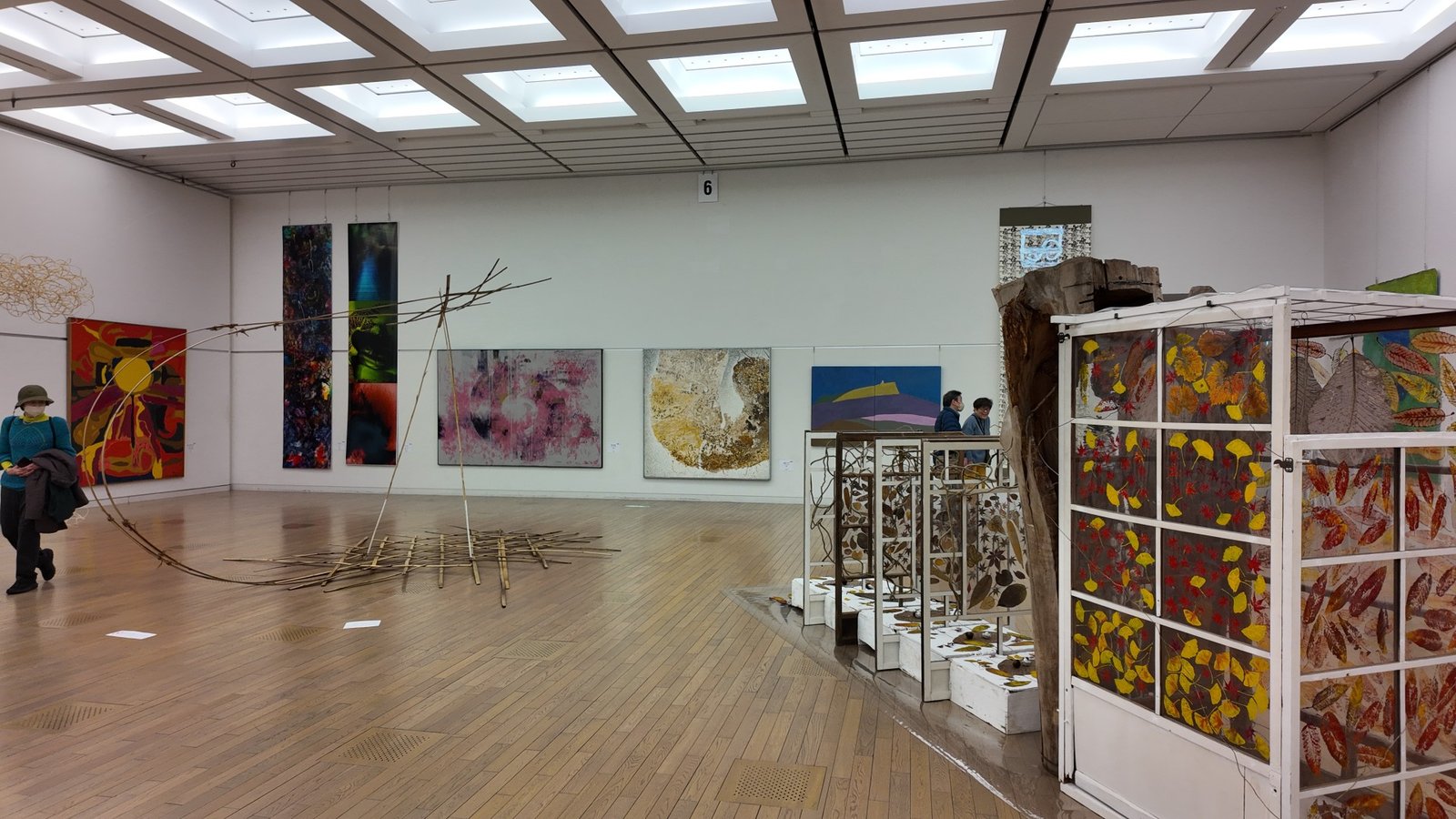
八、先行洞察
- NAU 是結構化的「聯展—個展—學術—海外」的樞紐:透過國立新美術館的年度展期與銀座—京橋畫廊帶的個展節奏,形成作品語彙的「連續性」、觀眾社群與藏家社群的「可預期性」。
- 橋樑型藝術家決定網絡的外延半徑:青木洲子(法國獎項)、久保木妃呂子(太平洋美術會)、渡邊佐和子(墨人會)、桑山真麻弓(具體×米蘭)、柳賢淑/HOLEE(韓國×巴黎)與王穆提(台灣×現展×媒體×資料庫)等,顯著擴張 NAU 的跨國觸角。
- 學術系統提供方法與語言的「再生產」:東京藝大/多摩/武藏野/女子美/京都系/大阪藝大等,讓媒材與方法論在展覽端持續被更新;師承鏈與工房體制(如 MMG 版畫工房、OBARA 美術研究所)是技術資源的穩定支撐。
- 媒材社群的交叉是未來方向:書藝—抽象、纖維—具體、版畫—油畫、攝影—裝置的交叉語言,更容易在海外平台得到識別與共鳴,形成可擴張的敘事。
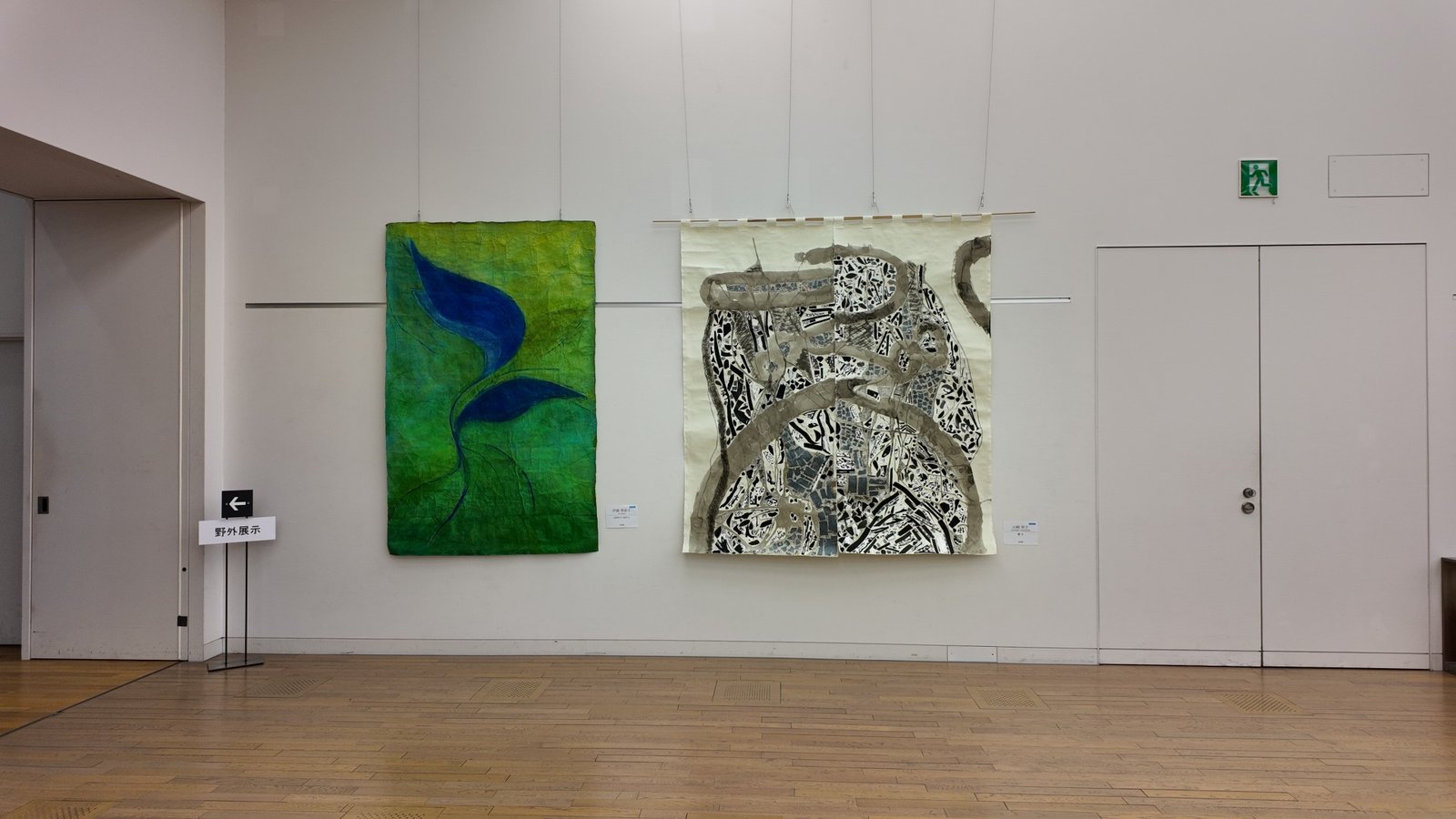
【IV. 序章:權威與基石 (Prologue: The Foundations)】
2. 髙橋俊明 (Takahashi Toshiaki)
- 學術定位: NAU 會長 / 空間構成的教育者
- 資歷摘要: 東京學藝大學大學院繪畫講座 / 岡本太郎紀念現代藝術大賞展。
- [學術評論]:
- 作為 NAU 的掌舵者,高橋俊明的作品體現了東京學藝大學系譜中特有的「理性」與「結構」。他的繪畫超越了單純的平面裝飾,展現出一種建築般的空間構成意識。他擅長運用色彩的推移 (Color Progression) 與幾何的分割,在裝置藝術上構建出深邃的3D場域。其作品不僅是視覺的享受,更是對「如何介入空間」這一課題的嚴肅學術回應。
3. 橋谷勇慈 (Hashiya Yuji)
- 學術定位: 科學理性與抽象美學的統合
- 資歷摘要: NAU 事務局長 / 名古屋大學(諾貝爾獎赤崎勇研究室成員)。
- [學術評論]:
- 橋谷勇慈是當代藝術界罕見的「科學家藝術家」。出身於諾貝爾物理學獎團隊的研究背景,賦予了他的抽象繪畫一種獨特的「演算法美學 (Algorithmic Aesthetics)」。他的線條與色塊並非源於感性的宣洩,而是如同晶體結構或電路矩陣般,遵循著某種內在的宇宙秩序。他是 NAU 展覽中「理性之眼」的代表。
4. 光行洋子 (Mitsuyuki Yoko)
- 學術定位: 九州畫壇的學院教母
- 資歷摘要: 九州產業大學名譽教授 / 亞洲國際美術展副代表。
- [學術評論]:
- 擁有「名譽教授」的崇高學術頭銜,光行洋子代表了日本洋畫界的正統與傳承。她的作品展現了大師級的控場能力——色彩厚重而不滯悶,構圖宏大而細節豐富。作為九州地區藝術教育的領袖,她的畫作流露出一種深厚的人文關懷與歷史底蘊,穩住了展覽的學術重心。
5. 宇田川宣人 (Udagawa Nobuhito)
- 學術定位: 國際視野下的在地深耕
- 資歷摘要: 九州產業大學名譽教授 / 福岡市美術聯盟理事長 / 賓州大學客座。
- [學術評論]:
- 宇田川宣人的藝術實踐跨越了東西方的邊界。身為福岡美術界的行政核心與教育家,他的作品融合了日本洋畫的紮實功底與歐美當代藝術的構成邏輯。他是 NAU 推動 AAN (Asian Artists Network) 的重要支柱,其作品本身就是一種跨文化溝通的媒介。
6. 久保木妃呂子 (Kuboki Hiroko)
- 學術定位: 百年洋畫史的守護者
- 資歷摘要: 太平洋美術會營運委員 / Salon Blanc 參展。
- [學術評論]:
- 太平洋美術會是日本最古老的西畫團體(源於明治時期)。久保木妃呂子身為其營運委員,承載著日本洋畫百年的歷史重量。她的作品堅持傳統油畫的「繪畫性 (Painterliness)」,強調筆觸的溫度與顏料的質感,展現了一種超越潮流的古典堅韌。

【Chapter I】 墨的當代辯證——空間、氣韻與解構
Dialectics of Ink: Space, Gesture, and Deconstruction
[策展導讀]
本章節探討「墨」在當代藝術中的雙重路徑:一端是日本前衛書道對「文字意義的剝離」與「空間的爆發」;另一端是台灣當代漢墨對「文人精神的現代化」與「氣韻的綿延」。
【Section 1: 兩大女流的對話 (Dialogue of the Matriarchs)】
7. 渡邊佐和子 (Watanabe Sawako)
- 學術定位: 前衛書道正統 / 空間的切割者
- 資歷摘要: NAU前會長 / 墨人會成員 / 師從比田井南谷、森田子龍。
- [學術評論]:
- 渡邊佐和子是日本戰後前衛藝術史的活見證。身為「墨人會」的嫡系傳人,她的創作核心在於「筆蝕」——即筆鋒與紙張纖維激烈摩擦後留下的生命痕跡。在她的作品中,漢字的形體已被徹底解構,轉化為純粹的黑白能量塊面。她對空間的處理具有極強的侵略性與建築感,墨跡如同在虛空中劃出的閃電。這不是靜態的書寫,而是身體能量在瞬間爆發後的 「凝固時間」。
8. 連瑞芬 (LIEN Jui-Fen)
- 學術定位: 台灣書壇領袖 / 現代文人氣韻
- 資歷摘要: 臺灣女書法家學會理事長 / 澹廬文教基金會董事長。
- [學術評論]:
- 如果說日本書道追求瞬間的爆發,連瑞芬則展現了「時間的綿延」。作為台灣書壇的重要領袖,連瑞芬深得曹秋圃一脈(澹廬)的「書道禪」精髓,線條遒勁而富有彈性。然而,她並未止步於傳統條幅,而是大膽地將現代繪畫的「滿版構圖」與「留白美學」引入書法。她的作品展現了一種獨特的 「統攝力」——在看似自由奔放的行草線條中,蘊含著嚴謹的結構秩序,是古典修養與現代視覺語言的完美融合。
【Section 2: 結構、立體與實驗 (Structure, Dimension & Experiment)】
9. 石井抱旦 (Ishii Hotan)
- 學術定位: 立體書道 / 國際化的書寫語言
- 資歷摘要: 每日書道展審查員 / 活躍於義大利、德國、法國。
- [學術評論]:
- 石井抱旦致力於解決一個核心問題:如何讓不識漢字的西方觀眾也能被書法感動?他的答案是 「立體化」與「建築化」。他將書法線條視為建築的樑柱,在2D紙面上構建出3D的空間深度。其作品具有強烈的雕塑感,是書道走向全球當代藝術的成功範本。
10. 王詮富 (WANG-CHUAN FU)
- 學術定位: 水墨的物質性實驗 / 學院新銳
- 資歷摘要: 國立台北藝術大學 (TNUA) 美術碩士。
- [學術評論]:
- 王詮富代表了台灣年輕一代學院派對水墨的革新視角。他將水墨視為與壓克力、油畫顏料平等的「物質 (Material)」,而非單純的書寫工具。他在畫面上進行堆疊、沖刷與肌理製造,模糊了「書法」與「繪畫」的界線,展現出一種帶有實驗性質的視覺張力。
11. 陳福祺 (CHEN FU-CHI)
- 學術定位: 影像與墨象的跨界 / 攝影之眼的書寫
- 資歷摘要: 台灣本土攝影聯誼會會長/廣角攝影俱樂部會長。
- [學術評論]:
- 陳福祺身為台灣攝影界的重要領袖,此次跨界展出 「現代書法」。他的書寫帶有強烈的影像邏輯:他對漢字結構的佈局,猶如攝影中的 「取景 (Framing)」 與 「構圖」,極其講究空間的切割與虛實對比。這是一種「用快門之眼運筆」的獨特實踐,證明了視覺藝術原理的高度互通性。
12. 濱﨑道子 (Hamasaki Michiko)
- 學術定位: 墨的文化翻譯者
- 資歷摘要: 橫濱墨之美術館館長。
- [學術評論]:
- 濱﨑道子的作品具有一種優雅的「流動性」。她深知如何將東方的「線條美學」翻譯給西方世界。她的創作聚焦於單一筆畫的豐富變化——從濃墨的焦灼到淡墨的暈染,展現了水與墨在紙上交融的微觀宇宙。
13. 萌翠 (Hosui)
- 學術定位: 紙與墨的滲透學
- 資歷摘要: 墨人會成員。
- [學術評論]:
- 作為墨人會的一員,萌翠關注「滲透 (Osmosis)」的過程。作品呈現墨汁如何在時間推移下,緩慢地侵蝕、暈染紙張的纖維。這是一種極為內省的創作,邀請觀眾體驗一種靜謐的東方冥想。
14. 廖純沂 (Liau, Chun-Yi)
- 學術定位: 儒醫傳統的現代文人畫 / 療癒的水墨
- 資歷摘要: 中山醫學大學博士 / 活躍於國際書畫展。
- [學術評論]:
- 廖純沂延續了「儒醫」傳統,選擇具象的 「水墨畫」 作為修身媒介。筆墨間流露出一種醫者特有的仁心與平和。他不追求險怪的構圖,而是通過墨色的濃淡暈染,構建出充滿人文氣息的山水意象,在展場中提供了一種古典而安定的力量。
15. 姜金玲 (Jiang Jinling)
- 學術定位: 膠彩與水墨的交融
- 資歷摘要: 東海大學膠彩畫專攻 / 師從姜一涵。
- [學術評論]:
- 姜金玲的作品融合了台灣水墨的靈動與日本膠彩(岩彩)的厚重。師從現代水墨大師姜一涵的背景,使她的作品在墨韻之外,多了一份礦物顏料的閃爍質感與色彩層次,展現了跨越媒材的現代文人畫風。
16. 柳谷みち代 (Yanagiya Michiyo)
- 學術定位: 線條的音樂性
- 資歷摘要: 當代墨與書寫。
- [學術評論]:
- 柳谷的作品強調線條的節奏感與音樂性。她打破了漢字的結構束縛,讓線條在空間中自由舞動。其作品往往帶有一種輕盈的律動,如同凝固的音樂旋律,展現了當代書寫在擺脫表意功能後的純粹形式之美。
17. 栗原光峯 (Kurihara Koho)
- 學術定位: 書法外交官
- 資歷摘要: JIAS 會員 / 比利時・荷蘭美術賞展優秀賞。
- [學術評論]:
- 致力於書法的 「國際化」。栗原深知如何調整筆墨的視覺語言,使其超越文字的語義障礙,轉化為西方觀眾也能理解的抽象線條藝術,是一種極具溝通力的現代書藝。
18. 井上一光 (Inoue Ikko)
- 學術定位: 文字學的藝術轉化
- 資歷摘要: 字統文字研究所所長 / 福岡文化賞。
- [學術評論]:
- 井上一光不僅是書家,更是文字學者。他將「甲骨文/金文」還原為原始的咒術符號,其作品具有強烈的象形性與神秘感,是極具學術深度的「學人書道」。
19. 小川移山 (Ogawa Izan)
- 學術定位: 行為書道與表現教育
- 資歷摘要: 半島酒店收藏。
- [學術評論]:
- 小川移山將書法定義為 「表現教育」與「行為藝術」。他的作品強調書寫過程中的表演性與身體介入,試圖將書法的能量輻射到公共空間,氣勢磅礴。
20. 吉原緑香 (Yoshihara Ryokka)
- 學術定位: 和洋折衷的書畫
- 資歷摘要: 日法現代美術世界展優秀獎。
- [學術評論]:
- 吉原緑香成功地在畫布上調和了東方的筆墨線條與西方的色彩構成,創造出一種跨文化的視覺語言,展現了「和洋折衷」的美學高度。
21. 田畑理恵 (Tabata Rie)
- 學術定位: 理論與實作的統一
- 資歷摘要: 教育學博士。
- [學術評論]:
- 結合了東方書法與美式抽象畫,田畑理恵的作品是其美學理論的實踐,在畫布上進行理性的東西融合,展現了學術研究者的嚴謹與跨文化視野。

【Chapter II】 繪畫的物質學——從熱情厚塗到理性冷抽
The Materiality of Painting: From Impasto Passion to Rational Abstraction
[策展導讀]
在螢幕影像(Screen Image)氾濫的當代,繪畫存在的本體論意義為何?NAU 的回答是:「物質的復權 (The Restoration of Materiality)」。
本章節呈現了繪畫作為一種物質實踐的兩種極端。一端是繼承日本洋畫史的 「表現主義系譜」,強調野獸派式的色彩爆發與身體性的筆觸;另一端則是活躍於東京當代畫廊的 「理性抽象系譜」,強調時間的堆疊、顏料的物理厚度與幾何結構的冷靜構建。
【Section 1: 熱情與生命 (Passion & Life) —— 表現主義的系譜】
22. 通天櫻井洋美 (Tsuten Sakurai Hiromi)
- 學術定位: 日本野獸派的火焰 / 觸覺視覺
- 資歷摘要: 獨立美術協會會友 / 師從池島勘治郎。
- [學術評論]:
- 「獨立美術協會」自 1930 年代創立以來,便是日本「野獸派 (Fauvism)」的堡壘。通天櫻井洋美的作品完美繼承了這一血統。她拒絕色彩的自然主義再現,而是追求色彩的 「情感真實 (Emotional Truth)」。在她的畫布上,顏料不是被平塗,而是被堆砌、被撞擊。那些燃燒般的紅色與深邃的黑色,構成了強烈的視覺對比。這種 「厚塗法 (Impasto)」 賦予了畫面強大的雕塑感,彷彿要突破2D平面的限制,直擊觀眾的視網膜,喚起一種 「觸覺視覺 (Haptic Visuality)」。
23. 磯崎式子 (Isozaki Noriko)
- 學術定位: 光與色的編織者 / 視覺愉悅
- 資歷摘要: 一陽會繪畫部委員 / 女子美術大學 / 一陽賞。
- [學術評論]:
- 磯崎式子的作品展現了「一陽會」特有的美學傳統——對光影與色彩和諧的極致追求。她擅長運用細碎的筆觸,將無數種色調編織成一種流動的光譜,如同印象派對光線的捕捉,但又更具現代裝飾性。她的畫面往往洋溢著一種溫暖的 「視覺愉悅 (Visual Pleasure)」,沒有艱澀的觀念說教,只有純粹的色彩在空間中律動,是對抗當代冷漠疏離的一劑解藥。
24. 仁平和幸 (Nihira Kazuyuki)
- 學術定位: 時間的地質學 / 物質堆疊
- 資歷摘要: NAU 正式會員 / Gallery Hinoki 年度精選展。
- [學術評論]:
- 仁平和幸的繪畫是對「時間」的物理化呈現。他不在畫布上描繪具象,而是進行無止盡的顏料堆疊與刮除。近距離觀看他的作品,會發現表面充滿了如同地質斷層般的肌理與裂痕。這種 「物質性 (Materiality)」 是對抗數位影像扁平化最有力的武器,邀請觀者進行一種考古學式的凝視。
25. 金丸順子 (Kanemaru Junko)
- 學術定位: 內在風景的轉譯
- 資歷摘要: NAU 正式會員 / 國立新美術館常連。
- [學術評論]:
- 金丸順子的創作長期聚焦於 「內在風景 (Inner Landscape)」 與「光影律動」。她是當代日本抽象畫界中,能將物質性與精神性優雅結合的代表人物。其作品在國立新美術館的展出,往往能以細膩的色彩層次引發觀者深層的共鳴,展現了極高的視覺完成度與詩意氛圍。
26. 小林哲郎 (Kobayashi Tetsuro)
- 學術定位: 社會派表現主義
- 資歷摘要: 武藏野美術大學 / 獨立美術 / JAALA 國際交流展。
- [學術評論]:
- 小林哲郎的筆觸帶有一種粗獷的原始力量。結合 JAALA (亞非拉丁美洲連帶) 的背景,他的作品往往隱含著對社會現實或人類處境的關注。他不修飾筆觸的粗糙感,這種 「未完成感 (Non-finito)」 反而增強了畫面的真實性與迫力,是繪畫作為一種社會發聲工具的實踐。
27. Maho Laplante
- 學術定位: 紐約畫派的嫡系 / 行動繪畫
- 資歷摘要: 紐約藝術學生聯盟獎學金 / 林肯中心展出。
- [學術評論]:
- Maho Laplante 的作品將觀眾帶回了紐約抽象表現主義的黃金時代。她的畫作強調 「行動 (Action)」。畫布是她身體運動的紀錄場域,顏料的滴流、潑灑與刮擦,保留了創作當下的速度感與偶然性。這是一種美式的自由與奔放,與日本傳統的內斂美學形成了精彩的對照。
28. 深尾良子 (Fukao Ryoko)
- 學術定位: 心象風景的層次
- 資歷摘要: 女子美術大學 / 茨城縣展特賞 / 新象展協會賞。
- [學術評論]:
- 深尾良子是女子美術大學出身的實力派。她的作品展現了女性藝術家特有的感性與韌性。色彩層次豐富,擅長捕捉自然界中稍縱即逝的光影變化,並將其轉化為內在的心象風景。她在「新象展」的獲獎經歷,證明了其在具象與半抽象之間游刃有餘的造型能力。
29. 豊崎旺子 (Toyosaki Okiko)
- 學術定位: 繪畫的純粹性
- 資歷摘要: 日本美術家聯盟會員 / 銀座 O Gallery 個展。
- [學術評論]:
- 豊崎旺子活躍於銀座 O Gallery 等重視「繪畫性」的空間。她的作品不依賴奇觀,而是回歸繪畫的基本元素——色彩、構圖與筆觸的平衡。其畫作往往帶有層層疊加的厚度,展現了日本中堅畫家紮實的底蘊與對繪畫本體的堅持。
【Section 2: 理性與沈澱 (Reason & Sediment) —— 物質抽象的系譜】
30. 和田廣司 (Hiroshi Wada)
- 學術定位: 都市的幾何秩序 / 冷抽象
- 資歷摘要: 活躍於 Gallery Hinoki / 現代美術家。
- [學術評論]:
- 和田廣司的作品是現代都市經驗的抽象化。他運用水平與垂直的線條,構建出一種嚴謹的 「網格系統 (Grid System)」。這種冷靜的幾何構成,剔除了多餘的情感宣洩,只留下純粹的結構與秩序。他的畫作如同現代主義建築的藍圖,展現了一種 「冷抽象 (Cool Abstraction)」 的知性美感,是理科思維在藝術上的投射。
31. 平昇 (Taira Noboru)
- 學術定位: 微觀世界的有機形態
- 資歷摘要: 國立新美術館收錄 / 銀座 Kobayashi 畫廊。
- [學術評論]:
- 平昇是一位受到國立美術館體系關注的實力派畫家。他的作品特色在於極高的完成度與細膩的微觀視角。他往往在畫面上創造出一種迷離的空間感,色彩層次豐富而微妙,彷彿在探討有機生物的細胞結構或是宇宙的星雲。其作品的靜謐氣質,使其具有極高的收藏價值,屬於「耐看型」的經典當代繪畫。
32. HOLEE
- 學術定位: 單色畫的精神性 / 韓法混血美學
- 資歷摘要: 韓國梨花女子大學 / 法國大茅舍 / 國立新美術館個展。
- [學術評論]:
- HOLEE 的作品是韓國 「單色畫 (Dansaekhwa)」 精神的當代延續。她通過單一顏色的反覆塗抹,達成一種修行的境界。然而,法國留學的背景賦予了她更具層次的色彩感,不似傳統單色畫那般苦行,而是帶有抒情抽象的詩意。她的作品在展場中提供了一個安靜的「氣口 (Breathing Space)」,讓觀眾的視覺在喧鬧中獲得休息。
33. 浜田夏子 (Hamada Natsuko)
- 學術定位: 抒情抽象的繼承者
- 資歷摘要: 東京藝術大學 (師從脇田和) / 椿近代畫廊。
- [學術評論]:
- 浜田夏子師從抒情抽象大師脇田和,繼承了那份溫暖與詩意。她的色彩運用柔和而富有音樂性,展現了東京藝大油畫科深厚的色彩教養。畫面中模糊的邊界與暈染,如同記憶的殘影,引發觀者對逝去時光的鄉愁。
34. 香西洋子 (Kozai Yoko)
- 學術定位: 現代美術的跨界對話
- 資歷摘要: 活躍於六本木藝術圈 / Gallery Hinoki。
- [學術評論]:
- 香西洋子長期推動當代美術的跨界對話。她的作品形式靈活,不拘泥於單一風格,注重色彩、形態與構圖的節奏感。在 Gallery Hinoki 的展出中,她展現了細膩而內省的視覺語言,強調觀者與作品之間的感知共鳴。
35. 神田風香 (Kanda Fuka)
- 學術定位: 線性美學的探索
- 資歷摘要: 書道教育學會出身 / 國立新美術館參展。
- [學術評論]:
- 神田風香的背景雖源於書道,但她的作品已轉化為純粹的當代抽象。她專注於「線條」在空間中的表現力,探索書寫性線條如何脫離文字,成為獨立的視覺元素。其作品因獨特的 「線性美學 (Linear Aesthetics)」 受到跨文化評論家的關注。
36. 荒川久美子 (Arakawa Kumiko)
- 學術定位: 版畫思維的層次
- 資歷摘要: 東京造形大學版畫組 / Gallery Hinoki。
- [學術評論]:
- 荒川的作品帶有版畫特有的 「層次思維 (Layering)」。即使在繪畫作品中,她也運用堆疊與刮除的技法,創造出如同版畫般的 「間接性 (Indirectness)」 質感。她在日韓交流藝術展的經歷,顯示其作品在抽象構成上的成熟度與國際視野。
【Section 3: 內在風景與敘事 (Inner Landscapes & Narrative)】
37. 佐藤利予 (Sato Toshiyo)
- 學術定位: 微觀感知的詩意
- 資歷摘要: 現代美術家 / 沉思性氣質。
- [學術評論]:
- 佐藤利予的作品關注日常感知與時間層次。她以細膩而克制的視覺語彙,呈現出一種安靜、沉思性的氣質。在喧囂的當代藝術中,她的作品如同一首短詩,提醒觀眾關注微小的存在。
38. 今野明子 (Konno Akiko)
- 學術定位: 記憶殘影的捕捉
- 資歷摘要: 當代女性藝術家 / 存在感與記憶。
- [學術評論]:
- 今野明子的創作圍繞著「存在感」與「記憶的殘影」。她以女性特有的細膩視角,捕捉日常中被忽略的片段。畫面往往帶有一種朦朧美,彷彿是試圖留住即將消逝的瞬間。
39. 岡田繁忠 (Okada Shigetada)
- 學術定位: 自由表現的現代性
- 資歷摘要: 現代美術家。
- [學術評論]:
- 岡田繁忠的作品脫離了傳統公募展的束縛,傾向於自由表現。他可能結合了抽象繪畫與拼貼技法,探索物質與畫面空間的關係,展現了現代美術家對形式的自由探索。
40. 知京一樹 (Chikyo Kazuki)
- 學術定位: 抽象與具象的邊界
- 資歷摘要: 現代美術家。
- [學術評論]:
- 知京一樹的創作遊走在具象符號與抽象背景之間。他試圖在畫面上建立一種新的秩序,通過形式的解構與重組,引導觀眾進入一種超現實的視覺體驗,豐富了 NAU 展覽的視覺光譜。
41. チサカマキ (Chisaka Maki)
- 學術定位: 感性色域的編織
- 資歷摘要: 現代美術家。
- [學術評論]:
- チサカマキ的作品在色彩運用上具有獨特的個人語彙。她傾向於運用柔和或對比強烈的色域來構建畫面,探討個人情感在當代生活中的微細波動,展現了現代美術中堅層對於「繪畫性」的堅持。
42. 山崎倖子 (Yamazaki Sachiko)
- 學術定位: 現代水墨的抽象化
- 資歷摘要: 師從井原優山 / 福岡市美術館個展。
- [學術評論]:
- 山崎倖子雖師承現代水墨,但其作品已超越傳統範疇,走向抽象化。她在福岡市美術館的多次個展經驗,顯示其在處理黑白虛實與空間留白上的深厚功力,展現了水墨精神的現代轉化。

【Chapter III】 工藝的越界——場域與雕塑
Material Transgression: Craft as Spatial Sculpture
[策展導讀]
在日本藝術史中,「工藝 (Kogei)」長期被視為實用功能的附庸。然而,第 24 回 NAU 展宣告了工藝的 「越界 (Transgression)」。
本章節的藝術家不再製作案頭的賞玩之物,而是將陶土、絲線與金屬視為與空間搏鬥的武器。他們剝離了物質的「實用性」,釋放了其「觀念性」。從津田智子對泥土原始力量的喚醒,到中村白蘭對相撲儀式的解構,這些作品證明了:在數位虛擬時代,唯有物質的重量與觸感,能喚醒人類沉睡的感官。
【Section 1: 泥土的建築學 (Architecture of Clay) —— 當代陶藝裝置】
43. 津田智子 (Tsuda Tomoko)
- 學術定位: 場域雕塑家 / 物質的抵抗
- 資歷摘要: NAU 成員 / 現代美術家 / 活躍於當代陶藝裝置。
- [學術評論]:
- 津田智子徹底顛覆了陶藝作為「工藝器皿」的傳統定義。對她而言,陶土是與空間搏鬥的武器。她利用烈火燒製後的收縮、裂痕與塌陷,展現物質最原始的暴力與生命力。在國立新美術館的高挑空間中,她的作品往往呈現出如同古代遺跡或地質構造般的建築感。她讓陶土保留了自身的重量感與粗糙肌理,這種物質性的「抵抗」,迫使觀眾無法僅僅用眼睛掃視,而必須用身體去感知作品在空間中的壓迫力。她是將「工藝」提升為 「空間藝術 (Spatial Art)」 的重要實踐者。
44. 李佳玲 (Lee, Jia-Ling)
- 學術定位: 陶藝、壓克力與產業跨界
- 資歷摘要: 皇墨藝藝術董事長 / 獲全國學生美展佳作。
- [學術評論]:
- 李佳玲的創作展現了媒材邊界的自由跨越。她不滿足於單一形式,而是將「陶藝」的立體造型與「壓克力顏料」的現代色彩進行結合。李佳玲選擇用壓克力顏料直接介入創作,這賦予了作品更強烈的繪畫性與色彩飽和度。身為皇墨藝藝術董事長,她的視野不僅停留在創作,更延伸至藝術的產業化應用。在 NAU 展場中,她的作品呈現了一種將現代藝術抽象化、色彩時尚化的嘗試,展現了當代藝術如何介入生活美學與商業空間的潛力。
45. 田嶋初 (Tajima Hajime)
- 學術定位: 人間國寶的現代轉身 / 釉色的極致
- 資歷摘要: 師從竹内彰(富本憲吉、近藤悠三系譜)/ 國立新美術館展出。
- [學術評論]:
- 田嶋初的背後,站著日本陶藝史的巨人。富本憲吉(色繪瓷)與近藤悠三(染付)皆為日本「人間國寶」,代表了民藝與現代陶藝的最高峰。田嶋初繼承了這條正統血脈,但他並未被傳統束縛。他的作品在造型上更加簡練、抽象,專注於釉色在燒製過程中的微妙變化。其作品展現了一種 「控制中的偶然」——在嚴謹的造型邏輯下,讓釉藥自然流動。這是傳統工藝技法與現代造型美學的完美結合。
46. 服部牧子 (Hattori Makiko)
- 學術定位: 有機生物形態 / 微觀世界的放大
- 資歷摘要: 陶瓷設計團體「The Earth」創始成員 / 多治見市美術展市長獎。
- [學術評論]:
- 不同於津田智子的建築感,服部牧子的陶藝是 「生物形態 (Biomorphism)」 的。她的作品如同深海中的珊瑚、微觀下的孢子,或是某種未知的有機生命體。她極其細膩地處理陶土的表面肌理,創造出無數的孔洞與突起。這種對繁複細節的執著,賦予了堅硬的陶瓷一種柔軟的、會呼吸的錯覺。她的作品探討的是生命生長的律動,為冷硬的美術館空間注入了有機的生命力。
47. 針谷智子 (Hariya Tomoko)
- 學術定位: 瀨戶傳統的國際化
- 資歷摘要: 瀨戶窯業專攻 / 師從志賀重雄 / 倫敦、巴黎個展。
- [學術評論]:
- 出身於日本六大古窯之一的「瀨戶」,卻活躍於當代藝術中心的倫敦。針谷智子的作品是兩種陶藝傳統的混血。她保留了瀨戶燒精湛的釉藥技術,但在造型上吸收了歐洲當代陶藝的觀念性與雕塑感。她是將日本傳統工藝語彙進行「國際化翻譯」的成功案例。
48. 山根真奈 (Yamane Mana)
- 學術定位: 民俗學與設計的融合
- 資歷摘要: 武藏野美術大學工藝工業設計 / 妖怪物件競賽獲獎。
- [學術評論]:
- 山根真奈將「設計思維」帶入陶藝,並結合了日本深厚的 「民俗學 (Folklore)」 底蘊。她參與「妖怪」主題競賽的作品,顯示她擅長將傳統文化中的神怪符號進行現代轉化。她的作品不只是物件,更是具有敘事功能的角色,展現了當代工藝敘事的新可能性。
【Section 2: 纖維的解構 (Deconstruction of Fiber) —— 軟雕塑】
49. 中村白蘭 (Nakamura Hakuran)
- 學術定位: 文化符號的解構者 / 儀式的重組
- 關鍵媒材: 大相撲化粧廻し (Sumo Kesho-mawashi) 的絹絲。
- [學術評論]:
- 中村白蘭進行的是一場高難度的文化實驗。她選用了極具日本文化負荷的媒材——相撲力士在神聖儀式中穿戴的「化粧廻し(刺繡圍裙)」之稀有絹絲。她將這些原本象徵力量與階級的織品進行 「解構 (Deconstruction)」,拆解為無數游離的絲線,並在空間中重新編織成如同宇宙胎動或神經網絡般的裝置。這是一種將「具象的儀式」昇華為「抽象的靈性」的過程,是本次展覽中最具文化衝擊力的裝置作品。
50. 岡本直枝 (Okamoto Naoe)
- 學術定位: 工業結構與軟雕塑
- 資歷摘要: 武藏野美術大學碩士 / 前日產汽車設計師 / Antonio Ratti 獎。
- [學術評論]:
- 17 年的汽車設計師經歷,深刻影響了岡本直枝的藝術語彙。她看透了物質的「結構 (Structure)」。不同於傳統纖維藝術的編織感,她的作品更像是由纖維構成的建築模型。她利用纖維的張力與彈性,構建出精密的 3D 網格。獲得國際紡織大獎 Antonio Ratti 獎,證明了她在探索 「軟雕塑 (Soft Sculpture)」 結構可能性上的國際地位。
51. 桑山真麻弓 (Kuwayama Mayumi)
- 學術定位: 光與纖維的科技跨界
- 資歷摘要: 大阪藝術大學 / 米蘭設計週 (MILANO GENIUS) 獲獎。
- [學術評論]:
- 桑山真麻弓是「藝術 (Art)」與「科技 (Tech)」的跨界者。她不僅使用纖維,更引入了「光 (Light)」。她的裝置作品常利用光導纖維或特殊的反光材質,在黑暗中創造出發光的虛體。這種創作模糊了物質的邊界,讓纖維變成了光的載體。她在米蘭設計週的成功,顯示其作品具有強烈的當代設計感與未來感。
52. オギノキヨコ (Ogino Kiyoko)
- 學術定位: 纖維的平面繪畫性
- 資歷摘要: 現代纖維作家 / 台日交流展。
- [學術評論]:
- オギノキヨコ將纖維視為繪畫的顏料。她在抽象畫與平面藝術領域備受肯定,利用纖維的質感差異(粗糙、光滑、糾結)來替代筆觸。其作品在視覺上呈現出豐富的層次感,展現了纖維藝術在「掛畫(Tableau)」形式上的表現力。
53. 田中みづほ (Tanaka Mizuho)
- 學術定位: 幾何拼貼的現代性
- 資歷摘要: Quilt Japan 評審賞 / 岐阜縣知事賞。
- [學術評論]:
- 田中みづほ將「拼布 (Quilt)」從手工藝提升為現代幾何藝術。她對色彩與圖形的構成具有極高的敏感度,透過布料的拼接,創造出如同 「歐普藝術 (Op Art)」 般的視覺錯視與律動感。這是一種溫暖的理性主義。
【Section 3: 鍊金術與跨界 (Alchemy & Cross-over)】
54. 土門理恵 (Domon Rie)
- 學術定位: 金屬繪畫 / 廢墟美學
- 資歷摘要: 混合媒材與彫金 / 台日文化交流展。
- [學術評論]:
- 土門理恵是一位繪畫領域的「鍊金術士」。她將金屬工藝中的「腐蝕」、「鍛造」技法引入平面創作。她的畫布表面充滿了化學反應後的斑駁鏽跡與金屬光澤,呈現出一種 「工業廢墟 (Industrial Decay)」 般的頹廢美學。她成功地捕捉了物質在時間中衰變的過程,賦予了畫面一種沉重的歷史感。
55. SHUICHI GOTOH
- 學術定位: 寶石學與繪畫的折射
- 資歷摘要: 巴西 FAAP 美術大學 / 珠寶設計師 / 彩色寶石專家。
- [學術評論]:
- SHUICHI GOTOH 的背景極為特殊——結合了巴西美術教育的熱情與珠寶設計的精密。他將 「寶石學 (Gemology)」 的視角帶入繪畫。其作品捕捉了寶石特有的折射光線與晶體切面,色彩鮮豔且具有南美洲的奔放。這是一種跨越了裝飾藝術與純藝術邊界的視覺實驗。
56. かとうかずみ (Kato Kazumi)
- 學術定位: 金屬的詩意
- 資歷摘要: 愛知縣立藝術大學大學院 / 金屬藝術博物館展出。
- [學術評論]:
- かとうかずみ的作品足跡遍及世界百餘地,顯示其金屬藝術具有跨文化的感染力。她不強調金屬的堅硬冷冽,反而挖掘其柔韌與延展性。作品往往呈現出意想不到的輕盈感,彷彿金屬也能像紙張或布料一樣被摺疊、塑形,展現了高超的工藝技巧與詩意轉化。
57. 阿部雅光 (Abe Masamitsu)
- 學術定位: 和紙的材質對話
- 資歷摘要: 阿波和紙會館賞 / 版畫家。
- [學術評論]:
- 阿部雅光專注於 「和紙 (Washi)」 與版畫的結合。獲得阿波和紙會館賞的他,深知紙張纖維的特性。他的作品不只是印在紙上,而是讓墨色滲入紙的肌理之中。這是一種對材質的深度對話,展現了日本工藝美學在平面藝術中的細膩應用。
58. 小澤雅美 (Ozawa Masami)
- 學術定位: 素材的本真性
- 資歷摘要: 手工和紙藝術家 / 自然素材。
- [學術評論]:
- 小澤雅美回歸到紙的本源。利用楮、三椏等植物纖維進行手工漉紙創作。這是一種 「減法美學 (Subtractive Aesthetics)」,她不強加過多的顏色,而是讓紙張本身的紋理、厚度與光澤說話,呼應了當代藝術對自然素材與環保議題的回歸。
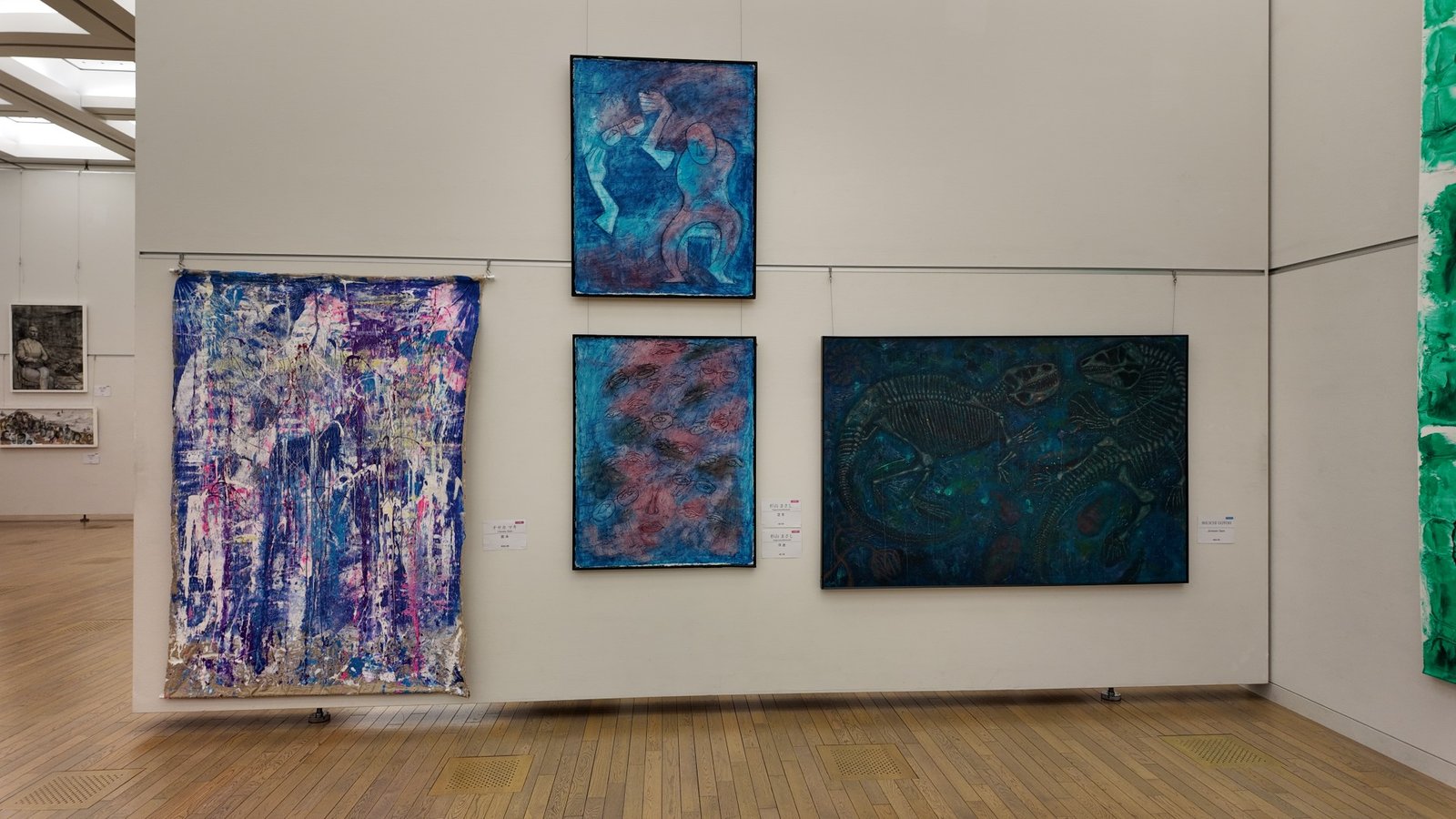
【Chapter IV】 未來的視界——數位崇高、身體與混種
Future Horizons: Digital Sublime, The Body & Hybridity
[策展導讀]
藝術的邊界在哪裡?當繪畫與工藝探討了「物質」的極限後,本章節將帶領觀眾進入「非物質」與「流動」的領域。
從 Tokyo Takashi 對數位風景的凝視,到具體派傳人湯沢茂好以肉身撞擊空間的行為藝術,再到 Aretokorekoko 融合次文化的奇異雕塑。這裡展示的是 21 世紀藝術的 「擴張場域 (Expanded Field)」——藝術不再僅僅是掛在牆上的物件,它是光學的幻象、瞬間的動作,以及跨越虛實的符號重組。
【Section 1: 數位崇高與影像 (The Digital Sublime & Imaging)】
此區塊展示攝影與數位藝術如何捕捉當代社會的視覺經驗。
59. トウキョウタカシ (Tokyo Takashi)
- 學術定位: 數位時代的崇高美學
- 資歷摘要: 巴黎攝影大賽 (PX3) / 國際攝影獎 (IPA) / 倫敦國際創意大賽榮譽獎。
- [學術評論]:
- Tokyo Takashi 的作品是對康德 (Kant) 「崇高 (Sublime)」 概念的數位化回應。他鏡頭下的都市與自然,經過高度的數位重構與色彩增強,呈現出一種超乎肉眼所見的完美與壯麗。這種高飽和度、超現實的視覺語言,精準地捕捉了我們這個被螢幕與大數據包圍的時代特質。他在 PX3 與 IPA 等國際大賽的橫掃紀錄,證明了其視覺語彙具有跨越文化的普世吸引力,是當代數位攝影收藏的指標性人物。
60. YU-KI
- 學術定位: 攝影心理學 / 關係美學
- 資歷摘要: Photo Communication® 協會碩士 / PCA 賞 / M84 賞。
- [學術評論]:
- 不同於 Tokyo Takashi 的形式美學,YU-KI 將攝影視為一種 「關係美學 (Relational Aesthetics)」 的工具。他的作品核心不在於構圖的精準,而在於透過鏡頭建立觀者與被攝者之間的情感連結。這是一種帶有溫度與心理學深度的影像實踐,提醒我們在冷漠的科技時代,攝影原本具有的溝通與療癒功能。
61. 西田裕子 (Nishida Yuko)
- 學術定位: 時間的暫留
- 資歷摘要: 現代美術家 / 影像與平面創作。
- [學術評論]:
- 西田裕子的主題是 「暫留 (Suspension)」。在加速主義的時代,她透過影像或繪畫捕捉那些被忽略的靜止瞬間。作品帶有一種淡淡的憂傷與詩意,邀請觀眾放慢感官節奏,進行內在的凝視。
62. 宣和 (Senwa)
- 學術定位: 風景的動態學
- 資歷摘要: 現代美術家 / NAU 常連參展。
- [學術評論]:
- 坂元宣和專注於 「風景的動態 (Dynamics of Landscape)」。他捕捉的不是靜止的景色,而是風的流動、光的推移。其作品色彩斑斕且充滿律動感,筆觸帶有速度感,展現了一種氣韻生動的現代風景畫風格。
【Section 2: 歷史的迴響與身體 (Echoes of History & The Body)】
此區塊連結了日本戰後最強的前衛運動「具體派」與行為藝術。
63. 湯沢茂好 (Yuzawa Shigeyoshi)
- 學術定位: 具體派精神的繼承者 / 物質的行動
- 資歷摘要: AU (Artists Union) / 參與嶋本昭三 (具體派創始人) 企劃。
- [學術評論]:
- 湯沢茂好是連接 1950 年代日本前衛運動與當代的臍帶。作為「AU」的成員,他直接繼承了 「具體派 (Gutai)」 的精神——「不要模仿他人,創造前所未有之物」。他的作品不在於描繪精美的圖像,而在於呈現顏料與物質在瞬間行動中留下的痕跡。這是一種 「行動繪畫 (Action Painting)」 的活化石,強調創作當下的身體介入。
64. 万城目純 (Manjome Jun)
- 學術定位: 身體政治 / 舞踏美學
- 資歷摘要: 鹿特丹國際電影節 / MHKA 美術館 (安特衛普)。
- [學術評論]:
- 深受日本 「舞踏 (Butoh)」 暗黑美學的影響,万城目純將身體轉化為一種雕塑。他在展場中的行為藝術或影像作品,往往探索身體在社會空間中的壓抑、扭曲與釋放。他的存在讓 NAU 展覽具有了 「現場性 (Liveness)」,將靜態的展示轉化為動態的儀式。
65. 和田幸三 (Kozo Wada)
- 學術定位: 行動美術的硬骨
- 資歷摘要: 行動展 (1977-1985) / 新象展 / 2025年逝世。
- [學術評論]:
- 作為行動美術協會的老將,和田幸三的遺作展出是對一段歷史的致敬。他的作品保留了戰後日本美術那種粗獷、樸實且充滿生命力的精神。他長期在銀座畫廊圈的耕耘,見證了日本當代美術的變遷。他的畫作是那一代藝術家對「繪畫純粹性」堅持的最後證言。
【Section 3: 新雕塑與混種美學 (New Sculpture & Hybrid Aesthetics)】
此區塊展示年輕世代如何將次文化、街頭藝術與傳統美術結合。
66. アレトコレココ (Aretokorekoko)
- 學術定位: 次文化混種 / 當代雕塑新浪潮
- 資歷摘要: 京都市立藝術大學 / SICF23 評審賞 / Independent Tokyo 特別賞。
- [學術評論]:
- 作為榮獲 SICF (Spiral Independent Creators Festival) 等年輕藝術家登龍門獎項的新銳,Aretokorekoko 代表了日本當代雕塑的未來。他的作品混合了動漫次文化 (Subculture)、消費社會符號與傳統雕塑技法,呈現出一種 「混種 (Hybrid)」 的奇異美感。這正是數位原生世代 (Digital Natives) 對物質世界的獨特解讀。
67. 渡邊健吾 (Watanabe Kengo)
- 學術定位: 普普感性與都市符號
- 資歷摘要: 國際美術大賞公募展準大賞 / 紐約 Nippon Gallery。
- [學術評論]:
- 活躍於紐約與東京的渡邊健吾,代表了年輕世代的 「普普感性 (Pop Sensibility)」。他的作品色彩明快,可能融合了街頭塗鴉或動漫美學,反映了全球化消費文化下的視覺經驗。他在 ACT 藝術大賞展的獲獎,顯示其作品在商業與藝術之間取得了平衡。
68. woga
- 學術定位: 自動書寫的潛意識 / 原生藝術的邊界
- 資歷摘要: 新宿眼科畫廊 / The Artcomplex Center of Tokyo / ACT。
- [學術評論]:
- woga 的作品觸及了 「原生藝術 (Art Brut)」 的邊界。他透過如同 「自動書寫 (Automatic Writing)」 般強迫性的重複描繪,試圖挖掘潛意識深層的圖景。在他的畫面上,自然風景與心理現象糾纏在一起,密集的線條與圖騰彷彿是某種神經傳導的視覺化紀錄。這種創作方式超越了單純的插畫敘事,帶有一種儀式性的專注與精神張力。
69. FASC
- 學術定位: 匿名性與符號
- 資歷摘要: 現代美術家。
- [學術評論]:
- 以英文縮寫為名的 FASC,代表了展覽中 「匿名性 (Anonymity)」 與 「符號化」 的一面。其作品可能帶有街頭藝術、普普藝術或極簡主義的傾向,為展場帶來一股神秘而現代的氣息。
【Section 4: 全球游牧與駐村 (Global Nomads & Residency)】
70. 蕨迫みのり (Warabisako Minori)
- 學術定位: 移動的風景 / 全球游牧
- 資歷摘要: 郵輪駐村藝術家 / 紐約 St. Augustine Church 永久收藏 / Saatchi Gallery。
- [學術評論]:
- 蕨迫みのり展現了一種極致的 「游牧 (Nomadism)」 視角。她的工作室是移動的郵輪,畫布上記錄的是不斷變換的地平線與文化光譜。她使用咖啡等非傳統媒材進行創作,這種帶有嗅覺與味覺暗示的繪畫,打破了地域主義的限制,呈現出一種真正的「全球化」視覺經驗。
71. グアリノアキ (Guarino Aki)
- 學術定位: 歸國者的雙重視野
- 資歷摘要: 法國留學 / 富山縣駐村藝術家 / 越中藝術節優秀賞。
- [學術評論]:
- 擁有法國美術教育背景,卻選擇在富山縣進行駐村創作。Guarino Aki 的作品是一種 「文化混血」 的產物。她用歐洲當代藝術的語彙,重新詮釋日本鄉土建築(如土蔵、廢校)的空間記憶,展現了「歸國藝術家 (U-Turn Artist)」獨特的雙重視角。

【Chapter V】 連立的光譜——多樣性的微觀敘事 (前篇)
The Spectrum of Unite: Diversity & Micro-Narratives (Part A)
[策展導讀]
本章節補完展覽中最堅實的基層力量,包含學院派的技術骨幹、推動國際交流的網絡編織者,以及在各地美術館活躍的中堅藝術家。
【Section 1: 學院的骨幹與版畫思維 (Academic Backbone & Printmaking)】
此區塊藝術家多出身於東京藝術大學等頂尖學府,或專注於版畫(Printmaking)的間接性美學。
72. 塩見章 (Shiomi Akira)
- 學術定位: 版畫工房的總監 / 技術與理論
- 資歷摘要: 東京藝術大學油畫科 / MMG 版畫工房藝術總監。
- [學術評論]:
- 作為 MMG 版畫工房的總監,塩見章對「印痕」有著深刻的理解。他的作品超越了單純的版畫複製功能,探討「版」與「畫」之間的辯證關係。其作品風格嚴謹,展現了東京藝大體系對媒材技術的極致追求與理論高度。
73. 田島弘行 (Tajima Hiroyuki)
- 學術定位: 油畫與版畫的雙重奏
- 資歷摘要: 東京藝術大學油畫科 & 版畫研究室 / 版畫協會展。
- [學術評論]:
- 田島弘行遊走於油畫的直接性與版畫的間接性之間。東京藝大的雙重訓練使他能將版畫的層次思維帶入油畫,或將繪畫的筆觸帶入版畫。作品常見於地球堂畫廊等專業空間,展現了對色彩層次與平面構成的精準掌控。
74. 井上賢一 (Inoue Kenichi)
- 學術定位: 環境與印痕
- 資歷摘要: 創形美術學校版畫系 / 名栗湖戶外美術展。
- [學術評論]:
- 井上賢一進行的是 「版畫介入環境」 的實驗。他將通常展示於室內的版畫帶入名栗湖等戶外場域,探討人造的印痕如何與自然的風、光、水進行對話,挑戰了版畫展示的邊界。
75. 上杉道子 (Uesugi Michiko)
- 學術定位: 黑白的靜謐
- 資歷摘要: Shirota Gallery (現代版畫聖地) 個展。
- [學術評論]:
- 長期在 Shirota Gallery 展出,代表了上杉道子在版畫圈的地位。她的作品風格內斂,通過腐蝕或刻劃的痕跡,展現出一種靜謐的單色世界。在黑與白的細微調度中,展現了極高的技術完成度與精神深度。
76. 菅野純子 (Sugano Junko)
- 學術定位: 環日本海的視野
- 資歷摘要: 武藏野美術短大 / 春陽展新人獎 / 俄羅斯雙年展。
- [學術評論]:
- 作為春陽展的新人獎得主,菅野純子繼承了春陽會「在野精神」的傳統。她活躍於環日本海(富山-俄羅斯)的藝術交流,作品風格樸實而有力,關注地緣政治下的文化連結與在地風土。
【Section 2: 全球網絡與韓國視角 (Global Networks & Korean Perspectives)】
此區塊透過 AAN (Asian Artists Network) 與國際畫廊網絡,連結亞洲與世界。
77. 山田陽子 (Yamada Yoko)
- 學術定位: 網絡編織者 / 亞洲連結
- 資歷摘要: Asian Artists Network (AAN) 社長。
- [學術評論]:
- 山田陽子是本次展覽「連立」概念的重要推手。作為 AAN 社長,她的藝術實踐不僅在於個人的創作,更在於「連結」。她致力於構建日本與亞洲各國藝術家的對話平台,其作品往往帶有跨文化的象徵符號,是藝術外交的視覺體現。
78. 柳賢淑 (Ryu Hyun-suk)
- 學術定位: 韓法混血的主流菁英
- 資歷摘要: 弘益大學 / 巴黎大茅舍藝術學院 / 三星、現代汽車收藏。
- [學術評論]:
- 柳賢淑的履歷代表了韓國藝術界的菁英路線。弘益大學與巴黎大茅舍的背景,使她的作品兼具韓國單色畫的精神性與歐洲抽象畫的構成感。被三星、現代汽車等巨頭收藏,證明了其作品在商業與學術上的雙重成功,展現了大氣、穩健的國際風格。
79. YUKIKO
- 學術定位: 水彩的當代性
- 資歷摘要: 美國 Emerson Umbrella Center / 米蘭 M.A.D.S Gallery。
- [學術評論]:
- YUKIKO 將傳統水彩畫帶入了當代藝術領域。在美國與米蘭的展出經驗,使她的水彩作品擺脫了小品格局,具備了油畫般的厚度與空間張力。她探索水與顏料在紙上的偶然流動,展現了東方媒材在西方脈絡下的現代轉譯。
80. Akiko SIACCA
- 學術定位: 市場與創作的雙棲
- 資歷摘要: 多摩美術大學 / 銀座畫廊社長 / 700場展覽經驗。
- [學術評論]:
- 身為畫家同時也是銀座畫廊社長,Akiko SIACCA 擁有獨特的雙重視角。她的作品風格通常色彩鮮明、具備高度的裝飾性與市場親和力。700 場展覽的驚人資歷,顯示她對藝術生態運作的深刻理解與充沛的創作能量。
81. HIROMI TOMINAGA
- 學術定位: 大尺幅的包覆感
- 資歷摘要: 多摩美術大學 / 銀座各大畫廊。
- [學術評論]:
- HIROMI TOMINAGA 的創作專注於 「大尺幅 (Large-scale)」 繪畫。她試圖用 「色域 (Color Field)」 包覆觀眾的身體感知。其作品在構圖上大膽簡練,強調色彩本身的情感力量,在展場中具有強烈的視覺存在感。

【Chapter V】 連立的光譜——多樣性的微觀敘事 (後篇)
The Spectrum of Unite: Diversity & Micro-Narratives (Part B)
【Section 3: 立體、空間與自然 (Sculpture, Space & Nature)】
此區塊關注3D空間的佔領與自然素材的對話。
82. 藤下覚 (Fujishita Satoru)
- 學術定位: 戶外雕塑的量體
- 資歷摘要: 雕刻之森美術館賞 / 獨立美術協會新人賞。
- [學術評論]:
- 獲得「雕刻之森美術館賞」是極高的榮譽,通常頒給能與大自然對話的大型雕塑。藤下覚的作品具有強烈的構造性與 「量體感 (Volume)」,他善於利用材質的重量與平衡,在空間中創造出具有紀念碑性的視覺焦點。
83. 內平俊浩 (Uchihira Toshihiro)
- 學術定位: 雕刻的工藝精神
- 資歷摘要: 名古屋藝術大學雕刻科 / KOBATAKE工房 / Hands 大賞。
- [學術評論]:
- 內平俊浩的作品結合了雕塑的造型力與工藝的精細度。畢業於 KOBATAKE 工房的背景,使他對材質(可能是木、石或金屬)有著職人般的執著。Hands 大賞的獲獎經歷,顯示其作品具有獨特的創意與手作溫感。
84. 加茂富美子 (Kamo Fumiko)
- 學術定位: 教育者的造型語彙
- 資歷摘要: 武藏野美術大學雕塑科 / 美術教師。
- [學術評論]:
- 加茂富美子的作品風格穩健,展現了學院派雕塑對形態、體積與空間關係的嚴謹探討。作為美術教師的背景,使她的作品往往帶有一種啟發性,試圖透過造型傳達對自然或人文的關懷。
85. 鈴木齊 (Suzuki Hitoshi)
- 學術定位: 大地與生命的循環
- 資歷摘要: 東京學藝大學 (陶藝) / 受星野道夫啟發。
- [學術評論]:
- 受到生態攝影大師星野道夫《在漫長旅途中》的啟發,鈴木齊的作品關注「生命循環」。他以陶藝為媒介,作品充滿了土壤的溫度與自然的質感。他試圖透過藝術喚醒都市人對自然環境的敬畏,作品具有強烈的 「生態倫理 (Ecological Ethics)」 色彩。
【Section 4: 現代繪畫與沙龍美學 (Modern Painting & Salon Aesthetics)】
此區塊包含具象、半抽象以及深受日法沙龍文化影響的畫家。
86. 青木洲子 (Aoki Kuniko)
- 學術定位: 法式沙龍的優雅
- 資歷摘要: 師從白尾勇次 / 日法現代美術展文部科學大臣賞。
- [學術評論]:
- 青木洲子的作品流露出一種純正的「日法沙龍」氣質。她在色彩運用上極其考究,追求畫面的和諧與高雅。她不追求激進的變形,而是在具象描繪中注入現代主義的光影層次,展現了日本洋畫界對「法式品味」的在地轉化。
87. 文珠川清 (Monjugawa Kiyoshi)
- 學術定位: 文化外交的視覺形式
- 資歷摘要: 日法現代美術展執行委員長 / 日本大學藝術學部。
- [學術評論]:
- 身為日法現代美術展執行委員長,文珠川清的作品風格大氣穩健,強調畫面的敘事性與人文精神。他的畫作旨在跨越語言障礙,傳遞普世的美學價值,是標準的國際沙龍風格大作。
88. 淺野あかね (Asano Akane)
- 學術定位: 新萊比錫畫派的迴響
- 資歷摘要: 京都造形藝術大學 / 德國萊比錫展出。
- [學術評論]:
- 活躍於德國萊比錫的經歷,深刻影響了淺野的視覺語言。她的繪畫帶有 「新萊比錫畫派 (New Leipzig School)」 的特徵——將具象敘事與超現實場景結合。畫面帶有冷靜的疏離感,色彩灰階中透著微光,是京都技法與歐洲觀念的碰撞。
89. 佐々木綱昌 (Sasaki Tsunamasa)
- 學術定位: 裝飾性與普世美感
- 資歷摘要: AJAC 會員 / 損保 JAPAN 美術獎 / 歐美獲獎。
- [學術評論]:
- 佐佐木綱昌在歐美的頻繁獲獎經歷,顯示其作品風格具有強烈的裝飾性與跨文化溝通力。他善於運用色彩的對比與構成,創造出既現代又具有東方底蘊的視覺圖騰。
90. 尾田芳子 (Oda Yoshiko)
- 學術定位: 半抽象的詩意
- 資歷摘要: 武藏野美術大學碩士 / 新象展。
- [學術評論]:
- 尾田芳子試圖在具象與抽象之間尋找平衡。她將現實中的物象符號化,保留可辨識的形體但賦予主觀色彩,展現了一種半抽象的現代詩意。
91. 穴澤誠 (Anazawa Makoto)
- 學術定位: 結構寫實主義
- 資歷摘要: 二紀展 / 千葉縣知事獎。
- [學術評論]:
- 作為「二紀會」的常客,穴澤誠堅守著 「結構寫實 (Structural Realism)」 的底線。他的作品即便在處理風景或靜物時,也能看出嚴謹的幾何骨架與厚實的量感,是對抗輕薄圖像時代的視覺宣言。
92. 伊藤理恵子 (Ito Rieko)
- 學術定位: 自由美術的探索
- 資歷摘要: 武藏野美術學園 / 自由美術展。
- [學術評論]:
- 早期參與自由美術展的經歷,奠定了伊藤理恵子不拘一格的創作態度。她的作品可能涉及多種媒材的實驗,展現了對形式自由的持續探索。
【Section 5: 概念、新銳與跨界 (Conceptual, Emerging & Cross-Over)】
此區塊包含觀念藝術、音樂跨界、以及畫廊圈的新銳力量。
93. 晶蔵 (Shozo)
- 學術定位: 現象學藝術 / 知覺生成
- 資歷摘要: 京都藝術大學碩士 / 亀山三年展。
- [學術評論]:
- 晶蔵的研究領域是 「知覺生成 (Genesis of Perception)」。這意味著他的藝術不只是製造物件,而是製造「體驗」。透過裝置或影像,他探討人類如何感知時間與空間,作品具有強烈的哲學思辨色彩。
94. 岡山正規 (Okayama Masaki)
- 學術定位: 構想建築 / 存在論
- 資歷摘要: 京都藝術大學 / 師從梅原猛(哲學家)/ 波蘭美術館收藏。
- [學術評論]:
- 師從哲學家梅原猛,岡山正規的作品是「視覺化的哲學」。他提出的「構想建築」概念,將繪畫視為一種思維的架構。作品被波蘭國立美術館收藏,證明其在探討藝術本體論上的學術價值。
95. 野村雅美 (Nomura Masami)
- 學術定位: 聽覺的視覺化
- 資歷摘要: 即興吉他手 / 抽象畫家。
- [學術評論]:
- 野村雅美的繪畫是「看得見的聲音」。作為即興吉他手,他的筆觸如同演奏的音符,充滿了速度感與斷裂的節奏。觀看他的畫作,彷彿能聽到色彩在畫布上碰撞的聲音。
96. 梶山美祈 (Kajiyama Miki)
- 學術定位: 記憶與時間的裝置
- 資歷摘要: 京都精華大學博士前期 / KUNST ARZT 畫廊。
- [學術評論]:
- 活躍於京都實驗畫廊 KUNST ARZT,梶山美祈擅長處理 「場域特定 (Site-specific)」 的裝置。她關注空間記憶與時間的流逝,作品往往帶有一種考古學般的詩意。
97. 片切かすみ (Katagiri Kasumi)
- 學術定位: 平面設計感的現代構成
- 資歷摘要: 現代美術家展新人賞 / 美の起原大杉賞。
- [學術評論]:
- 片切かすみ成功結合了前衛性與商業潛力。她的作品帶有強烈的平面設計感,運用硬邊幾何與鮮豔色彩,構建出充滿節奏感的視覺迷宮,是 NAU 中備受矚目的新銳。
98. 関野凛太郎 (Sekino Rintaro)
- 學術定位: 學院菁英的具象新路
- 資歷摘要: 大阪藝術大學博士 / Shell 美術賞。
- [學術評論]:
- 獲得 Shell 美術賞與三菱商事 Art Gate Program 的支持,関野凛太郎是典型的學院菁英。他的作品在具象繪畫中注入了當代的疏離感與物質性,展現了年輕世代對繪畫傳統的繼承與反叛。
99. かみむらみどり (Kamimura Midori)
- 學術定位: 社會學視角的插畫敘事
- 資歷摘要: 金城學院大學社會學 / 3331 千代田藝術祭鴻池朋子賞。
- [學術評論]:
- 社會學背景賦予了她獨特的觀察視角。作品風格輕盈,常帶有插畫敘事特徵,探討現代社會中人際關係的疏離或微小的日常奇蹟。
100. 末本太丸 (Suemoto Taimaru)
- 學術定位: 時間的溫度
- 資歷摘要: Gallery Hinoki 選拔展。
- [學術評論]:
- 末本太丸的作品在冷峻的當代藝術潮流中,保留了溫潤的人文質地。他不追求視覺的暴力,而是邀請觀者在層層色彩的疊加中,發現時間與記憶的重量。
101. Masaya Iwasaki
- 學術定位: 國際都會的漫遊者
- 資歷摘要: 銀座 Modern Art / 紐約 The Nippon Club / 巴黎。
- [學術評論]:
- 他的參展履歷顯示出一種典型的「當代日本藝術家出海路徑」。作品具有高度的普世性,在風格上傾向於現代主義的抽象或半具象,便於跨文化的視覺溝通。
102. 田村武 (Tamura Takeshi)
- 學術定位: 社會參與式藝術的實踐
- 資歷摘要: 札幌國際藝術祭 (SIAF) 2017 參與者 / 天神山藝術工作室駐村。
- [學術評論]:
- 田村武的創作核心在於「場域 (Site)」與「關係 (Relation)」。作為札幌國際藝術祭的參與者,他的藝術實踐往往脫離了畫廊的白盒子,進入社區與公共空間。他關注人、環境與藝術行動的互動,作品具有強烈的社會參與性質,是 NAU 展覽中 「藝術介入社會」 的重要案例。
103. 杉山まさし (Sugiyama Masashi)
- 學術定位: 原始能量的呼喚
- 資歷摘要: 非洲藝術博物館相關作家 / 個展《裂開的大地與牛的吶喊》。
- [學術評論]:
- 杉山まさし的作品與「非洲藝術博物館」有關聯,這在當代日本藝術家中極為罕見。他的創作主題如《裂開的大地》,顯示其深受 「原始主義 (Primitivism)」 與大地能量的影響。筆觸粗獷、色彩厚重,試圖在現代文明中喚醒一種野性的、根源性的生命力。
104. 福江悦子 (Etsuko Fukue)
- 學術定位: 禪與當代的共振
- 資歷摘要: 真宗大谷派僧侶 / PESCARART 國際當代藝術獎 (義大利)。
- [學術評論]:
- 身為僧侶,福江悦子的藝術即是 「修行」。她探討「空」、「無常」等佛教哲學,但並非使用傳統佛畫形式,而是轉化為當代抽象語彙。其作品在義大利獲獎,證明了這種超越宗教藩籬的東方精神性,能與西方當代藝術進行深度的精神對話。
105. 吳采恩 (Wu, Tsai En)
- 學術定位: 跨越海峽的學院新銳
- 資歷摘要: 台灣高雄師範大學碩士 / 日本第81回現展入選 / 推薦於中國美術學院。
- [學術評論]:
- 作為台灣代表團中最年輕的新銳之一,吳采恩展現了台灣學院美術教育的紮實底蘊。她成功入選日本歷史悠久的「現展」,證明其作品具備與日本當代藝術對話的實力。她的創作在形式上嚴謹,但在觀念上開放,是台日藝術交流未來的潛力股。
106. チサカマキ (Chisaka Maki)
- 學術定位: 感性與色彩的編織
- 資歷摘要: 現代美術家。
- [學術評論]:
- チサカマキ的作品在色彩運用上具有獨特的個人語彙。她可能傾向於運用柔和或對比強烈的色調來構建畫面,探討個人情感在當代生活中的微細波動,展現了現代美術中堅層對於「繪畫性」的堅持。
107. 知京一樹 (Chikyo Kazuki)
- 學術定位: 抽象與具象的邊界
- 資歷摘要: 現代美術家。
- [學術評論]:
- 知京一樹的創作遊走在具象符號與抽象背景之間。他試圖在畫面上建立一種新的秩序,通過形式的解構與重組,引導觀眾進入一種超現實的視覺體驗。
108. 二宮ちとせ (Ninomiya Chitose)
- 學術定位: 視覺語彙的多樣性
- 資歷摘要: 活躍於當代美術聯展。
- [學術評論]:
- 二宮ちとせ的作品經常出現在重要的聯展名單中,顯示其創作具有穩定的品質與持續的展出活力。她的作品風格可能在探討物質質感與空間構成,忠實反映了日本當代藝術家在媒材探索上的多元面向。
109. スズマドカ (Suzumadoka)
- 學術定位: 潛意識的符號學
- 資歷摘要: 現代美術家。
- [學術評論]:
- 作為展覽中的神秘存在,スズマドカ的作品可能帶有強烈的符號化特徵。無論是透過線條的糾結還是色彩的平塗,她試圖挖掘潛意識深層的圖景,為展覽帶來一股不可預測的新鮮氣息。
110. NIL
- 學術定位: 都市底層的脈動
- 資歷摘要: 活躍於澀谷 No.12 畫廊、Bar SiSi 築地。
- [學術評論]:
- NIL 的活動據點(澀谷、築地酒吧畫廊)顯示其作品深深植根於東京的 「都市底層 (Urban Underground)」 文化。其創作可能涉及塗鴉、拼貼或現成物挪用,直接反映了年輕世代在都市叢林中的生存狀態與視覺經驗,帶有強烈的街頭氣息。

【Chapter VI】 總集篇——全光譜的最後拼圖 (The Final Spectrum)
111. 石井三子 (Ishii Mitsuko)
- 學術定位: 藝術世家的生活美學
- 資歷摘要: 雕塑家石井鶴造之女 / 生活設計研究。
- [學術評論]:
- 出身顯赫的藝術世家,石井三子的創作跨越了純藝術與生活設計的藩籬。她繼承了家族深厚的美學素養,將藝術視為生活的一部分,作品流露出一種優雅、洗鍊的古典氣質,同時兼具現代設計的實用理性。
112. 飯田稔 (Iida Minoru)
- 學術定位: 舞台美術的空間敘事
- 資歷摘要: 東京藝大 / 伊藤熹朔賞(舞台美術巨匠獎)。
- [學術評論]:
- 飯田稔的繪畫具有強烈的「劇場感」。獲得舞台美術界最高榮譽「伊藤熹朔賞」的背景,使他處理畫布空間如同調度舞台。他的作品具有宏大的敘事性與戲劇性的光影,引導觀眾進入一個個精心佈局的視覺故事中。
113. 高橋詩桜里 (Takahashi Shiori)
- 學術定位: 學術研究與創作的結合
- 資歷摘要: 九州產業大學博士前期 。
- [學術評論]:
- 作為年輕的學者型藝術家,高橋詩桜里代表了九州學派的新生代力量。她在 AAN (Asian Artists Network) 的活躍,顯示她具備國際視野。其作品往往在探討當代藝術的理論問題,展現了學術研究與感性創作的平衡。
114. 中島優理 (Nakajima Yuri)
- 學術定位: 時尚與線條的交響
- 資歷摘要: 文化服裝學院 / 上野之森美術館展出。
- [學術評論]:
- 出身於日本時尚最高學府,中島優理的作品帶有強烈的 「織品感 (Texturality)」。她對布料的垂墜、剪裁與人體結構有獨特理解,其繪畫往往流露出一種時尚插畫般的流暢線條,將服裝設計的美學轉化為純藝術的表現。
115. 林和子 (Hayashi Kazuko)
- 學術定位: 光學曼陀羅
- 資歷摘要: 師從萬花鏡大師山見浩司 / 光學藝術。
- [學術評論]:
- 林和子將 「萬花筒 (Kaleidoscope)」 的光學原理帶入平面創作。她利用鏡像折射與對稱幾何,創造出璀璨迷幻的曼陀羅圖騰。這是一種基於精密計算的視覺魔術,探討光與色彩在幾何結構中的無限可能性。
116. 福田瑞枝 (Fukuda Mizue)
- 學術定位: 怪談文學的視覺化
- 資歷摘要: 《日本不思議物語集成》插畫 / 現代思潮社。
- [學術評論]:
- 福田瑞枝的作品具有強烈的 「文學性」。她參與怪談文學的插畫創作,使她擅長營造幽暗、神秘且帶有敘事張力的氛圍。她的畫作如同通往異世界的窗口,探索人類心理深處對未知的恐懼與好奇。
117. 松村清司 (Matsumura Kiyoshi)
- 學術定位: 自然與人工的辯證
- 資歷摘要: 現代美術家 / 裝置與繪畫。
- [學術評論]:
- 松村清司在精細的描繪中探討 「自然與人工」 的界線。他的作品結合了繪畫與裝置,呈現出一種冷靜的觀察視角,試圖在混亂的都市景觀與有機的自然形態之間,尋找視覺的秩序與平衡。
118. 松下佐代 (Matsushita Sayo)
- 學術定位: 國際藝博會的寵兒
- 資歷摘要: 蘇黎世 Art International / 紐約 Pangea 展。
- [學術評論]:
- 頻繁參與蘇黎世、紐約等國際藝術博覽會,松下佐代的作品具有強烈的 「市場導向」 與國際性。她的風格色彩鮮明、裝飾性強,展現了日本當代藝術中那種能跨越文化隔閡、直接訴諸視覺愉悅的普世美感。
119. 山内孝一 (Yamauchi Koichi)
- 學術定位: 信州風土的紀錄者
- 資歷摘要: 和光大學 / 長野縣各大美術館展出。
- [學術評論]:
- 山内孝一活躍於長野縣(信州),其創作深深植根於那裡的高山與峽谷。不同於都市藝術家的冷漠,他的作品帶有一種 「風土 (Fudo)」 的厚度。他在飯田市美術博物館等地的活動,展現了日本地方美術館體系中深厚的人文底蘊。
120. やちぐちひろゆき (Yachiguchi Hiroyuki)
- 學術定位: 東京畫廊生態的切片
- 資歷摘要: 國立新美術館 / GALERIE SOL。
- [學術評論]:
- Yachiguchi 是東京銀座/京橋一帶現當代畫廊的活躍份子。他的參展履歷顯示他是東京畫廊生態圈的中堅力量。其作品具備駕馭大型展覽空間的能力,傾向於色彩鮮明或具備強烈視覺符號的現代繪畫。
【III. 特別企劃:亞洲的戰略樞紐 (Special Feature: The Asian Nexus)】
王穆提 (WANG MUTI)
- 學術定位: 亞洲當代藝術的戰略家 / 檔案構建者 (The Strategist & Archivist)
- 資歷摘要: 日本現代美術家協會(現展)台灣連絡所所長 / NAU 台灣首位成員 / 策展人。
- [學術評論]:作為藝術家,他的作品延續了他在日本「現展 (GENZAN)」獲獎的脈絡,展現了對空間與材質的高度敏銳。他擅長將個人記憶與歷史檔案進行「編碼」與「重構」,其作品往往帶有一種冷靜的秩序感,試圖在混亂的資訊爆炸時代中建立視覺的索引。
- 然而,他更重要的貢獻在於「連結」。作為台灣與日本藝術生態系的關鍵節點(Nexus),他協助超過 2,000 位藝術家建立獨立數位資料庫平台,並策劃多次高規格台日交流展。他的創作本身就是一種 「關係美學 (Relational Aesthetics)」 的實踐。王穆提的存在,證明了當代藝術家不僅是作品的生產者,更是藝術生態的編織者。
- 王穆提在本次展覽中的角色是雙重的:他既是創作者,也是一位具有宏觀視野的「戰略家 (Strategist)」。
-
王穆提(Wang Muti):曾獲日本現展〈俊英作家展〉、東京現展獎勵賞、神奈川現展優秀賞。曾策展[日展審查員與台灣藝術家聯展、並策展台日交流展高規格展覽十多回。撰寫藝術評論刊登日本橫濱[《SAKURA》]並刊印5萬本、參與規劃日本台灣現代藝術家與台灣國立故宮博物院美術年鑑特輯、並曾與北京798等媒體合作。協助超過2,000位藝術家架設獨立的數位美術館資料庫專案。
王穆提作為台灣藝術家於日本國立新美術館一樓1A大廳展廳中獲得獨立策展的個人展示空間,具備被日本藝術圈專業學術與實力指標肯定之意義,同時王穆提又獲得24回NAU21世紀連立展的最高賞:未來賞,未來可在日本國立新美術館展示三面牆面(約莫15公尺寬度)的作品,等於是獲得如上團體的肯定與支持。
- NAU未來賞的評選,由學藝委員與 4 名營運委員共計 5 人以投票形式進行,並依據總得分順位決定了 2 名未來賞得主。 NAU 21世紀美術連立協會學藝委員・九州產業大學名譽教授光行 洋子先生評論王穆提(Wang Muti)的作品:「『聖境・阿里山』,是在畫仙紙上繪製的 3幅山水畫連作。作品之間相互共鳴,在寬 5公尺的牆面上,以大膽的直式構圖建構出天空與岩石,在紮實的描寫力支撐下,以充滿動態感的構圖與深邃的色彩繪製而成。作品整體散發著清新的空氣感,是一件震撼觀者的力作。」
- NAU21世紀美術連立展委員曾經擔任過福岡亞洲文化獎委員會委員、亞洲美術家聯盟日本委員會代表、九州產業大學名譽教授暨前校長、九州產業大學的名譽教授、亞洲美術家聯盟日本委員會、日本美術家連盟會員、福岡市美術連盟等。曾經獲得福岡亞洲文化獎(日語:福岡アジア文化賞,英語:Fukuoka Prize)著名的藝術文化工作者,如、巴金、黑澤明、費孝通、侯孝賢、張藝謀、莫言、許鞍華、中村哲、徐冰、朱銘、蔡國強。
NAU21世紀連立展未來賞歷年得主皆為國際重要美術館與財團重要收藏之藝術家,如韓國國會議事堂、現代集團、三星 (SAMSUNG)集團、韓國通用汽車 (General Motors Korea)、韓國賓士 (Benz Korea)、日本銳跑 (Reebok Japan)、樂天 (Lotte)與日本各大美術館、畫廊、美國紐約、歐洲如法國、波蘭等各大美術館、畫廊代理收藏等。

The 24th NAU 21st Century Art Joint Exhibition: Introduction of Participating Members and Affiliated Art Groups
【I. Curatorial Statement & Philosophy】
NAU History & Philosophy: From Atomized Individuals to Rhizomatic Unity
Entering the 21st century, art is no longer an isolated ivory tower but an organic network of lateral connections. Since its inception, NAU (New Art Unite / 21st Century Art Joint Exhibition) has attempted to respond to the "Vertical Society" structure that has long ossified the Japanese post-war art scene. Traditional public exhibition systems are often trapped in master-apprentice hierarchies and strict review classes, which limit the most precious qualities of contemporary art—free will and heterogeneous dialogue1.
The concept of "Unite / Renritsu" proposed by NAU is a radical ecological experiment that echoes Gilles Deleuze's theory of the "Rhizome." It advocates for "horizontal connection" across disciplines, borders, and generations while retaining the artist's "Ontological Independence." Here, the spirituality of avant-garde calligraphy, the materiality of Fauvist painting, and the virtuality of digital video are no longer mutually exclusive schools, but organic components that jointly constitute the visual landscape of the 21st century2.
The 24th exhibition marks NAU's transformation from a "domestic group exhibition in Japan" to a "Pan-Asian Art Nexus." Through structural alliances with Taiwanese and Korean art groups, NAU is redefining the boundaries of East Asian contemporary art, proving that art can maintain differences within "unity" and generate new meaning within "dialogue"3.
【Web View】The 24th NAU 21st Century Art Joint Exhibition: Interactive Artist Network Map
【II. Venue Significance】
The National Art Center, Tokyo: The Wall-less Cathedral of Dialogue
This exhibition is held at the supreme hall of Japanese art—The National Art Center, Tokyo (NACT)—which carries extremely high symbolic significance4.
Designed by the architectural master Kisho Kurokawa, this art center itself is an embodiment of the philosophy of "Symbiosis." It has no Permanent Collection, meaning it rejects the fixation of history and remains forever open to the "now" of artistic expression. Its immense wavy glass curtain wall and column-free exhibition space provide the perfect stage for NAU's large-scale installations and spatial calligraphy. Exhibiting here means that the participating artists have passed rigorous academic review and entered the formal vision of Japanese contemporary art history. This is not just a display space, but a sacred field that transforms individual creation into "public memory"5.
Analysis and Connection of "Art Groups / Exhibiting Galleries / Academic Spheres" of Participating Artists
I. Methodology and Reading Guide
1) Three-Layer Structure Network Analysis Framework
- Group Layer (G): Centered on NAU (21st Century Art Joint Exhibition), extending outward to Salon Blanc (Japan-France Modern International Art Exhibition), Taiheiyo Art Society, Bokujin-kai, AJAC, Japan Artists Association, Asia Artists Network, AU (Artists Union), GENZAN (Contemporary Art Association), etc.
- Gallery Layer (A): With the Tokyo Ginza-Kyobashi gallery belt as the core node (such as Gallery Hinoki, K’s Gallery, Shirota Gallery, Artcomplex Center of Tokyo (ACT), Gallery Natsuka, GALLERY AND LINKS 81, etc.), extending to cooperative spaces in Yokohama, Nagoya, Kyoto, Osaka, and overseas (Paris, New York, Milan, etc.).
- Academic Layer (S): Centered on Tokyo University of the Arts, Tama Art University, Musashino Art University, Joshibi University of Art and Design, Kyoto University of the Arts, Aichi Prefectural University of the Arts, Osaka University of Arts, Hongik University (Korea), Académie de la Grande Chaumière (France), etc., connecting lineages of mentorship (master-apprentice systems, laboratories) and inter-school interactions (visiting scholars, joint programs, exchange exhibitions).
2) Nodes & Edges
- Nodes: Artists, Groups (Associations/Exhibition Organizations), Galleries (including Museums), Academic Institutions.
- Edges:
- Member/Participating/Awarded (Artist ↔ Group);
- Solo/Joint Exhibition Cooperation (Artist ↔ Gallery/Museum);
- Degree/Mentorship/Research/Lecturer (Artist ↔ Academic Institution);
- Curation/Judging (Artist/Group ↔ Gallery/Museum);
- Cross-national Exchange (Group ↔ Overseas Gallery/Museum/School).
3) How to Read the Network
- Concentric Circles: NAU is the first circle; outward are galleries with high-frequency interaction with NAU (e.g., Hinoki, K’s); the outer circle consists of other groups overlapping with NAU participating artists (e.g., Salon Blanc, Taiheiyo Art Society, Bokujin-kai, GENZAN) and overseas nodes (Paris, New York, Milan).
- Bridge Nodes: Artists capable of connecting multiple layers (e.g., those with NAU membership who are also active in other major groups or overseas platforms), or curator-type artists with strong connections at both academic and exhibition ends.
- Media Communities: Communities of Calligraphy/Ink, Fiber Art, Printmaking, Oil Painting/Abstraction, Ceramics/Sculpture, and Photography forming "Media Networks" at the intersection of galleries and academia.
II. Overview of Core Nodes
(G) Groups and Joint Exhibition Platforms
- NAU (21st Century Art Joint Exhibition): The center of this analysis; a large number of artists participate as NAU members or recommended entrants.
- Salon Blanc (Japan-France Modern International Art Exhibition): Related to French institutions and French Embassy awards; Kuniko Aoki, Hiroko Kuboki, Kiyoshi Monjugawa, Ryokka Yoshihara, etc., intersect with this platform6666666666.
- +3
- Taiheiyo Art Society: One of the origins of Japan's earliest Western-style painting groups; Hiroko Kuboki is an Operating Committee Member/Member/Tokyo Branch Member777.
- +1
- Bokujin-kai: An important source of Japanese post-war modern calligraphy; Hosui and Sawako Watanabe are closely linked to this lineage8888888.
- +2
- GENZAN (Contemporary Art Association): Wang Muti is the Director of the Taiwan Liaison Office; Wu Tsai En was selected for the 81st GENZAN exhibition in 20259.
- Asia Artists Network (AAN): Yoko Yamada is the President; horizontally connecting cooperation within the Asian sphere10.
- AU (Artists Union): Intersects with the projects of Gutai Art founder Shozo Shimamoto; Shigeyoshi Yuzawa, Mayumi Kuwayama, etc., are involved11.
- AJAC, Japan Artists Association: Sasaki Tsunamasa is an AJAC member; multiple artists also interact with the Japan Artists Association1212.
- +1
(A) Galleries and Museums
- Gallery Hinoki (Kyobashi): A core Tokyo gallery node where NAU artists appear with high frequency13.
- K’s Gallery (Ginza): Multiple artists hold annual solo exhibitions here, overlapping with the NAU community14.
- Shirota Gallery (Ginza): Michiko Uesugi, Natsuko Hamada, etc., are active here15.
- Artcomplex Center of Tokyo (ACT): woga, Kengo Watanabe, YU-KI, etc., have exhibited or won awards here1616161616.
- +2
- Gallery Natsuka / GALLERY AND LINKS 81 / Gallery KINGYO / Kosugi Gallery: Typical cooperative nodes between NAU and the metropolitan gallery belt.
- The National Art Center, Tokyo (Roppongi): The main venue for NAU exhibitions; multiple artists also participate in other large public exhibitions or exchange exhibitions here17.
- Overseas Nodes: Paris Galerie Métanoïa, Espace Sorbonne 4; New York The Nippon Gallery, The Nippon Club; Milan M.A.D.S. ART GALLERY; multiple museums and cultural centers in Seoul, etc.181818181818181818.
- +4
(S) Academic Institutions
- Tokyo University of the Arts: Rie Tabata (Lecturer experience/Research), Hajime Tajima/Hiroyuki Tajima/Akira Shiomi (Oil Painting/Printmaking backgrounds); Nobuhito Udagawa (Master's in Art Research)1919191919.
- +2
- Tama Art University: Akiko SIACCA, HIROMI TOMINAGA, Saka Mitsuhiro, etc.202020.
- +2
- Musashino Art University: Hiroko Kuboki, Kobayashi Tetsuro, Rie Tabata, Mana Yamane, etc.212121.
- +1
- Joshibi University of Art and Design: Noriko Isozaki, Ryoko Fukao, etc.2222.
- +1
- Kyoto University of the Arts (formerly Kyoto University of Art and Design): Akane Asano, Shozo, etc.2323.
- +1
- Aichi Prefectural University of the Arts: YUKIKO (Watercolor League exhibition history), Tomoko Hariya (Seto Ceramics major) related backgrounds24.
- Osaka University of Arts: Rintaro Sekino (Doctoral program in Art Production), etc.25.
- Hongik University (Korea), Ewha Womans University: HOLEE, Hyun-suk Ryu, etc.2626.
- +1
- Académie de la Grande Chaumière (Paris): Hyun-suk Ryu's study abroad background; connecting to the French art education tradition27.
III. Network Structure: "Concentric Circles" and "Bridge Nodes" Departing from NAU
1) Central Circle (NAU Direct Affiliates and High-Frequency Interactors)
- Toshiaki Takahashi (NAU President): As the core figure of the system and exhibition affairs, he is the central hub of the NAU network, extending to the Tokyo Ginza gallery belt, The National Art Center, Tokyo, and other large platforms like NICAF/Taro Okamoto Award for Contemporary Art28.
- Yuji Hashiya (NAU Secretary General): The bridge for gallery cooperation (Hinoki, Natsuka, Seiko Gallery) and overseas exchange (Spain, Japan-Europe)29.
- Junko Kanemaru, Kazuyuki Nihira, Fuka Kanda, Taimaru Suemoto, Noboru Taira, Shiori Takahashi, Makiko Tonuma, Masaya Iwasaki, Sayo Matsushita, Kiyoshi Matsumura, Maho Laplante, Masashi Sugiyama, Rintaro Sekino, Kengo Watanabe, Sawako Watanabe, Nobuyoshi Watanabe, Hiroyuki Yachiguchi, Masami Nomura, Senwa, Yuko Nishida, Chitose Ninomiya, Yoko Yamada etc.: Forming a high-frequency interaction "community core" between NAU and the Ginza-Kyobashi gallery cluster30303030303030303030303030303030303030303030303030303030303030303030303030303030303030.
- +4
2) Bridge Nodes (Key Connectors Across Groups/Transnational Platforms)
- Kuniko Aoki: Linked via Salon Blanc (Japan-France Modern International Art Exhibition) awards (French Embassy Prize, Minister of Education, Culture, Sports, Science and Technology Prize), closely connecting NAU with French platforms31.
- Hiroko Kuboki: Taiheiyo Art Society Operating Committee Member + NAU; and continues to participate in the Tokyo Metropolitan Art Museum and Salon Blanc, connecting the "Japanese Western Painting Tradition Lineage—NAU—France Exchange"32.
- Sawako Watanabe: Former NAU President + Bokujin-kai member; joins NAU with the post-war modern calligraphy source33.
- Mayumi Kuwayama: Osaka University of Arts Fiber + AU/Gutai-related project participation; connecting Kansai Fiber—Gutai Art—Overseas (Milan) Design Week34.
- Shigeyoshi Yuzawa: OBARA Art Institute background + AU participation; connecting NAU with Gutai Art projects and regional institute networks35.
- Hyun-suk Ryu (Korea) / HOLEE (Korea): Korean academic background + Seoul museum cluster + Paris galleries; connecting NAU with both ends of Korea and France3636.
- +1
- Wang Muti (Taiwan): Director of GENZAN Taiwan Liaison Office + NAU's first Taiwanese member; connecting NAU—GENZAN—Taiwanese universities and cultural institutions—Beijing 798 and other media platforms, and strengthening cross-national data and publicity flow through curation and database construction (2,000+ artists)3737.
- +1
- Kiyoshi Monjugawa: Salon Blanc Executive Committee Chairman + Japan Artists Association member; stringing together the institutional and review levels of NAU and Japan-France platforms38.
- Maho Laplante: Art Students League of New York Scholarship + Paris, Tokyo exhibition history; connecting NAU with the US—France education and exhibition chain39.
- Akiko SIACCA: Ginza Gallery President + Contemporary Artist; coupling NAU with the Ginza gallery management network40.
IV. The "Resonance" between the Gallery Belt (Ginza-Kyobashi) and NAU
- Gallery Hinoki (Kyobashi) as a Typical Hub
Many NAU exhibitors have held solo/selection exhibitions at Hinoki for many years (e.g., Taimaru Suemoto, Junko Kanemaru, Fuka Kanda, Tokyo Takashi, Yuji Hashiya, Masaya Iwasaki, Kengo Watanabe, etc.)414141.
Hinoki's curatorial rhythm often resonates before and after the NAU annual exhibition period, forming a dual-track node of "The National Art Center, Tokyo (Joint Exhibition) ↔ Ginza-Kyobashi (Solo/Duo Exhibition)".+2
- K’s Gallery (Ginza)—Annual Solo Exhibition Habit
The stable solo exhibition rhythm of Makiko Tonuma, Hitoshi Suzuki, Ryoko Fukao, Natsuko Hamada at K’s Gallery allows NAU artists to accumulate "continuity of artistic vocabulary" and "familiarity with the collector community" within the same gallery network42.
- Shirota Gallery (Ginza)—Connecting Modern to Contemporary
Long-term interaction of Michiko Uesugi, Natsuko Hamada, Akiko SIACCA, etc., with Shirota contrasts "Ginza's traditional gallery operation methods" with "NAU's contemporary practice"43.
- ACT (Artcomplex Center of Tokyo)—Emerging and Competition Oriented
The exhibition and grand prize mechanisms of woga, YU-KI, Kengo Watanabe, etc., at ACT release an upgrade path of new blood flow (Competition—Joint Exhibition—Solo Exhibition—The National Art Center, Tokyo) for the NAU community444444.+2
V. Academic Sphere—Mutual Amplification of Mentorship Lineages and Exhibition Actions
1) Tokyo University of the Arts (Art Research, Oil Painting, Printmaking)
- Nobuhito Udagawa (Master's in Art Research, Professor Emeritus at Kyushu Sangyo University): Academic duties + International exchange (Visiting at U. Penn), connecting NAU with "Academic Review—International Exhibition Affairs"45.
- Akira Shiomi (Oil Painting Dept; Art Director of MMG Printmaking Workshop): Forming a bridge of "Technical Resources—Exhibition Resources" between the academic technical side (printmaking workshop) and galleries (Kaneko Art Gallery)46.
- Hiroyuki Tajima (Tokyo Geidai Oil Painting—Printmaking Lab): Dual tracks in printmaking and oil painting, providing a case study for NAU's "multi-media coexistence"47.
2) Tama Art University / Musashino Art University—Academic Twin Peaks of the Metropolitan Area
- Akiko SIACCA, HIROMI TOMINAGA, Saka Mitsuhiro, Kobayashi Tetsuro, Rie Tabata, Mana Yamane, etc., closely connect NAU with the "Academic Reproduction Mechanism" through mentorships, alumni exhibitions, and graduate school systems of the two major metropolitan art school systems48484848.
- +1
- Rie Tabata: Doctor of Education + Cross-disciplinary mentorship in calligraphy and abstraction (Seikaku Yonejima, Takuyoshi Kaneko / Steven Cushner), providing a demonstration path for "East-West Media Language Fusion"49494949.
- +1
3) Kyoto School (Kyoto University of the Arts / Kyoto University of Art and Design)—Regional Contemporary Vocabulary
- Akane Asano, Shozo, Aretokorekoko, etc., form a cross-regional gravitational pull of "Regional Art Scene—The National Art Center, Tokyo" between Kyoto-style training and gallery actions (Kyoto Dohjidai, etc.)505050.
- +2
4) Aichi / Osaka School—Reinforcement of Chubu and Kansai
- Rintaro Sekino (Osaka University of Arts Doctoral Program; Shell Art Award Student Special Prize; Art Gate Program Collection), etc., linking paths to corporate collections, auctions, and art fairs (ART OSAKA)51.
- Tomoko Hariya (Seto Ceramics major): Connecting the ceramic workshop system with London and Paris solo exhibitions52.
5) Overseas Academics and Exchange
- Hyun-suk Ryu (Hongik University / Paris La Grande Chaumière): Korea—France—Japan triangular network53.
- HOLEE (Ewha Womans University Western Painting): Crossing lines between the National Museum of Modern and Contemporary Art, Seoul, the French Cultural Center, and Japanese exhibition affairs; directly connecting NAU with Korean institutions54.
- Maho Laplante (Art Students League of New York): US educational resources + interlinked art exhibitions in Tokyo and Paris55.
VI. Media Communities and Cross-Disciplinary Connection
Calligraphy / Ink (Modern Calligraphy)
- Hotan Ishii (Avant-garde Calligrapher; Mainichi Calligraphy Exhibition Judge): Transforming the brush-and-ink aesthetics of "Kanji Calligraphy" into transnational abstract visuals; exporting the modernity of Japanese ink culture to the international stage through exhibition experiences in Italy, Germany, and France56.
- Sawako Watanabe (Bokujin-kai member; Former NAU President): The organizational hub of post-war modern calligraphy sources and NAU, linking the Kyoto—Tokyo ink art circles57.
- Hosui (Bokujin-kai, Bokujin Award): The "Brush and Ink Renewal" of Kyoto Bokujin tradition and NAU contemporary joint exhibitions58.
- Michiyo Yanagiya, Sachiko Yamazaki: Connecting gallery duo exhibitions and regional group exhibitions with brush-and-ink linear aesthetics, forming a "Small Exhibition—Large Exhibition" stepped path5959.
- +1
- Michiko Hamasaki (Calligraphy Dept; Director of Yokohama Museum of Ink): Transnational connection of Calligraphy Museum—Ginza—Overseas cities (Paris, Cannes, London, Warsaw, Spain)60.
- Kazuko Hayashi (BKS Member; Kaleidoscope Art mentorship): Connecting calligraphy, craft aesthetics, and public space display via a "media expansion" interface61.
Fiber / Craft
- Kiyoko Ogino, Naoe Okamoto, Mayumi Kuwayama: Joining "Lifestyle Aesthetics—Contemporary Vocabulary" from university group exhibitions (Yokinami Exhibition) to Taiwan-Japan exchange exhibitions, and then to Milan Design Week, art festivals, and art spaces in large commercial facilities (Takashimaya, Art Galleries)626262.
- +2
- Tomoko Hariya (Seto Ceramics): Connecting ceramic mentorship with London and Paris solo exhibitions, highlighting "Workshop—Gallery—Internationalization"63.
Printmaking / Oil Painting / Abstraction
- Akira Shiomi (Director of Printmaking Workshop): Technical resource center; exhibitions with Kosugi Gallery and Kaneko Art Gallery64.
- Hiroyuki Tajima (Printmaking Lab): Dual-wielding oil painting and printmaking; exhibition practices at Keio Print Salon, Chikyu-do, KINGYO, etc.65.
- Junko Kanemaru, Kazuyuki Nihira, Toshiyo Sato, Kei Shibatani: Aggregating through galleries like Hinoki, AND LINKS 81, Yamate (Yokohama) within abstract vocabulary, forming an "Abstract Community—Ginza Belt"66666666666666.
- +3
Photography / Video
- Tokyo Takashi: International photography competitions such as PX3, IPA, FAPA, London International Creative Competition, Budapest International Foto Awards; connecting NAU with global photography platforms67.
- Masami Nomura: Shaping "Liveness—Abstraction" video aesthetics through cross-media actions of Music—Painting—Live Painting68.
- YU-KI: Photo Communication® Association; exhibitions at Tokyo Daikanyama Space K, RDECO, etc., connecting the photography community with Ginza galleries69.
VII. Prototypes of Transnational Paths
- Paris Axis: Salon Blanc (French Embassy Prize) — Galerie Métanoïa — Espace Sorbonne 4 — La Grande Chaumière (Education)7070707070.
- +2
- New York Axis: The Nippon Gallery / The Nippon Club — Lincoln Center Cork Gallery — Watercolor system of Emerson Umbrella (YUKIKO) — US Jury Scholarship (Maho Laplante)71717171.
- +3
- Seoul Axis: National Museum of Modern and Contemporary Art—French Cultural Center—Multiple Museums (HOLEE, Hyun-suk Ryu)7272.
- +1
- Milan / European Design Week Axis: Mayumi Kuwayama (MILANO GENIUS), M.A.D.S. (Milan, Italy) 7373.
- +1
- Eastern Europe—Central Europe Axis: Masaki Okayama (National Museum in Kraków, Poland; Centre for Contemporary Art Ujazdowski Castle, Warsaw collections)74.
- Hokuriku—Toyama—Hokkaido Regional Axis: Junko Sugano (Toyama exchange) / Aki Guarino (Toyama residency and Etchu Art Festa) / Etsuko Fukue (Hokkaido Art Association—Sapporo, Otaru exhibition affairs)757575.
- +2
VIII. Advanced Insights
- NAU is a structured hub for "Group Exhibition—Solo Exhibition—Academia—Overseas": Through the annual exhibition period at The National Art Center, Tokyo, and the solo exhibition rhythm of the Ginza-Kyobashi gallery belt, it forms "continuity" of artistic vocabulary and "predictability" for audience and collector communities.
- Bridge-type artists determine the extension radius of the network: Kuniko Aoki (French awards), Hiroko Kuboki (Taiheiyo Art Society), Sawako Watanabe (Bokujin-kai), Mayumi Kuwayama (Gutai x Milan), Hyun-suk Ryu/HOLEE (Korea x Paris), and Wang Muti (Taiwan x GENZAN x Media x Database), etc., significantly expand NAU's transnational tentacles.
- Academic systems provide "reproduction" of methods and languages: Tokyo Geidai / Tama / Musashino / Joshibi / Kyoto School / Osaka Geidai etc., allow media and methodologies to be continuously updated at the exhibition site; mentorship chains and workshop systems (such as MMG Printmaking Workshop, OBARA Art Institute) are stable supports for technical resources.
- The intersection of media communities is the future direction: The cross-languages of Calligraphy—Abstraction, Fiber—Gutai, Printmaking—Oil Painting, Photography—Installation are more easily identified and resonated with on overseas platforms, forming expandable narratives.
【IV. Prologue: The Foundations】
2. Toshiaki Takahashi
- Academic Positioning: NAU President / Educator of Spatial Composition 76
- Career Summary: Tokyo Gakugei University Graduate School Painting Laboratory / Taro Okamoto Award for Contemporary Art Exhibition77.
- [Academic Critique]:
- As the helmsman of NAU, Toshiaki Takahashi's work embodies the "rationality" and "structure" unique to the Tokyo Gakugei University lineage. His paintings transcend mere flat decoration, demonstrating an architectural consciousness of spatial composition. He excels at using Color Progression and geometric segmentation to construct deep 3D fields in installation art. His work is not only a visual enjoyment but also a serious academic response to the topic of "how to intervene in space"78.
3. Yuji Hashiya
- Academic Positioning: Integration of Scientific Rationality and Abstract Aesthetics 79
- Career Summary: NAU Secretary General / Nagoya University (Member of Nobel Prize winner Isamu Akasaki's Lab)80.
- [Academic Critique]:
- Yuji Hashiya is a rare "scientist artist" in the contemporary art world. His research background in a Nobel Prize-winning physics team grants his abstract paintings a unique "Algorithmic Aesthetics." His lines and color blocks do not stem from emotional catharsis but follow some internal cosmic order, like crystal structures or circuit matrices. He is the representative of the "Rational Eye" in the NAU exhibition81.
4. Yoko Mitsuyuki
- Academic Positioning: Academic Matriarch of the Kyushu Art Scene 82
- Career Summary: Professor Emeritus, Kyushu Sangyo University / Deputy Representative, Asian International Art Exhibition83.
- [Academic Critique]:
- Holding the exalted academic title of "Professor Emeritus," Yoko Mitsuyuki represents the orthodoxy and heritage of the Japanese Western painting world. Her work demonstrates master-level control—colors are heavy but not stagnant, compositions are grand yet rich in detail. As a leader in art education in the Kyushu region, her paintings reveal deep humanistic care and historical undertones, stabilizing the academic center of gravity of the exhibition84.
5. Nobuhito Udagawa
- Academic Positioning: Local Deepening under International Vision 85
- Career Summary: Professor Emeritus, Kyushu Sangyo University / Director, Fukuoka City Art League / Visiting Scholar, University of Pennsylvania86.
- [Academic Critique]:
- Nobuhito Udagawa's artistic practice crosses the boundaries of East and West. As an administrative core and educator in the Fukuoka art world, his work blends the solid foundation of Japanese Western painting with the compositional logic of Euro-American contemporary art. He is an important pillar for NAU's promotion of the AAN (Asian Artists Network), and his work itself is a medium for cross-cultural communication87.
6. Hiroko Kuboki
- Academic Positioning: Guardian of Century-old Western Painting History 88
- Career Summary: Operating Committee Member, Taiheiyo Art Society / Salon Blanc Exhibitor89.
- [Academic Critique]:
- The Taiheiyo Art Society is Japan's oldest Western painting group (founded in the Meiji era). As its operating committee member, Hiroko Kuboki carries the historical weight of a century of Japanese Western painting. Her work adheres to the "Painterliness" of traditional oil painting, emphasizing the temperature of brushstrokes and the texture of pigments, displaying a classical resilience that transcends trends90.
【Chapter I】 Dialectics of Ink: Space, Gesture, and Deconstruction
Dialectics of Ink: Space, Gesture, and Deconstruction
[Curator's Guide]
This chapter explores the dual paths of "Ink" in contemporary art: one end is Japanese avant-garde calligraphy's "stripping of textual meaning" and "spatial explosion"; the other is Taiwanese contemporary Han ink's "modernization of literati spirit" and "continuity of Qi-Rhyme (cosmic consonance)"91.
【Section 1: Dialogue of the Matriarchs】
7. Sawako Watanabe
- Academic Positioning: Avant-garde Calligraphy Orthodoxy / Cutter of Space 92
- Career Summary: Former NAU President / Bokujin-kai Member / Studied under Nankoku Hidai, Shiryu Morita93.
- [Academic Critique]:
- Sawako Watanabe is a living witness to post-war Japanese avant-garde art history. As a direct descendant of "Bokujin-kai," the core of her creation lies in "Brush Erosion"—the traces of life left after the brush tip fiercely rubs against paper fibers. In her work, the form of Kanji has been thoroughly deconstructed, transformed into pure blocks of black and white energy. Her treatment of space has extreme aggressiveness and architectural sense; ink traces are like lightning striking in the void. This is not static writing, but "Solidified Time" after an instantaneous burst of bodily energy94.
8. LIEN Jui-Fen
- Academic Positioning: Taiwan Calligraphy Leader / Modern Literati Qi-Rhyme 95
- Career Summary: Chairperson, Taiwan Women Calligraphers Association / Chairperson, Danlu Cultural and Educational Foundation96.
- [Academic Critique]:
- If Japanese calligraphy pursues instantaneous explosion, Lien Jui-Fen exhibits "Temporal Duration." As an important leader in the Taiwan calligraphy scene, Lien Jui-Fen has deeply mastered the essence of "Calligraphy Zen" from the Cao Qiu-pu lineage (Danlu); her lines are vigorous and elastic. However, she does not stop at traditional vertical scrolls but boldly introduces the "All-over Composition" and "Aesthetics of Blank Space" of modern painting into calligraphy. Her work demonstrates a unique "Unifying Power"—containing rigorous structural order within seemingly free-spirited running-cursive lines, a perfect fusion of classical cultivation and modern visual language97.
【Section 2: Structure, Dimension & Experiment】
9. Hotan Ishii
- Academic Positioning: 3D Calligraphy / Internationalized Writing Language 98
- Career Summary: Mainichi Calligraphy Exhibition Judge / Active in Italy, Germany, France99.
- [Academic Critique]:
- Hotan Ishii is dedicated to solving a core problem: How to move Western audiences who do not read Kanji with calligraphy? His answer is "Dimensionalization" and "Architecturalization." He views calligraphy lines as beams and columns of architecture, constructing 3D spatial depth on 2D paper. His works have a strong sculptural sense and are a successful model of calligraphy moving towards global contemporary art100.
10. WANG-CHUAN FU
- Academic Positioning: Materiality Experiment of Ink / Academic Newcomer 101
- Career Summary: MFA, Taipei National University of the Arts (TNUA)102.
- [Academic Critique]:
- Wang-Chuan Fu represents the innovative perspective on ink by the young academic generation in Taiwan. He views water and ink as "Material" equal to acrylics and oil paints, rather than just writing tools. He piles, washes, and creates textures on the surface, blurring the boundary between "Calligraphy" and "Painting," exhibiting a visual tension with experimental nature103.
11. CHEN FU-CHI
- Academic Positioning: Crossover of Image and Ink Phenomenon / Writing with the Eye of Photography 104
- Career Summary: President, Taiwan Native Photography Association / President, Wide Angle Photography Association105.
- [Academic Critique]:
- As an important leader in Taiwan's photography world, Chen Fu-Chi is exhibiting "Modern Calligraphy" as a crossover. His writing carries strong image logic: his layout of Kanji structures is like "Framing" and "Composition" in photography, extremely particular about spatial cutting and the contrast between void and solid. This is a unique practice of "moving the brush with the shutter's eye," proving the high interoperability of visual art principles106.
12. Michiko Hamasaki
- Academic Positioning: Cultural Translator of Ink 107
- Career Summary: Director, Yokohama Museum of Ink108.
- [Academic Critique]:
- Michiko Hamasaki's work possesses an elegant "Fluidity." She knows deeply how to translate Eastern "Linear Aesthetics" for the Western world. Her creation focuses on the rich variations within a single stroke—from the scorching of thick ink to the haloing of pale ink, revealing a microcosmic universe where water and ink blend on paper109.
13. Hosui
- Academic Positioning: Osmology of Paper and Ink 110
- Career Summary: Member of Bokujin-kai111.
- [Academic Critique]:
- As a member of Bokujin-kai, Hosui focuses on the process of "Osmosis." The work presents how ink slowly erodes and blooms into the paper fibers over time. This is an extremely introspective creation, inviting the audience to experience a quiet Eastern meditation112.
14. Chun-Yi Liau
- Academic Positioning: Modern Literati Painting of Confucian Doctor Tradition / Healing Ink 113
- Career Summary: PhD, Chung Shan Medical University / Active in International Calligraphy and Painting Exhibitions114.
- [Academic Critique]:
- Chun-Yi Liau continues the "Confucian Doctor" tradition, choosing figurative "Ink Painting" as a medium for self-cultivation. Between the brush and ink flows the benevolence and peace unique to a healer. He does not pursue strange compositions but constructs landscape imagery full of humanistic breath through the gradations of ink, providing a classical and stabilizing force in the exhibition hall115.
15. Jinling Jiang
- Academic Positioning: Fusion of Gouache and Ink 116
- Career Summary: Major in Gouache Painting, Tunghai University / Studied under Chiang I-Han117.
- [Academic Critique]:
- Jinling Jiang's work integrates the agility of Taiwanese ink with the heaviness of Japanese Gouache (Mineral Pigment). With the background of studying under modern ink master Chiang I-Han, her work adds a shimmering texture of mineral pigments and color layers beyond the charm of ink, displaying a modern literati style that transcends media118.
16. Michiyo Yanagiya
- Academic Positioning: Musicality of Lines 119
- Career Summary: Contemporary Ink and Writing120.
- [Academic Critique]:
- Yanagiya's work emphasizes the rhythm and musicality of lines. She breaks the structural constraints of Kanji, letting lines dance freely in space. Her works often carry a light rhythm, like a solidified musical melody, displaying the pure formal beauty of contemporary writing after shedding its semantic function121.
17. Koho Kurihara
- Academic Positioning: Calligraphy Diplomat 122
- Career Summary: JIAS Member / Belgium-Netherlands Art Award Exhibition Excellence Award123.
- [Academic Critique]:
- Committed to the "Internationalization" of calligraphy. Kurihara knows how to adjust the visual language of brush and ink to transcend the semantic barriers of text, transforming it into abstract line art understandable to Western audiences, a highly communicative modern calligraphic art124.
18. Ikko Inoue
- Academic Positioning: Artistic Transformation of Philology 125
- Career Summary: Director, Jito Character Research Institute / Fukuoka Culture Award126.
- [Academic Critique]:
- Ikko Inoue is not only a calligrapher but also a philologist. He restores "Oracle Bone Script/Bronze Script" to primitive magical symbols; his work possesses strong pictographic nature and mystery, a "Scholar's Calligraphy" of extreme academic depth127.
19. Izan Ogawa
- Academic Positioning: Performance Calligraphy and Expression Education 128
- Career Summary: Peninsula Hotel Collection129.
- [Academic Critique]:
- Izan Ogawa defines calligraphy as "Expression Education" and "Performance Art." His work emphasizes the performative nature and bodily intervention during the writing process, attempting to radiate the energy of calligraphy into public space, with majestic momentum130.
20. Ryokka Yoshihara
- Academic Positioning: Eclectic Japanese-Western Calligraphy and Painting 131
- Career Summary: Japan-France Modern Art World Exhibition Excellence Award132.
- [Academic Critique]:
- Ryokka Yoshihara successfully harmonizes Eastern brush lines with Western color composition on canvas, creating a cross-cultural visual language and displaying the aesthetic height of "Japanese-Western Eclecticism"133.
21. Rie Tabata
- Academic Positioning: Unity of Theory and Practice 134
- Career Summary: Doctor of Education135.
- [Academic Critique]:
- Combining Eastern calligraphy and American abstract painting, Rie Tabata's work is the practice of her aesthetic theory, conducting rational East-West fusion on canvas, demonstrating the rigor and cross-cultural vision of an academic researcher136.
【Chapter II】 The Materiality of Painting: From Impasto Passion to Rational Abstraction
The Materiality of Painting: From Impasto Passion to Rational Abstraction
[Curator's Guide]
In the contemporary era flooded with Screen Images, what is the ontological significance of painting? NAU's answer is: "The Restoration of Materiality"137.
This chapter presents two extremes of painting as a material practice. One end is the "Expressionist Lineage" inheriting Japanese Western painting history, emphasizing Fauvist color explosions and bodily brushstrokes; the other end is the "Rational Abstraction Lineage" active in Tokyo contemporary galleries, emphasizing the accumulation of time, physical thickness of pigment, and calm construction of geometric structures138.
【Section 1: Passion & Life —— The Expressionist Lineage】
22. Hiromi Tsuten Sakurai
- Academic Positioning: The Flame of Japanese Fauvism / Haptic Visuality 139
- Career Summary: Independent Art Association Associate Member / Studied under Kanjiro Ikeshima140.
- [Academic Critique]:
- Since its founding in the 1930s, the "Independent Art Association" has been the bastion of Japanese "Fauvism." Hiromi Tsuten Sakurai's work perfectly inherits this bloodline. She rejects naturalistic reproduction of color, pursuing instead the "Emotional Truth" of color. On her canvas, paint is not applied flatly but piled up and impacted. Those burning reds and deep blacks constitute a strong visual contrast. This "Impasto" grants the image powerful sculptural sense, as if to break through the limitations of the 2D plane, striking the viewer's retina directly and evoking a "Haptic Visuality"141.
23. Noriko Isozaki
- Academic Positioning: Weaver of Light and Color / Visual Pleasure 142
- Career Summary: Ichiyo-kai Painting Department Committee Member / Joshibi University of Art and Design / Ichiyo Prize143.
- [Academic Critique]:
- Noriko Isozaki's work demonstrates the aesthetic tradition unique to "Ichiyo-kai"—the ultimate pursuit of harmony between light, shadow, and color. She excels at using fragmented brushstrokes to weave countless tones into a flowing spectrum, like the Impressionist capture of light, but with more modern decorativeness. Her images often overflow with a warm "Visual Pleasure," without abstruse conceptual preaching, only pure color rhythmically moving in space, an antidote to contemporary indifference and alienation144.
24. Kazuyuki Nihira
- Academic Positioning: Geology of Time / Material Accumulation 145
- Career Summary: NAU Full Member / Gallery Hinoki Annual Selection Exhibition146.
- [Academic Critique]:
- Kazuyuki Nihira's painting is a physical presentation of "time." He does not depict figurations on canvas but performs endless piling and scraping of pigment. Viewing his work up close reveals a surface full of textures and cracks like geological faults. This "Materiality" is the most powerful weapon against the flattening of digital images, inviting the viewer to engage in an archaeological gaze147.
25. Junko Kanemaru
- Academic Positioning: Translation of Inner Landscapes 148
- Career Summary: NAU Full Member / Regular at The National Art Center, Tokyo149.
- [Academic Critique]:
- Junko Kanemaru's creation has long focused on "Inner Landscapes" and "Rhythm of Light and Shadow." She is a representative figure in the contemporary Japanese abstract art scene who can elegantly combine materiality and spirituality. Her works exhibited at The National Art Center, Tokyo, often trigger deep resonance in viewers with delicate color layers, displaying extremely high visual completion and poetic atmosphere150.
26. Tetsuro Kobayashi
- Academic Positioning: Social Expressionism 151
- Career Summary: Musashino Art University / Dokuritsu Bijutsu / JAALA International Exchange Exhibition152.
- [Academic Critique]:
- Tetsuro Kobayashi's brushstrokes carry a coarse primitive power. Combined with his JAALA (Japan Asia Africa Latin America Solidarity) background, his works often imply concern for social reality or the human condition. He does not embellish the roughness of his strokes; this "Non-finito" (unfinished quality) instead enhances the authenticity and force of the image, a practice of painting as a tool for social voice153.
27. Maho Laplante
- Academic Positioning: Direct Descendant of the New York School / Action Painting 154
- Career Summary: Art Students League of New York Scholarship / Lincoln Center Exhibition155.
- [Academic Critique]:
- Maho Laplante’s work brings viewers back to the golden age of New York Abstract Expressionism.
Her paintings emphasize “action,” with the canvas serving as a field that records the movements of her body.
The drips, splashes, and scratches of paint preserve the sense of speed and chance present at the very moment of creation.
This distinctly American spirit of freedom and exuberance forms a compelling contrast with the reserved aesthetics of traditional Japanese art.
28. Ryoko Fukao
- Academic Positioning: Layers of Mental Landscapes 157
- Career Summary: Joshibi University of Art and Design / Ibaraki Prefectural Exhibition Special Prize / Shinsho Exhibition Association Prize158.
- [Academic Critique]:
- Ryoko Fukao is a powerhouse from Joshibi University of Art and Design. Her work displays the sensibility and resilience unique to female artists. Rich in color layers, she excels at capturing fleeting changes of light and shadow in nature and transforming them into inner mental landscapes. Her award history at "Shinsho Exhibition" proves her modeling ability to navigate effortlessly between figurative and semi-abstract159.
29. Okiko Toyosaki
- Academic Positioning: Purity of Painting 160
- Career Summary: Member of Japan Artists Association / Solo Exhibition at Ginza O Gallery161.
- [Academic Critique]:
- Okiko Toyosaki is active in spaces like Ginza O Gallery that value "Painterliness." Her work does not rely on spectacle but returns to the basic elements of painting—balance of color, composition, and brushstroke. Her paintings often carry layers of accumulated thickness, displaying the solid foundation of mid-career Japanese painters and persistence in the ontology of painting162.
【Section 2: Reason & Sediment —— The Material Abstraction Lineage】
30. Hiroshi Wada
- Academic Positioning: Geometric Order of the City / Cold Abstraction 163
- Career Summary: Active at Gallery Hinoki / Contemporary Artist164.
- [Academic Critique]:
- Hiroshi Wada's work is an abstraction of modern urban experience. He utilizes horizontal and vertical lines to construct a rigorous "Grid System." This calm geometric composition eliminates superfluous emotional release, leaving only pure structure and order. His paintings are like blueprints of modernist architecture, displaying the intellectual beauty of "Cool Abstraction," a projection of scientific thinking onto art165.
31. Noboru Taira
- Academic Positioning: Organic Forms of the Microscopic World 166
- Career Summary: Collected by The National Art Center, Tokyo / Ginza Kobayashi Gallery167.
- [Academic Critique]:
- Noboru Taira is a powerhouse painter receiving attention from the National Art Center system. The feature of his work lies in extremely high completion and a delicate microscopic perspective. He often creates a bewildering sense of space on the canvas, with rich and subtle color layers, as if exploring the cellular structures of organic beings or cosmic nebulas. The quiet temperament of his work gives it extremely high collection value, belonging to the "enduring" class of classic contemporary painting168.
32. HOLEE
- Academic Positioning: Spirituality of Dansaekhwa / Korean-French Hybrid Aesthetics 169
- Career Summary: Ewha Womans University (Korea) / La Grande Chaumière (France) / Solo Exhibition at The National Art Center, Tokyo170.
- [Academic Critique]:
- HOLEE's work is a contemporary continuation of the spirit of Korean "Dansaekhwa" (Monochrome Painting). She achieves a state of asceticism through the repetitive application of a single color. However, her background studying in France gives her a more layered sense of color, not as austere as traditional monochrome painting, but carrying the poetry of lyrical abstraction. Her work provides a quiet "Breathing Space" in the exhibition hall, allowing the audience's vision to rest amidst the noise171.
33. Natsuko Hamada
- Academic Positioning: Inheritor of Lyrical Abstraction 172
- Career Summary: Tokyo University of the Arts (Studied under Kazu Wakita) / Tsubaki Modern Gallery173.
- [Academic Critique]:
- Natsuko Hamada studied under lyrical abstraction master Kazu Wakita, inheriting that warmth and poetry. Her color usage is soft and musical, demonstrating the deep color cultivation of the Oil Painting Department at Tokyo Geidai. The blurred boundaries and haloing in the image are like afterimages of memory, evoking nostalgia for lost time in the viewer174.
34. Yoko Kozai
- Academic Positioning: Cross-disciplinary Dialogue of Contemporary Art 175
- Career Summary: Active in Roppongi Art Circle / Gallery Hinoki176.
- [Academic Critique]:
- Yoko Kozai has long promoted cross-disciplinary dialogue in contemporary art. Her work forms are flexible, not adhering to a single style, focusing on the rhythm of color, form, and composition. In exhibitions at Gallery Hinoki, she displays a delicate and introspective visual language, emphasizing the perceptual resonance between viewer and work177.
35. Fuka Kanda
- Academic Positioning: Exploration of Linear Aesthetics 178
- Career Summary: Calligraphy Education Society background / Exhibited at The National Art Center, Tokyo179.
- [Academic Critique]:
- Although Fuka Kanda's background originates in calligraphy, her work has transformed into pure contemporary abstraction. She focuses on the expressive power of "lines" in space, exploring how calligraphic lines can detach from text to become independent visual elements. Her work receives attention from cross-cultural critics for its unique "Linear Aesthetics"180.
36. Kumiko Arakawa
- Academic Positioning: Layers of Printmaking Thinking 181
- Career Summary: Tokyo Zokei University Printmaking Course / Gallery Hinoki182.
- [Academic Critique]:
- Arakawa's work carries the "Layering" thinking unique to printmaking. Even in painting works, she uses stacking and scraping techniques to create a texture of "Indirectness" like printmaking. Her experience in Japan-Korea exchange art exhibitions shows her work's maturity in abstract composition and international vision183.
【Section 3: Inner Landscapes & Narrative】
37. Toshiyo Sato
- Academic Positioning: Poetry of Microscopic Perception 184
- Career Summary: Contemporary Artist / Contemplative Temperament185.
- [Academic Critique]:
- Toshiyo Sato's work focuses on daily perception and layers of time. She presents a quiet, contemplative temperament with delicate and restrained visual vocabulary. In the clamor of contemporary art, her work is like a short poem, reminding the audience to pay attention to minute existence186.
38. Akiko Konno
- Academic Positioning: Capture of Memory Afterimages 187
- Career Summary: Contemporary Female Artist / Presence and Memory188.
- [Academic Critique]:
- Akiko Konno's creation revolves around "Presence" and "Afterimages of Memory." With a perspective unique to women, she captures fragments ignored in daily life. The images often carry a hazy beauty, as if trying to retain moments about to disappear189.
39. Shigetada Okada
- Academic Positioning: Modernity of Free Expression 190
- Career Summary: Contemporary Artist191.
- [Academic Critique]:
- Shigetada Okada's work breaks away from the constraints of traditional public exhibitions, leaning towards free expression. He may combine abstract painting with collage techniques, exploring the relationship between matter and picture space, demonstrating the modern artist's free exploration of form192.
40. Kazuki Chikyo
- Academic Positioning: Boundary between Abstraction and Figuration 193
- Career Summary: Contemporary Artist194.
- [Academic Critique]:
- Kazuki Chikyo's creation wanders between figurative symbols and abstract backgrounds. He attempts to establish a new order on the canvas, guiding the audience into a surreal visual experience through the deconstruction and reorganization of form, enriching the visual spectrum of the NAU exhibition195.
41. Maki Chisaka
- Academic Positioning: Weaving of Sensible Color Fields 196
- Career Summary: Contemporary Artist197.
- [Academic Critique]:
- Maki Chisaka has a unique personal vocabulary in color usage. She tends to use soft or strongly contrasting color fields to construct images, exploring the subtle fluctuations of personal emotion in contemporary life, demonstrating the persistence of the "Painterliness" of the mid-level contemporary art scene198.
42. Sachiko Yamazaki
- Academic Positioning: Abstraction of Modern Ink 199
- Career Summary: Studied under Yuzan Ihara / Solo Exhibition at Fukuoka Art Museum200.
- [Academic Critique]:
- Although Sachiko Yamazaki inherits modern ink painting, her work has transcended traditional categories, moving towards abstraction. Her multiple solo exhibition experiences at the Fukuoka Art Museum show her profound skill in handling black and white void/solid and spatial white space, demonstrating the modern transformation of the ink spirit201.
【Chapter III】 Material Transgression: Craft as Spatial Sculpture
Material Transgression: Craft as Spatial Sculpture
[Curator's Guide]
In Japanese art history, "Kogei (Craft)" has long been seen as an appendage to practical function. However, the 24th NAU Exhibition declares the "Transgression" of craft202.
The artists in this chapter no longer make items for desktop appreciation but view clay, silk threads, and metal as weapons to wrestle with space. They strip away the "utility" of the material and release its "conceptuality." From Tomoko Tsuda's awakening of the primitive power of earth to Hakuran Nakamura's deconstruction of sumo rituals, these works prove that: in the digital virtual age, only the weight and touch of matter can awaken human dormant senses203.
【Section 1: Architecture of Clay —— Contemporary Ceramic Installation】
43. Tomoko Tsuda
- Academic Positioning: Spatial Sculptor / Resistance of Matter 204
- Career Summary: NAU Member / Contemporary Artist / Active in Contemporary Ceramic Installation205.
- [Academic Critique]:
- Tomoko Tsuda completely subverts the traditional definition of ceramics as "craft vessels." For her, clay is a weapon to wrestle with space. She utilizes the shrinkage, cracks, and collapse after firing to display the most primitive violence and vitality of matter. In the high-ceilinged space of The National Art Center, Tokyo, her works often present an architectural sense like ancient ruins or geological structures. She lets the clay retain its own weight and rough texture; this material "resistance" forces the audience not just to scan with eyes, but to perceive the oppressive power of the work in space with their bodies. She is an important practitioner elevating "Craft" to "Spatial Art"206.
44. Lee, Jia-Ling
- Academic Positioning: Crossover of Ceramics, Acrylics & Industry 207
- Career Summary: Chairperson, Huang Mo Yi Art / National Student Art Exhibition Excellent Work Award208.
- [Academic Critique]:
-
Lee, Jia-Ling’s work demonstrates a free crossing of material boundaries. She is not satisfied with a single form, instead combining the three-dimensional shapes of ceramics with the contemporary colors of acrylic paint. Li chooses to directly intervene in her creations using acrylics, which gives her pieces a stronger painterly quality and more saturated colors.
As the Chairperson of Huang Mo Yi Art, her vision extends beyond creation to the industrial application of art. At the NAU exhibition, her works present an attempt to abstract contemporary art and give color a fashionable sensibility, showcasing how contemporary art can engage with both lifestyle aesthetics and commercial spaces.
45. Hajime Tajima
- Academic Positioning: Modern Turn of Living National Treasures / The Ultimate Glaze 210
- Career Summary: Studied under Akira Takeuchi (Lineage of Kenkichi Tomimoto, Yuzo Kondo) / Exhibited at The National Art Center, Tokyo211.
- [Academic Critique]:
- Behind Hajime Tajima stand the giants of Japanese ceramic history. Kenkichi Tomimoto (Overglaze Enamel) and Yuzo Kondo (Blue and White) are both Japanese "Living National Treasures," representing the peak of folk art and modern ceramics. Hajime Tajima inherits this orthodox bloodline but is not bound by tradition. His works are more concise and abstract in form, focusing on the subtle changes of glaze color during firing. His work displays a "Controlled Chance"—letting the glaze flow naturally under rigorous formal logic. This is the perfect combination of traditional craft techniques and modern formal aesthetics212.
46. Makiko Hattori
- Academic Positioning: Biomorphism / Magnification of the Microscopic World 213
- Career Summary: Founding member of ceramic design group "The Earth" / Tajimi City Art Exhibition Mayor's Award214.
- [Academic Critique]:
- Different from Tomoko Tsuda's architectural sense, Makiko Hattori's ceramics are "Biomorphic." Her works are like coral in the deep sea, spores under a microscope, or some unknown organic life form. She processes the surface texture of the clay extremely delicately, creating countless holes and protrusions. This obsession with complex details gives hard ceramics the illusion of being soft and breathing. Her work explores the rhythm of life growth, injecting organic vitality into the cold, hard museum space215.
47. Tomoko Hariya
- Academic Positioning: Internationalization of Seto Tradition 216
- Career Summary: Seto Ceramics Major / Studied under Shigeo Shiga / Solo Exhibitions in London, Paris217.
- [Academic Critique]:
- Born in "Seto," one of Japan's six ancient kilns, yet active in London, the center of contemporary art. Tomoko Hariya's work is a hybrid of two ceramic traditions. She retains Seto ware's exquisite glaze technology but absorbs the conceptuality and sculptural sense of European contemporary ceramics in form. She is a successful case of "International Translation" of Japanese traditional craft vocabulary218.
48. Mana Yamane
- Academic Positioning: Fusion of Folklore and Design 219
- Career Summary: Musashino Art University Craft & Industrial Design / Yokai Object Contest Winner220.
- [Academic Critique]:
- Mana Yamane brings "Design Thinking" into ceramics and combines it with Japan's deep "Folklore" foundation. Her participation in "Yokai" (monster/spirit) themed contests shows she excels at modernly transforming mythical symbols from traditional culture. Her works are not just objects but characters with narrative functions, demonstrating new possibilities for contemporary craft narrative221.
【Section 2: Deconstruction of Fiber —— Soft Sculpture】
49. Hakuran Nakamura
- Academic Positioning: Deconstructor of Cultural Symbols / Reorganization of Ritual 222
- Key Media: Silk threads of Sumo Kesho-mawashi223.
- [Academic Critique]:
- Hakuran Nakamura conducts a high-difficulty cultural experiment. She chose a medium with extreme Japanese cultural load—the rare silk threads of "Kesho-mawashi" (embroidered aprons) worn by sumo wrestlers in sacred rituals. She "Deconstructs" these textiles that originally symbolize power and class into countless free-floating threads, reweaving them in space into installations like cosmic fetal movement or neural networks. This is a process of sublimating "Figurative Ritual" into "Abstract Spirituality," the installation work with the most cultural impact in this exhibition224.
50. Naoe Okamoto
- Academic Positioning: Industrial Structure and Soft Sculpture 225
- Career Summary: Musashino Art University Master's / Former Nissan Car Designer / Antonio Ratti Award226.
- [Academic Critique]:
- 17 years of experience as a car designer have deeply influenced Naoe Okamoto's artistic vocabulary. She sees through the "Structure" of matter. Unlike the woven feel of traditional fiber art, her works are more like architectural models made of fiber. She utilizes the tension and elasticity of fibers to construct precise 3D grids. Winning the international textile award Antonio Ratti Award proves her international status in exploring the structural possibilities of "Soft Sculpture"227.
51. Mayumi Kuwayama
- Academic Positioning: Tech Crossover of Light and Fiber 228
- Career Summary: Osaka University of Arts / Milan Design Week (MILANO GENIUS) Award229.
- [Academic Critique]:
- Mayumi Kuwayama is a crossover artist of "Art" and "Tech." She not only uses fiber but also introduces "Light." Her installation works often use optical fibers or special reflective materials to create glowing virtual bodies in the dark. This creation blurs the boundaries of matter, turning fiber into a carrier of light. Her success at Milan Design Week shows her work possesses a strong sense of contemporary design and futurism230.
52. Kiyoko Ogino
- Academic Positioning: Planar Painterliness of Fiber 231
- Career Summary: Contemporary Fiber Artist / Taiwan-Japan Exchange Exhibition232.
- [Academic Critique]:
- Kiyoko Ogino views fiber as paint for painting. Affirming her place in abstract painting and planar art, she uses fiber texture differences (rough, smooth, tangled) to replace brushstrokes. Her works present a rich sense of layering visually, demonstrating the expressive power of fiber art in "Tableau" (wall-hanging) form233.
53. Mizuho Tanaka
- Academic Positioning: Modernity of Geometric Collage 234
- Career Summary: Quilt Japan Jury Award / Gifu Prefecture Governor's Award235.
- [Academic Critique]:
- Mizuho Tanaka elevates "Quilt" from handicraft to modern geometric art. She has extremely high sensitivity to the composition of color and shape, creating visual illusions and rhythmic sensations like "Op Art" through the splicing of fabrics. This is a warm rationalism236.
【Section 3: Alchemy & Cross-over】
54. Rie Domon
- Academic Positioning: Metal Painting / Ruins Aesthetics 237
- Career Summary: Mixed Media and Metal Carving / Taiwan-Japan Cultural Exchange Exhibition238.
- [Academic Critique]:
- Rie Domon is an "Alchemist" in the field of painting. She introduces "Corrosion" and "Forging" techniques from metal crafts into planar creation. Her canvas surface is full of mottled rust and metallic luster after chemical reactions, presenting a decadent aesthetic like "Industrial Decay." She successfully captures the process of material decay over time, endowing the image with a heavy sense of history239.
55. SHUICHI GOTOH
- Academic Positioning: Refraction of Gemology and Painting 240
- Career Summary: FAAP Art University, Brazil / Jewelry Designer / Colored Stone Expert241.
- [Academic Critique]:
- SHUICHI GOTOH's background is extremely special—combining the passion of Brazilian art education with the precision of jewelry design. He brings the perspective of "Gemology" into painting. His works capture the refracted light and crystal facets unique to gems, with vivid colors and South American uninhibitedness. This is a visual experiment crossing the boundaries of decorative art and fine art242.
56. Kazumi Kato
- Academic Positioning: Poetry of Metal 243
- Career Summary: Aichi Prefectural University of the Arts Graduate School / Metal Art Museum Exhibition244.
- [Academic Critique]:
- Kazumi Kato's works have footprints in over a hundred places worldwide, showing her metal art has cross-cultural infectiousness. She does not emphasize the hardness and coldness of metal, but rather excavates its flexibility and ductility. Works often present unexpected lightness, as if metal can be folded and shaped like paper or cloth, displaying superb craft skills and poetic transformation245.
57. Masamitsu Abe
- Academic Positioning: Material Dialogue of Washi 246
- Career Summary: Awa Washi Hall Award / Printmaker247.
- [Academic Critique]:
- Masamitsu Abe focuses on the combination of "Washi" (Japanese paper) and printmaking. Having won the Awa Washi Hall Award, he deeply understands the characteristics of paper fibers. His work is not just printed on paper, but lets ink penetrate into the paper's texture. This is a deep dialogue with material, demonstrating the delicate application of Japanese craft aesthetics in planar art248.
58. Masami Ozawa
- Academic Positioning: Authenticity of Material 249
- Career Summary: Handmade Washi Artist / Natural Materials250.
- [Academic Critique]:
- Masami Ozawa returns to the source of paper. Creating handmade paper using plant fibers like Kozo and Mitsumata. This is "Subtractive Aesthetics"; she does not impose excessive color, but lets the paper's own texture, thickness, and luster speak, echoing contemporary art's return to natural materials and environmental issues251.
【Chapter IV】 Future Horizons: Digital Sublime, The Body & Hybridity
Future Horizons: Digital Sublime, The Body & Hybridity
[Curator's Guide]
Where are the boundaries of art? After painting and craft explored the limits of "matter," this chapter will lead the audience into the realms of "immateriality" and "flux"252.
From Tokyo Takashi's gaze on digital landscapes to Gutai heir Shigeyoshi Yuzawa's performance art impacting space with his physical body, to Aretokorekoko's strange sculptures fusing subculture. Displayed here is the "Expanded Field" of 21st-century art—art is no longer just objects hanging on walls; it is optical illusions, instantaneous movements, and symbol reorganization crossing the virtual and real253.
【Section 1: The Digital Sublime & Imaging】
This section exhibits how photography and digital art capture the visual experience of contemporary society.
59. Tokyo Takashi
- Academic Positioning: Sublime Aesthetics of the Digital Age 254
- Career Summary: Prix de la Photographie Paris (PX3) / International Photography Awards (IPA) / London International Creative Competition Honorable Mention255.
- [Academic Critique]:
- Tokyo Takashi's work is a digital response to Kant's concept of the "Sublime." The cities and nature under his lens, after high-degree digital reconstruction and color enhancement, present a perfection and magnificence beyond what the naked eye can see. This high-saturation, surreal visual language accurately captures the characteristics of our era surrounded by screens and big data. His sweeping records in international competitions like PX3 and IPA prove his visual vocabulary has universal attraction across cultures, making him a benchmark figure in contemporary digital photography collection256.
60. YU-KI
- Academic Positioning: Photography Psychology / Relational Aesthetics 257
- Career Summary: Photo Communication® Association Master / PCA Award / M84 Award258.
- [Academic Critique]:
- Different from Tokyo Takashi's formal aesthetics, YU-KI views photography as a tool of "Relational Aesthetics." The core of his work lies not in precise composition but in establishing an emotional connection between viewer and subject through the lens. This is an image practice with warmth and psychological depth, reminding us of the communication and healing functions photography originally possessed in a cold technological age259.
61. Yuko Nishida
- Academic Positioning: Suspension of Time 260
- Career Summary: Contemporary Artist / Video and Planar Creation261.
- [Academic Critique]:
- Yuko Nishida's theme is "Suspension." In the age of accelerationism, she captures ignored static moments through video or painting. The works carry a faint sorrow and poetry, inviting the audience to slow down their sensory rhythm and engage in internal gaze262.
62. Senwa
- Academic Positioning: Dynamics of Landscape 263
- Career Summary: Contemporary Artist / NAU Regular Exhibitor264.
- [Academic Critique]:
- Senwa Sakamoto focuses on the "Dynamics of Landscape." He captures not static scenery but the flow of wind and the progression of light. His works are colorful and full of rhythm, with brushstrokes carrying speed, displaying a vivid modern landscape painting style265.
【Section 2: Echoes of History & The Body】
This section connects Japan's strongest post-war avant-garde movement "Gutai" with performance art.
63. Shigeyoshi Yuzawa
- Academic Positioning: Inheritor of Gutai Spirit / Action of Matter 266
- Career Summary: AU (Artists Union) / Participated in Shozo Shimamoto (Gutai Founder) Projects267.
- [Academic Critique]:
- Shigeyoshi Yuzawa is the umbilical cord connecting the 1950s Japanese avant-garde movement to the present. As a member of "AU," he directly inherits the spirit of "Gutai"—"Do not imitate others, create what has never existed before." His work lies not in depicting beautiful images but in presenting traces left by pigment and matter in instantaneous action. This is a living fossil of "Action Painting," emphasizing bodily intervention at the moment of creation268.
64. Jun Manjome
- Academic Positioning: Body Politics / Butoh Aesthetics 269
- Career Summary: International Film Festival Rotterdam / MHKA Museum (Antwerp)270.
- [Academic Critique]:
- Deeply influenced by the dark aesthetics of Japanese "Butoh," Jun Manjome transforms the body into a sculpture. His performance art or video works in the exhibition hall often explore the repression, distortion, and release of the body in social space. His presence gives the NAU exhibition "Liveness," transforming static display into dynamic ritual271.
65. Kozo Wada
- Academic Positioning: The Hard Bone of Kodo Art 272
- Career Summary: Kodo Exhibition (1977-1985) / Shinsho Exhibition / Passed away in 2025273.
- [Academic Critique]:
- As a veteran of the Kodo Bijutsu Association, Kozo Wada's posthumous exhibition is a tribute to a period of history. His works retain the rough, simple, and vitality-filled spirit of post-war Japanese art. His long-term cultivation in the Ginza gallery circle witnessed the changes in Japanese contemporary art. His paintings are the final testimony of that generation's persistence in "Painting Purity"274.
【Section 3: New Sculpture & Hybrid Aesthetics】
This section shows how the young generation combines subculture, street art, and traditional art.
66. Aretokorekoko
- Academic Positioning: Subculture Hybrid / New Wave of Contemporary Sculpture 275
- Career Summary: Kyoto City University of Arts / SICF23 Jury Award / Independent Tokyo Special Award276.
- [Academic Critique]:
- As an up-and-coming artist who won awards at gateways for young artists like SICF (Spiral Independent Creators Festival), Aretokorekoko represents the future of Japanese contemporary sculpture. His work mixes anime subculture, consumer society symbols, and traditional sculpture techniques, presenting a "Hybrid" strange beauty. This is precisely the Digital Natives' unique interpretation of the material world277.
67. Kengo Watanabe
- Academic Positioning: Pop Sensibility and Urban Symbols 278
- Career Summary: International Art Grand Prize Exhibition Runner-up / New York Nippon Gallery279.
- [Academic Critique]:
- Active in New York and Tokyo, Kengo Watanabe represents the "Pop Sensibility" of the young generation. His works are bright in color, possibly incorporating street graffiti or anime aesthetics, reflecting visual experiences under globalized consumer culture. His winning at the ACT Art Grand Prize exhibition shows his work achieves balance between commerce and art280.
68. woga
- Academic Positioning: Subconscious Automatic Writing / Boundary of Art Brut 281
- Career Summary: Shinjuku Ophthalmologist Gallery / The Artcomplex Center of Tokyo / ACT282.
- [Academic Critique]:
- woga's work touches the boundary of "Art Brut." Through compulsive repetitive depiction like "Automatic Writing," he attempts to excavate deep subconscious imagery. On his picture plane, natural landscapes and psychological phenomena entangle; dense lines and totems seem like visualized records of neural transmission. This creation method transcends simple illustration narrative, carrying a ritualistic focus and spiritual tension283.
69. FASC
- Academic Positioning: Anonymity and Symbols 284
- Career Summary: Contemporary Artist285.
- [Academic Critique]:
- FASC, named with an English abbreviation, represents the side of "Anonymity" and "Symbolization" in the exhibition. Their work may carry tendencies of street art, pop art, or minimalism, bringing a mysterious and modern atmosphere to the exhibition hall286.
【Section 4: Global Nomads & Residency】
70. Minori Warabisako
- Academic Positioning: Moving Landscapes / Global Nomad 287
- Career Summary: Cruise Ship Resident Artist / New York St. Augustine Church Permanent Collection / Saatchi Gallery288.
- [Academic Critique]:
- Minori Warabisako demonstrates an ultimate "Nomadism" perspective. Her studio is a moving cruise ship; recorded on canvas are constantly changing horizons and cultural spectra. She uses non-traditional media like coffee for creation; this painting implying smell and taste breaks the restrictions of regionalism, presenting a truly "Globalized" visual experience289.
71. Aki Guarino
- Academic Positioning: Dual Vision of the Returnee 290
- Career Summary: Studied in France / Toyama Prefecture Resident Artist / Etchu Art Festa Excellence Award291.
- [Academic Critique]:
- Possessing a French art education background but choosing to create in residence in Toyama Prefecture. Aki Guarino's work is a product of "Cultural Hybridity." She uses European contemporary art vocabulary to reinterpret the spatial memory of Japanese vernacular architecture (like earthen storehouses, closed schools), demonstrating the unique dual perspective of a "U-Turn Artist"292.
【Chapter V】 The Spectrum of Unite: Diversity & Micro-Narratives (Part A)
The Spectrum of Unite: Diversity & Micro-Narratives (Part A)
[Curator's Guide]
This chapter complements the most solid grassroots power in the exhibition, including the technical backbone of the academic school, network weavers promoting international exchange, and mid-career artists active in museums everywhere293.
【Section 1: Academic Backbone & Printmaking】
Artists in this block mostly come from top institutions like Tokyo University of the Arts or focus on the indirect aesthetics of Printmaking.
72. Akira Shiomi
- Academic Positioning: Director of Printmaking Workshop / Technique and Theory 294
- Career Summary: Tokyo University of the Arts Oil Painting Dept / Art Director of MMG Printmaking Workshop295.
- [Academic Critique]:
- As the director of MMG Printmaking Workshop, Akira Shiomi has a profound understanding of "Imprints." His work transcends simple print reproduction functions, exploring the dialectical relationship between "Plate" and "Image." His work style is rigorous, demonstrating the Tokyo Geidai system's ultimate pursuit of media technology and theoretical height296.
73. Hiroyuki Tajima
- Academic Positioning: Duet of Oil Painting and Printmaking 297
- Career Summary: Tokyo University of the Arts Oil Painting Dept & Printmaking Lab / Print Association Exhibition298.
- [Academic Critique]:
- Hiroyuki Tajima wanders between the directness of oil painting and the indirectness of printmaking. Dual training at Tokyo Geidai allows him to bring layer thinking of printmaking into oil painting, or brushstrokes of painting into printmaking. Works are often seen in professional spaces like Chikyudo Gallery, showing precise control over color layers and planar composition299.
74. Kenichi Inoue
- Academic Positioning: Environment and Imprints 300
- Career Summary: Sokei Academy of Fine Art & Design Printmaking Dept / Naguri Lake Outdoor Art Exhibition301.
- [Academic Critique]:
- Kenichi Inoue conducts experiments of "Printmaking Intervening in Environment." He brings prints usually displayed indoors to outdoor venues like Lake Naguri, exploring how man-made imprints interact with natural wind, light, and water, challenging the boundaries of print display302.
75. Michiko Uesugi
- Academic Positioning: Quietude of Black and White 303
- Career Summary: Solo Exhibition at Shirota Gallery (Mecca of Modern Printmaking)304.
- [Academic Critique]:
- Exhibiting long-term at Shirota Gallery represents Michiko Uesugi's status in the printmaking circle. Her work style is introverted, presenting a quiet monochrome world through traces of corrosion or carving. In the subtle modulation of black and white, she demonstrates extremely high technical completion and spiritual depth305.
76. Junko Sugano
- Academic Positioning: Vision of the Pan-Sea of Japan 306
- Career Summary: Musashino Art Junior College / Shunyo Exhibition Newcomer Award / Russia Biennale307.
- [Academic Critique]:
- As a winner of the Shunyo Exhibition Newcomer Award, Junko Sugano inherits the "Opposition Spirit" tradition of Shunyo-kai. She is active in Pan-Sea of Japan (Toyama-Russia) art exchange; her work style is simple and powerful, focusing on cultural connections under geopolitics and local climate308.
【Section 2: Global Networks & Korean Perspectives】
This block connects Asia and the world through AAN (Asian Artists Network) and international gallery networks.
77. Yoko Yamada
- Academic Positioning: Network Weaver / Asian Connection 309
- Career Summary: President, Asian Artists Network (AAN)310.
- [Academic Critique]:
- Yoko Yamada is a key promoter of the "Unite" concept in this exhibition. As AAN President, her artistic practice lies not only in personal creation but in "Connecting." She is dedicated to building dialogue platforms for artists from Japan and Asian countries; her works often carry cross-cultural symbols and are visual embodiments of art diplomacy311.
78. Hyun-suk Ryu
- Academic Positioning: Korean-French Hybrid Mainstream Elite 312
- Career Summary: Hongik University / Académie de la Grande Chaumière / Collections by Samsung, Hyundai Motors313.
- [Academic Critique]:
- Hyun-suk Ryu's resume represents the elite path of the Korean art world. Backgrounds at Hongik University and Grande Chaumière make her works possess both the spirituality of Korean monochrome painting and the compositional sense of European abstract painting. Being collected by giants like Samsung and Hyundai Motors proves her work's dual success in commerce and academia, displaying a grand, steady international style314.
79. YUKIKO
- Academic Positioning: Contemporaneity of Watercolor 315
- Career Summary: Emerson Umbrella Center, USA / M.A.D.S Gallery, Milan316.
- [Academic Critique]:
- YUKIKO brings traditional watercolor painting into the realm of contemporary art. Exhibition experiences in the US and Milan enable her watercolor works to shed the small-piece format, possessing the thickness and spatial tension of oil paintings. She explores the accidental flow of water and pigment on paper, demonstrating the modern translation of Eastern media in a Western context317.
80. Akiko SIACCA
- Academic Positioning: Dual Dweller of Market and Creation 318
- Career Summary: Tama Art University / Ginza Gallery President / 700 Exhibition Experiences319.
- [Academic Critique]:
- As a painter and also a Ginza gallery president, Akiko SIACCA possesses a unique dual perspective. Her work style is usually brightly colored, possessing high decorativeness and market affinity. The amazing record of 700 exhibitions shows her profound understanding of art ecosystem operations and abundant creative energy320.
81. HIROMI TOMINAGA
- Academic Positioning: Enveloping Sense of Large Scale 321
- Career Summary: Tama Art University / Major Galleries in Ginza322.
- [Academic Critique]:
- HIROMI TOMINAGA's creation focuses on "Large-scale" painting. She attempts to envelop the audience's bodily perception with "Color Fields." Her works are bold and concise in composition, emphasizing the emotional power of color itself, possessing a strong visual presence in the exhibition hall323.
【Chapter V】 The Spectrum of Unite: Diversity & Micro-Narratives (Part B)
The Spectrum of Unite: Diversity & Micro-Narratives (Part B)
【Section 3: Sculpture, Space & Nature】
This block focuses on the occupation of 3D space and dialogue with natural materials.
82. Satoru Fujishita
- Academic Positioning: Volume of Outdoor Sculpture 324
- Career Summary: The Hakone Open-Air Museum Award / Independent Art Association Newcomer Award325.
- [Academic Critique]:
- Winning "The Hakone Open-Air Museum Award" is an extremely high honor, usually given to large sculptures capable of dialogue with great nature. Satoru Fujishita's work possesses strong constructiveness and "Volume"; he is adept at utilizing material weight and balance to create monumental visual focal points in space326.
83. Toshihiro Uchihira
- Academic Positioning: Craft Spirit of Sculpture 327
- Career Summary: Nagoya University of the Arts Sculpture Dept / KOBATAKE Workshop / Hands Grand Prize328.
- [Academic Critique]:
- Toshihiro Uchihira's work combines the modeling power of sculpture with the precision of craft. Graduating from KOBATAKE Workshop gives him a craftsman-like dedication to materials (possibly wood, stone, or metal). The Hands Grand Prize winning experience shows his work possesses unique creativity and handmade warmth329.
84. Fumiko Kamo
- Academic Positioning: Modeling Vocabulary of an Educator 330
- Career Summary: Musashino Art University Sculpture Dept / Art Teacher331.
- [Academic Critique]:
- Fumiko Kamo's work style is steady, demonstrating academic sculpture's rigorous exploration of form, volume, and spatial relationships. Her background as an art teacher often gives her works an inspiring quality, attempting to convey concern for nature or humanity through modeling332.
85. Hitoshi Suzuki
- Academic Positioning: Cycle of Earth and Life 333
- Career Summary: Tokyo Gakugei University (Ceramics) / Inspired by Michio Hoshino334.
- [Academic Critique]:
- Inspired by ecological photography master Michio Hoshino's "The Long Journey," Hitoshi Suzuki's work focuses on "Life Cycles." Using ceramics as a medium, his works are full of the temperature of soil and natural texture. He attempts to awaken urban people's awe for the natural environment through art; his works have strong "Ecological Ethics" colors335.
【Section 4: Modern Painting & Salon Aesthetics】
This block contains figurative, semi-abstract painters and those deeply influenced by Japanese-French salon culture.
86. Kuniko Aoki
- Academic Positioning: Elegance of French Salon 336
- Career Summary: Studied under Yuji Shirao / Japan-France Modern Art Exhibition Minister of Education Award337.
- [Academic Critique]:
- Kuniko Aoki's work exudes a pure "Japan-France Salon" temperament. She is extremely particular about color usage, pursuing harmony and elegance in the image. She does not pursue radical deformation but injects modernist light and shadow layers into figurative depiction, demonstrating the Japanese Western painting world's localized transformation of "French Taste"338.
87. Kiyoshi Monjugawa
- Academic Positioning: Visual Form of Cultural Diplomacy 339
- Career Summary: Japan-France Modern Art Exhibition Executive Committee Chairman / Nihon University College of Art340.
- [Academic Critique]:
- As the Executive Committee Chairman of the Japan-France Modern Art Exhibition, Kiyoshi Monjugawa's work style is grand and steady, emphasizing narrative and humanistic spirit. His paintings aim to transcend language barriers and convey universal aesthetic values, being standard international salon-style masterpieces341.
88. Akane Asano
- Academic Positioning: Echo of the New Leipzig School 342
- Career Summary: Kyoto University of Art and Design / Exhibited in Leipzig, Germany343.
- [Academic Critique]:
- Experience active in Leipzig, Germany, deeply influenced Asano's visual language. Her painting carries characteristics of the "New Leipzig School"—combining figurative narrative with surreal scenes. The image carries a cool alienation, with faint light shining through grayscale, a collision of Kyoto techniques and European concepts344.
89. Tsunamasa Sasaki
- Academic Positioning: Decorativeness and Universal Beauty 345
- Career Summary: AJAC Member / Sompo Japan Art Award / Awards in Europe and US346.
- [Academic Critique]:
- Tsunamasa Sasaki's frequent winning experience in Europe and the US shows his work style has strong decorativeness and cross-cultural communication power. He excels at using color contrast and composition to create visual totems that are both modern and possess Eastern foundations347.
90. Yoshiko Oda
- Academic Positioning: Poetry of Semi-Abstraction 348
- Career Summary: Musashino Art University Master's / Shinsho Exhibition349.
- [Academic Critique]:
- Yoshiko Oda attempts to find balance between figurative and abstract. She symbolizes objects in reality, retaining recognizable forms but endowing them with subjective colors, displaying a semi-abstract modern poetry350.
91. Makoto Anazawa
- Academic Positioning: Structural Realism 351
- Career Summary: Niki Exhibition / Chiba Prefecture Governor's Award352.
- [Academic Critique]:
- As a regular of "Niki-kai," Makoto Anazawa sticks to the baseline of "Structural Realism." Even when dealing with landscapes or still lifes, his works show rigorous geometric skeletons and solid volume, a visual declaration against the era of thin images353.
92. Rieko Ito
- Academic Positioning: Exploration of Free Art 354
- Career Summary: Musashino Art Gakuen / Jiyu Bijutsu Exhibition355.
- [Academic Critique]:
- Early experience participating in the Jiyu Bijutsu (Free Art) Exhibition established Rieko Ito's eclectic creative attitude. Her works may involve experiments with multiple media, demonstrating continuous exploration of formal freedom356.
【Section 5: Conceptual, Emerging & Cross-Over】
This block contains conceptual art, music crossovers, and emerging forces in the gallery circle.
93. Shozo
- Academic Positioning: Phenomenological Art / Genesis of Perception 357
- Career Summary: Kyoto University of the Arts Master's / Kameyama Triennale358.
- [Academic Critique]:
- Shozo's research field is "Genesis of Perception." This means his art is not just making objects, but making "Experiences." Through installation or video, he explores how humans perceive time and space; works have strong philosophical speculative colors359.
94. Masaki Okayama
- Academic Positioning: Concept Architecture / Ontology 360
- Career Summary: Kyoto University of the Arts / Studied under Takeshi Umehara (Philosopher) / Collected by Polish Museums361.
- [Academic Critique]:
- Studying under philosopher Takeshi Umehara, Masaki Okayama's work is "Visualized Philosophy." His proposed concept of "Concept Architecture" views painting as a framework of thought. Works collected by the National Museum in Poland prove his academic value in exploring art ontology362.
95. Masami Nomura
- Academic Positioning: Visualization of Hearing 363
- Career Summary: Improvisational Guitarist / Abstract Painter364.
- [Academic Critique]:
- Masami Nomura's painting is "Visible Sound." As an improvisational guitarist, his brushstrokes are like played notes, full of speed and broken rhythm. Viewing his paintings is like hearing the sound of colors colliding on canvas365.
96. Miki Kajiyama
- Academic Positioning: Installation of Memory and Time 366
- Career Summary: Kyoto Seika University Doctoral Program / KUNST ARZT Gallery367.
- [Academic Critique]:
- Active at Kyoto experimental gallery KUNST ARZT, Miki Kajiyama excels at handling "Site-specific" installations. She focuses on spatial memory and the passage of time; works often carry an archaeology-like poetry368.
97. Kasumi Katagiri
- Academic Positioning: Modern Composition of Graphic Design Sense 369
- Career Summary: Contemporary Artist Exhibition Newcomer Award / Beauty of Origin Osugi Award370.
- [Academic Critique]:
- Kasumi Katagiri successfully combines avant-garde nature with commercial potential. Her works carry a strong sense of graphic design, utilizing hard-edge geometry and bright colors to construct a rhythmic visual maze, an emerging talent attracting much attention in NAU371.
98. Rintaro Sekino
- Academic Positioning: Figurative New Path of Academic Elite 372
- Career Summary: Osaka University of Arts PhD / Shell Art Award373.
- [Academic Critique]:
- Supported by the Shell Art Award and Mitsubishi Corporation Art Gate Program, Rintaro Sekino is a typical academic elite. His works inject contemporary alienation and materiality into figurative painting, demonstrating the young generation's inheritance and rebellion against painting traditions374.
99. Midori Kamimura
- Academic Positioning: Illustration Narrative of Sociological Perspective 375
- Career Summary: Kinjo Gakuin University Sociology / 3331 Chiyoda Arts Festival Tomoko Konoike Prize376.
- [Academic Critique]:
- Sociology background gives her a unique observational perspective. Work style is light, often carrying illustrative narrative features, exploring alienation in interpersonal relationships or tiny daily miracles in modern society377.
100. Taimaru Suemoto
- Academic Positioning: Temperature of Time 378
- Career Summary: Gallery Hinoki Selection Exhibition379.
- [Academic Critique]:
- Taimaru Suemoto's work retains a warm humanistic texture amidst the cold trend of contemporary art. He does not pursue visual violence but invites the viewer to discover the weight of time and memory in layers of superimposed color380.
101. Masaya Iwasaki
- Academic Positioning: Roamer of International Metropolises 381
- Career Summary: Ginza Modern Art / New York The Nippon Club / Paris382.
- [Academic Critique]:
- His exhibition resume shows a typical "Contemporary Japanese Artist Overseas Path." Works possess high universality, leaning towards modernist abstraction or semi-figuration in style, facilitating cross-cultural visual communication383.
102. Takeshi Tamura
- Academic Positioning: Practice of Socially Engaged Art 384
- Career Summary: Sapporo International Art Festival (SIAF) 2017 Participant / Tenjinyama Art Studio Residency385.
- [Academic Critique]:
- The core of Takeshi Tamura's creation lies in "Site" and "Relation." As a participant in the Sapporo International Art Festival, his art practice often leaves the gallery's white box and enters communities and public spaces. He focuses on the interaction between people, environment, and art action; works have strong social engagement nature, an important case of "Art Intervening in Society" in the NAU exhibition386.
103. Masashi Sugiyama
- Academic Positioning: Call of Primitive Energy 387
- Career Summary: African Art Museum Related Artist / Solo Exhibition "Cracked Earth and Cry of the Cow"388.
- [Academic Critique]:
- Masashi Sugiyama's work is associated with the "African Art Museum," which is extremely rare among contemporary Japanese artists. His creative themes like "Cracked Earth" show he is deeply influenced by "Primitivism" and earth energy. Brushstrokes are rough, colors heavy, attempting to awaken a wild, root vitality within modern civilization389.
104. Etsuko Fukue
- Academic Positioning: Resonance of Zen and Contemporary 390
- Career Summary: Monk of Shinshu Otani-ha / PESCARART International Contemporary Art Award (Italy)391.
- [Academic Critique]:
- As a monk, Etsuko Fukue's art is "Practice." She explores Buddhist philosophies like "Emptiness" and "Impermanence," but not using traditional Buddhist painting forms, instead transforming them into contemporary abstract vocabulary. Her work winning an award in Italy proves this Eastern spirituality transcending religious barriers can conduct deep spiritual dialogue with Western contemporary art392.
105. Wu, Tsai En
- Academic Positioning: Academic Newcomer Crossing the Strait 393
- Career Summary: Master's, National Kaohsiung Normal University, Taiwan / Selected for 81st GENZAN Exhibition, Japan / Recommended at China Academy of Art394.
- [Academic Critique]:
- As one of the youngest newcomers in the Taiwan delegation, Wu Tsai En demonstrates the solid foundation of Taiwan's academic art education. Her successful selection into Japan's long-established "GENZAN" proves her work possesses the strength to dialogue with Japanese contemporary art. Her creation is rigorous in form but open in concept, a potential stock for the future of Taiwan-Japan art exchange395.
106. Maki Chisaka
- Academic Positioning: Weaving of Sensibility and Color 396
- Career Summary: Contemporary Artist397.
- [Academic Critique]:
- Maki Chisaka's work has a unique personal vocabulary in color usage. She may tend to use soft or strongly contrasting color tones to construct images, exploring the subtle fluctuations of personal emotion in contemporary life, demonstrating the persistence of the "Painterliness" of the mid-level contemporary art scene398.
107. Kazuki Chikyo
- Academic Positioning: Boundary between Abstraction and Figuration 399
- Career Summary: Contemporary Artist400.
- [Academic Critique]:
- Kazuki Chikyo's creation wanders between figurative symbols and abstract backgrounds. He attempts to establish a new order on the canvas, guiding the audience into a surreal visual experience through the deconstruction and reorganization of form401.
108. Chitose Ninomiya
- Academic Positioning: Diversity of Visual Vocabulary 402
- Career Summary: Active in Contemporary Art Group Exhibitions403.
- [Academic Critique]:
- Chitose Ninomiya's works frequently appear on important group exhibition lists, showing her creation has stable quality and sustained exhibition vitality. Her work style may explore material texture and spatial composition, faithfully reflecting the diverse aspects of media exploration by Japanese contemporary artists404.
109. Suzumadoka
- Academic Positioning: Semiology of the Subconscious 405
- Career Summary: Contemporary Artist406.
- [Academic Critique]:
- As a mysterious presence in the exhibition, Suzumadoka's work may carry strong symbolic features. Whether through tangled lines or flat coating of color, she attempts to excavate scenes deep in the subconscious, bringing an unpredictable fresh atmosphere to the exhibition407.
110. NIL
- Academic Positioning: Pulse of the Urban Underground 408
- Career Summary: Active at Shibuya No.12 Gallery, Bar SiSi Tsukiji409.
- [Academic Critique]:
- NIL's activity bases (Shibuya, Tsukiji bar gallery) show their work is deeply rooted in Tokyo's "Urban Underground" culture. Their creation may involve graffiti, collage, or appropriation of ready-mades, directly reflecting the survival state and visual experience of the young generation in the urban jungle, carrying a strong street atmosphere410.
【Chapter VI】 The Final Spectrum
111. Mitsuko Ishii
- Academic Positioning: Lifestyle Aesthetics of an Art Family 411
- Career Summary: Daughter of Sculptor Tsuruzo Ishii / Life Design Research412.
- [Academic Critique]:
- Born into a prominent art family, Mitsuko Ishii's creation crosses the fence between fine art and lifestyle design. She inherits the family's deep aesthetic cultivation, viewing art as part of life; works reveal an elegant, refined classical temperament while possessing the practical rationality of modern design413.
112. Minoru Iida
- Academic Positioning: Spatial Narrative of Stage Art 414
- Career Summary: Tokyo Geidai / Kisaku Ito Award (Master of Stage Art Award)415.
- [Academic Critique]:
- Minoru Iida's painting has a strong "Theatrical Sense." The background of winning the highest honor in stage art, "Kisaku Ito Award," makes him handle canvas space like directing a stage. His works have grand narrative and dramatic light and shadow, guiding the audience into carefully laid-out visual stories416.
113. Shiori Takahashi
- Academic Positioning: Combination of Academic Research and Creation 417
- Career Summary: Kyushu Sangyo University Doctoral Program418.
- [Academic Critique]:
- As a young scholar-artist, Shiori Takahashi represents the new generation force of the Kyushu School. Her activity in AAN (Asian Artists Network) shows she possesses international vision. Her works often explore theoretical problems of contemporary art, demonstrating a balance between academic research and perceptual creation419.
114. Yuri Nakajima
- Academic Positioning: Symphony of Fashion and Lines 420
- Career Summary: Bunka Fashion College / Exhibited at The Ueno Royal Museum421.
- [Academic Critique]:
- Coming from Japan's highest institution of fashion, Yuri Nakajima's work carries a strong "Texturality." She has a unique understanding of fabric drape, cutting, and human structure; her paintings often reveal smooth lines like fashion illustrations, transforming the aesthetics of fashion design into expression of fine art422.
115. Kazuko Hayashi
- Academic Positioning: Optical Mandala 423
- Career Summary: Studied under Kaleidoscope Master Koji Yamami / Optical Art424.
- [Academic Critique]:
- Kazuko Hayashi brings the optical principles of the "Kaleidoscope" into planar creation. She utilizes mirror refraction and symmetric geometry to create brilliant psychedelic mandala totems. This is visual magic based on precise calculation, exploring the infinite possibilities of light and color in geometric structures425.
116. Mizue Fukuda
- Academic Positioning: Visualization of Ghost Story Literature 426
- Career Summary: Illustrations for "Collection of Japanese Mysterious Stories" / Gendai Shichosha427.
- [Academic Critique]:
- Mizue Fukuda's work has strong "Literariness." Her participation in ghost story literature illustration makes her adept at creating dark, mysterious atmospheres with narrative tension. Her paintings are like windows to another world, exploring the fear and curiosity deep in human psychology towards the unknown428.
117. Kiyoshi Matsumura
- Academic Positioning: Dialectic of Nature and Artificiality 429
- Career Summary: Contemporary Artist / Installation and Painting430.
- [Academic Critique]:
- Kiyoshi Matsumura explores the boundary between "Nature and Artificiality" in fine depiction. His work combines painting and installation, presenting a calm observational perspective, attempting to find visual order and balance between chaotic urban landscapes and organic natural forms431.
118. Sayo Matsushita
- Academic Positioning: Darling of International Art Fairs 432
- Career Summary: Zurich Art International / New York Pangea Exhibition433.
- [Academic Critique]:
- Frequently participating in international art fairs in Zurich, New York, etc., Sayo Matsushita's work has strong "Market Orientation" and internationality. Her style is brightly colored and strongly decorative, demonstrating the universal beauty in Japanese contemporary art that can cross cultural barriers and appeal directly to visual pleasure434.
119. Koichi Yamauchi
- Academic Positioning: Recorder of Shinshu Climate 435
- Career Summary: Wako University / Exhibited at Major Museums in Nagano Prefecture436.
- [Academic Critique]:
- Koichi Yamauchi is active in Nagano Prefecture (Shinshu); his creation is deeply rooted in the high mountains and valleys there. Different from the indifference of urban artists, his work carries a thickness of "Fudo" (Climate/Terroir). His activities in Iida City Museum of Art and other places demonstrate the deep humanistic foundation in Japan's regional museum system437.
120. Hiroyuki Yachiguchi
- Academic Positioning: Slice of Tokyo Gallery Ecology 438
- Career Summary: The National Art Center, Tokyo / GALERIE SOL439.
- [Academic Critique]:
- Yachiguchi is an active participant in contemporary galleries in the Ginza/Kyobashi area of Tokyo. His exhibition resume shows he is a backbone force in the Tokyo gallery ecosystem. His works possess the ability to command large exhibition spaces, leaning towards modern paintings with bright colors or strong visual symbols440.
【III. Special Feature: The Asian Nexus】
WANG MUTI
- Academic Positioning: The Strategist & Archivist of Asian Contemporary Art 441
- Career Summary: Director of Japan Contemporary Art Association (GENZAN) Taiwan Liaison Office / NAU Taiwan’s first member / Curator 442.
- [Academic Critique]:As an artist, his work continues the lineage of his awards at Japan's "GENZAN," demonstrating high sensitivity to space and material. He excels at "coding" and "reconstructing" personal memories and historical archives; his works often carry a sense of calm order, attempting to establish a visual index in the chaotic era of information explosion444.
- However, his more important contribution lies in "Connecting." As a key node (Nexus) of the Taiwan and Japan art ecosystems, He assisted more than 2,000 artists in establishing independent digital database platforms and curated multiple high-standard Taiwan-Japan exchange exhibitions. His creation itself is a practice of "Relational Aesthetics." Wang Muti's existence proves that contemporary artists are not just producers of works, but weavers of the art ecosystem445.
- Wang Muti's role in this exhibition is dual: he is both a creator and a "Strategist" with a macro vision443.

青木洲子(Aoki Kuniko)
出生地:山梨縣
經歷:
1988-師從白尾勇次先生
1989 參加國際現代美術展
1992 參加JIAS荷蘭美術獎展
1994 參加日本現代繪畫展 無彩展(大溪地)
1996 參加JIAS西班牙美術獎展(巴塞隆納)
1996 參加日法藝術盛典(法國・米約市)
1997 參加日本—法國現代美術展(大森貝爾波特)
1997 參與創立沙龍‧布蘭美術協會
1997-2014 參加日法現代美術展(沙龍‧布蘭展)
2000-2002 參加日本現代藝術展(加拿大)
2003 參加沙龍‧布蘭展(法國・沙隆昂香檳)
2005 參加日法現代美術展(法國・伊爾扎克)
2006 參加日本現代藝術展(德國・霍夫海姆)
2006-2012 參加日韓現代美術展(首爾)
2008-2012 參加Compagno展(橫濱市民畫廊・橫濱關內)
2009 參加日本現代藝術展(德國)
2010 參加Compagno展(橫濱市民畫廊)
2012 參加Compagno展(橫濱市民畫廊)
2014 退出沙龍‧布蘭美術協會
2017- 參加NAU展
個展:
2001 地球堂畫廊(銀座)
2007 月光莊(銀座)
2014 畫廊檜B・C(京橋)
2017 京橋 畫廊檜
群展:
參加多次群展
獲獎紀錄:
1989 國際現代美術展入選
1989 東京都美術振興會展 奬勵賞
2003 日法現代美術展 東京都議會議長賞
2004 日法現代美術展 東京都知事賞
2006 日法現代美術展 法國大使館賞
2008 日法現代美術展 文部科學大臣賞
其他獎項多次獲得
Place of Birth: Yamanashi Prefecture, Japan
Career:
1988 – Studied under Mr. Yuji Shirao
1989 – Participated in the International Contemporary Art Exhibition
1992 – Participated in the JIAS Netherlands Art Award Exhibition
1994 – Participated in the Japan Contemporary Painting Exhibition, Musai Exhibition (Tahiti)
1996 – Participated in the JIAS Spain Art Award Exhibition (Barcelona)
1996 – Participated in the Japan-France Art Festival (Mirepoix, France)
1997 – Participated in the Japan-France Contemporary Art Exhibition (Omori Bellport)
1997 – Participated in founding the Salon Blanc Art Association
1997–2014 – Participated in the Japan-France Contemporary Art Exhibition (Salon Blanc Exhibition)
2000–2002 – Participated in the Japan Contemporary Art Exhibition (Canada)
2003 – Participated in the Salon Blanc Exhibition (Châlons-en-Champagne, France)
2005 – Participated in the Japan-France Contemporary Art Exhibition (Ilzac, France)
2006 – Participated in the Japan Contemporary Art Exhibition (Hofheim, Germany)
2006–2012 – Participated in the Japan-Korea Contemporary Art Exhibition (Seoul)
2008–2012 – Participated in the Compagno Exhibition (Yokohama Civic Gallery, Kannai, Yokohama)
2009 – Participated in the Japan Contemporary Art Exhibition (Germany)
2010 – Participated in the Compagno Exhibition (Yokohama Civic Gallery)
2012 – Participated in the Compagno Exhibition (Yokohama Civic Gallery)
2014 – Resigned from the Salon Blanc Art Association
2017–Present – Participating in the NAU Exhibition
Solo Exhibitions:
2001 – Chikyu-do Gallery (Ginza)
2007 – Gekkoso (Ginza)
2014 – Gallery Hinoki B・C (Kyobashi)
2017 – Kyobashi Gallery Hinoki
Group Exhibitions:
Participated in multiple group exhibitions
Awards:
1989 – Selected for International Contemporary Art Exhibition
1989 – Encouragement Award, Tokyo Metropolitan Art Promotion Exhibition
2003 – Speaker of the Tokyo Metropolitan Assembly Award, Japan-France Contemporary Art Exhibition
2004 – Governor of Tokyo Award, Japan-France Contemporary Art Exhibition
2006 – French Embassy Award, Japan-France Contemporary Art Exhibition
2008 – Minister of Education, Culture, Sports, Science and Technology Award, Japan-France Contemporary Art Exhibition
Other awards – multiple times
Akiko SIACCA
現居東京
1967年出生於福岡縣
畢業於多摩美術大學
⸻
🖌️藝術家活動
他運用油畫、壁畫、水彩、日本繪畫和裝置藝術等多種表現手法,在日本和海外舉辦過作品展,
並在美術館和畫廊舉辦約700場個展和聯展。
主要
展覽經驗(節錄)
• 1987年 個展 / Parergon II 畫廊(東京)
• 1988年 群展 / 大谷石地下博物館(栃木縣)
• 1989年 群展 / 大谷石地下博物館(栃木縣)
個展 / Open 畫廊(紐約SIACCA
畫廊 • 2016年 創立 SIACCA 畫廊
• 2017 年 個展 / SIACCA 畫廊(東京)
• 2018年 個展 / SIACCA 畫廊(東京)
個展 / Medel Gallery Syu(東京帝國酒店)
• 2019 年展 / SIACCA 畫廊(
20 年) Syu(東京帝國酒店)
• 2019 東京/ Maruzen 畫廊(東京)
群展/SJAC(紐約)
• 2022 個展覽/SIACCA畫廊(東京)
SJAC展覽/Max畫廊(紐約)
群展「PEACE 2022」/Max畫廊(紐約)
酷日本藝術博覽會(紐約)
• 2023 個展覽
/SIACCA 畫廊
(東京)
「SIACCA紐約藝術博覽會2023」/Max畫廊(紐約)
• 2024 個展覽/CCCS國際中心(紐約)
個展/SIACCA畫廊(東京)
SJAC展覽/ Max畫廊(紐約)2024 中藝術博覽會
(台灣台中) “
PEACE 2024”/CCCS 2025年ONE藝術博覽會(台北/台灣) “SAN 2025” / Gallery Max(紐約) SJAC展覽 / Gallery Max(紐約) 2025年台中藝術博覽會(台中/台灣) 2025年 PEACE展 / JAA Hall(紐約) 2025 年度切爾西畫廊
Current Residence: Tokyo, JapanBorn: 1967, Fukuoka PrefectureEducation: Graduated from Tama Art University
🖌️Artistic Activities
Using various media such as oil painting, murals, watercolor, Japanese painting, and installation art, the artist has held exhibitions in Japan and abroad.To date, he has participated in approximately 700 solo and group exhibitions in museums and galleries.
Major Exhibitions (Selected)
- 1987 – Solo Exhibition / Parergon II Gallery (Tokyo)
- 1988 – Group Exhibition / Oya Stone Underground Museum (Tochigi)
- 1989 – Group Exhibition / Oya Stone Underground Museum (Tochigi)
- Solo Exhibition / Open Gallery (New York)
- 2016 – Established SIACCA Gallery
- 2017 – Solo Exhibition / SIACCA Gallery (Tokyo)
- 2018 – Solo Exhibition / SIACCA Gallery (Tokyo)
- Solo Exhibition / Medel Gallery Syu (Tokyo Imperial Hotel)
- 2019 – Solo Exhibition / SIACCA Gallery (Tokyo)
- 2019 – Solo Exhibition / Maruzen Gallery (Tokyo)
- Group Exhibition / SJAC (New York)
- 2022 – Solo Exhibition / SIACCA Gallery (Tokyo)
- SJAC Exhibition / Max Gallery (New York)
- Group Exhibition “PEACE 2022” / Max Gallery (New York)
- Cool Japan Art Fair (New York)
- 2023 – Solo Exhibition / SIACCA Gallery (Tokyo)
- “SIACCA New York Art Fair 2023” / Max Gallery (New York)
- 2024 – Solo Exhibition / CCCS International Center (New York)
- Solo Exhibition / SIACCA Gallery (Tokyo)
- SJAC Exhibition / Max Gallery (New York)
- 2024 Taichung Art Fair (Taichung, Taiwan)
- “PEACE 2024” / CCCS
- 2025 ONE Art Fair (Taipei, Taiwan)
- “SAN 2025” / Gallery Max (New York)
- SJAC Exhibition / Gallery Max (New York)
- 2025 Taichung Art Fair (Taichung, Taiwan)
- 2025 PEACE Exhibition / JAA Hall (New York)
- 2025 Chelsea Gallery
浅野 あかね (Akane Asano)
■ 個人簡介 (Profile)
- 2001年畢業於京都造形藝術大學西畫科
- 同年,於京都Gallery Marronnier舉辦個展
- 2004年
- 於京都Gallery Marronnier舉辦個展
- 2005年
- 於東京Gallery Q舉辦個展
- 2007年
- 於京都Gallery Marronnier舉辦個展
- 2010年同年,於東京GALLERY ART POINT參加聯展
- 於The Artcomplex Center of Tokyo參加聯展
- 參加 GEISAI #14
- 2012年同年,於東京GALLERY ART POINT參加「Reflections 2012」聯展
- 參加萊比錫Spinnerei藝術區 獨立聯合特展 (GALLERY DEN)
- 參加 ART MELBOURNE (Mayumi International)
■ 創作自述 (Statement)
人類個體情感的起伏與波動、時間的流逝等等,是否能像示波器一樣,用光來進行視覺呈現呢?
自從萌生這個想法以來直到現在,我始終在苦惱中掙扎,日復一日地進行著實驗性的創作,總算是持續到了今日。
■ Profile
- 2001 Graduated from Kyoto University of Art and Design, Department of Western Painting
- Same year: Solo exhibition at Kyoto Gallery Marronnier
- 2004: Solo exhibition at Kyoto Gallery Marronnier
- 2005: Solo exhibition at Tokyo Gallery Q
- 2007: Solo exhibition at Kyoto Gallery Marronnier
- 2010: Participated in group exhibitions at Tokyo GALLERY ART POINT and The Artcomplex Center of Tokyo; participated in GEISAI #14
- 2012: Participated in the group exhibition “Reflections 2012” at Tokyo GALLERY ART POINT; participated in independent joint special exhibition at Leipzig Spinnerei Art Area (GALLERY DEN); participated in ART MELBOURNE (Mayumi International)
■ Artist Statement
Can the fluctuations and waves of human emotions, the passage of time, and other aspects of individual experience be visually expressed through light, like an oscilloscope?
Since this idea first arose, I have struggled in thought while engaging in experimental creation day by day, and have continued this practice up to the present.
穴澤 誠 (Anazawa Makoto)
1948 出生於千葉縣
1968 畢業於千葉縣中堅青年養成所(現為千葉縣農業大學校)
2001 開始繪畫創作
2007 首次入選二紀展(此後每年皆參展)
2008 入選二紀展
2009 入選二紀展
2010 入選二紀展
2010 首次入選千葉縣展(此後每年皆參展,2013、2014年縣展未舉辦)
2011 入選二紀展
2012 舉辦個展(Gallery HINOKI B・C)
2013 入選二紀展
2015 榮獲千葉縣展 縣知事獎
【個展】
2011 入選二紀展 (註:此條目應屬上方年表)
2012 個展(Gallery HINOKI B・C)
2013 入選二紀展 (註:此條目應屬上方年表)
2014 個展(Gallery HINOKI)
2016 個展(Gallery HINOKI)
【聯展】
曾於 Gallery HINOKI、銀座Salon de G、Space 0 等處參展
2018/ 1 「原風景」(現代Artist Center展) 東京都美術館
2018/ 2 NAU展 國立新美術館
2018/ 5 21世紀美術連立展 In Paris Galerie Métanoïa(巴黎)
2018/ 6 二紀會選拔台灣展 國立臺灣藝術大學
2018/ 8 「心之故鄉」展 Gallery 曉
Makoto Anazawa (穴澤 誠)
1948 – Born in Chiba Prefecture, Japan
1968 – Graduated from Chiba Prefectural Mid-level Youth Training Institute (now Chiba Prefectural Agricultural College)
2001 – Began painting
2007 – First selected for the Niki Exhibition (participated annually thereafter)
2008 – Selected for the Niki Exhibition
2009 – Selected for the Niki Exhibition
2010 – Selected for the Niki Exhibition
2010 – First selected for the Chiba Prefecture Exhibition (participated annually thereafter; exhibitions not held in 2013 and 2014)
2011 – Selected for the Niki Exhibition
2012 – Solo exhibition (Gallery HINOKI B・C)
2013 – Selected for the Niki Exhibition
2015 – Awarded the Governor’s Prize at the Chiba Prefecture Exhibition
■ Solo Exhibitions
2012 – Solo exhibition (Gallery HINOKI B・C)
2014 – Solo exhibition (Gallery HINOKI)
2016 – Solo exhibition (Gallery HINOKI)
■ Group & Invitational Exhibitions
Participated in exhibitions at Gallery HINOKI, Ginza Salon de G, Space 0, etc.
2018/1 – “Original Landscape” (Contemporary Artist Center Exhibition), Tokyo Metropolitan Art Museum
2018/2 – NAU Exhibition, The National Art Center, Tokyo
2018/5 – 21st Century Art Alliance Exhibition in Paris, Galerie Métanoïa (Paris)
2018/6 – Niki Association Selected Taiwan Exhibition, National Taiwan University of Arts
2018/8 – “Hometown of the Heart” Exhibition, Gallery Akatsuki
阿部雅光(Abe Masamitsu)
創作領域:版畫、美術(主要以版畫作品參展與個展展示)
主要展出經歷
• 舉辦「阿波和紙會館賞受賞紀念 阿部雅光版畫展」。(展期約 2023 年末)
藝術類型:版畫(展覽以單件或系列版畫作品為主)
Artistic Field: Printmaking, Fine Arts (primarily exhibiting prints in solo and group exhibitions)
Major Exhibition History
• Held “Abe Masamitsu Print Exhibition – Commemorating the Awa Washi Hall Award” (around the end of 2023)
Art Type: Printmaking (exhibitions mainly feature individual or series of prints)
荒川久美子(Kumiko Arakawa)
學歷
1985 畢業於日本東京造形大學繪畫系版畫組
展覽經歷
2008 「Harvest 原健與161人的工作展」(銀座東和畫廊)
2011 「街之燈展」(SARP 仙台藝術家據點)
2012 「月光展」(月光莊畫室)
2013 「藝術的語言展」(GINZA Gallery Artist Space)
2013 「日韓交流藝術・Cosmos 展」(Gallery SHIMIZU)
2013 「月光展」(月光莊畫室)
2013 「造形大學 8130×× 展」(Gallery Fontaine)
2013 「第10屆聖誕 BOX 展」(GINZA Gallery Artist Space)
2014 「日韓交流藝術・Cosmos 展」(人吉市文化宮)
2014 「GALLERY HINOKI ART FAIR XVI」(Gallery 檜)
2014 「九月的樹蔭在十月」個展(Bar 十月)
2015 「藝術・Cosmos 四人展」(Gallery SHIMIZU)
2015 「GALLERY HINOKI ART FAIR XVII」(Gallery 檜)
2017 「夏娃們的物語展 V」(GINZA Gallery Artist Space)
2017 「荒川久美子展」個展(Gallery 檜 F)
2018 「極限展」(K’s Gallery)
2019 「荒川久美子展」個展(Gallery 檜 F)
2020 「interactive 2020」展(Gallery 檜 B・C)
2021 「荒川久美子《微光》」個展(Gallery Blue 3143)
2021 「戀紙之人們展」(Gallery 檜 B・C)
2021 「極限展」(K’s Gallery)
2022 「蕗伐之會」(Gallery 曉)
2022 「荒川久美子《夜之路標》」個展(Gallery 檜 e・F)
2023 「蕗伐之會」(Gallery 曉)
2023 「INTERSECTION-SM」(Galerie Shimon)
2023 「層與層之間展」(Gallery 檜 B・C)
2024 「蕗伐之會」(Gallery 曉)
2024 「凹凸展」(美術家聯盟畫廊)
Education
1985 Graduated from the Printmaking Course, Department of Painting, Tokyo Zokei University
Exhibitions
2008 “Harvest: Hara Ken and the Works of 161 Artists” (Ginza Towa Gallery)
2011 “City Lights” (SARP Sendai Artist-in-Residence Place)
2012 “Moonlight Exhibition” (Gekkoso Studio)
2013 “Words of Art” (GINZA Gallery Artist Space)
2013 “Japan–Korea Art Exchange: Cosmos Exhibition” (Gallery SHIMIZU)
2013 “Moonlight Exhibition” (Gekkoso Studio)
2013 “Zokei University 8130×× Exhibition” (Gallery Fontaine)
2013 “10th Christmas BOX Exhibition” (GINZA Gallery Artist Space)
2014 “Japan–Korea Art Exchange: Cosmos Exhibition” (Hitoyoshi City Culture Palace)
2014 “GALLERY HINOKI ART FAIR XVI” (Gallery Hinoki)
2014 “September’s Shade in October” — Solo Exhibition (Bar October)
2015 “Art Cosmos: Four-Person Exhibition” (Gallery SHIMIZU)
2015 “GALLERY HINOKI ART FAIR XVII” (Gallery Hinoki)
2017 “Stories of Eves V” (GINZA Gallery Artist Space)
2017 “Kumiko Arakawa Exhibition” — Solo Exhibition (Gallery Hinoki F)
2018 “On the Edge Exhibition” (K’s Gallery)
2019 “Kumiko Arakawa Exhibition” — Solo Exhibition (Gallery Hinoki F)
2020 “interactive 2020” (Gallery Hinoki B・C)
2021 “Kumiko Arakawa: Glimmering” — Solo Exhibition (Gallery Blue 3143)
2021 “Those Who Cherish Paper” (Gallery Hinoki B・C)
2021 “On the Edge Exhibition” (K’s Gallery)
2022 “Fuki-Gari Group” (Gallery Akatsuki)
2022 “Kumiko Arakawa: Yorube Shirube” — Solo Exhibition (Gallery Hinoki e・F)
2023 “Fuki-Gari Group” (Gallery Akatsuki)
2023 “INTERSECTION-SM” (Galerie Shimon)
2023 “Between Layers” (Gallery Hinoki B・C)
2024 “Fuki-Gari Group” (Gallery Akatsuki)
2024 “Uneven Surfaces Exhibition” (Artists’ Association Gallery)
Plus numerous other group exhibitions.
アレトコレココ(Aretokorekoko)
出生於大阪府。畢業於京都市立藝術大學雕塑系。
以「Wine Top Art」為創作核心,使用原本即將被丟棄的葡萄酒瓶蓋與軟木塞作為素材,不進行人工上色,而是活用材料本身的色彩,主要創作立體作品。以「此時此地(地球)正在活著」為主題,透過自己所喜愛的動物作為創作母題,表現生命的美感、珍貴性與個別性。
作為與動物共同生活在地球上的人類,為了將這樣的意識付諸行動,也將作品銷售收入的一部分捐贈給動物保護相關活動,作為創作活動的一環。
以東京為中心,亦在大阪、愛知等日本各地舉辦個展與參加聯展,並曾參與法國的藝術博覽會,積極拓展海外展出。同時亦於多項藝術博覽會中獲得獎項。
● 個展
2025.9 「Wine Top Art アレトコレ・ココ」Mint 神戶,神戶
2025.6 「Among the Living-在一切生命之中-」大丸梅田店 ART GALLERY UMEDA,大阪
2025.3 「為生活添上生命展」MANIFESTO GALLERY,大阪
2024.11 「Wine Top Art LIFE 展-Live In Future Earth!-」a&w art&wine,大阪
2024.10 「Wine Top Art 展」伊勢丹新宿店 本館6樓 Art & Frame,東京
2024.9 「活著、活著、連結著。」The 14th. Moon+MANIFESTO GALLERY,大阪
2024.8 「共生-Coexisting-」Hideharu Fukasaku Gallery Roppongi,東京
2024.5 「凝視之物的前方」阪神梅田本店 Hello Culture 2,大阪
2023.5 「ANIMALIA! II」Gallery TK2,東京
2023.5 「ANIMALIA!」阪神梅田本店 Hello Culture 2,大阪
2023.1 「Wine Top Art アレトコレ・ココ展」日本橋高島屋本館 SPACE7-②,東京
2022.10 「Somewhere on the Earth」Gallery Bricolage,神戶
2022.3 「On the Earth」The 14th. Moon Gallery CENTENNIAL,大阪
2021.11 「Beaujolais nouveau 2021」天野之原畫廊,大阪
2021.3 「Amazon」同時代畫廊 collage plus,京都
2020.11 「Isle of Birds」ON the Umeda Gallery Space,大阪
2020.3 「Spring Celebration」a&w art&wine,大阪
2019.10 「Wine Top Art Exhibition」The 14th. Moon Manifesto Gallery,大阪
● 聯展/活動/藝術博覽會
2025 「アレトコレ・ココ × 木下晃希 雙人展《色・鳥・繽紛》」Art ◯ 美空間 Saga,神戶
2025 「Wine Top Art アレトコレ・ココ 作品展出」大丸梅田店,大阪
2025 「TSUNAGU MARKET」高島屋大阪店,大阪
2025 「愛貓藝術家夥伴們 Vol.5」神戶北野美術館,神戶
2025 「小動物與森林生命展 2025 in 神戶」神戶阪急,神戶
2025 第23回 NAU 21世紀美術連立展,國立新美術館,東京
2024 「貓圖書 Festa」小小庭園與貓的圖書館,大阪
2024 「Kitanovember」神戶北野美術館,神戶
2024 第52回 現代藝術國際 AU 展,兵庫縣立美術館,神戶
2024 「Kobe Art Marche」美利堅公園東方酒店,神戶
2024 「TSUNAGU MARKET」高島屋大阪店,大阪
2024 「愛貓藝術家夥伴們展」Gallery Bricolage,神戶
2024 第22回 NAU 21世紀美術連立展,國立新美術館,東京
2024 「Cosmos 2024—宇宙、生命與人類」Art ◯ 美空間 Saga,神戶
2024 「12 公分的世界展」MI Gallery,大阪
2023 「ARTFULL HOLIDAY GIFT 展 2023」Gallery & WineCafe a&w,大阪
2023 「花與生命」銀座・創英畫廊,東京
2023 「SICF23 大獎藝術家・得獎者展」SPIRAL,東京
2023 「神戶北野・貓之日藝術 WEEK 2023」Gallery Bricolage,神戶
2023 「SPIRAL Creators File アレトコレ・ココ+田中誠展」大阪高島屋 +S Spiral Market,大阪
2023 「Tatsukon Selection 2023-Osaka-」大丸梅田店 ART GALLERY UMEDA,大阪
2022 「ARTFULL HOLIDAY GIFT 展 2022」a&w(Art & Wine),大阪
2022 「Tatsukon 2022」Gallery Tatsuya,愛知
2022 「3331 Art Fair / After View 展」Arts Chiyoda 3331 / Gallery TK2,東京
2022 「ART RELATION EXHIBITION『誕生即喜悅』」難波 Parks PARKS HALL,大阪
2022 「筷架遊行」阪神梅田本店,大阪
2022 「Any Kobe 2022」神戶舊居留地~北野町一帶,神戶
2022 「L’Art sous le feu du Daimonji」法國文化中心關西,京都
2022 「葡萄酒與藝術的美麗共演展」Gallery IgM Art,大阪
2022 「金魚展 2022」伊勢丹新宿店 6F Art & Frame,東京
2022 「Kobe Art Marche」美利堅公園東方酒店,神戶
2022 「小動物與森林生命展」千里阪急百貨,大阪
2022 「神戶北野・貓之日藝術 WEEK 2022」Gallery Bricolage,神戶
2022 第20回 NAU 21世紀美術連立展,國立新美術館,東京
2021 「HOLIDAY GIFT 展 2021」a&w(Art & Wine),大阪
2021 「UNKNOWN ASIA 2021 EXTRA」中之島 Festival Tower WEST,大阪
2021 「POP-UP UPCYCLING Art & Design」阪急百貨高槻店,大阪
2021 「Re:CONS+RUC+ION」Gallery H_identity,大阪
2021 「葡萄酒與藝術的美麗共演展 3」Gallery IgM Art,大阪
2021 「同時代展-與創造力的相遇-」同時代畫廊,京都
2021 「POP-UP Keep on Using!!」京阪百貨守口店,大阪
2021 「J’ADORE LE BALLET 展」The 14th. Moon,大阪
2021 「MOUMOUTEN」&Do’s Niko Book Gallery,大阪
2021 「12 公分的世界展」MI Gallery,大阪
2020 「HOLIDAY GIFT 展 2020」a&w(Art & Wine),大阪
2020 「密展」同時代畫廊 Bis,京都
2020 「Material + ART 展」ZENT ART MUSEUM,名古屋
2020 「賞月・與月共遊」阪急梅田本店 CotoCoto Stage 71,大阪
2020 「DOHJIDAI Selection 展 vol.2」同時代畫廊,京都
2020 「Exhibition of the artists living at this moment 2020」同時代畫廊 collage plus,京都
2019 「Beaujolais Nouveau 酒標設計展」Art & Wine,大阪
● 藝術博覽會
2023 「Art Shopping-Salon international d’art contemporain-」羅浮宮卡魯塞爾,巴黎
2022 「Independent Tokyo 2022」東京 Port City 竹芝,東京
2022 「SICF23」青山 Spiral,東京
2021 「OSAKA INTERNATIONAL COLLECTION 2021」大阪市中央公會堂/MI Gallery,大阪
2021 「Unknown Asia 2021」Grand Front Osaka,大阪
2020 「Unknown Asia 2020」線上舉辦
● 獲獎紀錄
2022 「Independent Tokyo 2022」評審特別獎(小林貴獎/INTERART 7)
2022 「SICF23」評審獎(荒木夏實獎)
2021 「OSAKA INTERNATIONAL COLLECTION 2021」(北野美術館獎、Chignitta 獎)
2021 「Unknown Asia 2021」贊助商獎(Festival City 獎)、評論員獎(板倉康裕獎、中川悠獎)
2020 「Unknown Asia 2020」贊助商獎(Motox 獎)、評論員獎(橫山大地獎、藤川和也獎)
● 媒體
2024 《每日新聞》〈表現者們〉
2023 FM 大阪《Marché Coucou》節目出演
2023 網路雜誌《Why not?》
2022 TBS 廣播《Ashita no College》現場出演
Born in Osaka Prefecture. Graduated from the Department of Sculpture, Kyoto City University of Arts.
Working under the concept of “Wine Top Art,” the artist creates primarily three-dimensional works using discarded wine caps and corks as materials. Without applying artificial coloring, the works emphasize and preserve the original colors of the materials themselves.
With the theme “Living here and now (on Earth),” the artist expresses the beauty, preciousness, and individuality of living beings through motifs of beloved animals. As a human living alongside animals on this planet, part of the artist’s activities includes donating a portion of sales proceeds to animal protection initiatives, turning awareness into concrete action.
Based mainly in Tokyo, the artist has held solo and group exhibitions throughout Japan, including Osaka and Aichi, and has actively participated in overseas exhibitions such as art fairs in France. The artist has also received numerous awards at various art fairs.
● Solo Exhibitions
2025.9
“Wine Top Art Aretokore Coco”
Mint Kobe, Kobe
2025.6
“Among the Living”
ART GALLERY UMEDA, Daimaru Umeda Store, Osaka
2025.3
“A Lifestyle Enriched with Life”
MANIFESTO GALLERY, Osaka
2024.11
“Wine Top Art LIFE – Live In Future Earth!”
a&w art&wine, Osaka
2024.10
“Wine Top Art Exhibition”
Art & Frame, 6F Main Building, Isetan Shinjuku, Tokyo
2024.9
“Living, Living, and Connecting”
The 14th. Moon + MANIFESTO GALLERY, Osaka
2024.8
“Coexisting”
Hideharu Fukasaku Gallery Roppongi, Tokyo
2024.5
“Beyond the Gaze”
Hello Culture 2, Hanshin Umeda Main Store, Osaka
2023.5
“ANIMALIA! II”
Gallery TK2, Tokyo
2023.5
“ANIMALIA!”
Hello Culture 2, Hanshin Umeda Main Store, Osaka
2023.1
“Wine Top Art Aretokore Coco Exhibition”
SPACE7-②, Nihonbashi Takashimaya Main Building, Tokyo
2022.10
“Somewhere on the Earth”
Gallery Bricolage, Kobe
2022.3
“On the Earth”
The 14th. Moon Gallery CENTENNIAL, Osaka
2021.11
“Beaujolais Nouveau 2021”
Amanogahara Gallery, Osaka
2021.3
“Amazon”
Dohjidai Gallery collage plus, Kyoto
2020.11
“Isle of Birds”
ONthe Umeda Gallery Space, Osaka
2020.3
“Spring Celebration”
a&w art&wine, Osaka
2019.10
“Wine Top Art Exhibition”
The 14th. Moon Manifesto Gallery, Osaka
● Group Exhibitions / Events / Art Fairs
2025
“Aretokore Coco × Kinoshita Koki: Two-Person Exhibition ‘Colorful Birds’”
Art ◯ Misora Space Saga, Kobe
2025
“Wine Top Art Aretokore Coco – Works Exhibition”
Daimaru Umeda Store, Osaka
2025
“TSUNAGU MARKET”
Takashimaya Osaka Store, Osaka
2025
“Artists Who Love Cats Vol. 5”
Kobe Kitano Museum of Art, Kobe
2025
“Small Animals and Forest Creatures Exhibition 2025 in Kobe”
Kobe Hankyu, Kobe
2025
The 23rd NAU 21st Century Art Joint Exhibition
The National Art Center, Tokyo
2024
“Cat Book Festa”
Small Garden and Cat Library, Osaka
2024
“Kitanovember”
Kobe Kitano Museum of Art, Kobe
2024
The 52nd International AU Contemporary Art Exhibition
Hyogo Prefectural Museum of Art, Kobe
2024
“Kobe Art Marche”
Meriken Park Oriental Hotel, Kobe
2024
“TSUNAGU MARKET”
Takashimaya Osaka Store, Osaka
2024
“Artists Who Love Cats Exhibition”
Gallery Bricolage, Kobe
2024
The 22nd NAU 21st Century Art Joint Exhibition
The National Art Center, Tokyo
2024
“Cosmos 2024: Universe, Life, and Humanity”
Art ◯ Misora Space Saga, Kobe
2024
“The 12 cm World Exhibition”
MI Gallery, Osaka
2023
“ARTFULL HOLIDAY GIFT Exhibition 2023”
Gallery & Wine Cafe a&w, Osaka
2023
“Flowers and Life”
Soei Gallery, Ginza, Tokyo
2023
“SICF23 Grand Prize Artists & Award Winners Exhibition”
Spiral, Tokyo
2023
“Kobe Kitano Cat Day Art Week 2023”
Gallery Bricolage, Kobe
2023
“SPIRAL Creators File: Aretokore Coco + Tanaka Makoto”
Takashimaya Osaka +S Spiral Market, Osaka
2023
“Tatsukon Selection 2023 – Osaka”
ART GALLERY UMEDA, Daimaru Umeda Store, Osaka
2022
“ARTFULL HOLIDAY GIFT Exhibition 2022”
a&w (Art & Wine), Osaka
2022
“Tatsukon 2022”
Gallery Tatsuya, Aichi
2022
“3331 Art Fair / After View Exhibition”
Arts Chiyoda 3331 / Gallery TK2, Tokyo
2022
“ART RELATION EXHIBITION: Joy of Being Born”
PARKS Hall, Namba Parks, Osaka
2022
“Chopstick Rest Parade”
Hanshin Umeda Main Store, Osaka
2022
“Any Kobe 2022”
Former Foreign Settlement–Kitano Area, Kobe
2022
“L’Art sous le feu du Daimonji”
Institut Français Kansai, Kyoto
2022
“The Beautiful Collaboration of Wine and Art”
Gallery IgM Art, Osaka
2022
“Kintoto Exhibition 2022”
Art & Frame, 6F Isetan Shinjuku, Tokyo
2022
“Kobe Art Marche”
Meriken Park Oriental Hotel, Kobe
2022
“Small Animals and Forest Creatures Exhibition”
Senri Hankyu Department Store, Osaka
2022
“Kobe Kitano Cat Day Art Week 2022”
Gallery Bricolage, Kobe
2022
The 20th NAU 21st Century Art Joint Exhibition
The National Art Center, Tokyo
2021
“HOLIDAY GIFT Exhibition 2021”
a&w (Art & Wine), Osaka
2021
“UNKNOWN ASIA 2021 EXTRA”
Nakanoshima Festival Tower West, Osaka
2021
“POP-UP UPCYCLING Art & Design”
Hankyu Department Store Takatsuki, Osaka
2021
“Re:CONS+RUC+ION”
Gallery H_identity, Osaka
2021
“The Beautiful Collaboration of Wine and Art III”
Gallery IgM Art, Osaka
2021
“Dohjidai Exhibition – Encounter with Creativity”
Dohjidai Gallery, Kyoto
2021
“POP-UP Keep on Using!!”
Keihan Department Store Moriguchi, Osaka
2021
“J’ADORE LE BALLET Exhibition”
The 14th. Moon, Osaka
2021
“MOUMOUTEN”
&Do’s Niko Book Gallery, Osaka
2021
“The 12 cm World Exhibition”
MI Gallery, Osaka
2020
“HOLIDAY GIFT Exhibition 2020”
a&w (Art & Wine), Osaka
2020
“Secret Exhibition”
Dohjidai Gallery Bis, Kyoto
2020
“Material + ART Exhibition”
ZENT ART MUSEUM, Nagoya
2020
“Admiring the Moon, Playing with the Moon”
CotoCoto Stage 71, Hankyu Umeda Main Store, Osaka
2020
“DOHJIDAI Selection Exhibition vol. 2”
Dohjidai Gallery, Kyoto
2020
“Exhibition of the Artists Living at This Moment 2020”
Dohjidai Gallery collage plus, Kyoto
2019
“Beaujolais Nouveau Label Design Exhibition”
Art & Wine, Osaka
● Art Fairs
2023
Art Shopping – Salon International d’Art Contemporain
Carrousel du Louvre, Paris
2022
Independent Tokyo 2022
Tokyo Port City Takeshiba, Tokyo
2022
SICF23
Spiral, Aoyama, Tokyo
2021
OSAKA INTERNATIONAL COLLECTION 2021
Osaka City Central Public Hall / MI Gallery, Osaka
2021
Unknown Asia 2021
Grand Front Osaka, Osaka
2020
Unknown Asia 2020
Online
● Awards
2022
Independent Tokyo 2022
Jury Special Prize (Takashi Kobayashi Award, INTERART 7)
2022
SICF23
Jury Prize (Natsumi Araki Award)
2021
OSAKA INTERNATIONAL COLLECTION 2021
(Kobe Kitano Museum of Art Award, Chignitta Award)
2021
Unknown Asia 2021
Sponsor Award (Festival City Award)
Reviewer Awards (Yasuhiro Itakura Award, Yu Nakagawa Award)
2020
Unknown Asia 2020
Sponsor Award (Motox Award)
Reviewer Awards (Daichi Yokoyama Award, Kazuya Fujikawa Award)
● Media
2024
Mainichi Shimbun — “Hyogensha-tachi (The Expressive Artists)”
2023
FM Osaka — Marché Coucou (Radio Appearance)
2023
Online Magazine — Why not?
2022
TBS Radio — Ashita no College (Live Broadcast)
飯田稔(IIDA Minoru)
出生:1946年,東京,日本
學歷:1969年 東京藝術大學美術學部繪畫科(油畫)畢業
創作與職業經歷
• 1969年畢業後開始藝術創作
• 1974年起曾暫停創作,專注於電視與舞台美術設計
• 1981年、1990年獲得伊藤熹朔賞
• 約2002年前後重新恢復個人藝術創作
展覽經歷
• 1970年代起在新橋畫廊、シロタ畫廊(東京)等舉辦展覽及參加群展
• 2009年在シロタ畫廊展出作品
• 2011年於 Gallery Natsuka 展出
• 2019年參加 NAU 21世紀美術連立展(東京)
• 2020年在 Gallery Natsuka 舉辦個展
藝術風格與特色
飯田稔的作品探討城市與環境之間的關係,尤其對海洋、街道、都市形態與時間性的變化有深入觀察,其藝術語彙融合平面與立體表現技巧,嘗試捕捉變化與幻影之間的動態與靜態。
Born
1946, Tokyo, Japan
Education
1969 Graduated from the Department of Painting (Oil Painting), Faculty of Fine Arts, Tokyo University of the Arts
Artistic and Professional Experience
• Began artistic practice after graduating in 1969
• From 1974, temporarily suspended personal art production to focus on television and stage design
• Received the Itō Kisaku Award in 1981 and 1990
• Resumed independent artistic practice around 2002
Exhibition History
• Since the 1970s, held solo exhibitions and participated in group exhibitions at venues including Shinbashi Gallery and Shirota Gallery (Tokyo)
• 2009 Exhibited works at Shirota Gallery
• 2011 Exhibited at Gallery Natsuka
• 2019 Participated in the NAU 21st Century Art Joint Exhibition (Tokyo)
• 2020 Held a solo exhibition at Gallery Natsuka
Artistic Style and Characteristics
Iida Minoru’s work explores the relationship between the city and its environment, with particular attention to the ocean, streets, urban forms, and the temporal changes that shape them. Integrating both two-dimensional and three-dimensional modes of expression, his artistic language seeks to capture moments of stillness and movement that emerge between transformation and illusion.
石井抱旦 (Hotan ISHI)
每日書道展審查員、前衛書法家石井抱旦先生,他是神奈川縣茅崎市的知名書法家。雖然創作出許多前衛書法作品,但近年來,更常見的是宛如當代藝術般的抽象表現。他在書法領域所培養出的感性得以充分發揮,從而確立了自己獨特的風格。
「因為我確實預感到,我所追尋的美,存在於既有的框架之外。1990年獲得書法大獎時,我決定了我的創作模式,那就是將異質或相悖的元素同時並行。它們會相互修正、彼此提升,從而催生出新的刺激與意象。而那裡,是無人曾踏足的處女地。」
石井抱旦活躍於「書法」這個在近代美術中難以歸類的領域。書法以前衛書法的形式在美術界獲得認可,是二戰後的事。而其原因也與浮世繪相同,是來自海外的高度評價。自明治時代以來,日本美術界一直以「書法非美術」(儘管岡倉天心曾駁斥此論)的觀念邁向近代化,然而諷刺的是,在赫伯特·里德的《近代繪畫史》(1968年)中,唯一刊登圖版的日本人作品,就是書法。這並非意指透過「不將其視為文字」而使書法被認可為美術,而是藉由將「書法≠美術」這個近代框架予以「放空」,從而讓美術看見了新的風景。
反過來說,這樣的風景理應也曾出現在書法界,但筆者卻很難感受到。因此,我認為石井先生能輕易地跨越書法與美術的框架,是極其值得關注的。他的作品甚至將近代美術中「自我表現」這個牢固的框架也予以「放空」。
簡單來說,石井先生的方法是一種渲染技法——任由顏料流淌。他選擇壓克力板而非紙或畫布作為基底,是為了讓顏料的動態盡可能地自由。但這不應被視為人為操作,而應理解為是為了「迎神降臨」而佈置的舞台。在此之上,最終的造型便以一種「人與自然協作的證明」之姿態而出現。
石井抱旦(Ishii Botan) 是日本當代藝術界極具代表性的「前衛書道家」,他將傳統漢字書法(Calligraphy)轉化為一種跨越國界的抽象視覺藝術。與傳統書家不同,他更強調墨跡在空間中的「立體感」與「精神爆發力」。
石井抱旦出生於日本群馬縣,現居東京。他被視為將日本墨文化推向國際現代藝術舞台的重要人物。他的創作核心在於**「文字的解構」**,對他而言,筆觸不再只是傳達語意的工具,而是情感、節奏與靈魂的直接映射。
藝術哲學與風格
- 從「文字」到「形態」: 石井抱旦的作品雖然起源於漢字,但他經常將結構徹底拆解,使其看起來像是一幅充滿張力的抽象畫。他認為墨色中蘊含著無限的色彩與層次。
- 身體性的律動: 他的創作過程如同一次呼吸或一場舞蹈。他強調書寫時的「一次性」,不容修飾的線條捕捉了當下的生命力與時間感。
- 材質的實驗: 除了傳統宣紙,他有時也嘗試在不同的媒材上作畫,並利用墨水的濃淡(滲透)、枯筆(飛白)創造出豐富的空間深度,其作品常帶有一種寂靜卻宏大的禪意。
歷年重要展覽與活動
石井抱旦的足跡遍布亞洲與歐洲,其作品受到國際收藏家與公共空間的青睞。
重要個展與群展
- 2020年代: 持續於東京、京都等地的指標性畫廊(如銀座、日本橋一帶)舉辦個展。
- 國際足跡: 曾多次受邀至義大利、德國、法國等地展出,成功將日本「墨」的現代性介紹給西方觀眾。
- 2014年: 參與《墨潮》當代書道交流展,推動跨區域的當代書藝對話。
- 2000年代: 頻繁參加日本國內具代表性的前衛藝術聯展。
獎項與社會評價
- 曾獲得日本書道評論家協會獎等獎項。
- 他的作品被多間企業、高端酒店及私人機構收藏。他同時致力於書道的教育與推廣,透過講座讓更多人理解當代書藝的審美。
藝術特色整理
| 特色維度 | 描述 |
| 主要媒介 | 傳統和紙、墨、大筆、特殊礦物顏料。 |
| 視覺語言 | 極簡、抽象、強調線條與空白(留白)的對比。 |
| 藝術定位 | 介於傳統日本畫(Nihonga)與西洋抽象表現主義之間。 |
| 作品氛圍 | 強大、原始、具有哲學思辨的寧靜感。 |
Botan Ishii: The Avant-Garde Calligrapher Transcending Traditions
Botan Ishii, a judge for the Mainichi Shodo Exhibition and a renowned avant-garde calligrapher based in Chigasaki, Kanagawa, has gained international acclaim for his distinctive style. While his roots lie in calligraphy, his recent works have evolved into abstract expressions reminiscent of contemporary art, fully leveraging the sensibilities he honed in the calligraphic field.
"I had a profound premonition that the beauty I sought existed outside existing frameworks. When I won the Grand Prize in 1990, I decided on a creative mode: letting heterogeneous or contradictory elements run in parallel. They correct and elevate each other, birthing new stimuli and imagery. That place is a virgin territory where no one has set foot."
Ishii operates in the realm of "Calligraphy," a category historically difficult to classify within modern art. It was only after WWII that calligraphy was recognized as "Avant-Garde Calligraphy" in the art world, largely due to high praise from overseas—a trajectory similar to Ukiyo-e. While the Japanese art world modernized under the premise that "Calligraphy is not Art" (despite Okakura Tenshin’s refutations), it is ironic that the only Japanese work featured in Herbert Read’s A Concise History of Modern Painting (1968) was a piece of calligraphy. This did not mean calligraphy was accepted by "ignoring the text," but rather that by "emptying" the modern framework of "Calligraphy ≠ Art," a new landscape was revealed to the world of art.
Conversely, Ishii easily leaps over the boundaries between calligraphy and fine art. His work even "empties" the rigid framework of "self-expression" inherent in modern art. His method is essentially a bleeding technique—letting the pigment flow. Choosing acrylic plates over paper or canvas allows the movement of the paint to be as free as possible. This is not artificial manipulation but a stage prepared for "the descent of the divine." The final form emerges as "proof of the collaboration between man and nature."
【Artist Profile & Style】
Born in Gunma and based in Tokyo, Botan Ishii transforms traditional Kanji calligraphy into a cross-border abstract visual art. He emphasizes the "three-dimensional space" and "spiritual explosiveness" of ink traces.
- From Characters to Form: He deconstructs Kanji into abstract paintings filled with tension and infinite layers of ink.
- Physical Rhythm: His process is like a breath or a dance, capturing a "one-time-only" moment of life.
- Material Experimentation: Working with acrylics and mineral pigments to create a profound sense of Zen-like tranquility and monumental scale.
Selected Achievements:
- Recipient of the Japan Calligraphy Critics Association Award.
- Works held in major corporate and private collections globally.
- Continuous solo exhibitions in Tokyo (Ginza/Nihonbashi) and international showcases in Italy, Germany, and France.
石井三子(Ishii Mitsuko)
石井三子(いしい みつこ)是日本一位出身於藝術世家的畫家,與雕塑家石井鶴造(其父)及石井白亭(其弟)相關,以其繪畫作品和對生活美學的探索著稱,主要活躍於日本現代藝術領域,尤其在生活設計和古典美術方面有深入研究。
家庭背景: 她是著名雕塑家石井鶴造的女兒,哥哥是畫家石井白亭。
藝術專長: 學習日本古典文學和美術,關注生活設計,將古典美學融入現代生活,是日本現代藝術的代表人物之一。
主要貢獻: 她的作品和研究體現了將傳統文化與當代生活結合的理念。
Mitsuko Ishii was a Japanese painter born into a distinguished artistic family. She was the daughter of the sculptor Tsuruzo Ishii and the sister of the painter Hakutei Ishii. She is known for her painting practice as well as her exploration of everyday aesthetics, and was primarily active in the field of modern Japanese art, with particular depth in life design and classical art studies.
Family Background: She was the daughter of the renowned sculptor Tsuruzo Ishii, and her elder brother was the painter Hakutei Ishii.
Artistic Expertise: Trained in classical Japanese literature and art, she focused on life design and sought to integrate classical aesthetics into modern daily life. She is regarded as one of the representative figures of modern Japanese art.
Major Contributions: Her works and research embody the concept of harmonizing traditional culture with contemporary life.
磯崎式子(ISOZAKI Shikiko)
出生於日本富山縣。
畢業於女子美術大學 藝術學部 藝術學科 造形學專攻。
日本一陽會 委員。
【個展】
2020 ギャルリ―志門(東京・銀座)
【聯展】
2011 美術的祭典 東京展(東京都美術館)(~2017)
2014 環太平洋展(黑龍江省美術館/中國等)(~2016)
2015 馬林巴琴與繪畫的合作展(東京文化會館等)(~2016)
2015 一陽展(國立新美術館/東京)、一陽會東京展(東京都美術館)(此後每年參展)
2018 第7回〈何謂素描〉入賞・入選作品展(ギャルリ―志門/銀座)
2019 磯崎式子・清野和正 雙人展
(第7回〈何謂素描〉展 準大賞得獎紀念)
(ギャルリ―志門/東京・銀座)
其他 多數
【獲獎經歷】
2012 第38回 美術的祭典 東京展 優秀獎
2015 第14回 環太平洋展 加拿大國際文化交流協會獎
第19回 一陽會東京展 東京一陽獎
第61回 一陽展 特待獎
2017 第63回 一陽展 一陽獎
2018 第7回〈何謂素描〉展 準大賞
【一陽會相關經歷】
2015年 第61回一陽展 榮獲特待獎
2016年 推舉為一陽會會友
2017年 第63回一陽展 榮獲一陽獎
2017年 推舉為一陽會會員
2019年 第65回紀念一陽展 榮獲會員獎
2024年 推舉為一陽會委員
Shikiko Isozaki Biography
Born in Toyama Prefecture, Japan.
Graduated from Joshibi University of Art and Design, Faculty of Art, Department of Art, majoring in Formative Studies.
Committee Member, Ichiyōkai (Japan).
Solo Exhibition
2020 Gallery Shimon (Ginza, Tokyo)
Group Exhibitions
2011 Tokyo Art Festival Exhibition
(Tokyo Metropolitan Art Museum) (–2017)
2014 Pan-Pacific Exhibition
(Heilongjiang Provincial Art Museum, China, and others) (–2016)
2015 Collaboration of Marimba and Painting
(Tokyo Bunka Kaikan and others) (–2016)
2015 Ichiyō Exhibition (The National Art Center, Tokyo);
Ichiyōkai Tokyo Exhibition (Tokyo Metropolitan Art Museum)
— participated annually thereafter
2018 7th “What Is Drawing?” Exhibition: Awarded and Selected Works
(Gallery Shimon, Ginza)
2019 Shikiko Isozaki & Kazumasa Seino Duo Exhibition
(Commemorating the Semi-Grand Prize at the
7th “What Is Drawing?” Exhibition)
(Gallery Shimon, Ginza, Tokyo)
Others: Numerous exhibitions
Awards
2012 Excellence Award, 38th Tokyo Art Festival Exhibition
2015 Canada International Cultural Exchange Association Award,
14th Pan-Pacific Exhibition
Tokyo Ichiyō Award, 19th Ichiyōkai Tokyo Exhibition
Special Recognition Award, 61st Ichiyō Exhibition
2017 Ichiyō Award, 63rd Ichiyō Exhibition
2018 Semi-Grand Prize, 7th “What Is Drawing?” Exhibition
Ichiyōkai Appointments and Honors
2015 Special Recognition Award, 61st Ichiyō Exhibition
2016 Appointed Associate Member of Ichiyōkai
2017 Ichiyō Award, 63rd Ichiyō Exhibition
2017 Appointed Full Member of Ichiyōkai
2019 Member’s Award, 65th Anniversary Ichiyō Exhibition
2024 Appointed Committee Member of Ichiyōka
伊藤理恵子 (Ito Rieko)
1977 進入 武藏野美術學園 就讀
1986 修畢 武藏野美術學園研究科 課程
【個展】
1993 埼玉縣立近代美術館 一般展示室
1995-1998 Gallery Koji(神田)
2000 櫟畫廊(銀座)
2000 Cafe Gallery William Morris
2001 多摩信用金庫 東久留米分行
2003 Gallery HINOKI(銀座)
2003 Porte des Arts(京橋)
2003 Gallery At is(上石神井)
2011 Gallery HINOKI A(銀座)
2013 Gallery HINOKI plus(京橋)
2014 Gallery HINOKI plus(京橋)
2016 Gallery HINOKI F(京橋)
2019 Gallery HINOKI F(京橋)
2023 Gallery HINOKI F(京橋)
【聯展】
1987-1999 自由美術展(東京都美術館)
1987-2018 U展(埼玉縣立近代美術館)
2002- NAU・21世紀美術連立展(東京都美術館、國立新美術館)
2006 「亞洲的新躍進」展(日本駐韓大使館公報文化院 SILK GALLERY,首爾/韓國)
2006 平澤國際藝術節(平澤湖藝術館/韓國)
2012 「J+7」展(Blue Space Contemporary Arts Center,胡志明市/越南)
2012~2013 BIEAF展(淑島文化中心,釜山/韓國)
2018 「NAU in Paris」展(Galerie Métanoïa,巴黎)
2019 「NAU in NY」展(Nippon Gallery,紐約)
2022 「ART WAVE」目黑現代美術展2022(目黑區美術館區民Gallery)
2022 韓日美術交流展「TO DAY-唐津」(永真美術館/韓國)
其他展覽眾多。
Education
1977 Entered Musashino Art School
1986 Completed the Graduate Program, Musashino Art School
Solo Exhibitions
1993 Saitama Prefectural Museum of Modern Art, General Exhibition Room
1995–1998 Gallery Koji, Kanda
2000 Ichii Gallery, Ginza
2000 Cafe Gallery William Morris
2001 Tama Shinkin Bank, Higashikurume Branch
2003 Gallery HINOKI, Ginza
2003 Porte des Arts, Kyobashi
2003 Gallery At is, Kamishakujii
2011 Gallery HINOKI A, Ginza
2013 Gallery HINOKI plus, Kyobashi
2014 Gallery HINOKI plus, Kyobashi
2016 Gallery HINOKI F, Kyobashi
2019 Gallery HINOKI F, Kyobashi
2023 Gallery HINOKI F, Kyobashi
Group Exhibitions
1987–1999 Jiyu Art Exhibition, Tokyo Metropolitan Art Museum
1987–2018 U Exhibition, Saitama Prefectural Museum of Modern Art
2002– NAU: 21st Century Art Joint Exhibition, Tokyo Metropolitan Art Museum; The National Art Center, Tokyo
2006 New Leap Forward in Asia Exhibition, SILK GALLERY, Japan Information & Culture Center, Embassy of Japan in Korea, Seoul
2006 Pyeongtaek International Art Festival, Pyeongtaek Lake Art Museum, Korea
2012 J+7 Exhibition, Blue Space Contemporary Arts Center, Ho Chi Minh City, Vietnam
2012–2013 BIEAF Exhibition, Sookdo Island Cultural Center, Busan, Korea
2018 NAU in Paris, Galerie Métanoïa, Paris, France
2019 NAU in NY, Nippon Gallery, New York, USA
2022 ART WAVE: Meguro Contemporary Art Exhibition 2022, Meguro City Art Museum Citizens’ Gallery
2022 Korea–Japan Art Exchange Exhibition TO DAY – Karatsu, Youngjin Art Museum, Korea
Participated in numerous other exhibitions.
井上一光(Inoue Ikko)
出生:1947年,福岡市,日本
現居:福岡市
身份:當代書藝家、古文字藝術家
教育與組織
• 1970年畢業於立命館大學
• 1992年起擔任一墨會主宰
• 2009年起擔任21世紀書畫作家國際交流協會會長
• 擔任字統文字研究所所長、福岡文化聯盟會員
• 2021年獲頒福岡市文化賞
創作理念
井上一光以現代書藝為主要創作領域,特別以甲骨文與金文等中國古代文字為核心題材。他從漢字的歷史與造型之中汲取宇宙與自然觀念,結合中國古文字學與書藝傳統,提出「從書的古典邁向創造藝術(THE ART OF CREATION)」的創作主題。其作品兼具古典底蘊與創新精神,致力於探索古文字之美在當代空間中的可能性與表現形式。
活動與展出
井上一光以甲骨文、金文等古文字造型創作書藝作品,並透過一墨會在日本國內外舉行個展、會派展及作品發表。他不僅專注於傳統書法技巧,同時著眼於書與現代空間的互動,並在表裝、空間展示等方面進行創新實驗。
風格特色
井上一光的作品融合書法、造形與精神性,其文字造型既有古老文字的符號力量,也帶有現代抽象藝術的動態節奏,呈現出跨越古今的視覺語言。他的書藝不只是文字的書寫,更是一種對生命、宇宙與文化的深刻思考。
Born / Residence
Born in 1947, Fukuoka City, Japan
Currently lives and works in Fukuoka City
Profession
Contemporary Calligrapher; Ancient Script Artist
Education and Affiliations
• Graduated from Ritsumeikan University in 1970
• Founder and Head of the Ichibokukai Association since 1992
• President of the International Association for 21st Century Calligraphy and Painting Artists since 2009
• Director of the Jitō Script Research Institute
• Member of the Fukuoka Cultural Federation
• Recipient of the Fukuoka City Cultural Award in 2021
Artistic Concept
Inoue Ikko works primarily in the field of contemporary calligraphy, with a particular focus on ancient Chinese scripts such as oracle bone inscriptions and bronze inscriptions. Drawing upon the historical development and formal structures of Chinese characters, he extracts cosmological and natural philosophies embedded within them. Grounded in the traditions of ancient script studies and calligraphy, he has articulated the creative theme “From the Classical Foundations of Calligraphy to Creative Art (THE ART OF CREATION).”
His works combine classical depth with an innovative spirit, exploring the potential expressions and possibilities of ancient scripts within contemporary spatial contexts.
Activities and Exhibitions
Inoue Ikko produces calligraphic works based on the forms of oracle bone and bronze inscriptions, presenting them through solo exhibitions, association exhibitions, and public presentations in Japan and abroad via the Ichibokukai Association. While deeply rooted in traditional calligraphic techniques, he also actively explores the interaction between calligraphy and modern space, experimenting with mounting methods and spatial installation.
Stylistic Characteristics
Inoue Ikko’s works integrate calligraphy, form, and spirituality. His character forms retain the symbolic power of ancient scripts while embodying the dynamic rhythm of modern abstract art, creating a visual language that transcends time. His calligraphy is not merely the act of writing characters, but a profound reflection on life, the cosmos, and culture.
井上賢一(Kenichi Inoue)
出生:1958年,日本大分縣
學歷:1982年,創形美術學校版畫系畢業
藝術經歷・個展
1984年-2023年
曾於畫廊檜、畫廊シアカ、真木田村畫廊、畫廊サージ、Studio 4F 等地舉辦個展
群展
- 1988、1989年 大谷地下美術展
• 1990年 TWO WEEKS IN THE SPRING(館山海岸)
• 1991-1994年 名栗湖戶外美術展
• 2016-2025年 21世紀美術連立展
• 2016年 愛欲的盛宴展(畫廊檜)
• 2017年 開放的孤獨展(畫廊檜)
• 2018年 釋放自由的中庸展(畫廊檜)
• 2021年 書與藝術的對話展(畫廊檜)
• 2022年 看見動物展(畫廊檜)
• 2023年 自我肖像展(畫廊檜)
• 2024年 書與藝術的對話展(畫廊檜)
日本的文字與我
在人類漫長的歷史中,為了在嚴酷的自然環境中生存,人類發明了文字這一強大的工具。文字不僅用於資訊交流,還在技術傳承、戰術傳遞以及娛樂創造上發揮重要作用。我對這些文字有著濃厚興趣。
我的創作靈感主要來自日常生活中廣泛使用的漢字、平假名、片假名等日本文字。通過拆解表意文字漢字,或解構表音文字平假名、片假名,我試圖模糊這些文字的原始意義,以探索新的可能性。
每個文字本身都具有意義,將兩個或三個文字組合在一起,會產生新的含義;將它們層層疊加,則能形成宏大的故事。傳統上,這些通常以「書」的形式呈現,但我希望將它們轉化為「繪畫」的形式表達。
在日本,有一種名為「繪卷」的藝術形式,透過在長卷紙上交替排列圖畫與文字,記錄故事與歷史事件。我希望以現代藝術的形式,創造屬於我自己的繪卷。
近年來,我主要使用杉木作為創作材料。杉木的木紋蘊含日本古老文化,具有神秘魅力。有時這些木紋看似漢字,有時像平假名,甚至隱藏著奇異的形態。我希望利用這些杉木板,創作出屬於我自己的現代版「繪卷」,在當代藝術語境下延續這一古老文化表達。
Born
1958, Oita Prefecture, Japan
Education
1982 Graduated from Sokei Academy of Fine Art, Printmaking Department
Artistic Career / Solo Exhibitions
1984–2023
Held solo exhibitions at venues including Gallery Hinoki, Gallery Shiaka, Makida-mura Gallery, Gallery Serge, and Studio 4F
Group Exhibitions
• 1988, 1989 Ōtani Underground Art Exhibition
• 1990 TWO WEEKS IN THE SPRING (Tateyama Coast)
• 1991–1994 Naguri Lake Outdoor Art Exhibition
• 2016–2025 21st Century Art Joint Exhibition
• 2016 The Feast of Desire (Gallery Hinoki)
• 2017 Open Solitude (Gallery Hinoki)
• 2018 The Middle Way that Releases Freedom (Gallery Hinoki)
• 2021 Dialogue between Calligraphy and Art (Gallery Hinoki)
• 2022 Seeing Animals (Gallery Hinoki)
• 2023 Self-Portrait (Gallery Hinoki)
• 2024 Dialogue between Calligraphy and Art (Gallery Hinoki)
Japanese Characters and Me
Throughout the long history of humankind, writing was invented as a powerful tool to survive in harsh natural environments. Beyond the transmission of information, writing has played a vital role in the inheritance of techniques, the communication of strategies, and the creation of entertainment. I have a deep fascination with this system of characters.
My artistic inspiration arises from Japanese scripts used widely in everyday life, such as kanji, hiragana, and katakana. By dismantling ideographic kanji or deconstructing phonetic hiragana and katakana, I intentionally blur their original meanings in order to explore new possibilities.
Each character carries its own meaning. When two or three characters are combined, new meanings emerge; when they are layered repeatedly, they can generate expansive narratives. Traditionally, such expressions have been presented in the form of calligraphy, but I seek to translate them into the language of painting.
In Japan, there is an art form known as the emaki (illustrated handscroll), in which images and text alternate along a long scroll to record stories and historical events. I aim to create my own version of an emaki through the framework of contemporary art.
In recent years, I have primarily used Japanese cedar wood as my material. The grain of cedar embodies layers of ancient Japanese culture and possesses a mysterious allure. At times, the grain resembles kanji; at other times, it appears like hiragana, or even reveals strange, hidden forms. By working with these cedar panels, I seek to create my own contemporary emaki, carrying this ancient mode of cultural expression forward within the context of contemporary art.
上杉道子(Uesugi Michiko)
日本當代藝術家 / 藝術創作者
展覽經歷
• 曾於 シロタ畫廊(Shirota Gallery) 舉辦個展或參展,展出日期包括 2024年4月22日至27日等展期。
• 亦曾與緒方かおる共同參加名為 「ゆう遊展」 的聯展(2018年5月28日至6月2日)。
藝術特色與創作方向(概述)
上杉道子主要在日本當代藝術界活躍,以畫廊展覽形式呈現作品。她的作品曾在東京的知名畫廊展出,並與其他當代藝術家共同參加聯展。
Japanese Contemporary Artist / Art Practitioner
Exhibition History
• Has held solo exhibitions or participated in shows at Shirota Gallery, with exhibition periods including April 22–27, 2024.
• Also participated in a group exhibition titled “Yūyū Exhibition” together with Kaoru Ogata from May 28 to June 2, 2018.
Artistic Characteristics and Creative Direction (Overview)
Uesugi Michiko is active in the Japanese contemporary art scene and primarily presents her work through gallery exhibitions. Her works have been shown at well-known galleries in Tokyo, and she has also participated in group exhibitions alongside other contemporary artists.
宇田川宣人(Udagawa Nobuhito)
主要個展
- 1969 石原畫廊(大宮)
- 1976 東亞畫廊(福岡)
- 1977、1979、1980 みゆき畫廊(銀座)
- 1978 シロタ畫廊(銀座)
- 1980、1992、2000 福岡市美術館
- 1994 Cast Iron Gallery(紐約)
- 1994 Ery’s Cafe(紐約)
- 1994 Southern Cross University Art Museum(澳大利亞)
- 1994 Mode Space(悉尼)
- 1995 福岡日動畫廊
- 1995 New Arts Program Space(賓夕法尼亞)
- 1995 ダイトーギャラリー(福岡)
- 2006 Walter Wickiser Gallery(紐約)
- 2009 そぴあしんぐう(福岡)
- 2014 九州產業大學美術館
主要群展
- 1968–1970 新制作協會展(東京都美術館)
- 1970–1982 たの會(東和畫廊・さえぐさ畫廊・望月畫廊,東京)
- 1972–2019 立玄會(山本文房堂畫廊、九善畫廊、九產大美術館)
- 1974 可能性への意志展(北九州市立八幡美術館)
- 1977 國際青年美術家展(東京都美術館)
- 1978 第21回安井獎展(西武美術館等)
- 1978 日・法現代美術展(巴黎國立格蘭巴雷美術館等)
- 1980–2009 瑠玻展(福岡市美術館・福岡縣立美術館)
- 1983 エンバ美術賞展
- 1985–1992 コーラル展(福岡日動畫廊)
- 1987–2021 亞洲國際美術展(27屆,台北國立歷史博物館、福岡市美術館、首爾市立美術館、馬來西亞國立美術館、新加坡國立美術館、馬尼拉大都會美術館、廣州美術館、香港文化博物館、蒙古國立現代美術館、泰國國立拉查達姆現代美術中心、金門文化公園民俗博物館、九州藝文館)
- 1998 大志摩毅追悼展(望月畫廊,東京)
- 1991 浅井忠紀念賞展(千葉縣立美術館)
- 1991 日・韓・台親善交流美術展(アイワギャラリー)
- 1991 亞洲國際美術創作者展(ギャラリーセピア,香椎)
- 1994 澳大利亞現代美術博覽會(墨爾本王立展覽館)
- 1995 Cast Iron Gallery 藝術家展(紐約)
- 1995 日本現代美術展(吉隆坡、南洋畫廊)
- 1995 長崎水之波紋展(長崎大學・NHK長崎放送局)
- 1995–2013 現代洋畫展(福岡日動畫廊)
- 1996 洋畫秀作展(梅田畫廊主辦,松山等)
- 1997–2000 西風會展(福岡日動畫廊)
- 1997 第26回現代日本美術展(東京都美術館、京都市美術館)
- 1997 田川市美術館大賞選定英展(1993、2001佳作;1997優秀賞)
- 1997–2019 參加多項國際交流展及亞洲藝術節,包括釜山藝術節、天神藝術雙年展、中國青島國際美術雙年展等
著作
- 1976 共著:《美術的學習》(吉野教育圖書出版)
- 1977 共著:《美術的表現與技法》(吉野教育圖書出版)
- 2005 共著:《美術1 美術2・3上下》(日本文教出版)
- 2015 監修:《美術1 美術2・3上下》(日本文教出版)
作品收藏
- 福岡縣立美術館、福岡市美術館、田川市美術館、九州大學、九州產業大學
- 福岡文化財團、直方市夢尼特廳、福岡市綜合圖書館、能古博物館
- JAさいかつ八潮、春日部高等學校、福岡市立舞鶴小中學校
- 新藝術計畫(New Arts Program)、Southern Cross University Art Museum(澳洲)、昌原大學美術館(韓國)、慶尚南道立美術館(韓國)、廣州美術學院學園都市美術館、南京師範大學美術館、馬來西亞國立美術館、布萊頓大學美術館等
獲獎與表彰
- 1970 埼玉縣美術展美術家協會獎
- 1972 朝日西部美術展特選
- 1976 西日本地區新人繪畫雙年展朝日新聞社獎
- 1980 福岡市美術展邀請作家市長賞
- 1993 田川市美術館大賞選定英展(佳作)
- 1997 田川市美術館大賞選定英展(優秀賞)
- 2004 福岡市文化賞
- 2016 福岡市美術聯盟特別功勞者表彰
- 2020 福岡縣文化藝術振興審議會委員
學歷
- 1964 東京藝術大學美術學部 絵画科 油畫專攻
- 1968 東京藝術大學美術學部 畢業(藝術學士)
- 1970 東京藝術大學大學院 美術研究科 修士課程(藝術學修士)
教育與職歷
- 1971–2015 九州產業大學藝術學部 教授(1980起為副教授,兼藝術學科主任)
- 1994 南十字星大學(澳洲)客座教授
- 2006 賓州大學客座藝術家
- 2015 九州產業大學名譽教授
社會與藝術活動
- 福岡市美術聯盟理事長
- 福岡日英協會常任理事
- 亞洲美術家聯盟日本委員會代表
- 九州文化協會理事、副會長
- 福岡文化連盟理事
- 福岡市美術協會會長
- 各類國內外美術展、文化活動策展、評審與諮詢委員職務
Major Solo Exhibitions
- 1969, Ishihara Gallery, Ōmiya, Japan
- 1976, Toa Gallery, Fukuoka, Japan
- 1977, 1979, 1980, Miyuki Gallery, Ginza, Tokyo
- 1978, Shirota Gallery, Ginza, Tokyo
- 1980, 1992, 2000, Fukuoka Art Museum, Japan
- 1994, Cast Iron Gallery, New York, USA
- 1994, Ery’s Cafe, New York, USA
- 1994, Southern Cross University Art Museum, Australia
- 1994, Mode Space, Sydney, Australia
- 1995, Nichido Gallery, Fukuoka, Japan
- 1995, New Arts Program Space, Pennsylvania, USA
- 1995, Daito Gallery, Fukuoka, Japan
- 2006, Walter Wickiser Gallery, New York, USA
- 2009, Sopia Shingu, Fukuoka, Japan
- 2014, Kyushu Sangyo University Art Museum, Japan
Major Group Exhibitions
(Selected)
- 1968–1970, Shinseisaku Association Exhibition, Tokyo Metropolitan Art Museum
- 1970–1982, Tano Group Exhibitions, Tokyo
- 1972–2019, Ritsugen-kai Exhibitions, Japan
- 1974, Will Toward Possibility, Kitakyushu Municipal Museum of Art
- 1977, International Young Artists Exhibition, Tokyo
- 1978, 21st Yasui Award Exhibition
- 1978, Japan–France Contemporary Art Exhibition, Grand Palais, Paris
- 1987–2021, Asian International Art Exhibition (27 editions)
held in Taipei, Fukuoka, Seoul, Kuala Lumpur, Singapore, Manila, Guangzhou, Hong Kong, Mongolia, Thailand, Kinmen, and Kyushu - 1994, Australian Contemporary Art Fair, Melbourne
- 1995–2013, Contemporary Western Painting Exhibition, Fukuoka Nichido Gallery
- 1997, 26th Contemporary Japanese Art Exhibition, Tokyo and Kyoto
- 1997–2019, Participation in numerous international exchange exhibitions and Asian art festivals
Publications
- 1976, Learning of Art (co-author), Yoshino Educational Books
- 1977, Art Expression and Techniques (co-author), Yoshino Educational Books
- 2005, Art 1 / Art 2–3 (co-author), Nihon Bunkyo Publishing
- 2015, Art 1 / Art 2–3 (supervisor), Nihon Bunkyo Publishing
Public Collections
Works are held in major museums, universities, and cultural institutions in Japan and abroad, including Fukuoka Art Museum, universities, and national museums in Asia, Australia, Europe, and the United States.
Awards and Honors
- 1970, Saitama Prefecture Art Exhibition, Artists Association Award
- 1972, Asahi Western Japan Art Exhibition, Special Selection
- 1976, West Japan Emerging Artists Biennale, Asahi Shimbun Award
- 1980, Fukuoka City Art Exhibition, Mayor’s Prize (Invited Artist)
- 1997, Tagawa City Art Museum Grand Prize Exhibition, Excellence Award
- 2004, Fukuoka City Cultural Award
- 2016, Special Contribution Award, Fukuoka City Art Federation
- 2020, Member, Fukuoka Prefectural Council for Cultural and Artistic Promotion
Education
- 1968, B.F.A., Painting (Oil), Tokyo University of the Arts
- 1970, M.F.A., Tokyo University of the Arts
Academic and Professional Career
- 1971–2015, Professor, Faculty of Art, Kyushu Sangyo University
- 1994, Visiting Professor, Southern Cross University, Australia
- 2006, Visiting Artist, University of Pennsylvania
- 2015, Professor Emeritus, Kyushu Sangyo University
Cultural and Artistic Activities
Former President of the Fukuoka City Art Association and Chair of multiple art organizations.
Actively involved in curating, judging, and advising numerous domestic and international art exhibitions.
內平俊浩(Uchihira Toshihiro)
1960年 生於石川縣柳田村(現能登町)笹川
1982年 畢業於名古屋藝術大學美術學部雕刻科
1986年 畢業於KOBATAKE工房
1987年 個展(春秋畫廊:銀座)
每年於銀座的ギャラリーなつか與ギャラリーK發表作品
1988年 Hands大賞展 審查員特別獎
1990年 參加「20人雕刻展」(新宿)
1992年 銀座 ギャラリーなつか 展覽
1993年 設立內平美術館(能登町)
1993年 銀座 ギャラリーK 展覽
1994年 銀座 ギャラリーなつか 展覽
1997年 銀座 ギャラリーK 展覽
1997年 「手的思考展」(埼玉縣立近代美術館)
1998年 石川縣作家選拔美術展(石川縣立美術館)
1999年 「內平俊浩展」(富山縣黑部市國際文化中心・コラーレ)
2001年 銀座 ギャラリーなつか 展覽
2003年 銀座 ギャラリーなつか 展覽
2006年 銀座 ギャラリーなつか 展覽
2008年 銀座 ギャラリーなつか 展覽
2009年 內平俊浩木雕展(橫濱人偶之家)
WOMAN21:都市的目光——透過真人大小的女性雕像
主要群展
1985年 「具象雕刻四人展」ギャラリィあい(名古屋)
1987年 「’87 NEXT雕刻展」ギャラリィセンターポイント(銀座)
「EXE展」代代木藝術畫廊(代代木)(~1989)
1990年 「20人雕刻展」新宿MY CITY(新宿)
1997年 「手的思考展」埼玉縣立近代美術館(浦和)
「グループ昏知己」新宿三越美術館(新宿)
1998年 「作家選拔美術展」石川縣立美術館(金澤)
2003年 「招福展」ギャラリー澄光(世田谷)
「雕塑部會員及其同伴展2003」(宮城)
2004年 「名古屋藝術大學Golden Prize展」ノリタケ之森畫廊(名古屋)
「木雕工作坊」入間市文化創造工坊・アミーゴ(埼玉)
2005年 「雕刻八人展」七尾美術館(石川)
2006年 「石川木雕」石川縣立美術館(金澤)
其他展覽
1979年 「中日展」名古屋市博物館(名古屋)
「東雕展」愛知縣立美術館(名古屋)(~1981)
1980年 「現代美術展」石川縣立美術館(金澤)(~1983)
1988年 「Hands大賞」審查員特別獎,Spiral Hall(南青山)
1960 Born in Sasagawa, Yanagida Village (now Noto Town), Ishikawa Prefecture, Japan
1982 Graduated from the Department of Sculpture, Faculty of Fine Arts, Nagoya University of Arts
1986 Completed studies at KOBATAKE Studio
1987 Solo Exhibition, Shunju Gallery, Ginza
Thereafter, presented works annually at Gallery Natsuka and Gallery K, Ginza
1988 Jurors’ Special Award, Hands Grand Prize Exhibition
1990 Participated in The 20 Sculptors Exhibition, Shinjuku
1992 Exhibition at Gallery Natsuka, Ginza
1993 Founded Uchihei Art Museum, Noto Town, Ishikawa
Exhibition at Gallery K, Ginza
1994 Exhibition at Gallery Natsuka, Ginza
1997 Exhibition at Gallery K, Ginza
Thinking Hands Exhibition, Saitama Prefectural Museum of Modern Art
1998 Ishikawa Prefecture Selected Artists Exhibition,
Ishikawa Prefectural Museum of Art
1999 Toshihiro Uchihei Exhibition,
Kurobe City International Cultural Center “Colare,” Toyama
2001 Exhibition at Gallery Natsuka, Ginza
2003 Exhibition at Gallery Natsuka, Ginza
2006 Exhibition at Gallery Natsuka, Ginza
2008 Exhibition at Gallery Natsuka, Ginza
2009 Toshihiro Uchihei Wood Sculpture Exhibition,
Yokohama Doll Museum
WOMAN21: The Gaze of the City — Life-size female sculptures
Selected Group Exhibitions
1985 Four Figurative Sculptors Exhibition, Gallery Ai, Nagoya
1987 ’87 NEXT Sculpture Exhibition, Gallery Center Point, Ginza
EXE Exhibition, Yoyogi Art Gallery, Tokyo (–1989)
1990 The 20 Sculptors Exhibition, Shinjuku MY CITY, Tokyo
1997 Thinking Hands Exhibition,
Saitama Prefectural Museum of Modern Art, Urawa
Group Konchiki, Shinjuku Mitsukoshi Art Museum, Tokyo
1998 Selected Artists Exhibition,
Ishikawa Prefectural Museum of Art, Kanazawa
2003 Good Fortune Exhibition, Gallery Choko, Setagaya
Sculpture Division Members and Friends Exhibition 2003, Miyagi
2004 Nagoya University of Arts Golden Prize Exhibition,
Noritake Garden Gallery, Nagoya
Wood Sculpture Workshop,
Iruma City Cultural Creation Workshop AMIGO, Saitama
2005 Eight Sculptors Exhibition, Nanao Art Museum, Ishikawa
2006 Ishikawa Wood Sculpture,
Ishikawa Prefectural Museum of Art, Kanazawa
Other Exhibitions
1979 Sino-Japanese Art Exhibition, Nagoya City Museum
Tōchō Exhibition, Aichi Prefectural Museum of Art, Nagoya (–1981)
1980 Contemporary Art Exhibition,
Ishikawa Prefectural Museum of Art, Kanazawa (–1983)
1988 Hands Grand Prize Exhibition, Jurors’ Special Award
Spiral Hall, Minami-Aoyama
woga
IG:https://www.instagram.com/u6.lll.lf21n09/
透過自動書寫筆記般的重複描繪,致力於表現自然風景與現象。
- 1982年出生於日本山形縣
- 自2015年起展開藝術創作與展覽活動
- 目前以東京為據點,積極參與個展與聯展等展覽活動
展覽經歷
- 2015年:《慾望展》新宿眼科畫廊/東京
- 2023年:【雙人展】《不圖之美學》(與安藤光合作)The Artcomplex Center of Tokyo/東京
- 2024年:【個展】《salvation》Jun Kikuchi Graphic/山形
- 2025年:【個展】《經》The Artcomplex Center of Tokyo/東京
woga
Through the repetitive act of automatic drawing, woga explores the expression of natural landscapes and phenomena.
- Born in 1982 in Yamagata Prefecture, Japan
- Began exhibiting artwork in 2015
- Currently based in Tokyo, actively participating in solo and group exhibitions
Exhibition History
- 2015: Libido Exhibition – Shinjuku Ophthalmologist Gallery / Tokyo
- 2023: Duo Exhibition: The Aesthetics of the Unexpected (with Hikaru Ando) – The Artcomplex Center of Tokyo / Tokyo
- 2024: Solo Exhibition: salvation – Jun Kikuchi Graphic / Yamagata
- 2025: Solo Exhibition: Sutra – The Artcomplex Center of Tokyo / Tokyo
岡田繁忠(Okada Shigetada)
日本現代美術家。
Japanese contemporary artist
岡本直枝(Okamoto Naoe)
曾在日產汽車株式會社設計部工作約17年,之後於武藏野美術大學研究所研習纖維藝術,並於2002年取得碩士學位。
現為女子美術大學兼任講師。
主要展覽與榮譽
- 2004年:入選 世界毛氈藝術會議(匈牙利)
- 2007年:纖維藝術絲綢之路計畫(東京〜羅馬)
- 2011年:靈性的本質展(馬德里、薩拉曼卡)
- 2012年:MINIARTEXTIL COMO(義大利、法國),獲 Antonio Ratti 獎
- 2013年:Fiberart International(美國),獲 最佳展出獎
- 2013年:當代微型纖維藝術展(斯洛伐克、立陶宛等)
- 2017年:雕塑學會日本交流展(澳洲、日本)
- 2019年:MINIARTEXTIL COMO(義大利)
此外,參與過多次個展與群展。
出版
- 《纖維的表現與技法》(武藏野美術大學出版社,共著)
She worked in the Design Department of Nissan Motor Co., Ltd. for approximately 17 years.
Afterward, she pursued studies in fiber art at the Graduate School of Musashino Art University, obtaining her Master’s degree in 2002.
She is currently a Part-time Lecturer at Joshibi University of Art and Design.
Selected Exhibitions & Awards
- 2004 Selected for the World Felt Conference, Hungary
- 2007 Fiber Art Silk Road Project (Tokyo–Rome)
- 2011 The Essence of Spirituality Exhibition
(Madrid, Salamanca) - 2012 MINIARTEXTIL COMO (Italy, France)
Recipient of the Antonio Ratti Award - 2013 Fiberart International, USA
Best in Show Award - 2013 Contemporary Miniature Fiber Art Exhibition
(Slovakia, Lithuania, and others) - 2017 Japan–Australia Exchange Exhibition
of the Sculpture Society (Australia, Japan) - 2019 MINIARTEXTIL COMO, Italy
In addition, she has participated in numerous solo and group exhibitions both in Japan and internationally.
Publication
- Expression and Techniques of Fiber Art
(Musashino Art University Press, co-authored)
岡山 正規(Okayama Masanori)
出生於神戶。
1977年,畢業於市立京都藝術大學美術學部大學院構想設計研究所。
曾向梅原猛教授學習哲學,向依田義賢教授(黑澤明導演的編劇)學習劇本學,向關根勢之助、三尾公三教授學習製作。此外,也曾由關西學院大學教授丹治恒次郎介紹米歇爾·福柯的英文著作《這不是煙斗》。
在評論家中村啟治的介紹下,1975年在校期間參加波蘭克拉科夫雙年展,於比賽部門獲得第二名,並在華沙藝術評論展獲得大獎。此外,參加了大阪府立現代藝術中心的「現代藝術的記述展」、京都日仏學館主辦的「透過馬塞爾·杜象的日本現代藝術展」,與村岡三郎、原口典行、今井祝雄、澤井陽子等藝術家一同參展,也參與了Gallery Core企劃展「融化的魚展」。因故在畢業時與現代藝術斷絕關係,之後從事廣告業,後來在精神病院工作。
公共收藏
- 克拉科夫國立美術館(波蘭)
- 華沙現代藝術中心(波蘭)
2023年,從第21回NAU21世紀美術聯立展(東京)開始重新展開創作活動。
藝術理念與創作觀點
從系統形象論轉向作品存在論,通過「構想建築(Conception-Architecture)」的方法展開藝術實驗。作品探討繪畫、現代藝術、抽象藝術及肖像藝術的本體論與認知關係。
岡山正規強調,繪畫與繪畫相關的話語歷史悠久,從16世紀瓦薩里延續至今,形成堅實的地層;而現代藝術中的裝置藝術等僅有五、六十年的歷史。即便如此,僅專注於繪畫的話語與身體性,可能會缺乏前衛精神。岡山指出,傳統評論如克萊門特·格林伯格的觀點雖正統,但忽略了符號學層面的「畫面」與「語言」關係。
對抽象繪畫,岡山認為其優勢在於無地域與種族限制,但缺點在於其題材的抽象性無法對應語言與命名的歷史,僅是前衛藝術史內部的存在。
在肖像藝術上,他提出「肖像存在論」:人們對肖像的認知,是由自身認知資訊構成的「原像」影響而產生的「像」。繪畫通過隱喻過程與原像的距離來展現造形價值,而攝影的誕生打破了這種層級,成為「幾乎與原像相同的像」,使肖像在社會中大量流通。岡山的藝術實驗即從挑戰這一「肖像存在論」出發。
引用作品精神:《哭泣退場》——薩繆爾·貝克特
2023 岡山正規
Born in Kobe, Japan.
In 1977, he graduated from the Graduate School of Conceptual Design, Faculty of Fine Arts, Kyoto City University of Arts.
He studied philosophy under Professor Takeshi Umehara, screenwriting under Professor Yoshikata Yoda (screenwriter for director Akira Kurosawa), and artistic production under Professors Seinosuke Sekine and Kozo Mio. Additionally, he was introduced to Michel Foucault's English work “This Is Not a Pipe” by Professor Kojiro Tanji of Kwansei Gakuin University.
Through the introduction of critic Keiji Nakamura, while still a student in 1975, he participated in the Krakow Biennale in Poland, winning second place in the competition category, and received the Grand Prix at the Warsaw Art Review exhibition. He also participated in the Osaka Prefectural Center for Contemporary Art’s “Describing Contemporary Art” exhibition, and the “Japanese Contemporary Art Through Marcel Duchamp” exhibition organized by the Kyoto Franco-Japanese Institute, alongside Saburo Muraoka, Noriyuki Haraguchi, Iwao Imai, and Yoko Sawai. He took part in Gallery Core’s curated exhibition “Melting Fish.” Due to certain circumstances, he severed ties with contemporary art upon graduation and subsequently worked in the advertising industry, later employed in a psychiatric hospital.
Public Collections
- National Museum, Krakow (Poland)
- Warsaw Center for Modern Art (Poland)
In 2023, he resumed his artistic activities, beginning with the 21st NAU 21st Century Art Exhibition in Tokyo.
Artistic Concept and Practice
His work transitions from system imagery theory to portfolio ontology, exploring art through Conception-Architecture. His practice examines painting, contemporary art, abstract art, and portraiture from ontological and cognitive perspectives.
Masanori Okayama emphasizes that painting and related discourses have a long history, from Vasari in the 16th century to the present, forming a solid historical stratum, while contemporary art installations have only existed for fifty to seventy years. Even so, focusing solely on painting discourse and physicality may lack avant-garde spirit. Okayama notes that traditional criticism, such as Clement Greenberg’s, is orthodox but ignores semiotic aspects of the relationship between “image” and “language.”
Regarding abstract painting, Okayama observes that while it transcends geographic and racial boundaries, its abstract subject matter cannot engage with language and the history of naming, remaining largely internal to avant-garde art history.
In portraiture, he proposes a portrait ontology: viewers’ recognition of a portrait is shaped by the “archetype image” generated from their own information. Painting conveys value through the metaphorical distance from this archetype, while the advent of photography bypassed this metaphorical process, producing an “image almost identical to the original,” explaining the widespread social circulation of portraits. Okayama’s artistic experiments begin with challenging this portrait ontology.
Inspired Work: Exit Crying — Samuel Beckett
2023 Masanori Okayama
小川移山 (Izan Ogawa)
美術家/書作家/表現教育家/初心學舍主宰/埼玉縣國際交流協會會員/一般社團法人CCSC理事/Instagram: izanroad
小川移山先生是一位以獨特墨法創作平面作品的藝術家。本畫廊很榮幸舉辦他第二次個展,誠摯歡迎各位蒞臨觀賞。
—— 代表 中村茂幸(いりや畫廊)
作家小川移山及其作品簡述(一部分摘錄)
小川移山將「無用之物」轉化為創作的祕術,透過與紙張的接觸,墨被粉碎並凝結成新的「黑」之形態。作品以手作為心靈的延伸,拋棄握筆的傳統行為,縮短手與紙的距離,投射出強烈的力量感。墨的運動所形成的線條刻印時間,其粗細與濃淡也反映出力道。重疊的痕跡記錄了時間與空間的變化,留下創作者的瞬時當下。紙上的黑白既是痕跡,也訴說當下,紀錄小川移山瞬間的行為。時間、熱情、思考與掙扎被熱烈而強烈地呈現,有時透過停頓的空白與迷惑留下。這種無法簡單言說的矛盾,展現了他不加修飾、坦率的自我。沒有什麼需要守護的人雖顯脆弱,但即便如此仍毫無防備地呈現自我,這是一種極大的勇氣,也是七十歲之後展現自然自我的傲慢。作品帶給觀者的感動,正是對創作者勇氣與傲慢的敬佩。
—— 申明浩(武蔵野美術大學講師/表象文化論)
小川移山略歷
- 1969年 大學在學期間開設書塾,至今主宰表現教室「初心舎」
- 2016年 起以Repel paper製作人生工作「斷像」系列
主要獲獎紀錄
- 1986 萬紅展翠軒賞(書法)/東日本書展準大賞
- 1987 萬紅展千紫會賞(書法)
- 現職:美術家、表現教育家、初心舎代表、無所屬、埼玉縣國際交流協會會員、武藏大學畢業
個展
- 1987〜2013「移山exhibition1〜20」(埼玉、東京、捷克等地)
- 2016 移山exhibition21「地涌JIYU」(d-lab gallery・埼玉入間)
- 2016 移山exhibition22「斷像2016」(いりや畫廊・東京入谷)
- 2017 移山exhibition23「斷像2017」(d-lab gallery・埼玉入間)
- 2018 移山exhibition24「斷像2018 赤與黑與花」(d-lab gallery・埼玉入間)
- 2018 移山exhibition25「斷像2018 part2」(いりや畫廊・東京入谷)
二人展/群展
- 2004〜2010 埼玉與東京多場群展及交流展
- 國際文化交流:捷克(1997〜)、尼泊爾王國(2000)、高齡者福祉設施(2005〜)
受注制作
- The Peninsula Tokyo、Joan 宮地之里、伊東小涌園、京都酒店、椿山莊等
Shuzan Ogawa
Artist / Calligrapher / Expression Educator / Director of Shoshinsha Gakusha / Member of Saitama International Exchange Association / Board Member of CCSC / Instagram: izanroad
Shuzan Ogawa is an artist who creates flat works using his unique movement of ink. This is his second solo exhibition at our gallery, and we sincerely welcome everyone to visit.
— Shigeyuki Nakamura, Director of Iriya Gallery
About the Artist and His Work (Excerpt)
Ogawa transforms “uselessness” into a secret of creation. Through his encounter with paper, the ink is crushed and manifests a new form of “black.” His hands, as extensions of the human mind, abandon the traditional act of holding a brush, shortening the distance to the paper and projecting strong energy. The lines traced by the ink record the passage of time, showing variation in thickness and intensity. Overlapping traces record changes in time and space, leaving the artist’s instantaneous presence. The black and white fixed on the paper not only serve as traces but narrate the present, capturing a fleeting action of Ogawa. Time, passion, thought, and struggle are vividly and powerfully expressed, sometimes through pauses of void or hesitation. The irreducible contradictions reveal his unadorned, candid self. While a person with nothing to protect may seem vulnerable, exposing oneself unguarded at seventy years old is both courageous and a proud display of natural authenticity. The impact of his work comes from admiration for the artist’s courage and pride.
— Myungho Shin (Lecturer, Musashino Art University / Representation and Culture Theory)
Biography
- 1969 Opened a calligraphy school while at university, currently directing the expression class Shoshinsha Gakusha
- 2016 Started life work series Dansho using Repel paper
Major Awards
- 1986 Banko Exhibition Suiken Prize (Calligraphy) / East Japan Calligraphy Exhibition Semi-Grand Prize
- 1987 Banko Exhibition Senshikai Prize (Calligraphy)
- Current: Artist, Expression Educator, Director of Shoshinsha, Independent, Member of Saitama International Exchange Association, Musashi University Graduate
Solo Exhibitions
- 1987–2013 Shuzan Exhibition 1–20 (Saitama, Tokyo, Czech Republic, etc.)
- 2016 Shuzan Exhibition 21 “Jiyu” (d-lab gallery, Saitama Iruma)
- 2016 Shuzan Exhibition 22 “Dansho 2016” (Iriya Gallery, Tokyo Iriya)
- 2017 Shuzan Exhibition 23 “Dansho 2017” (d-lab gallery, Saitama Iruma)
- 2018 Shuzan Exhibition 24 “Dansho 2018 Red & Black & Flowers” (d-lab gallery, Saitama Iruma)
- 2018 Shuzan Exhibition 25 “Dansho 2018 Part 2” (Iriya Gallery, Tokyo Iriya)
Group Exhibitions / Two-Person Exhibitions
- 2004–2010 Various group exhibitions and exchanges in Saitama and Tokyo
- International Cultural Exchange: Czech Republic (1997–), Kingdom of Nepal (2000), Elderly Welfare Facilities (2005–)
Commissioned Works
- The Peninsula Tokyo, Joan Miyaji no Sato, Ito Kowakien, Kyoto Hotel, Chinzanso, etc.
尾川和(Ogawa Kazu)
個展
- 2013〜2023(隔年):O畫廊 UP.S(銀座)
- 2020:Y畫廊(北青山)
- 2022:GALLERY AND LINKS 81(銀座)
- 2024:GALLERY AND LINKS 81(銀座)
公募展
- 2005、2006、2007:上野之森大賞展(上野之森美術館)
- 2012、2013、2015:主体展(東京都美術館)
- 2016〜每年:NAU 21世紀美術聯展
- 〈2017〜成為會員,2021 獎勵賞〉(國立新美術館)
- 2018:NAU in Paris 展(Gallery Metanoia)
- 2019:NAU in NY 展(日本俱樂部7F畫廊)
群展
- K’s Gallery(銀座)
- GALLERY AND LINKS 81(銀座)
- 畫廊檜(京橋)
- 畫廊志門(銀座)
- STAGE-1(銀座)
- Arts Chiyoda(神田)
- 千駄木畫廊(千駄木)
- 其他展覽
Solo Exhibitions
- 2013–2023 (every other year): O Gallery UP.S, Ginza
- 2020: Y Gallery, Kita-Aoyama
- 2022: GALLERY AND LINKS 81, Ginza
- 2024: GALLERY AND LINKS 81, Ginza
Public Exhibitions
- 2005, 2006, 2007: Ueno-no-Mori Grand Prize Exhibition, Ueno-no-Mori Museum
- 2012, 2013, 2015: Shutai Exhibition, Tokyo Metropolitan Art Museum
- 2016–present (annual): NAU 21st Century Art Exhibition
- (Became a member in 2017; Encouragement Award in 2021), National Art Center, Tokyo
- 2018: NAU in Paris Exhibition, Gallery Metanoia
- 2019: NAU in New York Exhibition, Japan Club 7F Gallery
Group Exhibitions
- K’s Gallery, Ginza
- GALLERY AND LINKS 81, Ginza
- Gallery Hinoki, Kyobashi
- Gallery Shimon, Ginza
- STAGE-1, Ginza
- Arts Chiyoda, Kanda
- Sendagi Gallery, Sendagi
- Numerous other exhibitions
オギノキヨコ(Ogino Kiyoko)
繊維作家。
荻野清子(オギノキヨコ)
荻野清子是日本美術家,主要創作具象平面作品。自大學時期起,她便與同學朋友(如柴田容子、八鳥七緒、吉井美穂等)共同參與「よきなみ展」等群展,並曾參加台灣的台日交流展,在國內外活躍。她的作品在抽象畫及平面藝術領域受到肯定,透過個展與群展發表其獨特表現風格。
活動特點
- 群展為主:多以大學時期的同伴合作發表,如「よきなみ展」等。
- 具象平面作品:作品特色為融入具象元素的平面創作。
- 國際交流:參加台日交流展(NAU 21世紀美術聯展)等國際美術展覽。
Kiyoko Ogino (オギノキヨコ)
Kiyoko Ogino is a Japanese artist who primarily creates figurative flat works. Since her university days, she has participated in group exhibitions such as the Yokinami Exhibition with her peers (including Yoko Shibata, Nao Hatori, Miho Yoshii, and others), and has exhibited in international exchanges, including Taiwan-Japan collaborative exhibitions. Her works are recognized in the fields of abstract painting and flat art, and she presents her distinctive expressions through both solo and group exhibitions.
Key Features of Her Activities
- Focus on Group Exhibitions: Frequently collaborates with university peers in exhibitions like the Yokinami Exhibition.
- Figurative Flat Works: Notable for flat works incorporating figurative elements.
- International Exchange: Participates in international art exhibitions, such as the Taiwan-Japan exchange exhibitions (NAU 21st Century Art Collaborative Exhibition).
小澤雅美(Ozawa Masami)
小澤雅美(おざわ まさみ)
手工和紙藝術家小澤雅美以自然素材(如楮、三椏)和手工漉紙技法創作作品聞名。她的作品表現時間中變化的存在,以及水與和紙的循環關係。特別是她使用疊加彩色和紙再以水洗流的技法,創造出獨特的質感與色彩。她的作品如Instagram上介紹的《和紙與水的旋轉17》及另一篇《收到小澤雅美的作品》均曾在浜松的「うみいろ そらいろ」與「風のうし」畫廊展示,其作品以和紙的溫潤感與豐富的色彩表現受到喜愛。
作品特徵
- 素材運用:使用楮、三椏等天然素材,表現與自然的連結。
- 技法:
- 在底紙上作畫,再貼疊和紙。
- 乾燥後以水擦洗多餘和紙,形成獨特風格。
- 重複此流程,產生彩色且具有層次感的表現。
- 主題:「隨時間成長的存在」及「水與和紙的循環」。
相關資訊
- note專欄《糸瓜 meets ART》介紹作品製作過程。
- Instagram帳號「@kaze_no_usi_suzunoharu」亦展示作品,可於干支展等場合觀賞。
小澤雅美的作品融合日本傳統和紙之美與現代感性,是極具魅力的藝術創作。
Masami Ozawa (おざわ まさみ)
Masami Ozawa is a handmade Japanese paper (washi) artist known for using natural materials such as kozo (paper mulberry) and mitsumata, combined with traditional handcrafting techniques. Her works express the changing nature of existence over time and the cycle of water and washi. Particularly, her method of layering colorful washi and washing it with water creates a unique texture and vibrant color. Works introduced on Instagram, such as “Washi and Water Swirl 17” and “Masami Ozawa’s Works Have Arrived”, have been exhibited at galleries in Hamamatsu, including Umi-iro Sorairo and Kaze no Ushi, showcasing the warmth of washi and expressive use of color.
Characteristics of Her Work
- Material Use: Utilizes natural fibers like kozo and mitsumata to express a connection with nature.
- Techniques:
- Paint on the base sheet and layer washi on top.
- After drying, wash with water to remove excess paper, creating a distinctive texture.
- Repeating this process achieves colorful and deep expressions.
- Themes: Represents “beings that grow with time” and “the cycle of water and washi.”
Related Information
- Featured on the note article “Itokuri meets ART”, showing the creation process.
- Instagram account @kaze_no_usi_suzunoharu also showcases her works, viewable at zodiac-themed exhibitions and other events.
Masami Ozawa’s works combine the beauty of traditional Japanese washi with contemporary sensibilities, resulting in captivating and expressive art.
尾田芳子(Oda Yoshiko)
尾田芳子(Oda Yoshiko)是一位日本女性畫家,畢業於武藏野美術大學,屬於新象作家協會會員,以創作寧靜、富有情感的畫作聞名,曾入選新象展並在多個展覽中展出作品。
身份:日本畫家。
學歷:武藏野美術大學大學院造形研究科畢業。
所屬:新象作家協會會員。
風格:追求寧靜的創作,作品如《愛のカタチ》(愛的形狀)展現了對愛的探索。
成就:獲得新象展展賞/佳作賞,並入選損保Japan美術財團選拔展。
Yoshiko Oda is a Japanese female painter who graduated from the Graduate School of Art and Design at Musashino Art University. She is a member of the Shinzo Artists Association and is known for creating calm and emotionally rich paintings. Her works have been selected for the Shinzo Exhibition and displayed in various other exhibitions.
Profile
- Profession: Japanese Painter
- Education: Graduate School of Art and Design, Musashino Art University
- Affiliation: Member of the Shinzo Artists Association
- Style: Pursues tranquility in her creations. Works such as “Ai no Katachi” (Shape of Love) explore expressions of love.
- Achievements: Awarded at the Shinzo Exhibition (Exhibition Prize / Honorable Mention) and selected for the Sompo Japan Art Foundation Selection Exhibition
梶山美祈(Miki Kajiyama)
主要使用丙烯和樹脂等半透明素材創作裝置藝術和立體作品。目標是融合平面與立體、探索二維與三維的差異,創作可以360°觀看的畫作。作品中經常表現方形的海洋或宇宙。當進入海洋或森林時,藝術家體驗到被普遍存在包圍的感覺,並感受到神既存在於我們內心,也存在於外在世界。她希望創作能讓觀者體驗這種感覺。
個人簡介
以「立方體的海漂浮於地面」為想像,作品以視覺變化、二維與三維的融合、平面與立體的差異、以及可360°觀看的畫作為主題,創作立體和裝置等空間作品。研究生時期,藝術家曾有過一種奇妙體驗,感覺我們內在的核心具有意志,而這種意志存在於所有生物之中,甚至與宇宙邊際的物質相同。這成為她創作的核心理念。
此外,她也策劃將作品展示於商店街、三宮地下街、酒店大廳等,讓即使對藝術不感興趣的人也能欣賞作品。活動地區主要在關西。
略歷與獎項
- 2010年:京都精華大學研究所藝術研究科博士前期課程藝術專攻畢業
- 2009–2014年:於Gallery Haneusagi及KUNST ARZT每年舉辦個展
- 2011年:京展 松田賞受獎
- 2015年:神戶Meriken Park Oriental Hotel大廳「life」展覽與策劃
- 2015年:下町藝術祭・古民家計畫「時のはじまり」展覽
- 2017年:MINT神戶 展覽
- 其他:參加多次群展、講座及工作坊
Primarily works with translucent materials such as acrylic and resin to create installations and three-dimensional works. Her goal is to merge two-dimensional and three-dimensional spaces, explore the differences between flat and spatial forms, and create paintings that can be viewed from 360°. Many of her works depict square-shaped seas or cosmic spaces. Experiencing the ocean or forest, she felt enveloped by a universal presence and sensed that divinity exists both within us and in the external world. She aims to create works that allow viewers to experience this sensation.
Profile
Based on the image of “cubic seas floating above the ground,” her works focus on visual variations, the fusion of 2D and 3D, the differences between flat and spatial forms, and paintings viewable from 360°. She creates spatial works including installations and three-dimensional pieces. During graduate school, she had a mysterious experience: she felt that the core within us contains will, which resides in all living beings and is likely made of the same matter as that at the edge of the universe. This insight forms the foundation of her artistic practice.
Additionally, she has organized exhibitions of various artists’ works in shopping streets, underground spaces in Sannomiya, and hotel lobbies to engage people who may not normally be interested in art. Her activities are primarily based in the Kansai region.
Biography & Awards
- 2010: Graduated from Kyoto Seika University, Graduate School of Arts, Master’s Program in Art
- 2009–2014: Annual solo exhibitions at Gallery Haneusagi and KUNST ARZT
- 2011: Kyoto Exhibition – Matsuda Award
- 2015: Exhibition and planning “life” at Kobe Meriken Park Oriental Hotel lobby
- 2015: Shitamachi Art Festival – Kominka Project “Beginning of Time” exhibition
- 2017: Exhibition at MINT Kobe
- Other activities: Group exhibitions, talks, and workshops
片切かすみ(Katagiri Kasumi)
藝術理念與創作特色
片桐かすみ的作品以陶藝與釉彩裝飾為核心,特色是使用磁器土作為本體,並以自創的粉彩釉彩描繪,創造出「優雅且充滿生命力的溫柔世界」。她自25年前開始研究粉彩釉彩,並隨著新釉色的開發,不斷探索新的裝飾方法,作品風格隨之演變。
2010年起,她以「POSITIVE + GRACE — 優雅生命力」為終身創作主題,靈感來源是即使在嚴苛環境中仍能綻放、療癒人心的花朵力量。2022年,她開始進行數位藝術創作,將陶藝作品的影像轉化為數位藝術,創造出陶藝與數位媒介融合的獨特作品。
個人簡歷
- 出生地:日本千葉縣
- 學習經歷:1990年於香港師事英國藝術家,其後在曼谷約20年,以國際化環境中的當代陶藝家身份活動。
- 2016年歸國,於千葉縣工作室創作至今。
獲獎紀錄
- 2019年 現展新人賞
- 2022年 美の起原展 審查員獎(大杉賞)
- 2022年 Contemporary Art Room Gallery Online Competition “FLORAL” 榮譽獎
- 2023年 Contemporary Art Room Gallery Online Competition “OPEN” 榮譽獎
- 2023年 亞洲和平藝術展 平和賞
- 2025年 INFLUENCE GALLERY Online Competition “September Art Competition” Merit Award
創作與活動
- 在香港與曼谷活動逾24年,參加個展、群展,並參與慈善拍賣及酒店、餐廳委託創作。
- 2010年為Six Senses Con Dao度假酒店設計食器。
- 與泰國美術大學交流,並指導曼谷日本人學校的畢業製作。
- 在國際學校與企業舉辦工作坊,涵蓋陶藝與數位藝術。
- 2016年起在日本活動,現於工作室同時創作陶藝與數位藝術作品。
重要展覽經歷(部分)
國際展覽與個展
- 1992 香港茶具博物館「茶器大賽」入選
- 1993 香港雙人展「Poetry of Pottery」
- 1994 紐約 JAL Gallery 與 Lumina Gallery 聯展
- 2000 曼谷 GALLERIA 81 個展
- 2006 曼谷 J-Gallery 個展「Kasumi’s Room」
- 2010 曼谷 Gossip Gallery 個展「Positive + Grace」
- 2013 曼谷 PEOPLE’S GALLERY 個展「Positive Grace 2013」
日本主要展覽
- 2017 雜貨店 Moegi 展覽
- 2018 第74回 現展入選(國立新美術館)
- 2018 日本橋三越本店 涼味之夏展
- 2018 第50回 千葉現展(千葉縣立美術館)
- 2018 第48回 全陶展入選(東京都美術館)
- 2018 個展「優しさの生命力」 Art Space Eumeria 日本橋
- 2019 第75回 現展 新人賞受賞
- 2019 第51回 千葉現展
- 2019 雙人展「色與形的和諧」 銀座畫廊美の起源
2020–2025活動亮點
- 2020 GENTEN・新春藝術展 銀座
- 2021 NAU21世紀美術連立展 出品(國立新美術館)
- 2021 個展「Positive + Grace 2021」
- 2022 日本數位藝術展(京都、川崎)
- 2022 Kasumi Katagiri Ceramic Art Exhibition(Tokyo American Club)
- 2023 數位藝術個展「Kasumi Katagiri Digital Art Exhibition 2023」
- 2023 亞洲和平藝術展 in 金邊 平和賞
- 2024 個展「陶藝・數位藝術35年集大成」 京王廣場酒店
- 2025 多場日本及國際展覽,包含現展、NAU21世紀美術連立展、東京貓藝術展
Artistic Philosophy & Characteristics
Kasumi Katagiri’s work centers on ceramics and glaze decoration, featuring porcelain clay as the base and her original pastel glazes, creating an “elegant and vibrant gentle world.” She has studied pastel glazes for over 25 years, continuously exploring new decorative methods alongside the development of new glaze colors, resulting in an evolving artistic style.
Since 2010, her lifelong creative theme has been “POSITIVE + GRACE — Elegant Vitality,” inspired by the power of flowers that bloom and heal even in harsh environments. In 2022, she began producing digital art, transforming images of her ceramic works into digital media, creating a unique fusion of ceramics and digital art.
Biography
- Birthplace: Chiba Prefecture, Japan
- Education & Experience: Studied under a British artist in Hong Kong in 1990; subsequently worked in Bangkok for about 20 years as a contemporary ceramic artist in an international environment.
- 2016–present: Returned to Japan and continues creating in her studio in Chiba.
Awards
- 2019: Genten Exhibition Newcomer Award
- 2022: Beauty Origins Exhibition Juror’s Award (Ōsugi Prize)
- 2022: Contemporary Art Room Gallery Online Competition “FLORAL” Honor Award
- 2023: Contemporary Art Room Gallery Online Competition “OPEN” Honor Award
- 2023: Asia Peace Art Exhibition Peace Award
- 2025: INFLUENCE GALLERY Online Competition “September Art Competition” Merit Award
Creative Activities
- Over 24 years of activity in Hong Kong and Bangkok, participating in solo and group exhibitions, charity auctions, and commissioned works for hotels and restaurants.
- 2010: Designed tableware for Six Senses Con Dao Resort Hotel.
- Collaborated with Thailand’s Silpakorn University, mentoring graduation projects at Bangkok Japanese School.
- Conducted workshops on ceramics and digital art for international schools and corporations.
- Since 2016, creating both ceramic and digital artworks in Japan.
Selected Exhibitions
International Exhibitions & Solo Shows
- 1992: Selected, Tea Ware Competition, Hong Kong Tea Ware Museum
- 1993: Hong Kong Duo Exhibition “Poetry of Pottery”
- 1994: Joint Exhibition, JAL Gallery & Lumina Gallery, New York
- 2000: Solo Exhibition, GALLERIA 81, Bangkok
- 2006: Solo Exhibition “Kasumi’s Room,” J-Gallery, Bangkok
- 2010: Solo Exhibition “Positive + Grace,” Gossip Gallery, Bangkok
- 2013: Solo Exhibition “Positive Grace 2013,” PEOPLE’S GALLERY, Bangkok
Major Exhibitions in Japan
- 2017: Moegi Shop Exhibition
- 2018: 74th Genten Exhibition, National Art Center, Tokyo
- 2018: Summer Coolness Exhibition, Nihonbashi Mitsukoshi
- 2018: 50th Chiba Genten, Chiba Prefectural Museum of Art
- 2018: 48th Zento Exhibition, Tokyo Metropolitan Art Museum
- 2018: Solo Exhibition “The Gentle Vitality of Life,” Art Space Eumeria, Nihonbashi
- 2019: 75th Genten Exhibition, Newcomer Award
- 2019: 51st Chiba Genten
- 2019: Duo Exhibition “Harmony of Color and Form,” Ginza Gallery of Beauty Origins
Highlights 2020–2025
- 2020: GENTEN New Year Art Exhibition, Ginza
- 2021: NAU 21st Century Art Joint Exhibition, National Art Center, Tokyo
- 2021: Solo Exhibition “Positive + Grace 2021”
- 2022: Japan Digital Art Exhibition (Kyoto, Kawasaki)
- 2022: Kasumi Katagiri Ceramic Art Exhibition, Tokyo American Club
- 2023: Solo Digital Art Exhibition “Kasumi Katagiri Digital Art Exhibition 2023”
- 2023: Asia Peace Art Exhibition, Phnom Penh — Peace Award
- 2024: Solo Exhibition “35 Years of Ceramic & Digital Art,” Keio Plaza Hotel
- 2025: Various Japanese and international exhibitions, including Genten, NAU 21st Century Art Joint Exhibition, Tokyo Cat Art Exhibition
かとうかずみ(Kato Kazumi)
加藤和美(Kazumi Kato)
出生於京都。
畢業於愛知縣立藝術大學美術學部大學院。
自1976年以來,她的創作足跡遍及世界100多個地點。自1984年起,她開始在旅途中,將異國文化與環境的印象或驚喜繪製在明信片上,寄給自己並送回日本,稱之為「現場製作」。
她的「DAY BY DAY」系列涵蓋青銅、素描、繪畫及立體作品等多種媒材,長達40多年持續進行,堪稱其終身創作的重要工作。
近年展覽
2013
- 《加藤和美個展—從零開始的真中》 金屬藝術博物館/千葉
2014
- 《加藤和美個展—かゆきかくゆき》 Gallery砂翁/東京
- 《加藤和美個展—各種各樣的你》 Norton Gallery/東京
2015
- 《加藤和美個展—色之にほへと》 畫廊Door/山口
- 《加藤和美個展—聽見的耳朵》 Norton Gallery/東京
2016
- 《加藤和美展—いろはにホ》 藝術畫廊・繪具箱
- 《加藤和美展—いろのゆかい》 古春堂畫廊
- 《香川・山脈藝術祭2016》 まんのうエピアみかど
- 《花與綠・生命與心展》 昭和紀念公園現代雕刻作家聯盟
2017
- 第1回現代造形作家論壇展 東京都美術館
- 《加藤和美展—キキ耳ヲタテル》 Art Space ひときふたき
- 《加藤和美展—カベノ耳ナル》 Art Space ひときふたき
- 《加藤和美展—カベニ耳ミミアリ》 花みどり文化中心講義室
- 《加藤和美展—いろのおと》 藝術畫廊・繪具箱
2018
- 《加藤和美展—いろいろネ》 GALERIE SOL
- 第1回現代造形作家論壇展 東京都美術館
- 《用藝術描繪田園—香川》
- 《加藤和美展—おといろねいろ》 古春堂畫廊
※另有多次群展參展經歷
Kazumi Kato
Born in Kyoto, Japan.
Graduated from Aichi Prefectural University of the Arts, Graduate School of Fine Arts.
Since 1976, she has traveled to over 100 locations worldwide. From 1984, she began her “on-site production,” in which she drew impressions and surprises from foreign lands with different cultures and environments on postcards and sent them to herself in Japan.
Her “DAY BY DAY” series spans bronze, drawings, paintings, and three-dimensional works, representing a lifelong creative practice continuing for over 40 years.
Recent Exhibitions
2013
- Solo Exhibition: From Zero in the Center Metal Art Museum, Chiba
2014
- Solo Exhibition: Kayuki Kakuyuki Gallery Sunaou, Tokyo
- Solo Exhibition: Various You Norton Gallery, Tokyo
2015
- Solo Exhibition: Iro wa Nihoheto Gallery Door, Yamaguchi
- Solo Exhibition: Kikoe no Mimi Norton Gallery, Tokyo
2016
- Solo Exhibition: Iroha ni Ho Art Gallery Enogu Bako
- Solo Exhibition: Iro no Yukai Koshundo Gallery
- Kagawa Yamanami Art Festival 2016 Manno Epia Mikado
- Flowers and Green, Life and Heart Exhibition Showa Memorial Park Contemporary Sculpture Artists Association
2017
- 1st Contemporary Formative Artists Forum Exhibition, Tokyo Metropolitan Art Museum
- Solo Exhibition: Kiki Mimi wo Tateru Art Space Hitoki Futaki
- Solo Exhibition: Kabe no Mimi Naru Art Space Hitoki Futaki
- Solo Exhibition: Kabe ni Mimi Mimi Ari Hanamidori Culture Center Lecture Room
- Solo Exhibition: Iro no Oto Art Gallery Enogu Bako
2018
- Solo Exhibition: Iroiro Ne GALERIE SOL
- 1st Contemporary Formative Artists Forum Exhibition, Tokyo Metropolitan Art Museum
- Art in the Rice Fields—Kagawa
- Solo Exhibition: Oto Iro Nei Iro Koshundo Gallery
※ Participated in numerous other group exhibitions
金丸順子(Kanemaru Junko)
金丸順子 (Junko Kanamaru) 的藝術家簡介。金丸順子是以東京為中心活躍的抽象藝術家,也是日本重要藝術組織 NAU(21世紀美術連立展) 的核心成員。
藝術家簡介:
金丸順子是一位深具感性的日本當代藝術家,現為 NAU(21世紀美術連立展) 正式會員。她的創作長期聚焦於**「內在風景」與「光影律動」**的轉譯,作品頻繁展出於日本藝術殿堂——國立新美術館,是當代日本抽象畫界中,能將物質性與精神性優雅結合的代表人物之一。
【藝術風格與創作哲學】
金丸順子的作品不追求具象的描摹,而是透過純粹的色彩與層次,構築出一個讓觀者心靈得以安定的視覺場域:
- 感官抽象 (Sensory Abstraction): 她的筆觸充滿了水分與空氣感,擅長將自然界中不可見的能量(如風的流動、春天的氣息、光的折射)轉化為細膩的色塊與線條。
- 色彩的積染與通透: 透過多層次的顏色堆疊,她的畫布呈現出一種從內部散發出的微光感。這種層次感並非為了表現厚重,而是為了創造出一種透明的深度。
- 生命力的紡織: 如其作品系列《春を紡ぐ》(春之紡),她將色彩視為絲線,在畫布上編織出生命循環的節奏。
【主要展覽經歷】
金丸順子的藝術生涯與日本國家級美術館及學術性企劃展緊密相連:
1. 國家級美術館紀錄
- 2026年(第24回)及2025年(第23回)NAU 21世紀美術連立展: 連續受邀於東京六本木 國立新美術館 (NACT) 展出。在第 23 回展覽中,她以作品《春を紡ぐ》(春之紡)系列獲得高度評價,並負責會場學術接待工作。
2. 藝廊個展與精選企劃展
- 2023年 個展「色彩的音粒」(彩りの音粒): 於東京舉辦個人畫展,將視覺色彩與聽覺頻率進行跨界結合,展現其對藝術感官的敏銳捕捉。
- HINOKI ANNUAL (2024-2025): 參加位於中央區的 ギャラリー檜 (Gallery Hinoki) 年度精選展。
- Element 系列企劃展 (2020/2021): 獲邀參加由 GALLERY AND LINKS 81(原 GALLERY ART POINT)舉辦的當代藝術家選拔展。
3. 台日藝術交流
金丸順子是推動台日藝術對話的重要橋樑,多次與台灣藝術家(如連瑞芬、王穆提等)共同參展,其作品簡歷被收錄於 RUMOTAN(儒墨堂) 國際藝術家資料庫,作為亞洲當代藝術交流的重要參考。
【學術評價】
在當代藝術強調觀念的浪潮中,金丸順子回歸到了繪畫的本質——「光」與「色」。藝評界認為她的作品在「抽象表現主義」與「東方空間觀」之間找到了一種溫柔的平衡,為冷峻的現代建築空間注入了具備溫度的存在力量。
Artist Profile:
Junko Kanamaru is a highly sensitive contemporary Japanese artist and a formal member of the NAU (21st Century Art Association). Her creative practice has long focused on the translation of "Internal Landscapes" and the "Rhythms of Light and Shadow." Frequently exhibiting at The National Art Center, Tokyo (NACT), she is a representative figure in contemporary Japanese abstract painting, known for elegantly fusing materiality with spirituality.
【Artistic Style and Philosophy】
Instead of pursuing figurative representation, Kanamaru constructs visual fields where the viewer’s soul can find tranquility through pure color and layering.
- Sensory Abstraction: Her brushwork is imbued with a sense of moisture and air, excelling at converting invisible natural energies—such as the flow of wind, the breath of spring, and the refraction of light—into delicate color blocks and lines.
- Layering and Transparency: Through multiple layers of pigment, her canvases manifest a sense of "Internal Luminosity" that seems to radiate from within. This layering is not for the sake of density, but to create a transparent depth.
- The Weaving of Vitality: As seen in her Spinning Spring (Haru wo Tsumugu) series, she treats colors as threads, weaving the cycles of life’s circulation upon the canvas.
【Major Exhibition History】
Kanamaru's artistic career is closely linked with Japan’s top-tier national museums and academic curated exhibitions.
1. National Museum Records
- 24th (2026) and 23rd (2025) NAU 21st Century Art Association Exhibition: Invited to exhibit consecutively at The National Art Center, Tokyo (NACT). In the 23rd exhibition, her series Spinning Spring received high acclaim, and she contributed to the academic reception of the event.
2. Gallery Solo and Selection Exhibitions
- 2023 Solo Exhibition "Grains of Colored Sound" (Iro no Oto Tsubu): Held in Tokyo, this exhibition achieved a cross-sensory synthesis of visual color and auditory frequency.
- HINOKI ANNUAL (2024-2025): Participated in the annual selection exhibition at Gallery Hinoki in Chuo-ku, Tokyo.
- Element Series (2020/2021): Invited to participate in the contemporary artist selection exhibition organized by GALLERY AND LINKS 81 (formerly GALLERY ART POINT).
3. Taiwan-Japan Art Exchange
Kanamaru serves as a vital bridge for artistic dialogue between Taiwan and Japan, frequently exhibiting alongside Taiwanese artists such as Lien Jui-Fen and Wang Muti. Her profile is archived in the RUMOTAN international artist database as a significant reference for contemporary Asian art exchange.
かみむらみどり(Kamimura Midori)
〔個人簡介〕
1960年出生於三重縣
1983年畢業於金城學院大學文學部社會學科
〔個展〕
2015 「Life and Death」(新宿眼科畫廊 / 東京)
2016 「心の澱」(新宿眼科畫廊 / 東京)
〔群展〕
2015 3331 千代田藝術祭 獎學金獲獎者展 VOL.5「選!!!」(3331ArtsChiyoda / 東京)
2016 「Art Your Life~life and death~」(The Art complex Center of Tokyo / 東京)
2016 「8colors for 8walls」(畫廊檜 / 東京)
2016 「裝」(新宿眼科畫廊 / 東京)
〔獲獎〕
2014 「3331 千代田藝術祭 2014」鴻池朋子賞
〔Profile〕
Born in 1960, Mie Prefecture, Japan
Graduated in 1983 from Kinjo Gakuin University, Faculty of Letters, Department of Sociology
〔Solo Exhibitions〕
2015 "Life and Death" (Shinjuku Ganka Gallery / Tokyo)
2016 "Kokoro no Odo" ("Sediment of the Heart") (Shinjuku Ganka Gallery / Tokyo)
〔Group Exhibitions〕
2015 3331 Chiyoda Art Festival Scholarship Winners Exhibition VOL.5 "Sen!!!" (3331 Arts Chiyoda / Tokyo)
2016 "Art Your Life – life and death –" (The Art Complex Center of Tokyo / Tokyo)
2016 "8 colors for 8 walls" (Gallery Hinoki / Tokyo)
2016 "So" ("装") (Shinjuku Ganka Gallery / Tokyo)
〔Awards〕
2014 3331 Chiyoda Art Festival 2014, Tomoko Konoike Prize
加茂 富美子 (Kamo Fumiko)
1950 出生於富山縣立山町
現居於千葉縣富里市
1971 武藏野美術短期大學
美術科油畫主修 畢業
1975 武藏野美術大學造形學部
雕塑學科 畢業
1978~2015 任職於千葉縣公立中學
擔任美術科教師
在此期間結婚,育有3個孩子、8個孫子
1998 加茂富美子展
(個展,南青山SPACE YUI)
2003 加茂富美子展
(個展,南青山SPACE YUI)
2017 加茂富美子展
(個展,成田Gallery Kai)
2018 加茂富美子展
(個展,銀座Gallery 403)
2019 加茂富美子展
(個展,成田Gallery Kai)
2021 加茂富美子展
(個展,成田Gallery Kai)
2023 加茂富美子展
(個展,成田Gallery Kai)
2022~2024 NAU 21世紀美術連立展
(六本木 國立新美術館)
Personal Information
- 1950: Born in Tateyama Town, Toyama Prefecture, Japan
- Current Residence: Tomisato City, Chiba Prefecture, Japan
Education
- 1971: Musashino Art Junior College, Department of Fine Arts, Major in Oil Painting, Graduated
- 1975: Musashino Art University, Faculty of Fine Arts, Department of Sculpture, Graduated
Career
- 1978–2015: Art Teacher, Public Junior High Schools, Chiba Prefecture
- Married during this period; has 3 children and 8 grandchildren
Selected Solo Exhibitions
- 1998: Tomiko Kamo Solo Exhibition, SPACE YUI, Minami-Aoyama
- 2003: Tomiko Kamo Solo Exhibition, SPACE YUI, Minami-Aoyama
- 2017: Tomiko Kamo Solo Exhibition, Gallery Kai, Narita
- 2018: Tomiko Kamo Solo Exhibition, Gallery 403, Ginza
- 2019: Tomiko Kamo Solo Exhibition, Gallery Kai, Narita
- 2021: Tomiko Kamo Solo Exhibition, Gallery Kai, Narita
- 2023: Tomiko Kamo Solo Exhibition, Gallery Kai, Narita
Public Exhibitions
- 2022–2024: NAU 21st Century Art Joint Exhibition, Roppongi, National Art Center, Tokyo
神田風香(Kanda Fuka)
藝術家簡介:
神田風香是一位成功將**「傳統書道線條」與「當代抽象色彩」**進行跨界融合的日本藝術家。她畢業於 日本書道教育學會 書學院(書道教育學科),深厚的古典書法訓練使她對筆觸的起伏、力度與空間的「留白」有著遠超一般當代藝術家的敏銳直覺。
【藝術風格與創作理念:書道與生命的對話】
神田風香的創作是一場關於**「線條本質」**的探索。她將書法中的「提、按、頓、挫」轉化為色彩的流動:
- 書法底蘊的當代轉化: 儘管她的作品常以鮮豔的色彩呈現,但其核心結構往往源自書法的「骨法」。每一道色彩的邊緣與走向,都隱含著書法家運筆時的氣韻與節奏。
- 情感的色彩構造: 她擅長在熟宣或畫布上透過層次疊加,創造出如同「光影褶皺」般的視覺效果。這種風格在 NAU 展覽中被譽為「具備書道精神的抽象表現」。
- 從微觀到生命的流變: 受到書學院對文字結構嚴謹性的訓練,她對畫面的細微之處有著極致的堅持。作品中細小的色點與線條交織,彷彿在訴說著生命在微觀狀態下的悸動與生成。
【主要展覽經歷】
1. 國家級美術館與學術性展覽
- 2026 年(第 24 回)NAU 21 世紀美術連立展: 於東京六本木 國立新美術館 (NACT) 展出。其作品展現了傳統書道基礎如何支撐起現代藝術的體量感。
- 2025 年(第 23 回)NAU 21 世紀美術連立展: 參展於國立新美術館,其作品因獨特的「線性美學」受到跨文化藝術評論家的關注。
2. 藝廊企劃展與交流
- 2025 年 HINOKI ANNUAL: 參加位於中央區的 ギャラリー檜 (Gallery Hinoki) 年度展。
- 2024 年「新銳藝術家企劃展」: 於銀座 GALLERY AND LINKS 81 展出,展示其將書法線條抽象化的實驗成果。
- 台日藝術交流紀錄: 作為日本當代藝術的新力量,其簡歷收錄於 RUMOTAN(儒墨堂) 資料庫,頻繁與台灣藝術家(如連瑞芬、王穆提等)進行學術性的對話。
Artist Profile:
Fuka Kanda is a Japanese contemporary artist who masterfully integrates "Traditional Calligraphic Lines" with "Contemporary Abstract Colors." A graduate of the Japan Calligraphy Education Association, Shogakuin (Department of Calligraphy Education), her rigorous classical training provides her with an intuitive sense of stroke dynamics, tension, and "void" space that transcends typical contemporary art.
- Contemporary Transformation of Calligraphic Foundations: While her works are often vibrantly colored, their skeletal structures are derived from calligraphic "bone-work" (Gufa), reflecting the rhythm and Qi of a master calligrapher.
- Emotional Color Composition: She creates visual effects similar to "folds of light and shadow" through layering on Sized Xuan paper or canvas.
- Exhibition History: A frequent exhibitor at The National Art Center, Tokyo (NACT) for the NAU Exhibition. She has also participated in curated exhibitions at Gallery Hinoki and GALLERY AND LINKS 81 in Ginza, showcasing her experimental results in abstracting calligraphy.
グアリノアキ(Guarino Aki)
出生於日本富山縣魚津市。
曾在法國美術學校學習藝術,並在歐洲進行創作活動,2019年起回到富山縣展開藝術活動。
主要活動
- 2024 藝術家駐留計畫,土蔵のまち資料館(高岡市)
- 2024 ART/X/TOYAMA in 富山,富山縣民會館
- 2024 旅鳥藝術祭,舊小羽小學(富山市)
作品實例
- 2005 NAU21,國立新美術館(東京)
- 《三隻山羊的嘎啦嘎啦頓》
材料:紙箱、木工用膠、壓克力顏料 - 美之祭典 越中藝術節2024 優秀獎
Birthplace
- Uozu City, Toyama Prefecture, Japan
Education & Career
- Studied art at a French art school
- Conducted creative activities across Europe
- Since 2019: Returned to Toyama Prefecture and resumed artistic activities
Major Activities
- 2024: Artist-in-Residence Program, Dozo-no-Machi Museum (Takaoka City)
- 2024: ART/X/TOYAMA in Toyama, Toyama Prefectural Civic Hall
- 2024: Tabidori Art Festival, Former Kobane Elementary School (Toyama City)
Selected Works
- 2005: NAU21, National Art Center, Tokyo
- Title: “The Three Billy Goats’ Galagadon”
- Materials: Cardboard, wood glue, acrylic paint
- 2024: Excellence Award, Beauty Festival — Etchu Art Festival
久保木妃呂子(Kuboki Hiroko)
久保木妃呂子,日本當代視覺藝術家,活躍於東京及關東地區。日本太平洋美術會繪畫部運營委員、會員、東京支部成員,該會成立1889 年,前身為明治藝術協會,是日本第一個西式繪畫團體,超過120年的歷史。,長期參與日本當代美術團體展與國際交流展,並持續發表個人創作。
其作品多以抽象繪畫為主要創作形式,透過色彩、節奏與畫面構成,探索內在感受與情緒狀態的視覺轉化。作品標題常見「想」、「響」、「爽」等語彙,顯示其創作關注於感知、心象與精神層面的回應,試圖在畫面中建立觀者與作品之間的共鳴關係。
久保木妃呂子曾多次參與《日仏現代国際美術展(Salon Blanc)》,於東京都美術館等重要展覽場域展出,亦持續於太平洋美術會年度展中發表新作。其創作風格沉穩而富有節奏感,展現日本當代抽象繪畫中,對於感性與形式之間平衡的細膩追求。
主要展覽經歷(節錄)
- 日仏現代国際美術展(Salon Blanc,多屆參展)|東京
- 太平洋美術會展|東京
Kuboki Hiroko is a Japanese contemporary visual artist based in Tokyo and the greater Kanto region.
She serves as an Executive Committee Member and artist of the Painting Division of the Taiheiyo Art Association, and is affiliated with its Tokyo Branch. Founded in 1889, the Taiheiyo Art Association traces its origins to the Meiji Art Association and is recognized as Japan’s first Western-style painting organization, with a history spanning more than 120 years.
Kuboki Hiroko has long been involved in Japanese contemporary art group exhibitions and international exchange exhibitions, while continuously presenting her own individual works.
Her practice primarily focuses on abstract painting, exploring the visual transformation of inner sensations and emotional states through color, rhythm, and compositional structure. Recurring words in her titles—such as Thought, Resonance, and Refreshment—reflect her interest in perception, mental imagery, and spiritual response, aiming to establish a resonant relationship between the artwork and the viewer.
She has participated multiple times in the Japan–France Contemporary International Art Exhibition (Salon Blanc), exhibiting at major venues including the Tokyo Metropolitan Art Museum, and continues to present new works in the annual exhibitions of the Taiheiyo Art Association.
Her work is characterized by a calm yet rhythmic visual language, demonstrating a refined pursuit of balance between sensibility and form within contemporary Japanese abstract painting.
Selected Exhibitions
- Japan–France Contemporary International Art Exhibition (Salon Blanc, multiple participations)|Tokyo
- Taiheiyo Art Association Exhibition|Tokyo
栗原 光峯 (KURIHARA Koho)
1964年
- 出生於福岡縣北九州市小倉。(實際上是左撇子)
1971年
- 在住家附近的書法教室開始學習書法,用右手持筆。(師從安部光鄉老師)
1984年
- 師從森士鄉老師。
1988年
- 結婚。
1990年
- 獲得北九州書道會師範資格。
- 長女出生。
1993年
- 次女出生。
1994年
- 開設自己的書法教室。
2001年
- 於門司港酒店舉辦「花、音樂與書法,夢幻聯名晚宴」。
- 於法國土魯斯舉辦書法工作坊及現場表演。
2004年
- 於小倉麗嘉皇家酒店舉辦個展「實現夢想親子展~追求花與書的調和~」。花藝合作:田島春晃。
2006年
- 於Hit Gallery舉辦「工藝、花與書法作品展」。
2008年
- 於第一花壇Gallery舉辦「拼布與書法作品展」。
- 於北九州文學館參與「みずかみかずよ展」(水上和代展)。
2009年
- 於法國土魯斯與Marette RENAUDIN(花藝)、高橋利道(陶藝)兩位藝術家共同舉辦「花、器與書法作品展」及現場書法表演。
2011年
- 設立「和樂書院」。
- 於八幡市民會館為東日本大地震舉辦慈善書法表演。
2012年
- 於Gallery椿舉辦「地球的旋律~大地的鼓動~作品展」。
2013年
- 於法國土魯斯舉辦「花與書法作品展」及日本歌曲與書法表演。花藝:Marette RENAUDIN,演唱:栗原みのり。
- 於北九州市民Gallery舉辦「和樂書院 第二回師生展」。
2014年
- 入選於東京國立新美術館舉辦的「第15回日法現代美術世界展」。
2015年
- 開設個人工作室。於「和樂工作室」舉辦第三回和樂書院師生展。
- 5月:榮獲「比利時・荷蘭美術賞展」優秀賞,並於當地舉辦工作坊及書法表演,作品捐贈給比利時的美術學校。
- 11月:參加「第29回巴黎國際沙龍展」。
2016年
- 2月:參展於福岡亞洲美術館舉辦的「第5回21世紀書畫作家國際交流展in福岡」。
- 3月:參展「亞洲美術招待展」,並成為日本文化藝術研究會會員。
- 4月:熊本地震後,於各地進行慈善支援活動。舉辦慈善作家展,並成立支援團體「宙SORA之會」。
- 成為JIAS(日本美術家國際協會)會員。
- 6月:參展法國「科西嘉美術賞展」個展部門,並於當地舉辦工作坊及書法表演,作品捐贈給各市市長與策展人。
- 10月:參加日韓文化交流「River Link Project」,於首爾的領事館進行書法表演(由大韓民國駐福岡總領事館後援)。
- 12月:參展「巴黎國際沙龍展」個展部門,於Galerie du Marais展出並榮獲優秀賞。
2017年
- 3月:於法國土魯斯舉辦「花與書法作品展」及現場書法表演。
- 6月:參展義大利「西西里美術賞展」,並於當地舉辦工作坊及書法表演。
- 10月:於北九州CUBE Gallery參展日韓文化交流「River Project」。
- 10月:入選「秋季沙龍展(Salon d'Automne)」,作品於巴黎香榭麗舍大道展出。
- 11月:作品《瞠目》於法國土魯斯市立喬治・拉比博物館進行為期半年的常設展覽,並於開幕式進行書法表演。
- 11月:參展「巴黎國際沙龍展」個展部門,作品《流》(生生流轉)於Galerie du Marais展出並榮獲「Zacchi賞」。
2018年
- 2月:於韓國榮獲「韓國美術協會理事長賞」(最高賞)。
- 3月:於「紀念中日和平友好條約締結40周年國際書畫展」榮獲「中華人民共和國駐福岡總領事館賞」(最高賞)。
- 4月:於門司區松浦邸舉辦「~櫻花盛開之日~書法與藝術」活動。
- 5月:於門司區平山觀音院進行書法表演。
- 5月:參展西班牙「西班牙美術賞展」個展部門,並於當地舉辦工作坊及書法表演。
- 6月:於臥龍山西宗寺與漫談家神田紅花、爵士鋼琴家上野香織共同演出書法表演。
- 8月:於北九州市立美術館分館舉辦第五回和樂書院師生展及栗原光峯書法作品展。
- 10月:入選「2018秋季沙龍展」,作品《抱擁》於巴黎香榭麗舍大道展出。
2019年
- 2月:參展「巴黎國際沙龍展」個展部門,作品《諸行無常(五聯作)》、《是》於Espace Commines展出。
- 2月:與德國影像藝術家Lichtb Gaden共同演出。
- 2月:入選「Le Salon」展,作品《抱擁-Asia》於巴黎大皇宮展出。
- 3月:於美國佛羅里達進行書法表演。
- 4月:於奈良聖林寺,在十一面觀音像背光研究者池田久美子演講之際,於梵鐘下進行奉納揮毫。
- 5月:參展「2019芬蘭美術賞展」個展部門,榮獲《Buddha》優秀賞。
- 5月:於福岡田川郡「魚樂園」進行慈善表演。
- 於東京國立新美術館「雪舟展」榮獲大賞,作品名《抱擁-asia》。
- 7月:作品《黎明》參展「日光東照宮奉納美術展覽會」。
- 11月:於北九州市立篠崎中學70周年紀念活動進行表演。
2020年
- 3月:父親去世。
- 參展「西班牙美術賞展」7件作品,榮獲準大賞,並將2件大型作品捐贈給科米利亞斯市。
- 5月:於到津八幡神社進行「惡疫退散」、「無病息災」、「地平天成」等主題的奉納揮毫。
- 7月:參與NPO法人「抱樸」的群眾募資活動,誕生「書法格爾尼卡」作品。
- 參與「東亞文化都市北九州」藝術家影片,進行線上播映。
2021年
- 於福岡亞洲美術館「第4回國際書畫展」榮獲福岡縣知事賞,作品名《無一物》。
- 10月:於小倉城竹あかり茶室進行表演。
- 與北九州的藝術家共同創立「北九州藝術圖鑑」。
- 12月:於北九州藝術劇場開幕演出中,與二胡演奏家程璧(Chen Min)共同表演。
2022年
- 5月:於福岡市早良區Gallery花うさぎ舉辦個展及表演。
- 9月:於長崎和平公園進行和平揮毫,作品《以和為貴》於原爆資料館展出兩個月。
- 10月:舉辦個展,並開始每年秋季於篆刻喫茶Don舉辦個展。
- 11月-12月:作為日本書法家代表,參與法國奧克西塔尼大區「日法友好節」期間的6項活動。
- 12月:於響Hall舉辦「北九州藝術圖鑑」第二次公演《諸行無常》,與爵士鋼琴家山下洋輔等藝術家合作。
2023年
- 2月:於長崎浦上天主堂進行和平揮毫,作品《如己愛人》現存於長崎聖福寺。
- 3月:於宮崎高千穗與藝術家共同創作《風與龍》。
- 5月:於到津八幡神社進行「五穀豐穰」、「萬民和樂」奉納揮毫。
- 5月:於「第2回TOKYO世界展-巴黎2023-」榮獲大賞,作品名《行雲》。
- 6月:於北九州市立美術館參與舉辦「お天道さんの見とらす展-三人の描く仏様-」。
- 8月:於銀座Gallery志門參展「書法家による抽象表現展」。
- 10月:於小倉城竹あかり茶室進行書法表演。
- 10月起至2024年4月:舉辦光峯花甲紀念「辰・竜・龍個展」系列月度展。
2024年
- 1月:入選「秋季沙龍展」,作品《宇宙樹》。
- 2月:向到津八幡神社奉納作品《魚化龍》。
- 2月:連續三年(2022-2024)入選「NAU21世紀美術連立展」,並成為會員。
- 3月:與北井畫廊簽約,進行數位作品展出。於平山觀音院進行慈善表演。
- 3月:於北九州市水環境館慈善音樂會與和樂書院學生共同演出。
- 3月:入選「巴黎國際沙龍展」,長卷作品《古壺新酒》。
- 4月:於大阪和宗總本山四天王寺進行奉納揮毫。
- 4月:於長崎縣美術館「兒童格爾尼卡」活動進行開幕書法表演。
- 5月:於永明寺經職法要進行書法表演。
- 第六次入選「秋季沙龍展」,成為正式會員。
Personal Information
- 1964: Born in Kokura, Kitakyushu, Fukuoka, Japan (actually left-handed)
- 1971: Began studying calligraphy at a nearby calligraphy school (writing with right hand). Teacher: Mitsuaki Abe
- 1984: Studied under Morishikyo
- 1988: Married
- 1990: Received Kitakyushu Calligraphy Association Instructor License; first daughter born
- 1993: Second daughter born
- 1994: Opened own calligraphy school
Major Activities & Solo Exhibitions
- 2001: Moji Port Hotel “Flower, Music & Calligraphy Dream Collaboration Dinner”; Toulouse, France: calligraphy workshops & live performance
- 2004: Solo Exhibition at Kokura Rihga Royal Hotel “Dreams Come True Parent & Child Exhibition ~Harmony of Flowers and Calligraphy~”, Flower Design: Haruaki Tajima
- 2006: Hit Gallery “Crafts, Flowers & Calligraphy Exhibition”
- 2008: Dai-ichi Kadan Gallery “Patchwork & Calligraphy Exhibition”, Kitakyushu Literature Museum “Kazuyo Mizukami Exhibition”
- 2009: Toulouse, France “Flowers, Ceramics & Calligraphy Exhibition”, Collaboration: Marette RENAUDIN (Floral), Toshimichi Takahashi (Ceramics)
- 2011: Founded “Waraku Shoin”, charity calligraphy performance for Tohoku earthquake at Yahata Civic Hall
- 2012: Gallery Tsubaki “Melody of the Earth ~Heartbeat of the Land~”
- 2013: Toulouse, France “Flowers & Calligraphy Exhibition” with Japanese songs & calligraphy performance; Waraku Shoin 2nd Teacher-Student Exhibition in Kitakyushu
- 2014: Selected for the 15th Japan-France Contemporary Art World Exhibition, National Art Center, Tokyo
International Exhibitions & Awards
- 2015: Opened personal studio; Waraku Studio 3rd Teacher-Student Exhibition; Belgium & Netherlands Art Prize Exhibition Excellence Award, workshop & performance, donated works to Belgian art school; 29th Paris International Salon
- 2016: 5th 21st Century Calligraphy Artists International Exchange Exhibition in Fukuoka, Asia Art Invitational, Japan Cultural Arts Research Association member, Kumamoto earthquake support & charity exhibition, founded “Sora SORA Association”, JIAS member, Corsica Art Prize Exhibition solo, River Link Project in Seoul, Paris International Salon solo exhibition Excellence Award
- 2017–2024: Numerous solo & group exhibitions, workshops, calligraphy performances across France, Italy, Korea, Spain; Salon d’Automne selections; long-term exhibitions; charity, peace calligraphy, international cultural exchange
- 2020: Father passed away; Spain Art Prize Exhibition Second Grand Prize; donated works; ceremonial calligraphy at Tojuhachiman Shrine; created Calligraphy Guernica
- 2021: Fukuoka Asian Art Museum 4th International Calligraphy Exhibition Fukuoka Governor Prize (work “Nothingness”), co-founded Kitakyushu Art Archive, collaborated with Erhu musician
- 2022–2024: Solo exhibitions, charity & peace calligraphy, annual autumn solo at Tenkoku Don, participated in France Occitanie “Japan-France Friendship Festival”, Kitakyushu Art Archive 2nd performance
- 2023: Peace calligraphy at Nagasaki Urakami Cathedral, collaborative creation in Miyazaki Takachiho, ceremonial calligraphy at Tojuhachiman Shrine, major international exhibition awards, calligraphy performances in Tokyo & Osaka
- 2024: Autumn Salon Exhibition selection, Tojuhachiman Shrine donation, NAU 21st Century Art Joint Exhibition selection, Kitai Gallery digital exhibition, series of commemorative solo exhibitions “Dragon Series”
桑山真麻弓(Kuwayama Mayumi)
Mayumi Kuwayama / ART&DESIGN STUDIO Ku-House
有機氛圍藝術家
她是一位現代藝術家及空間設計師。學生時期發表的裝置藝術作品成為契機,開始受到各種企業、店鋪及飯店的室內裝飾邀請,並成立了專門從事店鋪裝飾與空間演出設計的「感響創造クーハウス」。
近年來,由於其獨一無二、跨越各種藝術類型的表現力與風格,作品受到來自多個國家的關注。
她的裝置藝術強調空間意識,使用各種纖維及植物素材,追求讓人與自然融合的感官體驗,持續進行創作。
在空間設計中,她始終讓人作為空間的主角,創造出人與空間相互共鳴的世界觀。
主要獲獎紀錄
- 2009年:保鮮花世界大賽裝置藝術部門第一名
- 2011年:御堂筋燈光秀拍攝景點裝置最優秀賞(「大阪優秀設計100選」)
- 2019年:MILANO GENIUS(米蘭設計週)兩件作品獲獎(義大利)
- 聖彼得堡國際花卉節第一名(俄羅斯)
創作理念
「人是相同的,但同時又是獨特的。每個人都有自己的世界觀與氣場。因為你的愛,我的作品才得以完整。」
桑山真麻弓/ 感響創造クーハウス
畢業於大阪藝術大學工藝學科,專注於創造人與地球自然及其能量共鳴共存的空間,有機空間藝術家。
主要個展
2024
- 「桑山真麻弓展 Forest—在森林中,朝光前行」Klein Blue Gallery & Cafe Bar(東京)
- 「桑山真麻弓展 Seeds of Beginning—開始的開始」日本橋高島屋S.C.本館6樓 美術畫廊 WALL NEXT(東京)
- 「CLOUDS in Kura」Art & Crafts Gallery gobangura 柿落し企劃個展 招待作家(京都)
- 「CLOUDS」Mayumi Kuwayama Solo Exhibition Esther Okada Art Gallery(東京)
2023
- 「Clouds, Time and Memory」Mayumi Kuwayama Solo Exhibition a&w GALLERY(大阪)
2022
- 「Forest」Mayumi Kuwayama Solo Exhibition 中和畫廊(東京)
2021
- 「Feel the Earth」Mayumi Kuwayama Solo Exhibition +CASA北野坂店(神戶)
2012・2013
- 「INOCCHIの循環」「Prayers~祈禱的時刻」Art 美空間 Saga(神戶)
2011
- 「I・T・O・N・A・M・I」TOYO KITCHEN STYLE(大阪/神戶)
1996
- 個展 異人館俱樂部 PartⅡ(神戶・北野)
主要群展
2025
- 「GALLERY HiURA OPEN EXHIBITION」(兵庫)
- 「harmonie」Van GOGH Art Gallery(馬德里)
- 「NAU21世紀美術連立展」國立新美術館(東京)
2024
- 「PescarArt Award 2024」(義大利)
- 「三個房間 2024 “桑山真麻弓+藤田雄大+濱雅則”」City Gallery 2320(兵庫)
- 「第5回 現在美術絕對展」兵庫縣立美術館分室原田之森畫廊(兵庫)
- 「NAU21世紀美術連立展」國立新美術館(東京)
2023
- 「Kawanishi Art Project 2023 -With-」招待作家(兵庫)
2022
- 「The 2nd GLOBAL ART FAIR SINGAPORE 2022」(新加坡)
- +CASA×阪急百貨「Autumn Interior Fair」招待藝術家 高槻阪急百貨店(大阪)
- 「第25回國際公開徵件 Art 未來展」國立新美術館(東京)
2022 / 2023
- 「ONE DROP展」(東京)
- 「NAU21世紀美術連立展」推薦作家 國立新美術館(東京)
2022
- 「東大阪國際藝術展」招待作家(大阪)
2021 / 2022
- 「ANY KOBE」招待作家(神戶)
2021
- 貝多芬誕生250周年紀念「美與音樂的饗宴」Haus der Evangelischen Kirche(德國)
- 「第19回 NAU21世紀美術連立展」國立新美術館(東京)
- 「ART ROOMS TOYONAKA」豐中市主辦 招待作家(大阪)
2020
- 「Mission Ⅰ」Gallery Art Point 企劃展(東京)
2019
- 「嶋本昭三×AU」Exhibition 2019 “Vibrant” H Queenʼs(香港)
- 「A Bridge to JAPANESE ART」英國王室美術家協會 RBA 出展(英國)
- 聖彼得堡國際花卉節 日本代表(俄羅斯)
- MILANO GENIUS(Milano Design Week 2019)2件作品獲獎(義大利)
- 「ART LOVES CAFE CAFE LOVES ART / AU」中之島大廈(大阪)
2019 / 2020 / 2022 / 2023
- 「ZETTAI展」兵庫縣立美術館王子分室(神戶)
2018
- 「Pescara Art 2018」Museo dʼArte Modena PescarArtEvoluzioni 招待作家(義大利)
- 茶屋町 Slow Day 1000000人燭光之夜(大阪)
- 「DESIGN Reflection」JID 60周年紀念專案(大阪)
2018 / 2019 / 2020 / 2021 / 2022 / 2023
- 「現代藝術國際 AU 展」
2017
- 「Nel Segno e Nei Colori」Museo dʼArte Modena “Vittoria Colonna” PescarArtEvoluzioni 招待作家(義大利)
2016 / 2017
- 「Con Carta Giapponese TuTuMu Exhibition 5th in Milano」(義大利)
2015
- 「DESIGNER SHOW HOUSE at KOBE RISA BRAIRE」神戶雙年展協辦(神戶)
2012
- 「SAKURA COLLECTION 2012」關西國際機場(大阪)
2010 / 2011 / 2012
- 世界文化遺產 清水寺燈光秀奉納作品(京都)
1997
- 感響創造クーハウス成立展 Exhibition 異人館俱樂部 PartⅡ(神戶・北野)
主要獲獎紀錄
2022
- 第25回國際公開徵件 Art 未來展 秀作獎
2021 / 2022 / 2023
- 盧森堡藝術獎(Luxembourg Art Prize)藝術功勞證書授予(盧森堡)
2019
- 聖彼得堡國際花卉節 第1名(俄羅斯)
- MILANO GENIUS(Milano Design Week)2件作品獲獎(義大利)
2018
- 茶屋町 Slow Day 1000000人燭光之夜 第2名
2015
- LIVING & DESIGN 2015 專案「ISU and KAGU-TEN 2015」第1名
2014
- LIVING & DESIGN 2014 專案「ISU-TEN 2014」第3名
2011
- 御堂筋燈光秀拍攝景點裝置 最優秀獎(大阪優秀設計100選)
2009
- 保鮮花世界大賽裝置藝術部門 第1名
作品刊載書籍
- 《Exit Urban Magazine》2020年9月(義大利)
- 《DESIGN SUPER SHOW-2000/2020》evoluzione e mise en-scène del design al Superstudio di Milano(義大利)
- 《美與音樂的饗宴》貝多芬誕生250周年紀念作品集
- 《DESIGNERʼS FILE 2020 / 2021 / 2022 / 2023 / 2024》
Mayumi Kuwayama / ART&DESIGN STUDIO Ku-House
Organic Atmosphere Artist
She is a contemporary artist and spatial designer. Her installation artworks presented during her student years became a turning point, leading to invitations from various companies, shops, and hotels for interior decoration. She subsequently established ART&DESIGN STUDIO Ku-House, specializing in shop decoration and spatial performance design.
In recent years, her unique and cross-disciplinary artistic expression and style have attracted attention from multiple countries.
Her installations emphasize spatial awareness, using various fibers and plant materials to create immersive experiences that blend humans with nature. In her spatial design, she consistently places people as the protagonists, creating a worldview where humans and space resonate with each other.
Major Awards
- 2009: Preserved Flower World Competition, Installation Art Category, 1st Prize
- 2011: Midosuji Light-Up Photography Spot Installation, Excellence Award (“100 Best Designs of Osaka”)
- 2019: MILANO GENIUS (Milan Design Week), 2 works awarded (Italy)
- St. Petersburg International Flower Festival, 1st Prize (Russia)
Artistic Philosophy
"People are the same, yet unique. Each person has their own worldview and aura. Through your love, my works are completed."
Mayumi Kuwayama / ART&DESIGN STUDIO Ku-House
Graduated from Osaka University of Arts, Department of Crafts. Focused on creating spaces that resonate and coexist with humans and the natural energy of the Earth. Organic space artist.
Selected Solo Exhibitions
2024
- “Forest—Walking Toward Light in the Forest” Klein Blue Gallery & Cafe Bar (Tokyo)
- “Seeds of Beginning—The Beginning of Beginning” Nihonbashi Takashimaya S.C. Main Building 6F Art Gallery WALL NEXT (Tokyo)
- “CLOUDS in Kura” Art & Crafts Gallery gobangura, invited artist (Kyoto)
- “CLOUDS” Mayumi Kuwayama Solo Exhibition, Esther Okada Art Gallery (Tokyo)
2023
- “Clouds, Time and Memory” Mayumi Kuwayama Solo Exhibition, a&w GALLERY (Osaka)
2022
- “Forest” Mayumi Kuwayama Solo Exhibition, Chuwa Gallery (Tokyo)
2021
- “Feel the Earth” Mayumi Kuwayama Solo Exhibition, +CASA Kitanozaka Store (Kobe)
2012・2013
- “INOCCHI’s Cycle” / “Prayers – Moment of Prayer” Art Bikuukan Saga (Kobe)
2011
- “I・T・O・N・A・M・I” TOYO KITCHEN STYLE (Osaka/Kobe)
1996
- Solo Exhibition, Ijinkan Club Part II (Kobe/Kitano)
Selected Group Exhibitions
2025
- “GALLERY HiURA OPEN EXHIBITION” (Hyogo)
- “harmonie” Van GOGH Art Gallery (Madrid)
- “NAU 21st Century Art Joint Exhibition” National Art Center (Tokyo)
2024
- “PescarArt Award 2024” (Italy)
- “Three Rooms 2024: Kuwayama Mayumi + Fujita Yudai + Hama Masanori” City Gallery 2320 (Hyogo)
- “5th Present Contemporary Absolute Art Exhibition” Hyogo Prefectural Museum of Art, Harada-no-Mori Gallery (Hyogo)
- “NAU 21st Century Art Joint Exhibition” National Art Center (Tokyo)
2023
- “Kawanishi Art Project 2023 -With-” Invited Artist (Hyogo)
2022
- “The 2nd GLOBAL ART FAIR SINGAPORE 2022” (Singapore)
- +CASA×Hankyu Autumn Interior Fair, invited artist Takatsuki Hankyu Department Store (Osaka)
- “25th International Open Call Art Future Exhibition” National Art Center (Tokyo)
2022 / 2023
- “ONE DROP Exhibition” (Tokyo)
- “NAU 21st Century Art Joint Exhibition” Recommended Artist, National Art Center (Tokyo)
2022
- “Higashiosaka International Art Exhibition” Invited Artist (Osaka)
2021 / 2022
- “ANY KOBE” Invited Artist (Kobe)
2021
- Beethoven 250th Anniversary “Feast of Beauty and Music” Haus der Evangelischen Kirche (Germany)
- “19th NAU 21st Century Art Joint Exhibition” National Art Center (Tokyo)
- “ART ROOMS TOYONAKA” Invited Artist, Toyonaka City (Osaka)
2020
- “Mission I” Gallery Art Point, curated exhibition (Tokyo)
2019
- “Shimamto Shozo × AU” Exhibition 2019 “Vibrant” H Queen’s (Hong Kong)
- “A Bridge to JAPANESE ART” Royal Society of British Artists RBA (UK)
- St. Petersburg International Flower Festival, Japanese Representative (Russia)
- MILANO GENIUS (Milan Design Week 2019), 2 works awarded (Italy)
- “ART LOVES CAFE CAFE LOVES ART / AU” Nakanoshima Building (Osaka)
2019 / 2020 / 2022 / 2023
- “ZETTAI Exhibition” Hyogo Prefectural Museum of Art, Oji Annex (Kobe)
2018
- “Pescara Art 2018” Museo d’Arte Modena PescarArtEvoluzioni, invited artist (Italy)
- Chayamachi Slow Day 1,000,000 Candle Night (Osaka)
- “DESIGN Reflection” JID 60th Anniversary Project (Osaka)
2018–2023
- “Contemporary Art International AU Exhibition”
2017
- “Nel Segno e Nei Colori” Museo d’Arte Modena “Vittoria Colonna” PescarArtEvoluzioni, invited artist (Italy)
2016 / 2017
- “Con Carta Giapponese TuTuMu Exhibition 5th in Milano” (Italy)
2015
- “DESIGNER SHOW HOUSE at KOBE RISA BRAIRE” Kobe Biennale Co-Organizer (Kobe)
2012
- “SAKURA COLLECTION 2012” Kansai International Airport (Osaka)
2010–2012
- World Cultural Heritage Kiyomizu-dera Light-up Dedication Works (Kyoto)
1997
- ART&DESIGN STUDIO Ku-House Establishment Exhibition, Ijinkan Club Part II (Kobe/Kitano)
Major Awards
- 2022: 25th International Open Call Art Future Exhibition, Excellence Award
- 2021–2023: Luxembourg Art Prize, Certificate of Merit (Luxembourg)
- 2019: St. Petersburg International Flower Festival 1st Prize (Russia), MILANO GENIUS 2 works awarded (Italy)
- 2018: Chayamachi Slow Day 1,000,000 Candle Night, 2nd Place
- 2015: LIVING & DESIGN 2015 Project “ISU and KAGU-TEN 2015” 1st Place
- 2014: LIVING & DESIGN 2014 Project “ISU-TEN 2014” 3rd Place
- 2011: Midosuji Light-Up Photography Spot Installation, Excellence Award (“100 Best Designs of Osaka”)
- 2009: Preserved Flower World Competition, Installation Art Category, 1st Prize
Works Published in Books
- Exit Urban Magazine, September 2020 (Italy)
- DESIGN SUPER SHOW-2000/2020, evoluzione e mise en-scène del design al Superstudio di Milano (Italy)
- Feast of Beauty and Music, Beethoven 250th Anniversary Commemorative Collection
- DESIGNER’S FILE 2020 / 2021 / 2022 / 2023 / 2024
香西洋子(Kozai Yoko)
藝術家簡介:
香西洋子是一位深耕於**「物質性與空間辯證」**的日本當代藝術家。作為 NAU(21世紀美術連立展) 的資深會員,她的創作不僅是視覺色彩的排列,更是對建築空間、光影穿透與心理深度之間關係的一場持續性探討。她擅長透過對材質的層層堆疊與去蔽,轉譯那些不可見的感官頻率。
【藝術風格與創作理念:空間的現象學】
香西洋子的藝術語彙展現了日本現代美學中關於**「間(Ma)」與「層次(Layering)」**的獨特體悟:
- 空間的深度與層次構造:她的作品並非平面上的平面,而是透過多次顏料的交替疊加、磨蝕與覆蓋,在二維畫布上創造出一個具備「物理厚度」的視覺深度。觀者往往能在其作品中感受到一種由色彩內部「滲透」而出的微光,這與海德格(Heidegger)所述的「澄明(Lichtung)」概念產生了微妙的共鳴。
- 簡約與力量的張力:她的構成往往在極簡的幾何形態中隱含著自然的波動。這種理性的制約與感性的律動並存,賦予了作品一種內斂的張力。她不依賴宏大的敘事,而是純粹透過色塊的邊界、密度的落差,來引發觀者對存在本體的思考。
- 場域的共生性:作為 NAU 的領軍藝術家之一,她非常強調作品與環境的互動。在國立新美術館這類波浪狀、冷峻的現代建築場域中,她的作品能以其穩定的色彩場域(Color Field),有效地中和環境的喧囂,為觀者提供一個精神沈思的「空之容器」。
【主要展覽經歷】
香西洋子的藝術生涯紀錄與日本當代藝術的學術脈絡同步推進:
1. 國家級美術館與學術性連展
- 2026年(第24回)NAU 21世紀美術連立展:受邀於 國立新美術館 (The National Art Center, Tokyo) 展出最新系列作品。
- 2025年(第23回)NAU 21世紀美術連立展:於國立新美術館展現其對空間構成的精準掌控力。
- 歷屆 NAU 年度大展:作為協會骨幹,長期參與於六本木藝術圈,推動日本當代美術的跨界對話與形式創新。
2. 指標性藝廊與企劃展
- ギャラリー檜 (Gallery Hinoki, Tokyo):多次參加位於中央區的年度選拔展(如 HINOKI ANNUAL),該畫廊是日本推動抽象藝術與現代書道融合的重要據點。
- Art Gallery Yamate(橫濱):曾舉辦以「花卉與空間」或特定主題的個人展演,展現其從具象經驗中抽離出抽象詩意的轉化能力。
- GALLERY AND LINKS 81 (銀座):參與高階當代藝術企劃展,在商業畫廊體系中展現其堅實的學術質感。
【學術定位:視覺詩意的轉譯者】
藝評界普遍將香西洋子定位為一位**「追求定靜力量的視覺詩人」。在 NAU 這種強調「異質共生」與「連立」的平台上,她的作品代表了一種回歸物質本源、探討光影本質的定力。透過她的畫筆,色彩不再只是裝飾,而是成為了一種「存在座標」**,在混亂的當代視覺中,確立了屬於東方哲學的寂靜與圓滿。
Artist Biography:
Yoko Kasai is a contemporary Japanese artist whose work is deeply rooted in "Materiality and Spatial Dialectics." As a senior member of the NAU (21st Century Art Association), her practice transcends the simple arrangement of visual colors, serving instead as a continuous exploration of the relationship between architectural space, the penetration of light, and psychological depth. She excels at translating invisible sensory frequencies through the meticulous layering and "unconcealment" of materials.
【Artistic Style and Philosophy: The Phenomenology of Space】
Kasai’s artistic vocabulary reflects a unique understanding of the Japanese aesthetic concepts of "Ma" (Space-time void) and "Layering."
- Spatial Depth and Layered Construction: Her works are not merely planes upon planes; through repeated overlapping, abrasion, and covering of pigments, she creates a visual depth on a two-dimensional canvas that possesses "physical thickness." Viewers often sense a faint light "permeating" from within the colors, creating a subtle resonance with Martin Heidegger’s concept of Lichtung (The Clearing).
- The Tension of Simplicity and Power: Her compositions often hide natural fluctuations within minimalist geometric forms. The coexistence of rational restraint and emotional rhythm imparts an introverted tension to the work. eschewing grand narratives, she invites viewers to contemplate the essence of existence purely through the boundaries of color fields and variations in density.
- Symbiosis of Site: As a leading artist within NAU, she emphasizes the interaction between her work and the environment. Within the wavy, austere modern architecture of The National Art Center, Tokyo (NACT), her works utilize stable Color Fields to effectively neutralize environmental noise, providing a "vessel of emptiness" for spiritual meditation.
【Major Exhibition History】
Yoko Kasai’s artistic career has progressed in tandem with the academic pulse of contemporary Japanese art:
- National Museums and Academic Exhibitions
- 2026 (24th) NAU 21st Century Art Association Exhibition: Invited to exhibit her latest series at The National Art Center, Tokyo (NACT).
- 2025 (23rd) NAU 21st Century Art Association Exhibition: Demonstrated her precise mastery of spatial composition at NACT.
- Annual NAU Exhibitions: As a core member, she has long participated in the Roppongi art circle, promoting cross-disciplinary dialogue and formal innovation in contemporary Japanese art.
- Key Galleries and Curated Projects
- Gallery Hinoki (Tokyo): Frequent participant in annual selection exhibitions (e.g., HINOKI ANNUAL) at this hub for the fusion of abstract art and modern calligraphy.
- Art Gallery Yamate (Yokohama): Held solo exhibitions themed around "Flowers and Space," showcasing her ability to distill abstract poetics from concrete experiences.
- GALLERY AND LINKS 81 (Ginza): Participated in high-end contemporary art projects, maintaining a solid academic texture within the commercial gallery system.
【Academic Standing: A Translator of Visual Poetics】
The art critique community generally defines Yoko Kasai as a "Visual Poet pursuing the power of stillness." Within the NAU platform, which emphasizes "heterogeneous symbiosis" and "coalition," her work represents a return to material origins and a focused determination to explore the essence of light and shadow. Through her brush, color is no longer mere decoration but becomes a "Coordinate of Existence," establishing a sense of silence and fulfillment rooted in Eastern philosophy amidst the chaotic visual landscape of the contemporary era.
コスター 理穂(Coster Riho)
2000 畢業於 武藏野美術大學 造形學部 油畫科
2000-2002 留學於 摩洛哥國立美術學校 (Institut National des Beaux-Arts, Tétouan)
【個展】
2006 Nabis畫廊(銀座)
2017 Kichijoji Gallery(吉祥寺)
2018 Gallery HINOKI(京橋)
2020 Gallery HINOKI(京橋)
2022 Gallery HINOKI(京橋)
2024 Gallery HINOKI(京橋)
【聯展】
2002 雙人展,Oudaya Gallery(拉巴特,摩洛哥)
2004 fu’s gallery(狛江)
2004 雙人展,BLOOMOON(吉祥寺)
2005 雙人展,東京大清真寺(代代木上原)
2019 「—以單色調呈現—」展,Gallery HINOKI(京橋)
2019 「開朗的諦念」展,Gallery HINOKI(京橋)
2021 「線與時間」展,Gallery HINOKI(京橋)
2022 「反烏托邦思考」展,Gallery HINOKI(京橋)
2023 「書與藝術的對話」展,Gallery HINOKI(京橋)
2023 NAU 21世紀美術連立展(國立新美術館,六本木)
2024 NAU 21世紀美術連立展(國立新美術館,六本木)
【其他】
2009 為Gakken出版社雜誌《早安太太》繪製插圖
2018 為繪本《連結的過程》繪製插畫
Education
- 2000: Graduated from Musashino Art University, Department of Fine Arts, Major in Oil Painting
- 2000–2002: Studied abroad at Institut National des Beaux-Arts, Tétouan, Morocco
Solo Exhibitions
- 2006: Nabis Gallery (Ginza, Tokyo)
- 2017: Kichijoji Gallery (Kichijoji, Tokyo)
- 2018: Gallery HINOKI (Kyobashi, Tokyo)
- 2020: Gallery HINOKI (Kyobashi, Tokyo)
- 2022: Gallery HINOKI (Kyobashi, Tokyo)
- 2024: Gallery HINOKI (Kyobashi, Tokyo)
Group Exhibitions & Joint Shows
- 2002: Two-person exhibition, Oudaya Gallery (Rabat, Morocco)
- 2004: fu’s gallery (Komae, Tokyo)
- 2004: Two-person exhibition, BLOOMOON (Kichijoji, Tokyo)
- 2005: Two-person exhibition, Tokyo Grand Mosque (Yoyogi-Uehara, Tokyo)
- 2019: “—Expression in Monochrome—” Exhibition, Gallery HINOKI (Kyobashi, Tokyo)
- 2019: “Cheerful Resignation” Exhibition, Gallery HINOKI (Kyobashi, Tokyo)
- 2021: “Line and Time” Exhibition, Gallery HINOKI (Kyobashi, Tokyo)
- 2022: “Dystopian Thoughts” Exhibition, Gallery HINOKI (Kyobashi, Tokyo)
- 2023: “Dialogue between Calligraphy and Art” Exhibition, Gallery HINOKI (Kyobashi, Tokyo)
- 2023: NAU 21st Century Art Joint Exhibition, National Art Center, Roppongi, Tokyo
- 2024: NAU 21st Century Art Joint Exhibition, National Art Center, Roppongi, Tokyo
Other Work
- 2009: Illustrated for Gakken magazine Ohayo Okusama
- 2018: Illustrated the picture book The Process of Connection
小林 哲郎(Tetsuro Kobayashi)
1981 畢業於 武藏野美術大學 油畫學科
1982 第50回獨立美術展(此後參展5次)
1985 第3回上野之森美術館大賞展(此後參展10次)
1991 第3回國際美術大賞展
1996 第6回ART BOX大賞展(此後參展4次,97年獲畫廊賞)
1998
- 於ART BOX Gallery(銀座)舉辦個展(作為上述畫廊賞的獎勵)
- 於Galleria青貓(西荻窪)舉辦個展(畫廊開幕企劃展)2003 第5回佛羅倫斯賞展(此後參展3次,03年獲佳作賞,08年獲比安奇賞)2007 青藍會展(仙台,藤崎百貨,09年亦參展)2011
- 2009 獲美術育成財團雪梁舍支援,前往義大利研修(作為上述比安奇賞的獎勵)
- 2006 第2回世界堂繪畫大賞展
- 2000 第35回昭和會展
- 墨繪展(此後參展8次)
- 第4回風之會展・佛羅倫斯賞展獲獎作家展(此後參展3次)2018
- 2012 JAALA國際交流展(此後參展4次)
- 蒼天之會展(小田急百貨藤澤店)
- 風之會展 in Firenze(佛羅倫斯國立美術學院/義大利佛羅倫斯)
- 2020 第3回寶龍藝術大賞展(上海,寶龍藝術中心,榮獲三等獎)
2022年展覽計畫 (詳細資訊將更新於BBS)
- 百花繚亂展
- 1月5日~1月31日
- Bar Last Chance(下北澤)
- 多人參展的和紙小品展
- 新春Petit Pains展
- 1月11日~1月22日
- 仲通Gallery(JR/地鐵 關內站 或 地鐵 馬車道站)
- 多人參展的小品展
- 藝術俱樂部作品展
- 2月8日~2月13日
- 神奈川縣民Hall
- (指導的兒童教室展覽)
- NAU 21世紀美術連立展
- 2月9日~2月20日
- 國立新美術館(乃木坂)
- 以大型作品為主的大規模展覽
- -多樣的形式與表現- 今日繪畫四人展
- 2月24日~3月2日
- 藤崎百貨(仙台)
- 百貨公司畫廊選拔的四人聯展
- Sense 2022
- 4月18日~4月23日
- Gallery Art Point bis(銀座)
- 每人展出4、5件作品的小品展
- 物與事之間(暫定名)
- 6月6日~15日
- Gallery Emu(新宿)
- 企劃五人展,詳情將於日後公佈
- BODY展
- 8月
- 弘重Gallery(惠比壽)
- 中型作品1件
- 墨展
- 9月10日~20日
- 好文畫廊(日本橋)
- 大型與小型作品
- 三人展
- 11月21日~27日
- Gallery羅針盤(銀座)
- 數件大型作品,及其他中、小型作品
Education & Awards
- 1981: Graduated from Musashino Art University, Department of Oil Painting
- 1982: 50th Independent Art Exhibition (subsequently exhibited 5 times)
- 1985: 3rd Ueno-no-Mori Museum Grand Prize Exhibition (subsequently exhibited 10 times)
- 1991: 3rd International Art Grand Prize Exhibition
- 1996: 6th ART BOX Grand Prize Exhibition (subsequently exhibited 4 times, 1997 Gallery Award)
Solo Exhibitions
- 1998: ART BOX Gallery (Ginza, Tokyo) – solo exhibition as a prize of the Gallery Award
- 1998: Galleria Aoneko (Nishi-Ogikubo, Tokyo) – solo exhibition for gallery opening project
Major Group Exhibitions & Awards
- 2003: 5th Florence Prize Exhibition (subsequently exhibited 3 times, 2003 Honorable Mention, 2008 Bianchi Prize)
- 2007: Seiran-kai Exhibition (Sendai, Fujisaki Department Store; also exhibited in 2009)
- 2009: Supported by the Art Promotion Foundation, Yukiryosha, Italy Study Trip (as Bianchi Prize reward)
- 2006: 2nd Sekai-do Painting Grand Prize Exhibition
- 2000: 35th Showa-kai Exhibition
- Sumi Painting Exhibitions (subsequently exhibited 8 times)
- 4th Kaze-no-kai Exhibition & Florence Prize Awarded Artists Exhibition (subsequently 3 times)
- 2012: JAALA International Exchange Exhibition (subsequently 4 times)
- Soten-no-kai Exhibition (Odakyu Department Store, Fujisawa)
- Kaze-no-kai Exhibition in Firenze (Accademia di Belle Arti di Firenze, Italy)
- 2020: 3rd Baolong Art Grand Prize Exhibition (Shanghai, Baolong Art Center, 3rd Prize)
2022 Exhibition Schedule (Details to be updated on BBS)
- Hyakka Ryoran Exhibition
- Jan 5 – Jan 31
- Bar Last Chance (Shimokitazawa, Tokyo)
- Group exhibition of small works on Japanese paper
- New Year Petit Pains Exhibition
- Jan 11 – Jan 22
- Nakadori Gallery (JR/Subway Kannai Station or Bashamichi Station)
- Group exhibition of small works
- Art Club Works Exhibition
- Feb 8 – Feb 13
- Kanagawa Prefectural Hall (student exhibition)
- NAU 21st Century Art Joint Exhibition
- Feb 9 – Feb 20
- National Art Center (Nogizaka, Tokyo)
- Large-scale exhibition focusing on large works
- -Diverse Forms and Expressions- Today Painting Four-Person Exhibition
- Feb 24 – Mar 2
- Fujisaki Department Store (Sendai)
- Four-person exhibition selected by department store gallery
- Sense 2022
- Apr 18 – Apr 23
- Gallery Art Point bis (Ginza)
- 4–5 small works per artist
- Between Things and Objects (tentative title)
- Jun 6 – Jun 15
- Gallery Emu (Shinjuku)
- Five-person planned exhibition, details TBD
- BODY Exhibition
- Aug
- Hiroshige Gallery (Ebisu)
- One medium-sized work
- Ink Exhibition
- Sep 10 – Sep 20
- Kobun Gallery (Nihonbashi)
- Large and small works
- Three-Person Exhibition
- Nov 21 – Nov 27
- Gallery Compass (Ginza)
- Several large works and additional medium/small works
近藤 あき子(Kondo Akiko)
一位活躍於日本當代藝術界的視覺藝術家與畫家,她以油畫、布作品與裝置藝術等多種媒材創作,並在日本各地畫廊與美術館舉辦過個展和聯展。
一、藝術家簡介
・出生地:日本新潟縣加茂市(出生)
・教育背景:早稻田大學及同大學院主修俄羅斯文學,後赴美國休士頓Glassell School of Art學習油畫、雕塑與美術史(奨學金)。
二、創作與風格
・近藤あき子的創作涵蓋布料藝術與油畫,常融合個人情感、歷史記憶與社會議題。她曾以反戰、原爆、種族與人權等重大主題為靈感,透過色彩與形式進行創作表達。
三、展覽與活動
・她的作品曾於日本及國際藝廊展出,包括銀座巷房・1(Tokyo Ginza)、巴黎藝術空間等。
・例如她在東京銀座「Gallery Gen」舉辦的個展《たとえ天が何回落ちようとも》以及其他年度展出記錄。
・她也曾在原爆之圖*丸木美術館*的藝廊空間舉辦過展覽(2022年)——展示布作品與油畫並置的創作。
四、作品與影響
・近藤的作品常對歷史創傷、和平記憶與社會正義提出藝術詮釋,並透過具象與抽象元素相結合的形式展示內在敘事。
She is a visual artist and painter active in the contemporary Japanese art scene, working in oil painting, fabric-based art, and installation. She has held solo and group exhibitions at galleries and museums across Japan.
1. Artist Profile
- Place of Birth: Kamo City, Niigata Prefecture, Japan
- Education: Studied Russian literature at Waseda University and its graduate school. Later studied oil painting, sculpture, and art history at the Glassell School of Art in Houston, USA (scholarship recipient).
2. Artistic Work and Style
- Akiko Kondo’s work spans fabric art and oil painting, often blending personal emotion, historical memory, and social issues. She draws inspiration from major themes such as anti-war, atomic bomb, ethnicity, and human rights, expressing them through color and form.
3. Exhibitions and Activities
- Her works have been exhibited at galleries both in Japan and internationally, including Tokyo Ginza “Gallery Gen” and art spaces in Paris.
- Notable solo exhibitions include “Even If the Sky Falls Many Times” at Gallery Gen in Tokyo Ginza, among other annual shows.
- In 2022, she exhibited at the Maruki Museum of the Hiroshima Panels, presenting fabric works alongside oil paintings.
4. Works and Influence
- Kondo’s works often provide artistic interpretations of historical trauma, peace memory, and social justice. They combine figurative and abstract elements to convey inner narratives.
今野 明子(Akiko Konno)
今野明子為日本當代女性藝術家,活躍於近年日本的現代美術與展覽現場。其創作關注日常感受、內在情緒與記憶層次,作品多以細膩、安靜而富有張力的視覺語言呈現,帶有明顯的個人詩性。
一、創作特徵
今野明子的作品常以低調而精緻的構成見長,重視材質本身的質感與時間感,透過反覆的操作與節制的色彩,營造出近似「沉思空間」的觀看經驗。其畫面或造形往往不追求敘事的明確性,而是引導觀者進入一種靜默而內省的狀態。
二、主題取向
創作主題多圍繞存在感、記憶的殘影、日常中被忽略的片段,以及女性視角下的感知經驗。作品中常可見對「時間流動」與「脆弱性」的細膩回應,帶有東亞美學中特有的含蓄與留白。
三、展覽與活動
今野明子持續參與日本國內的畫廊展與聯展,作品亦見於當代藝術相關企劃中,逐步累積穩定的創作脈絡與觀眾群。其作品在展場中往往以安靜卻難以忽視的方式存在,形成獨特的觀看節奏。
Akiko Konno is a contemporary female artist in Japan, active in recent years within the Japanese contemporary art scene and exhibition spaces. Her work focuses on everyday perceptions, inner emotions, and layers of memory. Her pieces are expressed through delicate, quiet, yet tension-filled visual language, carrying a clear sense of personal poetics.
1. Artistic Characteristics
Konno’s work is known for its subtle and refined compositions, emphasizing the texture of materials and the sense of time. Through repetitive processes and restrained use of color, she creates a viewing experience akin to a “contemplative space.” Her compositions or forms do not necessarily pursue clear narratives, but rather guide the viewer into a quiet and introspective state.
2. Thematic Orientation
Her artistic themes often revolve around presence, traces of memory, overlooked moments in daily life, and perceptual experiences from a female perspective. Her works frequently respond delicately to the flow of time and fragility, incorporating the particular subtlety and spatial restraint characteristic of East Asian aesthetics.
3. Exhibitions and Activities
Konno continues to participate in gallery and group exhibitions across Japan. Her works also appear in contemporary art projects, gradually building a stable artistic context and audience. In exhibition spaces, her works exist in a quiet yet compelling manner, creating a unique rhythm of viewing.
坂充央(Saka Mitsuo)
多摩美術大學美術學部的1991年畢業生,其姓名被刊登於「一般社團法人多摩美術大學校友會」所舉辦的「第27回千葉多摩美會展」的參展者名單中。
畢業年份: 1991年
學部: 美術學部
相關團體: 一般社團法人 多摩美術大學校友會
A graduate of the Faculty of Fine Arts at Tama Art University in 1991, whose name appears on the list of participants for the “27th Chiba Tama Art Alumni Exhibition,” organized by the Tama Art University Alumni Association (General Incorporated Association).
- Graduation Year: 1991
- Faculty: Faculty of Fine Arts
- Affiliated Organization: Tama Art University Alumni Association (General Incorporated Association)
佐々木綱昌(Sasaki Tsunamasa)
1948年 出生於日本鹿兒島市
1970年 畢業於鹿兒島大學美術科
現任 日本美術家聯盟會員
AJAC 會員
個展
1992年 室町畫廊(東京・日本橋室町)
1996、1999、2002、2005年 竹川畫廊(東京・銀座)
2008、2010、2012、2014、2016年 O 畫廊(東京・銀座)
2018年 O 畫廊 UP・S(東京・銀座)
主要公開徵件展・聯展
1991年起 AJAC 展(東京都美術館)
1991年獲 DHARMAKAR 賞、2002年獲 AJAC 賞
1997年 日中交流展 大獎(美術家聯盟畫廊)
2007年 日本—法國當代美術世界展 日法獎
(歐洲美術俱樂部主辦,東京國際論壇)
「GO AHEAD;AJAC 國立新美術館展」
2008年 西班牙美術獎展
(歐洲美術俱樂部主辦,西班牙・科米利亞斯)
巴西移民一百週年紀念 AJAC 巴西展
(班尼迪克特紀念美術館策劃,巴西・桑托斯市)
AJAC 展 企劃作家獎(東京都美術館)
2009年 美國美術獎展 獲獎(美國・德州)
2010年 法國美術獎展(法國・瓦訥市)
AJAC 中國展
AJAC 橫濱展
2011年 日本—法國當代美術世界展 獲獎(東京・青山)
AJAC 鹿兒島展
墨西哥美術獎展(墨西哥)
巴黎國際沙龍(巴黎)
2012年 AJAC 福島展(郡山市民交流廣場)
NEPU 創立紀念展
秋季沙龍(Salon d’Automne,巴黎)
2013年 第 1 屆損保 JAPAN 美術獎展
(損保 JAPAN 東鄉青児美術館,新宿)
第 38 屆 ARTEX TOKYO 2013
(Gallery K、畫廊檜 B,京橋)
「表現的核心」展
片岡眞幸・南島隆・佐佐木綱昌(三人展,優畫廊,銀座)
2014年 秋季沙龍展(巴黎)
2015年 AJAC PARIS 展(巴黎)
1948 – Born in Kagoshima City, Japan
1970 – Graduated from the Faculty of Fine Arts, Kagoshima University
Current Positions – Member of the Japan Artists Association, Member of AJAC
Solo Exhibitions
1992 – Muromachi Gallery (Tokyo, Nihonbashi Muromachi)
1996, 1999, 2002, 2005 – Takekawa Gallery (Tokyo, Ginza)
2008, 2010, 2012, 2014, 2016 – O Gallery (Tokyo, Ginza)
2018 – O Gallery UP・S (Tokyo, Ginza)
Major Open Call and Group Exhibitions
From 1991 – AJAC Exhibition (Tokyo Metropolitan Art Museum)
1991 DHARMAKAR Award, 2002 AJAC Award
1997 – Japan-China Exchange Exhibition, Grand Prize (Japan Artists Association Gallery)
2007 – Japan–France Contemporary Art World Exhibition, Japan-France Award
(Hosted by European Art Club, Tokyo International Forum)
“GO AHEAD; AJAC National Art Center Exhibition”
2008 – Spain Art Award Exhibition (Hosted by European Art Club, Cullera, Spain)
AJAC Brazil Exhibition for the 100th Anniversary of Brazilian Immigration (Curated by Benedict Memorial Art Museum, Santos, Brazil)
AJAC Exhibition, Curator’s Award (Tokyo Metropolitan Art Museum)
2009 – USA Art Award Exhibition, Awarded (Texas, USA)
2010 – France Art Award Exhibition (Vannes, France)
AJAC China Exhibition
AJAC Yokohama Exhibition
2011 – Japan–France Contemporary Art World Exhibition, Awarded (Tokyo, Aoyama)
AJAC Kagoshima Exhibition
Mexico Art Award Exhibition (Mexico)
Paris International Salon (Paris)
2012 – AJAC Fukushima Exhibition (Koriyama Civic Exchange Plaza)
NEPU Founding Commemorative Exhibition
Autumn Salon (Salon d’Automne, Paris)
2013 – 1st Sompo JAPAN Art Award Exhibition (Sompo JAPAN Togo Seikyo Art Museum, Shinjuku)
38th ARTEX TOKYO 2013 (Gallery K, Gallery Hinoki B, Kyobashi)
“Core of Expression” Exhibition
Masayuki Kataoka, Takashi Minami, Tsunemasa Sasaki (Trio Exhibition, Yu Gallery, Ginza)
2014 – Autumn Salon (Paris)
2015 – AJAC PARIS Exhibition (Paris)
佐藤 利予(さとう としよ/としよ,Satō Toshiyo)
日本藝術家。其創作多活躍於日本當代美術的展覽場域,作品關注日常感知、內在情緒與時間層次,以細膩而克制的視覺語彙呈現,帶有安靜、沉思性的氣質。常透過材質與構成的微妙變化,引導觀者進入內省的觀看狀態,展現出含蓄而持久的張力。
Japanese artist. Her work is active within the contemporary art scene in Japan, focusing on everyday perception, inner emotions, and temporal layers. Through delicate and restrained visual language, her creations convey a quiet, contemplative atmosphere. By subtle variations in materials and composition, she guides viewers into a reflective experience, expressing a restrained yet enduring tension.
塩見 章 (Akira SHIOMI)
簡歷
1949年
出生於山口縣
1972年
畢業於東京藝術大學油畫科
1974年
於MMG版畫工房擔任藝術總監
2007年
因工房解散而離職,開始創作油畫與水彩畫
2014年
於小杉畫廊舉辦個展(2016年、2018年亦於同畫廊舉辦)
此外,亦參加過多場聯展。
代理畫廊:kaneko art gallery
Biography
1949
Born in Yamaguchi Prefecture, Japan
1972
Graduated from the Oil Painting Department, Tokyo University of the Arts
1974
Served as Art Director at MMG Print Workshop
2007
Left the workshop upon its closure and began creating oil and watercolor paintings
2014
Held a solo exhibition at Kosugi Gallery (also exhibited in 2016 and 2018 at the same gallery)
Additionally, participated in numerous group exhibitions.
Represented by: kaneko art gallery
芝谷桂(Shibatani Kei)
好的,我可以依據現有公開資料(展覽名單、藝廊與國際交流展記錄、社群動態)整理成正式策展用的藝術家簡介版本,語氣正式、保守、可直接使用於展覽手冊或藝廊資料。
藝術家簡介
芝谷桂(Kei Shibatani),日本當代視覺藝術家,活躍於東京及關東地區。其創作涵蓋抽象繪畫及多媒材表現,注重色彩、形態與構圖的節奏感,作品呈現細膩而內省的視覺語言,強調觀者與作品之間的互動與感知共鳴。
芝谷桂持續參與日本國內外的展覽與藝術交流活動。其作品曾多次出現在日本關東地區藝廊群展,以及國際藝術交流展,包括:
- 韓日美術家交流展「WAVE 25」(韓國‧首爾)
- 現代藝術國際展(AU 展)|日本
- 第24回《NAU 21世紀美術連立展》|東京
- 日本藝廊群展(如 igu_m_art 等)
芝谷桂的作品風格沉穩內斂,重視畫面中形式與感性之間的平衡,使創作呈現出時間感與情緒的節奏,展現當代抽象藝術中對感知、空間與心理反應的探索。
來源參考
- 芝谷桂參展「WAVE 25」韓日美術交流展 (news.zum.com)
- 芝谷桂出現在現代藝術國際展 AU 展名單 (artunidentified.com)
- 芝谷桂於 igu_m_art 群展展覽名錄 (igu-m.art)
- 芝谷桂在第24回《NAU 21世紀美術連立展》參展記錄 (rumotan.com)
- 社群平台參展與創作動態 (Instagram @kei_shibatani)
Kei Shibatani is a Japanese contemporary visual artist based in Tokyo and the Kanto region. His practice focuses on abstract painting and mixed-media expression, emphasizing rhythm, color, form, and composition, creating a delicate and introspective visual language that fosters a resonant relationship between the artwork and the viewer.
Shibatani has continuously participated in domestic and international exhibitions and art exchange projects. Key exhibitions include:
- Korea–Japan Artist Exchange Exhibition “WAVE 25” (Seoul, South Korea)
- Modern Art International Exhibition (AU Exhibition)|Japan
- 24th “NAU 21st Century Art Joint Exhibition”|Tokyo
- Group exhibitions at Japanese galleries (e.g., igu_m_art)
His work is characterized by a calm, introspective style that balances form and sensibility, conveying temporal rhythm and emotional resonance. It demonstrates an engagement with perception, spatiality, and psychological response within contemporary abstract art.
SHUICHI GOTOU(後藤 司右一)
珠寶設計師/畫家/巴西產彩色寶石專家
略歷:
1964 年生。
畢業於玉川學園高等部/修畢全國寶石學協會志田研習班彩色寶石課程。
1983 年赴巴西。
1983~1986 年,於巴西聖保羅 Gem Export do Brasil 公司,累積祖母綠原石採購與銷售的實務經驗。
1986~1988 年,就讀巴西聖保羅 Fundação Armando Alvares Penteado 大學美術科。
1999 年,畢業於 Hiko Mizuno Jewelry College(HIKO 水野珠寶學院)/職涯學院設計科。
以「希望讓彩色寶石更貼近日常、更加時尚地被使用」為理念,經營以巴西產彩色寶石為主的珠寶店,作品以原創設計為核心,並同時引進海外精選商品,營造輕鬆、休閒的珠寶風格。近年來,兼具現代設計感且價格親民的半寶石(Semi Jewelry)系列亦廣受好評。
作為設計師,始終積極追求嶄新的設計表現。其在顧客面前即席完成設計稿的高速繪製能力備受讚譽。此外,他同時也是寶石學的專家,尤其精通巴西產彩色寶石。
巴西聖保羅修業時期
1983 年 10 月,他獨自離開日本,前往聖保羅,進入名為 GEM EXPORT DO BRASIL 的祖母綠研磨公司展開寶石修業。該公司由一位年輕的日本人社長經營,擁有祖母綠研磨工廠與零售店。起初,他住在社長家中,從擔任司機、隨身助理等工作開始,24 小時被灌輸各種實務與經驗。
出發前的半年,他曾在全國寶石學協會學習寶石鑑別,也跟隨葡萄牙語老師拚命學習語言;然而在通貨膨脹極為嚴重的巴西,即便剛學會的數字,因位數過多也幾乎派不上用場。他每天在一本小筆記本中,記下生活所需的各種詞彙,拚命記憶。社長甚至對他說過:「兩年內學不會語言就開除你!」公司裡約有五十名巴西員工,唯一的一位日裔第二代設計師,成為他學習語言的重要支柱。
在那個尚未有網路的年代,國際電話費用極其高昂。他時常因思鄉而寫信給日本的家人與朋友,但回信究竟何時能到,彷彿要等人造衛星飛到火星一般漫長。難熬的日子裡,他常茫然地仰望公寓縫隙間那片澄澈的藍天,心想:「這片天空,應該也一路延伸到遙遠的日本吧。」
起初交不到朋友,住家女傭準備的飯菜也難以下嚥,加上不習慣的工作、語言不通的痛苦,彷彿四面楚歌,或許是人生中最艱難的一段時期。一年後,他瘦得不成人形,年僅二十歲便罹患兩處胃潰瘍。然而如今回想起來,這些都成了珍貴的回憶;「年輕時的苦,花錢買也值得」這句話,他深切體會並心懷感激。
在赴巴西之前,他性格年少輕狂,明明沒有根據卻自信滿滿;而這段修業經歷徹底擊碎了那樣的自負。在被徹底打倒後,他咬牙重新站起來,這成為無可取代的寶貴經驗。同時,他也從眾多巴西朋友身上學習到社交精神與「Amigo(朋友)」的文化。
當時的工作之一,是與社長一同深入山中的祖母綠礦山,與被稱為 Garimpeiro 的壯漢們進行談判,將他們剛篩選出的原石,從漫天喊價中努力談到合理價格後購入。隨著往返山區的次數增加,這些 Garimpeiro 後來也開始直接帶著原石前往聖保羅販售。
隨著語言能力逐漸提升,下班後的傍晚,他開始就讀當地的 FAAP 美術大學,投入壓克力繪畫的創作。從那時起,他也積極參加當地的公開徵件展,陸續入選並獲得獎項。
另一方面,在休假日,他已能與釣魚夥伴一同出遊,逐漸享受起巴西的生活。大約在這家公司工作四年後,他在聖保羅成立了小型珠寶公司 GO to GEM,正式展開自己的事業。
當時的日本正值泡沫經濟的高峰。半年後他暫時返日,首次以日本市價約三分之一的價格介紹巴西祖母綠,結果一百條祖母綠項鍊在瞬間售罄。隨後於 1988 年,在橫濱市青葉區開設了小型店鋪兼事務所 「Rio Joalheiros(里約珠寶)」。
Jewelry Designer / Painter / Expert in Brazilian Colored Gemstones
Biography
Born in 1964.
Graduated from Tamagawa Gakuen High School and completed the Colored Gemstone Course at the Shida Training Program, Japan Gemological Association.
In 1983, he moved to Brazil.
1983–1986: Gained practical experience in emerald rough stone purchasing and sales at Gem Export do Brasil in São Paulo, Brazil.
1986–1988: Studied at the Fine Arts Department of Fundação Armando Alvares Penteado University, São Paulo, Brazil.
1999: Graduated from Hiko Mizuno Jewelry College, Career Course, Design Department.
With the philosophy of “bringing colored gemstones closer to everyday life and making them more fashionable,” he operates a jewelry store focusing on Brazilian colored gemstones. His works center on original designs while also importing selected overseas items, creating a relaxed and casual jewelry style. Recently, his semi-jewelry series combines contemporary design with affordable pricing and has been well received.
As a designer, he continually pursues innovative design expression. His ability to rapidly sketch design ideas on the spot in front of clients is highly praised. He is also an expert gemologist, particularly skilled in Brazilian colored gemstones.
Training Period in São Paulo, Brazil
In October 1983, he left Japan alone and moved to São Paulo to start gem training at GEM EXPORT DO BRASIL, an emerald cutting company run by a young Japanese president. Initially, he worked as a driver and personal assistant, gaining hands-on experience around the clock.
Before leaving Japan, he studied gemology at the Japan Gemological Association and learned Portuguese intensively. However, due to severe inflation in Brazil, even newly learned numbers were barely useful. He wrote daily vocabulary in a small notebook and memorized diligently. The president even said, “If you don’t learn the language within two years, you’ll be fired.” Among the fifty Brazilian employees, the only second-generation Japanese designer became an important support for language learning.
In the pre-internet era, international calls were very expensive. He frequently wrote letters to family and friends in Japan, awaiting replies that seemed to take forever. Facing unfamiliar food, tough work, and language barriers, he developed stomach ulcers by age 20. Looking back, he treasures these experiences and appreciates the saying, “The hardships of youth are worth the price.”
During training, he accompanied the president to emerald mines in the mountains, negotiating with Garimpeiros to purchase rough stones at fair prices. As his language skills improved, he enrolled at FAAP Fine Arts University in the evenings, creating acrylic paintings and participating in local public exhibitions, earning selections and awards.
About four years later, he established a small jewelry company, GO to GEM, in São Paulo and began his independent career. Upon returning to Japan, he introduced Brazilian emeralds at about one-third of the Japanese market price, selling 100 necklaces immediately. In 1988, he opened a small store and office, Rio Joalheiros, in Aoba Ward, Yokohama.
晶蔵(Shozo)
「晶蔵(Shōzō)」先生是一位1966年出生於東京的藝術家,畢業於京都大學文學部哲學科,目前在京都藝術大學研究所從事藝術研究,擁有藝術碩士(MFA相當)資格。他曾在民間放送局工作,也曾參與亀山三年展(Kameyama Triennale)等藝術展,積極發表作品與藝術相關的觀點。
人物與經歷
- 出身與學歷:1966年東京出生,京都大學文學部哲學科畢業後,於京都藝術大學研究所主修藝術學與文化遺產領域,研究「藝術中的知覺生成與創造」。
- 職歷:曾在民間放送局擔任節目導演、活動製作人及影像軟體製作等工作。
- 藝術活動:作為藝術家,他於亀山三年展2024展出作品《炎色曼荼羅》,並在個人note上發表作品解說與藝術評論。
主要活動與主題
- 亀山三年展:2024年展出《炎色曼荼羅》。
- 研究主題:專注於藝術中的知覺生成與創造。
- 發表與分享:透過note介紹作品如《マレビト召喚機》,並以獨特視角分享藝術作品的鑑賞方法。
Shōzō is an artist born in 1966 in Tokyo. He graduated from the Department of Philosophy, Faculty of Letters, Kyoto University, and is currently conducting art research at the Graduate School of Kyoto University of the Arts, holding a Master of Fine Arts (MFA-equivalent) degree. He also has experience working in private broadcasting and has exhibited at events such as the Kameyama Triennale, actively sharing his artworks and thoughts on art.
Background and Career
- Origin and Education: Born in 1966 in Tokyo; graduated from Kyoto University, Faculty of Letters, Department of Philosophy. At Kyoto University of the Arts Graduate School, he specializes in Art Studies and Cultural Heritage, researching “Perceptual Generation and Creation in Art.”
- Professional Experience: Worked at a private broadcasting station as a program director, event producer, and video software producer.
- Art Activities: As an artist, he exhibited Enshoku Mandala at the Kameyama Triennale 2024 and shares his insights and artwork commentary on his personal note page.
Main Activities and Themes
- Kameyama Triennale: Exhibited Enshoku Mandala in 2024.
- Research Theme: Focused on perceptual generation and creation in art.
- Public Engagement: Shares his perspectives on artworks through note, including pieces such as Marebito Summoning Machine, and provides unique approaches to art appreciation.
末本太丸(Suemoto Taimaru)
「末本太丸 (すえもと たまる)」是日本一位藝術家,參與過日本的現代美術展覽,例如在東京國立新美術館展出的第23回NAU21世紀美術連立展,顯示他在日本藝術界有所活動。
關鍵資訊
身份: 日本藝術家。
活動: 參與現代美術展覽。
參與展覽: 曾於日本第23回NAU21世紀美術連立展展出。
作品: 在高松市的裸婦展中也曾展出作品。
Tamru Sueomoto is a Japanese artist who participates in contemporary art exhibitions, including the 23rd NAU 21st Century Art Joint Exhibition held at the National Art Center, Tokyo, showing his active involvement in the Japanese art scene.
Key Information
- Identity: Japanese artist
- Activities: Participates in contemporary art exhibitions
- Exhibitions: Exhibited at the 23rd NAU 21st Century Art Joint Exhibition in Japan
- Works: Also exhibited works at a nude figure exhibition in Takamatsu City
菅野純子(Sugano Junko)
菅野純子為日本當代女性藝術家。其創作多以內在感受、時間痕跡與靜謐的視覺構成為核心,透過節制的色彩與細膩的層次處理,形塑出帶有沉思氣息的畫面空間。作品往往不以明確敘事為主,而是引導觀者在觀看中感受微妙的情緒流動與存在感,呈現含蓄而耐人尋味的美學特質。
畢業於 武藏野美術短期大學 美術科(油畫)
1978 年
春陽展(東京都美術館)
1983 年:春陽展新人獎
持續參展至 1987 年
1992 年
「開拓未來的美術展」(富山縣民會館美術館)
1995、1997 年參展
1999 年以受邀藝術家身分參展
1993 年
1993 ART/EX/TOYAMA
第 1 屆富山國際美術交流展(富山縣民會館美術館)
1994 年:第 2 屆展
1997 年:第 3 屆展
韓日美術交流展(韓國)
1995、1996 年
2000 年
符拉迪沃斯托克視覺藝術雙年展(俄羅斯)
2003、2007 年
2002 年
ART/X/TOYAMA
第 4 屆富山國際當代美術展(新川文化會館)
2006 年:第 5 屆展
2010 年:第 6 屆展
2014 年:第 7 屆展
2003 年
土耳其「橋樑」四人展(伊斯坦堡,土耳其)
2004 年
巴黎「西與東」六人展(巴黎,法國)
2008 年
JAALA 日本—亞洲—非洲—拉丁美洲交流美術展
(東京都美術館)
2009、2012 年
2011 年
JAPAN ART WAVE in New York(紐約,美國)
2013 年
ART/X/TOYAMA in Paris(巴黎,法國)
2015 年起
現代美術展(東京都美術館)
空間造形展(Art House Oyabe)
2017 年
2017 年
NAU 21 世紀美術連立展(國立新美術館)
2018 年
CAF Nebula 展(埼玉縣立近代美術館)
個展:45 次
日本(東京・銀座)
白田畫廊、櫟畫廊、文藝春秋畫廊
日本(富山)
富山縣民會館、Gallery 桝常、新川文化會館 等
法國
Galerie Priore(聖菲爾貝爾市)
Galerie Véronèse(南特市)
- 主要參展經歷
1978 春陽展(東京都美術館)/1983春陽展〈新人獎〉/至1987
1992 開拓未來美術展(富山縣民會館)/1995/1997/1999
1993 ART/EX/TOYAMA展 第1回富山國際美術交流展(富山縣民會館)/1994/1997
1993 [海外]EXPO 韓日美術交流展(韓國、大田市)
1995 [海外]韓日現代美術展(韓國、首爾市)/1996
1997 神通峽美術展(大澤野町)/2003/2006/2009
2000 [海外]符拉迪沃斯托克視覺藝術雙年展(俄羅斯、符拉迪沃斯托克)/2003/2007
2001 藝術·NOW KANAZAWA(石川縣立美術館)/2002/2008(金澤21世紀美術館)/2009/2010
2002 ART/X/TOYAMA in UOZU 富山國際現代美術展(魚津市、新川文化廳)/2006/2010/2014
2003 [海外]土耳其“橋梁”四人展(土耳其、伊斯坦布爾)
2004 [海外]巴黎東西方六人展(法國、巴黎)
2008 JAALA 日本亞洲·非洲·拉丁美洲交流美術展(東京都美術館)/2009/2012
2011 [海外]JAPAN ART WAVE in New York(美國、紐約)
2013 [海外]ART/X/TOYAMA in Paris(法國、巴黎)
2013 潘朵拉盒子之外展(東京都美術館)
2015 現代藝術展(東京都美術館)
2015 空間造型展(小矢部市、Art House Oyabe) - 個展(1981〜2015)44回
- 東京/銀座:文藝春秋畫廊、Shirota畫廊、櫟畫廊
- 海外:法國2次(Saint-Philbert市、Nantes市)
- 富山縣內:富山市、魚津市、高岡市、入善町等
- 其他職務與社團活動
- ART/X/TOYAMA 富山國際現代美術展 事務局長
- 富山縣洋畫聯盟運營委員
- 魚津市美術文化協議會理事
Junko Sugano is a contemporary Japanese female artist. Her work focuses on inner feelings, traces of time, and serene visual compositions. Through restrained color palettes and delicate layering, she creates contemplative spatial experiences. Her works often eschew explicit narratives, instead guiding viewers to sense subtle emotional flows and presence, resulting in a nuanced and thought-provoking aesthetic.
Education
- Graduated from Musashino Art Junior College, Department of Fine Arts (Oil Painting)
Major Exhibitions
- 1978: Shunyo Exhibition (Tokyo Metropolitan Art Museum) / 1983: New Artist Award / Participated until 1987
- 1992: “Art for the Future” Exhibition (Toyama Prefectural Civic Hall) / 1995 / 1997 / 1999 (Invited Artist)
- 1993: ART/EX/TOYAMA 1st Toyama International Art Exchange Exhibition (Toyama Prefectural Civic Hall) / 1994: 2nd / 1997: 3rd
- 1993: [Overseas] Korea-Japan Art Exchange Exhibition (Daejeon, Korea) / 1995 / 1996
- 2000: [Overseas] Vladivostok Visual Art Biennale (Russia) / 2003 / 2007
- 2002: ART/X/TOYAMA 4th Toyama International Contemporary Art Exhibition (Shinkawa Cultural Hall) / 2006: 5th / 2010: 6th / 2014: 7th
- 2003: Turkey “Kakehashi” Four-Person Exhibition (Istanbul, Turkey)
- 2004: Paris “East and West” Six-Person Exhibition (Paris, France)
- 2008: JAALA Japan–Asia–Africa–Latin America Art Exchange Exhibition (Tokyo Metropolitan Art Museum) / 2009 / 2012
- 2011: JAPAN ART WAVE in New York (New York, USA)
- 2013: ART/X/TOYAMA in Paris (Paris, France)
- 2013: Outside Pandora’s Box Exhibition (Tokyo Metropolitan Art Museum)
- Since 2015: Modern Art Exhibition (Tokyo Metropolitan Art Museum), Spatial Sculpture Exhibition (Art House Oyabe) / 2017
- 2017: NAU 21st Century Art Joint Exhibition (National Art Center, Tokyo) / 2018: CAF Nebula Exhibition (Saitama Prefectural Museum of Modern Art)
Solo Exhibitions (1981–2015) 44 times
- Tokyo/Ginza: Bungei Shunju Gallery, Shirota Gallery, Ichii Gallery
- Toyama Prefecture: Toyama City, Uozu City, Takaoka City, Nyuzen Town, etc.
- Overseas: France, 2 times (Saint-Philbert City, Nantes City)
Other Roles & Affiliations
- Secretary General, ART/X/TOYAMA Toyama International Contemporary Art Exhibition
- Executive Committee Member, Toyama Prefecture Western-Style Painting Federation
- Director, Uozu City Art & Culture Council
杉山まさし(Sugiyama Masashi)
杉山まさし(Sugiyama Masashi) ,為日本現代美術家,大約在 2012 年,他以《裂開的大地與牛的吶喊》之類的作品舉辦個展,並且在 非洲藝術博物館 中也被列為相關作家。
現代美術群展:在 2025 年 1 月舉辦的「日本第23回NAU21世紀美術連立展」與其他作家共同參展。
Masashi Sugiyama is an artist who, around 2012, held a solo exhibition featuring works such as Cracked Earth and the Cry of the Cows, and is also listed as a related artist at the African Art Museum.
In terms of contemporary art group exhibitions, he participated alongside other artists in the 23rd NAU 21st Century Art Joint Exhibition in Japan in January 2025.
スズマドカ(Suzumadoka)
日本現代美術家。
鈴木齊(Suzuki Hajime)
一、基本資料
1954年生,出身於日本青森縣八戶市。
東京學藝大學大學院美術教育專攻畢業(學部主修陶藝)。
1999年,受到星野道夫著作《旅をする木》的啟發,將其作為創作表現的主題並深受影響。
二、展覽與活動經歷
一、主要群展與講座:
- 1995年起,每隔一年參與群展「ZOZO展」(銀座藝術廳、八重洲畫廊)
- 2004年,東京都現代美術館公開講座「再一次的圖工時間」講師
- 2006年,東京都現代美術館「野口勇展」工作坊講師
二、定期與長期參展活動:
- 2009年起,每年參加「Art in 羽村展」(羽村・Yutorogi)
- 2010年起,每年參加「現進行形・戶外展」(聖蹟櫻丘・原峰公園)
- 2010年起,數次參加「TAMA Art Walking」(國立市內)
- 2011年起,數年參與「芽がでるプロジェクト W・S」(和光大學・町田市內)
- 2011-2018年,府中市第二學校造形工作坊講師(Earth Art・八岳)
- 2012年起,文化廳藝術家派遣事業:在小學等舉辦漂流木藝術交流課程
三、個展與重要展覽:
- 2012年,Yutorogi美術館第15期展(羽村・Yutorogi)
- 2013年,「提燈的春」展(Itoya Gallery)
- 2016年,「Art Viewing OME」(青梅市立美術館)
- 2018年起,每年參加「東京里山藝術大荷田展」(青梅長淵丘陵)
- 2018年12月,「三人展—作為時間標記—」(東京・八重洲畫廊)
- 2019年4月,個展「來自海的信・來自森的信」(奧多摩町立溪流之里美術館)
- 2020年2月,第18回 NAU 21世紀美術連立展(國立新美術館)
- 2020年3月,第10回 輪展(銀座 K’s Gallery)
- 2020年4月,「書與藝術的對話」展(Gallery 檜 B・C,延期至7月)
- 2020年6月,個展「HILAKIHIMI~傾聽自然之聲~」(Gallery 檜 F)
- 2020年7月,「書與藝術的對話」展(Gallery 檜 B・C)
- 2020年7月,Gallery HINOKI Art Fair XX II(Gallery 檜 B・C)
- 2020年8月,Yutorogi美術館第37期展(羽村・Yutorogi)
- 2020年11月,第7回 花與綠・生命與心展(國立昭和紀念公園・花綠文化中心)
- 2020年12月,HINOKI ANNUAL 2019~2020(Gallery 檜 e.F)
- 2021年2月,第19回 NAU 21世紀美術連立展(國立新美術館)
- 2021年3月,第11回 輪展(銀座 K’s Gallery)
- 2021年3月,「線與時間 Part II」展(Gallery 檜 B・C)
- 2021年6月,個展「徬徨的舟~HILAKIHIMI2021~」(Gallery 檜 e.F)
- 2021年,東京展・受邀展示(東京都美術館)
- 2022年,個展「來自海與森林的訊息」(羽村市・Yutorogi)
此外,鈴木齊亦有多次個展及其他展出經驗。
1. Basic Information
Born in 1954, from Hachinohe City, Aomori Prefecture, Japan.
Graduated from Tokyo Gakugei University Graduate School, majoring in Art Education (undergraduate in Ceramics).
In 1999, inspired by Michio Hoshino’s book Tabi wo Suru Ki (The Traveling Tree), adopting it as a central theme in his artistic expression.
2. Exhibitions and Activities
a. Major Group Exhibitions and Lectures
- From 1995, participated biennially in the group exhibition “ZOZO Exhibition” (Ginza Art Hall, Yaesu Gallery)
- 2004, lecturer at Tokyo Metropolitan Museum of Contemporary Art public lecture, “Revisiting Art Class Time”
- 2006, workshop lecturer at “Isamu Noguchi Exhibition,” Tokyo Metropolitan Museum of Contemporary Art
b. Regular and Long-Term Participation
- From 2009, annual participation in “Art in Hamura” (Hamura, Yutorogi)
- From 2010, annual participation in “Genzinko Outdoor Exhibition” (Seiseki-Sakuragaoka, Haramine Park)
- From 2010, participated several times in “TAMA Art Walking” (within Kunitachi City)
- From 2011, participated for several years in “Megaderu Project W・S” (Wako University, Machida City)
- 2011–2018, instructor for Fuchu City Second School Art Workshop (Earth Art, Yatsugatake)
- From 2012, Cultural Affairs Agency Artist Dispatch Project: conducted driftwood art exchange workshops at elementary schools
c. Solo Exhibitions and Major Exhibitions
- 2012, 15th Term Exhibition, Yutorogi Museum (Hamura, Yutorogi)
- 2013, “Spring of Lanterns” Exhibition (Itoya Gallery)
- 2016, “Art Viewing OME” (Ome City Museum of Art)
- From 2018, annual participation in “Tokyo Satoyama Art Ohnada Exhibition” (Ome Nagafuchi Hills)
- Dec 2018, “Three-Person Exhibition—As a Marker of Time—” (Tokyo, Yaesu Gallery)
- Apr 2019, Solo Exhibition “Letters from the Sea・Letters from the Forest” (Okutama Town, Keiryu-no-Sato Museum)
- Feb 2020, 18th NAU 21st Century Art Joint Exhibition (National Art Center, Tokyo)
- Mar 2020, 10th Wa Exhibition (Ginza K’s Gallery)
- Apr 2020, “Dialogue Between Calligraphy and Art” (Gallery Hinoki B・C, postponed to July)
- Jun 2020, Solo Exhibition “HILAKIHIMI – Listening to the Voice of Nature” (Gallery Hinoki F)
- Jul 2020, “Dialogue Between Calligraphy and Art” (Gallery Hinoki B・C)
- Jul 2020, Gallery HINOKI Art Fair XX II (Gallery Hinoki B・C)
- Aug 2020, 37th Term Exhibition, Yutorogi Museum (Hamura, Yutorogi)
- Nov 2020, 7th Flower & Green – Life & Heart Exhibition (Showa Memorial Park, National Flower & Green Cultural Center)
- Dec 2020, HINOKI ANNUAL 2019~2020 (Gallery Hinoki e.F)
- Feb 2021, 19th NAU 21st Century Art Joint Exhibition (National Art Center, Tokyo)
- Mar 2021, 11th Wa Exhibition (Ginza K’s Gallery)
- Mar 2021, “Line and Time Part II” Exhibition (Gallery Hinoki B・C)
- Jun 2021, Solo Exhibition “Wandering Boat – HILAKIHIMI2021–” (Gallery Hinoki e.F)
- 2021, Tokyo Exhibition, invited display (Tokyo Metropolitan Art Museum)
- 2022, Solo Exhibition “Messages from the Sea and Forest” (Hamura City, Yutorogi)
In addition, Suzuki Hitoshi has held many other solo exhibitions and participated in various exhibitions.
関野 凜太郎(Sekino Rintaro)
日本當代藝術家、畫家,生於 1993 年,畢業於 大阪藝術大學(Osaka University of Arts)研究所(2019 年)。自研究生時期起,即開始於日本各地藝術展、公眾展覽與藝廊展示作品,目前在其母校任教並持續創作。
創作特色
凜太郎的作品以變形的人體形象為主題,並非追求表面上的美感,而是試圖透過畫面展現人體的基本能量與內在心理狀態。透過抽象且富有象徵性的表現,他將人物形體進行扭曲、重構,藉此呈現內在情感與意象世界。此外,他會結合如報紙等媒材,利用這些素材本身的時間性與語言性來增強作品的表現層次。
風格與理念
凜太郎的藝術語彙兼具抽象與具象的張力,常透過人體形態的變異與象徵性結構,探討情感、存在與時間流動等主題。其作品既有原始、原始性表現的質感,同時反映出當代人類感性與心靈的複雜面貌。
個人簡介
1993年出生於日本大阪府。2017年畢業於大阪藝術大學藝術學院油畫專業,並完成大阪藝術大學大學院藝術製作專業博士課程(第一學期)。
獎項
一、2017年 第63屆全關西美術展油畫部門第三席
二、2017年 Shell美術賞2017 學生特別獎
三、2019年 第45屆三菱商事Art Gate Program 入選並收藏
四、2019年 大阪藝術大學大學院 塚本校友會會長獎
群展
一、2018年 PrologueⅨ,GALLERY ART POINT
二、2018年 ART OSAKA 2018,Hotel Granvia Osaka
三、2019年 HANKYU ART FAIR -Neo SEED- 展,阪急梅田本店
四、2019年 第17屆NAU21世紀美術連立展,會員推舉
五、2019年 ART POINT SelectionⅤ,GALLERY ART POINT
六、2019年 つながらーと展,Gallery Subaru
七、2020年 VOICE2020,GALLERY ART POINT
八、2021年 Path-軌跡,GALLERY ART POINT
九、2021年 LOVE MY BODY,M.A.D.S ART GALLERY
Contemporary Japanese Artist / Painter
Born in 1993, graduated from Osaka University of Arts Graduate School (2019). Since graduate school, has exhibited works across Japan in art exhibitions, public displays, and galleries. Currently teaches at his alma mater while continuing his creative practice.
Artistic Characteristics
Rintaro’s work focuses on deformed human figures, not aiming for superficial beauty but attempting to convey the fundamental energy of the human body and inner psychological states. Using abstract and symbolic expression, he twists and reconstructs human forms to present inner emotions and imagery. He also incorporates materials such as newspapers, utilizing their temporal and linguistic qualities to deepen the expressive layers of his work.
Style and Philosophy
Rintaro’s artistic vocabulary balances abstraction and figuration, exploring themes of emotion, existence, and the flow of time through variations in human form and symbolic structures. His works carry a primal, raw texture while reflecting the complex sensibilities and psyche of contemporary humanity.
Biography
Born in 1993 in Osaka Prefecture, Japan.
2017 – Graduated from Osaka University of Arts, Faculty of Arts, Major in Oil Painting.
Completed the first semester of the Doctoral Program in Artistic Production, Osaka University of Arts Graduate School.
Awards
- 2017 – 63rd All Kansai Art Exhibition, Oil Painting Division, Third Place
- 2017 – Shell Art Award 2017, Special Student Prize
- 2019 – 45th Mitsubishi Corporation Art Gate Program, Selected & Collected
- 2019 – Osaka University of Arts Graduate School, Tsukamoto Alumni Association President’s Award
Group Exhibitions
- 2018 – Prologue IX, GALLERY ART POINT
- 2018 – ART OSAKA 2018, Hotel Granvia Osaka
- 2019 – HANKYU ART FAIR -Neo SEED-, Hankyu Umeda Main Store
- 2019 – 17th NAU 21st Century Art Joint Exhibition, Member Recommendation
- 2019 – ART POINT Selection V, GALLERY ART POINT
- 2019 – Tsunagarart Exhibition, Gallery Subaru
- 2020 – VOICE2020, GALLERY ART POINT
- 2021 – Path – Trajectory, GALLERY ART POINT
- 2021 – LOVE MY BODY, M.A.D.S ART GALLERY
平昇(Taira Noboru)
平 昇(Taira Noboru) 是日本當代視覺藝術家,活躍於東京及日本國內的藝文空間。其作品曾於東京銀座的藝廊舉辦個展,展示創作者的作品世界,並參與多場國內外群展,持續活躍於日本當代藝術圈。
他在當代藝術展覽中具有持續的創作參與與展示經驗。
主要展覽經歷(節錄)
- 個展「平 昇 展」|銀座・コバヤシ畫廊(GALLERY KOBAYASHI),東京,日本(2024年12月9日〜12月14日)
來源
- 銀座・コバヤシ畫廊展覽公告 (nact.jp)
Taira Noboru is a Japanese contemporary visual artist active in Tokyo and other art spaces in Japan. His works have been showcased in solo exhibitions, including a solo show at Gallery KOBAYASHI in Ginza, Tokyo, presenting his artistic vision, and he has participated in various domestic and international group exhibitions, maintaining an active presence in the contemporary Japanese art scene.
Although full biographical information and artistic statements are not publicly available, his exhibition record confirms ongoing participation and presentation within contemporary art venues.
Selected Exhibitions
- Solo Exhibition “Taira Noboru Exhibition” | Gallery KOBAYASHI, Ginza, Tokyo, Japan (December 9–14, 2024)
Source
- Exhibition listing at Gallery KOBAYASHI (nact.jp)
髙橋 詩桜里(Shiori Takahashi)
- 九州產業大學博士前期課程,美術領域,古本研究室
研究主題
(未提供具體內容)
展覽、研究發表、專案活動等
群展
- 2016年
「限りなく純度の高いピンク展」/九州產業大學(福岡) - 2016年
「Is it enough? -ケイショウ-」/九州產業大學(福岡) - 2017年
「ばぶぶぶまんまとっとこっこ展」/九州產業大學(福岡) - 2018年
「blossom2展」/Gallery 風(福岡)
其他公開徵件展
- 2018年
NAU 21世紀美術連立展/國立新美術館(東京) - 2018年
第26回亞洲美術家聯盟日本委員會展/亞洲美術館(福岡)
獲獎
- 2018年
九州產業大學藝術學部畢業製作展 優秀獎・購買獎
Master’s Program, Art Field, Furuhon Laboratory
Research Topic
(Not specified)
Exhibitions, Research Presentations, and Project Activities
Group Exhibitions
- 2016 – “Extremely High-Purity Pink Exhibition” / Kyushu Sangyo University (Fukuoka)
- 2016 – “Is it enough? -Keishou-” / Kyushu Sangyo University (Fukuoka)
- 2017 – “Babububumanma Totoko Exhibition” / Kyushu Sangyo University (Fukuoka)
- 2018 – “blossom2 Exhibition” / Gallery Kaze (Fukuoka)
Other Public Call Exhibitions
- 2018 – NAU 21st Century Art Joint Exhibition / The National Art Center, Tokyo
- 2018 – 26th Asian Artists Alliance Japan Committee Exhibition / Fukuoka Asian Art Museum
Awards
- 2018 – Kyushu Sangyo University Faculty of Arts Graduation Exhibition: Excellence Award & Purchase Award
高橋 俊明 (Takahashi Toshiaki)
1951 出生於秋田縣雄勝郡稻川町(現・湯澤市)
1970 畢業於秋田縣立湯澤高等學校
1975 畢業於東京學藝大學教育學部特設美術科繪畫主修
1977 修畢東京學藝大學大學院修士課程繪畫講座
1977-2011 任職於東京都公立小學,擔任圖工科專科教諭
【個展】
1976 Art Salon三番館(東京・小金井市)
1984 常盤畫廊(東京・日本橋),此後至1992年共舉辦9次
1996 雄勝郡議事堂紀念館(秋田・湯澤市)
1997 Gallery GK(東京・銀座)
1999 江戶川區總合區民Hall(東京・江戶川區)
2001 Gallery Boran(千葉縣・船橋市)
2002 K's Gallery(東京・銀座),此後除2007年外每年舉辦
2003 新潟繪屋(新潟市);Gallery Bar KAJIMA(東京・銀座)
2005 銀座藝術廳(東京・銀座)
2006 銀座藝術廳(東京・銀座)
2009 銀座藝術廳(東京・銀座)
2011 美雪畫廊(東京・銀座)
2012 Steps Gallery(東京・銀座)
2012 K Gallery(埼玉・越谷市)
2012 ANNEX ART SPACE(紐約・切爾西)
2013 Gallery HINOKI B・C(東京・京橋)
2015 Gallery HINOKI B・C(東京・京橋)
2016 Gallery HINOKI B・C(東京・京橋)
2018 Gallery HINOKI B(東京・京橋)
其他,Kepuko art gallery(韓國・首爾)、八重洲Gallery東京(東京車站地下)
【競賽展覽等】
1984 第15回日本國際美術展(獲獎候補)(每日新聞社主辦)
1985 現代藝術明日展望展(現代藝術協會主辦)
1986 第16回日本國際美術展(每日新聞社主辦)
1987 第18回日本現代美術展(每日新聞社主辦)
1998 第1回岡本太郎紀念現代藝術大賞展
1999 第28回日本現代美術展(每日新聞社主辦);第6回NICAF展
2000 秋田縣人展・在首都圈綻放光彩的藝術家們(秋田縣主辦)
2001 第7回NICAF展
2010 第16回日韓交流現代美術展(東京展)
2011 第17回日韓交流現代美術展(首爾展)
2012 日法現代美術展 榮獲新作家賞(Salon Blanc主辦)
2013 橅之會秋田展(秋田縣角館・平福紀念美術館)
其他,NAU 21世紀美術連立展(2019年榮獲獎勵賞)、Hilartpia Art Square
【聯展】
- 喋拉ート展(有樂町Mullion朝日Hall)
- 藝術雞尾酒展(東京・銀座)
- 橅之會展(京橋・Gallery KUBOTA)
- Art Wave展(仙台・滋賀)
- ZOZO展(銀座藝術廳)
- 祈禱展(東京・銀座)
- 一家一展(五島列島)
- 現代美術東西交流展 New York・紐約・にゅーよーく(銀座Gallery GK)
- 日韓交流現代美術展(法國・巴黎)
- 光州藝術博覽會
- 紐約日本人俱樂部NAU展
- 富山國際現代美術展(魚津市)
- 其他 다수
Basic Information
1951 – Born in Inagawa Town, Ogachi District, Akita Prefecture (now Yuzawa City), Japan
1970 – Graduated from Akita Prefectural Yuzawa High School
1975 – Graduated from Tokyo Gakugei University, Faculty of Education, Special Art Course, Painting Major
1977 – Completed Master’s Program, Tokyo Gakugei University Graduate School, Painting Course
1977–2011 – Worked at public elementary schools in Tokyo as a specialized art teacher
Solo Exhibitions
1976 – Art Salon Sanbankan (Tokyo, Koganei City)
1984–1992 – Tokiwa Gallery (Tokyo, Nihonbashi, 9 times total)
1996 – Ogachi District Assembly Hall Memorial Hall (Akita, Yuzawa City)
1997 – Gallery GK (Tokyo, Ginza)
1999 – Edogawa Ward General Civic Hall (Tokyo, Edogawa Ward)
2001 – Gallery Boran (Chiba, Funabashi)
2002 onward – K’s Gallery (Tokyo, Ginza; every year except 2007)
2003 – Niigata Eya (Niigata City) / Gallery Bar KAJIMA (Tokyo, Ginza)
2005–2006 – Ginza Art Hall (Tokyo, Ginza)
2009 – Ginza Art Hall (Tokyo, Ginza)
2011 – Miyuki Gallery (Tokyo, Ginza)
2012 – Steps Gallery (Tokyo, Ginza) / K Gallery (Saitama, Koshigaya) / ANNEX ART SPACE (New York, Chelsea)
2013–2018 – Gallery HINOKI B・C (Tokyo, Kyobashi)
Others – Kepuko Art Gallery (Seoul, South Korea), Yaesu Gallery Tokyo (Tokyo Station Basement)
Competition & Public Exhibitions
1984 – 15th Japan International Art Exhibition (Award Candidate, Mainichi Shimbun)
1985 – Contemporary Art Tomorrow’s Prospect Exhibition (Contemporary Art Association)
1986 – 16th Japan International Art Exhibition (Mainichi Shimbun)
1987 – 18th Japan Contemporary Art Exhibition (Mainichi Shimbun)
1998 – 1st Taro Okamoto Memorial Contemporary Art Grand Prize Exhibition
1999 – 28th Japan Contemporary Art Exhibition (Mainichi Shimbun) / 6th NICAF Exhibition
2000 – Akita Artists in the Capital Region (Akita Prefecture)
2001 – 7th NICAF Exhibition
2010 – 16th Japan–Korea Contemporary Art Exchange Exhibition (Tokyo)
2011 – 17th Japan–Korea Contemporary Art Exchange Exhibition (Seoul)
2012 – Japan–France Contemporary Art Exhibition, New Artist Award (Salon Blanc)
2013 – Fagus Society Akita Exhibition (Kakunodate, Akita, Hirafuku Memorial Museum)
Others – NAU 21st Century Art Joint Exhibition (2019, Encouragement Prize), Hilartpia Art Square
Group Exhibitions
- Gellaart Exhibition (Yurakucho Mullion Asahi Hall)
- Art Cocktail Exhibition (Tokyo, Ginza)
- Fagus Society Exhibition (Kyobashi, Gallery KUBOTA)
- Art Wave Exhibition (Sendai, Shiga)
- ZOZO Exhibition (Ginza Art Hall)
- Prayer Exhibition (Tokyo, Ginza)
- One Family One Exhibition (Goto Islands)
- East-West Contemporary Art Exchange Exhibition New York (Ginza Gallery GK)
- Japan–Korea Contemporary Art Exchange Exhibition (Paris, France)
- Gwangju Art Fair
- NAU Exhibition, New York Japanese Club
- Toyama International Contemporary Art Exhibition (Uozu City)
- Others, numerous
鷹嘴直(Takanohashi Nao)
個人簡介
- 1947年 出生於新潟縣南魚沼市
重要展覽及獎項
- 1992年 「開拓明日的美術展」(富山縣民會館美術館)/1995:特別獎、1997:大獎、1999:受邀展
- 1993年
「’93 ART/EX/TOYAMA 第1回富山國際美術交流展」(富山縣民會館美術館)/1994:第2回展、1997:第3回展
韓日美術交流展(韓國)/1995、1996 - 1995年 日本海美術展(富山縣立近代美術館)/1999:優秀獎(購買獎)
- 1996年 第25回現代日本美術展(東京都美術館)/1997:第26回展獎候補
空間造形展:優秀獎(富山市民廣場)/1997、1998:鼓勵獎/2003:受邀展 - 1999年 東亞友好美術展(富山縣立近代美術館)
- 2000年 符拉迪沃斯托克視覺藝術雙年展(俄羅斯)/2003、2007
- 2001年 心的原風景展(富山縣立近代美術館)
- 2002年 ART/X/TOYAMA in UOZU 第4回富山國際現代美術展(新川文化廳)/2006:第5回展/2010:第6回展/2014:第7回展/2018:第8回展
- 2003年 「土耳其之橋」四人展(伊斯坦堡、土耳其)
- 2004年 巴黎「西方與東方六人展」(法國巴黎)
- 2011年 JAPAN ART WAVE in New York(美國紐約)
- 2013年 ART/X/TOYAMA in Paris(法國巴黎)
- 2015年 空間造形展(Art House 小矢部)/2017
- 2017-2021年 CAF Nebula展(埼玉縣立近代美術館)
- 2019年 NAU 21世紀美術連立展(國立新美術館)/2020、2022
ART/X/TOYAMA in Grojec POLAND、Gallery GOK(波蘭格羅杰克)
個展
- 櫟畫廊(東京)
- ギャラリープリウレ(法國)
- エルフ富山(富山)
- ギャラリー六日町(新潟)
- 北日本新聞社畫廊
- 新川文化廳(魚津)
田嶋初(Tajima Hajime)
個人簡介
- 1955年 出生於青森縣
- 1980年 跟隨大甕陶苑竹内彰先生學習陶藝
- 1985年 獨立,在茨城縣大子町建立陶窯
- 1990年 搬遷陶窯至千葉縣鴨川市
- 2001年 自學成為畫家
個展
- 1998年 陶雕展(千種畫廊・目白)
- 2013年 繪畫展(cafe EARLY BIRD・日立市)
- 2015年 繪畫・陶藝展(ギャラリーヒロイ・館山市)
- 2014、2015、2017、2019、2025年 繪畫展(O畫廊 UP・S・銀座)
群展及其他展覽
- 1987年 陶藝群展(伊勢甚百貨・日立市)
- 2016、2017年 安房・和平美術展(道の駅とみうら・枇杷俱樂部畫廊)
- 2016、2017、2018、2019、2020、2022、2023、2024年 NAU 21世紀美術連立展(國立新美術館)
Biography
- 1955 – Born in Aomori Prefecture, Japan
- 1980 – Studied ceramics under Mr. Akira Takeuchi at Omika Tōen
- 1985 – Became independent and established a pottery kiln in Daigo Town, Ibaraki Prefecture
- 1990 – Relocated the kiln to Kamogawa City, Chiba Prefecture
- 2001 – Self-taught and began working as a painter
Solo Exhibitions
- 1998 – Ceramic Sculpture Exhibition (Chigusa Gallery, Mejiro)
- 2013 – Painting Exhibition (cafe EARLY BIRD, Hitachi City)
- 2015 – Painting & Ceramic Exhibition (Gallery Hiroi, Tateyama City)
- 2014, 2015, 2017, 2019, 2025 – Painting Exhibitions (O Gallery UP・S, Ginza)
Group Exhibitions & Other Shows
- 1987 – Ceramic Group Exhibition (Isejin Department Store, Hitachi City)
- 2016, 2017 – Awa Peace Art Exhibition (Michi-no-Eki Tomiura, Biwa Club Gallery)
- 2016, 2017, 2018, 2019, 2020, 2022, 2023, 2024 – NAU 21st Century Art Joint Exhibition (National Art Center, Tokyo)
田島弘行(Tajima Hiroyuki)
昭和43年(1968年)畢業於東京藝術大學油畫科,並於同校研究所版畫研究室深造。
NAU展會員。
版畫展覽
京王版畫沙龍
Poem 企劃展
地球堂畫廊
版畫協會展
油畫展覽
地球堂畫廊
さえぐさ畫廊
Gallery KINGYO
藍畫廊
小杉畫廊
此外,參與多次群展及個展。
Graduated in 1968 (Showa 43) from the Oil Painting Department of Tokyo University of the Arts, and studied at the university’s Graduate School Printmaking Studio.
Member of the NAU Exhibition.
Print Exhibitions:
Keio Print Salon
Poem Planning Exhibition
Chikyudo Gallery
Printmaking Association Exhibition
Oil Painting Exhibitions:
Chikyudo Gallery
Saegusa Gallery
Gallery KINGYO
Ai Gallery
Kosugi Gallery
Additionally, participated in numerous group exhibitions and solo shows.
田中みづほ(Tanaka Mizuho)
出身並居住於東京都。
◼️ 繪畫經歷
- 因在書店偶然翻閱的雜誌為契機,開始了拼布(Quilt)創作。
- 在參與百貨公司的拼布展等活動後,轉向平面作品的創作。
- 自2004年起,每年於銀座、青山舉辦個展。
- 自2015年起,開始使用紙、布及自然素材創作立體作品。
⚫️ 入選・獲獎紀錄
- 1999 旗幟藝術展 榮獲岐阜縣知事賞
- 2000 《Quilt Japan》雜誌 榮獲評審賞
- 2003 入選 法國藝術家沙龍展(Le Salon)(法國)
- 2007 入選 秋季沙龍展(Salon d'Automne)(法國)
- 2007 入選 自由美術展,此後持續參展並入選至2016年
- 2008 作品獲選 自由美術展 全國巡迴展
- 2016 湘南VIVID藝術展 榮獲評審賞
- 2017 入選 新制作展(立體作品)
⚫️ 近期展覽
- 2020
- 個展「孵化・最初的嘆息」,銀座巷房
- 個展「現象界・殻」,青山Salon de Fleur
- 2021
- 個展「生生世世」,銀座巷房
- 個展「種子」,銀座K's Gallery
- 個展「贈禮(たまもの)」,青山Salon de Fleur
- 2022
- 個展「yin-yang 充滿於陰」,銀座K's Gallery
- 個展「yin-yang 消逝於陽」,銀座巷房
- 個展,青山Salon de Fleur
- 2023
- 參展「聚集於K's Gallery的作家們」聯展,新宿Co-op Hall
- 個展「不告訴任何人」,銀座K's Gallery
- 個展「擬態・無人知曉的我」,銀座巷房
- 2024
- 參展 NAU 21世紀美術連立展,國立新美術館
- 個展「那天說過的話」,銀座K's Gallery
- 個展「所謂遺忘」,橫濱1010美術
- 參展「誕生於恩惠環繞的星球」聯展,橫濱FEI ART MUSEUM
- 2025
- 參展 NAU 21世紀美術連立展
- 田中みづほ & 柯毓珊 雙人展,銀座SILVER SHELL
- 個展「連雨聲也聽不見」,K's Gallery
Profile
Born and residing in Tokyo, Japan.
◼️ Painting Career
- Began quilt (patchwork) creation after discovering a magazine by chance in a bookstore.
- Transitioned to creating flat/2D artworks after participating in department store quilt exhibitions.
- Since 2004, has held solo exhibitions annually in Ginza and Aoyama.
- From 2015 onwards, began creating three-dimensional works using paper, fabric, and natural materials.
⚫️ Awards & Selected Exhibitions
- 1999 – Banner Art Exhibition, Gifu Prefecture Governor’s Award
- 2000 – Quilt Japan Magazine, Jury Prize
- 2003 – Selected for Le Salon (French Artists’ Salon, France)
- 2007 – Selected for Salon d’Automne (Autumn Salon, France)
- 2007 – Selected for Jiyu Bijutsu Exhibition, continued selection through 2016
- 2008 – Selected for Jiyu Bijutsu National Touring Exhibition
- 2016 – Shonan VIVID Art Exhibition, Jury Prize
- 2017 – Selected for New Production Exhibition (Three-Dimensional Works)
⚫️ Recent Exhibitions
- 2020
- Solo Exhibition “Hatching: The First Sigh,” Ginza Koubou
- Solo Exhibition “Phenomenal World: Shell,” Aoyama Salon de Fleur
- 2021
- Solo Exhibition “Life After Life,” Ginza Koubou
- Solo Exhibition “Seed,” Ginza K’s Gallery
- Solo Exhibition “Gift (Tamamono),” Aoyama Salon de Fleur
- 2022
- Solo Exhibition “yin-yang Filled with Yin,” Ginza K’s Gallery
- Solo Exhibition “yin-yang Vanishing with Yang,” Ginza Koubou
- Solo Exhibition, Aoyama Salon de Fleur
- 2023
- Group Exhibition “Artists Gathered at K’s Gallery,” Shinjuku Co-op Hall
- Solo Exhibition “Tell No One,” Ginza K’s Gallery
- Solo Exhibition “Mimicry: The Unknown Me,” Ginza Koubou
- 2024
- NAU 21st Century Art Joint Exhibition, The National Art Center, Tokyo
- Solo Exhibition “Words Spoken That Day,” Ginza K’s Gallery
- Solo Exhibition “So-called Forgetting,” Yokohama 1010 Art
- Group Exhibition “Born on a Planet Surrounded by Blessings,” Yokohama FEI ART MUSEUM
- 2025
- NAU 21st Century Art Joint Exhibition
- Mizuo Tanaka & Yushan Ke Duo Exhibition, Ginza SILVER SHELL
- Solo Exhibition “Even the Rain Cannot Be Heard,” K’s Gallery
田畑 理恵 (Tabata Rie)
津田塾大學文理學部(学芸学部)國際關係學科畢業後,修畢東京學藝大學大學院教育學研究科,以及東京學藝大學大學院聯合學校教育學研究科課程。擁有教育學博士學位。書法師從米島清鶴與金子卓義,抽象畫師從Steven Cushner。現任都留文科大學、山梨縣立大學兼任講師。
個展
- 2022 國立新美術館(NAU 21世紀美術連立展内,東京)
- 2021 Espace Sorbonne 4(法國,巴黎)
- 2013 Bunkamura Wall Gallery(東京)
- 2010, 2007, 2005 Orchard Gallery(美國,馬里蘭州)
- 2004 Corcoran College of Art + Design 校友畫廊(美國,華盛頓特區)
書籍翻譯
- 《為何美術無法教授——給美術學習者的手冊》(なぜ美術は教えることができないのか -美術を学ぶ人のためのハンドブック)(共同翻譯,2023,三元社)
After graduating from Tsuda University, Faculty of Liberal Arts (School of Arts and Sciences), Department of International Relations, she completed graduate studies at the Graduate School of Education, Tokyo Gakugei University, as well as the Joint Graduate School of Education program at Tokyo Gakugei University. She holds a Ph.D. in Education. Studied calligraphy under Kiyotsuru Yonejima and Takayoshi Kaneko, and abstract painting under Steven Cushner. Currently serves as a part-time lecturer at Tsuru University and Yamanashi Prefectural University.
Solo Exhibitions
- 2022 – The National Art Center, Tokyo (within NAU 21st Century Art Joint Exhibition)
- 2021 – Espace Sorbonne 4 (Paris, France)
- 2013 – Bunkamura Wall Gallery (Tokyo, Japan)
- 2010, 2007, 2005 – Orchard Gallery (Maryland, USA)
- 2004 – Corcoran College of Art + Design Alumni Gallery (Washington, D.C., USA)
Book Translation
- Why Art Cannot Be Taught – A Handbook for Art Learners (co-translator, 2023, Sangensha)
田村武(Tamura Takeshi)
藝術家簡介
田村武(Tamura Takeshi) 是一位日本視覺藝術與當代美術相關的創作者/參與者。主要活躍於東京及關東地區,並參與國際藝術節與各類展覽。透過藝術活動的製作、運營及參展,他持續與當代藝術現場保持互動。雖然目前公開資料中未提供其出生、學歷或創作主題等詳細個人傳記,但可確認他參與了多項藝術節及藝術專案的活動。(tenjinyamastudio.jp)
展覽/專案參與歷
札幌國際藝術祭(SIAF 2017)相關計畫
田村武於2017年舉辦的 札幌國際藝術祭(Sapporo International Art Festival 2017) 中,以製作關係者/參與者身份列名。作為節慶運營的工作人員,他不僅參與藝術發表,也涉及國際藝術活動的組織與運作,顯示其在藝術節中的多元參與角色。(札幌市)
天神山藝術工作室駐地藝術家
田村武的名字亦列在 天神山藝術工作室駐地藝術家/參與者名單 中,顯示他參與了該工作室的創意專案計畫。這也表明他涉及國內藝術家駐地計畫及文化藝術交流項目(作為藝術創作與駐留計畫的一部分)。(tenjinyamastudio.jp)
主要來源
- 札幌國際藝術祭 SIAF2017 製作/運營記錄(札幌市)
- 天神山藝術工作室駐地藝術家名單(田村武/Visual Art 部分)(tenjinyamastudio.jp)
Tamura Takeshi is a Japanese visual artist and contemporary art participant. He is active primarily in Tokyo and the Kanto region, and has been involved in international art festivals and exhibitions. Through art production, event management, and participation, he maintains engagement with the contemporary art scene. Although detailed personal information such as birth, education, or artistic themes is not publicly available, his involvement in multiple art festivals and projects is confirmed. (tenjinyamastudio.jp)
Exhibition / Project Participation
Sapporo International Art Festival (SIAF 2017) Related Projects
Tamura Takeshi is listed as a production staff / participant in the Sapporo International Art Festival 2017. Introduced as part of the festival’s organizing team, he contributed not only as an exhibiting artist but also to the organization and operation of an international art event, highlighting his multifaceted participation role. (City of Sapporo)
Tenjinyama Art Studio Residency
Tamura Takeshi is also listed among the resident artists / participants at Tenjinyama Art Studio, indicating his involvement in the studio’s creative programs. This suggests his engagement with domestic artist-in-residence programs and cultural exchange projects as part of artistic creation and residency activities. (tenjinyamastudio.jp)
Sources
- Record of Sapporo International Art Festival SIAF 2017 production / operation team (City of Sapporo)
- Tenjinyama Art Studio Resident Artist List (Tamura Takeshi / Visual Art) (tenjinyamastudio.jp)
知京一樹(Chikyo Kazuki)
日本現代美術家。
チサカマキ(Chisaka Maki)
日本現代美術家。
通天櫻井洋美(Tsuten Sakurai Hiromi)
通天(本名:櫻井洋美)簡介
1947年生於名瀬市,在大阪長大。小學五年級時,他的兒童畫作品曾12次獲得全國獎項,引起廣泛關注。青春期時曾暫離繪畫,遍訪日本各地從事志願活動。
1971年,首次參加關西獨立展,故池島勘治郎畫伯對其才華印象深刻,之後成為池島畫伯的學生。1973年,首次入選東京獨立展。1976年,成為獨立美術協會會友。同年,從關西移居千葉市,自建工作室,並一邊耕作一邊專注於創作。
至今,她曾進行30多個國家的海外取材旅行,在國內舉辦24次個展,並於紐約舉辦4次個展。
Tsūten (Real Name: Hiromi Sakurai) – Profile
Born in 1947 in Naze City and raised in Osaka. In the fifth grade, he gained nationwide attention by winning 12 national awards for children’s paintings. During his youth, he temporarily stepped away from painting and traveled across Japan engaging in volunteer activities.
In 1971, he first exhibited at the Kansai Independent Exhibition, where the late painter Kanjiro Ikeshima was impressed by his talent. He subsequently became a student of Ikeshima. In 1973, he was first selected for the Tokyo Independent Exhibition. In 1976, he became an associate member of the Independent Art Association. That same year, he moved from Kansai to Chiba City, built his own studio, and devoted himself to art while cultivating farmland.
She has traveled to over 30 countries for research and reportage, held 24 solo exhibitions in Japan, and four solo exhibitions in New York.
津田智子(Tsuda Tomoko)
日本現代美術家。
トウキョウタカシ (TOKYO Takashi)
- Instagram: https://www.instagram.com/takashidongjing/
1995年
- 畢業於 上智大學 經濟學部經營學科
主要獲獎經歷
- 2019年 巴黎攝影大賽(PX3)自然/花卉類,銀獎
- 2020年 巴黎攝影大賽(PX3)藝術/其他類,銅獎
- 2021年 國際攝影獎(IPA)藝術人像類,榮譽獎
- 2022年 藝術攝影獎(FAPA)實驗攝影類,提名
- 2023年 倫敦國際創意大賽,官方入選
- 2024年 布達佩斯國際攝影獎,榮譽獎
個展(於東京Gallery HINOKI舉辦)
- 2024年9月 Flowers’ Disco 2024
- 2023年9月 Flowers’ Disco 2023
- 2022年9月 Remixes 2022 ~四季系列的第4部:完結篇~
- 2022年2月 Autumn GOLD 2022 ~四季系列的第3部:秋之篇~
- 2021年9月 SKY GOLD 2021 ~四季系列的第2部:夏之篇~
- 2021年2月 SAKURA GOLD 2021 ~不畏風雨~
其他展覽
- 2025年 第23回 NAU 21世紀美術連立展(國立新美術館)
Instagram: https://www.instagram.com/takashidongjing/
1995
- Graduated from Sophia University, Faculty of Economics, Department of Business Administration
Major Awards
- 2019 – Paris Photography Competition (PX3), Nature/Floral Category, Silver Award
- 2020 – Paris Photography Competition (PX3), Art/Other Category, Bronze Award
- 2021 – International Photography Awards (IPA), Art Portrait Category, Honorable Mention
- 2022 – Fine Art Photography Awards (FAPA), Experimental Photography Category, Nominee
- 2023 – London International Creative Competition, Official Selection
- 2024 – Budapest International Photography Awards, Honorable Mention
Solo Exhibitions (at Gallery HINOKI, Tokyo)
- September 2024 – Flowers’ Disco 2024
- September 2023 – Flowers’ Disco 2023
- September 2022 – Remixes 2022 ~Seasons Series Part 4: Finale~
- February 2022 – Autumn GOLD 2022 ~Seasons Series Part 3: Autumn Edition~
- September 2021 – SKY GOLD 2021 ~Seasons Series Part 2: Summer Edition~
- February 2021 – SAKURA GOLD 2021 ~Fearless in Wind and Rain~
Other Exhibitions
- 2025 – 23rd NAU 21st Century Art Joint Exhibition (The National Art Center, Tokyo)
戸沼牧子(Tonuma Makiko)
出生地
- 神奈川縣
學歷
- 東京藝術大學美術學部油畫科畢業
- 東京藝術大學大學院油畫科修畢
個展
- 2002–2008:K’s Gallery(每年)
- 2010:K’s Gallery
群展
- K’s Gallery匯聚的作家展
- 未來抽象藝術展
- 聲音的風景展
- CAF.N橫濱展 等
Place of Birth
- Kanagawa Prefecture, Japan
Education
- Bachelor’s degree in Oil Painting, Tokyo University of the Arts
- Completed Graduate Program in Oil Painting, Tokyo University of the Arts
Solo Exhibitions
- 2002–2008: K’s Gallery (annually)
- 2010: K’s Gallery
Group Exhibitions
- Artists Exhibition at K’s Gallery
- Future Abstract Art Exhibition
- Landscapes of Sound Exhibition
- CAF.N Yokohama Exhibition, etc.
土門理恵(Domon Rie)
藝術家簡介
土門理恵(Domon Rie) 是一位日本當代藝術創作者,作品範圍包括混合媒材、雕金工藝與立體/視覺藝術創作。她畢業於 武蔵野美術短期大學油畫科,之後長期習得彫金技術約十年,並在彫金教室/個人工作室進行創作發表。其藝術創作不僅限於傳統繪畫語彙,還結合了多重媒材與半立體造型的表現形式。(Instagram)
創作風格與關注
土門理恵的作品以混合媒材為核心,從繪畫的基礎延伸至彫金工藝與立體結構藝術。她的藝術探索往往 打破媒材界線,同時透過雕塑、平面與物件結合的方式,創造帶有空間感的表現。從社群平台介紹中也可見,其作品創作靈感可能融合 個人觀察、物質與感性形式之間的對話。(Instagram)
展覽與展出經歷(節錄)
🔹 第24回《NAU 21世紀美術連立展》(東京國立新美術館 等/日本東京)
土門理恵以參展藝術家身份出現在第24回《NAU 21世紀美術連立展》的名單中。該展為日本當代藝術年度重要聯展之一,集結多位活躍創作者共同展示其作品與創作方向。(Rumotan)
🔹 國際展或交流展活動
她的名字也出現在類似台日藝術交流與國際聯展名單中,包括受邀參與的群展活動。這些展覽經歷顯示其作品不僅在日本國內出現,也接觸跨地域的展覽平台。(Rumotan)
簡要總結
土門理恵(Domon Rie) 是具有混合媒材與彫金藝術背景的日本當代藝術家,既有傳統美術訓練(油畫)、也具深厚的工藝與表現基礎。她的作品及創作活動跨越繪畫、雕金與裝置語彙;透過參與台日文化交流展、日本當代藝術聯展等活動,逐步在當代藝術圈建立實際展出經驗。(Instagram)
Artist Profile: Domon Rie
Domon Rie is a contemporary Japanese artist whose work spans mixed media, metal craft, and three-dimensional visual art. She graduated from Musashino Art Junior College, Department of Oil Painting, and subsequently trained in metalwork (chokin) for approximately ten years. Domon creates in her personal studio and teaching environment. Her practice goes beyond traditional painting, combining multiple materials and semi-sculptural forms to explore spatiality and the dialogue between materiality and perception. (instagram.com)
Selected Exhibitions & Participation
- 24th NAU 21st Century Art Exhibition | Tokyo National Art Center, Tokyo
Participated as a featured artist in one of Japan’s prominent contemporary art annual exhibitions, showcasing her works alongside domestic and international artists. (rumotan.com) - International & Exchange Exhibitions
Participated in Taiwan–Japan art exchange exhibitions and other international group shows, presenting her work to a broader audience. (rumotan.com)
豊崎旺子(Ohko Toyosaki)
我從事繪畫創作至今已五十年。描繪人體約十五年之後,內心對於「想要表現混沌」的渴望愈發強烈,遂逐漸轉向抽象創作。
「在幽暗、難以辨識真貌的空間中凝神注視,想要看見、探尋其中真實的景象!」成為我表現的核心對象。
在技法上,我引入了混沌性與偶然性,並思考如何在其中注入自身的意識,於是運用了線條與形體作為媒介。對於肌理(マチエール),也進行了獨自的工夫與嘗試。以西洋紙進行的墨作品,同樣源自這樣的創作思考。若能收到您的感想,將不勝感激。
個展
1987
經堂畫廊「傳」(策劃)
1988、1991
銀座 Futaba 畫廊
1990
出版詩畫集《薔薇星雲》(方向感覺出版中心)
1991
藤澤沙龍 Mercedes(策劃)
1991、1993、1994
1996、1998、2000
銀座牧神畫廊(策劃)
2002、2004、2005
銀座 Atelier TK(策劃)
2007、2009、2015
Gallery Regalo(策劃,荻窪)
2007、2020
Gallery The Earth(策劃,鎌倉)
2008
Atelier TK(策劃,O Gallery 銀座)
※〈SPIRAL〉S182cm,志摩觀光飯店收藏
2010
Shonandai MY Gallery(策劃,六本木)
2011
煉瓦畫廊(策劃,銀座)
2011
梟畫廊(策劃,千葉市)
2011
ジャンセン美術館(Atelier TK 策劃,銀座)
2014
Shonandai MY Gallery(策劃,六本木)
2014
K’s Gallery(策劃,京橋)
2015
秋田縣立美術館 縣民畫廊(秋田市)
2016
Gallery Soleil(石川縣小松市)
2016
咖啡屋展示(人形町)
2024
宇 Forum 美術館(國立)
公募展
1992–1995
第一美術家協會展(1992 優秀賞、1994 佳作賞)
1996–2013
現代美術家協會展
(2000、2006 會員賞/2009 紀念賞/1998 神奈川支部會員賞)
1999–2003
神奈川縣美術展(連續五次入選)
2000–2007
東京展(2003 優秀賞)
2002
藝術俱樂部大賞展(藝術出版賞)
海外展覽
2002
第2屆 日本—孟加拉 當代藝術家展(中和畫廊策劃,銀座)
2009
義大利博爾扎諾藝術博覽會「KAN START 2009」
(Shonandai MY Gallery)
2010
韓・中・日 同行展(首爾)
2011
Art File Berlin 展(Gallery DEN,柏林)
2014
OFF 2014 布魯塞爾藝術博覽會
(比利時,Shonandai MY Gallery 策劃)
2018
AAF 香港藝術博覽會 2018
(Shonandai MY Gallery)
其他活動
2000–2004
「春之祭典」「展望・動向」「冒險者們」
「盛夏美術展」「永恆的序章」
(豐田紀雄策劃,紀伊國屋畫廊,新宿)
2002
「詩與物語之會」詩畫集《薔薇星雲》朗讀會
(豐田紀雄策劃,煉瓦畫廊,銀座)
2004、2006
「今日的反戰展」丸木美術館
2006
「東京藝術收藏」K’s Gallery 策劃
(東京 Big Sight)
2009–2012
「September Drops 宙展」
(Gallery 悠玄策劃,銀座)
2010
舞台劇《夢》美術設計
(現代制作舍,銀座 Miyuki 劇場)
2010
舞台劇《虹色》美術設計
(下北澤 Art Space)
2012
豐崎旺子・武井地子雙人展
(K’s Gallery,銀座)
2013
MY ap.Pr 2013
(豐崎旺子 × 野澤二郎,Shonandai MY Gallery)
2015
Machiteku Gallery
(中村陽子・豐崎旺子展)
2015
「痕跡,或是幸福」
(橫濱大棧橋 Hall,川崎毅策劃,繪畫與詩參與)
2016
女流三人展
(豐崎旺子・橫田瑛子・和田喜代)
Gallery 華沙里,新百合丘
2016
豐崎旺子 × 塩路明子
(Gallery 時舟,浦賀)
2016
「方形的時間」
(藤澤舊近藤邸)
2017–2019
「美之精銳們」
(浪川惠美策劃,橫濱市民畫廊)
2017
MY ap.Pr 2017
(豐崎旺子 × 橫田瑛子)
2017–2019
「長月之譜」
(犬飼三千代 × 豐崎旺子 × 戶沼牧子)
2018
「非日常素描展」
(Shonandai Gallery,六本木)
2019、2022
「點的解析」第7、8回
(橫濱市民畫廊)
2019
「呼吸」
(ATELIER K,石川町)
2020
「Quatro, quattro」
(K’s Gallery,銀座)
2021
「宇宙—來自 COSMOS」
(執行草舟收藏・戶嶋靖昌紀念館,麴町)
2022
「美之精銳們・十花之毒展」
(波川繪美策劃,宇 Forum 美術館,國立)
所屬
日本美術家聯盟 會員
線上資料
K’s Gallery Artist File
http://ks-g.main.jp/artfile/toyosaki.shtml
(豐崎旺子)
I have been engaged in painting for fifty years. After spending approximately fifteen years depicting the human figure, my inner desire to express chaos grew increasingly strong, leading me gradually toward abstraction.
Focusing my gaze into dim, indistinct spaces—straining to see and explore the true scenery concealed within—became the central subject of my artistic expression.
In terms of technique, I incorporate chaos and chance, while contemplating how to insert my own consciousness into the process. I therefore use lines and forms as mediating elements. I have also developed my own distinctive approaches to matière (surface texture). My ink works on Western paper are likewise created from the same conceptual foundation. I would be deeply grateful to receive your impressions.
Solo Exhibitions
1987
Gallery “Den,” Kyodo (curated)
1988, 1991
Futaba Gallery, Ginza
1990
Publication of the poetry and painting book Rose Nebula
(Direction Sense Publishing Center)
1991
Fujisawa Salon Mercedes (curated)
1991, 1993, 1994
1996, 1998, 2000
Bokushin Gallery, Ginza (curated)
2002, 2004, 2005
Atelier TK, Ginza (curated)
2007, 2009, 2015
Gallery Regalo (curated, Ogikubo)
2007, 2020
Gallery The Earth (curated, Kamakura)
2008
Atelier TK (curated, O Gallery Ginza)
SPIRAL, S182 cm, collection of Shima Kanko Hotel
2010
Shonandai MY Gallery (curated, Roppongi)
2011
Renga Gallery (curated, Ginza)
2011
Owl Gallery (curated, Chiba City)
2011
Jansen Museum (curated by Atelier TK, Ginza)
2014
Shonandai MY Gallery (curated, Roppongi)
2014
K’s Gallery (curated, Kyobashi)
2015
Akita Prefectural Museum of Art, Citizens’ Gallery (Akita City)
2016
Gallery Soleil (Komatsu City, Ishikawa Prefecture)
2016
Café exhibition, Ningyocho
2024
U Forum Art Museum (Kunitachi)
Juried and Open Exhibitions
1992–1995
Daiichi Artists Association Exhibition
(1992 Excellence Award, 1994 Honorable Mention)
1996–2013
Contemporary Artists Association Exhibition
(2000, 2006 Member’s Award / 2009 Commemorative Award /
1998 Kanagawa Branch Member’s Award)
1999–2003
Kanagawa Prefectural Art Exhibition (selected five consecutive times)
2000–2007
Tokyo Exhibition (2003 Excellence Award)
2002
Art Club Grand Prize Exhibition (Art Publishing Award)
Overseas Exhibitions
2002
2nd Japan–Bangladesh Contemporary Artists Exhibition
(Chuwa Gallery, Ginza)
2009
Bolzano Art Fair “KAN START 2009,” Italy
(Shonandai MY Gallery)
2010
Korea–China–Japan Joint Exhibition, Seoul
2011
Art File Berlin Exhibition, Gallery DEN, Berlin
2014
OFF 2014 Brussels Art Fair
(Belgium, curated by Shonandai MY Gallery)
2018
AAF Hong Kong 2018 Art Fair
(Shonandai MY Gallery)
Other Activities
2000–2004
“Spring Festival,” “Perspective & Trends,” “Adventurers,”
“Midsummer Art Exhibition,” “Eternal Prologue”
Curated by Norio Toyota, Kinokuniya Gallery, Shinjuku
2002
“Poetry and Story Gathering”
Reading event for Rose Nebula
Curated by Norio Toyota, Renga Gallery, Ginza
2004, 2006
“Anti-War Exhibition of Today,” Maruki Gallery
2006
“Tokyo Art Collection”
Curated by K’s Gallery, Tokyo Big Sight
2009–2012
“September Drops – Sora Exhibition”
Curated by Gallery Yugen, Ginza
2010
Stage design for the play Dream
(Modern Production Company, Miyuki Theater, Ginza)
2010
Stage design for the play Rainbow
(Shimokitazawa Art Space)
2012
Two-person exhibition: Oko Toyosaki & Chiko Takei
(K’s Gallery, Ginza)
2013
MY ap.Pr 2013
(Oko Toyosaki × Jiro Nozawa, Shonandai MY Gallery)
2015
Machiteku Gallery
(Yoko Nakamura & Oko Toyosaki Exhibition)
2015
Traces, or Happiness
(Yokohama Osanbashi Hall, event curated by Tsuyoshi Kawasaki;
participation through painting and poetry)
2016
Three Women Artists Exhibition
(Oko Toyosaki, Eiko Yokota, Kiyo Wada)
Gallery Kasari, Shin-Yurigaoka
2016
Oko Toyosaki × Akiko Shioji
(Gallery Jishu, Uraga)
2016
Square Time
(Former Kondo Residence, Fujisawa)
2017–2019
The Elite of Beauty
Curated by Emi Namikawa, Yokohama Civic Art Gallery
2017
MY ap.Pr 2017
(Oko Toyosaki × Eiko Yokota)
2017–2019
Score of Nagatsuki
(Michiyo Inukai × Oko Toyosaki × Makiko Tonuma)
Gallery Kasari, Shin-Yurigaoka
2018
Extraordinary Drawing Exhibition
Shonandai Gallery, Roppongi
2019, 2022
Analysis of Points (7th & 8th editions)
Yokohama Civic Art Gallery
2019
Breathing
ATELIER K, Ishikawacho
2020
Quatro, quattro
K’s Gallery, Ginza
2021
Cosmos — From the Universe
Shuso Soshi Collection, Toshima Yasumasa Memorial Museum, Kojimachi
2022
The Elite of Beauty: Ten Flowers of Poison
Curated by Emi Namikawa, U Forum Art Museum, Kunitachi
Affiliation
Member, Japan Artists Association
Online Resource
K’s Gallery Artist File
http://ks-g.main.jp/artfile/toyosaki.shtml
(Ohko Toyosaki)
中島優理(Nakajima Yuri)
- 入學於新宿美術學院
- 入學於創造美術學校
- 畢業於文化服裝學院
- 1998–2002:入選上野之森美術館「描繪日本的自然展」
- 2002–2003:入選河北美術展
- 2004–2005:於放送大學修習數學
- 2005–:參加笠井叡舞蹈工作坊
- 2006–:於近畿大學國際人文文化研究所四谷藝術工作室,修習岡崎乾二郎藝術理論研討班
同時參加伊藤千枝舞蹈工作坊
個展
- 2003:C7「向西昂(シオンの方へ)」
- 2004:Gallery 五番街「火ここになき灰」
- 2006:癒庵時停「西西弗的骰子(シジフォスの賽子)」
- 其他自1999年起,共舉辦8次個展
群展
- 版畫宮城展,以及其他多次群展
- Entered Shinjuku Art Academy
- Entered Sozo Art School
- Graduated from Bunka Fashion College
- 1998–2002: Selected for "Painting the Nature of Japan" Exhibition, Ueno Royal Museum
- 2002–2003: Selected for the Kahoku Art Exhibition
- 2004–2005: Studied Mathematics at the Open University of Japan
- 2005–: Participated in Akira Kasai Dance Workshop
- 2006–: Attending Kenjiro Okazaki Art Theory Seminar at Kinki University International Institute of Humanities, Yotsuya Art Studio
Also participating in Chie Ito Dance Workshop
Solo Exhibitions
- 2003: C7 – Toward Zion (シオンの方へ)
- 2004: Gallery Gobangai – Fire, the Ash That Is No More (火ここになき灰)
- 2006: Iyuan Jitei – Sisyphus’s Dice (シジフォスの賽子)
- Others: Total of 8 solo exhibitions held since 1999
Group Exhibitions
- Print Miyagi Exhibition, among many other group exhibitions
中村白蘭(Nakamura Hakuran)
藝術家簡介
中村白蘭(Nakamura Hakuran) 是日本當代視覺藝術創作者,其作品曾出現在日本重要的藝術聯展與國際/跨文化交流展中。她的創作語彙涵蓋媒材與形式的探索,並在展覽中呈現獨特的視覺實踐。雖然目前公開資料尚無完整的官方傳記(如學歷、個展歷、藝術理念等),但可以從展覽參展資料推測她具有活躍的創作經歷與國際展出經驗。(Rumotan)
展覽與參展經歷
第24回《NAU 21世紀美術連立展》|東京(日本)
中村白蘭作為參展藝術家出現在第24回《NAU 21世紀美術連立展》的展出名單中,該展是日本當代美術界的重要年度聯展之一,參展名單集合多位活躍創作者,展示作品在當代美術語境下的多樣性。(Rumotan)
展出作品描繪
她曾表示自己於 NAU 展中以稀有絲綢與大相撲化粧廻し使用的絹糸創作為素材進行「宇宙的胎動」等形式的實驗性裝置或媒材藝術。(Instagram)
創作特質(參展敘述)
- 媒材探索:以非傳統媒材(如稀有絲線)進行作品構造與形象實驗。(Instagram)
- 形式語彙:從展覽自述可見,其作品關注能量與宇宙性描述,透過材料與排列形式創造視覺與感知上的體驗。(Instagram)
Artist Profile
Nakamura Hakuran is a contemporary Japanese visual artist whose works have been exhibited in major art collective exhibitions in Japan as well as in international and cross-cultural exchange shows. Her practice explores both materials and forms, presenting unique visual approaches in exhibition contexts. While there is currently no complete official biography available (e.g., education, solo exhibitions, or artistic philosophy), exhibition records suggest that she has an active creative career with international exhibition experience. (Rumotan)
Exhibitions & Participation
- 24th NAU 21st Century Art Exhibition | Tokyo, Japan
Nakamura Hakuran was listed as a participating artist in the 24th NAU 21st Century Art Exhibition. This exhibition is one of Japan’s important annual contemporary art collective shows, featuring a range of active artists and demonstrating diversity in contemporary art practices. (Rumotan)
Featured Works
At the NAU exhibition, she stated that she used rare silk and silk threads from sumo wrestling ceremonial belts (kesho-mawashi) as materials to create experimental installations and material-based artworks, such as her work titled “Cosmic Pulsation.” (Instagram)
Artistic Characteristics (as described in exhibition records)
- Material Exploration: Uses non-traditional materials, such as rare silk threads, to experiment with structure and form in her works. (Instagram)
- Formal Vocabulary: According to exhibition descriptions, her works focus on concepts of energy and cosmic themes, creating visual and perceptual experiences through material choice and arrangement. (Instagram)
西田裕子(Nishida Yuko)
藝術家簡介
西田裕子(にしだ ゆうこ / Yuko Nishida) 是一位活躍於日本當代藝術圈的視覺藝術創作者,作品參與過日本國內的藝文展覽與個展,呈現其藝術實踐與創作視野。雖然目前公開資料中尚無完整的官方傳記(例如出生地、教育背景與創作理念等),但其參展活動顯示她在日本當代藝壇持續投入創作與展出。
西田裕子的創作以「讓觀者於作品前停下來思考與感受」為主題,在展覽活動中呈現細緻且具有個人語彙的視覺作品。其展覽不僅包含畫作,也可能涵蓋其他平面媒材或視覺表現形式。
主要展覽經歷
🔹 《西田裕子展 — ふと立ち止まる》|東京
2021年7月20日(火)~7月25日(日),於東京藝廊舉行個展 「西田裕子展‒ふと立ち止まる」(Yuko Nishida Solo Exhibition – “Pause for a Moment”)。此展標題與活動記錄顯示其作品具有呼應觀看與停留感受的特質。(artmall.tokyo)
🔹 二人展:石黒喜子 × 西田裕子 展|Restaurant Didot(東京)
2024年7月18日(木)~2025年1月末,「石黑喜子 × 西田裕子 二人展」 於東京上野 Restaurant Didot 展出,是與另一名藝術家共同策展/展示作品的實例,顯示她持續有跨界、合作展出活動。(kitaikikaku.co.jp)
🔹 日本國立新美術館《NAU 21世紀美術連立展》名單內
西田裕子的名字也出現在第24回《NAU 21世紀美術連立展》的參展名單中,這是日本當代重要年度美術聯展之一,集結多位藝術家作品展示。(Rumotan)
資料來源
- 個展《西田裕子展 — ふと立ち止まる》展覽資訊(Art Mall Tokyo) (artmall.tokyo)
- 二人展「石黑喜子 × 西田裕子」情報(北井企画プログラム) (kitaikikaku.co.jp)
- 第24回《NAU 21世紀美術連立展》參展名單(Rumotan) (Rumotan)
日本當代視覺藝術家,從事繪畫與影像/平面創作。其作品曾於東京等地舉辦個展、二人展以及當代美術聯展展示,關注觀者對作品的停留與感受,呈現細膩凝視的視覺語彙。主要展出包括 2021 年個展《ふと立ち止まる》、2024–25 年二人展及第 24 回《NAU 21 世紀美術連立展》參展等。(artmall.tokyo)
Artist Profile
Yuko Nishida (にしだ ゆうこ / Yuko Nishida) is a contemporary Japanese visual artist whose works have been exhibited in domestic art exhibitions and solo shows in Japan, demonstrating her artistic practice and creative vision. While there is currently no full official biography publicly available (e.g., birthplace, education, or artistic philosophy), her exhibition record indicates ongoing activity and contributions to the contemporary Japanese art scene.
Nishida’s work focuses on “encouraging viewers to pause, reflect, and experience”, presenting delicate and personally nuanced visual language. Her exhibitions include not only paintings but also works using other flat media or visual expressions.
Selected Exhibitions
- Yuko Nishida Solo Exhibition – “Pause for a Moment” | Tokyo
Held from July 20–25, 2021, at a Tokyo gallery, this solo exhibition demonstrates the reflective and contemplative qualities of her work. (artmall.tokyo) - Two-Person Exhibition: Ishiguro Yoshiko × Yuko Nishida | Restaurant Didot, Tokyo
From July 18, 2024 – January 2025, this collaborative exhibition in Ueno, Tokyo, highlights her ongoing cooperative and cross-disciplinary exhibition activities. (kitaikikaku.co.jp) - 24th NAU 21st Century Art Exhibition | National Art Center, Tokyo
Nishida’s name appears on the participant list for the 24th NAU 21st Century Art Exhibition, a major annual collective exhibition in Japan that showcases a diverse range of contemporary artworks. (Rumotan)
References
- Yuko Nishida Solo Exhibition – “Pause for a Moment” (Art Mall Tokyo) (artmall.tokyo)
- Two-Person Exhibition: Ishiguro Yoshiko × Yuko Nishida (Kitaikikaku Program) (kitaikikaku.co.jp)
- 24th NAU 21st Century Art Exhibition participant list (Rumotan) (rumotan.com)
二宮ちとせ(Ninomiya Chitose)
藝術家簡介
二宮ちとせ(Ninomiya Chitose) 是活躍於日本當代美術圈的視覺藝術創作者,其作品曾出現在日本重要的藝術聯展名單中,顯示她的創作實踐及展出經驗。她以多樣視覺語彙進行表現,並在展覽中呈現富有個人特色的藝術作品。雖然目前公開可查的資料尚無完整的官方傳記(如出生地、學歷或完整個展歷),但其作品曾參與具代表性的當代美術活動。(Instagram)
主要展覽經歷
第24回《NAU 21世紀美術連立展》|東京(日本)
二宮ちとせ的名字出現在第24回《NAU 21世紀美術連立展》的參展名單中。該展是日本當代美術界的年度重要聯展之一,集合多位活躍創作者的作品展示多樣的當代藝術語彙。(Rumotan)
個展活動(社群平台記錄)
她也曾透過 個人社群帳號 宣布於日本福生市的小型藝廊舉行個展活動,向觀眾介紹其近期作品。展出內容主要為畫布、油畫等視覺藝術作品,並邀請觀眾參觀。(Instagram)
Artist Profile
Ninomiya Chitose (二宮ちとせ / Ninomiya Chitose) is a contemporary Japanese visual artist whose works have appeared in major art collective exhibition participant lists in Japan, demonstrating her active practice and exhibition experience. She employs diverse visual languages to create artworks with personal expression, showcased in exhibition settings. While detailed official biography information (such as birthplace, education, or complete solo exhibition history) is currently unavailable, her participation in representative contemporary art events is confirmed. (Instagram)
Selected Exhibitions
- 24th NAU 21st Century Art Exhibition | Tokyo, Japan
Ninomiya Chitose is listed as a participant in the 24th NAU 21st Century Art Exhibition. This exhibition is an important annual collective show in Japan, gathering works by many active contemporary artists and showcasing a diverse range of artistic expressions. (Rumotan) - Solo Exhibition Activities (Social Media Record)
She has announced via her personal social media account that she held a solo exhibition at a small gallery in Fussa City, Japan. The exhibition mainly featured canvas and oil paintings, inviting viewers to engage with her recent works. (Instagram)
仁平和幸(Nihira Kazuyuki)
藝術家簡介:
仁平和幸 是一位以**「色彩的構築性」與「光影的層次」**為創作核心的日本當代藝術家。現為 NAU(21世紀美術連立展) 的正式會員。
他的創作風格強調對**「物質本體」與「精神空間」**的雙重探索,擅長透過油彩或壓克力顏料的層層堆疊,在畫布上創造出具備強烈「存在感」的抽象視覺語彙。
【藝術風格與創作理念】
仁平和幸的作品展現了日本現代抽象藝術中對於**「結構」與「生命力」**的深刻體悟:
- 層次與厚度: 他的作品並非單純的色彩平塗,而是透過不斷的覆蓋、磨蝕與再重疊,使畫面產生如同地質斷層般的物理厚度與視覺深度。
- 混沌中的秩序: 在看似隨性的筆觸與色塊中,他總能透過精確的構圖找到一種動態平衡。觀者能從中感受到一種由混亂趨向定靜的過程,這也是他對當代生活狀態的一種隱喻。
- 光學的交響: 他的用色豐富且具備光學上的穿透力。即便使用深沉的色調,畫面依然能透過底層顏料的透射,呈現出一種從內部散發出的微光感。
【主要展覽經歷】
仁平和幸的作品長期參與日本國家級美術館的學術性聯展,並在當代藝術界佔有重要一席:
1. 國家級美術館與大型連展
- 2026 年(第 24 回)NAU 21 世紀美術連立展: 於東京六本木 國立新美術館 (The National Art Center, Tokyo) 展出,展示其在抽象材質表現上的最新研究成果。
- 2025 年(第 23 回)NAU 21 世紀美術連立展: 於國立新美術館展出。其作品在該屆展覽中以其強大的場域支配力獲得學術界的關注。
- 歷屆 NAU 年度大展: 作為該組織的資深藝術家,多年來穩定參與在六本木舉辦的年度藝術盛會,是推動日本當代美術連立精神的重要推手。
2. 藝廊企劃展與交流
- ギャラリー檜 (Gallery Hinoki): 參加位於東京京橋地區的年度選拔展。該畫廊是日本推廣中堅實力派藝術家的重要基地。
- 台日藝術交流: 曾參與由 王穆提 等人推動的台日藝術對話與展覽計畫,其簡歷也收錄於 RUMOTAN(儒墨堂) 國際藝術資料庫中,作為東方現代抽象藝術研究的重要樣本。
【學術定位:空間的織造者】
藝評界普遍將仁平和幸視為一位**「視覺能量的平衡者」**。他不僅是在畫畫,更是在畫布上編織一種情緒與物質的張力場。
在 NAU 這種強調多樣性與連立精神的平台上,他的作品代表了一種回歸繪畫本質、追求精神絕對性的穩定力量。透過他的作品,觀者能重新審視個人與空間、時間與色彩之間的深刻連結。
Artist Profile
Kazuyuki Nihei (仁平和幸 / Ninpei Kazuyuki) is a contemporary Japanese visual artist whose work centers on “structural use of color” and “layering of light and shadow.” He is currently an official member of NAU (21st Century Art Exhibition).
Artistic Style and Philosophy
Nihei’s creations explore both the material essence and the spiritual space. Using layered applications of oil or acrylic paint, he generates abstract visual expressions with a strong sense of presence on the canvas.
- Layers and Depth: His works are not simple flat color fields; repeated overlays, abrasion, and re-layering create physical thickness and visual depth reminiscent of geological strata.
- Order within Chaos: Amid seemingly random brushstrokes and color blocks, he achieves dynamic balance through precise composition. Viewers can sense a process moving from chaos to stillness, serving as a metaphor for contemporary life.
- Optical Symphony: His rich palette has optical penetration. Even in deep tones, the underlayers shine through, producing a subtle internal glow.
Major Exhibitions
- National Art Museums & Major Group Shows
- 24th NAU 21st Century Art Exhibition (2026): Exhibited at The National Art Center, Tokyo, showcasing his latest research in abstract material expression.
- 23rd NAU 21st Century Art Exhibition (2025): Exhibited at the National Art Center, Tokyo; his work attracted academic attention for its commanding presence.
- Annual NAU Exhibitions: As a senior member, he has consistently participated in these annual events in Roppongi, promoting the collaborative spirit of contemporary Japanese art.
- Gallery Projects & International Exchange
- Gallery Hinoki (Kyobashi, Tokyo): Participated in annual selected exhibitions for mid-career artists.
- Japan–Taiwan Art Exchange: Participated in collaborative exhibitions promoted by Wang Mu-ti and others. His profile is included in the RUMOTAN (Rumotang) International Art Database as a significant example for research on contemporary Eastern abstract art.
NIL
2004年
- NIL 印章藝術展 @ Bar SiSi 築地(築地)
2005年
- 用徽章環遊世界?NIL WORLD TRAVEL vol.1 @ Bar SiSi 築地(築地)
2006年
- 用徽章環遊世界?NIL WORLD TRAVEL vol.2 @ no.12 畫廊(澀谷)
2007年
- NIL 印章藝術展 vol.2 @ no.12 畫廊(澀谷)
2009年
- 用徽章環遊世界?NIL WORLD TRAVEL vol.3 @ SFT(國立新美術館/六本木)
- 用徽章環遊世界?NIL WORLD TRAVEL vol.4 @ 山口縣下關市南部町郵局畫廊
2010年
- TABLOID 開幕活動:罐徽章、印章畫與仙人掌藝術展示(東京/日之出)
- 用徽章環遊世界?NIL WORLD TRAVEL vol.5 @ P-KOEN(目黑)
2004
- NIL Stamp Art Exhibition @ Bar SiSi Tsukiji (Tsukiji)
2005
- World Travel with Badges? NIL WORLD TRAVEL vol.1 @ Bar SiSi Tsukiji (Tsukiji)
2006
- World Travel with Badges? NIL WORLD TRAVEL vol.2 @ no.12 Gallery (Shibuya)
2007
- NIL Stamp Art Exhibition vol.2 @ no.12 Gallery (Shibuya)
2009
- World Travel with Badges? NIL WORLD TRAVEL vol.3 @ SFT (National Art Center, Roppongi)
- World Travel with Badges? NIL WORLD TRAVEL vol.4 @ Nanbu-cho Post Office Gallery, Shimonoseki, Yamaguchi Prefecture
2010
- TABLOID Opening Event: Pin Badges, Stamp Art, and Cactus Art Display (Tokyo / Hinode)
- World Travel with Badges? NIL WORLD TRAVEL vol.5 @ P-KOEN (Meguro)
野村雅美(Nomura Masami)
音樂家與藝術家。1964年出生。自1986年起以即興吉他手身份開始活動,參與了多次錄音與巡演。之後,自1994年起開始並持續從事即興演奏與作曲活動。進入21世紀後,他建立了以獨特極簡主義為基礎的作曲與演奏形式。其以少量音階創作的作品廣受各界接受,每年在日本各地舉辦演奏會,並經常與舞台作品及影像合作。
另一方面,自幼無心插柳般持續創作繪畫,並自2002年起以抽象畫家身份發表作品。參與了個展、群展及現場繪畫(Live Painting)等多種展出活動。其以丙烯顏料創作的作品,被評價為「如宇宙般或如細胞般的畫作」、「微觀與宏觀世界交融」。左撇子。
Masayoshi Nomura (Nomura Masayoshi)
Musician and visual artist, born in 1964. He began his career in 1986 as a session guitarist, participating in numerous recordings and tours. From 1994 onward, he has been actively engaged in improvisational performance and composition. In the 21st century, he established a unique minimalist approach to composition and performance. His works, often composed using a minimal number of scales, have been widely embraced and performed across Japan, frequently in collaboration with stage productions and video works.
In addition, having practiced painting from a young age with pure dedication, he began presenting his work as an abstract painter in 2002. He has participated in numerous solo and group exhibitions as well as live painting performances. His acrylic paintings have been described as “paintings reminiscent of the universe or of cells” and “a microcosmic yet macrocosmic world.” Left-handed.
宣 和(Sakamoto)
畫家坂元宣和(Sakamoto Nobukazu)先生以宣 和(Sakamoto)作為藝術家代表名,其抽象的創作風格而聞名。他尤其因為定期參展「NAU 21世紀美術連立展」,而被公認為是活躍於當代藝術領域的藝術家。
藝術經歷與簡介
坂元先生的作品時常以從自然與風景中獲得靈感的動態色彩和構圖為其特徵,透過在畫廊舉辦個展以及參加「NAU」等主要聯展,持續地發表作品。
主要活動
- NAU 21世紀美術連立展: 近年來每年參展,是該展覽的重要成員之一。
- 個展: 主要以東京都內的畫廊為中心,定期舉辦個展。
- 聯展: 除上述展覽外,他也參加各種企劃展和聯展。
Painter Sakamoto Nobukazu, who uses Nobukazu Sakamoto as his artist name, is renowned for his abstract artistic style. He is particularly recognized as an active contemporary artist due to his regular participation in the NAU 21st Century Art Linked Exhibition.
Artistic Career and Profile
Sakamoto’s works are characterized by dynamic colors and compositions inspired by nature and landscapes. He continuously presents his works through solo exhibitions at galleries as well as participation in major group exhibitions such as NAU.
Major Activities
- NAU 21st Century Art Linked Exhibition: Participates annually in recent years and is considered a key member of the exhibition.
- Solo Exhibitions: Regularly held, primarily at galleries in Tokyo.
- Group Exhibitions: In addition to the above, he also participates in various curated and group exhibitions.
橋谷 勇慈 (Hashiya Yuji)
近年來,我主要以油彩創作從風景及自然造型中獲得靈感的繪畫。
這次為了配合展覽主題,我展出的是以風景為題材的作品,但最近我畫了許多以自然界中有秩序的形狀為題材的油畫。
構成自然的森羅萬象中,存在著「某種秩序之美」(例如:雲、波浪、水流、林間光影、樹形、結晶、裂紋、生物的紋樣等等…)。
我個展的主題範例有「無為自然」、「天雷无妄」。這是一種尊重自然界的造型,不違背天地自然運作法則——「道」——來進行創作的理念。
此外,去年和今年的個展則是以「形而上者,形而下者」為主題。自然界中出現的形狀有許多相似之處(秩序),似乎是在某種肉眼看不見的作用下,遵循著共通的造型法則所創造出來的。
在道教、《易經》中,那肉眼看不見的存在被稱為「形而上者」,即「道(Tao)——萬物的本質與根源」,並認為那便是陰陽二氣的相互作用。而受到氣的作用後,肉眼可見的現象以及由此產生的有形萬物,則被稱為「形而下者」,即「器」。我認為,在創作中時時意識到這個「形而上者」究竟為何,是至關重要的。
形而上者謂之道,形而下者謂之器。《易經・繫辭上傳》
- 個人簡歷
- 1960年 出生於愛知縣
- 1983年 畢業於名古屋大學 電氣電子學科(赤崎勇研究室)
- 1979年 開始自學油畫創作
【個展】
- 2007, 2008年 「東京街景」,正光畫廊(東京)
- 2012〜2021年 Gallery HINOKI(東京)
- 2021〜2025年 Gallery Natsuka(東京)
【其他活動(2016年以後)】
- 2016年 為單行本《強運之神引導倒楣的我走向成功》(作者:早川勝;出版社:大和書房;2006年)繪製封面畫
- 2016〜2018年 聯展「8 colors」(由本人策劃的八人展覽,Gallery HINOKI)
- 2019年 日本–西班牙交流展(西班牙馬略卡島,Art Lab Tokyo策劃)
- 2023年 沖繩・關東作家交流展(那霸市南風原)
- 2021〜2025年 NAU 21世紀美術連立展(國立新美術館;東京)
- 2021, 2022, 2024年 CAF Nebula展(埼玉縣立近代美術館)
In recent years, I have primarily created oil paintings inspired by landscapes and natural forms.
For this exhibition, I am presenting works focused on landscapes. However, recently I have also painted many oil works centered on orderly shapes found in nature.
Within the myriad forms that constitute nature, there exists a “certain beauty of order” (e.g., clouds, waves, flowing water, forest light and shadow, tree shapes, crystals, cracks, patterns of living beings, etc.).
Examples of themes from my solo exhibitions include Wu Wei Ziran (Effortless Nature) and Tian Lei Wu Wang. These reflect a philosophy of respecting the forms of nature and creating art without violating the natural laws of heaven and earth—the Tao.
Furthermore, last year and this year, my solo exhibitions have been themed “Metaphysical and Physical Forms.” Many shapes appearing in nature share similarities (order), as if created under some invisible force following common structural laws.
In Taoism and the I Ching, the invisible existence is called the “Metaphysical Form” (Xing Er Shang Zhe), or the Tao—the essence and origin of all things, which is seen as the interaction of yin and yang energies. Through the influence of Qi, visible phenomena and tangible objects arise, referred to as the “Physical Form” (Xing Er Xia Zhe), or vessels. In my artistic practice, it is essential to constantly be aware of what this “Metaphysical Form” truly is.
“The metaphysical is called the Tao, the physical is called the vessel.” —I Ching, Xi Ci Shang Zhuan
Biography
- 1960: Born in Aichi Prefecture, Japan
- 1983: Graduated from Nagoya University, Department of Electrical and Electronic Engineering (Akasaki Isamu Laboratory)
- 1979: Began self-study of oil painting
Solo Exhibitions
- 2007, 2008: Tokyo Cityscapes, Shoko Gallery, Tokyo
- 2012–2021: Gallery HINOKI, Tokyo
- 2021–2025: Gallery Natsuka, Tokyo
Other Activities (Since 2016)
- 2016: Created cover art for the book The God of Fortune Guides Unlucky Me to Success (Author: Hayakawa Masaru; Publisher: Daiwa Shobo, 2006)
- 2016–2018: Group exhibition 8 colors (curated eight-person exhibition, Gallery HINOKI)
- 2019: Japan–Spain exchange exhibition (Mallorca, Spain; curated by Art Lab Tokyo)
- 2023: Okinawa–Kanto artists exchange exhibition (Naha City, Haebaru)
- 2021–2025: NAU 21st Century Art Linked Exhibition (National Art Center, Tokyo)
- 2021, 2022, 2024: CAF Nebula Exhibition (Saitama Museum of Modern Art)
服部牧子(Hattori Makiko)
經歷
陶藝家,工作室設於岐阜市。
我的創作過程是一種即興創作,在尋求新形式的同時,也不斷發現自我。完成的作品既非常個人化,也強烈反映當時的社會情境與生活環境的變化。回顧過去的作品,創作時的社會事件與自身情感都清晰可見。
我在熱愛音樂的父母環境下成長,自行演奏樂器,與音樂相親近。這份音樂熱情後來引導我進入聲音物件(Sound Object)創作,並成立演奏團體「The Earth」。
1988~1989年間,世界正處於冷戰結束的氣氛中,新的世界標準逐漸形成。在這樣的時代背景下,為了創作全新的音樂,由現代音樂作曲家堀田秀雄帶領,一群從事陶瓷創作的人們聚集起來,製作以陶瓷為材料的音具(Sound Object),並由創作者親自演奏。雖然這項活動僅持續三年,但自由且充滿創意的陶藝創作精神一直是我堅持至今的核心理念。
我的創作基本方法是以自由手的曲線與直線即興構築。這是一項需要長時間集中與耐心的工作,但在構築過程中總能發現驚喜與喜悅。
在現代社會中,人們常追求效率,而長時間在窯中燒製陶藝似乎與時代背道而馳。然而,我認為,利用泥土這種富有表情的材料,遵循自古以來不變的燒製方法,創造新的形象,具有重要意義。
如果初次遇到的形態與色彩能稍微活化周遭空間與我的心靈,對創作者而言,再幸福不過了。
主要群展
2019
- NAU in New York, The Nippon Gallery(美國紐約)
2018
- NAU in Paris, galerie metanoia(法國巴黎)
2017
- 第45屆 ARTEX NY, Ward-Nasse Gallery(美國紐約 Soho)
2016–至今
- NAU21世紀美術連立展,國立新美術館(東京六本木)
2014–至今
- 新陶雕「東京展」,Salon de G(東京銀座)
2012 & 2014
- 「三人三樣陶展」,Gallery Art 泉之里(長野縣輕井澤町)
2009–至今
- 零之會展,Gallery Kubota(東京京橋)
2009
- 開館紀念展「書與陶三人展」,Gallery CHUTO(愛知縣名古屋市)
2005–至今
- 新陶雕「京都展」,京都市美術館別館(京都府京都市)
2004–至今
- 新陶雕「名古屋展」,愛知縣美術館(愛知縣名古屋市)
2002–2010
- NAU21世紀美術連立展,東京都美術館(東京上野)
2001–至今
- 源流展,岐阜縣美術館(岐阜市)
1989–1992
- 「The Earth」聲音物件音樂會,世界設計博覽會(愛知縣名古屋市)
1985–2003
- 新工藝集團 M 會展
個展
2006
- 「華」,畫廊轍(東京銀座)
2005
- 「花之器」,多治見創造館(岐阜縣多治見市)
1994
- 「服部牧子陶展」,Gallery 蔵(岐阜市)
1991
- 「服部牧子陶展」,Gallery Moose(岐阜縣關市)
獎項/邀請展
2017
- JCAA受獎作家七人展,邀請展,Gallery K(東京京橋)
- 第45屆 ARTEX NY,鼓勵獎(無大獎)
2003
- 中日韓國際陶瓷博覽會,邀請展,作品收藏於中國山東淄博市陶瓷館
1988
- 多治見市美術展市展獎(大獎)
1987
- 多治見市美術展市長獎
所屬團體
2009–至今
- 零之會
2004–至今
- 新陶雕協會
2002–至今
- NAU (New Artist Unit) 美術協會
2001–至今
- 源流
1988–1992
- 陶瓷設計製作團體「The Earth」(創始成員)
1985–2003
- 新工藝集團 M 會
略歷
- 都立新宿高校,師從吉江新二學習油畫
- 國際基督教大學教養學部人文科肄業
- 愛知縣窯業高等職業訓練校畢業
- 岐阜縣陶瓷試驗場特別研修生修業
- NHK文化岐阜日曜陶藝教室講師
Biography
Ceramic artist, studio located in Gifu City, Japan.
My creative process is improvisational, simultaneously seeking new forms and discovering the self. Completed works are highly personal yet strongly reflect social circumstances and changes in living environments at the time of creation. Looking back on past works, social events and my own emotions are clearly visible.
I grew up in a family of music lovers and played instruments myself, becoming close to music. This musical passion later led me to create sound objects and establish the performance group The Earth.
Between 1988 and 1989, the world was in the atmosphere of the end of the Cold War, with new global standards gradually forming. In this context, under the guidance of contemporary music composer Hideo Horita, a group of ceramic artists gathered to create musical instruments from ceramics (Sound Objects) and perform them themselves. Although this activity lasted only three years, the spirit of freedom and creativity in ceramic art has remained central to my practice.
My basic method involves improvisational construction using freehand curves and lines. It is a labor-intensive and patient process, but surprises and joys are constantly discovered during construction.
In modern society, people often pursue efficiency, and long-term firing of ceramics seems contrary to the times. However, I believe that using expressive clay and traditional firing methods to create new forms has profound significance.
If a newly encountered shape or color can slightly enliven the surrounding space and my mind, nothing brings greater happiness to the artist.
Major Group Exhibitions
- 2019: NAU in New York, The Nippon Gallery (New York, USA)
- 2018: NAU in Paris, galerie metanoia (Paris, France)
- 2017: 45th ARTEX NY, Ward-Nasse Gallery (Soho, New York, USA)
- 2016–present: NAU 21st Century Art Linked Exhibition, National Art Center (Roppongi, Tokyo)
- 2014–present: New Ceramic Sculpture "Tokyo Exhibition", Salon de G (Ginza, Tokyo)
- 2012 & 2014: "Three Styles Ceramic Exhibition", Gallery Art Izumi no Sato (Karuizawa, Nagano)
- 2009–present: Zero no Kai Exhibition, Gallery Kubota (Kyobashi, Tokyo)
- 2009: Commemorative Opening Exhibition "Calligraphy and Ceramics Trio", Gallery CHUTO (Nagoya, Aichi)
- 2005–present: New Ceramic Sculpture "Kyoto Exhibition", Kyoto City Museum Annex (Kyoto)
- 2004–present: New Ceramic Sculpture "Nagoya Exhibition", Aichi Prefectural Museum of Art (Nagoya, Aichi)
- 2002–2010: NAU 21st Century Art Linked Exhibition, Tokyo Metropolitan Art Museum (Ueno, Tokyo)
- 2001–present: Genryu Exhibition, Gifu Prefectural Museum of Art (Gifu City)
- 1989–1992: The Earth Sound Object Concert, World Design Expo (Nagoya, Aichi)
- 1985–2003: New Craft Group M Exhibition
Solo Exhibitions
- 2006: "Hana", Gallery Wadachi (Ginza, Tokyo)
- 2005: "Flower Vessels", Tajimi Sozokan (Tajimi, Gifu)
- 1994: "Makiko Hattori Ceramic Exhibition", Gallery Kura (Gifu City)
- 1991: "Makiko Hattori Ceramic Exhibition", Gallery Moose (Seki, Gifu)
Awards / Invitational Exhibitions
- 2017: JCAA Award-winning Artists Seven-person Exhibition, invitational, Gallery K (Kyobashi, Tokyo)
- 2017: 45th ARTEX NY, Encouragement Award
- 2003: China–Japan–Korea International Ceramic Expo, invitational; work collected by the Ceramic Museum, Zibo, Shandong, China
- 1988: Tajimi City Art Exhibition, Grand Prize
- 1987: Tajimi City Art Exhibition, Mayor's Prize
Memberships
- 2009–present: Zero no Kai
- 2004–present: New Ceramic Sculpture Association
- 2002–present: NAU (New Artist Unit) Art Association
- 2001–present: Genryu
- 1988–1992: Ceramic Design & Production Group The Earth (Founding Member)
- 1985–2003: New Craft Group M
Education / Training
- Tokyo Metropolitan Shinjuku High School, studied oil painting under Shinji Yoshie
- International Christian University, College of Liberal Arts (Humanities), incomplete
- Aichi Prefecture Ceramic Vocational Training School, graduate
- Gifu Prefectural Ceramic Testing Laboratory, special training completed
- NHK Cultural Gifu Sunday Ceramic Class, Instructor
濱﨑 道子(Hamasaki Michiko)
簡歷
書道家・墨の美術館館長
1986年
- 出生於山形縣新庄市
- 畢業於東京學藝大學書道科,並修畢該校藝術・書專攻科課程
- 成為短歌社團「窓日」會員,並主持「未知之會」
1988年
- 於銀座・尾張町Gallery舉辦第1回個展
- 作為中國書法史蹟研修團團員訪問中國
1991年
- 於書法雜誌《墨》第72期,投稿〈今之良寬——清水比庵之書〉
- 歷訪韓國、美國、澳大利亞,並進行大字揮毫表演
1993年
- 於六本木・American Club舉辦個展
- 於《墨》第86期,撰寫〈中國陝西省耀縣碑林探訪記〉
1994年
- 參展 現代日本美術展巴黎展
1995年
- 主辦清水比庵歌碑拓本展,並發行《清水比庵歌碑拓本集》
- 於「第4回世界女性會議」(北京)進行大字揮毫表演
1996年
- 於銀座・鳩居堂畫廊舉辦個展
1997年
- 於坎城・日本節(Cannes Japan Festival)進行大字揮毫表演
- 於倫敦・Daiwa Foundation Japan House舉辦個展並進行大字揮毫表演
- 發行《清水比庵・窓日彫拓本集》(岩崎美術社)
1998年
- 進行犍陀羅、塔克拉瑪干沙漠的遺跡調查
1999年
- 前往西藏東部、尼泊爾旅行
2001年
- 前往西藏・岡仁波齊(Kailash)進行朝聖之旅
2002年
- 於銀座・鳩居堂畫廊舉辦個展「曼荼羅・岡仁波齊朝聖」
- 進行東藏康區・安多大縱走之旅
2003年
- 參加中國山東北朝摩崖刻經考察・學術交流
- 於銀座・鳩居堂畫廊舉辦個展「黃河源頭」
- 於「第3回世界水論壇・京都」進行大字揮毫表演
- 於巴黎・Galerie Grand Paris舉辦個展
2004年
- 於港未來Gallery舉辦個展
- 於銀座・鳩居堂舉辦個展「Aush之風——於奧斯威辛」
- 於華沙・波蘭日本資訊技術學院舉辦個展、工作坊及大字揮毫表演
2005年
- 於橫濱市青葉區・石原邸竹林,由未知之會主辦「竹林展」
- 於西班牙巴達霍斯市參加「武道研討會」,並進行「書」的大字揮毫表演
2006年
- 於波蘭的日本大使館進行演講與「書」的大字揮毫表演
- 於橫濱・國際平和會議場廣場的「第7回世界水道技術國際研討會」上進行「書」的大字揮毫表演
- 於町田Gallery Mathis舉辦「濱崎道子小品展」
- 於寺家回廊開放日舉辦「苗萬坂花盛開」活動
- 於西班牙巴達霍斯市參加「武道研討會」,並舉辦「書」的工作坊
- 於薩拉曼卡大學進行「書」的演講與大字揮毫表演
- 於波蘭日本資訊技術學院進行「書」的演講與大字揮毫表演
- 於JICA結業式(華沙・文化科學宮)進行大字揮毫表演
2007年
- 舉辦「比庵之歌・比庵之繪・比庵之書~被譽為今之良寬的~『清水比庵的藝術』」展
Biography
Calligrapher, Director of the Museum of Ink Art
1986
- Born in Shinjo City, Yamagata Prefecture, Japan
- Graduated from Tokyo Gakugei University, Department of Calligraphy; completed Advanced Course in Art & Calligraphy
- Joined the Tanka society Madobi and founded the group Michi no Kai
1988
- Held 1st solo exhibition at Gallery Owari-cho, Ginza
- Visited China as a member of the Chinese Calligraphy Historical Sites Study Group
1991
- Published article “Imanokyo-kan: Calligraphy of Shimizu Hian” in Sumi, Issue 72
- Traveled to Korea, USA, and Australia, performing large-scale calligraphy
1993
- Solo exhibition at American Club, Roppongi
- Wrote “Exploration of Stele Forest, Yao County, Shaanxi Province, China” in Sumi, Issue 86
1994
- Exhibited at Modern Japanese Art Exhibition, Paris
1995
- Organized Shimizu Hian Poetry Monument Rubbings Exhibition and published Shimizu Hian Poetry Monument Rubbings Collection
- Performed large-scale calligraphy at the 4th World Women’s Conference, Beijing
1996
- Solo exhibition at Kyukyodo Gallery, Ginza
1997
- Large-scale calligraphy performance at Cannes Japan Festival
- Solo exhibition and calligraphy performance at Daiwa Foundation Japan House, London
- Published Shimizu Hian & Madobi Engraved Rubbings Collection (Iwasaki Bijutsusha)
1998
- Conducted archaeological survey in Gandhara and the Taklamakan Desert
1999
- Traveled to Eastern Tibet and Nepal
2001
- Pilgrimage to Mount Kailash, Tibet
2002
- Solo exhibition “Mandala: Kailash Pilgrimage” at Kyukyodo Gallery, Ginza
- Undertook trekking expedition across Kham region, Eastern Tibet
2003
- Participated in Northern Dynasty Cliff Inscription Study and academic exchange in Shandong, China
- Solo exhibition “Yellow River Source” at Kyukyodo Gallery, Ginza
- Performed large-scale calligraphy at the 3rd World Water Forum, Kyoto
- Solo exhibition at Galerie Grand Paris, Paris
2004
- Solo exhibition at Minato Mirai Gallery
- Solo exhibition “Wind of Aush – at Auschwitz” at Kyukyodo, Ginza
- Solo exhibition, workshop, and large-scale calligraphy performance at Polish-Japan Institute of Information Technology, Warsaw
2005
- Organized “Bamboo Grove Exhibition” at Ishihara Residence Bamboo Grove, Aoba-ku, Yokohama (Michi no Kai)
- Participated in Budo Seminar, Badajoz, Spain; performed large-scale calligraphy
2006
- Lecture and large-scale calligraphy performance at Japanese Embassy, Poland
- Performed large-scale calligraphy at 7th World Water Technology International Seminar, Yokohama
- Solo exhibition “Hamazaki Michiko Small Works” at Gallery Mathis, Machida
- Hosted “Naemanzaka Blossoms” event at Teruka Corridor Open Day
- Calligraphy workshop at Badajoz, Spain Budo Seminar
- Lecture and large-scale calligraphy performance at University of Salamanca
- Lecture and large-scale calligraphy performance at Polish-Japan Institute of Information Technology
- Performed large-scale calligraphy at JICA Completion Ceremony, Palace of Culture and Science, Warsaw
2007
- Held exhibition “Hian’s Poems, Hian’s Paintings, Hian’s Calligraphy – Called the Modern Ryokan: ‘The Art of Shimizu Hian’”
浜田 夏子 (HAMADA Natsuko)
1948
- 出生於東京都府中市
1968
- 武藏野美術大學油畫科二年級退學(師從麻生三郎)
1972
- 畢業於東京藝術大學美術學部油畫主修(師從脇田和、中谷泰)
【個展】
- 1975 椿近代畫廊
- 1977 竹下畫廊(原宿)
- 1992 シロタ画廊 (Shirota Gallery)
- 1999 Gallery '90(原宿表參道舊同潤會公寓)
- (自此次展覽起開始展出網版印刷作品)
- 2009 Gallery Natsuka
【團體展】
- 1982 東京展
- 1983 現代藝術展
- 1984 現代藝術展
【聯展】
- 2005 地球色展,府中市美術館
- 2006 地球色展,府中市美術館
- 2007 地球色展,府中市美術館
- 2008 地球色展,府中市美術館
- ※「地球色展」是以東京藝術大學畢業生為中心主辦的展覽,內容涵蓋影像、平面、立體、建築等多樣化的視覺世界,寄託著「願地球永遠色彩鮮豔」的祈願。
【獲獎】
- 1996 光文社主辦雜誌部門 彩色廣告大賞(Céline・法國)
【相關經歷】
- 1974~2005
- 從協助旭硝子公關雜誌《ガラス GA》開始,從事排版設計(如雜誌《25ans》、單行本)與雜誌廣告(Céline等)
- 穴吹工務店公寓廣告設計
Biography
1948
- Born in Fuchu City, Tokyo, Japan
1968
- Withdrew from Musashino Art University, Oil Painting Department, 2nd year (Studied under Saburo Aso)
1972
- Graduated from Tokyo University of the Arts, Faculty of Fine Arts, Major in Oil Painting (Studied under Kazuo Wakita and Yasushi Nakatani)
Solo Exhibitions
- 1975: Tsubaki Modern Gallery
- 1977: Takeshita Gallery (Harajuku)
- 1992: Shirota Gallery
- 1999: Gallery '90 (Old Dojunkai Apartments, Omotesando, Harajuku)
- From this exhibition onward, began presenting silkscreen works
- 2009: Gallery Natsuka
Group Exhibitions
- 1982: Tokyo Exhibition
- 1983: Contemporary Art Exhibition
- 1984: Contemporary Art Exhibition
Joint Exhibitions
- 2005–2008: Earth Color Exhibition, Fuchu City Art Museum
- Earth Color Exhibition is organized primarily by graduates of Tokyo University of the Arts. It includes diverse visual works such as video, 2D, 3D, and architecture, carrying the wish “May the Earth always remain colorful.”
Awards
- 1996: Kobunsha Magazine Division Color Advertisement Award (Céline, France)
Professional Experience
- 1974–2005:
- Began assisting with Asahi Glass PR magazine Glass GA, worked on layout design (magazine 25ans, books) and magazine advertisements (e.g., Céline)
- Designed apartment advertisements for Anabuki Construction
林 和子 / Kazuko Hayashi
在人生的十字路口,我邂逅了萬花筒,並逐漸被現代藝術的魅力吸引。
「想把人生投注在萬花筒上!」
從全職家庭主婦轉身,現在以專屬作家的身份在銀座Vivian活躍。
個人簡介
現居福岡縣北九州市,BKS會員。
經歷
- 2008年:邂逅萬花筒。參加銀座Vivian主辦的萬花筒展及山見浩司先生的工作坊,並前往代官山的山見工作室學習。
- 2013年:正式師承山見浩司先生。
- 2015年:
- 九州藝文館個展
- 門司三井俱樂部作品展
- 工作坊:東急Hands博多店、天神PARCO Hands Cafe、環境博物館等
- 2016年:
- 銀座Vivian專屬,參展百貨公司展示會
- 九州藝文館三人展
- 「山見浩司與朋友們」展
- 工作坊:環境博物館等
- 2017年:
- 銀座Vivian主辦百貨公司展示會
- 京都萬花筒世界大會,新作《和》參展
- 工作坊:環境博物館等
- 入駐Popolato 3(北九州市小倉北區魚町銀天街)
- 2018年:
- 銀座Vivian主辦百貨公司展示會
- 「山見浩司與朋友們」巡迴展
- 個展與工作坊(KIGS北九州創新藝廊 秋季企劃展《光之奇妙展2》)
- 2019年:銀座Vivian主辦百貨公司展示會
新聞報導
《每日新聞》、《讀賣新聞》及其他地方報紙1社。
Artist Introduction
At a crossroads in life, I encountered kaleidoscopes and became captivated by the charm of contemporary art.
"I decided to devote my life to kaleidoscopes!"
Transforming from a full-time housewife, I am now active as an exclusive artist at Ginza Vivian.
Profile
Resides in Kitakyushu, Fukuoka Prefecture; member of BKS.
Career Highlights
- 2008: Discovered kaleidoscopes. Participated in Ginza Vivian’s kaleidoscope exhibition and Koji Yamami’s workshop; later studied at his Daikanyama studio.
- 2013: Became a disciple of Koji Yamami.
- 2015:
- Solo exhibition at Kyushu Geibunkan
- Exhibition at Moji Mitsui Club
- Workshops at Tokyu Hands Hakata, Tenjin PARCO Hands Cafe, Environmental Museum, etc.
- 2016:
- Participated in department store exhibitions as a Ginza Vivian exclusive artist
- Three-person exhibition at Kyushu Geibunkan
- “Koji Yamami and Friends” exhibition
- Workshops at the Environmental Museum, etc.
- 2017:
- Exhibitions at department stores hosted by Ginza Vivian
- Kaleidoscope World Festival in Kyoto, showcased new work “Wa”
- Workshops at the Environmental Museum
- Residency at Popolato 3 (Uomachi Gintengai, Kokurakita-ku, Kitakyushu)
- 2018:
- Exhibitions at department stores hosted by Ginza Vivian
- Touring “Koji Yamami and Friends” exhibition
- Solo exhibition and workshops at KIGS Kitakyushu Innovation Gallery, Autumn Project “Mysteries of Light 2”
- 2019: Exhibitions at department stores hosted by Ginza Vivian
Media Coverage
Reported by Mainichi Shimbun, Yomiuri Shimbun, and one other local newspaper.
針谷智子(Hariya Tomoko)
1991年畢業於飛驒國際工藝學園高山校陶藝科,之後完成愛知縣立瀨戶窯業陶藝專攻科。師承志賀重雄與川原康孝。1997年於越谷市開設「陶房あぎに」。
自1998年起,在各地舉辦個展及參加群展。
2019年於倫敦展出作品。
2024年於巴黎舉辦個展,並入選NAU21世紀美術連立展(會員)。
<講師經歷>
1994–1997年 在陶藝家川原康孝的工作室(鶴川)任教
1998–2007年 在こぶち工作室(古淵)任教
2017–2020年 在うづまこ陶藝教室(田町)任教
2016–2020年 心療內科黏土療法課程(柏)任教
Hariya Tomoko
Graduated in 1991 from Hida International Craft Academy, Takayama Campus, Department of Ceramics. Later completed the Ceramics Advanced Course at Aichi Prefectural Seto Pottery School. Studied under Shigeo Shiga and Yasutaka Kawahara. In 1997, established “Tobo Agini” in Koshigaya City.
Since 1998, she has held solo exhibitions and participated in group exhibitions across Japan.
In 2019, her works were exhibited in London.
In 2024, she held a solo exhibition in Paris and was selected as a member for the NAU 21st Century Art United Exhibition.
- 1994–1997: Instructor at Ceramics Studio of Yasutaka Kawahara (Tsurukawa)
- 1998–2007: Instructor at Kobuchi Studio (Furubuchi)
- 2017–2020: Instructor at Uzumako Ceramics Classroom (Tamachi)
- 2016–2020: Instructor for Clay Therapy Course at a Psychotherapy Clinic (Kashiwa)
HIROMI TOMINAGA
日本現代美術家,日本多摩美術大學 Tama Art University美術專攻,多次於日本銀座各大畫廊舉辦個展與聯展。
Hiromi Tominaga(富永ひろみ)
Hiromi Tominaga(富永ひろみ / とみなが ひろみ) 是一位活躍於日本當代藝術場域的視覺藝術創作者,以繪畫作品為主體進行創作與展出。她透過社群媒體(例如 Instagram)與藝廊活動分享創作並與觀眾互動,展現其個人藝術語彙與視覺表現。(Instagram)
富永的創作以大型畫作為特色,經常在個展與展覽活動中展示其作品,關注色彩、構圖與形式上的表現。她的作品風格呈現出自由而富有視覺感受的創作語言,並逐步吸引當地藝文圈關注。(ヨーグルト専門店モーニング)
主要展覽經歷
🔹 HIROMI TOMINAGA 展 — Colorful World|日本福島・郡山
原訂於 2023年4月1日(土)〜4月16日(日) 在福島縣郡山市的 Gallery Morning Terrace 舉辦個展 “HIROMI TOMINAGA 展 — Colorful World”,展示大型畫作作品,代表其個人藝術創作計畫之一。該展覽後曾因故延期。(ヨーグルト専門店モーニング)
🔹 社群展出與活動紀錄
富永ひろみ也透過其 Instagram 平台展示創作進度與成果,並分享展出活動的畫面與藝術家動態,使其藝術創作與觀眾保持互動。(Instagram)
Hiromi Tominaga
Hiromi Tominaga (富永ひろみ / Hiromi Tominaga) is a Japanese contemporary visual artist active primarily in painting. She shares her artworks and creative activities through social media and participates in gallery exhibition projects, showcasing her visual language and artistic expressions to both local viewers and broader audiences.(Instagram)
Her work is characterized by large‑scale compositions and expressive use of form and color, reflecting a personal creative vision that resonates in exhibition settings.(ヨーグルト専門店モーニング)
Selected Exhibitions
- HIROMI TOMINAGA Exhibition — Colorful World | Gallery Morning Terrace, Koriyama, Fukushima, Japan (Planned April 1–16, 2023) — Solo show featuring large‑scale works (postponed).(ヨーグルト専門店モーニング)
- Instagram & Online Exhibition Activities — Shares artistic updates and audience engagement through personal social media channels.(Instagram)
FASC
日本現代美術家。
深尾良子(Fukao Ryoko)
出身於埼玉縣浦和市(現為埼玉市)
畢業於女子美術大學藝術學部繪畫科西洋畫專攻
個展
- すどう美術館
- ギャルリー志門
- K's Gallery 及其他
群展 / 聯展
- SJP(瑞典-日本藝術交流計畫)
- ART WAVE
- コンパーニョ展
- 夏季 Allmage 展
- ギリギリ展、漠展 等多項
獲獎紀錄
- 茨城縣展 奬勵賞(1998、1999、2000)
- 茨城縣展 特賞(2002)
- 新象展 佳作賞(2007、2008、2009)
- 新象展 協會賞(2010)
收藏
- 守谷市中央圖書館
- 日立 Maxell 株式會社
主要個展
- すどう美術館(2004)
- ギャルリー志門(2009)
- 銀座 K's Gallery(2010?每年舉辦)
主要群展 / 聯展
- 漠展(銀座 K's Gallery)
- ARTFILE(東京、柏林)
- 未來抽象藝術展
- 墨的表現展(ギャルリー志門)
- NAU
- 及其他多項
Born in Urawa City, Saitama Prefecture (now Saitama City)
Graduated from Joshibi University of Art and Design, Faculty of Art, Department of Painting, Western Painting Course
Solo Exhibitions
- Sudo Art Museum
- Galerie Shimon
- Ginza K’s Gallery, among others
Group / Joint Exhibitions
- SJP (Sweden–Japan Art Exchange Project)
- ART WAVE
- Compagno Exhibition
- Summer Allmage Exhibition
- Girigiri Exhibition, Baku Exhibition, and others
Awards
- Ibaraki Prefectural Art Exhibition, Encouragement Award (1998, 1999, 2000)
- Ibaraki Prefectural Art Exhibition, Special Award (2002)
- Shinsyo Exhibition, Honorable Mention (2007, 2008, 2009)
- Shinsyo Exhibition, Association Award (2010)
Collections
- Moriya City Central Library
- Hitachi Maxell, Ltd.
Major Solo Exhibitions
- Sudo Art Museum (2004)
- Galerie Shimon (2009)
- Ginza K’s Gallery (from 2010, held annually)
Major Group / Joint Exhibitions
- Baku Exhibition (Ginza K’s Gallery)
- ARTFILE (Tokyo, Berlin)
- Future Abstract Art Exhibition
- Expressions of Ink Exhibition (Galerie Shimon)
- NAU
- and others
福田瑞枝(Fukuda Mizue)
=福田瑞枝 活動履歷=
- 1970年~:在美術學校學習
- 1973年:插畫作品發表於現代思潮社出版的《日本不思議物語集成八》〈雨月物語・春雨物語〉
個展
- 1993年:「破片に会う」村松畫廊(銀座)
- 1996年:「林間の綾取り」なびす畫廊(銀座)
- 2020年:「秩父深山白兔的故事」珈琲驢馬とオレンジ(西荻窪)
- 協力:表演藝術家 Spike Mclarrity + 美術家 安藤祐
- 2022年:Spike + Mizue 合作展「PEACE RABBIT」
- Café Gotal Gallery(泉岳寺)
群展
- 2021年:地球色展 世田谷美術館區民畫廊
- 2022年:地球色展 世田谷美術館區民畫廊
- 2023年:地球色展 府中市美術館市民畫廊
- 2024年:地球色展 世田谷美術館區民畫廊
- 2023年、2024年:NAU 21世紀美術連立展(國立新美術館)出品
創作說明
90年代的兩次個展以100號畫布為中心,主要創作壓克力畫。經過長期中斷,於2020年3月在西荻窪舉辦個展後重新投入藝術活動。近期以混合媒材(如照片印刷等)進行拼貼創作為主。
=Mizue Fukuda – Activity History=
- 1970–: Studied at an art school
- 1973: Illustrated Japanese Mysterious Stories Collection VIII (Ugetsu Monogatari / Harusame Monogatari) published by Gendai Shichosha
Solo Exhibitions
- 1993: Meeting the Fragments, Muramatsu Gallery (Ginza)
- 1996: Forest Threads, Navis Gallery (Ginza)
- 2020: Story of the White Rabbit in Chichibu’s Deep Mountains, Coffee Ruma & Orange (Nishi-Ogikubo)
- Collaboration with performance artist Spike Mclarrity + artist Yu Ando
- 2022: Spike + Mizue Collaboration Exhibition PEACE RABBIT
- Café Gotal Gallery (Sengakuji)
Group Exhibitions
- 2021: Chikyu-Iro Exhibition, Setagaya Art Museum Citizen Gallery
- 2022: Chikyu-Iro Exhibition, Setagaya Art Museum Citizen Gallery
- 2023: Chikyu-Iro Exhibition, Fuchu City Art Museum Citizen Gallery
- 2024: Chikyu-Iro Exhibition, Setagaya Art Museum Citizen Gallery
- 2023, 2024: NAU 21st Century Art Collaborative Exhibition, National Art Center, Tokyo
Artistic Notes
The two solo exhibitions in the 1990s focused mainly on acrylic paintings on 100-size canvases. After a long hiatus, she resumed artistic activity with her solo exhibition in March 2020 in Nishi-Ogikubo. Recently, her work primarily consists of collages using mixed media, such as photo prints.
藤下覚(Fujishita Satoru)
- 1970年:生於埼玉縣
- 2005年:畢業於武藏野美術大學造形學部油畫學科(畢業製作優秀賞)
- 2006年:武藏野美術大學修了製作優秀賞展
個展
- 2000:茶房よしつね家畫廊
- 2009:Gallery 風
- 2010:櫟畫廊
- 2011:櫟畫廊
- 2011:上尾市役所畫廊
- 2012:櫟畫廊
- 2013:櫟畫廊
- 2014:櫟畫廊
- 2015:櫟畫廊
- 2016:Gallery 檜 e・F/京橋
- 2017:K’s GALLERY
- 2018:Art Gallery 月桂樹
主要群展
- 2010:獨立美術協會展(國立新美術館)
- 2011:JAPAN ART WAVE 2011 in NEW YORK(THE ANNEX ART SPACE)
- 2012:未來抽象藝術展~藝術家的挑戰~(全勞災 Hall / Space Zero)
- 2013:釜山國際環境藝術祭 BIEAF2013(乙淑島文化會館)
- 2014:CODE-P展~現代繪畫的去向~(上野之森美術館畫廊)
- 2014:ART WAVE 日韓交流展(Gallery 暁)
- 2015:【加藤覺 × 藤下覺】展(村上畫廊)
- 2015:色彩美學・形態詩學 Part3(Gallery 志門)
- 2016:Les Aventuries~冒險者們~(ATELIER K)
- 2016:CAF Nebula 展(埼玉近代美術館)
- 2016:大田國際藝術展 2016(韓國大田市)
- 2016:「美之精銳們2016」展(橫濱市民畫廊)
- 2017:CONTACT(表參道畫廊)
- 2017:~覺る間に~ 「加藤覺、間島秀德、藤下覺」裝置藝術展(Gallery K)
主要獲獎
- 第73回新構造展(草壁賞)
- 2010年第79回獨立美術協會展(新人賞)
- 2011年第29回上野之森美術館大賞展(雕刻之森美術館賞)
- 2013年度全國公開美術展秀作選(佳作賞,刊載於 bun-ten vol.49)
其他
- 舞台美術:《想演電影!》《遙か忘れじのナホトカ航路》
- 日本電視台《花咲舞不會沉默》作品作為美術裝飾展示
- 《藝術交流計畫@小學》於上尾市立大石小學展示作品
Satoru Fujishita
- 1970: Born in Saitama Prefecture, Japan
- 2005: Graduated from Musashino Art University, Faculty of Art and Design, Department of Oil Painting (Graduation Work Excellence Award)
- 2006: Musashino Art University Completion Exhibition Excellence Award
Solo Exhibitions
- 2000: Sabo Yoshitsune House Gallery
- 2009: Gallery Kaze
- 2010: Ichikura Gallery
- 2011: Ichikura Gallery
- 2011: Ageo City Hall Gallery
- 2012: Ichikura Gallery
- 2013: Ichikura Gallery
- 2014: Ichikura Gallery
- 2015: Ichikura Gallery
- 2016: Gallery Hinoki e・F / Kyobashi
- 2017: K’s GALLERY
- 2018: Art Gallery Laurel
Major Group Exhibitions
- 2010: Independent Art Association Exhibition (The National Art Center, Tokyo)
- 2011: JAPAN ART WAVE 2011 in NEW YORK (THE ANNEX ART SPACE)
- 2012: Future Abstract Art Exhibition – Artist Challenges – (Zenrosai Hall / Space Zero)
- 2013: Busan International Environmental Art Festival BIEAF2013 (Eulsukdo Cultural Center)
- 2014: CODE-P Exhibition – The Direction of Contemporary Painting – (Ueno Royal Museum Gallery)
- 2014: ART WAVE Japan-Korea Exchange Exhibition (Gallery Akatsuki)
- 2015: Kato Satoru × Fujishita Satoru Exhibition (Murakami Gallery)
- 2015: Aesthetics of Color & Poetics of Form Part 3 (Gallery Shimon)
- 2016: Les Aventuries – The Adventurers – (ATELIER K)
- 2016: CAF Nebula Exhibition (Saitama Museum of Modern Art)
- 2016: DAEJEON INTERNATIONAL ART SHOW 2016 (Daejeon, South Korea)
- 2016: “Elite of Beauty 2016” Exhibition (Yokohama Civic Gallery)
- 2017: CONTACT (Omotesando Gallery)
- 2017: ~Awakening~ Installation Exhibition by Kato Satoru, Majima Hidenori, Fujishita Satoru (Gallery K)
Major Awards
- 73rd New Structure Exhibition (Kusakabe Award)
- 2010, 79th Independent Art Association Exhibition (New Artist Award)
- 2011, 29th Ueno Royal Museum Grand Prize Exhibition (Sculpture Forest Museum Award)
- 2013 National Public Art Exhibition Excellence Selection (Honorable Mention, published in bun-ten vol.49)
Other Activities
- Stage art for I Want to Act in a Movie! and Haruka Wasureji no Nakhodka Route
- Artwork used as set decoration for Nippon TV drama Hanasaki Mai ga Damattenai
- Art Interaction Project @ Elementary School, exhibiting works at Ageo City Oishi Elementary School
中川 萌翠(Hosui)
|初次參展|墨人東京展
1999年
|墨人賞|墨人京都展
2016年 / 2018年
|喜愛的作品|
辻太《色》
|喜愛的法帖|
藤原佐理《離洛帖》
墨人會成員
墨人會於1952年1月5日成立。
創立會員包括20世紀代表性的書法家——森田子龍,以及井上有一、江口草玄、關谷義道、中村木子共五人。
他們與充滿舊習的傳統書壇決裂,曾聚集於京都龍安寺石庭,高聲呼喊如初生嬰兒般的呱呱之聲。
墨人會以古典研究為核心,並通過與西方抽象繪畫、美學、禪宗哲學等的交流,不斷進行全力且極致的追求,延續至今。
可以說,現代書法是由墨人會開拓而來,絕非誇張之言。
在「不易流行」的理念下,每個時代都有其不動搖本質的書法,同時也孕育出符合時代需求的書作。
自成立以來,墨人會始終貫徹「會員一律平等」的精神。
|First Exhibition| Bokujin Tokyo Exhibition
1999
|Bokujin Award| Bokujin Kyoto Exhibition
2016 / 2018
|Favorite Artwork|
Tsujita Color
|Favorite Calligraphic Model|
Fujiwara no Sari Riraku-jō
Member of the Bokujin-kai
The Bokujin-kai was founded on January 5, 1952.
Its founding members were five leading calligraphers of the 20th century: Morita Shiryū, Inoue Yūichi, Eguchi Sōgen, Sekiya Yoshimichi, and Nakamura Bokushi.
Rejecting the convention-bound traditional calligraphy establishment, they gathered at the rock garden of Ryōan-ji Temple in Kyoto, raising cries like the first wails of a newborn child.
Centered on the study of classical traditions, the Bokujin-kai has continuously pursued its practice with utmost intensity through dialogue with Western abstract painting, aesthetics, and Zen philosophy, a commitment that continues to this day.
It is no exaggeration to say that modern calligraphy was pioneered by the Bokujin-kai.
Under the principle of “immutability and change” (Fueki Ryūkō), each era preserves an unchanging essence of calligraphy while also giving rise to works that respond to the needs of the time.
Since its founding, the Bokujin-kai has consistently upheld the principle that all members are equal.
HOLEE(李賢玉/Lee Hyunok)
畢業於梨花女子大學西洋畫科。
個展
- 1988年 官勳美術館(首爾)
- 1989年 清談美術館(首爾)
- 2005年 川口綜合文化中心・LILIA(日本)
- 2006/2014/2016/2018/2020年 川口市立藝術畫廊・Atlia(日本)
- 2021年 國立新美術館 NAU展 Booth個展(東京)
- 2025年 GALLERY AND LINKS81(東京銀座)
群展
- 1984~1991年 C Group展(官勳美術館、第3美術館、白松畫廊/首爾)
- 1986~1991年 冬大成里展(大成里)
- 1986~1987年 無審查展(國立現代美術館/首爾)
- 1985年 前衛藝術〈Frontier展〉(法國文化院/首爾)
- 1986年 第3屆現代美術展(市民會館/大田)
〈這裡是韓國展〉(東崇洞大學路/首爾)
〈具象的想像力 十一人展〉(IN畫廊/首爾)
〈山 八人展〉(春川)
〈立體作品 十七人展〉(第3美術館/首爾) - 1987年 李賢玉・李仁惠二人展〈聲音與語言〉(官勳美術館/首爾)
〈今日青年展〉(Patangol美術館/首爾) - 1989年 〈十二分之一展〉(官勳美術館/首爾)
- 1990年 〈1990韓國現代美術展〉(德國、波蘭)
〈版畫學院展〉(希爾頓畫廊/首爾)
〈穆斯卡特青年作家展〉(阿曼)
〈上帝主義宣言展〉(Talay美術館/首爾)
〈從最日常的形象出發展〉(三井美術館/首爾) - 1991年 〈十二位女性藝術家展〉(三井美術館/首爾)
〈圓象徵的藝術精神展〉(首爾新聞中心)
〈錦江國際戶外美術展〉(公州錦江)
〈小愛的繪畫展〉(市民會館/大邱) - 1992年 〈今日的韓國美術展〉(藝術殿堂/首爾)
〈自然的視線〉(官勳美術館/首爾) - 1993年 〈版畫93-93人企劃展〉(Toru畫廊/首爾)
- 1998年 〈日韓和平美術交流展〉(韓國文化院畫廊/東京)
- 2014~2025年(每年一次) 〈NAU21世紀美術連立展〉(國立新美術館/東京)
- 2018年 〈21世紀美術連立展 in 巴黎〉(Gallery Metanoia/巴黎)
- 2019年 〈NEW ARTIST UNIT EXHIBITION in 紐約〉(The Nippon Gallery/紐約)
- 2021/2022.3/2022.9/2023/2025年 〈NAU會員展〉
(Gallery八重洲/銀座洋協大廳/DESIGN FESTA GALLERY原宿/四谷三丁目Lamp坂畫廊) - 2021年 〈GINZA CONTEMPORARY ART 2021〉(GALLERY AND LINKS81/銀座)
- 2022年 〈AND LINKS Selection II〉(GALLERY AND LINKS81/銀座)
- 2023年 〈WINTER展2023〉(Gallery SIACCA/銀座)
〈END OF THE YEAR Selection 2023〉(GALLERY AND LINKS81/銀座) - 2024年 〈AND LINKS81 Cycle展〉(GALLERY AND LINKS81/銀座)
- 2025年 〈OPEN World Exhibition〉(豐洲市民中心/東京豐洲
Graduated from the Department of Western Painting,
Ewha Womans University
Solo Exhibitions
- 1988 Gwanhun Museum of Art, Seoul
- 1989 Cheongdam Museum of Art, Seoul
- 2005 Kawaguchi Comprehensive Cultural Center LILIA, Japan
- 2006 / 2014 / 2016 / 2018 / 2020
Kawaguchi Municipal Art Gallery Atlia, Japan - 2021 Booth Solo Exhibition, NAU Exhibition,
The National Art Center, Tokyo - 2025 GALLERY AND LINKS81, Ginza, Tokyo
Group Exhibitions
- 1984–1991
C Group Exhibition
(Gwanhun Museum of Art / Third Gallery / Baekson Gallery, Seoul) - 1986–1991
Winter Daeseong-ri Exhibition, Daeseong-ri - 1986–1987
Non-Juried Exhibition, National Museum of Modern and Contemporary Art, Seoul - 1985
Avant-Garde Art Frontier Exhibition, French Cultural Center, Seoul - 1986
The 3rd Contemporary Art Exhibition, Civic Hall, Daejeon
This Is Korea Exhibition, Daehak-ro, Seoul
Figurative Imagination: Eleven Artists, IN Gallery, Seoul
Mountain: Eight Artists, Chuncheon
Sculptural Works: Seventeen Artists, Third Gallery, Seoul - 1987
Lee Hyun-ok & Lee In-hye Duo Exhibition Sound and Language,
Gwanhun Museum of Art, Seoul
Today’s Young Artists Exhibition, Patangol Museum, Seoul - 1989
One-Twelfth Exhibition, Gwanhun Museum of Art, Seoul - 1990
1990 Korean Contemporary Art Exhibition, Germany & Poland
Printmaking Academy Exhibition, Hilton Gallery, Seoul
Muscat Young Artists Exhibition, Oman
Theism Manifesto Exhibition, Talay Gallery, Seoul
From the Most Ordinary Images, Mitsui Museum, Seoul - 1991
Twelve Women Artists Exhibition, Mitsui Museum, Seoul
Artistic Spirit of Circular Symbolism, Seoul Press Center
Geum River International Outdoor Art Exhibition, Gongju
Small Love Painting Exhibition, Civic Hall, Daegu - 1992
Contemporary Korean Art Today, Seoul Arts Center
Gaze of Nature, Gwanhun Museum of Art, Seoul - 1993
Printmaking 93 – 93 Artists Project Exhibition, Toru Gallery, Seoul - 1998
Japan–Korea Peace Art Exchange Exhibition,
Korean Cultural Center Gallery, Tokyo - 2014–2025 (annually)
NAU 21st Century Art Exhibition,
The National Art Center, Tokyo - 2018
21st Century Art Exhibition in Paris,
Gallery Metanoia, Paris - 2019
NEW ARTIST UNIT EXHIBITION in New York,
The Nippon Gallery, New York - 2021 / Mar.2022 / Sep.2022 / 2023 / 2025
NAU Members Exhibition
(Gallery Yaesu / Ginza Yōkyō Hall /
DESIGN FESTA GALLERY Harajuku / Lamp-zaka Gallery, Yotsuya-sanchome) - 2021
GINZA CONTEMPORARY ART 2021, GALLERY AND LINKS81, Ginza - 2022
AND LINKS Selection II, GALLERY AND LINKS81, Ginza - 2023
WINTER Exhibition 2023, Gallery SIACCA, Ginza
END OF THE YEAR Selection 2023, GALLERY AND LINKS81, Ginza - 2024
AND LINKS81 Cycle Exhibition, GALLERY AND LINKS81, Ginza - 2025
OPEN World Exhibition, Toyosu Civic Center, Tokyo
万城目純(makimejun)
万城目純 (Makime Jun)是一位日本的跨界藝術家,以其在舞蹈、視覺藝術、影像、美術和身體表現等領域的多樣化創作而聞名,探索「身體與社會」的關係。他畢業於和光大學,作品曾入選多個國際影展,風格獨特。
藝術活動:不被既定概念束縛,在影像、美術、演出、身體表現等多個領域進行藝術創作。
教育背景:畢業於和光大學人文學部人間關係学科専攻科。
國際參與:其影像作品曾參加鹿特丹國際電影節、ICA電影院、MHKA美術館 (安特衛普) 等國際活動。
作為一名藝術家與表演者,万城目純曾參與多項國際性藝術活動與影展,其中的作品或表演常呈現在影片放映單元或跨媒體展演中,被置於多元語彙的創作場域裡。(af-plan.com)
展覽與展出/參與活動紀錄
📍 VIDEO PARTY 2019 – 影像與藝術活動名單
在此跨媒介影像藝術活動的參與者名單中,万城目 純(Jun Manjome) 以「artist」的身份出現,與多位影像創作者及藝術實踐者共同參演或展示作品,顯示他在影像與表演領域的實際參與。(af-plan.com)
📍 藝術/表演名單記錄 – 多元領域活動
在某些大型聯合型藝術活動或團體名單裡,万城目純也被標示為 表演者(パフォーマー),與其他表現藝術者共同參與跨文化或跨媒體藝術項目。(kyoto-news.jp)
創作特點與藝術語境
📌 身體與影像融合
萬城目純的創作包含 身體表演、影片策展與行為藝術元素,其作品語彙常涉入身體動態與空間感知間的結構,體現出跨界、實驗與多感官共鳴的創作思路。(af-plan.com)
📌 跨領域實踐者
他並非僅作為純粹的視覺藝術家,而是將表演、影像與身體行為混合置於藝術脈絡之中,反映當代表演與影像實驗的交叉趨勢。(af-plan.com)
簡要總結
万城目純(Jun Manjome) 是日本當代多媒體藝術實踐者,擅長在 表演、身體行為與影像之間跨界創作,作品見於日本與國際的影像藝術活動或聯合型策展場域中。他的創作強調動態與感官的生成,並透過不同語彙探索身體、空間與敘事的關係。(af-plan.com)
Artist Profile
Jun Manjome (万城目 純 / Makime Jun) is a Japanese cross-disciplinary artist active in dance, visual arts, film, fine arts, and body performance. His work explores the relationship between body and society, presenting a distinctive and experimental artistic style.
Education: Graduated from Wako University, Faculty of Humanities, Department of Human Relations
International Participation: His video works have been featured in international events such as the Rotterdam International Film Festival, ICA (London, UK), and MHKA (Antwerp, Belgium).
Artistic Practice: He creates across multiple fields including film, visual arts, performance, and body expression, unconstrained by conventional categories.
Exhibitions and Participation
📍 VIDEO PARTY 2019 – Video & Art Participant List
Jun Manjome appeared as an artist in this cross-media video art event, presenting works alongside other video creators and practitioners, demonstrating active participation in both video and performance domains. (af-plan.com)
📍 Art/Performance Participant Records – Multi-field Events
He is also listed as a performer in large-scale joint art events, collaborating with other artists in cross-cultural and cross-media projects. (kyoto-news.jp)
Artistic Features and Context
📌 Fusion of Body and Video
His work integrates body performance, video curation, and action art, often focusing on the structural relationship between bodily movement and spatial perception, reflecting a cross-disciplinary, experimental, and multi-sensory creative approach. (af-plan.com)
📌 Cross-Disciplinary Practitioner
Jun Manjome is not solely a visual artist; he blends performance, video, and body actions, embodying the intersection of contemporary performance and experimental video. (af-plan.com)
Summary
Jun Manjome is a contemporary Japanese multimedia artist, skilled in cross-disciplinary creation spanning performance, body action, and video. His works have been presented at domestic and international video art events and collaborative exhibitions, emphasizing dynamic sensory experiences and exploring the relationship between body, space, and narrative. (af-plan.com)
Masaya IWASAKI
一位出生於1965年的當代藝術家。Masaya IWASAKI的作品以其獨特的色彩為特徵,以1920年代為舞台,在螢幕中展開了一個具有高度虛構性的獨特世界。2018年在巴黎的畫廊介紹其作品時獲得了高度評價,被視為展現日本文化一隅的「酷日本(Cool Japan)」範疇,其未來的活動備受期待。
展覽經歷
- 2014年
- 「ARTISTS’ CAFE Vol.11」(銀座Modern Art)
- 2015年
- 「藝術的存在意義『展』No.19」(Art Imagine Gallery)
- 「第18回公募展(夏日回憶)」(Gallery Knulp)
- 「招待作家展2015『時』」(Art Imagine Gallery)
- 2016年
- 持續參加「Infinity ∞」等聯展
- 「Spring Selection 2016」,GALLERY ART POINT(東京)
- 2017年
- 「第15回 NAU 21世紀美術連立展」,國立新美術館(東京)
- 「招待作家展2017『異』」,Art Imagine Gallery(東京)
- 「Infinity ∞ 2017」,GALLERY ART POINT(東京)
- 2018年
- 「第16回 NAU 21世紀美術連立展」,國立新美術館(東京)
- 「NEW ARTIST UNIT EXHIBITION in Paris」,Galerie Métanoïa(巴黎)
- 2019年
- 「ENERGY OF JAPAN - Vol.I」,Galerie Métanoïa(巴黎)
- 「第17回 NAU 21世紀美術連立展」,國立新美術館(東京)
- 「NAU 21世紀美術連立展 in New York」,The Nippon Club(紐約)
Born in 1965, Masaya IWASAKI is a contemporary artist.
His works are distinguished by their unique use of color and depict a highly fictionalized world set in the 1920s, unfolding within a screen-like visual space.
When his works were introduced at a gallery in Paris in 2018, they received high acclaim and were recognized as part of the “Cool Japan” movement, representing an aspect of Japanese culture. His future artistic activities are highly anticipated.
Exhibition History
2014
- ARTISTS’ CAFE Vol.11
(Ginza Modern Art)
2015
- The Meaning of the Existence of Art, Exhibition No.19
(Art Imagine Gallery) - The 18th Open Call Exhibition (Summer Memories)
(Gallery Knulp) - Invited Artists Exhibition 2015: “Time”
(Art Imagine Gallery)
2016
- Continued participation in group exhibitions such as Infinity ∞
- Spring Selection 2016
(GALLERY ART POINT, Tokyo)
2017
- The 15th NAU 21st Century Art Exhibition
(The National Art Center, Tokyo) - Invited Artists Exhibition 2017: “Difference”
(Art Imagine Gallery, Tokyo) - Infinity ∞ 2017
(GALLERY ART POINT, Tokyo)
2018
- The 16th NAU 21st Century Art Exhibition
(The National Art Center, Tokyo) - NEW ARTIST UNIT EXHIBITION in Paris
(Galerie Métanoïa, Paris)
2019
- ENERGY OF JAPAN – Vol. I
(Galerie Métanoïa, Paris) - The 17th NAU 21st Century Art Exhibition
(The National Art Center, Tokyo) - NAU 21st Century Art Exhibition in New York
(The Nippon Club, New York)
松下 佐代(Sayo Matsushita)
畫歷 (Exhibition)
(註:按最新展覽順序記載)
2025年 6月 熊本縣美術家聯盟展(熊本,熊本縣立美術館本館)
2025年 6月 Pangea。25周年紀念 紐約展(紐約)
2025年 5月 Art International Zurich(蘇黎世)
2025年 4月 亞洲美術家聯盟 日本委員會展(福岡,亞洲美術館)
2025年 4月 Pangea。展 25周年紀念預展(熊本,熊本縣立美術館分館)
2025年 2月 Pangea。市集(熊本,SAKURA MACHI Kumamoto)
2025年 2月 NAU 21世紀美術連立展(東京,國立新美術館)
聯展、團體展、企劃展等
- 2024年 Pangea市集(熊本)
- 2024年 D-art,ART 2024(福岡,大丸百貨博多天神店)
- 2023年 雙人展 磯野佐久良・松下佐代(東京,代官山SPACE K)
- 2023年 精神的風景/繪畫旅行(熊本,Nakao畫廊)
- 2022年 KAAF (Kawashiri Alternative Art Fair)(熊本)
- 2021年 Et Cetera展(東京,銀座第7Gallery Building),此後每年參展
- 2021年 Hare Colle SAKURA MACHI Kumamoto 活動(熊本),此後每年參加
- 2021年 NAU小品展(東京),此後每年參展
- 2019年 聯展 DECRIPTION II(東京,下北澤Smart Ship Gallery)
- 2018年 聯展 Spectrum 2018展(東京,銀座Gallery Art Point)
- 2018年 聯展「溫柔時光」(東京,代官山SPACE K)
- 2016年 吉祥恬如藝術計畫聯展(東京,Gallery K),此後每年參展
- 2013年 熊本縣美術家聯盟展(熊本,縣立美術館本館),除平成28年(2016年)外,此後每年參展
- 2013年 亞洲美術家聯盟日本委員會展(福岡,亞洲美術館),此後每年參展
- 2013年 NAU 21世紀美術連立展(東京,國立新美術館),此後每年參展
- 2001年 參展 Group Pangea。展(2013年起每年參展)
- 1991年 Group Atelier 741展(持續至2000年)
個展
- 2019年 東京
- 2012年, 2016年, 2017年, 2018年, 2023年 熊本
海外展覽
- 2021年 Art International Zurich(蘇黎世),此後每年參展
- 2020年 米蘭平價藝術博覽會 (Affordable Art Fair Milano)(米蘭)
- 2018年 NAU巴黎展(Galerie Métanoïa,巴黎)
- 2014年 亞洲國際美術展(金門國家公園歷史民俗博物館,台灣)
- 2013年 亞洲國際美術展(泰國,當代美術中心)
展覽以外
- 2022年 作品被使用於「東京事變」樂團鍵盤手伊澤一葉先生的鋼琴獨奏專輯之CD封面、樂譜及巡演周邊商品。
Exhibition History
(Listed in reverse chronological order)
2025
- June: Kumamoto Artists Association Exhibition
(Kumamoto, Kumamoto Prefectural Museum of Art – Main Building) - June: Pangea. 25th Anniversary Exhibition, New York
- May: Art International Zurich (Zurich)
- April: Asian Artists Association – Japan Committee Exhibition
(Fukuoka, Fukuoka Asian Art Museum) - April: Pangea. 25th Anniversary Preview Exhibition
(Kumamoto, Kumamoto Prefectural Museum of Art – Annex) - February: Pangea. Market
(Kumamoto, SAKURA MACHI Kumamoto) - February: NAU 21st Century Art Exhibition
(Tokyo, The National Art Center, Tokyo)
Group Exhibitions / Organized Exhibitions
- 2024: Pangea Market (Kumamoto)
- 2024: D-art, ART 2024
(Fukuoka, Daimaru Department Store Hakata-Tenjin) - 2023: Duo Exhibition — Sakura Isono & Sayo Matsushita
(Tokyo, Daikanyama SPACE K) - 2023: Spiritual Landscapes / A Journey of Painting
(Kumamoto, Nakao Gallery) - 2022: KAAF (Kawashiri Alternative Art Fair) (Kumamoto)
- 2021: Et Cetera Exhibition
(Tokyo, Ginza 7th Gallery Building) — exhibited annually thereafter - 2021: Hare Colle SAKURA MACHI Kumamoto Event — participated annually thereafter
- 2021: NAU Small Works Exhibition (Tokyo) — exhibited annually thereafter
- 2019: Group Exhibition DECRIPTION II
(Tokyo, Shimokitazawa Smart Ship Gallery) - 2018: Group Exhibition Spectrum 2018
(Tokyo, Ginza Gallery Art Point) - 2018: Group Exhibition Gentle Time
(Tokyo, Daikanyama SPACE K) - 2016: Kichijō Tennyo Art Project Group Exhibition
(Tokyo, Gallery K) — exhibited annually thereafter - 2013: Kumamoto Artists Association Exhibition
(Kumamoto Prefectural Museum of Art – Main Building)
— exhibited annually thereafter except 2016 - 2013: Asian Artists Association – Japan Committee Exhibition
(Fukuoka Asian Art Museum) — exhibited annually thereafter - 2013: NAU 21st Century Art Exhibition
(Tokyo, The National Art Center, Tokyo) — exhibited annually thereafter - 2001: Group Pangea. Exhibition
(exhibited annually from 2013 onward) - 1991: Group Atelier 741 Exhibition (continued until 2000)
Solo Exhibitions
- 2019: Tokyo
- 2012, 2016, 2017, 2018, 2023: Kumamoto
International Exhibitions
- 2021: Art International Zurich (Zurich) — exhibited annually thereafter
- 2020: Affordable Art Fair Milano (Milan)
- 2018: NAU Paris Exhibition
(Galerie Métanoïa, Paris) - 2014: Asian International Art Exhibition
(Kinmen National Park Museum of History and Folk Culture, Taiwan) - 2013: Asian International Art Exhibition
(Contemporary Art Center, Thailand)
Other Activities
- 2022: Artwork used for the CD cover, sheet music, and tour merchandise of a piano solo album by Mr. Kazuha Izawa, keyboardist of the band Tokyo Incidents.
松村清司(Matsumura Kiyoshi)
是一位現代藝術家,其作品風格以精細與現代感的繪畫及裝置為主。展覽呈現他最新創作的系列作品,透過材質與色彩的探索展現對自然與都市景觀的詮釋。
作品特色:
- 強調材質觸感與色彩層次
- 融合抽象與具象的元素
- 注重空間感與光影效果
A contemporary artist whose practice focuses on refined, modern paintings and installations.
This exhibition presents the artist’s latest body of work, exploring materials and color to articulate a personal interpretation of natural and urban landscapes.
Characteristics of the works:
- Emphasis on material texture and layered use of color
- Integration of abstract and figurative elements
- Strong attention to spatial composition and the interplay of light and shadow
Maho Laplante
銳利而自信的筆觸。
形狀、線條與色彩相互呼應、鳴響。
畫了又擦,擦了又畫——這就是藝術家的精髓。
在視覺的呼喚與回應之間,畫作就此誕生。
淬鍊的、
俐落的線條
相互呼應的 線、色、形
畫了又擦,擦了又畫,那裡存在著的「在場感」
相互作用,成為它應有的樣貌。
作品解說
我是一個太過較真的塗鴉職人。
「Push and Pull」,一推一拉之間,就是我的生命。
色彩、形狀、線條如十指般交纏。
總想達到極致,卻又將其破壞。
有時也會認輸。
盜取門外漢的線條。
描繪無意識——卻又意識著。
什麼都不想去想——卻又思緒萬千。
一幅充滿算計的畫,卻被誤認為是孩童的塗鴉。
嗯,太成功了!
放上一個顏色,一個靈光乍現的顏色。
但我卻偏要放上它的對比色。
Cannata先生的建議,真是厲害啊。
畫面變得僵硬,畫得太多,停不下來。
不畫了,就先擱著吧。
事後總會覺得「啊,幸好那時停手了」。
但若就此打住,作品就沒了深度呢。
不破不立。
在破壞與敲打之中,總有些東西會浮現出來。
所以,我還是無法停止那僵硬的堆砌。
展覽與獲獎經歷
- 2002 紐約藝術學生聯盟,優秀獎學金
- 2003 Lloyd Sherwood 獎助金
- 2005 聯展,紐約林肯中心 Cork Gallery
- 2006 個展,元麻布Gallery
- 2012 成為 Artsicle 簽約藝術家
- 2013 四月,Represent Brooklyn 藝術展,The Rising Arts Gallery
- 2013 十月,聯展,Cabrillo Art Cave
- 2014 五月,聯展,Cabrillo Art Cave
- 2015 八月,聯展,Cabrillo Art Cave
- 2015 三月,個展,Cooklyn Restaurant
- 2016 十月,個展,PEANUTS 工作室(東京)
- 2017 一月,個展,Le Chalet Bakery cafe(東京)
- 2018 二月,NAU 聯展,國立新美術館(東京)
- 2018 五月,NAU 聯展,Galerie Métanoïa(巴黎)
- 2018 七月,小型展覽,Paris・New York・Tokyo Boutique Restaurant(東京)
- 2019 二月,Modern Art Energy 展,Galerie Métanoïa(巴黎)
- 2019 二月,NAU 聯展,國立新美術館(東京)
- 2020 一月,個展,Gallery Siacca(東京)
- 2020 二月,NAU 聯展,國立新美術館(東京)
- 2020 三月,春季聯展,Gallery Siacca
- 2020 八月,夏季聯展,Gallery Siacca
- 2020 十月,秋季聯展,Gallery Siacca
- 2020 十月,Mission I 2020 聯展,Gallery Art Point
- 2021 二月,NAU 聯展,國立新美術館(東京)
- 2021 三月,NAU 會員展,八重洲Gallery(東京)
- 2021 六月,「第16回地球色展」,世田谷美術館
Sharp and confident brushstrokes.
Shapes, lines, and colors resonate and echo one another.
Paint, erase.
Erase, paint again—
this is the very essence of the artist.
Between visual calls and responses,
a painting is born.
Refined,
decisive lines.
Interacting
lines, colors, and forms.
Paint and erase, erase and paint—
within this process exists a palpable sense of presence.
Through interaction,
the work gradually assumes the form it is meant to be.
Artist Statement
I am an overly serious doodle craftsman.
“Push and Pull.”
Between pushing and pulling lies my life.
Colors, shapes, and lines intertwine
like ten fingers clasping one another.
I aim for the extreme—
only to destroy it myself.
Sometimes, I admit defeat.
I steal lines from outsiders.
I draw the unconscious—while remaining conscious.
I try not to think,
yet my mind overflows with thoughts.
A meticulously calculated painting
is mistaken for a child’s doodle.
Yes—perfectly successful.
I place a color—
a sudden flash of inspiration.
And then, deliberately, I add its complementary color.
Mr. Cannata’s advice was truly remarkable.
The image stiffens.
I overpaint, unable to stop.
I stop painting—
and let it rest.
Later, I always think,
“I’m glad I stopped then.”
But if I stop there,
the work loses its depth.
Nothing emerges without destruction.
Through breaking and striking,
something always begins to surface.
That is why
I still cannot stop this rigid accumulation.
Exhibitions & Awards
- 2002 Art Students League of New York — Merit Scholarship
- 2003 Lloyd Sherwood Grant
- 2005 Group Exhibition, Cork Gallery, Lincoln Center, New York
- 2006 Solo Exhibition, Moto-Azabu Gallery
- 2012 Contract Artist, Artsicle
- Apr 2013 Represent Brooklyn Exhibition, The Rising Arts Gallery
- Oct 2013 Group Exhibition, Cabrillo Art Cave
- May 2014 Group Exhibition, Cabrillo Art Cave
- Aug 2015 Group Exhibition, Cabrillo Art Cave
- Mar 2015 Solo Exhibition, Cooklyn Restaurant
- Oct 2016 Solo Exhibition, PEANUTS Studio, Tokyo
- Jan 2017 Solo Exhibition, Le Chalet Bakery Cafe, Tokyo
- Feb 2018 NAU Exhibition, The National Art Center, Tokyo
- May 2018 NAU Exhibition, Galerie Métanoïa, Paris
- Jul 2018 Small Exhibition, Paris・New York・Tokyo Boutique Restaurant, Tokyo
- Feb 2019 Modern Art Energy Exhibition, Galerie Métanoïa, Paris
- Feb 2019 NAU Exhibition, The National Art Center, Tokyo
- Jan 2020 Solo Exhibition, Gallery Siacca, Tokyo
- Feb 2020 NAU Exhibition, The National Art Center, Tokyo
- Mar 2020 Spring Group Exhibition, Gallery Siacca
- Aug 2020 Summer Group Exhibition, Gallery Siacca
- Oct 2020 Autumn Group Exhibition, Gallery Siacca
- Oct 2020 Mission I 2020 Exhibition, Gallery Art Point
- Feb 2021 NAU Exhibition, The National Art Center, Tokyo
- Mar 2021 NAU Members Exhibition, Yaesu Gallery, Tokyo
- Jun 2021 The 16th “Colors of the Earth” Exhibition, Setagaya Art Museum
光行洋子(Mitsuyuki Yoko)
光行洋子於1969年畢業於佐賀大學教育學部特設美術科繪畫專攻。同年,任教於九州產業大學藝術學部美術學科(任職至2017年)。曾獲馬交國際繪畫展馬交繪畫獎、福岡市文化獎。2021年至2023年間,受邀參加青島國際現代美術展及亞洲國際美術展,並多次在國內外藝術博覽會、個展與聯展中展出作品(地點包括紐約、東京、福岡等)。
目前,光行洋子為九州產業大學名譽教授、日本美術家聯盟會員。擔任亞洲國際美術展副代表、福岡文化聯盟理事,並參與福岡縣美術協會洋畫部運營委員等工作。其作品主要收藏於福岡縣立美術館、福岡市美術館、福岡女子大美術館、田川市美術館,以及馬來西亞國立美術館、英國布萊頓大學等多個國內外美術館。
光行洋子的創作以自身經驗為基礎,將所感受到的印象與影像透過色彩與形態抽象化表現。她的作品融合了過往經歷,以及對911事件後和平的祈願與慰靈之思,經由對稱構圖呈現。在疫情期間,由於外出減少,她有更多機會接觸鄰近自然景觀,重新省視自然的珍貴,並創作出許多相關作品。本次展覽中,光行洋子以自中學入學以來持續握筆的生命歷程,迎來七十七歲的喜壽,展出了她對自身創作的反思與「現階段真正想要描繪的事物」。
略歷
昭和56年~至今
- 日本美術家聯盟會員
平成8年5月~至今
- 福岡市美術聯盟理事
平成8年9月~平成23年7月
- (財)大野城市都市設施管理公社理事
平成12年9月~至今
- NAU 21世紀美術連立展 委員・推薦委員
平成16年4月~6月
- 第19回國民文化祭
- 第19回亞洲國際美術展 企劃委員
平成16年10月~至今
- 亞洲美術家聯盟日本委員會副代表・秘書處
平成20年10月
- 榮獲平成20年度福岡市文化獎(洋畫部門)
平成22年4月~至今
- 九州產業大學藝術學部教授・大學院藝術研究科主任
平成23年8月1日~至今
- 公益財團法人大野城Madoka Pia理事
〇團體展
- 第3屆怡保藝術節受邀展,馬來西亞・Yayasan Kesnian Perak(1998)
- 亞洲美術2000-變化的展望展受邀,英國布萊頓大學主辦(大學美術館 2001~2002)
- 2001年澳門國際繪畫公開徵件展,榮獲澳門繪畫獎(澳門國際繪畫研究所主辦 2001)
- 福岡市文化獎・繪畫部門受獎(2008)
- WWG・NY 團體展 Gallery Artists 展(2002~2020 隔年)
- WWG・USA 藝術博覽會(多倫多 2019、芝加哥 2010、邁阿密 2010)
- 新加坡現代畫界創立50周年紀念展(ION Orchard Art 2014)
- 亞洲絲路國際展(南京師範大學美術館等 2018)
- 新藝術家展(巴黎 Metanoia Gallery 2018)
〇作品收藏
- 福岡縣立美術館、福岡市美術館、田川市美術館、福岡文化財團、福岡女子大學美術館、北九州市立大學等
〇現任職務
- 九州產業大學名譽教授(前大學院藝術研究科主任)
- Art Gallery M・南丘 代表
- 亞洲美術家聯盟副代表
- 日本美術家聯盟會員
- 福岡文化聯盟理事
Yoko Mitsuyuki graduated in 1969 from the Department of Fine Arts (Painting), Faculty of Education, Saga University. In the same year, she began teaching at the Department of Fine Arts, Faculty of Arts, Kyushu Sangyo University, where she remained until 2017.
She has received numerous awards, including the Macau Painting Award at the Macau International Painting Exhibition and the Fukuoka City Cultural Award. Between 2021 and 2023, she was invited to participate in the Qingdao International Contemporary Art Exhibition and the Asia International Art Exhibition. Her works have been widely exhibited in art fairs, solo exhibitions, and group exhibitions both in Japan and abroad, including New York, Tokyo, and Fukuoka.
Currently, she is Professor Emeritus at Kyushu Sangyo University and a member of the Japan Artists Association. She serves as Vice Representative of the Asia International Art Exhibition and as a board member of the Fukuoka Cultural Federation, and has been actively involved in the administration of the Western Painting Division of the Fukuoka Prefectural Art Association.
Her works are included in the collections of the Fukuoka Prefectural Museum of Art, Fukuoka Art Museum, Fukuoka Women’s University Art Museum, Tagawa City Museum of Art, as well as international institutions such as the National Art Gallery of Malaysia and the University of Brighton in the United Kingdom.
Mitsuyuki’s artistic practice is grounded in personal experience, abstracting impressions and images through color and form.
Her works incorporate memories of the past alongside prayers for peace and reflections on mourning in the aftermath of the September 11 attacks, often expressed through symmetrical compositions.
During the COVID-19 pandemic, reduced travel allowed her to engage more deeply with nearby natural landscapes, prompting a renewed awareness of nature’s value and inspiring a series of related works. In this exhibition, marking her 77th year—a milestone known in Japan as Kiju—she reflects on a lifetime of holding the brush since junior high school, presenting works that embody what she truly wishes to depict at this stage of her life.
Selected Biography
- Member, Japan Artists Association (since 1981)
- Board Member, Fukuoka City Art Federation (since 1996)
- Board Member, Onojo City Urban Facilities Management Foundation (1996–2011)
- Committee Member / Nominating Committee Member, NAU 21st Century Art Exhibition (since 2000)
- Planning Committee Member, 19th National Cultural Festival & 19th Asia International Art Exhibition (2004)
- Vice Representative & Secretariat, Asia Artists Association Japan Committee (since 2004)
- Recipient, Fukuoka City Cultural Award (Western Painting Division, 2008)
- Professor, Faculty of Arts, Kyushu Sangyo University / Head of Graduate School of Art (since 2010)
- Board Member, Onojo Madoka Pia Foundation (since 2011)
Collections
Fukuoka Prefectural Museum of Art, Fukuoka Art Museum, Tagawa City Museum of Art, Fukuoka Cultural Foundation, Fukuoka Women’s University Art Museum, The University of Kitakyushu, and others.
Current Positions
- Professor Emeritus, Kyushu Sangyo University
- Director, Art Gallery M Minamigaoka
- Vice Representative, Asia Artists Association
- Member, Japan Artists Association
- Board Member, Fukuoka Cultural Federation
宮﨑聡子(Miyazaki Satoko)
1988年 畢業於武藏野美術大學
1990年至今 擔任區立中小學美術講師
個展
2012年 外苑前 Gallery Lysty 青山 個展
2015年 京橋 Gallery 檜 個展〈貓、有時是狗、然後是鳥展〉
2016年 京橋 Gallery 檜 個展〈Never give up〉
2017年 京橋 Gallery 檜 個展〈If you want to be happy, be.〉
2018年 京橋 Gallery 檜 個展〈啊、嗯。〉
2019年 京橋 Gallery 檜 個展〈那就是答案嗎⁈〉
2020年 京橋 Gallery 檜 個展〈What a Wonderful World〉
2021年 京橋 Gallery 檜 個展〈就在不遠處……〉
2022年 京橋 Gallery 檜 個展〈人究竟是什麼呢?〉
2023年 京橋 Gallery 檜 個展〈然後,給你的……〉
2024年 京橋 Gallery 檜 個展〈BORDER LINE〉
2024年 京橋 Gallery 檜 個展〈BORDER LINE II〉
聯展・群展
1998年 表參道 華音留畫廊 四人展
1999年 表參道 華音留畫廊 四人展
2000年 銀座 Gallery Q 三人展
2002年 下北澤 Gallery Geki 三人展〈THE F1RST STEP〉
2003年 銀座 九美洞畫廊 〈明信片交流展〉
2009年 吾妻橋 Galerie A BIENTOT 三人展
京橋 Lux Galerie 十人展〈Conspiratio 10〉
2015年 京橋 K392 Gallery 〈SPRING Has Come-彩樂展〉
2016年 銀座 K’s Gallery 〈Masuda!展〉
京橋 Gallery 檜 〈e・F展〉
銀座 Gallery GK 〈My、Pop Art展〉
銀座 K’s Gallery 〈18位表現者展〉
2017年 銀座 K’s Gallery 〈18位表現者展〉
2018年 新宿 Gallery 絵夢 〈夏之夢・新宿之歌展〉
銀座 煉瓦畫廊 〈雨後初晴展〉
常設・長期參展活動
1995年至今 銀座 大黑屋畫廊 〈Desante展〉群展
2012年至今 越谷 Gallery K 〈八月之貓展〉〈游墨展〉〈藝術動物展〉等
2013年至今 神樂坂 Session House Garden 〈巴黎祭藝術展〉〈慈善藝術展〉等群展
2014年至今 銀座 茜畫廊 〈新春女性藝術家展〉
2015年至今 京橋 Gallery 檜 〈GALLERY HINOKI ART FAIR〉
2017年至今 六本木 國立新美術館 〈NAU21世紀美術連立展〉
2019年 參加〈NAU21世紀美術連立展 in 紐約〉
青山 Gallery Storks 〈Summer Art Festa 2019〉等
2018年起 成為 NAU21世紀美術連立展會員
1988
Graduated from Musashino Art University
1990–Present
Art Instructor at public elementary and junior high schools
Solo Exhibitions
- 2012 Gallery Lysty Aoyama, Gaienmae
- 2015 Gallery Hinoki, Kyobashi
Cats, Sometimes Dogs, and Then Birds - 2016 Gallery Hinoki, Kyobashi
Never Give Up - 2017 Gallery Hinoki, Kyobashi
If You Want to Be Happy, Be. - 2018 Gallery Hinoki, Kyobashi
Ah, Yes. - 2019 Gallery Hinoki, Kyobashi
Is That the Answer?! - 2020 Gallery Hinoki, Kyobashi
What a Wonderful World - 2021 Gallery Hinoki, Kyobashi
Just Nearby… - 2022 Gallery Hinoki, Kyobashi
What Is a Human Being, After All? - 2023 Gallery Hinoki, Kyobashi
And Then, to You… - 2024 Gallery Hinoki, Kyobashi
BORDER LINE - 2024 Gallery Hinoki, Kyobashi
BORDER LINE II
Group & Invitational Exhibitions
- 1998 Four-person Exhibition, Kaniru Gallery, Omotesando
- 1999 Four-person Exhibition, Kaniru Gallery, Omotesando
- 2000 Three-person Exhibition, Gallery Q, Ginza
- 2002 Three-person Exhibition THE F1RST STEP, Gallery Geki, Shimokitazawa
- 2003 Postcard Exchange Exhibition, Kyubido Gallery, Ginza
- 2009 Three-person Exhibition, Galerie A BIENTOT, Azumabashi
Ten-person Exhibition Conspiratio 10, Lux Galerie, Kyobashi - 2015 SPRING Has Come – Sairaku Exhibition, K392 Gallery, Kyobashi
- 2016 Masuda! Exhibition, K’s Gallery, Ginza
e・F Exhibition, Gallery Hinoki, Kyobashi
My, Pop Art Exhibition, Gallery GK, Ginza
18 Expressionists Exhibition, K’s Gallery, Ginza - 2017 18 Expressionists Exhibition, K’s Gallery, Ginza
- 2018 Summer Dreams: Songs of Shinjuku, Gallery E-mu, Shinjuku
After the Rain, Clear Skies, Renga Gallery, Ginza
Ongoing & Long-term Exhibitions
- 1995–Present
Desante Exhibition, Daikokuya Gallery, Ginza - 2012–Present
Gallery K, Koshigaya
(August Cats Exhibition, Yuboku Exhibition, Art Animal Exhibition, etc.) - 2013–Present
Session House Garden, Kagurazaka
(Paris Festival Art Exhibition, Charity Art Exhibition, etc.) - 2014–Present
New Year Women Artists Exhibition, Akane Gallery, Ginza - 2015–Present
GALLERY HINOKI ART FAIR, Gallery Hinoki, Kyobashi - 2017–Present
NAU 21st Century Art Exhibition, The National Art Center, Tokyo - 2019
NAU 21st Century Art Exhibition in New York
Summer Art Festa 2019, Gallery Storks, Aoyama, and others
Since 2018
Member of the NAU 21st Century Art Exhibition
文珠川清(Monjugawa Kiyoshi)
- 1961年
- 日本大學藝術學部美術學科 畢業
- 1961年~
- 1964年於紐約的廣告代理商修習 AD(藝術總監)、SP(促銷宣傳)。長年以設計師、藝術總監的身分活躍,長期負責 SEIKO、花王、味之素、GF 等品牌,並獲得多項 POPAI 獎項。
- 2004年
- 從廣告設計的第一線引退,出品至國際公募團體「Salon Blanc 美術協會(サロン・ブラン美術協会)」主辦的「日法現代作家美術展」。此後隸屬於該美術協會,同時在繪畫、造型之中開發「現代平面(Graphic Modern)」的表現領域,運用紙、布、木材、金屬、陶土等多樣素材的複合媒材(Mixed Media)手法,持續以平面設計的視角創作出符合現代需求的感性世界,直至今日。
(會歷)
- 2004年 出品「第8屆・日法現代美術展」(獲 新人賞)。
- 2005年 Salon Blanc 美術協會,推舉為會員~成為會員。
- 2006年 推舉為該會委員~成為委員。
- 2008年 該會營運委員~擔任「日法現代美術展」執行工作(至2014年擔任執行委員長)。
- 2013年 該會常任委員(2015年休會~2016年復會),屢獲獎項至今。
- * 2005年~2009年期間,參與該會「展覽會圖錄」的編輯設計製作。
(國內出展歷)
- 2004~2020年 「日法現代國際美術展」(東京都美術館・國立新美術館)每年出品。
- 2005~2016年 「日法現代美術選拔展」(大森 Bellport Atrium 等)每年出品。
- 「Salon Blanc 美術協會支部展」(仙臺・濱松・福岡・其他)出品。
- 2022年 「NAU21世紀美術連立展・20回紀念展」(國立新美術館)出品。
- 團體展等/地球堂、O美術館、NICHE GALLERY、Artist Space、Gallery 曉 等多數。
(海外出展歷)
- 2005年 /法國・伊爾扎克 (espace110) 「日法現代作家選拔展」。
- 2006・2009・2011・2014年 /德國 「Wallauer-Fachwerk 展」(法蘭克福)。
- 2008・2009・2010・2012・2018年 /韓國 「ICA國際現代美術展」(首爾特別市)。
- 2018年 /韓國 「白石大學美術館展」(作品被該館收藏)。
- * 社團法人 日本美術家聯盟 會員
- * Salon Blanc 美術協會 常任委員
1961
Graduated from the Department of Fine Arts, College of Art, Nihon University
1961–1964
Studied Advertising Design (AD: Art Direction) and Sales Promotion (SP) at advertising agencies in New York.
Thereafter, worked for many years as a designer and art director, overseeing major brands including SEIKO, Kao, Ajinomoto, and GF, and received numerous advertising awards, including multiple POPAI Awards.
2004
Retired from frontline commercial advertising design and began exhibiting at the
Japan–France Contemporary Artists Exhibition, organized by the international open-call association Salon Blanc Art Association.
Since then, has been a member of the association and has developed the expressive field of
“Graphic Modern” within painting and three-dimensional work.
Through mixed media techniques incorporating paper, fabric, wood, metal, clay, and other materials, the artist continues to create works that respond to contemporary sensibilities from a graphic design perspective.
Association History
- 2004 Exhibited at the 8th Japan–France Contemporary Art Exhibition
(Received Newcomer Award) - 2005 Elected Member, Salon Blanc Art Association
- 2006 Committee Member, Salon Blanc Art Association
- 2008 Operations Committee Member
Responsible for management of the Japan–France Contemporary Art Exhibition
(Served as Executive Committee Chair until 2014) - 2013 Standing Committee Member
(Temporary leave in 2015; reinstated in 2016)
Has received numerous awards to date
From 2005 to 2009, also served as editor and designer for the association’s exhibition catalogs.
Exhibitions in Japan
- 2004–2020
Japan–France Contemporary International Art Exhibition
(Tokyo Metropolitan Art Museum / The National Art Center, Tokyo) – annually - 2005–2016
Japan–France Contemporary Art Selected Exhibition
(Omori Bellport Atrium, etc.) – annually - Salon Blanc Art Association Branch Exhibitions
(Sendai, Hamamatsu, Fukuoka, and others) - 2022
NAU 21st Century Art Exhibition – 20th Anniversary
(The National Art Center, Tokyo) - Numerous group exhibitions at venues including
Chikyudo, O Art Museum, NICHE GALLERY, Artist Space, Gallery Akatsuki, and others
International Exhibitions
- 2005
Japan–France Contemporary Artists Selected Exhibition
(espace110, Illzach, France) - 2006, 2009, 2011, 2014
Wallauer-Fachwerk Exhibition
(Frankfurt, Germany) - 2008, 2009, 2010, 2012, 2018
ICA International Contemporary Art Exhibition
(Seoul, Republic of Korea) - 2018
Baekseok University Museum of Art Exhibition, Korea
(Work acquired by the museum)
Affiliations
- Member, Japan Artists Association
- Standing Committee Member, Salon Blanc Art Association
谷內口博幸 やちぐちひろゆき(Yachiguchi Hiroyuki)
國中、高中時期整天沉浸在排球裡,之後心想著「來做點什麼有趣的事吧」,於是報考了美術大學。 在重考班(預備校)等地玩了大約三年後,回到北海道的老家工作。 抱著玩玩的心態騎了大約十年的越野摩托車(Motocross),因為想要玩得更盡興而搬到了千葉。 一邊工作一邊埋首於鐵人三項,後來受重考時期的朋友邀請,開始參與藝術展覽。 一邊幫忙展示作品,一邊進行創作。 這才察覺到,果然一邊玩樂、一邊尋找有趣的事物才是最棒的。 現在就是做做東西、畫畫圖,過得很開心。
【近期展覽歷】
- 2024 NAU 21世紀美術連立展(國立新美術館)
- 2023 不定形 ♾️ 谷內口博幸個展(GALERIE SOL)
- 2023 第22屆 繩文當代藝術展 in 船橋(飛之台史跡公園博物館)
- 2023 現代藝術家中心展「美術行動吧(Bijutsu Kodo Seyo)」(東京都美術館)
- 2022 2022立體展(GALERIE SOL)
- 2022 谷內口博幸的「有象無象」展(Gallery kingyo)
- 註:「有象無象(のうぞうむぞう)」在日文中意指形形色色、混雜的事物,或指凡夫俗子。此處為展覽標題。
During junior high and high school, he was fully immersed in volleyball. Later, thinking, “Let’s do something fun,” he decided to apply to art university.
After spending about three years at a preparatory school, he returned to his hometown in Hokkaido to work.
With a playful spirit, he spent roughly ten years riding motocross bikes, and moved to Chiba to enjoy it more fully.
While working, he devoted himself to triathlons, and later, invited by friends from his prep school days, he began participating in art exhibitions.
Helping with exhibitions while continuing his own creation, he realized that the best way is to explore interesting things while having fun.
Currently, he enjoys making things and painting, living happily day by day.
Recent Exhibitions
- 2024 NAU 21st Century Art Exhibition (The National Art Center, Tokyo)
- 2023 “Amorphous ♾️” Solo Exhibition by Hiroyuki Yanaiguchi (GALERIE SOL)
- 2023 22nd Jomon Contemporary Art Exhibition in Funabashi (Hinoidai Historic Park Museum)
- 2023 Contemporary Artists Center Exhibition “Bijutsu Kodo Seyo” (The National Art Center, Tokyo)
- 2022 2022 Three-Dimensional Exhibition (GALERIE SOL)
- 2022 Hiroyuki Yanaiguchi “Nozo Mu Zou” Exhibition (Gallery kingyo)
Note: “Nozo Mu Zou” refers to a mix of various things or ordinary people; here it is the title of the exhibition.
柳谷みち代(Yanagiya Michiyo)
藝術家簡介
柳谷みち代(Yanagitani Michiyo) 是日本當代視覺/書藝藝術創作者,以墨(sumi ink)與書寫結合的表現形式參與多場畫廊展覽與美術活動。她的創作語彙多以筆墨、線條和空間感的交織呈現獨特的藝術語言,常於群展或聯展中與其他藝壇創作者一同展出。
柳谷的作品曾出現在如 「墨展」 等當代藝術場域,並在畫廊群展、二人展中展示其創作成果,展出作品包括筆觸豐富的墨畫與書寫作品,呈現她對材料、形式與精神氣韻的追求。(sumiart-today.com)
主要展覽經歷
🔹 第47回 墨展|好文畫廊(中央區日本橋)
於 2025 年 9 月 7 日~14 日舉行的展覽中,柳谷みち代以作品入選參展,是日本當代墨藝術活動的重要展覽之一。該展集結多位墨畫與相關媒材創作者作品呈現現代墨藝術的趨勢。(sumiart-today.com)
🔹 二人展/群展 — Gallery SIACCA(銀座)
2022 年 11 月 21 日〜26 日,在銀座 Gallery SIACCA 舉辦的 柳谷みち代・SIACCA 二人展 中與其他創作者共同展出作品,透過筆墨與空間安排建立富有互動性的展場視覺呈現。(Gallery SIACCA(ギャラリー シアカ))
🔹 瀬戸内界隈展 2022(廣島・尾道)
參與由多位藝術家組成的群展活動,展出其書與筆墨作品,呈現在地方藝文空間。(アメーバブログ(アメブロ))
🔹 畫廊活動中的作品展出
她的墨與書寫作品亦曾出現在其他展出活動與藝廊銷售場域中,如晩翠畫廊的標籤展(作品《花の聲2》)等。(bansui-gallery.com)
創作特質與風格
📌 材料語彙:筆墨與書寫
柳谷みち代的創作以傳統墨與書寫語彙為核心,在畫面中探索筆觸的節奏、線條與空間的互動,既有書道的精神內涵,也參與當代視覺表現的語境。(Instagram)
📌 展場語境:群展與跨界串聯
她不僅以個人創作參展,亦與其他創作者共同在多樣化的群展與聯展中出現,使作品在不同美術語境下與觀眾對話。(Gallery SIACCA(ギャラリー シアカ))
簡短總結
柳谷みち代(Yanagitani Michiyo) 是日本當代墨與書寫創作者,擅長以筆墨表現線條、空間與形式的關係,其作品在 墨展、畫廊二人展及地方群展中呈現,展現出與傳統與當代表現語彙之間的結合。(sumiart-today.com)
Artist Profile
Michiyo Yanagitani (柳谷みち代 / Yanagitani Michiyo) is a contemporary Japanese visual artist working in ink and calligraphy-based expression. Her work explores the interplay of line and space to create a unique visual language, often exhibited in group exhibitions or collaborative shows alongside other artists.
Her artworks have appeared in significant contemporary ink art exhibitions, such as the “Sumi Exhibition”, gallery duo shows, and regional art spaces, highlighting her investigation into materials, form, and spiritual expression.
Major Exhibitions & Activities
🔹 47th Sumi Exhibition | Kobun Gallery (Nihonbashi, Tokyo)
September 7–14, 2025 – Selected for exhibition. This annual exhibition is a major platform for contemporary Japanese ink art. (sumiart-today.com)
🔹 Duo/Group Exhibition — Gallery SIACCA (Ginza, Tokyo)
November 21–26, 2022 – Participated in a duo show at Gallery SIACCA. The exhibition highlighted the interplay of brushwork and spatial arrangement, creating an interactive visual experience. (siacca.com)
🔹 Setouchi Region Exhibition 2022 (Hiroshima / Onomichi)
Participated in a group exhibition, presenting calligraphy and ink-based works. (ameblo.jp)
🔹 Other Gallery Activities
Exhibited works in events such as the Bansui Gallery label exhibition, including individual presentation and art sales. (bansui-gallery.com)
Artistic Style & Characteristics
📌 Material Exploration: Ink and Calligraphy
Uses traditional ink and calligraphy techniques to explore rhythm in brushwork and spatial relationships of lines, maintaining the spiritual essence of calligraphy while engaging in contemporary visual expression. (instagram.com)
📌 Exhibition Context: Group & Crossovers
Participates not only in solo exhibitions but also in collaborative shows, allowing her works to interact with audiences across diverse artistic contexts. (siacca.com)
Summary
Michiyo Yanagitani is a contemporary Japanese ink and calligraphy-based artist. She explores the relationship between line and space through her brushwork, exhibiting in the Sumi Exhibition, duo shows, and regional group exhibitions, representing a fusion of traditional and contemporary expression. (sumiart-today.com)
山内 孝一 (Yamauchi Kouichi)
「意識的焦點」
因為一場病,我與身體的對話就此展開,也開始了一段對自身進行「陌生化」的過程。
我發現,如同視線的焦點匯聚於物體表面,「意識的焦點」則能延伸至那表面的另一側,直達對象的內部,並在那裡匯聚。
「意識的焦點」好比鏡頭匯聚焦點。當我像觀看物體一樣,將意識(鏡頭)的焦點對準身體內不可見的部位(進行想像),那個部位就會產生細微的反應。在視覺行為的同時,也產生了觸覺上的反饋,那是一種用視線觸摸所想像部位的感覺。這是一種由視覺引發的觸覺。
當我用這種感覺,遊歷完自己身體內部的所有角落的瞬間,我驚訝地發現,我的身體並非不透明,而是透明的。
觀看(主動)與被觸摸(被動),這「兩者」其實是「一體」的。
在創作過程中,邏輯總會開始說話並造成干擾。 例如,在平面作品中,是素材銀箔的白與黑(光與物質)。 在裝置藝術中,是場域與物體(格式塔與物質化)、重心與無重力(作用與反作用)、時間/空間與空間/時間、我與作品(主客)、系統與活生生的身體……等等。
簡歷
- 1959
- 出生於群馬縣桐生市
- 1983
- 畢業於和光大學 人文學部 藝術學科 現代美術研討課
- 舉辦個展:「'59→'83」(裝置藝術)(駒井畫廊・日本橋)
- 1984
- 「Personal Space Works展」(裝置藝術)(橫濱・神奈川縣民Hall)
- 1985
- 「Personal Space Works展」(裝置藝術)(橫濱・神奈川縣民Hall)
- 1990~'92
- 專心治療,因病療養(約2年時間完全停止活動)
- 1994
- 為舞踏團體「山海塾」的岩下徹先生的橫濱公演設計手冊等
- 1996
- 將工作室遷至長野縣阿智村,同時開始在田地裡嘗試自然農法
- 建立個人主頁:
- 1997
- 參加「Collaboration III」(裝置藝術)(長野縣伊那文化會館)
- 個展:「裝置藝術'97」(長野縣飯田市・Art House)
- 工作坊:「在地球上畫畫吧」(長野縣・高森町立圖書館)
- 1998
- 刊登於NEC新聞廣告〈一點勇氣與數位〉(1/20 讀賣・日經新聞)
- 成為NEC電視廣告〈一點勇氣與數位〉的模特兒(4月~6月播出)
- 參加聯展「藝術村3丁目藝術家展」(裝置藝術)(長野縣下阿智村・飯田市)
- 參加「Collaboration IV」(裝置藝術)(長野縣伊那文化會館)
- 參加「Collaboration IV・飯田」(裝置藝術)(長野縣飯田創造館)
- 工作坊:「立石・觀音」(長野縣・阿知川河岸)
- 工作坊:「在地球上畫畫吧」(長野縣・高森町立圖書館)
- 工作坊:「地球塗鴉大會」(長野縣・下條村立圖書館)
- 個展:「素描展」(長野縣飯田市・Art House)
- 個展:「素描展」,此後約50件作品於該院所有洗手間常設展出(長野縣・飯田市立醫院)
- 個展:「素描展」(廣島縣尾道市・Gallery Umu)
- 接受專訪・出演(廣島縣福山市・FM福山)
- 個展:「素描展」(群馬縣榛名・現代詩資料館)
- 1999
- 個展:「素描展」(長野縣駒根市・Sansara)
- 工作坊:「水」(長野縣・高森町天龍川)
- 2000
- 藝術表演:「聆聽生命」/杜之市(長野縣・駒根市)
- 2001
- 個展:「素描展」(長野縣伊那市・Sansara)
- 個展:「裝置藝術・編織芒草」(長野縣飯田市・Art House)
- 藝術表演:「編織格式塔」/杜之市(長野縣・駒根市)
- 2002
- 與攝影家們的合作展(裝置藝術)(長野縣・飯田市立美術博物館)
- 工作坊:「你聽見了嗎,」(長野縣・辰野町立美術館)
- 2003
- 第3回 現代的創造展(裝置藝術)(長野縣・飯田市立美術博物館)
- 為受戰火傷害的孩童們的安魂曲・擔任空間設計(裝置藝術)(長野縣・飯田市風越公園)
- 為受戰火傷害的孩童們的安魂曲「孩子們的話語」(工作坊)(長野縣・飯田市風越公園)
- 個展:「素描展」(長野縣飯田市・Cerro)
- 2004
- 藝術表演:「編織格式塔」(長野縣・駒根市)
- 2005
- 個展:「裝置藝術『水・擺錘・種子』」(長野縣飯田市・Art House)
- 2006
- 第6回 現代的創造展(裝置藝術)(長野縣・飯田市立美術博物館)
- 第1回 A SCENE from DISPOSABLE CAMERA(攝影)(長野縣飯田市・Art House)
- 2007
- 第2回 A SCENE from DISPOSABLE CAMERA(攝影)(長野縣飯田市・Art House)
- 工作坊:「陶器・野燒」(長野縣飯田市・杵原學校)
- 個展:「素描展」(長野縣飯島町・風之谷繪本館)
- 工作坊:「你聽見了嗎,」(長野縣飯島町・風之谷繪本館)
- 2008
- 企劃攝影展2008 各自的視線「正月」(攝影)(長野縣飯田市・Art House)
- 第3回 A SCENE from DISPOSABLE CAMERA(攝影)(長野縣飯田市・Art House)
- 工作坊:「陶器・野燒」(長野縣飯田市・杵原學校)
- New Artist Unique 第9回展(裝置藝術)(東京都立美術館)
- 第42回裱褙作品展(素描)(長野縣飯田創造館)
- 個展:「素描展」(長野縣飯島町・風之谷繪本館)
- 工作坊:「你聽見了嗎,」(長野縣飯島町・風之谷繪本館)
- 2009
- 第9回 現代的創造展(裝置藝術)(長野縣・飯田市立美術博物館)
- 第4回 A SCENE from DISPOSABLE CAMERA(攝影)(長野縣飯田市・Art House)
- New Artist Unique 第10回展(裝置藝術)(東京都立美術館)
- 工作坊:「陶器・野燒」(長野縣飯田市・杵原學校)
- 第43回 裱褙作品展(素描)(長野縣飯田創造館)
- 個展:「素描展」(長野縣飯島町・風之谷繪本館)
- 2010
- 第10回 現代的創造展(裝置藝術)(長野縣・飯田市立美術博物館)
- 與音樂家遠藤健二的合作裝置藝術(長野縣飯田市・Art House)
- 參與音樂家遠藤健二製作的CD「The Empty Color Sounds」的聲音取樣
- 擔任 Jitsu Getsu no Hibiki 音樂會舞台美術(裝置藝術)(長野縣・飯田中央公民館Hall)
- 第5回 A SCENE from DISPOSABLE CAMERA(攝影)(長野縣飯田市・Art House)
- 工作坊:「陶器・野燒」(長野縣飯田市・杵原學校)
- 第44回 裱褙作品展(素描)(長野縣飯田創造館)
- 個展:「素描展」(長野縣飯島町・風之谷繪本館)
- 第3回 三遠南信藝術展(秋野不矩美術館巡迴)(浮雕、裝置藝術)(靜岡縣・濱松市秋野不矩美術館)
- 第3回 三遠南信藝術展(豐橋市美術博物館巡迴)(浮雕、裝置藝術)(愛知縣・豐橋市美術博物館)
- 2011
- 第3回 三遠南信藝術展(飯田市立美術博物館巡迴)(浮雕、裝置藝術)(長野縣・飯田市立美術博物館)
- 第11回 現代的創造展 擔任執行委員雕塑代表
- 第11回 現代的創造展(裝置藝術)
- 第6回 A SCENE from DISPOSABLE CAMERA(攝影)
- 第45回 裱褙作品展(素描)
- 長野縣下伊那教職員展(素描)
- 個展:「鏡・系列」(裝置藝術)(長野縣飯田市・Art House)
- 個展:「素描展」(長野縣飯島町・風之谷繪本館)
- 2012
- 面具展 Art House・風之谷繪本館共同企劃(塑像)(長野縣飯田市・Art House、飯島町・風之谷繪本館)
- 飯伊新銳美術家50人展(第1回)(裝置藝術)(長野縣飯田創造館)
- 第12回 現代的創造展 擔任執行委員雕塑代表
- 第12回 現代的創造展(裝置藝術)
- 第7回 A SCENE from DISPOSABLE CAMERA(攝影)
- ZUK+鄉土與藝術的連結舞台(藝術作品)(長野縣・飯田市立美術博物館)
- 工作坊:「陶器製作・野燒」
- 接受ABG專訪・出演(長野縣飯田市・FM飯田放送局)
- 長野縣下伊那教職員展(素描)
- 個展:「藝術作品展」(素描)(長野縣飯島町・風之谷繪本館)
- 面具展 Art House・風之谷繪本館共同企劃(塑像、素燒面具)
- 第13回 現代的創造展 擔任執行委員雕塑代表
- 2013
- 第13回 現代的創造展(裝置藝術)
- 第2回 飯伊新銳美術家50人展・Art Wave(裝置藝術)
- 第8回 A SCENE from DISPOSABLE CAMERA(攝影)
- 工作坊:「製作面具」(長野縣飯島町・風之谷繪本館)
- 工作坊:「陶器・野燒」
- 長野縣下伊那教職員展(塑像)
- 個展:「豐收展」(素描)(長野縣飯島町・風之谷繪本館)
- 工作坊:「製作面具」(飯田創造館企劃)
- 「面具展」(飯田創造館企劃展)(塑像)
- 個展:「水」(裝置藝術)(長野縣飯田市・Art House)
- 2014
- 第14回 現代的創造展 擔任執行委員雕塑代表
- 第14回 現代的創造展(裝置藝術)
- 個展:「萌芽・黏土團子的生命」(素描)(長野縣飯島町・風之谷繪本館)
- 工作坊:製作黏土團子(福岡正信先生所創)
- 中川村工作室開放展「立石・澄身」執行委員會(工作坊)(長野縣中川村天龍川)
- 第9回 A SCENE from DISPOSABLE CAMERA(攝影)
- 長野縣下伊那教職員展(裝置藝術攝影・面具)
- 工作坊:「製作面具」(飯田創造館企劃)
- 「面具展」(飯田創造館企劃展)(塑像、素燒面具)
- 第3回 飯伊新銳美術家50人展・Art Wave(裝置藝術)
- 個展:「藝術作品展・素描,LET GO系列」第9回
- 2015
- New Artist Unique 第13回展(裝置藝術)(東京六本木・國立新美術館)
- 第10回 A SCENE from DISPOSABLE CAMERA(攝影)
- 策劃 Art Collaboration in 下伊那 第1回展
- Art Complx in 桐生(裝置藝術)(群馬縣・桐生市)
- 肥後邸・コーワ建築(素描、掛軸)(長野縣阿智村)
- 長野縣下伊那教職員展(裝置藝術攝影)
- 工作坊:「製作面具」(飯田創造館企劃)
- 「面具展」(飯田創造館企劃展)
- 個展:「藝術作品展・素描,鏡系列」第10回
- 接受ABG專訪・直播出演
- 2016
- 於信濃每日新聞社教育專欄「老師的筆記」刊載文章
- 壁掛面具展・Art Collaboration in 下伊那第2回展(塑像、素燒面具)
- New Artist Unique 第14回展(裝置藝術)
- 第16回 現代的創造展(裝置藝術)
- 「水」(裝置藝術)
- Art Complex in 桐生 2016(裝置藝術)
- 第11回 A SCENE from DISPOSABLE CAMERA(攝影)
- 工作坊:「野燒」
- 工作坊:「製作面具」
- 名栗湖國際野外美術展2016「線電話,聆聽天空之聲」(裝置藝術)(埼玉縣飯能市)
- 上松邸開放畫廊2016(裝置藝術)
- 九如邸(200年歷史建築)(裝置藝術)
- 長野縣下伊那教職員展(裝置藝術攝影・面具)
- 個展:「藝術作品展・素描,鏡系列」第10回
- 2017
- 壁掛面具展・Art Collaboration in 下伊那企劃 第3回展
- New Artist Unique 第15回展(裝置藝術)
- 第17回 現代的創造展(裝置藝術)
- 工作坊:「製作面具」(長野縣・辰野町立辰野美術館)
- 第12回 A SCENE from DISPOSABLE CAMERA(攝影)
- 工作坊:「來玩藝術吧・製作竹製線電話」(高森町下市田學校主辦)
- 萩山神社・拜殿裝置藝術2017
- 長野縣下伊那教職員展(裝置藝術攝影・面具)
- 「面具展」(飯田創造館企劃展)
- 工作坊:「製作面具」(飯田創造館企劃)
- 「藝術作品展・素描」Art Collaboration in 下伊那企劃 第11回
- 工作坊:「編織藤籃」
- 工作坊:「製作名片」(高森町圖書館主辦)
- 2018
- A1尺寸裝置藝術攝影展
- New Artist Unique 第16回展(裝置藝術)
- 第18回 現代的創造展(裝置藝術)
- Exhibition 原隆夫, 原田步實, 山内孝一(塑像、素燒面具)
- 工作坊:「製作面具」
- 工作坊:「野燒」
- 名栗湖國際野外美術展2018(裝置藝術)
- 「Mixed Media 2018展」(素描)(東京銀座)
- Art Complex in 桐生2018(裝置藝術)
- 工作坊:「製作面具」
- 「面具展」(飯田創造館企劃展)
- 長野縣下伊那教職員展(裝置藝術攝影・面具)
- 第19回 現代的創造展(裝置藝術)
- 個展:「素描,描繪於空系列」第13回
- 工作坊:「來玩黏土吧」
- 2019
- New Artist Unique 第17回展(裝置藝術)
- 個展:「素描展」
- 第13回 A SCENE from DISPOSABLE CAMERA(攝影)
- 工作坊:「製作面具」(辰野町川島地區企劃)
- Art Complex in 桐生2019(裝置藝術)
- 工作坊:「陶器・野燒」
- 工作坊:「野燒」
- 工作坊:「製作面具」
- 信州美術館網絡選出20位作家展(裝置藝術)(長野縣上田市)
- 公開製作/上田千曲高校・上田高校
- 工作坊:「尋找點」
- 「Mixed Media 2019展」(東京銀座)
- 第20回 現代的創造展(裝置藝術)
- 「面具展」(飯田創造館企劃展)
- 2020
- New Artist Unique 第18回展(裝置藝術)
- 飯田創造館40周年紀念企劃展(面具、綜合媒材)
- 在家當藝術家!顏料的魔法2020#1(影片網路播出)
- 第14回 A SCENE from DISPOSABLE CAMERA(攝影)
- 工作坊:「陶器・野燒」
- 工作坊:「野燒」
- 工作坊:「製作面具」
- 「面具展」(飯田創造館企劃展)
- 第21回 現代的創造展(裝置藝術)
- 「Infinity 2020展」(綜合媒材)(東京銀座)
- 「素描展」(長野縣飯田市)
- 第1回 元山白山神社額堂,錐體系列,芒草裝置藝術
- 2021
- 月刊《飯田》2月號刊載山内特集
- 電視節目「Youは何しに日本へ」(你來日本做什麼)使用黏土團子照片
- 飯田創造館開館40周年回顧展板展II
- 「野燒」
- 第15回 A SCENE from DISPOSABLE CAMERA
- 「Infinity 2021展」(平面金銀作品)(銀座)
- 第1回「南無Fes」
- 第22回 現代的創造展(用竹子懸浮圓圈)
- 「竹,圓,pre-元山白山神社展」
- 第2回 元山白山神社額堂,「在空中畫圓」,竹裝置藝術
- 2022
- 第16回 A SCENE from DISPOSABLE CAMERA
- 「NAU成員展」(銀座)
- 第2回「南無Fes」
- 「NAU成員展」(銀座)
- 「陶器製作」/「野燒」
- 個展:「進入圓中 側耳傾聽/成為一個點」(長野縣中川村美術館)
- 個展同步企劃:「進入圓中,用竹子做穹頂吧WS」
- 「Infinity 2022展」(銀座)
- 第3回「南無Fes」
- 第23回 現代的創造展(編織格式塔)
- 第3回 元山白山神社額堂,在空中畫圓系列,竹穹頂裝置藝術
- 2023
- 第16回 A SCENE from DISPOSABLE CAMERA
- 「創造的現場展」企劃參加
- 第4回「南無Fes」
- 「誰都可以藝術展」
- 「初始的技術創造的夢」
- 「為何現在是魯道夫·史代納」
- 個展/ひなみ文庫素描+資料展
- 工作坊:「製作面具」
- 「NAU成員展」(東京原宿)
- 「野燒」
- 「用陶土製作器皿、土偶等」
- 2023 四大門 International Artist Community 展(韓國全州)
- 第5回「南無Fes」(素描、營火燒陶器)
- 第4回 元山白山神社額堂,稻草、黑麥、竹裝置藝術
- 2024
- New Artist Unit 第22回展(東京六本木・國立新美術館)
- 山内孝一展/Drawing on the Sky(長野縣松本市)
"Focus of Consciousness"
Triggered by an illness, I began a dialogue with my body, which also initiated a process of “estrangement” toward myself.
I realized that, just as the focus of vision converges on the surface of objects, the “focus of consciousness” can extend to the other side of that surface, reaching the interior of the object and converging there.
The “focus of consciousness” is like a camera lens. When I direct my consciousness (the lens) toward invisible parts of the body through imagination, those areas exhibit subtle reactions. Alongside the visual act, tactile feedback arises, giving the sensation of touching imagined areas with my gaze. This is a touch sensation induced by vision.
In the moment when I explored every corner inside my body using this sensation, I was astonished: my body was not opaque—it was transparent.
Seeing (active) and being touched (passive) are actually “one and the same.”
In the creative process, logic often intervenes and interferes. For example, in flat works, it is the white and black of silver foil (light and matter). In installation works, it involves field and object (Gestalt and materialization), center of gravity and weightlessness (action and reaction), time/space and space/time, myself and the artwork (subject and object), system and living body… and so on.
Biography (Selected)
- 1959 Born in Kiryu City, Gunma Prefecture, Japan
- 1983 Graduated from Wako University, Faculty of Humanities, Department of Arts, Contemporary Art Seminar
Solo Exhibition: "'59→'83" (Installation) (Komai Gallery, Nihonbashi) - 1984・1985 “Personal Space Works” (Installation) (Kanagawa Prefectural Hall, Yokohama)
- 1990–1992 Medical leave due to illness (complete pause in activities for ~2 years)
- 1994 Designed pamphlet for Butoh troupe “Sankai Juku,” performance in Yokohama (Toru Iwashita)
- 1996 Moved studio to Achi Village, Nagano Prefecture; began practicing natural farming
- 1997–2024 Participated in numerous solo and group exhibitions, workshops, and art festivals
- 2000s onward Works in installation, drawing, ceramics, open-air firing, mask-making, and bamboo/natural-material installations
- Recent Years (2020–2024)
- NAU Members Exhibition (Ginza)
- Solo Exhibition: "Enter the Circle, Listen Closely / Become a Point" (Nakagawa Village Museum of Art, Nagano)
- Workshops: Making bamboo domes, mask-making, open-air firing
- New Artist Unit 22nd Exhibition (Roppongi, Tokyo / National Art Center)
- Koichi Yamauchi Exhibition / Drawing on the Sky (Matsumoto, Nagano)
山崎倖子(Yamazaki Sachiko)
一、師承
- 1982年:師從水墨畫家井原優山
- 2001年:師從日本畫家土屋範人
二、個展
- 1993年:二人展《墨的創作》,地點:Gallery 榧(要町)
山崎倖子展,地點:內山工作室(八岳) - 1994年:山崎倖子展,地點:iClub(菅平)
- 1995年:山崎倖子《墨的世界》,地點:Art Gallery 京橋(京橋)
- 1996年:倖子墨畫展《隨其本然》,地點:Art Gallery 京橋(京橋)
- 1997年:山崎倖子展,地點:Art Space 花(赤坂)
倖子墨畫展《圓的事物》,地點:Gallery Miharaya(銀座) - 1998年:倖子墨畫展《花的那一端》,地點:Art Salon Across(銀座)
- 1999年:山崎倖子作品展《歡迎來到墨林》,地點:Art Salon Across(銀座)
山崎倖子作品展《對墨的回響》,地點:Gallery 流儀(三田) - 2000年:山崎倖子作品展《墨・草芥》,地點:Art Salon Across(銀座)
ヤマザキサチコ展,地點:Gallery 鷹(大塚) - 2001年:山崎倖子・脇川京子展《自然的起點》,地點:Gallery 流儀(三田)
- 2002年:倖子墨畫展,地點:銀座一丁目Gallery(銀座)
- 2004年:《墨與紙與光》,地點:Art Space 繭(京橋)
- 2005年:倖子墨畫展《不同的意味》,地點:銀座一丁目Gallery(銀座)
- 2006年:倖子墨畫展,地點:Promenade Gallery(新宿)
- 2007年:山崎倖子、鄭滿二人展,地點:Gallery 坂(神樂坂)
- 2008年:山崎倖子作品展,地點:福岡市美術館(福岡)
- 2011年:《住まいの間 秋的布置》,地點:可喜庵(鶴川)
- 2012年:《Small Hours》,地點:神保町
- 2013年:山崎倖子作品展,地點:Gallery Space Q(銀座)
- 2019年:倖子墨畫展,地點:Festa Major(索爾索納,西班牙)
- 2010、2012、2014、2016、2018、2023、2024年:倖子墨畫展,地點:O Gallery(銀座)
三、群展
- 2001~2010年:墨畫展(地球堂Gallery/銀座、元麻布Gallery/麻布十番)
- 2002年:現代墨表現展(上海劉海栗美術館,中國)
- 2003年:上海 SPRING ART SALON(中國)
GENT BELGIUM FLANDERS EXPO(比利時根特) - 2004年:GENT BELGIUM FLANDERS EXPO(比利時根特)
- 2005年:JAPANESE The Deep New York(美國紐約)
- 2004~2010年:Compagno展(橫濱市民Gallery/神奈川)
- 2006年:GENT BELGIUM FLANDERS EXPO(比利時根特)
- 2009年:Compagno展(意大利博馬爾佐)
- 2010年:Japanese Monochrome Paris(法國巴黎)
- 2010~2016年:拘於墨世界(地球堂Gallery/銀座)
- 2011年:第5回 bucca展(3331 Arts Chiyoda/神田)
- 2012年:Compagno展(橫濱市民Gallery/神奈川)
- 2015~2024年:NAU 21世紀美術連立展(國立新美術館/六本木)
1. Mentorship
1982: Studied under ink painting artist Yūzan Ihara
2001: Studied under Japanese-style painting artist Norito Tsuchiya
2. Solo Exhibitions
1993: Two-person exhibition "Ink Creations," Venue: Gallery Kaya (Kanamecho)
Sachiko Yamazaki Exhibition, Venue: Uchiyama Studio (Yatsugatake)
1994: Sachiko Yamazaki Exhibition, Venue: iClub (Sugadaira)
1995: Sachiko Yamazaki "World of Ink," Venue: Art Gallery Kyobashi (Kyobashi)
1996: Sachiko Ink Painting Exhibition "As It Is," Venue: Art Gallery Kyobashi (Kyobashi)
1997: Sachiko Yamazaki Exhibition, Venue: Art Space Hana (Akasaka)
Sachiko Ink Painting Exhibition "Circular Objects," Venue: Gallery Miharaya (Ginza)
1998: Sachiko Ink Painting Exhibition "The Other Side of Flowers," Venue: Art Salon Across (Ginza)
1999: Sachiko Yamazaki Exhibition "Welcome to the Ink Forest," Venue: Art Salon Across (Ginza)
Sachiko Yamazaki Exhibition "Echoes of Ink," Venue: Gallery Ryūgi (Mita)
2000: Sachiko Yamazaki Exhibition "Ink & Grass," Venue: Art Salon Across (Ginza)
Yamazaki Sachiko Exhibition, Venue: Gallery Taka (Ōtsuka)
2001: Sachiko Yamazaki & Kyōko Wakikawa Exhibition "Origin of Nature," Venue: Gallery Ryūgi (Mita)
2002: Sachiko Ink Painting Exhibition, Venue: Ginza 1-chome Gallery (Ginza)
2004: "Ink, Paper, and Light," Venue: Art Space Mayu (Kyobashi)
2005: Sachiko Ink Painting Exhibition "Different Meanings," Venue: Ginza 1-chome Gallery (Ginza)
2006: Sachiko Ink Painting Exhibition, Venue: Promenade Gallery (Shinjuku)
2007: Sachiko Yamazaki & Man Zheng Two-Person Exhibition, Venue: Gallery Saka (Kagurazaka)
2008: Sachiko Yamazaki Exhibition, Venue: Fukuoka Art Museum (Fukuoka)
2011: "Arrangement of Autumn in the Home," Venue: Koki-an (Tsurukawa)
2012: "Small Hours," Venue: Jimbocho
2013: Sachiko Yamazaki Exhibition, Venue: Gallery Space Q (Ginza)
2019: Sachiko Ink Painting Exhibition, Venue: Festa Major (Solsona, Spain)
2010, 2012, 2014, 2016, 2018, 2023, 2024: Sachiko Ink Painting Exhibitions, Venue: O Gallery (Ginza)
3. Group Exhibitions
2001–2010: Ink Painting Exhibitions (Chikyudo Gallery/Ginza, Motoazabu Gallery/Azabu-Juban)
2002: Contemporary Ink Expression Exhibition (Shanghai Liu Haisu Art Museum, China)
2003: Shanghai Spring Art Salon (China)
GENT Belgium Flanders Expo (Ghent, Belgium)
2004: GENT Belgium Flanders Expo (Ghent, Belgium)
2005: JAPANESE The Deep New York (New York, USA)
2004–2010: Compagno Exhibition (Yokohama Civic Gallery, Kanagawa)
2006: GENT Belgium Flanders Expo (Ghent, Belgium)
2009: Compagno Exhibition (Bomarzo, Italy)
2010: Japanese Monochrome Paris (Paris, France)
2010–2016: Focus on the World of Ink (Chikyudo Gallery/Ginza)
2011: 5th Bucca Exhibition (3331 Arts Chiyoda/Kanda)
2012: Compagno Exhibition (Yokohama Civic Gallery, Kanagawa)
2015–2024: NAU 21st Century Art Union Exhibition (National Art Center/Roppongi)
山田陽子(Yamada Yoko)
藝術推廣與文化交流者簡介
山田陽子(やまだ ようこ / Yoko Yamada) 是日本當代美術界的文化交流推廣者與網絡建構者,擔任 Asian Artists Network(亞洲藝術家網絡) 社長。該組織致力於促進日本與亞洲各國藝術家的聯繫與合作,並透過其活動支援國際藝術計畫與展覽。
她曾出現在日本重要年度聯展 「NAU 21世紀美術連立展」 的官方介紹資料中,身分為 Asian Artists Network 社長。該展覽於東京國立新美術館等場地舉行,匯聚眾多國內外藝術家,是日本當代美術界的重要年度群展。
山田陽子的工作不僅包括展覽運營支援,也涵蓋作為 藝術聯絡人(Art Liaison),促進藝術家與文化機構之間的跨國合作與交流。她的努力對日本與國際藝術社群間的對話與合作具有積極影響。
主要參與活動
📌 NAU 21世紀美術連立展(Tokyo, National Art Center)
山田陽子以 Asian Artists Network 社長身份參與此展,該展是日本當代美術的重要年度大展之一,集合多位創作者與國際參展者。
Arts Network Leader & Cultural Exchange Promoter
Yoko Yamada is a cultural exchange promoter and leader in the Japanese contemporary art world, serving as President of the Asian Artists Network — an organization dedicated to fostering connections and collaboration among artists throughout Japan and Asia. The network supports artistic exchange initiatives and helps facilitate international art projects and exhibitions.
She has appeared in official materials related to the NAU 21st Century Art Exhibition, one of Japan’s major annual contemporary art group shows held at venues such as The National Art Center, Tokyo. In this context, Yamada is introduced as a representative of the Asian Artists Network, highlighting her role in supporting cross‑cultural artistic collaboration.(RUMOTAN)
Yamada’s activities focus on building ties between artists and cultural institutions across borders, serving as an art liaison and facilitator of international artistic exchange. Her work contributes to strengthening dialogue and cooperation between Japanese and international art communities.
山根真奈(Yamane Mana)
1984年 生於鳥取縣
2007年 畢業於武藏野美術大學工藝工業設計學科陶藝專攻
個展
2008年 個展(Visee Art Gallery/東京)
2012年 個展(巷房/東京)
展覽
2002年 妖怪物件競賽(妖怪倉庫/鳥取)
2003年 妖怪物件競賽(水木茂大道/鳥取)
2006年 五人陶藝展(牙狼畫廊/神奈川)
2007年 畢業展2007(Spiral Garden/東京)
畢業優秀作品展(武藏野美術大學資料圖書館/東京)
2009年 第13回 新生展(新生堂/東京)
2011年 新藏品大展(佐久市立現代美術館/長野)
第39回 川口市美術展(川口綜合文化中心/埼玉)
獲獎
2002年 妖怪物件競賽 境港市教育長獎
2009年 第13回 新生展 入選
2011年 第39回 川口市美術展 市長獎
Born in 1984 in Tottori Prefecture
2007 Graduated from Musashino Art University, Department of Industrial Design and Crafts, Major in Ceramics
Solo Exhibitions
2008 Solo Exhibition (Visee Art Gallery, Tokyo)
2012 Solo Exhibition (Koubo, Tokyo)
Exhibitions
2002 Yokai Object Contest (Yokai Warehouse, Tottori)
2003 Yokai Object Contest (Mizuki Shigeru Road, Tottori)
2006 Five-Person Ceramics Exhibition (Garo Gallery, Kanagawa)
2007 Graduation Exhibition 2007 (Spiral Garden, Tokyo)
Exhibition of Outstanding Graduation Works (Musashino Art University Library, Tokyo)
2009 13th Shinsei Exhibition (Shinseido, Tokyo)
2011 New Collection Grand Exhibition (Saku City Museum of Modern Art, Nagano)
39th Kawaguchi City Art Exhibition (Kawaguchi General Cultural Center, Saitama)
Awards
2002 Yokai Object Contest, Sakaiminato City Board of Education Award
2009 13th Shinsei Exhibition, Selected
2011 39th Kawaguchi City Art Exhibition, Mayor’s Award
柳賢淑(Ryu Hyunsook)
日文讀音:ゆ ひょんすく (Yu Hyonsuku)
■ 繪畫教室
- 現任: 千葉縣流山市生涯學習中心 現代藝術教室
■ 現任
- NAU21世紀美術連立協會會員
- 二科會千葉同人
- 韓國美術協會 會員
- 首爾學院 會員
- 流山市美術協會 會員
■ 學歷
- 韓國 弘益大學美術大學院 畢業
- 法國 巴黎ACADÉMIE DE LA GRANDE CHAUMIÈRE 留學
■ 獲獎經歷
- 第99回二科會本展(2014) 特選
- 流山市展第35回記念賞(2014)
- 太平洋展 布施信太郎賞
- 太平洋展 椿悅至賞
- 太平洋展 彩美堂賞
- 二科會千葉支部展 第55回二科千葉記念賞
- 流山市展 市長賞
- 超流美術協會 特選(2次)
- 上野之森美術大賞 入選
- 國際美術展 優秀賞
- 二元會 優秀賞
- 二科會 多次入選(目前連續10次)
- 其他獎項 다수
■ 個展經歷
- ○ 法國
- Galerie Lee 2014.4(為期一個月)
- Galerie Etienne de Causans-Paris(舉辦5次)
- ○ 美國
- L.A Hyun's Art Gallery
- ○ 日本
- 銀座Ikedaya Gallery
- 世田谷美術館
- Isogaya Gallery
- 高崎City Gallery(群馬縣)
- ○ 韓國
- 韓國國會議事堂
- MANIF 首爾國際藝術博覽會(3次)
- 北岳Gallery
- Ami Art Gallery
- Gallery Korea
- Gasan Gallery
- 此外,亦參加過多場聯展
■ 講師經歷
- 現任: 千葉縣流山市生涯學習中心 現代藝術教室
- 韓國日報新聞社 繪畫教室講師(5年)
- Haitai集團 文化中心 繪畫講師(5年)
- VIVAHOME 高崎 文化中心 繪畫講師(6個月)(日本 群馬縣)
- 總計15年(其中日本5年)
■ 收藏機構/藏家
- 韓國國會議事堂
- 現代汽車
- 三星 (SAMSUNG)
- 韓國通用汽車 (General Motors Korea)
- 韓國賓士 (Benz Korea)
- 日本銳跑 (Reebok Japan)
- 捷克大使館
- ㈱second
- 樂天 (Lotte)
- 華克山莊酒店 (Walker Hill HOTEL)
- 其他個人藏家 다수
Name (Romanization): Yu Hyonsuku
■ Painting Classes
Current: Contemporary Art Class, Lifelong Learning Center, Nagareyama City, Chiba Prefecture
■ Current Affiliations
Member, NAU 21st Century Art Union
Member, Nika-kai Chiba Branch
Member, Korean Fine Arts Association
Member, Seoul Academy
Member, Nagareyama City Art Association
■ Education
Graduated from Hongik University Graduate School of Fine Arts, Korea
Studied at Académie de la Grande Chaumière, Paris, France
■ Awards
99th Nika-kai Main Exhibition (2014) – Special Selection
Nagareyama City Exhibition, 35th Anniversary Award (2014)
Pacific Exhibition – Fusé Shintarō Award
Pacific Exhibition – Tsubaki Etsushi Award
Pacific Exhibition – Saibidō Award
Nika-kai Chiba Branch Exhibition, 55th Nika Chiba Memorial Award
Nagareyama City Exhibition – Mayor’s Award
Cho-Ryu Art Association – Special Selection (twice)
Ueno no Mori Art Grand Prize – Selected
International Art Exhibition – Excellence Award
Nigen-kai – Excellence Award
Nika-kai – Multiple Selections (currently 10 consecutive times)
Other numerous awards
■ Solo Exhibitions
○ France
Galerie Lee 2014.4 (one month)
Galerie Etienne de Causans, Paris (5 times)
○ USA
L.A. Hyun's Art Gallery
○ Japan
Ginza Ikedaya Gallery
Setagaya Art Museum
Isogaya Gallery
Takasaki City Gallery (Gunma Prefecture)
○ Korea
Korean National Assembly
MANIF Seoul International Art Fair (3 times)
Bukak Gallery
Ami Art Gallery
Gallery Korea
Gasan Gallery
Also participated in numerous group exhibitions
■ Teaching Experience
Current: Contemporary Art Class, Lifelong Learning Center, Nagareyama City, Chiba Prefecture
Painting Instructor, Korea Daily Newspaper (5 years)
Painting Instructor, Haitai Group Cultural Center (5 years)
Painting Instructor, VIVAHOME Takasaki Cultural Center (6 months, Gunma, Japan)
Total: 15 years (5 years in Japan)
■ Collections / Collectors
Korean National Assembly
Hyundai Motor Company
Samsung
General Motors Korea
Benz Korea
Reebok Japan
Czech Embassy
Second Co., Ltd.
Lotte
Walker Hill Hotel
Numerous private collectors
YU-KI
YU-KI 畢業於フォトコミュニケーション®協会(Photo Communication® 協會)碩士課程,之後參加由安達ロベルト主辦的「Joy of Water Color」,即便在疫情期間也持續精力充沛地發表作品。目前也持續參加小川移山主辦的リペルアート(Repel Art)講習會,並發表以照片與繪畫無明顯界線的系列作品。請欣賞其融合攝影與繪畫手法所創造出的獨一無二藝術世界,感受藝術的本質。
作家的話
我是一位以「融合」為主題創作藝術作品的現代藝術家,秉持著不斷挑戰新事物、絕不停止的信念。其中一個創作方式是在リペルアート繪畫上進行照片噴墨印刷。リペルアート的特色在於使用專用材料和紙張創作出偶然性的效果,而將照片融合於畫作上後,表現的可能性無限延伸。我希望觀眾能透過作品《夢幻紀行〜超越時空》或《ENSO(圓相)〜無限的世界》感受到這些片段。此外,也展示了使用水彩或壓克力顏料的作品,以及單純以攝影表現的作品。這種不受框架束縛、自由且奇妙的世界,就是我的「Wonderland」。
現代藝術家 YU-KI
作家簡歷
- YU-KI(三瀬有紀)
- 出身:神奈川縣
- 2016年:一般社團法人フォトコミュニケーション®協会 基礎課程第17期畢業
- 2017年:一般社團法人フォトコミュニケーション®協会 進階課程第7期畢業
- 2017年:一般社團法人フォトコミュニケーション®協会 碩士課程第1期畢業
- 2017年:上野由日路 × 伊藤弘 老鏡頭攝影學校修讀
- 2022年:安達ロベルト主辦 Joy of Water Color 第一期生
- 2022年:小川移山主辦 リペルアート講習會(持續中)
獲獎紀錄
- 2017年04月:フォトコミュニケーション®協会 第3回進階課程修了生聯展《GIFT》,獲PCA賞
- 2018年01月:攝影展《藝術的競演 2018泰月》,獲M84賞
- 2023年04月:攝影展《藝術的競演 2023春光》,獲M84賞
展覽經歷(部分)
- 2017年04月:《GIFT》第3回進階課程修了生聯展,Artcomplex Center(東京四谷)
- 2018年01月:攝影展《藝術的競演 2018泰月》,Art Gallery M84(東京銀座)
- 2018年05月:Old Lens Fest Vol.1《老鏡頭攝影學校展 Vol.5》
- 2018年07月:攝影展《藝術的競演 2018觀月》,Art Gallery M84(東京銀座)
- 2018年11月:Old Lens Fest Vol.2《老鏡頭攝影學校展 Vol.6》
- 2019年01月:攝影展《藝術的競演 2019寒月》,Art Gallery M84(東京銀座)
- 2020年12月:個展《流れ》,Space K(東京代官山)
- 2022年02月:攝影展《藝術的競演 2022如月》,Art Gallery M84(東京銀座)
- 2022年04月:《Old Lens Fest 2022》,渋谷マルイ(東京渋谷)
- 2022年05月:《Monochrome & Vivid 展》,ゆう畫廊(東京銀座)
- 2022年06月:《フォト茶 with GR》,IAI Gallery(東京小傳馬町)
- 2022年06月:攝影展《橫濱18區》,Photo Bar sa-yo(橫濱吉田町)
- 2022年09月:攝影展《赤之語》,Photo Bar sa-yo(橫濱吉田町)
- 2022年11月:攝影展《另一個橫濱》,Photo Bar sa-yo(橫濱吉田町)
- 2022年12月:《FOVEON展》,Gallery RDECO(東京渋谷)
- 2022年12月:《Mixtured展》,ゆう畫廊(東京銀座)
- 2023年01月:《樂フォト展》,Roonee 247 fine arts(東京小傳馬町)
- 2023年03月:《フォト茶》,IAI Gallery(東京小傳馬町)
- 2023年04月:攝影展《藝術的競演 2023春光》,Art Gallery M84(東京銀座)
- 2023年04月:《Monochrome & Vivid Photo Exhibition 秘密》,ゆう畫廊(東京銀座)
- 2023年05月:攝影會《溫故知新》,目黑區美術館區民Gallery(東京目黑)
- 2023年07月:《フォト茶 with GR》,IAI Gallery(東京小傳馬町)
- 2023年07月:《1818 瓷磚藝術展》,ゆう畫廊(東京銀座)
- 2023年08月:安達ロベルト Joy of Water Color 第一期生展《水之所見》,Roonee 247 fine arts(東京小傳馬町)
- 2023年09月:《ONE DROP 3rd 2023》,好文畫廊(東京日本橋浜町)
- 2023年10月:《Foveon展 in 大阪》,イロリムラ(大阪中崎)
YU-KI
YU-KI graduated from the Master’s Program of the Photo Communication® Association and subsequently participated in “Joy of Water Color” organized by Roberto Adachi. Even during the pandemic, YU-KI continued to energetically produce and exhibit works. Currently, YU-KI also attends the Repel Art workshops led by Ogawa Isan, creating series works where the boundary between photography and painting is blurred. Please enjoy this unique artistic world created by the fusion of photography and painting, and feel the essence of art.
Artist Statement
I am a contemporary artist whose work centers on the theme of “fusion,” constantly challenging new ideas and never stopping in my creative practice. One approach I use is inkjet printing photographs onto Repel Art paintings. Repel Art is characterized by the use of specialized materials and papers that produce accidental effects, and by incorporating photographs into the paintings, the possibilities for expression are virtually limitless. I hope viewers can feel these fragments through works such as Dream Journey: Beyond Time and Space or ENSO: Infinite World. Additionally, I exhibit works using watercolor or acrylic paints, as well as purely photographic works. This free, whimsical, and unbounded world is my “Wonderland.”
Artist Biography
- YU-KI (Mise Yuki)
- Born in Kanagawa Prefecture, Japan
- 2016: Completed Foundation Course, 17th Term, Photo Communication® Association
- 2017: Completed Advanced Course, 7th Term, Photo Communication® Association
- 2017: Completed Master’s Program, 1st Term, Photo Communication® Association
- 2017: Studied at Old Lens Photography School with Ueno Yuhiro × Ito Hiroshi
- 2022: Participated as 1st Term student in Joy of Water Color, Roberto Adachi
- 2022–present: Participating in Repel Art workshops led by Ogawa Isan
Awards
- April 2017: Photo Communication® Association Advanced Course Graduates Group Exhibition GIFT, PCA Award
- January 2018: Photography Exhibition Artistic Competition 2018 Taiyue, M84 Award
- April 2023: Photography Exhibition Artistic Competition 2023 Spring Light, M84 Award
Selected Exhibitions
- April 2017: GIFT, 3rd Advanced Course Graduates Exhibition, Artcomplex Center (Yotsuya, Tokyo)
- January 2018: Photography Exhibition Artistic Competition 2018 Taiyue, Art Gallery M84 (Ginza, Tokyo)
- May 2018: Old Lens Fest Vol.1, Old Lens Photography School Exhibition Vol.5
- July 2018: Photography Exhibition Artistic Competition 2018 Moon View, Art Gallery M84 (Ginza, Tokyo)
- November 2018: Old Lens Fest Vol.2, Old Lens Photography School Exhibition Vol.6
- January 2019: Photography Exhibition Artistic Competition 2019 Winter Moon, Art Gallery M84 (Ginza, Tokyo)
- December 2020: Solo Exhibition Nagare, Space K (Daikanyama, Tokyo)
- February 2022: Photography Exhibition Artistic Competition 2022 Kisaragi, Art Gallery M84 (Ginza, Tokyo)
- April 2022: Old Lens Fest 2022, Shibuya Marui (Shibuya, Tokyo)
- May 2022: Monochrome & Vivid Exhibition, YU Gallery (Ginza, Tokyo)
- June 2022: Photo Tea with GR, IAI Gallery (Kodemmacho, Tokyo)
- June 2022: Photography Exhibition Yokohama 18 Districts, Photo Bar sa-yo (Yokohama Yoshidacho)
- September 2022: Photography Exhibition Red Stories, Photo Bar sa-yo (Yokohama Yoshidacho)
- November 2022: Photography Exhibition Another Yokohama, Photo Bar sa-yo (Yokohama Yoshidacho)
- December 2022: FOVEON Exhibition, Gallery RDECO (Shibuya, Tokyo)
- December 2022: Mixtured Exhibition, YU Gallery (Ginza, Tokyo)
- January 2023: Raku Photo Exhibition, Roonee 247 Fine Arts (Kodemmacho, Tokyo)
- March 2023: Photo Tea, IAI Gallery (Kodemmacho, Tokyo)
- April 2023: Photography Exhibition Artistic Competition 2023 Spring Light, Art Gallery M84 (Ginza, Tokyo)
- April 2023: Monochrome & Vivid Photo Exhibition “Secret”, YU Gallery (Ginza, Tokyo)
- May 2023: Photography Workshop Learning from the Past, Meguro Museum Civic Gallery (Meguro, Tokyo)
- July 2023: Photo Tea with GR, IAI Gallery (Kodemmacho, Tokyo)
- July 2023: 1818 Tile Art Exhibition, YU Gallery (Ginza, Tokyo)
- August 2023: Joy of Water Color 1st Term Exhibition Sight of Water, Roonee 247 Fine Arts (Kodemmacho, Tokyo)
- September 2023: ONE DROP 3rd 2023, Koubun Gallery (Nihonbashi Hamacho, Tokyo)
- October 2023: FOVEON Exhibition in Osaka, Irorimura (Nakazaki, Osaka)
YUKIKO
埼玉縣出身,現居東京都
- 1992年
- 以在美國麻州的 Emerson Umbrella Center for the Arts 修習水彩課(Watercolor Class)為契機,開始了繪畫創作。
- 1998年~2006年
- 以繪本作家、插畫家的身份進行活動。
- 2004年
- 個展「Yeaton Country 水彩風景畫展」(檜畫廊)
- 2008年~2011年
- 水彩聯盟展(國立新美術館)
- 2011年~2019年
- 水彩人展(東京都美術館)
- 2017年
- 「水彩雙人展」(在林館)
- 2018年
- 「水彩人小品展」(丸善丸之內本店Gallery)
- 2019年
- 「水彩人小品展」(Gallery 一枚之繪)
- 2019年~2023年
- NAU 21世紀美術連立展(國立新美術館)
- 2020年
- 「Element 2020」(GALLERY ART POINT)
- 2021年
- 常設特別展(Gallery OBOROGINN,倉敷)
- 2021年
- 國際當代展 “ROMANTICA”(M.A.D.S. ART GALLERY,義大利米蘭)
- 2021年~2022年
- 「地球色展」(世田谷美術館)
- 2022年
- 「Scenes 2022」(GALLERY AND LINKS81)
- 2023年
- 個展「色彩的音粒」(Klein Blue)
此外,亦參加過多場聯展。
現任: NAU 會員
Instagram: tabiinujojo
創作自述 (Statement)
我逐漸在能夠自由享受想像的抽象畫中,感受到了一種愜意。
我用各式各樣的色彩、形狀與質感,來表現現實與空想交織而成的情景。
我持續探尋著一個色彩具有無限可能性、且萬般情感都能相互共鳴的和諧世界。
Place of Birth / Residence
Born in Saitama Prefecture, currently residing in Tokyo
Biography
- 1992
Began painting after attending a Watercolor Class at Emerson Umbrella Center for the Arts in Massachusetts, USA. - 1998–2006
Active as a picture book author and illustrator. - 2004
Solo Exhibition: Yeaton Country Watercolor Landscapes (Hinoki Gallery) - 2008–2011
Watercolor Union Exhibition (The National Art Center, Tokyo) - 2011–2019
Suisaijin Exhibition (Tokyo Metropolitan Art Museum) - 2017
Watercolor Duo Exhibition (Zairinkan) - 2018
Suisaijin Small Works Exhibition (Maruzen Marunouchi Main Store Gallery) - 2019
Suisaijin Small Works Exhibition (Gallery Ichimai-no-e) - 2019–2023
NAU 21st Century Art Association Joint Exhibitions (The National Art Center, Tokyo) - 2020
Element 2020 (GALLERY ART POINT) - 2021
Permanent Special Exhibition (Gallery OBOROGINN, Kurashiki) - 2021
International Contemporary Exhibition “ROMANTICA” (M.A.D.S. ART GALLERY, Milan, Italy) - 2021–2022
Chikyu-iro Exhibition (Setagaya Art Museum) - 2022
Scenes 2022 (GALLERY AND LINKS81) - 2023
Solo Exhibition: Colorful Sound Particles (Klein Blue)
Additionally, participated in numerous group exhibitions.
Current Position
Member of NAU
Instagram
@tabiinujojo
Artist Statement
I have gradually found a sense of comfort in abstract painting, where imagination can be freely enjoyed.
Using various colors, shapes, and textures, I express scenes where reality and fantasy intertwine.
I continue to explore a harmonious world where color holds infinite possibilities and all emotions resonate with each other.
湯沢 茂好(Yuzawa Shigeyoshi)
- 1953 出生於長野縣
- 1969- 進入 OBARA 美術研究所(師從 小原泫祐 先生)
- 1977 前往東京(停止參加公開募集的展覽)
- 1977 進入 アトリエ萌芽 (Atelier Hoga)
- 1982 返回家鄉
- 隸屬於 IIDA・B KEN
展覽與活動經歷
- 1971-1974 參展縣展、現代美術家協會展、二紀展,並舉辦個展
- 1977 個展,道玄坂畫廊・中央美術學園 新宿美術
- 1982 個展,提出「被咒物化的媒介之去向 (object doll, fetishism, performance)」主題
- 1983-1990 於AU(藝術家聯盟),在嶋本昭三的企劃下,於國內外參展
- 1983-1990 個展(OBJECT DOLL),於西宮、長野舉辦
- 1986-1992 日韓現代美術交流展,於首爾、群山、長野
- 1992-2010 於 IIDA・B KEN,在「有限物界宣言」之下,舉辦ART企劃展
- 2004 個展,「為體・體展」
- 2007- 參展 21世紀美術連立展(東京都美術館・國立新美術館)
- 2009- 個展,「為體・物」——與物的自由相對,以作為的自由在此時此地掌握死亡<自然>(不安即是向自・對自)
- 2010 個展,為體・物 ETAI・BUTU(Gallery檜)
- 2010-2013 舉辦7次「為體・物 ETAI・BUTU」個展
- 2016 回顧自1992年以來的「有限物界宣言」、廣島之死的現代性、現代廢棄物的自然性、有觀的智觀構造——這四個(IIDA B・KEN的)思維基點,重新面對40年來的藝術行為,將其視為一場生命的思維困境(dilemma)。
- 2017- 探問:馬列維奇(至上主義)能否粉碎虛擬文化(生命即是不安的結晶)?
- 2020 為闡明自2016年以來的藝術思維基點,與已故的木下以知夫先生(前IIDA B・KEN成員)共同策劃四人展「やぁー展」(Yaa-ten),將其定位為前IIDA B・KEN的藝術思維之現代性展現,於長野縣飯田創造館舉行。
Profile
- 1953: Born in Nagano Prefecture, Japan
- 1969–: Entered OBARA Art Research Institute under the guidance of Mr. Hyunsuke Obara
- 1977: Moved to Tokyo (ceased participation in open-call exhibitions)
- 1977: Joined Atelier Hoga
- 1982: Returned to hometown
- Member of IIDA・B KEN
Exhibitions and Activities
- 1971–1974: Participated in Prefectural Exhibitions, Contemporary Artists Association Exhibitions, Nikikai Exhibitions, and held solo exhibitions
- 1977: Solo exhibition at Dogenzaka Gallery & Chuo Art Academy, Shinjuku
- 1982: Solo exhibition presenting the theme “The Fate of Objectified Cursed Media (object doll, fetishism, performance)”
- 1983–1990: Participated in domestic and international exhibitions with AU (Artist Union) under the direction of Shozo Shimamoto
- 1983–1990: Solo exhibitions (OBJECT DOLL) in Nishinomiya and Nagano
- 1986–1992: Japan–Korea Contemporary Art Exchange Exhibitions in Seoul, Gunsan, and Nagano
- 1992–2010: At IIDA・B KEN, held ART project exhibitions under the “Declaration of Limited Object World”
- 2004: Solo exhibition ETAI・TAI
- 2007–: Participated in the 21st Century Art Association Joint Exhibitions (Tokyo Metropolitan Art Museum, The National Art Center, Tokyo)
- 2009–: Solo exhibition ETAI・BUTSU — exploring freedom with objects, freedom of action, grasping death in the present moment (Anxiety as directed toward or against the self)
- 2010: Solo exhibition ETAI・BUTSU (Gallery Hinoki)
- 2010–2013: Held seven solo exhibitions of ETAI・BUTSU
- 2016: Retrospectively revisited four intellectual bases of IIDA B・KEN — the “Declaration of Limited Object World” since 1992, the modernity of Hiroshima’s death, the naturality of contemporary waste, and the structure of perceptible and intelligent observation — confronting 40 years of artistic activity as a dilemma of life-thinking
- 2017–: Explored whether Malevich (Suprematism) could shatter virtual culture (Life as the crystallization of anxiety)
- 2020: To elucidate the artistic thinking since 2016, co-curated the four-person exhibition Yaa-ten with the late Mr. Ichio Kinoshita (former IIDA B・KEN member), positioning it as a contemporary expression of the artistic thought of former IIDA B・KEN, held at Iida Creation Center, Nagano Prefecture
吉原緑香(Yoshihara Ryokka)
藝術家簡介
吉原緑香(Yoshihara Ryokka) 是一位活躍於日本當代藝術場域的視覺創作者。她的作品曾在日本重要的國際性聯展與交流展中亮相並獲得獎項,顯示她在當代藝術創作上的實力與展出經驗。她的創作語彙重視精神與視覺感受,在聯展中與其他當代藝術家共同呈現多元藝術表現。
在第24回《NAU 21世紀美術連立展》的參展名單中,可以看到吉原緑香的名字,這是日本當代美術界的重要年度群展之一,集合多位活躍創作者作品展示日本當代藝術的多樣性與語彙。(RUMOTAN)
此外,她在其他國際展覽中也曾獲得獎項,例如在日法現代美術世界展(第25屆)中榮獲優秀獎,以及在第6回國際書畫展中獲得金獎,顯示她的創作已受到多方國際藝術評審的肯定。(RUMOTAN)
主要展覽與展出經歷
🔹 第24回《NAU 21世紀美術連立展》|東京(日本)
吉原緑香的名字出現在此活動的參展者名單中。該展為日本當代美術界的重要年度聯展之一,展示許多活躍創作者的作品。(RUMOTAN)
🔹 第25屆《日仏現代美術世界展》|日本/國際
在此國際藝術展中,吉原緑香獲得優秀獎,顯示她在跨國性美術展中的作品表現受到評審肯定。(RUMOTAN)
🔹 第6回《國際書畫展》|國際性展覽
在這一國際書畫類型的展覽中,吉原緑香榮獲金獎,突顯其在書畫或視覺創作上的高水平。(RUMOTAN)
創作特質與風格
📌 吉原緑香的作品語彙常見於聯展與交流展出清單中,顯示她的視覺創作具有當代性與國際展出潛力,並受到不同展覽策展人與評審的注意。(RUMOTAN)
📌 她的獲獎紀錄(例如日法展與國際書畫展)表明其作品不僅在日本本地,也在國際性比賽與展覽中獲得正向回響。(RUMOTAN)
簡要總結
吉原緑香(Yoshihara Ryokka) 是一位致力於當代視覺藝術創作的日本藝術家,她的作品曾入選第24回《NAU 21世紀美術連立展》,並在多個國際展覽中獲得獎項,例如第25屆《日仏現代美術世界展》優秀獎與第6回《國際書畫展》金獎,顯示她在當代藝術創作上的成就與國際視野。(RUMOTAN)
Artist Profile – Yoshihara Ryokka
Yoshihara Ryokka is a contemporary visual artist active in Japan. Her works have been featured in major national and international joint exhibitions and exchange projects, demonstrating her creative practice and exhibition experience in the contemporary art field.
Her name appears in the participant list of the 24th NAU 21st Century Art Joint Exhibition, one of Japan’s key annual contemporary art exhibitions, which brings together numerous active artists and showcases diverse contemporary artistic expressions.
She has also been recognized internationally, receiving the Excellence Award at the 25th Japan-France Contemporary Art Exhibition and the Gold Award at the 6th International Calligraphy & Painting Exhibition, reflecting her acclaim both in Japan and abroad.
Major Exhibitions & Awards
- 24th NAU 21st Century Art Joint Exhibition|Tokyo, Japan
A major annual contemporary art joint exhibition featuring numerous artists. - 25th Japan-France Contemporary Art Exhibition|Japan/International
Excellence Award recipient. - 6th International Calligraphy & Painting Exhibition|International
Gold Award recipient.
Artistic Characteristics
Yoshihara Ryokka’s works emphasize spiritual and visual expression, reflecting contemporary artistic sensibilities. Her practice has garnered attention in both domestic and international exhibitions.
和田幸三(Wada Kozo)
1948年 出生於橫濱
2025年6月 逝世
【主要個展】
1971 日本橋 巴里畫廊
1972 日本橋 巴里畫廊
1973 日本橋 藝術廣場
1977 銀座 シロタ畫廊
1978 銀座 櫟畫廊
1979-1985 銀座 シロタ畫廊
1991 銀座 J畫廊
1992 銀座 シロタ畫廊
1994、1999 銀座 Gallery Center Point
2001-2007 銀座 O畫廊
2008 京橋 かねこ・あーと畫廊
2011 銀座 Gallery NAMIKI
2013、2015、2017 京橋 ギャラリー檜B・C
2019、2021、2023 京橋 art space kimura ASK?
2025 東京 ギャラリイK
【主要公募展】
1972-1975 新象展
1977-1985 行動展
【主要合作】
2015、2017、2019 橫濱・關內 與爵士鋼琴家佐藤允彦合作,以音樂與平面作品呈現
2018 京橋 art space kimura ASK? 與畫家石川忠一雙人展
2020 新宿 Pit Inn 與爵士鋼琴家佐藤允彦及爵士貝斯手坂井紅介合作,以音樂與平面作品呈現
2020 京橋 art space kimura ASK? 與畫家藤井孝二朗雙人展
2022 新宿 Pit Inn 與爵士鋼琴家佐藤允彦合作,以音樂與平面作品呈現
1948 Born in Yokohama
June 2025 Passed away
[Major Solo Exhibitions]
1971 Nihonbashi, Paris Gallery
1972 Nihonbashi, Paris Gallery
1973 Nihonbashi, Art Plaza
1977 Ginza, Shirota Gallery
1978 Ginza, Ichikura Gallery
1979–1985 Ginza, Shirota Gallery
1991 Ginza, J Gallery
1992 Ginza, Shirota Gallery
1994, 1999 Ginza, Gallery Center Point
2001–2007 Ginza, O Gallery
2008 Kyobashi, Kaneko Art Gallery
2011 Ginza, Gallery NAMIKI
2013, 2015, 2017 Kyobashi, Gallery Hinoki B・C
2019, 2021, 2023 Kyobashi, art space kimura ASK?
2025 Tokyo, Gallery K
[Major Public Exhibitions]
1972–1975 Shinsho Exhibition
1977–1985 Kodo Exhibition
[Major Collaborations]
2015, 2017, 2019 Yokohama, Kannai – Collaboration with jazz pianist Masahiko Sato, combining sound and visual art
2018 Kyobashi, art space kimura ASK? – Two-person exhibition with artist Chuichi Ishikawa
2020 Shinjuku, Pit Inn – Collaboration with jazz pianist Masahiko Sato and jazz bassist Kousuke Sakai, combining sound and visual art
2020 Kyobashi, art space kimura ASK? – Two-person exhibition with artist Kojiro Fujii
2022 Shinjuku, Pit Inn – Collaboration with jazz pianist Masahiko Sato, combining sound and visual art
和田廣司(Wada Hiroshi )
藝術家簡介(Biography)
和田廣司是一位活躍於日本現代美術界的當代藝術家,其作品風格涵蓋城市、建築、空間及抽象表現等主題,特別與日本現代美術重要展覽 NAU 21世紀美術連立展 有密切關係,多次受邀參展與推薦參與國際交流展覽。他的創作結合了東方傳統與當代視覺語彙,展現敏銳的形式構成與深刻的空間思考。 (rumotan.com)
和田廣司的作品在多個重要展場及藝評圈中引起關注,並且透過展覽與交流,與台灣、歐洲等地的藝術界建立互動,促進跨文化的藝術對話。 (rumotan.com)
藝術特色與創作方向
和田廣司的創作多以空間、建築、聚落與城市景觀為核心,經常強調對環境與人類活動之間關係的觀察與描繪。他的畫作語彙兼具理性結構與詩意表現,透過形式配置與符號性的視覺要素,探討現代都市文化與社會流動性。 (rumotan.com)
展覽與活動紀錄(Exhibitions & Activities)
(以下依可查詢資料整理,此為已知參展要點;如需進一步詳細年表,可進一步查核官方資料)
🌐 日本主要展覽
- 第24回 NAU 21世紀美術連立展
地點:日本 東京 國立新美術館
和田廣司為參展藝術家之一,作品呈現在日本當代重要群展中,展示其對當代城市與美學的思索和表現。 (rumotan.com)
Artist Biography
Hiroshi Wada is an active contemporary artist in Japan’s modern art scene. His work spans themes such as urban landscapes, architecture, spatial concepts, and abstract expression. He has a close relationship with one of Japan’s major contemporary art exhibitions, the NAU 21st Century Art Coalition Exhibition, having been repeatedly invited to participate and recommended for international exchange exhibitions. His artistic practice combines Eastern traditions with contemporary visual language, demonstrating keen formal composition and profound spatial awareness. (rumotan.com)
Hiroshi Wada’s work has attracted attention in multiple major exhibition venues and art critique circles. Through exhibitions and exchanges, he has interacted with the art communities in Taiwan, Europe, and other regions, fostering cross-cultural artistic dialogue. (rumotan.com)
Artistic Characteristics and Direction
Hiroshi Wada’s work focuses on space, architecture, settlements, and urban landscapes, emphasizing the observation and depiction of relationships between human activity and the environment. His visual language combines rational structural elements with poetic expression, using formal arrangements and symbolic visual motifs to explore contemporary urban culture and social fluidity. (rumotan.com)
Exhibitions & Activities
(The following is organized based on publicly available information; detailed chronology should be confirmed through official sources.)
🌐 Major Exhibitions in Japan
- 24th NAU 21st Century Art Coalition Exhibition
Location: The National Art Center, Tokyo, Japan
Hiroshi Wada participated as one of the exhibiting artists, presenting works that reflect his exploration and expression of contemporary urban spaces and aesthetics. (rumotan.com)
渡邊健吾(Watanabe Kengo)
1987年出生,東京都出身。
【展覽經歷】
2010年 開始藝術創作活動。自發策劃並參與多場聯展及競賽展。
2017年
- 參加「ACT藝術大賞展」(The Artcomplex Center of Tokyo)
- 主辦第6回自主企劃展〈kgrst〉(銀座長谷川畫廊)
- 於「第43回國際美術大賞公募展」獲得準大賞(東京都美術館)
- 舉辦個展〈全部上菜〉(銀座長谷川畫廊)
- 並參與多場群展
2018年
- 參加「ACT藝術大賞展」(The Artcomplex Center of Tokyo)
- 參加「第16回 NAU21世紀美術連立展」(國立新美術館)
- 主辦第7回自主企劃展〈kgrst〉(銀座長谷川畫廊)
- 參加「Life 2018」展(GALLERY ART POINT)
- 自主企劃「kgrst presents〈長袖T恤展〉」(APG FREESTYLE)
- 舉辦個展〈稍微加點料〉(APG FREESTYLE)
- 並參與多場群展
2019年
- 參加「第17回 NAU21世紀美術連立展」(國立新美術館)
- 參加「ACT藝術大賞展」(The Artcomplex Center of Tokyo)
- 參加「NEW ARTIST UNIT EXHIBITION in NY」(The Nippon Gallery at The Nippon Club, 紐約)
- 主辦第8回自主企劃展〈kgrst〉(銀座長谷川畫廊)
- 參加「ART POINT AWARD 2019」展(GALLERY ART POINT)
- 參加「ART POINT in LONDON 2019」展(GALLERY ART POINT)
【創作理念/Statement】
我所描繪的,是當下讓我心有所感、從中湧現出靈感的事物。
在創作過程中,我不斷與自己對話、反覆自問:
為什麼我會想要創造出這件作品?
我在這件作品中追求的是什麼?
透過創作,我彷彿能夠認識那個自己都未曾了解的「另一個我」。
當作品被他人認可的那一刻,我也感覺自己被肯定了。
正因如此,我持續從事藝術創作。
Born in 1987, from Tokyo.
【Exhibition History】
2010
- Began artistic activities, independently organizing and participating in multiple group exhibitions and competition shows.
2017
- Participated in the "ACT Art Award Exhibition" (The Artcomplex Center of Tokyo)
- Hosted the 6th self-planned exhibition 〈kgrst〉 (Ginza Hasegawa Gallery)
- Received the Semi-Grand Prize at the "43rd International Art Grand Prize Open Exhibition" (Tokyo Metropolitan Art Museum)
- Held a solo exhibition 〈全部上菜〉 (Ginza Hasegawa Gallery)
- Participated in numerous other group exhibitions
2018
- Participated in the "ACT Art Award Exhibition" (The Artcomplex Center of Tokyo)
- Participated in the "16th NAU 21st Century Art Association Joint Exhibition" (National Art Center, Tokyo)
- Hosted the 7th self-planned exhibition 〈kgrst〉 (Ginza Hasegawa Gallery)
- Participated in the "Life 2018" exhibition (GALLERY ART POINT)
- Independently organized "kgrst presents〈Long-Sleeve T-Shirt Exhibition〉" (APG FREESTYLE)
- Held a solo exhibition 〈稍微加點料〉 (APG FREESTYLE)
- Participated in numerous other group exhibitions
2019
- Participated in the "17th NAU 21st Century Art Association Joint Exhibition" (National Art Center, Tokyo)
- Participated in the "ACT Art Award Exhibition" (The Artcomplex Center of Tokyo)
- Participated in the "NEW ARTIST UNIT EXHIBITION in NY" (The Nippon Gallery at The Nippon Club, New York)
- Hosted the 8th self-planned exhibition 〈kgrst〉 (Ginza Hasegawa Gallery)
- Participated in "ART POINT AWARD 2019" exhibition (GALLERY ART POINT)
- Participated in "ART POINT in LONDON 2019" exhibition (GALLERY ART POINT)
【Artistic Statement】
I depict what resonates with my heart in the present, and what inspires me.
During the creative process, I constantly engage in self-dialogue and repeatedly ask myself:
- Why do I want to create this work?
- What am I pursuing in this piece?
Through creation, I feel as if I can discover "another self" that I had never known before.
When my work is recognized by others, I also feel affirmed.
For this reason, I continue to pursue artistic creation.
渡邊佐和子(Watanabe Sawako)
師承森田子龍 墨人會會員 蒼龍社同人
起初,我受到畫家父親的影響而從事繪畫。但那時,我無法真正理解面對事物的寫實世界。到了二十多歲中期,我接觸到書法,從此一直延續至今。
自1980年代起,我開始在墨人會發表書法作品,但在某種程度上,我仍會將書法與繪畫相結合思考,因此我也持續在繪畫及其他美術領域中發表作品。
我對現代美術的精神也抱有共鳴。書法屬於傳統藝術,越深入其中,就越感到困難,而我那淺薄的想法似乎總會被吹散。
我想,我將在一生中不斷被書法牽引而持續書寫。有時候,我會突然感受到自己站起來,面對眼前那巨大而壓迫的存在。書法的表現固然艱難,但我仍追求與此刻自身存在緊密相連的表達。否則,書法對我而言,只會淪為陳舊的形式。
書寫即思考。或許,這正是我目前悠然自得的創作態度。
墨象是什麼?
墨象,簡單來說,就是以墨為媒介創作的藝術作品。過去曾被稱作「前衛書道」,這個名稱對一般人來說可能更為熟悉。乍看之下,它似乎與行動繪畫(Action Painting)相似,但墨象的形成其實有其深厚的歷史背景與發展脈絡。
對日本人而言,用墨創作的作品,本就有從大陸傳入的書法與山水畫等傳統。江戶時代,僧人如白隱、良寛等人的自由奔放書法,也曾為民眾所熟知。到了明治時代,書法文化在岡倉天心等人推動下被國際介紹,並逐漸成為日本美術的重要象徵,藝術家們開始將目光投向海外,尋求新的發展舞台。
這些藝術家在保留書法元素的同時,也重視作品的形態與表現,試圖將書法超越作為表意文字的功能,進而將文字的意涵轉化為視覺意象的創作行為。由此,墨象藝術逐漸萌芽。
昭和20年(1945年),比田井南谷發表了被視為墨象第一號的心線作品《電的變奏》(電のヴァリエーション),在書道界引起極大迴響。他提出「將書法視為線條而非文字」的觀念,這種思路在評論界廣泛傳播,並為整體藝術界帶來新的創意風潮。
墨象與抽象藝術
當比田井南谷藉由心線藝術試圖從「書=文字」中解放時,以上田桑鳩為中心的奎星會成員森田子龍,則從「書作為文字表現」的前提出發,尋求思維範式的轉換。這種轉換雖以文字為媒介,但強調生命躍動的身體性表現,超越了傳統書法的定義。子龍提出「點的心」(點を打つ心)一語,對不識漢字的外國人也產生了意想不到的影響。
受到墨象啟發的美國抽象畫家弗朗茨·克萊因(Franz Kline)與子龍深度交流,墨象作品也積極向海外推廣。這股潮流反過來對日本的西洋繪畫產生影響,最終與傑克遜·波洛克(Jackson Pollock)的行動繪畫以及前衛藝術團體的具象美術運動相互呼應,使墨象對抽象表現主義與無定形(Art Informel)產生影響。
1952年,森田子龍成立墨人會,創刊雜誌《墨人》,介紹此前的活動歷程,並刊載與弗朗茨·克萊因的書信往來。自此,墨象廣為人知,延續至今,影響後世如墨人會及渡邊佐和子等藝術家的創作。
比田井南谷(1912~1999)
明治45年(1912年)生於神奈川鎌倉市,父為「現代書道之父」比田井天來。自舊制中學時期便臨摹王羲之《蘭亭序》。南谷的書法堅信藝術本質在於鍛鍊出的線條表現,《電的變奏》之後,他持續發表心線作品,並在材料使用上不斷試驗,如昭和42年(1967年)左右開始使用Liquitex的石膏底膠(Gesso),拓展書法與繪畫的邊界。
森田子龍(1912–1998)
大正元年(1912年)生於兵庫縣豐岡,師從上田桑鳩。曾於日滿支書道展獲文部大臣賞。昭和27年(1952年)為革新書法,成立墨人會,提出運動方向:糾正觀者的視角、打破因襲的創作生活、以創作為核心的書法製作。創刊月刊《墨美》,介紹禪僧大燈、白隱的墨蹟,以及新舊作品,同時持續創作活動。曾獲京都府美術工藝功勞者、京都市文化功勞者表彰。
主要活動(國內外)
〈書展〉
- 2018
- 第113回墨人東京展(東京都美術館)
- 渡邊佐和子書展(小杉畫廊)
- 第114回墨人京都展(大阪くらしの今昔館畫廊)
- 2017
- 明日展(Gallery 草)
- 第111回墨人東京展(東京都美術館)
- 書之森展(知恩院和順會館)
- TENten(Arts 千代田)
- 第112回墨人京都展(京都市美術館別館)
- 2016
- 明日展(Gallery Hide and Seek)
- 個展(牛久 Gallery あ・るる)
- 第109回墨人東京展(東京都美術館)
- 第110回墨人京都展(京都市美術館別館)
- 書之森展(知恩院和順會館)
- TENten(橫濱赤磚倉庫)
- 2015
- 明日展(Gallery Hide and Seek)
- 第20回書與尺八(最終回)
- 第107回墨人東京展(東京都美術館)
- 書之森展(知恩院和順會館)
- 個展(小杉畫廊)
- 第108回墨人京都展(京都市美術館)
- 2014
- 第19回書與尺八
- 第105回墨人東京展(東京都美術館)
- 墨人會員展(高松)
- 第106回墨人京都展(京都市美術館)
- 書之森展(京都文化博物館)
- 2013
- 第18回書與尺八
- 第103回墨人東京展(東京都美術館)
- 第104回墨人京都展(京都市美術館)
- 2012
- 書之森展(京都文化博物館)
- 墨人會員展(紀伊國屋畫廊)
- 第17回書與尺八
- 第101回墨人東京展(東京都美術館)
- 第102回墨人京都展(京都市立美術館)
- 2011
- 第16回書與尺八
- 第99回墨人東京展(相模原市民畫廊)
- 第100回墨人京都展(京都市立美術館)
- 2010
- 個展(巴塞爾 Basel)
- 書法表演(紐約 New York)
- 第15回書與尺八
- 東江書會展(臨濟宗東江寺)
- 京都蒼龍展(京都文化博物館)
- 第97回墨人東京展(相模原市民畫廊)
- 第98回墨人京都展(京都市立美術館)
- 2009
- 第14回書與尺八
- 東江書會展(臨濟宗東江寺)
- 個展(Angle 21)
- 第95回墨人東京展(東京都美術館)
- 第96回墨人京都展(京都市立美術館)
- 2008
- 第13回書與尺八
- 第1回東江書會(臨濟宗東江寺)
- 蒼龍展(京都文化博物館)
- 個展(Angle 21)
- 第93回墨人東京展(東京都美術館)
- 書之森展(京都文化博物館)
- 第94回墨人京都展(京都市立美術館)
〈美術展〉
- 2018
- 四人展(天王洲 Central Tower Art Hall)
- 黑白展(Gallery 風)
- NAU21世紀美術連立展(新國立美術館)
- 黑之詩展(Livest Gallery 創)
- 渡邊佐和子・三輪暁雙人展(小杉畫廊)
- 紙之掌展(小杉畫廊)
- Cherimoa 展(神戶市原田之森美術館)
- 第21回 JAALA國際交流展(東京都美術館)
- Cherimoa 展(練馬美術館)
- 2017
- 四人展(天王洲 Central Tower Art Hall)
- 黑白展(Gallery 風)
- NAU21世紀美術連立展(新國立美術館)
- 第20回 JAALA國際交流展(東京都美術館)
- 與日本現代藝術對話展(中國文化中心)
- Cherimoa 展(埼玉近代美術館)
- 2016
- 四人展(天王洲 Central Tower Art Hall)
- NAU21世紀美術連立展(新國立美術館)
- 黑白展(Gallery 風)
- 黑之詩展(Gallery Hide and Seek)
- 好文會展(好文畫廊)
- JAALA展(川崎市民畫廊)
- STAFF展(三鷹市民畫廊)
- Cherimoa 展(練馬美術館)
- 21世紀美術交流展(千駄木畫廊)
- 2015
- 四人展(天王洲 Central Tower Art Hall)
- NAU21世紀美術連立展(新國立美術館)
- 黑之詩展(Gallery Hide and Seek)
- Cherimoa 展(神戶原田之森美術館)
- Cherimoa 展(練馬美術館)
- 21世紀美術交流展(千駄木畫廊)
- 2014
- 上海 Japanese Contemporary Art(M50)
- 四人展(天王洲 Central Tower Art Hall)
- NAU21世紀美術連立展(新國立美術館)
- 黑之詩展(Gallery Hide and Seek)
- 好文會展(好文畫廊)
- 21世紀美術交流展(千駄木畫廊)
- 2013
- 上海 Japanese Contemporary Art(M50)
- 四人展(天王洲 Central Tower Art Hall)
- NAU21世紀美術連立展(新國立美術館)
- 三輪暁雙人展(Artist Space)
- 黑之詩展(Gallery Hide and Seek)
- 雕刻與書展(札幌 Gallery 創)
- 雕刻與書展(佐久 元麻布 Gallery)
- 明日展(Gallery Hide and Seek)
- Cherimoa 展(練馬美術館)
- 21世紀美術交流展(千駄木畫廊)
- 2012
- 藝術博覽會(巴塞隆納 Barcelona)
- 群展(胡志明)
- 四人展(天王洲 Central Tower Art Hall)
- 黑之詩展(Gallery Hide and Seek)
- 好文會展(好文畫廊)
- JAALA展(東京都美術館)
- 墨與立體雙人展(Gallery Lutan)
- 蒼龍展(森田子龍門下,橫濱市民畫廊)
- Cherimoa 展(練馬美術館)
- 當代日本單色展(上海)
- 21世紀美術交流展(千駄木畫廊)
- 2011
- 藝術博覽會(巴塞爾 Basel)
- 四人展(天王洲 Central Tower Art Hall)
- 黑之詩展(Gallery Hide and Seek)
- 六人展(檪畫廊)
- 21世紀美術交流展(千駄木畫廊)
- 2010
- 芝加哥藝術博覽會 Art Chicago(Chicago)
- Hot Art(Basel)
- 藝術博覽會 Art Fair(Miami)
- 黑之詩展(Gallery Hide and Seek)
- 21世紀美術交流展(千駄木畫廊)
- 2009
- 黑之詩展(Angle 21)
Biography
Apprenticed under Morita Shiryū, member of Bokujin-kai, associate of Sōryūsha.
Initially influenced by his painter father, he began painting. At that time, he could not truly understand the realistic world before him. In his mid-twenties, he encountered calligraphy, which he has continued practicing to this day.
Since the 1980s, he has exhibited calligraphy works through Bokujin-kai. To some extent, he combines calligraphy with painting in his practice, continuing to produce works in painting and other visual arts.
He resonates with the spirit of contemporary art. Calligraphy is a traditional art, and the deeper one delves, the more challenging it becomes. His shallow ideas often seem to be blown away.
He believes he will be guided by calligraphy throughout his life. At times, he suddenly feels himself stand and confront the enormous and oppressive presence before him. Calligraphic expression is difficult, but he seeks an expression closely connected to his own existence in the present moment. Otherwise, calligraphy would merely become an outdated form.
Writing is thinking. Perhaps this is his serene and self-possessed attitude toward creation.
What is Bokuzō (Ink Image Art)?
Bokuzō is an art form created using ink as a medium. In the past, it was called "avant-garde calligraphy," a term more familiar to the general public. At first glance, it may resemble Action Painting, but Bokuzō has deep historical roots and developmental context.
In Japan, ink-based works have their roots in Chinese calligraphy and landscape painting. During the Edo period, monks such as Hakuin and Ryōkan became known for their free and expressive calligraphy. In the Meiji period, under Okakura Tenshin, calligraphy was introduced internationally and became an important symbol of Japanese art. Artists began seeking new opportunities overseas.
These artists retained calligraphic elements while emphasizing form and expression, transforming the meaning of characters into visual imagery. In this way, Bokuzō gradually emerged.
In 1945, Hidai Nantani presented Electric Variations, considered the first Bokuzō work, creating a major impact on the calligraphy world. His concept of viewing calligraphy as line rather than text spread widely and inspired new creative trends.
Bokuzō and Abstract Art
While Hidai Nantani sought liberation from "calligraphy = text" through heart-line art, Morita Shiryū of the Keiseikai pursued a paradigm shift based on "calligraphy as textual expression." Using text as a medium, it emphasized vitality and physicality, surpassing traditional calligraphy. Shiryū’s concept of “the heart of the dot” influenced even foreigners unfamiliar with Chinese characters.
American abstract painter Franz Kline was inspired by Bokuzō and engaged with Shiryū; Bokuzō works were actively promoted overseas. This movement influenced Japanese Western-style painting and resonated with Jackson Pollock’s Action Painting and avant-garde figurative movements, impacting Abstract Expressionism and Art Informel.
In 1952, Morita Shiryū founded Bokujin-kai and launched the magazine Bokujin, documenting past activities and correspondence with Franz Kline. Bokuzō became widely known, influencing later artists including members of Bokujin-kai and Sawako Watanabe.
Major Activities / Exhibitions
Calligraphy Exhibitions
- 2018
113th Bokujin Tokyo Exhibition (Tokyo Metropolitan Art Museum)
Sawako Watanabe Solo Exhibition (Kosugi Gallery)
114th Bokujin Kyoto Exhibition (Osaka Kurashi no Konjaku-kan Gallery) - 2017
Asu Exhibition (Gallery Kusa)
111th Bokujin Tokyo Exhibition (Tokyo Metropolitan Art Museum)
Forest of Calligraphy Exhibition (Chion-in Washunkai Hall)
TENten (Arts Chiyoda)
112th Bokujin Kyoto Exhibition (Kyoto Municipal Museum of Art Annex) - 2016
Asu Exhibition (Gallery Hide and Seek)
Solo Exhibition (Ushiku Gallery A Ruru)
109th Bokujin Tokyo Exhibition (Tokyo Metropolitan Art Museum)
110th Bokujin Kyoto Exhibition (Kyoto Municipal Museum of Art Annex)
Forest of Calligraphy Exhibition (Chion-in Washunkai Hall)
TENten (Yokohama Red Brick Warehouse)
Art Exhibitions
- 2018
Four-person Exhibition (Tennozu Central Tower Art Hall)
Black & White Exhibition (Gallery Kaze)
NAU 21st Century Art Joint Exhibition (New National Art Center)
Black Poem Exhibition (Livest Gallery So)
Sawako Watanabe & Akira Miwa Duo Exhibition (Kosugi Gallery)
Palm of Paper Exhibition (Kosugi Gallery)
Cherimoa Exhibition (Harada-no-Mori Art Museum, Kobe)
21st JAALA International Exchange Exhibition (Tokyo Metropolitan Art Museum)
Cherimoa Exhibition (Nerima Art Museum) - 2017
Four-person Exhibition (Tennozu Central Tower Art Hall)
Black & White Exhibition (Gallery Kaze)
NAU 21st Century Art Joint Exhibition (New National Art Center)
20th JAALA International Exchange Exhibition (Tokyo Metropolitan Art Museum)
Dialogue with Japanese Contemporary Art Exhibition (Chinese Cultural Center)
Cherimoa Exhibition (Saitama Museum of Modern Art) - 2016–2009 Detailed exhibitions omitted for brevity, refer to original text.
渡辺信好(Watanabe Nobuyoshi)
簡介
我一邊在老人設施工作,一邊創作繪畫。
我偏好使用直線及幾何形的表現,創作構成性的繪畫作品。從2015年左右開始,我在作品中加入了心形元素。啟發的契機是透過新聞看到敘利亞內戰中孩子們受苦的景象。我覺得心形很美好,於是開始在作品中描繪。這也成為我創作的動力來源。
個人簡歷
1957年 生於千葉縣,現居千葉
1988年 愛知縣立藝術大學研究所美術研究科畢業
個展
1985年 ギャラリーはくぜん(名古屋)
1993年 ギャラリー竹内(名古屋)
1996年 ギャラリー泉(千葉縣)
1997年 AC S企畫(名古屋)
1999年 AC S企畫(名古屋)
2000年 村松畫廊(銀座)
2003年 村松畫廊(銀座)
2004年 村松畫廊(銀座)
2007年 村松畫廊(銀座)
2009年 村松畫廊(銀座)
2012年 ギャラリー睦(千葉)
2014年 ギャラリー睦(千葉)
2019年 ギャラリー睦(千葉)
2021年 ギャラリー睦(千葉)
群展及國際展
2012年 A-21波蘭國際交流展(大阪)
2013年 A-21國際交流展(波蘭)
2014年 柏林–東京國際交流展(柏林)
2015年 第13回 NAU 21世紀美術聯展
2016年 第14回 NAU 21世紀美術聯展
2017年 第15回 NAU 21世紀美術聯展
2018年 第16回 NAU 21世紀美術聯展
2019年 第17回 NAU 21世紀美術聯展
NAU企畫紐約展
2020年 第18回 NAU 21世紀美術聯展
クオリアート企畫展(巴黎)
2021年 第19回 NAU 21世紀美術聯展(獎勵賞)
ギャラリーアートポイント
2022年 ギャラリーアンドリンクス81
Biography
I work at a senior care facility while creating paintings.
I prefer using straight lines and geometric forms, producing compositional artworks.
Around 2015, I began incorporating heart shapes into my works.
The inspiration came from seeing, in the news, the suffering of children during the Syrian civil war.
I felt that heart shapes are beautiful, and I started depicting them in my works.
This has also become a driving force for my creative practice.
Personal Background
- Born in 1957, Chiba Prefecture, currently residing in Chiba
- 1988 Graduate of Aichi Prefectural University of Fine Arts, Graduate School of Fine Arts
Solo Exhibitions
- 1985 Gallery Hakuzen (Nagoya)
- 1993 Gallery Takeuchi (Nagoya)
- 1996 Gallery Izumi (Chiba Prefecture)
- 1997 AC S Planning (Nagoya)
- 1999 AC S Planning (Nagoya)
- 2000 Muramatsu Gallery (Ginza)
- 2003 Muramatsu Gallery (Ginza)
- 2004 Muramatsu Gallery (Ginza)
- 2007 Muramatsu Gallery (Ginza)
- 2009 Muramatsu Gallery (Ginza)
- 2012 Gallery Mutsu (Chiba)
- 2014 Gallery Mutsu (Chiba)
- 2019 Gallery Mutsu (Chiba)
- 2021 Gallery Mutsu (Chiba)
Group Exhibitions & International Exhibitions
- 2012 A-21 Poland International Exchange Exhibition (Osaka)
- 2013 A-21 International Exchange Exhibition (Poland)
- 2014 Berlin–Tokyo International Exchange Exhibition (Berlin)
- 2015 13th NAU 21st Century Art Joint Exhibition
- 2016 14th NAU 21st Century Art Joint Exhibition
- 2017 15th NAU 21st Century Art Joint Exhibition
- 2018 16th NAU 21st Century Art Joint Exhibition
- 2019 17th NAU 21st Century Art Joint Exhibition
NAU Planned Exhibition in New York - 2020 18th NAU 21st Century Art Joint Exhibition
QualiArt Planned Exhibition (Paris) - 2021 19th NAU 21st Century Art Joint Exhibition (Encouragement Award)
Gallery Art Point - 2022 Gallery And Links 81
蕨迫みのり(Warabisako Minori)
藝術家簡介
蕨迫みのり(Minori Warabisako) 是一位活躍於日本當代藝術界的視覺藝術家,出身於東京,以使用 咖啡作為主要創作媒材 的藝術實驗聞名。她的作品融合抽象表現與敘事性人物肖像,透過咖啡獨特的色調與質感描繪情感、生命力與自然元素,形成極具個人特色的藝術語彙。(Saatchi Art)
蕨迫みのり的藝術實踐特點:
- 以 咖啡作為畫材,探索色彩與質感的深層表現可能性。(Saatchi Art)
- 作品風格兼具抽象美感與動感人物描繪,呈現力量感與敘事性。(Saatchi Art)
- 其藝術創作不僅在畫廊展示,也結合活動與大型公開表演,拓展藝術與觀眾的互動。(lumine.ne.jp)
一、教育背景與創作道路
蕨迫みのり出生於日本東京都。她在東京的大學研習藝術,專心探索咖啡作為藝術媒材的可能性,進行多年的自我實驗與創作。她持續以非傳統媒材突破繪畫語彙,形成獨具一格的創作手法。(Saatchi Art)
二、重要展覽與藝術活動(節錄)
2022 年 – LIVE Performance & 展覽
- NEWoMan meets ART(LUMINE meets ART PROJECT)
於 東京 新宿 NEWoMan 百貨 舉行咖啡畫材的 現場藝術創作與展示活動,包括以「LOVE」為主題的公開繪畫表演。作品透過使用咖啡原料的自然色調與環境素材,呈現獨特的視覺語言。(lumine.ne.jp)
常態展出與實踐
- 多次於東京各地畫廊舉行 個展與群展。(Saatchi Art)
- 作品曾於 紐約 Chelsea ESP Gallery(2019) 展出,並被 美國紐約 St. Augustine 主教教堂 收藏。(Saatchi Art)
- 參與商業與畫廊的藝術展示,包括餐廳內裝飾藝術設計,例如在 Akasaka 等地的空間合作。(Saatchi Art)
三、作品收藏與駐村經驗
- 她的創作被 St. Augustine Episcopal Church(紐約) 永久收藏。(Saatchi Art)
- 曾擔任 Azamara Cruises 藝術家駐村(Artist‑in‑Residence),以藝術家身份巡迴世界各地展出並留下作品。(Saatchi Art)
四、創作理念
蕨迫みのり的創作深受自然、情緒與人文敘事啟發。她不局限於傳統畫材,將咖啡的天然色澤視為與觀者對話的橋樑,並透過作品中的線、形與人物元素探討生命力、情感流動與記憶痕跡。(Saatchi Art)
五、代表性創作與社會互動
- 現場 Performance Painting: 她善於結合現場製作與觀眾互動,例如於商業空間舉辦咖啡繪畫實演。(lumine.ne.jp)
• 跨界合作: 透過與社區活動、商場品牌策展等合作形式,將藝術融入日常生活。(プレスリリース・ニュースリリース配信シェアNo.1|PR TIMES)
總結
蕨迫みのり不僅是一位勇於實驗媒材與色彩的當代藝術家,其創作跨越畫廊展示、公共活動、收藏機構與駐村項目,呈現出具有敘事深度與自然寓意的藝術語彙。她的代表性咖啡繪畫不只挑戰傳統繪畫思維,更將生活日常與藝術之間的界線曖昧化,是一位持續探索媒材語言與情感表現的當代視覺創作者。(Saatchi Art)
Minori Warabisako — Artist Profile
Minori Warabisako is a visual artist active in the contemporary Japanese art scene, born in Tokyo. She is known for her experimental art using coffee as the primary medium. Her works combine abstract expression and narrative figurative portraiture, depicting emotions, vitality, and natural elements through the unique tones and textures of coffee, forming a highly distinctive artistic language. (Saatchi Art)
Artistic Characteristics of Minori Warabisako:
- Uses coffee as a painting medium, exploring deep possibilities of color and texture expression. (Saatchi Art)
- Her style combines abstract beauty with dynamic figurative depictions, conveying power and narrative. (Saatchi Art)
- Her practice extends beyond gallery exhibitions to live events and large-scale performances, enhancing interaction with audiences. (lumine.ne.jp)
1. Education and Artistic Path
Born in Tokyo, Minori Warabisako studied art at a university in Tokyo, focusing on exploring coffee as an artistic medium. She has conducted years of self-experimentation and creation, continually breaking conventional painting boundaries with non-traditional materials, developing a unique artistic approach. (Saatchi Art)
2. Major Exhibitions & Artistic Activities (Selected)
2022 – Live Performance & Exhibition
- NEWoMan meets ART (LUMINE meets ART PROJECT)
Held at NEWoMan department store, Shinjuku, Tokyo, featuring live art creation and exhibition using coffee. The event included public painting performances themed “LOVE,” employing the natural tones of coffee and environmental materials to present a unique visual language. (lumine.ne.jp)
Regular Exhibitions & Practice
- Numerous solo and group exhibitions across Tokyo galleries. (Saatchi Art)
- Exhibited at Chelsea ESP Gallery, New York (2019); works collected by St. Augustine Episcopal Church, New York. (Saatchi Art)
- Participated in art displays in commercial and gallery spaces, including interior design collaborations in restaurants and spaces like Akasaka. (Saatchi Art)
3. Collections & Artist-in-Residence
- Works are permanently collected by St. Augustine Episcopal Church, New York. (Saatchi Art)
- Served as Artist-in-Residence at Azamara Cruises, exhibiting globally and leaving works in various locations. (Saatchi Art)
4. Artistic Philosophy
Her creation is inspired by nature, emotions, and humanistic narratives. She does not confine herself to traditional materials; she uses coffee’s natural tones as a bridge to engage with viewers, exploring vitality, emotional flow, and traces of memory through lines, shapes, and figurative elements. (Saatchi Art)
5. Representative Works & Social Interaction
- Live Performance Painting: Skilled in combining on-site creation with audience interaction, such as live coffee painting in commercial spaces. (lumine.ne.jp)
- Cross-disciplinary Collaboration: Integrates art into daily life through community events and brand partnerships. (PR TIMES)
Summary
Minori Warabisako is a contemporary artist boldly experimenting with materials and colors. Her work spans gallery exhibitions, public projects, collections, and residency programs, offering an artistic language rich in narrative and natural symbolism. Her signature coffee paintings challenge conventional painting concepts, blur the boundary between everyday life and art, and demonstrate her ongoing exploration of material language and emotional expression. (Saatchi Art)
福江悦子(Etsuko Fukue)
我的雕塑
My Sculptural Journey
我的雕塑創作核心,圍繞著夢、睡眠、祈禱,以及自然等主題。作品多以「人形」為載體,但並非指向特定人物,而是希望藉由人的形象,向每一位觀者的內在低語,誘發多重而開放的詮釋。
我試圖在作品中注入的是一些難以言說的感覺——氣息、間接卻強烈的表現、附身般的狀態、幽玄的深度,以及自內湧動的生命力。這些元素並非以敘事呈現,而是以感受與存在的方式,靜靜地佔據空間。
我的藝術感性,深深根植於自幼親近的日本傳統表演藝術,特別是人形劇、能樂與舞踏。這些經驗使我對「間」(時間與空間的留白)、偶發性、既視感,以及笨拙、不完整之中所蘊含的美感產生強烈共鳴。因此,我刻意在作品中保留「間」與「缺口」,為觀者創造一個能激發想像、同時挑戰認知的空間。
在創作過程中,我不拘泥於嚴密的計畫,而是順從材料本身所引導的可能性。近年來,木材成為我主要使用的媒介。為了保留木頭原有的粗獷感與生命氣息,我甚至在作品完成前的最後階段仍使用鏈鋸進行處理。木節、蟲蛀痕跡,以及鋸切與鏈鋸留下的傷痕,皆是木材曾經「活著」的證據,因此我選擇將它們完整保留下來。
在使用黏土時,我同樣透過撕裂、大膽切割等方式,讓偶發性形狀自然生成,再僅作最小幅度的修正,使形體逐漸成形。
我並不認為自己只是「製作」造型,而是向材料借用其原有的力量、偶然所生成的美,以及其所承載的生命。透過這樣的創作過程,我希望持續回到一個根源性的提問:
「什麼是美?」
個人年表
- 1968 出生於日本旭川
- 2002 成為真宗大谷派僧侶
- 2011 移居京都,開始雕塑創作
- 2013 移居釧路,於北海道教育大學釧路校區修習雕塑
- 2015 移居札幌,開設 Bar & Gallery「卍」
- 2021 在小樽市設立工作室,現居札幌/北海道美術協會會友
- 2024 移居北海道小樽市
展覽・入選・獲獎紀錄
(群展/個展/公募展/得獎)
2011
- 京展 入選|京都市美術館
2013
- 新道展 入選|札幌市民畫廊
- 釧路美術協會展 NHK釧路放送局長賞|釧路美術館
2014
- 釧路鄉土作家展(受邀參展)|釧路美術館
- 旭川純生展 入選|旭川市民文化會館
- 北海道美術協會 新人賞|札幌市民畫廊
2015
- 北海道美術協會 佳作賞|札幌市民畫廊
2017
- 個展〈第四人稱〉|犬養畫廊(札幌)
- 北海道美術協會 推舉為會友|札幌市民畫廊
2018
- 現代美術札幌支部展(受邀參展)|札幌市民畫廊
2019
- Route 12|Hirama畫廊(旭川)
2020
- 新春雕塑展|Gallery JIN/Hirama畫廊(旭川)
- 北海道舞踏祭「線上舞踏展」參加
2021
- 個展〈I had a revelation in a dream〉|TOOV Café(札幌)
- 個展〈I'm home!〉|旭川市民畫廊 藏井夢
- 群展〈被舞踏魅惑的美術家們〉|小樽市立美術館
2022
- NAU 21世紀美術連立展 入選|國立新美術館(東京)
- 個展〈大夢〉|TOOV Café(札幌)
- 朝里川櫻花當代藝術展|小樽市長良公園
- From Northcore|Gallery Green & Garden(京都)
- GALLERY AND LINKS Selection V|東京
2023
- KIZUNA 展|GALLERY AND LINKS 81(東京)
- 9 SENSE ARTS|Y’s ARTS(東京上野)
- 個展〈自然〉|Galerie 志門(東京)
- 朝里川櫻花當代藝術展|小樽
- 〈令人好奇的樹〉展|Galerie 志門(東京)
- 雙人展〈Prayers Room〉|Gallery 犬養(札幌)
- 北海道美術協會展|札幌
2024
-〈我與我所愛之事〉展|Galerie Lumiere(千葉)
- NAU 21世紀美術連立展|國立新美術館(東京)
- 個展〈大夢〉(與點滅)|Gallery Shell201(東京)
- OASIS 2024 展|阿倍野 Harukas(大阪)
→ 榮獲大阪市長賞 - 個展〈多重夢〉|Gallery 犬養(札幌)
- Japan Contemporarys 5|Gallery60nyc(紐約)
-〈空間的魔法師〉|L.c.m Gallery 策劃(台北) - ART TAIPEI 2024|台北世界貿易中心(由 L.c.m Gallery 參展)
- PESCARART 2024|義大利佩斯卡拉
→ 榮獲國際當代藝術獎(Premio Internazionale di Arte Contemporanea)
-〈當藝術巧遇咖啡香〉|L.c.m Gallery 策劃(台北 George House)
2025
- KIZUNA 展|Gallery & Links 81(東京)
- NAU 21世紀美術連立展|國立新美術館(東京)
- 雙人展〈Drifters〉LaManoFria × 福江悅子|Gallery 犬養(札幌)
- 個展〈蘊・育〉|L.c.m Gallery 策劃(台北 George House)
- MONK ART GUDO(企劃・參展)|築地本願寺講堂(東京)
其他活動
另於京都、東京、北海道等地多次參與群展。
並以舞踏家、音樂家、攝影師之被攝者與合作對象身分,從事跨界合作與表演活動。
My Sculpture
My Sculptural Journey
The core of my sculptural practice revolves around the themes of dreams, sleep, prayer, and nature. While many of my works take the form of the human figure, they do not represent specific individuals. Instead, the human form serves as a vessel through which the work quietly speaks to the inner world of each viewer, inviting multiple and open-ended interpretations.
What I seek to embed in my works are sensations that are difficult to articulate in words—presence, indirect yet powerful expression, a state of possession, the depth of yūgen (mysterious profundity), and a vital force that wells up from within. These elements are not conveyed through narrative, but rather exist as sensations and presences that quietly inhabit space.
My artistic sensibility is deeply rooted in traditional Japanese performing arts that I have been familiar with since childhood, particularly puppet theater, Noh, and Butoh. Through these influences, I have developed a strong affinity for concepts such as ma—the interval or pause in time and space—along with chance, déjà vu, and the beauty inherent in awkwardness and imperfection. Consequently, I deliberately leave gaps and absences within my works, creating spaces that stimulate the viewer’s imagination and challenge perception.
In my creative process, I do not adhere to rigid plans. Instead, I allow myself to be guided by the possibilities inherent in the materials themselves. In recent years, wood has become my primary medium. To preserve its rawness and sense of life, I sometimes continue to use a chainsaw even in the final stages of production. Knots, insect damage, and marks left by saws and chainsaws are evidence that the wood was once alive, and I choose to retain these traces as integral elements of the work.
When working with clay, I apply the same approach—tearing and boldly cutting the material to generate accidental forms, then making only minimal adjustments to allow the sculpture to emerge.
I do not see myself as simply “making” forms. Rather, I believe I am borrowing the inherent power of the material, the beauty born of chance, and the life it carries. Through this process, I continually return to a fundamental question:
“What is beauty?”
Biography
- 1968 Born in Asahikawa, Japan
- 2002 Became a monk of the Ōtani School of Jōdo Shinshū Buddhism
- 2011 Moved to Kyoto and began sculptural practice
- 2013 Moved to Kushiro; studied sculpture at Hokkaido University of Education, Kushiro Campus
- 2015 Moved to Sapporo; opened Bar & Gallery “Manji (卍)”
- 2021 Established a studio in Otaru; currently a member of the Hokkaido Art Association
- 2024 Relocated to Otaru, Hokkaido
Exhibitions · Selections · Awards
(Solo Exhibitions / Group Exhibitions / Open Calls / Awards)
2011
- Kyoto Exhibition, Selected
Kyoto City Museum of Art
2013
- Shindō Exhibition, Selected
Sapporo Citizens’ Gallery - Kushiro Art Association Exhibition,
NHK Kushiro Broadcasting Director’s Award
Kushiro Museum of Art
2014
- Kushiro Local Artists Exhibition, Invited Artist
Kushiro Museum of Art - Asahikawa Junsei Exhibition, Selected
Asahikawa Civic Cultural Hall - Hokkaido Art Association Exhibition, New Artist Award
Sapporo Citizens’ Gallery
2015
- Hokkaido Art Association Exhibition, Honorable Mention
Sapporo Citizens’ Gallery
2017
- Solo Exhibition: “The Fourth Person”
Inukai Gallery, Sapporo - Nominated as Associate Member, Hokkaido Art Association
Sapporo Citizens’ Gallery
2018
- Modern Art Sapporo Branch Exhibition, Invited Artist
Sapporo Citizens’ Gallery
2019
- Route 12
Hirama Gallery, Asahikawa
2020
- New Year Sculpture Exhibition
Gallery JIN / Hirama Gallery, Asahikawa - Hokkaido Butoh Festival – Online Butoh Exhibition
2021
- Solo Exhibition: “I Had a Revelation in a Dream”
TOOV Café, Sapporo - Solo Exhibition: “I’m Home!”
Asahikawa Citizens’ Gallery Kurai-mu - Artists Enchanted by Butoh, Group Exhibition
Otaru City Museum of Art
2022
- NAU 21st Century Art Coalition Exhibition, Selected
The National Art Center, Tokyo - Solo Exhibition: “Great Dream”
TOOV Café, Sapporo - Asarigawa Cherry Blossom Contemporary Art Exhibition
Nagara Park, Otaru - From Northcore
Gallery Green & Garden, Kyoto - Gallery and Links: Selection V
Tokyo
2023
- KIZUNA Exhibition
GALLERY AND LINKS 81, Tokyo - 9 SENSE ARTS
Y’s ARTS, Ueno, Tokyo - Solo Exhibition: “Nature”
Galerie Simon, Tokyo - Asarigawa Cherry Blossom Contemporary Art Exhibition
Otaru - “Kininaru Ki (Curious Tree)” Exhibition
Galerie Simon, Tokyo - Duo Exhibition: “Prayers Room”
Gallery Inukai, Sapporo - Hokkaido Art Association Exhibition
Sapporo
2024
- “My Favorite Things” Exhibition
Galerie Lumière, Chiba - NAU 21st Century Art Coalition Exhibition
The National Art Center, Tokyo - Solo Exhibition: “Great Dream” (with Tenmetsu)
Gallery Shell201, Tokyo - OASIS 2024 Exhibition
Abeno Harukas, Osaka
→ Awarded the Osaka Mayor’s Prize - Solo Exhibition: “Multiple Dreams”
Gallery Inukai, Sapporo - Japan Contemporarys 5
Gallery60nyc, New York - “Spatial Magician” (L.c.m Gallery Project)
Taipei - ART TAIPEI 2024 (Exhibited by L.c.m Gallery)
Taipei World Trade Center - PESCARART 2024
Pescara, Italy
→ Awarded the Premio Internazionale di Arte Contemporanea - “When Art Meets the Aroma of Coffee”
L.c.m Gallery Project, George House, Taipei
2025
- KIZUNA Exhibition
Gallery & Links 81, Tokyo - NAU 21st Century Art Coalition Exhibition
The National Art Center, Tokyo - Duo Exhibition: “Drifters”
LaManoFria × Etsuko Fukue
Gallery Inukai, Sapporo - Solo Exhibition: “Nurturing”
L.c.m Gallery Project, George House, Taipei - MONK ART GUDO (Organized and Exhibited)
Tsukiji Hongwanji Temple Hall, Tokyo
Other Activities
Participated in numerous group exhibitions in Kyoto, Tokyo, and throughout Hokkaido.
Also actively engaged in interdisciplinary collaborations and performances as a subject and collaborator with Butoh dancers, musicians, and photographers.
連瑞芬 (LIEN Jui-Fen)
官方網站 http://juifen.rumotan.com
facebook:https://reurl.cc/VDWGDb
簡歷
自幼好文藝,由書法家父親—傑閣連勝彥啟蒙筆法。輔大中文系畢業之後再赴歐洲專修造型藝術,1997年畢業於法國凡爾賽美術學院。專研水性媒材的多元創作,以獨特技法發展布面水墨繪畫,展現水性的「柔形」與「韌力」;同時傳承家學著力於紙本書法創作,表現水性的「實時」與「變化」。
以獨特技法發展布面水墨,展現水性的「柔形」與「韌力」,探索東方水性文化哲思。此外傳承家學,於紙本書法展現水性的「實時」與「變化」。
現從事創作與教學,已舉辦個展1 5次,國內外重要聯展80餘回。出版作品集三冊並曾獲全省美展國畫類入選、文化部藝術銀行購藏、受邀新北市美術家雙年展、獲第19屆國際書畫交流大賞書法類銀獎。
書畫作品在法國巴黎、凡爾賽,臺灣北、中、南部,中國成都、青島、廈門、上海、北京,韓國首爾、釜山、春川及日本東京、橫濱、長野、千葉等地展出。
現任
現任臺灣女書法家學會理事長、澹廬文教基金會董事長、澹廬書會/傑閣書會/中華藝術研究院院務諮詢委員、中華民國畫學會理事、中國書法藝術基金會董事、先嗇宮墨堂班書法指導。
重要個展
2024
<遊藝探源>連勝彥連瑞芬書法雙個展 高雄明宗書法藝術館 臺灣高雄
2020
張國榮連瑞芬創作雙個展 文化大學大夏藝廊 臺灣台北
2019
<翰墨傳功>第四次父女書畫雙個展 高雄文化中心 臺灣高雄
2019
<北岸有天光>書畫作品邀請展 / 新北藝文中心/ 臺灣台北
2018
<臨水琢墨> 連瑞芬書畫創作展/文大推廣部大夏藝廊/ 臺灣台北
2017
臨水之境---連瑞芬書畫展/ 帕帕拉夏藝文中心/ 台灣台北
<水練山石 >連瑞芬水墨作品展/ 新北市議會/ 臺灣新北市
2016
台北新藝術博覽會新水墨展位/ 世貿三館/ 臺灣台北
2014
<大地賦流形>現代水墨邀請展/ 三重地政事務所/ 臺灣台北
2013
<山水光景 >棉布水墨畫展/ 大墩文化中心/ 臺灣台中
<流光映境 >棉布水墨畫展/ 東吳大學游藝廣場/ 臺灣台北
2011
<墨垠‧聖境 >現代水墨創作展/ 國立國父紀念館/ 臺灣台北
2010
<聆聽的瞬間>詩書畫作品展/ 洪建全基金會覓空間/ 臺灣台北
2007
<時光流域>現代水墨作品展/ 台北縣立藝文中心/ 臺灣台北
連瑞芬水墨小品畫展/ 萬華戶政文化藝廊/ 臺灣台北
2004
<心‧靈‧地‧圖>水墨創作展鞥國立藝術教育館/ 臺灣台北
2003
<日光盒子>水墨小品創作展/ 白水藝文空間/ 臺灣台北
2002
<光陰紀事‧水墨另相>首次個展/ 中研院生圖美學空間/ 臺灣台北
重要聯展
2025
2025 台日藝術家交流展 6/18-7/13 隱畫廊 臺灣桃園
2025 中華民國畫學會理監事聯展 6/17-6/30 永安藝術中心
2025 十秀雅集第七屆書法展(蘇州邀請展) 蘇州彬龍美術館 4/10-4/15
2025 蘭亭暢書法名家邀請展 華梵圖資大樓 4/3-4/23
2025本第23回 NAU21 世紀美術連立展 日本國立新美術館 2/5-2/16
2024
2024 香港首屆海內外草書大展 8/14-8/18 香港中央圖書館 中國香港
2024澹廬書會桃園特展 8/14-9/1 桃園文化局 臺灣桃園
2024 新東方書畫會會員聯展 9/7-9/15 基隆文化中心 臺灣基隆
2024龍的傳人-第五屆港澳臺海外百家藝術團體公祭軒轅黃帝文化藝術雲展
2024中華情中國夢-兩岸美術書法交流展 9/15-9/20 中國廈門美術館
2024親情中華 - 長城頌,海外華人華僑書畫藝術作品展 石家庄市立美術館
2024江山如此多嬌-兩岸共繪武夷山 多嬌藝術館 10/1-10/20 臺灣台北
2024臺灣民主尋蹤書法展 郭雨新故居 10/17~2025/2/28
2024 亞洲東南亞國際書畫交流展 10/1-10/6 釜山市民公園白石展廳
中國書法學會龍騰墨海會員展 7/22~8/3 澎湖文化局
9/4-9/新北市藝文中心
新東方書畫會會員聯展 9/7-9/15 基隆文化中心 臺灣基隆
龍馬飛騰國際書畫名家精英展 7/1-7/15 義大利西恩納
中華民國畫學會113年會員展 4/9-5/16 淡大文鎡藝術中心 台灣新北
日本第八十回紀念現展 國立新美術館展 5/29-6/10日本東京
澹廬書會桃園特展 8/14-9/1 桃園文化局 臺灣桃園
澹廬書會第56次會員展 3/30-4/28 港區藝術中心中央畫廊 臺灣台中
新北美術家邀請展 新北板橋藝文中心 3/15-4/14 台灣新北
中韓藝術家交流展 文大華岡博物館 2/20~2/29 臺灣台北
首屆兩岸藝術家春聯展 兩岸多嬌藝術館 1/27~2/29 臺灣台北
華梵甲辰迎春書法展 橋空間 1/12-2/6 台灣新北
日本GENTEN新春藝術博覽會 東京銀座志門畫廊 1/8-1/13 日本東京
2023
日本第五十五回神奈川現展 日本橫濱市民畫廊
臺韓國際書法交流展(第14回國際女性漢文書法學會展)首爾韓國美術館11/15-11/21
澹廬書會第55次會員展 中正紀念堂第三展廳 臺灣台北
中華情中國夢-兩岸美術交流展 9/15-9/20 中國廈門美術館
第十二屆兩岸藝術新天地論壇臺灣書畫作品展
上海豫園(聽濤閣/會議廳) 7/18-7/21 中國上海
第十一屆蓮華藝展 慈蓮苑
中華書道學會癸卯名家邀請展 國立國父紀念館博愛藝廊
臺灣女書法家學會十週年國際交流展 中正紀念堂第一展廳
第十回台灣藝術家現代的現代展〈台灣國際書墨展〉橫濱神奈川県民ホール 日本橫濱(2023.5)
第九回台灣藝術家現代的現代展〈福爾摩沙台灣印象展〉橫濱戸塚区民文化センターSakura Plaza 日本橫濱(2023.3)
第八回台灣藝術家現代的現代展〈愛與和平書畫藝術展〉橫濱神奈川県民ホール日本橫濱(2023.1)
江山如此多嬌藝術館開幕展 江山如此多藝術館 臺灣台北 1/1-1/31 江山如此多嬌藝術館
2022
清傳商職57周年校慶暨創辦人逝世30周年追思名家作品展
傑閣書會十週年薪傳展 三重區社教館 臺灣新北
臺日韓國際交流展 國立春川博物館 韓國春川
澹廬書會第54次主題展 中正紀念堂二展廳 臺灣台北
傑閣書會十週年回顧展 雙和藝廊 臺灣新北
台灣當代一年展 台灣當代文化實驗場 臺灣台北
江山如此多嬌-兩岸共繪雁蕩山 張榮發基金會國際會議中心 臺灣台北
中華民國畫學會百年風華展 中正紀念堂一展廳 臺灣台北
中韓藝術家交流展 文大華岡博物館 1/11~1/20 臺灣台北
新北美術家邀請展 新北板橋藝文中心, 新北, 台灣
2021
澹廬書會第53次主題展(雲端展)
第三屆海峽兩岸名家書畫展 台兒莊古城參將署 11/16-11/18 中國山東
臺日韓國際交流展 國立春川博物館 10/2-10/17 韓國春川
台北市國際書法展 /國父紀念館文華軒/臺灣台北
藝振人心-防疫作品名家邀請展/國父紀念館文華軒/臺灣台北
台灣當代一年展/雲端聯展/ 臺灣台北
中華情中國夢-兩岸美術交流展 /中國廈門美術館
先嗇宮墨堂藝遊展 / 玫瑰社教館 /臺灣新北
江山如此多嬌-兩岸藝術家共繪泰山 / 張榮發基金會 /臺灣台北
周甲墨香揚萬里-中國書法學會六十週年國際展 / 國父紀念館/ 臺灣台北
2020
澹廬書會第52次主題展
<日昇月恆>兩岸水墨名家聯展 /昇恆昌文化廣場/ 臺灣台北
中韓藝術家交流展/台灣藝術教育館/ 臺灣台北
新東方現代書畫家聯展/ 基隆文化中心/臺灣基隆
新北藝術家邀請展/ 新北板橋藝文中心/臺灣新北
全球華人書畫篆刻邀請展/嵩山書畫院/中國鄭州
2019
澹廬書會第51次主題展
<翰墨傳功>第四次父女書畫聯展/高雄文化中心/ 臺灣高雄
中華民國畫學會會員聯展 / 國館博愛藝廊 / 臺灣台北
新東方現代書畫家聯展 /基隆文化中心 / 臺灣基隆
台京書畫交流展 / 台大博理館 / 臺灣台北
書法瓷刻創作展 / 台華窯藝術中心 / 臺灣鶯歌
華人新聞邀請展 / 國館文華軒 / 臺灣台北
中韓美術交流展 / 鄉岩美術館 / 韓國慶北
台灣當代一年展 / 花博爭豔館 / 臺灣台北
傑閣書會第四次聯展 / 新北蘆洲集賢藝文中心/ 臺灣新北
澹廬第51次聯展 / 南投文化中心 / 臺灣南投
2018
澹廬九十週年國際書法交流展 / 國父紀念館 / 臺灣台北
台灣當代一年展 / 花博爭豔館 / 臺灣台北
書海墨功—傑閣書會第三次聯展 / 台北市議會/ 臺灣台北
藝享佳境名家書畫展 / 板橋藝文中心/ 臺灣新北市
澹廬書會90週年特展 / 北京台灣會館 / 中國北京
新北藝術家雙年展 / 新店圖書分館 / 臺灣新北市
第19回國際書畫交流展 / 東京都美術館 / 日本東京
澹廬90週年邀請展 / 明宗書法藝術館 / 臺灣高雄
兩岸名家邀請展 / 張榮發基金會 / 臺灣台北
深圳國際藝術博覽會 / 深圳會展中心 / 中國深圳
2017
滬臺藝術交流暨澹廬書會90週年特展/ 朵雲軒新館/ 中國上海
傑閣書會第二次會員聯展/ 蕙風堂藝廊/ 台灣台北
上海海峽兩岸書畫交流展/ 群眾藝術館/ 中國上海
台灣當代一年展/ 花博爭豔館/ 臺灣台北
首屆兩岸青年書法交流展/ 浙江佛學院/ 中國奉化
中韓美術家交流展/ 鄉岩美術館/ 韓國慶北
松山慈惠堂國際藝術聯展/ 台北市藝文推廣處/ 臺灣台北
<台灣書道家澹廬門生展> 東京都町田市民文化會館/ 日本東京
藍色亞洲—台灣藝術家現代展/ 市川市文化會館/ 日本千葉
「亞洲和平藝術-台日書畫水與墨的魔法」展/ 神奈川縣民會館/ 日本橫濱
2016
澹廬第49次會員展/ 屯區藝術中心 / 台灣台中
台灣當代一年展/ 花博爭豔館/ 臺灣台北
曹容暨傳承弟子書法展/ 中壢藝術館/ 台灣桃園
新北市美術家雙年展/ 新北藝文中心/ 臺灣板橋
<墨華新韻>父女書畫展/ 中壢藝術館/ 臺灣桃園
中韓美術交流展/ 台灣藝術教育館/ 臺灣台北
2015
曹容傳承弟子書法展/ 廈門美術館/ 中國廈門
傑閣書會首次會員聯展/ 龍山寺板橋文化廣場/ 臺灣板橋
台灣藝術家博覽會/ 花博爭豔館/ 臺灣台北
皖臺文化交流展/ 玫瑰社教館/ 臺灣三重
中韓美術交流展/ 鄉岩美術館/ 韓國慶北
2014
台灣藝術家博覽會/ 信義新天地/ 臺灣台北
<靜謐時光> 台灣藝術銀行特別展/ 台北駐日經濟文化代表處/ 日本東京
中韓美術交流展/ 藝術教育/ 臺灣台北
台日藝術家交流展/ 飯田美術博物館/ 日本長野
2013
視盟藝術家博覽會/ 雅堂館/ 臺灣台南
中韓美術交流展/ 永登浦文化藝術會館/ 韓國首爾
2012
視盟藝術家博覽會/ 松山文創二號倉庫/ 臺灣台北
2011
台韓藝術交流展/ 釜山國際美術城/ 韓國釜山
2010
第三屆台北當代水墨雙年展/ 國立歷史博物館/ 臺灣台北
台灣水墨新動向/ 廣西桂林美術館/ 中國桂林
2008
第二屆台北當代水墨雙年展/ 國立國父紀念館/ 臺灣台北
2007
第三屆成都雙年展特別邀請展/ 成都現代藝術館/ 中國成都
水墨新動向11位畫家聯展/ 高雄中正文化中心/ 臺灣高雄
2006
水墨變相--現代水墨在台灣專題展/ 台北市立美術館/ 臺灣台北
第60屆全省美展巡迴展/ 國立國父紀念館/ 臺灣台北
2004
台灣水墨新動向/ 山東青島文化博覽中心/ 中國青島
2002
美學空間年度企劃展/ 中研院生圖美學空間/ 臺灣台北
水墨姿色--父女書畫創作聯展/ 國軍文藝中心/ 臺灣台北
1998
藝術家聯展/ 正方形畫廊/ 法國凡爾賽
法國Feneon基金會年度創作獎候選人聯展/ 索邦教堂/ 法國巴黎
1997
青年藝術家聯展/ 瑪黑區藝文中心/ 法國巴黎
特殊記錄
香港首屆海內外草書大展入展
入列臺灣當代女性書藝創作研究論文發表 台大藝史研所 盧慧紋
受邀臺灣當代女性書藝展於桃園橫山書藝館
2023
受聘擔任中華文化藝術總院院務諮詢委員
二度受邀擔任國父紀念館中山青年藝術獎書法競賽評審
榮獲年度文創菁英藝術特獎
2022
受邀擔任桃美館典藏審議委員
受邀新北市美術家聯展
2021
受邀國父紀念館<中山青年藝術獎>書法類評審
受邀<江山如此多嬌-兩岸藝術家共繪泰山>創作參展
2020
全球華人書畫篆刻受邀參展
2019
受邀新北文化局之舉辦<北岸有天光>書畫作品展
2018
受邀新北市議會舉辦<臨水琢墨>書畫作品展
日本東京都美術館第19回國際書畫交流大賞銀獎
2017
作品入選首屆海峽兩岸青年書法交流徵件並獲典藏
受邀新北市議會藝文空間個展
2016
擔任美國VIDA品牌服飾設計師,發展個人文創商品
受邀參與新北市美術家雙年展
2015
作品入選台北新藝術博覽會”新水墨”類
2013
中華民國文化部藝術銀行年度徵件作品購入
2011
<墨垠‧聖境 >現代水墨個展獲國藝會展覽補助
2010
<聆聽的瞬間 >游藝作品展獲台北市文化局展覽補助
第三屆台北當代水墨雙年展邀請
2008
第二屆台北當代水墨雙年展邀請
2007
第三屆成都雙年展”臺灣水墨畫”特別展成員
2006
<水墨變相>北美館專題展邀請
第60屆全省美展國畫類作品入選
1998
法國Prix Feneon年度創作獎候選
個人出版研究
2002年父女首次書畫聯展作品集(第一本)
2010年個人詩集<聆聽的瞬間>(第二本)
2011年<墨垠聖境>水墨作品集(第三本)
2018年<臨水之境 琢墨於心>書法水墨作品輯(第四本)
2024年<遊藝探源>父女聯展書法作品集(第五本)
重要出版及報導
2025
臺灣十秀蘇州展作品集-乾隆御題詩詠
2024
<遊藝探源>連勝彥連瑞芬書法展覽專文 書法教育月刊第323期
中韓藝術家交流展作品集 中韓美術交流學會
新北美術家邀請展作品電子書 新北市政府文化局
2023
書之歲好-第四屆臺灣女書法家學會十週年大展專輯/ 臺灣女書法家學會出版
2022
傑閣書會十週年薪傳展作品集/ 傑閣書會
管城千軍--澹廬書會第54次會員展作品電子書/ 澹廬書會
台灣當代一年展專刊/ 台灣視覺藝術協會
<江山如此多嬌-兩岸共繪雁蕩山>展覽專刊/ 中國藝術家協會
中華民國畫學會百年風華展覽專集/ 中華民國畫學會
書道傳心法--澹廬書會第3次會員主題展作品集
2021
台灣當代一年展專刊/ 台灣視覺藝術協會出版
<江山如此多嬌-兩岸共繪泰山>
台灣當代一年展專刊/ 台灣視覺藝術協會出版
2020
<墨香茶韻翰海禪思>澹廬書會主題展作品合輯/澹廬書會出版
周甲墨香揚萬里-中國書法學會六十週年國際展作品集 /中國書法學會出版
2019
<石頭水墨情>中國時報專欄報導 ( 旺報11/24 C7)
<北岸有天光>書畫作品展新聞媒體報導
2018
澹廬九十週年國際書法交流展作品集 / 澹廬書會
藝享佳境名家書畫展作品集 / 新莊書畫會
台灣當代一年展專刊 / 台灣視覺藝術協會
新北市美術家雙年展專刊 / 新北市政府
<臨水之境 琢墨於心>水墨書法作品輯 / 連清傳文教基金會
國際書畫交流展覽會暨澹廬九十週年特集 / 國際書畫交流會
<藝術中國>月刊3月號 / 湖南文藝生活雜誌社
2017
第二屆台灣當代一年展作品彙刊/ 台灣視覺藝術協會
<祈福雪竇>首屆海峽兩岸青年書法作品集/ 中國奉化人民政府
松山慈惠堂國際藝術聯展作品集/ 松山慈惠堂
滬臺藝術交流展暨澹廬書會90週年上海特展作品集
2016
連瑞芬現代水墨創作--兩岸藝術月刊第15期/ 思行文化
台灣當代一年展展覽彙刊/ 台灣視覺藝術協會
布面水墨造新境—連瑞芬的藝術探索/ 雅棠文化
台北新藝術博覽會展覽彙刊/ 台灣當代藝術家協會
新北市藝術家雙年展作品集/ 新北市政府
2015
首屆兩岸民族技藝書畫展作品集/ 中華聖道文化總會
2014
中韓美術交流作品集/ 中韓美術交流學會
藝術家博覽會展覽彙刊/ 中華民國視覺藝術協會
<三重的藝術與藝術家們>專文介紹/ 新北市三重區公所
2013
新北市藝術家地圖<藝蘊鷺洲>專訪介紹/ 新北市文化局
2011
<墨垠聖境>現代水墨作品集/ 連清傳文教基金會
2010
<聆聽的瞬間>新詩攝影集/ 連清傳文教基金會
2008
<水墨變相--現代水墨在台灣>專書/ 台北市立美術館
第二屆台北水墨雙年展專輯/ 國父紀念館
2007
<水墨新動向>台灣現代水墨作品專輯/ 成都現代藝術館
2006
第60屆全省美展彙刊/ 台灣省政府
2004
<台灣現代水墨畫集>/ 青島文化博覽中心
2003
<思索在階段性停留>專刊/ 中研院美學空間
2002
<水墨姿色>現代水墨作品集/ 連清傳文教基金會
單位典藏
仰山文教基金會
美國協和山莊
連清傳文教基金會
澹廬文教基金會
日本松宮書法館
中國上海錦沅文化/ 中國浙江奉化區政府
日本東京町田市國際交流財團
廈門書法家協會
中華聖道文化總會
中華民國文化部藝術銀行
山東青島博物館
及民間私人收藏
文大視覺藝術中心
中華科大藝文中心
社團資歷
2025年受聘澹廬文教基金會第十屆董事長
2025年當選中華民國畫學會第22屆理事
2025年當選第五屆台灣女書法家學會理事長
2024年當選澹廬文教基金會董事
2023受聘擔任中華文化藝術總院院務諮詢委員
2023 二度受聘國父紀念館中山青年藝術獎書法類評審委員
2023 榮獲年度文創菁英藝術特獎
2022 受聘桃園市立美術館第三屆典藏審議委員
2022 受聘法鼓山榮譽董事
2022 受聘澹廬文教基金會常務董事
2022 澹廬書會諮詢委員
2021 傑閣書會諮詢委員
2020 澹廬文教基金會董事
2019 擔任澹廬第八屆書會理事長
2018 申請加入中華民國畫學會
申請加入中國書法學會
2017 擔任傑閣書會會長
申請加入台灣女書法家學會
2016 受聘中國書法藝術基金會董事
2013 加入傑閣書會
2008 加入台灣視覺藝術協會
2004 加入澹廬書會
2001 加入21世紀現代水墨畫會
連 瑞 芬 (リアン・ジュイフェン)
公式サイト:http://juifen.rumotan.com
フェイスブック: https://reurl.cc/VDWGDb
履歴書
彼は子供の頃から文学や芸術を好み、書家の父である傑歌連聖厳から書道を教えられました。輔仁大学中国語学科卒業後、渡欧し造形芸術を専攻、1997年フランスのヴェルサイユ美術アカデミー卒業。水性媒体による多様な創作を得意とし、水の「柔らかさ」と「強さ」を表現する独自の技法でキャンバスに水墨画を展開。同時に、家伝の伝統を受け継ぎ、水の「リアルタイム」や「変化」を表現する紙書創作にも力を入れている。
キャンバスに水墨画を展開する独自の技法で、水の「柔らかさ」と「強さ」を表現し、東洋の水文化の哲学を探求する。さらに、彼は家伝の伝統を受け継ぎ、紙に書道を施して水の「リアルタイム」と「変化」を表現しました。
現在も創作と指導に携わり、国内外で15回の個展、80回以上の重要なグループ展を開催。作品集を3冊出版し、省美術展中国絵画部門入選、文化部芸術銀行買上、新北市芸術家ビエンナーレ招待、第19回国際絵画書道交流賞書道部門銀賞受賞など。
彼の書画作品はフランスのパリ、ヴェルサイユ、台湾の北部、中部、南部、中国の成都、青島、厦門、上海、北京、韓国のソウル、釜山、春川、日本の東京、横浜、長野、千葉などで展示されている。
現在
彼女は現在、台湾女性書道家協会の会長、丹緑文化教育基金会の会長、丹緑書道クラブ/杰閣書道クラブ/中国芸術学院の諮問委員、中華民国絵画協会の理事、中国書道芸術基金会の理事、仙娥宮墨堂教室の書道講師を務めている。
重要な個展
2024
<エンターテインメントの源流を探る>連勝彦・連瑞芬書道ダブル個展 高雄市明宗書道美術館(台湾・高雄)
2020
レスリー・チャンと連水芬の二人展、台北市中国文化大学大霞美術館
2019
<書道の芸術>第4回父娘書画双展 高雄文化センター 高雄(台湾)
2019
<ノースショアには天窓がある>書道・絵画招待展/新北市芸術文化センター/台湾・台北
2018
<林水卓茗>連瑞芬書画展/国立台湾大学エクステンション部大霞美術館/台湾、台北
2017
ウォーターフロント:連瑞芬の絵画と書道展 / パパラチャ・アートセンター / 台北(台湾)
<水と石>連瑞芬水墨画展/新北市議会/台湾、新北市
2016
台北ニューアートフェア ニューインクブース / 世界貿易センターホール3 / 台北、台湾
2014
〈流転する形を授けた大地〉現代水墨画招待展/三重土地事務所/台北(台湾)
2013
<風景> 綿布水墨画 / 大墩文化センター / 台湾、台中
〈流れる光と反射〉綿布水墨画展/東呉大学アミューズメントプラザ/台北(台湾)
2011
〈水墨界・聖地〉現代水墨画展/国立国父紀念館/台湾・台北
2010
詩・書・画展「聴く瞬間」/洪建泉財団 Finding Space/台北(台湾)
2007
<時の流れ>現代水墨画展 / 台北県芸術文化センター / 台湾、台北
連瑞芬水墨画展 / 萬華戸籍文化芸術館 / 台湾・台北
2004
<心・魂・地球・地図>水墨画展、国立美術教育センター(台北、台湾)
2003
<サンライトボックス>水墨画創作展 / ホワイトウォーターアートスペース / 台湾・台北
2002
〈時の年代記‧墨のもう一つの出現〉 初個展 / 中央研究院生物美学空間 / 台北(台湾)
重要なグループ展
2025
2025 台湾・日本アーティスト交流展 6/18-7/13 桃園ヒドゥンギャラリー(台湾)
2025年中国絵画協会理事会合同展 6月17日~6月30日 永安アートセンター
2025 第7回 石秀雅吉書道展(蘇州招待展)蘇州斌龍美術館 4/10-4/15
2025 蘭亭昌書道師範招待展 華凡図書館ビル 4/3-4/23
2025 第23回国立新美術館21世紀美術展、東京、日本 2月5日~2月16日
2024
2024年香港初となる海外・国内筆記体展 8月14日~8月18日 香港中央図書館 香港、中国
2024 タンルーブッククラブ桃園特別展 8/14-9/1 桃園市文化局 台湾桃園市
2024年新東方書画協会会員合同展 9/7-9/15 基隆文化センター 基隆、台湾
2024年 龍の末裔 - 第5回香港・マカオ・台湾・海外数百団体の芸術家による黄帝記念文化芸術雲展
2024年 中国愛・中国夢 両岸芸術書道交流展 9月15日~9月20日 中国・厦門美術館
2024年ファミリーチャイナ - 万里の長城への頌歌、海外華僑絵画書道芸術展 石家荘美術館
2024 田園風景はこんなに美しい ― 台湾海峡両岸が織りなす美しい風景 武夷山美術館 10月1日~10月20日 台北(台湾)
2024台湾民主化運動書道展 郭宇信旧居 2025年10月17日~2月28日
2024アジア東南アジア国際絵画書道交流展 10/1-10/6 釜山市民公園白石展示館
中国書道協会龍墨海会員展 7/22~8/3 澎湖文化局
9月4日~9日 新北市芸術文化センター
新東方書画協会会員合同展 9/7-9/15 基隆文化センター 基隆、台湾
龍馬飛騰国際書画マスターズエリート展 7/1-7/15 イタリア、シエナ
中華民国中国絵画協会第113回会員展 4月9日~5月16日 淡水文騰アートセンター(台湾、新北市)
第80回日本記念展 国立新美術館 5月29日~6月10日 東京
タンルーブッククラブ 桃園特別展 8/14-9/1 桃園市文化局 台湾 桃園市
第56回丹緑書道クラブ会員展 3/30-4/28 香港アートセンターセントラルギャラリー(台中、台湾)
新北市アーティスト招待展 新北市板橋芸術センター 3/15-4/14 新北、台湾
中国・韓国アーティスト交流展、文大花崗博物館、2月20日~2月29日、台北(台湾)
第1回両岸アーティスト春節連句展、両岸多脚美術館、1月27日~2月29日、台北(台湾)
華凡嘉塵春季書道展 橋空間 1/12-2/6 台湾、新北市
日本GENTENニューイヤーアートフェア 東京銀座志門ギャラリー 1/8-1/13 東京、日本
2023
第55回神奈川博覧会 横浜市民ギャラリー
台湾・韓国国際書道交流展(第14回国際女性中国書道協会展)韓国美術館、ソウル 11/15-11/21
第55回淡路書道クラブ会員展、台北市中正記念堂第3展示ホール、台湾
中国の愛、中国の夢 - 海峡両岸芸術交流展 9/15-9/20 厦門美術館(中国)
第12回両岸芸術新世界フォーラム台湾書画展
上海豫園(青島館/会議場) 7/18-7/21 中国・上海
第11回蓮花芸術展(子蓮園)
中国書道協会桂茂名人招待展 国立国父記念館博愛美術館
台湾女性書道家協会10周年記念国際交流展 中正記念堂第一展示ホール
第10回台湾現代美術展(台湾国際書水展)横浜 神奈川県民会館 横浜(日本、2023年5月)
第9回現代台湾作家展(フォルモサ台湾印象展)横浜戸塚区民文化センターさくらプラザ(横浜、日本)(2023年3月)
第8回台湾現代美術展(愛と平和の書画美術展)横浜 神奈川県民ホール 横浜(2023年1月)
江山爾多美美術館 オープニング展 江山爾多美美術館 台北、台湾 1/1-1/31 江山爾多美美術館
2022
青川商業専門学校創立57周年記念式典および創立者30周年記念展
台湾、新北市三重区社会教育センター、杰閣読書クラブ10周年記念展
台湾・日本・韓国国際交流展 国立春川博物館 韓国・春川市
丹緑書道クラブ第54回テーマ展、台北市中正記念堂第2展示ホール、台湾
創立10周年記念回顧展「傑歌ブッククラブ」、台湾、新北市双河美術館
台湾現代一年展 台湾現代文化実験場 台北(台湾)
こんなに美しい田園風景 ― 台湾海峡の両岸が雁蕩山を彩る 張永発財団国際会議センター 台北、台湾
中華民国中国絵画協会創立百周年記念展、中正記念堂(台北、台湾)
中国・韓国アーティスト交流展、文大花崗博物館、1/11~1/20、台北、台湾
新北市アーティスト招待展、新北市板橋芸術文化センター(台湾、新北市)
2021
第53回ダンルーブッククラブテーマ展(オンライン展示会)
第3回両岸名画書道展、台児荘古城、11月16日~11月18日、中国山東省
台湾・日本・韓国国際交流展 国立春川博物館 10/2-10/17 韓国・春川
台北国際書道展/国父記念館文華館/台北(台湾)
芸術は人々の心に響く ― 著名な芸術家による防疫作品招待展/国父記念館文化館/台北市(台湾)
台湾現代一年展/クラウド合同展/台北(台湾)
中国の愛、中国の夢―海峡両岸芸術交流展/中国、厦門美術館
仙娥宮墨堂美術展 / ローズ社会教育センター / 台湾、新北市
台湾海峡両岸のアーティストが泰山を描く ― 地の美 ― / 張永発財団 / 台北、台湾
周佳の墨の香りが世界に広がる ― 中国書道協会創立60周年記念国際展/国父記念館/台北(台湾)
2020
ダンルーブッククラブ第52回テーマ展
台湾海峡両岸の著名な水墨画家による合同展「日出月出」/台湾・台北市 聖衡昌文化広場
中国・韓国芸術家交流展/台湾芸術教育センター/台湾・台北
新東方現代書画家合同展 / 基隆文化センター / 台湾・基隆
新北市アーティスト招待展 / 新北市板橋芸術センター / 台湾、新北
世界中国絵画・書道・篆刻招待展/松山書画学院/中国・鄭州
2019
ダンルーブッククラブ第51回テーマ展
<韓墨伝功>第4回父娘書画合同展/高雄文化センター/台湾・高雄
中国絵画協会会員合同展 / 国立美術館博愛美術館 / 台北、台湾
新東方現代書画家合同展/基隆文化センター/台湾・基隆
台北・北京書画交流展 / 台北国立大学博麗美術館 / 台湾
書道と磁器彫刻展 / 太華窯芸術センター / 台湾、鶯歌
中国ニュース招待展 / 中国国立博物館 文華館 / 台北(台湾)
中国・韓国美術交流展/香岩美術館/韓国・慶北
台湾現代年展 / 台北(台湾)
第4回結閣書道クラブ合同展 / 蘆州、新北、蘆県アートセンター / 台湾、新北
第51回丹緑連合展 / 南投文化センター / 台湾・南投
2018
丹緑90周年記念国際書道交流展 / 国父記念館 / 台北(台湾)
台湾現代年展 / 台北(台湾)
書水墨の海 ― 結閣書道クラブ第3回合同展/台北市議会/台湾・台北
名画書道展 / 板橋芸術文化センター / 台湾、新北市
丹緑書道クラブ90周年記念特別展 / 北京台湾館 / 中国北京
新北アーティスト・ビエンナーレ / 新店図書館分館 / 台湾、新北市
第19回国際絵画書道交流展 / 東京都美術館 / 東京
淡路90周年記念招待展 / 明宗書道美術館 / 台湾・高雄
台湾海峡両岸の有名芸術家招待展 / 張永発財団 / 台北(台湾)
深セン国際アートフェア/深センコンベンション&エキシビションセンター/中国深セン
2017
上海・台湾芸術交流と丹緑書道クラブ90周年記念特別展 / 多雲軒新館 / 中国、上海
第2回結歌書道クラブ会員合同展 / 慧峰堂美術館 / 台北(台湾)
上海両岸書画交流展 / マサチューセッツ美術館 / 中国・上海
台湾現代年展 / 台北(台湾)
第1回両岸青年書道交流展 / 浙江仏教学院 / 中国・奉化市
中韓芸術家交流展 / 襄岩美術館 / 韓国・慶北
松山慈恵堂国際美術展 / 台北市芸術文化推進室 / 台湾、台北
<台湾書道師範 丹禄師弟展> 町田市民文化センター(東京)
ブルーアジア - 台湾現代美術作家展 / 市川市文化センター / 千葉県
「アジアの平和芸術 ―台湾と日本の書画における水と墨の魔術―」展/神奈川県民会館/横浜
2016
第49回丹緑会員展 / 屯区芸術センター / 台湾・台中
台湾現代年展 / 台北(台湾)
曹容とその弟子たちの書道展 / 中壢美術館 / 台湾・桃園
新北市芸術家ビエンナーレ / 新北市芸術文化センター / 台湾、板橋
<墨の新律>父娘書画展/中壢美術館/台湾・桃園
中国・韓国美術交流展 / 台湾美術教育センター / 台北(台湾)
2015
曹容門弟書道展/厦門美術館/中国厦門
傑歌ブッククラブ会員による第1回合同展示会 / 龍山寺板橋文化プラザ / 台湾板橋
台湾アーティストフェア/台北国際フラワーエキスポ/台北、台湾
安徽省・台湾文化交流展/ローズ社会教育センター/台湾・三重
中国・韓国美術交流展/香岩美術館/韓国・慶北
2014
台湾アーティストフェア / 信義新世界 / 台北、台湾
<静かな時間> 台湾アートバンク特別展 / 台北駐日経済文化代表処 / 東京
中国・韓国美術交流展 / 美術教育 / 台北(台湾)
台湾・日本美術家交流展 / 飯田美術館 / 長野県
2013
ビジョン アーティスト フェア/雅堂パビリオン/台南、台湾
中国・韓国美術交流展 / 永登浦文化芸術センター / 韓国・ソウル
2012
ビジョンアーティストフェア / 松山文化創意倉庫2号館 / 台湾、台北
2011
台湾・韓国美術交流展/釜山国際芸術都市/韓国・釜山
2010
第3回台北現代水墨画ビエンナーレ / 国立歴史博物館 / 台北、台湾
台湾水墨画の新潮流 / 広西桂林美術館 / 中国・桂林
2008
第2回台北現代水墨画ビエンナーレ / 国立国父紀念館 / 台北、台湾
2007
第3回成都ビエンナーレ特別招待展 / 成都近代美術館 / 中国・成都
水墨画の新潮流 11人の画家による合同展 / 高雄市中正文化センター / 台湾・高雄
2006
台湾の水墨画:台湾現代水墨画特別展 / 台北市立美術館 / 台北、台湾
第60回省巡回美術展 / 国立国父紀念館 / 台北(台湾)
2004
台湾水墨画の新潮流 / 山東省青島文化博覧センター / 中国・青島
2002
美的空間年次展覧会 / 中央研究院バイオイメージ美的空間 / 台北、台湾
墨と水彩の美 ― 父娘による書画合同展 / 国立陸軍芸術センター / 台北(台湾)
1998
アーティストグループ展 / スクエアギャラリー / ヴェルサイユ、フランス
フランス・フェネオン財団年間クリエーション賞候補者合同展/ソルボンヌ教会/パリ(フランス)
1997
若手アーティスト合同展 / マレ芸術文化センター / パリ、フランス
特別記録
香港で初の海外筆記体書道展に参加
国立台湾大学美術史研究所の呂恵文氏が発表した現代台湾女性書道創作に関する研究論文に掲載
桃園衡山書道博物館で開催された現代台湾女性書道展に招待されて参加
2023
中国文化芸術院諮問委員に任命される
国父記念館で開催された「孫文青年芸術賞書道コンクール」に2度目の審査員として招待される
年間文化創造エリート芸術特別賞を受賞
2022
桃美博物館コレクション審査委員会委員に招聘される
新北市芸術家合同展に招待される
2021
国父記念館より招待を受け、国父青年芸術賞書道部門の審査員を務める
「美しい田園風景 ― 台湾海峡両岸の画家が描く泰山」展に招待参加
2020
世界中から中国の書道、絵画、篆刻の作品が展示に参加します
2019
新北市文化局の招待を受け、「北岸に天窓あり」書画展を開催
2018
新北市議会の招待を受け、「林水卓袍」書画展を開催
第19回東京都美術館国際絵画書道交流賞銀賞受賞
2017
この作品は第一回両岸青少年書道交流に選ばれ、
新北市議会芸術文化スペースにて個展開催に招待される
2016
アメリカのブランドVIDAの服飾デザイナーとして、個人の文化的、創造的な製品を開発しました。
新北市アーティストビエンナーレへの参加招待
2015
この作品は台北ニューアートフェアの「新水墨画」部門に入選しました。
2013
中華民国文化部芸術銀行の年間公募により購入
2011
現代水墨画個展「莫雲・聖地」が国立芸術評議会より展覧会補助金を受賞
2010
レクリエーション作品展「聴く瞬間」が台北市文化局より展示補助金を受賞
第3回台北現代水墨ビエンナーレへのご招待
2008
第2回台北現代水墨画ビエンナーレへのご招待
2007
第3回成都ビエンナーレ「台湾水墨画」特別展メンバー
2006
北米館特別展「墨と水墨の変容」へのご招待
第60回省美術展における中国絵画の選抜作品
1998
フランスのフェネオン賞年間クリエイティブ賞候補
個人出版研究
2002年 父娘初の共同書画展作品集(第1巻)
2010年 個人詩集『聴く瞬間』(第2巻)
2011年「莫雲聖地」水墨画集(第三巻)
2018年 書水墨画集(第4巻)
2024年 〈芸能の原点を探る〉父娘合同展 書道作品集(第5集)
重要な出版物とレポート
2025
台湾十大芸術家蘇州展コレクション 乾隆帝の詩稿集
2024
<エンターテインメントの源流を探る>連聖艶・連瑞芬書道展特集記事 月刊書道教育323号
中韓芸術家交流展作品コレクション 中韓芸術交流協会
新北市芸術家招待展作品集 新北市政府文化局
2023
書道の一年 ― 第4回台湾女性書家協会10周年記念展アルバム / 台湾女性書家協会発行
2022
結閣書道クラブ10周年記念展 / 結閣書道クラブ
関城千君--第54回ダンルーブッククラブ会員展電子書籍/ダンルーブッククラブ
台湾現代美術展特集号 / 台湾視覚芸術協会
「田園の美しさはこんなに美しい ― 海峡両岸が雁蕩山を描く」展特集 / 中国美術家協会
中華民国中国絵画協会百周年記念展コレクション / 中華民国中国絵画協会
書道:書道の秘密 ― 丹緑書道クラブ第3回会員テーマ展作品集
2021
台湾現代美術展特集号 / 台湾視覚芸術協会発行
<田園風景は美しい ― 海峡の両岸が泰山を彩る>
台湾現代美術展特集号 / 台湾視覚芸術協会発行
2020
〈墨の香り、茶の律動、禅の心〉丹緑書道クラブ テーマ展作品集 / 丹緑書道クラブ発行
周佳の墨の香りが世界に広がる ― 中国書道協会創立60周年記念国際展作品展 / 中国書道協会発行
2019
<石墨愛>中国時報コラムレポート(望日11/24 C7)
<ノースショアには天窓がある>書道・絵画展 ニュースメディア報道
2018
丹緑90周年記念国際書道交流展コレクション / 丹緑書道クラブ
宜香嘉靖/新荘書画協会の有名な書画展の作品コレクション
台湾現代美術展特集号 / 台湾視覚芸術協会
新北市アーティストビエンナーレ特集号/新北市政府
〈水辺の山水と心に墨を刻む〉墨書作品集/連青川文化教育基金会
国際書画交流展と淡路90周年記念特集号/国際書画交流展
<アートチャイナ>月刊3月号/湖南文学芸術生活誌
2017
第2回台湾現代美術展 / 台湾視覚芸術協会
<雪當に祝福を>台湾海峡両岸の若者による初の書道作品集 / 中国奉化人民政府
松山慈恵堂国際美術展コレクション / 松山慈恵堂
上海・台湾美術交流展と丹緑書道クラブ90周年記念上海特別展コレクション
2016
連瑞芬の現代水墨画――両岸芸術月刊第15号/六興文化
台湾現代美術展1年記録/台湾視覚芸術協会
キャンバスに墨で描くことで新たな境地が生まれる:連瑞芬の芸術的探求 / ヤタン文化
台北ニューアートフェア展速報 / 台湾現代美術家協会
新北市芸術家ビエンナーレ展コレクション / 新北市政府
2015
第1回両岸民族芸術書画展 / 中国聖道文化協会
2014
中国・韓国美術交流作品コレクション/中国・韓国美術交流協会
アーティストフェア展速報 / 中華民国視覚芸術協会
<三重の芸術と芸術家>特集記事紹介/新北市三重区役所
2013
新北市アーティストマップ<易雲路周>インタビュー紹介/新北市文化局
2011
〈莫雲聖地〉現代水墨画コレクション / 連青川文化教育基金会
2010
<聴く瞬間>新詩写真集 / 連青川文化教育基金会
2008
<台湾の水墨画:台湾の現代水墨画>/台北市立美術館
第2回台北水墨画ビエンナーレ特別展/国父記念館
2007
<水墨画の新潮流>台湾現代水墨画展/成都近代美術館
2006
第60回省美術展速報 / 台湾省政府
2004
<台湾現代水墨画コレクション>/青島文化博覧センター
2003
<舞台で考える>特集/中央研究院の美学空間
2002
〈水墨画〉現代水墨画コレクション / 連青川文化教育基金会
ユニットコレクション
陽山文化教育財団
コンコードヒルズ、米国
連清伝文化教育財団
タンルー文化教育財団
松宮書道美術館
中国、上海金源文化 / 中国浙江省奉化区政府
町田国際交流財団、東京
厦門書道家協会
中国聖語文化協会
中華民国文化部アートバンク
山東青島博物館
そして個人コレクション
ウェンダビジュアルアーツセンター
中国科学技術大学芸術センター
協会資格
2025年に丹緑文化教育基金会第10代会長に就任
2025年に中国絵画協会第22代理事に選出
2025年に台湾女性書道家協会の第5代会長に選出される
2024年にタンルー文化教育基金の理事に選出される
2023年 中国文化芸術院諮問委員に任命
2023年 国父記念館で開催された「国父青年芸術賞」書道部門の審査員に2度目の任命を受ける
2023年 年間文化創造エリート芸術特別賞受賞
2022年 桃園美術館第3回コレクション審査委員に任命
2022年 ダルマドラムマウンテン名誉理事に就任
2022年 タンルー教育財団の理事長に任命
2022年 タンルーブッククラブ 諮問委員会委員
2021年 Jiegeブッククラブ諮問委員会
2020年 タンルー文化教育財団理事
2019年 第8回ダンルーブッククラブ会長を務める
2018年 中国絵画協会への入会を申請
中国書道協会への入会を申し込む
2017年 Jiege Book Club会長を務める
台湾女性書道家協会への入会を申請する
2016年 中国書道芸術基金会理事に就任
2013年 Jiege Book Clubに参加
2008年 台湾視覚芸術協会入会
2004年 タンルーブッククラブに参加
2001年 21世紀現代水墨画協会入会
LIEN Jui-Fen
Official Website: http://juifen.rumotan.com
Facebook: https://reurl.cc/VDWGDb
Biography:
From a young age, I have had a passion for the arts, inspired by my father, the calligrapher Jie Ge Lian Sheng Yan. After graduating from the Chinese Department of Fu Jen Catholic University, I went to Europe to specialize in visual arts, graduating from the Versailles School of Fine Arts in France in 1997. I specialize in diverse creations using water-based media, developing unique techniques for ink painting on fabric to showcase the "softness" and "resilience" of water. At the same time, I continue my family tradition by focusing on calligraphy on paper, expressing the "immediacy" and "changeability" of water.
Using unique techniques to develop ink painting on fabric, I explore the "softness" and "resilience" of water, delving into the philosophical thoughts of Eastern water culture. Additionally, I continue my family tradition by showcasing the "immediacy" and "changeability" of water in calligraphy on paper.
Currently engaged in creation and teaching, I have held 15 solo exhibitions and participated in over 80 important joint exhibitions domestically and internationally. I have published three collections of works and have been selected for the National Art Exhibition in the Chinese painting category, had works collected by the Ministry of Culture's Art Bank, been invited to the New Taipei City Artists Biennial, and won the Silver Award in the Calligraphy category at the 19th International Calligraphy and Painting Exchange Exhibition. My calligraphy and painting works have been exhibited in Paris and Versailles, France; northern, central, and southern Taiwan; Chengdu, Qingdao, Xiamen, Shanghai, and Beijing, China; Seoul, Busan, and Chuncheon, South Korea; and Tokyo, Yokohama, Nagano, and Chiba, Japan.
Current Positions:
- President of the Taiwan Female Calligraphers Association
- Chairman of the Danlu Cultural and Educational Foundation
- Consultant for the Danlu Calligraphy Association/Jie Ge Calligraphy Association/Chinese Art Research Institute
- Director of the Chinese Painting Society of the Republic of China
- Director of the Chinese Calligraphy Art Foundation
- Calligraphy instructor at the Xiansi Palace Ink Hall Class
Important Solo Exhibitions:
- 2024: "Exploring the Origins of Art" - Lian Sheng Yan and Lian Rui Fen Calligraphy Dual Exhibition, Mingzong Calligraphy Art Museum, Kaohsiung, Taiwan
- 2020: Zhang Guorong and Lian Rui Fen Dual Exhibition, Daxia Art Gallery, Chinese Culture University, Taipei, Taiwan
- 2019: "Inheritance of Ink" - Fourth Father-Daughter Calligraphy and Painting Dual Exhibition, Kaohsiung Cultural Center, Kaohsiung, Taiwan
- 2019: "Northern Light" - Calligraphy and Painting Invitational Exhibition, New Taipei Arts Center, Taipei, Taiwan
- 2018: "Carving Ink by the Water" - Lian Rui Fen Calligraphy and Painting Exhibition, Daxia Art Gallery, Chinese Culture University, Taipei, Taiwan
- 2017: "Realm by the Water" - Lian Rui Fen Calligraphy and Painting Exhibition, Paparasha Art Center, Taipei, Taiwan
- 2017: "Water and Stone" - Lian Rui Fen Ink Painting Exhibition, New Taipei City Council, New Taipei City, Taiwan
- 2016: New Ink Painting Booth, Taipei New Art Expo, World Trade Center Hall 3, Taipei, Taiwan
- 2014: "Flowing Forms of the Earth" - Modern Ink Invitational Exhibition, Sanchong Land Affairs Office, Taipei, Taiwan
- 2013: "Landscape Light" - Cotton Ink Painting Exhibition, Dadun Cultural Center, Taichung, Taiwan
- 2013: "Reflections of Light" - Cotton Ink Painting Exhibition, Soochow University Art Plaza, Taipei, Taiwan
- 2011: "Ink Boundaries, Sacred Realm" - Modern Ink Creation Exhibition, National Dr. Sun Yat-sen Memorial Hall, Taipei, Taiwan
- 2010: "Moments of Listening" - Poetry, Calligraphy, and Painting Exhibition, Hong Jianquan Foundation, Taipei, Taiwan
- 2007: "Time Flow" - Modern Ink Works Exhibition, Taipei County Arts Center, Taipei, Taiwan
- 2007: Lian Rui Fen Small Ink Painting Exhibition, Wanhua Household Registration Cultural Gallery, Taipei, Taiwan
- 2004: "Heart, Spirit, Land, Map" - Ink Creation Exhibition, National Art Education Center, Taipei, Taiwan
- 2003: "Sunlight Box" - Small Ink Creation Exhibition, Baishui Art Space, Taipei, Taiwan
- 2002: "Chronicles of Time, Another Ink" - First Solo Exhibition, Institute of Aesthetics, Academia Sinica, Taipei, Taiwan
Important Joint Exhibitions:
- 2025: Taiwan-Japan Artists Exchange Exhibition, 6/18-7/13, Hidden Gallery, Taoyuan, Taiwan
- 2025: Chinese Painting Society of the Republic of China Directors and Supervisors Joint Exhibition, 6/17-6/30, Yong'an Art Center
- 2025: Ten Elegant Gatherings Seventh Calligraphy Exhibition (Suzhou Invitational Exhibition), Binlong Art Museum, Suzhou, 4/10-4/15
- 2025: Lanting Calligraphy Masters Invitational Exhibition, Huafan Library Building, 4/3-4/23
- 2025: 23rd NAU21 Century Art Joint Exhibition, National Art Center, Tokyo, Japan, 2/5-2/16
- 2024: First Hong Kong Overseas Cursive Script Exhibition, 8/14-8/18, Hong Kong Central Library, Hong Kong, China
- 2024: Danlu Calligraphy Association Taoyuan Special Exhibition, 8/14-9/1, Taoyuan Cultural Bureau, Taoyuan, Taiwan
- 2024: New Oriental Calligraphy and Painting Association Members Joint Exhibition, 9/7-9/15, Keelung Cultural Center, Keelung, Taiwan
- 2024: Dragon Descendants - Fifth Hong Kong, Macau, Taiwan, Overseas Hundred Art Groups Joint Memorial Exhibition for Emperor Xuanyuan, Cloud Exhibition
- 2024: Chinese Dream - Cross-Strait Art and Calligraphy Exchange Exhibition, 9/15-9/20, Xiamen Art Museum, China
- 2024: Affectionate China - Great Wall Ode, Overseas Chinese Calligraphy and Painting Art Exhibition, Shijiazhuang City Art Museum
- 2024: Such a Beautiful Landscape - Cross-Strait Joint Painting of Wuyi Mountain, Beautiful Art Museum, 10/1-10/20, Taipei, Taiwan
- 2024: Taiwan Democracy Calligraphy Exhibition, Guo Yuxin Former Residence, 10/17-2025/2/28
- 2024: Southeast Asia International Calligraphy and Painting Exchange Exhibition, 10/1-10/6, Busan Citizens Park Baekseok Exhibition Hall, Busan, South Korea
- 2024: Chinese Calligraphy Society Dragon Soaring Ink Sea Members Exhibition, 7/22-8/3, Penghu Cultural Bureau
- 2024: New Oriental Calligraphy and Painting Association Members Joint Exhibition, 9/7-9/15, Keelung Cultural Center, Keelung, Taiwan
- 2024: Dragon Horse Flying International Calligraphy and Painting Masters Elite Exhibition, 7/1-7/15, Siena, Italy
- 2024: Chinese Painting Society of the Republic of China 113th Members Exhibition, 4/9-5/16, Tamkang University Art Center, New Taipei, Taiwan
- 2024: 80th Anniversary Memorial Exhibition, National Art Center, Tokyo, Japan, 5/29-6/10
- 2024: Danlu Calligraphy Association Taoyuan Special Exhibition, 8/14-9/1, Taoyuan Cultural Bureau, Taoyuan, Taiwan
- 2024: Danlu Calligraphy Association 56th Members Exhibition, 3/30-4/28, Port Area Art Center Central Gallery, Taichung, Taiwan
- 2024: New Taipei Artists Invitational Exhibition, Banqiao Arts Center, 3/15-4/14, New Taipei, Taiwan
- 2024: China-Korea Artists Exchange Exhibition, Huafan Museum, 2/20-2/29, Taipei, Taiwan
- 2024: First Cross-Strait Artists Spring Festival Couplets Exhibition, Beautiful Art Museum, 1/27-2/29, Taipei, Taiwan
- 2024: Huafan Jiachen Spring Festival Calligraphy Exhibition, Bridge Space, 1/12-2/6, New Taipei, Taiwan
- 2024: Japan GENTEN New Year Art Expo, Tokyo Ginza Shimon Gallery, 1/8-1/13, Tokyo, Japan
Special Records:
- Selected for the First Hong Kong Overseas Cursive Script Exhibition
- Included in the research paper on contemporary Taiwanese female calligraphy creation, presented by Lu Huiwen at the National Taiwan University Institute of Art History
- Invited to the Contemporary Taiwanese Female Calligraphy Exhibition at the Hengshan Calligraphy Museum in Taoyuan
2023:
- Appointed as a consultant for the Chinese Culture and Art Academy
- Twice invited to serve as a judge for the Dr. Sun Yat-sen Memorial Hall Zhongshan Youth Art Award Calligraphy Competition
- Awarded the Annual Cultural and Creative Elite Art Special Award
2022:
- Invited to serve as a collection review committee member at the Taoyuan Museum of Fine Arts
- Invited to the New Taipei City Artists Joint Exhibition
2021:
- Invited to serve as a judge for the Dr. Sun Yat-sen Memorial Hall Zhongshan Youth Art Award Calligraphy Competition
- Invited to participate in the "Such a Beautiful Landscape - Cross-Strait Artists Joint Painting of Mount Tai" creation exhibition
2020:
- Invited to participate in the Global Chinese Calligraphy and Painting Seal Carving Exhibition
2019:
- Invited by the New Taipei City Cultural Bureau to hold the "Northern Light" Calligraphy and Painting Exhibition
2018:
- Invited by the New Taipei City Council to hold the "Carving Ink by the Water" Calligraphy and Painting Exhibition
- Awarded the Silver Prize at the 19th International Calligraphy and Painting Exchange Exhibition at the Tokyo Metropolitan Art Museum
2017:
- Selected for the First Cross-Strait Youth Calligraphy Exchange and Collection
- Invited to hold a solo exhibition at the New Taipei City Council Art Space
2016:
- Served as a designer for the American VIDA brand, developing personal cultural and creative products
- Invited to participate in the New Taipei City Artists Biennial
2015:
- Selected for the "New Ink" category at the Taipei New Art Expo
2013:
- Works purchased by the Ministry of Culture's Art Bank
2011:
- "Ink Boundaries, Sacred Realm" Modern Ink Solo Exhibition received exhibition subsidy from the National Culture and Arts Foundation
2010:
- "Moments of Listening" Poetry, Calligraphy, and Painting Exhibition received exhibition subsidy from the Taipei City Cultural Bureau
- Invited to the Third Taipei Contemporary Ink Biennial
2008:
- Invited to the Second Taipei Contemporary Ink Biennial
2007:
- Member of the "Taiwan Ink Painting" Special Exhibition at the Third Chengdu Biennial
2006:
- Invited to the "Ink Transformation" Special Exhibition at the Taipei Fine Arts Museum
- Selected for the Chinese Painting category at the 60th Provincial Art Exhibition
1998:
- Candidate for the French Prix Feneon Annual Creation Award
Personal Publications and Research:
- 2002: First Father-Daughter Calligraphy and Painting Joint Exhibition Collection (First Book)
- 2010: Personal Poetry Collection "Moments of Listening" (Second Book)
- 2011: "Ink Boundaries, Sacred Realm" Ink Works Collection (Third Book)
- 2018: "Realm by the Water, Carving Ink in the Heart" Calligraphy and Ink Works Collection (Fourth Book)
- 2024: "Exploring the Origins of Art" Father-Daughter Calligraphy Joint Exhibition Collection (Fifth Book)
Important Publications and Reports:
- 2025: Taiwan Ten Elegants Suzhou Exhibition Collection - Qianlong Imperial Poems
- 2024: "Exploring the Origins of Art" Lian Sheng Yan and Lian Rui Fen Calligraphy Exhibition Special Article, Calligraphy Education Monthly Issue 323
- 2024: China-Korea Artists Exchange Exhibition Collection, China-Korea Art Exchange Association
- 2024: New Taipei Artists Invitational Exhibition Electronic Book, New Taipei City Government Cultural Bureau
2023:
- "The Age of Calligraphy" - Fourth Taiwan Female Calligraphers Association 10th Anniversary Exhibition Album, published by Taiwan Female Calligraphers Association
2022:
- Jie Ge Calligraphy Association 10th Anniversary Inheritance Exhibition Collection, Jie Ge Calligraphy Association
- "Thousands of Troops in the City" - Danlu Calligraphy Association 54th Members Exhibition Electronic Book, Danlu Calligraphy Association
- Taiwan Contemporary One-Year Exhibition Special Issue, Taiwan Visual Arts Association
- "Such a Beautiful Landscape - Cross-Strait Joint Painting of Yandang Mountain" Exhibition Special Issue, China Artists Association
- Chinese Painting Society of the Republic of China Centennial Exhibition Special Collection, Chinese Painting Society of the Republic of China
- "Heart Method of Calligraphy" - Danlu Calligraphy Association 3rd Members Theme Exhibition Collection
2021:
- Taiwan Contemporary One-Year Exhibition Special Issue, published by Taiwan Visual Arts Association
- "Such a Beautiful Landscape - Cross-Strait Joint Painting of Mount Tai"
- Taiwan Contemporary One-Year Exhibition Special Issue, published by Taiwan Visual Arts Association
2020:
- "Fragrance of Ink, Charm of Tea, Zen Thoughts in the Sea of Calligraphy" Danlu Calligraphy Association Theme Exhibition Collection, published by Danlu Calligraphy Association
- "Thousands of Troops in the City" - Chinese Calligraphy Society 60th Anniversary International Exhibition Collection, published by Chinese Calligraphy Society
2019:
- "Ink Affection for Stones" China Times Special Column Report (Wang Bao 11/24 C7)
- "Northern Light" Calligraphy and Painting Exhibition Media Reports
2018:
- Danlu 90th Anniversary International Calligraphy Exchange Exhibition Collection, Danlu Calligraphy Association
- "Enjoying the Best of Art" Famous Calligraphy and Painting Exhibition Collection, Xinzhuang Calligraphy Association
- Taiwan Contemporary One-Year Exhibition Special Issue, Taiwan Visual Arts Association
- New Taipei City Artists Biennial Special Issue, New Taipei City Government
- "Realm by the Water, Carving Ink in the Heart" Calligraphy and Ink Works Collection, Lian Qingchuan Cultural and Educational Foundation
- International Calligraphy and Painting Exchange Exhibition and Danlu 90th Anniversary Special Collection, International Calligraphy and Painting Exchange Association
- "Art China" Monthly March Issue, Hunan Literary Life Magazine
2017:
- Second Taiwan Contemporary One-Year Exhibition Collection, Taiwan Visual Arts Association
- "Blessing Xuedou" First Cross-Strait Youth Calligraphy Collection, Fenghua People's Government, China
- Songshan Cihui Temple International Art Joint Exhibition Collection, Songshan Cihui Temple
- Shanghai-Taiwan Art Exchange Exhibition and Danlu Calligraphy Association 90th Anniversary Shanghai Special Exhibition Collection
2016:
- Lian Rui Fen Modern Ink Creation - Cross-Strait Art Monthly Issue 15, Sixing Culture
- Taiwan Contemporary One-Year Exhibition Collection, Taiwan Visual Arts Association
- "New Realm of Ink on Fabric" - Lian Rui Fen's Artistic Exploration, Yatang Culture
- Taipei New Art Expo Exhibition Collection, Taiwan Contemporary Artists Association
- New Taipei City Artists Biennial Collection, New Taipei City Government
2015:
- First Cross-Strait Ethnic Skills Calligraphy and Painting Exhibition Collection, Chinese Holy Dao Culture Association
2014:
- China-Korea Art Exchange Collection, China-Korea Art Exchange Association
- Artists Expo Exhibition Collection, Chinese Visual Arts Association
- "Art and Artists of Sanchong" Special Introduction, Sanchong District Office, New Taipei City
2013:
- New Taipei City Artists Map "Artistic Charm of Luzhou" Special Interview Introduction, New Taipei City Cultural Bureau
2011:
- "Ink Boundaries, Sacred Realm" Modern Ink Works Collection, Lian Qingchuan Cultural and Educational Foundation
2010:
- "Moments of Listening" New Poetry Photography Collection, Lian Qingchuan Cultural and Educational Foundation
2008:
- "Ink Transformation - Modern Ink in Taiwan" Special Book, Taipei Fine Arts Museum
- Second Taipei Ink Biennial Special Issue, National Dr. Sun Yat-sen Memorial Hall
2007:
- "New Trends in Ink" Taiwan Modern Ink Works Special Collection, Chengdu Modern Art Museum
2006:
- 60th Provincial Art Exhibition Collection, Taiwan Provincial Government
2004:
- "Taiwan Modern Ink Painting Collection," Qingdao Cultural Expo Center
2003:
- "Thinking at a Stage Stop" Special Issue, Institute of Aesthetics, Academia Sinica
2002:
- "Ink Colors" Modern Ink Works Collection, Lian Qingchuan Cultural and Educational Foundation
Institutional Collections:
- Yangshan Cultural and Educational Foundation
- American Concord Hill
- Lian Qingchuan Cultural and Educational Foundation
- Danlu Cultural and Educational Foundation
- Japan Matsumiya Calligraphy Museum
- Shanghai Jinyuan Culture, China / Fenghua District Government, Zhejiang, China
- Tokyo Machida City International Exchange Foundation, Japan
- Xiamen Calligraphers Association
- Chinese Holy Dao Culture Association
- Ministry of Culture Art Bank, Republic of China
- Qingdao Museum, Shandong, China
- Private collections
- Visual Arts Center, Chinese Culture University
- Art Center, China University of Technology
Association Experience:
- 2025: Appointed as the 10th Chairman of the Danlu Cultural and Educational Foundation
- 2025: Elected as the 22nd Director of the Chinese Painting Society of the Republic of China
- 2025: Elected as the 5th President of the Taiwan Female Calligraph
- 2024: Elected as a Director of the Danlu Cultural and Educational Foundation
2023: Appointed as a consultant for the Chinese Culture and Art Academy
2023: Twice appointed as a judge for the Dr. Sun Yat-sen Memorial Hall Zhongshan Youth Art Award Calligraphy Competition
2023: Awarded the Annual Cultural and Creative Elite Art Special Award
2022: Appointed as a collection review committee member at the Taoyuan Museum of Fine Arts
2022: Appointed as an honorary director at Dharma Drum Mountain
2022: Appointed as an executive director of the Danlu Cultural and Educational Foundation
2022: Consultant for the Danlu Calligraphy Association
2021: Consultant for the Jie Ge Calligraphy Association
2020: Director of the Danlu Cultural and Educational Foundation
2019: President of the 8th Danlu Calligraphy Association
2018: Applied to join the Chinese Painting Society of the Republic of China
2018: Applied to join the Chinese Calligraphy Society
2017: President of the Jie Ge Calligraphy Association
2017: Applied to join the Taiwan Female Calligraphers Association
2016: Appointed as a director of the Chinese Calligraphy Art Foundation
2013: Joined the Jie Ge Calligraphy Association
2008: Joined the Taiwan Visual Arts Association
2004: Joined the Danlu Calligraphy Association
2001: Joined the 21st Century Modern Ink Painting Association
陳福祺 (CHEN FU-CHI)(天岸馬)
又名雅玹、雅弦。融合-攝影、音樂、中西書畫、詩詞寫作、舞台、數位創作等多元藝術於一爐。
歷任台灣國家兩廳院音樂會開幕及簽約調音師。2011-IAPBT國際調音師會議講師。台灣本土攝影、廣角攝影兩會會長。
十大佛教攝影師志工、攝影學會、大專院校、企業攝影社攝影指導。
中華書道學會理事. 中國藝術家協會監事. 卿雲書會副會長. 中國書法學會台北服務處副主任.
中華民國書學會、中華民國書法教育研究學會、台灣茶書畫藝術協會會員。阿塔師藝術講堂學員、華梵大學美術文創學系碩士班就讀。
展覧與得獎典藏:
1990~台灣省.南瀛.桃源.美展入選。
1994 上海國際攝影藝術展銀牌、1990入選。1992北京入選。
1998 中國國際民俗摄影大賽[人類貢獻獎]提名獎。
2002 國際視覺藝術中心-陳福祺攝影創藝個展-邀展。
2006~2010 陳福祺[影向未來]創藝巡迴個展-邀展。
2010[形上之美]國際抽象藝術夏季聯展-邀展。
2015 法國巴黎國際藝術博覽會-攝影銅獎、書法銀獎。
2019 台北世貿一舘-夏季當代沙龍展.2020當代攝錄像藝術沙龍展。
2020 日本第50回國際現代書道展入選.2021-第51回銅賞.2025-第56回銅賞。
2021 印度-台灣國際當代藝術及書法虛擬展覧入選。
2023 馬來西亞吉隆坡國際攝影節應邀個展/聯展。
2025 日本國立新美術館第81回現展入選。東京都美術館第13回現展推薦。東京都銀座檜畫廊[與風景對話]中日藝術家交流聯展。
中華攝影文化協進會-全國「攝影新人獎」召集人三次。
台北國際沙龍藝術組主席。
35年合唱團團員及獨唱。
人間通訊社記者。
新網新聞網專題採訪記者。
金門文化局書法作品典藏。
國立雲林科技大學藝術中心數位影像典藏。
世界宗教博物館出版影像收藏。
梵漢字典佛教八大勝地攝影。
陳福祺(天岸馬) 別名:雅玹(がけん)、雅弦(がげん) 写真、音楽、東洋・西洋の書画、詩作、舞台、デジタル創作など、さまざまな芸術を融合させた総合芸術家。
経歴 ・台湾国家両庁院(国家劇場・音楽ホール)音楽会オープニングおよび契約調律師を歴任 ・2011年 IAPBT国際ピアノ調律師会議 講師 ・台湾本土写真会および広角写真会 会長
活動・役職 ・仏教写真家トップ10のボランティア ・写真学会、大学・企業写真クラブの指導者 ・中華書道学会 理事 ・中国芸術家協会 監事 ・卿雲書会 副会長 ・中国書法学会 台北サービスセンター 副主任 ・中華民国書学会、書道教育研究学会、台湾茶書画芸術協会 会員 ・阿塔師芸術講堂 受講生 ・華梵大学 美術文化創意学系 修士課程在学中
展覧会・受賞・コレクション
- 1990~:台湾省展、南瀛展、桃源美展 入選
- 1994年:上海国際写真芸術展 銀賞、1990年・1992年 北京入選
- 1998年:中国国際民俗写真コンテスト「人類貢献賞」ノミネート
- 2002年:国際視覚芸術センターにて個展「陳福祺写真創作展」招待展示
- 2006~2010年:巡回個展「影向未来」開催
- 2010年:「形上の美」国際抽象芸術夏季連展に招待出展
- 2015年:フランス・パリ国際芸術博覧会 写真部門 銅賞、書道部門 銀賞
- 2019年:台北ワールドトレードセンター「夏季現代サロン展」出展
- 2020年:現代映像芸術サロン展
- 2020年:日本第50回国際現代書道展 入選
- 2021年:第51回同展 銅賞、2025年 第56回同展 銅賞
- 2021年:インド・台湾国際現代芸術および書法バーチャル展覧会 入選
- 2023年:マレーシア・クアラルンプール国際写真フェスティバル 招待個展・グループ展
- 2025年:日本国立新美術館 第81回現展 入選、東京都美術館 第13回現展 推薦
- 東京・銀座 檜画廊「風景との対話」中日芸術家交流展に出展
その他の活動
- 中華写真文化協進会 全国「写真新人賞」 3度の召集人
- 台北国際サロン 芸術部門 主席
- 合唱団員・ソリストとして35年の活動
- 「人間通信社」記者
- 「新網新聞網」特集記者
- 金門文化局 書作品コレクション
- 雲林科技大学芸術センター デジタル画像アーカイブ
- 世界宗教博物館 出版物への写真提供・収蔵
- 梵漢辞典のため、仏教八大聖地を撮影
Chen Fu-Chi (Tian An Ma), also known as Ya Xuan or Ya Xian, is an interdisciplinary artist who integrates photography, music, Eastern and Western calligraphy and painting, poetry, stage performance, and digital art into a unified creative practice.
He has served as the opening and contracted piano tuner for concerts at Taiwan’s National Theater and Concert Hall, and was a lecturer at the 2011 IAPBT International Piano Technician Conference. He also served as President of the Taiwan Native Photography Association and the Wide-Angle Photography Association.
He is a volunteer among the Top Ten Buddhist Photographers, and a photography instructor for photographic societies, universities, and corporate clubs.
Chen is a:
- Director of the Chinese Calligraphy Society
- Supervisor of the Chinese Artists Association
- Vice President of Qing Yun Calligraphy Association
- Deputy Director of the Taipei Office of the Chinese Calligraphy Association
- Member of the Chinese Calligraphy Society of the Republic of China, the Republic of China Society for Calligraphy Education Research, and the Taiwan Tea, Calligraphy, and Painting Art Association
He is also a student of the ATA Master Art Lecture Hall, and currently enrolled in the M.A. program in Fine Arts and Cultural and Creative Studies at Huafan University.
Exhibitions, Awards, and Collections:
- 1990– Selected for Provincial, Nanying, and Taoyuan Art Exhibitions in Taiwan
- 1994: Silver Medal at the Shanghai International Photography Art Exhibition
- Selected for Beijing (1992) and Shanghai (1990) International Exhibitions
- 1998: Nominated for the "Human Contribution Award" in the China International Folk Photography Contest
- 2002: Solo exhibition at the International Visual Arts Center – Creative Photography by Chen Fu-Chi
- 2006–2010: Invited touring solo exhibition “Photographic Vision for the Future”
- 2010: Invited to “The Beauty of Metaphysics”, International Abstract Art Summer Exhibition
- 2015: Bronze Award (Photography) and Silver Award (Calligraphy), Paris International Art Expo, France
- 2019: Summer Contemporary Salon Exhibition, Taipei World Trade Center
- 2020: Contemporary Video Art Salon Exhibition
- 2020: Selected for the 50th Japan International Contemporary Calligraphy Exhibition
- 2021: Bronze Award at the 51st Exhibition, and 2025: Bronze Award at the 56th Exhibition
- 2021: Selected for the India–Taiwan International Contemporary Art and Calligraphy Virtual Exhibition
- 2023: Invited for solo and group exhibitions at the Kuala Lumpur International Photography Festival, Malaysia
- 2025: Selected for the 81st Gen-ten Exhibition at The National Art Center, Tokyo, and recommended for the 13th Gen-ten Exhibition at Tokyo Metropolitan Art Museum
- Participated in the China–Japan Art Exchange Exhibition “Dialogues with Landscapes” at Ginza Hinoki Gallery, Tokyo
Additional Contributions:
- Convener of the National “Photography Newcomer Award” three times for the Chinese Photography Cultural Association
- Chairperson of the Art Section, Taipei International Salon
- 35-year choir member and soloist
- Reporter for Humanity News Agency
- Feature reporter for XinNet News
- Calligraphy work collected by Kinmen Cultural Affairs Bureau
- Digital photographic works archived by the Art Center of National Yunlin University of Science and Technology
- Photographic works published and collected by the Museum of World Religions
- Photographed the Eight Great Buddhist Holy Sites for the Sanskrit-Chinese Buddhist Dictionary project
廖純沂(以真) Liau,Chun-Yi
簡歷:
中山醫學大學醫學研究所博士
臺中科技大學美容系兼任助理教授(2025~)
大同大學生物工程學系助理教授(~2012)
大同大學通識中心兼任助理教授(~2017)
中興大學兼任助理教授(2017-8)
參與社團經驗:
為台灣化學工程學會, 台灣化學學會 ,台灣生物化學及分生物 學學會,中華民國書學會,台灣書法學 會,中國書法學會,臺中市書法學會, 台中藝術家俱樂部,雲林縣藝文學會等 社團之永久會員或一般會員。
書法和水墨作品曾參與國內競賽,獲佳作及入選等獎項;積極參加國內、外書畫展出,增進與國際書畫藝術交流經驗。
相關藝術類獲獎/選及展覽:
獲獎/選:
2023第43屆全國書法比賽 一般類和臨帖類 入選(中華民國書法教育 學會)
2024第11屆臺灣盃全國書法比賽社會組 佳作(台灣書法學會)
2024台灣書法年展甄選 入選(中華民國書學會)
2024韓國第15屆東亞書畫交流大展台灣代表甄選 入選(台灣書法學 會)
2024第44屆全國書法比賽 一般類和創意類 入選(中華民國書法教育 學會)
2024第三屆華夏奬 書法類壯年長青組 入選(國家藝術聯盟)
2025第12屆臺灣盃全國書法比賽社會組 佳作(台灣書法學會)
2025第81回現展作品徵件活動 入選(日本現代美術家協會)
展覽:
2023/3/08-3/29第13屆國立中興大學教職員工暨眷屬藝展(於台灣 國立 中興大學藝術中心)
2023/5/12-6/2東方美韻彩墨創作藝術聯展 (於台灣 臺中一中藝術中心)
2024/5/8-5/19甲辰新春開筆大會暨癸卯台灣書法聯展(於台灣 桃園市 展演中心)
2024/9/14-10/13 2024臺中書法協會會員作品聯展(於台灣 臺中市港區 藝術中心)
2024/10/12-10/30東方美韻臺中一中媽聯會水墨社團聯展(於台灣 臺中 市大墩文化中心)
2024/11/1-11/29中華民國書學會中部聯誼會甲辰龍年會員聯展(於台 灣 彰化八卦山大佛藝廊)
2024/11/5-11/10第15屆東亞書畫交流大展及第8屆大韓民國青年作家選 定展(於韓國 大邱文化藝術會館)
2024/11/16-12/10 2024台灣國際書法彩墨畫聯展(於台灣 臺中市屯區 藝文中心)
2025/1/9-1/23雲林縣藝文學會會員聯展(於台灣 雲林縣文化觀光處) 2025/2/8-2/19臺中藝術家俱樂部第53週年會員聯展(於台灣 臺中市大 墩文化中心)
2025/4/1-4/6第27回「芸象万千」台日名家交流展(於日本 大阪市立 美術館)
2025/4/8-4/13第16屆國際書畫交流大展(於韓國 大邱藝術文化會館) 2025/5/11-5/28台灣書法學會高雄市議會會員聯展(於台灣 高雄市議 會)
2025/5/28-6/9第81回現展 THE 81st ART FESTIVAL GENTEN(於日 本 日本國立東京新美術館)
2025/6/14-7/13「翰墨華章」-第一屆兩岸三地藝術家交流展(於台灣 臺中市屯區藝文中心)
2025/6/18-7/13「與風景對話」台日藝術家交流展-台灣站(於台灣 桃 園隱藝術畫廊)
2025/6/20-6/23第31屆國際書法聯盟作品展(於日本 沖繩縣立美術館) 2025/7/19-8/17 2025臺中書法協會會員作品聯展(於台灣 臺中市屯區 藝文中心)
2025/7/23-8/27 114年中華民國書學會聯誼會作品展(於台灣 淡江大學 文錙藝術中心)
2025/8/1-8/31中華民國書學會乙巳年會員作品展(於台灣 彰化八卦山 大佛藝廊)
2025/8/28-9/14「動物花鳥之美」國際動保藝術名家交流展(於台灣 桃園市展演中心)
2025/9/2-9/28中華民國書學會中部聯誼會會員聯展(於台灣 彰化八卦 山大佛藝廊)
2025/9/8-9/13「與風景對話」台日藝術家交流展-日本站(於日本 東京 都銀座京橋檜藝術畫廊)
2025/9/19-9/26日本第13回東京現展(於日本 日本國立東京都美術館)
2025/12/6-2026/1/4 2025 年臺灣國際書法彩墨畫聯展(於台灣 臺中市 屯區藝文中心)
廖純沂(以真)先生 プロフィール
英語表記: Chun‑Yi Liau
学歴・職歴
- 中山医科大学 医学研究所 博士号取得
- 台湾国立臺中科技大學美容系兼任助理教授(2025年〜現在)
- 大同大学 生物工学科 助理教授(〜2012年)
- 大同大学 教養教育センター 非常勤助理教授(〜2017年)
- 中興大学 非常勤助理教授(2017–2018年)
所属学会・団体
台湾化学工学会、台湾化学学会、台湾生化学及び分子生物学会、 中華民国書学会、台湾書法学会、中国書法学会、台中市書法学会、台中芸術家俱楽部、雲林県芸文協会 などに正会員または一般会員として参加。
書法・水墨画活動
国内の書道競技や展覧会に作品を出展し、多くの「佳作」「入選」を受賞。国内外の書画展にも積極的に出展し、国際的な芸術交流に貢献。
受賞歴・入選歴
- 2023年:第43回全国書道展 一般・臨帖部門 入選(中華民国書法教育学会)
- 2024年:第11回台湾杯全国書道展 社会人部 佳作(台湾書法学会)
- 2024年:台湾書法年展 選抜 入選(中華民国書学会)
- 2024年:第15回東アジア書画交流展(韓国)台湾代表選出 入選(台湾書法学会)
- 2024年:第44回全国書道展 一般・創意部門 入選(中華民国書法教育学会)
- 2024年:第3回華夏賞 書法部 壯年・長青組 入選(国家藝術連盟)
- 2025年:第12回台湾杯全国書道展 社会人部 佳作(台湾書法学会)
- 2025年:第81回「現展」出品作品 入選(日本現代美術家協会)
主な展覧会歴
- 2023年
- 3月8日–29日:第13回 国立中興大学 教職員・家族 芸術展(中興大学芸術センター)
- 5月12日–6月2日:東方美韻 彩墨創作芸術展(台中市一中芸術センター)
- 2024年
- 5月8日–19日:甲辰新春開筆大会&台湾書法連展(桃園市 展演中心)
- 9月14日–10月13日:台中書法協会 会員作品展(台中港区芸術センター)
- 10月12日–30日:東方美韻 台中一中媽連会水墨社展(大墩文化センター)
- 11月1日–29日:中華民国書学会 中部連誼会 龍年 会員展(彰化 八卦山大仏ギャラリー)
- 11月5日–10日:第15回東アジア書画交流展&第8回韓国青年作家選抜展(韓国 大邱文化芸術会館)
- 11月16日–12月10日:台湾国際書法彩墨画展(台中屯区文芸センター)
- 2025年
- 1月9日–23日:雲林県芸文協会 会員展(雲林県文化観光処)
- 2月8日–19日:台中芸術家俱楽部 創立53周年会員展(大墩文化センター)
- 4月1日–6日:第27回「芸象万千」台日交流展(大阪市立美術館)
- 4月8日–13日:第16回国際書画交流展(国際 大邱芸術文化会館)
- 5月11日–28日:台湾書法学会 高雄市議会 会員展
- 5月28日–6月9日:第81回現展 THE 81st ART FESTIVAL GENTEN(東京国立新美術館)
- 6月14日–7月13日:「翰墨華章」第一回両岸三地芸術交流展(台中屯区文芸センター)
- 6月18日–7月13日:「風景との対話」台湾–日本アート交流展 台湾編(桃園 隠アートギャラリー)
- 6月20日–23日:第31回国際書法連盟作品展(沖縄県立美術館)
- 7月19日–8月17日:台中書法協会 会員展(台中屯区文芸センター)
- 7月23日–8月27日:114回 中華民国書学会 連誼会会員展(淡江大学 文錙芸術センター)
- 8月1日–8月31日:中華民国書学会 乙巳年 会員展(彰化 八卦山大仏ギャラリー)
- 8月28日–9月14日:「動物花鳥之美」国際動保アート交流展(桃園展演中心)
- 9月2日–9月28日:中華民国書学会 中部連誼会 会員展(彰化 八卦山大仏ギャラリー)
- 9月8日–9月13日:「風景との対話」台日交流展 日本編(銀座京橋檜ギャラリー)
- 9月19日–9月26日:第13回東京現展(東京都美術館)
- 12月6日–2026年1月4日:2025 Taiwan International Calligraphy & Ink Painting Exhibition(台中屯区文芸センター)
Chun-Yi Liau (Art Name: Yi-Chen)
English Name: Chun-Yi Liau
Academic Background
- Ph.D. in Medical Sciences, Chung Shan Medical University
Academic Positions
- Adjunct Assistant Professor, Department of Cosmetology, National Taichung University of Science and Technology (2025– )
- Assistant Professor, Department of Bioengineering, Tatung University (until 2012)
- Adjunct Assistant Professor, General Education Center, Tatung University (until 2017)
- Adjunct Assistant Professor, National Chung Hsing University (2017–2018)
Professional Association Memberships
Permanent or general member of:
- Chemical Engineering Society of Taiwan
- Chemical Society Located in Taipei
- Taiwanese Society for Biochemistry and Molecular Biology
- Chinese Calligraphy Association of the Republic of China
- Taiwan Calligraphy Society
- Chinese Calligraphy Society
- Taichung Calligraphy Association
- Taichung Artists’ Club
- Yunlin County Arts and Literature Association
Artistic Achievements and Experience
Awards and Selections:
- 2023: Selected in the General and Model Calligraphy categories, 43rd National Calligraphy Competition (Calligraphy Education Society of R.O.C.)
- 2024: Honorable Mention, Social Group, 11th Taiwan Cup National Calligraphy Competition (Taiwan Calligraphy Society)
- 2024: Selected for Taiwan Annual Calligraphy Exhibition (Chinese Calligraphy Association of R.O.C.)
- 2024: Selected as Taiwan delegate for the 15th East Asia Calligraphy and Painting Exchange Exhibition in Korea (Taiwan Calligraphy Society)
- 2024: Selected in General and Creative categories, 44th National Calligraphy Competition (Calligraphy Education Society of R.O.C.)
- 2024: Selected in the Senior Category, Calligraphy Division, 3rd Huaxia Award (National Art Alliance)
- 2025: Honorable Mention, Social Group, 12th Taiwan Cup National Calligraphy Competition (Taiwan Calligraphy Society)
- 2025: Selected, 81st Genten Exhibition (Japan Modern Artists Association)
Exhibitions:
2023
- Mar 8–29: 13th Faculty and Family Art Exhibition, National Chung Hsing University Art Center
- May 12–Jun 2: Oriental Aesthetic Ink Painting Joint Exhibition, Taichung First Senior High School Art Center
2024
- May 8–19: Jia-Chen Lunar New Year Inaugural Calligraphy Event & Taiwan Calligraphy Exhibition, Taoyuan Exhibition Center
- Sep 14–Oct 13: Taichung Calligraphy Association Member Exhibition, Taichung Port Art Center
- Oct 12–30: Oriental Aesthetics Joint Ink Painting Exhibition, Taichung Dadun Cultural Center
- Nov 1–29: Chinese Calligraphy Association Central Region Member Exhibition (Year of the Dragon), Baguashan Great Buddha Gallery, Changhua
- Nov 5–10: 15th East Asia Calligraphy and Painting Exchange Exhibition & 8th Korea Young Artist Invitational, Daegu Arts Center, South Korea
- Nov 16–Dec 10: 2024 Taiwan International Calligraphy & Ink Painting Exhibition, Tun District Art Center, Taichung
2025
- Jan 9–23: Yunlin County Arts and Literature Association Member Exhibition, Yunlin Cultural and Tourism Office
- Feb 8–19: 53rd Anniversary Member Exhibition, Taichung Artists’ Club, Dadun Cultural Center
- Apr 1–6: 27th “Expressions of Art” Taiwan-Japan Exchange Exhibition, Osaka City Museum of Fine Arts, Japan
- Apr 8–13: 16th International Calligraphy and Painting Exchange Exhibition, Daegu Arts Center, South Korea
- May 11–28: Taiwan Calligraphy Society Kaohsiung City Council Member Exhibition
- May 28–Jun 9: The 81st Genten Art Festival, The National Art Center, Tokyo, Japan
- Jun 14–Jul 13: “The Splendor of Ink” Cross-Strait Art Exchange Exhibition, Tun District Art Center, Taichung
- Jun 18–Jul 13: “Dialogue with Landscape” Taiwan-Japan Art Exchange Exhibition – Taiwan Edition, Hidden Gallery, Taoyuan
- Jun 20–23: 31st International Calligraphy Federation Exhibition, Okinawa Prefectural Museum of Art, Japan
- Jul 19–Aug 17: 2025 Taichung Calligraphy Association Member Exhibition, Tun District Art Center
- Jul 23–Aug 27: 114th Chinese Calligraphy Association Member Exhibition, Tamkang University Wen-Chi Art Center
- Aug 1–31: Chinese Calligraphy Association “Yi-Si Year” Member Exhibition, Baguashan Great Buddha Gallery, Changhua
- Aug 28–Sep 14: “Beauty of Animals and Birds” International Art Exchange for Animal Conservation, Taoyuan Exhibition Center
- Sep 2–28: Chinese Calligraphy Association Central Region Member Exhibition, Baguashan Great Buddha Gallery, Changhua
- Sep 8–13: “Dialogue with Landscape” Taiwan-Japan Art Exchange Exhibition – Japan Edition, Kyobashi Hinoki Gallery, Tokyo, Japan
- Sep 19–26: 13th Tokyo Genten Exhibition, Tokyo Metropolitan Art Museum, Japan
- Dec 6, 2025–Jan 4, 2026: 2025 Taiwan International Calligraphy & Ink Painting Exhibition, Tun District Art Center, Taichung
姜金玲 (Jiang Jinling)
姜金玲「生活波折畫情深 、痴愛丹青一生尋」,儘管在工藝美術和民間藝術有不菲的成績,姜金玲一直不忘初衷,堅持研習工筆人物和花鳥畫,一生最大的願望就是能回山東煙台辦美展。
姜金玲山東煙台人,她的藝術潛質,繼承其母。1999年遠嫁台灣,離鄉背景,克服種種困難,始終沒有放棄對繪畫的熱愛、對藝術的執著,用感情和毅力全溶入在繪畫作品中,除為糊口三餐,仍擠時間采風、寫生、鑽研、創作,力爭參加台灣各類美術、學術活動和展覽。
姜金玲在台中東海大學上過膠彩技法,受到姜一涵教授和張貞雯老師的指導,拓寬了自己的藝術視野,促進了藝術表現力。且台灣的自然風貌和生態環境,有別於大陸,誘發了他的創作靈感和創作熱情,使他在傳統的基礎上,又受台灣藝術理念的影響和膠彩畫技法的啟發,感悟而畫出一批有其獨特視角感受的作品。他的花鳥畫既保持傳統的古樸巧麗、柔而不媚,又不失現代人審美情趣的好作品,此正是大陸藝術作品創作改革的新方向。
來源:中時電子報
姜金玲「生活の波折を描き情深く、丹青に痴愛し一生を探求」
工芸美術や民間芸術において一定の成果を上げているにもかかわらず、姜金玲は常に初心を忘れず、細密描写の人物画や花鳥画の研鑽を続けています。彼女の一生の最大の願いは、故郷である山東省煙台で美術展を開催することです。
姜金玲は山東省煙台出身で、芸術的素質は母親から受け継ぎました。1999年に台湾に嫁ぎ、故郷を離れるという背景のもと、さまざまな困難を克服しつつ、絵画への愛情と芸術への執着を決して諦めることはありませんでした。感情と努力を全て作品に注ぎ込み、生活のための三度の食事を確保しながらも、時間を見つけて取材・写生・研究・創作に励み、台湾各地の美術・学術活動や展覧会に参加することを目指してきました。
姜金玲は台中の東海大学で膠彩技法を学び、姜一涵教授と張貞雯先生の指導を受けることで、芸術の視野を広げ、表現力を高めました。台湾の自然景観や生態環境は中国本土とは異なり、創作意欲とインスピレーションを刺激しました。その結果、伝統の基礎に加え、台湾の芸術理念や膠彩技法の影響を受け、独自の視点で作品を生み出すことができました。
彼女の花鳥画は、伝統的な素朴で巧みな美しさ、柔らかさを保ちながらも媚びることなく、現代人の美的趣向にも適した優れた作品であり、これは中国本土の美術創作改革の新たな方向性を示しています。
出典:中時電子報
Jiang Jinling: “Portraying Life’s Ups and Downs with Deep Emotion, Devoted to Painting Throughout Life”
Although Jiang Jinling has achieved notable success in crafts and folk art, she has never forgotten her original aspiration. She has consistently pursued mastery of meticulous figure painting and bird-and-flower painting. Her greatest lifelong wish is to hold an art exhibition in her hometown of Yantai, Shandong.
Born in Yantai, Shandong, Jiang Jinling inherited her artistic potential from her mother. In 1999, she married and moved to Taiwan. Despite the challenges of living far from her homeland, she never gave up her love for painting and dedication to art. She poured her emotions and perseverance into her works. While ensuring her daily livelihood, she still made time for sketching, field studies, research, and creation, striving to participate in various art and academic activities and exhibitions across Taiwan.
Jiang Jinling studied gouache techniques at Tunghai University in Taichung, under the guidance of Professor Jiang Yihan and Ms. Zhang Zhenwen, which broadened her artistic perspective and enhanced her expressive ability. Taiwan’s natural landscapes and ecological environment, different from those in mainland China, inspired her creativity and passion. Building on traditional foundations, she incorporated Taiwanese artistic concepts and gouache techniques, producing works with her own unique visual perspective.
Her bird-and-flower paintings retain the traditional charm and refined elegance, soft but not overly decorative, while also appealing to contemporary aesthetic sensibilities. This represents a new direction in the reform and innovation of contemporary Chinese art.
Source: China Times (中時電子報)
王詮富(WANG CHUAN FU)
現任
樹人醫護管理專科學校 講師
台灣茶畫書畫藝術顧問
台灣中華美術家協會 理事
兩岸和平文化藝術聯盟 書法委員
台灣港澳台美術協會 高雄辦事處 主任
高雄市創意台灣文化協會 藝術顧問
高雄五言之風堂 首席書畫老師顧問
高雄市國立台灣藝術大學高雄校友會 理事
展覽經歷(節錄)
2016 台北市北投公民會館 水墨書畫個展
2021 當代書寫藝術評審委員
2021 藝想台灣彩繪中秋全國彩繪比賽 評審委員
2022 中華新報 個人專訪
2022 受邀台灣港澳台美協 川台名家邀請展
2022 受邀台灣港澳台美協 第八屆山東聊城兩岸共繪母親河書畫展
2023 蘇臺青年藝術家大運河城市采風行 三等獎
2023 岡山文化中心《詮力以富-王詮富書畫創作個展》
2023 榮獲 國立高雄師範大學 吳連賞校長 一對一與談(書法類)
2024 榮獲 文創菁英藝術特獎
2024 國家藝術聯盟 第三屆兩岸學術層峰菁英交流展
2024 好事聯播網 高雄港都電台 專訪
2024 榮獲 好事聯播網港都電台 徐昊也副董事長 一對一與談(書畫類)
2025 榮獲 國藝會評選作品為「世界的中國」法國站 金牌獎
2025 榮獲 榮寶齋美術館 洪亮館長 點評藝術作品
2025 榮獲 台北市書畫美術職業工會 頒發「揚文傳藝」文化貢獻特獎
2025 國軍左營總醫院《詮力以富-王詮富水墨書畫創作個展》
2025 高雄文化中心《詮力以富-王詮富水墨書畫創作個展》
六、著作
2016 碩士論文暨創作論述
《異鄉遊人——記憶這城市夜的明滅》
2023 《詮力以富》水墨書畫創作個展 專輯
2025 《詮力以富》水墨書畫創作個展 專輯
現任
・樹人医護管理専科学校 講師
・台湾茶画書画芸術顧問
・台湾中華美術家協会 理事
・両岸平和文化芸術連盟 書法委員
・台湾港澳台美術協会 高雄事務所 主任
・高雄市創意台湾文化協会 芸術顧問
・高雄五言之風堂 首席書画教師・顧問
・国立台湾芸術大学高雄校友会 理事
展覧経歴(抜粋)
2016 台北市北投公民会館 水墨書画個展
2021 現代書写芸術 審査委員
2021 「藝想台湾」中秋全国絵画コンテスト 審査委員
2022 『中華新報』個人インタビュー掲載
2022 台湾港澳台美術協会主催 川台名家招待展 招待出品
2022 第八回 山東聊城両岸共描「母なる河」書画展 招待出品
2023 「蘇台青年芸術家・大運河都市写生交流」三等賞
2023 岡山文化センター
《詮力以富—王詮富書画創作個展》
2023 国立高雄師範大学 呉連賞学長
一対一対談(書法部門)
2024 文創菁英芸術特別大賞 受賞
2024 国家芸術連盟
第3回 両岸学術層峰菁英交流展
2024 好事聯播網・高雄港都ラジオ局 専訪
2024 好事聯播網港都ラジオ
徐昊也副董事長 一対一対談(書画部門)
2025 国藝会選定
「世界の中国」フランス会場 金賞
2025 栄宝斎美術館 洪亮館長による作品講評
2025 台北市書画美術職業工会
「揚文伝芸」文化貢献特別賞
2025 国軍左営総合病院
《詮力以富—王詮富水墨書画創作個展》
2025 高雄文化センター
《詮力以富—王詮富水墨書画創作個展》
著作
2016 修士論文および創作論述
《異郷の遊人――この都市の夜の明滅を記憶する》
2023 《詮力以富》
水墨書画創作個展 作品集
2025 《詮力以富》
水墨書画創作個展 作品集
Current Positions
・Lecturer, Shu-Zen College of Medicine and Management
・Art Consultant for Taiwanese Tea Painting and Calligraphy
・Board Member, Taiwan Chinese Artists Association
・Calligraphy Committee Member, Cross-Strait Peace Culture and Arts Alliance
・Director, Kaohsiung Office, Taiwan–Hong Kong–Macau–Taiwan Art Association
・Art Consultant, Kaohsiung Creative Taiwan Culture Association
・Chief Calligraphy and Painting Instructor & Consultant, Kaohsiung Wuyan Zhi Feng Hall
・Board Member, Kaohsiung Alumni Association of National Taiwan University of Arts
Exhibitions & Honors (Selected)
2016 Solo Ink Painting and Calligraphy Exhibition,
Beitou Civic Hall, Taipei
2021 Jury Member, Contemporary Writing Art Exhibition
2021 Jury Member, “Artistic Taiwan” National Mid-Autumn Painting Competition
2022 Featured Interview, China New Daily
2022 Invited Artist, Sichuan–Taiwan Masters Invitational Exhibition,
Taiwan–Hong Kong–Macau–Taiwan Art Association
2022 Invited Artist,
8th Cross-Strait “Mother River” Calligraphy and Painting Exhibition, Liaocheng, Shandong
2023 Third Prize,
Jiangsu–Taiwan Young Artists Grand Canal City Art Exchange Program
2023 Solo Exhibition,
Quan Li Yi Fu—Wang Quanfu Ink Painting and Calligraphy Exhibition,
Gangshan Cultural Center
2023 One-on-One Dialogue (Calligraphy),
with President Wu Lianshang, National Kaohsiung Normal University
2024 Cultural and Creative Elite Art Special Grand Prize
2024 3rd Cross-Strait Academic Elite Exchange Exhibition,
National Arts Alliance
2024 Radio Interview,
Good News Broadcasting Network, Kaohsiung Port City Radio
2024 One-on-One Dialogue (Painting & Calligraphy),
with Vice Chairman Hsu Hao-yeh, Good News Broadcasting Network
2025 Gold Medal Award,
“China of the World” – France Exhibition,
Selected by the National Culture and Arts Foundation
2025 Artworks Critiqued by Director Hong Liang,
Rong Bao Zhai Art Museum
2025 “Promoting Culture through Art”
Special Cultural Contribution Award,
Taipei City Calligraphy and Painting Artists Union
2025 Solo Exhibition,
Quan Li Yi Fu—Wang Quanfu Ink Painting and Calligraphy Exhibition,
Zuoying Armed Forces General Hospital
2025 Solo Exhibition,
Quan Li Yi Fu—Wang Quanfu Ink Painting and Calligraphy Exhibition,
Kaohsiung Cultural Center
Publications
2016 Master’s Thesis and Creative Research
The Wanderer in a Foreign Land—
Remembering the Flickering Lights of the City Night
2023 Quan Li Yi Fu
Ink Painting and Calligraphy Solo Exhibition Catalogue
2025 Quan Li Yi Fu
Ink Painting and Calligraphy Solo Exhibition Catalogue
李佳玲 (Lee, Jia-Ling)
藝術家簡介:
2022成立 皇墨藝 藝術公司
2017
正式通過中華民國麵包花與紙黏土兒童捏塑 教師證
2017
汝 果 松菸誠品時裝秀畢業展演 總召及策劃
2016
個展 空 之 塑 育達科技大學 廣亞藝術中心-廣亞迴廊
2015
越南國際志工擔任攝影師
2015
圓‧心,續 –李佳玲陶藝雕塑個展 –苗北藝文中B1展覽藝廊
2014
說塑 陶藝個展 育達科技大學廣亞藝術中心
2013
聯展 陽光藝術工作室學生成果展 嘉義市國稅局
2013
嘉義圓福寺 黏土捏塑DIY 指導老師
2012
全國學生美展西畫類佳作
2012
全國學生美展水墨類佳作
2011
全國學生美展水墨類佳作
2010
個展 人生舞台–佳玲的憶享天開塑個展 –嘉義鐵道藝術村五號倉庫
2008
個展 塑然幸福–佳玲的甜蜜世界個展 –嘉義鐵道藝術村練功坊
2003~2009
通過中華民國麵包花與紙黏土兒童捏塑五級證書
Artist Biography:
In 2022, founded Huang Mo Yi Art Company.
2017
Officially certified as an instructor of Bread Dough and Paper Clay Modeling for Children by the Republic of China.
2017
Chief Organizer and Planner of the “If So” Graduation Fashion Show at Songyan Eslite.
2016
Solo Exhibition “Sculpting the Void” at Yuda University of Science and Technology – Guangya Art Center, Guangya Corridor.
2015
Served as Photographer for an International Volunteer Program in Vietnam.
2015
Solo Ceramic Sculpture Exhibition “Circle • Heart, Continued – Li Jia-Ling” at Miaobei Cultural Center, B1 Art Gallery.
2014
Solo Ceramic Exhibition “Speaking Through Clay” at Yuda University of Science and Technology – Guangya Art Center.
2013
Group Exhibition – Student Exhibition of Sunshine Art Studio at Chiayi City National Taxation Bureau.
Instructor for Clay Modeling DIY Workshop at Yuanfu Temple, Chiayi.
2012
Honorable Mention, Western Painting Category – National Student Art Exhibition.
Honorable Mention, Ink Painting Category – National Student Art Exhibition.
2011
Honorable Mention, Ink Painting Category – National Student Art Exhibition.
2010
Solo Exhibition “Stage of Life – A Solo Clay Sculpture Exhibition by Jia-Ling” at Chiayi Railway Warehouse No. 5.
2008
Solo Exhibition “Sculpted Happiness – Jia-Ling’s Sweet World” at Chiayi Railway Art Village, Practice Hall.
2003–2009
Achieved Level 5 Certification in Bread Dough and Paper Clay Children’s Modeling from the Republic of China.
アーティスト略歴:
2022年
「皇墨藝」アートカンパニーを設立。
2017年
中華民国・パンフラワーおよびペーパークレイ子ども造形教育の教師資格を正式取得。
2017年
卒業ファッションショー《汝・果》松山文創園区 誠品にて、総合ディレクターおよび企画担当。
2016年
個展《空の塑》 育達科技大学・広亜芸術センター「広亜回廊」にて開催。
2015年
ベトナム国際ボランティア活動にてフォトグラファーを担当。
2015年
個展《円・心,続 — 李佳玲 陶芸彫刻展》 苗北芸術文化センター B1 ギャラリーにて開催。
2014年
個展《語る塑 — 陶芸展》 育達科技大学・広亜芸術センターにて開催。
2013年
グループ展《サンシャインアートスタジオ 生徒成果展》 嘉義市・国税局にて展示。
嘉義・圓福寺にてクレイアートDIY指導講師を務める。
2012年
全国学生美術展 西洋画部門 優秀賞受賞。
全国学生美術展 水墨画部門 優秀賞受賞。
2011年
全国学生美術展 水墨画部門 優秀賞受賞。
2010年
個展《人生の舞台 — 佳玲の記憶と創造の塑展》 嘉義鉄道芸術村 第五倉庫にて開催。
2008年
個展《幸福を塑る — 佳玲のスイートワールド展》 嘉義鉄道芸術村 練功坊にて開催。
2003年~2009年
中華民国・パンフラワーおよびペーパークレイ子ども造形教育 五級資格を取得。
吳采恩 (Wu,Tsai En)
畢業於高雄師範大學美術系研究所。曾被推薦於中國兩岸杭州美術學院、江西美術館、北京師大、台灣「藝術新聲」優秀學生作品交流展,以及韓國釜山等地展出。
2025年,入選日本第81回現展,於國立新美術館(東京)展出。
繪畫元素多元,但多數聚焦在碎片化構圖場景,創作來源為前世與夢境等超現實記憶,而非單純靈感,呈現出印象式的新寫實風格。
國立高雄師範大學美術學系研究所碩士班畢業(2024年)
國立高雄師範大學美術學系畢業(2021年)
藝術家展覽經歷:
2025/11 第26屆磺溪美展入選,彰化生活美學館
2025/10 台南美展入選,台南文化中心
2025/09 <13回東京現展>,日本東京都美術館
2025/09 日本台灣藝術家交流展<與風景對話>,日本東京都銀座檜畫廊
2025/09 <57回神奈川現展>,日本橫濱市民畫廊
2025/05 日本第81回現展,日本國立新美術館
2025/05 <精神橋梁>,高雄醫學大學南杏藝廊
2025/05 愛繪會師生聯展,高雄新左營新光三越文化會館
2024/10 吳采恩劉盈君雙個展<繪心行旅>,高雄文化中心
2024/07 <日常痕跡>,高雄新濱碼頭藝術中心
2024/05 藝術新聲藝術院校優秀作品推薦展,大墩文化中心
2024/05 高雄師範大學30周年校慶,高雄文化中心
2024/04 Art Life藝術生活展,高雄漢神百貨本館
2024/03 個展<Fantasy>,高師大藝創基地
2024/03 野蠻博物館聯展,新左營新光三越文化會館
2023/12 叢生-海峽兩岸藝術院校推薦展,中國美術學院
2023/12 釜山國際書藝公募展入選,韓國釜山
2023/10 第五屆贛台高校書畫聯展,中國江西美術館
2023/08 個展<被凝結的時間>,高雄福澤美術空間
2023/06 <藝視邊界>,高師大活動中心
2023/05 <art together>,高師大116藝術中心
2023/02 個展<世界消融以前>,高師大藝創基地
2023/01 藝術家座談會,高雄市文化中心
2022/05 <不正不正>,高師大116藝術中心
2022/01 <形式即內容>,高師大116藝術中心
2020/07 第一屆海峡两岸原創藝術作品展,四川成都濃園
2017/09 京台科技論壇書法師生交流展,北京師範大學
吳 采恩(Wu Tsai-En)
高雄師範大学美術系大学院卒業。
これまでに中国の杭州美術学院、江西美術館、北京師範大学、「藝術新聲 優秀学生作品交流展」、韓国・釜山などで推薦・出展された。
2025年には第81回現展に入選し、国立新美術館(東京)にて作品を展示。
彼女の作品は多様な要素を含みながらも、主に断片的な構図の風景に焦点を当てている。
それは単なるインスピレーションではなく、前世や夢の中の記憶といった超現実的な体験に基づくもので、印象派的手法を取り入れた新しい写実スタイルを展開している。
学歴
国立高雄師範大学 美術学系 大学院修士課程 修了(2024年)
国立高雄師範大学 美術学系 卒業(2021年)
主な展覧会歴
2025年11月 第26回 磺溪美展 入選/彰化生活美学館(台湾)
2025年10月 台南美展 入選/台南文化センター(台湾)
2025年9月 〈第13回 東京現展〉/東京都美術館(日本)
2025年9月 日本・台湾芸術家交流展〈風景との対話〉/銀座・ギャラリー檜(東京、日本)
2025年9月 〈第57回 神奈川現展〉/横浜市民ギャラリー(日本)
2025年5月 第81回 現展/国立新美術館(東京、日本)
2025年5月 〈精神の架け橋〉/高雄医学大学 南杏アートギャラリー(台湾)
2025年5月 愛絵会 師生合同展/新左営 新光三越 文化会館(高雄、台湾)
2024年10月 吳采恩・劉盈君 二人展〈絵心の旅〉/高雄文化センター(台湾)
2024年7月 〈日常の痕跡〉/高雄 新浜埠頭芸術センター(台湾)
2024年5月 芸術新声・芸術系大学優秀作品推薦展/大墩文化センター(台湾)
2024年5月 国立高雄師範大学 創立30周年記念展/高雄文化センター(台湾)
2024年4月 Art Life 芸術生活展/漢神百貨 本館(高雄、台湾)
2024年3月 個展〈Fantasy〉/高雄師範大学 芸術創作基地(台湾)
2024年3月 野蛮博物館 合同展/新左営 新光三越 文化会館(台湾)
2023年12月 〈叢生―海峡両岸芸術大学推薦展〉/中国美術学院(中国)
2023年12月 釜山国際書芸公募展 入選/釜山(韓国)
2023年10月 第5回 贛台大学書画合同展/江西美術館(中国)
2023年8月 個展〈凝結された時間〉/福澤美術空間(高雄、台湾)
2023年6月 〈芸視の境界〉/高雄師範大学 活動センター(台湾)
2023年5月 〈art together〉/高雄師範大学 116芸術センター(台湾)
2023年2月 個展〈世界が融解する前に〉/高雄師範大学 芸術創作基地(台湾)
2023年1月 アーティスト・トーク/高雄市文化センター(台湾)
2022年5月 〈不正不正〉/高雄師範大学 116芸術センター(台湾)
2022年1月 〈形式即内容〉/高雄師範大学 116芸術センター(台湾)
2020年7月 第1回 海峡両岸オリジナル芸術作品展/成都・濃園(中国)
2017年9月 京台科技フォーラム 書法師生交流展/北京師範大学(中国)
Wu, Tsai-En
Graduated from the Graduate Institute of Fine Arts at National Kaohsiung Normal University.
She has exhibited in numerous cross-strait and international venues, including the China Academy of Art in Hangzhou, Jiangxi Art Museum, Beijing Normal University, the "Rising Voices in Taiwanese Art" exhibition, and in Busan, South Korea.
In 2025, she was selected for the 81st Gen-ten Exhibition, held at The National Art Center, Tokyo.
Her work blends diverse elements but often centers on fragmented compositional scenes, derived not from inspiration, but from surreal memories of past lives and dreams—resulting in a new realism infused with impressionistic undertones.
Wu Tsai-En
Education
M.F.A., Department of Fine Arts, National Kaohsiung Normal University, Taiwan (2024)
B.F.A., Department of Fine Arts, National Kaohsiung Normal University, Taiwan (2021)
Selected Exhibition Experience
Nov. 2025 Selected, 26th Huangxi Fine Arts Exhibition, Changhua Living Art Center, Taiwan
Oct. 2025 Selected, Tainan Fine Arts Exhibition, Tainan Cultural Center, Taiwan
Sep. 2025 The 13th Tokyo Genten Exhibition, Tokyo Metropolitan Art Museum, Japan
Sep. 2025 Taiwan–Japan Artists Exchange Exhibition Dialogue with Landscape, Gallery Hinoki, Ginza, Tokyo, Japan
Sep. 2025 The 57th Kanagawa Genten Exhibition, Yokohama Civic Art Gallery, Japan
May 2025 The 81st Genten Exhibition, The National Art Center, Tokyo, Japan
May 2025 Spiritual Bridge, Nan-Hsing Art Gallery, Kaohsiung Medical University, Taiwan
May 2025 Ai-Hui Association Teacher–Student Joint Exhibition, Shin Kong Mitsukoshi Cultural Hall, Kaohsiung, Taiwan
Oct. 2024 Two-Person Exhibition Journey of the Heart in Painting (with Liu Ying-Chun), Kaohsiung Cultural Center, Taiwan
Jul. 2024 Traces of Daily Life, Pier-2 Art Center (Xinbin Pier), Kaohsiung, Taiwan
May 2024 Art New Voices: Outstanding Student Works Recommendation Exhibition, Dadun Cultural Center, Taiwan
May 2024 30th Anniversary Exhibition, National Kaohsiung Normal University, Kaohsiung Cultural Center, Taiwan
Apr. 2024 Art Life Exhibition, Hanshin Department Store (Main Building), Kaohsiung, Taiwan
Mar. 2024 Solo Exhibition Fantasy, Art Creation Base, National Kaohsiung Normal University, Taiwan
Mar. 2024 Savage Museum Group Exhibition, Shin Kong Mitsukoshi Cultural Hall, Kaohsiung, Taiwan
Dec. 2023 Proliferation: Cross-Strait Art Academy Recommendation Exhibition, China Academy of Art, China
Dec. 2023 Selected, Busan International Calligraphy Open Call Exhibition, Busan, Korea
Oct. 2023 5th Jiangxi–Taiwan University Calligraphy and Painting Joint Exhibition, Jiangxi Art Museum, China
Aug. 2023 Solo Exhibition Frozen Time, Fuze Art Space, Kaohsiung, Taiwan
Jun. 2023 Boundaries of Artistic Vision, Activity Center, National Kaohsiung Normal University, Taiwan
May 2023 Art Together, 116 Art Center, National Kaohsiung Normal University, Taiwan
Feb. 2023 Solo Exhibition Before the World Dissolves, Art Creation Base, National Kaohsiung Normal University, Taiwan
Jan. 2023 Artist Talk, Kaohsiung City Cultural Center, Taiwan
May 2022 Not Right, Not Right, 116 Art Center, National Kaohsiung Normal University, Taiwan
Jan. 2022 Form Is Content, 116 Art Center, National Kaohsiung Normal University, Taiwan
Jul. 2020 1st Cross-Strait Original Art Exhibition, Nongyuan Art District, Chengdu, China
Sep. 2017 Beijing–Taiwan Science and Technology Forum: Calligraphy Teacher–Student Exchange Exhibition, Beijing Normal University, China
王 穆提 (WANG MUTI)
略曆:
. 佛教菩薩藏資料庫計畫主持人
. (RUMOTAN)藝術入口網站負責人
. 藝術策展人
. 日本NAU21世紀美術連立協會(傳承具體美術)會員
. 日本現代美術家協會(現展)台灣連絡所所長
獲獎與推薦:
. 日本〈日本第八十一回現展〉,日本現展準會員推薦,日本國立新美術館,日本東京都,,2025/5/28-6/9。
. 日本第二十三回《NAU21世紀美術連立展》,日本NAU21成員推薦,日本國立新美術館,日本東京都,2025/02/05-02/16。
. 日本〈日本第八十回紀念現展〉,日本現展會友推薦,作品入選特別企劃展〈俊英作家展〉,日本國立新美術館,日本東京都,2024。
. 日本〈第十二回東京現展〉獎勵賞,日本國立東京都美術館,日本東京都,2024。
. 日本〈第五十六回神奈川現展〉優秀賞,日本橫濱市民畫廊,日本神奈川縣橫濱市,2024/10/1。
聯展:
.日本《NAU會員展》,日本東京NPO CCAA藝術廣場 四谷三丁目燈坂畫廊,日本東京,2025/10/4-10/13。
. 日本《第第十三回東京現展》,日本東京都美術館,日本東京都,2025/9/19-9/26。
. 日本《第五十七回神奈川現展》,日本橫濱市民畫廊,日本神奈川縣橫濱市,2025/9/9-9/15。
. 《與風景對話》台灣日本藝術家交流展,日本東京檜畫廊,2025/9/8-9/13。
. 《中國福建永安展》,中國福建永安市,2025/8/。
. 《與風景對話》日本台灣藝術家交流展,台灣桃園隱藝術空間,2025/6/18-7/13
. 〈日本第八十一回現展〉,日本國立新美術館,日本東京都,2025/5/28-6/9。
. 《OPEN World Exhibition 2025》,豐洲市民中心 1F 畫廊,日本東京都,2025/4/18-22。
. 《現展神奈川支部卯月展》,戸塚区民文化センター3 階 さくらプラザギャラリー ,日本神奈川縣橫濱市,2025/4/1-7。
. 《翰墨天下:藝游東華名家邀請聯展》,台灣國立東華大學藝術學院藝文展廳,台灣台東,2025/3/3--3/17。
. 日本第二十三回《NAU21世紀美術連立展》,日本國立新美術館,日本東京都,2025/02/05-02/16。
. 〈日本八壁展〉「Japan Yakabe Exhibition」Gallery Hinoki B and C,日本東京都,2025/1/20-25。
. 〈⽇本GENTEN 新春アートフェア2025>,日本東京銀座ギャルリ志門畫廊,日本東京銀座,2025/1/6-11。
. 〈⽇本第56回神奈川現展〉,日本橫濱市民畫廊,日本神奈川縣橫濱市,2024/10/01-10/07。
. 〈⽇本第十二回東京現展〉,日本國立東京都美術館,日本東京都,2024/7/27-8/3。
. 〈Gallery HINOKI Art Fair XXⅥ 〉,Gallery Hinoki B and C(1976年成立),日本東京銀座京橋,2024/7/22-27。
. 〈日本第八十回紀念現展〉,日本國立新美術館,日本東京六本木,2024/5/29-6/10。
. 〈日本第四十回紀念茨城現展〉,日本國立筑波美術館,日本茨城縣筑波市,2024/4/16-21。
. 〈⽇本GENTEN 新春アートフェア2024>,日本東京銀座ギャルリ志門畫廊,日本東京銀座,2024/1/8-13。
. 〈⽇本第55回神奈川現展〉,日本橫濱市民畫廊,日本神奈川縣橫濱市,2023/9/26-10/2。
策展(主辦):
「台灣國際書畫展」,神奈川縣民中心,日本橫濱市,2023年
「愛與和平書畫藝術展」,神奈川縣民中心,日本橫濱市,2023年
「華麗實存-台灣新美術展」,入選日本橫濱三年展,戶塚SAKURA PLAZA,日本橫濱市,2017年
「亞洲和平藝術展-台灣日本書畫水與墨的魔法展」,神奈川縣民中心,日本橫濱市,2017年
「藍色亞洲展」,市川文化會館,日本千葉縣市川市,2017年
「台灣創造藝術展-女性藝術家展」 ,日本東京都町田市文化會館,日本東京都,2017年
「台灣書道家-澹盧門生展」,日本東京都町田市文化會館,日本東京都,2017年
「台灣現代藝術展」,日本東京都町田市文化會館,日本東京都,2016年
「台灣飯田下伊那現代藝術文化交流展」,日本飯田市美術博物館,日本長野縣飯田市,2014年
策展(聯合展覽):
〈日本永恆的朋友展-台日交流展〉,日本仙台、台灣台北兩地展,2014年
〈日本大阪SNIFF OUT 2013國際藝術展〉,日本大阪市,2013年
藝術評論:
〈繼而工畫於山水,落筆驚世而不苟名於時〉《詹昭倫八十回顧展》,台灣台北,2020年1月
〈華麗實存-台灣新美術展〉,日本橫濱《SAKURA》Vol.24(2013.7、8月號)
畫冊設計製作:
〈台灣現代藝術百大畫伯 〈用色荒唐〉廖義銘 哲學詩書畫集〉,2024
〈回顧藝生 李進安2019水彩畫特輯〉,2019
聯合出版:
日本「亞洲藝術的殿堂」美術年鑑特輯,(收錄現代亞洲藝術家作品及國立故宮博物院寶物專輯),日本東京,2013年
重要合作:
北京798雙年展,媒體合作,中國北京,2009年
The China Post 英文中國郵報,李奇茂專訪,台灣台北,2009年
台灣文化部,涂璨琳新聞專訪,台灣台北,2009年
台灣文化部,吳平新聞專訪,台灣台北,2009年
第十一屆亞洲藝術節暨第四屆鄂爾多斯國際文化節,中國鄂爾多斯,2009年
西泠印社拍賣有限公司,2010年春季拍賣會,中國杭州,2010年
第三屆海峽兩岸暨港澳地區藝術論壇,中國文學藝術界聯合會,中國澳門,2011年
新加坡李炯才文化政務部長-現代百位傑出華人,歐豪年邀請,中國香港,2011年
江蘇書畫院兩岸書畫藝術家交流,江蘇書畫院,中國江蘇,2011年
中國藝壇六大先鋒人物,中國藝術交流協會,中國北京,2011年
新北市政府水利局,杜忠誥作品授權,台灣新北,2011年
中華民國台灣外交部國際傳播司英文台灣評論月刊(Taiwan Review),李奇茂專訪,台灣台北,2011年
高雄美濃龍肚國小,吳德和作品收藏,台灣高雄,2011年
台灣南山人壽,王秀杞作品收藏,台灣台北,2011年
克洛浦股份有限公司,黃媽慶作品收藏,台灣高雄,2011年
當代值得關注的藝術家,中國商報社,中國北京,2012年
中華民國台灣體委會,陳維德作品收藏與授權,台灣台北,2012年
台灣成功大學,周義雄雕塑,台灣台南,2012年
台灣財團法人基督教台灣信義會附設道聲出版社,陳維德作品收藏與授權,台灣台北,2012年
中華民國台灣國家圖書館,王秀杞作品收藏,台灣台北,2012年
台灣康軒文教,涂燦琳作品授權,台灣台北,2012年
台灣台北地方法院新店辦公大樓公共藝術設置案,王秀杞作品收藏,台灣台北,2012年
文化部公有古蹟歷史建築管理維護評鑑獎勵計畫,王秀杞作品收藏,台灣台北,2012年
奧美公共關係顧問股份有限公司,莊壹竹作品展覽,台灣台北,2012年
財團法人富邦藝術基金會,王秀杞作品收藏,台灣台北,2013年
財團法人高雄市張啟華基金會,曾文忠評審,台灣高雄,2013年
台灣私立興國幼兒園,王秀杞作品收藏,台灣桃園,2013年
高雄市政府文化局文創發展中心,王秀杞作品收藏,台灣高雄,2013年
台灣翰林出版社,王秀杞作品授權,台灣台南,2013年
台灣淡江大學,王秀杞作品授權,台灣新北,2013年
台灣喬大文化基金會,王秀杞作品授權,台灣台北,2013年
台灣今週刊,王秀杞作品授權,台灣台北,2013年
2013「兩岸漢字藝術節」書法展,歐豪年邀請,中國北京,2013年
北京國際和平藝術大師作品展和十週年表彰大會,熊宜中,中國北京,2013年
日本QUALIA日本美術雜誌專刊,日本東京,2013年
中國文化部文化藝術人才中心藝術特輯,曾麗芬,中國北京,2013年
財團法人資訊工業策進會-漢字藝術授權暨商用平台,林章湖作品授權,台灣台北,2013年
聯合國國際職業婦女大會,張松蓮展覽,韓國濟州島,2014
日本JDCA日本デザイン書道作家協會,日本東京,2014年
中華張氏名人堂,張松蓮邀請展,中國北京,2015年
上海Lohas樂活時尚雜誌-中國現代傳播集團 MODERN MEDIA GROUP,江有庭專訪,2015年
中華兩岸商貿協進會,中國上海,2015年
蘇州天絲藝廊刺繡有限公司,黃磊生作品授權,中國蘇州,2015年
台灣大都會汽車客運股份有限公司,周澄作品收藏,台灣新北,2015年
中國國際報告文學研究會,翁資雄,中國北京,2016年
台積電青年書法暨篆刻大賞,藝術家邀請展,台灣台北,2017年
台灣康軒文教,李奇茂作品授權,台灣新北,2017年
台灣康軒文教,何文杞作品授權,台灣新北,2017年
TAIPEI 101紀念酒,郭博洲作品授權,台灣台北,2018年
台灣康軒文教,李奇茂作品授權,台灣新北,2019年
世界張氏書畫家協會,張松蓮展覽邀請,中國北京,2019年
台灣康軒文教,李奇茂作品授權,台灣新北2020年
數位美術館資料庫專案建置計畫:(以下專案計畫按照姓名筆畫排名)
中華民國陶藝協會、中華兩岸文化藝術基金會、日本人間國寶 山田貢傳人 日本工藝會正會員 大蔵光彦、李奇茂、歐豪年、董夢梅、胡念祖、王秀杞、王宗顯、王源和、王瓊麗、陳甲上、江有庭、何文杞、何愉祥、吳心荷、吳西華、吳貞慧、吳純隆、吳素蓮、吳智勇、吳新助、呂毓秀、呂義濱、李沃源(兩岸文化藝術聯盟)、李沛、李春成、李約翰、李進安、李綉櫻、李薦宏、李轂摩、杜忠誥、沈國仁、周義雄、孟昭光、林伯禧、林章湖、林謀秀、林寶珍、幽蘭樂坊、洪政東、洪啟元、洪傳桂、紀宗仁、徐谷菴、涂炳榔、涂璨琳、翁資雄、高枝明、高慶元、高麗貞、張松蓮、張炳南、張素花、張淑美、莊明中、許清美、連勝彥、連瑞芬、郭東榮、郭禹君、郭清雲、郭博州、陳一郎、陳文龍、陳木泉、陳永模、陳玄茂、陳甲上、陳志良、陳忠藏、陳武男、陳宥宏、陳英文、陳維德、陳銀輝、陳麗英、傅彥熹、曾子川、曾文忠、曾璽、曾麗芬、游美蘭、程雪亞、黃磊生、黃安福、黃伯思、黃明賢、黃秋燕、黃焉蓉、黃進龍、黃惠貞、黃媽慶、黃嬰惠、楊佳欣、楊其芳、楊淑惠、楊雪嬰、葉祥、詹浮雲、廖國禎、熊宜中、趙占鰲、劉平衡、潘瑞美、蔡許惠蘭、蔡乃政、蔡水林、蔡雪貞、蔡麗秀、鄧善琪李紫晴、鄭芳林、鄭建寧、蕭世瓊、賴煥琳、彌勒皇佛、簡嘉助、簡品淑、簡黃彬、藍文萬、藍黃玉鳳、顏逢郎、羅芳、蘇正立、蘇奕榮、蘇憲法、蘇世雄、觀察者藝術評論、尤瑋毅、王友俊、王春香、王崇信、陳偉、江明賢、何清吟、何愉祥、吳長鵬、李亮一、李春成、沈炳聰、林昌德、施春茂、張伸熙、戴武光、盧福壽等超過2,000個獨立製作的數位美術館資料庫專案。
略歴
- 仏教菩薩蔵データベース計画 主任
- (RUMOTAN)アートポータルサイト責任者
- アートキュレーター
- 日本 NAU21世紀美術連立協会(具象美術継承)会員
- 日本現代美術家協会(現展)台湾連絡所 所長
受賞・推薦
- 日本〈第81回現展〉準会員推薦、日本国立新美術館、東京都、2025/5/28-6/9
- 第23回《NAU21世紀美術連立展》NAU21会員推薦、日本国立新美術館、東京都、2025/2/5-2/16
- 第80回記念現展、現展会友推薦、特別企画展〈俊英作家展〉入選、日本国立新美術館、東京都、2024
- 第12回東京現展 奨励賞、日本国立東京都美術館、東京都、2024
- 第56回神奈川現展 優秀賞、横浜市民ギャラリー、神奈川県横浜市、2024/10/1
主なグループ展
- NAU会員展、NPO CCAAアート広場 四谷三丁目灯坂ギャラリー、東京都、2025/10/4-10/13
- 第13回東京現展、日本国立東京都美術館、東京都、2025/9/19-9/26
- 第57回神奈川現展、横浜市民ギャラリー、神奈川県横浜市、2025/9/9-9/15
- 「風景との対話」台湾-日本アーティスト交流展、東京ヒノキギャラリー、2025/9/8-9/13
- 中国福建永安展、中国福建省永安市、2025/8
- 「風景との対話」日台アーティスト交流展、台湾桃園 隠アートスペース、2025/6/18-7/13
- OPEN World Exhibition 2025、豊洲市民センター 1F ギャラリー、東京都、2025/4/18-22
- 現展神奈川支部 卯月展、戸塚区民文化センター 3F さくらプラザギャラリー、横浜市、2025/4/1-7
- 翰墨天下:藝游東華名家招待展、国立東華大学芸術学部藝文展廊、台東、2025/3/3-3/17
主催キュレーション(個展・企画展)
- 「台湾国際書画展」、神奈川県民センター、横浜市、2023
- 「愛と平和の書画芸術展」、神奈川県民センター、横浜市、2023
- 「華麗な実存―台湾新美術展」、横浜三年展入選、戸塚SAKURA PLAZA、横浜市、2017
- 「アジア平和芸術展―台湾日本書画 水と墨の魔法展」、神奈川県民センター、横浜市、2017
- 「ブルーアジア展」、市川文化会館、千葉県市川市、2017
- 「台湾創造芸術展―女性作家展」、町田市文化会館、東京都、2017
- 「台湾書道家―淡盧門下展」、町田市文化会館、東京都、2017
- 「台湾現代美術展」、町田市文化会館、東京都、2016
- 「台湾飯田下伊那現代美術文化交流展」、飯田市美術博物館、長野県、2014
共同キュレーション(国際交流展)
- 「永遠の友―日台交流展」、仙台・台北、2014
- 「SNIFF OUT 2013 国際アート展」、大阪市、2013
アート評論
- 「継いで工画を山水に、筆は驚世し時に名を苟せず」『詹昭倫八十回顧展』、台北、2020/1
- 「華麗な実存―台湾新美術展」、横浜《SAKURA》Vol.24、2013/7-8
画集デザイン制作
- 「台湾現代芸術百大画伯〈用色荒唐〉廖義銘 哲学詩書画集」、2024
- 「回顧藝生 李進安2019水彩画特輯」、2019
共同出版
- 日本「アジア芸術の殿堂」美術年鑑特集(現代アジア作家作品・国立故宮博物院宝物収録)、東京、2013
重要な協力・収蔵・インタビュー
- 北京798ビエンナーレ メディア協力、中国北京、2009
- The China Post 英文特集インタビュー、台北、2009
- 台湾文化部 涂璨琳・吳平インタビュー、台北、2009
- 第11回アジア芸術祭&第4回鄂爾多斯国際文化祭、中国鄂爾多斯、2009
- 西泠印社オークション春季会、中国杭州、2010
- 第3回海峡両岸・港澳地域アートフォーラム、澳門、2011
- 李炯才文化政務部長招聘 現代華人100傑、香港、2011
- 江蘇書画院 両岸書画交流、江蘇省、2011
- 中国藝壇6大先鋒人物、北京、2011
- その他、多数台湾・中国・日本での作品収蔵・展示・出版、2011-2020
デジタル美術館データベースプロジェクト構築計画
- 陶芸・書画・工芸・現代美術を含む、2000名以上の作家を網羅(略)
Profile
- Director, Buddhist Bodhisattva Treasury Database Project
- Director, RUMOTAN Art Portal Website
- Art Curator
- Member, Japan NAU 21st Century Art Association (Concrete Art Heritage)
- Director, Taiwan Liaison Office, Japan Contemporary Artists Association (GENDAI)
Awards & Recommendations
- Japan, 81st GENDAI Exhibition, Recommended by GENDAI Associate Members, National Art Center, Tokyo, 2025/5/28-6/9
- 23rd NAU 21st Century Art Joint Exhibition, Recommended by NAU21 Members, National Art Center, Tokyo, 2025/2/5-2/16
- 80th Commemorative GENDAI Exhibition, Recommended by GENDAI Members, Special Exhibition “Outstanding Young Artists”, National Art Center, Tokyo, 2024
- 12th Tokyo GENDAI Exhibition, Encouragement Award, Tokyo Metropolitan Art Museum, Tokyo, 2024
- 56th Kanagawa GENDAI Exhibition, Excellence Award, Yokohama Civic Gallery, Kanagawa, 2024/10/1
Selected Group Exhibitions
- NAU Members Exhibition, NPO CCAA Art Plaza, Yotsuya Sanchome, Tokyo, 2025/10/4-10/13
- 13th Tokyo GENDAI Exhibition, Tokyo Metropolitan Art Museum, 2025/9/19-9/26
- 57th Kanagawa GENDAI Exhibition, Yokohama Civic Gallery, Kanagawa, 2025/9/9-9/15
- “Dialogue with Landscape” Taiwan-Japan Artist Exchange Exhibition, Hinoki Gallery, Tokyo, 2025/9/8-9/13
- Fujian Yong’an Exhibition, Yong’an, Fujian, China, 2025/8
- “Dialogue with Landscape” Taiwan-Japan Artist Exchange Exhibition, Hidden Art Space, Taoyuan, Taiwan, 2025/6/18-7/13
- OPEN World Exhibition 2025, Toyosu Civic Center 1F Gallery, Tokyo, 2025/4/18-22
- GENDAI Kanagawa Branch Uzuki Exhibition, Totsuka Civic Cultural Center 3F Sakura Plaza Gallery, Yokohama, 2025/4/1-7
- Hanmo Tianxia: Art Tour at National Dong Hwa University, Taitung, Taiwan, 2025/3/3-3/17
Curatorial Projects (Solo/Organized Exhibitions)
- Taiwan International Calligraphy & Painting Exhibition, Kanagawa Civic Center, Yokohama, 2023
- Love & Peace Calligraphy & Painting Exhibition, Kanagawa Civic Center, Yokohama, 2023
- Splendid Existence: Taiwan New Art Exhibition, Yokohama Triennale Selected, Totsuka SAKURA PLAZA, 2017
- Asia Peace Art Exhibition: Taiwan-Japan Calligraphy & Water-Ink Magic, Kanagawa Civic Center, Yokohama, 2017
- Blue Asia Exhibition, Ichikawa Cultural Hall, Chiba, 2017
- Taiwan Creative Arts Exhibition: Women Artists, Machida Cultural Hall, Tokyo, 2017
- Taiwan Calligraphers: Danlu School Exhibition, Machida Cultural Hall, Tokyo, 2017
- Taiwan Contemporary Art Exhibition, Machida Cultural Hall, Tokyo, 2016
- Taiwan Iida-Shimoina Contemporary Art Cultural Exchange Exhibition, Iida City Art Museum, Nagano, 2014
Joint Curatorial Projects (International Exchange)
- “Eternal Friends” Japan-Taiwan Exchange Exhibition, Sendai & Taipei, 2014
- SNIFF OUT 2013 International Art Exhibition, Osaka, 2013
Art Criticism
- “Following Gonghua in Landscapes, Strokes Astonish the World Without Seeking Fame”, Jan Zhaolun 80th Retrospective, Taipei, 2020/1
- Splendid Existence: Taiwan New Art Exhibition, Yokohama 《SAKURA》Vol.24, 2013/7-8
Art Book Design & Production
- Taiwan Modern Art Top 100 Masters “Daring Colors” Liao Yiming, Philosophy, Poetry, Calligraphy & Painting Collection, 2024
- Retrospective Art Life: Li Jin’an 2019 Watercolor Special, 2019
Co-Publications
- Japan “Hall of Asian Art” Yearbook Special, Featuring Contemporary Asian Artists & National Palace Museum Treasures, Tokyo, 2013
Key Collaborations, Collections & Interviews
- Beijing 798 Biennale, Media Cooperation, 2009
- The China Post, Special Interview, Taipei, 2009
- Taiwan Ministry of Culture Interviews, 2009
- 11th Asia Arts Festival & 4th Ordos International Culture Festival, Ordos, China, 2009
- Xiling Auction, Spring 2010, Hangzhou, China
- 3rd Cross-Strait & Hong Kong-Macao Art Forum, Macau, 2011
- Li Hiong Tsai Ministry of Culture, Modern Chinese Top 100, Hong Kong, 2011
- Jiangsu Calligraphy & Painting Exchange, Jiangsu, China, 2011
- Six Leading Figures in Chinese Art, Beijing, 2011
- Additional collaborations, collections, exhibitions, publications in Taiwan, China, Japan, 2011-2020
Digital Art Museum Database Project
- Covers over 2,000 artists including ceramics, calligraphy, painting, crafts, and contemporary art (list abbreviated)
台灣參展者藝術評論
王穆提 台灣首位日本國立新美術館個展藝術家-續寫NAU前衛傳奇
文 / 國際藝術專題採訪組
歷史性的座標:台灣藝術家的日本國立新美術館突圍
2026 年初春,東京六本木。
當冬日的陽光穿透 國立新美術館(The National Art Center, Tokyo, NACT) 那標誌性的波浪狀玻璃帷幕,灑落在巨大的倒錐形混凝土柱上時,這座日本藝術的最高殿堂迎來了一個歷史性的時刻。
在備受矚目的 《第24回 NAU21世紀美術連立展》 中,來自台灣的藝術家 王穆提(WANG MUTI) 獲邀參展。與一般參展者不同的是,他打破了大型公募展「單點展示」的慣例,獲得了 「獨立策展空間」 的特權。這標誌著他成為 「台灣首位」 在日本國立新美術館舉辦 「個展形式(Solo Exhibition within a Group Show)」 的藝術家。
這不僅僅是一次參展,這是一次 「文化主權的確立」。王穆提帶來的不是零散的畫作,而是三件高度逼近 4 公尺、構建完整世界觀的視覺鉅作——〈空中之色〉、〈聖境・阿里山〉、《中道之光》。他利用這些作品,在六本木的核心地帶,植入了一座屬於台灣當代藝術的「精神孤島」,與周遭數百件來自世界各地的作品形成強烈對話。
王穆提(Wang Muti):日本NAU21世紀美術連立協會台灣首位成員、日本現代美術家協會(現展)台灣連絡所所長。曾獲日本現展〈俊英作家展〉、東京現展獎勵賞、神奈川現展優秀賞。曾策展[日展審查員與台灣藝術家聯展、並策展台日交流展高規格展覽十多回。撰寫藝術評論刊登日本橫濱[《SAKURA》]並刊印5萬本、參與規劃日本台灣現代藝術家與台灣國立故宮博物院美術年鑑特輯、並曾與北京798等媒體合作。協助超過2,000位藝術家架設獨立的數位美術館資料庫專案。
王穆提作為台灣藝術家於日本國立新美術館一樓1A大廳展廳中獲得獨立策展的個人展示空間,具備被日本藝術圈專業學術與實力指標肯定之意義,同時王穆提又獲得24回NAU21世紀連立展的最高賞:未來賞,未來可在日本國立新美術館展示三面牆面(約莫15公尺寬度)的作品,等於是獲得如上團體的肯定與支持。
- NAU未來賞的評選,由學藝委員與 4 名營運委員共計 5 人以投票形式進行,並依據總得分順位決定了 2 名未來賞得主。 NAU 21世紀美術連立協會學藝委員・九州產業大學名譽教授光行 洋子先生評論王穆提(Wang Muti)的作品:「『聖境・阿里山』,是在畫仙紙上繪製的 3幅山水畫連作。作品之間相互共鳴,在寬 5公尺的牆面上,以大膽的直式構圖建構出天空與岩石,在紮實的描寫力支撐下,以充滿動態感的構圖與深邃的色彩繪製而成。作品整體散發著清新的空氣感,是一件震撼觀者的力作。」
- NAU21世紀美術連立展委員曾經擔任過福岡亞洲文化獎委員會委員、亞洲美術家聯盟日本委員會代表、九州產業大學名譽教授暨前校長、九州產業大學的名譽教授、亞洲美術家聯盟日本委員會、日本美術家連盟會員、福岡市美術連盟等。曾經獲得福岡亞洲文化獎(日語:福岡アジア文化賞,英語:Fukuoka Prize)著名的藝術文化工作者,如、巴金、黑澤明、費孝通、侯孝賢、張藝謀、莫言、許鞍華、中村哲、徐冰、朱銘、蔡國強。
NAU21世紀連立展未來賞歷年得主皆為國際重要美術館與財團重要收藏之藝術家,如韓國國會議事堂、現代集團、三星 (SAMSUNG)集團、韓國通用汽車 (General Motors Korea)、韓國賓士 (Benz Korea)、日本銳跑 (Reebok Japan)、樂天 (Lotte)與日本各大美術館、畫廊、美國紐約、歐洲如法國、波蘭等各大美術館、畫廊代理收藏等。
場域的權力學 —— 對標世界頂級美術館
要理解「台灣首位」這個頭銜的含金量,我們不能僅將國立新美術館視為一個展覽場地,而必須將其置於 「世界美術館的權力光譜」 中進行對標分析。
國立新美術館是日本戰後美術館建築史上的奇點,由日本代謝派建築大師 黑川紀章(Kisho Kurokawa) 設計。它沒有永久館藏,專注於「展示」,這種 「空之容器(Empty Vessel)」 的特性,使其在國際上與以下頂級機構並列:
1. 法國巴黎大皇宮(Grand Palais):國家級的展示櫥窗
如同巴黎大皇宮是法國舉辦 FIAC 等頂級沙龍與國家特展的門面,國立新美術館是日本舉辦國際巡迴大展(如印象派大展、草間彌生回顧展)的首選之地。它代表了日本官方對藝術「最高規格」的定義。王穆提在此獲得個展空間,等同於在巴黎大皇宮的沙龍展中獲得獨立展位,象徵著其作品質感已達 「國家級規格」。
2. 英國皇家藝術研究院(Royal Academy of Arts):藝術家主導的殿堂
日本國立新美術館承擔著日本國內重要美術團體(如日展、二科展、NAU展)最高榮譽殿堂的責任。這與英國 RA 的「夏季展」邏輯一致——它是當代藝術家證明自己 「在場(On-site)」 的最高座標。對於亞洲藝術家而言,能在此佔有一席之地,意味著進入了日本主流藝術圈的核心視野。
3. 空間的極致挑戰:日本最頂級的國立美術館
日本國立新美術館擁有單一展廳 2,000 平方公尺的巨大尺度,天花板高度達 5 公尺。這種工業級別的空間,對藝術家是殘酷的考驗。如果作品的 「物理量感(Mass)」 或 「精神張力(Tension)」 不夠強大,瞬間就會被建築的氣場吞噬。
王穆提的成就,在於他帶來的作品高度皆逼近 400 公分。這種巨大的垂直量體,如同紀念碑一般,成功「鎮壓」住了這個流動的空間,將巨大的白盒子轉化為個人的道場。
前衛的系譜 —— 日本NAU的歷史靈魂
王穆提此次展出的另一重戰略意義,在於他所選擇的組織 —— NAU(New Artist Unit)。這不是一個普通的藝術團體,它是日本戰後前衛藝術精神的當代載體。
1960年代:新達達(Neo-Dada)的狂野源頭
NAU 的靈魂源頭,可追溯至 1960 年代後半震驚世界的 「新達達組織者(Neo-Dada Organizers)」。那是一個安保鬥爭與經濟起飛並存的躁動時代。
- 吉村益信(Masunobu Yoshimura): NAU 的精神教父,反藝術的領袖。他在 1960 年代將藝術從美術館拉入新宿街頭,策劃了激進的展演。
- 篠原有司男(Ushio Shinohara): 以「拳擊繪畫」聞名紐約的前衛狂人,代表了對「行動(Action)」的推崇。
2026年:從「破壞」到「連立」
經過半世紀的演變,吉村益信的「反藝術」精神轉化為今日 NAU 的核心哲學 —— 「連立(Renritsu)」。所謂「連立」,即獨立個體在保持異質性、不妥協個人風格的前提下,於同一時空中並肩而立。這是一個不再尋求統一風格,而是容納差異的「當代藝術公社」。
王穆提的歷史定位:智性的接力
作為 NAU 台灣首位成員,王穆提的加入標誌著這個前衛團體完成了「亞洲地緣政治」的重要拼圖。
他沒有選擇模仿日本的新達達形式(如破壞或行為藝術),而是帶入了他獨特的 「智性(Intellectuality)」。作為一位身兼 「數位美術館計畫主持人」 與 「當代佛教經論編輯者」 的雙重身分者,他用深厚的觀念架構與物質實驗,回應了 NAU 前輩荒川修作(Shusaku Arakawa)的「觀念藝術」遺產——藝術不是單一媒材的展示,而是思想的容器。
微觀視界 —— 三件鉅作的深度解讀
在國立新美術館展示室 1A,王穆提的三件作品構成了一個完整的敘事閉環。這些作品全部完成於 2025 年底,展現了藝術家最新的創作爆發力。這三件作品皆為近 4 公尺高的巨幅創作,展現了極強的空間統攝力。
1. 〈空中之色〉—— 懸浮的重力與物質悖論
- 規格: 寬度 139 x 長度 390 cm
- 媒材: 宣紙、水墨、壓克力顏料
- 年代: 2025/12
- 這件高達 3.9 公尺的巨作,視覺衝擊力極強。畫面主體是一個巨大的、深黑色的團塊,彷彿是從地心深處挖出的岩石,又像是被燒焦的有機體 。然而,這個沈重的物體卻違背物理法則,懸浮在一個由壓克力顏料暈染出的、帶有粉紫色與淺藍色交織的背景中。
- 【深度藝評】
- 這是一場關於 「存在與虛無」 的辯證。王穆提利用水墨在宣紙上的滲透性,創造出黑色團塊沈重、粗糙的肌理,象徵著現實世界的 「重力」 與 「業力」。而背景則創造出輕盈、甚至帶有虛擬感的空性。這精準演繹了《大般若經》中「色不異空」的當代視覺版——最沈重的物質,其實漂浮在最輕盈的空性之中。
2. 《中道之光》—— 秩序的幾何與精神維度
- 規格: 寬度 138 x 長度 390 cm
- 媒材: 宣紙、水墨、壓克力顏料
- 年代: 2025/12
- 這是一件極具馬克・羅斯科(Mark Rothko)風格的色域繪畫,但更具東方儀式感 。畫面被嚴謹地劃分為上、中、下三個區域。上下兩端是充滿物質躁動感、帶有金屬光澤的黑金色塊;中間則是一道橫亙的、平滑如鏡的紫白光帶。
- 【深度藝評】
- 這是三部曲的終章,直指東方哲學中的 「中道」 思想。上下的混亂(混沌)與中間的寧靜(秩序)在同一張宣紙上並存。王穆提的高明之處在於,他並沒有讓光帶「消除」黑暗,而是讓兩者 「共生」。這是一幅當代的祭壇畫,引導觀眾的視線從躁動的邊緣匯聚至中心的寧靜,進入一種冥想的狀態。
3. 〈聖境・阿里山〉—— 時間的拓片與崇高美學
- 規格: 寬度 142 x 長度 399 cm
- 媒材: 大畫仙紙(小津和紙出品)、水墨、壓克力顏料
- 年代: 2025/11/17
- 這件作品使用了極為特殊的 「小津和紙出品・大畫仙紙」,尺幅接近 4 公尺高 。全幅式(All-over)構圖被深邃的墨綠與灰黑佔據。那不是具象的樹葉,而是高度抽象化的肌理。幾道銳利的白色線條垂直貫穿,如同閃電穿透迷霧。
- 【深度藝評】
- 在藝術史語境中,這是一種 「崇高(Sublime)」 美學的展現。那些垂直的白色線條,既是樹的靈魂,也是連結天地的通道。這件作品證明了,透過當代媒材的轉譯,台灣的地景可以昇華為普世的精神圖騰。
- 王穆提拒絕了觀光客式的風景描繪,他直取阿里山神木的 「時間性」。大畫仙紙特有的纖維韌性,承受了顏料的反覆堆疊,形成了如同千年紅檜樹皮般的厚重質感。
從邊陲到中心的文化突圍
2026 年的東京六本木,因為王穆提的出現,多了一道來自台灣的光譜。他利用 國立新美術館 這個世界級的「大皇宮」,融入NAU21 這個承載了「新達達」歷史的前衛平台,成功地將台灣當代藝術的座標,從邊陲推向了中心。他證明了,一位台灣藝術家不需要模仿日本,也不需要迎合西方。只要誠實地挖掘腳下的土地(阿里山)、面對自身的文化(中道哲學),並具備駕馭巨大尺幅與跨媒材的能力,就能在世界藝術的最高殿堂,撐起一片屬於台灣的天空。
當雲端墜落於畫布:王穆提的「數位反動」與檔案式繪畫
—— 數位美術館主持人如何用近四米鉅作,抵抗演算法的虛無?
在國立新美術館展示室 1A 的王穆提個展現場,觀眾最直觀的感受是「重」。那是一種來自地質、來自歷史、來自物質本身的沈重感。
然而,這份沈重感背後隱藏著一個巨大的悖論:王穆提不僅是藝術家,更是一位資深的 「數位美術館計畫主持人」。他曾協助超過 2000 位藝術家建立數位資料庫,長期致力於藝術作品的數位化與雲端保存。
一位最懂「虛擬」的人,為何做出了最「實體」的作品?這正是解讀王穆提此次展出的關鍵鑰匙。
檔案意識(Archival Consciousness)—— 將繪畫視為儲存介質
在元宇宙、NFT 與 AI 生成藝術(AIGC)大行其道的今天,圖像(Image)變得前所未有的廉價。它們是平滑的、無厚度的、可被無限複製且隨時被刪除的像素集合。
作為數位專家,王穆提深知「數據」的脆弱性與「螢幕」的欺騙性。因此,他在創作中展現了一種強烈的 「檔案意識」。
拒絕平滑:對抗螢幕的觸感
他這次展出的三件作品,高度皆逼近 400 公分,媒材混用了東方的水墨與西方的壓克力顏料。這本質上是一種 「反數位」 的操作。
- 物理性的不可逆: 數位檔案可以隨時「復原(Undo)」,但水墨在宣紙上的滲透、壓克力顏料在畫仙紙上的堆疊,是不可逆的。王穆提利用這種不可逆性,在畫面上留下了無數次勞動的痕跡。
- 數據無法紀錄的細節: 站在 〈聖境・阿里山〉 面前,你會看到水墨與壓克力交融後產生的複雜微型地貌。這些細節是隨機的、有機的,是任何高解析度掃描儀或 3D 建模都無法完美還原的。他創造了 「唯有肉身在場(On-site)才能感知」 的震撼。這是對當代人習慣透過手機螢幕看畫的一種挑釁——你必須來到現場,因為螢幕無法傳遞這種物理量感。
策展人的畫筆:繪畫即備份
一般畫家畫的是「風景」,但作為策展人的王穆提,畫的是「關於風景的實體備份」。在 〈聖境・阿里山〉 中,他並沒有描繪阿里山的具象外觀,而是試圖複製神木的「質地」與「氣場」。那滿布畫面的深邃肌理,就像是他在畫布上建立了一個 「地質資料庫」。他試圖將那種崇高的精神性,封存進大畫仙紙的纖維之中,就像他將藝術作品封存進伺服器一樣。差別在於,伺服器保存的是冰冷的資訊,而畫布保存的是有溫度的 「靈光(Aura)」。
前衛的迴響 —— 從新達達的「反藝術」到王穆提的「反演算法」
王穆提此次參展的組織 NAU(New Artist Unit),其前身是 1960 年代的 「新達達(Neo-Dada)」。當年的吉村益信,用廢棄物與街頭展演來對抗傳統美學的僵化。而在 2026 年,王穆提繼承了這份前衛精神,但他對抗的對象變了。他不再對抗傳統油畫,而是對抗 「演算法的平庸化」。
身體性的回歸
NAU 的歷史強調「行動(Action)」。王穆提的創作過程充滿了極高強度的身體勞動。面對一張 4 公尺高的大紙,藝術家必須動用全身的肌肉來控制筆觸與顏料的流動。
在 〈空中之色〉 中,那個巨大的黑色團塊,其實是藝術家身體勞動的結晶。那是時間的沈積物,是人類意志強行介入物質世界的證明。這與 AI 生成圖像時「輕點滑鼠」的動作形成了鮮明對比。
連立的真義:在數據洪流中確立主體
NAU 標榜的 「連立(Renritsu)」,意指獨立個體的並存。在演算法試圖將人類審美同質化、大數據試圖預測我們喜好的時代,王穆提用這種極度個人化、極度手工感、極度巨大的實體作品,捍衛了藝術家的主體性。他證明了,即使在數位時代,人類手作的溫度、不完美與巨大的物理存在感,依然擁有無法被取代的神聖性。
三部曲的數位辯證 —— 重新閱讀視覺鉅作
當我們帶著「數位 vs. 實體」的視角,再次凝視王穆提的三件鉅作,會發現它們擁有了全新的解讀維度。
1. 〈空中之色〉:像素的黑洞
- 解讀: 畫面中央那個由水墨與壓克力堆疊而成的黑色團塊,可以被視為 「數據的黑洞」。它沈重、緻密,吸收了所有的光線與資訊。而背景那片粉紫色的漸層,則帶有強烈的 「數位霓虹(Digital Neon)」 質感,象徵著虛擬網絡的輕盈與空幻。
- 隱喻: 這幅畫展示了當代人的生存狀態——我們的肉身沈重地滯留在物理世界(黑岩),而精神卻漂浮在無重力的網路空間(粉紫背景)。
2. 〈聖境・阿里山〉:未被編碼的自然
- 解讀: 這是一幅拒絕被編碼的風景。王穆提運用了極其複雜的墨色與壓克力堆疊,創造出了一種 「高雜訊(High Noise)」 的視覺效果。這些雜訊不是錯誤,而是自然的本質。
- 隱喻: 在 AI 眼中,阿里山可能只是一組綠色的數據模型;但在王穆提筆下,它是充滿傷痕、歷史與不可預測性的有機體。這是對「自然」最深情的實體備份。
3. 《中道之光》:介面的昇華
- 解讀: 那道橫亙畫面的紫白光帶,像極了數位螢幕關閉前的那一道殘光,或是虛擬與現實的 「介面(Interface)」。
- 隱喻: 上下的黑金混亂代表了紛雜的資訊焦慮,而中間的光帶則是穿越資訊迷霧後的清明。王穆提在此提出了一種「數位時代的中道」:我們不應逃離科技,也不應沈溺於科技,而應在虛實之間,找到心靈的平衡點。
未完成的連立,永恆的主體:從台灣出發的文化突圍
—— 王穆提個展的文化政治學:在日本國立新美術館建立「台灣異托邦」
當我們從微觀的作品解讀,回到宏觀的文化視角,我們會發現王穆提(WANG MUTI)此次在國立新美術館的個展,具有超越藝術本身的文化政治意義。這不只是一位藝術家的成功,更是一個 「文化事件」。
在過去,亞洲當代藝術的論述往往由西方或東京主導,其他區域的藝術家常處於「被觀看」的邊陲位置。然而,王穆提此次的參展策略——以「個展規格」介入大型公募展——徹底翻轉了這個權力結構。他不再是尋求認可的參加者,而是帶著完整世界觀的 「對話者」。
地緣政治的審視 —— 拒絕邊陲,確立座標
王穆提選擇加入 NAU 並成為台灣首位成員,展現了極高的戰略眼光。他利用這次「展中個展」的特殊機制,在東京六本木建立了一個屬於台灣的文化主體座標。
台灣主體的在場
在過去,亞洲當代藝術的論述往往由西方或東京主導,台灣藝術家常處於「被觀看」的邊陲位置。但王穆提打破了這個框架。
- 巨大的物理存在: 他不只是掛幾張畫,而是用三件近 4 公尺的巨作,在物理空間上佔領了視線。這種 「紀念碑式(Monumental)」 的展示,本身就是一種強勢的宣言。
- 文化的自信: 透過 〈聖境・阿里山〉,他將台灣的地景記憶轉化為普世的精神體驗;透過 《中道之光》,他展示了東方哲學在當代抽象繪畫中的解釋權。
建立「異托邦(Heterotopia)」
法國哲學家福柯(Foucault)曾提出「異托邦」的概念,指在現實社會中構建一個真實卻又與眾不同的空間。王穆提在國立新美術館展示室 1A 建立的,正是一個 「台灣異托邦」。
- 在這個空間裡,〈聖境・阿里山〉 將台灣高山神木的崇高感與時間性,直接植入東京的都會中心。千年的水墨傳統與當代的壓克力媒材共生。這不是對日本風景的模仿,而是對台灣地景自信的展示。
- 〈空中之色〉 與 《中道之光》 則展示了台灣藝術家如何消化東方水墨與西方壓克力,創造出獨特的視覺語言。
他證明了,台灣藝術家只要挖掘自身文化的根源,並具備駕馭巨大尺幅與跨媒材的能力,就能站在世界舞台的中央,而不必成為誰的附庸。
NAU 的「連立」作為戰略支點
NAU 繼承了 1960 年代吉村益信「新達達」的反骨精神,其核心哲學 「連立(Renritsu)」 強調的是:沒有中心,只有節點;沒有階級,只有並存。王穆提不需要模仿日本主流的「膠彩畫(Nihonga)」或是迎合西方的「觀念藝術」。在 NAU 的連立架構下,他憑藉著三件高度逼近 4 公尺的鉅作,直接宣示了台灣藝術的 「在場(On-site)」。
策展型藝術家的回歸 —— 以「結構」抵抗「碎片」
在資訊碎片化的時代,王穆提給出的答案是:「結構」與「深度」。這也是他身為 「數位美術館計畫主持人」 給當代藝術界的一份答卷。
數位思維的實體轉譯
作為一位長期建置雲端資料庫的專家,王穆提深知「結構」的重要性。他在實體繪畫中,也展現了這種結構性的思考。
- 《中道之光》 的三段式構圖,就像是一個嚴謹的數據架構:上層的混沌(輸入)、下層的雜訊(干擾)、中層的光帶(核心運算與輸出)。
- 他將繪畫從單純的「感性抒發」,提升到了「理性架構」的層次。這是一種 「智性藝術(Intellectual Art)」,要求觀眾不僅是用眼睛看,更要用大腦去解碼。
抵抗演算法的平庸
面對 AI 生成圖像的氾濫,王穆提用 「巨大的物理量感」 進行抵抗。
演算法可以輕易生成一張完美的圖,但它無法生成一張 寬 142 公分、長 399 公分,且乘載了水墨滲透與壓克力堆疊厚度的 大畫仙紙。這種物理上的「不可複製性」,是王穆提對藝術靈光(Aura)的堅守。
未來的啟示 —— 新的前衛是「向內」的
回望 NAU 的歷史,從 1960 年代吉村益信在街頭的「向外爆發」,到 2026 年王穆提在美術館內的「向內凝視」,我們看到了一條前衛藝術演變的軌跡。
從破壞到建構
早期的前衛藝術旨在破壞舊有的美學秩序。而王穆提代表的新一代前衛,則是在數位廢墟之上進行 「精神的重建」。他不再憤怒地攻擊體制,而是溫柔而堅定地構建一個能夠安頓身心的精神空間。他利用國立新美術館這個「國家機器」,傳遞個人的、私密的、靈性的崇高體驗。
跨域的勝利
王穆提的成功,預示了 「跨域藝術家(Interdisciplinary Artist)」 的勝利。未來的藝術家,可能都必須像他一樣,同時具備 「數位專家的知識厚度」(如他的檔案意識)與 「實體藝術家的手感」(如他對水墨壓克力的掌控)。單純的視覺快感已不足以撼動人心,唯有思想的重量,才能在資訊洪流中站穩腳跟。
在日本國立新美術館中,尋找靈魂的錨點:王穆提的創作獨白
—— 專訪台灣首位國立新美術館個展藝術家:關於尺度、媒材與那些無法被數位化的「崇高」
對話 —— 為什麼必須是「四公尺」?
Q:在國立新美術館這樣巨大的場域中,您選擇了三件高度近 400 公分的鉅作。這是一個非常冒險的決定,請問背後的考量是什麼?
王穆提:「尺度(Scale)本身就是一種語言。國立新美術館的天花板高度超過 5 公尺,它是一個工業級別的『白盒子』。在這裡,普通的畫作會像郵票一樣被空間吞噬。作為台灣首位在此舉辦個展形式的成員,我不能只是『展示』,我必須『對抗』。
〈聖境・阿里山〉 的 399 公分高度,不是為了炫技,而是為了還原我在阿里山神木腳下感受到的那種『仰望感』。那種人類在自然面前的渺小與敬畏,只有透過這種紀念碑式的尺度(Monumental Scale),才能在東京的都會中心被重建。我要讓觀眾在走進展區的瞬間,身體被迫慢下來,視線被迫向上,這是物理空間對心理空間的干預。」
媒材的辯證 —— 水墨的「時間」與壓克力的「空間」
Q:這次的作品大量使用了「宣紙/大畫仙紙」結合「水墨與壓克力顏料」。這兩種媒材在屬性上幾乎是衝突的,您如何處理這種關係?
王穆提:「這正是我想要的衝突。我是數位時代的人,我們習慣了螢幕上 RGB 色光的和諧,但現實世界是充滿雜訊與衝突的。
- 水墨(Ink)是『時間』: 它在宣紙上滲透、暈染,那是不可逆的過程,代表了東方的流動性與歷史感。
- 壓克力(Acrylic)是『空間』: 它乾燥快、覆蓋力強,具有西方的物質感與現代性。
在 〈空中之色〉 中,我用水墨堆疊出那塊沈重的黑色岩石(業力),然後用帶有粉紫色霓虹感的壓克力顏料去包圍它、撞擊它。水墨的『滲透』與壓克力的『覆蓋』在同一張紙上博弈,這就像是我們當代人的處境——靈魂還停留在古老的傳統中,身體卻已被拋進了快速的數位現代性裡。」
身分的雙重性 —— 數位專家的「實體反擊」
Q:您也是一位資深的數位美術館計畫主持人,整日與虛擬數據為伍。這種背景如何影響您的實體創作?
王穆提:「正因為我太了解『虛擬』,所以我才更渴望『實體』。在數位資料庫裡,一張畫只是一個幾 MB 的檔案,它是平滑的、無厚度的。但在創作 《中道之光》 時,我能感受到宣紙纖維的阻力,能聞到墨與色混合的味道。這三件作品,其實是我對『演算法』的一種反擊。
AI 可以生成一張完美的圖,但它無法生成一張 寬 142 公分、長 399 公分,且乘載了無數次筆觸堆疊厚度的 大畫仙紙。這種物理上的『不可複製性』,就是藝術的『靈光(Aura)』。我希望觀眾來到六本木,不是來看一張圖,而是來體驗一個『場』,一個由物質、勞動與精神共同構建的實體場域。」
歷史的迴響 —— NAU21 與台灣的座標
Q:作為 NAU 台灣首位成員,您認為這次展出對於台日藝術交流有何意義?
王穆提:「NAU 的前身是 1960 年代的『新達達』,那是日本前衛藝術的黃金時代。能以台灣人的身分加入這個系譜,並獲得獨立策展空間,我認為這象徵著一種『平視』。
我們不再是單方面地接受日本或西方的美學標準,而是帶著台灣的 阿里山、帶著東方的 中道思想、帶著我們對數位時代的獨特反思,來到這裡進行對話。
我在國立新美術館建立的不是一個展位,而是一個 『台灣異托邦』。在這裡,文化沒有優劣,只有連立(Renritsu)與共生。我希望這三件作品能成為一個座標,證明台灣當代藝術有能力在世界級的殿堂中,發出屬於自己的、清晰而響亮的聲音。」
未來的預言
隨著 2026 年 2 月的個展落幕,王穆提在東京留下的不僅是三件鉅作,更是一個關於 「藝術如何回歸崇高」 的深刻提問。在這個萬物皆可 NFT 化、皆可 AI 生成的時代,王穆提選擇了一條最艱難的路:巨大的尺幅、難以控制的流動媒材、極高強度的身體勞動。他用 「數位專家」 的冷靜,洞悉了虛擬的極限;用 「前衛藝術家」 的熱情,擁抱了物質的溫度。這場在國立新美術館的個展,是王穆提藝術生涯的里程碑,也是台灣當代藝術走向國際核心舞台的一次重要突圍。正如他畫中那道穿越迷霧的 《中道之光》,這場展覽為迷茫的當代藝術,指引了一個關於「深度」與「真實」的方向。
紙上的建築學:解構王穆提四米鉅作的技術肌理
—— 台灣首位日本國立新美術館個展藝術家,如何以「小津和紙」與「壓克力」重塑當代水墨的物理性
在國立新美術館展示室 1A,當觀眾貼近王穆提的三件鉅作時,會驚訝地發現:遠看如碑的黑色團塊,近看卻充滿了無數微小的孔隙、流動與堆疊。這不是傳統水墨的「染」,也不是西方油畫的「塗」,而是一種全新的 「構造(Construction)」。
王穆提此次展出的核心技術成就,在於他成功地在 「極巨大的尺幅」 上,解決了 「異質媒材」 的衝突,並以此證明了台灣藝術家在當代媒材實驗上的高度成熟。
載體的意志 —— 當「小津和紙」遇見四公尺的野心
這次展出的一大亮點,是作品 〈聖境・阿里山〉 使用了日本頂級的 「小津和紙(Ozu Washi)出品・大畫仙紙」。
- 挑戰極限的載體:
- 一般的畫仙紙在超過 2 公尺後,對於水分的控制就變得極難掌握。而王穆提挑戰的是 399 公分 的極限長度。這種尺幅的紙張,本身就具有一種「建築性」。它不再只是繪畫的平面,而是一個巨大的、懸掛的「軟雕塑」。
- 文化的挪用與對話:
- 作為台灣藝術家,王穆提選用日本最具代表性的傳統和紙,卻在上頭繪製台灣的阿里山神木,並使用西方的壓克力顏料進行覆蓋。這本身就是一種強勢的 「文化挪用(Cultural Appropriation)」 與對話。他利用日本和紙優異的纖維韌性(長纖維),去承受高強度的顏料堆疊,證明了「紙」也能展現出如同畫布(Canvas)般的厚重感,卻保留了紙張特有的「呼吸感」。
流動的戰場 —— 水墨與壓克力的「排斥美學」
王穆提作品中最迷人的細節,來自於 水墨(Water-based Ink) 與 壓克力顏料(Acrylic Pigment) 的交互作用。
- 親水 vs. 排水:在 〈空中之色〉 中,他先以濃墨在宣紙上進行底層的滲透,確立了黑色的深度(Depth)。待其半乾之際,直接撞入帶有膠質的壓克力顏料。
- 這時,油性的壓克力與水性的墨汁在纖維中發生了微觀的戰爭。壓克力排開了墨,墨又試圖滲透壓克力的邊緣。這種 「排斥作用(Repulsion)」 在畫面上留下了如同地殼變動般的裂痕與沈積紋理。這不是畫筆描繪出來的,而是 「物理與化學反應」 自動生成的自然地貌。
- 傳統水墨講求「相融」,但王穆提追求「排斥」。
- 當代的「破墨」:
- 這可以被視為中國傳統「破墨法」的當代激進版。王穆提用工業時代的產物(壓克力)去「破」農業時代的產物(水墨),創造出一種既古老又現代、既有機又合成的視覺語言。
身體的測量 —— 行動繪畫的東方演繹
在 NAU(New Artist Unit) 的歷史中,前輩篠原有司男以「拳擊繪畫」強調身體的介入。王穆提雖然沒有使用拳擊手套,但他面對 寬 142 x 長 399 cm 的畫紙時,其創作過程本身就是一場高強度的 「行動繪畫(Action Painting)」。
- 全身性的運筆:
- 要控制 4 公尺長線條的垂直度(如 〈聖境・阿里山〉 中的白色光束),藝術家不能只動手腕,必須動用全身的核心肌群,甚至需要在大尺度的畫面上不斷移動。
- 速度與控制:
- 壓克力顏料乾燥極快,水墨暈染又極不可控。王穆提必須在極短的時間內,做出大膽的決策。這種 「速度感」 被封存在 《中道之光》 上下兩端的飛白筆觸中。那是藝術家身體能量的直接拓印,也是他在國立新美術館這個巨大空間中,確立「在場性」的物理證據。
技術即觀念
為什麼王穆提能成為 首位 在國立新美術館舉辦個展形式的台灣藝術家?
答案不僅在於他的哲學深度或文化論述,更在於他展現了 「駕馭巨大物質」 的技術能力。他將脆弱的紙張變成了堅固的碑,將衝突的顏料變成了和諧的場。這種對媒材的極致控制力,讓他有資格在這個亞洲最高等級的藝術殿堂中,不再是被動的參展者,而是主動的 「空間建構者」。透過這些 4 公尺高的鉅作,王穆提向世界展示了:台灣的當代水墨,已經超越了「文人畫」的案頭雅趣,進化為具有 「公共性」 與 「紀念碑性」 的強大藝術形式。
他是一位 「智性藝術家」,用學者的腦思考結構;他是一位 「數位策展人」,用檔案的意識保存靈光;他更是一位 「實體捍衛者」,用巨大的紙張與顏料,為這個日益虛擬化的世界,錨定了一個沈重而真實的物理座標。
這不僅是王穆提個人的勝利,更是台灣當代藝術在國際舞台上,一次自信而完美的 「在場(Presence)」。在國立新美術館展示室 1A,王穆提的展區給人一種強烈的 「向上仰望」 的身體感。三件鉅作——〈空中之色〉、〈聖境・阿里山〉、《中道之光》——皆呈現出極度狹長的垂直比例(高度約 390-399 cm,寬度約 140 cm)。
這種比例的選擇絕非偶然。在當代藝術中,橫向的寬銀幕(Landscape)通常代表敘事與風景,而縱向的直立(Portrait)則代表肖像與碑銘。王穆提選擇了後者,但他描繪的不是人,而是 「精神的肖像」。
垂直性(Verticality)作為一種抵抗
在數位媒體主導的今天,人類的視覺習慣被鎖定在 「水平滑動」(Instagram 的限時動態除外,大部分資訊流仍是橫向閱讀或短幅滾動)。
- 逆轉觀看權力:當觀眾站在 〈聖境・阿里山〉 面前時,視線無法一次捕捉全貌。必須先看見底部的沈重肌理(土地/根基),再緩緩向上移動,經過糾結的墨痕(歷史/時間),最後到達頂端穿透迷霧的白線(光/靈性)。
- 這個觀看過程本身,就是一場 「朝聖(Pilgrimage)」。王穆提利用物理尺度,讓觀眾在展場中重演了攀登阿里山的身體經驗。
- 王穆提的近四公尺高度鉅作,強迫觀眾的眼球必須進行 「大幅度的上下掃描」。
- 東方卷軸的當代轉譯:
- 這種狹長比例呼應了東方傳統的 「立軸(Hanging Scroll)」。但他放棄了傳統卷軸的留白與輕盈,改用 壓克力顏料 的厚重堆疊與 全幅式(All-over) 構圖,填滿了每一個角落。這是將「文人的私密卷軸」轉化為「公共的紀念碑」。
墨的現象學 —— 「黑」不是顏色,是空間
在王穆提的作品中,黑色(Black)佔據了統治地位。但他使用的「黑」具有雙重屬性:既有傳統松煙墨的「碳素感」,也有現代黑色壓克力的「塑膠感」。
- 吸光的黑洞:這與馬列維奇(Malevich)的《黑方塊》不同,王穆提的黑是有機的、會呼吸的。它象徵著 「物質的極致」 —— 所有的業力、記憶、歷史都沈澱於此。
- 在 〈空中之色〉 中,那個巨大的懸浮團塊並非平塗的黑。王穆提利用水墨在宣紙上的滲透性,創造了無數個微小的孔隙。這些孔隙會吸收展場的光線,使黑色呈現出一種 「無限後退的深度」。
- 物質的重量:
- 在 〈聖境・阿里山〉 中,墨色與深綠色壓克力交織,形成了如同千年神木樹皮般的厚重質感。這裡的黑不再是虛無,而是 「時間的重量」。它讓薄薄的畫仙紙,在視覺上擁有了如同鑄鐵或岩石般的量感。
數位霓虹(Digital Neon)—— 虛擬的誘惑
如果說「黑」代表了沈重的現實,那麼王穆提在背景處理上使用的「霓虹色系」,則直指當代的虛擬經驗。
- 人工的漸層:這種色彩是 「無機的」、「發光的」。它與前景那塊粗糙、吸光的黑色水墨團塊形成了劇烈的 「視覺矛盾」。
- 在 〈空中之色〉 的背景中,王穆提使用壓克力顏料創造出粉紫色(Magenta)與青藍色(Cyan)的柔和漸層。這種配色方案常見於 「賽博龐克(Cyberpunk)」 或數位介面的設計中。
- 符號的對撞:結局是: 那塊沈重的黑色岩石,尷尬而孤獨地懸浮在美麗卻虛幻的數位霓虹中。這精準地描繪了當代人的處境——我們肉身沈重,卻生活在一個輕盈的像素世界裡。
- 這是一種高明的修辭。藝術家並沒有批判數位時代,而是將「古老的水墨黑(前現代)」與「人造的霓虹光(後現代)」並置。
金屬與光 —— 世俗與神聖的介面
在三部曲的終章 《中道之光》 中,王穆提引入了第三種關鍵色彩:金屬色(Metallic)與白色。
- 躁動的金屬:
- 在畫面的上下兩端,他使用了帶有金屬光澤的金色與古銅色壓克力顏料。這些顏料會隨著觀眾的移動而反光,產生一種不穩定的、躁動的視覺效果。這象徵著 「世俗諦」 —— 充滿慾望、變動不居的物質世界。
- 絕對的白:在色彩心理學上,這種白象徵著 「淨化」 與 「秩序」。它切斷了上下兩端金屬色的躁動,建立了一個絕對理性的平衡點。這就是王穆提所謂的 「中道」 —— 在喧嘩的色彩中,留出一道白色的寂靜。
- 與之相對的,是中間那道橫亙的 「紫白光帶」。這裡的白色是平滑的、啞光的(Matte),它不反光,而是發出一種內在的靜謐感。
光影的共謀 —— 國立新美術館的場域加持
王穆提的這些色彩策略,在國立新美術館(NACT)特殊的展場環境中,得到了最大程度的放大。
- 自然光的介入:
- NACT 的玻璃帷幕會引入自然光。在白天,陽光灑落在 〈聖境・阿里山〉 上,水墨的層次會變得極其豐富,彷彿看見了森林深處的苔蘚。
- 聚光燈的戲劇性:王穆提清楚地計算了 「光」 對 「媒材」 的影響。他不是在畫布上塗顏色,而是在 「調度光線」。他讓作品在不同的光環境下,展現出「物質(水墨)」與「幻象(壓克力)」的動態平衡。
- 到了傍晚,展場的人工聚光燈(Spotlight)亮起。這時,《中道之光》 中的金屬壓克力顏料會開始閃爍,而中間的白光帶顯得更加深邃。
新時代的視覺光譜
王穆提在東京六本木的色彩展演,打破了人們對「台灣藝術」或「水墨藝術」的刻板印象。他沒有停留在傳統水墨的「黑白灰」,也沒有迷失在西方抽象的「色彩爆炸」。相反地,他提煉出一種 「智性的色譜」:
用墨來錨定歷史的重量,用 霓虹 來隱喻數位的虛無,用金與白來辯證世俗與神聖。
這位台灣首位日本國立新美術館個展藝術家,用這三組色彩符號,為 2026 年的亞洲當代藝術,繪製了一張關於 「存在、虛擬與超越」 的哲學地圖。
- 藝術家: 王穆提 (WANG MUTI)
- 核心色譜:
- 實存黑 (Existential Black): 松煙墨+碳黑壓克力 —— 象徵物質、歷史、業力。
- 數位霓虹 (Digital Neon): 螢光粉紅、青藍漸層 —— 象徵虛擬、輕盈、幻象。
- 金屬與白 (Metallic & White): 金、古銅、鈦白 —— 象徵世俗慾望與神聖秩序。
- 展出作品: 〈空中之色〉、〈聖境・阿里山〉、《中道之光》
- 地點: 國立新美術館 展示室1A
流動時代的沈默定錨:王穆提個展的歷史判詞
—— 總結一位台灣藝術家,如何在國立新美術館留下「不可磨滅」的精神刻度
王穆提用 「策展人」 的宏觀視野佈局,用 「數位專家」 的敏銳度捕捉時代焦慮,最後用 「藝術家」 的雙手,完成了最原始、最艱難的實體抵抗。
物質的勝利 —— 對抗「輕」的時代
義大利文學家卡爾維諾(Italo Calvino)曾在《給下一輪太平盛世的備忘錄》中推崇「輕(Lightness)」。然而,在 2026 年這個資訊過載、影像氾濫的「超輕」時代,「重(Heaviness)」 反而成為了一種稀缺的品質。
王穆提的勝利,首先是 「物質的勝利」。
- 在一個萬物皆可雲端化的世界,他堅持搬運巨大的紙張、調和黏稠的壓克力、研磨黑色的松煙。
- 〈空中之色〉 那塊沈重的黑岩,就像是一個巨大的 「物理錨點」,狠狠地拋進了漂浮不定的數位海洋中。它告訴觀眾:真實是有重量的,記憶是有肌理的,崇高是需要仰望的。
跨域的融合 —— 「水墨壓克力」的新語言
在藝術史的長河中,東方水墨與西方油畫(或壓克力)長期處於對望甚至對抗的狀態。但王穆提在 近 4 公尺 的畫仙紙上,達成了一種 「不卑不亢的共生」。
- 拒絕二元對立:
- 他沒有讓水墨臣服於壓克力,也沒有讓壓克力模擬水墨。在 〈聖境・阿里山〉 中,水墨負責「滲透」與「時間」,壓克力負責「覆蓋」與「結構」。
- 台灣的混種美學:
- 這種混用(Hybridity)本身就是台灣文化的隱喻——海納百川,靈活轉化。他創造了一種既非傳統水墨、亦非西方抽象的新語言,我們或許可以稱之為 「後數位時代的物質表現主義(Post-Digital Material Expressionism)」。
座標的確立 —— 台灣藝術的「在場」
最重要的一點,在於 「文化主體性」 的確立。王穆提作為 NAU 台灣首位成員,沒有選擇做一個安靜的旁觀者。他利用 國立新美術館 這個世界級的擴音器,大聲地講述了屬於台灣的故事。
- 《中道之光》 不僅是一幅畫,更是東方哲學在當代藝術語境中的一次強勢發言。它證明了,台灣藝術家有能力消化最艱深的哲學命題,並將其轉化為普世的、震懾人心的視覺形式。
王穆提在東京留下的這三座 「紙上的紀念碑」,其影響力才剛剛開始。他向世界證明了:
- 尺度(Scale) 是對抗平庸的武器。
- 物質(Material) 是靈魂最後的堡壘。
- 台灣(Taiwan) 是亞洲當代藝術不可忽視的發源地。
在這座巨大的「空之容器」——國立新美術館中,王穆提成功地植入了一個堅實的內核。這是一位來自台灣的修道者、策展人與藝術家,用他的智慧與汗水,為 21 世紀的藝術史,寫下的最精彩的一頁。
從「唯識」到「視覺」:王穆提鉅作背後的哲學引擎
—— 解析一位「學者型藝術家」,如何以中觀辯證法重構當代繪畫的空間
在國立新美術館展示室 1A,當觀眾凝視王穆提那三件近 4 公尺的鉅作時,往往會感受到一種超越視覺的「理性的冷靜」。這種冷靜,源自於藝術家深厚的佛學哲學背景。
不同於表現主義者依賴情緒的宣洩,王穆提的創作更像是一場 「哲學的演繹」。他將畫布視為論證的場所,將顏料視為辯證的詞彙。要真正看懂這些作品,我們必須借用他長年鑽研的兩把思想鑰匙:唯識學(Consciousness-Only) 與 中觀學(Madhyamaka)。
唯識學的當代轉譯 —— 數位時代的「萬法唯識」
王穆提身為 數位美術館計畫主持人,整日處理虛擬影像與數據。這與他鑽研的 「唯識學」 產生了奇妙的共振。唯識學主張「萬法唯識」,即外部世界其實是心識的變現。
- 〈空中之色〉的「相分」與「見分」:
- 在作品 〈空中之色〉 中,那塊懸浮的黑色團塊,象徵著唯識學中的 「相分(Object)」 —— 即被我們感官所執著的物質對象。而背景那片帶有數位霓虹感的粉紫漸層,則象徵著 「見分(Subject)」 —— 即帶有主觀色彩的認知投射。
- 哲學解碼:
- 王穆提利用 水墨的沈重(實體) 與 壓克力的輕盈(虛擬),在畫面上演繹了這場「心」與「境」的對立。他告訴觀眾:在數位時代,我們所看到的「真實」,往往只是演算法與屏幕投射出的「幻相(Virtual Reality)」。這幅畫是對「數位唯識觀」的視覺批判。
中觀學的空間辯證 —— 破除二元對立
如果說唯識學解釋了「虛擬」,那麼 「中觀學」 則解決了「對立」。中觀學派的核心是龍樹菩薩的「八不中道」,旨在打破「有/無」、「生/滅」的二元執著。
- 《中道之光》的「二諦」結構:
- 作品 《中道之光》 的三段式結構,完美對應了中觀學的 「二諦(Two Truths)」 理論。
- 上下兩端的黑金躁動: 對應 「世俗諦(Conventional Truth)」,充滿了現象界的混亂、慾望與物質性。
- 中間的紫白光帶: 對應 「勝義諦(Ultimate Truth)」,象徵著超越語言與現象的空性。
- 哲學解碼:
- 王穆提的高明之處在於,他讓這兩者在同一張宣紙上 「並存」。中間的光帶並沒有消除上下的黑暗,而是與之共生。這視覺化了「涅槃與世間,無有少分別」的深奧教義。他用 壓克力顏料 的平滑質感(光帶)去切斷 水墨 的混沌肌理(黑金),在形式上達成了一種 「視覺的中道」。
崇高的現象學 —— 從「觀想」到「觀看」
在佛教修行中,「觀想(Visualization)」 是一種透過心靈構建聖境的修持。王穆提將這種內在的觀想,外化為 4 公尺高 的實體繪畫。
- 〈聖境・阿里山〉的「依正不二」:那滿布畫面的神木肌理,既是阿里山的客觀風景(依報),也是藝術家內在精神的投射(正報)。透過 大畫仙紙 的巨大尺幅,他邀請觀眾進入這個「依正融合」的場域。
- 在 〈聖境・阿里山〉 中,他運用了天台宗 「依正不二」(主體與環境不二)的概念。
- 哲學解碼:
- 當觀眾仰望這件作品時,他們不僅是在看畫,而是在進行一場 「視覺的止觀」。那些垂直的線條引導視線向上,幫助觀眾從日常的瑣碎中抽離,進入一種崇高的精神狀態。
智性的重量
在當代藝術圈,充斥著大量的圖像消費與淺薄的觀念挪用。王穆提的出現,顯得尤為珍貴。他證明了,一位藝術家可以同時是 「數位專家」 與 「佛學行者」。他用 「唯識」 解析了數位虛擬的本質,用 「中道」 平衡了水墨與壓克力的媒材衝突。
他在國立新美術館留下的,不只是三件巨大的畫作,而是一套完整的 「視覺哲學體系」。這也是為什麼他能以 台灣首位的身份,在這個亞洲最高藝術殿堂中,獲得學術界與評論界高度評價的根本原因——因為他的作品,擁有思想的重量。
【展覽學術關鍵字 Recap】
- 哲學體系: 唯識學 (Yogacara)、中觀學 (Madhyamaka)、天台止觀
- 核心概念:
- 相分/見分: 對應 〈空中之色〉 的黑岩與背景
- 二諦 (世俗/勝義): 對應 《中道之光》 的上下黑金與中間光帶
- 依正不二: 對應 〈聖境・阿里山〉 的主客融合
- 展出藝術家: 王穆提 (WANG MUTI)
- 展出地點: 國立新美術館 展示室1A
從「參展者」到「定義者」:王穆提留下的戰略藍圖
—— 後展覽時代的觀察:數位文人的崛起與台日藝術交流的新典範
隨著 2026 年 2 月 15 日展覽落幕,國立新美術館展示室 1A 回復了平靜。然而,王穆提(WANG MUTI)此次的行動,在策展與文化戰略層面上,激起了長久的漣漪。
他打破了過去台灣藝術家在國際公募展中「單打獨鬥、淹沒於群體」的宿命,透過 「巨大的物理尺度」 與 「深厚的哲學論述」,成功將一個聯展攤位,轉化為一座獨立的 「微型美術館」。
戰略典範 —— 「展中個展」的微型權力學
王穆提此次最值得後進學習的,是他的 「空間權力學」。
- 微型美術館的建構:他利用作品本身作為「牆體」,在開放的空間中切出了一個私密的、高密度的精神空間。這使得他在 NAU 的展覽中,實際上擁有了一個獨立的 「個展權力」。
- 在大型聯展(Group Show)中,藝術家通常只能分配到牆面的一角。但王穆提透過 三件近 4 公尺 的鉅作,構建了一個 ㄇ字型的封閉場域。
- 啟示:
- 這告訴未來的參展者:不要只是去掛畫,要去 「造境」。在國際舞台上,唯有建立起自己的「空間主權」,才能在數百件作品中脫穎而出。
身分典範 —— 「數位文人(Digital Literati)」的誕生
王穆提的雙重身分——數位美術館計畫主持人 與 當代藝術家——定義了一種全新的藝術家型態:「數位文人」。
- 古代文人的當代轉世:
- 古代文人(Literati)是「學者」與「畫家」的結合,他們畫畫是為了載道。王穆提繼承了這一點,但他載的「道」經過了數位時代的濾鏡。
- 技術與思想的雙核驅動:這種 「左腦(數位/邏輯)」 與 「右腦(水墨/靈性)」 的完美結合,讓他能夠創作出既有當代視覺衝擊力,又經得起哲學推敲的作品。他證明了,未來的藝術大師,必須是技術與思想的 「雙重專家」。
- 他一方面擁有 建置資料庫 的理性邏輯(結構嚴謹、檔案意識),另一方面擁有佛學經論 的感性深度(中道思想、崇高美學)。
美學典範 —— 台灣作為「媒材煉金術」的實驗場
此次展出的 〈聖境・阿里山〉 與 《中道之光》,展示了台灣藝術家在媒材實驗上的靈活性。
- 混種的勝利:這種 「混種(Hybridity)」 正是台灣文化的優勢。他向日本觀眾展示:水墨可以很厚重(像油畫),壓克力可以很空靈(像水墨)。這種對媒材的 「誤讀」 與 「重構」,正是創新的源頭。
- 日本畫壇往往壁壘分明(日本畫 vs. 洋畫),但王穆提打破了界線。他將 小津和紙(日本)、松煙墨(東方) 與 壓克力顏料(西方) 放入同一個熔爐中。
至此,我們完成了對 王穆提國立新美術館個展 的全方位解讀。從場域的榮耀、技術的細節、哲學的深度,到未來的戰略意義。在這個轉折點上,我們看見一位來自台灣的藝術家,拒絕了數位的虛無,擁抱了物質的重量;拒絕了邊陲的沈默,發出了主體的聲音。
王穆提在六本木留下的,是三幅畫,也是三個預言:
- 實體將比虛擬更昂貴。
- 哲學將比圖像更迷人。
- 台灣將在世界藝術版圖中,找到屬於自己的、不可替代的座標。
台湾人初の国立新美術館個展 —— 王穆提、NAU前衛伝説の新たな章を刻む
文/国際芸術特集取材班
歴史的な座標:台湾人アーティストによる国立新美術館への進出
2026年、初春。東京・六本木。
冬の日差しが**国立新美術館(The National Art Center, Tokyo, NACT)**の特徴的な波状ガラスのカーテンウォールを透過し、巨大な逆円錐形のコンクリート柱に降り注ぐ中、この日本芸術の最高峰の殿堂は歴史的な瞬間を迎えました。
注目を集める**『第24回 NAU21世紀美術連立展』において、台湾出身のアーティスト、王穆提(WANG MUTI)が招聘されました。一般の出展者と異なるのは、彼が大規模公募展における「一点展示」という慣例を打破し、「独立キュレーション空間」という特権を獲得した点です。これは彼が「台湾人として初めて」、日本の国立新美術館において「個展形式(Solo Exhibition within a Group Show)」**で開催するアーティストとなったことを意味します。
これは単なる展覧会への参加ではありません。**「文化主権の確立」です。王穆提が持ち込んだのは散漫な絵画群ではなく、高さ4メートルに迫る、完全な世界観を構築した3点の視覚的巨編——〈空中之色〉、〈聖境・阿里山〉、《中道之光》**です。彼はこれらの作品を用い、六本木の中枢地帯に台湾現代アートの「精神の孤島」を植え付け、世界各地から集まった数百点の作品と強烈な対話を繰り広げました。
場の力学——世界のトップミュージアムとの比較
「台湾初」という称号の重みを理解するには、国立新美術館を単なる展示会場として見るのではなく、**「世界美術館の権力スペクトル」**の中に置いて比較分析する必要があります。
国立新美術館は、メタボリズム建築の巨匠・**黒川紀章(Kisho Kurokawa)によって設計された、戦後日本美術館建築史における特異点です。恒久的なコレクションを持たず、「展示」に特化したこの「空の器(Empty Vessel)」**という特性により、国際的には以下のトップ機関と並び称されます。
1. フランス・グラン・パレ(Grand Palais):国家級のショーケース
パリのグラン・パレがFIACなどのトップサロンや国家特別展を開催するフランスの顔であるように、国立新美術館は日本における国際巡回展(印象派展や草間彌生回顧展など)の開催地として真っ先に選ばれる場所です。それは日本政府による芸術の「最高規格」の定義を象徴しています。ここで個展空間を獲得することは、パリ・グラン・パレのサロン展で独立ブースを獲得することに等しく、その作品の質がすでに**「国家級規格」**に達していることを象徴しています。
2. 英国ロイヤル・アカデミー・オブ・アーツ(Royal Academy of Arts):アーティスト主導の殿堂
国立新美術館は、日本国内の重要な美術団体(日展、二科展、NAU展など)にとって最高の栄誉ある殿堂としての責任を担っています。これは英国RAの「サマー・エキシビション」の論理と一致しており、現代アーティストが自らの**「現前(On-site)」**を証明するための最高の座標です。アジアのアーティストにとって、ここに一席を占めることは、日本のアートシーンの核心的な視野に入ることを意味します。
3. 空間への究極の挑戦:日本最高峰の国立美術館
国立新美術館は、単一展示室で2,000平方メートルという巨大なスケールと、5メートルに達する天井高を誇ります。この工業的レベルの空間は、アーティストにとって残酷な試練となります。作品の「物理的量感(Mass)」や「精神的張力(Tension)」が十分に強くなければ、瞬く間に建築のオーラに飲み込まれてしまうからです。
王穆提の功績は、彼が持ち込んだ作品がいずれも400センチ近い高さを持っている点にあります。この巨大な垂直のボリュームは、記念碑のごとく、この流動的な空間を成功裏に「鎮圧」し、巨大なホワイトキューブを個人の道場へと転化させました。
前衛の系譜——日本NAUの歴史的魂
王穆提の今回の展示におけるもう一つの戦略的意義は、彼が選んだ組織——**NAU(New Artist Unit)**にあります。これは普通の美術団体ではありません。戦後日本の前衛芸術精神を現代に継承する媒体なのです。
1960年代:ネオ・ダダ(Neo-Dada)の狂野なる源流
NAUの魂の源流は、1960年代後半に世界を震撼させた**「ネオ・ダダ・オルガナイザーズ(Neo-Dada Organizers)」**にまで遡ることができます。それは安保闘争と経済成長が並存した騒然たる時代でした。
- 吉村益信(Masunobu Yoshimura): NAUの精神的ゴッドファーザーであり、反芸術の指導者。彼は1960年代、芸術を美術館から新宿の路上へと引きずり出し、過激なパフォーマンスを企画しました。
- 篠原有司男(Ushio Shinohara): 「ボクシング・ペインティング」でニューヨークに名を馳せた前衛の狂人。「行動(Action)」への信奉を象徴する存在です。
2026年:「破壊」から「連立」へ
半世紀の変遷を経て、吉村益信の「反芸術」精神は、今日のNAUの核心哲学である「連立(Renritsu)」へと昇華しました。「連立」とは、独立した個が異質性を保ち、個人のスタイルに妥協することなく、同一の時空において肩を並べて立つことを意味します。これはもはや統一された様式を求めるのではなく、差異を許容する「現代芸術コミューン」なのです。
王穆提の歴史的定位置:知性のバトンリレー
NAU台湾初のメンバーとして、王穆提の加入はこの前衛団体における「アジア地政学」の重要なピースが埋まったことを意味します。
彼は日本のネオ・ダダの形式(破壊やパフォーマンスアートなど)を模倣するのではなく、彼独自の「知性(Intellectuality)」を持ち込みました。「デジタル美術館プロジェクト主宰者」と「現代仏教経論編集者」という二つの顔を持つ彼は、深遠な概念構造と物質実験をもって、NAUの先達である荒川修作(Shusaku Arakawa)の「コンセプチュアル・アート」の遺産に応答しました。芸術とは単一の素材の展示ではなく、思想の器なのです。
ミクロな視界——三つの巨編の深層解読
国立新美術館展示室1Aにおいて、王穆提の3点の作品は一つの完結した物語の環を構成しています。これらはすべて2025年末に完成したもので、作家の最新の創作的爆発力を示しています。3点とも高さ4メートル近い巨大作品であり、極めて強力な空間統御力を発揮しています。
1. 〈空中之色〉——浮遊する重力と物質のパラドックス
- サイズ: 幅139 × 長さ390 cm
- 素材: 宣紙、水墨、アクリル絵具
- 制作年: 2025/12
- 高さ3.9メートルに達するこの大作は、視覚的衝撃力が極めて強い。画面の主体は巨大で深い黒色の塊であり、地心深部から掘り出された岩石のようでもあれば、焦げた有機体のようでもある。しかし、この重たい物体は物理法則に反して、アクリル絵具で暈(ぼか)された、ピンク紫と浅い青が交錯する背景の中に浮遊している。
- 【深度批評】
- これは「存在と虚無」に関する弁証法である。王穆提は宣紙における水墨の浸透性を利用し、黒い塊の重く粗い肌理(テクスチャー)を作り出し、現実世界の「重力」と「業力(カルマ)」を象徴させた。対して背景は軽やかで、バーチャル感さえ漂う空性を創出している。これは『大般若経』における「色不異空(色は空に異ならず)」の現代的視覚版を精確に演繹したものである——最も重い物質は、実は最も軽やかな空性の中に漂っているのだ。
2. 《中道之光》——秩序の幾何学と精神の次元
- サイズ: 幅138 × 長さ390 cm
- 素材: 宣紙、水墨、アクリル絵具
- 制作年: 2025/12
- これは極めてマーク・ロスコ(Mark Rothko)風のカラーフィールド・ペインティングであるが、より東洋的な儀式感を備えている。画面は厳密に上・中・下の三つの領域に分割されている。上下の両端は物質的な騒動感に満ち、金属的な光沢を帯びた黒金の塊であり、中間には横たわる、鏡のように滑らかな紫白の光の帯がある。
- 【深度批評】
- これは三部作の終章であり、東洋哲学における「中道」思想を直接指し示している。上下の混乱(カオス)と中間の静寂(コスモス)が同一の宣紙の上に共存している。王穆提の卓越した点は、光の帯に闇を「消去」させるのではなく、両者を「共生」させたことにある。これは現代の祭壇画であり、観客の視線を騒がしい周縁から中心の静寂へと収束させ、瞑想的な状態へと導く。
3. 〈聖境・阿里山〉——時間の拓本と崇高の美学
- サイズ: 幅142 × 長さ399 cm
- 素材: 大画仙紙(小津和紙製)、水墨、アクリル絵具
- 制作年: 2025/11/17
- この作品は極めて特殊な「小津和紙製・大画仙紙」を使用しており、そのサイズは高さ4メートルに近い。オールオーバー(All-over)な構図が深遠な墨緑と灰黒によって占められている。それは具象的な木の葉ではなく、高度に抽象化された肌理である。幾筋かの鋭利な白い線が垂直に貫き、霧を穿つ稲妻のようである。
- 【深度批評】
- 美術史の文脈において、これは「崇高(Sublime)」の美学の現れである。それらの垂直な白い線は、木の魂であると同時に、天地を結ぶ通路でもある。この作品は、現代的な素材による翻訳を通じて、台湾のランドスケープが普遍的な精神のトーテムへと昇華しうることを証明した。
- 王穆提は観光客的な風景描写を拒絶し、阿里山の神木の「時間性」を直接捉えた。大画仙紙特有の繊維の強靭さが、絵具の反復的な堆積に耐え、千年の紅檜(べにひのき)の樹皮のような重厚な質感を生み出している。
周縁から中心への文化的突破
2026年の東京・六本木は、王穆提の出現によって、台湾からのスペクトルを一つ加えることとなった。彼は国立新美術館という世界クラスの「グラン・パレ」を利用し、NAU21という「ネオ・ダダ」の歴史を継承する前衛プラットフォームに溶け込むことで、台湾現代アートの座標を周縁から中心へと押し出すことに成功した。彼は証明したのである。台湾のアーティストは日本を模倣する必要も、西洋に迎合する必要もないのだと。足元の土地(阿里山)を誠実に掘り下げ、自身の文化(中道哲学)と向き合い、巨大なスケールとクロス・メディアを操る能力を備えていれば、世界の芸術の最高峰の殿堂において、台湾の空を支え上げることができるのだ。
雲がキャンバスに墜ちる時:王穆提の「デジタル・リアクション」とアーカイブとしての絵画
—— デジタル美術館主宰者はいかにして4メートル近い巨作でアルゴリズムの虚無に抗うのか?
国立新美術館展示室1Aの王穆提個展会場において、観客が最も直感的に感じるのは「重さ」である。それは地質から、歴史から、そして物質そのものから来る重厚感だ。
しかし、この重厚感の背後には巨大なパラドックスが隠されている。王穆提はアーティストであるだけでなく、ベテランの**「デジタル美術館プロジェクト主宰者」**でもあるのだ。彼はかつて2000名を超えるアーティストのデジタルデータベース構築を支援し、芸術作品のデジタル化とクラウド保存に長年尽力してきた。
最も「バーチャル」を知る人間が、なぜ最も「フィジカル」な作品を作ったのか? これこそが今回の王穆提の展示を読み解く重要な鍵である。
アーカイブ意識(Archival Consciousness)——絵画を記憶媒体として視る
メタバース、NFT、AI生成アート(AIGC)が隆盛を極める今日、画像(イメージ)はかつてないほど安価になった。それらは滑らかで、厚みがなく、無限に複製可能で、いつでも削除できるピクセルの集合体に過ぎない。
デジタルの専門家として、王穆提は「データ」の脆弱性と「スクリーン」の欺瞞性を熟知している。ゆえに、彼は創作において強烈な**「アーカイブ意識」**を示している。
滑らかさの拒絶:スクリーンへの触覚的対抗
彼が今回展示した3点の作品は、いずれも高さ400センチに迫り、素材は東洋の水墨と西洋のアクリル絵具を混用している。これは本質的に一種の**「反デジタル(Anti-Digital)」**な操作である。
- 物理的な不可逆性: デジタルファイルはいつでも「元に戻す(Undo)」ことができるが、宣紙への水墨の浸透や、画仙紙へのアクリルの堆積は不可逆である。王穆提はこの不可逆性を利用し、画面上に無数の労働の痕跡を残した。
- データには記録できないディテール: **〈聖境・阿里山〉の前に立つと、水墨とアクリルが交じり合って生まれた複雑なミクロの地形が見えてくる。これらのディテールはランダムで、有機的であり、いかなる高解像度スキャナーや3Dモデリングをもってしても完全に復元することはできない。彼は「生身(肉体)がその場(On-site)にあって初めて感知できる」**衝撃を創出した。これはスマートフォンの画面を通して絵画を見ることに慣れた現代人への挑発である——現場に来なければならない、なぜならスクリーンはこの物理的な量感を伝達できないからだ。
キュレーターの絵筆:絵画すなわちバックアップ
一般の画家が描くのは「風景」だが、キュレーターとしての王穆提が描くのは「風景に関する物理的バックアップ」である。〈聖境・阿里山〉において、彼は阿里山の具象的な外観を描くのではなく、神木の「質感」と「オーラ(気場)」を複製しようとした。画面いっぱいに広がる深遠な肌理は、彼がキャンバス上に構築した「地質データベース」のようだ。彼はその崇高な精神性を、大画仙紙の繊維の中に封印しようとしている。彼が芸術作品をサーバーに封印するように。違いは、サーバーが保存するのは冷たい情報であり、キャンバスが保存するのは温もりのある「アウラ(Aura)」であるという点だ。
前衛の反響——ネオ・ダダの「反芸術」から王穆提の「反アルゴリズム」へ
王穆提が今回参加した組織**NAU(New Artist Unit)の前身は、1960年代の「ネオ・ダダ(Neo-Dada)」である。当時の吉村益信は、廃棄物や路上パフォーマンスを用いて伝統的美学の硬直化に対抗した。そして2026年、王穆提はこの前衛精神を継承したが、対抗する対象は変わった。彼はもはや伝統的な油絵に対抗するのではなく、「アルゴリズムによる凡庸化」**に対抗しているのである。
身体性の回帰
NAUの歴史は「行動(Action)」を強調してきた。王穆提の創作過程は極めて強度の高い肉体労働に満ちている。高さ4メートルの巨大な紙に向かう時、アーティストは全身の筋肉を使って筆致と絵具の流動を制御しなければならない。
〈空中之色〉における巨大な黒い塊は、実はアーティストの肉体労働の結晶である。それは時間の堆積物であり、人間の意志が物質世界に強引に介入した証である。これはAIが画像を生成する際の「マウスをクリックする」という動作とは鮮明な対比をなしている。
連立の真義:データの奔流の中で主体を確立する
NAUが標榜する**「連立(Renritsu)」**とは、独立した個の並存を意味する。アルゴリズムが人間の審美眼を均質化しようとし、ビッグデータが我々の好みを予測しようとする時代において、王穆提はこの極めて個人的で、極めて手工芸的で、極めて巨大な物理的作品を用いて、アーティストの主体性を擁護した。彼は証明したのだ。デジタル時代においてさえ、人間の手仕事の温もり、不完全さ、そして巨大な物理的存在感は、依然として取って代わられることのない神聖さを持っているのだと。
三部作のデジタル弁証法——視覚的巨編の再読解
「デジタル vs. フィジカル」という視点を持って、再び王穆提の三つの巨編を凝視すると、それらが全く新しい解釈の次元を持っていることに気づく。
1. 〈空中之色〉:ピクセルのブラックホール
- 解読: 画面中央の水墨とアクリルが積み重なってできた黒い塊は、**「データのブラックホール」と見ることができる。それは重く、緻密で、すべての光と情報を吸収している。対して背景のピンク紫のグラデーションは、強烈な「デジタル・ネオン(Digital Neon)」**の質感を帯びており、バーチャルネットワークの軽やかさと空虚さを象徴している。
- 隠喩: この絵は現代人の生存状態を示している——我々の肉体は重く物理世界(黒い岩)に滞留しているが、精神は無重力のサイバー空間(ピンク紫の背景)を漂っているのだ。
2. 〈聖境・阿里山〉:コード化されざる自然
- 解読: これはコード化されることを拒絶した風景である。王穆提は極めて複雑な墨色とアクリルの積層を駆使し、一種の**「ハイ・ノイズ(High Noise)」**の視覚効果を創出した。これらのノイズはエラーではなく、自然の本質である。
- 隠喩: AIの目には、阿里山は単なる緑色のデータモデルに過ぎないかもしれない。しかし王穆提の筆の下では、それは傷痕と歴史と予測不能性に満ちた有機体である。これは「自然」に対する最も情熱的な物理的バックアップである。
3. 《中道之光》:インターフェースの昇華
- 解読: 画面を横切る紫白の光の帯は、デジタルスクリーンが消える直前の残光、あるいはバーチャルとリアルの**「インターフェース(Interface)」**によく似ている。
- 隠喩: 上下の黒金の混乱は錯綜する情報の不安を表し、中間の光の帯は情報の霧を抜けた後の清明さを表す。王穆提はここで「デジタル時代の中道」を提示している。我々はテクノロジーから逃げるべきでもなく、テクノロジーに溺れるべきでもない。虚実の間で、心の均衡点を見出すべきなのだ。
未完の連立、永遠の主体:台湾から発する文化的突破
—— 王穆提個展の文化政治学:国立新美術館に築く「台湾ヘテロトピア」
ミクロな作品解読からマクロな文化的視点に戻った時、我々は王穆提(WANG MUTI)の今回の国立新美術館での個展が、芸術そのものを超えた文化政治的意義を持っていることに気づく。これは一人のアーティストの成功であるだけでなく、一つの**「文化的事象」**なのである。
過去、アジアの現代アートの論説は往々にして西洋や東京によって主導され、その他の地域のアーティストは常に「見られる側」の周縁的な位置に置かれてきた。しかし、王穆提の今回の参加戦略——「個展規格」で大規模公募展に介入する——はこの権力構造を徹底的に覆した。彼はもはや承認を求める参加者ではなく、完全な世界観を持った**「対話者」**なのである。
地政学的審視——周縁を拒絶し、座標を確立する
王穆提がNAUに加入し、台湾人初のメンバーとなることを選んだのは、極めて高い戦略的眼差しを示している。彼はこの「展覧会の中の個展」という特殊なメカニズムを利用し、東京・六本木に台湾独自の文化主体の座標を打ち立てた。
台湾主体の現前(プレゼンス)
かつて、アジアの現代アートの論説は西洋や東京が主導し、台湾のアーティストは周縁に置かれがちだった。しかし王穆提はこの枠組みを打破した。
- 巨大な物理的存在: 彼は単に数枚の絵を掛けるだけでなく、3点の4メートル近い巨作によって、物理空間における視線を占領した。この**「記念碑的(Monumental)」**な展示自体が、一つの強烈な宣言なのである。
- 文化の自信: **〈聖境・阿里山〉を通じて、彼は台湾のランドスケープの記憶を普遍的な精神体験へと転化させた。また《中道之光》**を通じて、現代抽象絵画における東洋哲学の解釈権を提示した。
「ヘテロトピア(Heterotopia)」の構築
フランスの哲学者ミシェル・フーコー(Foucault)は「ヘテロトピア(混在郷)」という概念を提唱した。それは現実社会の中に構築される、リアルでありながら他とは異なる空間を指す。王穆提が国立新美術館展示室1Aに築いたのは、まさに「台湾ヘテロトピア」である。
- この空間において、**〈聖境・阿里山〉**は台湾の高山神木の崇高感と時間性を、東京の都市中心部に直接移植した。千年の水墨の伝統と現代のアクリル素材が共生している。これは日本の風景の模倣ではなく、台湾のランドスケープへの自信の表れである。
- **〈空中之色〉と《中道之光》**は、台湾のアーティストがいかにして東洋の水墨と西洋のアクリルを消化し、独自の視覚言語を創造したかを示している。
彼は証明した。台湾のアーティストは自身の文化の根源を掘り下げ、巨大なスケールとクロス・メディアを操る能力を持てば、世界の舞台の中央に立つことができ、誰かの従属物になる必要はないのだと。
NAUの「連立」を戦略的支点として
NAUは1960年代の吉村益信の「ネオ・ダダ」の反骨精神を継承しており、その核心哲学「連立(Renritsu)」が強調するのは、「中心はなく、ノード(結節点)があるのみ。階級はなく、並存があるのみ」ということである。王穆提は日本の主流である「日本画(Nihonga)」を模倣する必要も、西洋の「コンセプチュアル・アート」に迎合する必要もない。NAUの連立の枠組みの下、彼は3点の高さ4メートルに迫る巨作を頼りに、台湾アートの**「現前(On-site)」**を直接宣言したのである。
キュレーター型アーティストの回帰——「構造」をもって「断片」に抗う
情報が断片化する時代において、王穆提が出した答えは**「構造」と「深度」である。これもまた、彼が「デジタル美術館プロジェクト主宰者」**として現代アート界に提出した答案の一つである。
デジタル思考のフィジカルな翻訳
クラウドデータベース構築の専門家として、王穆提は「構造」の重要性を熟知している。彼はフィジカルな絵画においても、この構造的な思考を発揮している。
- **《中道之光》**の三段式構図は、厳密なデータアーキテクチャのようだ。上層のカオス(入力)、下層のノイズ(干渉)、中層の光帯(コア演算と出力)。
- 彼は絵画を単純な「感性の発露」から、「理性の構築」のレベルへと引き上げた。これは一種の**「知性芸術(Intellectual Art)」**であり、観客に対して目で見るだけでなく、脳を使って解読することを求めている。
アルゴリズムの凡庸さへの抵抗
AI生成画像の氾濫に対し、王穆提は「巨大な物理的量感」で抵抗する。
アルゴリズムは完璧な画像を簡単に生成できるが、幅142センチ、長さ399センチの、水墨の浸透とアクリルの堆積の厚みを載せた大画仙紙を生成することはできない。この物理的な「複製不可能性」こそ、王穆提が守り抜く芸術のアウラ(Aura)である。
未来への啓示——新しい前衛は「内へ向かう」
NAUの歴史を振り返ると、1960年代の吉村益信の路上での「外への爆発」から、2026年の王穆提の美術館内での「内への凝視」へと、前衛芸術の変遷の軌跡が見て取れる。
破壊から構築へ
初期の前衛芸術は旧来の美学秩序の破壊を目指した。対して王穆提が代表する新世代の前衛は、デジタルの廃墟の上で**「精神の再建」**を行っている。彼はもはや怒りを持って体制を攻撃するのではなく、優しく、しかし断固として、心身を安住させうる精神空間を構築している。彼は国立新美術館という「国家装置」を利用し、個人的で、私密で、霊的な崇高体験を伝達している。
領域横断の勝利
王穆提の成功は、「インターディシプリナリー・アーティスト(領域横断的な芸術家)」の勝利を予示している。未来のアーティストは、彼のように「デジタルの専門的知識の厚み」(彼のアーカイブ意識のような)と、「フィジカルなアーティストの手触り」(彼の水墨とアクリルの制御のような)を同時に備えていなければならないかもしれない。単純な視覚的快楽だけではもはや人の心を動かすには不十分であり、思想の重みがあってこそ、情報の奔流の中で確固たる地位を築くことができるのだ。
日本の国立新美術館にて、魂の錨(いかり)を探す:王穆提の創作独白
—— 台湾初の国立新美術館個展アーティストへの単独インタビュー:スケール、素材、そしてデジタル化し得ない「崇高」について
対話——なぜ「4メートル」でなければならないのか?
Q:国立新美術館のような巨大な空間において、3点の高さ400センチ近い巨作を選ばれました。これは非常に冒険的な決断ですが、その背景にはどのような意図があったのですか?
王穆提:「スケール(Scale)それ自体が一つの言語なのです。国立新美術館の天井高は5メートルを超え、工業レベルの『ホワイトキューブ』です。ここでは、普通の絵画は切手のように空間に飲み込まれてしまいます。台湾人として初めてここで個展形式を行うメンバーとして、私は単に『展示』するわけにはいかず、『対抗』しなければならなかったのです。
〈聖境・阿里山〉の399センチという高さは、技術を誇示するためではなく、私が阿里山の神木の足元で感じたあの『見上げる感覚』を再現するためでした。自然の前における人間の小ささと畏敬の念、それはこの記念碑的なスケール(Monumental Scale)を通してのみ、東京の都市中心部で再構築できるのです。観客が展示エリアに入った瞬間、身体が減速を強いられ、視線が上を向くよう強制される、これは物理空間による心理空間への干渉なのです。」
素材の弁証法——水墨の「時間」とアクリルの「空間」
Q:今回の作品では「宣紙/大画仙紙」と「水墨・アクリル絵具」を大量に使用されています。この二つの素材は属性上ほぼ対立していますが、この関係をどう処理されたのですか?
王穆提:「それこそが私の求めた対立なのです。私はデジタル時代の人間で、画面上のRGBの光の調和に慣れていますが、現実世界はノイズと対立に満ちています。
- 水墨(Ink)は『時間』です: それは宣紙の上で浸透し、滲みます。それは不可逆的なプロセスであり、東洋の流動性と歴史感を表しています。
- アクリル(Acrylic)は『空間』です: 乾燥が早く、被覆力が強く、西洋の物質感と近代性を持っています。
**〈空中之色〉**において、私は水墨を積み重ねてあの重い黒い岩(業力)を作り出し、それからピンク紫のネオン感のあるアクリル絵具でそれを包囲し、衝突させました。水墨の『浸透』とアクリルの『被覆』が一枚の紙の上でゲームを繰り広げる、これはまるで我々現代人の境遇のようです——魂はまだ古い伝統の中に留まっているのに、身体はすでに急速なデジタル・モダニティの中に投げ出されているのです。」
アイデンティティの二重性——デジタルの専門家による「フィジカルな反撃」
Q:あなたはベテランのデジタル美術館プロジェクト主宰者でもあり、日々バーチャルデータと共にあります。この背景はあなたの実体的な創作にどう影響していますか?
王穆提:「『バーチャル』を知りすぎているからこそ、私はより『フィジカル』を渇望するのです。デジタルデータベースの中では、一枚の絵は数MBのファイルに過ぎず、滑らかで厚みがありません。しかし《中道之光》を制作している時、私は宣紙の繊維の抵抗を感じ、墨と色が混ざる匂いを嗅ぐことができます。これら3点の作品は、実は『アルゴリズム』に対する私なりの反撃なのです。
AIは完璧な画像を生成できますが、幅142センチ、長さ399センチの、無数の筆触の厚みを載せた大画仙紙を生成することはできません。この物理的な『複製不可能性』こそが、芸術の『アウラ(Aura)』です。私は観客に六本木に来てもらい、一枚の図を見るのではなく、一つの『場』、物質と労働と精神が共に構築した実体的な場を体験してほしいのです。」
歴史の反響——NAU21と台湾の座標
Q:NAU台湾初のメンバーとして、今回の展示は日台の芸術交流においてどのような意義があるとお考えですか?
王穆提:「NAUの前身は1960年代の『ネオ・ダダ』であり、日本の前衛芸術の黄金時代でした。台湾人としてのアイデンティティを持ってこの系譜に加わり、独立したキュレーション空間を獲得できたことは、ある種の『対等な視線(平視)』を象徴していると思います。
私たちはもはや一方的に日本や西洋の美学基準を受け入れるのではなく、台湾の阿里山を携え、東洋の中道思想を携え、デジタル時代に対する我々独自の反省を携えて、ここに対話しに来ているのです。
私が国立新美術館に築いたのは展示ブースではなく、『台湾ヘテロトピア』です。ここでは文化に優劣はなく、連立(Renritsu)と共生があるのみです。この3点の作品が一つの座標となり、台湾の現代アートが世界クラスの殿堂において、自分たちの、明晰で高らかな声を発する能力があることを証明できればと願っています。」
未来の予言
2026年2月の個展の幕引きと共に、王穆提が東京に残したのは3点の巨作だけではありません。**「芸術はいかにして崇高へと回帰するか」という深遠な問いかけを残しました。万物がNFT化され、AI生成可能となったこの時代に、王穆提は最も困難な道を選びました。巨大なスケール、制御困難な流動的素材、極めて強度の高い肉体労働。彼は「デジタルの専門家」の冷静さでバーチャルの限界を見抜き、「前衛アーティスト」の情熱で物質の温度を抱擁しました。この国立新美術館での個展は、王穆提の芸術キャリアにおけるマイルストーンであり、台湾現代アートが国際的な中心舞台へと進むための重要な突破口でもあります。彼の絵の中の霧を抜ける《中道之光》**のように、この展覧会は迷走する現代アートに対し、「深度」と「リアル」に関する一つの方向を指し示しているのです。
紙上の建築学:王穆提の4メートルの巨作を解構する技術的肌理
—— 台湾初の国立新美術館個展アーティストは、いかにして「小津和紙」と「アクリル」で現代水墨の物理性を再構築したか
国立新美術館展示室1Aで、観客が王穆提の3点の巨作に近づいた時、驚くべき発見をするでしょう。遠くからは石碑のように見えた黒い塊が、近くで見ると無数の微細な孔隙、流動、堆積に満ちているのです。これは伝統的な水墨の「染め」でもなく、西洋油画の「塗り」でもない、全く新しい**「構造(Construction)」**です。
王穆提の今回の展示における核心的な技術的成果は、**「極めて巨大なスケール」の上で、「異質な素材」**の衝突を解決し、それによって台湾のアーティストが現代的な素材実験において高度に成熟していることを証明した点にあります。
支持体の意志——「小津和紙」が4メートルの野心と出会う時
今回の展示の大きな見どころの一つは、作品**〈聖境・阿里山〉に日本の最高級「小津和紙(Ozu Washi)製・大画仙紙」**が使用されていることです。
- 限界への挑戦としての支持体:
- 一般的な画仙紙は2メートルを超えると、水分のコントロールが極めて難しくなります。しかし王穆提が挑んだのは399センチという極限の長さです。このスケールの紙自体が、一種の「建築性」を持っています。それはもはや絵画の平面ではなく、巨大な、吊り下げられた「ソフト・スカルプチャー(柔らかい彫刻)」なのです。
- 文化の流用と対話:
- 台湾のアーティストとして、王穆提は日本を最も代表する伝統的な和紙を選びながら、その上に台湾の阿里山の神木を描き、西洋のアクリル絵具で覆いました。これ自体が強力な「文化の流用(Cultural Appropriation)」であり対話です。彼は日本の和紙の優れた繊維の強靭さ(長繊維)を利用して、強度の高い絵具の堆積に耐えさせ、「紙」もまたキャンバス(Canvas)のような重厚感を発揮できること、それでいて紙特有の「呼吸感」を保持できることを証明しました。
流動する戦場——水墨とアクリルの「反発の美学」
王穆提の作品の中で最も魅力的なディテールは、**水性インク(Water-based Ink)とアクリル顔料(Acrylic Pigment)**の相互作用から生まれています。
- 親水 vs. 排水:〈空中之色〉において、彼はまず濃墨で宣紙に底層の浸透を作り、黒色の深度(Depth)を確立しました。それが半乾きの時に、膠(にかわ)質を含んだアクリル絵具を直接ぶつけます。
- すると、油性のアクリルと水性の墨汁が繊維の中でミクロな戦争を起こします。アクリルは墨を弾き、墨はまたアクリルの縁に滲もうとします。この「反発作用(Repulsion)」が画面上に地殻変動のような亀裂や沈殿の紋様を残します。これは絵筆で描かれたものではなく、「物理と化学反応」によって自動生成された自然の地形なのです。
- 伝統的な水墨は「相融(溶け合い)」を重んじますが、王穆提は「反発」を追求します。
- 現代の「破墨」:
- これは中国伝統の「破墨法」の現代的過激版と見なすことができます。王穆提は工業時代の産物(アクリル)を使って農業時代の産物(水墨)を「破り」、古くて新しい、有機的で合成的な視覚言語を創出しました。
身体による測量——アクション・ペインティングの東洋的演繹
**NAU(New Artist Unit)の歴史において、先輩である篠原有司男は「ボクシング・ペインティング」で身体の介入を強調しました。王穆提はボクシンググローブこそ使いませんが、幅142 × 長さ399 cmの画紙に向かう時、その創作プロセス自体が高強度の「アクション・ペインティング(Action Painting)」**となります。
- 全身的な運筆:
- 4メートルの長さの線の垂直度(〈聖境・阿里山〉の白い光線のように)を制御するには、手首だけを動かすわけにはいかず、全身の体幹を使い、さらには大スケールの画面上を絶えず移動しなければなりません。
- 速度と制御:
- アクリル絵具は乾燥が極めて早く、水墨の滲みは極めて制御不能です。王穆提は極めて短い時間内に、大胆な決断を下さなければなりません。この「速度感」は《中道之光》の上下両端のかすれた筆致の中に封じ込められています。それはアーティストの身体エネルギーの直接的な拓本であり、彼が国立新美術館という巨大空間において「現前性」を確立した物理的証拠でもあります。
技術即ち観念
なぜ王穆提は国立新美術館で個展形式を開催する初の台湾人アーティストになれたのか?
その答えは彼の哲学的深度や文化的論述だけでなく、彼が**「巨大な物質を御する」技術的能力を示したことにあります。彼は脆弱な紙を堅固な碑に変え、衝突する絵具を調和の場に変えました。この素材に対する究極のコントロール力こそが、彼にこのアジア最高等級の芸術殿堂において、受動的な参加者ではなく、能動的な「空間構築者」たる資格を与えたのです。これらの4メートルの巨作を通じて、王穆提は世界に示しました。台湾の現代水墨は、すでに「文人画」の机上の雅趣を超え、「公共性」と「記念碑性」**を備えた強力な芸術形式へと進化しているのだと。
彼は学者の脳で構造を思考する**「知性アーティスト」であり、アーカイブの意識でアウラを保存する「デジタル・キュレーター」であり、そして巨大な紙と絵具でこの日々バーチャル化する世界に重くリアルな物理座標を打ち込む「フィジカルの擁護者」**なのです。
これは王穆提個人の勝利であるだけでなく、台湾現代アートが国際舞台において、自信に満ちた完璧な**「現前(Presence)」を果たした瞬間でもあります。国立新美術館展示室1Aにおいて、王穆提の展示エリアは強烈な「見上げる(仰望)」身体感覚を与えます。3点の巨作——〈空中之色〉、〈聖境・阿里山〉、《中道之光》**——はいずれも極めて細長い垂直の比率(高さ約390-399 cm、幅約140 cm)を呈しています。
この比率の選択は決して偶然ではありません。現代アートにおいて、横長のワイドスクリーン(Landscape)は通常、物語や風景を表し、縦長の直立(Portrait)は肖像や碑文を表します。王穆提は後者を選びましたが、彼が描いたのは人ではなく、**「精神の肖像」**なのです。
抵抗としての垂直性(Verticality)
デジタルメディアが主導する今日、人間の視覚習慣は**「水平スクロール」**(Instagramのストーリーズを除き、情報の大部分は横読みか短いスクロール)に固定されています。
- 視覚権力の逆転:観客が〈聖境・阿里山〉の前に立つ時、視線は一度に全貌を捉えることができません。まず底部の重い肌理(土地/土台)を見て、そこからゆっくりと上に移動し、絡み合った墨の痕跡(歴史/時間)を経て、最後に頂上の霧を突き抜ける白い線(光/霊性)に到達しなければなりません。
- この「見る」プロセス自体が、一つの「巡礼(Pilgrimage)」なのです。王穆提は物理的なスケールを利用し、観客に展示会場内で阿里山を登る身体経験を再現させました。
- 王穆提の4メートル近い高さの巨作は、観客の眼球に「大幅な上下のスキャン」を強制します。
- 東洋の巻物の現代的翻訳:
- この細長い比率は東洋の伝統的な「立軸(Hanging Scroll)」に呼応しています。しかし彼は伝統的な巻物の余白や軽やかさを放棄し、アクリル絵具の厚塗りやオールオーバー(All-over)な構図を用いて、隅々まで埋め尽くしました。これは「文人の私密な巻物」を「公共の記念碑」へと転化したものです。
墨の現象学——「黒」は色ではなく、空間である
王穆提の作品において、黒(Black)は支配的な地位を占めています。しかし彼が使う「黒」は二重の属性を持っています。伝統的な松煙墨の「炭素感」と、現代的な黒色アクリルの「プラスチック感」です。
- 光を吸うブラックホール:マレーヴィチの『黒の正方形』とは異なり、王穆提の黒は有機的で、呼吸しています。それは**「物質の極致」**を象徴しています——すべての業力、記憶、歴史がここに沈殿しているのです。
- 〈空中之色〉において、あの巨大な浮遊する塊は平塗りの黒ではありません。王穆提は宣紙における水墨の浸透性を利用し、無数の微細な孔隙を作りました。これらの孔隙が展示場の光を吸収し、黒色に一種の**「無限に後退する深度」**を与えています。
- 物質の重さ:
- 〈聖境・阿里山〉において、墨色と深緑色のアクリルが交錯し、千年の神木の樹皮のような重厚な質感を形成しています。ここでの黒はもはや虚無ではなく、**「時間の重さ」**です。それは薄い画仙紙に、視覚的に鋳鉄や岩石のような量感を持たせています。
デジタル・ネオン(Digital Neon)——バーチャルの誘惑
「黒」が重い現実を表すなら、王穆提が背景処理に用いた「ネオン色系」は、現代のバーチャル体験を直接指し示しています。
- 人工的なグラデーション:この色彩は「無機的」で「発光」しています。それは前景の粗く、光を吸う黒い水墨の塊と劇的な**「視覚的矛盾」**を形成しています。
- 〈空中之色〉の背景において、王穆提はアクリル絵具を用いてマゼンタ(Magenta)とシアン(Cyan)の柔らかなグラデーションを作り出しました。この配色は「サイバーパンク(Cyberpunk)」やデジタルインターフェースのデザインによく見られるものです。
- 記号の衝突:その結末として、あの重い黒い岩石が、美しくも虚幻的なデジタルネオンの中に、居心地悪そうに、孤独に浮遊しています。これは現代人の境遇を精確に描いています——我々の肉体は重く、しかし軽やかなピクセルの世界に生きているのです。
- これは高度なレトリックです。アーティストはデジタル時代を批判しているのではなく、「古の水墨の黒(前近代)」と「人造のネオンの光(ポストモダン)」を並置させたのです。
金属と光——世俗と神聖のインターフェース
三部作の終章**《中道之光》**において、王穆提は第三の重要な色彩を導入しました。メタリックカラー(Metallic)と白です。
- 騒ぐ金属:
- 画面の上下両端に、彼は金属的な光沢を持つ金色とブロンズ色のアクリル絵具を使用しました。これらの絵具は観客の動きに合わせて反射し、不安定で騒がしい視覚効果を生み出します。これは**「世俗諦」**——欲望に満ち、絶えず変化する物質世界を象徴しています。
- 絶対的な白:色彩心理学において、この白は**「浄化」と「秩序」を象徴します。それは上下両端の金属色の騒ぎを断ち切り、絶対的に理性的な均衡点を確立します。これこそが王穆提の言う「中道」**——喧騒の色彩の中に、一筋の白い静寂を残すことです。
- それと対照的なのが、中間の横たわる「紫白の光の帯」です。ここの白は滑らかで、マット(Matte)であり、反射せず、内なる静謐感を放っています。
光と影の共謀——国立新美術館という場の加護
王穆提のこれらの色彩戦略は、国立新美術館(NACT)の特殊な展示環境において、最大限に増幅されました。
- 自然光の介入:
- NACTのガラスのカーテンウォールは自然光を取り込みます。日中、〈聖境・阿里山〉に陽光が降り注ぐと、水墨の層は極めて豊かに変化し、まるで森の奥の苔を見ているかのようです。
- スポットライトの劇的効果:王穆提は「光」が「素材」に与える影響を計算し尽くしています。彼はキャンバスに色を塗っているのではなく、**「光線を演出している」**のです。彼は作品に異なる光環境下で、「物質(水墨)」と「幻影(アクリル)」の動的均衡を示させました。
- 夕方になり、会場の人工スポットライト(Spotlight)が点灯します。その時、《中道之光》の金属アクリル絵具は瞬き始め、中間の白い光の帯はより深遠に見えるのです。
新時代の視覚スペクトル
王穆提の東京・六本木での色彩のパフォーマンスは、人々の「台湾アート」や「水墨アート」に対するステレオタイプを打破しました。彼は伝統的な水墨の「モノクローム」に留まることもなく、西洋抽象の「色彩の爆発」に迷い込むこともありませんでした。逆に、彼は一種の**「知的な色譜」**を抽出しました。
墨で歴史の重さを錨(いかり)のように固定し、ネオンでデジタルの虚無を隠喩し、金と白で世俗と神聖を弁証する。
この台湾初の国立新美術館個展アーティストは、これら3組の色彩記号を用いて、2026年のアジア現代アートのために、**「存在、バーチャル、そして超越」**に関する哲学地図を描いたのです。
- アーティスト: 王穆提 (WANG MUTI)
- コア・スペクトル:
- 実存の黒 (Existential Black): 松煙墨+カーボンブラックアクリル —— 物質、歴史、業力を象徴。
- デジタル・ネオン (Digital Neon): 蛍光ピンク、シアンのグラデーション —— バーチャル、軽やかさ、幻影を象徴。
- 金属と白 (Metallic & White): 金、ブロンズ、チタニウムホワイト —— 世俗の欲望と神聖な秩序を象徴。
- 展示作品: 〈空中之色〉、〈聖境・阿里山〉、《中道之光》
- 場所: 国立新美術館 展示室1A
流動する時代の沈黙の錨(いかり):王穆提個展の歴史的判決
—— 台湾のアーティストがいかにして国立新美術館に「消し去り難い」精神の目盛りを刻んだか、その総括
王穆提は**「キュレーター」の巨視的な視野で配置し、「デジタルの専門家」の鋭敏さで時代の焦燥を捉え、最後に「アーティスト」**の両手で、最も原始的で最も困難な実体的抵抗を完成させました。
物質の勝利——「軽さ」の時代への対抗
イタリアの文学者イタロ・カルヴィーノ(Italo Calvino)は『アメリカ講義』の中で「軽さ(Lightness)」を推奨しました。しかし、情報過多で映像が氾濫する2026年の「超軽量」時代において、**「重さ(Heaviness)」**は逆に希少な資質となりました。
王穆提の勝利は、まず**「物質の勝利」**です。
- 万物がクラウド化可能な世界で、彼は巨大な紙を運び、粘り気のあるアクリルを混ぜ、黒い松煙を磨ることに固執しました。
- **〈空中之色〉のあの重い黒岩は、巨大な「物理的アンカー(錨)」**のように、漂流するデジタルの海に激しく投げ込まれました。それは観客に告げています。真実には重さがあり、記憶には肌理があり、崇高は見上げる必要があるのだと。
領域横断の融合——「水墨アクリル」の新言語
美術史の長河において、東洋の水墨と西洋の油画(あるいはアクリル)は長らく対立、あるいは対峙する状態にありました。しかし王穆提は4メートル近い画仙紙の上で、一種の**「卑屈でも高慢でもない共生」**を達成しました。
- 二元対立の拒絶:
- 彼は水墨をアクリルに屈服させることも、アクリルに水墨を模倣させることもしませんでした。〈聖境・阿里山〉において、水墨は「浸透」と「時間」を担い、アクリルは「被覆」と「構造」を担いました。
- 台湾のハイブリッド美学:
- この混用(Hybridity)自体が台湾文化の隠喩です——あらゆるものを受け入れ、柔軟に転化する。彼は伝統的水墨でも西洋抽象でもない新しい言語を創造しました。我々はそれを「ポスト・デジタル時代のマテリアル・エクスプレッショニズム(Post-Digital Material Expressionism)」と呼べるかもしれません。
座標の確立——台湾アートの「現前」
最も重要な点は、「文化的主体性」の確立にあります。王穆提はNAU台湾初のメンバーとして、静かな傍観者になることを選びませんでした。彼は国立新美術館という世界クラスの拡声器を利用し、台湾に属する物語を高らかに語ったのです。
- **《中道之光》**は単なる絵画ではなく、現代アートの文脈における東洋哲学の力強い発言です。それは、台湾のアーティストが最も難解な哲学的命題を消化し、それを普遍的で、人を震わせる視覚形式に転化する能力があることを証明しました。
王穆提が東京に残したこの3つの「紙上の記念碑」の影響力は、まだ始まったばかりです。彼は世界に証明しました:
- **スケール(Scale)**は凡庸に対抗する武器である。
- **物質(Material)**は魂の最後の砦である。
- **台湾(Taiwan)**はアジア現代アートにおいて無視できない発信地である。
この巨大な「空の器」——国立新美術館において、王穆提は堅固な核を植え付けることに成功しました。これは台湾から来た求道者、キュレーター、そしてアーティストが、その知恵と汗をもって、21世紀の芸術史に記した最も素晴らしい一ページなのです。
「唯識」から「視覚」へ:王穆提の巨作の背後にある哲学的エンジン
—— 「学者型アーティスト」はいかにして中観弁証法で現代絵画の空間を再構築したか、その解析
国立新美術館展示室1Aで、観客が王穆提の4メートル近い3点の巨作を凝視する時、視覚を超えたある種の「理性の冷静さ」を感じることが多いでしょう。この冷静さは、アーティストの深厚な仏教哲学的背景に由来しています。
感情の爆発に依存する表現主義者とは異なり、王穆提の創作はむしろ**「哲学の演繹」**に似ています。彼はキャンバスを論証の場と見なし、絵具を弁証法の語彙としています。これらの作品を真に理解するには、彼が長年研鑽してきた二つの思考の鍵を借りなければなりません。**唯識学(Consciousness-Only)と中観学(Madhyamaka)**です。
唯識学の現代的翻訳——デジタル時代の「万法唯識」
王穆提はデジタル美術館プロジェクト主宰者として、日々バーチャル映像とデータを扱っています。これは彼が研鑽する**「唯識学」**と奇妙な共振を起こしています。唯識学は「万法唯識」、すなわち外部世界は実は心識の変現であると主張します。
- 〈空中之色〉の「相分」と「見分」:
- 作品〈空中之色〉において、あの浮遊する黒い塊は唯識学における「相分(Object)」——すなわち我々の感覚が執着する物質的対象を象徴しています。一方、背景のデジタルネオン感のあるピンク紫のグラデーションは、「見分(Subject)」——すなわち主観的な色彩を帯びた認識の投影を象徴しています。
- 哲学解読:
- 王穆提は水墨の重さ(実体)とアクリルの軽さ(バーチャル)を利用し、画面上でこの「心」と「境」の対立を演じました。彼は観客に伝えています。デジタル時代において、我々が見る「真実」は往々にしてアルゴリズムとスクリーンが投影した「幻相(Virtual Reality)」に過ぎないと。この絵は「デジタル唯識観」に対する視覚的批判なのです。
中観学の空間弁証法——二元対立の打破
唯識学が「バーチャル」を説明するなら、**「中観学」**は「対立」を解決します。中観派の核心は龍樹菩薩の「八不中道」であり、「有/無」、「生/滅」の二元執着を打破することを目指します。
- 《中道之光》の「二諦」構造:
- 作品《中道之光》の三段式構造は、中観学の「二諦(Two Truths)」理論と完全に対応しています。
- 上下両端の黒金の騒動: **「世俗諦(Conventional Truth)」**に対応し、現象界の混乱、欲望、物質性に満ちています。
- 中間の紫白の光帯: **「勝義諦(Ultimate Truth)」**に対応し、言語と現象を超越した空性を象徴しています。
- 哲学解読:
- 王穆提の卓越した点は、この両者を同一の宣紙の上に「並存」させたことにあります。中間の光の帯は上下の闇を消去せず、それと共生しています。これは「涅槃と世間、少(すこ)しも分別有ること無し」という深奥な教義を視覚化したものです。彼はアクリル絵具の滑らかな質感(光帯)で水墨の混沌とした肌理(黒金)を断ち切り、形式の上で一種の「視覚的中道」を達成しました。
崇高の現象学——「観想」から「観る」へ
仏教の修行において、**「観想(Visualization)」**は心の中で聖なる境地を構築する修法です。王穆提はこの内なる観想を、高さ4メートルの実体絵画として外在化させました。
- 〈聖境・阿里山〉の「依正不二」:画面いっぱいに広がる神木の肌理は、阿里山の客観的風景(依報)であると同時に、アーティストの内なる精神の投影(正報)でもあります。大画仙紙の巨大なスケールを通じて、彼は観客をこの「依正融合」の場へと招き入れます。
- 〈聖境・阿里山〉において、彼は天台宗の「依正不二」(主体と環境は二つに非ず)という概念を運用しました。
- 哲学解読:
- 観客がこの作品を見上げる時、彼らは単に絵を見ているのではなく、一種の「視覚的止観」を行っているのです。それらの垂直な線は視線を上へと導き、観客が日常の些末な事柄から離れ、崇高な精神状態に入るのを助けます。
知性の重み
現代アート界には、大量の画像の消費と浅薄な観念の流用が溢れています。王穆提の出現はとりわけ貴重に見えます。彼は、一人のアーティストが同時に**「デジタルの専門家」であり「仏教の実践者」であり得ることを証明しました。彼は「唯識」でデジタルバーチャルの本質を解析し、「中道」**で水墨とアクリルの素材の衝突をバランスさせました。
彼が国立新美術館に残したのは、単なる3点の巨大な絵画ではなく、一つの完全な**「視覚哲学体系」です。これこそが、彼が台湾初**という身分で、このアジア最高の芸術殿堂において学術界と評論界から高く評価される根本的な理由なのです——なぜなら彼の作品には、思想の重みがあるからです。
【展覧会学術キーワード Recap】
- 哲学体系: 唯識学 (Yogacara)、中観学 (Madhyamaka)、天台止観
- 核心概念:
- 相分/見分: 〈空中之色〉の黒岩と背景に対応
- 二諦 (世俗/勝義): 《中道之光》の上下の黒金と中間の光帯に対応
- 依正不二: 〈聖境・阿里山〉の主客融合に対応
- 展示アーティスト: 王穆提 (WANG MUTI)
- 展示場所: 国立新美術館 展示室1A
「参加者」から「定義者」へ:王穆提が残した戦略的青写真
—— 展示後の時代観察:デジタル文人の台頭と日台芸術交流の新パラダイム
2026年2月15日の展覧会閉幕と共に、国立新美術館展示室1Aは静けさを取り戻しました。しかし、王穆提(WANG MUTI)の今回の行動は、キュレーションと文化戦略のレベルにおいて、長く続く波紋を広げました。
彼は過去の台湾人アーティストが国際公募展において「孤軍奮闘し、集団の中に埋没する」という宿命を打破し、**「巨大な物理的スケール」と「深厚な哲学的論述」を通じて、一つのグループ展のブースを独立した「マイクロ美術館」**へと転化させることに成功しました。
戦略的パラダイム——「展覧会の中の個展」のマイクロ権力学
王穆提の今回から後進が最も学ぶべきは、彼の**「空間権力学」**です。
- マイクロ美術館の構築:彼は作品自体を「壁体」として利用し、開放的な空間の中に私密で高密度な精神空間を切り出しました。これにより、彼はNAUの展示の中で、実質的に独立した「個展の権力」を持つことになりました。
- 大規模グループ展(Group Show)において、アーティストは通常、壁の一角しか割り当てられません。しかし王穆提は3点の4メートル近い巨作を通じて、コの字型の閉鎖的な場を構築しました。
- 啓示:
- これは未来の参加者に告げています。単に絵を掛けに行くだけでなく、「場(境)を造り」に行けと。国際舞台において、独自の「空間主権」を確立して初めて、数百点の作品の中から頭角を現すことができるのです。
アイデンティティのパラダイム——「デジタル文人(Digital Literati)」の誕生
王穆提の二重のアイデンティティ——デジタル美術館プロジェクト主宰者と現代アーティスト——は、全く新しいアーティストの型を定義しました。**「デジタル文人」**です。
- 古代文人の現代的転生:
- 古代の文人(Literati)は「学者」と「画家」の結合であり、彼らが絵を描くのは道を載せるためでした。王穆提はこの点を継承していますが、彼が載せる「道」はデジタル時代のフィルターを通しています。
- 技術と思想のデュアルコア駆動:この「左脳(デジタル/論理)」と「右脳(水墨/霊性)」の完璧な結合により、彼は現代的な視覚的衝撃力を持ちつつ、哲学的推敲に耐えうる作品を創作することができました。彼は証明しました。未来の巨匠は、技術と思想の「二重の専門家」でなければならないと。
- 彼は一方ではデータベース構築の理性的論理(厳密な構造、アーカイブ意識)を持ち、他方では仏教経論の感性的深度(中道思想、崇高の美学)を持っています。
美学的パラダイム——「素材の錬金術」の実験場としての台湾
今回展示された**〈聖境・阿里山〉と《中道之光》**は、台湾のアーティストが素材実験において持つ柔軟性を示しています。
- ハイブリッドの勝利:この「混種(Hybridity)」こそが台湾文化の強みです。彼は日本の観客に示しました。水墨は(油絵のように)重厚になり得るし、アクリルは(水墨のように)空霊になり得ると。この素材に対する「誤読」と「再構築」こそが、革新の源泉なのです。
- 日本の画壇は往々にして障壁がはっきりしています(日本画 vs. 洋画)が、王穆提は境界線を打破しました。彼は小津和紙(日本)、松煙墨(東洋)、アクリル絵具(西洋)を一つの炉の中に投入したのです。
至此、我々は王穆提国立新美術館個展の全方位的な解読を完了しました。場の栄光、技術のディテール、哲学の深度、そして未来の戦略的意義まで。この転換点において、我々は一人の台湾から来たアーティストが、デジタルの虚無を拒絶し、物質の重さを抱擁し、周縁の沈黙を拒絶し、主体の声を発したのを目撃しました。
王穆提が六本木に残したのは3枚の絵であり、3つの予言でもあります。
- 実体は仮想よりも高価になるだろう。
- 哲学は画像よりも魅力的になるだろう。
- 台湾は世界の芸術地図の中で、独自の、代替不可能な座標を見つけるだろう。
WANG MUTI: The First Taiwanese Solo Show at The National Art Center, Tokyo — Writing the Next Chapter of the NAU Avant-Garde Legacy
Text / International Art Feature Reporting Team
Historical Coordinates: A Taiwanese Artist’s Breakthrough at the National Art Center, Tokyo
Early Spring, 2026. Roppongi, Tokyo.
As winter sunlight penetrates the iconic undulating glass curtain wall of The National Art Center, Tokyo (NACT), casting shadows on the massive inverted conical concrete columns, this supreme hall of Japanese art welcomes a historic moment.
In the highly anticipated "24th NAU 21st Century Art Renritsu Exhibition," Taiwanese artist Wang Mu-Ti has been invited to participate. Unlike standard participants, he has broken the convention of "single-piece display" in large-scale public entry exhibitions, securing the privilege of an "Independently Curated Space." This marks him as the "First Taiwanese Artist" to hold a "Solo Exhibition Format (Solo Exhibition within a Group Show)" at the National Art Center, Tokyo.
This is not merely a participation; it is an "Establishment of Cultural Sovereignty." Wang Mu-Ti brings not scattered paintings, but three visual masterpieces approaching 4 meters in height, constructing a complete worldview—Form as Emptiness, Numinous Realm: Alishan, and Light of the Middle Way. He uses these works to implant a "spiritual island" of Taiwanese contemporary art within the core of Roppongi, creating a powerful dialogue with hundreds of works from around the world.
The Power Dynamics of Space — Benchmarking against World-Class Museums
To understand the weight of the title "Taiwan's First," we cannot view NACT merely as an exhibition venue but must benchmark it within the "Power Spectrum of World Museums."
Designed by the master of Metabolism architecture, Kisho Kurokawa, NACT is a singularity in Japan's post-war museum architecture history. It has no permanent collection, focusing solely on "exhibition." This characteristic of being an "Empty Vessel" places it internationally alongside top-tier institutions:
1. Grand Palais (Paris): The National Showcase
Just as the Grand Palais is the face of France for hosting top salons like FIAC and national special exhibitions, NACT is Japan's first choice for international touring blockbusters (such as Impressionist exhibitions or the Yayoi Kusama retrospective). It represents the Japanese official definition of the "highest specification" for art. For Wang Mu-Ti to secure a solo exhibition space here is equivalent to obtaining an independent booth at the Grand Palais Salon, symbolizing that the quality of his work has reached "National Specification."
2. Royal Academy of Arts (London): The Artist-Led Hall
NACT bears the responsibility of being the highest honorary hall for important domestic art groups in Japan (such as Nitten, Nika, and NAU). This aligns with the logic of the RA's "Summer Exhibition"—it is the highest coordinate for contemporary artists to prove they are "On-site." For Asian artists, securing a place here means entering the core vision of the Japanese mainstream art circle.
3. The Ultimate Challenge of Space: Japan's Premier National Museum
NACT boasts a massive scale of 2,000 square meters for a single exhibition hall, with a ceiling height of 5 meters. This industrial-level space is a brutal test for artists. If the "Physical Mass" or "Spiritual Tension" of the work is not strong enough, it will be instantly swallowed by the aura of the architecture.
Wang Mu-Ti's achievement lies in the fact that his works approach 400 cm in height. This massive vertical volume, like a monument, successfully "suppresses" this fluid space, transforming the giant white box into a personal dojo.
The Avant-Garde Genealogy — The Historical Soul of Japan's NAU
Another layer of strategic significance in Wang Mu-Ti's exhibition lies in his chosen organization—NAU (New Artist Unit). This is not an ordinary art group; it is the contemporary carrier of Japan's post-war avant-garde spirit.
The 1960s: The Wild Source of Neo-Dada
NAU's spiritual source can be traced back to the "Neo-Dada Organizers" that shocked the world in the late 1960s. It was a restless era where the Anpo protests coexisted with economic takeoff.
- Masunobu Yoshimura: The spiritual godfather of NAU and leader of anti-art. In the 1960s, he dragged art from museums onto the streets of Shinjuku, orchestrating radical performances.
- Ushio Shinohara: An avant-garde madman famous in New York for "Boxing Painting," representing the reverence for "Action."
2026: From "Destruction" to "Renritsu" (Alliance)
After half a century of evolution, Yoshimura's "anti-art" spirit has transformed into NAU's core philosophy today—"Renritsu" (Alliance/Standing Together). "Renritsu" implies independent individuals standing side by side in the same space-time while maintaining heterogeneity and not compromising personal style. This is a "Contemporary Art Commune" that no longer seeks a unified style but accommodates differences.
Wang Mu-Ti's Historical Positioning: The Intellectual Relay
As the first Taiwanese member of NAU, Wang Mu-Ti's joining marks the completion of an important piece of the "Asian Geopolitics" puzzle for this avant-garde group.
He did not choose to imitate the forms of Japanese Neo-Dada (such as destruction or performance art) but introduced his unique "Intellectuality." With a dual identity as a "Digital Museum Project Director" and a "Contemporary Buddhist Sutra Editor," he responds to the legacy of "Conceptual Art" left by NAU predecessor Shusaku Arakawa with deep conceptual frameworks and material experiments—art is not the display of a single medium, but a container for thought.
Micro-View — Deep Decoding of Three Masterpieces
In Exhibition Room 1A of the National Art Center, Tokyo, Wang Mu-Ti's three works form a complete narrative loop. All completed at the end of 2025, they demonstrate the artist's latest creative explosive power. These three works are all giant creations nearly 4 meters high, displaying extremely strong spatial command.
1. Form as Emptiness (〈空中之色〉) — Suspended Gravity and Material Paradox
- Dimensions: 139 (W) × 390 (L) cm
- Medium: Xuan paper, ink, acrylic paint
- Year: December 2025
This giant work, reaching 3.9 meters, has a strong visual impact. The subject is a massive, deep black mass, as if a rock dug from the depths of the earth's core, or a scorched organism. However, this heavy object defies the laws of physics, suspended in a background washed with acrylics in interwoven pastel purple and light blue.
- [Deep Critique]
- This is a dialectic on "Existence and Nothingness." Wang Mu-Ti uses the permeability of ink on Xuan paper to create the heavy, rough texture of the black mass, symbolizing the "Gravity" and "Karma" of the real world. The background creates a light, even virtual, emptiness. This precisely deduces the contemporary visual version of "Form is not different from Emptiness" from the Great Prajna Sutra—the heaviest matter actually floats within the lightest emptiness.
2. Light of the Middle Way (《中道之光》) — Geometry of Order and Spiritual Dimension
- Dimensions: 138 (W) × 390 (L) cm
- Medium: Xuan paper, ink, acrylic paint
- Year: December 2025
This is a Color Field painting in the style of Mark Rothko, but with a more Eastern ritualistic sense. The image is rigorously divided into three areas: top, middle, and bottom. The upper and lower ends are black-gold blocks full of material restlessness and metallic luster; the middle is a horizontal, mirror-smooth violet-white band of light.
- [Deep Critique]
- This is the final chapter of the trilogy, pointing directly to the "Middle Way" thought in Eastern philosophy. The chaos above and below coexists with the tranquility (order) in the middle on the same sheet of Xuan paper. Wang Mu-Ti's brilliance lies in not letting the band of light "eliminate" the darkness, but allowing the two to "Symbiose." This is a contemporary altarpiece, guiding the viewer's gaze from the restless edges to converge on the tranquility of the center, entering a meditative state.
3. Numinous Realm: Alishan (〈聖境・阿里山〉) — Rubbing of Time and Sublime Aesthetics
- Dimensions: 142 (W) × 399 (L) cm
- Medium: Large-format Gasen paper (Produced by Ozu Washi), ink, acrylic paint
- Year: November 17, 2025
This work uses the extremely special "Ozu Washi Large-format Gasen paper," with dimensions approaching 4 meters high. The All-over composition is occupied by profound dark green and gray-black. It is not figurative leaves, but highly abstracted textures. Several sharp white lines penetrate vertically, like lightning piercing through fog.
- [Deep Critique]Wang Mu-Ti refuses tourist-style landscape depiction; he goes straight for the "Temporality" of the Alishan sacred trees. The unique fiber toughness of the large Gasen paper withstands the repeated stacking of pigments, forming a heavy texture like the bark of a thousand-year-old red cypress.
- In the context of art history, this is a display of "Sublime" aesthetics. Those vertical white lines are both the soul of the tree and the channel connecting heaven and earth. This work proves that through the translation of contemporary media, Taiwan's landscape can be sublimated into a universal spiritual totem.
Cultural Breakout from Periphery to Center
Tokyo's Roppongi in 2026 has added a spectrum from Taiwan because of Wang Mu-Ti's appearance. Utilizing the National Art Center, Tokyo as a world-class "Grand Palais," and integrating into NAU21, an avant-garde platform carrying the history of "Neo-Dada," he has successfully pushed the coordinates of Taiwan's contemporary art from the periphery to the center. He proves that a Taiwanese artist does not need to imitate Japan or cater to the West. As long as one honestly digs into the land beneath one's feet (Alishan), faces one's own culture (Middle Way philosophy), and possesses the ability to master huge scales and cross-media, one can prop up a sky belonging to Taiwan in the highest hall of world art.
When Clouds Fall on Canvas: Wang Mu-Ti’s "Digital Reaction" and Archival Painting
—— How does a Digital Museum Director use nearly four-meter masterpieces to resist the nihilism of algorithms?
At the site of Wang Mu-Ti's solo exhibition in Exhibition Room 1A of the National Art Center, Tokyo, the viewer's most intuitive feeling is "Weight." It is a heaviness coming from geology, from history, and from matter itself.
However, behind this heaviness hides a huge paradox: Wang Mu-Ti is not only an artist but also a senior "Digital Museum Project Director." He has assisted over 2000 artists in establishing digital databases and has long been dedicated to the digitization and cloud preservation of artworks.
Why does the person who understands "Virtual" the best make the most "Physical" works? This is the key to interpreting Wang Mu-Ti's exhibition.
Archival Consciousness — Viewing Painting as Storage Media
In today's world where Metaverse, NFT, and AI Generated Content (AIGC) prevail, images have become cheaper than ever. They are collections of pixels that are smooth, thickness-less, infinitely reproducible, and deletable at any time.
As a digital expert, Wang Mu-Ti knows the fragility of "Data" and the deception of "Screens." Therefore, he demonstrates a strong "Archival Consciousness" in his creation.
Refusing Smoothness: Tactile Resistance against Screens
The three works he exhibits this time all approach 400 cm in height, using a mix of Eastern ink and Western acrylics. This is essentially an "Anti-Digital" operation.
- Physical Irreversibility: Digital files can be "Undone" at any time, but the permeation of ink on Xuan paper and the stacking of acrylics on Gasen paper are irreversible. Wang Mu-Ti uses this irreversibility to leave traces of countless labors on the surface.
- Details Data Cannot Record: Standing in front of Numinous Realm: Alishan, you see complex micro-topographies produced by the blending of ink and acrylic. These details are random and organic, impossible to perfectly restore with any high-resolution scanner or 3D modeling. He creates a shock that "Can only be perceived when the body is On-site." This is a provocation to contemporary people accustomed to looking at art through mobile screens—you must come to the scene because the screen cannot transmit this physical mass.
The Curator’s Brush: Painting as Backup
Ordinary painters paint "scenery," but Wang Mu-Ti, as a curator, paints "physical backups of scenery." In Numinous Realm: Alishan, he does not depict the figurative appearance of Alishan but attempts to replicate the "texture" and "aura" of the sacred trees. The profound textures covering the canvas are like a "geological database" he established on the canvas. He attempts to seal that sublime spirituality into the fibers of the large Gasen paper, just as he seals artworks into servers. The difference is that servers store cold information, while canvases store warm "Aura."
The Echo of Avant-Garde — From Neo-Dada’s "Anti-Art" to Wang Mu-Ti’s "Anti-Algorithm"
The organization Wang Mu-Ti participates in, NAU (New Artist Unit), originated from the "Neo-Dada" of the 1960s. Back then, Masunobu Yoshimura used waste and street performances to resist the rigidity of traditional aesthetics. In 2026, Wang Mu-Ti inherits this avant-garde spirit, but the object of his resistance has changed. He no longer resists traditional oil painting, but resists "The Banalization of Algorithms."
The Return of Corporeality
NAU's history emphasizes "Action." Wang Mu-Ti's creative process is full of extremely high-intensity physical labor. Facing a 4-meter-high paper, the artist must use the muscles of the whole body to control the brushstrokes and the flow of pigments.
In Form as Emptiness, that huge black mass is actually the crystallization of the artist's physical labor. It is the sediment of time, the proof of human will forcibly intervening in the material world. This forms a sharp contrast with the action of "clicking a mouse" when AI generates images.
The True Meaning of Renritsu: Establishing Subjectivity in the Data Torrent
The "Renritsu" (Alliance) touted by NAU refers to the coexistence of independent individuals. In an era where algorithms attempt to homogenize human aesthetics and big data attempts to predict our preferences, Wang Mu-Ti uses these extremely personalized, extremely handmade, and extremely huge physical works to defend the subjectivity of the artist. He proves that even in the digital age, the warmth of human handiwork, imperfection, and massive physical presence still possess an irreplaceable sanctity.
Digital Dialectics of the Trilogy — Re-reading the Visual Masterpieces
When we gaze at Wang Mu-Ti's three masterpieces again with the perspective of "Digital vs. Physical," we find they possess a brand-new dimension of interpretation.
1. Form as Emptiness: The Black Hole of Pixels
- Interpretation: The black mass formed by stacking ink and acrylic in the center of the image can be seen as a "Data Black Hole." It is heavy and dense, absorbing all light and information. The pink-purple gradient in the background carries a strong "Digital Neon" texture, symbolizing the lightness and illusion of the virtual network.
- Metaphor: This painting displays the existential state of contemporary people—our physical bodies stagnate heavily in the physical world (black rock), while our spirits float in weightless cyberspace (pink-purple background).
2. Numinous Realm: Alishan: Uncoded Nature
- Interpretation: This is a landscape that refuses to be coded. Wang Mu-Ti uses extremely complex stacking of ink and acrylic to create a "High Noise" visual effect. These noises are not errors, but the essence of nature.
- Metaphor: In the eyes of AI, Alishan might be just a set of green data models; but under Wang Mu-Ti's brush, it is an organism full of scars, history, and unpredictability. This is the most affectionate physical backup of "Nature."
3. Light of the Middle Way: The Sublimation of Interface
- Interpretation: That violet-white band of light traversing the image is very much like the afterglow before a digital screen turns off, or the "Interface" between virtual and reality.
- Metaphor: The black-gold chaos above and below represents cluttered information anxiety, while the band of light in the middle is the clarity after passing through the information fog. Wang Mu-Ti proposes a "Middle Way for the Digital Age" here: We should not flee technology, nor should we drown in technology, but should find a balance point for the soul between the virtual and the real.
Unfinished Alliance, Eternal Subject: Cultural Breakout from Taiwan
—— The Cultural Politics of Wang Mu-Ti’s Solo Exhibition: Establishing a "Taiwanese Heterotopia" at the National Art Center, Tokyo
When we return from the micro-interpretation of works to a macro-cultural perspective, we find that Wang Mu-Ti's solo exhibition at the National Art Center, Tokyo, holds cultural-political significance beyond art itself. This is not just an artist's success; it is a "Cultural Event."
In the past, the discourse of Asian contemporary art was often dominated by the West or Tokyo, with artists from other regions often in a peripheral position of "being watched." However, Wang Mu-Ti's participation strategy—intervening in a large-scale public entry exhibition with "Solo Exhibition Specifications"—completely overturns this power structure. He is no longer a participant seeking recognition, but a "Interlocutor" with a complete worldview.
Geopolitical Scrutiny — Refusing the Periphery, Establishing Coordinates
Wang Mu-Ti's choice to join NAU and become its first Taiwanese member demonstrates high strategic vision. He uses this special mechanism of a "solo show within a group show" to establish a cultural subject coordinate belonging to Taiwan in Roppongi, Tokyo.
The Presence of the Taiwanese Subject
- Massive Physical Existence: He does not just hang a few paintings, but occupies the line of sight in physical space with three giant works nearly 4 meters tall. This "Monumental" display is itself a strong declaration.
- Cultural Confidence: Through Numinous Realm: Alishan, he transforms Taiwan's landscape memory into a universal spiritual experience; through Light of the Middle Way, he demonstrates the interpretive power of Eastern philosophy in contemporary abstract painting.
Establishing "Heterotopia"
French philosopher Michel Foucault proposed the concept of "Heterotopia," referring to constructing a real yet distinct space within real society. What Wang Mu-Ti establishes in Exhibition Room 1A of the National Art Center is precisely a "Taiwanese Heterotopia."
- In this space, Numinous Realm: Alishan directly implants the sublimity and temporality of Taiwan's high mountain sacred trees into the urban center of Tokyo. Millennium-old ink traditions coexist with contemporary acrylic media. This is not an imitation of Japanese scenery, but a display of confidence in Taiwan's landscape.
- Form as Emptiness and Light of the Middle Way show how Taiwanese artists digest Eastern ink and Western acrylics to create a unique visual language.
He proves that as long as Taiwanese artists dig into the roots of their own culture and possess the ability to master huge scales and cross-media, they can stand in the center of the world stage without having to be anyone's vassal.
NAU’s "Renritsu" as a Strategic Fulcrum
NAU inherits the rebellious spirit of Masunobu Yoshimura's "Neo-Dada" from the 1960s. Its core philosophy "Renritsu" (Alliance) emphasizes: No center, only nodes; no hierarchy, only coexistence. Wang Mu-Ti does not need to imitate Japan's mainstream "Nihonga" or cater to Western "Conceptual Art." Under NAU's Alliance framework, relying on three masterpieces approaching 4 meters, he directly declares the "On-site" presence of Taiwanese art.
The Return of the Curator-Artist — Resisting "Fragmentation" with "Structure"
In an era of fragmented information, the answer Wang Mu-Ti gives is: "Structure" and "Depth." This is also an answer sheet he submits to the contemporary art world as a "Digital Museum Project Director."
Physical Translation of Digital Thinking
As an expert who has long built cloud databases, Wang Mu-Ti knows the importance of "Structure." He also demonstrates this structural thinking in physical painting.
- The tripartite composition of Light of the Middle Way is like a rigorous data architecture: Chaos at the top (Input), Noise at the bottom (Interference), Band of Light in the middle (Core Processing and Output).
- He elevates painting from simple "emotional expression" to the level of "rational architecture." This is a kind of "Intellectual Art" that requires the audience not only to see with their eyes but to decode with their brains.
Resisting the Mediocrity of Algorithms
Facing the proliferation of AI-generated images, Wang Mu-Ti resists with "Massive Physical Mass."
Algorithms can easily generate a perfect image, but they cannot generate a sheet of Large-format Gasen paper 142 cm wide and 399 cm long, bearing the thickness of ink permeation and acrylic stacking. This physical "irreproducibility" is Wang Mu-Ti's defense of the artistic Aura.
Future Revelation — The New Avant-Garde is "Inward"
Looking back at NAU's history, from Masunobu Yoshimura's "Outward Explosion" on the streets in the 1960s to Wang Mu-Ti's "Inward Gaze" inside the museum in 2026, we see a trajectory of avant-garde art evolution.
From Destruction to Construction
Early avant-garde art aimed to destroy the old aesthetic order. The new generation of avant-garde represented by Wang Mu-Ti is carrying out "Spiritual Reconstruction" on top of digital ruins. He no longer angrily attacks the system but gently and firmly constructs a spiritual space capable of settling the body and mind. He uses the "State Apparatus" of the National Art Center to transmit a personal, intimate, and spiritual sublime experience.
The Victory of Interdisciplinarity
Wang Mu-Ti's success foreshadows the victory of the "Interdisciplinary Artist." Future artists may all need to be like him, possessing both "The Intellectual Depth of a Digital Expert" (like his archival consciousness) and "The Touch of a Physical Artist" (like his control of ink and acrylic). Pure visual pleasure is no longer enough to move people; only the weight of thought can stand firm in the torrent of information.
Finding the Soul’s Anchor in the National Art Center, Tokyo: Wang Mu-Ti’s Creative Monologue
—— An Exclusive Interview with Taiwan’s First Solo Exhibition Artist at NACT: On Scale, Media, and the "Sublime" that Cannot be Digitized
Dialogue — Why Must it be "Four Meters"?
Q: In such a huge venue as the National Art Center, Tokyo, you chose three masterpieces approaching 400 cm in height. This is a very risky decision. What was the consideration behind it?
Wang Mu-Ti: "Scale itself is a language. The ceiling height of the National Art Center exceeds 5 meters; it is an industrial-level 'White Box.' Here, ordinary paintings get swallowed by the space like postage stamps. As the first member from Taiwan to hold a solo format here, I couldn't just 'display,' I had to 'confront.'
The 399 cm height of Numinous Realm: Alishan is not to show off technique, but to restore that sense of 'looking up' I felt at the foot of the Alishan sacred trees. That smallness and awe of humans before nature can only be reconstructed in the urban center of Tokyo through this Monumental Scale. I want the audience's bodies to be forced to slow down and their line of sight forced upward the moment they walk into the exhibition area. This is the intervention of physical space upon psychological space."
Dialectic of Media — Ink's "Time" and Acrylic's "Space"
Q: These works use a lot of "Xuan Paper/Large-format Gasen Paper" combined with "Ink and Acrylic Paint." These two media are almost conflicting in their attributes. How do you handle this relationship?
Wang Mu-Ti: "That conflict is exactly what I want. I am a person of the digital age; we are used to the harmony of RGB light on screens, but the real world is full of noise and conflict.
- Ink is 'Time': It permeates and spreads on Xuan paper; that is an irreversible process, representing Eastern fluidity and historical sense.
- Acrylic is 'Space': It dries fast, has strong coverage, and possesses Western materiality and modernity.
In Form as Emptiness, I used ink to stack up that heavy black rock (Karma), and then used acrylic paint with a pink-purple neon feel to surround it, to crash into it. The 'permeation' of ink and the 'coverage' of acrylic gaming on the same sheet of paper is just like our contemporary situation—the soul still lingers in ancient traditions, but the body has been thrown into rapid digital modernity."
Duality of Identity — The "Physical Counterattack" of a Digital Expert
Q: You are also a senior Digital Museum Project Director, dealing with virtual data all day. How does this background affect your physical creation?
Wang Mu-Ti: "Precisely because I know 'Virtual' too well, I crave 'Physical' even more. In a digital database, a painting is just a file of a few MBs; it is smooth and thickness-less. But when creating Light of the Middle Way, I could feel the resistance of the Xuan paper fibers and smell the mixture of ink and color. These three works are actually my counterattack against 'Algorithms.'
AI can generate a perfect picture, but it cannot generate a sheet of Large-format Gasen paper 142 cm wide and 399 cm long, bearing the thickness of countless stacked brushstrokes. This physical 'irreproducibility' is the 'Aura' of art. I hope the audience comes to Roppongi not to see a picture, but to experience a 'Field'—a physical field constructed jointly by matter, labor, and spirit."
Echo of History — NAU21 and Taiwan’s Coordinate
Q: As the first Taiwanese member of NAU, what significance do you think this exhibition has for Taiwan-Japan art exchange?
Wang Mu-Ti: "NAU's predecessor was the 'Neo-Dada' of the 1960s, which was the golden age of Japanese avant-garde art. To join this genealogy as a Taiwanese and obtain an independent curatorial space, I think symbolizes a kind of 'Level Gaze.'
We are no longer unilaterally accepting Japanese or Western aesthetic standards, but coming here to dialogue, bringing Taiwan's Alishan, Eastern Middle Way thought, and our unique reflection on the digital age.
What I established at the National Art Center is not an exhibition booth, but a 'Taiwanese Heterotopia.' Here, culture has no superiority or inferiority, only Alliance (Renritsu) and symbiosis. I hope these three works can become a coordinate, proving that Taiwan's contemporary art has the ability to emit its own clear and loud voice in a world-class hall."
Prophecy of the Future
As the solo exhibition concludes in February 2026, what Wang Mu-Ti leaves in Tokyo is not just three masterpieces, but a profound question about "How Art Returns to the Sublime." In an era where everything can be NFT-ized and AI-generated, Wang Mu-Ti chose the hardest path: Massive scale, difficult-to-control fluid media, and extremely high-intensity physical labor. He uses the calm of a "Digital Expert" to discern the limits of the virtual; and the passion of an "Avant-Garde Artist" to embrace the temperature of matter. This solo exhibition at the National Art Center is a milestone in Wang Mu-Ti's artistic career and an important breakout for Taiwan's contemporary art moving towards the international core stage. Just like the Light of the Middle Way piercing the fog in his painting, this exhibition points out a direction regarding "Depth" and "Reality" for confused contemporary art.
Architecture on Paper: Deconstructing the Technical Texture of Wang Mu-Ti’s Four-Meter Masterpieces
—— How Taiwan’s First Solo Exhibition Artist at NACT Reshapes the Physicality of Contemporary Ink with "Ozu Washi" and "Acrylic"
In Exhibition Room 1A of the National Art Center, when viewers get close to Wang Mu-Ti's three masterpieces, they will be surprised to discover: the black masses that look like stele from afar are actually full of countless tiny pores, flows, and stacks up close. This is not the "dyeing" of traditional ink, nor the "daubing" of Western oil painting, but a brand new "Construction."
The core technical achievement of Wang Mu-Ti's exhibition lies in his success in resolving the conflict of "Heterogeneous Media" on an "Extremely Massive Scale," thereby proving the high maturity of Taiwanese artists in contemporary media experiments.
The Will of the Carrier — When "Ozu Washi" Meets Four-Meter Ambition
A highlight of this exhibition is that the work Numinous Realm: Alishan uses Japan's top-tier "Large-format Gasen Paper produced by Ozu Washi."
- Carrier Challenging Limits:
- For ordinary Gasen paper, moisture control becomes extremely difficult beyond 2 meters. Yet Wang Mu-Ti challenges the limit length of 399 cm. Paper of this scale possesses an "Architectural Nature" itself. It is no longer just a plane for painting, but a massive, hanging "Soft Sculpture."
- Cultural Appropriation and Dialogue:
- As a Taiwanese artist, Wang Mu-Ti chooses the most representative traditional Japanese Washi, but paints Taiwan's Alishan sacred trees on it, covering it with Western acrylic pigments. This itself is a strong "Cultural Appropriation" and dialogue. He uses the excellent fiber toughness (long fibers) of Japanese Washi to withstand high-intensity pigment stacking, proving that "Paper" can also exhibit a heaviness like Canvas, yet retain the unique "Breathing Sense" of paper.
Fluid Battlefield — The "Aesthetics of Repulsion" between Ink and Acrylic
The most fascinating details in Wang Mu-Ti's works come from the interaction between Water-based Ink and Acrylic Pigment.
- Hydrophilic vs. Hydrophobic: In Form as Emptiness, he first uses thick ink to permeate the bottom layer on Xuan paper, establishing the depth of black. When it is half-dry, he crashes in acrylic pigment containing gum.
- At this moment, the oily acrylic and the water-based ink wage a microscopic war within the fibers. The acrylic repels the ink, and the ink tries to permeate the edges of the acrylic. This "Repulsion" leaves cracks and sedimentary textures on the surface like crustal movements. This is not drawn by a brush, but a natural topography automatically generated by "Physical and Chemical Reactions."
- Traditional ink seeks "Fusion," but Wang Mu-Ti pursues "Repulsion."
- Contemporary "Broken Ink":
- This can be seen as a radical contemporary version of the traditional Chinese "Broken Ink" technique. Wang Mu-Ti uses the product of the industrial age (Acrylic) to "break" the product of the agricultural age (Ink), creating a visual language that is both ancient and modern, organic and synthetic.
Measurement of the Body — Eastern Deduction of Action Painting
In the history of NAU (New Artist Unit), predecessor Ushio Shinohara emphasized physical intervention with "Boxing Painting." Although Wang Mu-Ti does not use boxing gloves, when facing a painting paper 142 x 399 cm wide, the creative process itself is a high-intensity "Action Painting."
- Whole-Body Brushwork:
- To control the verticality of a 4-meter-long line (like the white beams in Numinous Realm: Alishan), the artist cannot just move his wrist; he must use the core muscle groups of the whole body and even needs to move constantly across the large-scale surface.
- Speed and Control:
- Acrylic dries extremely fast, and ink spreading is extremely uncontrollable. Wang Mu-Ti must make bold decisions in a very short time. This "Sense of Speed" is sealed in the "Flying White" (streaky) brushstrokes at the top and bottom of Light of the Middle Way. That is a direct rubbing of the artist's body energy and physical evidence of establishing "Presence" in the huge space of the National Art Center.
Technique is Concept
Why could Wang Mu-Ti become the First Taiwanese artist to hold a solo exhibition format at the National Art Center?
The answer lies not only in his philosophical depth or cultural discourse but also in his demonstration of the technical ability to "Master Massive Matter." He turns fragile paper into solid stele, and conflicting pigments into a harmonious field. This ultimate control over media qualifies him to be not a passive participant, but an active "Space Constructor" in this highest-level art hall in Asia. Through these 4-meter masterpieces, Wang Mu-Ti shows the world: Taiwan's contemporary ink art has evolved beyond the desktop elegance of "Literati Painting" into a powerful art form with "Publicness" and "Monumentality."
He is an "Intellectual Artist" thinking about structure with a scholar's brain; he is a "Digital Curator" preserving aura with archival consciousness; he is also a "Physical Defender" anchoring a heavy and real physical coordinate for this increasingly virtual world with massive paper and pigments.
This is not only Wang Mu-Ti's personal victory but also a confident and perfect "Presence" of Taiwan's contemporary art on the international stage. In Exhibition Room 1A of the National Art Center, Wang Mu-Ti's exhibition area gives a strong somatic sense of "Looking Up." The three masterpieces—Form as Emptiness, Numinous Realm: Alishan, Light of the Middle Way—all present an extremely elongated vertical proportion (height approx. 390-399 cm, width approx. 140 cm).
The choice of this proportion is by no means accidental. In contemporary art, horizontal Landscape usually represents narrative and scenery, while vertical Portrait represents portraits and inscriptions. Wang Mu-Ti chose the latter, but he depicts not people, but "Portraits of the Spirit."
Verticality as a Resistance
In today's digital media-dominated world, human visual habits are locked in "Horizontal Scrolling" (except for Instagram Stories, most information flow is still horizontal reading or short scrolling).
- Reversing Visual Power: When the audience stands in front of Numinous Realm: Alishan, their line of sight cannot capture the whole picture at once. They must first see the heavy texture at the bottom (Land/Foundation), then slowly move up, passing through entangled ink marks (History/Time), and finally reach the white lines piercing the mist at the top (Light/Spirituality).
- This viewing process itself is a "Pilgrimage." Wang Mu-Ti uses physical scale to let the audience reenact the bodily experience of climbing Alishan in the exhibition hall.
- Wang Mu-Ti's masterpieces, nearly four meters high, force the audience's eyeballs to perform a "Large-Scale Vertical Scan."
- Contemporary Translation of Eastern Scrolls:
- This elongated proportion echoes the traditional Eastern "Hanging Scroll." But he abandons the blank space and lightness of traditional scrolls, using the heavy stacking of Acrylic Pigment and All-over composition to fill every corner. This transforms the "private scroll of the literati" into a "public monument."
Phenomenology of Ink — "Black" is Not a Color, It is Space
In Wang Mu-Ti's works, Black occupies a dominant position. But the "Black" he uses has a dual attribute: both the "Carbon Sense" of traditional Pine Soot Ink and the "Plastic Sense" of modern black acrylic.
- Light-Absorbing Black Hole: Unlike Malevich's Black Square, Wang Mu-Ti's black is organic and breathing. It symbolizes the "Ultimate of Matter"—all karma, memories, and history settle here.
- In Form as Emptiness, that huge suspended mass is not flat black. Wang Mu-Ti uses the permeability of ink on Xuan paper to create countless tiny pores. These pores absorb the light of the exhibition hall, giving the black a kind of "Infinitely Receding Depth."
- Weight of Matter:
- In Numinous Realm: Alishan, ink color and dark green acrylic interweave, forming a heavy texture like the bark of a thousand-year-old sacred tree. The black here is no longer nothingness, but the "Weight of Time." It gives the thin Gasen paper a visual mass like cast iron or rock.
Digital Neon — The Temptation of the Virtual
If "Black" represents heavy reality, then the "Neon Color Scheme" Wang Mu-Ti uses in the background processing points directly to contemporary virtual experience.
- Artificial Gradient: This color is "Inorganic" and "Luminescent." It forms a drastic "Visual Contradiction" with the rough, light-absorbing black ink mass in the foreground.
- In the background of Form as Emptiness, Wang Mu-Ti uses acrylic pigments to create a soft gradient of Magenta and Cyan. This color scheme is common in "Cyberpunk" or digital interface design.
- Collision of Symbols: The result is: That heavy black rock floats awkwardly and lonely in the beautiful but illusory digital neon. This precisely depicts the situation of contemporary people—our physical bodies are heavy, but we live in a world of light pixels.
- This is a clever rhetoric. The artist does not criticize the digital age but juxtaposes "Ancient Ink Black (Pre-modern)" with "Artificial Neon Light (Post-modern)."
Metal and Light — The Interface between Secular and Sacred
In the final chapter of the trilogy, Light of the Middle Way, Wang Mu-Ti introduces a third key color: Metallic and White.
- Restless Metal:
- At the top and bottom of the picture, he uses golden and bronze acrylic pigments with metallic luster. These pigments reflect light as the audience moves, producing an unstable, restless visual effect. This symbolizes the "Conventional Truth"—the material world full of desires and flux.
- Absolute White: In color psychology, this white symbolizes "Purification" and "Order." It cuts off the restlessness of the metallic colors at both ends, establishing an absolutely rational balance point. This is what Wang Mu-Ti calls the "Middle Way"—leaving a streak of white silence amidst the clamorous colors.
- Contrasting with it is the horizontal "Violet-White Band of Light" in the middle. The white here is smooth and Matte; it does not reflect light but emits an inner sense of tranquility.
Collusion of Light and Shadow — The Venue Blessing of NACT
These color strategies of Wang Mu-Ti are maximized in the special exhibition environment of the National Art Center, Tokyo (NACT).
- Intervention of Natural Light:
- NACT's glass curtain wall introduces natural light. During the day, as sunlight falls on Numinous Realm: Alishan, the layers of ink become extremely rich, as if seeing moss deep in the forest.
- Dramatic Spotlight: Wang Mu-Ti clearly calculated the effect of "Light" on "Media." He is not applying color to the canvas, but "Dispatching Light." He allows the works to display a dynamic balance of "Matter (Ink)" and "Illusion (Acrylic)" under different lighting environments.
- In the evening, the venue's artificial Spotlights turn on. At this time, the metallic acrylic pigments in Light of the Middle Way begin to flicker, while the white band of light in the middle appears even more profound.
Visual Spectrum of the New Era
Wang Mu-Ti's color performance in Roppongi, Tokyo, breaks the stereotypes of "Taiwanese Art" or "Ink Art." He does not stay in the traditional ink "Black, White, Gray," nor does he get lost in the Western abstract "Color Explosion." Instead, he extracts an "Intellectual Color Spectrum":
Using Ink to anchor the weight of history, using Neon to metaphorize digital nihilism, using Gold and White to dialecticize the secular and the sacred.
This first Taiwanese solo exhibition artist at the National Art Center, Tokyo, uses these three sets of color symbols to draw a philosophical map regarding "Existence, Virtuality, and Transcendence" for Asian contemporary art in 2026.
- Artist: Wang Mu-Ti (WANG MUTI)
- Core Spectrum:
- Existential Black: Pine Soot Ink + Carbon Black Acrylic — Symbolizing Matter, History, Karma.
- Digital Neon: Fluorescent Pink, Cyan Gradient — Symbolizing Virtuality, Lightness, Illusion.
- Metallic & White: Gold, Bronze, Titanium White — Symbolizing Secular Desires and Sacred Order.
- Exhibited Works: Form as Emptiness, Numinous Realm: Alishan, Light of the Middle Way
- Location: The National Art Center, Tokyo, Exhibition Room 1A
The Silent Anchor in a Fluid Era: The Historical Verdict of Wang Mu-Ti’s Solo Exhibition
—— Summarizing how a Taiwanese artist left an "Indelible" spiritual scale at the National Art Center, Tokyo
Wang Mu-Ti laid out the plan with the macro vision of a "Curator," captured the anxiety of the times with the sensitivity of a "Digital Expert," and finally completed the most primal, most difficult physical resistance with the hands of an "Artist."
The Victory of Matter — Resisting the Era of "Lightness"
Italian writer Italo Calvino praised "Lightness" in Six Memos for the Next Millennium. However, in the "Ultra-Light" era of 2026, where information overloads and images abound, "Heaviness" has instead become a scarce quality.
Wang Mu-Ti's victory is primarily a "Victory of Matter."
- In a world where everything can be clouded, he insisted on moving massive paper, mixing viscous acrylics, and grinding black pine soot.
- The heavy black rock in Form as Emptiness is like a huge "Physical Anchor" thrown ruthlessly into the drifting digital ocean. It tells the audience: Reality has weight, memory has texture, and the sublime requires looking up.
Cross-Domain Fusion — The New Language of "Ink Acrylic"
In the long river of art history, Eastern ink and Western oil painting (or acrylic) have long been in a state of gazing at or even confronting each other. But Wang Mu-Ti achieved a "Symbiosis neither humble nor arrogant" on Gasen paper approaching 4 meters.
- Refusing Binary Opposition:
- He did not let ink submit to acrylic, nor did he let acrylic simulate ink. In Numinous Realm: Alishan, ink is responsible for "Permeation" and "Time," while acrylic is responsible for "Coverage" and "Structure."
- Taiwan’s Hybrid Aesthetics:
- This Hybridity itself is a metaphor for Taiwanese culture—inclusive and flexible in transformation. He created a new language that is neither traditional ink nor Western abstraction; we might call it "Post-Digital Material Expressionism."
Establishment of Coordinates — The "Presence" of Taiwanese Art
The most important point lies in the establishment of "Cultural Subjectivity." As the First Taiwanese Member of NAU, Wang Mu-Ti did not choose to be a quiet bystander. He used the world-class amplifier of the National Art Center, Tokyo to loudly tell a story belonging to Taiwan.
- Light of the Middle Way is not just a painting, but a powerful statement of Eastern philosophy in the context of contemporary art. It proves that Taiwanese artists have the ability to digest the deepest philosophical propositions and transform them into universal, awe-inspiring visual forms.
The influence of these three "Monuments on Paper" Wang Mu-Ti left in Tokyo has just begun. He proved to the world:
- Scale is a weapon against mediocrity.
- Material is the last fortress of the soul.
- Taiwan is an unignorable source in Asian contemporary art.
In this huge "Empty Vessel"—The National Art Center, Tokyo—Wang Mu-Ti successfully implanted a solid core. This is a cultivator, curator, and artist from Taiwan, who, with his wisdom and sweat, wrote a magnificent page for the art history of the 21st century.
From "Yogacara" to "Visual": The Philosophical Engine Behind Wang Mu-Ti’s Masterpieces
—— Analyzing how a "Scholar-Artist" reconstructs the space of contemporary painting with Madhyamaka Dialectics
In Exhibition Room 1A of the National Art Center, when the audience gazes at Wang Mu-Ti's three masterpieces approaching 4 meters, they often feel a "Rational Calmness" beyond vision. This calmness stems from the artist's profound background in Buddhist philosophy.
Different from expressionists who rely on emotional catharsis, Wang Mu-Ti's creation is more like a "Philosophical Deduction." He views the canvas as a place for argumentation and pigments as vocabulary for dialectics. To truly understand these works, we must borrow two keys of thought he has studied for years: Yogacara (Consciousness-Only) and Madhyamaka (Middle Way).
Contemporary Translation of Yogacara — "Everything is Consciousness" in the Digital Age
As a Digital Museum Project Director, Wang Mu-Ti deals with virtual images and data all day. This resonates wonderfully with the "Yogacara" he studies. Yogacara asserts that "Everything is Consciousness-Only," meaning the external world is actually a manifestation of consciousness.
- "Image Aspect" (Nimitta-bhaga) and "Seeing Aspect" (Darsana-bhaga) in Form as Emptiness:
- In the work Form as Emptiness, the suspended black mass symbolizes the "Image Aspect (Object)" in Yogacara—the material object grasped by our senses. The background pink-purple gradient with a digital neon feel symbolizes the "Seeing Aspect (Subject)"—the cognitive projection with subjective color.
- Philosophical Decoding:
- Wang Mu-Ti uses the Heaviness of Ink (Entity) and the Lightness of Acrylic (Virtual) to enact this opposition between "Mind" and "Environment" on the canvas. He tells the audience: In the digital age, the "Reality" we see is often just an "Illusion (Virtual Reality)" projected by algorithms and screens. This painting is a visual critique of the "Digital Yogacara View."
Spatial Dialectics of Madhyamaka — Breaking Binary Opposition
If Yogacara explains "Virtuality," then "Madhyamaka" resolves "Opposition." The core of the Madhyamaka school is Nagarjuna's "Eight Negations of the Middle Way," aiming to break the binary attachments of "Existence/Non-existence" and "Birth/Extinction."
- "Two Truths" Structure of Light of the Middle Way:
- The tripartite structure of the work Light of the Middle Way corresponds perfectly to the "Two Truths" theory of Madhyamaka.
- Black-Gold Restlessness at Top and Bottom: Corresponds to "Conventional Truth," full of chaos, desire, and materiality of the phenomenal world.
- Violet-White Band of Light in the Middle: Corresponds to "Ultimate Truth," symbolizing emptiness beyond language and phenomena.
- Philosophical Decoding:
- Wang Mu-Ti's brilliance lies in allowing these two to "Coexist" on the same sheet of Xuan paper. The band of light in the middle does not eliminate the darkness above and below, but lives with it. This visualizes the profound doctrine that "Nirvana and the World are not distinct." He uses the smooth texture of Acrylic (Band of Light) to cut off the chaotic texture of Ink (Black Gold), formally achieving a "Visual Middle Way."
Phenomenology of the Sublime — From "Visualization" to "Viewing"
In Buddhist practice, "Visualization" is a cultivation of constructing a holy realm through the mind. Wang Mu-Ti externalizes this inner visualization into a 4-meter-high physical painting.
- "Non-Duality of Subject and Environment" in Numinous Realm: Alishan: The texture of the sacred tree covering the picture is both the objective landscape of Alishan (Environment/Yibao) and the projection of the artist's inner spirit (Subject/Zhengbao). Through the massive scale of the Large-format Gasen paper, he invites the audience to enter this field of "Subject-Environment Fusion."
- In Numinous Realm: Alishan, he applies the Tiantai concept of "Non-Duality of Subject and Environment" (Subject and Environment are not two).
- Philosophical Decoding:
- When the audience looks up at this work, they are not just looking at a painting, but performing a "Visual Vipassana (Observation)." Those vertical lines guide the line of sight upward, helping the audience detach from daily trivialities and enter a sublime spiritual state.
The Weight of Intellectuality
In the contemporary art circle, flooded with image consumption and shallow appropriation of concepts, Wang Mu-Ti's appearance is particularly precious. He proves that an artist can be both a "Digital Expert" and a "Buddhist Practitioner." He uses "Yogacara" to analyze the essence of digital virtuality and "Middle Way" to balance the media conflict between ink and acrylic.
What he leaves at the National Art Center is not just three huge paintings, but a complete "Visual Philosophical System." This is the fundamental reason why he, as the First from Taiwan, can receive high praise from the academic and critical circles in this highest art hall in Asia—Because his works possess the weight of thought.
[Exhibition Academic Keywords Recap]
- Philosophical System: Yogacara, Madhyamaka, Tiantai Vipassana
- Core Concepts:
- Image Aspect/Seeing Aspect: Corresponds to Black Rock and Background in Form as Emptiness
- Two Truths (Conventional/Ultimate): Corresponds to Top/Bottom Black-Gold and Middle Band of Light in Light of the Middle Way
- Non-Duality of Subject and Environment: Corresponds to Subject-Object Fusion in Numinous Realm: Alishan
- Exhibiting Artist: Wang Mu-Ti (WANG MUTI)
- Location: The National Art Center, Tokyo, Exhibition Room 1A
From "Participant" to "Definer": The Strategic Blueprint Left by Wang Mu-Ti
—— Post-Exhibition Era Observation: The Rise of Digital Literati and a New Paradigm for Taiwan-Japan Art Exchange
As the exhibition closes on February 15, 2026, Exhibition Room 1A of the National Art Center returns to calm. However, Wang Mu-Ti's (WANG MUTI) action has stirred long-lasting ripples on the level of curation and cultural strategy.
He broke the fate of past Taiwanese artists in international public entry exhibitions—"fighting alone, submerged in the group"—and successfully transformed a joint exhibition booth into an independent "Micro-Museum" through "Massive Physical Scale" and "Profound Philosophical Discourse."
Strategic Paradigm — The Micro-Power Dynamics of "Solo Show within a Show"
What successors should learn most from Wang Mu-Ti this time is his "Spatial Power Dynamics."
- Construction of a Micro-Museum: He used the works themselves as "walls," cutting out a private, high-density spiritual space within the open space. This allowed him to actually possess independent "Solo Exhibition Power" within the NAU exhibition.
- In large Group Shows, artists are usually only assigned a corner of a wall. But Wang Mu-Ti constructed a U-shaped enclosed field through three masterpieces approaching 4 meters.
- Revelation:
- This tells future participants: Don't just go to hang paintings, go to "Create a Realm." On the international stage, only by establishing one's own "Spatial Sovereignty" can one stand out among hundreds of works.
Identity Paradigm — The Birth of "Digital Literati"
Wang Mu-Ti's dual identity—Digital Museum Project Director and Contemporary Artist—defines a brand-new type of artist: "Digital Literati."
- Contemporary Reincarnation of Ancient Literati:
- Ancient Literati were a combination of "Scholar" and "Painter"; they painted to convey the Dao. Wang Mu-Ti inherits this, but the "Dao" he conveys passes through the filter of the digital age.
- Dual-Core Drive of Technology and Thought: This perfect combination of "Left Brain (Digital/Logic)" and "Right Brain (Ink/Spirituality)" allows him to create works that have both contemporary visual impact and can withstand philosophical scrutiny. He proves that future art masters must be "Dual Experts" in technology and thought.
- On one hand, he possesses the rational logic of database construction (rigorous structure, archival consciousness); on the other hand, he possesses the emotional depth of Buddhist scriptures (Middle Way thought, Sublime aesthetics).
Aesthetic Paradigm — Taiwan as a Laboratory for "Media Alchemy"
The exhibited Numinous Realm: Alishan and Light of the Middle Way demonstrate the flexibility of Taiwanese artists in media experiments.
- Victory of Hybridity: This "Hybridity" is precisely the advantage of Taiwanese culture. He shows the Japanese audience: Ink can be very heavy (like oil painting), and Acrylic can be very ethereal (like ink). This "Misreading" and "Reconstruction" of media is the source of innovation.
- The Japanese art scene often has clear barriers (Nihonga vs. Yoga), but Wang Mu-Ti broke the boundaries. He put Ozu Washi (Japan), Pine Soot Ink (East), and Acrylic Pigment (West) into the same furnace.
Here, we complete the comprehensive decoding of Wang Mu-Ti's Solo Exhibition at the National Art Center, Tokyo. From the glory of the venue, technical details, philosophical depth to future strategic significance. At this turning point, we see an artist from Taiwan who refused digital nihilism and embraced the weight of matter; who refused peripheral silence and emitted the voice of the subject.
What Wang Mu-Ti left in Roppongi are three paintings, and also three prophecies:
- The Physical will be more expensive than the Virtual.
- Philosophy will be more charming than Images.
- Taiwan will find its own, irreplaceable coordinate in the world art map.
混茫之源與天籟的共振:從康德「力學崇高」與莊子「大音」觀連瑞芬《大音希聲 No.2》
—— 評析 180 公分雙聯作中物質能量的動力邏輯與超越性轉譯
策劃・撰文 / 王 穆提(WANG MUTI)
在日本東京六本木的視覺地標——國立新美術館 (The National Art Center, Tokyo),第 24 回 《NAU 21世紀美術連立展》 展現了當代藝術對「絕對存在」的最新探求。台灣藝術家 連瑞芬 (LIEN Jui-Fen) 的作品 《大音希聲 No.2》(180*70cm x 2),以布、宣紙、中國墨與水粉構築了一個巨大的動力場域。
這件作品不僅是媒介的結合,更是一場關於 「力學崇高 (Dynamical Sublime)」 與 「道家天籟」 的跨時空對話。連瑞芬透過墨色噴發的動力邏輯,將觀者從感官的震懾引導至本體存在的定靜。
力學崇高的動力邏輯:物質媒介的威嚴噴發
連瑞芬在畫面上展現的墨色動量,精準地對應了 康德 (Immanuel Kant) 關於「力學崇高」的定義:當自然被視為一種產生畏懼的力量,而主體卻能在安全的美學距離外感悟到精神的超越時,崇高感油然而生。
1. 媒介博弈產生的「絕對動量」
連瑞芬將宣紙裱貼於布面,這在物理層面創造了一個異質衝突的底座。宣紙的毛細纖維對墨液的快速吸附,象徵了自然力中那種不可抗拒的、向外擴張的橫向動能;而布面的堅韌拉力則提供了縱向的制動。
當中國墨與水粉在 180 公分的尺度上「噴發」時,這種動態具備了康德所言之「力量 (Macht)」。這種噴發不是雜亂的堆砌,而是物質在碰撞後產生的「動力拓撲」,讓觀者感受到一股足以傾覆感官的巨大張力。
2. 水粉與墨的密度敘事
水粉 (Gouache) 的不透明性在畫面上形成了物質的「結點」,與墨色的透明流動形成對比。在力學邏輯上,這是一種「重力與浮力的辯證」。水粉的厚重感如同地殼的實體,而墨色的噴濺則是內在能量的釋放。這種密度分佈,讓作品在寂靜中蘊含了雷霆萬鈞的動力潛能。
莊子美學的滲入:大音希聲與天籟之鳴
若康德提供了「力」的框架,那麼 莊子 則為這股力量提供了靈魂的出口。連瑞芬對「大音希聲」的詮釋,超越了感官的聽覺,進入了莊子 「天籟」 的境界。
1. 天籟之鳴:非響之響
莊子在《齊物論》中區分了人籟、地籟與天籟。所謂天籟,是「吹萬不同,而使其自己」,是萬物各適其性的自然流露。
連瑞芬在《大音希聲 No.2》中的墨色噴發,實質上是天籟的視覺化。畫面中那些看似狂亂的墨痕,其實是物質媒介在「自然狀態」下的自發呈現。當色彩與水份在宣紙上達到極致的對話時,畫面產生了一種「絕對的寂靜」。這正是莊子所言的「大音」:因其頻率涵蓋了宇宙的全體,故在有限的感官中顯得「希聲」。
2. 虛室生白:混沌中的澄明
在墨色交織最為劇烈、能量最為混濁的區域,連瑞芬往往保留了極致的留白。這不再僅是空間的過渡,而是莊子 「虛室生白」 的本體實踐。
在充滿壓迫感的「物質能量」中,這處留白(虛室)產生了光亮(生白)。這象徵著主體意志在面對紛擾的世界(混沌墨色)時,透過「心齋」式的澄澈,在內心深處建立了一個不受動搖的、散發智慧光芒的中心。
混茫之源:確立本體存在的中心座標
在黑川紀章設計的 國立新美術館 的鋼鐵與玻璃結構中,《大音希聲 No.2》不僅是裝飾,它更像是一個具備生命力的 「混茫之源 (The Source of Primordial Vastness)」。
1. 垂直向度的存在意義
180 公分的高度建立了與觀者對等的存在體系。連瑞芬利用垂直的畫布尺度,演繹了康德式的「崇高」——讓觀者的視覺在由下而上的墨色噴發中感到挫敗,進而由理性意志去承接這股巨大的、關於「無限」的思想。
在這個 「混茫之源」 中,物質不再是零散的材料,而是被統合為一體。它吸納了周圍空間的噪音,將其轉化為一種深沈的、本體論式的共振頻率。
2. 去蔽與真理的顯現
在墨色最為混沌的邊緣,連瑞芬透過水粉與彩墨的精準重疊,完成了一場 「去蔽 (Unconcealment)」。
在 海德格 (Heidegger) 與西洋本體論的語境下,真理是存在的顯現。畫面上那些噴發後的痕跡,是存在主體留下的「生命檔案」。這件作品向世界宣告:真實的本體不在於完美的形式,而在於這股從物質深處噴發而出、卻能在寂靜中與「大道」合一的原始動能。
寂靜中的動力豐碑
連瑞芬 (LIEN Jui-Fen) 的 《大音希聲 No.2》 是一場關於人類精神如何與絕對力量共處的視覺長征。
她在運用中國墨、水粉、宣紙與布面的層疊磨瑩中,成功地將康德的 「力學崇高」 與莊子的 「天籟智慧」 縫合在一起。這件作品在卓越的西洋畫技巧基礎上,建構了一個具備本體重量的思想場域。它告訴觀者:所謂「大音」,並非物理世界的轟鳴,而是當意識跨越了繁複的現象,在 「混茫之源」 的定靜中,聽見了宇宙最純粹、最宏大的寂靜。
在日本東京國立新美術館展出的這一刻,連瑞芬不僅是在展示繪畫,更是在建立一個堅實的超越座標。她證明了當代藝術最高的境界,是讓物質在思想的引領下,噴發出存在主體的永恆之光。
攖寧之境與動力極限
這件作品不僅是視覺的饗宴,更是物質在極度擾動(攖)之後,達致的一種絕對定靜(寧)。
攖寧:在物質擾動中完成的本體定靜
莊子在《大宗師》中提到:「其為物,攖寧也。攖寧也者,攖而後成者也。」意指在紛擾、衝撞與混亂中,最終達成了一種不動搖的生命境界。
1. 媒介的「攖」:布與宣紙的物理摩擦
連瑞芬在作品中將宣紙與布面進行複合處理,這本身就是一場物理性的 「攖」(擾動)。宣紙的脆弱與布面的堅硬在交接處產生了極大的張力。
當墨色在宣紙纖維中疾速擴張,卻又在布面的結構邊緣被迫停滯,這種媒介間的摩擦力,在畫面上形成了一種「焦慮」與「衝突」。然而,連瑞芬透過水粉與彩墨的調和,將這種衝突轉化為一種高度和諧的結構。這正是「攖而後成」:唯有經過物質媒介的極度擾動,那種不隨境轉的「寧」才能真正顯現。
2. 墨色邊緣的「動與靜」
觀察《大音希聲 No.2》中墨跡的邊緣,可以發現一種細微的、如同地理裂隙般的噴發痕跡。在康德的 「力學崇高」 語境下,這些邊界代表了力量的極限值。
墨色的邊緣不是死板的線條,而是充滿了動態的「毛邊(Bleeding)」。這些毛邊在微觀上是動盪的、噴發的,但在整體的 180 公分場域中,它們卻被藝術家精準地控制在一個特定的頻率上。這種在微觀噴發中維持宏觀定靜的處理,正是「攖寧」在當代藝術中最高級的視覺表現。
康德「崇高」與莊子「天籟」的合流:力的絕對主權
在西洋畫技法的演繹下,連瑞芬的作品展現了一種對於「力」的絕對掌控,這種掌控不僅是技巧的,更是靈魂主權的宣告。
1. 力學崇高下的精神超越
康德認為,當觀者面對自然界中那種巨大的、具備威懾性的力量時,會意識到感官的渺小。連瑞芬利用 180x140 cm 的巨大畫幅(雙聯合屏),在國立新美術館展廳中創造了一個垂直的、壓倒性的「能量斷層」。
墨色的噴發模仿了宇宙星雲或地殼運動的威嚴。然而,觀者在感受到這種力量的衝擊後,卻能從畫面上那種絕美的色彩層次中,獲得一種安定的精神力量。這種轉向,正是康德所言的「精神的優越感」——即便面對足以摧毀感官的物質力量,存在的主體依然能透過理性與審美,將其納入自身的秩序之中。
2. 天籟的複調:無聲之鳴
莊子所謂的「天籟」,是萬物各適其性的合奏。連瑞芬利用 水粉、彩墨與墨 的異質堆疊,在畫面上譜寫了一曲 「物質的複調」。
色彩的疊加不造成混濁,反而形成了一種深邃的「透明感」。這種視覺上的「透明」,即是莊子所追求的「虛」。在這一片 「混茫之源」 中,每一處墨點、每一抹彩墨都在自發地呼吸。這種呼吸在視覺上是寂靜的,但在本體論的層面,它卻共振出了宇宙運作的最高音頻。
視覺建築學下的「混茫之源」:國立新美術館的座標定位
在黑川紀章設計的美術館空間內,連瑞芬的作品不再只是畫作,而是一個具備物理重量的 「座標」。
1. 垂直性與「大宗師」的仰望
作品長達180 公分建立了一種仰望的視覺路徑。這呼應了西洋美學中關於 「垂直崇高 (Vertical Sublime)」 的論述。連瑞芬利用畫面的垂直延展,將物質的「地(墨)」向空間的「天(留白)」進行延伸。
這種延伸在莊子的世界觀中,是通往 「大宗師」(道的體證者)的路徑。觀者的視線隨著墨色的噴發由下而上,最終在畫面上端的虛空中得到釋放。這是一種視覺上的「坐忘」,讓主體在物質的極度噴發中,消解了自我的侷限。
2. 物質的「去蔽」與存在的澄明
在西洋本體論的語境中,真理是存在的顯現。連瑞芬透過多重媒介的層層覆蓋,並非為了掩蓋,而是為了 「顯影」。
她在濃重的物質中,精準地保留了光亮的區域。這些區域在海德格 (Heidegger) 的哲學中即是 「澄明之地 (Lichtung)」。在《大音希聲 No.2》中,光感不是從外界投射的,而是從物質層次的摩擦中「產生」的。這種從混亂(攖)中產出的光亮,才是最真實、最堅韌的存在證明。
老子的「希聲」與當代藝術的「低限」
標題 《大音希聲》 出自老子《道德經》第四十一章。這不僅是作品的主題,更是連瑞芬的創作哲學。
1. 聽不見的聲音
老子認為,最大的聲音(大音)是聽不見的(希聲),因為它超越了人類的聽覺極限,是宇宙運行的規律。
連瑞芬試圖用 視覺 來表現這種 聽覺的悖論。
- 畫面中那種 混沌的紋理,就像是宇宙背景輻射的噪音,雖然我們聽不見,但它無處不在。
- 那幾個 巨大的文字,就像是從沈默中爆發出的吶喊。它們沒有聲音,卻震耳欲聾。
2. 無用之用
在當代社會,我們被各種資訊噪音所包圍。連瑞芬的作品提供了一種 「減法」。
她沒有畫具體的物象,沒有講述具體的故事,只是呈現了一種 「狀態」。這種 「無用(Uselessness)」,恰恰是藝術最大的 「大用」——它讓我們的心靈從功利的世界中暫時解脫出來。
系譜的對話—— 從井上有一的「貧窮書法」到連瑞芬的「材質書寫」
將連瑞芬置於現代書藝的座標中,她繼承了前衛書法的精神,但走出了自己的路。
1. 日本前衛書法的影響
日本戰後書法家 井上有一(Inoue Yuichi) 強調書寫的 「身體性」 與 「一次性」。連瑞芬的作品同樣具有這種魄力,她的線條充滿了速度與力量。
2. 台灣現代書藝的創新
不同於井上有一堅持使用墨汁,連瑞芬大膽引入了色彩與複合媒材。
她更接近台灣現代書藝前輩 董陽孜的跨界精神,但她在 「材質肌理」 的探索上走得更遠。她將書法變成了一種 「綜合材料繪畫」,模糊了書與畫的邊界。
—— NAU 展場中的「哲學」突圍
1. 文化符碼的轉譯
漢字是東方文化的強勢符碼。但在國際展覽中,如果只寫傳統書法,容易被視為「異國情調」或「民俗工藝」。
連瑞芬聰明地將漢字 「抽象化」 與 「圖像化」。
- 對於不懂漢字的西方或日本觀眾來說,他們看到的是一幅具有 強烈構成感 的抽象畫。
- 對於懂漢字的觀眾來說,他們能讀出背後的 哲學深意。
- 這種 「雙重編碼(Double Coding)」,保證了作品在跨文化語境中的有效傳播。
2. 展場氣場的控制
她的雙拼立軸形式,像兩扇門神一樣,控制了展牆的氣場。那種沈穩的色調與巨大的文字,讓走過的觀眾不由自主地產生 「敬畏感」。
【結語】書寫的終結與寂靜中的動力永恆 —— 台灣當代書藝的新高度
連瑞芬 (LIEN Jui-Fen) 的 《大音希聲 No.2》 是一場關於人類精神如何與「無限」達成結合的視覺實踐。其在東京六本木的展出,宣告了書法在當代藝術中的 「重生」。
她證明了,書法不必固守在書房的案頭,不必拘泥於筆墨紙硯的傳統。書法可以走進巨大的美術館,可以與布料、顏料結合,可以成為一種 「宏大的空間藝術」。《大音希聲 No.2》 是一次完美的示範。連瑞芬用無聲的筆墨,畫出了宇宙的轟鳴。在國立新美術館的白牆上,這件作品像是一塊遠古的石碑,鐫刻著人類對於永恆真理的追問。她讓世界聽到了來自台灣當代書藝的 「大音」。
她在水粉媒材的層層磨瑩與墨色的絕對噴發中,完成了一次對 康德「崇高感」 與 莊子「攖寧」 的當代統合。這件作品在卓越的西洋畫技巧基礎上,建構了一個具備本體重量的思想場域。它向觀者證明:當藝術跨越了技巧的繁複,進入了物質與生命共振的層次,那最宏大的聲音,便是那一抹在 「混茫之源」 中閃耀的——絕對寂靜。
在日本最頂級的國家美術館---國立新美術館展出的這一刻,連瑞芬建立了一個不可撼動的精神豐碑。她向世界昭告:當代藝術最高的境界,是讓物質在思想的引領下,噴發出屬於存在主體的永恆之光。
【關於藝術家】
連瑞芬 (LIEN Jui-Fen)
- 定位: 當代混合媒介本體論藝術家 / 視覺力學探索者。
- 代表作: 《大音希聲 No.2》(Mixed Media on Canvas & Xuan Paper)。
- 藝術特色: 擅長運用媒介的物理博弈與動態邏輯,對話西方崇高美學與老莊自然哲學,致力於將「力」與「寂靜」轉譯為視覺建築。
- 歷史紀錄: 入選第 24 回日本 NAU 21世紀美術連立展,於國立新美術館展出。
更多內容,請瀏覽:
混茫の源と天籟の共鳴:カントの「力学的崇高」と荘子の「大音」から見る連瑞芬(リエン・ルイフェン)『大音希声 No.2』
—— 180cm二連作における物質エネルギーの動力学的論理と超越的変容の解読
策劃・執筆 / 王 穆提(WANG MUTI)
【はじめに:国立新美術館における実在の探求】
東京・六本木の視覚的ランドマークである国立新美術館で開催された「第24回 NAU 21世紀美術連立展」は、現代美術における「絶対的実在」への最新の探求を提示した。台湾の家・連瑞芬(リエン・ルイフェン)による作品『大音希声 No.2』(180*70cm x 2)は、布、宣紙、墨、ガッシュを用いて、巨大な動力学的フィールドを構築している。本作は、イマヌエル・カントの「力学的崇高」と道教の「天籟」を巡る時空を超えた対話であり、鑑賞者を感覚的な衝撃から本体的な静寂へと導く。
一、 力学的崇高の動力学的論理:物質メディアの噴出
連瑞芬が画面上で展開する墨の動量は、カントが定義する「力学的崇高」に正確に対応している。それは、自然が畏怖を抱かせる力として現れながらも、主体が安全な美的距離から精神的超越を感じ取る際、崇高の感情が湧き上がるというプロセスである。
- メディアの相克が生み出す「絶対的動量」
- 宣紙をキャンバスに貼り合わせる手法は、物理的な「異質な衝突」の土台を作り出す。宣紙の毛細管現象による墨液の急速な拡散は、自然界の抗いがたい拡張的エネルギーを象徴し、一方で布面の強靭な張力は制動を提供する。この動力学的トポロジーにより、鑑賞者は感覚を圧倒するほどの強烈な張力を体感することになる。
- ガッシュと墨による密度の叙事詩
- ガッシュの不透明性は画面上に物質的な「結節点」を作り、墨の透明な流動性と対照をなす。「重力と浮力の弁証法」とも言えるこの密度分布は、寂静の中に雷霆万鈞の如き動力学的ポテンシャルを秘めている。
二、 荘子美学の浸透:大音希声と天籟の響き
- 天籟の響き:鳴らざる鳴り
- 荘子の説く「天籟」とは、万物がそれぞれの本性に従って自然に発する響きである。色彩と水分が宣紙の上で極限の対話を遂げる時、画面には「絶対的な静寂」が立ち上がる。これこそが、宇宙の全一を内包するがゆえに感覚的に聞こえないとされる「大音」である。
- 虚室生白:混沌の中の澄明
- エネルギーが最も混濁した領域に、連瑞芬はあえて極致の余白を残す。これは荘子の「虚室生白」の本体論的実践である。混沌とした墨色の中に生まれるこの光は、紛擾とした世界において「心斎」を通じて確立された、揺るぎない知恵の中心を象徴している。
三、 攖寧の境地と動力の極限:境界における微感的博弈
- 攖寧(えいねい):擾乱の中に完成される静寂
- 荘子『大宗師』に言う「攖寧」とは、混迷と衝突の果てに到達する不変の境地である。墨とガッシュの接点における微細な「エッジの襞」は、物理的な擾乱(攖)を示しながら、全体の180cmの場において精密に制御された静寂(寧)へと昇華されている。
- 微視的な光影の闘争
- 墨の「深淵性」とガッシュの「固態性」が境界で衝突し、物質的な断層を生み出す。連瑞芬はこのエッジにおける物理的な摩擦をそのまま残すことで、存在が変容する瞬間の残影を描き出している。
四、 間隙の美学:切断を通じた本体の統合
二つの画面の間に存在する数センチの物理的な「空白」は、本作において最もエネルギーに満ちた非物質的フィールドである。
- 断裂と跨越のダイナミクス
- 鑑賞者の視線が左から右へ移動する際、この間隙を跨ぐ。この「切断」こそが理性の介入を促し、鑑賞者は自らの精神の中で動力を橋渡しする。
- 虚としての脊梁
- この垂直の間隙は、作品の「視覚的脊梁」として機能する。それは物質的な世界の背後にある、統一された原始的な「道(タオ)」を覗き見るための裂け目である。
五、 結論:静寂の中の動力学的記念碑
連瑞芬は、西洋画の物質性と東洋の「攖寧」の知恵を統合し、実在する主体の永遠の光を放つ精神的座標を確立した。本作は、真の「大音」とは物理的な音響ではなく、混茫の源において響き渡る絶対的な静寂であることを証明している。
Resonance of the Primordial Source and Nature’s Music: Lien Jui-Fen’s Great Sound is Scarcely Heard No. 2 from the Perspectives of Kant’s "Dynamical Sublime" and Zhuangzi’s "Great Sound"
— An Analysis of Dynamic Logic and Transcendental Translation of Material Energy in a 180cm Diptych
Curated & Written by WANG MUTI
Introduction: The Pursuit of Being at NACT
At the National Art Center, Tokyo (NACT), designed by architectural master Kisho Kurokawa, the 24th "NAU 21st Century Art Association Exhibition" showcased the latest explorations into "Absolute Being." Taiwanese artist Lien Jui-Fen’s work, Great Sound is Scarcely Heard No. 2 (180x70cm x 2), constructs a colossal dynamic field through the use of canvas, Xuan paper, Chinese ink, and gouache. This work is a trans-temporal dialogue between Immanuel Kant’s "Dynamical Sublime" and the Taoist concept of "Nature’s Music" (Tianlai), leading the viewer from sensory shock to ontological stillness.
I. The Dynamic Logic of the Sublime: Majestic Eruption of Media
The momentum of ink on Lien's canvas precisely corresponds to Kant’s definition of the "Dynamical Sublime." It is a process where nature appears as a fearsome power, yet the subject perceives spiritual transcendence from a safe aesthetic distance.
- Absolute Momentum from Medial Conflict
- Mounting Xuan paper onto canvas creates a foundation of "heterogeneous conflict." The rapid absorption of ink by the capillaries of Xuan paper symbolizes an irresistible natural kinetic energy, while the structural tension of the canvas provides necessary braking. This "Dynamic Topology" allows the viewer to experience a profound tension that overwhelms the senses.
- Density Narrative of Gouache and Ink
- The opacity of gouache creates material "nodes" on the surface, contrasting with the transparent flow of ink. This "dialectics of gravity and buoyancy" contains an immense potential of dynamic power within its silence.
II. Infiltration of Zhuangzi’s Aesthetics: Great Sound and Tianlai
- Nature’s Music (Tianlai): The Sound of the Soundless
- According to Zhuangzi, Tianlai is the self-sounding of all things. When color and moisture achieve an ultimate dialogue on Xuan paper, an "absolute silence" arises. This is the "Great Sound" that appears silent to the senses because its frequency encompasses the entirety of the universe.
- Luminous Void (Xu Shi Sheng Bai): Clarity within Chaos
- In the most chaotic regions of ink, Lien preserves an ultimate void. This is the ontological practice of "The Empty Room Produces Light" (Xu Shi Sheng Bai). This light emerging from chaos symbolizes a stable center of wisdom established through spiritual purification (Xin Zhai).
III. The Realm of Ying-Ning: Micro-Technological Interaction at the Edges
- Ying-Ning: Stillness Attained Through Disturbance
- In Zhuangzi’s The Great Ancestral Teacher, "Ying-Ning" refers to a state of being achieved through conflict and chaos. The microscopic "folds" at the edges where ink meets gouache demonstrate physical disturbance (Ying), yet are sublime in their controlled stillness (Ning) within the 180cm field.
- The Micro-Battle of Light and Shadow
- The "abyssal" nature of the ink and the "solid" nature of the gouache collide at the edges, creating material faults. By preserving these raw physical frictions, Lien captures the residual shadows of the moment when existence undergoes transformation.
IV. Interstitial Aesthetics: Ontological Unity Through Rupture
The physical gap of a few centimeters between the two panels is the most energetic non-material field in this work.
- Dynamics of Rupture and Crossing
- As the viewer’s gaze moves from the left panel to the right, it must cross the physical void. This "rupture" prompts the intervention of reason, forcing the viewer to bridge the dynamic flow within their own spirit.
- The Interstice as a Spiritual Backbone
- This vertical gap acts as the "visual backbone" of the work. It is a crack through which one can glimpse the unified, primordial "Tao" that exists behind the complex material world.
V. Conclusion: A Dynamic Monument in Silence
Lien Jui-Fen has successfully integrated the materiality of Western painting with the Taoist wisdom of "Ying-Ning," establishing a spiritual coordinate that radiates the eternal light of the subject. This work proves that the most majestic "Great Sound" is not a physical acoustic, but the absolute silence that resonates within the "Primordial Source."
About the Artist: LIEN Jui-Fen
- Positioning: Contemporary Mixed Media Ontological Artist / Explorer of Visual Mechanics.
- Key Achievement: Selected for the 24th NAU Exhibition at the National Art Center, Tokyo.
- Core Philosophy: Translating "Force" and "Silence" into visual architecture through the physical interaction of diverse media.
《熟宣上的分子詩學:廖純沂的微觀凝視與生命流變》
—— 日本第24回 NAU 21世紀美術連立展:台灣藝術家廖純沂參展全紀錄與深度藝評
策劃・撰文 / 王 穆提(WANG MUTI)
六本木的靜謐實驗室 —— 當科學家拿起畫筆
2026 年初春,東京六本木。由代謝派建築大師 黑川紀章 設計的 國立新美術館(NACT),以其標誌性的波浪狀玻璃帷幕,捕捉著城市的光影流動。在 《日本第24回 NAU21世紀美術連立展》 的巨大展廳中,充斥著各種前衛、躁動、甚至破壞性的當代藝術語言。
然而,在展場的一隅,台灣藝術家 廖純沂(Liau, Chun-Yi) 的雙拼鉅作 《未竟(Becoming)》,卻像是一座 「靜謐的實驗室」。
她不是一位普通的畫家,而是一位擁有 中山醫學大學醫學研究所博士 學位的研究者。她手中的畫筆,如同實驗室裡的移液管(Pipette);她選用的 熟宣紙,如同顯微鏡下的玻片。
不同於生宣的狂放潑灑,廖純沂利用 熟宣不吸水 的特性,進行了一場關於 「層次」 與 「物質」 的精準實驗。她將生物學對生命的微觀理解,轉化為宏觀的彩墨哲學,在東京的藝術殿堂中,展示了一種 「理性的詩意」。
場域的現象學
—— 在黑川紀章的玻璃巨塔中,構建「微觀宇宙」
國立新美術館 是一個強調「共生(Symbiosis)」的巨大容器。對於廖純沂而言,挑戰在於:如何在巨大的物理空間中,展現微觀世界的深度?
1. 對抗白盒子的「厚度」
NACT 的展牆高聳潔白,容易使平面作品顯得單薄。 廖純沂選擇了 熟宣(Sized Xuan) 結合 礦物顏料(岩彩)。
- 熟宣因經過膠礬加工,紙質較硬且不吸水,這使得顏料不是滲透進去,而是 「堆疊」 在紙面上。
- 這種堆疊創造了物理上的 「厚度」 與 「浮雕感」。在美術館的聚光燈下,礦物顏料的晶體會產生折射,使得畫面具有一種 「寶石般的物質感」,從而撐起了巨大的展示空間。
2. 視覺的引力場
廖純沂的作品是一個 「內吸」 的場域, 那深邃的藍色肌理,如同深海或宇宙黑洞,強迫觀眾走近,去凝視那些如同細胞分裂般的細節。她以 「精微」 對抗 「巨大」,在喧囂的六本木創造了一個精神的沈思點。
身分的雙重性
—— 醫學博士的研究視角:從培養皿到畫仙紙
要解讀《未竟》,必須先理解創作者的 「眼」。廖純沂的眼睛,是受過嚴格科學訓練的。
1. 非臨床,而是研究(Not Clinical, But Research)
她不是在病床邊診斷的醫生,而是在實驗室探索機制的 博士研究者。 這意味著她關注的不是「治癒」,而是 「原理」。
- 在她的畫中,牡丹花不是文人筆下的富貴象徵,而是 「生物能量的聚合體」。
- 背景的紋理不是寫意的雲煙,而是 「分子結構」 或 「有機組織」 的模擬。
2. 實驗精神的轉移
作為 台灣生物化學及分子生物學學會 的會員,她習慣於控制變因。 在創作中,她將這種精神帶入了 「材質實驗」。熟宣紙的膠礬濃度、礦物顏料的顆粒大小、水分蒸發的速度,都是她調控的參數。她像是在進行一場化學實驗,追求在 「控制(Control)」 與 「隨機(Chance)」 之間的完美平衡。
作品深度解構
—— 《未竟》的物質辯證與視覺修辭
作品: 《未竟》 (Becoming) 規格: 138 x 138 cm (雙拼 / 兩張4尺全開) 媒材: 熟宣紙、彩墨、礦物顏料
這是一件建立在 「熟宣特性」 之上的技術傑作。
一:熟宣的化學(不吸水的控制美學)
與生宣的「一筆定江山」不同,熟宣允許 「反覆渲染」 與 「清洗」。 廖純沂充分利用了這一點。
- 積染法(Layering): 畫面那深沈的藍色背景,並非一次塗抹而成,而是經過數十次的淡墨與花青 層層疊加。因為紙張不吸水,每一層顏料乾燥後都形成一個薄膜,光線穿透這些薄膜,產生了深邃的 「通透感(Transparency)」。
二:藍色的原生湯(細胞與虛空的隱喻)
背景中那些白色的、絮狀的、圓形的紋理,是整幅畫最迷人的地方。
- 技法推測: 這極可能是利用熟宣的特性,運用了 「撞水」 或 「撒鹽」 技法。在顏料未乾時滴入清水或化學溶劑,利用表面張力將顏料推開。
- 科學隱喻: 在醫學博士的眼中,這就像是顯微鏡下的 「細胞培養基(Culture Medium)」,或者是生命的 「原生湯(Primordial Soup)」。這是生命誕生前的混沌狀態,充滿了可能性。
三:礦岩的堆疊(黃色牡丹的能量實體)
前景的牡丹花使用了 黃色系的礦物顏料。廖純沂的作品基礎在於 「勾勒」。這種技法繼承自宋代工筆的精神,講究線條的韌性、起伏與轉折。
- 線條的厚度: 她的勾勒並非死板的「描邊」,而是具備書法美感的 「鐵線描」 或 「蘭葉描」 的變奏。這種線條賦予了物體物理上的重量感與穩定性,使畫面在視覺上產生了一種 「結構性的真實」。
- 理性的界定: 透過精準的勾勒,廖純沂在畫布上定義了虛與實、內與外的界限。這種界限感,是對當代氾濫的模糊影像的一種回應,展現了她對事物 「本質結構」 的尊重。
2. 小寫意的氣韻調節:流動的精神性
在嚴密的勾勒基礎之上,廖純沂引入了 小寫意 的渲染與隨意性。
- 筆墨的呼吸: 不同於大寫意的狂放,她的小寫意表現為在既定的輪廓內,進行微妙的水分控制與層次疊加。這種手法讓原本生硬的線條框架中,充盈著流動的空氣感與生命力。
- 偶然性的控制: 在色彩的暈染中,她容許墨色在勾勒的邊界內進行局部的流竄與碰撞。這種 「受控的偶然性(Controlled Contingency)」,讓她的作品在精緻中帶有文人畫的優雅與從容。
技法的煉金術
—— 「撞水撞粉」與「晶體沈澱」的實驗
廖純沂的創作過程,是一場 物理與化學的展演。
1. 液體的張力學
在熟宣上作畫,水分會浮在紙面上很長時間。廖純沂利用這段時間,讓不同比重的顏料(如重金屬礦物色與輕質植物色)在水中自然分離、沈澱。 這種 「沈澱紋理」 是生宣無法做到的。它模仿了地質沈積或生物組織的生成過程,賦予畫面一種 「自然演化」 的真實感。
2. 書法線條的隱性支撐
廖純沂的藝術成就,在於她勇敢地回歸了水墨最核心、也最困難的領地——「線條」。
她拒絕沒骨畫法那種容易流於甜美的軟弱,選擇以 工筆勾勒為基石,再輔以 小寫意的精神導向。這種 「剛柔並濟」 的策略,不僅保存了傳統繪畫的精髓,更賦予了水墨在當代視覺環境中一種 「清醒的、結構性的」 力量。
哲學的凝視
—— 「未竟」作為一種生物學的生成狀態
標題 《未竟(Becoming)》 是一個哲學與科學的雙重命題。
1. 生物學的動態平衡
在生物學中,生命體永遠處於 「代謝(Metabolism)」 之中。細胞不斷凋亡與再生,沒有一刻是靜止的「完成態」。 廖純沂描繪的正是這種狀態。畫面右上方的模糊光暈,與左下方的具象花朵,暗示了 「能量的聚散」。生命從藍色的虛空中「生成」,短暫綻放,然後又回歸虛空。
2. 德勒茲的生成論
這與哲學家德勒茲(Deleuze)的「生成」概念不謀而合。這幅畫不是對牡丹的再現(Representation),而是捕捉了牡丹 「正在成為牡丹」 的那個過程。
系譜的對話
—— 膠彩畫的細膩與當代水墨的氣韻
廖純沂的作品位於多種藝術傳統的交匯點。
1. 與膠彩畫(Nihonga)的對話
由於使用熟宣與礦物顏料,她的作品具有 日本膠彩畫 的細膩質感與裝飾性。這使得她在日本 NAU 展覽中,能夠迅速獲得當地觀眾的文化共鳴。
2. 與宋代院體畫的對話
熟宣是宋代工筆畫的主要載體。廖純沂繼承了宋畫 「格物致知」 的精神,但在形式上大膽革新,拋棄了傳統的寫實,走向了 「半抽象」 的心象風景。
—— NAU 展場中的「理性詩意」
在 第 24 回 NAU21世紀美術連立展 中,廖純沂的展覽位置非常獨特。
1. 智性的厚度
相比於許多憑直覺創作的藝術家,廖純沂的作品背後有強大的 「知識體系」 支撐。她的醫學博士背景,為作品提供了 「科學的敘事」,這在當代藝術圈是非常獨特且具說服力的賣點。
2. 跨文化的視覺語言
她避開了過於晦澀的東方典故,使用了 「細胞」、「宇宙」、「能量」 這些普世的視覺符號。這讓她的作品能夠跨越語言障礙,被國際觀眾所理解。
理性與感性的共生 —— 台灣「學者型藝術家」的新典範
文 / 王 穆提(WANG MUTI)
廖純沂在東京國立新美術館的展出,展現了 「跨域(Interdisciplinary)」 的強大力量。
她證明了,科學與藝術並非對立。
- 熟宣 是她的培養皿。
- 顏料 是她的試劑。
- 《未竟》 是她的研究報告。
這位 醫學博士研究者,用理性的大腦控制著繁複的堆疊技法,用感性的靈魂賦予了畫面深邃的詩意。在國立新美術館的光影中,廖純沂讓我們看見了:生命的奧秘,不僅存在於顯微鏡下,更存在於那一層層堆疊的礦岩與水墨之間。
【藝術家檔案 Data File】
- 藝術家: 廖純沂 (Liau, Chun-Yi)
- 身分:
- 中山醫學大學 醫學研究所 博士 (Ph.D., Institute of Medicine)
- 藝術家 / 書法家 / 研究者
- 入選展覽: 日本第24回 NAU21世紀美術連立展
- 展出地點: 日本東京・國立新美術館
- 參展作品:
- 題名: 《未竟》 (Becoming)
- 規格: 138 x 138 cm (雙拼 / Diptych)
- 媒材: 熟宣紙、彩墨、礦物顏料 (Sized Xuan Paper, Ink, Mineral Pigments)
- 風格關鍵字: 微觀美學、生物學視角、熟宣積染、工筆勾勒小寫意、學者型藝術。
熟宣における分子の詩学:廖純沂(リャオ・チュンイー)の微視的凝視と生命の流転
—— 日本第24回 NAU 21世紀美術連立展:台湾家・廖純沂 参展全記録と深度評
企画・執筆 / 王 穆提(WANG MUTI)
【六本木の静かなラボ —— 科学者が筆を執る時】
2026年初春、東京・六本木。メタボリズム建築の巨匠・黒川紀章が設計した国立新美術館(NACT)は、その象徴的な波状のガラスカーテンウォールで都市の光を捉えている。「第24回 NAU 21世紀美術連立展」の広大な展示室が前衛的で激動的な表現に溢れる中、会場の一角に佇む台湾の家・廖純沂(リャオ・チュンイー)の二連作『未竟(Becoming)』は、まるで「静かなラボ」のような異彩を放っていた。
彼女は単なる家ではない。中山医学大学医学研究所の博士号(Ph.D.)を持つ研究者である。彼女の筆はラボのピペット(Pipette)であり、選ばれた「熟宣(加工された宣紙)」は顕微鏡下のスライドガラスである。廖純沂は、熟宣の非吸水性を利用し、「層(レイヤー)」と「物質」に関する精密な実験を展開した。生物学的な微視的理解を、巨視的な彩墨の哲学へと転換させ、東京の芸術の殿堂に「理性の詩情」を提示したのである。
【場の現象学 —— 黒川紀章のガラスの巨塔に築く「ミクロコスモス」】
- ホワイトボックスへの対抗としての「厚み」
- NACTの白く高い展示壁において、平面作品は往々にして脆弱に見えがちである。廖純沂は熟宣と岩絵具(鉱物顔料)を組み合わせることで、物理的な「厚み」と「浮き彫り感」を創出した。スポットライトの下で鉱物結晶が屈折し、画面に宝石のような物質感を与えることで、巨大な空間を支えている。
- 視覚の引力圏
- 彼女の作品は「内へと引き込む」場である。細胞分裂を思わせる細部を凝視させることで、喧騒の六本木に精神的な沈思の場を作り出した。
【アイデンティティの二重性 —— 医学博士の研究視角:シャーレから画仙紙へ】
- 臨床ではなく、研究(Not Clinical, But Research)
- 彼女の関心は「治癒」ではなく「原理」にある。彼女の画中で、牡丹は単なる富貴の象徴ではなく、「バイオエネルギーの凝集体」であり、背景の質感は「分子構造」や「有機組織」のシミュレーションである。
- 実験精神の転移
- 熟宣の膠礬(こうばん)濃度、顔料の粒子サイズ、水分の蒸発速度——これらすべてが彼女にとっての制御パラメータ(Parameter)である。「制御(Control)」と「偶然(Chance)」の完璧な均衡を追求するその姿は、化学実験そのものである。
【作品解読:『未竟(Becoming)』の物質弁証法】
- 熟宣の化学: 熟宣は「積染(レイヤー)」を可能にする。背景の深い青は、数十回に及ぶ墨と花青の重畳により、光が透過する深遠な透明感を生み出している。
- 青の原初のスープ: 背景の円形テクスチャは、顕微鏡下の「細胞培養基」を彷彿とさせる。
- 鉱岩の堆積と工筆の骨格: 前景の黄色い牡丹は、岩絵具による物質的なエネルギー実体である。廖純沂の基礎は「勾勒(こうろく)」にあり、宋代工筆の精神を継承した「鉄線描」が、画面に構造的な真実味を与えている。
【哲学の凝視 —— 「未竟」としての生物学的生成状態】
タイトル『未竟(Becoming)』は、哲学と科学の二重の命題である。生命体は常に「代謝(Metabolism)」の中にあり、静止した「完成態」は存在しない。ドゥルーズの「生成(Becoming)」の概念と呼応するように、この画は牡丹の再現ではなく、牡丹が「牡丹になろうとする」プロセスを捉えている。
【結論:理性と感性の共生 —— 台湾「学者型家」の新典範】
廖純沂にとって、熟宣は培養基であり、顔料は試薬であり、『未竟』は研究報告である。理性の脳で複雑な積染を制御し、感性の魂で深い詩情を吹き込む。彼女は、生命の神秘が顕微鏡下のみならず、積み重ねられた岩彩と水墨の間にも存在することを知らしめたのである。
Molecular Poetics on Sized Xuan Paper: Liao Chun-Yi’s Microscopic Gaze and the Flux of Life
— Full Record and In-depth Critique of Taiwanese Artist Liao Chun-Yi’s Participation in the 24th NAU Exhibition, Japan
Curated & Written by WANG MUTI
The Quiet Lab in Roppongi: When a Scientist Takes Up the Brush
Early Spring 2026, Roppongi, Tokyo. The National Art Center, Tokyo (NACT), designed by Metabolism master Kisho Kurokawa, captures the city’s light with its iconic undulating glass facade. Amidst the avant-garde and restless voices of the "24th NAU 21st Century Art Association Exhibition," the diptych Becoming by Taiwanese artist Liao Chun-Yi (Liau, Chun-Yi) stands as a "Quiet Laboratory."
Liao is no ordinary painter; she is a researcher holding a Ph.D. from the Institute of Medicine at Chung Shan Medical University. In her hands, the brush functions like a pipette, and the "Sized Xuan Paper" (non-absorbent) serves as her microscope slide. Utilizing the non-absorbent nature of the paper, Liao conducts a precise experiment on "layering" and "materiality," translating a microscopic biological understanding of life into a macroscopic philosophy of ink and color.
Phenomenology of Space: Constructing a "Microcosm" within Kurokawa's Glass Tower
- "Thickness" Against the White Box
- The towering white walls of NACT often make two-dimensional works appear thin. Liao chose Sized Xuan paper combined with mineral pigments (Iwa-enogu). Because the paper is processed with alum and glue, pigments stack upon the surface rather than penetrating it, creating physical "thickness" and a "relief-like" quality. Under the gallery spotlights, the mineral crystals refract light, bestowing a jewel-like materiality that commands the vast exhibition space.
- A Visual Gravity Field
- Liao’s work is an "implosive" field. The deep blue textures—reminiscent of the deep sea or a cosmic black hole—force the viewer to step closer and gaze into details that mimic cellular division, creating a point of spiritual contemplation in the bustle of Roppongi.
The Duality of Identity: A Ph.D.’s Research Perspective
- Not Clinical, But Research
- Liao’s gaze is shaped by rigorous scientific training. She is not a clinician diagnosing at a bedside, but a doctoral researcher exploring mechanisms in a lab. Consequently, her focus is on "principles" rather than "cures." In her paintings, peonies are not mere symbols of wealth but "aggregates of bioenergy," and background textures simulate "molecular structures" or "organic tissues."
- Transference of the Experimental Spirit
- The concentration of glue, the particle size of minerals, and the rate of evaporation are all parameters she modulates. She pursues a perfect balance between "Control" and "Chance," essentially conducting an alchemical experiment on the paper.
Deep Deconstruction of the Work: Becoming
- The Chemistry of Sized Xuan: Unlike Raw Xuan, Sized Xuan allows for repeated layering (Jiran). The profound blue background is a result of dozens of layers of light ink and azurite, creating a "transparency" through which light can penetrate.
- The Primordial Soup of Blue: The circular, flocculent textures in the background serve as a scientific metaphor for a "culture medium" or the "primordial soup" of life.
- Mineral Stacking and the Gongbi Framework: The yellow peonies in the foreground are material entities composed of mineral pigments. Liao’s foundation lies in "Gou-le" (meticulous outlining), inherited from the spirit of Song Dynasty court painting, giving the work a "structural reality."
The Philosophical Gaze: "Becoming" as a Biological State
The title Becoming is a dual proposition of philosophy and science. In biology, living organisms are in a constant state of "metabolism"; nothing is ever a static "finished state." Echoing Deleuze’s concept of "Becoming," this painting is not a representation of a peony, but a capture of the process of a peony "becoming a peony."
Conclusion: The Symbiosis of Rationality and Sensibility —— A New Paradigm for the "Scholar-Artist"
By WANG MUTI
Liao Chun-Yi’s exhibition at NACT demonstrates the power of interdisciplinary practice. Sized Xuan is her petri dish; pigments are her reagents; Becoming is her research report. With a rational mind controlling the complex layering and a soulful spirit imbuing the work with poetry, Liao reveals that the mystery of life exists not only under a microscope but also between the stacked layers of mineral and ink.
Artist Profile:
- Liao Chun-Yi (Liau, Chun-Yi), Ph.D. in Medicine.
- Exhibition: 24th NAU Exhibition, National Art Center, Tokyo.
- Style Keywords: Micro-aesthetics, Biological perspective, Sized Xuan layering, Scholar-Artist.
《暖風中的幾何詩學:姜金玲的當代工筆與色彩革新》
—— 日本第24回 NAU 21世紀美術連立展:台灣藝術家姜金玲參展全紀錄與深度藝評
策劃・撰文 / 王 穆提(WANG MUTI)
六本木的秋光 —— 當古典工筆遇見現代抽象
2026 年初春,東京六本木的 國立新美術館(NACT)。在這座由 黑川紀章 設計的現代主義建築中,光線透過巨大的玻璃帷幕灑下,照亮了 《日本第24回 NAU21世紀美術連立展》 的展廳。
在眾多追求巨大尺幅、狂野筆觸或數位觀念的作品中,台灣藝術家 姜金玲(Jiang, Jin-Ling) 的作品 《秋高氣爽有暖風》,像是一首精緻的 「絕句」,安靜而堅定地掛在白牆之上。姜金玲 代表的便是 「秩序的溫情」。她繼承了宋代院體畫最嚴謹的 工筆技法,卻大膽地引入了西方抽象藝術的 色域(Color Field) 背景。
這不僅是一幅花鳥畫,更是一次關於 「傳統如何現代化」 的視覺實驗。姜金玲用極致的耐心,描繪了秋荷的枯榮,卻將它們置於一個超現實的紅藍空間中,讓「秋高氣爽」不僅是氣候的描寫,更成為一種 視覺心理學 的隱喻。
場域的現象學
—— 在黑川紀章的玻璃巨塔中,植入一座「色彩花園」
要在國立新美術館這樣一個強調「當代性」與「前衛性」的場域中展出工筆畫,藝術家面臨的最大挑戰是:如何避免作品被視為過時的傳統工藝?
1. 視覺的平面性(Flatness)
NACT 的空間充滿了鋼鐵與玻璃的冷硬線條。姜金玲的策略是 「強調平面」。
不同於傳統水墨試圖用留白來營造深遠的空間,姜金玲在 《秋高氣爽有暖風》 中,直接使用了 平塗的背景色。這種處理方式讓作品具有了如同 波普藝術(Pop Art) 或 平面設計 般的現代感。它不再是一個「通往古代的窗戶」,而是一個「掛在當代的裝飾面板」。
2. 色彩的標示性
在偌大的展廳中,細膩的線條容易被忽視。但姜金玲使用了高飽和度的 紅色 與 深藍色 作為背景。這兩種顏色在遠處就能抓住觀眾的視線,像是一個 「視覺信號」,引導觀眾走近,進而發現前景中那些精微的筆墨細節。
作品深度解構
—— 《秋高氣爽有暖風》的雙重編碼
作品: 《秋高氣爽有暖風》
規格: 70 x 135 cm (立軸)
媒材: 水墨、工筆重彩 (Ink and Color on Paper)
這件作品最迷人之處,在於它同時使用了兩套視覺語言:背景的抽象 與 前景的寫實。
背景的革命(紅與藍的幾何對撞)
畫面背景被一條水平線一分為二。
- 上半部(約1/3): 是溫暖的 胭脂紅(或朱砂紅)。這象徵著標題中的「暖風」與「秋陽」。紅色給予了畫面一種喜氣與溫度,打破了傳統秋景畫常見的蕭瑟感。
- 下半部(約2/3): 是深沈的 普魯士藍(或花青)。這象徵著「池水」或「秋氣的清冷」。
- 解讀: 這種 「羅斯科(Mark Rothko)」 式的色域分割,是姜金玲最大的突破。她沒有畫水波,沒有畫雲彩,而是用純粹的色彩塊面來暗示環境。這使得作品瞬間脫離了寫實主義,進入了 象徵主義 的層次。
前景的細膩(殘荷與白蓮的生死辯證)
在抽象的背景前,是一叢極度寫實的荷花。
- 枯葉(金黃/赭石): 巨大的荷葉已經枯黃,邊緣捲曲,葉脈清晰可見。姜金玲運用了精湛的 「分染」 技巧,表現出葉片乾燥、脆裂的質感。這些金黃色的葉片在藍色背景的襯托下,顯得金碧輝煌,將「衰敗」轉化為一種「華麗」。
- 白蓮(純白): 在枯葉之間,竟然盛開著兩朵潔白的荷花與一個含苞待放的花蕾。這在自然界中或許少見(秋天荷花多已凋謝),但在藝術中,這是 「生命力」 的象徵。白色花瓣的邊緣或許用了 「白粉」 提亮,使其在深色背景中發光。
- 蓮蓬(高聳): 畫面頂端衝出幾支高聳的蓮蓬,裡面的蓮子飽滿。這象徵著生命的 「結實」 與 「輪迴」。
敘事的焦點
—— 那隻凝視遠方的伯勞鳥
在畫面左上方的蓮蓬上,棲息著一隻小鳥(推測為伯勞或鶲類)。
1. 動與靜的平衡
整幅畫面的植物是靜止的,而這隻鳥是唯一的 「動態」 元素。牠的爪子緊緊抓住蓮蓬,頭部轉向左方,眼神靈動。這個小小的生命體,為整幅裝飾性極強的畫面,注入了 「靈魂」。
2. 視線的引導
鳥的視線望向畫外,這引發了觀眾的好奇:牠在看什麼?是即將到來的冬天?還是另一隻同伴?這個 「畫外之意」,拓展了作品的心理空間,讓這幅畫不只是一個封閉的裝飾品,而是一個有故事的場景。
技法的當代轉譯
—— 「雙勾填彩」與「礦物顏料」的物質性
姜金玲的作品顯示了她深厚的傳統功底,但在材質運用上具有當代意識。
1. 雙勾填彩的嚴謹
工筆畫講究「三礬九染」。從畫面上看,姜金玲的線條(骨法)勁健有力,勾勒出荷葉的筋脈與花瓣的輪廓。色彩的填充則層次豐富,沒有流於單薄。這種對 「工藝性(Craftsmanship)」 的堅持,在當代藝術強調觀念而忽視技法的潮流中,顯得尤為珍貴。
2. 重彩的裝飾性
她似乎使用了 「礦物顏料(岩彩)」 或 「不透明水彩(Gouache)」 的概念。
荷葉的黃、背景的紅與藍,都具有很強的 「覆蓋力」 與 「飽和度」。這種厚重的色彩質感,讓宣紙產生了如同 畫布(Canvas) 般的份量感。她成功地將工筆畫從「清雅」推向了 「濃烈」。
系譜的對話
—— 從宋代院體畫到當代新工筆
將姜金玲置於藝術史的座標中,她處於 「新工筆(New Gongbi)」 的浪潮之中。
1. 承接宋人美學
她對殘荷的描繪,讓人聯想到宋代畫家對於 「格物致知」 的追求。那種對枯葉捲曲形態的精準捕捉,是對自然造化最謙卑的致敬。
2. 對話現代設計
然而,她的背景處理又是完全現代的。她拒絕了傳統的「知白守黑」,轉而擁抱 「平面設計」 的構成法則。這種 「主體寫實 + 背景抽象」 的手法,在當代插畫與設計中很常見,姜金玲將其回饋給傳統水墨,為其注入了新的時尚感。
—— NAU 展場中的「精緻」突圍
在 第 24 回 NAU21世紀美術連立展 中,姜金玲的作品提供了一種稀缺的 「精緻感」。
1. 距離的魔法
- 遠看: 它是一幅紅藍撞色的現代抽象畫(Abstract Art)。
- 近看: 它是一幅筆法嚴謹的傳統工筆畫(Fine Art)。
- 這種 「遠近的落差」,給觀眾帶來了驚喜。在充滿粗獷筆觸的展場中,姜金玲的作品邀請觀眾 「慢下來」,去品味那些細如髮絲的線條與暈染。
2. 溫度的傳遞
標題 《秋高氣爽有暖風》 定調了作品的氛圍。在充滿哲學思辨或社會批判的當代藝術展中,姜金玲提供了一種純粹的 「美」 與 「愉悅」。她用暖紅色的背景包裹著觀眾,傳遞出一種正向的、溫暖的生命態度。
傳統的現代溫度 —— 台灣工筆畫的新路徑
姜金玲在東京六本木的展出,是一次優雅的 「軟著陸」。
她證明了,傳統工筆畫不需要為了迎合當代而變得面目全非(例如變得怪誕或過度觀念化)。它可以保留最核心的 「筆墨技藝」,只需在 「色彩構成」 與 「空間觀念」 上做一點微調,就能與現代建築、現代審美完美融合。
《秋高氣爽有暖風》 是一扇窗,透過它,我們看到了傳統美學在當代陽光下的新生。
姜金玲用那一抹大膽的紅與藍,為台灣的工筆畫系譜,增添了一筆既古典又摩登的註腳。在國立新美術館的白牆上,這幅畫像是一枚精緻的琺瑯胸針,別在了東京這座巨大都市的衣襟上。
【藝術家檔案 Data File】
- 藝術家: 姜金玲 (Jiang, Jin-Ling)
- 入選展覽: 日本第24回 NAU21世紀美術連立展
- 展出地點: 日本東京・國立新美術館
- 參展作品:
- 題名: 《秋高氣爽有暖風》
- 規格: 70 x 135 cmz2
- 年代: 2024年10月
- 媒材: 水墨、工筆重彩、宣紙
- 圖像特徵: 紅藍幾何背景、寫實殘荷、白蓮、伯勞鳥
- 風格關鍵字: 新工筆 (New Gongbi)、裝飾美學、色域構成、雙勾填彩、工筆花鳥。
暖風の中の幾何学的詩学:姜金玲(ジャン・ジンリン)の現代工筆と色彩の革新
—— 日本第24回 NAU 21世紀美術連立展:台湾家・姜金玲 参展全記録と深度評
企画・執筆 / 王 穆提(WANG MUTI)
【六本木の秋光 —— 古典工筆が現代抽象に出会う時】
2026年初春、東京・六本木の国立新美術館(NACT)。黒川紀章が設計したモダニズム建築の中で、巨大なガラスカーテンウォールから差し込む光が「第24回 NAU 21世紀美術連立展」の会場を照らしている。
巨大な尺幅や荒々しい筆致、あるいはデジタルな概念を追求する多くの作品が並ぶ中、台湾の家・姜金玲(ジャン・ジンリン)による『秋高気爽(しゅうこうきそう)に暖風あり』は、一編の精緻な「絶句」のように、静かでありながら確固たる意志を持って白い壁に掛けられていた。姜金玲が象徴するのは「秩序の温もり」である。彼女は宋代院体画の厳格な工筆技法を継承しつつ、西洋抽象美術のカラーフィールド(Color Field)の手法を大胆に取り入れた。
これは単なる花鳥画ではなく、「伝統をいかに現代化するか」という視覚的実験である。極限の忍耐を持って秋の蓮の枯栄を描き出し、それを超現実的な赤と青の空間に配置することで、「秋高気爽」を単なる気候の描写から、視覚心理学的な隠喩へと昇華させている。
【場の現象学 —— 黒川紀章のガラスの巨塔に「色彩の庭」を植える】
- 視覚的平面性(Flatness)
- NACTの空間は鉄とガラスによる硬質なラインで構成されている。姜金玲の戦略は「平面性の強調」である。伝統的な水墨が余白で遠近感を演出するのに対し、彼女は背景を平塗りの色彩で埋めた。これにより、ポップアートやグラフィックデザインのような現代性が生まれ、作品は「過去への窓」ではなく「現代に掛ける装飾パネル」としての性格を強めている。
- 色彩の記号性
- 広い展示会場では細かな線は見落とされがちだが、姜金玲は高彩度の赤と深い青を背景に使用した。この二色は「視覚的シグナル」として遠くから観客の視線を捉え、前景にある精微な筆致の細部へと誘う。
【作品解読:『秋高気爽に暖風あり』の二重のコード化】
- 背景の革命(赤と青の幾何学的衝突): 画面は水平線によって二分されている。上部の「エンジ色」は秋の太陽と暖かな風を象徴し、下部の「プルシアンブルー」は冷涼な池の水を象徴する。このロスコ風のカラーフィールド分割により、作品は写実主義を脱し、象徴主義の次元へと突入している。
- 前景の細部(残荷と白蓮の生死の弁証法): 抽象的な背景の前に、極めて写実的な蓮が描かれている。枯れた黄金色の葉は、精緻な「分染」技法により乾燥した質感が表現され、「衰退」を「華麗」へと転換させている。その間に咲く白い蓮は、不屈の「生命力」の象徴である。
【ナラティブの焦点 —— 遠くを見つめるモズ】
画面左上の蓮の実の上には、一羽の小鳥(モズ)が羽を休めている。
- 動と静の均衡
- 静止した植物の中で、この鳥は唯一の「動的」要素である。装飾性の強い画面に、生命の「魂」を吹き込んでいる。
- 視線の誘導
- 鳥の視線は画面の外を向いており、観客に「何を見ているのか」という想像を抱かせる。この「画外の意」が作品の心理的空間を拡張している。
【結論:伝統の現代的な温もり —— 台湾工筆画の新たな道】
姜金玲の東京での展示は、優雅な「ソフトランディング」であった。彼女は、伝統工筆画が現代に適応するためにその姿を歪める必要はないことを証明した。核となる「筆墨の技」を保持しつつ、色彩構成と空間観念に微調整を加えるだけで、現代建築や現代の審美眼と完璧に融合できるのである。国立新美術館の白い壁において、この作品は東京という巨大都市の襟元に飾られた精緻なエナメルブローチのように輝いていた。
Geometric Poetics in the Warm Breeze: Jiang Jin-Ling’s Contemporary Gongbi and Color Innovation
— Full Record and In-depth Critique of Taiwanese Artist Jiang Jin-Ling’s Participation in the 24th NAU Exhibition, Japan
Curated & Written by WANG MUTI
Autumn Light in Roppongi: When Classical Gongbi Meets Modern Abstraction
Early Spring 2026, at the National Art Center, Tokyo (NACT) in Roppongi. In this modernist structure designed by Kisho Kurokawa, light pours through the massive glass curtain walls, illuminating the halls of the "24th NAU 21st Century Art Association Exhibition."
Among various works pursuing grand scales, wild brushstrokes, or digital concepts, Taiwanese artist Jiang Jin-Ling’s work, Warm Breeze in Crisp Autumn, hangs on the white wall like a refined "Jueju" poem—quiet yet resolute. Jiang represents a "Warmth of Order." She inherits the most rigorous Gongbi (fine-line) techniques of the Song Dynasty Academy style while boldly introducing the Color Field background of Western abstract art.
This is not merely a flower-and-bird painting; it is a visual experiment on the "modernization of tradition." With extreme patience, Jiang depicts the life cycle of autumn lotuses but places them in a surreal red-and-blue space, making the "crisp autumn" not just a climatic description but a metaphor in visual psychology.
Phenomenology of Space: Planting a "Color Garden" in Kurokawa's Glass Tower
- Visual Flatness
- The space of NACT is filled with the cold, hard lines of steel and glass. Jiang’s strategy is to "emphasize flatness." Unlike traditional ink painting that uses white space to create deep perspective, Jiang uses flatly painted background colors. This treatment gives the work a modern feel akin to Pop Art or graphic design—no longer a "window to the past," but a "decorative panel for the contemporary."
- Color Signage
- In a vast exhibition hall, delicate lines are easily overlooked. However, Jiang utilizes high-saturation red and deep blue as backgrounds. These colors act as a "visual signal," catching the viewer's eye from a distance and guiding them toward the subtle ink details in the foreground.
Deep Deconstruction of the Work: Double Coding of Warm Breeze in Crisp Autumn
- The Background Revolution (Geometric Collision of Red and Blue): The background is divided by a horizontal line. The upper "Carmine Red" symbolizes the warm breeze and autumn sun, adding warmth and breaking the desolation common in traditional autumn scenes. The lower "Prussian Blue" symbolizes the coldness of the pond water. This Rothko-esque color field division elevates the work to the level of Symbolism.
- The Foreground Delicacy (Dialectics of Life and Death in Withered Lotus and White Lily): Withered lotus leaves in golden-ochre are rendered with exquisite "Fen-ran" (layering) techniques, capturing the dry, brittle texture and transforming "decay" into "magnificence." The blooming white lotuses amidst the withered leaves symbolize a resilient "vitality."
The Narrative Focus: The Shrike Gazing into the Distance
Perched on a seedpod in the upper left is a small bird (likely a shrike).
- Balance of Motion and Stillness
- While the flora is static, the bird is the sole "dynamic" element, imbuing the decorative composition with a "soul."
- Visual Guidance
- The bird gazes outside the frame, sparking the viewer's curiosity about what lies beyond. This "meaning beyond the painting" expands the psychological space of the work.
Conclusion: The Modern Warmth of Tradition —— A New Path for Taiwanese Gongbi
Jiang Jin-Ling’s exhibition in Roppongi was an elegant "soft landing." She proved that traditional Gongbi does not need to become unrecognizable to cater to the contemporary. By retaining core "brush and ink skills" and making slight adjustments to "color composition" and "spatial concepts," it can merge perfectly with modern architecture and aesthetics. On the white walls of NACT, this painting was like an exquisite enamel brooch pinned to the lapel of the metropolis of Tokyo.
Artist Profile:
- Jiang Jin-Ling (Jiang, Jin-Ling)
- Exhibition: 24th NAU Exhibition, National Art Center, Tokyo.
- Medium: Ink and Color on Paper (Fine-line heavy color).
- Style Keywords: New Gongbi, Decorative Aesthetics, Color Field Composition, Double Contour Filling.
《墨的狂舞:陳福祺的行動書寫與身體氣韻》
—— 日本第24回 NAU 21世紀美術連立展:台灣藝術家陳福祺參展全紀錄與深度藝評
策劃・撰文 / 王 穆提(WANG MUTI)
六本木的旋風 —— 當太極書藝狂草介入白盒子
2026 年初春,東京六本木。由建築大師 黑川紀章 設計的 國立新美術館(NACT),以其巨大的玻璃帷幕與冷靜的幾何結構,構築了一座理性的藝術殿堂。
然而,在 《日本第24回 NAU21世紀美術連立展》 的展廳中,一股來自台灣的黑色旋風打破了這份寧靜。那是藝術家 陳福祺(Chen, Fu-Chi) 的雙幅水墨立軸作品 —— 《舞》。陳福祺 就是一位 「墨的舞者」。他拋棄了對物象的描摹,直接用 線條的速度 與 墨色的濃淡,在紙面上留下了一場關於 「生命律動」 的視覺紀錄。
這組作品不僅僅是掛在牆上的畫,更像是一個 「凝固的表演現場」。觀眾彷彿能聽到毛筆在紙上摩擦的沙沙聲,看到墨汁飛濺的瞬間。陳福祺用最傳統的媒材,展現了最當代的 「行動力(Agency)」。
場域的現象學
—— 在黑川紀章的靜謐容器中,引爆墨的能量
要在國立新美術館這樣一個巨大的現代主義空間中展出水墨,藝術家面臨的最大挑戰是:如何讓平面的紙張,產生對抗空間的體量感?
1. 立軸的當代轉身
陳福祺選擇了傳統的 立軸(137x69cm) 形式。在古代,立軸是為了適應廳堂的高牆;在當代美術館,這種 「垂直性(Verticality)」 成為了一種強勢的介入。
作品懸掛在展牆上,如同兩道黑色的閃電,切開了白色的空間。這種狹長的比例,強化了畫面中線條 「上下貫穿」 的氣勢,讓觀眾的視線不得不隨著筆觸快速移動。
2. 黑白的極致張力
NACT 的展廳光線均勻而明亮。在這樣的環境下,色彩 容易被環境光稀釋,但 黑白 卻會被強化。
陳福祺捨棄了所有色彩,只用 純粹的墨。這種極簡的策略,在紛繁複雜的當代藝術展中,反而形成了一種 「視覺的淨化」。那種深沈的黑,像是一個 「吸光體」,將周圍的喧囂都吸納進去,只留下純粹的能量震盪。
作品深度解構
—— 《舞》的視覺修辭與雙幅變奏
這組作品名為 《舞》,但畫中沒有舞者,只有 「舞」的軌跡。
核心的凝聚(墨的重量)
畫面中央有一團 巨大的、濃重的墨塊。這不是隨意的塗抹,而是經過高度控制的 「潑墨」 與 「積墨」。
- 墨韻: 這團黑墨並非死黑,而是充滿了層次。邊緣處有水份滲出的淡墨暈染(毛細現象),中心處則濃得像要滴落。
- 隱喻: 這象徵著舞者的 「丹田」 或 「核心能量」。所有的動作都從這裡發出,所有的氣都匯聚於此。它給予了畫面一個穩定的重心,防止飛揚的線條散亂。
線條的飛揚(氣的流動)
圍繞著核心墨塊,是無數條 飛舞的線條。
- 筆法: 陳福祺運用了 狂草 的筆意,甚至可能有 「散鋒」 或 「枯筆」 的運用。線條時而粗獷如鐵鞭,時而纖細如游絲。
- 動態: 這些線條呈現出一種 「離心力(Centrifugal Force)」 的運動軌跡。它們向四周噴射、旋轉、交纏,如同舞者甩動的水袖,或者旋轉時飛揚的裙擺。
- 速度感: 觀者可以清晰地辨識出運筆的速度——哪裡是急停,哪裡是加速,哪裡是迴旋。這種 「速度的可視化」,是《舞》這件作品最迷人的地方。
身體的在場
—— 從「畫」到「舞」的跨界轉譯
陳福祺的作品體現了當代藝術中一個重要的概念:「身體性(Corporeality)」。
1. 筆墨即身體
在傳統繪畫中,身體是隱藏的,只留下圖像。但在陳福祺的畫中,身體是缺席的在場者。
每一道筆觸,都是藝術家 手臂揮動、腰部扭轉、呼吸吐納 的直接紀錄。
- 當我們看到那道橫掃過畫面的長線條時,我們彷彿能感受到藝術家揮臂時的肌肉張力。
- 當我們看到那團濺開的墨點時,我們彷彿能感受到筆尖撞擊紙面時的爆發力。
- 這不是在描繪舞蹈,這 本身就是一場紙上的舞蹈。
2. 書畫同源的現代演繹
中國美學講究「書畫同源」。陳福祺將書法的 「寫意」 推向了極致。
他不再受限於文字的結構(作品中雖有落款,但主體是抽象的),而是提取了書法的 「線條美學」——提按、頓挫、輕重、緩急。他將書法從「表意(Semantics)」的功能中解放出來,還原為純粹的 「表情(Expression)」。
哲學的凝視
—— 莊子的「逍遙遊」與當代水墨的自由
作品標題 《舞》,讓人聯想到尼采所說的:「每一個不曾起舞的日子,都是對生命的辜負。」但在東方語境下,這更接近莊子的 「逍遙遊」。
1. 解放的靈魂
畫中的線條無拘無束,打破了傳統水墨畫對於構圖的平衡、留白的規範。這是一種 「精神的解放」。
在現代社會的規訓下,人的身體和思想往往是僵化的。陳福祺通過這種狂放的筆墨,試圖找回生命最原始的 「自由意志」。
2. 混沌中的秩序
看似混亂的線條,其實遵循著內在的 「氣韻」 秩序。這就是道家所說的 「道法自然」。
亂而有序,動而有根。這幅畫展示了一種 「動態平衡」——在極度的混亂中,依然保持著核心的穩定(那團濃墨)。這正是當代人在變動不居的世界中,最需要的生存智慧。
系譜的對話
—— 井上有一、波洛克與陳福祺的筆墨連結
將陳福祺置於藝術史的座標中,可以清晰地看到東西方藝術的交匯。
1. 東方:對話井上有一(Inoue Yuichi)
日本戰後書法大師井上有一,以「貧窮書法」和單字大書聞名。陳福祺與其共有的是那種 「生命搏擊」 的態度。
但不同於井上有一對「字」的執著,陳福祺走向了更徹底的 「抽象」。他保留了書法的骨血,卻拋棄了文字的皮囊。
2. 西方:對話傑克遜·波洛克(Jackson Pollock)
美國抽象表現主義大師波洛克的「滴畫」,強調行動的過程。陳福祺的作品同樣具有這種 「行動繪畫(Action Painting)」 的特質。
但不同於波洛克的無意識滴灑(Drip),陳福祺的每一筆都帶有東方筆墨的 「控制力(Control)」。那是經過長期訓練後,對毛筆鋒毫的精準駕馭。這是一種 「有意識的狂放」。
—— NAU 展場中的「動態」突圍
在 第 24 回 NAU21世紀美術連立展 中,陳福祺的作品具有極高的辨識度。
1. 視覺的流動
在眾多靜態的繪畫或裝置作品中,陳福祺的《舞》提供了強烈的 「動態感(Movement)」。
觀眾走過這件作品時,視線會不由自主地被那些飛揚的線條帶動。這使得作品在展場中具有了 「引導性」,成為視覺動線上的一個高潮點。
2. 最東方也最現代
水墨是東方的,抽象是現代的。陳福祺完美地結合了這兩者。
對於日本觀眾來說,他們能從筆觸中讀出熟悉的書法美學;對於西方觀眾來說,他們能從構圖中讀出抽象表現主義的張力。這種 「雙重可讀性」,是他在國際展覽中獲得成功的關鍵。
墨痕即心痕 —— 台灣當代水墨的生命原力
陳福祺在東京六本木的展出,是一場 「氣」 的勝利。
他沒有依賴豔麗的色彩,沒有依賴複雜的觀念,僅憑 一支筆、一碟墨、一張紙,就創造出如此撼動人心的視覺力量。
《舞》 告訴我們:水墨畫從來沒有過時,因為它直接連結著人類的 「身體」 與 「呼吸」。只要人類還在呼吸,還在運動,這種紀錄生命律動的藝術形式,就永遠具有當代性。
在國立新美術館的聚光燈下,陳福祺留下的那些飛揚跋扈的墨痕,就是台灣當代水墨 「生命原力」 的最佳證明。
【藝術家檔案 Data File】
- 藝術家: 陳福祺 (Chen, Fu-Chi)
- 入選展覽: 日本第24回 NAU21世紀美術連立展
- 展出地點: 日本東京・國立新美術館
- 參展作品:
- 題名: 《舞》
- 形式: 立軸
- 媒材: 水墨、紙本
- 尺寸: 137 x 69 cm (每幅)
- 創作年份: 2023
- 風格關鍵字: 現代水墨、太極書藝、狂草筆意、行動繪畫、抽象表現、氣韻生動。
墨の狂舞:陳福祺(チェン・フーチー)のアクション・ライティングと身体的気韻
—— 日本第24回 NAU 21世紀美術連立展:台湾家・陳福祺 参展全記録と深度評
企画・執筆 / 王 穆提(WANG MUTI)
【六本木の旋風 —— 太極書芸の狂草がホワイトボックスに介入する時】
2026年初春、東京・六本木。建築家・黒川紀章が設計した国立新美術館(NACT)は、その巨大なガラスカーテンウォールと冷徹な幾何学的構造によって、理性的な芸術の殿堂を構築している。
しかし、「第24回 NAU 21世紀美術連立展」の会場において、台湾から届いた黒い旋風がその静寂を打ち破った。それは家・陳福祺(チェン・フーチー)による水墨の連作掛け軸『舞』である。陳福祺はまさに「墨のダンサー」である。彼は物象の模写を捨て、線の速度と墨色の濃淡を直接用い、紙の上に「生命の律動」に関する視覚的記録を残した。
本作は単に壁に掛けられた絵画ではなく、「凍結されたパフォーマンスの現場」に近い。観客は筆が紙を擦る砂のような音を聴き、墨汁が飛び散る瞬間を目撃するかのようである。陳福祺は最も伝統的なメディアを用い、最も現代的な「行動力(Agency)」を提示した。
【場の現象学 —— 黒川紀章の静謐な容器の中で、墨のエネルギーを爆発させる】
- 掛け軸の現代的転回
- 陳福祺は伝統的な「掛け軸(立軸)」の形式を選択した。現代美術館において、この「垂直性(Verticality)」は強力な空間介入となる。白い壁に掛けられた二筋の黒い稲妻は空間を切り裂き、細長いプロポーションが「上下を貫く」気勢を強化し、観客の視線を筆致とともに急速に移動させる。
- 白黒の極致の張力
- NACTの均一で明るい展示環境では、色彩は環境光に希釈されやすいが、白黒は逆に強化される。陳福祺はあらゆる色彩を捨て、純粋な墨のみを用いた。このミニマルな戦略は、喧騒の中で「視覚的な浄化」を形成し、その深い黒は周囲の雑音を吸収する「吸光体」として、純粋なエネルギーの振動のみを残留させる。
【作品解読:『舞』の視覚的レトリックと変奏】
- 核心の凝縮(墨の重量): 画面中央の巨大で濃厚な墨の塊は、高度に制御された「撥墨」と「積墨」によるものである。これはダンサーの「丹田」あるいは「核心的なエネルギー」を象徴しており、すべての動きの起点として、画面に安定した重心を与えている。
- 線の飛揚(気の流動): 核心を巡る飛舞する線は、狂草の筆意を運用したものである。それらは「遠心力(Centrifugal Force)」の軌跡を描き、噴射、回転、絡み合いながら、水袖(スイシュウ)や翻るスカートのように舞い踊る。観客は運筆の加速や旋回といった「速度の可視化」を明確に読み取ることができる。
【身体の在場 —— 「画」から「舞」への境界を超えた変容】
- 筆墨即身体
- 陳福祺の画において、身体は「欠席した在場者」である。あらゆる筆致は、家の腕の振り、腰の捻り、呼吸の直接的な記録である。これはダンスを描いているのではなく、それ自体が「紙の上のダンス」なのである。
- 書画同源の現代的演繹
- 彼は書法の「線美学」——提按(ていあん)、頓挫(とんざ)、軽重、緩急を抽出した。書法を「意味の伝達(Semantics)」から解放し、純粋な「表情(Expression)」へと還元させたのである。
【結論:墨痕即心痕 —— 台湾現代水墨の生命の原動力】
陳福祺の東京での展示は、「気」の勝利であった。彼は一本の筆、一皿の墨、一枚の紙だけで、これほどまでに人の心を揺さぶる視覚的力を生み出した。『舞』は私たちに、水墨画が時代遅れではないことを教えてくれる。なぜなら、それは人間の「身体」と「呼吸」に直結しているからである。国立新美術館のスポットライトの下で放たれたあの奔放な墨痕こそ、台湾現代水墨の「生命の原動力」の最高の証明である。
The Wild Dance of Ink: Chen Fu-Chi’s Action Writing and Corporeal Rhythm
— Full Record and In-depth Critique of Taiwanese Artist Chen Fu-Chi’s Participation in the 24th NAU Exhibition, Japan
Curated & Written by WANG MUTI
A Whirlwind in Roppongi: When Tai Chi Calligraphy Intervenes in the White Box
Early Spring 2026, Roppongi, Tokyo. The National Art Center, Tokyo (NACT), designed by Metabolism master Kisho Kurokawa, constructs a temple of rational art with its massive glass facade and cool geometric structure.
However, in the halls of the "24th NAU 21st Century Art Association Exhibition," a black whirlwind from Taiwan shattered this tranquility. These are the twin ink hanging scrolls titled Dance by artist Chen Fu-Chi. Chen is a "dancer of ink." Abandoning the depiction of objects, he uses the speed of lines and the tonal depth of ink to leave a visual record of the "rhythm of life" on paper.
This work is not merely a painting on a wall; it is a "frozen performance site." Viewers can almost hear the rustle of the brush against the paper and witness the instant the ink spatters. Using the most traditional media, Chen demonstrates the most contemporary "Agency."
Phenomenology of Space: Exploding Ink Energy in Kurokawa’s Quiet Container
- Contemporary Turn of the Hanging Scroll
- Chen chose the traditional hanging scroll format (137x69cm). In a contemporary museum, this "Verticality" becomes a powerful spatial intervention. Hanging on the gallery wall like two bolts of black lightning, the scrolls slice through the white space. The slender proportions enhance the momentum of the lines as they pierce through the composition, forcing the viewer's gaze to move rapidly with the brushstrokes.
- The Ultimate Tension of Black and White
- In the uniform and bright lighting of NACT, colors are easily diluted, but black and white are intensified. Chen discarded all colors in favor of pure ink. This minimalist strategy forms a "visual purification" amidst the complex exhibition. The deep black acts as an "absorber," sucking in the surrounding noise and leaving only the pure vibration of energy.
Deep Deconstruction: Visual Rhetoric and Variations of Dance
- Condensation of the Core (Weight of Ink): At the center of the composition is a massive, dense mass of ink. This is not a random smudge but a highly controlled execution of "splashed ink" and "layered ink." It symbolizes the "Dantian" or "core energy" of a dancer, providing a stable center of gravity for the work and preventing the soaring lines from scattering.
- Soaring Lines (Flow of Qi): Surrounding the core are countless dancing lines, utilizing the spirit of "Wild Cursive" calligraphy. These lines follow the trajectory of "Centrifugal Force," spraying, rotating, and entangling like the flowing sleeves of a dancer. The "visualization of speed"—identifying where the brush stops, accelerates, or swirls—is the most captivating aspect of this work.
Presence of the Body: Cross-boundary Translation from "Painting" to "Dance"
- Ink as Body
- In Chen’s work, the body is an "absent presence." Every stroke is a direct record of the artist's arm swinging, waist twisting, and rhythmic breathing. This is not a depiction of a dance; it is a dance on paper.
- Modern Interpretation of the Common Origin of Calligraphy and Painting
- Chen pushes the "expressive" quality of calligraphy to the extreme. He is no longer restricted by the structure of characters; instead, he extracts the "linear aesthetics" of calligraphy—the pressing, pausing, and varying of speed. He liberates calligraphy from "Semantics" and restores it to pure "Expression."
Conclusion: Ink Marks as Heart Marks —— The Life Force of Taiwan’s Contemporary Ink
Chen Fu-Chi’s exhibition in Roppongi was a victory of "Qi." Without relying on vibrant colors or complex concepts, he created such a soul-shaking visual power with just a brush, a dish of ink, and a sheet of paper. Dance tells us that ink painting is never obsolete because it directly connects to the human "body" and "breath." As long as humans breathe and move, this art form that records the rhythm of life will remain contemporary. Under the spotlights of the NACT, those untamed ink marks are the best evidence of the "life force" of contemporary Taiwanese ink art.
Artist Profile:
- Chen Fu-Chi (Chen, Fu-Chi)
- Exhibition: 24th NAU Exhibition, National Art Center, Tokyo.
- Medium: Ink on Paper (Hanging Scrolls).
- Style Keywords: Modern Ink, Tai Chi Calligraphy, Wild Cursive, Action Painting, Abstract Expressionism, Vitality of Qi.
存在之光的物質拓撲:李佳玲(Lee, Jia-Ling)《彼岸·心》於國立新美術館之本體論實踐
—— 評析 165 公分壓克力鉅作:從西洋畫技法層疊到西方存在哲學的跨時空對話
策劃・撰文 / 王穆提(WANG MUTI)
2026 年初春,亞洲藝術的最高權力場域——由建築大師 黑川紀章(Kisho Kurokawa) 設計的東京六本木 國立新美術館(The National Art Center, Tokyo, NACT),迎來了第 24 回 《NAU 21世紀美術連立展》。在這一集結全球前衛視角的盛會中,台灣藝術家 李佳玲(Lee, Jia-Ling) 的作品 《彼岸·心》(95x165cm),以其震撼的物質張力與純粹的本體論深度,成為學術界討論的核心。
這件作品不僅是顏料與畫布的物理結合,更是一場關於「存在(Being)」如何透過物質實踐而「顯現(Appearance)」的深刻實驗。在美術館充滿代謝派建築語彙的冷峻空間下,李佳玲透過壓克力媒材的層疊與擴張,確立了一種獨立於經驗世界之外的純粹美學座標。
西洋畫技法的當代解構:壓克力的「觀念物質主義」
李佳玲在《彼岸·心》中展現了對西洋繪畫技巧極其成熟的掌控,但她並非追求裝飾性的形式,而是將技術轉化為探究 「存在本質」 的工具。
1. 罩染(Glazing)與層疊的物理本體
在西洋畫史上,罩染(Glazing) 傳統上是用於模擬光線穿透物體的透明感。李佳玲將此一邏輯移植至壓克力媒介中。由於壓克力具備化學性質上的穩定性與極其迅速的乾燥特點,她在 165 公分的畫布上進行了數百次的 「薄塗(Thin Application)」。 這種技法創造了一種西洋畫追求的 「內在發光性(Luminosity)」。色彩不再僅僅停留在表面,而是透過無數半透明層次的物理堆疊,形成了一種具有厚度的視覺場域。觀者會感受到光線是從物質深處「湧現」而出的,這正是物質積累產生的本體質變。
2. 乾擦(Scumbling)與結構性張力
在色彩流動的邊界,李佳玲局部運用了 乾擦(Scumbling) 與碎裂的筆觸,增加了畫面的觸覺感。這種質地的對比——即透明層次的「虛」與乾筆堆疊的「實」——在畫面中形成了一種強大的 動態平衡(Dynamic Equilibrium)。這代表了藝術家對 「繪畫性(Painterliness)」 的極致追求,成功地讓畫布從二維平面轉化為具備物質重量的存在場域。
西方哲學維度的深度觀照:本體論與超越性
去除宗教語境後,《彼岸·心》實則是一場嚴密的西方哲學實踐,探討主體與世界、存在與虛無的辯證關係。
1. 康德式的「崇高美學(The Sublime)」
作品 165 公分的直向尺幅,直接觸及了 康德(Immanuel Kant) 在《判斷力批判》中所描述的「崇高感」。 「彼岸」在此被解讀為一種 「不可知性」 的視覺化,是人類意志在面對無限與絕對存在時的心理投射。畫中那些交織的、深不可測的暗調與突如其來、具有穿透力的亮部,共同構成了感官的震撼,引導觀者進入一種超越日常經驗的美學昇華。這並非關於我們如何認識世界,而是關於我們如何感受到自身與「絕對存在」之間的巨大張力。
2. 海德格的「澄明(Lichtung)」與存在的去蔽
在 海德格(Martin Heidegger) 的哲學中,真理是存在的顯現。李佳玲的創作過程本身即是一次 「去蔽(Unconcealment)」。 她透過層層顏料的覆蓋,實質上是在尋找那個讓光芒透出的 「澄明之地(Lichtung)」。畫布中央那些光感匯聚的區域,並非裝飾性的打光,而是藝術家在物質的迷霧中,強行開闢出的一處讓「存在」得以顯現的出口。這件作品在視覺上回答了「何謂本體」的提問——本體即是那穿透重重遮蔽而現出的絕對之光。
國際藝術評論:在國立新美術館建立美學主體性
作為入選第 24 回 NAU 展的代表性藝術家,李佳玲的作品在國立新美術館這一全球當代藝術試金石的場域中,展現了獨特的主體力量。
1. 空間拓撲與尺度學的應用
藝術評論界指出,《彼岸·心》的成功在於其對美術館空間的有效統治。165 公分的橫向長度,在視覺上構建了一個具備 「跨越性(Transcendence)」 的敘事邏輯。 在 NACT 巨型且理性的展廳空間中,這件作品利用色彩的飽和度對比與層次落差,有效地切斷了觀者對周圍建築環境的平庸聯想。這種尺度的運用,使得作品本身成為一個獨立的、自給自足的「微觀宇宙(Microcosm)」。
2. 跨越「形式」的物質威嚴
當代藝術常面臨形式主義的空洞化。藝評界給予李佳玲極高評價的原因在於,她賦予了色彩一種 「存在論的尊嚴」。 她不再依賴任何外部敘事(如符號或情節),而是純粹依靠西洋畫的物質性(壓克力的厚度、層次、透明度)來建構一個完整的精神場域。這代表了當代藝術中,藝術家如何重新奪回對「真實」的解釋權。她所描繪的「心」,不再是感性的煩惱,而是作為一個 「存在座標」,在物質的碰撞中尋求絕對的靜謐與跨越。
結論:意識的歸宿與存在的詩學
李佳玲(Lee, Jia-Ling) 的 《彼岸·心》 是一場關於存在的視覺長征。
她在壓克力媒材的層層磨瑩中,展現了人類意志如何透過藝術實踐,在有限的物質上追求無限的境地。這件作品在卓越的西洋畫技巧基礎上,嫁接了西方本體論哲學的深刻骨架。它向世界昭告:所謂「彼岸」,不在遙遠的時空另一頭,而在於當下這顆能觀照、能覺察、能不斷自我超越的「心」。
在東京國立新美術館展出的這一刻,李佳玲不僅是在展示繪畫,更是在建立一個堅實的思想場域。她以卓越的技法與深邃的思想,在國際藝壇中證明了:當代藝術最高的境界,是讓物質在思想的引領下,散發出絕對存在的純淨之光。
【關於藝術家】 李佳玲 (Lee, Jia-Ling)
- 藝術定位: 當代物質本體論藝術家。
- 主要媒材: 壓克力繪畫 (Acrylic on Canvas)。
- 學術成就: 作品《彼岸·心》入選第 24 回日本 NAU 21世紀美術連立展,於國立新美術館展出。其創作核心在於探究西方現象學中的光影去蔽與本體顯現,被國際藝評界譽為「存在之光的轉譯者」。
実在の光の物質的トポロジー:李佳玲(Lee, Jia-Ling)『彼岸・心』国立新美術館における存在論的実践
—— 165cmのアクリル巨作を解読する:西洋画の層状技法から存在哲学へ至る時空を超えた対話
企画・執筆 / 王 穆提(WANG MUTI)
2026年初春、アジア芸術の最高権威的な場である、建築家・黒川紀章設計の東京・六本木、国立新美術館(NACT)において「第24回 NAU 21世紀美術連立展」が開催された。世界中から前衛的な視点が集結するこの盛典の中で、台湾の家・李佳玲(Lee, Jia-Ling)の作品『彼岸・心』(95x165cm)は、圧倒的な物質的緊張感と純粋な存在論的深度により、学術的議論の核心となった。
本作は単なる顔料とキャンバスの物理的結合ではなく、「存在(Being)」がいかに物質的実践を通じて「顕現(Appearance)」するかを問う深遠な実験である。メタボリズム建築の語彙が息づく冷徹な空間において、李佳玲はアクリルというメディアの積層と拡張を通じて、経験世界を超越した純粋美学の座標を確立した。
西洋画技法の現代的解読:アクリルの「観念的物質主義」
李佳玲は本作において、極めて成熟した西洋画技法への習熟を見せている。しかし、それは装飾的な形式の追求ではなく、技法を「存在の本質」を探求するための道具へと転換させている。
- グレージング(Glazing)と積層の物理的本体
- 西洋画史上、グレージング(罩染)は伝統的に光が物体を透過する透明感を模倣するために用いられてきた。李佳玲はこの論理をアクリルというメディアへと移植した。アクリルの化学的安定性と速乾性を活かし、165cmのキャンバス上で数百回に及ぶ「薄塗り(Thin Application)」を繰り返した。この技法は、西洋画が追求してきた「内発的な発光性(Luminosity)」を創出する。色彩はもはや表面に留まるものではなく、無数の半透明な層が物理的に積み重なることで、厚みを持った視覚的場(Field)を形成する。鑑賞者は、光が物質の深淵から「湧出」してくるのを感じるだろう。これこそが、物質の蓄積が生み出した本体的な質的変化である。
- スカンブリング(Scumbling)と構造的緊張
- 色彩が流動する境界において、李佳玲は部分的にスカンブリング(乾擦)と断片的な筆致を駆使し、画面に触覚的な質感を加えている。透明な層による「虚」と、乾いた筆跡の重なりによる「実」という質感のコントラストは、画面の中に強力な「動的平衡(Dynamic Equilibrium)」を生み出す。これは家が「絵画的特質(Painterliness)」を極限まで追求した証であり、キャンバスを二次元の平面から、物質的な重みを備えた実在の場へと変容させることに成功している。
西洋哲学の視座による深化:存在論と超越性
『彼岸・心』は、主体と世界、実在と虚無の弁証法的関係を探求する、厳密な西洋哲学の実践である。
- カント的「崇高(The Sublime)」の美学
- 165cmに及ぶスケールは、カントが『判断力批判』で説いた「崇高の感情」に直接的に触れるものである。「彼岸」はここでは一種の「不可知性」の視覚化として解釈され、無限と絶対的実在に直面した際の人間意志の心理的投影となる。画面に交錯する深淵な暗部と、突如として現れる貫通力のある明部は、感覚的な衝撃を構成し、日常的な経験を超越した美学的昇華へと鑑賞者を導く。
- ハイデッガーの「澄明(Lichtung)」と存在の脱蔵
- マルティン・ハイデッガーの哲学において、真理とは実在の顕現である。李佳玲の創作プロセスそのものが、一つの「脱蔵(Unconcealment)」である。彼女は層をなす顔料の被覆を通じて、光が透けてくる「澄明の地(Lichtung)」を模索する。画面中央に集光する領域は、装飾的なライティングではなく、家が物質の霧の中で強引に切り拓いた、実在が顕現するための出口である。本作は「本体とは何か」という問いに対し、重なる遮蔽を突き抜けて現れる絶対的な光として視覚的に回答している。
結論:意識の帰趨と存在の詩学
李佳玲の『彼岸・心』は、実在を巡る視覚的な長征である。彼女はアクリルメディアを層状に磨き上げる中で、有限な物質を通じていかに無限を追求するかを提示した。本作は卓越した西洋画の技法を基礎としつつ、西洋存在論の深い骨格を融合させている。東京・国立新美術館で展示されたこの瞬間、李佳玲は単に絵画を展示したのではなく、堅固な思想の場を構築したのである。
Material Topology of the Light of Being: Lee Jia-Ling’s The Other Shore · Heart – An Ontological Practice at The National Art Center, Tokyo
— Deciphering a 165cm Acrylic Masterpiece: A Trans-temporal Dialogue from Western Layering Techniques to Existential Philosophy
Curated & Written by WANG MUTI
In the early spring of 2026, the 24th "NAU 21st Century Art Association Exhibition" was held at The National Art Center, Tokyo (NACT), an architectural landmark of Metabolism designed by Kisho Kurokawa. Within this sanctuary of avant-garde perspectives, Taiwanese artist Lee Jia-Ling’s work, The Other Shore · Heart (95x165cm), became a focal point of scholarly discussion due to its profound material tension and ontological depth.
This work is not merely a physical combination of pigment and canvas; it is a profound experiment on how "Being" manifests as "Appearance" through material practice. Amidst the cool, geometric language of the museum, Lee Jia-Ling establishes a pure aesthetic coordinate independent of empirical experience through the layering and expansion of acrylic media.
Contemporary Deconstruction of Western Techniques: "Conceptual Materialism" in Acrylics
In The Other Shore · Heart, Lee Jia-Ling demonstrates a highly mature mastery of Western painting techniques. However, her aim is not decorative form but rather the transformation of technique into a tool for investigating the "Essence of Being."
- Glazing and the Physical Ontology of Layering
- In the history of Western art, glazing has traditionally been used to simulate the transparency of light passing through objects. Lee Jia-Ling grafts this logic onto the medium of acrylics. Leveraging the chemical stability and rapid drying properties of acrylics, she applied hundreds of "Thin Applications" on the 165cm canvas. This technique creates a sense of "Internal Luminosity," a quality long sought in Western painting. Color no longer rests on the surface; instead, through the physical stacking of countless semi-transparent layers, it forms a visual field with tangible thickness. Viewers perceive light "emerging" from the depths of the matter—an ontological qualitative change brought about by material accumulation.
- Scumbling and Structural Tension
- At the boundaries of color flow, Lee partially utilizes scumbling and fragmented brushstrokes to add a tactile dimension to the surface. This contrast in texture—the "void" of transparent layers versus the "solid" of dry-brush stacking—creates a powerful "Dynamic Equilibrium." This represents the artist’s ultimate pursuit of "Painterliness," successfully transforming the canvas from a two-dimensional plane into a field of existence endowed with material weight.
Deep Observation through Western Philosophical Dimensions: Ontology and Transcendence
Removing religious context, The Other Shore · Heart is a rigorous practice of Western philosophy, exploring the dialectical relationship between the subject and the world, and being and nothingness.
- Kantian "Sublime" Aesthetics
- The vast 165cm scale of the work directly engages with the "Feeling of the Sublime" described by Immanuel Kant in the Critique of Judgment. "The Other Shore" is interpreted here as a visualization of the "Unknowable"—a psychological projection of the human will when confronted with infinity and absolute existence. The interplay of abyssal shadows and sudden, piercing highlights constitutes a sensory shock that guides the viewer toward an aesthetic sublimation beyond daily experience.
- Heidegger’s "Lichtung" and the Unconcealment of Being
- In Martin Heidegger’s philosophy, truth is the manifestation of Being. Lee Jia-Ling’s creative process is itself an act of "Unconcealment" (Aletheia). Through layers of pigment coverage, she searches for the "Lichtung" (The Clearing) through which light radiates. The concentrated luminous areas in the center are not decorative lighting but an exit for "Being" to manifest, forcibly carved out of the material mist by the artist. Visually, this work answers the question "What is the Ontological?"—it is the absolute light that reveals itself by penetrating layers of concealment.
Conclusion: The Destination of Consciousness and the Poetics of Being
Lee Jia-Ling’s The Other Shore · Heart is a visual odyssey concerning existence. Through the meticulous layering and refining of acrylic media, she demonstrates how the human will pursues the infinite within finite matter. Based on superlative Western techniques, this work grafts onto the profound skeletal structure of Western ontology. At this moment of exhibition at NACT, Lee Jia-Ling is not merely displaying a painting but establishing a solid field of thought. She proves that the highest realm of contemporary art is to let matter, guided by thought, radiate the pure light of absolute existence.
About the Artist: Lee Jia-Ling
- Artistic Positioning: Contemporary Material Ontological Artist.
- Primary Medium: Acrylic on Canvas.
- Academic Achievement: The Other Shore · Heart was selected for the 24th NAU Exhibition at NACT. Her work explores light, shadow, and the unconcealment of Being within Western phenomenology.
墨影金華:論王詮富現代水墨中的時空轉譯與存在觀照
——評《老街秋寺伴雨迎》參展日本第24回NAU21世紀美術連立展於國立新美術館之藝術實踐
策劃・撰文 / 王 穆提(WANG MUTI)
六本木的墨色回響
2026年初春,東京六本木的國立新美術館(NACT),這座由黑川紀章設計、玻璃帷幕如波浪般起伏的現代主義建築中,迎來了日本第24回「NAU 21世紀美術連立展」。在這個強調當代性、實驗性與跨國界對話的展場中,台灣藝術家王詮富的作品《老街秋寺伴雨迎》以傳統水墨的「立軸」形式,卻展現出強烈的現代視覺衝擊力。
這件長達六尺的巨作,在琳瑯滿目的當代藝術陣容中,像是一個安靜卻具備強大能量的引力場。它不僅僅是在描繪一個具象的場景,更是在進行一場關於「文化鄉愁」與「都市孤寂」的深層轉譯。
構圖與尺度:六尺縱向的宇宙觀
作品採用六尺長幅的垂直構圖。在傳統山水畫中,「垂直性」往往代表著「高遠」,是人類仰望神聖自然的途徑。然而,在王詮富的《老街秋寺伴雨迎》中,這種垂直性被賦予了現代都市的擠壓感與深度。
- 結構的交織:畫面上方的一輪明月,與中段閃爍著金華的「秋寺」、下段幽暗深邃的「老街」形成了一種垂直的敘事。月色清冷,寺宇輝煌,老街迷離。
- 透視的重組:王詮富打破了傳統散點透視的平緩,引入了更多具有「心理深度」的疊加。觀者的視線隨著名稱中的「雨」由上而下墜落,在墨色的層次中穿梭,最終落於那條彷彿承載著歷史重量的雨中老街。
色彩美學:朱、白、金的當代辯證
作品標題中的「朱白染雨夜,金華映老街」精煉地概括了作品的色調特徵。這不只是裝飾,而是一種情感的符號。
- 金華(Gold)的聖像化:作品中最引人注目的是對金色的運用。在現代水墨中,金色的介入往往帶有宗教或古典繁華的暗示。王詮富筆下的「金華」,將那座秋寺提升到了超脫塵世的地位。在雨夜的黯淡中,金色不是俗氣的閃耀,而是一種在孤獨中燃燒的靈性光輝。
- 朱與白的點染:朱紅代表著老街的煙火氣與生命力,而白則是雨絲、是月光、是虛實相生中的「空」。這種「朱白相間」的色彩策略,在沉重的濃墨背景中,創造了一種跳躍的節奏感,使得整件作品在壓抑中透出呼吸的空間。
技法革新:現代水墨的物質性實驗
身為現代水墨的探索者,王詮富在《老街秋寺伴雨迎》中展現了高超的「墨與物質」的博弈:
- 積墨與破墨的疊加:畫中的雨夜並非靜止,而是透過墨色的重疊、暈散,製造出一種動態的視覺流。老街的肌理呈現出一種斑駁的質感,像是被時間洗刷過的石板路。
- 水份的控制與噴灑:為了表現「伴雨迎」的雨意,藝術家巧妙地運用了水分的噴濺與流淌。這些偶發性的墨漬,與精心勾勒的金色線條形成對比,展現了「自動性技法」與「理性建構」之間的平衡。
場域精神:從「老街」到「國立新美術館」
將描繪「老街」與「舊寺」的作品置於東京最現代化的「國立新美術館」展出,本身就是一種行為藝術般的互文現象。
在東京這個3800萬人口的超級城市中心,王詮富筆下的「老街」成為了一種精神上的避難所。觀者站在作品前,看到的是來自台灣的人文關懷,以及對那種逐漸消逝的「舊時光」的溫柔凝視。這種對「老」事物的現代詮釋,精準地擊中了NAU展覽的核心價值——即「21世紀藝術如何重新定義存在」。
孤獨者的溫暖燈火
《老街秋寺伴雨迎》是一件成功的跨文化作品。它保留了東方水墨的筆情墨趣,卻在視覺語法上完全接軌了國際當代藝術。
王詮富透過這件作品告訴我們:即便在最漆黑、最寒冷的雨夜裡,只要心中尚有「秋寺」般的信仰,只要歷史的「老街」仍有金華映照,人類的精神世界便不會枯竭。他在國立新美術館的這次展出,不只是台灣水墨在國際舞台的一次亮相,更是一位藝術家對於「現代性孤獨」所給出的、充滿人文溫度的答卷。
這件作品的藝術價值,在於其「以古入今」的勇氣。在六尺的大格局下,王詮富以細膩的色彩感與深厚的書法線條底蘊,將「秋寺雨夜」轉化為一種永恆的當代詩學。
技法的物質性與感官重組——墨、金、與水份的博弈
王詮富的作品首先在**物質性(Materiality)**上展現了對傳統的決裂與繼承。六尺(約 180cm)的縱向空間,不僅是尺幅的呈現,更是對觀者感官的全面覆蓋。
墨韻的深淵層次:積墨與流淌
在畫面的下半部,「雨夜老街」的表現並非傳統水墨的「計白當黑」,而是極致的「以黑顯黑」。藝術家運用了大量的積墨法(Layering Ink),但其手法更接近於現代油畫的疊加。墨色不再只是平面的渲染,而是產生了一種如柏油路面被雨水浸濕後的「厚度感」。這種黑,是具有吸收性的,它吸收了環境光線,將觀者的視線拉入那個深邃的雨夜。
與此同時,畫中隨處可見的「水痕」——那是墨色在流動中自然留下的邊際。這種**「受控的隨機性」**,反映了王詮富對水分精準的控制力。在濕潤的空氣感中,墨色不再是乾涸的符號,而是一種具有流動生命的物質。
金華的「聖像化」介入
作品標題中的「金華映老街」,其核心在於「金」的運用。在當代水墨語境下,金色的使用極其冒險,稍有不慎便流於俗艷。然而,王詮富筆下的金色(可能是金粉或金屬色媒材)卻呈現出一種**「光的結構化」**。
- 線條的律動:那飛揚在畫面中上段的金色線條,像是秋寺的屋頂剪影,又像是神靈的俯瞰。
- 光學對比:金色與周遭濃重的黑墨形成了極強的視覺悖論。黑墨代表「重量與現實」,金色代表「輕盈與神性」。這種對比使得「金華」不再是裝飾,而是一種在黑暗中燃燒的意志。
存在主義的視覺轉譯——老街作為精神的「居所」
王詮富的作品不僅是風景的再現,更是一場關於**存在(Existence)**的哲學辯論。
海德格的「詩意棲居」
哲學家海德格(Martin Heidegger)認為,建築的本質在於「棲居」。在《老街秋寺伴雨迎》中,那一座座隱約可見的建築結構,並非真實的建築測繪,而是**「記憶中的棲居地」**。 「老街」在現代城市文明中往往是被遺棄、被拆遷、被異化的。王詮富透過雨夜的遮蔽,剝離了現實中的雜質,只留下老街與秋寺的靈魂。這是一種對故土精神的召喚——在不斷變遷的世界中,人類如何尋找那一處不變的、能安頓心靈的「老街」?
孤獨的崇高感(The Sublime)
當觀者站在六尺巨作前,會感受到一種個人的渺小。雨水(朱與白的點綴)模糊了天地的界線,月輪在上方清冷地注視。這種孤獨感並非消極的,而是一種**「崇高的孤獨」**。王詮富在此處展現了東方文人畫中「獨往來」的精神,但卻是用現代化的、具有張力的視覺語言來達成。
從六本木看世界——NAU 展覽語境中的跨文化對話
此次展出地點為東京國立新美術館,這座由黑川紀章設計的當代建築,其核心理念是「共生(Symbiosis)」。王詮富的作品與此場域形成了一種有趣的互文關係。
日本物哀(Mono no aware)與水墨意境的交匯
日本觀眾對於「雨」、「秋」、「老街」具有天然的審美共鳴。王詮富的作品中那種「朱白染雨夜」的迷離感,與日本文化中的「物哀」不謀而合——對於美之轉瞬即逝的感傷與禮讚。 然而,王老師的作品中更有一種台灣當代水墨的剛性。不同於日式水墨的極致細膩,他的筆觸中帶著一種野性、一種對生命力的強烈渴望,這在 21 世紀美術連立展中,無疑提供了一種強而有力的「台灣聲音」。
21世紀美術的現代性挑戰
NAU 展覽強調的是「21世紀」。這意味著藝術家必須回答:在數位時代,為何我們仍需要毛筆、墨與宣紙? 王詮富的作品給出了答案:觸感與溫度。那種墨色滲透纖維的質感,是螢幕無法模擬的。他將「老街」這個古老的主題,透過「現代結構」重新包裝,使得作品同時具備了傳統的厚度與當代的視覺衝擊力。
詩意的符號學解碼——朱、白、金的色彩詩學
讓我們細讀標題:「朱白染雨夜,金華映老街」。
- 朱(Red):是生命,是老街窗櫺透出的微光,也是塵世的欲望。
- 白(White):是虛空,是雨絲切換空間的利刃,也是月光的餘燼。
- 金(Gold):是超越,是人類對永恆的追求。
在畫面的細部,朱紅與純白的點染,打破了墨色的沉悶。這些細小的色塊像是音符,在「老街」這首沉重的交響樂中,跳躍出靈動的旋律。這種色彩策略極其高明,它讓沉重的主題變得透明,讓悲劇性的雨夜滲出了希望的溫暖。
一個時代的墨影先聲
王詮富老師的《老街秋寺伴雨迎》,不僅僅是一件參展日本的作品,它更是一份關於**「當代人精神歸宿」**的視覺報告。
他在六尺畫布上,完成了一次宏大的對話:
- 時間的對話:過去(老街)與未來(現代水墨)的重疊。
- 空間的對話:台灣的情懷與東京的展場。
- 物質的對話:古老的墨與當代的金。
當我們站在國立新美術館,看著這件作品在光影下閃爍著微弱而堅定的金華,我們彷彿也隨之走入了那場秋雨。王詮富以其深厚的功力,將水墨從「傳統的囚籠」中解放出來,使其成為一種具備國際語法、能與當代心靈共振的強大媒介。
這件作品,必將成為他藝術生涯中,關於「東方現代性」探索的一個重要里程碑。
從六本木看世界——NAU 21世紀美術連立展的語境與時代精神
在論及王詮富老師的作品時,無法脫離其展出的特定時空背景。**第24回「NAU 21世紀美術連立展」**不僅是一場年度展覽,它更象徵著亞洲藝術界在後疫情時代對於「跨國界、跨媒材、跨視角」的集體探索。
NAU 的組織哲學:從「破殼」到「連立」
「NAU」(New Artists Unit)自成立以來,始終秉持著打破傳統畫派(如日本畫、洋畫、雕塑)界限的宗旨。這是一個強調「新藝術家群體」的聯盟,其核心哲學在於:21世紀的藝術不應再是閉門造車,而應是多樣價值觀的「連立」。
在第24回這個具有里程碑意義的時刻,展覽展現了前所未有的國際化視野。當王詮富帶著《老街秋寺伴雨迎》進入這個語境,他所代表的不再只是個人,而是一種**「當代水墨的台灣路徑」**。在眾多抽象、裝置、多媒體作品中,王詮富堅持以「水墨」為核心,這種選擇本身就是一種對傳統媒介現代性的堅定表態。
展場分析:國立新美術館與作品的共生
**國立新美術館(The National Art Center, Tokyo)**由日本建築大師黑川紀章設計,其著名的波浪狀玻璃幕牆與巨大的錐形倒影,構成了一種高度理性的、流動的現代空間。
- 空間的挑戰:在這座「沒有收藏品的博物館」中,每一件展品都必須與極其開闊、充滿光影變化的場域進行博弈。王詮富的六尺巨作在此展現了極佳的「壓場感」。那深邃的黑墨與粼粼的金華,在美術館高挑的展牆上,形成了一道垂直的視窗,彷彿在現代主義的幾何結構中,強行開闢出一個充滿東方神祕主義的幽邃空間。
- 視覺的對位:美術館的「透明性」與作品中的「雨夜朦朧」形成了有趣的對比。建築是透亮的、理性的;而《老街秋寺伴雨迎》則是幽暗的、感性的。這種感官上的張力,使得觀眾在觀展過程中,會不自覺地在王詮富的作品前停下腳步,尋求一種心理上的沉澱。
跨文化對話:台灣水墨在「NAU」中的獨特性
在日本當代藝術界,「水墨」往往面臨著向「日本畫」(Nihonga)過度靠攏或是完全抽象化的兩難。王詮富的作品卻提供了一種第三路徑:
- 敘事性的保留:日本現代藝術多傾向極簡或符號化,但王詮富保留了「老街」與「秋寺」的敘事基底。這種敘事並非寫實,而是一種「意象的敘事」,讓不熟悉台灣文化的日本觀眾,也能透過畫面中的「雨」與「金光」,感受到一種普世的鄉愁。
- 線條的爆發力:相較於日式繪畫常見的內斂與精緻,王詮富在《老街秋寺伴雨迎》中展現了更為大氣、甚至帶有些許草書筆意的線條。這些金色的線條在雨夜中跳動,展現了台灣水墨特有的活力與韌性,這在連立展的國際同儕中顯得格外突出。
21世紀的藝術命題:技術異化下的「人本回歸」
在 NAU 21世紀美術連立展中,許多藝術家探討的是 AI、虛擬實境或數位異化。而王詮富的作品則在進行一場**「感官的回歸」**。
他透過宣紙的纖維感、墨色的滲透感,重新召喚觀眾對於實體物質的感知。標題中的「朱白染雨夜」,不只是色彩的描述,更是藝術家指尖與畫布搏鬥的紀錄。這種**「勞動的真實性」**,在追求效率與數位的 21 世紀,顯得尤為珍貴且具有批判性。
墨の影と金華:王詮富の現代水墨における時空の翻訳と存在への凝視
——第24回NAU21世紀美術連立展(国立新美術館)出品作『老街、秋寺、雨を迎える』における芸術的実践を評す
執筆/王 穆提(WANG MUTI)
六本木の墨色の残響
2026年初春、東京・六本木。黒川紀章設計のガラスカーテンウォールが波打つモダニズム建築、国立新美術館(NACT)にて、第24回「NAU 21世紀美術連立展」が開催された。現代性、実験性、そして国境を越えた対話を重視するこの展示会場において、台湾の家・王詮富の作品『老街、秋寺、雨を迎える』は、伝統的な水墨の「掛け軸」形式でありながら、強烈な現代的視覚インパクトを放っていた。
六尺に及ぶこの大作は、多種多様な現代アートが集う中で、静かながらも強大なエネルギーを持つ引力圏のように存在している。それは単なる具象的な風景の描写ではなく、「文化的な郷愁」と「都市の孤独」に関する深い精神的翻訳の試みである。
構成とスケール:六尺の縦方向への宇宙観
本作は六尺の長大な垂直構図を採用している。伝統的な山水画において「垂直性」はしばしば「高遠」を象徴し、人間が神聖な自然を見上げる手段であった。しかし、王詮富の本作における垂直性は、現代都市の圧迫感と深層心理的な奥行きを与えられている。
- 構造の交錯:画面上部の名月、中段に金華を放つ「秋寺」、そして下段の暗く深い「老街(古い街並み)」が垂直な物語を形成する。清冷な月光、輝く寺院、そして迷宮のような老街。
- 透視図法の再構築:王は伝統的な散点透視図法の平穏さを打ち破り、「心理的深度」を伴う重層構造を導入した。鑑賞者の視線は「雨」とともに上から下へと降り注ぎ、墨色の層を通り抜け、歴史の重みを湛えた雨中の老街へと辿り着く。
色彩の美学:朱・白・金の現代的弁証法
「朱と白に染まる雨夜、金華が老街を映し出す」という一節は、本作の色彩的特徴を精緻に凝縮している。
- 金華の「イコン化」:最も目を引くのは金色の使用である。現代水墨において金色の介入は宗教的、あるいは古典的な繁栄を暗示する。王が描く「金華」は、秋寺を俗世を超越した存在へと昇華させている。雨夜の暗闇の中で、金色は単なる虚飾ではなく、孤独の中で燃える霊的な光輝として機能している。
- 朱と白の点描:朱色は老街の生活感と生命力を象徴し、白は雨糸、月光、あるいは「空(くう)」を表す。このコントラストが、重厚な濃墨の背景にリズムを与え、作品に呼吸の空間を生み出している。
技法の革新:現代水墨の物質的実験
- 積墨と破墨の重畳:描かれた雨夜は静止していない。墨色の重なりと滲みによって動的な視覚流が形成され、老街の肌理(テクスチャ)は、歳月に洗われた石畳のような斑駁な質感を呈している。
- 水分の制御と飛沫:雨の質感を表現するため、水分の飛沫や流動を巧みに操っている。これらの偶発的な墨痕と、緻密に描かれた金色の線条との対比は、「オートマティスム」と「理性的構築」の均衡を示している。
存在論的翻訳:精神の「住まい」としての老街
ハイデガーは、建築の本質は「住まうこと」にあると説いた。王の描く老街は、単なる記録ではなく「記憶の居住地」である。デジタル化と効率化が進む21世紀において、王は宣紙の繊維感と墨の浸透を通じて、触覚的な現実を呼び戻す。本作は、現代人の精神的帰宿に関する視覚的報告書であり、台湾水墨が国際舞台で示した、人間味あふれる「孤独への回答」である。
Inky Shadows and Golden Splendor: Spatiotemporal Translation and Existential Observation in Wang Chuan-Fu’s Modern Ink Painting
—A Critique of "Old Street, Autumn Temple, Greeting the Rain" at the 24th NAU 21st Century Art Federation Exhibition, The National Art Center, Tokyo
By WANG MUTI
Echoes of Ink in Roppongi
In early spring 2026, the National Art Center, Tokyo (NACT)—a modernist masterpiece designed by Kisho Kurokawa featuring a wave-like glass curtain wall—hosted the 24th "NAU 21st Century Art Federation Exhibition." Amidst an array of contemporary, experimental, and transnational dialogues, Taiwanese artist Wang Chuan-Fu’s work, Old Street, Autumn Temple, Greeting the Rain, commanded attention. Though presented in the traditional "vertical scroll" format, it delivered a powerful modern visual impact.
This six-foot masterpiece acted as a silent yet energetic gravitational field within the diverse contemporary lineup. It is not merely a depiction of a figurative scene but a profound translation of "cultural nostalgia" and "urban solitude."
Composition and Scale: A Vertical Universe
The work utilizes a six-foot vertical composition. In traditional shanshui painting, verticality often represents "High Distance" (Gaoyuan), a path for humanity to gaze upon sacred nature. However, in Wang’s work, this verticality is imbued with the compression and psychological depth of the modern city.
- Interweaving Structures: A lone moon at the top, the shimmering "Autumn Temple" in the middle, and the dark, profound "Old Street" at the bottom form a vertical narrative. The moonlight is cool, the temple is glorious, and the street is ethereal.
- Restructuring Perspective: Wang breaks the tranquility of traditional shifting perspectives, introducing layers of "psychological depth." The viewer’s gaze falls from above with the "rain," traversing layers of ink, finally resting on the old street that seems to carry the literal weight of history.
Color Aesthetics: A Contemporary Dialectic of Vermilion, White, and Gold
The subtitle, "Vermilion and White Dye the Rainy Night, Golden Splendor Reflects the Old Street," encapsulates the chromatic essence of the piece.
- The Iconization of Gold: The use of gold is most striking. In modern ink painting, gold often implies religious or classical prosperity. Wang’s "Golden Splendor" elevates the temple to a transcendent status. Amidst the gloom of a rainy night, the gold is not a gaudy ornament but a spiritual radiance burning in solitude.
- Dabs of Vermilion and White: Vermilion represents the vitality of the street, while white symbolizes rain, moonlight, and the "void" (Sunyata). This strategy creates a rhythmic pulse against the heavy ink, allowing the piece to breathe.
Technical Innovation: Material Experiments in Modern Ink
- Layering of Ink (Accumulated and Broken Ink): The rainy night is not static. Through the overlapping and diffusion of ink, Wang creates a dynamic visual flow. The texture of the old street appears mottled, echoing stone paths weathered by time.
- Control of Moisture and Splattering: To express the essence of rain, Wang skillfully employs water splashing and flowing. These stochastic ink marks contrast with meticulously drawn gold lines, demonstrating a balance between "automatism" and "rational construction."
Existential Translation: The Old Street as a Spiritual "Dwelling"
Heidegger argued that the essence of building is "dwelling." Wang’s "Old Street" is a "dwelling of memory." In an era of digital alienation, Wang’s work serves as a visual report on the spiritual destination of modern humanity. By utilizing the fibrous texture of Xuan paper and the permeability of ink, he reclaims the tactile reality of the physical world. This exhibition at NACT is not only a showcase for Taiwanese ink painting but also an artist’s humanistic response to "modern solitude."
《視覺的超新星:吳采恩與她的色彩創世紀》
—— 日本第24回 NAU 21世紀美術連立展:台灣藝術家吳采恩參展全紀錄與深度藝評
策劃・撰文 / 王 穆提(WANG MUTI)
六本木的視覺風暴 —— 當「野性」撞擊「白盒子」
2026 年初春,東京六本木的空氣中瀰漫著一種理性的寒意。由普立茲克獎級別建築大師 黑川紀章(Kisho Kurokawa) 設計的 國立新美術館(The National Art Center, Tokyo, NACT),以其標誌性的波浪狀玻璃帷幕,冷靜地反射著都會的天光。這座被譽為「亞洲最大藝術容器」的建築,向來以其巨大的空間尺度與嚴苛的展示條件聞名。
然而,當觀眾步入 《日本第24回 NAU21世紀美術連立展》 的展廳時,一股灼熱的視覺氣流打破了這份冷靜。
那是來自台灣藝術家 吳采恩(Wu, Tsai-En) 的百號鉅作 〈宇宙洪荒〉。
在周遭眾多探討結構、哲學或傳統媒材轉譯的作品中,吳采恩的作品像是一顆 「視覺的超新星(Supernova)」。她不與你談論深奧的經文,也不展示顯微鏡下的科學肌理;她直接用 高飽和度的色彩、狂野的流動性 以及 毫不妥協的尺幅,對觀眾的視網膜發起了一場愉悅的轟炸。
這不僅是一次參展,更是一次 「感官的入侵」。吳采恩代表了台灣新生代藝術家的一種典型特質:直覺、無畏,以及對「色彩能量」的絕對信仰。
場域的現象學
—— 在黑川紀章的光之容器中,尋找色彩的絕對座標
要評價吳采恩此次參展的成功,首先必須理解她所身處的「戰場」。
1. 白盒子的吞噬與反吞噬
國立新美術館的展示室擁有極高的天花板(約 5 公尺)與漫射的自然光。這種工業級別的「白盒子(White Cube)」空間,具有一種 「消解性」。中性色調、尺幅過小或張力不足的作品,往往會被空間的巨大虛空所吞噬,顯得單薄無力。
吳采恩的策略是 「以能量對抗空間」。
她帶來的 〈宇宙洪荒〉 為 100F (162 x 130 cm) 的大尺幅作品。這在物理體積上首先確立了存在的份量。更重要的是,她作品中那種 「向外擴張」 的構圖邏輯,使得畫面的心理邊界遠遠超出了物理邊框。當這幅畫懸掛在白牆上時,它不僅僅是一個掛件,而像是一個 「發光體」,強勢地定義了周圍的氣場。
2. 光線的共謀
黑川紀章的建築強調自然光與人工光的共生。在白天,陽光穿過玻璃帷幕灑入展廳;在夜晚,專業投射燈聚焦於作品。
吳采恩選用的 壓克力顏料(Acrylic) 具有獨特的反光特性與膠質感。在 NACT 的精準照明下,畫面中的 螢光粉紅 與 寶石藍 產生了如同教堂花窗玻璃般的 「透光感」。這與水墨畫的「吸光」特質截然不同。她的作品與美術館的光線達成了一種「共謀」,利用環境光來增強色彩的振動頻率,使得作品在幾十公尺外就能鎖定觀眾的目光。
作品深度解構
—— 〈宇宙洪荒〉的視覺修辭與液態構圖
作品: 〈宇宙洪荒〉 (The Primordial Universe)
規格: 100F (162 x 130 cm)
媒材: 壓克力顏料 (Acrylic on Canvas)
站在這幅畫作前,我們需要用一種 「動態」 的眼光來解讀。這不是靜止的風景,而是一個正在發生的「事件」。
1. 液態現代性(Liquid Modernity)的視覺化
社會學家齊格蒙·鮑曼(Zygmunt Bauman)曾提出「液態現代性」的概念,描述當代社會結構的流動與不確定。吳采恩的畫作,正是這種概念的視覺轉譯。
- 無邊界的色塊: 在畫面左側,巨大的 粉紅、洋紅與白色團塊 相互擠壓、融合。它們沒有堅硬的輪廓線,而是像熔岩或流體一樣漫延。
- 流動的視角: 觀者的視線無法停留在任何一個單一的焦點。從左上方的深紅漩渦,滑落至中央的藍色湍流,再被右側的層積岩狀色塊阻擋。這是一種 「全幅式(All-over)」 的流動,強迫觀眾的眼球不斷遊走,模擬了處於變動中的宇宙狀態。
2. 空間的拓撲學:多維度的摺疊
吳采恩打破了文藝復興以來的單點透視。
- 右上方 的半圓形結構(淺藍色虹橋/日出?),暗示了某種遠景或地平線。
- 左下方 的黑色有機剪影,則像是極近景的物體或觀察者的陰影。
- 中央 的藍綠色線條,如同數位的訊號線或神經網絡,穿越了不同的色塊層次。
- 她將遠景、近景、微觀、宏觀全部 「壓縮」 在同一個平面上。這種空間處理方式非常當代,它反映了網路時代我們在螢幕上同時開啟多個視窗、多個時空的視覺經驗。
3. 線條的「書寫性」與「雕塑性」
畫中的線條具有雙重性格。
- 有些線條是 「流淌(Drip)」 的,那是顏料受重力牽引的自然痕跡,帶有傑克遜·波洛克(Jackson Pollock)式的行動繪畫特徵。
- 有些線條則是 「堆疊」 的,利用壓克力顏料的厚度,在畫布上形成淺浮雕般的肌理。這些線條像是在切割空間,為混亂的色彩洪流建立了臨時的骨架。
色彩的暴力與歡愉
—— 螢光、壓克力與後數位時代的感官邏輯
吳采恩作品最強烈的標籤,無疑是 「色彩(Color)」。她對色彩的使用,已經超越了「再現自然」,進入了 「表現意志」 的層次。
1. 螢光色的政治學:拒絕憂鬱
在傳統的「洪荒」題材中,藝術家往往傾向使用混沌的灰、深沈的黑或土黃色(如德國新表現主義)。但吳采恩反其道而行。
她大量使用了 高明度、高彩度 的顏料:螢光粉(Fluorescent Pink)、青檸綠(Lime Green)、電光藍(Electric Blue)。
- 拒絕沈重: 這是一種新生代的宣言。她拒絕了歷史的沈重感與悲劇性。在她筆下,宇宙的誕生不是一場災難,而是一場 「狂歡(Carnival)」。
- 人工自然的混種: 這些顏色帶有強烈的「人工感」與「塑膠感」。這暗示了在 2026 年,我們對「自然」的想像已經無法脫離數位螢幕的濾鏡。她畫的不是原始的自然,而是被當代感官過濾後的 「後自然(Post-nature)」。
2. 色彩的觸感(Haptic Visuality)
德勒茲在論培根(Francis Bacon)時曾提到「觸覺視覺」。吳采恩的畫作也具有這種特質。
那濃稠的紅色壓克力顏料,堆疊得如同奶油或肌肉纖維;那平滑的藍色色塊,則如同冰面。觀眾看這幅畫時,不僅是用眼睛看,甚至會產生一種 「想要觸摸」 的衝動。她利用壓克力顏料的物質特性,喚起了觀眾身體的知覺。
哲學的迴響
—— 從中國神話的「混沌」到當代物理的「大爆炸」
儘管吳采恩的表現形式極度當代,但其作品標題 〈宇宙洪荒〉 卻指向了一個古老的東方哲學命題。
1. 莊子的「混沌」與吳采恩的「未分」
《莊子》中的「混沌」是七竅未開、渾然一體的狀態。吳采恩的畫作捕捉的正是這種 「未分化」 的時刻。
天地尚未分離,陰陽尚未定型。畫面中的紅與藍互相侵蝕,象徵著冷熱能量的交替;具象與抽象混雜,象徵著物質尚未被定義。她描繪的不是一個「已完成」的世界,而是一個 「正在生成(Becoming)」 的瞬間。
2. 科學的大爆炸(Big Bang)
若從現代科學角度解讀,這幅畫更像是一張 「宇宙微波背景輻射圖」 的藝術版。
那些爆炸性的放射線條、劇烈擴張的色塊,精準地對應了宇宙大爆炸理論中的 「暴脹(Inflation)」 階段。吳采恩或許沒有刻意去圖解科學,但她憑藉著藝術家的直覺,捕捉到了宇宙創生時那種 「高能、高熱、極速擴張」 的物理本質。
系譜的對話
—— 抽象表現主義的東方變體與新生代的直覺
將吳采恩置於藝術史的坐標中,我們可以看到她與前輩大師的對話與背離。
1. 與趙無極的跨時空對話
同樣描繪宇宙與氣韻,趙無極使用的是油畫,追求的是水墨般的氤氳與深邃的空間感(虛)。
吳采恩則使用壓克力,追求的是 「平滑」、「直接」 與 「撞擊」(實)。
如果說趙無極的宇宙是「氣」的流動,那麼吳采恩的宇宙就是 「光子」 的爆發。她是抽象表現主義在台灣新生代身上的一種 「波普化(Pop-inflected)」 或 「數位化」 的變體。
2. 與 NAU 前衛精神的契合
NAU 的歷史源流是「新達達」與反體制。吳采恩的畫作雖然不是現成物裝置,但其 「反審美(Anti-aesthetic)」 的用色策略(大膽使用俗豔的螢光色),以及對傳統構圖的破壞,深得前衛藝術的精髓。
她不討好觀眾的眼球,而是挑戰觀眾的視神經。這種 「野性(Wildness)」 正是 NAU 展覽中最渴望看到的生命力。
—— NAU「連立」精神下的個體突圍
在 第 24 回 NAU21世紀美術連立展 這個巨大的舞台上,吳采恩的成功突圍具有戰略意義。
1. 差異化的勝利
展場中有講究哲學結構的 王穆提(結構派),有鑽研生物肌理的 廖純沂(微觀派),還有探討物理秩序的 橋谷勇慈(理性派)。
在這些偏向理性、沈穩的聲音中,吳采恩扮演了 「感性的高音」。
她提供了展覽中稀缺的 「情感宣洩出口」。當觀眾看膩了黑白水墨或冷靜的幾何抽象後,走到〈宇宙洪荒〉面前,會被那種毫無保留的色彩能量所振奮。
2. 視覺記憶點的建立
在擁有數百件作品的大型公募展中,「被記住」 是最難的。
吳采恩利用 100F 的大尺幅 加上 高飽和度的粉紅色系,製造了一個強烈的 「視覺記憶點(Visual Hook)」。這就像是在一部黑白電影中突然出現了彩色的畫面,讓人無法忽視。
未來的一瞥 —— 台灣當代抽象藝術的新能量
文 / 王 穆提(WANG MUTI)
吳采恩在東京六本木的亮相,不僅僅是一次展覽紀錄,更是一個 「信號」。
它標誌著台灣當代藝術中,一股 「直覺系」 力量的崛起。這群新生代藝術家不再揹負沈重的歷史包袱,不再糾結於「水墨現代化」的沉重命題。他們像吳采恩一樣,熟練地使用現代工業媒材(壓克力),自在地挪用古今中外的符號(洪荒/大爆炸),並以一種 「遊戲(Play)」 與 「慶典」 的態度來面對創作。
〈宇宙洪荒〉 是一封寫給未來的邀請函。它邀請我們放下理性的分析,回歸感官的直覺。
在國立新美術館這座理性的玻璃巨塔中,吳采恩用最狂野的色彩,點燃了一把感性的火。這把火,照亮了台灣新生代藝術家通往國際舞台的道路,也讓我們看見了「後數位時代」繪畫最原始、也最動人的力量——那是生命本身,在畫布上毫無保留的燃燒。
【藝術家檔案 Data File】
- 藝術家: 吳采恩 (Wu, Tsai-En)
- 入選展覽: 日本第24回 NAU21世紀美術連立展 (The 24th NAU 21st Century Art Renritsu Exhibition)
- 展出地點: 日本東京・國立新美術館 (The National Art Center, Tokyo)
- 參展作品:
- 題名: 〈宇宙洪荒〉 (The Primordial Universe)
- 媒材: 壓克力、畫布 (Acrylic on Canvas)
- 尺寸: 100F (162 x 130 cm)
- 創作年份: 2025-2026
- 風格關鍵字: 抽象表現主義、色彩場域、流動性、有機抽象、高飽和度。
視覚の超新星:呉采恩(ウー・ツァイエン)とその色彩の創世記
—— 第24回 NAU 21世紀美術連立展:台湾家・呉采恩 出品全記録と深度批評
企画・執筆 / 王 穆提(WANG MUTI)
プロローグ:六本木の視覚的嵐 —— 「野性」が「ホワイトボックス」に衝突する時
2026年初春、東京・六本木の空気には理性的な冷たさが漂っていた。プリツカー賞建築家・黒川紀章の設計による国立新美術館(NACT)は、その象徴的な波状のガラスカーテンウォールで、都会の空光を静かに反射している。
しかし、第24回「NAU 21世紀美術連立展」の会場に足を踏み入れた瞬間、その静寂は灼熱の視覚的気流によって打ち破られた。それは台湾の若手アーティスト、呉采恩(ウー・ツァイエン)による100号の大作**『宇宙洪荒(The Primordial Universe)』**である。
周囲に構造や伝統媒材の翻訳を模索する作品が並ぶ中、呉の作品はまさに**「視覚の超新星(Supernova)」**であった。彼女は深遠な経典を語ることも、顕微鏡下の科学的テクスチャを見せることもない。高彩度の色彩、野性的な流動性、そして一切の妥協を許さないスケール感によって、鑑賞者の網膜に「感官の侵入」を仕掛けてくるのである。
第1章:場の現象学 —— 黒川紀章の「光の器」で色彩の絶対座標を探る
- ホワイトボックスとの攻防:NACTの巨大な空間(天井高約5m)は、作品の張力が不足していれば虚無に呑み込まれてしまう。呉は「エネルギーで空間に対抗する」戦略をとり、100Fのサイズと、物理的な枠組みを超えて心理的に拡張する構図で、周囲の磁場を圧倒した。
- 光の共謀:アクリル絵具の特質を活かし、蛍光ピンクやエレクトリックブルーが精密な照明下でステンドグラスのような「透光感」を放つ。彼女の作品は美術館の光と共謀し、色彩の振動周波数を増幅させている。
第2章:作品の解体 —— 『宇宙洪荒』の視覚修辞と液状の構図
- 液状の現代性(Liquid Modernity)の視覚化:ジグムント・バウマンの概念を借りれば、彼女の絵画は流動する社会の翻訳である。境界のない色面が溶岩のように混ざり合い、鑑賞者の視線を「オールオーバー(All-over)」な流動へと誘う。
- 空間のトポロジー:遠景、近景、ミクロ、マクロが同一平面に「圧縮」されている。これは、複数のウィンドウを同時に開く現代のデジタルな視覚体験の反映でもある。
第3章:色彩の暴力と歓愉 —— 蛍光、アクリル、ポストデジタル時代の感性
呉は、混沌を灰や黒で描く伝統を拒絶する。蛍光ピンク、ライムグリーンなどの「人工的な色」を多用し、宇宙の誕生を悲劇ではなく**「カーニバル(祝祭)」として描き出す。また、ドゥルーズが説く「触覚的視覚(Haptic Visuality)」**のように、厚く塗られたアクリルの質感は、鑑賞者の視覚のみならず身体的な触覚を呼び覚ます。
第4章:哲学の残響 —— 荘子の「混沌」から現代物理の「ビッグバン」へ
東洋哲学における「混沌(フンドゥン)」、すなわち天地未分の生成の状態を、彼女は紅と青の侵食し合う色面で表現した。同時に、その爆発的な放射線状の線条は、宇宙物理学における「インフレーション(急膨張)」の瞬間を直感的に捉えている。
第5章:系譜の対話 —— 抽象表現主義の東方変体
趙無極(ザオ・ウーキー)の宇宙が「気」の流動であるならば、呉采恩の宇宙は**「光子(フォトロン)」**の爆発である。彼女は抽象表現主義を現代のポップ感覚やデジタル感覚でフィルタリングした、新世代の旗手といえる。
結び:未来への一瞥 —— 台湾現代抽象芸術の新エネルギー
呉采恩の六本木での登場は、台湾の若手芸術家がもはや歴史の重荷を背負わず、現代の工業媒材(アクリル)を自在に操り、直感と「遊び」の精神で国際舞台に挑んでいることを示す強力なシグナルである。『宇宙洪荒』は、キャンバスの上で生命そのものが無邪気に燃焼する、ポストデジタル時代の最も純粋な絵画の力を我々に見せてくれた。
A Visual Supernova: Wu, Tsai-En and Her Color Genesis
— Documentation and In-depth Critique of Taiwanese Artist Wu, Tsai-En at the 24th NAU 21st Century Art Renritsu Exhibition
Curated & Written by WANG MUTI
Preface: A Visual Storm in Roppongi — When "Wildness" Collides with the "White Cube"
In early spring 2026, a rational chill lingered in the air of Roppongi, Tokyo. The National Art Center, Tokyo (NACT), designed by Pritzker Prize-winning architect Kisho Kurokawa, calmly reflected the city sky with its iconic wave-like glass curtain wall.
However, upon entering the hall of the 24th NAU 21st Century Art Renritsu Exhibition, this calmness was shattered by a scorching visual current: "The Primordial Universe" (宇宙洪荒), a monumental 100F canvas by Taiwanese artist Wu, Tsai-En.
Amidst works exploring structure or traditional ink translations, Wu’s painting acted as a "Visual Supernova." She does not lecture on profound scriptures; instead, she launches a sensory invasion upon the viewer’s retina with high-saturation colors, wild fluidity, and an uncompromising scale.
Chapter 1: Phenomenology of the Site — Finding Color’s Absolute Coordinates
- Countering the White Cube: The NACT galleries, with 5-meter ceilings, tend to swallow artworks that lack tension. Wu’s strategy was to "confront space with energy." Her 100F canvas established a dominant physical presence, while her "outward-expanding" composition pushed the psychological boundary of the painting far beyond its frame.
- The Complicity of Light: Utilizing the reflective properties of acrylics, her fluorescent pinks and electric blues create a "translucent luminosity" akin to stained glass under NACT’s precision lighting. Her work enters a "complicity" with the environment, using ambient light to amplify the vibration frequency of her colors.
Chapter 2: Structural Deconstruction — Visual Rhetoric and Liquid Composition
- Visualizing Liquid Modernity: Drawing from Zygmunt Bauman’s concept, Wu’s painting is a visual translation of our fluid contemporary society. Molten color masses merge without hard outlines, creating an "All-over" flow that mimics a universe in constant flux.
- Spatial Topology: Wu "compresses" distance, proximity, the microscopic, and the macroscopic into a single plane. This reflects the modern digital experience of having multiple windows and timelines open simultaneously on a screen.
Chapter 3: The Violence and Joy of Color — Post-Digital Sensory Logic
Wu rejects the tradition of depicting chaos with gloomy grays or blacks. Instead, she employs Fluorescent Pink, Lime Green, and Electric Blue. For her, the birth of the universe is not a catastrophe but a "Carnival." Furthermore, her work embodies Deleuze’s "Haptic Visuality"—the thick acrylic textures provoke a physical urge to touch, engaging the viewer’s bodily senses.
Chapter 4: Philosophical Echoes — From "Chaos" to the "Big Bang"
The title The Primordial Universe points to the ancient Eastern concept of "Hun-dun" (Chaos)—a state of undifferentiated becoming. Her intermingling reds and blues symbolize the exchange of cold and hot energies at the moment of creation. Simultaneously, her explosive radiating lines capture the physical essence of cosmic "Inflation."
Chapter 5: Genealogical Dialogue — An Eastern Variant of Abstract Expressionism
If Zao Wou-Ki’s universe is the flow of "Qi," then Wu Tsai-En’s universe is an explosion of "Photons." She represents a "Pop-inflected" or "Digitalized" variant of Abstract Expressionism within the new generation of Taiwanese artists.
Conclusion: A Glimpse of the Future — New Energy in Taiwan’s Abstract Art
Wu Tsai-En’s debut in Roppongi is a signal: a rise of "Intuitive" power in Taiwanese contemporary art. These artists no longer carry the heavy burden of history; they use modern industrial media with ease and face creation with an attitude of "Play" and "Celebration." The Primordial Universe is an invitation to return to sensory intuition—a raw, moving power where life itself burns unreservedly upon the canvas.
Artist Data File
- Artist: Wu, Tsai-En (吳采恩)
- Exhibition: The 24th NAU 21st Century Art Renritsu Exhibition
- Venue: The National Art Center, Tokyo (NACT)
- Work Title: The Primordial Universe (〈宇宙洪荒〉)
- Medium: Acrylic on Canvas
- Size: 100F (162 x 130 cm)
- Keywords: Abstract Expressionism, Color Field, Liquidity, High Saturation, Post-Digital.

NAU21相關重要資料:
關於NAU21:
傳承日本「具體美術」精神、現在作為不分流派在世界發光的藝術團體「NAU」。
「NAU 21世紀美術連立展」以「新達達組織者」(Neo-Dada Organisers)為基礎,「新達達組織者」於1960年代由荒川修作(Shusaku Arakawa)、 篠原有司男(Yushio Noren)、赤瀬川原平(Genpei Akasegawa)、風倉匠(Takumi Kazakura)等人組成,後來由反藝術領袖吉村益信(Masunobu Yoshimura)與戲法藝術的頂尖專家岩永忠樹(Tadaki Iwanaga)重組為前身「藝術家聯盟」(AU Artist Union)。2000 年,NAU 發起「NAU 21 世紀藝術展 - 初展」,作為不分流派的藝術家聯盟,一直延續至今。
【日本NAU21世紀美術連立展前輩藝術家】
.荒川修作:日本紫綬褒章獲得者。法國藝術及文學勳章持有人。
.篠原有司男:日本前衛藝術家,作品被現代藝術博物館,紐約、加拿大蒙特婁當代藝術博物館、法國里昂當代藝術館、東京都現代美術館, 東京、原美術館,東京等數十家美術館收藏。
.赤瀬川原平:前衛藝術團體「新達達」( Neo-Dada) 和 「高赤中」(Hi Red Center) 的成員,曾獲獲第84屆芥川龍之介獎。
.風倉匠:新達達主義組織者。曾受邀參加巴黎龐畢度中心舉辦的「日本前衛藝術1910-1970」展。
吉村益信:出生於大分市,1951年與後來成為世界知名建築師的磯崎新共同組成新世紀集團,並就讀於武藏野美術學校。從1955年開始,他繼續在未經審查的讀賣獨立展上展出自己的作品,並於1965年與篠原有司男等人組成新達達主義組織者,並在1960年因其“反藝術」的作品和表演而迅速受到關注。之後移居美國,在紐約舉辦個展和群展,1961年返回日本。回到日本後,他積極致力於動態藝術和光藝術,在日本當代藝術展上展出了“反物質:莫比烏斯上的光”,並在1970年大阪世博會上展示了他製作各種展館的技巧。隨後,他發布了《Pig・Pig・lib;》等流行普普藝術作品,並利用三維和二維等多種表現形式開展了豐富多彩的創作活動。

2025年日本NAU21世紀美術連立展會員展(東京新宿CCAA)
https://www.rumotan.com/curation/2342-japan-nau21-member-art-exhibition?showall=1
日本第23回NAU21世紀美術連立展(日本國立新美術館展覽,東京六本木、乃木坂車站直達)
https://www.rumotan.com/curation/2268-japan-23-nau21-jp-tokyo?showall=1
日本第23回NAU21世紀美術連立展線上電子書畫冊
https://www.rumotan.com/curation/2313-japan-23th-nau21-online-artbook
日本第23回NAU21世紀美術連立展現場影片
https://www.youtube.com/watch?v=k8O7lYIbnHk

第20回 NAU21世紀美術連立展_シンポジウム『芸術の本分と領域』
https://www.youtube.com/watch?v=ltz8eazxuYU
篠田守男:日本一線的現代金屬雕刻家
彦坂尚嘉: 日本著名現代美術家、評論家,1982 第40屆威尼斯雙年展(義大利)、1987 第十九屆聖保羅國際雙年展(巴西)
栗本高行:多摩美術大学芸術人類学研究所特別研究員・美術評論家
宇田川宣人:畢業於東京藝術大學 / 前九州產業大學校長 / 賓州大學客座藝術家 / 南十字星大學客座教授 / 亞洲美術家聯盟日本委員會代表
坂口寛敏:東京芸術大学美術学部名誉教授
影片拍攝者:糸崎公朗
桝 本 純 子
https://www.rumotan.com/introduction/cultural-exchange/2281-nau21-junko-masumoto
http://kunstverein.jp/custom436.html
日本東京《OPEN World Exhibition 2025》展:NAU21參展者 山田洋子策展
https://www.rumotan.com/curation/2285-japan-tokyo-open-world-exhibition-2025
此次藝術畫廊講座特別邀請曾現任日本1954年成立的美術評論家連盟會員、日本損保日本美術財團獎勵賞展推薦委員、日本國立新美術館與日本國立東京都美術館各公募展的外部審査員的清水康友先生,
以及曾經擔任日本東京藝術大學研究所審査委員、專攻日本現代藝術思想史等研究的宮田徹也先生分別擔任「美術評論家畫廊談話」的對談者。

其他關於NAU 21世紀美術連立展資料:
台灣代表團參展日本第24回「 NAU 21世紀美術連立展」 於東京國立新美術館
【現場直擊】【台日交流展】日本東京第24回《NAU21世紀美術連立展》-日本國立新美術館展(The National Art Center, Tokyo, NACT)
台灣藝術家 王穆提受邀日本第二十三回《NAU21世紀美術連立展》-東京國立新美術館展覽,並成為日本NAU21世紀美術連立展第一個也是唯一的台灣藝術家成員。【現場直擊】
【展覽訊息】《與風景對話》-台灣日本藝術家交流展(策展人:王穆提 WANG MUTI)
日本第二十三回《NAU21世紀美術連立展》-東京國立新美術館展覽-台灣參展者 王穆提先生(日本NAU21世紀美術連立展成員)與事務局局長 橋谷勇慈作品前合影
日本第二十三回《NAU21世紀美術連立展》-東京國立新美術館展覽-日本裝置藝術家 桝本 純子女士(旅法日本藝術家 松谷武判先生之友人)與台灣參展者 王穆提(日本NAU21世紀美術連立展成員)與其作品。
【現場直擊】日本第二十三回《NAU21世紀美術連立展》-東京國立新美術館展覽
《日本第24回NAU21世紀美術連立展》作品募集,展覽地點:日本最頂級的國立新美術館
【現場直擊】2025年《與風景對話》台灣日本藝術家交流展【日本站】

國際交流展:
【預告】【台日交流展】橫濱戶塚Sakura Plaza:日本在地文化與國際藝術的交匯場域
【預告】【台日交流展】靈光、透明與流動的疆界:曾興平、林仁傑、王穆提三人聯展日本東京「Open World 2026」,後援:日本外務省國際交流基金
【預告】【台日交流展】格柵中的光影詩篇:日本埼玉立近代美術館MOMAS的建築、館藏與人文精神
【預告】【台日交流展】日本東京第24回《NAU21世紀美術連立展》-日本國立新美術館展(The National Art Center, Tokyo, NACT)
【報名截止】日本東京第24回《NAU21世紀美術連立展》-日本最高規格的國立新美術館展(東京六本木乃木板站)
《現場直擊》2025年日本第57回《神奈川現代藝術家展》 《神奈川現展》 -展場:橫濱第一座美術館 橫濱市民畫廊
【現場直擊】2025年日本第十三回 《東京現展》-展場:日本國立東京都美術館
2025年日本東京銀座志門畫廊《GENTEN新春藝術博覽會》(現場直擊)
【預告】2024日本《第56回神奈川現展》將於日本橫濱第一座美術館-日本橫濱市民畫廊60週年紀念展覽
日本東京《OPEN World Exhibition 2025》展
【參展申請】2025年日本東京國立新美術館展-〈第81回現代藝術家展〉(81回現展)-日本1948年就創立的現代藝術家團體展
日本東京《OPEN World Exhibition 2025》展
【現場直擊】日本第二十三回《NAU21世紀美術連立展》-東京國立新美術館展覽
日本東京銀座檜畫廊(ギャラリー檜)2023-2024年《美術展年鑑》
2025年日本東京銀座志門畫廊《GENTEN新春藝術博覽會》(現場直擊)
【現場直擊】2025 台灣日本藝術家交流展:《日本東京八壁展》
【預告】2024日本《第56回神奈川現展》將於日本橫濱第一座美術館-日本橫濱市民畫廊60週年紀念展覽
《日本東京八壁展》(Japan Tokyo Yakabe Exhibition)
《台灣日本國際交流展》【現場直擊】日本東京銀座畫廊《Gallery HiNOK:Art Fair XXⅥ》藝術展現場
《台灣日本國際交流展》【展覽現場】日本國立東京都美術館展-〈日本第十二回東京現展〉
日本東京銀座志門畫廊:日本現代美術家協会《現展》〈GENTEN新春アートフェア〉2024
日本橫濱三年展 橫濱トリエンナーレ: ヨコハマトリエンナーレ2017 系列報導:華麗實存-台灣新美術展 開幕盛況
日本橫濱三年展 橫濱トリエンナーレ: ヨコハマトリエンナーレ2017 系列報導:刊登儒墨堂株式會社主辦華麗實存-台灣新美術展,協辦橫濱美術館與戶塚Sakura Plaza新聞
日本橫濱三年展 橫濱トリエンナーレ: ヨコハマトリエンナーレ2017 系列報導:活動宣傳於日本橫濱關內、櫻木町站
日本橫濱三年展 橫濱トリエンナーレ: ヨコハマトリエンナーレ2017 系列報導:橫濱美術館與橫濱港未來線活動宣傳
日本東京畫廊展覽內容:
日本銀座京橋檜畫廊《HINOKI ANNUAL 2024-2025》畫廊年鑒發行
【現場直擊】2025年《與風景對話》台灣日本藝術家交流展【日本站】
《八重樫理彦展》〈In the Mountains〉-日本東京檜畫廊
日本東京銀座檜畫廊(ギャラリー檜)2023-2024年《美術展年鑑》
日本東京銀座檜畫廊《島津悠雕塑展》〈The Feeling of Vein 脈的感受〉

主辦:
「台灣飯田下伊那現代藝術文化交流展」,日本飯田市美術博物館,日本長野縣飯田市,2014年
「台灣現代藝術展」,日本東京都町田市文化會館,日本東京都,2016年
「台灣書道家-澹盧門生展」,日本東京都町田市文化會館,日本東京都,2017年
「台灣創造藝術展-女性藝術家展」 ,日本東京都町田市文化會館,日本東京都,2017年
「藍色亞洲展」,市川文化會館,日本千葉縣市川市,2017年
「亞洲和平藝術展-台灣日本書畫水與墨的魔法展」(與日本日展審查員聯展),神奈川縣民中心,日本橫濱市,2017年
「華麗實存-台灣新美術展」,入選日本橫濱三年展,戶塚SAKURA PLAZA,日本橫濱市,2017年
「愛與和平書畫藝術展」,神奈川縣民中心,日本橫濱市,2023年
「福爾摩沙台灣印象展」,戶塚SAKURA PLAZA,日本橫濱市,2023年
「台灣國際書畫展」,神奈川縣民中心,日本橫濱市,2023年
聯合展覽:
〈日本永恆的朋友展-台日交流展〉,日本仙台、台灣台北兩地展,2014年
〈日本大阪SNIFF OUT 2013國際藝術展〉,日本大阪市,2013年
聯合出版:
日本「亞洲藝術的殿堂」美術年鑑特輯,(收錄現代亞洲藝術家作品及國立故宮博物院寶物專輯),日本東京,2013年