2026 "OPEN World Exhibition": Artistic Dialogue from a Cross-Cultural Perspective
From April 17 to April 22, 2026, the international art exhibition "OPEN World Exhibition" will be held at the 1st-floor gallery of the Toyosu Civic Center in Tokyo. Centered on the core concept of an "Open World," the exhibition invites artists from diverse cultural backgrounds to collaboratively explore the multifaceted possibilities of contemporary art within the context of global dialogue.
Today, as globalization continues to deepen, art is no longer confined by the frameworks of regional culture. Instead, it forms new creative languages through cross-cultural exchange. Through the joint participation of Japanese and international artists, this exhibition presents the intersection of different cultural experiences, ideological backgrounds, and creative mediums, constructing a multi-layered arena for artistic dialogue.
Participating artists hail from Japan, Bangladesh, China, Mongolia, Myanmar, Taiwan, and Thailand. Through their individual creative practices, artists from varying cultural backgrounds demonstrate the diversity and openness of contemporary art from a global perspective. Taiwan is represented by three artists: Lin Ren-Jie (Retired Professor of the Department of Fine Arts, National Taiwan Normal University, and founder of the "Professor Lin Ren-Jie Watercolor Creation Scholarship"), Tseng Hsing-Ping (Preparatory Committee Member for the National Art Exhibition of Taiwan), and Wang Muti (Taiwan's first artist to hold a solo exhibition at The National Art Center, Tokyo). Through their distinct creative contexts, they respond to the relationship between East Asian cultural traditions and the contemporary art discourse.
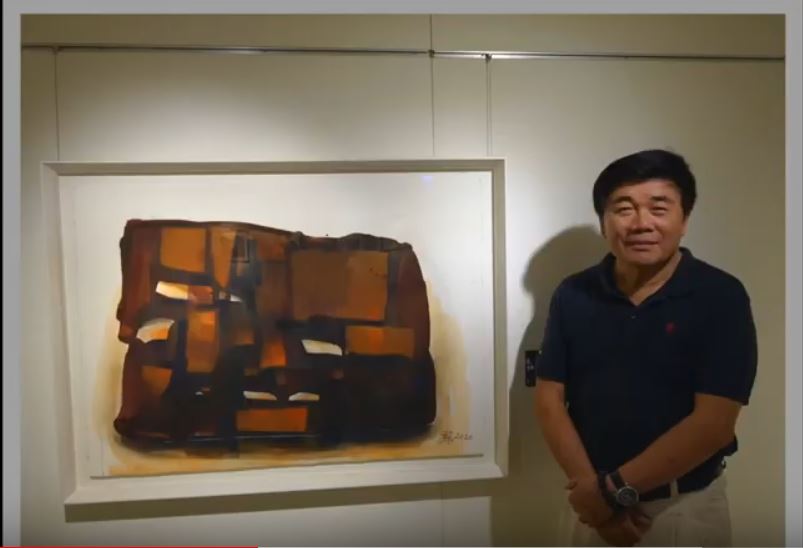
Among them, the creations of Taiwanese artist Wang Muti have long focused on the interplay between cultural ideology and artistic expression. Through the transformation of writing and image structures, his works explore the reinterpretation of the East Asian cultural spirit within contemporary art. Under the framework of cross-cultural artistic exchange, this creative perspective also showcases the continuous extension of East Asian artistic thought in a contemporary context.
During the exhibition, two art exchange events have been scheduled. On April 17, art critic Yasutomo Shimizu will deliver a gallery talk, and on April 19, contemporary artist Kazuo Miyamoto will host an art dialogue. Through the exchange between artists and critics, audiences will gain a deeper understanding of artistic thinking and creative practices across different cultural backgrounds.
As an international platform for art exchange, the "OPEN World Exhibition" not only showcases the diverse facets of contemporary art creation but also provides an opportunity to rethink the relationships between culture, region, and art. Within this open artistic vision, experiences from different cultures reflect upon one another, forging new creative possibilities through dialogue.
Exhibition Information Summary
- Exhibition Name: OPEN World Exhibition 2026
- Dates: April 17 - April 22, 2026
- Location: 1st Floor Gallery, Toyosu Civic Center, Koto City, Tokyo, Japan
- Organizer: ASIAN ARTISTS NETWORK
- Support: The Japan Foundation, Embassy of Mongolia in Japan
Event Schedule
Friday, April 17
- 15:00-17:00: Gallery Talk by Art Critic Yasutomo Shimizu
- 18:00-20:00: Networking Reception (Admission fee required)
Sunday, April 19
- 15:00-17:00: Gallery Talk by Contemporary Artist Kazuo Miyamoto
- 18:00-20:00: Networking Reception (Admission fee required)
- (Note: Gallery Talks and Networking Receptions on both days are open to the general public. Receptions require a fee.)
Participating Artists (Japan)
Kuniaki Aida, Yutokutaishi Akiyama, Ichiro Amanokura, Kayoko Ishikura, Yoko Ito, Yoshiyuki Iwao, Tadaichi Utsumi, Eddie Kamieda, Taiji Oda, Shojiro Kato, Hiromi Sato, Michiko Shibata, Yuri Shiraki, Isamu Daigo, Makoto Tanaka, Takashi Tokyo, Shigeru Naka, Yuri Fukuda, Hiroshi Mikami, Kazuo Miyamoto, Akinobu Yamashita, Yoko Yamada, Sanae Watanabe.
Overseas Artists
G.S. Kabir (Bangladesh), Mizoguchi Heseli Xiaowen (China), Zhu Xingyu (China), Bataa Bolortuya (Mongolia), Berkheedei Bujuulen (Mongolia), Soe Thura (Myanmar), Lin Ren-Jie (Taiwan), Tseng Hsing-Ping (Taiwan), Wang Muti (Taiwan), Darmkerng Jatusadom (Thailand), Phphon Thanesworapong (Thailand).
The Boundary of Aura, Transparency, and Fluidity: Tseng Hsing-Ping, Lin Ren-Jie, and Wang Muti Joint Exhibition at "Open World 2026"
Held at the Toyosu Civic Center, Tokyo, Japan. Organized by ASIAN ARTISTS NETWORK. Supported by The Japan Foundation and the Embassy of Mongolia in Japan.
Written by: WANG MUTI
Introduction: On the Boundary of Transparency, Reconstructing the Contemporary Context of "Open World"
From April 17 to April 22, 2026, the Toyosu Civic Center in Koto City, Tokyo, will host a major event facilitating profound exchange between Taiwanese and Japanese artists: "OPEN World 2026" (OPEN World Exhibition 2026). Hosted by the ASIAN ARTISTS NETWORK (Japan) and officially supported by The Japan Foundation (under the Ministry of Foreign Affairs of Japan), this is not merely an overseas juxtaposition of visual works. Rather, it is an ontological dialogue concerning geopolitical aesthetics, sacred landscapes, and cross-border curation.
The core of this exhibition is composed of three benchmark artists in Taiwan's fine arts field:
- Tseng Hsing-Ping: (Former Review Committee Member for Western Painting at the National Taiwan Museum of Fine Arts, Preparatory Committee Member for the National Art Exhibition, Thousand Artists Exhibition, and Contemporary Art Exhibition)
- Lin Ren-Jie: (Honorary President of the Taiwan Watercolor Association, Retired Professor of the Department of Fine Arts at National Taiwan Normal University, and Founder of the "Professor Lin Ren-Jie Watercolor Creation Scholarship")
- Wang Muti: (Taiwan's first artist to hold a solo exhibition at The National Art Center, Tokyo; ranked first among foreigners exhibiting in the Tokyo Metropolitan Art Museum's GENTEN exhibition. Member of the Japan NAU 21st Century Art Federation [inheriting Gutai Art], Head of the Taiwan Liaison Office for the Japan Contemporary Artists Association [GENTEN], and a developer who has assisted over 2,000 artists in building independent digital museum databases over the past 20 years).
Exhibition Photos:
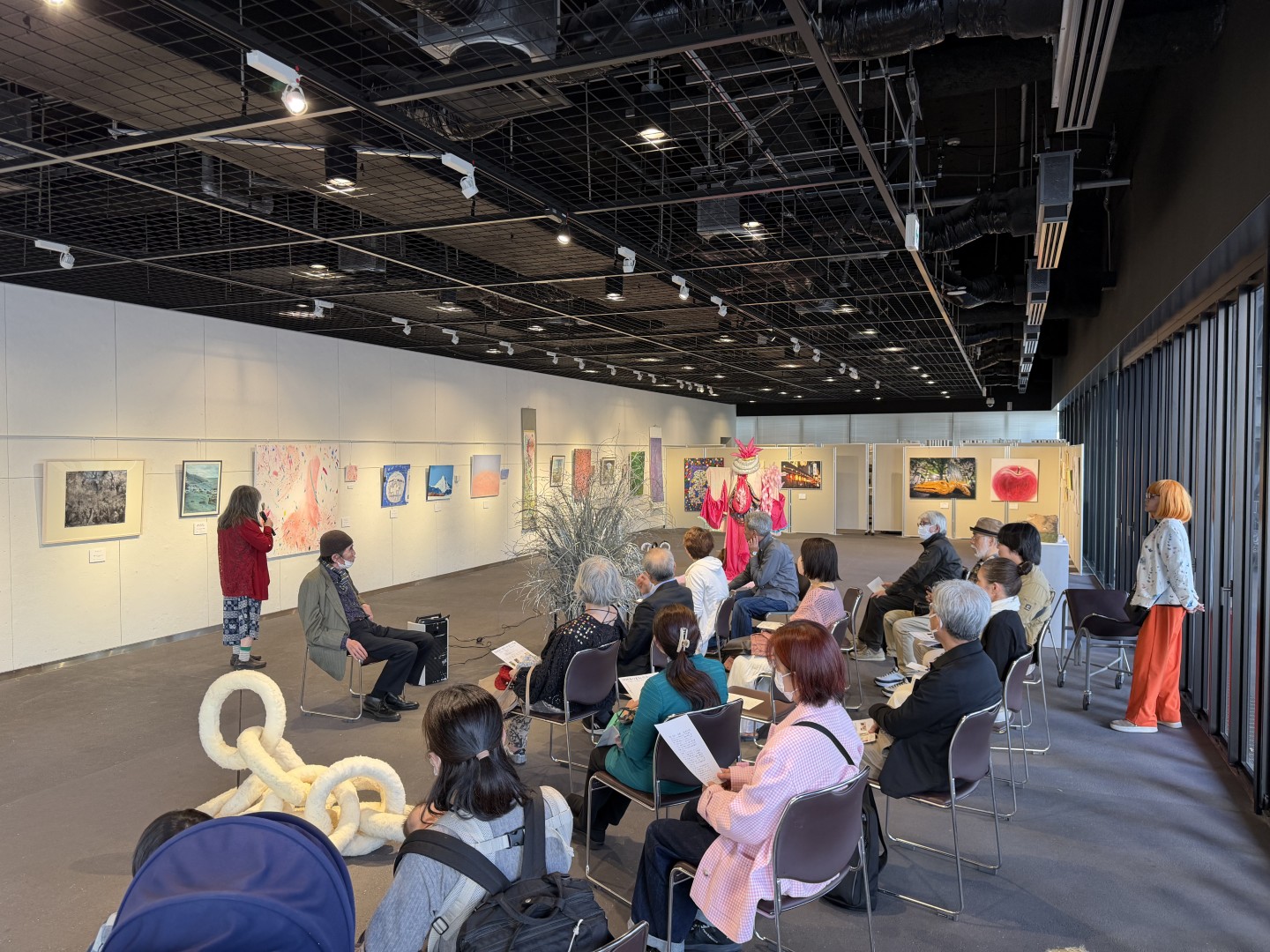


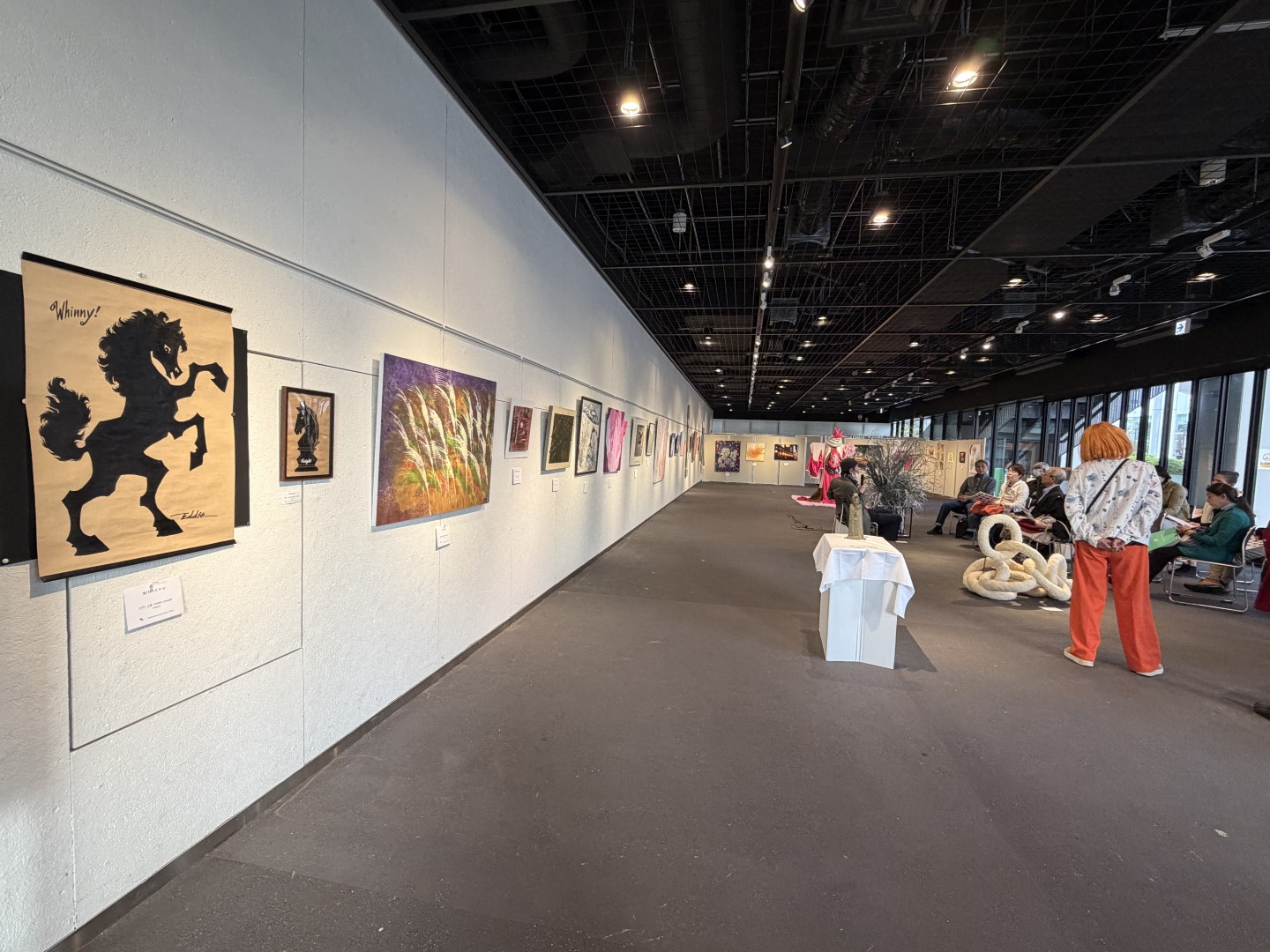
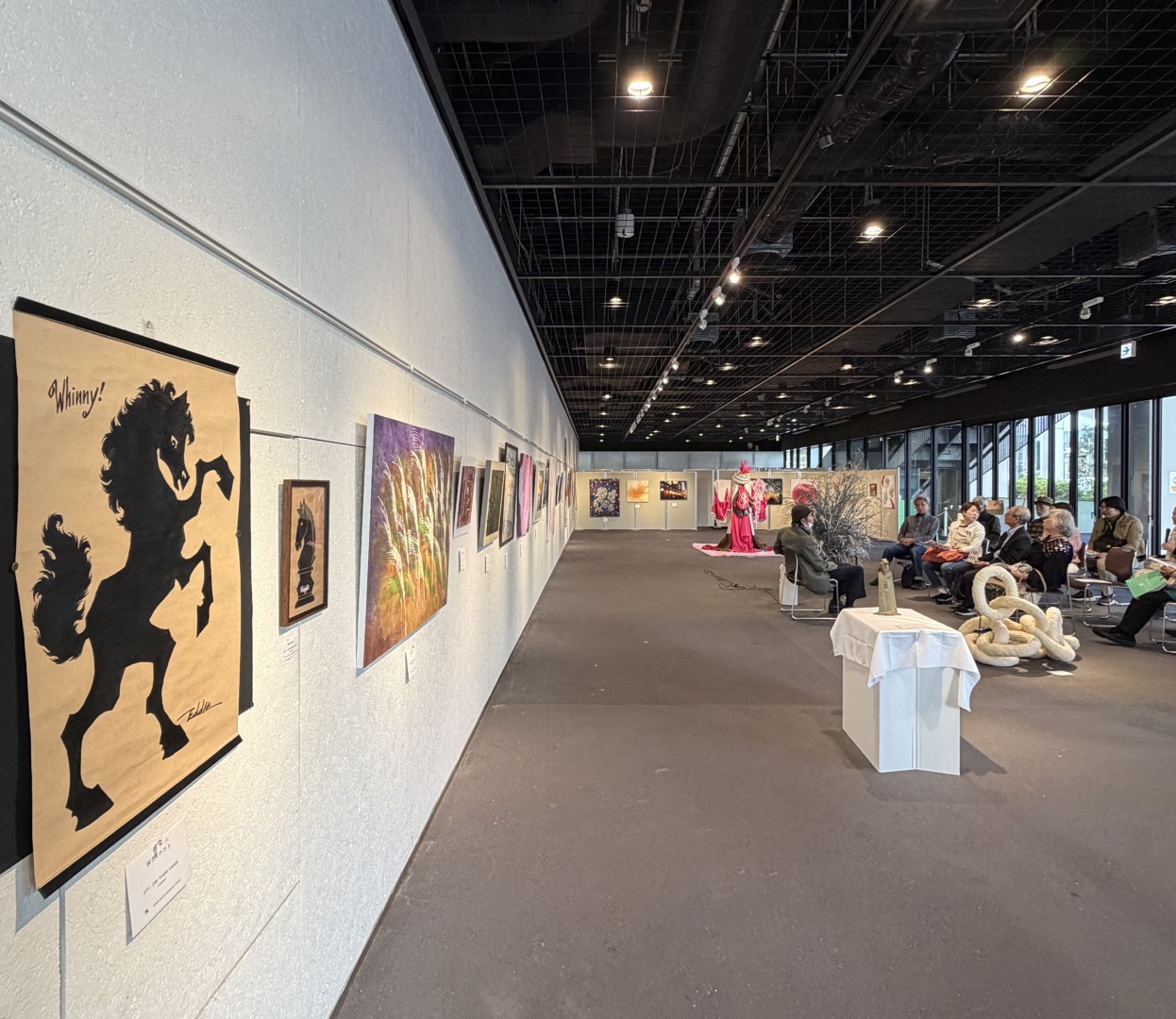
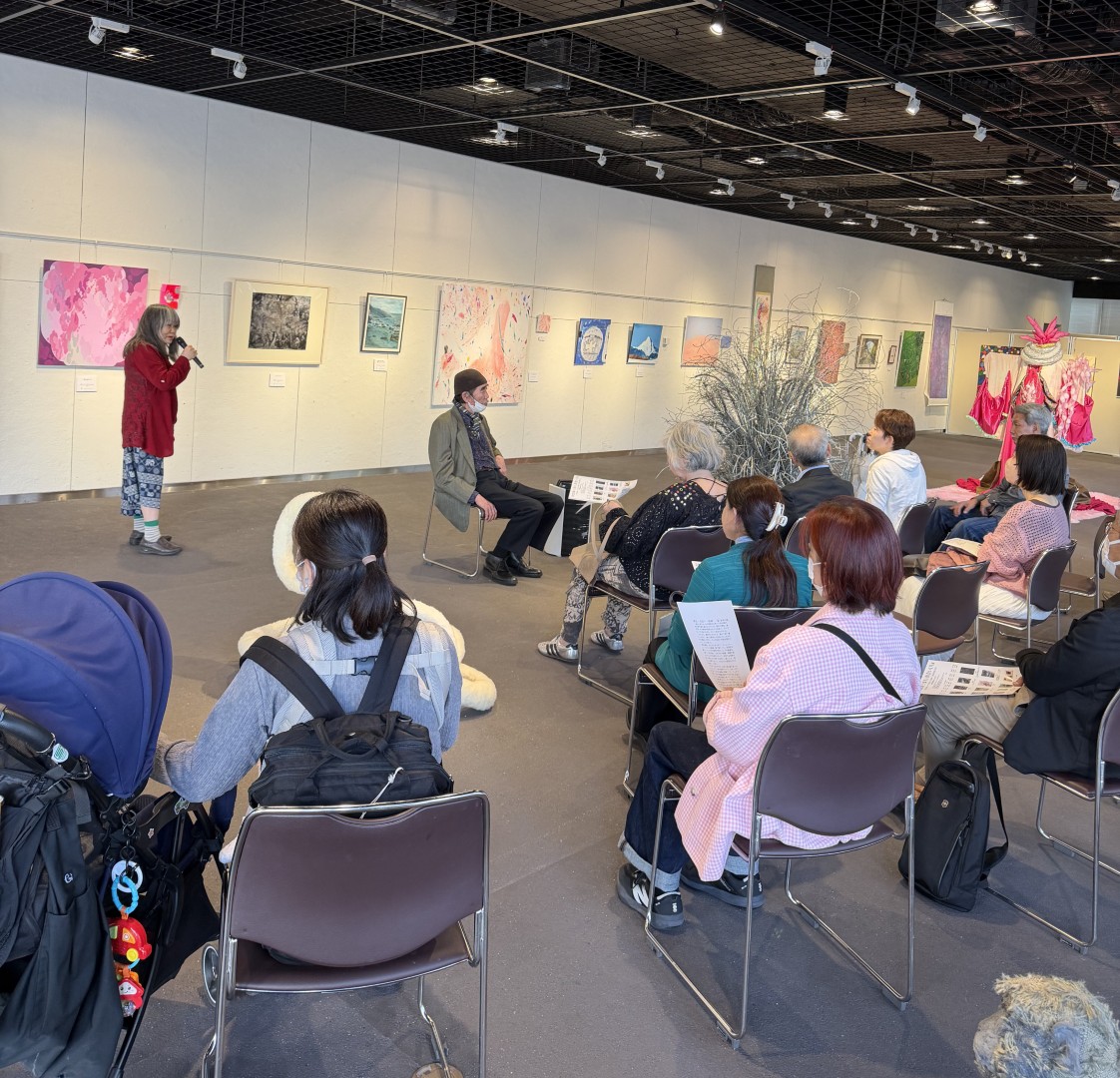
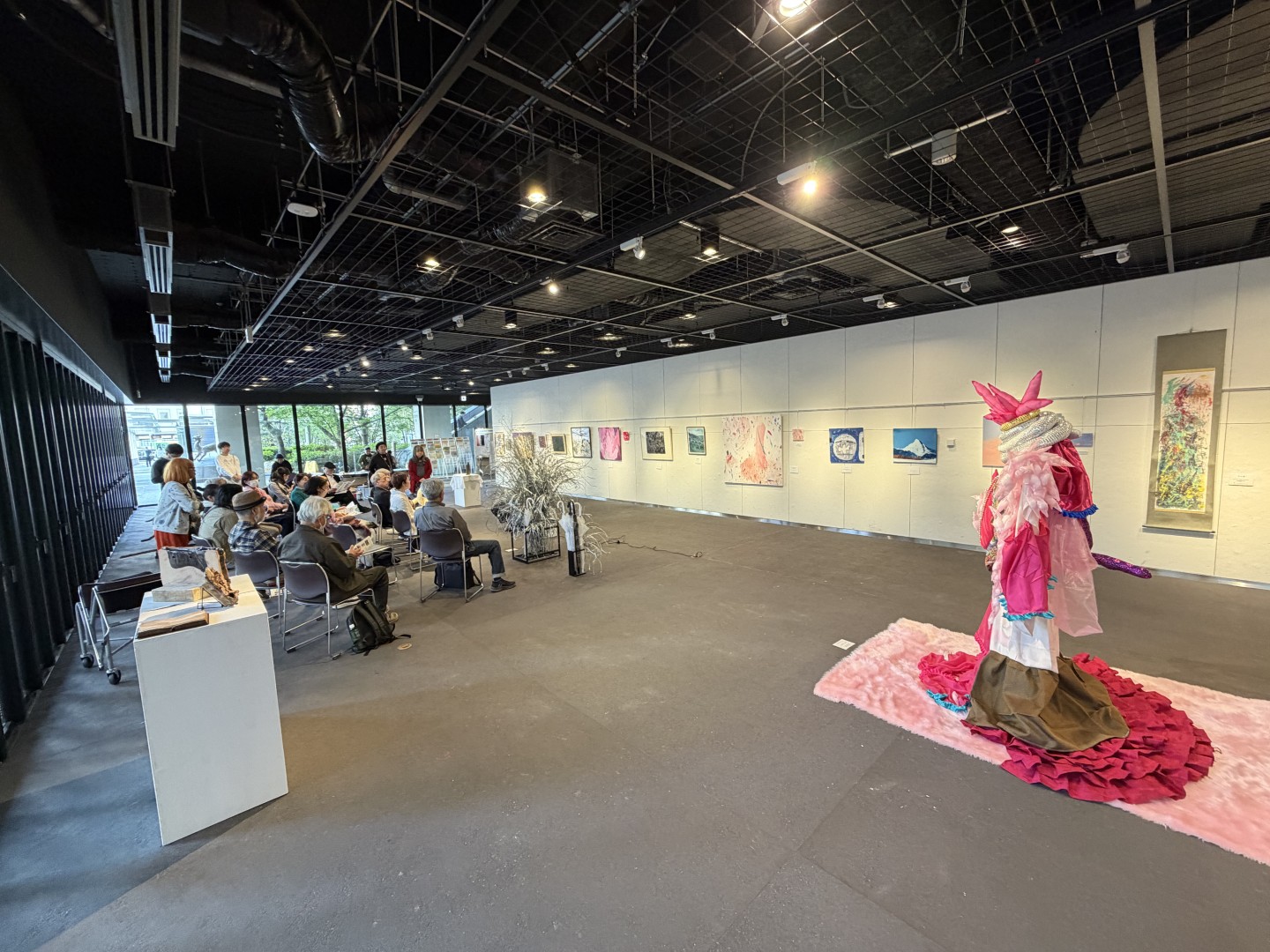
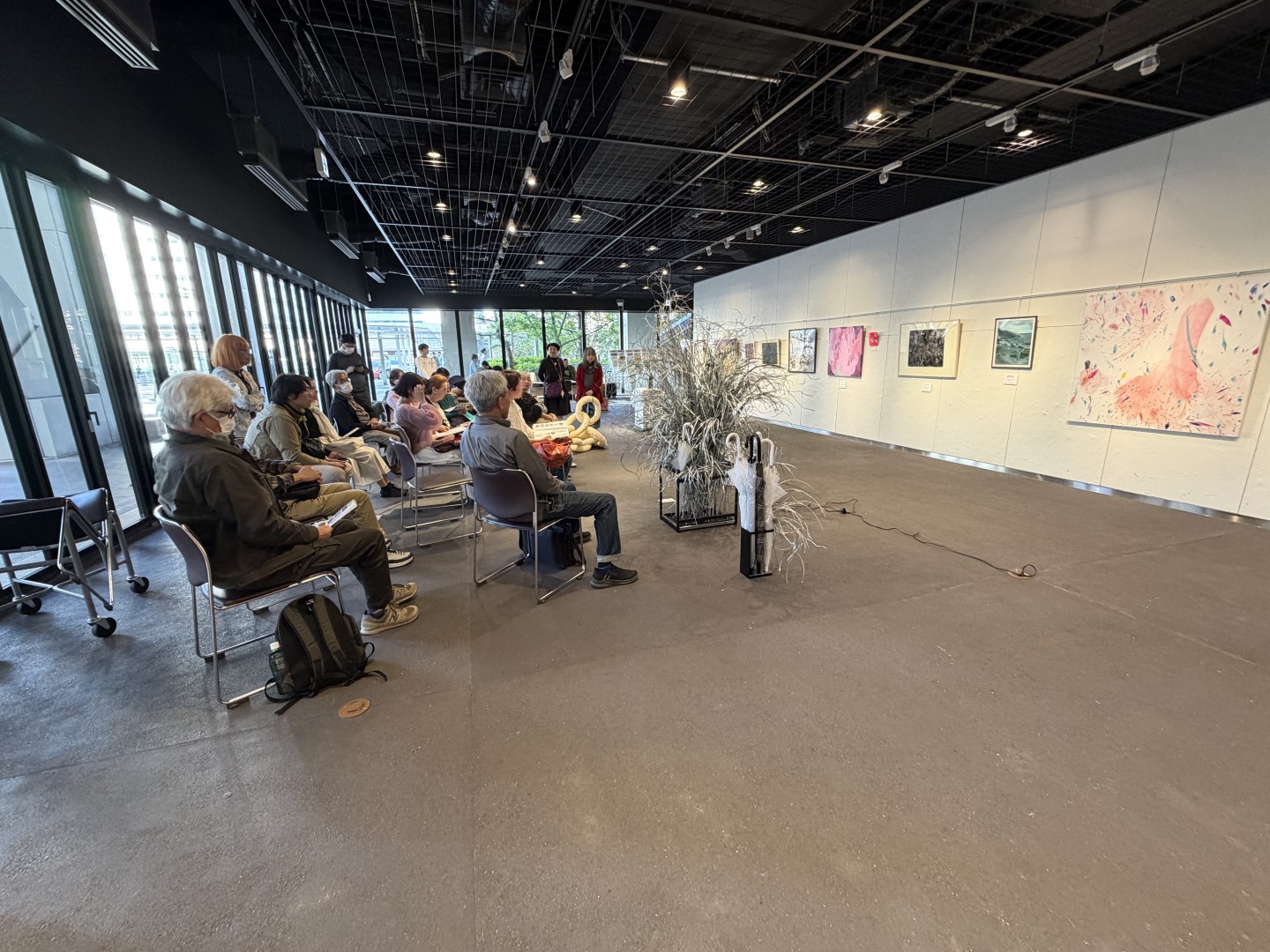
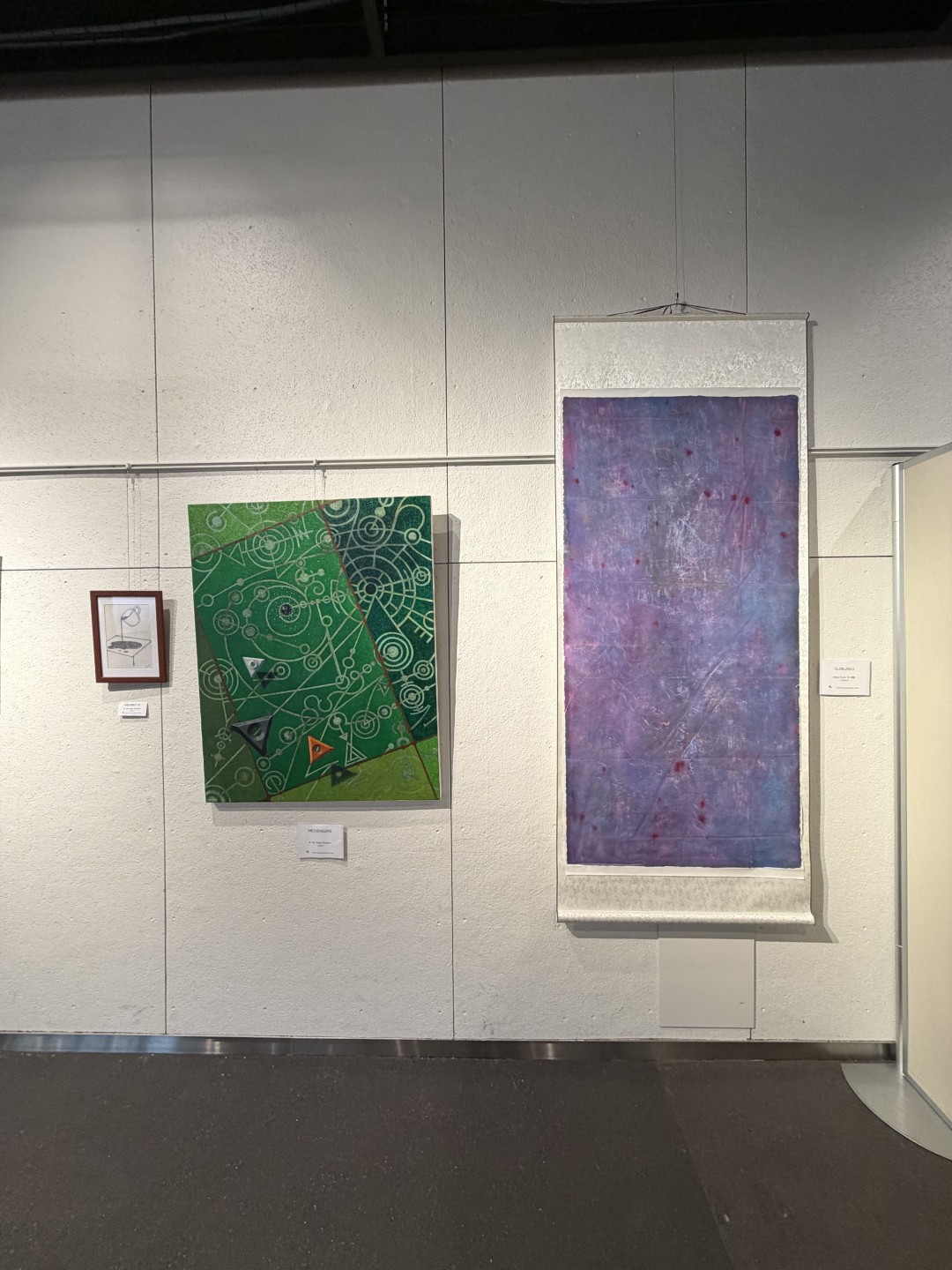
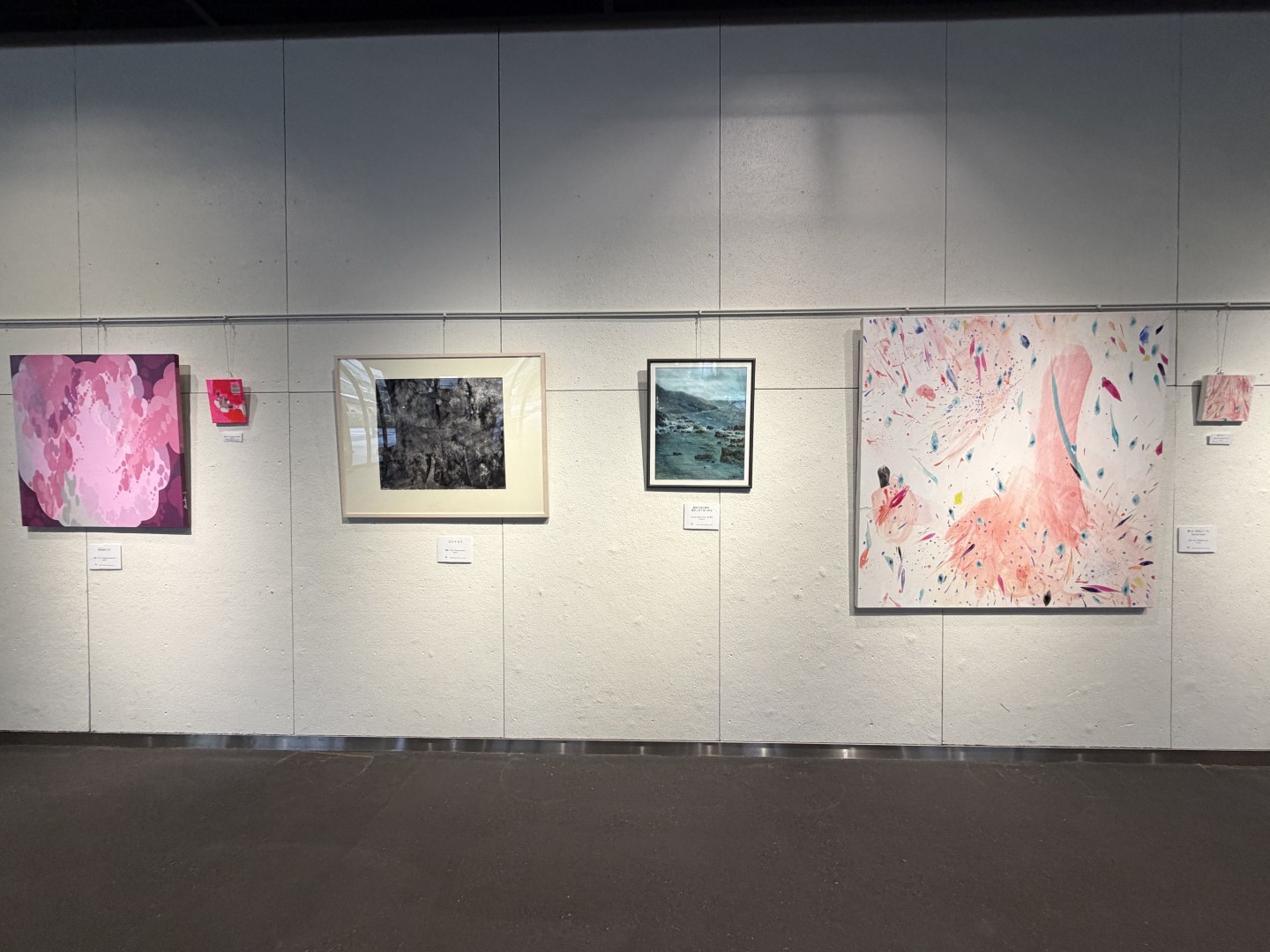
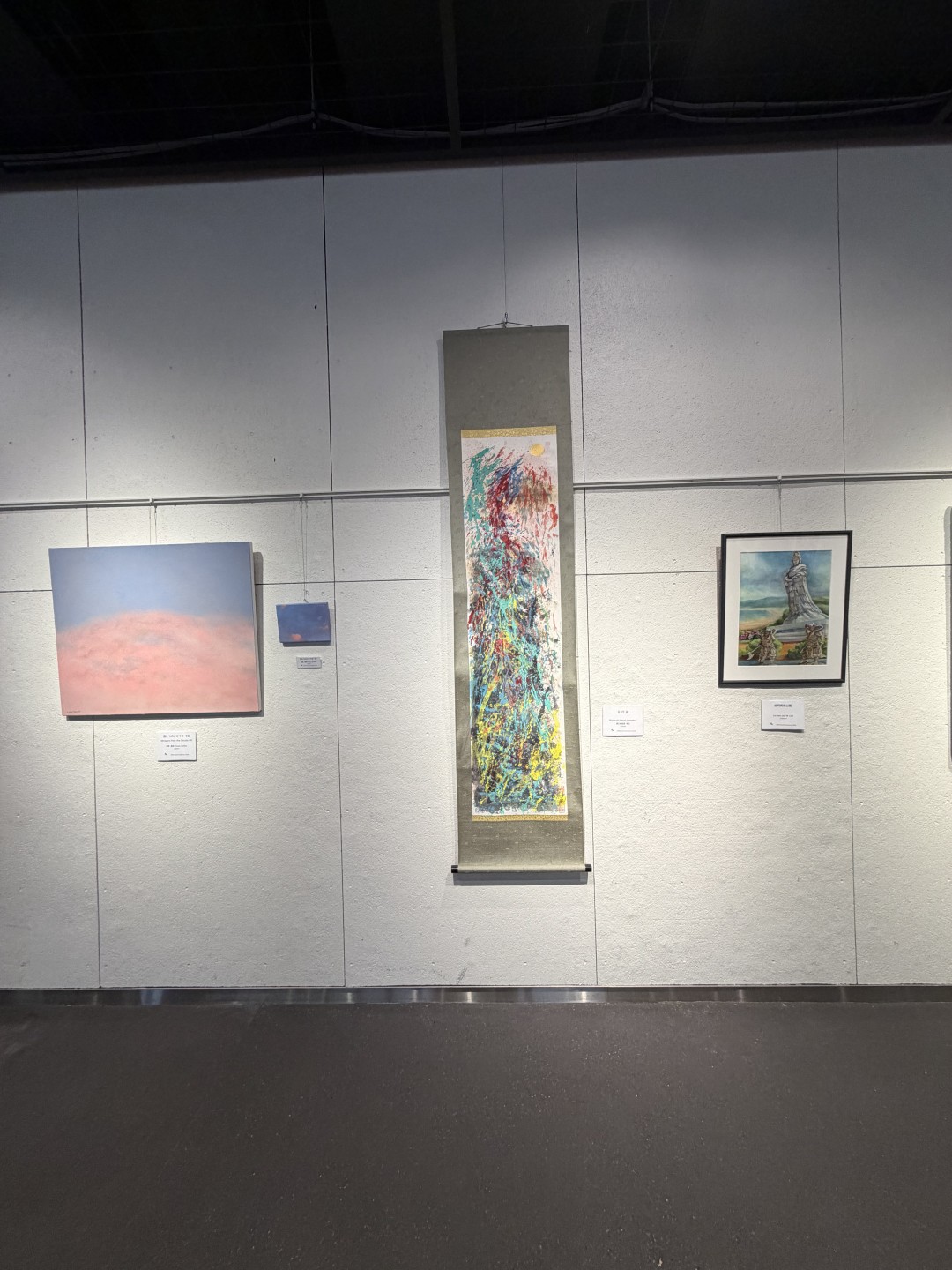
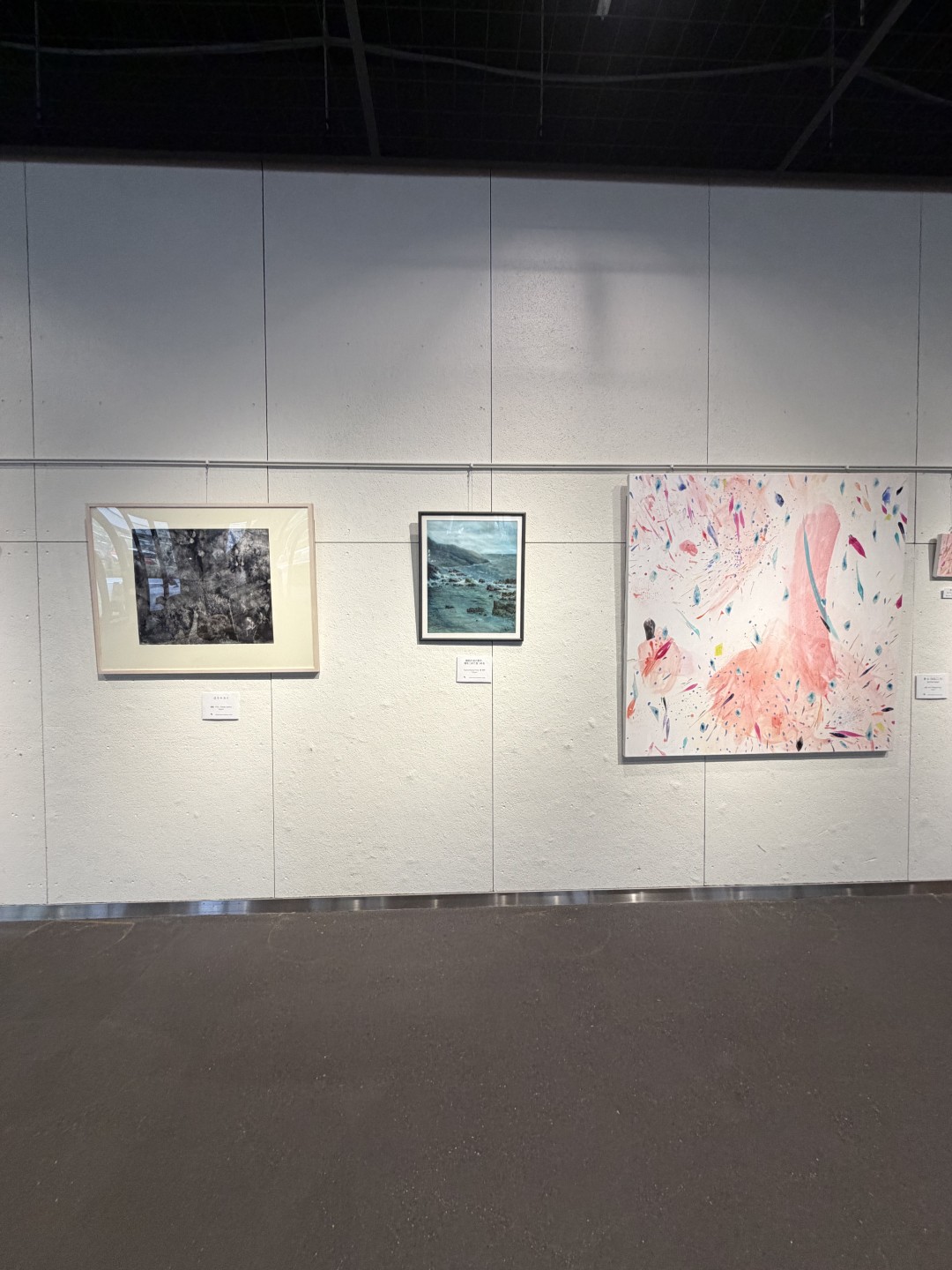
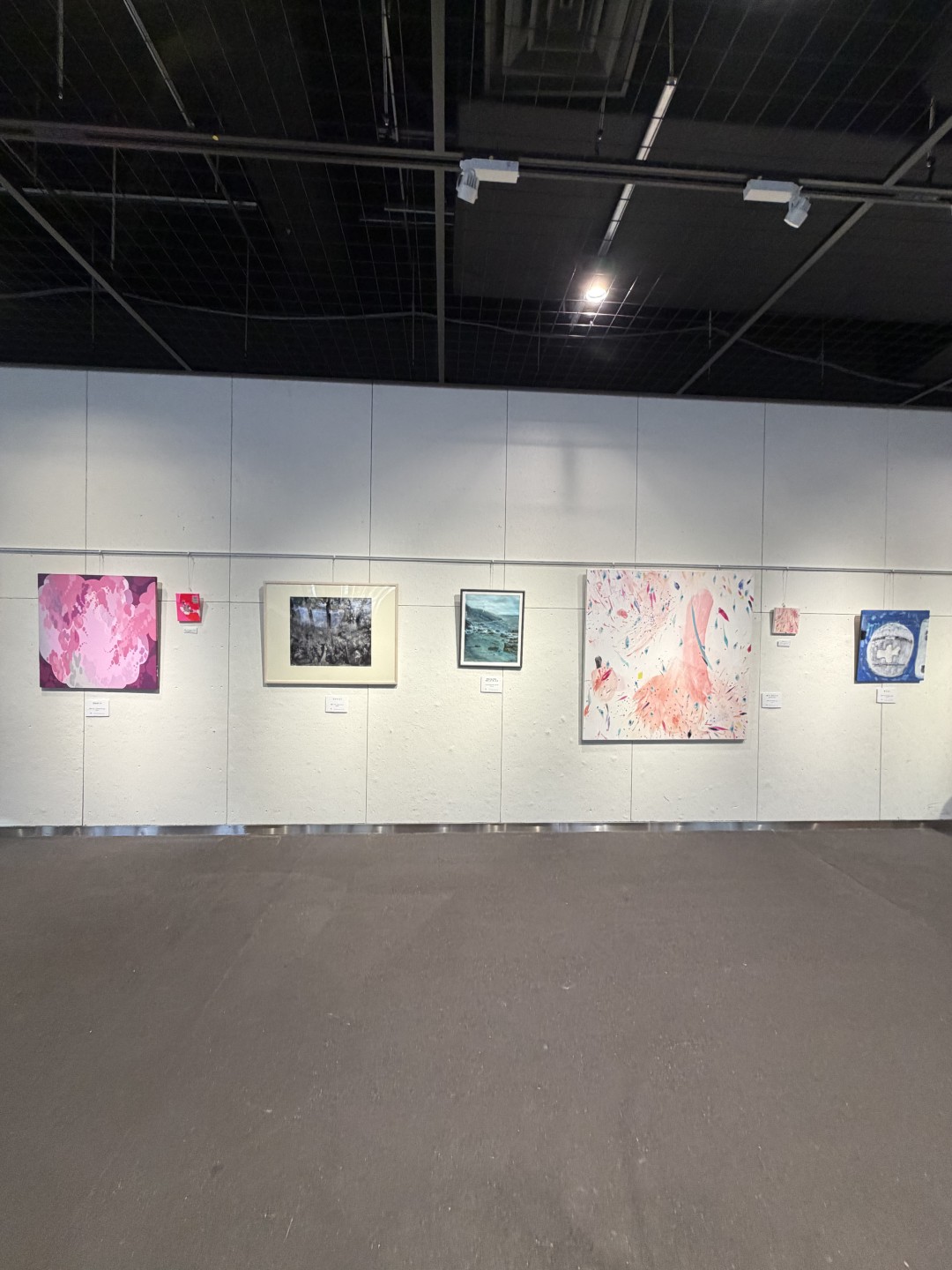
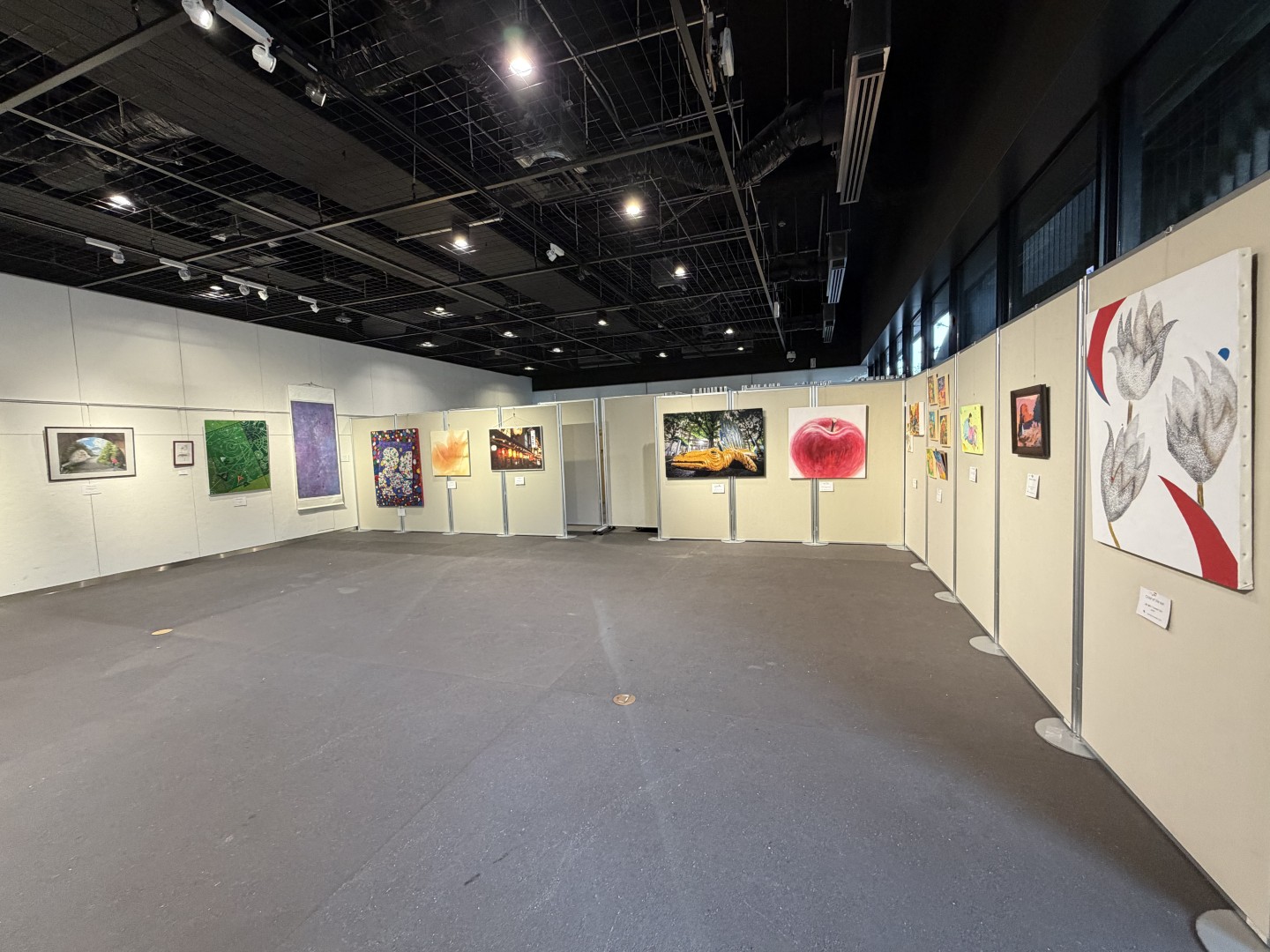


Within the transparent architectural space designed by Nikken Sekkei, art is no longer a closed object but a "fluid state" that coexists with daily urban life.
A Slice of the Era — The Contemporary Context of Tokyo in 2026
As the world enters 2026, the definition of art is no longer limited to the white-cube spaces of museums. In Tokyo, a supercity constantly reinventing itself, art is embedding itself into daily life in unprecedented ways. "OPEN WORLD 2026," hosted by the ASIAN ARTISTS NETWORK and supported by The Japan Foundation, chose the Toyosu Civic Center—a building designed by Nikken Sekkei full of modern transparency. This is not just a choice of venue; it is an ontological declaration about "how art dialogues with the world."
This exhibition gathers three Taiwanese artists with profound academic backgrounds and unique perspectives: Tseng Hsing-Ping, Lin Ren-Jie, and Wang Muti. They represent different eras and contexts in Taiwanese art history—from the will of the mountains and seas rooted in the land, to the sacred reconstructions under rigorous academic systems, and finally to the contemporary curatorial practices of cross-border fluidity. In Toyosu, a space interwoven with glass and light, the works of these three artists jointly perform a visual symphony about the "Open World."
The Phenomenology of Space — The Transparent Architectural Aesthetics of Toyosu Civic Center
To understand this exhibition, one must first discuss its vessel—the Toyosu Civic Center. Designed by architects such as Shunichi Sugiyama, Akira Kono, and Atsuhiko Amagasa, its core logic lies in "connection with the city."
1. Transparency as an Open State
The large glass curtain walls of the building's exterior dissolve the absolute boundary between inside and outside. This "transparency" philosophically echoes the theme of "Open World": the world is not a closed entity, but a process of continuous generation. When Tseng Hsing-Ping's waves, Lin Ren-Jie's sacred figures, and Wang Muti's abstract lines are placed here, the artworks are no longer isolated objects; they generate an intertextual relationship with the city's external light and shadows, weather changes, and even passing pedestrians.
2. Vertical Heterogeneous Spaces of Daily Life
The Toyosu Civic Center vertically stacks administrative, reading, cultural, and social functions. This spatial structure ensures the exhibition is not an isolated island requiring a "ritualistic entrance," but is juxtaposed with people's daily lives. Art no longer occupies an absolute center here; instead, it exists in a state of "permeation" among waiting, walking, and pausing.
Tseng Hsing-Ping — The "Infatuated" Contemplation of the Will of Mountains and Seas
Professor Tseng Hsing-Ping's (born 1945) artistic career is a passionate documentary history of Taiwan's East Coast natural landscapes. His exhibited work, Gazing Infatuatedly at the Waves Before My Eyes, achieves artistic heights in the perfect fusion of "materiality" and "state of mind."
1. The Alchemy of Blending Ink and Color
In artistic terminology, Tseng Hsing-Ping's technique can be described as the "textural extension of ink and color." He masterfully utilizes the "skeleton" of traditional ink wash and the "flesh" of Western watercolor.
- Constructing the Reefs: He uses a dry brush technique and intense, thick ink to build geometric structures as hard as granite on paper. This technique is not merely realism; it is a material declaration of "permanence."
- The Dynamic Texture of the Waves: At the intersection of the waves and the rocks, he employs a special "stain-dyeing method" to express the randomness of splashing sea foam. This aesthetic of accidental occurrence creates a strong visual tension with the inevitability of the rocks.
2. "Infatuation" as a Phenomenological Reduction
"Gazing infatuatedly" is not just an expression of emotion, but a phenomenological practice. Through long-term observation of the Pacific Ocean, the artist dissolves himself into the subject. This state of "unity of object and self" ensures his ocean is not an objective landscape, but a living entity with subjective will. In the metropolitan core of Tokyo, far from the sea, Tseng Hsing-Ping's work acts as a breath of life from the South Pacific, awakening the shielded primal senses of city dwellers.
Lin Ren-Jie — The Reconstruction of Academic Precision and Sacred Aura
Professor Lin Ren-Jie's (born 1948) works present a refinement in a different dimension—one derived from the rigor of the academic traditions of National Taiwan Normal University and a modern interpretation of sacredness.
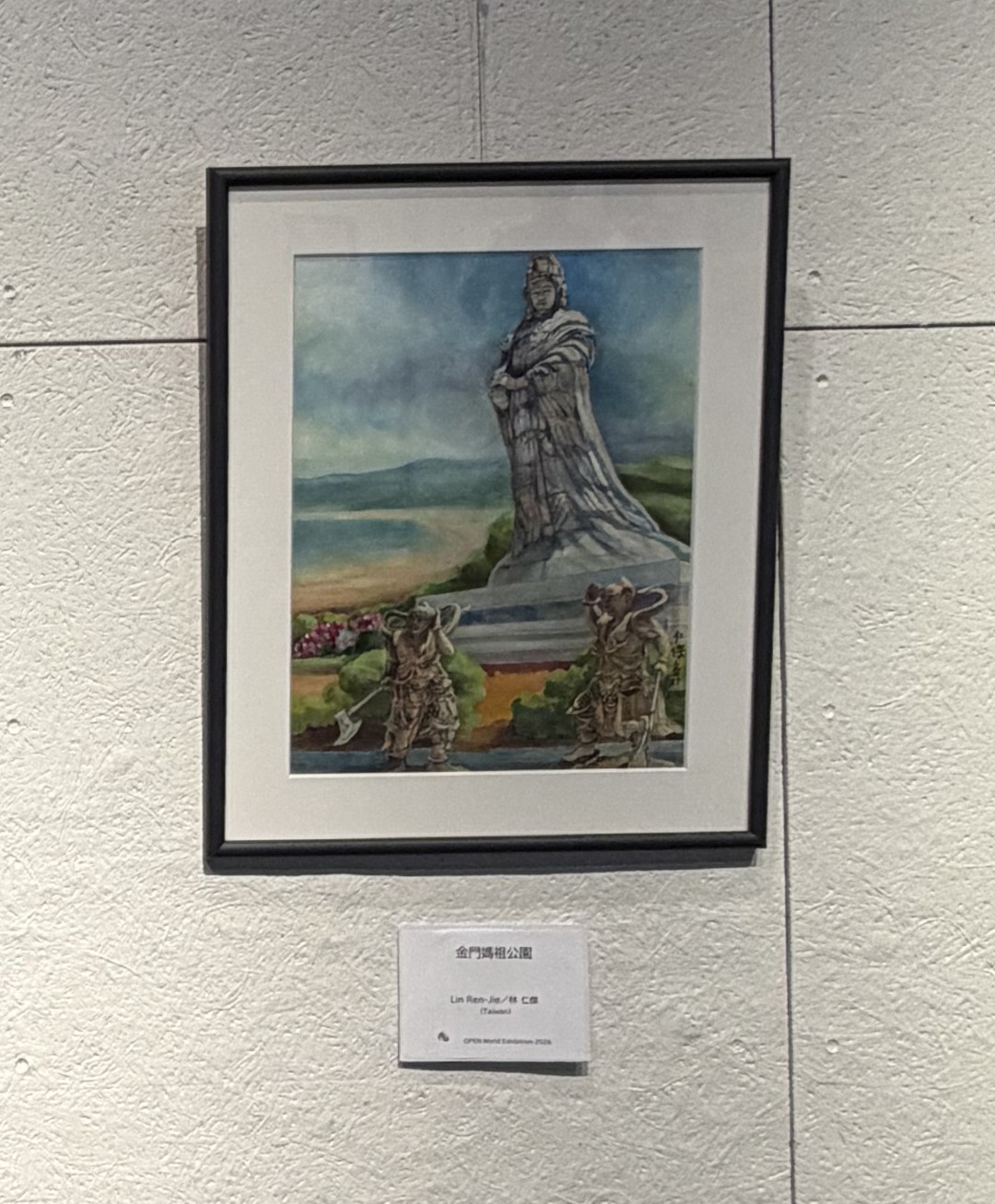
1. A Semiotic Analysis of "Kinmen Mazu Park"
Lin Ren-Jie's work Kinmen Mazu Park embodies a highly structural aesthetic and cultural sensitivity.
- Spatial Layout of the Guardians: The two guardian deities, "Clairvoyance" (Qianliyan) and "Clairaudience" (Shunfenger) in the foreground, form a stable triangular support in the composition. This is not just an arrangement of Visual Hierarchy; it symbolizes the guardianship of human senses when facing an unknown world.
- The Sacred Light of the Goddess: In contrast to the heaviness of stone sculptures, Lin utilizes the unique transparency of watercolors to bestow the Mazu statue with a spiritual glow that transcends materiality. His depiction of the folds in the clothing creates lines with a musical rhythm, forming a harmonious visual resonance with the distant coastline.
2. From Artistic Anatomy to Capturing Texture
Lin Ren-Jie has long dedicated himself to the research of artistic anatomy and art appreciation. This grants him a level of precision rarely achieved by others when dealing with sculptural subjects. His exploration of "capturing texture" in his work is essentially reconstructing historical weight within the lightweight medium of watercolor. This dialectic between "lightness" and "heaviness" is the core of his artistic achievement.
Wang Muti — Cross-Border Fluidity and the Construction of the Third Space
In this exhibition, Wang Muti demonstrates an overlap of multiple identities: he is an artist, a curator, and a bridge connecting the art systems of Taiwan and Japan.
1. Curation as an "Establishment of Meaning"
The "Open World" curatorial concept emphasizes that an exhibition is not an end goal, but a state. He translates Taiwan's artistic context to Tokyo and seeks resonance within important Japanese art organizations like "GENTEN" and "NAU." This cross-cultural communication is essentially building an artistic "Third Space"—a place that does not belong to a single national aesthetic, but to the global fluid experience.
2. The Modern Tension of Artistic Practice
As Taiwan's first artist to hold a solo exhibition at The National Art Center, Tokyo, and as a member of NAU and GENTEN, Wang Muti's works inherently carry a strong contemporary feel. He excels at finding a balance between abstraction and figuration, utilizing the tension of lines to express inner spiritual maps. His award record proves the high recognition of his "cultural transversality" by the Japanese art world. In this exhibition, his works play the role of "connector," pushing the local characteristics of Tseng Hsing-Ping and Lin Ren-Jie onto a more universally valued international art discourse platform.
The Intertwining of Generations and Cultures — The Inner Dialogue of Three Artists
In the gallery space of the Toyosu Civic Center, the works of these three artists generate an unexpected chemical reaction.
- The Confrontation Between Nature and Civilization: Tseng Hsing-Ping's primal power of the mountains and seas and Lin Ren-Jie's solemn humanistic icons, set under Wang Muti's contemporary curatorial framework, form an evolutionary spectrum from the primitive to civilization, from the figurative to the spiritual.
- The Infinite Possibilities of Mediums: Although all deal with water and color, Tseng pursues a rugged "fusion of ink and color," Lin pursues an academic "transparent refinement," while Wang demonstrates the "conceptual expression" of mediums in a cross-cultural context.
The Integration of Authoritative Japanese Critique and the Establishment of Academic Status
The high professionalism of this exhibition also lies in the deep integration of its academic resources. The opening reception features a discussion with the renowned Japanese art critic Mr. Yasutomo Shimizu, a member of the International Association of Art Critics (AICA) Japan. As a senior judge for Japanese public exhibitions, his analysis places the works of Taiwanese artists within the context of Japanese art history for comparative research, which is crucial for elevating the academic status of Taiwanese art internationally.
Furthermore, the gallery talk by artist Mr. Kazuo Miyamoto explores how artworks respond to current global uncertainties from a practical creative perspective. These academic debates make "Open World 2026" not just a visual feast, but a solid cultural forum.
Conclusion — Foreseeing the Future in the Unnamed Spaces
"Open World 2026" is a successful artistic voyage. In the transparent architectural forest of the Toyosu Civic Center, Tseng Hsing-Ping, Lin Ren-Jie, and Wang Muti together prove that the power of art lies in its "openness."
Professor Tseng's "infatuation" with the waves, Professor Lin's "reconstruction" of sacred landscapes, and Wang Muti's "crossing" of artistic boundaries intertwine into a hymn about the survival state of contemporary art. Although the exhibition concludes in April 2026, the artistic reflections it sparks regarding "openness, transparency, and fluidity" will continue to cause ripples in the art worlds of both Taiwan and Japan.
Here, the exhibition is no longer an endpoint, but a state. The world remains open, spaces continue to be used, traversed, and misread, while art temporarily pauses in those unnamed places, guiding us on the path to the future.
Artists and Groups Who Have Held Solo Exhibitions or Major Art Events Here
Located in Koto City, Tokyo, the Toyosu Civic Center is a major local hub for arts and performances. The 1st floor features the open "Toyosu Civic Gallery," and the 8th floor houses the professional "Gallery 1 & 2" and "Sub-Gallery," attracting numerous local groups and professional artists.
Core Art Groups (Regularly hosting large-scale exhibitions):
- Koto City Artists Association: Holds large annual art exhibitions featuring oil paintings, ink wash, Japanese paintings, etc.
- Koto City Calligraphy Federation: Holds regular calligraphy exhibitions, including youth exhibitions.
- Koto Handicraft Association: Exhibits delicate crafts like embroidery, knitting, pottery, and pressed flowers.
- Koto Photo Federation: Hosts annual photography exhibitions covering landscapes, humanity, and Koto City records.
- Koto Tea & Flower Arrangement Society: Hosts large-scale flower arrangement exhibitions (Katen).
- Japan Kirie (Paper-cutting) Association: Has hosted the "Kirie TOKYO" art exhibition here.
Artists and Individuals Who Have Exhibited:
- Sou Fujimoto: Renowned architect. Shibaura Institute of Technology hosted his architectural special exhibition Trajectory of the Dazaifu Tenmangu Temporary Shrine here, displaying design sketches and models.
- Katsuyo Murokoshi: Contemporary artist who has held personal artwork exhibitions here.
- Yoko Saibe: Renowned Kirie artist, participated as a core member in the paper-cutting art exhibition held in Toyosu.
- Fukagawa Bijutsu: A group consisting of local painting classes and pottery studios, frequently exhibiting works by instructors and students (such as Yoshinori Oikawa).
Special Projects and Large-Scale Social Art Programs:
- ARTPARA FUKAGAWA: A major festival promoting "barrier-free art," with Toyosu as a key satellite venue showcasing works by Outsider Artists.
- Koto City 2020 Public Art Project: Hosted a touring panel exhibition documenting public sculptures and art installations in Koto City.
- Toyosu Solo Classic Support Project: While primarily musical, it frequently integrates live visual art presentations to support young artists.
For more information, please visit:
- Tseng Hsing-Ping Official Website
- Lin Ren-Jie Official Website
- Wang Muti Official Website
Tseng Hsing-Ping Profile:
Born in 1945 in Wujiang Village, Yuli Township, Hualien County.
Graduated from Yuli Elementary School, Junior High, High School, Chinese Culture University (Department of Fine Arts, 2nd graduating class), and the Graduate Institute of Arts (9th graduating class).
Current Positions:
- President, Taitung County Qingxi New Literature and Art Society
- President, Taitung County Art Education Association
- Standing Director, Taitung Branch of the ROC Qingxi Writers and Artists Association
- Member, ROC Children's Art Education Association
- Review Committee Member for Western Painting, Taiwan Provincial Museum of Fine Arts
- President, Rotary Club of Taitung East Coast (2000~2001), RI District 3510
- Art Teacher, Senior University attached to National Taitung University
- Watercolor Creation Class Teacher, National Taitung Living Art Center
- Art Teacher, Harvard Art Class at Fo Guang Shan Riguang Temple
- (Plus memberships and advisory roles in various watercolor and modern art associations across Taiwan).
Past Roles:
Professor at Chang Jung Christian University; Director of the Department of Art and Craft Education at National Taitung Teachers College; Preparatory Committee Member for the 14th National Art Exhibition; Juror for numerous national, provincial, and municipal art exhibitions.
His works have been exhibited in Australia, Japan, South Korea, Hong Kong, Singapore, Malaysia, and Thailand.
Selected Exhibitions:
- 2023: 10th Taiwanese Artists Modern Exhibition (Taiwan International Calligraphy and Ink Exhibition), Kanagawa Prefectural Gallery, Yokohama, Japan.
- 2023: 9th Taiwanese Artists Modern Exhibition (Formosa Taiwan Impression Exhibition), Totsuka Sakura Plaza, Yokohama, Japan.
- 2023: 8th Taiwanese Artists Modern Exhibition (Love and Peace Calligraphy and Painting Art Exhibition), Kanagawa Prefectural Gallery, Yokohama, Japan.
Awards:
- 1991: Zhongxing Literary Watercolor Award
- 1994: Special Outstanding Teacher for Colleges and Universities
- 1996: Golden Goblet Award in Watercolor
Lin Ren-Jie Profile:
(Honorary President of the Taiwan Watercolor Association, Retired Professor of the Department of Fine Arts at National Taiwan Normal University, Founder of the "Professor Lin Ren-Jie Watercolor Creation Scholarship")
Selected Timeline:
- 1948: Born in Xiluo, Yunlin, Taiwan.
- 1964-1967: Attended Chiayi Normal School; recommended to join the Chinese Calligraphy Association.
- 1970-1971: Served in the military, winning 1st place in the military's Chinese painting competition.
- 1973: Entered the Department of Fine Arts at National Taiwan Normal University (NTNU).
- 1974-1977: Won numerous awards in calligraphy, seal carving, and watercolor; works selected for the Taiwan Provincial Art Exhibition.
- 1981-1988: Engaged in gifted art education research and earned a master's degree from NTNU.
- 1989-1994: Traveled extensively in Europe and Asia for painting; held first solo watercolor and color-ink exhibitions in Taipei.
- 1996-2000: Promoted to Associate Professor, then Full Professor at NTNU. Conducted research at Indiana University, USA.
- 2001-2012: Published numerous papers on art education globally (Hong Kong, Singapore, Canada, Australia, Dubai, Prague). Elected as the first Chairman of the Taiwan Watercolor Association in 2012.
- 2014: Retired as a full professor from NTNU; became an adjunct professor.
- 2015-2019: Served as a juror for major exhibitions including the National Art Exhibition. Curated several prominent exhibitions and published translations on artistic anatomy.
Major Academic Publications:
Extensive list of published papers spanning 1991 to 2010 focusing on gifted art education, artistic anatomy, and the integration of modernism and postmodernism in art education. (e.g., Principles and Practices of Gifted Art Education translation).
Wang Muti (WANG MUTI) Profile:
- Director of the Buddhist Bodhisattva Collection Database Project
- Head of the RUMOTAN Art Portal Website
- Art Curator
- Member of Japan NAU 21st Century Art Federation (Inheriting Gutai Art)
- Head of the Taiwan Liaison Office for Japan Contemporary Artists Association (GENTEN)
Awards and Honors:
- Grand Prize: Future Award at the 24th Japan NAU 21st Century Art Federation Exhibition (Award entails a solo exhibition space at the National Art Center, Tokyo, in 2027).
- 1st Place Displayed Artwork, 13th Tokyo GENTEN Exhibition, Tokyo Metropolitan Art Museum, 2025.
- Associate Member Recommendation, 81st GENTEN Exhibition, National Art Center, Tokyo, 2025.
- NAU21 Member Recommendation, 23rd NAU Exhibition, National Art Center, Tokyo, 2025.
- Excellence Award, 56th Kanagawa GENTEN Exhibition, Yokohama Citizens' Gallery, 2024.
Solo Exhibitions:
- Wang Muti Solo Exhibition at The National Art Center, Tokyo (The first Taiwanese artist to hold a solo exhibition here; "Wang Muti Continues the Avant-Garde Legend of NAU"), Roppongi, Tokyo, Feb 2026.
Joint Exhibitions (Selected):
- Japan 82nd GENTEN Exhibition, National Art Center, Tokyo, 2026.
- Kanagawa Uzuki Exhibition, Totsuka SAKURA PLAZA, Yokohama, 2026.
- 49th Saitama GENTEN Exhibition, MOMAS, Saitama, 2026.
- 13th Tokyo GENTEN Exhibition, Tokyo Metropolitan Art Museum, 2025.
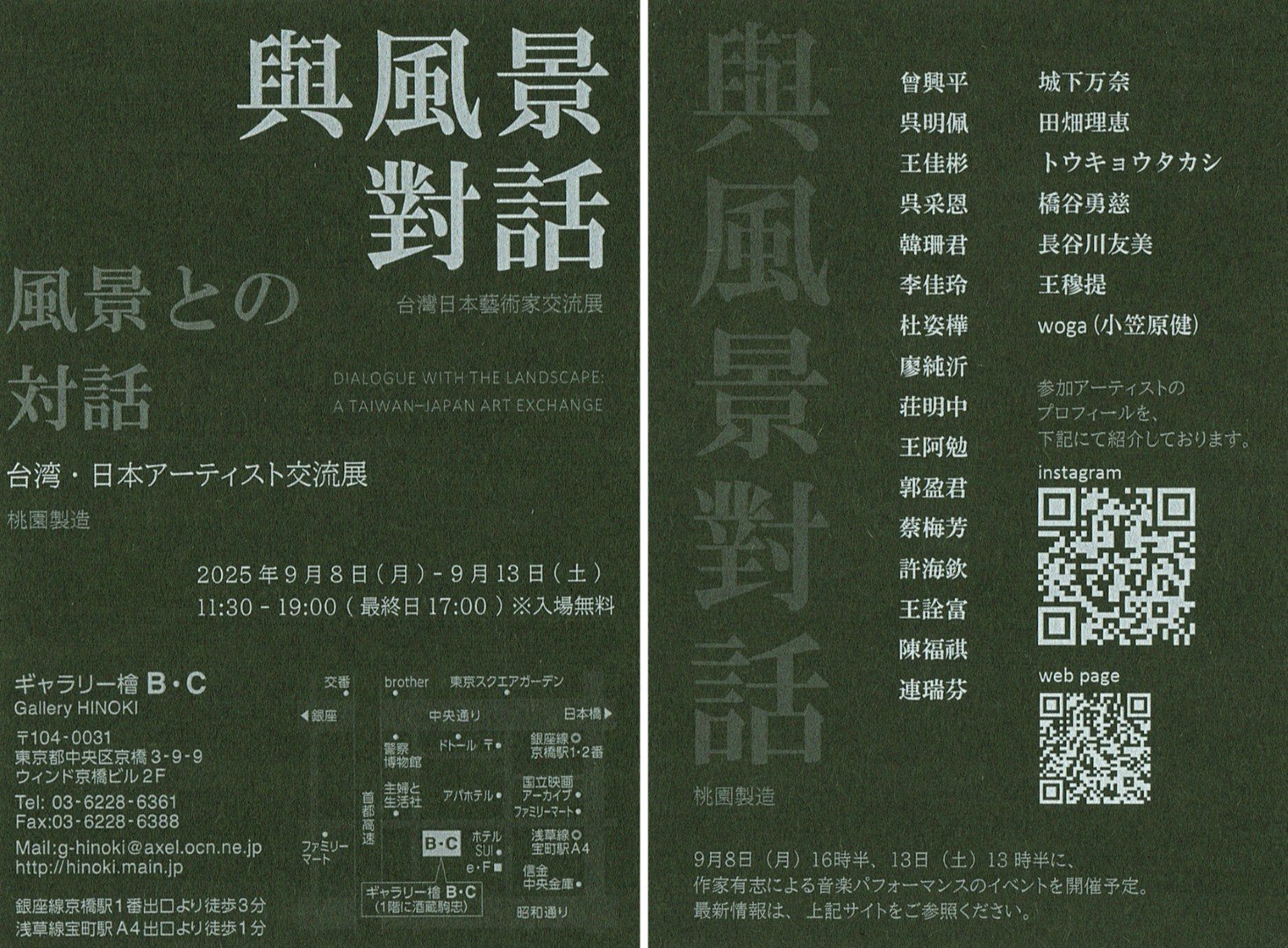
- "Dialogue with Landscapes" Taiwan-Japan Artist Exchange Exhibition, Gallery Hinoki, Tokyo, 2025.
- OPEN World Exhibition 2025, Toyosu Civic Center, Tokyo, 2025.
- Japan Yakabe Exhibition, Gallery Hinoki B and C, Tokyo, 2025.
- GENTEN New Year Art Fair, Galerie Shimon, Ginza, Tokyo, 2024 & 2025.
Curatorial Projects (Organizer/Co-organizer):
- Taiwan International Calligraphy and Painting Exhibition, Yokohama, 2023.
- Love and Peace Art Exhibition, Yokohama, 2023.
- Gorgeous Reality - Taiwan New Art Exhibition (Selected for Yokohama Triennale Support Program), Yokohama, 2017.
- Blue Asia Exhibition, Ichikawa, Chiba, 2017.
- Taiwan Modern Art Exhibition, Machida, Tokyo, 2016.
- Taiwan Iida-Shimoina Modern Art and Culture Exchange Exhibition, Nagano, 2014.
Art Critiques, Album Designs, & Joint Publications:
Authored reviews for various exhibitions and artists. Designed catalogs such as Taiwan Modern Art Top 100 Masters: Liao Yi-Ming Philosophical Poetry, Calligraphy, and Painting Collection (2024). Featured in Japan's Hall of Asian Art Fine Arts Yearbook Special Edition (2013).
Digital Museum Database Projects:
Led the development of independent digital museum databases for over 2,000 artists, including notable figures such as Japanese Living National Treasure successor Mitsuhiko Okura, Li Chi-Mao, Au Ho-Nien, Tu Chung-Kao, and many other leading contemporary and traditional artists across Taiwan, Japan, and China.
Cultural Exchange:
Has engaged in dozens of cultural exchange programs, historical site visits, and local cultural studies in France, Japan, and China.