台灣首位日本國立新美術館個展-王穆提續寫NAU前衛傳奇
日本東京訊/ 國際藝術專題採訪組
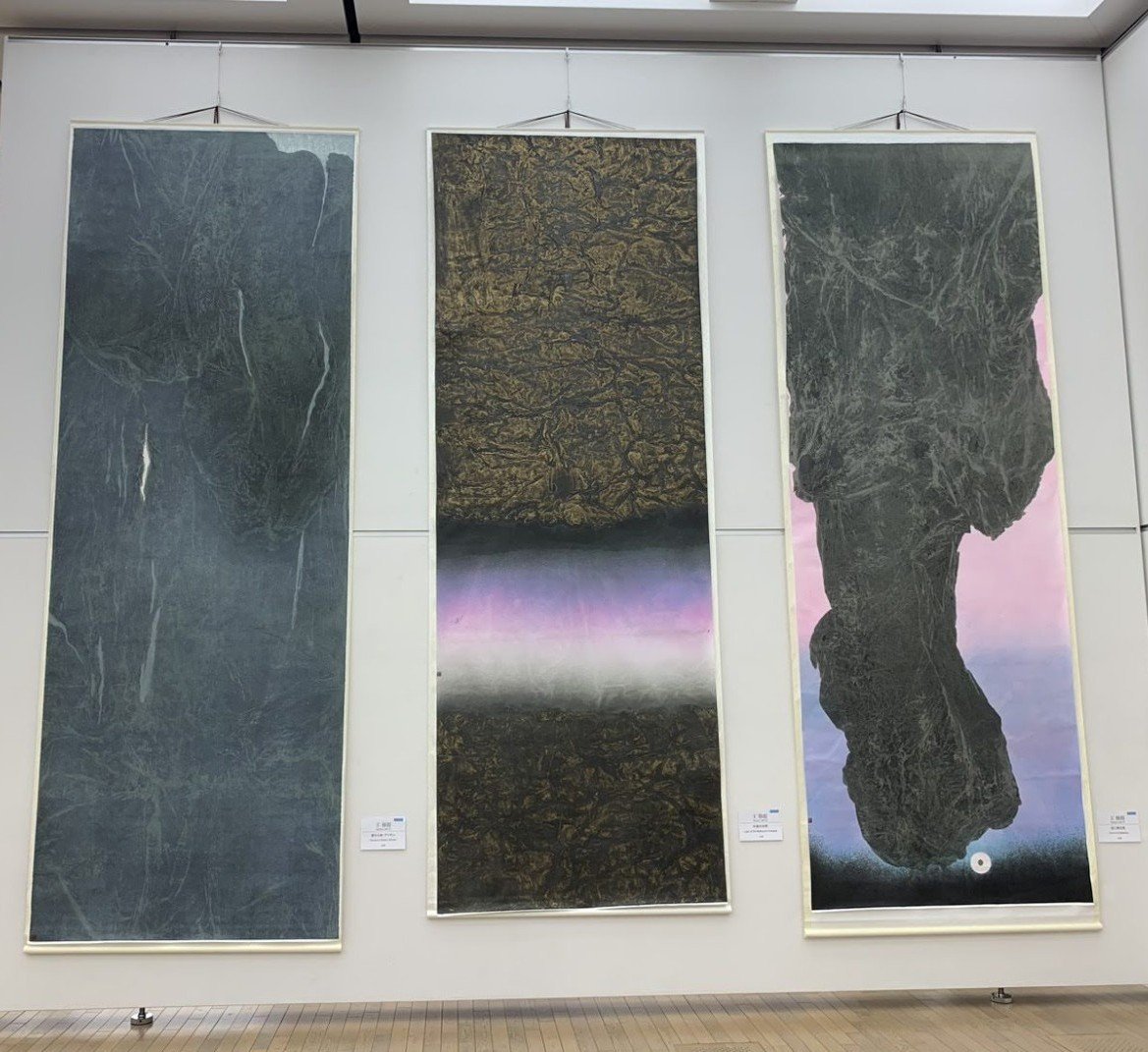
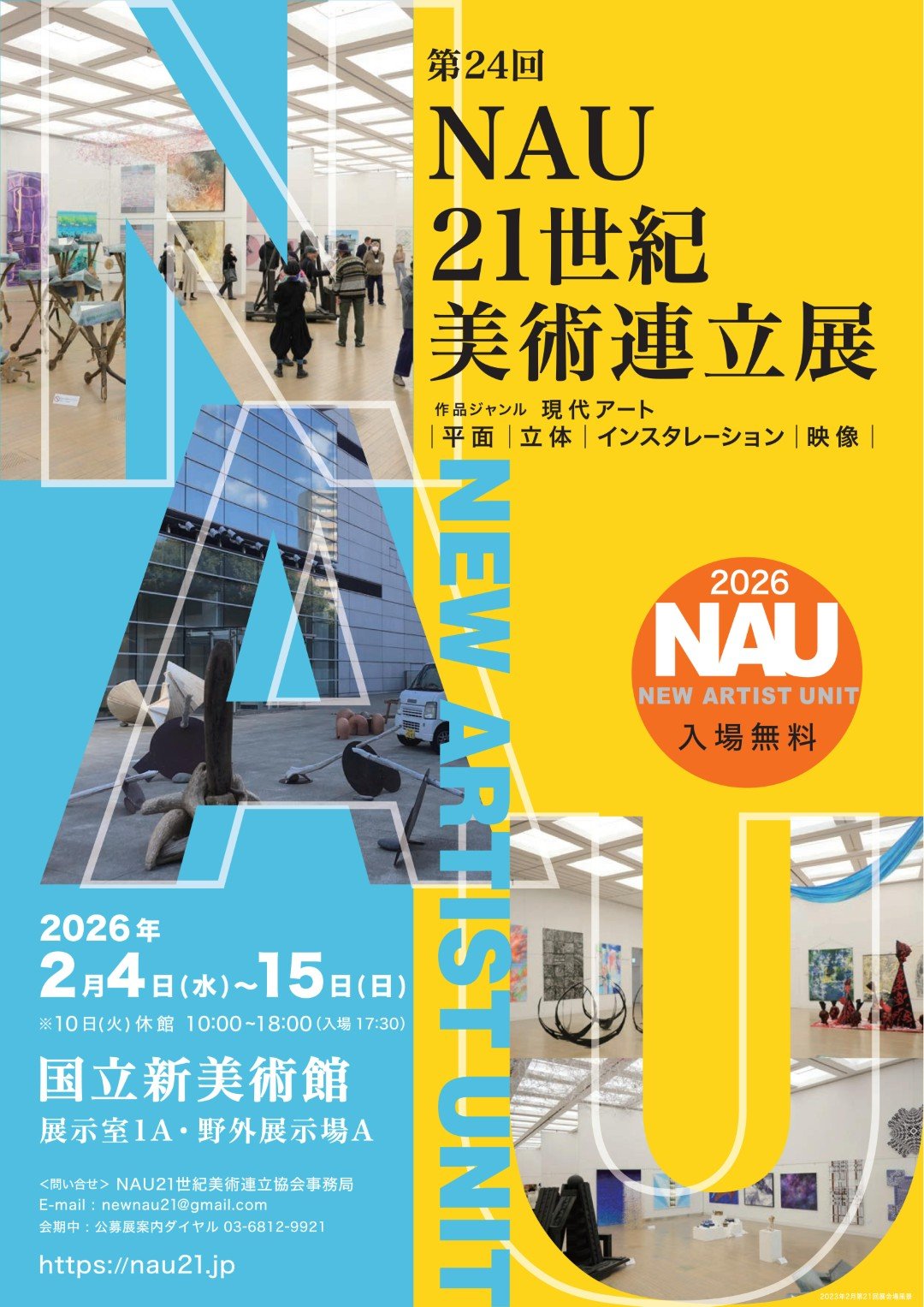
2026 年2月4日至15日,日本國立新美術館迎來一項對台灣藝術創作領域具有指標性與學術意義的重要藝術事件。台灣藝術家 王穆提(WANG MUTI) 受邀參與 《第24回 NAU21 世紀美術連立展》,並經NAU運營委員會全體委員一致決議,獲得獨立策展空間,以「展中個展」形式完整呈現其創作,成為首位於日本國立新美術館(The National Art Center, Tokyo)以此規格舉辦個人展覽的台灣藝術家。
此一安排在日本大型展體系中極為罕見,代表藝術家於創作成熟度、學術完成度與空間駕馭能力上,獲得日本主流藝術組織的高度專業肯定。該展出不僅為藝術家個人創作歷程的重要里程碑,同時也被視為台灣當代藝術首次於日本國立美術館體系內,以完整策展尺度建立文化主體座標的重要案例。
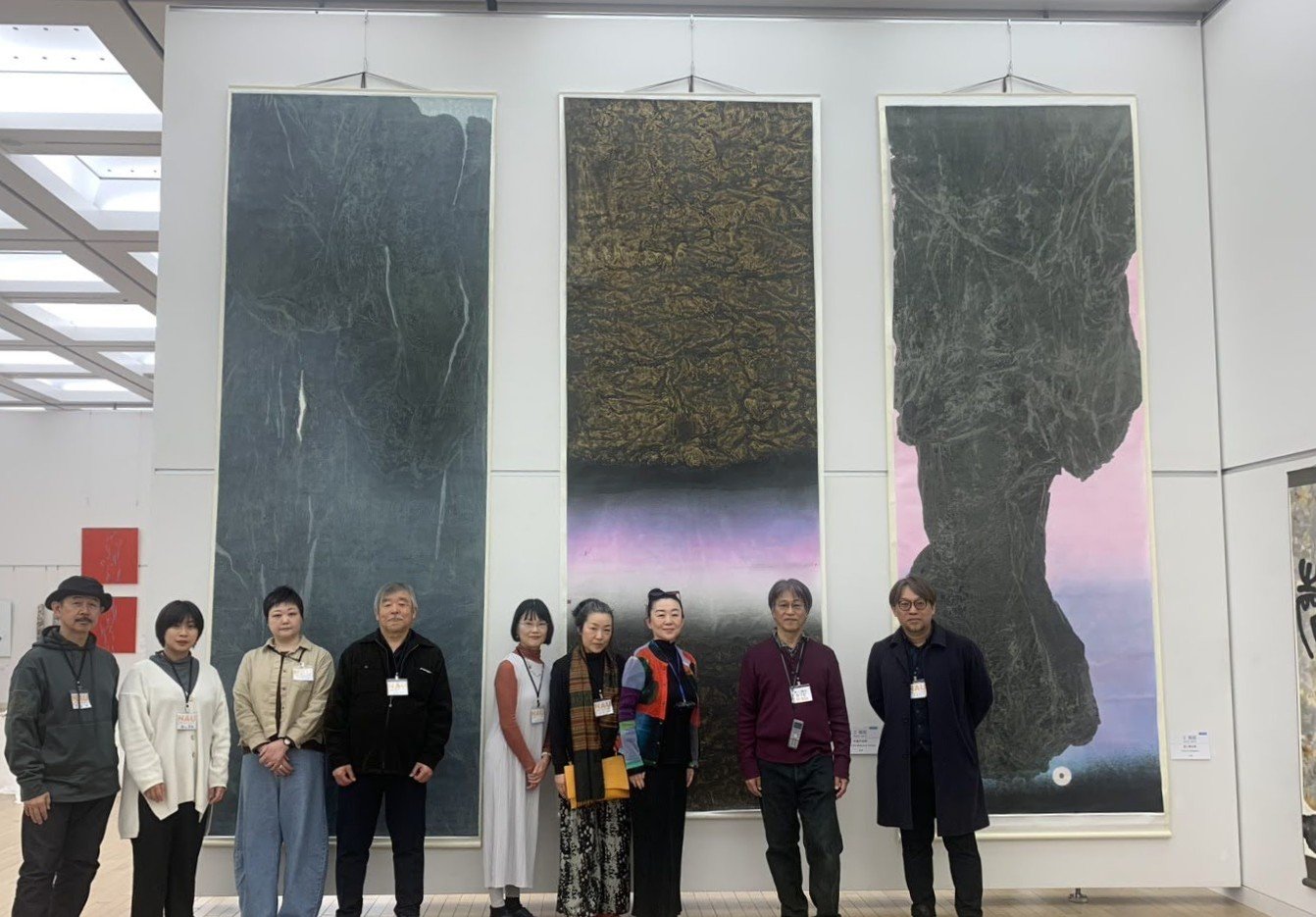
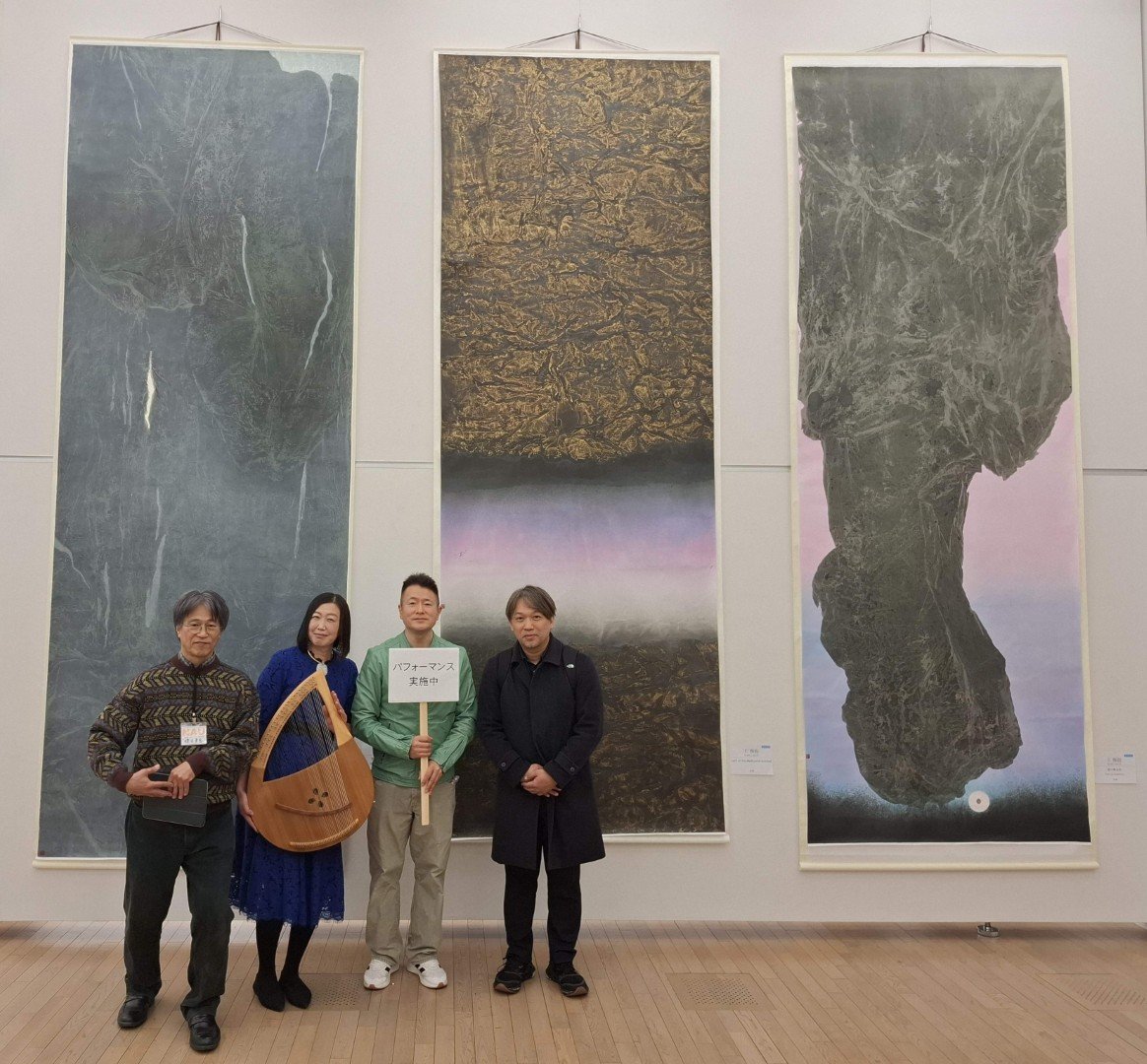
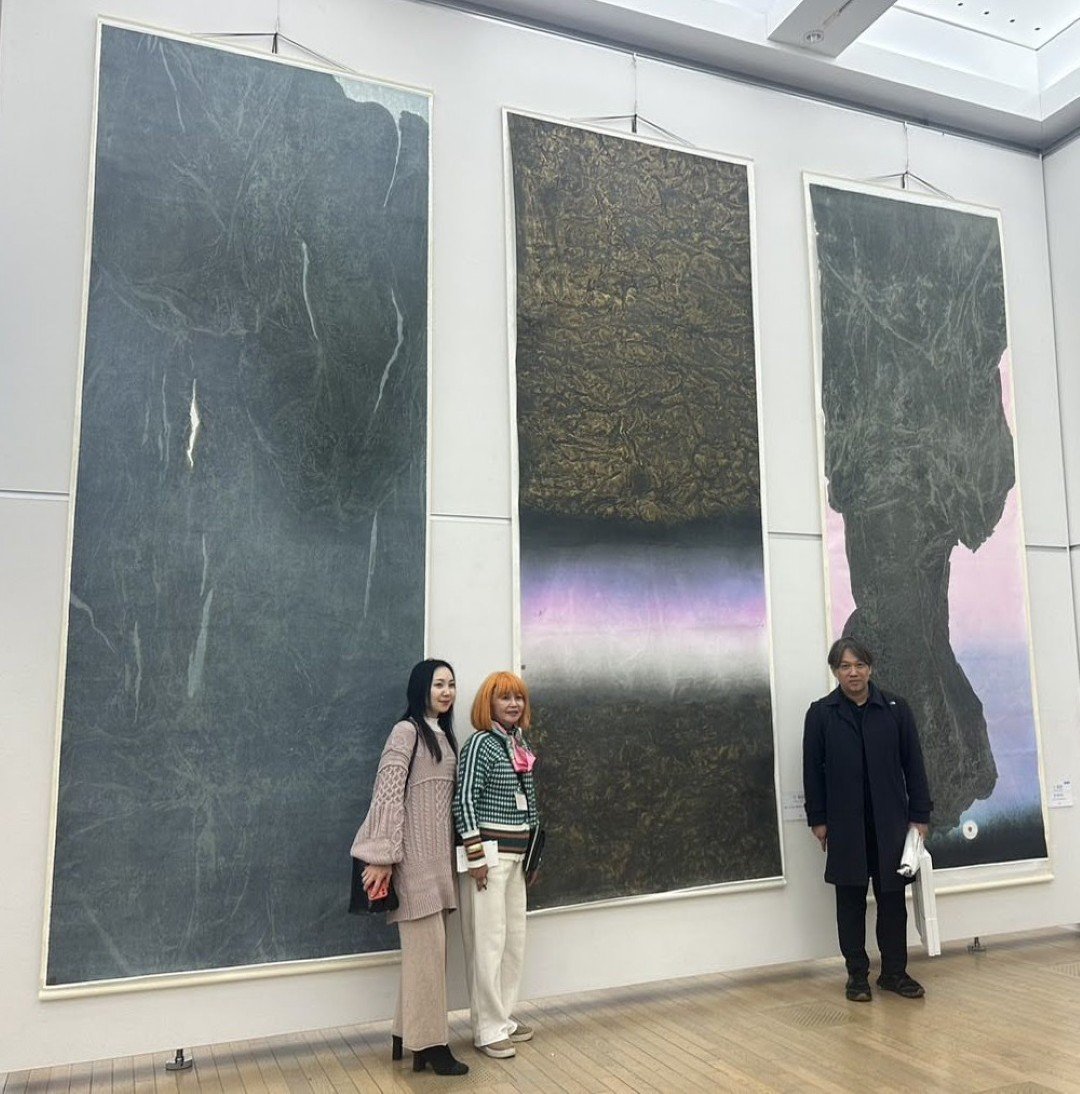
國立新美術館為日本最高等級的國立美術館,與紐約MOMA、大都會博物館、法國大皇宮、英國泰特美術館皆屬同等級之國際美術館,其空間尺度與象徵性常被視為日本當代藝術的重要門戶。此次王穆提於館內展示室 1A 展出近四公尺高的巨幅作品——〈聖境・阿里山〉、〈中道之光〉、〈空中之色〉,以完整世界觀構成一個高度統攝空間的展覽思維表現手法,於眾多國際參展作品中形成鮮明對話。
日本藝術界的專業回應
NAU21世紀連立展成員來自多個日本重要藝術團體,包括日本墨人會(森田子龍、井上有一創立的現代書法團體)、太平洋美術會(日本第一個藝術團體、有120年以上的歷史)、日法現代美術會(Salon Blanc)、二紀會、每日書道會(日本最大書法團體)、一陽會、自由美術會、一墨會、CAF.N等,其成員多為各團體之評審、核心藝術家或資深創作者。
王穆提作為台灣藝術家於此專業結構中獲得獨立策展的個人展示空間,具備被日本藝術圈專業學術與實力指標肯定之意義,同時王穆提又獲得24回NAU21世紀連立展的最高賞:未來賞,未來可在日本國立新美術館展示三面牆面的作品,等於是獲得如上團體的肯定與支持。
歷年得主皆為國際重要美術館與財團重要收藏之藝術家,如韓國國會議事堂、現代集團、三星 (SAMSUNG)集團、韓國通用汽車 (General Motors Korea)、韓國賓士 (Benz Korea)、日本銳跑 (Reebok Japan)、樂天 (Lotte)與日本各大美術館、畫廊、美國紐約、歐洲如法國、波蘭等各大美術館、畫廊代理收藏等。
巨幅創作直面國際場域
國立新美術館單一展廳挑高逾五公尺,對作品的物理量感與精神張力提出極高要求。王穆提此次展出作品高度皆逼近 400 公分,媒材融合宣紙、水墨與壓克力顏料,成功回應場域尺度,展現高度完成度與當代性。
其中,〈聖境・阿里山〉 以台灣地景為精神起點,透過高度抽象的墨色層次,轉化為具普世性的崇高意象;〈中道之光〉 則以嚴謹結構呈現佛教龍樹菩薩中觀哲學「中道」思想,成為展覽的精神核心,〈空中之色〉 則是探索現象界物質與宇宙論的空性視覺張力。
NAU 前衛系譜中的台灣座標
王穆提所屬的日本 NAU(New Artist Unit),其歷史可追溯至 1960 年代日本「具體美術」、「新達達」運動,是日本戰後前衛藝術的重要系譜之一。NAU 現今以「連立(Renritsu)」為核心理念,強調藝術家在保持高度個體性與不分流派的前提下並存共立。
同時也是NAU台灣首位成員的王穆提,並未模仿日本前衛形式,而是帶入結合東方哲學、當代抽象與跨媒材實驗的創作語言,為該組織注入新的亞洲視角,也象徵台灣當代藝術正式進入日本主流前衛藝術體系的核心視野。
台灣藝術家的國際里程碑
此次於日本國立新美術館的展中個展,不僅是王穆提個人創作歷程的重要里程碑,也被視為台灣當代藝術在國際重要美術館體系中,以完整策展尺度建立文化座標的平行視野與關鍵案例。
透過來自台灣的地景記憶、哲學思考與當代藝術語言,王穆提在東京六本木建構了一個清晰而自信的藝術現場,展現台灣藝術家在全球當代藝術語境中的主體性與可能性。
展覽資訊:
- 藝術家:王穆提 WANG MUTI
- 展出形式:展中個展(日本第24回 NAU21世紀美術連立展,獨立策展空間)
- 地點:日本國立新美術館 展示室 1A(第九區)
- 展期:2026 年2月4日至15日
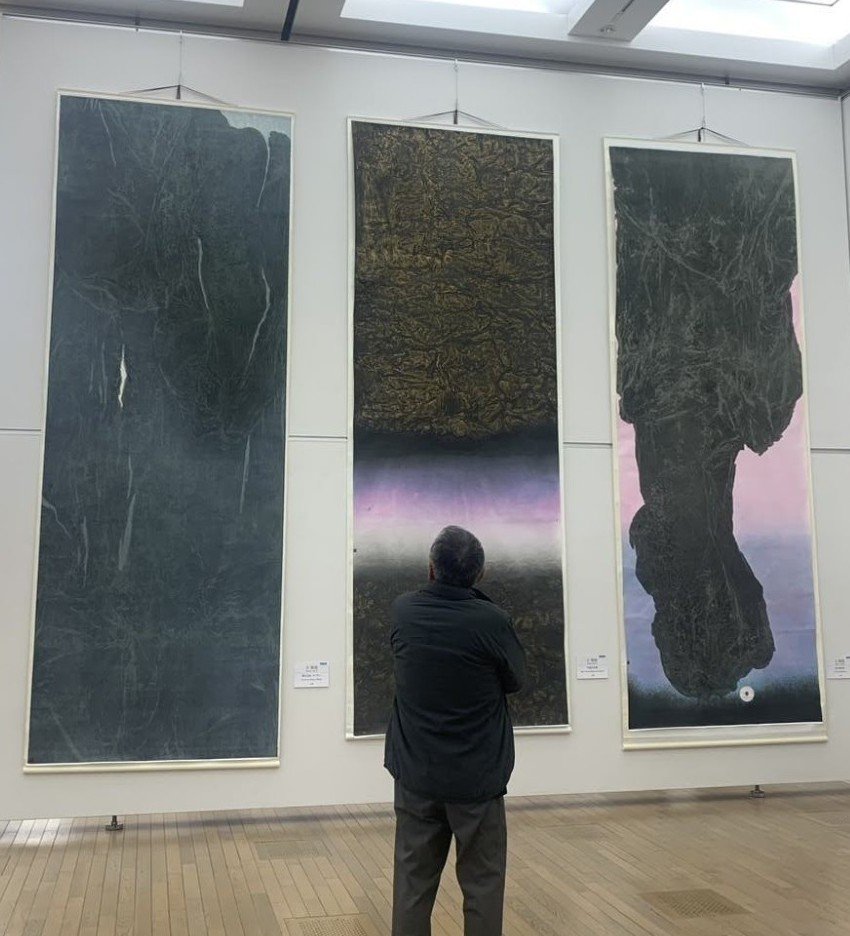
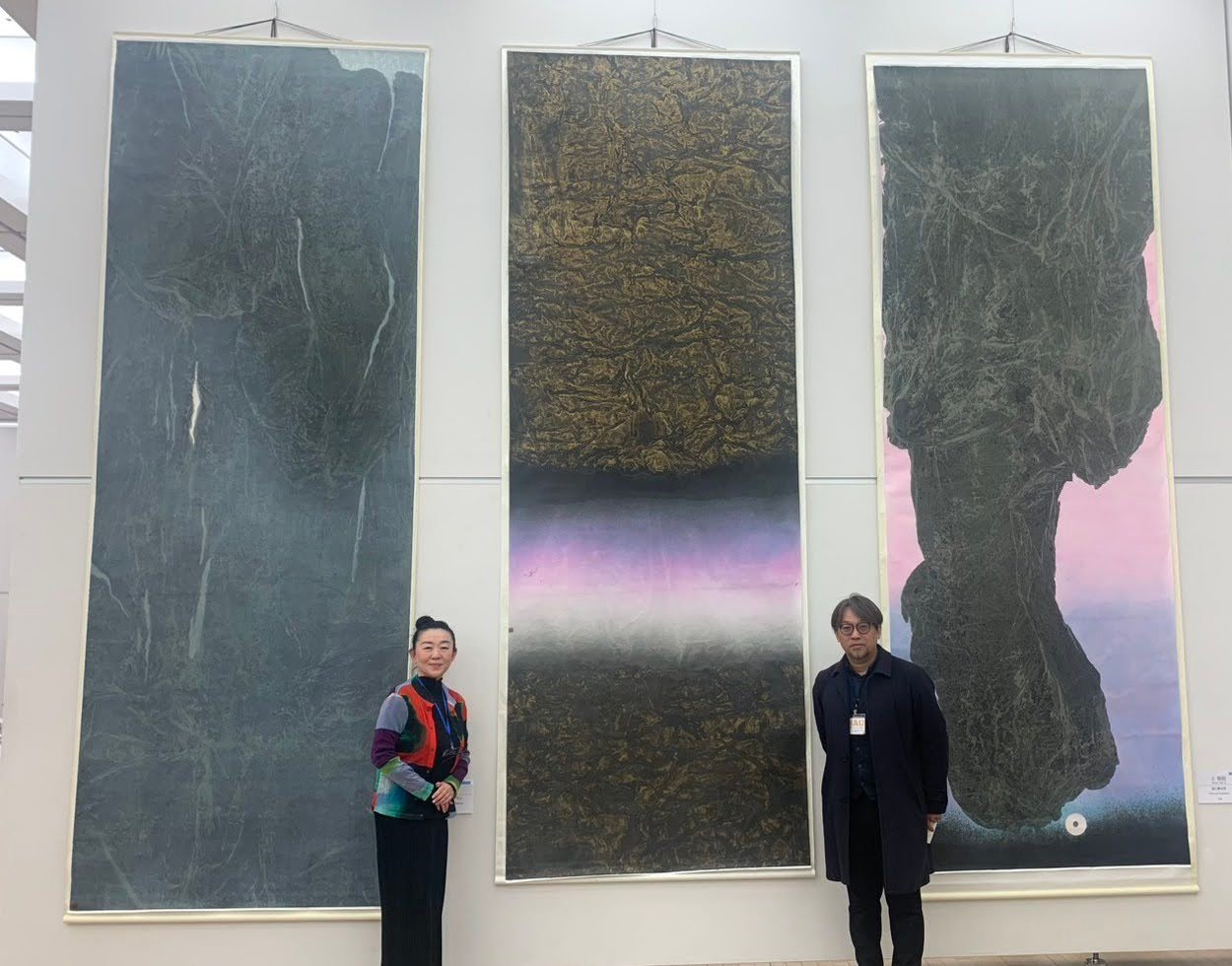
這次由於是在國立新美術館的個人空間展示模式,所以特別準備長度幾乎高達四公尺、寬度在138-142公分的現代水墨畫作品。
作品由左至右:
一、作品名稱:〈聖境・阿里山〉
作品規格:寬度142x長度399cm
媒材:大畫仙紙(小津和紙出品)、水墨、壓克力顏料
二、作品名稱:〈Light of the Madhyamā-pratipad 〉
作品規格:寬度 138 x長度 390 cm
媒材:宣紙、水墨、壓克力顏料
三、作品名稱:〈空中之色 〉
作品規格:寬度139 x 長度 390cm
媒材:宣紙、水墨、壓克力顏料
這三件王穆提日本第二十四回NAU美術連立展的作品,展現強烈的「當代水墨」與「東方抽象」風格。其跳脫傳統山水筆墨,轉以肌理、光影及空間感對話。
一、蒼翠的紀念碑:《聖境・阿里山》
此作為巨大當代水墨裝置繪畫(142×399公分),於大畫仙紙上以水墨、壓克力重塑阿里山意象,強調「境」之提煉而非「景」之描繪。
垂直的在場:巨幅卷軸超越室內展示極限,需仰望觀之,如面高牆或神木,具建築性與崇高感。其絕對垂直性模擬攀登或墜落視覺,強化自然不可掌控性。
紙的呼吸:選用小津大畫仙紙,形成岩石或老樹皮般褶皺肌理,保留紙張呼吸感。水墨為底,壓克力為表,兩者交融模擬森林複雜生態。
時間的顏色:摒棄明信片式色彩,取孔雀石、青銅鏽般「蒼古之綠」,象徵時間與沈寂。白色線條如裂紋或閃電,打破沈悶,引入光線與動勢。
微觀與宏觀:遠觀如巨碑山水,近觀見微觀肌理,如一沙一世界。去地標化處理將阿里山昇華為普遍聖境符號。
藝術定位:屬「物質性水墨」,強調媒材物性,亦有抽象表現主義回響,情感內斂積澱。
二、裂隙中的永恆:《Light of the Madhyamā-pratipad》
此作(138×390公分)為三段式結構,上下沈重物質積累,中為紫羅蘭色光暈裂隙,直指佛教「中道」哲學。
離兩邊而行中道
在龍樹菩薩的《中論》中,中道旨在破除「有」與「無」、「生」與「滅」的執著。在王穆提的畫中,上下兩端巨大的黑色塊面可以被解讀為「兩邊」(Duality)——或許是生與死,或許是過去與未來,或許是物質與慾望。
這些「兩邊」是沈重的、固化的、充滿糾葛的(透過複雜的金色肌理表現)。而中間的光,則是「中道」。它不是兩者的平均值,而是兩者之間的「空隙」。正如老子所言「知其白,守其黑」,藝術家在黑色的包圍中守住了那一抹白。這道光是不偏不倚的覺知,它存在於矛盾的縫隙中,既不落入虛無,也不執著於實有。
裂隙作為啟示
海德格爾(Heidegger)曾論及「真理的敞開」(Aletheia)。《中道之光》中的這道橫向裂隙,正是一種「敞開」。它像是在堅固的現實牆壁上撕開了一道口子,讓真理之光得以透射進來。
這暗示了現代人的生存狀態:我們被夾在巨大的社會機制、物質慾望與歷史重負之間(上下的黑金岩層),感到窒息與壓抑。而心靈的自由(中道之光),往往就存在於那些稍縱即逝的縫隙與當下之中。
垂直的崇高:極致垂直體量連通天地,具圖騰柱般在場感。三明治式結構展現上下重壓與中間支撐之張力,映射中道對極端對立之調和。
肌理的沈積:宣紙如皮膚般具體積感,褶皺如地質岩層。黑墨與壓克力為底,金色顏料提亮,亦如礦脈或廢墟餘燼,隱喻黑夜中蘊藏覺悟種子。
光譜的臨界:中央紫羅蘭色光帶為靈魂所在,具自發光效果,如切開混沌之激光。邊緣模糊暗示中道之動態過渡,為觀者提供視覺與精神出口。
哲學互文:上下黑塊象徵「兩邊」(生死、物質),中間光帶即「中道」空隙,亦如海德格爾之「真理敞開」。
藝術坐標:形式呼應紐曼「拉鍊」與羅斯科色域,屬物質派水墨探索,以物理屬性造境。
三、懸置的崇高:《空中之色》
此作(139×390公分)描繪懸浮虛空之巨大黑色有機體,藉「色即是空」語意製造視覺悖論。
紀念碑式的在場:巨幅尺寸迫使仰望,黑色團塊如迫近之牆,具重力感與崇高體驗。
肌理的鍊金術:解構傳統皴法,黑主體疑為墨與深色壓克力混合,凝重如石。
色彩的辯證:背景為粉紅至淺藍漸層,具當代氣息,襯托主體之沈重。主體為「絕對的黑」,吸光如黑洞,形成輕重、夢實對立。
標題解碼:圖文反諷,黑色巨石或為天空「本色」。演繹「色即是空」,黑色物體(色)懸浮虛空(空),肌理破碎暗示物質虛幻。
空間動力學:如馬格利特懸浮岩石,具超現實感。上下邊界處理暗示物體之巨大與延伸。
文化定位:將傳統供石轉化為崇高客體,視覺上接軌抽象表現主義,演繹輕重、瞬間永恆之辯證。
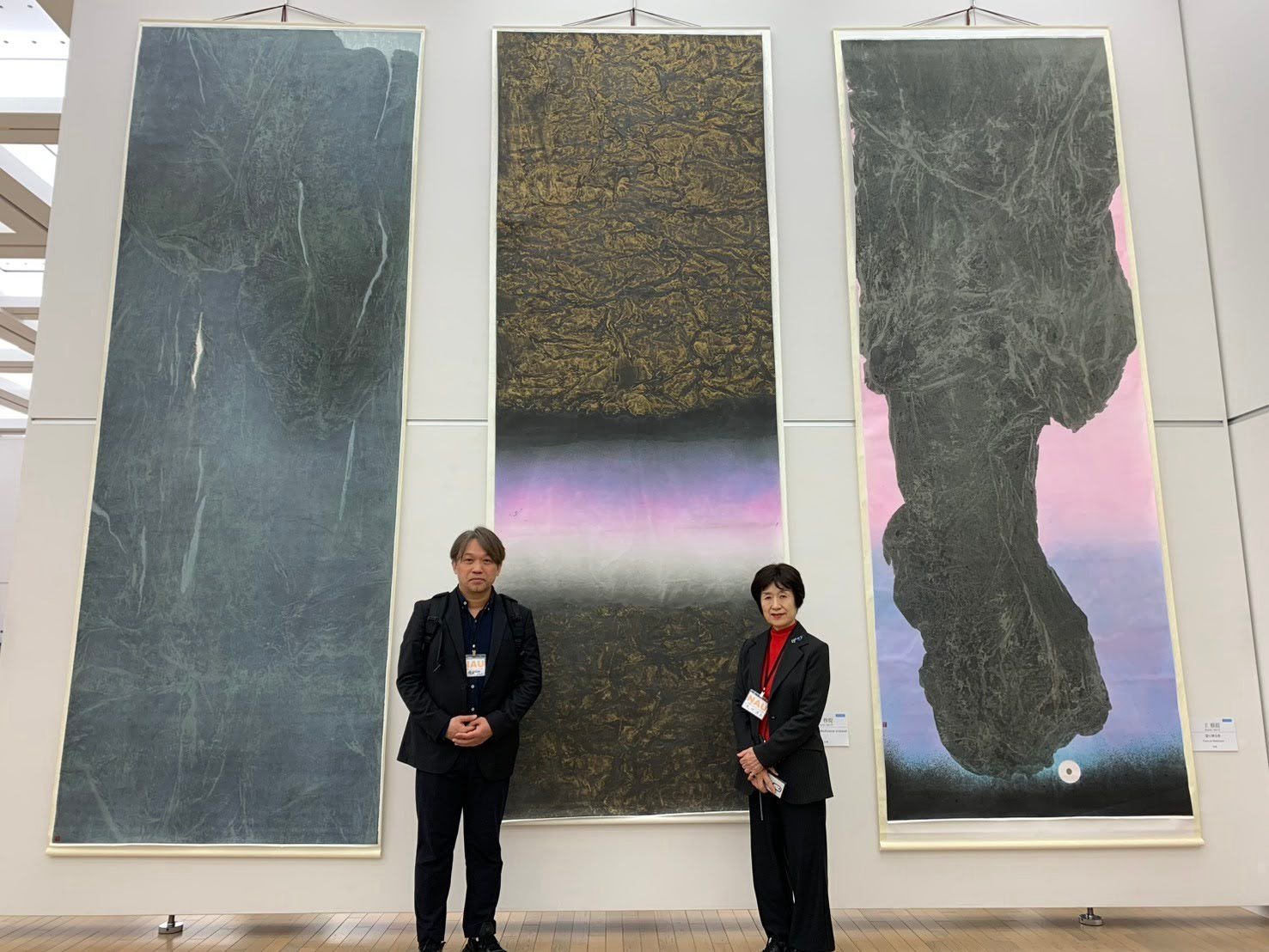
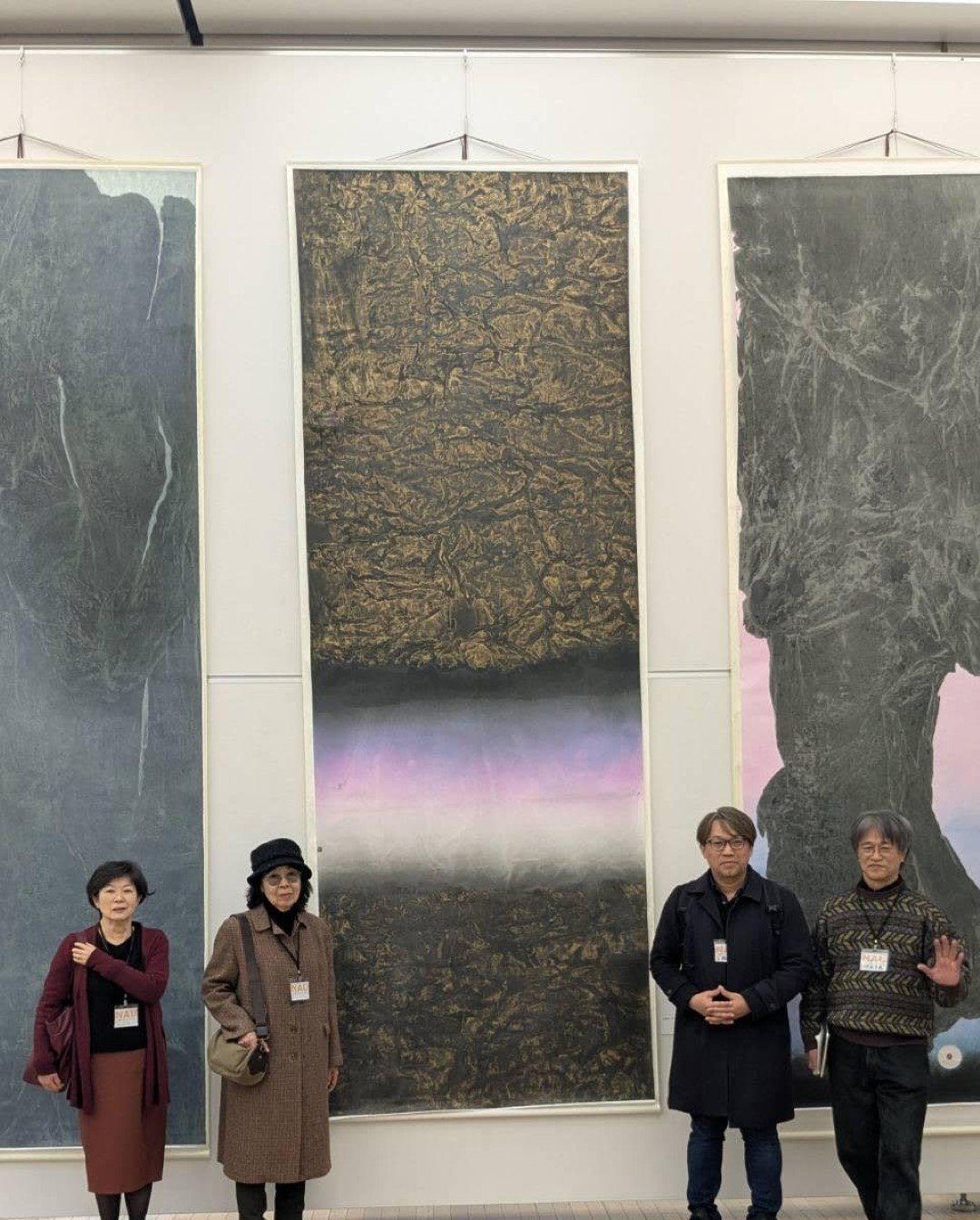
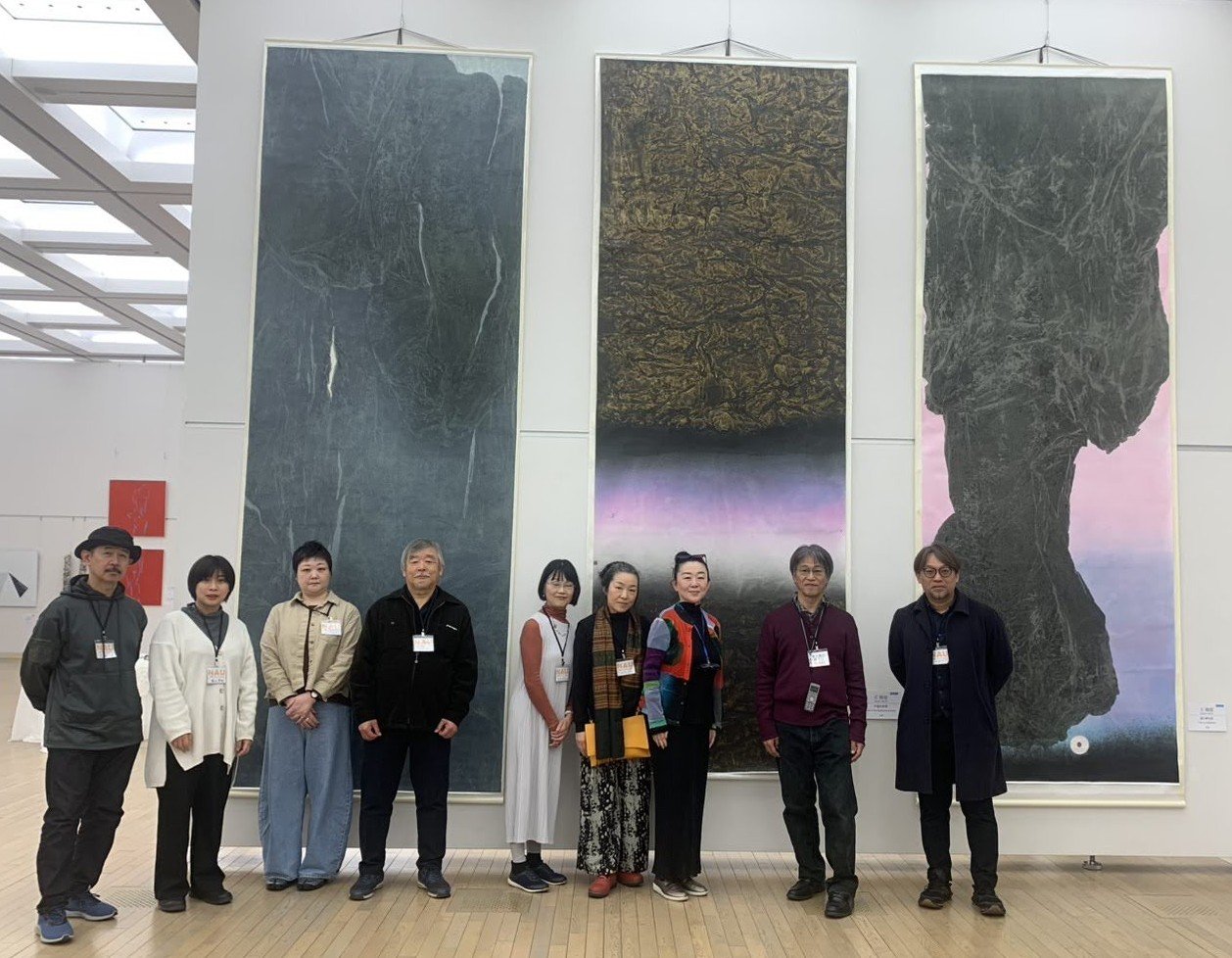
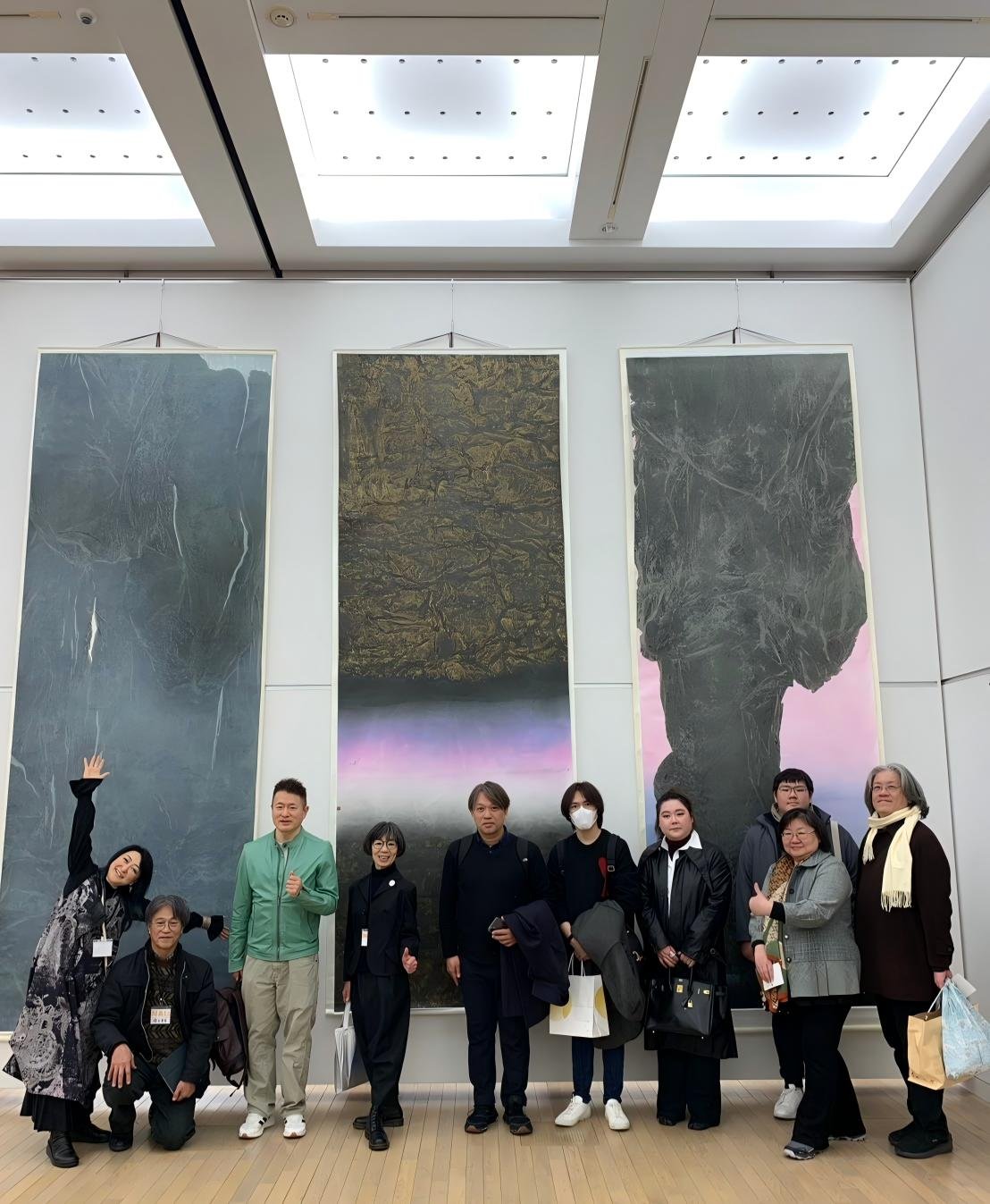
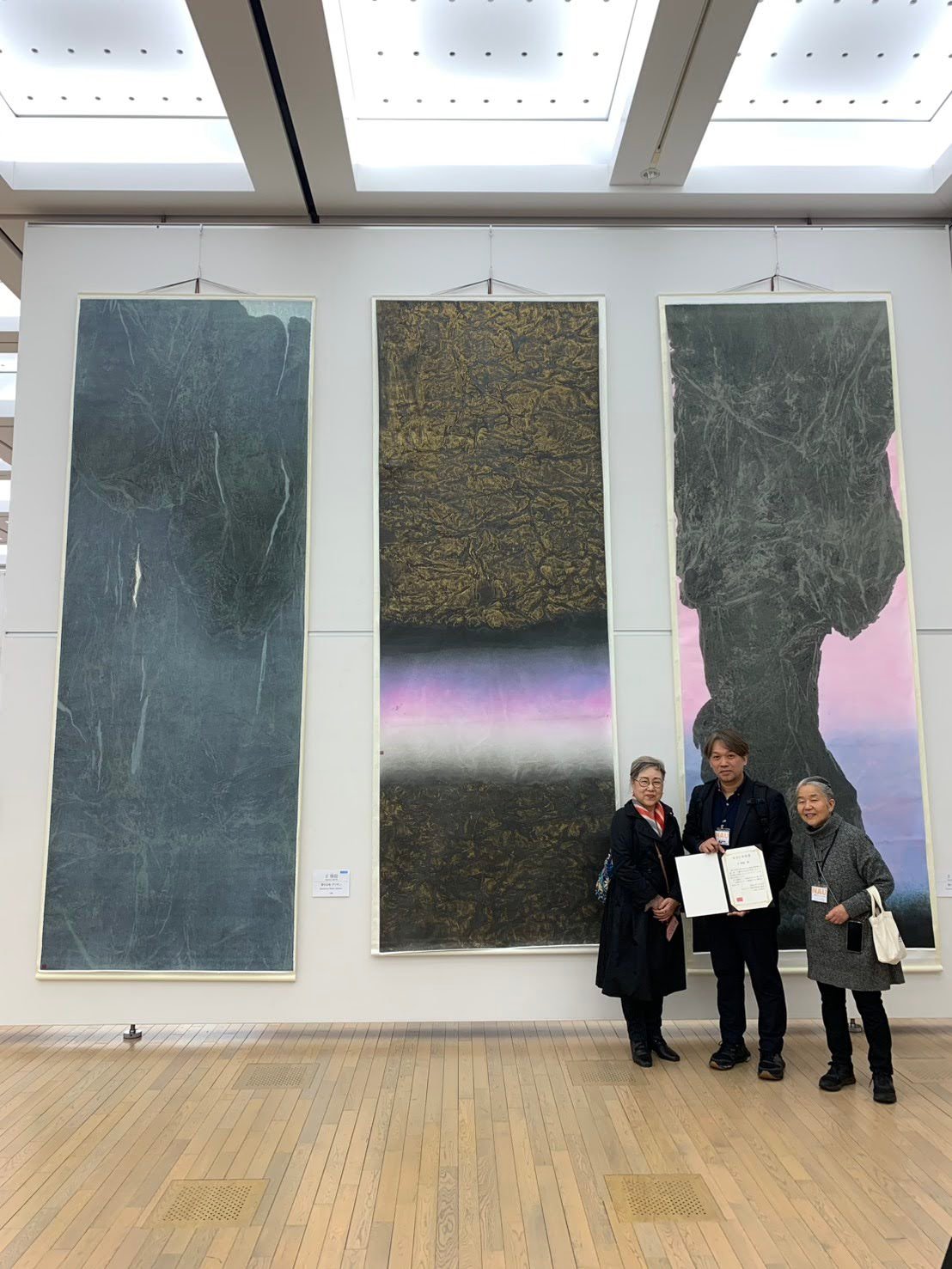
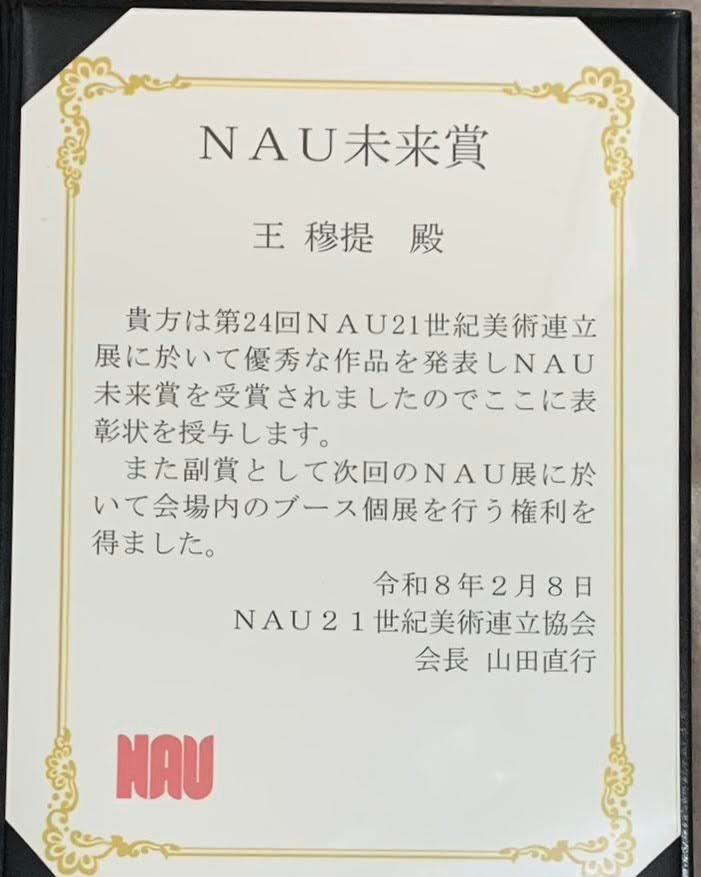
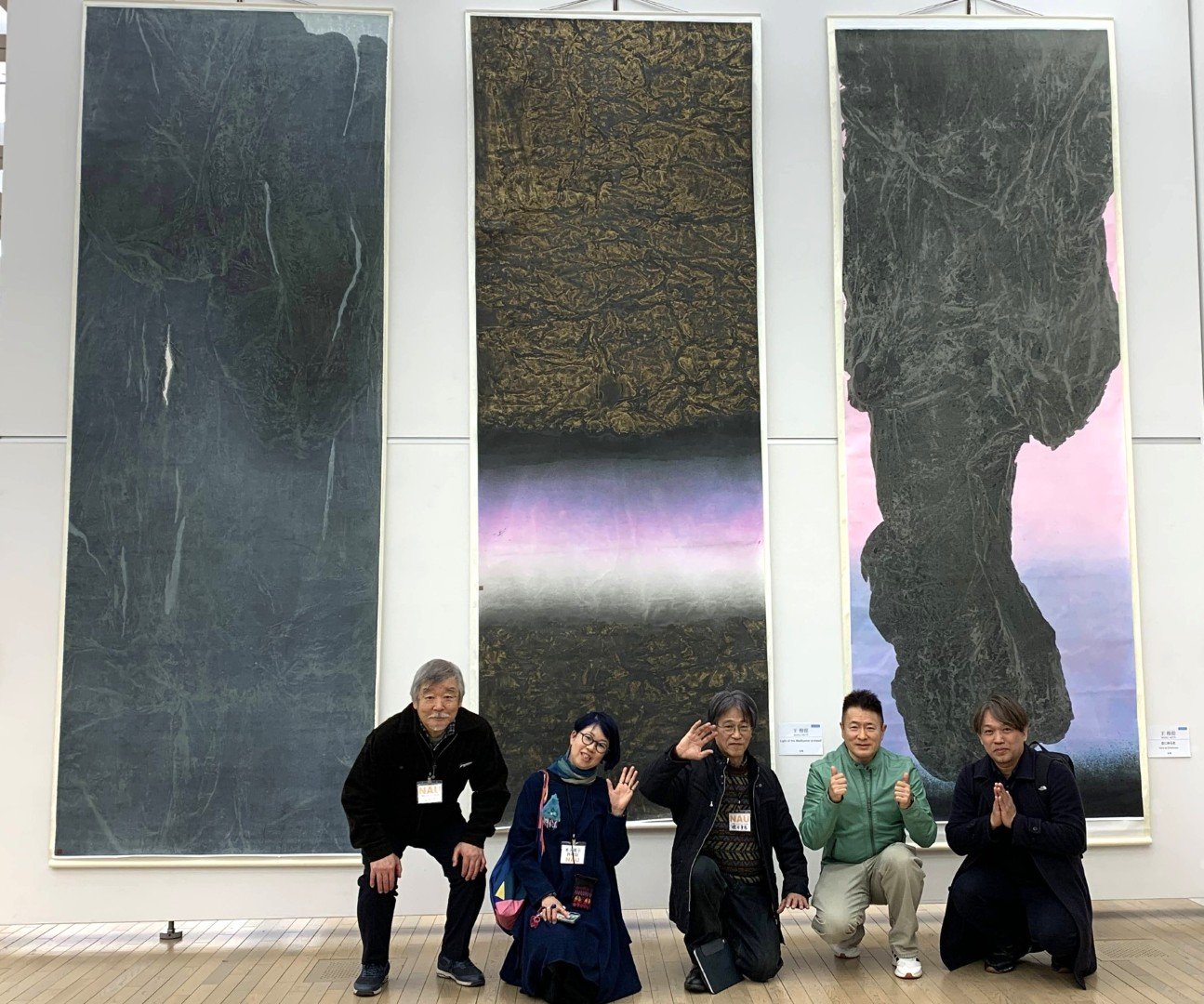
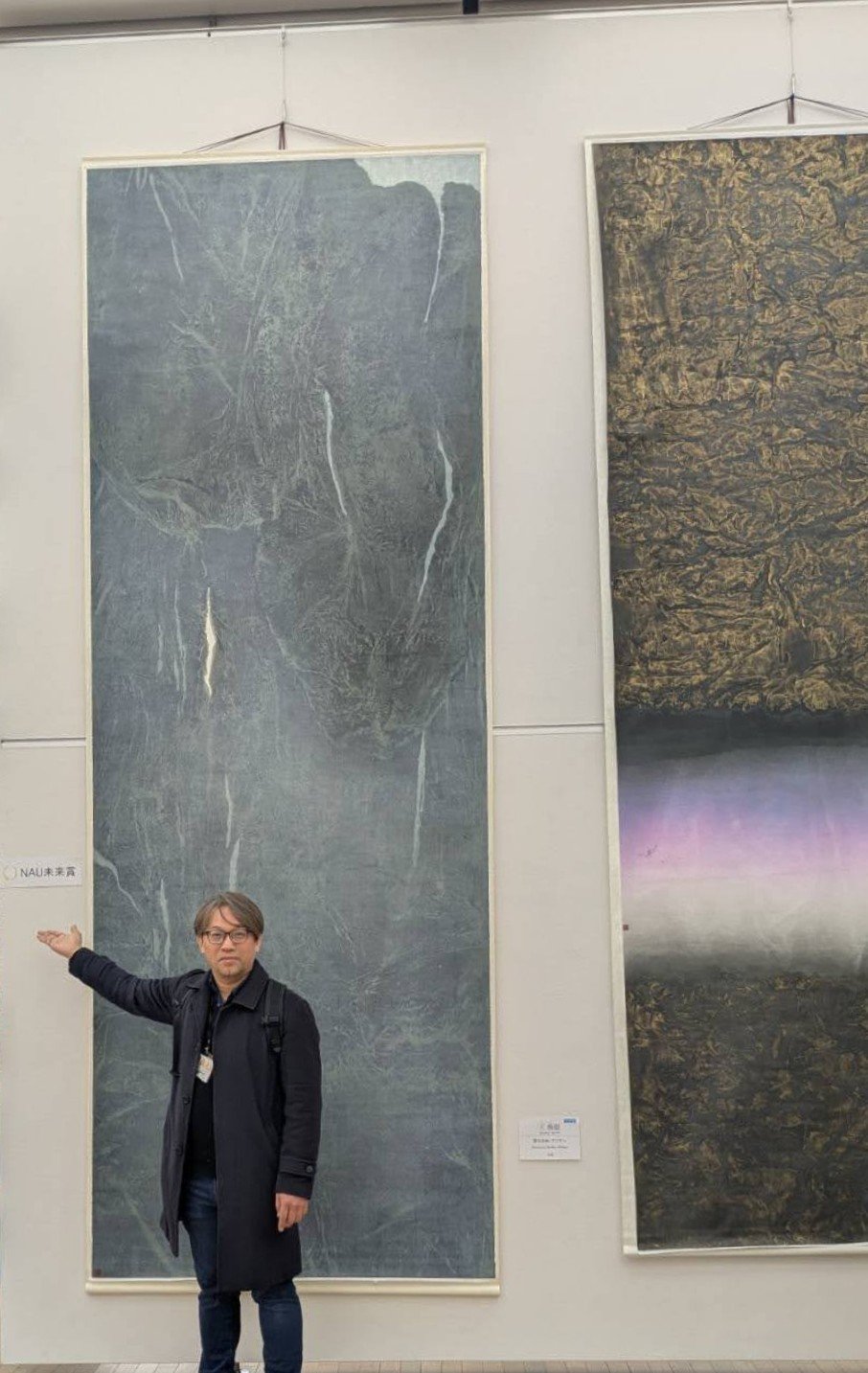
【未来賞】受賞式・ギャラリートーク【第24回NAU21世紀美術連立展】未来賞:王 穆提(ワン・ムーティー)、 岡山 正規(おかやま まさのり)
另外一位獲得未來賞的藝術家:
岡山正規(Okayama Masaki):
「日本京都藝術大學美術學部大學院構想設計研究所美術專攻。曾向日本哲學家梅原猛教授學習哲學,向依田義賢教授(黑澤明導演的編劇)學習劇本學,向關根勢之助、三尾公三教授學習製作。作品為克拉科夫國立美術館(波蘭)、華沙現代藝術中心(波蘭)等收藏。從系統形象論轉向作品存在論,通過「構想建築(Conception-Architecture)」的方法展開藝術實驗。作品探討繪畫、現代藝術、抽象藝術及肖像藝術的本體論與認知關係。」
媒體報導:
中央社
歷史性的座標:台灣藝術家王穆提的日本國立新美術館個展
2026 年初春,東京六本木。
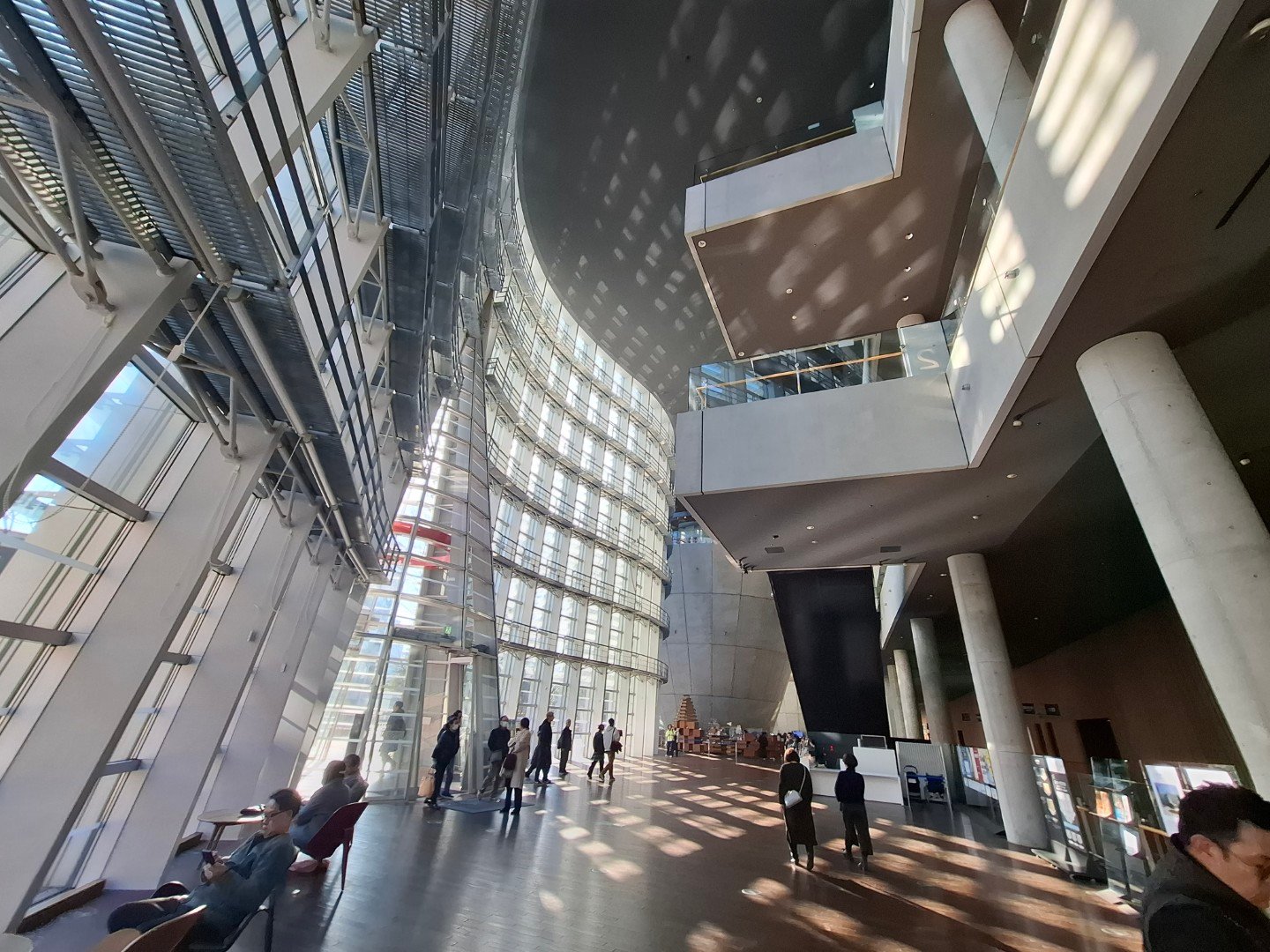
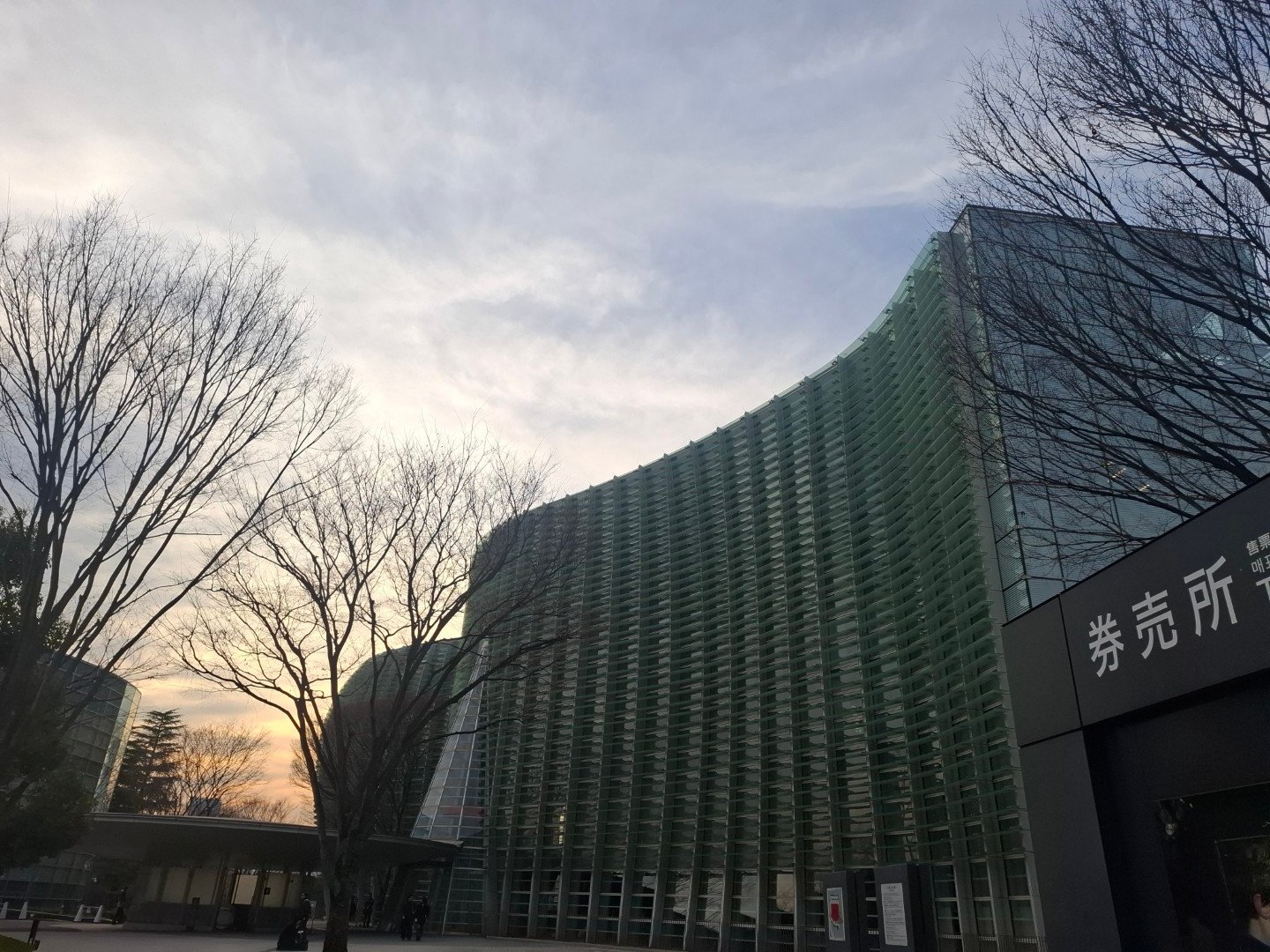
當冬日的陽光穿透 國立新美術館(The National Art Center, Tokyo, NACT) 那標誌性的波浪狀玻璃帷幕,灑落在巨大的倒錐形混凝土柱上時,這座日本藝術的最高殿堂迎來了一個歷史性的時刻。
在備受矚目的 《第24回 NAU21世紀美術連立展》 中,來自台灣的藝術家 王穆提(WANG MUTI) 獲邀參展。與一般參展者不同的是,他打破了大型公募展「單點展示」的慣例,獲得了 「獨立策展空間」 的特權。這標誌著他成為 「台灣首位」 在日本國立新美術館舉辦 「個展形式(Solo Exhibition within a Group Show)」 的藝術家。
這不僅僅是一次參展,這是一次 「文化主權的確立」。王穆提帶來的不是零散的畫作,而是三件高度逼近 4 公尺、構建完整世界觀的視覺鉅作——〈空中之色〉、〈聖境・阿里山〉、《中道之光》。他利用這些作品,在六本木的核心地帶,植入了一座屬於台灣當代藝術的「精神孤島」,與周遭數百件來自世界各地的作品形成強烈對話。

場域的權力學 —— 對標世界頂級美術館
要理解「台灣首位」這個頭銜的含金量,我們不能僅將國立新美術館視為一個展覽場地,而必須將其置於 「世界美術館的權力光譜」 中進行對標分析。
國立新美術館是日本戰後美術館建築史上的奇點,由日本代謝派建築大師 黑川紀章(Kisho Kurokawa) 設計。它沒有永久館藏,專注於「展示」,這種 「空之容器(Empty Vessel)」 的特性,使其在國際上與以下頂級機構並列:
1. 法國巴黎大皇宮(Grand Palais):國家級的展示櫥窗
如同巴黎大皇宮是法國舉辦 FIAC 等頂級沙龍與國家特展的門面,國立新美術館是日本舉辦國際巡迴大展(如印象派大展、草間彌生回顧展)的首選之地。它代表了日本官方對藝術「最高規格」的定義。王穆提在此獲得個展空間,等同於在巴黎大皇宮的沙龍展中獲得獨立展位,象徵著其作品質感已達 「國家級規格」。
2. 英國皇家藝術研究院(Royal Academy of Arts):藝術家主導的殿堂
日本國立新美術館承擔著日本國內重要美術團體(如日展、二科展、NAU展)最高榮譽殿堂的責任。這與英國 RA 的「夏季展」邏輯一致——它是當代藝術家證明自己 「在場(On-site)」 的最高座標。對於亞洲藝術家而言,能在此佔有一席之地,意味著進入了日本主流藝術圈的核心視野。
3. 空間的極致挑戰:日本最頂級的國立美術館
日本國立新美術館擁有單一展廳 2,000 平方公尺的巨大尺度,天花板高度達 5 公尺。這種工業級別的空間,對藝術家是殘酷的考驗。如果作品的 「物理量感(Mass)」 或 「精神張力(Tension)」 不夠強大,瞬間就會被建築的氣場吞噬。
王穆提的成就,在於他帶來的作品高度皆逼近 400 公分。這種巨大的垂直量體,如同紀念碑一般,成功「鎮壓」住了這個流動的空間,將巨大的白盒子轉化為個人的道場。
前衛的系譜 —— 日本NAU的歷史靈魂
王穆提此次展出的另一重戰略意義,在於他所選擇的組織 —— NAU(New Artist Unit)。這不是一個普通的藝術團體,它是日本戰後前衛藝術精神的當代載體。
1960年代:新達達(Neo-Dada)的狂野源頭
NAU 的靈魂源頭,可追溯至 1960 年代後半震驚世界的 「新達達組織者(Neo-Dada Organizers)」。那是一個安保鬥爭與經濟起飛並存的躁動時代。
- 吉村益信(Masunobu Yoshimura): NAU 的精神教父,反藝術的領袖。他在 1960 年代將藝術從美術館拉入新宿街頭,策劃了激進的展演。
- 篠原有司男(Ushio Shinohara): 以「拳擊繪畫」聞名紐約的前衛狂人,代表了對「行動(Action)」的推崇。
2026年:從「破壞」到「連立」
經過半世紀的演變,吉村益信的「反藝術」精神轉化為今日 NAU 的核心哲學 —— 「連立(Renritsu)」。所謂「連立」,即獨立個體在保持異質性、不妥協個人風格的前提下,於同一時空中並肩而立。這是一個不再尋求統一風格,而是容納差異的「當代藝術公社」。
王穆提的歷史定位:智性的接力
作為 NAU 台灣首位成員,王穆提的加入標誌著這個前衛團體完成了「亞洲地緣政治」的重要拼圖。
他沒有選擇模仿日本的新達達形式(如破壞或行為藝術),而是帶入了他獨特的 「智性(Intellectuality)」。作為一位身兼 「數位美術館計畫主持人」 與 「當代佛教經論編輯者」 的雙重身分者,他用深厚的觀念架構與物質實驗,回應了 NAU 前輩荒川修作(Shusaku Arakawa)的「觀念藝術」遺產——藝術不是單一媒材的展示,而是思想的容器。
微觀視界 —— 三件鉅作的深度解讀
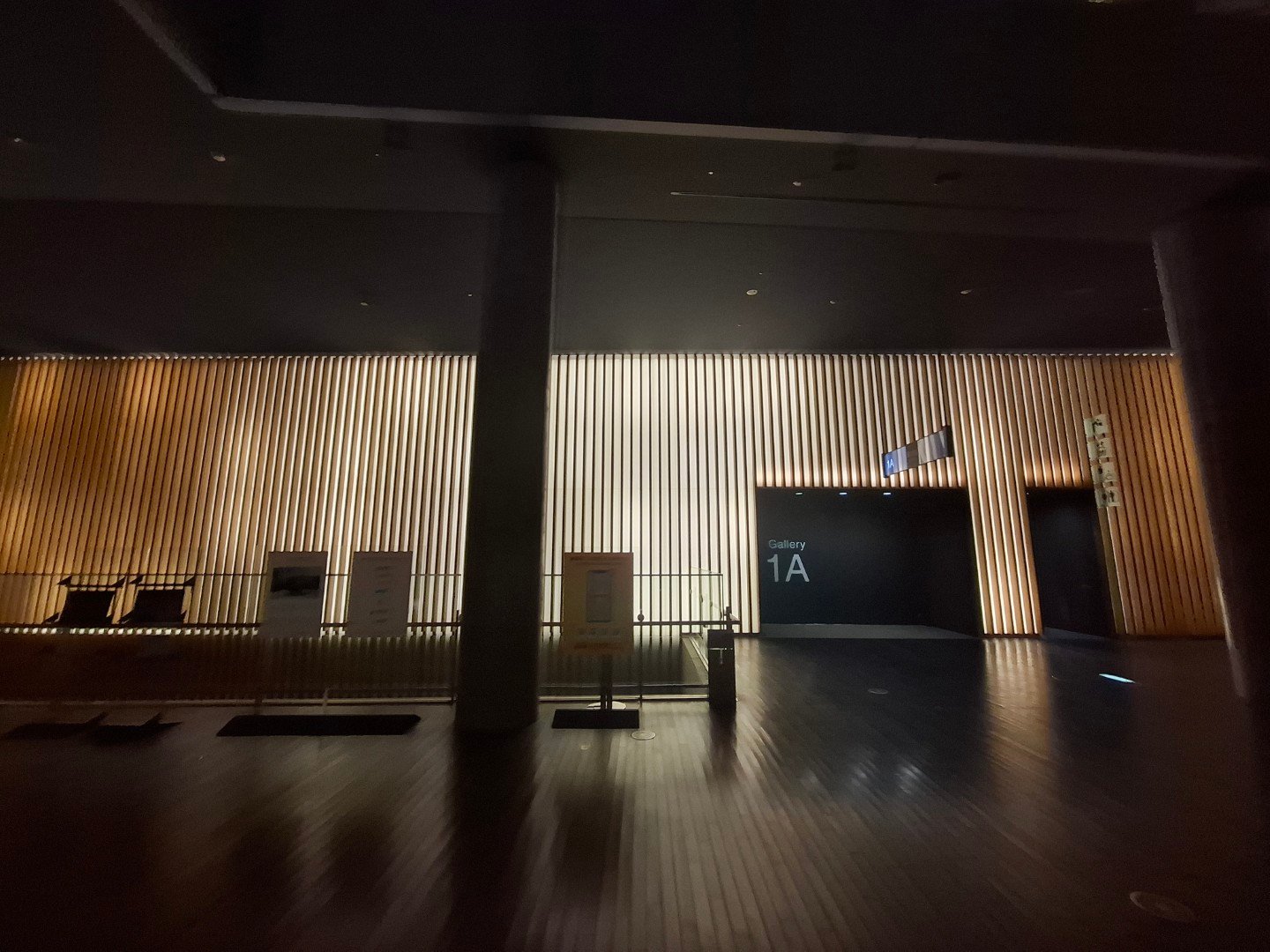
在國立新美術館展示室 1A,王穆提的三件作品構成了一個完整的敘事閉環。這些作品全部完成於 2025 年底,展現了藝術家最新的創作爆發力。這三件作品皆為近 4 公尺高的巨幅創作,展現了極強的空間統攝力。
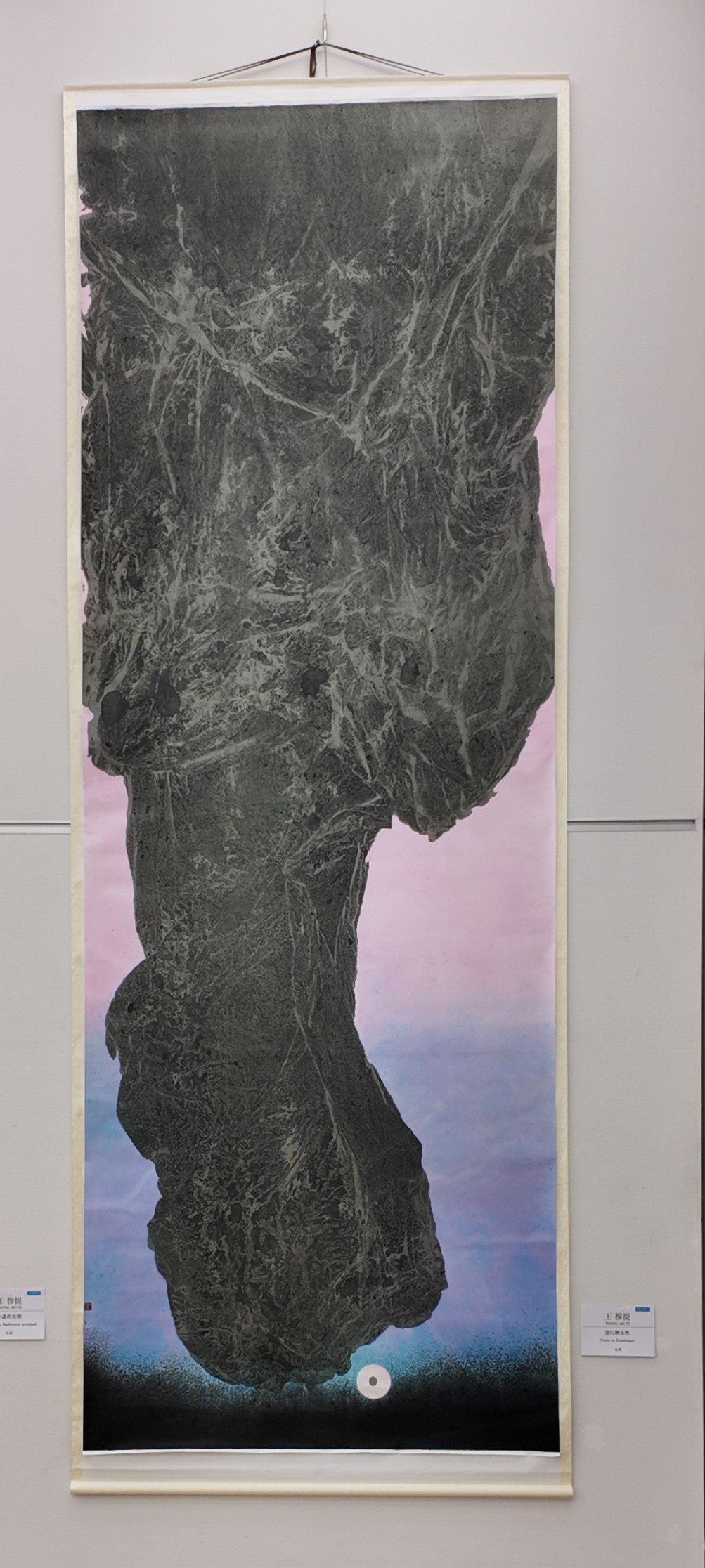
1. 〈空中之色〉—— 懸浮的重力與物質悖論
- 規格: 寬度 139 x 長度 390 cm
- 媒材: 宣紙、水墨、壓克力顏料
- 年代: 2025/12
- 這件高達 3.9 公尺的巨作,視覺衝擊力極強。畫面主體是一個巨大的、深黑色的團塊,彷彿是從地心深處挖出的岩石,又像是被燒焦的有機體 。然而,這個沈重的物體卻違背物理法則,懸浮在一個由壓克力顏料暈染出的、帶有粉紫色與淺藍色交織的背景中。
- 【深度藝評】
- 這是一場關於 「存在與虛無」 的辯證。王穆提利用水墨在宣紙上的滲透性,創造出黑色團塊沈重、粗糙的肌理,象徵著現實世界的 「重力」 與 「業力」。而背景則創造出輕盈、甚至帶有虛擬感的空性。這精準演繹了《大般若經》中「色不異空」的當代視覺版——最沈重的物質,其實漂浮在最輕盈的空性之中。
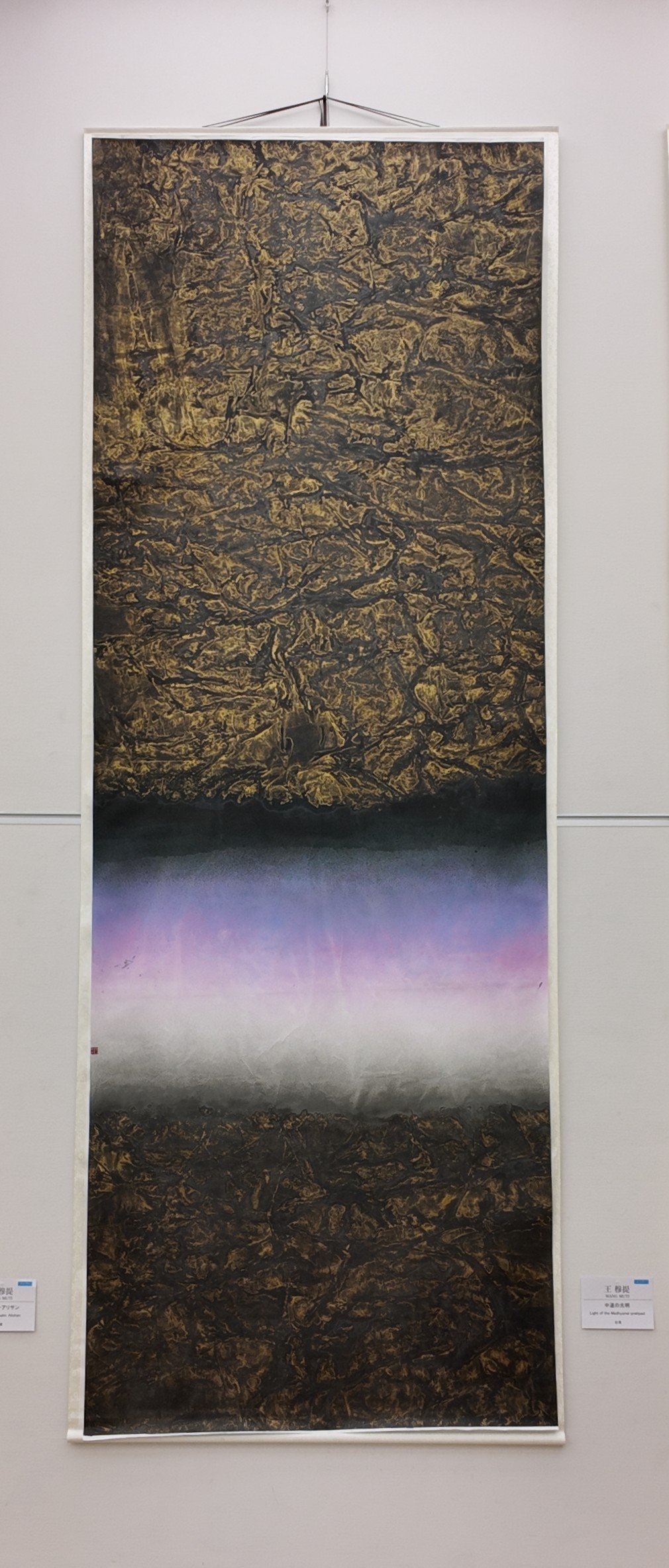
2. 《中道之光》—— 秩序的幾何與精神維度
- 規格: 寬度 138 x 長度 390 cm
- 媒材: 宣紙、水墨、壓克力顏料
- 年代: 2025/12
- 這是一件極具馬克・羅斯科(Mark Rothko)風格的色域繪畫,但更具東方儀式感 。畫面被嚴謹地劃分為上、中、下三個區域。上下兩端是充滿物質躁動感、帶有金屬光澤的黑金色塊;中間則是一道橫亙的、平滑如鏡的紫白光帶。
- 【深度藝評】
- 這是三部曲的終章,直指東方哲學中的 「中道」 思想。上下的混亂(混沌)與中間的寧靜(秩序)在同一張宣紙上並存。王穆提的高明之處在於,他並沒有讓光帶「消除」黑暗,而是讓兩者 「共生」。這是一幅當代的祭壇畫,引導觀眾的視線從躁動的邊緣匯聚至中心的寧靜,進入一種冥想的狀態。
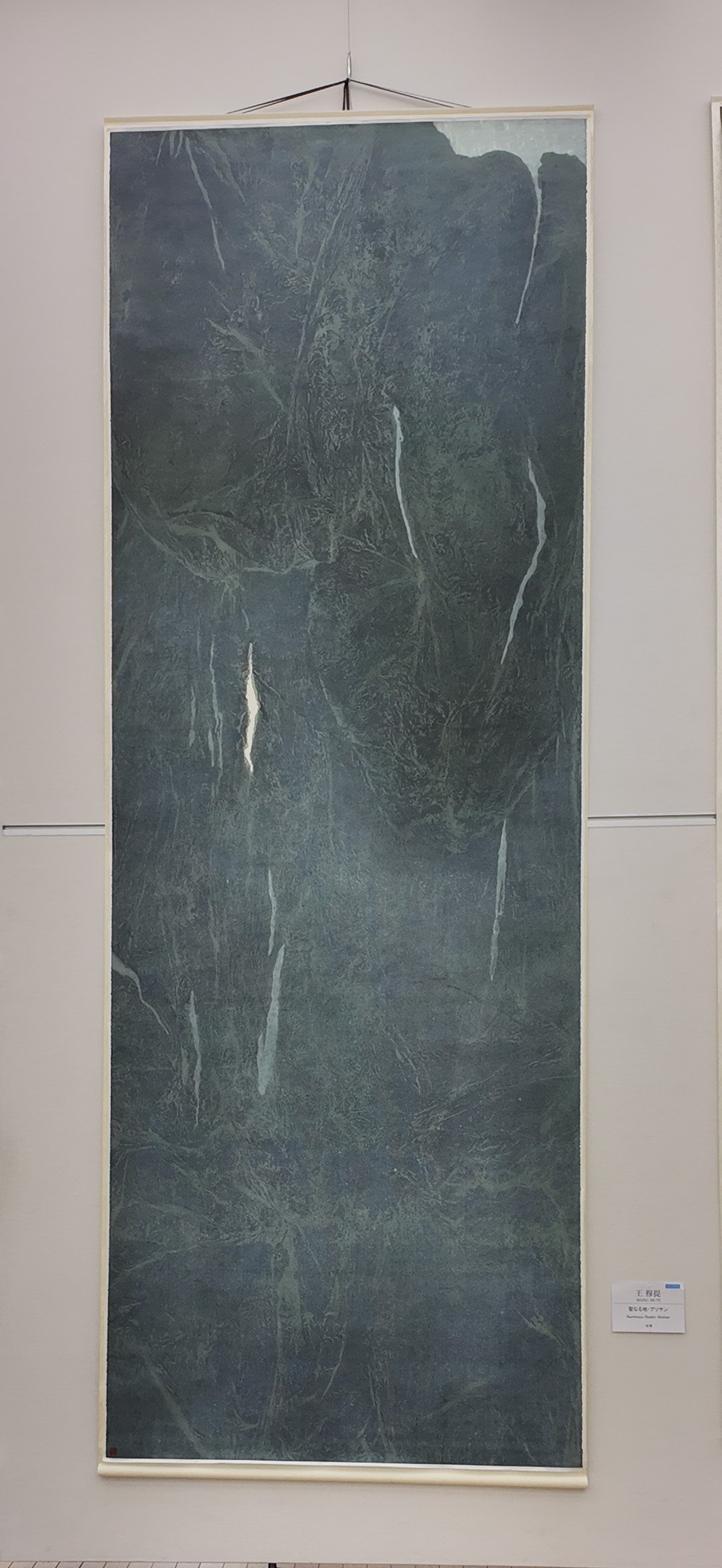
3. 〈聖境・阿里山〉—— 時間的拓片與崇高美學
- 規格: 寬度 142 x 長度 399 cm
- 媒材: 大畫仙紙(小津和紙出品)、水墨、壓克力顏料
- 年代: 2025/11/17
- 這件作品使用了極為特殊的 「小津和紙出品・大畫仙紙」,尺幅接近 4 公尺高 。全幅式(All-over)構圖被深邃的墨綠與灰黑佔據。那不是具象的樹葉,而是高度抽象化的肌理。幾道銳利的白色線條垂直貫穿,如同閃電穿透迷霧。
- 【深度藝評】
- 在藝術史語境中,這是一種 「崇高(Sublime)」 美學的展現。那些垂直的白色線條,既是樹的靈魂,也是連結天地的通道。這件作品證明了,透過當代媒材的轉譯,台灣的地景可以昇華為普世的精神圖騰。
- 王穆提拒絕了觀光客式的風景描繪,他直取阿里山神木的 「時間性」。大畫仙紙特有的纖維韌性,承受了顏料的反覆堆疊,形成了如同千年紅檜樹皮般的厚重質感。
從邊陲到中心的文化突圍
2026 年的東京六本木,因為王穆提的出現,多了一道來自台灣的光譜。他利用 國立新美術館 這個世界級的「大皇宮」,融入NAU21 這個承載了「新達達」歷史的前衛平台,成功地將台灣當代藝術的座標,從邊陲推向了中心。他證明了,一位台灣藝術家不需要模仿日本,也不需要迎合西方。只要誠實地挖掘腳下的土地(阿里山)、面對自身的文化(中道哲學),並具備駕馭巨大尺幅與跨媒材的能力,就能在世界藝術的最高殿堂,撐起一片屬於台灣的天空。
當雲端墜落於畫布:王穆提的「數位反動」與現代繪畫
—— 數位美術館主持人如何用近四米鉅作,抵抗演算法的虛無?
在國立新美術館展示室 1A 的王穆提個展現場,觀眾最直觀的感受是「重」。那是一種來自地質、來自歷史、來自物質本身的沈重感。
然而,這份沈重感背後隱藏著一個巨大的悖論:王穆提不僅是藝術家,更是一位資深的 「數位美術館計畫主持人」。他曾協助超過 2000 位藝術家建立數位資料庫,長期致力於藝術作品的數位化與雲端保存。
一位最懂「虛擬」的人,為何做出了最「實體」的作品?這正是解讀王穆提此次展出的關鍵鑰匙。
檔案意識(Archival Consciousness)—— 將繪畫視為儲存介質
在元宇宙、NFT 與 AI 生成藝術(AIGC)大行其道的今天,圖像(Image)變得前所未有的廉價。它們是平滑的、無厚度的、可被無限複製且隨時被刪除的像素集合。
作為數位專家,王穆提深知「數據」的脆弱性與「螢幕」的欺騙性。因此,他在創作中展現了一種強烈的 「檔案意識」。
拒絕平滑:對抗螢幕的觸感
他這次展出的三件作品,高度皆逼近 400 公分,媒材混用了東方的水墨與西方的壓克力顏料。這本質上是一種 「反數位」 的操作。
- 物理性的不可逆: 數位檔案可以隨時「復原(Undo)」,但水墨在宣紙上的滲透、壓克力顏料在畫仙紙上的堆疊,是不可逆的。王穆提利用這種不可逆性,在畫面上留下了無數次勞動的痕跡。
- 數據無法紀錄的細節: 站在 〈聖境・阿里山〉 面前,你會看到水墨與壓克力交融後產生的複雜微型地貌。這些細節是隨機的、有機的,是任何高解析度掃描儀或 3D 建模都無法完美還原的。他創造了 「唯有肉身在場(On-site)才能感知」 的震撼。這是對當代人習慣透過手機螢幕看畫的一種挑釁——你必須來到現場,因為螢幕無法傳遞這種物理量感。
策展人的畫筆:繪畫即備份
一般畫家畫的是「風景」,但作為策展人的王穆提,畫的是「關於風景的實體備份」。在 〈聖境・阿里山〉 中,他並沒有描繪阿里山的具象外觀,而是試圖複製神木的「質地」與「氣場」。那滿布畫面的深邃肌理,就像是他在畫布上建立了一個 「地質資料庫」。他試圖將那種崇高的精神性,封存進大畫仙紙的纖維之中,就像他將藝術作品封存進伺服器一樣。差別在於,伺服器保存的是冰冷的資訊,而畫布保存的是有溫度的 「靈光(Aura)」。
前衛的迴響 —— 從新達達的「反藝術」到王穆提的「反演算法」
王穆提此次參展的組織 NAU(New Artist Unit),其前身是 1960 年代的 「新達達(Neo-Dada)」。當年的吉村益信,用廢棄物與街頭展演來對抗傳統美學的僵化。而在 2026 年,王穆提繼承了這份前衛精神,但他對抗的對象變了。他不再對抗傳統油畫,而是對抗 「演算法的平庸化」。
身體性的回歸
NAU 的歷史強調「行動(Action)」。王穆提的創作過程充滿了極高強度的身體勞動。面對一張 4 公尺高的大紙,藝術家必須動用全身的肌肉來控制筆觸與顏料的流動。
在 〈空中之色〉 中,那個巨大的黑色團塊,其實是藝術家身體勞動的結晶。那是時間的沈積物,是人類意志強行介入物質世界的證明。這與 AI 生成圖像時「輕點滑鼠」的動作形成了鮮明對比。
連立的真義:在數據洪流中確立主體
NAU 標榜的 「連立(Renritsu)」,意指獨立個體的並存。在演算法試圖將人類審美同質化、大數據試圖預測我們喜好的時代,王穆提用這種極度個人化、極度手工感、極度巨大的實體作品,捍衛了藝術家的主體性。他證明了,即使在數位時代,人類手作的溫度、不完美與巨大的物理存在感,依然擁有無法被取代的神聖性。
三部曲的數位辯證 —— 重新閱讀視覺鉅作
當我們帶著「數位 vs. 實體」的視角,再次凝視王穆提的三件鉅作,會發現它們擁有了全新的解讀維度。
1. 〈空中之色〉:像素的黑洞
- 解讀: 畫面中央那個由水墨與壓克力堆疊而成的黑色團塊,可以被視為 「數據的黑洞」。它沈重、緻密,吸收了所有的光線與資訊。而背景那片粉紫色的漸層,則帶有強烈的 「數位霓虹(Digital Neon)」 質感,象徵著虛擬網絡的輕盈與空幻。
- 隱喻: 這幅畫展示了當代人的生存狀態——我們的肉身沈重地滯留在物理世界(黑岩),而精神卻漂浮在無重力的網路空間(粉紫背景)。
2. 〈聖境・阿里山〉:未被編碼的自然
- 解讀: 這是一幅拒絕被編碼的風景。王穆提運用了極其複雜的墨色與壓克力堆疊,創造出了一種 「高雜訊(High Noise)」 的視覺效果。這些雜訊不是錯誤,而是自然的本質。
- 隱喻: 在 AI 眼中,阿里山可能只是一組綠色的數據模型;但在王穆提筆下,它是充滿傷痕、歷史與不可預測性的有機體。這是對「自然」最深情的實體備份。
3. 《中道之光》:介面的昇華
- 解讀: 那道橫亙畫面的紫白光帶,像極了數位螢幕關閉前的那一道殘光,或是虛擬與現實的 「介面(Interface)」。
- 隱喻: 上下的黑金混亂代表了紛雜的資訊焦慮,而中間的光帶則是穿越資訊迷霧後的清明。王穆提在此提出了一種「數位時代的中道」:我們不應逃離科技,也不應沈溺於科技,而應在虛實之間,找到心靈的平衡點。

未完成的連立,永恆的主體:從台灣出發的文化突圍
—— 王穆提個展的文化政治學:在日本國立新美術館建立「台灣異托邦」
當我們從微觀的作品解讀,回到宏觀的文化視角,我們會發現王穆提(WANG MUTI)此次在國立新美術館的個展,具有超越藝術本身的文化政治意義。這不只是一位藝術家的成功,更是一個 「文化事件」。
在過去,亞洲當代藝術的論述往往由西方或東京主導,其他區域的藝術家常處於「被觀看」的邊陲位置。然而,王穆提此次的參展策略——以「個展規格」介入大型公募展——徹底翻轉了這個權力結構。他不再是尋求認可的參加者,而是帶著完整世界觀的 「對話者」。
地緣政治的審視 —— 拒絕邊陲,確立座標
王穆提選擇加入 NAU 並成為台灣首位成員,展現了極高的戰略眼光。他利用這次「展中個展」的特殊機制,在東京六本木建立了一個屬於台灣的文化主體座標。
台灣主體的在場
在過去,亞洲當代藝術的論述往往由西方或東京主導,台灣藝術家常處於「被觀看」的邊陲位置。但王穆提打破了這個框架。
- 巨大的物理存在: 他不只是掛幾張畫,而是用三件近 4 公尺的巨作,在物理空間上佔領了視線。這種 「紀念碑式(Monumental)」 的展示,本身就是一種強勢的宣言。
- 文化的自信: 透過 〈聖境・阿里山〉,他將台灣的地景記憶轉化為普世的精神體驗;透過 《中道之光》,他展示了東方哲學在當代抽象繪畫中的解釋權。
建立「異托邦(Heterotopia)」
法國哲學家福柯(Foucault)曾提出「異托邦」的概念,指在現實社會中構建一個真實卻又與眾不同的空間。王穆提在國立新美術館展示室 1A 建立的,正是一個 「台灣異托邦」。
- 在這個空間裡,〈聖境・阿里山〉 將台灣高山神木的崇高感與時間性,直接植入東京的都會中心。千年的水墨傳統與當代的壓克力媒材共生。這不是對日本風景的模仿,而是對台灣地景自信的展示。
- 〈空中之色〉 與 《中道之光》 則展示了台灣藝術家如何消化東方水墨與西方壓克力,創造出獨特的視覺語言。
他證明了,台灣藝術家只要挖掘自身文化的根源,並具備駕馭巨大尺幅與跨媒材的能力,就能站在世界舞台的中央,而不必成為誰的附庸。
NAU 的「連立」作為戰略支點
NAU 繼承了 1960 年代吉村益信「新達達」的反骨精神,其核心哲學 「連立(Renritsu)」 強調的是:沒有中心,只有節點;沒有階級,只有並存。王穆提不需要模仿日本主流的「膠彩畫(Nihonga)」或是迎合西方的「觀念藝術」。在 NAU 的連立架構下,他憑藉著三件高度逼近 4 公尺的鉅作,直接宣示了台灣藝術的 「在場(On-site)」。
策展型藝術家的回歸 —— 以「結構」抵抗「碎片」
在資訊碎片化的時代,王穆提給出的答案是:「結構」與「深度」。這也是他身為 「數位美術館計畫主持人」 給當代藝術界的一份答卷。
數位思維的實體轉譯
作為一位長期建置雲端資料庫的專家,王穆提深知「結構」的重要性。他在實體繪畫中,也展現了這種結構性的思考。
- 《中道之光》 的三段式構圖,就像是一個嚴謹的數據架構:上層的混沌(輸入)、下層的雜訊(干擾)、中層的光帶(核心運算與輸出)。
- 他將繪畫從單純的「感性抒發」,提升到了「理性架構」的層次。這是一種 「智性藝術(Intellectual Art)」,要求觀眾不僅是用眼睛看,更要用大腦去解碼。
抵抗演算法的平庸
面對 AI 生成圖像的氾濫,王穆提用 「巨大的物理量感」 進行抵抗。
演算法可以輕易生成一張完美的圖,但它無法生成一張 寬 142 公分、長 399 公分,且乘載了水墨滲透與壓克力堆疊厚度的 大畫仙紙。這種物理上的「不可複製性」,是王穆提對藝術靈光(Aura)的堅守。
未來的啟示 —— 新的前衛是「向內」的
回望 NAU 的歷史,從 1960 年代吉村益信在街頭的「向外爆發」,到 2026 年王穆提在美術館內的「向內凝視」,我們看到了一條前衛藝術演變的軌跡。
從破壞到建構
早期的前衛藝術旨在破壞舊有的美學秩序。而王穆提代表的新一代前衛,則是在數位廢墟之上進行 「精神的重建」。他不再憤怒地攻擊體制,而是溫柔而堅定地構建一個能夠安頓身心的精神空間。他利用國立新美術館這個「國家機器」,傳遞個人的、私密的、靈性的崇高體驗。
跨域的勝利
王穆提的成功,預示了 「跨域藝術家(Interdisciplinary Artist)」 的勝利。未來的藝術家,可能都必須像他一樣,同時具備 「數位專家的知識厚度」(如他的檔案意識)與 「實體藝術家的手感」(如他對水墨壓克力的掌控)。單純的視覺快感已不足以撼動人心,唯有思想的重量,才能在資訊洪流中站穩腳跟。
在日本國立新美術館中,尋找靈魂的錨點:王穆提的創作獨白
—— 專訪台灣首位國立新美術館個展藝術家:關於尺度、媒材與那些無法被數位化的「崇高」
對話 —— 為什麼必須是「四公尺」?
Q:在國立新美術館這樣巨大的場域中,您選擇了三件高度近 400 公分的鉅作。這是一個非常冒險的決定,請問背後的考量是什麼?
王穆提:「尺度(Scale)本身就是一種語言。國立新美術館的天花板高度超過 5 公尺,它是一個工業級別的『白盒子』。在這裡,普通的畫作會像郵票一樣被空間吞噬。作為台灣首位在此舉辦個展形式的成員,我不能只是『展示』,我必須『對抗』。
〈聖境・阿里山〉 的 399 公分高度,不是為了炫技,而是為了還原我在阿里山神木腳下感受到的那種『仰望感』。那種人類在自然面前的渺小與敬畏,只有透過這種紀念碑式的尺度(Monumental Scale),才能在東京的都會中心被重建。我要讓觀眾在走進展區的瞬間,身體被迫慢下來,視線被迫向上,這是物理空間對心理空間的干預。」
媒材的辯證 —— 水墨的「時間」與壓克力的「空間」
Q:這次的作品大量使用了「宣紙/大畫仙紙」結合「水墨與壓克力顏料」。這兩種媒材在屬性上幾乎是衝突的,您如何處理這種關係?
王穆提:「這正是我想要的衝突。我是數位時代的人,我們習慣了螢幕上 RGB 色光的和諧,但現實世界是充滿雜訊與衝突的。
- 水墨(Ink)是『時間』: 它在宣紙上滲透、暈染,那是不可逆的過程,代表了東方的流動性與歷史感。
- 壓克力(Acrylic)是『空間』: 它乾燥快、覆蓋力強,具有西方的物質感與現代性。
在 〈空中之色〉 中,我用水墨堆疊出那塊沈重的黑色岩石(業力),然後用帶有粉紫色霓虹感的壓克力顏料去包圍它、撞擊它。水墨的『滲透』與壓克力的『覆蓋』在同一張紙上博弈,這就像是我們當代人的處境——靈魂還停留在古老的傳統中,身體卻已被拋進了快速的數位現代性裡。」
身分的雙重性 —— 數位專家的「實體反擊」
Q:您也是一位資深的數位美術館計畫主持人,整日與虛擬數據為伍。這種背景如何影響您的實體創作?
王穆提:「正因為我太了解『虛擬』,所以我才更渴望『實體』。在數位資料庫裡,一張畫只是一個幾 MB 的檔案,它是平滑的、無厚度的。但在創作 《中道之光》 時,我能感受到宣紙纖維的阻力,能聞到墨與色混合的味道。這三件作品,其實是我對『演算法』的一種反擊。
AI 可以生成一張完美的圖,但它無法生成一張 寬 142 公分、長 399 公分,且乘載了無數次筆觸堆疊厚度的 大畫仙紙。這種物理上的『不可複製性』,就是藝術的『靈光(Aura)』。我希望觀眾來到六本木,不是來看一張圖,而是來體驗一個『場』,一個由物質、勞動與精神共同構建的實體場域。」
歷史的迴響 —— NAU21 與台灣的座標
Q:作為 NAU 台灣首位成員,您認為這次展出對於台日藝術交流有何意義?
王穆提:「NAU 的前身是 1960 年代的『新達達』,那是日本前衛藝術的黃金時代。能以台灣人的身分加入這個系譜,並獲得獨立策展空間,我認為這象徵著一種『平視』。
我們不再是單方面地接受日本或西方的美學標準,而是帶著台灣的 阿里山、帶著東方的 中道思想、帶著我們對數位時代的獨特反思,來到這裡進行對話。
我在國立新美術館建立的不是一個展位,而是一個 『台灣異托邦』。在這裡,文化沒有優劣,只有連立(Renritsu)與共生。我希望這三件作品能成為一個座標,證明台灣當代藝術有能力在世界級的殿堂中,發出屬於自己的、清晰而響亮的聲音。」
未來的預言
隨著 2026 年 2 月的個展落幕,王穆提在東京留下的不僅是三件鉅作,更是一個關於 「藝術如何回歸崇高」 的深刻提問。在這個萬物皆可 NFT 化、皆可 AI 生成的時代,王穆提選擇了一條最艱難的路:巨大的尺幅、難以控制的流動媒材、極高強度的身體勞動。他用 「數位專家」 的冷靜,洞悉了虛擬的極限;用 「前衛藝術家」 的熱情,擁抱了物質的溫度。這場在國立新美術館的個展,是王穆提藝術生涯的里程碑,也是台灣當代藝術走向國際核心舞台的一次重要突圍。正如他畫中那道穿越迷霧的 《中道之光》,這場展覽為迷茫的當代藝術,指引了一個關於「深度」與「真實」的方向。
紙上的建築學:解構王穆提高度四公尺鉅作的技術肌理
—— 台灣首位日本國立新美術館個展藝術家,如何以「畫仙紙」與「壓克力」重塑當代水墨的物理性
在國立新美術館展示室 1A,當觀眾貼近王穆提的三件鉅作時,會驚訝地發現:遠看如碑的黑色團塊,近看卻充滿了無數微小的孔隙、流動與堆疊。這不是傳統水墨的「染」,也不是西方油畫的「塗」,而是一種全新的 「構造(Construction)」。
王穆提此次展出的核心技術成就,在於他成功地在 「極巨大的尺幅」 上,解決了 「異質媒材」 的衝突,並以此證明了台灣藝術家在當代媒材實驗上的高度成熟。
載體的意志 —— 當「畫仙紙」遇見四公尺的野心
這次展出的一大亮點,是作品 〈聖境・阿里山〉 使用了日本頂級的 「小津和紙(Ozu Washi)出品・大畫仙紙」。
- 挑戰極限的載體:
- 一般的畫仙紙在超過 2 公尺後,對於水分的控制就變得極難掌握。而王穆提挑戰的是 399 公分 的極限長度。這種尺幅的紙張,本身就具有一種「建築性」。它不再只是繪畫的平面,而是一個巨大的、懸掛的「軟雕塑」。
- 文化的挪用與對話:
- 作為台灣藝術家,王穆提選用日本最具代表性的傳統和紙,卻在上頭繪製台灣的阿里山神木,並使用西方的壓克力顏料進行覆蓋。這本身就是一種強勢的 「文化挪用(Cultural Appropriation)」 與對話。他利用日本和紙優異的纖維韌性(長纖維),去承受高強度的顏料堆疊,證明了「紙」也能展現出如同畫布(Canvas)般的厚重感,卻保留了紙張特有的「呼吸感」。
流動的戰場 —— 水墨與壓克力的「排斥美學」
王穆提作品中最迷人的細節,來自於 水墨(Water-based Ink) 與 壓克力顏料(Acrylic Pigment) 的交互作用。
- 親水 vs. 排水:在 〈空中之色〉 中,他先以濃墨在宣紙上進行底層的滲透,確立了黑色的深度(Depth)。待其半乾之際,直接撞入帶有膠質的壓克力顏料。
- 這時,油性的壓克力與水性的墨汁在纖維中發生了微觀的戰爭。壓克力排開了墨,墨又試圖滲透壓克力的邊緣。這種 「排斥作用(Repulsion)」 在畫面上留下了如同地殼變動般的裂痕與沈積紋理。這不是畫筆描繪出來的,而是 「物理與化學反應」 自動生成的自然地貌。
- 傳統水墨講求「相融」,但王穆提追求「排斥」。
- 當代的「破墨」:
- 這可以被視為中國傳統「破墨法」的當代激進版。王穆提用工業時代的產物(壓克力)去「破」農業時代的產物(水墨),創造出一種既古老又現代、既有機又合成的視覺語言。
身體的測量 —— 行動繪畫的東方演繹
在 NAU(New Artist Unit) 的歷史中,前輩篠原有司男以「拳擊繪畫」強調身體的介入。王穆提雖然沒有使用拳擊手套,但他面對 寬 142 x 長 399 cm 的畫紙時,其創作過程本身就是一場高強度的 「行動繪畫(Action Painting)」。
- 全身性的運筆:
- 要控制 4 公尺長線條的垂直度(如 〈聖境・阿里山〉 中的白色光束),藝術家不能只動手腕,必須動用全身的核心肌群,甚至需要在大尺度的畫面上不斷移動。
- 速度與控制:
- 壓克力顏料乾燥極快,水墨暈染又極不可控。王穆提必須在極短的時間內,做出大膽的決策。這種 「速度感」 被封存在 《中道之光》 上下兩端的飛白筆觸中。那是藝術家身體能量的直接拓印,也是他在國立新美術館這個巨大空間中,確立「在場性」的物理證據。
技術即觀念
為什麼王穆提能成為 首位 在國立新美術館舉辦個展形式的台灣藝術家?
答案不僅在於他的哲學深度或文化論述,更在於他展現了 「駕馭巨大物質」 的技術能力。他將脆弱的紙張變成了堅固的碑,將衝突的顏料變成了和諧的場。這種對媒材的極致控制力,讓他有資格在這個亞洲最高等級的藝術殿堂中,不再是被動的參展者,而是主動的 「空間建構者」。透過這些 4 公尺高的鉅作,王穆提向世界展示了:台灣的當代水墨,已經超越了「文人畫」的案頭雅趣,進化為具有 「公共性」 與 「紀念碑性」 的強大藝術形式。
他是一位 「智性藝術家」,用學者的腦思考結構;他是一位 「數位策展人」,用檔案的意識保存靈光;他更是一位 「實體捍衛者」,用巨大的紙張與顏料,為這個日益虛擬化的世界,錨定了一個沈重而真實的物理座標。
這不僅是王穆提個人的勝利,更是台灣當代藝術在國際舞台上,一次自信而完美的 「在場(Presence)」。在國立新美術館展示室 1A,王穆提的展區給人一種強烈的 「向上仰望」 的身體感。三件鉅作——〈空中之色〉、〈聖境・阿里山〉、《中道之光》——皆呈現出極度狹長的垂直比例(高度約 390-399 cm,寬度約 140 cm)。
這種比例的選擇絕非偶然。在當代藝術中,橫向的寬銀幕(Landscape)通常代表敘事與風景,而縱向的直立(Portrait)則代表肖像與碑銘。王穆提選擇了後者,但他描繪的不是人,而是 「精神的肖像」。
垂直性(Verticality)作為一種抵抗
在數位媒體主導的今天,人類的視覺習慣被鎖定在 「水平滑動」(Instagram 的限時動態除外,大部分資訊流仍是橫向閱讀或短幅滾動)。
- 逆轉觀看權力:當觀眾站在 〈聖境・阿里山〉 面前時,視線無法一次捕捉全貌。必須先看見底部的沈重肌理(土地/根基),再緩緩向上移動,經過糾結的墨痕(歷史/時間),最後到達頂端穿透迷霧的白線(光/靈性)。
- 這個觀看過程本身,就是一場 「朝聖(Pilgrimage)」。王穆提利用物理尺度,讓觀眾在展場中重演了攀登阿里山的身體經驗。
- 王穆提的近四公尺高度鉅作,強迫觀眾的眼球必須進行 「大幅度的上下掃描」。
- 東方卷軸的當代轉譯:
- 這種狹長比例呼應了東方傳統的 「立軸(Hanging Scroll)」。但他放棄了傳統卷軸的留白與輕盈,改用 壓克力顏料 的厚重堆疊與 全幅式(All-over) 構圖,填滿了每一個角落。這是將「文人的私密卷軸」轉化為「公共的紀念碑」。
墨的現象學 —— 「黑」不是顏色,是空間
在王穆提的作品中,黑色(Black)佔據了統治地位。但他使用的「黑」具有雙重屬性:既有傳統松煙墨的「碳素感」,也有現代黑色壓克力的「塑膠感」。
- 吸光的黑洞:這與馬列維奇(Malevich)的《黑方塊》不同,王穆提的黑是有機的、會呼吸的。它象徵著 「物質的極致」 —— 所有的業力、記憶、歷史都沈澱於此。
- 在 〈空中之色〉 中,那個巨大的懸浮團塊並非平塗的黑。王穆提利用水墨在宣紙上的滲透性,創造了無數個微小的孔隙。這些孔隙會吸收展場的光線,使黑色呈現出一種 「無限後退的深度」。
- 物質的重量:
- 在 〈聖境・阿里山〉 中,墨色與深綠色壓克力交織,形成了如同千年神木樹皮般的厚重質感。這裡的黑不再是虛無,而是 「時間的重量」。它讓薄薄的畫仙紙,在視覺上擁有了如同鑄鐵或岩石般的量感。
數位霓虹(Digital Neon)—— 虛擬的誘惑
如果說「黑」代表了沈重的現實,那麼王穆提在背景處理上使用的「霓虹色系」,則直指當代的虛擬經驗。
- 人工的漸層:這種色彩是 「無機的」、「發光的」。它與前景那塊粗糙、吸光的黑色水墨團塊形成了劇烈的 「視覺矛盾」。
- 在 〈空中之色〉 的背景中,王穆提使用壓克力顏料創造出粉紫色(Magenta)與青藍色(Cyan)的柔和漸層。這種配色方案常見於 「賽博龐克(Cyberpunk)」 或數位介面的設計中。
- 符號的對撞:結局是: 那塊沈重的黑色岩石,尷尬而孤獨地懸浮在美麗卻虛幻的數位霓虹中。這精準地描繪了當代人的處境——我們肉身沈重,卻生活在一個輕盈的像素世界裡。
- 這是一種高明的修辭。藝術家並沒有批判數位時代,而是將「古老的水墨黑(前現代)」與「人造的霓虹光(後現代)」並置。
金屬與光 —— 世俗與神聖的介面
在三部曲的終章 《中道之光》 中,王穆提引入了第三種關鍵色彩:金屬色(Metallic)與白色。
- 躁動的金屬:
- 在畫面的上下兩端,他使用了帶有金屬光澤的金色與古銅色壓克力顏料。這些顏料會隨著觀眾的移動而反光,產生一種不穩定的、躁動的視覺效果。這象徵著 「世俗諦」 —— 充滿慾望、變動不居的物質世界。
- 絕對的白:在色彩心理學上,這種白象徵著 「淨化」 與 「秩序」。它切斷了上下兩端金屬色的躁動,建立了一個絕對理性的平衡點。這就是王穆提所謂的 「中道」 —— 在喧嘩的色彩中,留出一道白色的寂靜。
- 與之相對的,是中間那道橫亙的 「紫白光帶」。這裡的白色是平滑的、啞光的(Matte),它不反光,而是發出一種內在的靜謐感。
光影的共謀 —— 國立新美術館的場域加持
王穆提的這些色彩策略,在國立新美術館(NACT)特殊的展場環境中,得到了最大程度的放大。
- 自然光的介入:
- NACT 的玻璃帷幕會引入自然光。在白天,陽光灑落在 〈聖境・阿里山〉 上,水墨的層次會變得極其豐富,彷彿看見了森林深處的苔蘚。
- 聚光燈的戲劇性:王穆提清楚地計算了 「光」 對 「媒材」 的影響。他不是在畫布上塗顏色,而是在 「調度光線」。他讓作品在不同的光環境下,展現出「物質(水墨)」與「幻象(壓克力)」的動態平衡。
- 到了傍晚,展場的人工聚光燈(Spotlight)亮起。這時,《中道之光》 中的金屬壓克力顏料會開始閃爍,而中間的白光帶顯得更加深邃。
新時代的視覺光譜
王穆提在東京六本木的色彩展演,打破了人們對「台灣藝術」或「水墨藝術」的刻板印象。他沒有停留在傳統水墨的「黑白灰」,也沒有迷失在西方抽象的「色彩爆炸」。相反地,他提煉出一種 「智性的色譜」:
用墨來錨定歷史的重量,用 霓虹 來隱喻數位的虛無,用金與白來辯證世俗與神聖。
這位台灣首位日本國立新美術館個展藝術家,用這三組色彩符號,為 2026 年的亞洲當代藝術,繪製了一張關於 「存在、虛擬與超越」 的哲學地圖。
- 藝術家: 王穆提 (WANG MUTI)
- 核心色譜:
- 實存黑 (Existential Black): 松煙墨+碳黑壓克力 —— 象徵物質、歷史、業力。
- 數位霓虹 (Digital Neon): 螢光粉紅、青藍漸層 —— 象徵虛擬、輕盈、幻象。
- 金屬與白 (Metallic & White): 金、古銅、鈦白 —— 象徵世俗慾望與神聖秩序。
- 展出作品: 〈空中之色〉、〈聖境・阿里山〉、《中道之光》
- 地點: 國立新美術館 展示室1A
台灣藝術家如何在國立新美術館留下「不可磨滅」的精神刻度:王穆提個展的歷史判詞
王穆提用 「策展人」 的宏觀視野佈局,用 「數位資料庫專家」 的敏銳度捕捉時代焦慮,最後用 「藝術家」 的雙手,完成了最原始、最艱難的實體抵抗。
物質的勝利 —— 對抗「輕」的時代
義大利文學家卡爾維諾(Italo Calvino)曾在《給下一輪太平盛世的備忘錄》中推崇「輕(Lightness)」。然而,在 2026 年這個資訊過載、影像氾濫的「超輕」時代,「重(Heaviness)」 反而成為了一種稀缺的品質。
王穆提的勝利,首先是 「物質的勝利」。
- 在一個萬物皆可雲端化的世界,他堅持搬運巨大的紙張、調和黏稠的壓克力、研磨黑色的松煙。
- 〈空中之色〉 那塊沈重的黑岩,就像是一個巨大的 「物理錨點」,狠狠地拋進了漂浮不定的數位海洋中。它告訴觀眾:真實是有重量的,記憶是有肌理的,崇高是需要仰望的。
跨域的融合 —— 「水墨壓克力」的新語言
在藝術史的長河中,東方水墨與西方油畫(或壓克力)長期處於對望甚至對抗的狀態。但王穆提在 近 4 公尺 的畫仙紙上,達成了一種 「不卑不亢的共生」。
- 拒絕二元對立:
- 他沒有讓水墨臣服於壓克力,也沒有讓壓克力模擬水墨。在 〈聖境・阿里山〉 中,水墨負責「滲透」與「時間」,壓克力負責「覆蓋」與「結構」。
- 台灣的混種美學:
- 這種混用(Hybridity)本身就是台灣文化的隱喻——海納百川,靈活轉化。他創造了一種既非傳統水墨、亦非西方抽象的新語言,我們或許可以稱之為 「後數位時代的物質表現主義(Post-Digital Material Expressionism)」。
座標的確立 —— 台灣藝術的「在場」
最重要的一點,在於 「文化主體性」 的確立。王穆提作為 NAU 台灣首位成員,沒有選擇做一個安靜的旁觀者。他利用 國立新美術館 這個世界級的擴音器,大聲地講述了屬於台灣的故事。
- 《中道之光》 不僅是一幅畫,更是東方哲學在當代藝術語境中的一次強勢發言。它證明了,台灣藝術家有能力消化最艱深的哲學命題,並將其轉化為普世的、震懾人心的視覺形式。
王穆提在東京留下的這三座 「紙上的紀念碑」,其影響力才剛剛開始。他向世界證明了:
- 尺度(Scale) 是對抗平庸的武器。
- 物質(Material) 是靈魂最後的堡壘。
- 台灣(Taiwan) 是亞洲當代藝術不可忽視的發源地。
在這座巨大的「空之容器」——國立新美術館中,王穆提成功地植入了一個堅實的內核。這是一位來自台灣的修道者、策展人與藝術家,用他的智慧與汗水,為 21 世紀的藝術史,寫下的最精彩的一頁。
從「唯識」到「視覺」:王穆提鉅作背後的佛教信仰——解析一位「學者型藝術家」,如何以唯識中觀辯證法重構當代繪畫的空間
在國立新美術館展示室 1A,當觀眾凝視王穆提那三件近 4 公尺的鉅作時,往往會感受到一種超越視覺的「理性的冷靜」。這種冷靜,源自於藝術家深厚的佛學哲學背景。
不同於表現主義者依賴情緒的宣洩,王穆提的創作更像是一場 「哲學的演繹」。他將畫布視為論證的場所,將顏料視為辯證的詞彙。要真正看懂這些作品,我們必須借用他長年鑽研的兩把思想鑰匙:唯識學(Consciousness-Only) 與 中觀學(Madhyamaka)。
唯識學的當代轉譯 —— 數位時代的「萬法唯識」
王穆提身為 數位美術館計畫主持人,整日處理虛擬影像與數據。這與他鑽研的 「唯識學」 產生了奇妙的共振。唯識學主張「萬法唯識」,即外部世界其實是心識的變現。
- 〈空中之色〉的「相分」與「見分」:
- 在作品 〈空中之色〉 中,那塊懸浮的黑色團塊,象徵著唯識學中的 「相分(Object)」 —— 即被我們感官所執著的物質對象。而背景那片帶有數位霓虹感的粉紫漸層,則象徵著 「見分(Subject)」 —— 即帶有主觀色彩的認知投射。
- 哲學解碼:
- 王穆提利用 水墨的沈重(實體) 與 壓克力的輕盈(虛擬),在畫面上演繹了這場「心」與「境」的對立。他告訴觀眾:在數位時代,我們所看到的「真實」,往往只是演算法與屏幕投射出的「幻相(Virtual Reality)」。這幅畫是對「數位唯識觀」的視覺批判。
中觀學的空間辯證 —— 破除二元對立
如果說唯識學解釋了「虛擬」,那麼 「中觀學」 則解決了「對立」。中觀學派的核心是龍樹菩薩的「八不中道」,旨在打破「有/無」、「生/滅」的二元執著。
- 《中道之光》的「二諦」結構:
- 作品 《中道之光》 的三段式結構,完美對應了中觀學的 「二諦(Two Truths)」 理論。
- 上下兩端的黑金躁動: 對應 「世俗諦(Conventional Truth)」,充滿了現象界的混亂、慾望與物質性。
- 中間的紫白光帶: 對應 「勝義諦(Ultimate Truth)」,象徵著超越語言與現象的空性。
- 哲學解碼:
- 王穆提的高明之處在於,他讓這兩者在同一張宣紙上 「並存」。中間的光帶並沒有消除上下的黑暗,而是與之共生。這視覺化了「涅槃與世間,無有少分別」的深奧教義。他用 壓克力顏料 的平滑質感(光帶)去切斷 水墨 的混沌肌理(黑金),在形式上達成了一種 「視覺的中道」。
崇高的現象學 —— 從「觀想」到「觀看」
在佛教修行中,「觀想(Visualization)」 是一種透過心靈構建聖境的修持。王穆提將這種內在的觀想,外化為 4 公尺高 的實體繪畫。
- 〈聖境・阿里山〉的「依正不二」:那滿布畫面的神木肌理,既是阿里山的客觀風景(依報),也是藝術家內在精神的投射(正報)。透過 大畫仙紙 的巨大尺幅,他邀請觀眾進入這個「依正融合」的場域。
- 在 〈聖境・阿里山〉 中,他運用了天台宗 「依正不二」(主體與環境不二)的概念。
- 哲學解碼:
- 當觀眾仰望這件作品時,他們不僅是在看畫,而是在進行一場 「視覺的止觀」。那些垂直的線條引導視線向上,幫助觀眾從日常的瑣碎中抽離,進入一種崇高的精神狀態。
智性的重量
在當代藝術圈,充斥著大量的圖像消費與淺薄的觀念挪用。王穆提的出現,顯得尤為珍貴。他證明了,一位藝術家可以同時是 「數位專家」 與 「佛學行者」。他用 「唯識」 解析了數位虛擬的本質,用 「中道」 平衡了水墨與壓克力的媒材衝突。
他在國立新美術館留下的,不只是三件巨大的畫作,而是一套完整的 「視覺哲學體系」。這也是為什麼他能以 台灣首位的身份,在這個亞洲最高藝術殿堂中,獲得學術界與評論界高度評價的根本原因——因為他的作品,擁有思想的重量。
【展覽學術關鍵字 Recap】
- 哲學體系: 唯識學 (Yogacara)、中觀學 (Madhyamaka)、天台止觀
- 核心概念:
- 相分/見分: 對應 〈空中之色〉 的黑岩與背景
- 二諦 (世俗/勝義): 對應 《中道之光》 的上下黑金與中間光帶
- 依正不二: 對應 〈聖境・阿里山〉 的主客融合
- 展出藝術家: 王穆提 (WANG MUTI)
- 展出地點: 國立新美術館 展示室1A
從「參展者」到「定義者」:王穆提留下的戰略藍圖
—— 後展覽時代的觀察:數位文人的崛起與台日藝術交流的新典範
隨著 2026 年 2 月 15 日展覽落幕,國立新美術館展示室 1A 回復了平靜。然而,王穆提(WANG MUTI)此次的行動,在策展與文化戰略層面上,激起了長久的漣漪。
他打破了過去台灣藝術家在國際公募展中「單打獨鬥、淹沒於群體」的宿命,透過 「巨大的物理尺度」 與 「深厚的哲學論述」,成功將一個聯展攤位,轉化為一座獨立的 「微型美術館」。
戰略典範 —— 「展中個展」的微型權力學
王穆提此次最值得後進學習的,是他的 「空間權力學」。
- 微型美術館的建構:他利用作品本身作為「牆體」,在開放的空間中切出了一個私密的、高密度的精神空間。這使得他在 NAU 的展覽中,實際上擁有了一個獨立的 「個展權力」。
- 在大型聯展(Group Show)中,藝術家通常只能分配到牆面的一角。但王穆提透過 三件近 4 公尺 的鉅作,構建了一個 ㄇ字型的封閉場域。
- 啟示:
- 這告訴未來的參展者:不要只是去掛畫,要去 「造境」。在國際舞台上,唯有建立起自己的「空間主權」,才能在數百件作品中脫穎而出。
身分典範 —— 「數位文人(Digital Literati)」的誕生
王穆提的雙重身分——數位美術館計畫主持人 與 當代藝術家——定義了一種全新的藝術家型態:「數位文人」。
- 古代文人的當代轉世:
- 古代文人(Literati)是「學者」與「畫家」的結合,他們畫畫是為了載道。王穆提繼承了這一點,但他載的「道」經過了數位時代的濾鏡。
- 技術與思想的雙核驅動:這種 「左腦(數位/邏輯)」 與 「右腦(水墨/靈性)」 的完美結合,讓他能夠創作出既有當代視覺衝擊力,又經得起哲學推敲的作品。他證明了,未來的藝術大師,必須是技術與思想的 「雙重專家」。
- 他一方面擁有 建置資料庫 的理性邏輯(結構嚴謹、檔案意識),另一方面擁有佛學經論 的感性深度(中道思想、崇高美學)。
美學典範 —— 台灣作為「媒材煉金術」的實驗場
此次展出的 〈聖境・阿里山〉 與 《中道之光》,展示了台灣藝術家在媒材實驗上的靈活性。
- 混種的勝利:這種 「混種(Hybridity)」 正是台灣文化的優勢。他向日本觀眾展示:水墨可以很厚重(像油畫),壓克力可以很空靈(像水墨)。這種對媒材的 「誤讀」 與 「重構」,正是創新的源頭。
- 日本畫壇往往壁壘分明(日本畫 vs. 洋畫),但王穆提打破了界線。他將 小津和紙(日本)、松煙墨(東方) 與 壓克力顏料(西方) 放入同一個熔爐中。
至此,我們完成了對 王穆提國立新美術館個展 的全方位解讀。從場域的榮耀、技術的細節、哲學的深度,到未來的戰略意義。在這個轉折點上,我們看見一位來自台灣的藝術家,拒絕了數位的虛無,擁抱了物質的重量;拒絕了邊陲的沈默,發出了主體的聲音。
王穆提在六本木留下的,是三幅畫,也是三個預言:
- 實體將比虛擬更昂貴。
- 哲學將比圖像更迷人。
- 台灣將在世界藝術版圖中,找到屬於自己的、不可替代的座標。
王穆提(おう ぼくてい)台湾人初の国立新美術館個展 —— NAU前衛伝説の新たな章を刻む
文/国際芸術特集取材班
歴史的な座標:台湾人アーティストによる国立新美術館への進出
2026年、初春。東京・六本木。
冬の日差しが**国立新美術館(The National Art Center, Tokyo, NACT)**の特徴的な波状ガラスのカーテンウォールを透過し、巨大な逆円錐形のコンクリート柱に降り注ぐ中、この日本芸術の最高峰の殿堂は歴史的な瞬間を迎えました。
注目を集める**『第24回 NAU21世紀美術連立展』において、台湾出身のアーティスト、王穆提(WANG MUTI)が招聘されました。一般の出展者と異なるのは、彼が大規模公募展における「一点展示」という慣例を打破し、「独立キュレーション空間」という特権を獲得した点です。これは彼が「台湾人として初めて」、日本の国立新美術館において「個展形式(Solo Exhibition within a Group Show)」**で開催するアーティストとなったことを意味します。
これは単なる展覧会への参加ではありません。**「文化主権の確立」です。王穆提が持ち込んだのは散漫な絵画群ではなく、高さ4メートルに迫る、完全な世界観を構築した3点の視覚的巨編——〈空中之色〉、〈聖境・阿里山〉、《中道之光》**です。彼はこれらの作品を用い、六本木の中枢地帯に台湾現代アートの「精神の孤島」を植え付け、世界各地から集まった数百点の作品と強烈な対話を繰り広げました。
場の力学——世界のトップミュージアムとの比較
「台湾初」という称号の重みを理解するには、国立新美術館を単なる展示会場として見るのではなく、**「世界美術館の権力スペクトル」**の中に置いて比較分析する必要があります。
国立新美術館は、メタボリズム建築の巨匠・**黒川紀章(Kisho Kurokawa)によって設計された、戦後日本美術館建築史における特異点です。恒久的なコレクションを持たず、「展示」に特化したこの「空の器(Empty Vessel)」**という特性により、国際的には以下のトップ機関と並び称されます。
1. フランス・グラン・パレ(Grand Palais):国家級のショーケース
パリのグラン・パレがFIACなどのトップサロンや国家特別展を開催するフランスの顔であるように、国立新美術館は日本における国際巡回展(印象派展や草間彌生回顧展など)の開催地として真っ先に選ばれる場所です。それは日本政府による芸術の「最高規格」の定義を象徴しています。ここで個展空間を獲得することは、パリ・グラン・パレのサロン展で独立ブースを獲得することに等しく、その作品の質がすでに**「国家級規格」**に達していることを象徴しています。
2. 英国ロイヤル・アカデミー・オブ・アーツ(Royal Academy of Arts):アーティスト主導の殿堂
国立新美術館は、日本国内の重要な美術団体(日展、二科展、NAU展など)にとって最高の栄誉ある殿堂としての責任を担っています。これは英国RAの「サマー・エキシビション」の論理と一致しており、現代アーティストが自らの**「現前(On-site)」**を証明するための最高の座標です。アジアのアーティストにとって、ここに一席を占めることは、日本のアートシーンの核心的な視野に入ることを意味します。
3. 空間への究極の挑戦:日本最高峰の国立美術館
国立新美術館は、単一展示室で2,000平方メートルという巨大なスケールと、5メートルに達する天井高を誇ります。この工業的レベルの空間は、アーティストにとって残酷な試練となります。作品の「物理的量感(Mass)」や「精神的張力(Tension)」が十分に強くなければ、瞬く間に建築のオーラに飲み込まれてしまうからです。
王穆提の功績は、彼が持ち込んだ作品がいずれも400センチ近い高さを持っている点にあります。この巨大な垂直のボリュームは、記念碑のごとく、この流動的な空間を成功裏に「鎮圧」し、巨大なホワイトキューブを個人の道場へと転化させました。
前衛の系譜——日本NAUの歴史的魂
王穆提の今回の展示におけるもう一つの戦略的意義は、彼が選んだ組織——**NAU(New Artist Unit)**にあります。これは普通の美術団体ではありません。戦後日本の前衛芸術精神を現代に継承する媒体なのです。
1960年代:ネオ・ダダ(Neo-Dada)の狂野なる源流
NAUの魂の源流は、1960年代後半に世界を震撼させた**「ネオ・ダダ・オルガナイザーズ(Neo-Dada Organizers)」**にまで遡ることができます。それは安保闘争と経済成長が並存した騒然たる時代でした。
- 吉村益信(Masunobu Yoshimura): NAUの精神的ゴッドファーザーであり、反芸術の指導者。彼は1960年代、芸術を美術館から新宿の路上へと引きずり出し、過激なパフォーマンスを企画しました。
- 篠原有司男(Ushio Shinohara): 「ボクシング・ペインティング」でニューヨークに名を馳せた前衛の狂人。「行動(Action)」への信奉を象徴する存在です。
2026年:「破壊」から「連立」へ
半世紀の変遷を経て、吉村益信の「反芸術」精神は、今日のNAUの核心哲学である「連立(Renritsu)」へと昇華しました。「連立」とは、独立した個が異質性を保ち、個人のスタイルに妥協することなく、同一の時空において肩を並べて立つことを意味します。これはもはや統一された様式を求めるのではなく、差異を許容する「現代芸術コミューン」なのです。
王穆提の歴史的定位置:知性のバトンリレー
NAU台湾初のメンバーとして、王穆提の加入はこの前衛団体における「アジア地政学」の重要なピースが埋まったことを意味します。
彼は日本のネオ・ダダの形式(破壊やパフォーマンスアートなど)を模倣するのではなく、彼独自の「知性(Intellectuality)」を持ち込みました。「デジタル美術館プロジェクト主宰者」と「現代仏教経論編集者」という二つの顔を持つ彼は、深遠な概念構造と物質実験をもって、NAUの先達である荒川修作(Shusaku Arakawa)の「コンセプチュアル・アート」の遺産に応答しました。芸術とは単一の素材の展示ではなく、思想の器なのです。
ミクロな視界——三つの巨編の深層解読
国立新美術館展示室1Aにおいて、王穆提の3点の作品は一つの完結した物語の環を構成しています。これらはすべて2025年末に完成したもので、作家の最新の創作的爆発力を示しています。3点とも高さ4メートル近い巨大作品であり、極めて強力な空間統御力を発揮しています。
1. 〈空中之色〉——浮遊する重力と物質のパラドックス
- サイズ: 幅139 × 長さ390 cm
- 素材: 宣紙、水墨、アクリル絵具
- 制作年: 2025/12
- 高さ3.9メートルに達するこの大作は、視覚的衝撃力が極めて強い。画面の主体は巨大で深い黒色の塊であり、地心深部から掘り出された岩石のようでもあれば、焦げた有機体のようでもある。しかし、この重たい物体は物理法則に反して、アクリル絵具で暈(ぼか)された、ピンク紫と浅い青が交錯する背景の中に浮遊している。
- 【深度批評】
- これは「存在と虚無」に関する弁証法である。王穆提は宣紙における水墨の浸透性を利用し、黒い塊の重く粗い肌理(テクスチャー)を作り出し、現実世界の「重力」と「業力(カルマ)」を象徴させた。対して背景は軽やかで、バーチャル感さえ漂う空性を創出している。これは『大般若経』における「色不異空(色は空に異ならず)」の現代的視覚版を精確に演繹したものである——最も重い物質は、実は最も軽やかな空性の中に漂っているのだ。
2. 《中道之光》——秩序の幾何学と精神の次元
- サイズ: 幅138 × 長さ390 cm
- 素材: 宣紙、水墨、アクリル絵具
- 制作年: 2025/12
- これは極めてマーク・ロスコ(Mark Rothko)風のカラーフィールド・ペインティングであるが、より東洋的な儀式感を備えている。画面は厳密に上・中・下の三つの領域に分割されている。上下の両端は物質的な騒動感に満ち、金属的な光沢を帯びた黒金の塊であり、中間には横たわる、鏡のように滑らかな紫白の光の帯がある。
- 【深度批評】
- これは三部作の終章であり、東洋哲学における「中道」思想を直接指し示している。上下の混乱(カオス)と中間の静寂(コスモス)が同一の宣紙の上に共存している。王穆提の卓越した点は、光の帯に闇を「消去」させるのではなく、両者を「共生」させたことにある。これは現代の祭壇画であり、観客の視線を騒がしい周縁から中心の静寂へと収束させ、瞑想的な状態へと導く。
3. 〈聖境・阿里山〉——時間の拓本と崇高の美学
- サイズ: 幅142 × 長さ399 cm
- 素材: 大画仙紙(小津和紙製)、水墨、アクリル絵具
- 制作年: 2025/11/17
- この作品は極めて特殊な「小津和紙製・大画仙紙」を使用しており、そのサイズは高さ4メートルに近い。オールオーバー(All-over)な構図が深遠な墨緑と灰黒によって占められている。それは具象的な木の葉ではなく、高度に抽象化された肌理である。幾筋かの鋭利な白い線が垂直に貫き、霧を穿つ稲妻のようである。
- 【深度批評】
- 美術史の文脈において、これは「崇高(Sublime)」の美学の現れである。それらの垂直な白い線は、木の魂であると同時に、天地を結ぶ通路でもある。この作品は、現代的な素材による翻訳を通じて、台湾のランドスケープが普遍的な精神のトーテムへと昇華しうることを証明した。
- 王穆提は観光客的な風景描写を拒絶し、阿里山の神木の「時間性」を直接捉えた。大画仙紙特有の繊維の強靭さが、絵具の反復的な堆積に耐え、千年の紅檜(べにひのき)の樹皮のような重厚な質感を生み出している。
周縁から中心への文化的突破
2026年の東京・六本木は、王穆提の出現によって、台湾からのスペクトルを一つ加えることとなった。彼は国立新美術館という世界クラスの「グラン・パレ」を利用し、NAU21という「ネオ・ダダ」の歴史を継承する前衛プラットフォームに溶け込むことで、台湾現代アートの座標を周縁から中心へと押し出すことに成功した。彼は証明したのである。台湾のアーティストは日本を模倣する必要も、西洋に迎合する必要もないのだと。足元の土地(阿里山)を誠実に掘り下げ、自身の文化(中道哲学)と向き合い、巨大なスケールとクロス・メディアを操る能力を備えていれば、世界の芸術の最高峰の殿堂において、台湾の空を支え上げることができるのだ。
雲がキャンバスに墜ちる時:王穆提の「デジタル・リアクション」とアーカイブとしての絵画
—— デジタル美術館主宰者はいかにして4メートル近い巨作でアルゴリズムの虚無に抗うのか?
国立新美術館展示室1Aの王穆提個展会場において、観客が最も直感的に感じるのは「重さ」である。それは地質から、歴史から、そして物質そのものから来る重厚感だ。
しかし、この重厚感の背後には巨大なパラドックスが隠されている。王穆提はアーティストであるだけでなく、ベテランの**「デジタル美術館プロジェクト主宰者」**でもあるのだ。彼はかつて2000名を超えるアーティストのデジタルデータベース構築を支援し、芸術作品のデジタル化とクラウド保存に長年尽力してきた。
最も「バーチャル」を知る人間が、なぜ最も「フィジカル」な作品を作ったのか? これこそが今回の王穆提の展示を読み解く重要な鍵である。
アーカイブ意識(Archival Consciousness)——絵画を記憶媒体として視る
メタバース、NFT、AI生成アート(AIGC)が隆盛を極める今日、画像(イメージ)はかつてないほど安価になった。それらは滑らかで、厚みがなく、無限に複製可能で、いつでも削除できるピクセルの集合体に過ぎない。
デジタルの専門家として、王穆提は「データ」の脆弱性と「スクリーン」の欺瞞性を熟知している。ゆえに、彼は創作において強烈な**「アーカイブ意識」**を示している。
滑らかさの拒絶:スクリーンへの触覚的対抗
彼が今回展示した3点の作品は、いずれも高さ400センチに迫り、素材は東洋の水墨と西洋のアクリル絵具を混用している。これは本質的に一種の**「反デジタル(Anti-Digital)」**な操作である。
- 物理的な不可逆性: デジタルファイルはいつでも「元に戻す(Undo)」ことができるが、宣紙への水墨の浸透や、画仙紙へのアクリルの堆積は不可逆である。王穆提はこの不可逆性を利用し、画面上に無数の労働の痕跡を残した。
- データには記録できないディテール: **〈聖境・阿里山〉の前に立つと、水墨とアクリルが交じり合って生まれた複雑なミクロの地形が見えてくる。これらのディテールはランダムで、有機的であり、いかなる高解像度スキャナーや3Dモデリングをもってしても完全に復元することはできない。彼は「生身(肉体)がその場(On-site)にあって初めて感知できる」**衝撃を創出した。これはスマートフォンの画面を通して絵画を見ることに慣れた現代人への挑発である——現場に来なければならない、なぜならスクリーンはこの物理的な量感を伝達できないからだ。
キュレーターの絵筆:絵画すなわちバックアップ
一般の画家が描くのは「風景」だが、キュレーターとしての王穆提が描くのは「風景に関する物理的バックアップ」である。〈聖境・阿里山〉において、彼は阿里山の具象的な外観を描くのではなく、神木の「質感」と「オーラ(気場)」を複製しようとした。画面いっぱいに広がる深遠な肌理は、彼がキャンバス上に構築した「地質データベース」のようだ。彼はその崇高な精神性を、大画仙紙の繊維の中に封印しようとしている。彼が芸術作品をサーバーに封印するように。違いは、サーバーが保存するのは冷たい情報であり、キャンバスが保存するのは温もりのある「アウラ(Aura)」であるという点だ。
前衛の反響——ネオ・ダダの「反芸術」から王穆提の「反アルゴリズム」へ
王穆提が今回参加した組織**NAU(New Artist Unit)の前身は、1960年代の「ネオ・ダダ(Neo-Dada)」である。当時の吉村益信は、廃棄物や路上パフォーマンスを用いて伝統的美学の硬直化に対抗した。そして2026年、王穆提はこの前衛精神を継承したが、対抗する対象は変わった。彼はもはや伝統的な油絵に対抗するのではなく、「アルゴリズムによる凡庸化」**に対抗しているのである。
身体性の回帰
NAUの歴史は「行動(Action)」を強調してきた。王穆提の創作過程は極めて強度の高い肉体労働に満ちている。高さ4メートルの巨大な紙に向かう時、アーティストは全身の筋肉を使って筆致と絵具の流動を制御しなければならない。
〈空中之色〉における巨大な黒い塊は、実はアーティストの肉体労働の結晶である。それは時間の堆積物であり、人間の意志が物質世界に強引に介入した証である。これはAIが画像を生成する際の「マウスをクリックする」という動作とは鮮明な対比をなしている。
連立の真義:データの奔流の中で主体を確立する
NAUが標榜する**「連立(Renritsu)」**とは、独立した個の並存を意味する。アルゴリズムが人間の審美眼を均質化しようとし、ビッグデータが我々の好みを予測しようとする時代において、王穆提はこの極めて個人的で、極めて手工芸的で、極めて巨大な物理的作品を用いて、アーティストの主体性を擁護した。彼は証明したのだ。デジタル時代においてさえ、人間の手仕事の温もり、不完全さ、そして巨大な物理的存在感は、依然として取って代わられることのない神聖さを持っているのだと。
三部作のデジタル弁証法——視覚的巨編の再読解
「デジタル vs. フィジカル」という視点を持って、再び王穆提の三つの巨編を凝視すると、それらが全く新しい解釈の次元を持っていることに気づく。
1. 〈空中之色〉:ピクセルのブラックホール
- 解読: 画面中央の水墨とアクリルが積み重なってできた黒い塊は、**「データのブラックホール」と見ることができる。それは重く、緻密で、すべての光と情報を吸収している。対して背景のピンク紫のグラデーションは、強烈な「デジタル・ネオン(Digital Neon)」**の質感を帯びており、バーチャルネットワークの軽やかさと空虚さを象徴している。
- 隠喩: この絵は現代人の生存状態を示している——我々の肉体は重く物理世界(黒い岩)に滞留しているが、精神は無重力のサイバー空間(ピンク紫の背景)を漂っているのだ。
2. 〈聖境・阿里山〉:コード化されざる自然
- 解読: これはコード化されることを拒絶した風景である。王穆提は極めて複雑な墨色とアクリルの積層を駆使し、一種の**「ハイ・ノイズ(High Noise)」**の視覚効果を創出した。これらのノイズはエラーではなく、自然の本質である。
- 隠喩: AIの目には、阿里山は単なる緑色のデータモデルに過ぎないかもしれない。しかし王穆提の筆の下では、それは傷痕と歴史と予測不能性に満ちた有機体である。これは「自然」に対する最も情熱的な物理的バックアップである。
3. 《中道之光》:インターフェースの昇華
- 解読: 画面を横切る紫白の光の帯は、デジタルスクリーンが消える直前の残光、あるいはバーチャルとリアルの**「インターフェース(Interface)」**によく似ている。
- 隠喩: 上下の黒金の混乱は錯綜する情報の不安を表し、中間の光の帯は情報の霧を抜けた後の清明さを表す。王穆提はここで「デジタル時代の中道」を提示している。我々はテクノロジーから逃げるべきでもなく、テクノロジーに溺れるべきでもない。虚実の間で、心の均衡点を見出すべきなのだ。
未完の連立、永遠の主体:台湾から発する文化的突破
—— 王穆提個展の文化政治学:国立新美術館に築く「台湾ヘテロトピア」
ミクロな作品解読からマクロな文化的視点に戻った時、我々は王穆提(WANG MUTI)の今回の国立新美術館での個展が、芸術そのものを超えた文化政治的意義を持っていることに気づく。これは一人のアーティストの成功であるだけでなく、一つの**「文化的事象」**なのである。
過去、アジアの現代アートの論説は往々にして西洋や東京によって主導され、その他の地域のアーティストは常に「見られる側」の周縁的な位置に置かれてきた。しかし、王穆提の今回の参加戦略——「個展規格」で大規模公募展に介入する——はこの権力構造を徹底的に覆した。彼はもはや承認を求める参加者ではなく、完全な世界観を持った**「対話者」**なのである。
地政学的審視——周縁を拒絶し、座標を確立する
王穆提がNAUに加入し、台湾人初のメンバーとなることを選んだのは、極めて高い戦略的眼差しを示している。彼はこの「展覧会の中の個展」という特殊なメカニズムを利用し、東京・六本木に台湾独自の文化主体の座標を打ち立てた。
台湾主体の現前(プレゼンス)
かつて、アジアの現代アートの論説は西洋や東京が主導し、台湾のアーティストは周縁に置かれがちだった。しかし王穆提はこの枠組みを打破した。
- 巨大な物理的存在: 彼は単に数枚の絵を掛けるだけでなく、3点の4メートル近い巨作によって、物理空間における視線を占領した。この**「記念碑的(Monumental)」**な展示自体が、一つの強烈な宣言なのである。
- 文化の自信: **〈聖境・阿里山〉を通じて、彼は台湾のランドスケープの記憶を普遍的な精神体験へと転化させた。また《中道之光》**を通じて、現代抽象絵画における東洋哲学の解釈権を提示した。
「ヘテロトピア(Heterotopia)」の構築
フランスの哲学者ミシェル・フーコー(Foucault)は「ヘテロトピア(混在郷)」という概念を提唱した。それは現実社会の中に構築される、リアルでありながら他とは異なる空間を指す。王穆提が国立新美術館展示室1Aに築いたのは、まさに「台湾ヘテロトピア」である。
- この空間において、**〈聖境・阿里山〉**は台湾の高山神木の崇高感と時間性を、東京の都市中心部に直接移植した。千年の水墨の伝統と現代のアクリル素材が共生している。これは日本の風景の模倣ではなく、台湾のランドスケープへの自信の表れである。
- **〈空中之色〉と《中道之光》**は、台湾のアーティストがいかにして東洋の水墨と西洋のアクリルを消化し、独自の視覚言語を創造したかを示している。
彼は証明した。台湾のアーティストは自身の文化の根源を掘り下げ、巨大なスケールとクロス・メディアを操る能力を持てば、世界の舞台の中央に立つことができ、誰かの従属物になる必要はないのだと。
NAUの「連立」を戦略的支点として
NAUは1960年代の吉村益信の「ネオ・ダダ」の反骨精神を継承しており、その核心哲学「連立(Renritsu)」が強調するのは、「中心はなく、ノード(結節点)があるのみ。階級はなく、並存があるのみ」ということである。王穆提は日本の主流である「日本画(Nihonga)」を模倣する必要も、西洋の「コンセプチュアル・アート」に迎合する必要もない。NAUの連立の枠組みの下、彼は3点の高さ4メートルに迫る巨作を頼りに、台湾アートの**「現前(On-site)」**を直接宣言したのである。
キュレーター型アーティストの回帰——「構造」をもって「断片」に抗う
情報が断片化する時代において、王穆提が出した答えは**「構造」と「深度」である。これもまた、彼が「デジタル美術館プロジェクト主宰者」**として現代アート界に提出した答案の一つである。
デジタル思考のフィジカルな翻訳
クラウドデータベース構築の専門家として、王穆提は「構造」の重要性を熟知している。彼はフィジカルな絵画においても、この構造的な思考を発揮している。
- **《中道之光》**の三段式構図は、厳密なデータアーキテクチャのようだ。上層のカオス(入力)、下層のノイズ(干渉)、中層の光帯(コア演算と出力)。
- 彼は絵画を単純な「感性の発露」から、「理性の構築」のレベルへと引き上げた。これは一種の**「知性芸術(Intellectual Art)」**であり、観客に対して目で見るだけでなく、脳を使って解読することを求めている。
アルゴリズムの凡庸さへの抵抗
AI生成画像の氾濫に対し、王穆提は「巨大な物理的量感」で抵抗する。
アルゴリズムは完璧な画像を簡単に生成できるが、幅142センチ、長さ399センチの、水墨の浸透とアクリルの堆積の厚みを載せた大画仙紙を生成することはできない。この物理的な「複製不可能性」こそ、王穆提が守り抜く芸術のアウラ(Aura)である。
未来への啓示——新しい前衛は「内へ向かう」
NAUの歴史を振り返ると、1960年代の吉村益信の路上での「外への爆発」から、2026年の王穆提の美術館内での「内への凝視」へと、前衛芸術の変遷の軌跡が見て取れる。
破壊から構築へ
初期の前衛芸術は旧来の美学秩序の破壊を目指した。対して王穆提が代表する新世代の前衛は、デジタルの廃墟の上で**「精神の再建」**を行っている。彼はもはや怒りを持って体制を攻撃するのではなく、優しく、しかし断固として、心身を安住させうる精神空間を構築している。彼は国立新美術館という「国家装置」を利用し、個人的で、私密で、霊的な崇高体験を伝達している。
領域横断の勝利
王穆提の成功は、「インターディシプリナリー・アーティスト(領域横断的な芸術家)」の勝利を予示している。未来のアーティストは、彼のように「デジタルの専門的知識の厚み」(彼のアーカイブ意識のような)と、「フィジカルなアーティストの手触り」(彼の水墨とアクリルの制御のような)を同時に備えていなければならないかもしれない。単純な視覚的快楽だけではもはや人の心を動かすには不十分であり、思想の重みがあってこそ、情報の奔流の中で確固たる地位を築くことができるのだ。
日本の国立新美術館にて、魂の錨(いかり)を探す:王穆提の創作独白
—— 台湾初の国立新美術館個展アーティストへの単独インタビュー:スケール、素材、そしてデジタル化し得ない「崇高」について
対話——なぜ「4メートル」でなければならないのか?
Q:国立新美術館のような巨大な空間において、3点の高さ400センチ近い巨作を選ばれました。これは非常に冒険的な決断ですが、その背景にはどのような意図があったのですか?
王穆提:「スケール(Scale)それ自体が一つの言語なのです。国立新美術館の天井高は5メートルを超え、工業レベルの『ホワイトキューブ』です。ここでは、普通の絵画は切手のように空間に飲み込まれてしまいます。台湾人として初めてここで個展形式を行うメンバーとして、私は単に『展示』するわけにはいかず、『対抗』しなければならなかったのです。
〈聖境・阿里山〉の399センチという高さは、技術を誇示するためではなく、私が阿里山の神木の足元で感じたあの『見上げる感覚』を再現するためでした。自然の前における人間の小ささと畏敬の念、それはこの記念碑的なスケール(Monumental Scale)を通してのみ、東京の都市中心部で再構築できるのです。観客が展示エリアに入った瞬間、身体が減速を強いられ、視線が上を向くよう強制される、これは物理空間による心理空間への干渉なのです。」
素材の弁証法——水墨の「時間」とアクリルの「空間」
Q:今回の作品では「宣紙/大画仙紙」と「水墨・アクリル絵具」を大量に使用されています。この二つの素材は属性上ほぼ対立していますが、この関係をどう処理されたのですか?
王穆提:「それこそが私の求めた対立なのです。私はデジタル時代の人間で、画面上のRGBの光の調和に慣れていますが、現実世界はノイズと対立に満ちています。
- 水墨(Ink)は『時間』です: それは宣紙の上で浸透し、滲みます。それは不可逆的なプロセスであり、東洋の流動性と歴史感を表しています。
- アクリル(Acrylic)は『空間』です: 乾燥が早く、被覆力が強く、西洋の物質感と近代性を持っています。
**〈空中之色〉**において、私は水墨を積み重ねてあの重い黒い岩(業力)を作り出し、それからピンク紫のネオン感のあるアクリル絵具でそれを包囲し、衝突させました。水墨の『浸透』とアクリルの『被覆』が一枚の紙の上でゲームを繰り広げる、これはまるで我々現代人の境遇のようです——魂はまだ古い伝統の中に留まっているのに、身体はすでに急速なデジタル・モダニティの中に投げ出されているのです。」
アイデンティティの二重性——デジタルの専門家による「フィジカルな反撃」
Q:あなたはベテランのデジタル美術館プロジェクト主宰者でもあり、日々バーチャルデータと共にあります。この背景はあなたの実体的な創作にどう影響していますか?
王穆提:「『バーチャル』を知りすぎているからこそ、私はより『フィジカル』を渇望するのです。デジタルデータベースの中では、一枚の絵は数MBのファイルに過ぎず、滑らかで厚みがありません。しかし《中道之光》を制作している時、私は宣紙の繊維の抵抗を感じ、墨と色が混ざる匂いを嗅ぐことができます。これら3点の作品は、実は『アルゴリズム』に対する私なりの反撃なのです。
AIは完璧な画像を生成できますが、幅142センチ、長さ399センチの、無数の筆触の厚みを載せた大画仙紙を生成することはできません。この物理的な『複製不可能性』こそが、芸術の『アウラ(Aura)』です。私は観客に六本木に来てもらい、一枚の図を見るのではなく、一つの『場』、物質と労働と精神が共に構築した実体的な場を体験してほしいのです。」
歴史の反響——NAU21と台湾の座標
Q:NAU台湾初のメンバーとして、今回の展示は日台の芸術交流においてどのような意義があるとお考えですか?
王穆提:「NAUの前身は1960年代の『ネオ・ダダ』であり、日本の前衛芸術の黄金時代でした。台湾人としてのアイデンティティを持ってこの系譜に加わり、独立したキュレーション空間を獲得できたことは、ある種の『対等な視線(平視)』を象徴していると思います。
私たちはもはや一方的に日本や西洋の美学基準を受け入れるのではなく、台湾の阿里山を携え、東洋の中道思想を携え、デジタル時代に対する我々独自の反省を携えて、ここに対話しに来ているのです。
私が国立新美術館に築いたのは展示ブースではなく、『台湾ヘテロトピア』です。ここでは文化に優劣はなく、連立(Renritsu)と共生があるのみです。この3点の作品が一つの座標となり、台湾の現代アートが世界クラスの殿堂において、自分たちの、明晰で高らかな声を発する能力があることを証明できればと願っています。」
未来の予言
2026年2月の個展の幕引きと共に、王穆提が東京に残したのは3点の巨作だけではありません。**「芸術はいかにして崇高へと回帰するか」という深遠な問いかけを残しました。万物がNFT化され、AI生成可能となったこの時代に、王穆提は最も困難な道を選びました。巨大なスケール、制御困難な流動的素材、極めて強度の高い肉体労働。彼は「デジタルの専門家」の冷静さでバーチャルの限界を見抜き、「前衛アーティスト」の情熱で物質の温度を抱擁しました。この国立新美術館での個展は、王穆提の芸術キャリアにおけるマイルストーンであり、台湾現代アートが国際的な中心舞台へと進むための重要な突破口でもあります。彼の絵の中の霧を抜ける《中道之光》**のように、この展覧会は迷走する現代アートに対し、「深度」と「リアル」に関する一つの方向を指し示しているのです。
紙上の建築学:王穆提の4メートルの巨作を解構する技術的肌理
—— 台湾初の国立新美術館個展アーティストは、いかにして「小津和紙」と「アクリル」で現代水墨の物理性を再構築したか
国立新美術館展示室1Aで、観客が王穆提の3点の巨作に近づいた時、驚くべき発見をするでしょう。遠くからは石碑のように見えた黒い塊が、近くで見ると無数の微細な孔隙、流動、堆積に満ちているのです。これは伝統的な水墨の「染め」でもなく、西洋油画の「塗り」でもない、全く新しい**「構造(Construction)」**です。
王穆提の今回の展示における核心的な技術的成果は、**「極めて巨大なスケール」の上で、「異質な素材」**の衝突を解決し、それによって台湾のアーティストが現代的な素材実験において高度に成熟していることを証明した点にあります。
支持体の意志——「小津和紙」が4メートルの野心と出会う時
今回の展示の大きな見どころの一つは、作品**〈聖境・阿里山〉に日本の最高級「小津和紙(Ozu Washi)製・大画仙紙」**が使用されていることです。
- 限界への挑戦としての支持体:
- 一般的な画仙紙は2メートルを超えると、水分のコントロールが極めて難しくなります。しかし王穆提が挑んだのは399センチという極限の長さです。このスケールの紙自体が、一種の「建築性」を持っています。それはもはや絵画の平面ではなく、巨大な、吊り下げられた「ソフト・スカルプチャー(柔らかい彫刻)」なのです。
- 文化の流用と対話:
- 台湾のアーティストとして、王穆提は日本を最も代表する伝統的な和紙を選びながら、その上に台湾の阿里山の神木を描き、西洋のアクリル絵具で覆いました。これ自体が強力な「文化の流用(Cultural Appropriation)」であり対話です。彼は日本の和紙の優れた繊維の強靭さ(長繊維)を利用して、強度の高い絵具の堆積に耐えさせ、「紙」もまたキャンバス(Canvas)のような重厚感を発揮できること、それでいて紙特有の「呼吸感」を保持できることを証明しました。
流動する戦場——水墨とアクリルの「反発の美学」
王穆提の作品の中で最も魅力的なディテールは、**水性インク(Water-based Ink)とアクリル顔料(Acrylic Pigment)**の相互作用から生まれています。
- 親水 vs. 排水:〈空中之色〉において、彼はまず濃墨で宣紙に底層の浸透を作り、黒色の深度(Depth)を確立しました。それが半乾きの時に、膠(にかわ)質を含んだアクリル絵具を直接ぶつけます。
- すると、油性のアクリルと水性の墨汁が繊維の中でミクロな戦争を起こします。アクリルは墨を弾き、墨はまたアクリルの縁に滲もうとします。この「反発作用(Repulsion)」が画面上に地殻変動のような亀裂や沈殿の紋様を残します。これは絵筆で描かれたものではなく、「物理と化学反応」によって自動生成された自然の地形なのです。
- 伝統的な水墨は「相融(溶け合い)」を重んじますが、王穆提は「反発」を追求します。
- 現代の「破墨」:
- これは中国伝統の「破墨法」の現代的過激版と見なすことができます。王穆提は工業時代の産物(アクリル)を使って農業時代の産物(水墨)を「破り」、古くて新しい、有機的で合成的な視覚言語を創出しました。
身体による測量——アクション・ペインティングの東洋的演繹
**NAU(New Artist Unit)の歴史において、先輩である篠原有司男は「ボクシング・ペインティング」で身体の介入を強調しました。王穆提はボクシンググローブこそ使いませんが、幅142 × 長さ399 cmの画紙に向かう時、その創作プロセス自体が高強度の「アクション・ペインティング(Action Painting)」**となります。
- 全身的な運筆:
- 4メートルの長さの線の垂直度(〈聖境・阿里山〉の白い光線のように)を制御するには、手首だけを動かすわけにはいかず、全身の体幹を使い、さらには大スケールの画面上を絶えず移動しなければなりません。
- 速度と制御:
- アクリル絵具は乾燥が極めて早く、水墨の滲みは極めて制御不能です。王穆提は極めて短い時間内に、大胆な決断を下さなければなりません。この「速度感」は《中道之光》の上下両端のかすれた筆致の中に封じ込められています。それはアーティストの身体エネルギーの直接的な拓本であり、彼が国立新美術館という巨大空間において「現前性」を確立した物理的証拠でもあります。
技術即ち観念
なぜ王穆提は国立新美術館で個展形式を開催する初の台湾人アーティストになれたのか?
その答えは彼の哲学的深度や文化的論述だけでなく、彼が**「巨大な物質を御する」技術的能力を示したことにあります。彼は脆弱な紙を堅固な碑に変え、衝突する絵具を調和の場に変えました。この素材に対する究極のコントロール力こそが、彼にこのアジア最高等級の芸術殿堂において、受動的な参加者ではなく、能動的な「空間構築者」たる資格を与えたのです。これらの4メートルの巨作を通じて、王穆提は世界に示しました。台湾の現代水墨は、すでに「文人画」の机上の雅趣を超え、「公共性」と「記念碑性」**を備えた強力な芸術形式へと進化しているのだと。
彼は学者の脳で構造を思考する**「知性アーティスト」であり、アーカイブの意識でアウラを保存する「デジタル・キュレーター」であり、そして巨大な紙と絵具でこの日々バーチャル化する世界に重くリアルな物理座標を打ち込む「フィジカルの擁護者」**なのです。
これは王穆提個人の勝利であるだけでなく、台湾現代アートが国際舞台において、自信に満ちた完璧な**「現前(Presence)」を果たした瞬間でもあります。国立新美術館展示室1Aにおいて、王穆提の展示エリアは強烈な「見上げる(仰望)」身体感覚を与えます。3点の巨作——〈空中之色〉、〈聖境・阿里山〉、《中道之光》**——はいずれも極めて細長い垂直の比率(高さ約390-399 cm、幅約140 cm)を呈しています。
この比率の選択は決して偶然ではありません。現代アートにおいて、横長のワイドスクリーン(Landscape)は通常、物語や風景を表し、縦長の直立(Portrait)は肖像や碑文を表します。王穆提は後者を選びましたが、彼が描いたのは人ではなく、**「精神の肖像」**なのです。
抵抗としての垂直性(Verticality)
デジタルメディアが主導する今日、人間の視覚習慣は**「水平スクロール」**(Instagramのストーリーズを除き、情報の大部分は横読みか短いスクロール)に固定されています。
- 視覚権力の逆転:観客が〈聖境・阿里山〉の前に立つ時、視線は一度に全貌を捉えることができません。まず底部の重い肌理(土地/土台)を見て、そこからゆっくりと上に移動し、絡み合った墨の痕跡(歴史/時間)を経て、最後に頂上の霧を突き抜ける白い線(光/霊性)に到達しなければなりません。
- この「見る」プロセス自体が、一つの「巡礼(Pilgrimage)」なのです。王穆提は物理的なスケールを利用し、観客に展示会場内で阿里山を登る身体経験を再現させました。
- 王穆提の4メートル近い高さの巨作は、観客の眼球に「大幅な上下のスキャン」を強制します。
- 東洋の巻物の現代的翻訳:
- この細長い比率は東洋の伝統的な「立軸(Hanging Scroll)」に呼応しています。しかし彼は伝統的な巻物の余白や軽やかさを放棄し、アクリル絵具の厚塗りやオールオーバー(All-over)な構図を用いて、隅々まで埋め尽くしました。これは「文人の私密な巻物」を「公共の記念碑」へと転化したものです。
墨の現象学——「黒」は色ではなく、空間である
王穆提の作品において、黒(Black)は支配的な地位を占めています。しかし彼が使う「黒」は二重の属性を持っています。伝統的な松煙墨の「炭素感」と、現代的な黒色アクリルの「プラスチック感」です。
- 光を吸うブラックホール:マレーヴィチの『黒の正方形』とは異なり、王穆提の黒は有機的で、呼吸しています。それは**「物質の極致」**を象徴しています——すべての業力、記憶、歴史がここに沈殿しているのです。
- 〈空中之色〉において、あの巨大な浮遊する塊は平塗りの黒ではありません。王穆提は宣紙における水墨の浸透性を利用し、無数の微細な孔隙を作りました。これらの孔隙が展示場の光を吸収し、黒色に一種の**「無限に後退する深度」**を与えています。
- 物質の重さ:
- 〈聖境・阿里山〉において、墨色と深緑色のアクリルが交錯し、千年の神木の樹皮のような重厚な質感を形成しています。ここでの黒はもはや虚無ではなく、**「時間の重さ」**です。それは薄い画仙紙に、視覚的に鋳鉄や岩石のような量感を持たせています。
デジタル・ネオン(Digital Neon)——バーチャルの誘惑
「黒」が重い現実を表すなら、王穆提が背景処理に用いた「ネオン色系」は、現代のバーチャル体験を直接指し示しています。
- 人工的なグラデーション:この色彩は「無機的」で「発光」しています。それは前景の粗く、光を吸う黒い水墨の塊と劇的な**「視覚的矛盾」**を形成しています。
- 〈空中之色〉の背景において、王穆提はアクリル絵具を用いてマゼンタ(Magenta)とシアン(Cyan)の柔らかなグラデーションを作り出しました。この配色は「サイバーパンク(Cyberpunk)」やデジタルインターフェースのデザインによく見られるものです。
- 記号の衝突:その結末として、あの重い黒い岩石が、美しくも虚幻的なデジタルネオンの中に、居心地悪そうに、孤独に浮遊しています。これは現代人の境遇を精確に描いています——我々の肉体は重く、しかし軽やかなピクセルの世界に生きているのです。
- これは高度なレトリックです。アーティストはデジタル時代を批判しているのではなく、「古の水墨の黒(前近代)」と「人造のネオンの光(ポストモダン)」を並置させたのです。
金属と光——世俗と神聖のインターフェース
三部作の終章**《中道之光》**において、王穆提は第三の重要な色彩を導入しました。メタリックカラー(Metallic)と白です。
- 騒ぐ金属:
- 画面の上下両端に、彼は金属的な光沢を持つ金色とブロンズ色のアクリル絵具を使用しました。これらの絵具は観客の動きに合わせて反射し、不安定で騒がしい視覚効果を生み出します。これは**「世俗諦」**——欲望に満ち、絶えず変化する物質世界を象徴しています。
- 絶対的な白:色彩心理学において、この白は**「浄化」と「秩序」を象徴します。それは上下両端の金属色の騒ぎを断ち切り、絶対的に理性的な均衡点を確立します。これこそが王穆提の言う「中道」**——喧騒の色彩の中に、一筋の白い静寂を残すことです。
- それと対照的なのが、中間の横たわる「紫白の光の帯」です。ここの白は滑らかで、マット(Matte)であり、反射せず、内なる静謐感を放っています。
光と影の共謀——国立新美術館という場の加護
王穆提のこれらの色彩戦略は、国立新美術館(NACT)の特殊な展示環境において、最大限に増幅されました。
- 自然光の介入:
- NACTのガラスのカーテンウォールは自然光を取り込みます。日中、〈聖境・阿里山〉に陽光が降り注ぐと、水墨の層は極めて豊かに変化し、まるで森の奥の苔を見ているかのようです。
- スポットライトの劇的効果:王穆提は「光」が「素材」に与える影響を計算し尽くしています。彼はキャンバスに色を塗っているのではなく、**「光線を演出している」**のです。彼は作品に異なる光環境下で、「物質(水墨)」と「幻影(アクリル)」の動的均衡を示させました。
- 夕方になり、会場の人工スポットライト(Spotlight)が点灯します。その時、《中道之光》の金属アクリル絵具は瞬き始め、中間の白い光の帯はより深遠に見えるのです。
新時代の視覚スペクトル
王穆提の東京・六本木での色彩のパフォーマンスは、人々の「台湾アート」や「水墨アート」に対するステレオタイプを打破しました。彼は伝統的な水墨の「モノクローム」に留まることもなく、西洋抽象の「色彩の爆発」に迷い込むこともありませんでした。逆に、彼は一種の**「知的な色譜」**を抽出しました。
墨で歴史の重さを錨(いかり)のように固定し、ネオンでデジタルの虚無を隠喩し、金と白で世俗と神聖を弁証する。
この台湾初の国立新美術館個展アーティストは、これら3組の色彩記号を用いて、2026年のアジア現代アートのために、**「存在、バーチャル、そして超越」**に関する哲学地図を描いたのです。
- アーティスト: 王穆提 (WANG MUTI)
- コア・スペクトル:
- 実存の黒 (Existential Black): 松煙墨+カーボンブラックアクリル —— 物質、歴史、業力を象徴。
- デジタル・ネオン (Digital Neon): 蛍光ピンク、シアンのグラデーション —— バーチャル、軽やかさ、幻影を象徴。
- 金属と白 (Metallic & White): 金、ブロンズ、チタニウムホワイト —— 世俗の欲望と神聖な秩序を象徴。
- 展示作品: 〈空中之色〉、〈聖境・阿里山〉、《中道之光》
- 場所: 国立新美術館 展示室1A
流動する時代の沈黙の錨(いかり):王穆提個展の歴史的判決
—— 台湾のアーティストがいかにして国立新美術館に「消し去り難い」精神の目盛りを刻んだか、その総括
王穆提は**「キュレーター」の巨視的な視野で配置し、「デジタルの専門家」の鋭敏さで時代の焦燥を捉え、最後に「アーティスト」**の両手で、最も原始的で最も困難な実体的抵抗を完成させました。
物質の勝利——「軽さ」の時代への対抗
イタリアの文学者イタロ・カルヴィーノ(Italo Calvino)は『アメリカ講義』の中で「軽さ(Lightness)」を推奨しました。しかし、情報過多で映像が氾濫する2026年の「超軽量」時代において、**「重さ(Heaviness)」**は逆に希少な資質となりました。
王穆提の勝利は、まず**「物質の勝利」**です。
- 万物がクラウド化可能な世界で、彼は巨大な紙を運び、粘り気のあるアクリルを混ぜ、黒い松煙を磨ることに固執しました。
- **〈空中之色〉のあの重い黒岩は、巨大な「物理的アンカー(錨)」**のように、漂流するデジタルの海に激しく投げ込まれました。それは観客に告げています。真実には重さがあり、記憶には肌理があり、崇高は見上げる必要があるのだと。
領域横断の融合——「水墨アクリル」の新言語
美術史の長河において、東洋の水墨と西洋の油画(あるいはアクリル)は長らく対立、あるいは対峙する状態にありました。しかし王穆提は4メートル近い画仙紙の上で、一種の**「卑屈でも高慢でもない共生」**を達成しました。
- 二元対立の拒絶:
- 彼は水墨をアクリルに屈服させることも、アクリルに水墨を模倣させることもしませんでした。〈聖境・阿里山〉において、水墨は「浸透」と「時間」を担い、アクリルは「被覆」と「構造」を担いました。
- 台湾のハイブリッド美学:
- この混用(Hybridity)自体が台湾文化の隠喩です——あらゆるものを受け入れ、柔軟に転化する。彼は伝統的水墨でも西洋抽象でもない新しい言語を創造しました。我々はそれを「ポスト・デジタル時代のマテリアル・エクスプレッショニズム(Post-Digital Material Expressionism)」と呼べるかもしれません。
座標の確立——台湾アートの「現前」
最も重要な点は、「文化的主体性」の確立にあります。王穆提はNAU台湾初のメンバーとして、静かな傍観者になることを選びませんでした。彼は国立新美術館という世界クラスの拡声器を利用し、台湾に属する物語を高らかに語ったのです。
- **《中道之光》**は単なる絵画ではなく、現代アートの文脈における東洋哲学の力強い発言です。それは、台湾のアーティストが最も難解な哲学的命題を消化し、それを普遍的で、人を震わせる視覚形式に転化する能力があることを証明しました。
王穆提が東京に残したこの3つの「紙上の記念碑」の影響力は、まだ始まったばかりです。彼は世界に証明しました:
- **スケール(Scale)**は凡庸に対抗する武器である。
- **物質(Material)**は魂の最後の砦である。
- **台湾(Taiwan)**はアジア現代アートにおいて無視できない発信地である。
この巨大な「空の器」——国立新美術館において、王穆提は堅固な核を植え付けることに成功しました。これは台湾から来た求道者、キュレーター、そしてアーティストが、その知恵と汗をもって、21世紀の芸術史に記した最も素晴らしい一ページなのです。
「唯識」から「視覚」へ:王穆提の巨作の背後にある哲学的エンジン
—— 「学者型アーティスト」はいかにして中観弁証法で現代絵画の空間を再構築したか、その解析
国立新美術館展示室1Aで、観客が王穆提の4メートル近い3点の巨作を凝視する時、視覚を超えたある種の「理性の冷静さ」を感じることが多いでしょう。この冷静さは、アーティストの深厚な仏教哲学的背景に由来しています。
感情の爆発に依存する表現主義者とは異なり、王穆提の創作はむしろ**「哲学の演繹」**に似ています。彼はキャンバスを論証の場と見なし、絵具を弁証法の語彙としています。これらの作品を真に理解するには、彼が長年研鑽してきた二つの思考の鍵を借りなければなりません。**唯識学(Consciousness-Only)と中観学(Madhyamaka)**です。
唯識学の現代的翻訳——デジタル時代の「万法唯識」
王穆提はデジタル美術館プロジェクト主宰者として、日々バーチャル映像とデータを扱っています。これは彼が研鑽する**「唯識学」**と奇妙な共振を起こしています。唯識学は「万法唯識」、すなわち外部世界は実は心識の変現であると主張します。
- 〈空中之色〉の「相分」と「見分」:
- 作品〈空中之色〉において、あの浮遊する黒い塊は唯識学における「相分(Object)」——すなわち我々の感覚が執着する物質的対象を象徴しています。一方、背景のデジタルネオン感のあるピンク紫のグラデーションは、「見分(Subject)」——すなわち主観的な色彩を帯びた認識の投影を象徴しています。
- 哲学解読:
- 王穆提は水墨の重さ(実体)とアクリルの軽さ(バーチャル)を利用し、画面上でこの「心」と「境」の対立を演じました。彼は観客に伝えています。デジタル時代において、我々が見る「真実」は往々にしてアルゴリズムとスクリーンが投影した「幻相(Virtual Reality)」に過ぎないと。この絵は「デジタル唯識観」に対する視覚的批判なのです。
中観学の空間弁証法——二元対立の打破
唯識学が「バーチャル」を説明するなら、**「中観学」**は「対立」を解決します。中観派の核心は龍樹菩薩の「八不中道」であり、「有/無」、「生/滅」の二元執着を打破することを目指します。
- 《中道之光》の「二諦」構造:
- 作品《中道之光》の三段式構造は、中観学の「二諦(Two Truths)」理論と完全に対応しています。
- 上下両端の黒金の騒動: **「世俗諦(Conventional Truth)」**に対応し、現象界の混乱、欲望、物質性に満ちています。
- 中間の紫白の光帯: **「勝義諦(Ultimate Truth)」**に対応し、言語と現象を超越した空性を象徴しています。
- 哲学解読:
- 王穆提の卓越した点は、この両者を同一の宣紙の上に「並存」させたことにあります。中間の光の帯は上下の闇を消去せず、それと共生しています。これは「涅槃と世間、少(すこ)しも分別有ること無し」という深奥な教義を視覚化したものです。彼はアクリル絵具の滑らかな質感(光帯)で水墨の混沌とした肌理(黒金)を断ち切り、形式の上で一種の「視覚的中道」を達成しました。
崇高の現象学——「観想」から「観る」へ
仏教の修行において、**「観想(Visualization)」**は心の中で聖なる境地を構築する修法です。王穆提はこの内なる観想を、高さ4メートルの実体絵画として外在化させました。
- 〈聖境・阿里山〉の「依正不二」:画面いっぱいに広がる神木の肌理は、阿里山の客観的風景(依報)であると同時に、アーティストの内なる精神の投影(正報)でもあります。大画仙紙の巨大なスケールを通じて、彼は観客をこの「依正融合」の場へと招き入れます。
- 〈聖境・阿里山〉において、彼は天台宗の「依正不二」(主体と環境は二つに非ず)という概念を運用しました。
- 哲学解読:
- 観客がこの作品を見上げる時、彼らは単に絵を見ているのではなく、一種の「視覚的止観」を行っているのです。それらの垂直な線は視線を上へと導き、観客が日常の些末な事柄から離れ、崇高な精神状態に入るのを助けます。
知性の重み
現代アート界には、大量の画像の消費と浅薄な観念の流用が溢れています。王穆提の出現はとりわけ貴重に見えます。彼は、一人のアーティストが同時に**「デジタルの専門家」であり「仏教の実践者」であり得ることを証明しました。彼は「唯識」でデジタルバーチャルの本質を解析し、「中道」**で水墨とアクリルの素材の衝突をバランスさせました。
彼が国立新美術館に残したのは、単なる3点の巨大な絵画ではなく、一つの完全な**「視覚哲学体系」です。これこそが、彼が台湾初**という身分で、このアジア最高の芸術殿堂において学術界と評論界から高く評価される根本的な理由なのです——なぜなら彼の作品には、思想の重みがあるからです。
【展覧会学術キーワード Recap】
- 哲学体系: 唯識学 (Yogacara)、中観学 (Madhyamaka)、天台止観
- 核心概念:
- 相分/見分: 〈空中之色〉の黒岩と背景に対応
- 二諦 (世俗/勝義): 《中道之光》の上下の黒金と中間の光帯に対応
- 依正不二: 〈聖境・阿里山〉の主客融合に対応
- 展示アーティスト: 王穆提 (WANG MUTI)
- 展示場所: 国立新美術館 展示室1A
「参加者」から「定義者」へ:王穆提が残した戦略的青写真
—— 展示後の時代観察:デジタル文人の台頭と日台芸術交流の新パラダイム
2026年2月15日の展覧会閉幕と共に、国立新美術館展示室1Aは静けさを取り戻しました。しかし、王穆提(WANG MUTI)の今回の行動は、キュレーションと文化戦略のレベルにおいて、長く続く波紋を広げました。
彼は過去の台湾人アーティストが国際公募展において「孤軍奮闘し、集団の中に埋没する」という宿命を打破し、**「巨大な物理的スケール」と「深厚な哲学的論述」を通じて、一つのグループ展のブースを独立した「マイクロ美術館」**へと転化させることに成功しました。
戦略的パラダイム——「展覧会の中の個展」のマイクロ権力学
王穆提の今回から後進が最も学ぶべきは、彼の**「空間権力学」**です。
- マイクロ美術館の構築:彼は作品自体を「壁体」として利用し、開放的な空間の中に私密で高密度な精神空間を切り出しました。これにより、彼はNAUの展示の中で、実質的に独立した「個展の権力」を持つことになりました。
- 大規模グループ展(Group Show)において、アーティストは通常、壁の一角しか割り当てられません。しかし王穆提は3点の4メートル近い巨作を通じて、コの字型の閉鎖的な場を構築しました。
- 啓示:
- これは未来の参加者に告げています。単に絵を掛けに行くだけでなく、「場(境)を造り」に行けと。国際舞台において、独自の「空間主権」を確立して初めて、数百点の作品の中から頭角を現すことができるのです。
アイデンティティのパラダイム——「デジタル文人(Digital Literati)」の誕生
王穆提の二重のアイデンティティ——デジタル美術館プロジェクト主宰者と現代アーティスト——は、全く新しいアーティストの型を定義しました。**「デジタル文人」**です。
- 古代文人の現代的転生:
- 古代の文人(Literati)は「学者」と「画家」の結合であり、彼らが絵を描くのは道を載せるためでした。王穆提はこの点を継承していますが、彼が載せる「道」はデジタル時代のフィルターを通しています。
- 技術と思想のデュアルコア駆動:この「左脳(デジタル/論理)」と「右脳(水墨/霊性)」の完璧な結合により、彼は現代的な視覚的衝撃力を持ちつつ、哲学的推敲に耐えうる作品を創作することができました。彼は証明しました。未来の巨匠は、技術と思想の「二重の専門家」でなければならないと。
- 彼は一方ではデータベース構築の理性的論理(厳密な構造、アーカイブ意識)を持ち、他方では仏教経論の感性的深度(中道思想、崇高の美学)を持っています。
美学的パラダイム——「素材の錬金術」の実験場としての台湾
今回展示された**〈聖境・阿里山〉と《中道之光》**は、台湾のアーティストが素材実験において持つ柔軟性を示しています。
- ハイブリッドの勝利:この「混種(Hybridity)」こそが台湾文化の強みです。彼は日本の観客に示しました。水墨は(油絵のように)重厚になり得るし、アクリルは(水墨のように)空霊になり得ると。この素材に対する「誤読」と「再構築」こそが、革新の源泉なのです。
- 日本の画壇は往々にして障壁がはっきりしています(日本画 vs. 洋画)が、王穆提は境界線を打破しました。彼は小津和紙(日本)、松煙墨(東洋)、アクリル絵具(西洋)を一つの炉の中に投入したのです。
至此、我々は王穆提国立新美術館個展の全方位的な解読を完了しました。場の栄光、技術のディテール、哲学の深度、そして未来の戦略的意義まで。この転換点において、我々は一人の台湾から来たアーティストが、デジタルの虚無を拒絶し、物質の重さを抱擁し、周縁の沈黙を拒絶し、主体の声を発したのを目撃しました。
王穆提が六本木に残したのは3枚の絵であり、3つの予言でもあります。
- 実体は仮想よりも高価になるだろう。
- 哲学は画像よりも魅力的になるだろう。
- 台湾は世界の芸術地図の中で、独自の、代替不可能な座標を見つけるだろう。
WANG MUTI: The First Taiwanese Solo Show at The National Art Center, Tokyo — Writing the Next Chapter of the NAU Avant-Garde Legacy
Text / International Art Feature Reporting Team
Historical Coordinates: A Taiwanese Artist’s Breakthrough at the National Art Center, Tokyo
Early Spring, 2026. Roppongi, Tokyo.
As winter sunlight penetrates the iconic undulating glass curtain wall of The National Art Center, Tokyo (NACT), casting shadows on the massive inverted conical concrete columns, this supreme hall of Japanese art welcomes a historic moment.
In the highly anticipated "24th NAU 21st Century Art Renritsu Exhibition," Taiwanese artist Wang Mu-Ti has been invited to participate. Unlike standard participants, he has broken the convention of "single-piece display" in large-scale public entry exhibitions, securing the privilege of an "Independently Curated Space." This marks him as the "First Taiwanese Artist" to hold a "Solo Exhibition Format (Solo Exhibition within a Group Show)" at the National Art Center, Tokyo.
This is not merely a participation; it is an "Establishment of Cultural Sovereignty." Wang Mu-Ti brings not scattered paintings, but three visual masterpieces approaching 4 meters in height, constructing a complete worldview—Form as Emptiness, Numinous Realm: Alishan, and Light of the Middle Way. He uses these works to implant a "spiritual island" of Taiwanese contemporary art within the core of Roppongi, creating a powerful dialogue with hundreds of works from around the world.
The Power Dynamics of Space — Benchmarking against World-Class Museums
To understand the weight of the title "Taiwan's First," we cannot view NACT merely as an exhibition venue but must benchmark it within the "Power Spectrum of World Museums."
Designed by the master of Metabolism architecture, Kisho Kurokawa, NACT is a singularity in Japan's post-war museum architecture history. It has no permanent collection, focusing solely on "exhibition." This characteristic of being an "Empty Vessel" places it internationally alongside top-tier institutions:
1. Grand Palais (Paris): The National Showcase
Just as the Grand Palais is the face of France for hosting top salons like FIAC and national special exhibitions, NACT is Japan's first choice for international touring blockbusters (such as Impressionist exhibitions or the Yayoi Kusama retrospective). It represents the Japanese official definition of the "highest specification" for art. For Wang Mu-Ti to secure a solo exhibition space here is equivalent to obtaining an independent booth at the Grand Palais Salon, symbolizing that the quality of his work has reached "National Specification."
2. Royal Academy of Arts (London): The Artist-Led Hall
NACT bears the responsibility of being the highest honorary hall for important domestic art groups in Japan (such as Nitten, Nika, and NAU). This aligns with the logic of the RA's "Summer Exhibition"—it is the highest coordinate for contemporary artists to prove they are "On-site." For Asian artists, securing a place here means entering the core vision of the Japanese mainstream art circle.
3. The Ultimate Challenge of Space: Japan's Premier National Museum
NACT boasts a massive scale of 2,000 square meters for a single exhibition hall, with a ceiling height of 5 meters. This industrial-level space is a brutal test for artists. If the "Physical Mass" or "Spiritual Tension" of the work is not strong enough, it will be instantly swallowed by the aura of the architecture.
Wang Mu-Ti's achievement lies in the fact that his works approach 400 cm in height. This massive vertical volume, like a monument, successfully "suppresses" this fluid space, transforming the giant white box into a personal dojo.
The Avant-Garde Genealogy — The Historical Soul of Japan's NAU
Another layer of strategic significance in Wang Mu-Ti's exhibition lies in his chosen organization—NAU (New Artist Unit). This is not an ordinary art group; it is the contemporary carrier of Japan's post-war avant-garde spirit.
The 1960s: The Wild Source of Neo-Dada
NAU's spiritual source can be traced back to the "Neo-Dada Organizers" that shocked the world in the late 1960s. It was a restless era where the Anpo protests coexisted with economic takeoff.
- Masunobu Yoshimura: The spiritual godfather of NAU and leader of anti-art. In the 1960s, he dragged art from museums onto the streets of Shinjuku, orchestrating radical performances.
- Ushio Shinohara: An avant-garde madman famous in New York for "Boxing Painting," representing the reverence for "Action."
2026: From "Destruction" to "Renritsu" (Alliance)
After half a century of evolution, Yoshimura's "anti-art" spirit has transformed into NAU's core philosophy today—"Renritsu" (Alliance/Standing Together). "Renritsu" implies independent individuals standing side by side in the same space-time while maintaining heterogeneity and not compromising personal style. This is a "Contemporary Art Commune" that no longer seeks a unified style but accommodates differences.
Wang Mu-Ti's Historical Positioning: The Intellectual Relay
As the first Taiwanese member of NAU, Wang Mu-Ti's joining marks the completion of an important piece of the "Asian Geopolitics" puzzle for this avant-garde group.
He did not choose to imitate the forms of Japanese Neo-Dada (such as destruction or performance art) but introduced his unique "Intellectuality." With a dual identity as a "Digital Museum Project Director" and a "Contemporary Buddhist Sutra Editor," he responds to the legacy of "Conceptual Art" left by NAU predecessor Shusaku Arakawa with deep conceptual frameworks and material experiments—art is not the display of a single medium, but a container for thought.
Micro-View — Deep Decoding of Three Masterpieces
In Exhibition Room 1A of the National Art Center, Tokyo, Wang Mu-Ti's three works form a complete narrative loop. All completed at the end of 2025, they demonstrate the artist's latest creative explosive power. These three works are all giant creations nearly 4 meters high, displaying extremely strong spatial command.
1. Form as Emptiness (〈空中之色〉) — Suspended Gravity and Material Paradox
- Dimensions: 139 (W) × 390 (L) cm
- Medium: Xuan paper, ink, acrylic paint
- Year: December 2025
This giant work, reaching 3.9 meters, has a strong visual impact. The subject is a massive, deep black mass, as if a rock dug from the depths of the earth's core, or a scorched organism. However, this heavy object defies the laws of physics, suspended in a background washed with acrylics in interwoven pastel purple and light blue.
- [Deep Critique]
- This is a dialectic on "Existence and Nothingness." Wang Mu-Ti uses the permeability of ink on Xuan paper to create the heavy, rough texture of the black mass, symbolizing the "Gravity" and "Karma" of the real world. The background creates a light, even virtual, emptiness. This precisely deduces the contemporary visual version of "Form is not different from Emptiness" from the Great Prajna Sutra—the heaviest matter actually floats within the lightest emptiness.
2. Light of the Middle Way (《中道之光》) — Geometry of Order and Spiritual Dimension
- Dimensions: 138 (W) × 390 (L) cm
- Medium: Xuan paper, ink, acrylic paint
- Year: December 2025
This is a Color Field painting in the style of Mark Rothko, but with a more Eastern ritualistic sense. The image is rigorously divided into three areas: top, middle, and bottom. The upper and lower ends are black-gold blocks full of material restlessness and metallic luster; the middle is a horizontal, mirror-smooth violet-white band of light.
- [Deep Critique]
- This is the final chapter of the trilogy, pointing directly to the "Middle Way" thought in Eastern philosophy. The chaos above and below coexists with the tranquility (order) in the middle on the same sheet of Xuan paper. Wang Mu-Ti's brilliance lies in not letting the band of light "eliminate" the darkness, but allowing the two to "Symbiose." This is a contemporary altarpiece, guiding the viewer's gaze from the restless edges to converge on the tranquility of the center, entering a meditative state.
3. Numinous Realm: Alishan (〈聖境・阿里山〉) — Rubbing of Time and Sublime Aesthetics
- Dimensions: 142 (W) × 399 (L) cm
- Medium: Large-format Gasen paper (Produced by Ozu Washi), ink, acrylic paint
- Year: November 17, 2025
This work uses the extremely special "Ozu Washi Large-format Gasen paper," with dimensions approaching 4 meters high. The All-over composition is occupied by profound dark green and gray-black. It is not figurative leaves, but highly abstracted textures. Several sharp white lines penetrate vertically, like lightning piercing through fog.
- [Deep Critique]Wang Mu-Ti refuses tourist-style landscape depiction; he goes straight for the "Temporality" of the Alishan sacred trees. The unique fiber toughness of the large Gasen paper withstands the repeated stacking of pigments, forming a heavy texture like the bark of a thousand-year-old red cypress.
- In the context of art history, this is a display of "Sublime" aesthetics. Those vertical white lines are both the soul of the tree and the channel connecting heaven and earth. This work proves that through the translation of contemporary media, Taiwan's landscape can be sublimated into a universal spiritual totem.
Cultural Breakout from Periphery to Center
Tokyo's Roppongi in 2026 has added a spectrum from Taiwan because of Wang Mu-Ti's appearance. Utilizing the National Art Center, Tokyo as a world-class "Grand Palais," and integrating into NAU21, an avant-garde platform carrying the history of "Neo-Dada," he has successfully pushed the coordinates of Taiwan's contemporary art from the periphery to the center. He proves that a Taiwanese artist does not need to imitate Japan or cater to the West. As long as one honestly digs into the land beneath one's feet (Alishan), faces one's own culture (Middle Way philosophy), and possesses the ability to master huge scales and cross-media, one can prop up a sky belonging to Taiwan in the highest hall of world art.
When Clouds Fall on Canvas: Wang Mu-Ti’s "Digital Reaction" and Archival Painting
—— How does a Digital Museum Director use nearly four-meter masterpieces to resist the nihilism of algorithms?
At the site of Wang Mu-Ti's solo exhibition in Exhibition Room 1A of the National Art Center, Tokyo, the viewer's most intuitive feeling is "Weight." It is a heaviness coming from geology, from history, and from matter itself.
However, behind this heaviness hides a huge paradox: Wang Mu-Ti is not only an artist but also a senior "Digital Museum Project Director." He has assisted over 2000 artists in establishing digital databases and has long been dedicated to the digitization and cloud preservation of artworks.
Why does the person who understands "Virtual" the best make the most "Physical" works? This is the key to interpreting Wang Mu-Ti's exhibition.
Archival Consciousness — Viewing Painting as Storage Media
In today's world where Metaverse, NFT, and AI Generated Content (AIGC) prevail, images have become cheaper than ever. They are collections of pixels that are smooth, thickness-less, infinitely reproducible, and deletable at any time.
As a digital expert, Wang Mu-Ti knows the fragility of "Data" and the deception of "Screens." Therefore, he demonstrates a strong "Archival Consciousness" in his creation.
Refusing Smoothness: Tactile Resistance against Screens
The three works he exhibits this time all approach 400 cm in height, using a mix of Eastern ink and Western acrylics. This is essentially an "Anti-Digital" operation.
- Physical Irreversibility: Digital files can be "Undone" at any time, but the permeation of ink on Xuan paper and the stacking of acrylics on Gasen paper are irreversible. Wang Mu-Ti uses this irreversibility to leave traces of countless labors on the surface.
- Details Data Cannot Record: Standing in front of Numinous Realm: Alishan, you see complex micro-topographies produced by the blending of ink and acrylic. These details are random and organic, impossible to perfectly restore with any high-resolution scanner or 3D modeling. He creates a shock that "Can only be perceived when the body is On-site." This is a provocation to contemporary people accustomed to looking at art through mobile screens—you must come to the scene because the screen cannot transmit this physical mass.
The Curator’s Brush: Painting as Backup
Ordinary painters paint "scenery," but Wang Mu-Ti, as a curator, paints "physical backups of scenery." In Numinous Realm: Alishan, he does not depict the figurative appearance of Alishan but attempts to replicate the "texture" and "aura" of the sacred trees. The profound textures covering the canvas are like a "geological database" he established on the canvas. He attempts to seal that sublime spirituality into the fibers of the large Gasen paper, just as he seals artworks into servers. The difference is that servers store cold information, while canvases store warm "Aura."
The Echo of Avant-Garde — From Neo-Dada’s "Anti-Art" to Wang Mu-Ti’s "Anti-Algorithm"
The organization Wang Mu-Ti participates in, NAU (New Artist Unit), originated from the "Neo-Dada" of the 1960s. Back then, Masunobu Yoshimura used waste and street performances to resist the rigidity of traditional aesthetics. In 2026, Wang Mu-Ti inherits this avant-garde spirit, but the object of his resistance has changed. He no longer resists traditional oil painting, but resists "The Banalization of Algorithms."
The Return of Corporeality
NAU's history emphasizes "Action." Wang Mu-Ti's creative process is full of extremely high-intensity physical labor. Facing a 4-meter-high paper, the artist must use the muscles of the whole body to control the brushstrokes and the flow of pigments.
In Form as Emptiness, that huge black mass is actually the crystallization of the artist's physical labor. It is the sediment of time, the proof of human will forcibly intervening in the material world. This forms a sharp contrast with the action of "clicking a mouse" when AI generates images.
The True Meaning of Renritsu: Establishing Subjectivity in the Data Torrent
The "Renritsu" (Alliance) touted by NAU refers to the coexistence of independent individuals. In an era where algorithms attempt to homogenize human aesthetics and big data attempts to predict our preferences, Wang Mu-Ti uses these extremely personalized, extremely handmade, and extremely huge physical works to defend the subjectivity of the artist. He proves that even in the digital age, the warmth of human handiwork, imperfection, and massive physical presence still possess an irreplaceable sanctity.
Digital Dialectics of the Trilogy — Re-reading the Visual Masterpieces
When we gaze at Wang Mu-Ti's three masterpieces again with the perspective of "Digital vs. Physical," we find they possess a brand-new dimension of interpretation.
1. Form as Emptiness: The Black Hole of Pixels
- Interpretation: The black mass formed by stacking ink and acrylic in the center of the image can be seen as a "Data Black Hole." It is heavy and dense, absorbing all light and information. The pink-purple gradient in the background carries a strong "Digital Neon" texture, symbolizing the lightness and illusion of the virtual network.
- Metaphor: This painting displays the existential state of contemporary people—our physical bodies stagnate heavily in the physical world (black rock), while our spirits float in weightless cyberspace (pink-purple background).
2. Numinous Realm: Alishan: Uncoded Nature
- Interpretation: This is a landscape that refuses to be coded. Wang Mu-Ti uses extremely complex stacking of ink and acrylic to create a "High Noise" visual effect. These noises are not errors, but the essence of nature.
- Metaphor: In the eyes of AI, Alishan might be just a set of green data models; but under Wang Mu-Ti's brush, it is an organism full of scars, history, and unpredictability. This is the most affectionate physical backup of "Nature."
3. Light of the Middle Way: The Sublimation of Interface
- Interpretation: That violet-white band of light traversing the image is very much like the afterglow before a digital screen turns off, or the "Interface" between virtual and reality.
- Metaphor: The black-gold chaos above and below represents cluttered information anxiety, while the band of light in the middle is the clarity after passing through the information fog. Wang Mu-Ti proposes a "Middle Way for the Digital Age" here: We should not flee technology, nor should we drown in technology, but should find a balance point for the soul between the virtual and the real.
Unfinished Alliance, Eternal Subject: Cultural Breakout from Taiwan
—— The Cultural Politics of Wang Mu-Ti’s Solo Exhibition: Establishing a "Taiwanese Heterotopia" at the National Art Center, Tokyo
When we return from the micro-interpretation of works to a macro-cultural perspective, we find that Wang Mu-Ti's solo exhibition at the National Art Center, Tokyo, holds cultural-political significance beyond art itself. This is not just an artist's success; it is a "Cultural Event."
In the past, the discourse of Asian contemporary art was often dominated by the West or Tokyo, with artists from other regions often in a peripheral position of "being watched." However, Wang Mu-Ti's participation strategy—intervening in a large-scale public entry exhibition with "Solo Exhibition Specifications"—completely overturns this power structure. He is no longer a participant seeking recognition, but a "Interlocutor" with a complete worldview.
Geopolitical Scrutiny — Refusing the Periphery, Establishing Coordinates
Wang Mu-Ti's choice to join NAU and become its first Taiwanese member demonstrates high strategic vision. He uses this special mechanism of a "solo show within a group show" to establish a cultural subject coordinate belonging to Taiwan in Roppongi, Tokyo.
The Presence of the Taiwanese Subject
- Massive Physical Existence: He does not just hang a few paintings, but occupies the line of sight in physical space with three giant works nearly 4 meters tall. This "Monumental" display is itself a strong declaration.
- Cultural Confidence: Through Numinous Realm: Alishan, he transforms Taiwan's landscape memory into a universal spiritual experience; through Light of the Middle Way, he demonstrates the interpretive power of Eastern philosophy in contemporary abstract painting.
Establishing "Heterotopia"
French philosopher Michel Foucault proposed the concept of "Heterotopia," referring to constructing a real yet distinct space within real society. What Wang Mu-Ti establishes in Exhibition Room 1A of the National Art Center is precisely a "Taiwanese Heterotopia."
- In this space, Numinous Realm: Alishan directly implants the sublimity and temporality of Taiwan's high mountain sacred trees into the urban center of Tokyo. Millennium-old ink traditions coexist with contemporary acrylic media. This is not an imitation of Japanese scenery, but a display of confidence in Taiwan's landscape.
- Form as Emptiness and Light of the Middle Way show how Taiwanese artists digest Eastern ink and Western acrylics to create a unique visual language.
He proves that as long as Taiwanese artists dig into the roots of their own culture and possess the ability to master huge scales and cross-media, they can stand in the center of the world stage without having to be anyone's vassal.
NAU’s "Renritsu" as a Strategic Fulcrum
NAU inherits the rebellious spirit of Masunobu Yoshimura's "Neo-Dada" from the 1960s. Its core philosophy "Renritsu" (Alliance) emphasizes: No center, only nodes; no hierarchy, only coexistence. Wang Mu-Ti does not need to imitate Japan's mainstream "Nihonga" or cater to Western "Conceptual Art." Under NAU's Alliance framework, relying on three masterpieces approaching 4 meters, he directly declares the "On-site" presence of Taiwanese art.
The Return of the Curator-Artist — Resisting "Fragmentation" with "Structure"
In an era of fragmented information, the answer Wang Mu-Ti gives is: "Structure" and "Depth." This is also an answer sheet he submits to the contemporary art world as a "Digital Museum Project Director."
Physical Translation of Digital Thinking
As an expert who has long built cloud databases, Wang Mu-Ti knows the importance of "Structure." He also demonstrates this structural thinking in physical painting.
- The tripartite composition of Light of the Middle Way is like a rigorous data architecture: Chaos at the top (Input), Noise at the bottom (Interference), Band of Light in the middle (Core Processing and Output).
- He elevates painting from simple "emotional expression" to the level of "rational architecture." This is a kind of "Intellectual Art" that requires the audience not only to see with their eyes but to decode with their brains.
Resisting the Mediocrity of Algorithms
Facing the proliferation of AI-generated images, Wang Mu-Ti resists with "Massive Physical Mass."
Algorithms can easily generate a perfect image, but they cannot generate a sheet of Large-format Gasen paper 142 cm wide and 399 cm long, bearing the thickness of ink permeation and acrylic stacking. This physical "irreproducibility" is Wang Mu-Ti's defense of the artistic Aura.
Future Revelation — The New Avant-Garde is "Inward"
Looking back at NAU's history, from Masunobu Yoshimura's "Outward Explosion" on the streets in the 1960s to Wang Mu-Ti's "Inward Gaze" inside the museum in 2026, we see a trajectory of avant-garde art evolution.
From Destruction to Construction
Early avant-garde art aimed to destroy the old aesthetic order. The new generation of avant-garde represented by Wang Mu-Ti is carrying out "Spiritual Reconstruction" on top of digital ruins. He no longer angrily attacks the system but gently and firmly constructs a spiritual space capable of settling the body and mind. He uses the "State Apparatus" of the National Art Center to transmit a personal, intimate, and spiritual sublime experience.
The Victory of Interdisciplinarity
Wang Mu-Ti's success foreshadows the victory of the "Interdisciplinary Artist." Future artists may all need to be like him, possessing both "The Intellectual Depth of a Digital Expert" (like his archival consciousness) and "The Touch of a Physical Artist" (like his control of ink and acrylic). Pure visual pleasure is no longer enough to move people; only the weight of thought can stand firm in the torrent of information.
Finding the Soul’s Anchor in the National Art Center, Tokyo: Wang Mu-Ti’s Creative Monologue
—— An Exclusive Interview with Taiwan’s First Solo Exhibition Artist at NACT: On Scale, Media, and the "Sublime" that Cannot be Digitized
Dialogue — Why Must it be "Four Meters"?
Q: In such a huge venue as the National Art Center, Tokyo, you chose three masterpieces approaching 400 cm in height. This is a very risky decision. What was the consideration behind it?
Wang Mu-Ti: "Scale itself is a language. The ceiling height of the National Art Center exceeds 5 meters; it is an industrial-level 'White Box.' Here, ordinary paintings get swallowed by the space like postage stamps. As the first member from Taiwan to hold a solo format here, I couldn't just 'display,' I had to 'confront.'
The 399 cm height of Numinous Realm: Alishan is not to show off technique, but to restore that sense of 'looking up' I felt at the foot of the Alishan sacred trees. That smallness and awe of humans before nature can only be reconstructed in the urban center of Tokyo through this Monumental Scale. I want the audience's bodies to be forced to slow down and their line of sight forced upward the moment they walk into the exhibition area. This is the intervention of physical space upon psychological space."
Dialectic of Media — Ink's "Time" and Acrylic's "Space"
Q: These works use a lot of "Xuan Paper/Large-format Gasen Paper" combined with "Ink and Acrylic Paint." These two media are almost conflicting in their attributes. How do you handle this relationship?
Wang Mu-Ti: "That conflict is exactly what I want. I am a person of the digital age; we are used to the harmony of RGB light on screens, but the real world is full of noise and conflict.
- Ink is 'Time': It permeates and spreads on Xuan paper; that is an irreversible process, representing Eastern fluidity and historical sense.
- Acrylic is 'Space': It dries fast, has strong coverage, and possesses Western materiality and modernity.
In Form as Emptiness, I used ink to stack up that heavy black rock (Karma), and then used acrylic paint with a pink-purple neon feel to surround it, to crash into it. The 'permeation' of ink and the 'coverage' of acrylic gaming on the same sheet of paper is just like our contemporary situation—the soul still lingers in ancient traditions, but the body has been thrown into rapid digital modernity."
Duality of Identity — The "Physical Counterattack" of a Digital Expert
Q: You are also a senior Digital Museum Project Director, dealing with virtual data all day. How does this background affect your physical creation?
Wang Mu-Ti: "Precisely because I know 'Virtual' too well, I crave 'Physical' even more. In a digital database, a painting is just a file of a few MBs; it is smooth and thickness-less. But when creating Light of the Middle Way, I could feel the resistance of the Xuan paper fibers and smell the mixture of ink and color. These three works are actually my counterattack against 'Algorithms.'
AI can generate a perfect picture, but it cannot generate a sheet of Large-format Gasen paper 142 cm wide and 399 cm long, bearing the thickness of countless stacked brushstrokes. This physical 'irreproducibility' is the 'Aura' of art. I hope the audience comes to Roppongi not to see a picture, but to experience a 'Field'—a physical field constructed jointly by matter, labor, and spirit."
Echo of History — NAU21 and Taiwan’s Coordinate
Q: As the first Taiwanese member of NAU, what significance do you think this exhibition has for Taiwan-Japan art exchange?
Wang Mu-Ti: "NAU's predecessor was the 'Neo-Dada' of the 1960s, which was the golden age of Japanese avant-garde art. To join this genealogy as a Taiwanese and obtain an independent curatorial space, I think symbolizes a kind of 'Level Gaze.'
We are no longer unilaterally accepting Japanese or Western aesthetic standards, but coming here to dialogue, bringing Taiwan's Alishan, Eastern Middle Way thought, and our unique reflection on the digital age.
What I established at the National Art Center is not an exhibition booth, but a 'Taiwanese Heterotopia.' Here, culture has no superiority or inferiority, only Alliance (Renritsu) and symbiosis. I hope these three works can become a coordinate, proving that Taiwan's contemporary art has the ability to emit its own clear and loud voice in a world-class hall."
Prophecy of the Future
As the solo exhibition concludes in February 2026, what Wang Mu-Ti leaves in Tokyo is not just three masterpieces, but a profound question about "How Art Returns to the Sublime." In an era where everything can be NFT-ized and AI-generated, Wang Mu-Ti chose the hardest path: Massive scale, difficult-to-control fluid media, and extremely high-intensity physical labor. He uses the calm of a "Digital Expert" to discern the limits of the virtual; and the passion of an "Avant-Garde Artist" to embrace the temperature of matter. This solo exhibition at the National Art Center is a milestone in Wang Mu-Ti's artistic career and an important breakout for Taiwan's contemporary art moving towards the international core stage. Just like the Light of the Middle Way piercing the fog in his painting, this exhibition points out a direction regarding "Depth" and "Reality" for confused contemporary art.
Architecture on Paper: Deconstructing the Technical Texture of Wang Mu-Ti’s Four-Meter Masterpieces
—— How Taiwan’s First Solo Exhibition Artist at NACT Reshapes the Physicality of Contemporary Ink with "Ozu Washi" and "Acrylic"
In Exhibition Room 1A of the National Art Center, when viewers get close to Wang Mu-Ti's three masterpieces, they will be surprised to discover: the black masses that look like stele from afar are actually full of countless tiny pores, flows, and stacks up close. This is not the "dyeing" of traditional ink, nor the "daubing" of Western oil painting, but a brand new "Construction."
The core technical achievement of Wang Mu-Ti's exhibition lies in his success in resolving the conflict of "Heterogeneous Media" on an "Extremely Massive Scale," thereby proving the high maturity of Taiwanese artists in contemporary media experiments.
The Will of the Carrier — When "Ozu Washi" Meets Four-Meter Ambition
A highlight of this exhibition is that the work Numinous Realm: Alishan uses Japan's top-tier "Large-format Gasen Paper produced by Ozu Washi."
- Carrier Challenging Limits:
- For ordinary Gasen paper, moisture control becomes extremely difficult beyond 2 meters. Yet Wang Mu-Ti challenges the limit length of 399 cm. Paper of this scale possesses an "Architectural Nature" itself. It is no longer just a plane for painting, but a massive, hanging "Soft Sculpture."
- Cultural Appropriation and Dialogue:
- As a Taiwanese artist, Wang Mu-Ti chooses the most representative traditional Japanese Washi, but paints Taiwan's Alishan sacred trees on it, covering it with Western acrylic pigments. This itself is a strong "Cultural Appropriation" and dialogue. He uses the excellent fiber toughness (long fibers) of Japanese Washi to withstand high-intensity pigment stacking, proving that "Paper" can also exhibit a heaviness like Canvas, yet retain the unique "Breathing Sense" of paper.
Fluid Battlefield — The "Aesthetics of Repulsion" between Ink and Acrylic
The most fascinating details in Wang Mu-Ti's works come from the interaction between Water-based Ink and Acrylic Pigment.
- Hydrophilic vs. Hydrophobic: In Form as Emptiness, he first uses thick ink to permeate the bottom layer on Xuan paper, establishing the depth of black. When it is half-dry, he crashes in acrylic pigment containing gum.
- At this moment, the oily acrylic and the water-based ink wage a microscopic war within the fibers. The acrylic repels the ink, and the ink tries to permeate the edges of the acrylic. This "Repulsion" leaves cracks and sedimentary textures on the surface like crustal movements. This is not drawn by a brush, but a natural topography automatically generated by "Physical and Chemical Reactions."
- Traditional ink seeks "Fusion," but Wang Mu-Ti pursues "Repulsion."
- Contemporary "Broken Ink":
- This can be seen as a radical contemporary version of the traditional Chinese "Broken Ink" technique. Wang Mu-Ti uses the product of the industrial age (Acrylic) to "break" the product of the agricultural age (Ink), creating a visual language that is both ancient and modern, organic and synthetic.
Measurement of the Body — Eastern Deduction of Action Painting
In the history of NAU (New Artist Unit), predecessor Ushio Shinohara emphasized physical intervention with "Boxing Painting." Although Wang Mu-Ti does not use boxing gloves, when facing a painting paper 142 x 399 cm wide, the creative process itself is a high-intensity "Action Painting."
- Whole-Body Brushwork:
- To control the verticality of a 4-meter-long line (like the white beams in Numinous Realm: Alishan), the artist cannot just move his wrist; he must use the core muscle groups of the whole body and even needs to move constantly across the large-scale surface.
- Speed and Control:
- Acrylic dries extremely fast, and ink spreading is extremely uncontrollable. Wang Mu-Ti must make bold decisions in a very short time. This "Sense of Speed" is sealed in the "Flying White" (streaky) brushstrokes at the top and bottom of Light of the Middle Way. That is a direct rubbing of the artist's body energy and physical evidence of establishing "Presence" in the huge space of the National Art Center.
Technique is Concept
Why could Wang Mu-Ti become the First Taiwanese artist to hold a solo exhibition format at the National Art Center?
The answer lies not only in his philosophical depth or cultural discourse but also in his demonstration of the technical ability to "Master Massive Matter." He turns fragile paper into solid stele, and conflicting pigments into a harmonious field. This ultimate control over media qualifies him to be not a passive participant, but an active "Space Constructor" in this highest-level art hall in Asia. Through these 4-meter masterpieces, Wang Mu-Ti shows the world: Taiwan's contemporary ink art has evolved beyond the desktop elegance of "Literati Painting" into a powerful art form with "Publicness" and "Monumentality."
He is an "Intellectual Artist" thinking about structure with a scholar's brain; he is a "Digital Curator" preserving aura with archival consciousness; he is also a "Physical Defender" anchoring a heavy and real physical coordinate for this increasingly virtual world with massive paper and pigments.
This is not only Wang Mu-Ti's personal victory but also a confident and perfect "Presence" of Taiwan's contemporary art on the international stage. In Exhibition Room 1A of the National Art Center, Wang Mu-Ti's exhibition area gives a strong somatic sense of "Looking Up." The three masterpieces—Form as Emptiness, Numinous Realm: Alishan, Light of the Middle Way—all present an extremely elongated vertical proportion (height approx. 390-399 cm, width approx. 140 cm).
The choice of this proportion is by no means accidental. In contemporary art, horizontal Landscape usually represents narrative and scenery, while vertical Portrait represents portraits and inscriptions. Wang Mu-Ti chose the latter, but he depicts not people, but "Portraits of the Spirit."
Verticality as a Resistance
In today's digital media-dominated world, human visual habits are locked in "Horizontal Scrolling" (except for Instagram Stories, most information flow is still horizontal reading or short scrolling).
- Reversing Visual Power: When the audience stands in front of Numinous Realm: Alishan, their line of sight cannot capture the whole picture at once. They must first see the heavy texture at the bottom (Land/Foundation), then slowly move up, passing through entangled ink marks (History/Time), and finally reach the white lines piercing the mist at the top (Light/Spirituality).
- This viewing process itself is a "Pilgrimage." Wang Mu-Ti uses physical scale to let the audience reenact the bodily experience of climbing Alishan in the exhibition hall.
- Wang Mu-Ti's masterpieces, nearly four meters high, force the audience's eyeballs to perform a "Large-Scale Vertical Scan."
- Contemporary Translation of Eastern Scrolls:
- This elongated proportion echoes the traditional Eastern "Hanging Scroll." But he abandons the blank space and lightness of traditional scrolls, using the heavy stacking of Acrylic Pigment and All-over composition to fill every corner. This transforms the "private scroll of the literati" into a "public monument."
Phenomenology of Ink — "Black" is Not a Color, It is Space
In Wang Mu-Ti's works, Black occupies a dominant position. But the "Black" he uses has a dual attribute: both the "Carbon Sense" of traditional Pine Soot Ink and the "Plastic Sense" of modern black acrylic.
- Light-Absorbing Black Hole: Unlike Malevich's Black Square, Wang Mu-Ti's black is organic and breathing. It symbolizes the "Ultimate of Matter"—all karma, memories, and history settle here.
- In Form as Emptiness, that huge suspended mass is not flat black. Wang Mu-Ti uses the permeability of ink on Xuan paper to create countless tiny pores. These pores absorb the light of the exhibition hall, giving the black a kind of "Infinitely Receding Depth."
- Weight of Matter:
- In Numinous Realm: Alishan, ink color and dark green acrylic interweave, forming a heavy texture like the bark of a thousand-year-old sacred tree. The black here is no longer nothingness, but the "Weight of Time." It gives the thin Gasen paper a visual mass like cast iron or rock.
Digital Neon — The Temptation of the Virtual
If "Black" represents heavy reality, then the "Neon Color Scheme" Wang Mu-Ti uses in the background processing points directly to contemporary virtual experience.
- Artificial Gradient: This color is "Inorganic" and "Luminescent." It forms a drastic "Visual Contradiction" with the rough, light-absorbing black ink mass in the foreground.
- In the background of Form as Emptiness, Wang Mu-Ti uses acrylic pigments to create a soft gradient of Magenta and Cyan. This color scheme is common in "Cyberpunk" or digital interface design.
- Collision of Symbols: The result is: That heavy black rock floats awkwardly and lonely in the beautiful but illusory digital neon. This precisely depicts the situation of contemporary people—our physical bodies are heavy, but we live in a world of light pixels.
- This is a clever rhetoric. The artist does not criticize the digital age but juxtaposes "Ancient Ink Black (Pre-modern)" with "Artificial Neon Light (Post-modern)."
Metal and Light — The Interface between Secular and Sacred
In the final chapter of the trilogy, Light of the Middle Way, Wang Mu-Ti introduces a third key color: Metallic and White.
- Restless Metal:
- At the top and bottom of the picture, he uses golden and bronze acrylic pigments with metallic luster. These pigments reflect light as the audience moves, producing an unstable, restless visual effect. This symbolizes the "Conventional Truth"—the material world full of desires and flux.
- Absolute White: In color psychology, this white symbolizes "Purification" and "Order." It cuts off the restlessness of the metallic colors at both ends, establishing an absolutely rational balance point. This is what Wang Mu-Ti calls the "Middle Way"—leaving a streak of white silence amidst the clamorous colors.
- Contrasting with it is the horizontal "Violet-White Band of Light" in the middle. The white here is smooth and Matte; it does not reflect light but emits an inner sense of tranquility.
Collusion of Light and Shadow — The Venue Blessing of NACT
These color strategies of Wang Mu-Ti are maximized in the special exhibition environment of the National Art Center, Tokyo (NACT).
- Intervention of Natural Light:
- NACT's glass curtain wall introduces natural light. During the day, as sunlight falls on Numinous Realm: Alishan, the layers of ink become extremely rich, as if seeing moss deep in the forest.
- Dramatic Spotlight: Wang Mu-Ti clearly calculated the effect of "Light" on "Media." He is not applying color to the canvas, but "Dispatching Light." He allows the works to display a dynamic balance of "Matter (Ink)" and "Illusion (Acrylic)" under different lighting environments.
- In the evening, the venue's artificial Spotlights turn on. At this time, the metallic acrylic pigments in Light of the Middle Way begin to flicker, while the white band of light in the middle appears even more profound.
Visual Spectrum of the New Era
Wang Mu-Ti's color performance in Roppongi, Tokyo, breaks the stereotypes of "Taiwanese Art" or "Ink Art." He does not stay in the traditional ink "Black, White, Gray," nor does he get lost in the Western abstract "Color Explosion." Instead, he extracts an "Intellectual Color Spectrum":
Using Ink to anchor the weight of history, using Neon to metaphorize digital nihilism, using Gold and White to dialecticize the secular and the sacred.
This first Taiwanese solo exhibition artist at the National Art Center, Tokyo, uses these three sets of color symbols to draw a philosophical map regarding "Existence, Virtuality, and Transcendence" for Asian contemporary art in 2026.
- Artist: Wang Mu-Ti (WANG MUTI)
- Core Spectrum:
- Existential Black: Pine Soot Ink + Carbon Black Acrylic — Symbolizing Matter, History, Karma.
- Digital Neon: Fluorescent Pink, Cyan Gradient — Symbolizing Virtuality, Lightness, Illusion.
- Metallic & White: Gold, Bronze, Titanium White — Symbolizing Secular Desires and Sacred Order.
- Exhibited Works:Form as Emptiness, Numinous Realm: Alishan, Light of the Middle Way
- Location: The National Art Center, Tokyo, Exhibition Room 1A
The Silent Anchor in a Fluid Era: The Historical Verdict of Wang Mu-Ti’s Solo Exhibition
—— Summarizing how a Taiwanese artist left an "Indelible" spiritual scale at the National Art Center, Tokyo
Wang Mu-Ti laid out the plan with the macro vision of a "Curator," captured the anxiety of the times with the sensitivity of a "Digital Expert," and finally completed the most primal, most difficult physical resistance with the hands of an "Artist."
The Victory of Matter — Resisting the Era of "Lightness"
Italian writer Italo Calvino praised "Lightness" in Six Memos for the Next Millennium. However, in the "Ultra-Light" era of 2026, where information overloads and images abound, "Heaviness" has instead become a scarce quality.
Wang Mu-Ti's victory is primarily a "Victory of Matter."
- In a world where everything can be clouded, he insisted on moving massive paper, mixing viscous acrylics, and grinding black pine soot.
- The heavy black rock in Form as Emptiness is like a huge "Physical Anchor" thrown ruthlessly into the drifting digital ocean. It tells the audience: Reality has weight, memory has texture, and the sublime requires looking up.
Cross-Domain Fusion — The New Language of "Ink Acrylic"
In the long river of art history, Eastern ink and Western oil painting (or acrylic) have long been in a state of gazing at or even confronting each other. But Wang Mu-Ti achieved a "Symbiosis neither humble nor arrogant" on Gasen paper approaching 4 meters.
- Refusing Binary Opposition:
- He did not let ink submit to acrylic, nor did he let acrylic simulate ink. In Numinous Realm: Alishan, ink is responsible for "Permeation" and "Time," while acrylic is responsible for "Coverage" and "Structure."
- Taiwan’s Hybrid Aesthetics:
- This Hybridity itself is a metaphor for Taiwanese culture—inclusive and flexible in transformation. He created a new language that is neither traditional ink nor Western abstraction; we might call it "Post-Digital Material Expressionism."
Establishment of Coordinates — The "Presence" of Taiwanese Art
The most important point lies in the establishment of "Cultural Subjectivity." As the First Taiwanese Member of NAU, Wang Mu-Ti did not choose to be a quiet bystander. He used the world-class amplifier of the National Art Center, Tokyo to loudly tell a story belonging to Taiwan.
- Light of the Middle Way is not just a painting, but a powerful statement of Eastern philosophy in the context of contemporary art. It proves that Taiwanese artists have the ability to digest the deepest philosophical propositions and transform them into universal, awe-inspiring visual forms.
The influence of these three "Monuments on Paper" Wang Mu-Ti left in Tokyo has just begun. He proved to the world:
- Scale is a weapon against mediocrity.
- Material is the last fortress of the soul.
- Taiwan is an unignorable source in Asian contemporary art.
In this huge "Empty Vessel"—The National Art Center, Tokyo—Wang Mu-Ti successfully implanted a solid core. This is a cultivator, curator, and artist from Taiwan, who, with his wisdom and sweat, wrote a magnificent page for the art history of the 21st century.
From "Yogacara" to "Visual": The Philosophical Engine Behind Wang Mu-Ti’s Masterpieces
—— Analyzing how a "Scholar-Artist" reconstructs the space of contemporary painting with Madhyamaka Dialectics
In Exhibition Room 1A of the National Art Center, when the audience gazes at Wang Mu-Ti's three masterpieces approaching 4 meters, they often feel a "Rational Calmness" beyond vision. This calmness stems from the artist's profound background in Buddhist philosophy.
Different from expressionists who rely on emotional catharsis, Wang Mu-Ti's creation is more like a "Philosophical Deduction." He views the canvas as a place for argumentation and pigments as vocabulary for dialectics. To truly understand these works, we must borrow two keys of thought he has studied for years: Yogacara (Consciousness-Only) and Madhyamaka (Middle Way).
Contemporary Translation of Yogacara — "Everything is Consciousness" in the Digital Age
As a Digital Museum Project Director, Wang Mu-Ti deals with virtual images and data all day. This resonates wonderfully with the "Yogacara" he studies. Yogacara asserts that "Everything is Consciousness-Only," meaning the external world is actually a manifestation of consciousness.
- "Image Aspect" (Nimitta-bhaga) and "Seeing Aspect" (Darsana-bhaga) in Form as Emptiness:
- In the work Form as Emptiness, the suspended black mass symbolizes the "Image Aspect (Object)" in Yogacara—the material object grasped by our senses. The background pink-purple gradient with a digital neon feel symbolizes the "Seeing Aspect (Subject)"—the cognitive projection with subjective color.
- Philosophical Decoding:
- Wang Mu-Ti uses the Heaviness of Ink (Entity) and the Lightness of Acrylic (Virtual) to enact this opposition between "Mind" and "Environment" on the canvas. He tells the audience: In the digital age, the "Reality" we see is often just an "Illusion (Virtual Reality)" projected by algorithms and screens. This painting is a visual critique of the "Digital Yogacara View."
Spatial Dialectics of Madhyamaka — Breaking Binary Opposition
If Yogacara explains "Virtuality," then "Madhyamaka" resolves "Opposition." The core of the Madhyamaka school is Nagarjuna's "Eight Negations of the Middle Way," aiming to break the binary attachments of "Existence/Non-existence" and "Birth/Extinction."
- "Two Truths" Structure of Light of the Middle Way:
- The tripartite structure of the work Light of the Middle Way corresponds perfectly to the "Two Truths" theory of Madhyamaka.
- Black-Gold Restlessness at Top and Bottom: Corresponds to "Conventional Truth," full of chaos, desire, and materiality of the phenomenal world.
- Violet-White Band of Light in the Middle: Corresponds to "Ultimate Truth," symbolizing emptiness beyond language and phenomena.
- Philosophical Decoding:
- Wang Mu-Ti's brilliance lies in allowing these two to "Coexist" on the same sheet of Xuan paper. The band of light in the middle does not eliminate the darkness above and below, but lives with it. This visualizes the profound doctrine that "Nirvana and the World are not distinct." He uses the smooth texture of Acrylic (Band of Light) to cut off the chaotic texture of Ink (Black Gold), formally achieving a "Visual Middle Way."
Phenomenology of the Sublime — From "Visualization" to "Viewing"
In Buddhist practice, "Visualization" is a cultivation of constructing a holy realm through the mind. Wang Mu-Ti externalizes this inner visualization into a 4-meter-high physical painting.
- "Non-Duality of Subject and Environment" in Numinous Realm: Alishan: The texture of the sacred tree covering the picture is both the objective landscape of Alishan (Environment/Yibao) and the projection of the artist's inner spirit (Subject/Zhengbao). Through the massive scale of the Large-format Gasen paper, he invites the audience to enter this field of "Subject-Environment Fusion."
- In Numinous Realm: Alishan, he applies the Tiantai concept of "Non-Duality of Subject and Environment" (Subject and Environment are not two).
- Philosophical Decoding:
- When the audience looks up at this work, they are not just looking at a painting, but performing a "Visual Vipassana (Observation)." Those vertical lines guide the line of sight upward, helping the audience detach from daily trivialities and enter a sublime spiritual state.
The Weight of Intellectuality
In the contemporary art circle, flooded with image consumption and shallow appropriation of concepts, Wang Mu-Ti's appearance is particularly precious. He proves that an artist can be both a "Digital Expert" and a "Buddhist Practitioner." He uses "Yogacara" to analyze the essence of digital virtuality and "Middle Way" to balance the media conflict between ink and acrylic.
What he leaves at the National Art Center is not just three huge paintings, but a complete "Visual Philosophical System." This is the fundamental reason why he, as the First from Taiwan, can receive high praise from the academic and critical circles in this highest art hall in Asia—Because his works possess the weight of thought.
[Exhibition Academic Keywords Recap]
- Philosophical System: Yogacara, Madhyamaka, Tiantai Vipassana
- Core Concepts:
- Image Aspect/Seeing Aspect: Corresponds to Black Rock and Background in Form as Emptiness
- Two Truths (Conventional/Ultimate): Corresponds to Top/Bottom Black-Gold and Middle Band of Light in Light of the Middle Way
- Non-Duality of Subject and Environment: Corresponds to Subject-Object Fusion in Numinous Realm: Alishan
- Exhibiting Artist: Wang Mu-Ti (WANG MUTI)
- Location: The National Art Center, Tokyo, Exhibition Room 1A
From "Participant" to "Definer": The Strategic Blueprint Left by Wang Mu-Ti
—— Post-Exhibition Era Observation: The Rise of Digital Literati and a New Paradigm for Taiwan-Japan Art Exchange
As the exhibition closes on February 15, 2026, Exhibition Room 1A of the National Art Center returns to calm. However, Wang Mu-Ti's (WANG MUTI) action has stirred long-lasting ripples on the level of curation and cultural strategy.
He broke the fate of past Taiwanese artists in international public entry exhibitions—"fighting alone, submerged in the group"—and successfully transformed a joint exhibition booth into an independent "Micro-Museum" through "Massive Physical Scale" and "Profound Philosophical Discourse."
Strategic Paradigm — The Micro-Power Dynamics of "Solo Show within a Show"
What successors should learn most from Wang Mu-Ti this time is his "Spatial Power Dynamics."
- Construction of a Micro-Museum: He used the works themselves as "walls," cutting out a private, high-density spiritual space within the open space. This allowed him to actually possess independent "Solo Exhibition Power" within the NAU exhibition.
- In large Group Shows, artists are usually only assigned a corner of a wall. But Wang Mu-Ti constructed a U-shaped enclosed field through three masterpieces approaching 4 meters.
- Revelation:
- This tells future participants: Don't just go to hang paintings, go to "Create a Realm." On the international stage, only by establishing one's own "Spatial Sovereignty" can one stand out among hundreds of works.
Identity Paradigm — The Birth of "Digital Literati"
Wang Mu-Ti's dual identity—Digital Museum Project Director and Contemporary Artist—defines a brand-new type of artist: "Digital Literati."
- Contemporary Reincarnation of Ancient Literati:
- Ancient Literati were a combination of "Scholar" and "Painter"; they painted to convey the Dao. Wang Mu-Ti inherits this, but the "Dao" he conveys passes through the filter of the digital age.
- Dual-Core Drive of Technology and Thought: This perfect combination of "Left Brain (Digital/Logic)" and "Right Brain (Ink/Spirituality)" allows him to create works that have both contemporary visual impact and can withstand philosophical scrutiny. He proves that future art masters must be "Dual Experts" in technology and thought.
- On one hand, he possesses the rational logic of database construction (rigorous structure, archival consciousness); on the other hand, he possesses the emotional depth of Buddhist scriptures (Middle Way thought, Sublime aesthetics).
Aesthetic Paradigm — Taiwan as a Laboratory for "Media Alchemy"
The exhibited Numinous Realm: Alishan and Light of the Middle Way demonstrate the flexibility of Taiwanese artists in media experiments.
- Victory of Hybridity: This "Hybridity" is precisely the advantage of Taiwanese culture. He shows the Japanese audience: Ink can be very heavy (like oil painting), and Acrylic can be very ethereal (like ink). This "Misreading" and "Reconstruction" of media is the source of innovation.
- The Japanese art scene often has clear barriers (Nihonga vs. Yoga), but Wang Mu-Ti broke the boundaries. He put Ozu Washi (Japan), Pine Soot Ink (East), and Acrylic Pigment (West) into the same furnace.
Here, we complete the comprehensive decoding of Wang Mu-Ti's Solo Exhibition at the National Art Center, Tokyo. From the glory of the venue, technical details, philosophical depth to future strategic significance. At this turning point, we see an artist from Taiwan who refused digital nihilism and embraced the weight of matter; who refused peripheral silence and emitted the voice of the subject.
What Wang Mu-Ti left in Roppongi are three paintings, and also three prophecies:
- The Physical will be more expensive than the Virtual.
- Philosophy will be more charming than Images.
- Taiwan will find its own, irreplaceable coordinate in the world art map.
其他關於NAU21世紀美術連立展資料:
台灣代表團參展日本第24回「 NAU 21世紀美術連立展」 於東京國立新美術館
【現場直擊】【台日交流展】日本東京第24回《NAU21世紀美術連立展》-日本國立新美術館展(The National Art Center, Tokyo, NACT)
台灣藝術家 王穆提受邀日本第二十三回《NAU21世紀美術連立展》-東京國立新美術館展覽,並成為日本NAU21世紀美術連立展第一個也是唯一的台灣藝術家成員。【現場直擊】
【展覽訊息】《與風景對話》-台灣日本藝術家交流展(策展人:王穆提 WANG MUTI)
日本第二十三回《NAU21世紀美術連立展》-東京國立新美術館展覽-台灣參展者 王穆提先生(日本NAU21世紀美術連立展成員)與事務局局長 橋谷勇慈作品前合影
日本第二十三回《NAU21世紀美術連立展》-東京國立新美術館展覽-日本裝置藝術家 桝本 純子女士(旅法日本藝術家 松谷武判先生之友人)與台灣參展者 王穆提(日本NAU21世紀美術連立展成員)與其作品。
【現場直擊】日本第二十三回《NAU21世紀美術連立展》-東京國立新美術館展覽
《日本第24回NAU21世紀美術連立展》作品募集,展覽地點:日本最頂級的國立新美術館
【現場直擊】2025年《與風景對話》台灣日本藝術家交流展【日本站】
國際交流展:
【預告】【台日交流展】橫濱戶塚Sakura Plaza:日本在地文化與國際藝術的交匯場域
【預告】【台日交流展】靈光、透明與流動的疆界:曾興平、林仁傑、王穆提三人聯展日本東京「Open World 2026」,後援:日本外務省國際交流基金
【預告】【台日交流展】格柵中的光影詩篇:日本埼玉立近代美術館MOMAS的建築、館藏與人文精神
【預告】【台日交流展】日本東京第24回《NAU21世紀美術連立展》-日本國立新美術館展(The National Art Center, Tokyo, NACT)
【報名截止】日本東京第24回《NAU21世紀美術連立展》-日本最高規格的國立新美術館展(東京六本木乃木板站)
《現場直擊》2025年日本第57回《神奈川現代藝術家展》 《神奈川現展》 -展場:橫濱第一座美術館 橫濱市民畫廊
【現場直擊】2025年日本第十三回 《東京現展》-展場:日本國立東京都美術館
2025年日本東京銀座志門畫廊《GENTEN新春藝術博覽會》(現場直擊)
【預告】2024日本《第56回神奈川現展》將於日本橫濱第一座美術館-日本橫濱市民畫廊60週年紀念展覽
日本東京《OPEN World Exhibition 2025》展
【參展申請】2025年日本東京國立新美術館展-〈第81回現代藝術家展〉(81回現展)-日本1948年就創立的現代藝術家團體展
日本東京《OPEN World Exhibition 2025》展
【現場直擊】日本第二十三回《NAU21世紀美術連立展》-東京國立新美術館展覽
日本東京銀座檜畫廊(ギャラリー檜)2023-2024年《美術展年鑑》
2025年日本東京銀座志門畫廊《GENTEN新春藝術博覽會》(現場直擊)
【現場直擊】2025 台灣日本藝術家交流展:《日本東京八壁展》
【預告】2024日本《第56回神奈川現展》將於日本橫濱第一座美術館-日本橫濱市民畫廊60週年紀念展覽
《日本東京八壁展》(Japan Tokyo Yakabe Exhibition)
《台灣日本國際交流展》【現場直擊】日本東京銀座畫廊《Gallery HiNOK:Art Fair XXⅥ》藝術展現場
《台灣日本國際交流展》【展覽現場】日本國立東京都美術館展-〈日本第十二回東京現展〉
日本東京銀座志門畫廊:日本現代美術家協会《現展》〈GENTEN新春アートフェア〉2024
日本橫濱三年展 橫濱トリエンナーレ: ヨコハマトリエンナーレ2017 系列報導:華麗實存-台灣新美術展 開幕盛況
日本橫濱三年展 橫濱トリエンナーレ: ヨコハマトリエンナーレ2017 系列報導:刊登儒墨堂株式會社主辦華麗實存-台灣新美術展,協辦橫濱美術館與戶塚Sakura Plaza新聞
日本橫濱三年展 橫濱トリエンナーレ: ヨコハマトリエンナーレ2017 系列報導:活動宣傳於日本橫濱關內、櫻木町站
日本橫濱三年展 橫濱トリエンナーレ: ヨコハマトリエンナーレ2017 系列報導:橫濱美術館與橫濱港未來線活動宣傳
日本東京畫廊展覽內容:
日本銀座京橋檜畫廊《HINOKI ANNUAL 2024-2025》畫廊年鑒發行
【現場直擊】2025年《與風景對話》台灣日本藝術家交流展【日本站】
《八重樫理彦展》〈In the Mountains〉-日本東京檜畫廊
日本東京銀座檜畫廊(ギャラリー檜)2023-2024年《美術展年鑑》
日本東京銀座檜畫廊《島津悠雕塑展》〈The Feeling of Vein 脈的感受〉
主辦:
「台灣飯田下伊那現代藝術文化交流展」,日本飯田市美術博物館,日本長野縣飯田市,2014年
「台灣現代藝術展」,日本東京都町田市文化會館,日本東京都,2016年
「台灣書道家-澹盧門生展」,日本東京都町田市文化會館,日本東京都,2017年
「台灣創造藝術展-女性藝術家展」 ,日本東京都町田市文化會館,日本東京都,2017年
「藍色亞洲展」,市川文化會館,日本千葉縣市川市,2017年
「亞洲和平藝術展-台灣日本書畫水與墨的魔法展」(與日本日展審查員聯展),神奈川縣民中心,日本橫濱市,2017年
「華麗實存-台灣新美術展」,入選日本橫濱三年展,戶塚SAKURA PLAZA,日本橫濱市,2017年
「愛與和平書畫藝術展」,神奈川縣民中心,日本橫濱市,2023年
「福爾摩沙台灣印象展」,戶塚SAKURA PLAZA,日本橫濱市,2023年
「台灣國際書畫展」,神奈川縣民中心,日本橫濱市,2023年
聯合展覽:
〈日本永恆的朋友展-台日交流展〉,日本仙台、台灣台北兩地展,2014年
〈日本大阪SNIFF OUT 2013國際藝術展〉,日本大阪市,2013年
聯合出版:
日本「亞洲藝術的殿堂」美術年鑑特輯,(收錄現代亞洲藝術家作品及國立故宮博物院寶物專輯),日本東京,2013年