- 阿含部:重法本源,不廢小教。譯有《緣起經》、《本事經》、《受持七佛名號所生功德經》等,皆阿含精粹。
- 般若部:大乘智慧之總持。晚年傾力譯《大般若波羅蜜多經》六百卷,鎮國之寶也。另譯《能斷金剛般若》(金剛經)、《般若心經》,流布最廣。
- 瑜伽唯識部:立宗之根本。譯《瑜伽師地論》一百卷,為唯識百科全書;《成唯識論》十卷,揉合十大論師之釋,為唯識核心;另有《解深密經》、《攝大乘論》、《唯識三十頌》、《百法明門論》等,建構嚴密之法相體系。
- 毘曇部:究極有部論藏。譯《大毘婆沙論》二百卷、《俱舍論》、《順正理論》及「六足一身」,完備阿毘達磨體系。
- 中觀部:溝通空有。譯《廣百論釋論》、《大乘掌珍論》,顯圓融中道。
- 密教與其他:譯《不空羂索神咒》等密部二十餘部,及《大唐西域記》十二卷、《因明入正理論》等。
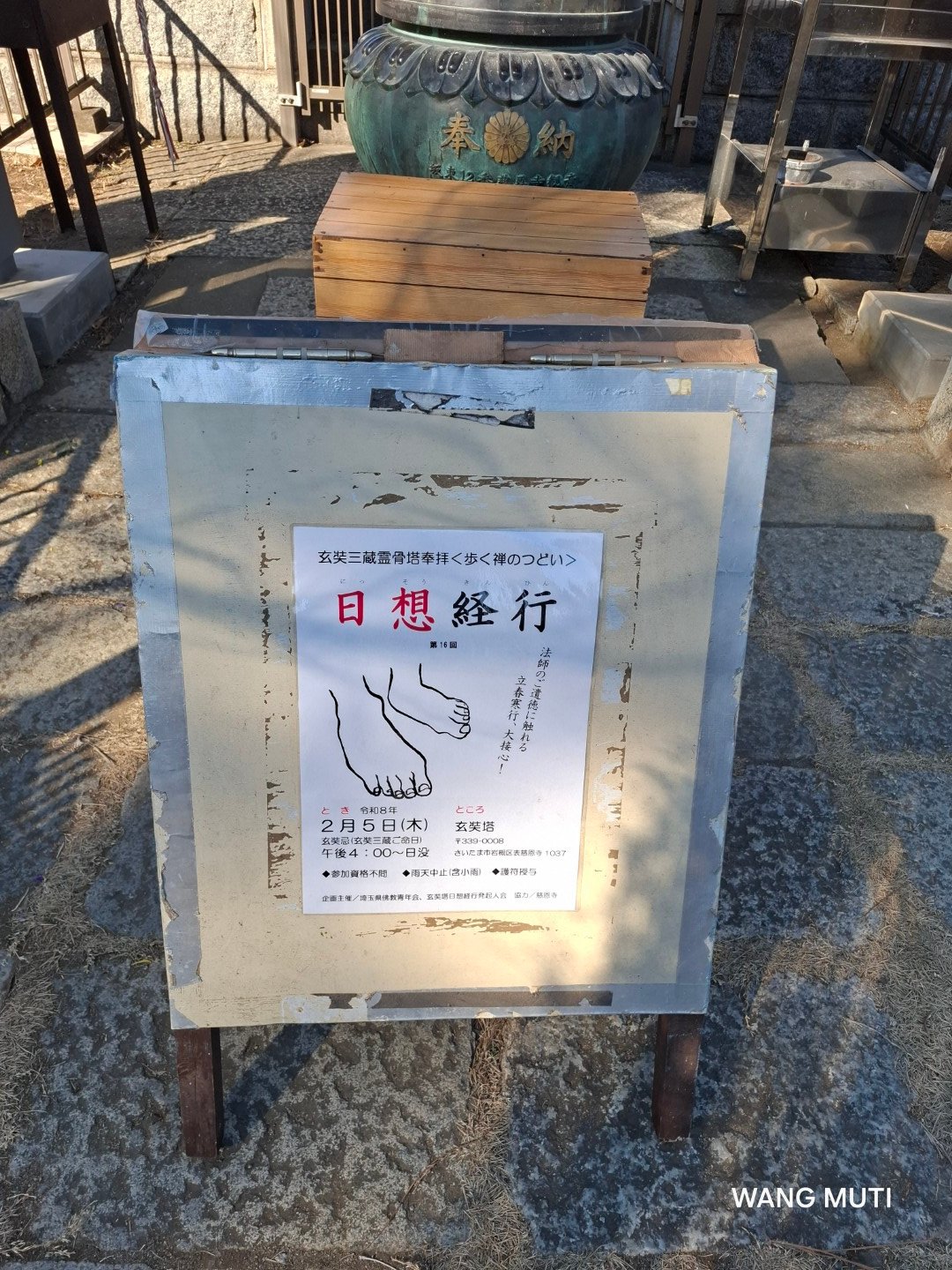
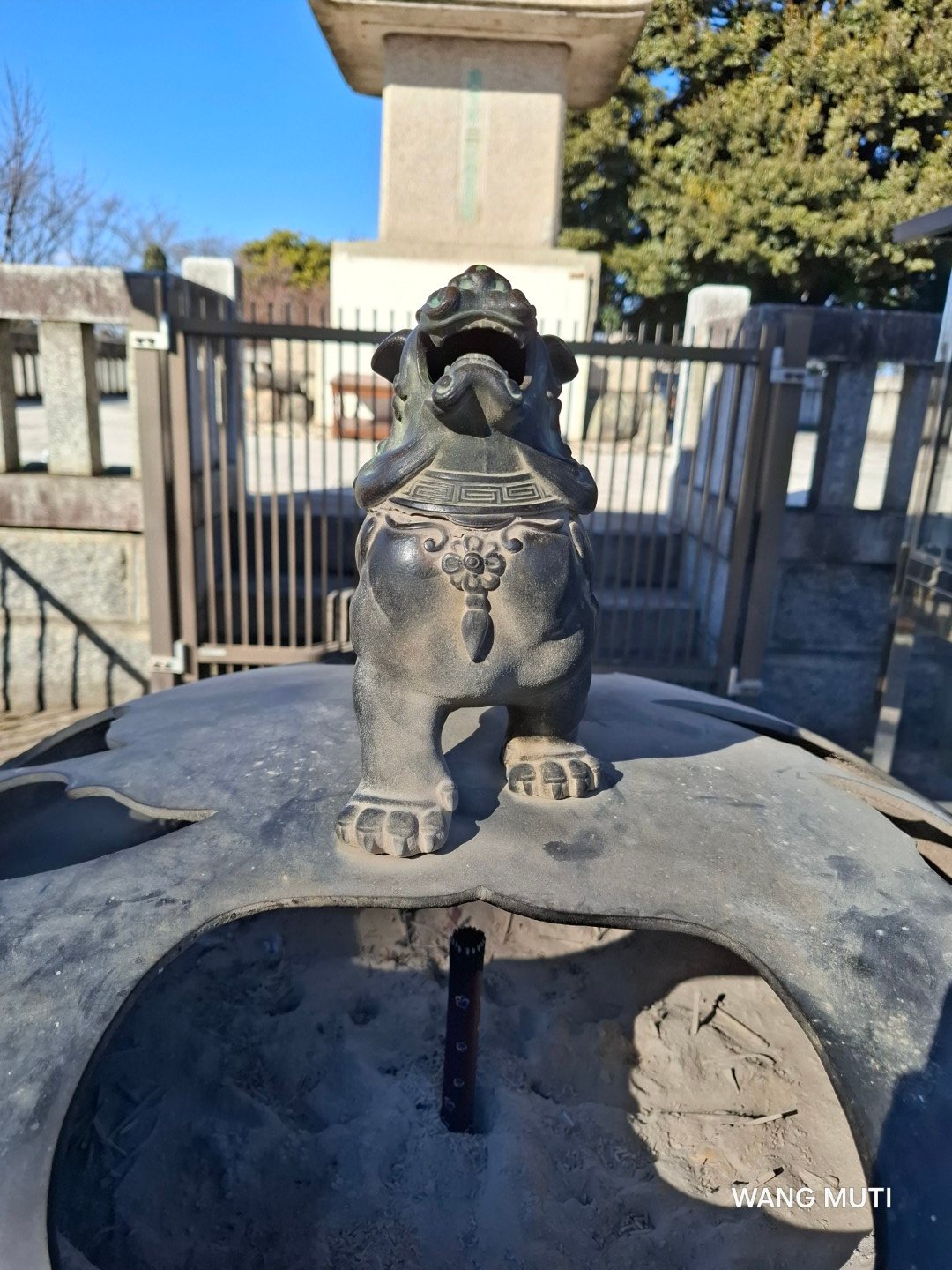
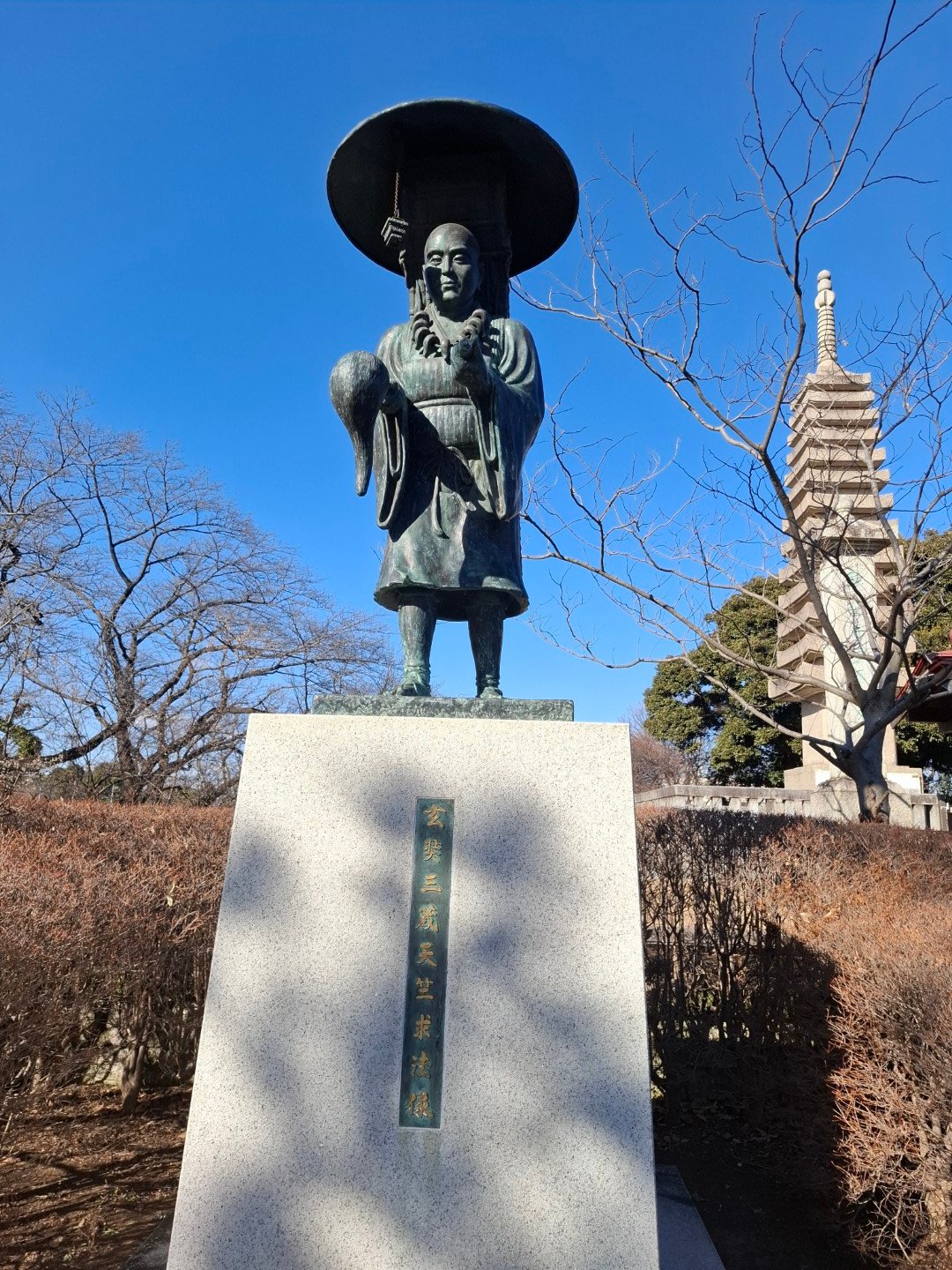
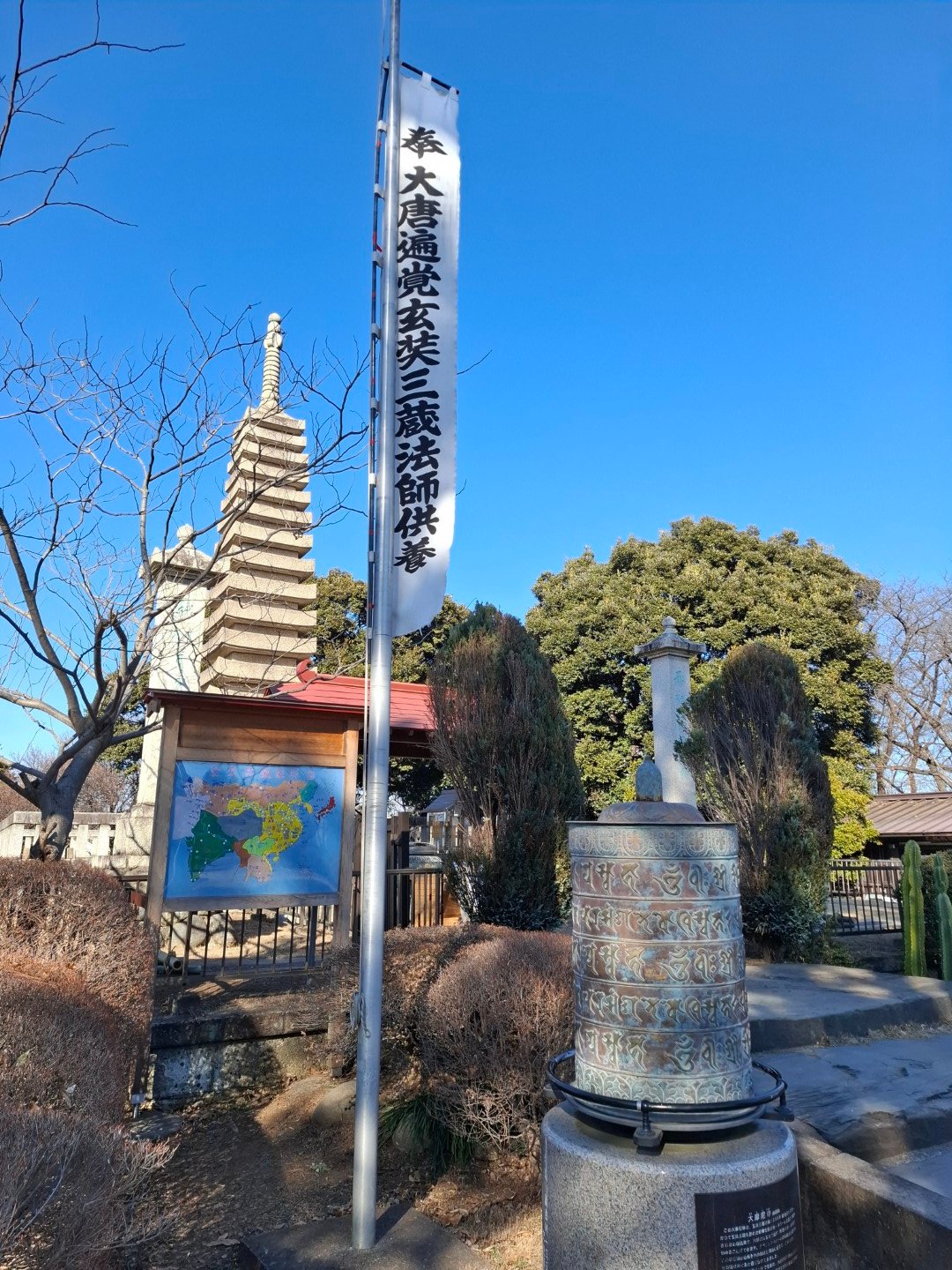

玄奘三蔵法師御霊骨の顕揚および埼玉慈恩寺真風論
夫れ(それ)、大覚世尊(仏陀)が入滅あそばされ、正法が流布いたすには、人の弘伝に頼らねばなりません。漢・魏の時代以降、西域の僧侶が東来し、梵語の経典が次々と伝来いたしましたが、教義は入り乱れ、定説がございませんでした。唐代に至り、玄奘三蔵法師が出現なされました。法師は聖教の衰退を嘆かれ、身を捨てて法を求めることを誓われました。万里を独り征き、葱嶺(パミール高原)を越え、流沙を渉り、親しく瑜伽(唯識)を継承され、長安に帰還なされました。経論七十五部、およそ千三百余巻を翻訳され、唯識の中道を打ち立て、震旦(中国)に新たな規準を開かれました。その功徳は巍々として、日月と共に輝いております。
然れども、大師の御色身(肉体)は示寂されましたが、御霊骨は幾多の変遷を経られました。千年の時を経て、抗日戦争の戦火の中、金陵(南京)にて再び世に現れ、海を渡り扶桑(日本)の埼玉・慈恩寺に駐錫され、さらに宝島・台湾へと分灯なさいました。これは誠に不可思議なる因縁であり、近代日中仏教交流の佳話でございます。今ここに、『真風』等の文献、『開元釈教録』及び諸家の史料に基づき、大師の翻訳の御事績と御霊骨流転の始末を総述し、慈恩宗(法相宗)の教義をもって照らし合わせ、石に刻むが如く心に銘じ、久遠に伝えんとするものでございます。
【西行求法と翻訳の偉業】
大師の俗姓は陳、御名は禕(い)、洛州緱氏の人でいらっしゃいます。幼少より聡明であられ、早くに出家され、多くの経典を博覧なさいました。しかし当時の講義が各々宗派を異にし、異説が紛々としていることを憂い、遂に弘誓を発し、西のかた天竺(インド)へ行き、『十七地論』(即ち『瑜伽師地論』)を求め、群疑を晴らさんと思し召されました。
貞観三年(六二九)、国禁がいまだ開かれぬ中、大師は禁を犯して独り旅立たれました。玉門関を出で、流沙を渡られましたが、上には飛ぶ鳥なく、下には走る獣なく、ただ枯骨を標識とするのみでございました。高昌、屈支を経て、雪積もる凌山を越え、飢えと寒さを忍ばれ、九死に一生を得てもなお悔いることはございませんでした。百十カ国を経て、那爛陀(ナーランダ)寺に到着され、戒賢論師に師事なさいました。戒賢論師は百歳を超える高齢であられましたが、大師のために『瑜伽師地論』及び諸大乗経論を講じられました。大師は精勤されること比類なく、五天竺を歴遊し、外道を破り、小乗を伏し、その名は五天竺に轟きました。戒日王(ハルシャ・ヴァルダナ)は大師のために無遮大会を設けられ、十八国の王は心より帰依し、大師の立論に難癖をつける者は誰一人おらず、「大乗天」の尊号を奉られました。
【帰国と訳場の開設】
貞観十九年(六四五)、大師は諸王の引き留めを固辞され、梵本六百五十七部を載せて長安に帰還なされました。太宗皇帝は洛陽にて出迎えられ、弘福寺に住するよう勅を下され、海内の名僧を招集して訳場を開立なさいました。大師の経典翻訳は、厳格かつ周密でございました。貞観十九年五月より龍朔三年(六六三)十月に至るまで、およそ十九年、書物を手放すことなく、筆を休めることなく続けられました。翻訳なされた経論は、文質彬彬(ぶんしつひんぴん)として、信・達・雅を兼ね備え、世に「新訳」と称されております。
大師の御色身は滅せられましたが、法身(教え)は常に在します。唐の智昇撰『開元釈教録』巻八に記されるところによれば、大師が翻訳された経論は多岐にわたり、三蔵を網羅しております。ここにその要点を挙げ、法身を顕彰いたします:
- 阿含部:法の根源を重んじ、小乗の教えも廃されませんでした。『縁起経』『本事経』等を訳されました。
- 般若部:大乗の智慧の総体であります。晩年、精力を傾けて『大般若波羅蜜多経』六百巻を訳されました。これは鎮国の宝であります。
- 瑜伽唯識部:立宗の根本であります。『瑜伽師地論』百巻、『成唯識論』十巻等を訳され、厳密なる法相の体系を構築なさいました。
- 毘曇部:有部論蔵の究極であります。『大毘婆沙論』二百巻、『倶舎論』等を訳されました。
- 中観部:空と有を疎通なさいました。『大乗広百論釈論』等を訳されました。
- 密教その他:『不空羂索神呪』等や、『大唐西域記』十二巻等を訳されました。
大師の翻訳事業は、質・量ともに重厚であり、誠に唐の太宗が序文で讃えられた通り、「松風水月もその清華に比するに足らず」と申し上げられましょう。
【御霊骨の変遷と金陵での再現】
麟徳元年(六六四)、大師は示寂あそばされました。初めは白鹿原に葬られましたが、後に興教寺へ改葬されました。唐末の戦乱により塔は破壊され、御霊骨は散逸いたしました。宋の天聖五年(一〇二七)、金陵(南京)の僧・可政が頂骨を迎え、南京の長干寺(大報恩寺)に埋蔵いたしました。それより千載、世人は次第にそのことを忘れておりました。
昭和十七年(一九四二)、日本軍が南京の大報恩寺遺跡を整地した際、偶然にも石函を得ました。銘文により玄奘三蔵の頂骨であることが確証されました。協議の結果、御霊骨は三つに分たれました。一つは南京に留め、一つは北平(北京)へ送り、一つは仏教親善の証として日本へ贈られました。
【日本への東渡と慈恩寺の因縁】
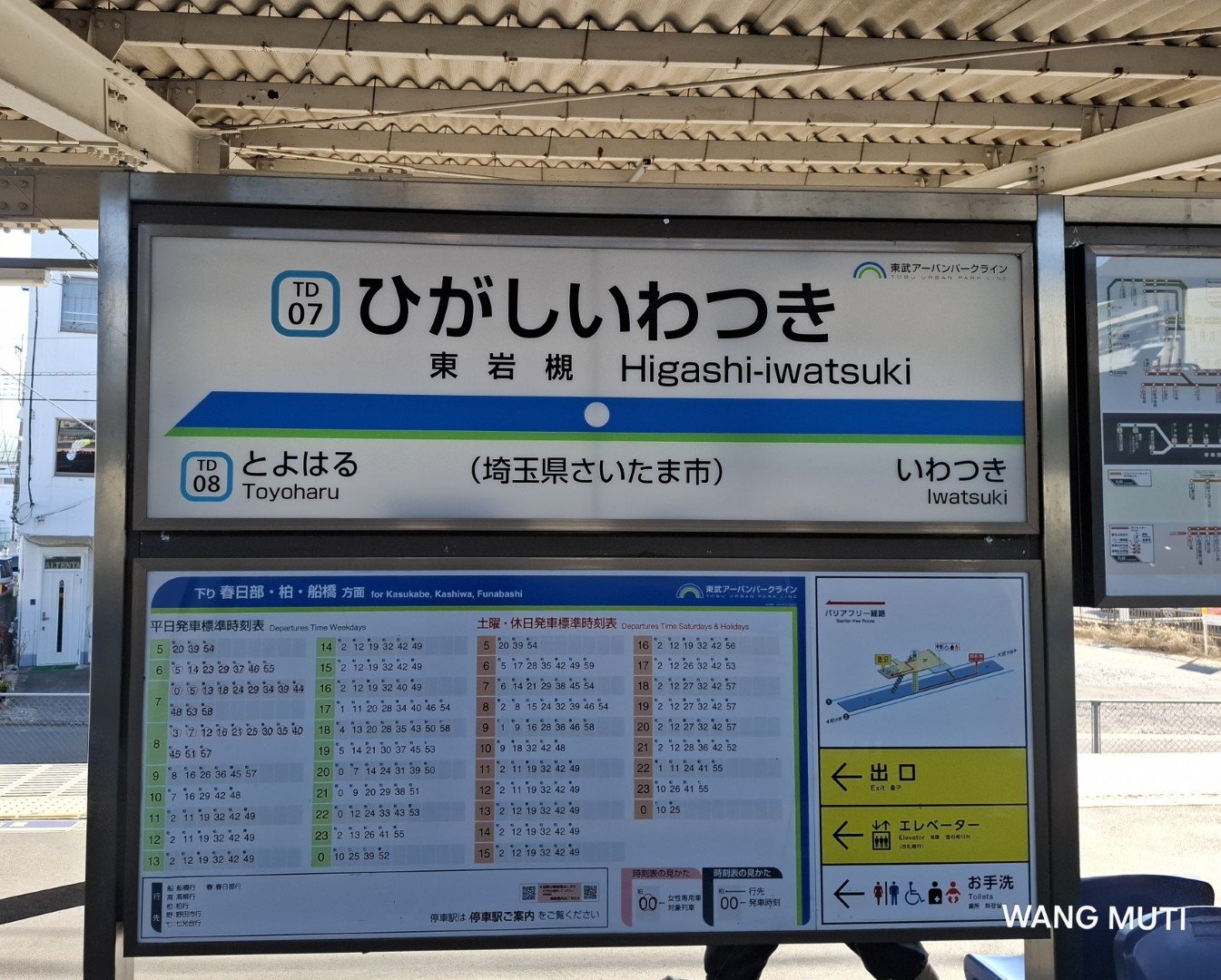
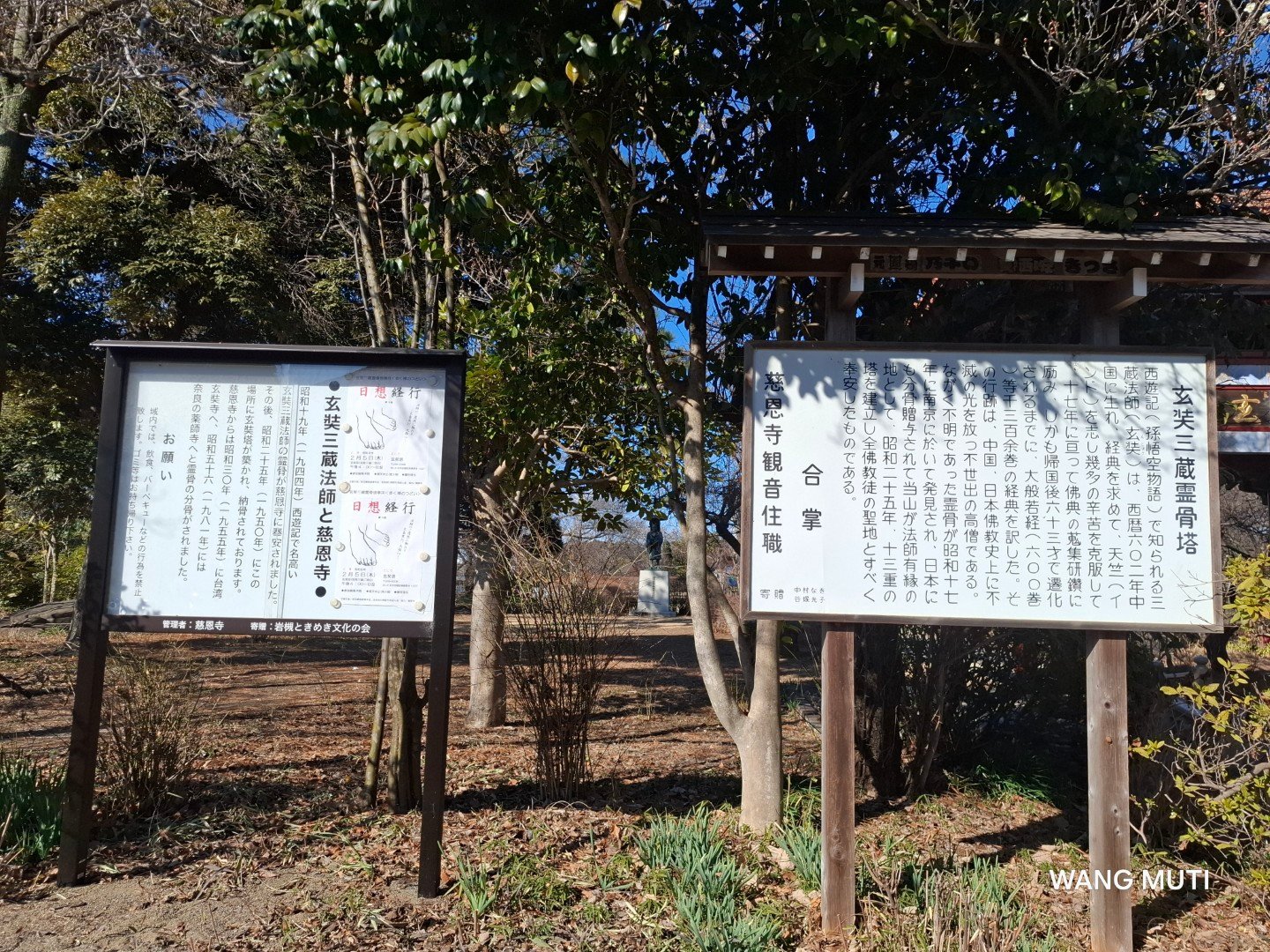
昭和十九年(一九四四)、御霊骨は海を渡り日本へ到着され、初めは増上寺に奉安されました。やがて戦火を避けるため、埼玉県岩槻の「華林山慈恩寺」へ遷座なさいました。この地は幽玄で静寂であり、且つ寺名が長安の「大慈恩寺」と同じであることは、冥冥の中に定数があったと拝察されます。
戦後、中華民国政府は当初、戦時中の文物の返還を求める意向でありました。しかし、蔣中正(介石)総統は日中文化の同源を念われ、また慈恩寺が大師と縁深いことから、遂に次のような口頭の御命令を下されました。「御霊骨は返還に及ばず……宜しくこの地をもって顕彰の場所となすべし」。このお言葉により、御霊骨は永久に東瀛(日本)に奉安されることとなりました。
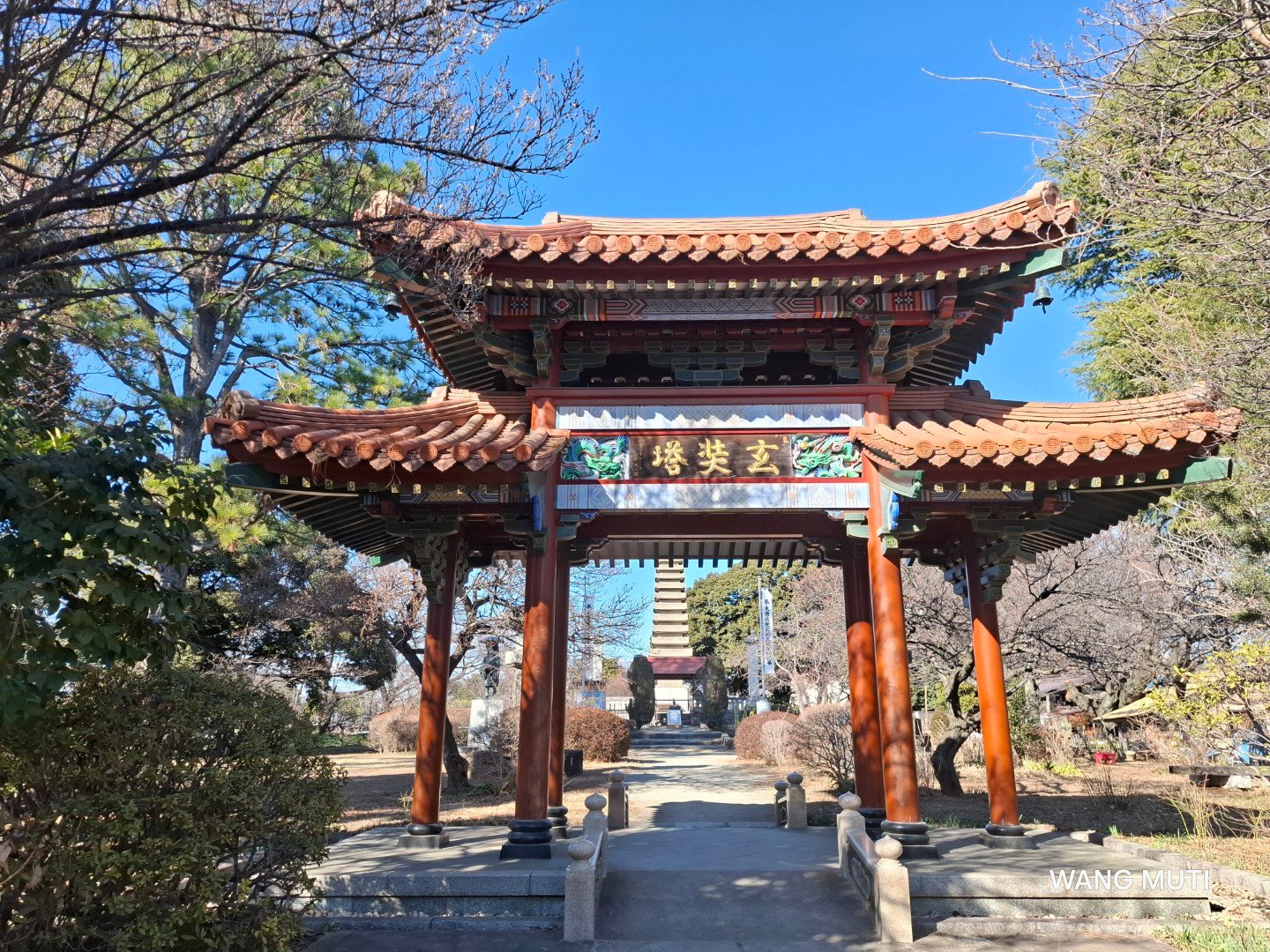
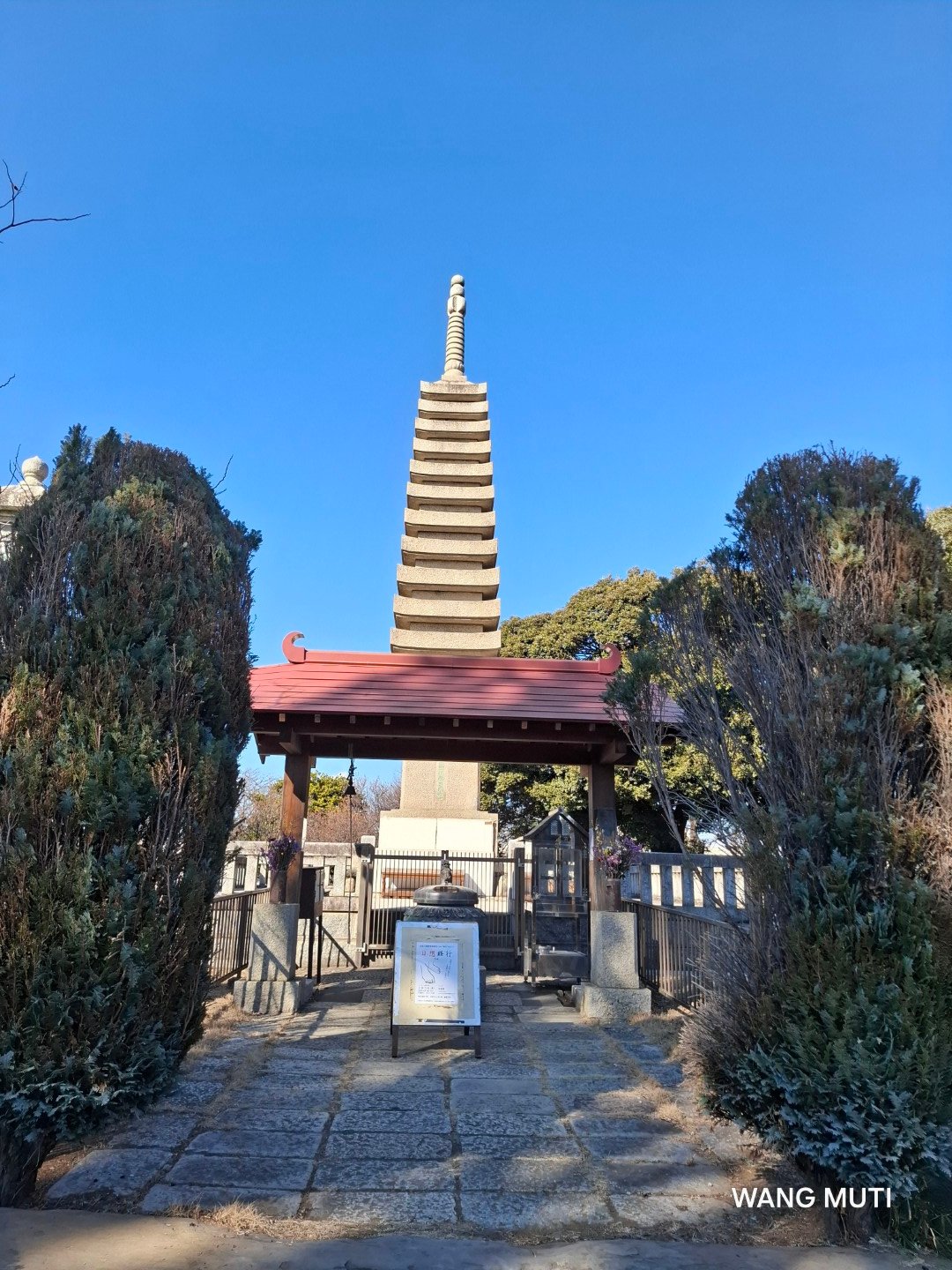
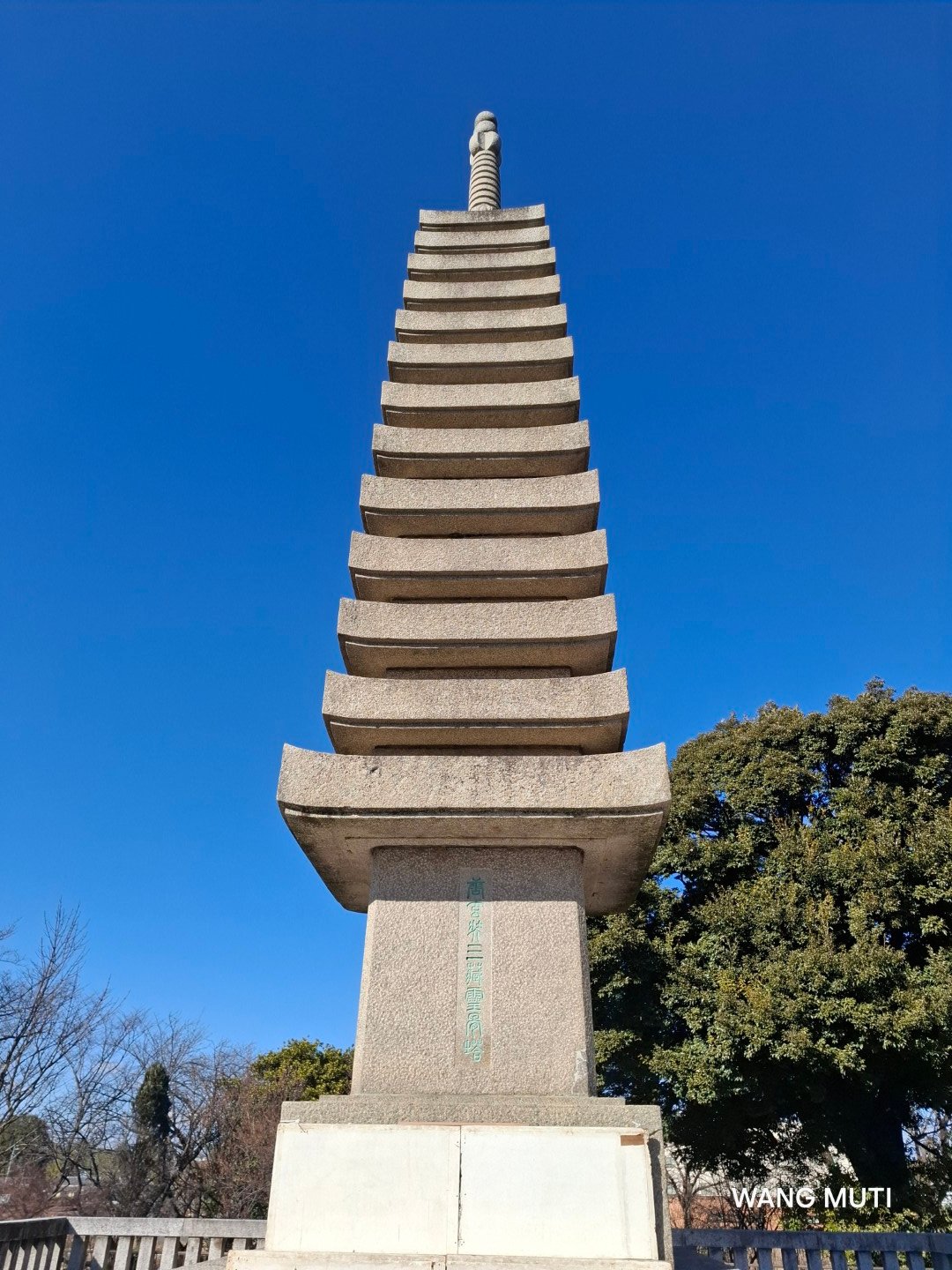
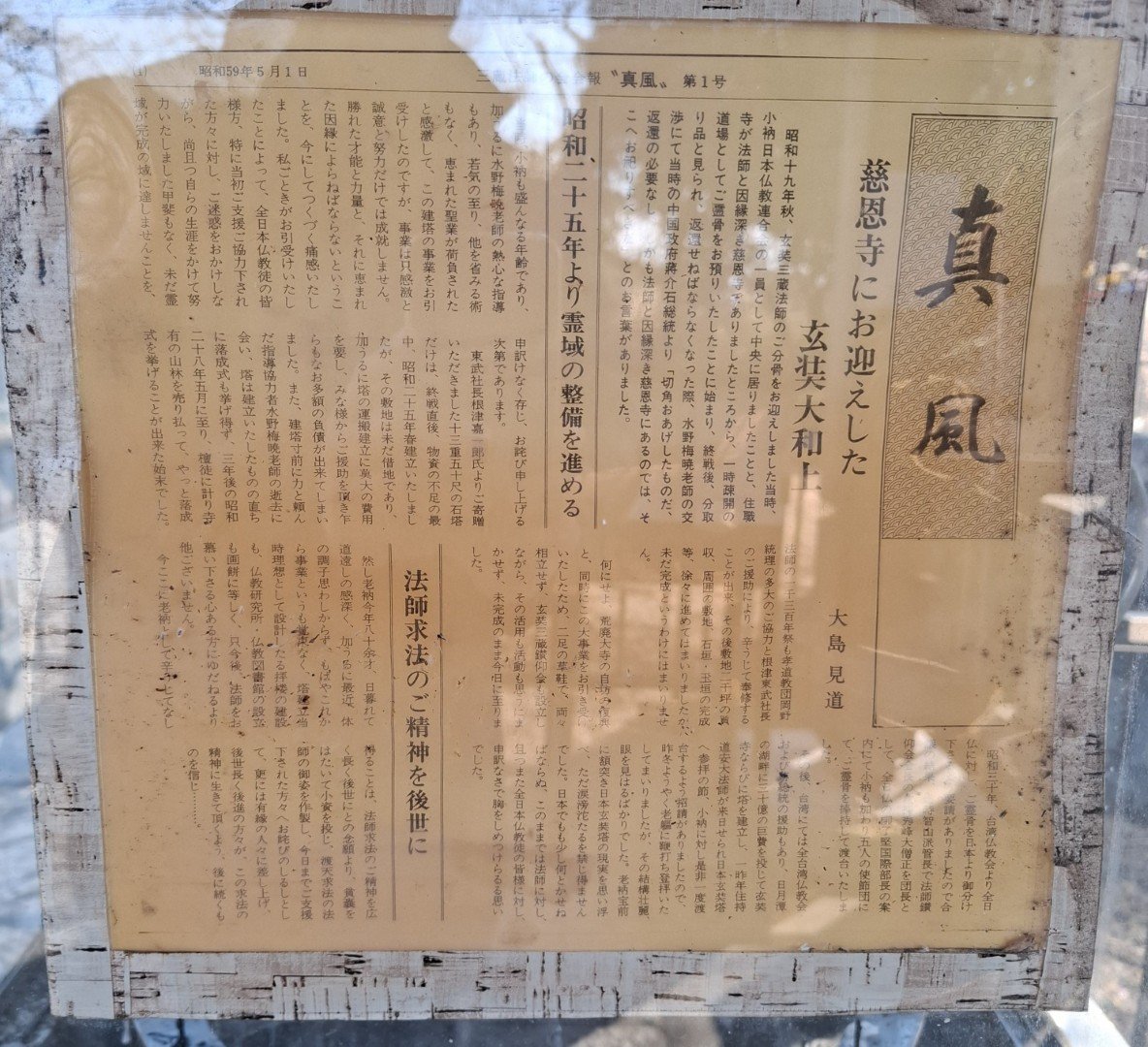
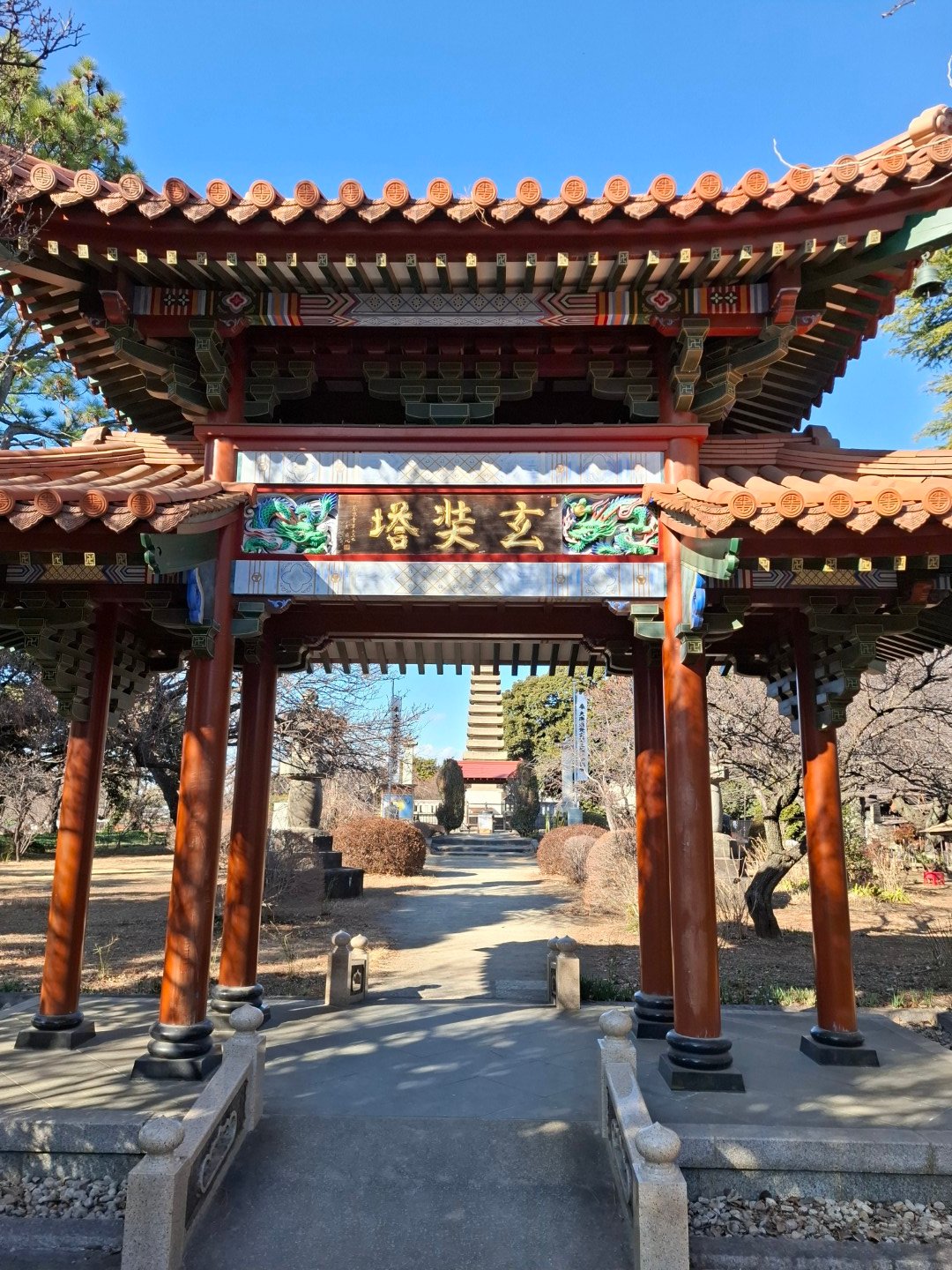
日本奉安の許可を得て後、慈恩寺住職・大島見道師は塔の建立を発願なさいました。戦後の民生は疲弊しておりましたが、師は自ら「竹籠で水を汲む(が如き徒労)」と喩えつつも、艱難を恐れず、遂に東武鉄道の根津嘉一郎氏より花崗岩の寄進を感じ得られました。昭和二十八年(一九五三)、大雁塔の形制を模した十三重玄奘塔が落成し、関東に聳え立ち、日中仏教の聖地となりました。
【台湾への分灯】
民国四十四年(一九五五年)、台湾仏教界が御霊骨の奉迎を願い出られました。慈恩寺は御舎利を分かたれ、大島見道師がこれを奉じて台湾へ赴かれました。御霊骨は初め日月潭の玄光寺に奉安され、後に玄奘寺、慈恩塔が建立されました。これより、玄奘大師の法身(訳経)と御色身(霊骨)は、宝島(台湾)にて大いに光を放たれました。昭和五十六年(一九八一)には、さらに奈良・薬師寺(法相宗大本山)へも分霊され、埼玉・奈良・南投の三地が輝き合う形勢となりました。
【現代の参拝と教義による観照】
夫れ、法は孤起せず、境に仗(よ)りて方(はじ)めて生ず。玄奘大師の御霊骨が埼玉に鎮座なされたからには、後世の行者が正見をもって観照してこそ、霊山未だ散ぜずの義が顕れるものでございます。
私(王穆提)は、夙(つと)に徳本を植え、唯識を研鑽し、かつて『玄奘三蔵訳撰全輯』を編纂して師恩に報い奉りました。目録の完成後、私は海を渡り、埼玉の岩槻へ直行いたしました。時は春、桜は雪の如く、十三重の花崗岩の塔を覆っておりました。私は塔を三周し、至心に頂礼いたしました。今昔を思い、大師が当時砂漠を独り征かれた苦難や、玉華宮での訳経の勤勉さを想い、涙を禁じ得ませんでした。この初めての参拝は、実のところ「ルーツ探し」であり、唯識法相の根源を尋ね、また漢伝仏教の源流を尋ねるものでございました。
その後、私は慈恩宗の教義を深く研究し、二度目の参拝として塔前へ参りました。初回の感動とは異なり、今回は沈静と思索が増しておりました。私は塔下に黙立し、思惟いたしました。「大師の御舎利(色法)と、大師が伝えられた『唯識無境』(心法)の旨は、究極において如何に円融するのか? 事象に滞って、その理を忘れてはならないのではないか」と。
【唯識法相の精義と大師の判教】
そもそも大師の西行の初志は、『十七地論』の疑義を解くことにございました。当時、震旦(中国)の仏法は、羅什や真諦ら諸師によって伝えられておりましたが、「空・有」の弁別において、未だ不明な点が多くございました。
大師が宗旨となされたのは、瑜伽唯識でございます。その義とは何か。謂く「万法唯識」、心の外に法は無し、ということであります。山河大地、草木叢林は、皆、我々の阿賴耶識(アーラヤ識)が変現したものであります。大師は帰国後、『成唯識論』を揉訳(じゅうやく)され、**「五重唯識」**の観法を立てられました:
- 遣虚存実(虚を遣り実を存す):遍計所執の虚妄を遣り、依他・円成の実性を存す。
- 捨濫留純(濫を捨て純を留む):相分の濫を捨て、見分の純を留む。
- 摂末帰本(末を摂して本に帰す):相見の二分の末を摂して、自証分の本に帰す。
- 隠劣顕勝(劣を隠して勝を顕す):心所の劣を隠し、心王の勝を顕す。
- 遣相証性(相を遣り性を証す):依他起の相を遣り、円成実の性を証す。
この五重の観法は、層を追って進み、心と物の関係を剖析すること精密絶倫でございます。大師はこれを以て当時の偏空の弊害を正し、大乗妙有の理を顕された、誠に仏教心理学の極致と申せましょう。
【論:唯識による霊骨の解釈】
論に曰く:もし唯識であるならば、如何にして世間に現に玄奘大師の御霊骨、埼玉慈恩の宝塔、ないし日月潭の伽藍等の諸法が顕現していると言えるのか? かつ、彼の大師は既に無余涅槃に入られ、御色身は久しく滅し、薪尽きて火は消えたのに、何故また舎利の東渡や、宝島への分灯という事象が有るのか? また何故、後世の学人・王穆提らが海を渡り瞻礼(せんれい)することを待って、初めてその徳が顕れるのか? 大乗唯識の真理を顕し、諸有情の「執実(実在への執着)」「執断(虚無への執着)」の二辺を破らんがため、故にこの論を造る。
難じて曰く:世間に現に見る山河大地、戦火、霊骨の出土は、皆、識を離れて実在しているではないか。如何にして唯識の変現と言うのか?
答えて曰く:これら種々の法は、皆、識を離れるものではございません。謂く、共業(ぐうごう)の増上縁の力、及び諸有情の各自の種子により、因縁和合して、色等の境相に似て変現し流転しているのです。玄奘大師の御霊骨とは、識を離れた実我・実法ではございません。これは大師の往昔の無漏の大願が熏習した種子と、東アジアの諸有情の共業の増上縁の力が、金陵においては出土を変現し、埼玉においては宝塔を変現せしめたのでございます。もし霊骨が心を離れて実在すると執着すれば、それは亀毛兎角の如く、体用はございません。もし霊骨が全く作用なきものと執着すれば、断滅見に堕ち、世俗諦を壊すことになります。故に知るべし、この御霊骨は「帯質境(たいしつきょう)」であり、本質(大師の遺骨)に仗(よ)って見分(衆生の敬仰)を生じた、不一不異の、唯識の所現でございます。
論に曰く:また次に、彼の大師の西行求法を観るに、豈(あ)に心を離れましょうか?
貞観三年、大師は独り玉門関を出で、八百里の流沙を渉られました。その時「上に飛鳥なく、下に走獣なし」、ただ枯骨をもって道標とされました。この枯骨とは、即ち「器世間」の壊相であります。大師の「寧ろ西天に向かって一歩して死すとも、東土に向かって一歩して生きるを願わず」との誓願は、即ち「善心所」の「精進」と「信」が相応し、「懈怠」と「恐怖」という諸々の随煩悩を降伏せしめたものでございます。
問う:流沙の険難は、心か、境か?
答う:これ唯識の変現なり。大師の「異熟識」が広大なる荒野(相分)を変現し、第六意識がこれを縁じて、恐怖(見分)を生じたのです。然れども、「妙観察智」に相応する加行位により、大師は心を摂めて内証され、境は唯心なるを知り、故に一切の苦厄を度し、那爛陀に至ることができたのでございます。
論に曰く:御霊骨が千載隠没し、昭和十七年に忽ち金陵にて重光したことは、如何に会通すべきか?
釈して曰く:これは「異熟果」の時至れるなり。長干寺の塔は、大師の御色身舎利の依る所(器界)であります。宋の可政大師が移奉されたのは、「加行」の力であります。千載隠れたのは、衆生の「共業」の闇障であります。抗戦の烽火に至り、兵戈が攘乱し、地大が開裂して石函が顕れたこと、これは偶然ではなく、「引業」と「満業」が倶に熟したためでございます。日本軍高森部隊は、殺伐の具(工兵のスコップ)を持っていたとはいえ、地に触れた刹那、聖物を開顕する「増上縁」を成就したのでございます。
問う:御霊骨既に出でて、何処へ帰すべきか?
答う:有情の心識の流転に随順す。時に水野梅曉師は、「悲」と「智」の心所を具え、聖物が毀損されんことを恐れ、遂に分別を起こし、分奉を提唱されました。この分別は遍計所執にあらず、依他起の善巧(方便)でございます。故に霊骨は三分され、三処の顕現は、月が千江に印するが如く、本質は一なれど映像は三、皆、識を離れぬものでございます。
論に曰く:御霊骨の東渡ありて、何故に埼玉慈恩寺に駐錫されたのか?
釈して曰く:名号と処所は、皆、唯識の所変なれど、無因ではございません。長安に「大慈恩寺」あり、埼玉にも「慈恩寺」あり。名の相同じきは、「名言種子(みょうごんしゅうじ)」の熏習力を表します。戦後、蔣介石総統の「返還に及ばず」との御心は、唯識より観れば、「捨」心所と「無瞋」心所が相応したものでございます。この御言葉(声塵)が大島見道師らの耳根に熏じ、歓喜と安心を生じせしめ、仏教の「法爾道理」を成就したのでございます。
論に曰く:また慈恩宝塔の建立を観るに、豈に土石が自ら成ったものでしょうか?
釈して曰く:非なり。大島見道師の「願力」を因とし、根津嘉一郎氏の「財施」を縁とし、十三層の花崗岩の聚(あつまり)を変現せしめたのです。大島師が自ら「竹籠で水を汲む(が如き徒労)」と述べられたのは、この身の力の微々たること(依他起の劣)を喩えつつ、願力の窮まり無きこと(善種子の勝)を表しております。信心あるが故に、石は即ち宝塔となり、法身の流露となるのでございます。
論に曰く:二度錫杖を杖つき、埼玉玄奘塔を参礼せり。この行いは何の義か?
釈して曰く:これは「能縁(認識する心)」と「所縁(認識される対象)」の殊勝なる交涉を顕します。初回の参訪において、眼識は桜林の中の石塔(性境)を縁じ、第六意識は「これは大師の御霊骨なり」と随念分別(帯質境)し、感極まって涙いたしました。この時見たものは、未だ「事象」に滞り、「道理世俗」に属します。二度目の参訪においては、事を摂して理に帰しました。塔下に立ち、外相を縁ぜず、唯だ内識を観じました。「色は空に異ならず、骨は即ち骨に非ず」。御霊骨とは、大師の悲願の留める所であり、実我の積聚ではございません。この時見たものは、「理」に入り、「証得世俗」に近いものでございます。
問う:もし御霊骨が唯識の所変であり、実体無きものならば、後世の学人・王穆提らは、何故海を渡り参礼する必要があるのか?
答う:慈恩祖師(基師)が建立された**「四重二諦」**の義に依り、四つの位次において、御霊骨・宝塔の相を安立し、謬(あやま)り無からしむるが故でございます。
- 世間世俗(有名無実):諸々の凡夫が、この御霊骨を実有と執着し、古物として執着する場合。これは遍計所執性であり、実体はございません。
- 道理世俗(随事差別):この御霊骨は四大仮合であり、因縁により生滅するものです。しかし、かつて大師の御色身の一部であり、西行求法の労を負われたものです。初回の参訪において眼識が縁じたのは、この作用ある「事」でございます。
- 証得世俗(方便安立):問う:既に無常なるを知りて、何故恭敬を生ずるか? 答う:惑を断ち真を証せんが為なり。この御霊骨は、色法に属すといえども、大師の無漏法身の等流(とうる)でございます。参礼者をして善種子を熏習せしめ、無漏の智慧を引き出す「増上縁」となります。二度目の参訪においては、枯骨を縁ずるにあらず、大師の求法の相を変起し、自心を内熏するが故に、証得世俗と名づけます。
- 勝義世俗(仮名安立の極致):究極を言えば、骨は即ち骨に非ず、是を骨と名づく。この御霊骨は当体即ち空、二空の顕す真如なり。塔前にて黙照し、この色法は真如に異ならずと悟る。埼玉は即ち奥明(浄土)、霊骨は即ち法界なり。
結論:色身は法身の依る所、法身は色身の顕す所なり。経録を編纂するは法身を見奉ることであり、霊塔を参礼するは色身を見奉ることなり。色法不二、即ち真風を顕揚するの極致でございます。
論に曰く:かくの如く唯識の理に依り、玄奘御霊骨流転の始末を剖析するは、何の意図にあるか?
釈して曰く:「真風」の尽きざるを顕し、後学を策励せんが為なり。大島見道師の「竹籠で水を汲む」は、即ち菩薩の「無所得」にして為すの行なり。水野梅曉師の斡旋は、即ち菩薩の「有情を摂益する」戒なり。蔣公の「徳を以て怨みに報いる」は、即ち菩薩の「忍辱」の行なり。
願わくは此の功徳を以て、法界に回向せんことを。埼玉と南投、金陵は共に一脈なり。真風は万古に吹き、唯識は大千を照らす。見聞し随喜する者、同じく大菩提を証さんことを。
玄奘三蔵御霊骨顕揚および埼玉慈恩塔真風論
歳次乙巳(きのとみ)の年 菩薩戒弟子 王穆提 謹んで造る
(時は仏暦二五七〇年 孟春の吉日)
Treatise on the Exaltation of Tripitaka Master Xuanzang’s Sacred Relics and the True Style of Saitama Jion-ji
Now, after the Great Awakened World-Honored One (The Buddha) entered Parinirvana, the propagation of the True Dharma relied upon human transmission. Since the Han and Wei dynasties, monks from the West came East, and Sanskrit scriptures arrived in succession; yet, the doctrines were diverse and confusing, with no single standard to follow. By the Tang Dynasty, Tripitaka Master Xuanzang appeared. Lamenting the decline of the Holy Teachings, he vowed to sacrifice his life to seek the Dharma. He traveled ten thousand miles alone, crossed the Pamir Mountains, traversed the shifting sands, personally inherited the Yogacara (Consciousness-Only) teachings, and returned to Chang'an. He translated seventy-five sutras and sastras, totaling over one thousand three hundred fascicles, established the Middle Way of Consciousness-Only, and opened a new era for the Buddhism of Zhendan (China). His merit is lofty, shining as brightly as the sun and moon.
However, although the Master’s physical body demonstrated extinction, his Spiritual Relics (Sarira/Spirit Bones) have undergone great vicissitudes. After a thousand years, they miraculously reappeared in Jinling (Nanjing) amidst the fires of the War of Resistance. They then crossed the sea to Fusang (Japan), took up residence at Jion-ji in Saitama, and further divided their light to the Treasure Island of Taiwan. This is truly an inconceivable chain of causation and a beautiful tale of modern Sino-Japanese Buddhist exchange. Now, based on the "True Style" (Shinpu) documents, the Kaiyuan Era Catalog of Buddhism, and various historical records, I summarize the history of the Master’s translation achievements and the migration of his relics, and analyze them through the doctrines of the Cien (Faxiang) School, engraving this upon stone and heart to be handed down for eternity.
【The Journey West and the Great Translation Enterprise】
The Master’s secular surname was Chen, his given name Yi; he was a native of Goushi, Luozhou. Intelligent from youth, he ordained early and read widely. However, feeling that the lectures of the time followed different paths and that conflicting theories abounded, he made a great vow to travel west to India (Tianzhu) to seek the Yogacarabhumi-sastra (The Treatise on the Stages of Yogic Practice) to resolve all doubts.
In the third year of Zhenguan (629), when the national borders were closed, the Master violated the ban and traveled alone. He exited the Jade Gate and crossed the shifting sands. "Above, there were no flying birds; below, no running beasts; only dry bones served as signposts." Passing through Turpan and Kucha, crossing the snow-covered Ling Mountains, enduring hunger and cold, he did not regret his actions even in the face of death. Traversing one hundred and ten countries, he arrived at Nalanda Monastery and studied under Master Silabhadra. Silabhadra, over one hundred years old, lectured on the Yogacarabhumi-sastra and other Mahayana texts for the Master. The Master was diligent beyond measure, touring the Five Indias, refuting heretics, subduing the Hinayana, and making his name renowned throughout the Five Indias. King Harsha held a Great Unrestricted Assembly for him; kings of eighteen countries converted wholeheartedly. No one dared to challenge the Master’s thesis, and he was honored with the title "Mahayanadeva" (Deity of the Great Vehicle).
【Return and Opening the Translation Bureau】
In the nineteenth year of Zhenguan (645), the Master declined the kings' requests to stay and returned to Chang'an with 657 Sanskrit texts. Emperor Taizong welcomed him at Luoyang, ordered him to reside at Hongfu Temple, summoned renowned virtues from across the realm, and established a Translation Bureau. The Master’s translation was rigorous and precise. From May of the 19th year of Zhenguan until October of the 3rd year of Longshuo (663), for nineteen years, he never put down his scrolls or stopped his brush. The translated texts were refined in literary quality and substance, possessing faithfulness, comprehensibility, and elegance; they were known to the world as the "New Translations."
Although the Master’s physical body has perished, his Dharma Body remains forever. According to Volume 8 of the Kaiyuan Era Catalog of Buddhism by Tang Dynasty monk Zhisheng, the Master’s translations were vast in category, covering the Tripitaka. I list the essentials here to manifest his Dharma Body:
- Agama Division: Honoring the source of the Dharma without discarding the Hinayana. He translated the Nidana Sutra, Itivrttaka Sutra, etc.
- Prajna Division: The sum of Mahayana wisdom. In his later years, he devoted his energy to translating the 600-fascicle Maha-Prajnaparamita Sutra, a treasure for protecting the nation.
- Yogacara Division: The root of his school. He translated the Yogacarabhumi-sastra (100 fascicles), the Cheng Weishi Lun (10 fascicles), etc., establishing a rigorous system of Dharma-characteristics.
- Abhidharma Division: The ultimate Sarvastivada treatises. He translated the Abhidharma-mahavibhasa-sastra (200 fascicles), the Kosa, etc.
- Madhyamaka Division: Bridging Emptiness and Existence. He translated the Sata-sastra-vaipulya, etc.
- Esoteric and Others: He translated texts such as the Amoghapasa Dharani, and the Great Tang Records on the Western Regions (12 fascicles).
His translation achievements were weighty in both quality and quantity, truly as Emperor Taizong praised in his preface: "The wind in the pines and the moon in the water are not enough to compare to his purity; heavenly dew and bright pearls cannot match his radiance."
【The Vicissitudes of the Relics and Reappearance in Jinling】
In the first year of Linde (664), the Master entered Parinirvana. Initially buried on the Bailu Plain, he was later moved to Xingjiao Temple. During the chaos of the late Tang Dynasty, the pagoda was destroyed and the bones scattered. In the fifth year of Tiansheng of the Song Dynasty (1027), the monk Kezheng of Jinling welcomed the parietal bone to Changgan Temple (Great Bao'en Temple) in Nanjing for burial. For a thousand years, the world forgot this.
In the 17th year of Showa (1942), the Japanese army was clearing land at the ruins of the Great Bao'en Temple in Nanjing and accidentally discovered a stone chamber. The inscription confirmed it contained Xuanzang’s parietal bone. After negotiation, the relics were divided into three parts: one remained in Nanjing, one was sent to Beiping (Beijing), and one was gifted to Japan as a symbol of Buddhist amity.
【The Eastward Crossing and the Destiny of Jion-ji】
In the 19th year of Showa (1944), the relics crossed the sea to Japan. Initially enshrined at Zojoji Temple, they were evacuated to "Karinzan Jion-ji" in Iwatsuki, Saitama Prefecture, due to the war. This place was secluded, and the temple's name matched the "Great Cien Temple" in Chang'an, suggesting a destiny determined by the unseen.
After the war, the Republic of China government initially intended to reclaim wartime artifacts. However, President Chiang Kai-shek, considering the shared cultural origins of China and Japan and the connection between Jion-ji and the Master, issued a verbal order: "There is no need to return the spiritual relics... It is appropriate to make this place a site for manifesting his virtue." With these words, the relics were permanently enshrined in Japan.
After obtaining permission to keep the relics, Abbot Oshima Kendo of Jion-ji vowed to build a pagoda. Although the post-war livelihood was destitute, the Master compared himself to "drawing water with a bamboo basket" (a seemingly futile effort), yet he did not fear the hardship. Eventually, his sincerity moved Mr. Nezu Kaichiro of Tobu Railway to donate granite. In the 28th year of Showa (1953), the thirteen-story Xuanzang Pagoda, modeled after the Great Wild Goose Pagoda, was completed, standing tall in the Kanto region as a sacred site for Sino-Japanese Buddhism.
【Dividing the Lamp to Taiwan】
In the 44th year of the Republic of China (1955), the Buddhist community in Taiwan requested to welcome the relics. Jion-ji divided the relics, and Abbot Oshima Kendo carried them to Taiwan. The relics were first enshrined at Xuanguang Temple at Sun Moon Lake, and later the Xuanzang Temple and Cien Pagoda were built. From then on, Master Xuanzang’s Dharma Body (scriptures) and Physical Body (relics) shone brightly on the Treasure Island. In 1981, relics were further divided to Yakushiji Temple in Nara (Head temple of the Hosso School), creating a triangular radiance across Saitama, Nara, and Nantou.
【Modern Pilgrimage and Doctrinal Contemplation】
Now, the Dharma does not arise in isolation; it manifests relying on conditions. Since Master Xuanzang’s relics are garrisoned in Saitama, it requires later practitioners to observe them with Right View for the meaning of "The Vulture Peak assembly has not yet dispersed" to manifest.
I (Wang Muti), having planted roots of virtue in past lives and researched Consciousness-Only, compiled the Complete Collection of Tripitaka Master Xuanzang’s Translations to repay the Master’s kindness. After the catalog was completed, I crossed the sea to Iwatsuki, Saitama. It was spring; cherry blossoms like snow covered the thirteen-story granite pagoda. I circumambulated the pagoda three times and prostrated with utmost sincerity. Reflecting on the past, imagining the Master’s suffering in the desert and his diligence in Yuhua Palace, I could not hold back my tears. This first pilgrimage was truly a "search for roots"—seeking the roots of Yogacara and the source of Chinese Buddhism.
Later, having deeply studied the doctrines of the Cien School, I made a second pilgrimage to the pagoda. Unlike the excitement of the first visit, this time was marked by silence and contemplation. I stood silently beneath the pagoda, thinking: "How can the Master’s Sarira (Material Dharma) and the doctrine of 'Consciousness-Only and Non-existence of External Objects' (Mental Dharma) be harmonized? How can one not get stuck in the phenomenon and forget the principle?"
【The Essence of Yogacara and the Master’s Classification of Teachings】
Originally, the Master’s primary intention in going West was to resolve doubts regarding the Yogacarabhumi-sastra. At that time, Buddhism in Zhendan (China) had been transmitted by masters like Kumarajiva and Paramartha, but there was still much unclarity regarding the distinction between "Emptiness" and "Existence."
The Master took Yogacara Consciousness-Only as his tenet. What is its meaning? It means "All phenomena are Consciousness-Only"; there are no dharmas outside the mind. Mountains, rivers, the earth, grass, and forests are all transformations of our Alaya Consciousness. Upon returning to his country, the Master compiled the Cheng Weishi Lun (Demonstration of Consciousness-Only) and established the "Five Levels of Consciousness-Only" contemplation:
- Dismissing the False and Preserving the Real: Dismissing the delusion of Parikalpita (Imaginary Nature) and preserving the reality of Paratantra (Dependent Nature) and Parinispanna (Perfect Nature).
- Discarding the Mixed and Retaining the Pure: Discarding the mixed Image Portion (Nimitta-bhaga) and retaining the pure Seeing Portion (Darsana-bhaga).
- Gathering the Branches and Returning to the Root: Gathering the branches of Image and Seeing, and returning to the Self-Witnessing Portion (Svasamvitti-bhaga).
- Concealing the Inferior and Manifesting the Superior: Concealing the inferior Mental Factors and manifesting the superior Mind King.
- Dismissing the Phenomenon and Realizing the Nature: Dismissing the phenomenon of Paratantra (Dependent Origination) and realizing the nature of Parinispanna (Perfect Reality).
These five levels of contemplation proceed layer by layer, analyzing the relationship between mind and matter with unsurpassed precision. The Master used this to correct the error of "Partial Emptiness" of the time and manifest the principle of "Marvelous Existence" of the Mahayana; truly, this can be called the pinnacle of Buddhist psychology.
【Treatise: Interpreting the Relics via Consciousness-Only】
The Treatise says: If everything is Consciousness-Only, how can one say that Master Xuanzang’s relics, the Saitama Jion Pagoda, and the monasteries at Sun Moon Lake manifestly exist in the world? Furthermore, the Master has already entered Remainderless Nirvana; his physical body has long perished, the firewood is consumed, and the fire is extinguished. Why then is there the event of the Sarira crossing East or the dividing of the lamp to the Treasure Island? And why is it that his virtue only manifests after later students like Wang Muti cross the sea to bow in reverence? To manifest the truth of Mahayana Consciousness-Only and to shatter the two extremes of "Clinging to Reality" and "Clinging to Annihilation" held by sentient beings, I compose this treatise.
Objection: The mountains, rivers, earth, war fires, and unearthed relics seen in the world all exist separately from consciousness. How can you say they are transformations of Consciousness-Only?
Answer: These various dharmas do not exist apart from consciousness. They are the transformations flowing in the likeness of external objects, caused by the power of the Dominant Condition of Common Karma and the individual seeds of sentient beings. Master Xuanzang’s relic is not a real self or real dharma separate from consciousness. It is the transformation manifested in Jinling (excavation) and Saitama (pagoda) by the seeds of the Master’s past stainless vows combined with the power of the common karma of East Asian sentient beings. If one clings to the relic as real outside the mind, it is like the hair of a tortoise (non-existent); it has no substance or function. If one clings to it as having no function at all, one falls into the view of annihilation and destroys the Conventional Truth. Therefore, know that this relic is an "Image of Connected Texture" (Dai-zhi-jing); relying on the Essence (the Master’s bone), the Seeing Portion (sentient beings’ reverence) arises. It is neither identical nor different; it is purely the manifestation of Consciousness.
The Treatise says: Furthermore, observing the Master’s journey West to seek the Dharma—did it depart from the mind?
In the third year of Zhenguan, the Master exited the Jade Gate alone and crossed eight hundred miles of shifting sands. At that time, "Above, there were no flying birds; below, no running beasts," and he used dry bones as signposts. These dry bones were the decaying aspect of the "Container World." The Master’s vow, "I would rather take one step toward the West and die, than take one step toward the East and live," corresponds to the "Mental Factors of Good," specifically "Diligence" and "Faith," which subdued the secondary afflictions of "Laziness" and "Fear."
Question: Was the danger of the shifting sands Mind or Object?
Answer: It was a transformation of Consciousness-Only. The Master’s "Retribution Consciousness" (Vipaka-vijnana) manifested the vast wilderness (Image Portion), and the Sixth Consciousness perceived it, giving rise to fear (Seeing Portion). However, through the "Stage of Preparation" corresponding to the "Wisdom of Marvelous Observation," the Master gathered his mind, internalized the experience, realized that the object is Mind-Only, and thus was able to cross all suffering and arrive at Nalanda.
The Treatise says: How should we interpret the fact that the relics were hidden for a thousand years and suddenly reappeared in Jinling in the 17th year of Showa?
Interpretation: This is the arrival of the time of the "Retribution Fruit." The pagoda at Changgan Temple was the reliance (Container World) for the Master’s physical relics. The reburial by Master Kezheng in the Song Dynasty was the power of "Preparation." The thousand-year concealment was the dark obstruction of the sentient beings' "Common Karma." When the fires of the War of Resistance arrived, weapons disturbed the land, and the earth split open to reveal the stone chamber; this was not accidental, but the maturation of both "Leading Karma" and "Completing Karma." Although the Japanese Takamori Unit held implements of slaughter (engineer shovels), at the moment they touched the ground, they accomplished the "Dominant Condition" for revealing the holy object.
Question: Once the relics appeared, where should they return?
Answer: They follow the flow of the consciousness of sentient beings. At that time, Master Mizuno Baigyo possessed the mental factors of "Compassion" and "Wisdom." Fearing the holy object would be destroyed, he gave rise to discrimination and proposed dividing the relics. This discrimination was not "Imaginary Attachment" but the "Skillful Means" of Dependent Origination. Thus, the relics were divided into three. Their manifestation in three places is like the moon imprinting on a thousand rivers; the essence is one, but the images are three—none apart from consciousness.
The Treatise says: Since the relics crossed East, why did they take up residence at Jion-ji in Saitama?
Interpretation: Names and locations are all transformations of Consciousness-Only, but they are not without cause. There is a "Great Cien Temple" in Chang'an, and a "Jion-ji" in Saitama. The similarity of names indicates the permeating power of "Seeds of Names/Words." After the war, President Chiang Kai-shek’s intention that "there is no need to return" can be viewed through Consciousness-Only as the correspondence of the "Renunciation" and "Non-anger" mental factors. This spoken word (Sound Dust) permeated the hearing of Master Oshima Kendo and others, giving rise to joy and peace, thus accomplishing the "Natural Principle" (Niyama) of Buddhism.
The Treatise says: Furthermore, observing the construction of the Cien Pagoda, did the earth and stone accomplish it by themselves?
Interpretation: No. It was caused by the "Power of Vows" of Master Oshima Kendo and conditioned by the "Charity of Wealth" of Mr. Nezu Kaichiro, manifesting the gathering of thirteen layers of granite. Master Oshima’s self-description of "drawing water with a bamboo basket" metaphorically expresses the meagerness of his physical strength (inferiority of Dependent Nature) while showing the inexhaustibility of his vow (superiority of Good Seeds). Because there was faith, the stone became a pagoda, a revealing of the Dharma Body.
The Treatise says: Since the relics were settled in Saitama, why divide the lamp to Taiwan?
Interpretation: It is like one lamp lighting a hundred thousand lamps; the darkness becomes bright, and the brightness never ends. In the 44th year of the Republic of China (1955), the good roots of sentient beings in Taiwan (Changkya Khutukhtu, Master Baisheng, etc.) matured, giving rise to the mind of seeking (Intention). The Japanese Buddhist community (Kuramochi Shuho, etc.) gave rise to the mind of gratitude (Reciprocation). The two minds harmonized, sensing the division of the relics. Welcomed at Songshan Airport, ten thousand people filled the streets with incense and flowers. This incense, flowers, and chanting are all "Offerings" that permeate the Eighth Consciousness, planting seeds for future Buddhahood.
Question: Are Saitama and Sun Moon Lake one or two?
Answer: Neither one nor two. Regarding location (Container World), separated by ten thousand miles of sea, they are two. Regarding the Relic (Essence), being the same equal outflow of the Master’s Dharma Body, they are one. Regarding Consciousness-Only, both are images transformed by the mind. A practitioner seeing the pagoda in Saitama or the pagoda at Sun Moon Lake sees differently, but the subjective faith is not different. Thus it is said: The True Style crosses East, the Dharma Water flows long; inheriting one vein, there is no separation.
The Treatise says: I visited the Saitama Xuanzang Pagoda twice with my tin staff. What is the meaning of this action?
Interpretation: This manifests the supreme interaction between the "Subjective Perceiver" (No-en) and the "Objective Perceived" (Sho-en). Compiling the Complete Collection of Xuanzang's Translations is "Wisdom of Hearing"; crossing the sea to search for roots is "Wisdom of Reflection"; contemplating before the pagoda is "Wisdom of Cultivation."
First Pilgrimage: My Eye Consciousness perceived the stone pagoda amidst the cherry blossom forest (Nature Realm). My Sixth Consciousness followed with discrimination: "This is the Master's relic, this is proof of the Westward Journey" (Image of Connected Texture). Overcome with emotion, I wept; this was the manifestation of the "Compassion" mental factor. What was seen at this time was still stuck in "Matters" and belongs to the "Logical Conventional Truth."
Second Pilgrimage: Gathering matters to return to principle. Standing beneath the pagoda, I did not perceive external appearances but only observed the internal consciousness. "Form is not different from Emptiness; the bone is not a bone." The relic is what the Master’s compassionate vow left behind, not an accumulation of a real self. What was seen at this time entered "Principle" and is close to the "Evidential Conventional Truth." The act of walking is the "Seeing Portion" of the later student witnessing the "Image Portion" of the Master’s history, ensuring the True Style does not perish and the Dharma Torch shines again.
Question: If the relic is a transformation of Consciousness-Only and has no substantial entity, why must later students like Wang Muti cross the sea to bow in reverence?
Answer: Relying on the doctrine of the "Four Levels of Two Truths" established by the Cien Patriarch (Master Kuiji), we establish the characteristics of the relics and pagoda in four stages to prevent error.
- Worldly Conventional Truth (Name without Substance): Ordinary beings cling to this relic as really existing, treating it as an antique. This is "Imaginary Attachment" and has no substance.
- Logical Conventional Truth (Differentiation according to Matters): This relic is a temporary combination of the Four Elements, arising and ceasing due to causes. However, it was once part of the Master’s physical body and bore the toil of seeking the Dharma. During the first visit, the Eye Consciousness perceived this functional "Matter."
- Evidential Conventional Truth (Provisionally Established):Question: Knowing it is impermanent, why give rise to reverence? Answer: To sever delusion and verify the Truth. Although this relic belongs to Form Dharmas, it is the equal outflow of the Master’s stainless Dharma Body. It causes the worshiper to permeate good seeds and becomes a "Dominant Condition" for drawing out stainless wisdom. During the second visit, one does not perceive a dry bone but transforms the image of the Master’s quest, permeating one's own mind; thus it is named Evidential Conventional Truth.
- Supreme Conventional Truth (The Ultimate of Provisional Designation): Ultimately speaking, the bone is not a bone; it is named a bone. This relic is inherently empty; it is the True Thusness manifested by Two Emptinesses. Silent contemplation before the pagoda realizes that this Form Dharma differs not from True Thusness. Saitama is the Akanistha Pure Land; the Relic is the Dharma Realm.
Conclusion: The Physical Body is the reliance of the Dharma Body; the Dharma Body is what the Physical Body manifests. Compiling the catalog is seeing the Dharma Body; bowing to the pagoda is seeing the Physical Body. Form and Dharma are not two; this is the ultimate exaltation of the True Style.
The Treatise says: Thus analyzing the history of the migration of Xuanzang’s relics through the principle of Consciousness-Only—what is the intention?
Interpretation: To manifest the inexhaustibility of the "True Style" (Shinpu) and to encourage later students. Master Oshima Kendo’s "drawing water with a bamboo basket" is the Bodhisattva’s action of "doing without attaining." Master Mizuno Baigyo’s mediation is the Bodhisattva’s precept of "benefiting sentient beings." President Chiang’s "repaying resentment with virtue" is the Bodhisattva’s practice of "Patience." The two pilgrimages are the emulation of the practice of "Diligence." Now, the True Style has crossed East, resides in Fusang, and divides its lamp to the Treasure Island. This is not merely a historical trace but a living drama of Consciousness. May all sentient beings who read this treatise not get stuck in matters nor lost in principles before the Saitama Cien Pagoda. May they realize that all dharmas are Consciousness-Only and verify the True Thusness of Two Emptinesses. May they continue the Buddha-seeds and prolong the Buddha-wisdom.
The Treatise says: Furthermore, if everything is Consciousness-Only and there is no external object, how can sentient beings bowing to the Saitama Xuanzang Pagoda or the Taiwan Xuanzang Temple relics generate immeasurable merit? Is there not a dharma outside the mind that can bestow blessings?
Interpretation: It is not that a dharma outside the mind bestows blessings; it is actually the meaning of "Self-Permeation of the Mind." Sentient beings possess stainless seeds in their Eighth Alaya Consciousness, but they are covered by afflictions and cannot manifest. Master Xuanzang’s relic is a "Supreme Form Dharma" accomplished through three great Asankhya kalpas of cultivation, possessing great power. When sentient beings stand before the Saitama Pagoda, the Eye Consciousness perceives this "Image of Connected Texture" (Relic Image), and the Sixth Consciousness follows with the mental factors of "Right Faith" and "Reverence." Using this strong good mind as the "Permeator," it strikes the inherent stainless seeds in the Eighth Consciousness. Seeds generate current manifestations; current manifestations permeate seeds. Thus turning, good roots increase, and sins are eliminated. Therefore, it is said: "One bow to the Buddha extinguishes sands of sins." It is not the relic that extinguishes sin, but the sentient being using the relic as a "Dominant Condition" to trigger their own repentance and purity, thereby extinguishing their own sin.
Objection: If one gives rise to reverence for a piece of rubble, can it also generate merit?
Answer: Although it can generate merit, it is not as supreme as the relic. Why? Rubble is not supported by the Master’s past power of vows (it lacks the Object-Condition). Xuanzang’s relic flows out from the Master’s stainless vows; it possesses the supreme function of an Object-Condition. It enables the perceiver to quickly generate the Bodhicitta. Crossing the sea to worship is being drawn by this "Supreme Distant Object-Condition."
The Treatise says: Observing this relic migrating through Nanjing, Saitama, and Nantou—the sentient beings of these three places have different retribution environments. How do they commonly sense this one great cause?
Interpretation: This manifests the inconceivable meaning of "Common Karma" and "Individual Karma."
1. Sensed by Common Karma (General Retribution): Although the sentient beings of the three places differ, they all receive the moisture of the lineage of Han Buddhism. Master Xuanzang’s translations circulate in all three places; this is the common permeation of "Seeds of Names/Words." Because this common karma ripened, the Master’s relics are not confined to one place but manifest "Divided Bodies" to moisten all three directions broadly. It is like one moon reflecting in all waters, making no distinction between rivers, lakes, and seas.
2. Sensed by Individual Karma (Specific Retribution): The land of Jinling obtained it first, lost it, and then regained its light. This represents the hidden and manifest nature of the Dharma fortune, turning according to the thickness of sentient beings' merit. In Saitama, Jion-ji's Master Oshima Kendo protected it with his life. This signifies that sentient beings in Japan, at that time and place, possessed the "Individual Karma" good roots to protect the Dharma, thus sensing the relic's residence. In Nantou, the True Dharma awaited revival. The relic coming East was like rain on dry seedlings. This signifies that sentient beings in Taiwan had a sympathetic response and needed this holy object for protection, thus the lamp was divided to the Treasure Island. Though the three places differ, the True Mind is not different. The migration of the relic is not a relocation, but the Master’s compassionate vow, according with the capacities of sentient beings in the three places, prescribing medicine according to the illness, manifesting equally.
The Treatise says: This treatise is titled "True Style" (Shinpu), and the Saitama Jion-ji publication is also named "True Style". What is named "True"? What is named "Style"?
Interpretation: Relying on Consciousness-Only principles, I analyze these two characters.
1. Interpreting "True": "True" is True Thusness (Tathata), the Parinispanna (Perfect Nature). When the Master went West to seek the Dharma, what did he seek? Not merely Sanskrit texts, but the Reality of All Dharmas, which is the "Reality of Consciousness-Only." Although the relic is a Form Dharma (Paratantra), its substance is True Thusness. The second pilgrimage realized "The bone is not a bone," which is seeing this "True."
2. Interpreting "Style" (Wind): "Style" is Edification, it is Function. Just as the wind blows and causes the grass and trees to bend, the Master’s virtue is like the wind that bends the grass. Furthermore, wind is formless yet powerful. Although the Master has passed away, his spirit is like the wind, blowing through Chang'an, blowing through Saitama, blowing through Sun Moon Lake. Whoever is touched by this wind has the dust of ignorance swept away.
3. Combined Interpretation of "True Style": "True" is Substance; "Style" is Function. Arising from Truth to Function is the Dharma Body flowing out the relics. Gathering Function to return to Truth is worshipping the relics to realize the Dharma Body. Saitama Jion-ji is named "True Style" with the intention that all who see or hear it will be permeated by this "Wind of True Thusness" and quickly realize Bodhi.
The Treatise says: The composition of this treatise is concluding; the meaning is gathered herein. Master Xuanzang’s relic is not a dry bone, but the Equal Outflow of the Dharma Realm. The Saitama Cien Pagoda is not earth and stone, but an Accumulation of Merit. The migration of the True Style is not history, but the Transformation of Consciousness. The pilgrimages of visitors are not tourism, but Prajna Contemplation.
Question: Who can believe this treatise?
Answer: Those who possess the Mahayana Lineage (Gotra) and deeply believe in Consciousness-Only can believe this treatise. Those who cling to a Real Self and Real Dharmas will be startled and doubtful upon hearing this. However, due to the Master’s compassion, even if they are startled and doubtful, it becomes a distant cause for enlightenment (like the drum smeared with poison).
May this merit be transferred to the Dharma Realm.
Saitama and Nantou, Jinling share one vein.
The True Style blows for ten thousand ages,
Consciousness-Only illuminates the great thousand worlds.
May those who see, hear, and rejoice,
Together realize Great Bodhi.
Treatise on the Exaltation of Tripitaka Master Xuanzang’s Sacred Relics and the True Style of Saitama Jion-ji
Year of the Wood Snake (Yisi), Composed respectfully by Disciple of the Bodhisattva Precepts, Wang Muti.
(Early Spring, Buddhist Era 2570)