Poems of Light and Shadow within the Grids: The Architecture, Collection, and Humanistic Spirit of MOMAS (The Museum of Modern Art, Saitama)
Written by: WANG MUTI
Foreword: Japan's Art Ark
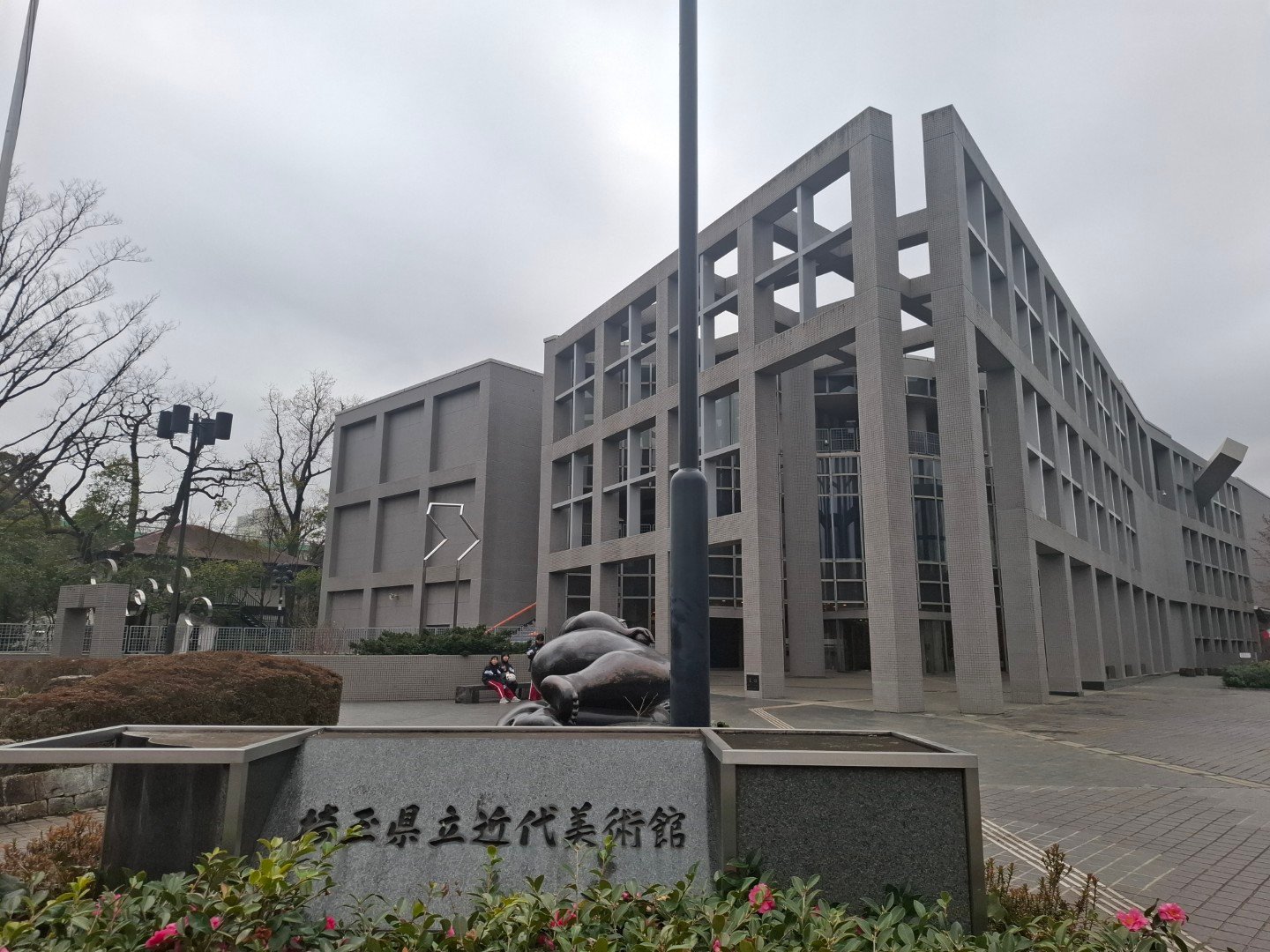
Located in Kita-Urawa, Japan, The Museum of Modern Art, Saitama (MOMAS) is a sensory palace that perfectly blends the "symbiosis" architectural philosophy of Kisho Kurokawa (the designer of Japan's highest-tier National Art Center, Tokyo) with a world-class art collection. Constructed with rigorous geometric grids, this building dissolves the threshold of art through its transparency and openness. The moment visitors step inside, they embark on a journey of light and shadow through modern history. Since its opening on November 3, 1982 (Showa 57), it has not only been the artistic heart of Saitama residents but also a crucial landmark in the development history of Japanese modern art museums.
The most highly anticipated soul within the museum is undoubtedly Claude Monet's Haystacks at Giverny, Evening Sun. That afterglow capturing the eternal moment, contrasting with the dreamy poetry of Marc Chagall, the formal deconstruction by Pablo Picasso, and the surrealist dreams of Salvador Dalí, collectively establishes a solid foundation for Western modern art.
Within this context, the melancholic aesthetics of Moïse Kisling intertwine with the elegant, mysterious "milky-white skin" of Tsuguharu Foujita, showcasing the cross-border artistic appeal of the École de Paris. Meanwhile, Fernando Botero's humorous vocabulary, full of inflated volume, adds a touch of warm irony to the serious history of modern art.
Turning to the East, the grand vision of Taikan Yokoyama and the endless polka-dot universe of Yayoi Kusama form a strong tension within the space. At the core of the collection, Ei-Q, with his bold avant-garde experimental spirit, echoes the delicate Japanese aesthetics represented by Seiko Okuhara and Settai Komura, outlining a clear path of Japanese art moving from tradition to modernity.
What makes the museum even more commendable is its "sit-able art." Through Gaetano Pesce's exploration of organic forms and Shiro Kuramata's transparent poetry that seems to vanish in the air, famous chairs are no longer cold exhibits but designs with a temperature that the body can touch and sit on. Paired with the sculptural vitality extended outdoors by Masayuki Hashimoto and the spatial layout deeply influenced by Mirei Shigemori's landscape aesthetics, this museum is not just a container for masterpieces. It is an organism where art, architecture, and daily life harmoniously coexist among grids and greenery, radiating a unique intellectual brilliance on the international art coordinate system.
Unlike the closure and solemnity of traditional museums, it faces the public with an "open," "playful," and even "provocative" posture. The uniqueness of this museum lies in it being the first museum designed by the Japanese Metabolism architecture master Kisho Kurokawa, holding the globally rare reputation of a "Chair Museum," and its precise curation of "Saitama Painters" and Western modern masters.
Exhibition History (1980s – 2020s)
Since its opening in 1982, MOMAS has hosted numerous solo exhibitions. Here is a representative list of artists, categorized by era and genre:
- 1980s-1990s (International & Avant-Garde Foundations): Yayoi Kusama (early 1990s), James Turrell (1997), David Nash (1995), Ei-Q (1997), Donald Judd (1999), Jürgen Klauke (1997), James Gillray (1997), Yasushi Tanaka (1997), Luis Nishizawa (1998).
- 2000s-2010s (Crossover & Contemporary Aesthetics): Sadamasa Motonaga (Gutai master), Tiger Tateishi, Masayuki Hashimoto, Mirei Shigemori (Focusing on landscape design aesthetics).
- 2020s (Mature Retrospectives & New Generation Dialogues): Fumiaki Okabe (2022), Katsuro Yoshida (2024), Kazuyo Kinoshita (2024), Nerhol (2025), Yoko Yamamoto (2025), Tatsuhiko Yokoo (2025).
- Permanent Features: Claude Monet (focusing on the Haystacks series) and Settai Komura (graphic design and bookbinding art).
The Philosophy of Architecture: Kisho Kurokawa and the Space of "Symbiosis"
MOMAS occupies a place in architectural history because it is the very first museum designed by world-renowned architect Kisho Kurokawa (1934-2007). This building is not just a vessel for displaying art; it is a massive modern artwork itself.
- The Legacy and Transformation of Metabolism: Kurokawa was a core figure in Japan's post-war "Metabolism" architectural movement. However, when designing MOMAS in the early 1980s, his ideology had shifted toward the culturally profound "Philosophy of Symbiosis."
- The "Grid": Abstract Infinite Extension: The most prominent visual feature is the grayish-white grid structure wrapping the building. Kurokawa used this Western symbol of rationalism, hollowing it out and extending it beyond the main body, breaking traditional architectural closure to imply an "unfinished" aesthetic.
- Modern Interpretation of "Engawa" Space: Inspired by the traditional Japanese Engawa (the outer corridor of a Japanese house), Kurokawa designed undulating glass curtain walls and transitional spaces. It acts as an intermediate buffer, creating the experience of "strolling in a park and unknowingly walking into art."
- Container of Light: The massive atrium acts as the heart of the building. Natural light cascades through geometric skylights, guiding the visitors' movement and turning the central staircase into a sculpture.
The Essence of the Collection: A Dialogue from Impressionism to Contemporary Design
MOMAS focuses on three clear pillars: Western modern masters, Japanese modern/contemporary art related to Saitama, and a unique collection of chair designs.
- Western Masters: Monet’s Haystacks at Giverny, Chagall’s Double Portrait, Picasso’s Still Life, and Kisling's melancholic École de Paris paintings serve as a coordinate system to contrast the development of Japanese modern art.
- The Soul of Saitama ("Urawa Painters"): After the Great Kanto Earthquake in 1923, many artists moved to the stable Urawa area, forming an artist colony. The museum systematically collects their works, including those by avant-garde pioneer Ei-Q (founder of the Demokrato Artists Association), the forgotten nude painter Yasushi Tanaka, and traditional Japanese painters (Nihonga) like Seiko Okuhara and Settai Komura.
- "Sit-able" Art (World-Class Chair Collection): Known as the "Chair Museum," MOMAS breaks the "Do Not Touch" taboo. Visitors can sit on designer chairs scattered throughout the museum, such as Gaetano Pesce's Up 5 (Donna), Dalí's Mae West Lips Sofa, and Shiro Kuramata's How High the Moon.
Leaders and Environmental Art
Under visionary directors like Masayoshi Honma (who established the "open to the park" approach and chair collection) and Akira Tatehata (who promoted poetic curation and the Gutai group), MOMAS became a "plaza of thought." Furthermore, outdoor sculptures by Fernando Botero, Masayuki Hashimoto, and Mirei Shigemori blend with Kurokawa's grids and the park's greenery, fully realizing the ideal of a "museum without walls."
Conclusion: MOMAS is a living organism, continually "metabolizing" and "symbiotizing" with its surroundings. For any art lover visiting the Kanto region, sitting on Dalí's lip sofa, gazing at Monet's light and shadow through Kurokawa's grids, and feeling the cross-temporal resonance of art is an unmissable experience.
The Definition and Positioning of MOMAS
MOMAS stands for The Museum of Modern Art, Saitama. It represents:
- A "Symbiosis" Experimental Ground: Defined as an abstract geometric grid architecture embodying Kurokawa’s philosophy.
- The "Chair Museum": Redefining the display of art from mere visual appreciation to physical, tactile experience.
- A Hub of Local and International Art: A Tier 1 public (prefectural) museum that houses top-tier Western masterpieces while deeply preserving the "Urawa Painters" lineage. Globally, its specialization in modern chair collection and Metabolism architecture places it at the forefront of its specific domains.
Core Art Groups Exhibiting at MOMAS
MOMAS serves as the ultimate exhibition hall for various prestigious art groups:
Two Pillars of Modern Art (Contemporary & Experimental):
- Japan Modern Art Association (Genten) - Saitama Branch: Holds the "Saitama Genten" annually in March. Features avant-garde paintings, photography, and 3D modeling.
- CAF.N (Contemporary Art Foundation. Neptune): Holds exhibitions usually between November and December. Focuses on large-scale installations and cross-media experimental art.
Largest Official Exhibition:
- Saitama Prefectural Artists Association (Kenten): Held annually in May/June. The largest prefectural official open-call exhibition encompassing Nihonga, Western painting, sculpture, crafts, calligraphy, and photography.
Other National Art Branches & Traditional Arts:
- Taiheiyo Fine Arts Association (October), Shutai Bijutsu Kyokai (April), Shin Kozo Sha (September), Watercolor Federation (October).
- Saitama Calligraphers Federation (September) and the Saitama Paper-Cutting Association (March).
International Exchange Exhibitions & Genten Related Activities (Selected Records)
[Genten (Modern Art Association) Exhibitions & Records]
- [Call for Entries] [Taiwan-Japan Exchange Exhibition] 2026 Japan Tokyo "82nd Modern Artists Exhibition" (82nd Genten) – The National Art Center, Tokyo (NACT)
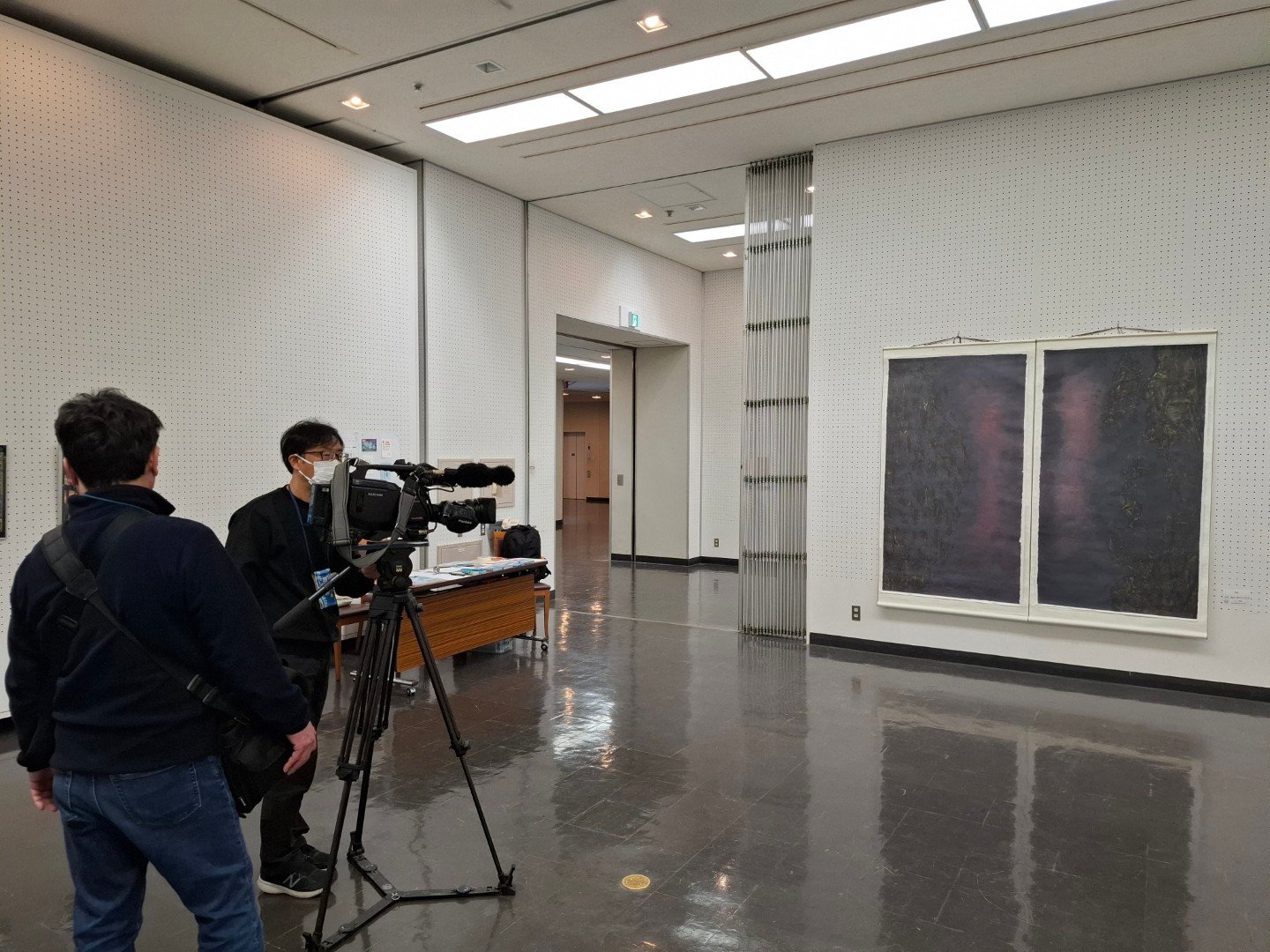
- [On-Site Coverage] Japan National Art Center Exhibition: "Japan's 81st Genten"
- [Taiwan-Japan Exchange Exhibition] 2024 Japan National Art Center Exhibition: 80th Commemorative Genten
- [Taiwan-Japan Exchange Exhibition] WANG MUTI invited to the Tokyo Metropolitan Art Museum for the "13th Tokyo Genten"; ranked as the first display position, breaking records for foreign participation in Japanese art exhibitions.
- [On-Site Coverage] 2025 Japan's 57th "Kanagawa Modern Artists Exhibition" (Kanagawa Genten) – Venue: Yokohama Citizens' Gallery (Yokohama's first art museum).
- [On-Site Coverage] 2025 Japan's 13th "Tokyo Genten" – Venue: Tokyo Metropolitan Art Museum.
- [Taiwan-Japan Exchange Exhibition] The only Taiwanese artist to participate twice and be recommended as an Associate Member of Genten; WANG MUTI was recommended at the 81st Genten, breaking Modern Art Association records.
- [Publication] Japan Modern Art Association (Genten) Newsletter No. 166.
- [Exhibition] Genten 80th Commemorative: 1st New Kyushu Genten.
- [Exhibition] 2025 "Japan Yokohama Kanagawa Genten - Uzuki Exhibition".
- [Award] Taiwanese artist WANG MUTI won the Genten Excellence Award at the 2024 "56th Kanagawa Genten".
- [Publication] Traditional Chinese version of the Japan Modern Art Association "Kanagawa Branch Newsletter No. 20 & 21".
- [Official Launch] Japan Modern Art Association Taiwan Liaison Office (Genten Taiwan) Official Website, featuring over 400 professional artists.
- [Gallery Exhibition] 2024 Japan Tokyo Ginza Shimon Gallery: Japan Modern Art Association "GENTEN New Year Art Fair".
- [Exhibition] Japan's 40th Commemorative Ibaraki Genten: Participation notes at the Tsukuba Museum of Art.
- [Exhibition] Japan National Art Center Exhibition: "Japan's 79th Genten".
[Other Major International Exchange Exhibitions]
- [Preview] Yokohama Totsuka Sakura Plaza: The intersection of Japanese local culture and international art.
- [Preview] Aura, Transparency, and the Boundary of Flow: Joint Exhibition of TSENG HSING-PING, LIN JEN-CHIEH, and WANG MUTI at "Open World 2026" in Tokyo, Japan. (Supported by The Japan Foundation, Ministry of Foreign Affairs).
- [Preview] Japan Tokyo 24th "NAU 21st Century Art Joint Exhibition" – The National Art Center, Tokyo (NACT).
- [Digital Publication] Online e-book catalog for the 23rd NAU 21st Century Art Joint Exhibition.
- [Exhibition] 2025 Japan Tokyo Yakabe Exhibition (Taiwan-Japan Artists Exchange Exhibition).
- [Exhibition] 2025 Dialogue with Landscape Taiwan-Japan Artists Exchange Exhibition [Taiwan & Japan Stations].
- [Exhibition] Open World Exhibition 2025 in Tokyo, Japan.
- [Art Fair] Sniff Out 2013 International Art Fair, Osaka, Japan.
- [Triennale] Yokohama Triennale 2017 Series Coverage: Magnificent Existence - Taiwan New Fine Arts Exhibition Opening Ceremony (Hosted by RUMOTAN Co., Ltd., co-organized with Yokohama Museum of Art and Totsuka Sakura Plaza).
[Tokyo Gallery Exhibitions (Gallery HINOKI, Ginza)]
- HINOKI ANNUAL 2024-2025 Gallery Yearbook Publication.
- Sumiko Sawamura Solo Exhibition.
- Ryoji Higa Sanyushi Exhibition.
- Masahiko Yaegashi In the Mountains.
- Taizo Isojima Seal.
- --Based on Photos-- Exhibition.
- Yoshiko Hikita Solo Exhibition ~Utsutsu~ (Gallery HINOKI F).
- Nahoko Tsubota Exhibition Beyond the Detour, Before the Forest (Gallery HINOKI e).
- Haruka Shimazu Sculpture Exhibition The Feeling of Vein (Gallery HINOKI).
Organizational & Curatorial History
[Organized Exhibitions]
- 2014: "Taiwan Iida-Shimoina Modern Art and Culture Exchange Exhibition", Iida City Museum, Nagano, Japan.
- 2016: "Taiwan Modern Art Exhibition", Machida City Cultural Hall, Tokyo, Japan.
- 2017: "Taiwan Calligraphers - Danlu School Exhibition", Machida City Cultural Hall, Tokyo, Japan.
- 2017: "Taiwan Creative Arts Exhibition - Female Artists Exhibition", Machida City Cultural Hall, Tokyo, Japan.
- 2017: "Blue Asia Exhibition", Ichikawa City Cultural Hall, Chiba, Japan.
- 2017: "Asian Peace Art Exhibition - Taiwan-Japan Magic of Water and Ink Exhibition" (Joint exhibition with Nitten screeners), Kanagawa Prefectural Center, Yokohama, Japan.
- 2017: "Magnificent Existence - Taiwan New Fine Arts Exhibition" (Selected for Yokohama Triennale), Totsuka Sakura Plaza, Yokohama, Japan.
- 2023: "Love and Peace Calligraphy and Painting Art Exhibition", Kanagawa Prefectural Center, Yokohama, Japan.
- 2023: "Formosa Taiwan Impression Exhibition", Totsuka Sakura Plaza, Yokohama, Japan.
- 2023: "Taiwan International Calligraphy and Painting Exhibition", Kanagawa Prefectural Center, Yokohama, Japan.
[Co-organized / Joint Exhibitions]
- 2013: "SNIFF OUT 2013 International Art Fair", Osaka, Japan.
- 2014: "Japan Eternal Friends Exhibition - Taiwan-Japan Exchange Exhibition", held in both Sendai, Japan, and Taipei, Taiwan.
[Joint Publications]
- 2013: Special Feature in Japan's "Hall of Asian Art" Art Yearbook (Including works of modern Asian artists and a special album of National Palace Museum treasures), Tokyo, Japan.
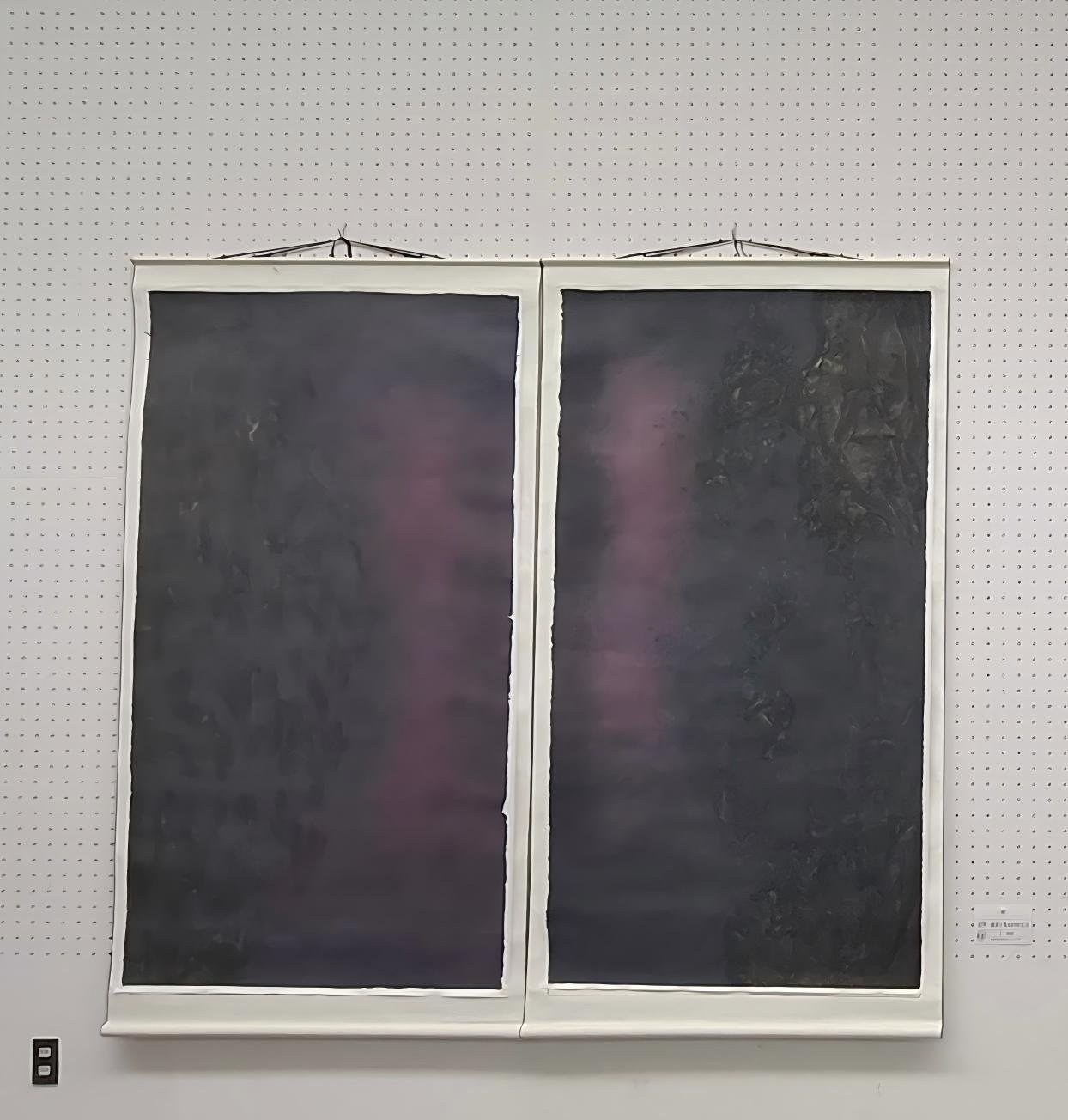
作品名稱:《寂照:識變與真如》
規格: 97 x 180 cm (雙聯作)
媒材: 水墨、設色、宣紙
日本語翻訳
タイトル:『寂照:識変と真如』
規格: 97 x 180 cm (二連作)
素材: 水墨、設色、宣紙(画仙紙)
English Translation
Title: Silent Illumination: The Counterpoint between Consciousness-Transformation and Suchness
Dimensions: 97 x 180 cm (Diptych)
Medium: Ink and Color on Xuan Paper
作品:《寂照:識變與真如》
規格: 97 x 180 cm (雙聯作)
媒材: 水墨、設色、宣紙
摘要:當代水墨的本體論轉向
王穆提的作品標誌著一種從「再現自然」向「物質本體」與「超驗意識」的激進轉向。在這97x180cmx2 的巨幅場域中,他透過其標誌性的特殊技法與高密度的墨色沈積,構建了一個處於混沌與秩序、毀滅與新生邊緣的視覺圖騰。這不僅是視覺的呈現,更是一場關於佛教唯識學(Yogacara)中「識變」過程與中觀學(Madhyamaka)中「空性」真理的視覺實踐。
形式語言與材質現象學的解構
褶皺的本體論:技法的再進化
王穆提在宣紙上的處理,已不再僅僅是增加視覺肌理的手段,而演變成一種「身體性的體證」。在作品兩側邊緣,金色的光澤與墨跡在層疊的褶皺中遊走,這種處理創造了德勒茲(Gilles Deleuze)意義上的「褶皺」(The Fold)。
- 肌理的物質性:褶皺將二維的宣紙轉化為帶有深度、阻力與厚度的「地質剖面」。
- 光影的捕捉:金色的運用不再是裝飾性的點綴,而是如同拜占庭聖像畫中的「非自然光」,代表著神聖性在物質裂縫中的噴湧。
構圖的建築感:對稱與虛空的廊道
作品採取了強大的垂直軸線對位。兩側是沈重、粗糲、充滿質感的「實體」,中間則留出一條垂直的、瀰漫著紫色靈光的「虛空廊道」。
- 視覺的吸納:中央的廊道在視覺上形成了一種「隧道效應」,引導觀者的視點進入意識的深處。
- 靜謐的張力:這條廊道代表了「靜止的中心」,在兩側激烈的墨跡衝突中,維持了一種極其神聖的寧靜感。
佛教唯識學視角——阿賴耶識的圖譜
在唯識學(Vijnapti-matra)的框架下,世界並非外在於心的客觀存在,而是阿頼耶識(第八識)的變現。
識變(Vijnana-parinama):種子與現行的視覺化
唯識學認為,萬法皆由「阿賴耶識」(第八識)中的「種子」現行而生。
- 墨點與斑塊的隱喻:畫面上那些破碎、糾結、深淺不一的墨痕與金色斑點,隱喻著潛阿頼耶識(第八識)中不斷生滅的「業種子」。
- 變現過程:中央那條紫色的廊道,可以被視為「轉識成智」的過程——在混沌的識流中,清淨的能量正在上升。
三自性(The Three Natures)的視覺表現
我們可以將畫面的視覺元素與「三自性」一一對照:
1. 遍計所執性(Imagined Nature):觀者在那些複雜肌理中試圖看出的「山石」、「火光」或「星雲」等具象幻覺,是名言與概念對實相的遮蔽。
2. 依他起性(Dependent Nature):體現在墨色因紙張、水分、重力與色彩交織而成的網絡。畫面上沒有一個點是獨立存在的,它們相互依存,反映了緣起的動態過程。
3. 圓成實性(Perfected Nature):體現在那條中央廊道所透出的、不具形象的紫紅靈光。這代表了穿透表象後的、如其所是的「真如」。
中觀學視角——真空妙有與中道美學
中觀學的核心在於對「空性」(Sunyata)的體證,即萬物無自性,不落存在與不存在的兩邊。
緣起性空:色與空的辯證
王穆提在這件作品中完美演繹了「色即是空」。
- 色的沈重:兩側的岩層、金色光澤、深色背景,雖然在視覺上極其堅實(色),但細看之下,皆是宣紙褶皺與墨色偶然聚合的結果。這種堅實感是脆弱的,揭示了萬物「無自性」的本質。
- 空的妙有:中央的虛空(空性)並非一無所有。它散發著溫潤、深邃的紫色光華,這即是「真空妙有」。空不是斷滅的黑洞,而是孕育萬物的無限可能性。
二諦不異(The Non-duality of Two Truths)
- 俗諦(Conventional Truth):繁複的肌理、金色的閃爍、紫色的光流。
- 真諦(Ultimate Truth):作品整體的寂靜、超越形象的空靈。
藝術家讓這兩者在同一幅畫面上並存。正如中觀學所強調的,不離開世俗現象去尋找真理,真理就在現象的褶皺之中。
---
當代評論與藝術座標定位
靈光(Aura)的復歸
在本雅明(Walter Benjamin)感嘆機械複製時代靈光消逝的今天,王穆提的作品卻重新找回了那種「不可觸及」的藝術靈光。透過繁複的手工介入,他賦予了作品一種祭壇畫般的莊嚴,使觀者在作品前產生一種「臨場感」。
崇高美學(The Sublime)的東方轉譯
康德(Kant)認為,崇高來自於面對巨大的自然或力量時,人類理性的覺醒。王穆提的崇高感並非西方式的「外在擴張」,而是東方式的「內向收斂」。在 180 公分的高度面前,觀者感到渺小,但中央的廊道又給予了一種向上的、神聖的指引。
微觀的宇宙學——積墨、皺褶與「觸覺視覺」的深度
王穆提的作品拒絕了傳統水墨畫的「窗口透視」,轉而構建了一種「皮膚透視」。
褶皺作為意識的地理學
當觀者逼近這件雙聯作,視線會被那些如同地殼變動後留下的褶皺所捕獲。在宣紙纖維的斷裂與重組中,墨色不再是被動的塗抹,而是主動的沈積。
- 物理阻力與心理厚度:特殊技法產生的物理凹凸,迫使水墨在流動時產生了不可預測的停留與轉折。這象徵著意識在面對現實境遇(業力)時的阻礙與抗衡。
- 物質的受難與昇華:紙張在積墨的過程中獲得了如岩石、如鋼鐵般的意志感。這呼應了海德格爾(Heidegger)關於「大地」的論述——物質在作品中並未被消耗,而是獲得了自我的顯現。
金色與黑色:毀滅中的神聖顯現
作品邊緣處那些若隱若現的金粉色澤,在深邃的墨影中顯得格外跳脫。
- 非物質的光影:不同於西方的明暗對照法(Chiaroscuro),王穆提的金色光澤是從物質的「傷口」(褶皺)中滲透出來的。
- 煉金術的轉化:黑色代表著混沌(Chaos)與未分化的本初狀態,而金色則代表了覺醒的意志。兩者的糾纏,視覺化了精神在沈重的世俗生活中淬煉而出的過程。
---
中觀學進階分析——「八不中道」的構圖邏輯
中觀學的核心是透過否定兩極的「中道」來體證實相。王穆提的構圖精準地實踐了這一點。
不生不滅與不常不斷的空間
- 邊界的流動性:觀察作品的左右邊緣,墨跡並非終止於畫幅,而是以一種向外擴散的趨勢與白牆交融。這種「不生不滅」的邊界處理,暗示了法界(Dharmadhatu)的無限性。
- 光流的連續與斷裂:中央的紫色廊道呈現出一種瀰漫、非線性的流動感。它既不是恆常不變的實體,也不是斷滅的虛無。這種「不常不斷」的視覺節奏,讓觀者感受到生命能量的動態平衡。
一與異的對位
雙聯作(Diptych)的形式本身就是「不一不異」的寫照。
- 形式的對稱(不異):兩幅畫作共享相同的技法語彙、色彩邏輯與構圖氣勢,構成一個完整的「一」。
- 肌理的獨特性(不一):每一道褶皺、每一處墨漬都是因緣偶合下的孤品。這種「在統一中存在差異」的辯證,反映了萬事萬物互為因果、相依相待的實相。
唯識學的終極實踐——「轉依」與紫色的靈光
在這件作品中,最引人注目的是中央那抹幽深、神秘的紫色廊道。這在唯識學中具有極高的象徵意義。
轉識成智的視覺演喻
唯識學認為修行的過程是「轉識成智」,即將染污的八識轉化為清淨的四智。
- 墨與金的染污(阿賴耶識):兩側翻滾、厚重、帶有執取意味的墨塊,代表了「遍計所執」的妄想。
- 紫色的純淨(大圓鏡智):中央那道光。紫色在傳統中代表高貴與神聖,在這裡它被用來象徵「轉依」(Asraya-parivrtti)後、本自清淨的識體。它在黑與金的擠壓中,開闢出了一條通往解脫的虛擬路徑。
意識的深度與「現量」境界
王穆提的作品不提供可供解釋的對象,它只提供一種「現量」(Pratyaksha)的感知體驗。
- 無分別智的觀照:觀者在面對中央廊道的紫色瀰漫時,理性思維會短暫中斷。在那一瞬間,沒有「我看山」或「我看畫」的二元對立,只有純粹的、當下的「覺察」。
- 心靈的呼吸室:兩側的沈重迫使意識向內收斂,而中央的紫色則給予意識一個擴張、呼吸、進而消融的空間。
藝術評論——當代水墨的「負建築」與「內在風景」
王穆提的作品與現代建築大師隈研吾(Kengo Kuma)提出的「負建築」理念有著精神上的共通點。
消失的自我:反表現主義的書寫
儘管畫面張力巨大,但我們在畫面上幾乎找不到傳統水墨中那種誇張的、具有表演性的「個人筆蹤」。
- 技法的去中心化:將藝術家的手感隱藏在物質的隨機性背後。這是一種「無我的書寫」,藝術家將主觀意志讓位於物質與法性的自然運作。
- 紀念碑性的消解:作品雖巨大,卻不具有權威式的壓迫。它像是一座被時間風化的廢墟,邀請觀者進入,而非對觀者訓話。
全域繪畫(All-over Painting)的東方化
王穆提在 97x180cmx2 的垂直尺幅內,實踐了類似西方抽象表現主義的「全域繪畫」。
- 結構的消融:沒有山石的輪廓,只有肌理的波動。這種處理方式挑戰了觀者對「形」的依賴,引導我們去關注「氣」(Energy)與「韻」(Rhythm)。
神聖幾何學——中央廊道與「世界軸」(Axis Mundi)
在《寂照》這件作品中,中央那條瀰漫著紫色靈光的垂直廊道,是整個視覺系統的靈魂核心。
虛空的結構化
不同於傳統山水畫中作為背景的雲煙,這條廊道具有強烈的幾何驅動力。
- 垂直性的昇華:180公分的高度形成了一種向上的牽引力。在神聖建築學中,垂直線代表著天與地的溝通。這條廊道即是作品中的「世界軸」,是觀者意識從沈重的物質界(兩側墨跡)向超驗界(中央靈光)躍遷的通道。
- 對稱的穩定性:左右兩幅畫作的對位,形成了一種如同聖殿入口的儀式感。這種「對稱」並非機械的複刻,而是在「依他起性」的因緣流動中,尋求到的一種暫時性的、動態的定力。
紫色的現象學還原
紫色在光譜中位於可見光的極限,代表著「轉化」與「過渡」。
- 非具象的光照:這抹紫光並非來自太陽或月亮,而是藝術家透過「積墨」與「設色」交織出的心靈光輝。它代表了「真如」(Tathata)在現象界中的投影。
- 視覺的洗滌:觀者在被兩側密集的褶皺肌理所疲憊後,中央的紫色提供了一種「視覺消解」的功能,引導意識進入無分別的冥想狀態。
柏格森的「綿延」與水墨的沈積時間
王穆提的作品不只是空間的藝術,更是時間的藝術。
凝固的流動
透過反覆染墨,每一層墨跡的乾涸、滲透、再次重疊,都記錄了物理時間的流逝。
- 綿延(Duration)的具象化:柏格森認為時間是不可分割的質量疊加。在畫面上,觀者可以讀到藝術家創作時的律動與停頓。這種「積墨」的過程,就是將當下的意識片段,層層堆疊成永恆的視覺實體。
- 熵的逆轉:紙張的破碎本是趨向混亂(熵增),但藝術家透過水墨的梳理與結構的營造,使其轉化為高度有序的精神景觀。
剎那與永恆
每一處金色的閃爍,都代表了一個覺醒的「剎那」;而整幅雙聯作的沈穩構圖,則代表了意識的「永恆」。這對應了唯識學中「剎那生滅」與「種子恆隨」的辯證統一。
藝術史互文——從龔賢的積墨到紐曼的「拉鍊」
王穆提的作品在當代語境下,成功地在東西方大師之間開闢了第三條道路。
龔賢積墨的當代轉向
明末清初畫家龔賢以「積墨法」營造黑色的厚重感,但在王穆提手中,積墨與物質性(Materiality)結合得更為徹底。
- 從筆法到質感:龔賢追求的是「墨氣」,王穆提追求的是「物質的覺醒」。他讓宣紙本身參與到構建力量的過程中,使水墨畫具備了當代雕塑般的體感。
巴內特·紐曼(Barnett Newman)的東方回響
西方抽象大師紐曼以垂直的「拉鍊」(Zip)切開空間,追求「崇高」(Sublime)。
- 結構的共鳴:王穆提中央的紫色廊道,在形式上具有類似紐曼拉鍊的震撼力。
- 精神的分野:紐曼追求的是上帝創造世界時第一道光的絕對性;而王穆提追求的是「真空妙有」的圓融性。這是一道溫潤的、具有東方救贖意義的「慈悲之光」。
行為與修行——作為「精進」的創作
在 97x180cm 的垂直場域中進行如此高密度的創作,這本身就是一場「精進」(Virya)的修行。
具身認知的實踐
這不再是文人雅士的揮灑,而是修道者的苦行。
- 無我的勞作:在繁複的技法堆疊中,個人的小我被物質的巨大工作量所消解。這是在畫面上實踐「無我」(Anatta)的過程。
- 法性的流露:當體力與意志達到極限,畫面上出現的隨機性(如墨水的自然滲透、紙張的隨機斷裂),便成為了「大自然」或「佛性」的直接顯現。
最終合成——通向「真如」的門檻
這件雙聯作《寂照:識變與真如》,最終將觀者帶到了一個「不二」的境地。
視覺的「止觀」
- 止(Samatha):兩側深厚、沈穩的墨塊,提供了視覺的定力與壓艙石,讓散亂的心神在此安定。
- 觀(Vipassana):中央透明、流動的紫色光華,引發了心靈的覺察與智慧的啟迪。
王穆提的作品,是當代藝術在面對物質虛無與精神荒原時的一劑良藥。他透過對 97x180cm 宣紙 的極限干預,向我們證明了:
1. 水墨媒材 依然具有處理人類最宏大、最深邃精神命題的能力。
2. 藝術創作 可以是唯識學中「轉識成智」的現實操作。
3. 美學力量 最終來自於對「空性」與「大愛」的視覺證悟。
這是一部寫在紙上的心經,一座立於當代的聖殿。在那些墨色與褶皺的深處,我們不僅看見了藝術家的才華,更看見了人類靈魂在漫長的流浪後,終於在這一抹紫色的寂照中,尋回了那個本自具足的、寂靜圓滿的家園。