【台日交流展】2026年日本現代藝術家展《現展神奈川支部 卯月展》橫濱戶塚Sakura Plaza:日本在地文化與國際藝術的交匯場域 - 影戲與實相:王穆提《虛空與法性的疊影》中的超驗空間與本體論建築


  • 作品名稱:《虛空與法性的疊影》 / 《虚空と法性の重層影》
  • 規格: 97 × 180 cm(雙聯作 / Diptych / ディプティック/二連作)
  • 媒材: 水墨、宣紙 / 水墨、宣紙

影戲與實相:王穆提《虛空與法性的疊影》中的超驗空間與本體論建築


引言:形式美學的斷代與意識的覺醒

王穆提的這件 97×180 cm 雙聯作《虛空與法性的疊影》,標誌著其藝術生涯中一次理性的極致昇華。從早期充滿身體性與沈重業力的「褶皺山水」,向冷峻、透明且充滿建築感的「幾何層疊」躍遷。這不僅是水墨語言的現代性革命,更是藝術家化身為「意識建築師」,在二維的宣紙上開闢出一條通往法性空間(Dharma-Nature Space)的朝聖長廊。

現象學的還原——「看見」的疊影與深度空間

這件作品首先是一場關於「純粹感知」的視覺實驗,透過幾何與墨色的對撞,展現了現象學意義上的深度。

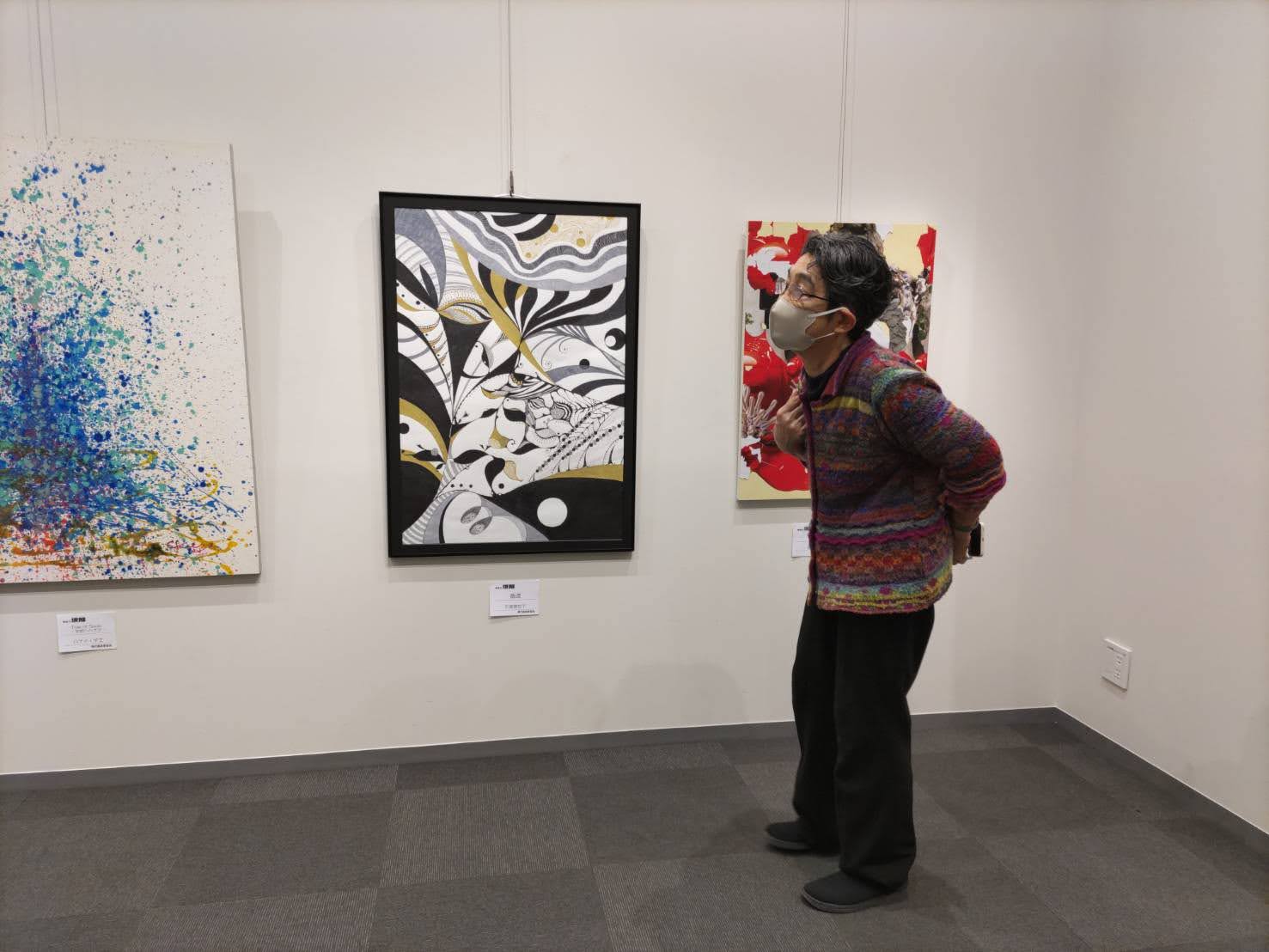
  • 矩形結構與空間的「取景」: 畫面上層層嵌套的矩形框架,強迫觀者的意識進行「向內」的行進。這不再是自然山水的描繪,而是對「純粹空間」的建構。這種理性的幾何化處理,象徵著意識在混沌中建立秩序的渴望。
  • 懸置(Epoché)與意向性: 透過灰色的極致運用,藝術家懸置了現實世界的所有色彩與具象形體,只留下深度的幻覺。觀者的視線被矩形門戶引導,直抵虛空。
  • 痕跡與「延異」的對撞: 在冷峻的框架內,散佈著如星雲或灰塵般的墨色噴濺與不規則拓印。這些噴濺點如同德里達(Derrida)筆下的「痕跡」,處於不斷生成的動態中;它們既是物質的喧囂,也構成了與理性邊界強烈的對抗張力。

唯識與中觀的哲學映射——識變的迷宮

王穆提將東方哲學的深邃奧義,精準地視覺化為水墨的層疊結構。這是一部關於《唯識三十頌》與「八不中道」的視覺圖解。

  • 阿賴耶識的空間化(唯識學): * 外層(前六識與末那識): 最外緣斑駁、跳躍的墨跡點與沈重的框架,象徵著與外界接觸的雜亂感官意識,以及末那識對自我的強烈執取。
    • 內層(阿賴耶識): 越往中心,結構越趨穩定與透明,隱喻著儲藏萬法種子、深不可測的第八識。那最空曠的灰階區域,正是轉識成智後的「大圓鏡智」。
    • 透明的「見、相二分」: 透過極高難度的水墨透疊技法,作品揭示了「相分」(被觀測的現象)並非實體,而是意識層層疊加的幻影。
  • 幾何框架的「空性」(中觀學):
    • 無自性與真空妙有: 矩形的邊界並非實線,而是由無數細碎墨痕與留白共同組成的因緣網格。拆解這些因緣,空間便蕩然無存。中央的虛空並非一無所有,而是透過灰度疊加顯現的「充滿力量的虛空」。
    • 雙聯作的「不一不異」: 左右兩幅畫作在宏觀幾何骨架上高度一致(不異),但在噴濺點與墨色滲透的微觀細節上截然不同(不一),完美演繹了中觀的辯證智慧。

神學與時間的跨文化維度——光之階梯

這件作品超越了單一的東方語境,與西方的時間哲學及基督神學產生了深刻的共鳴。

  • 羅各斯(Logos)與否定神學: 層層套疊的矩形線條,象徵著宇宙初開時的秩序(聖言)。觀者視線向內深潛的過程,猶如經歷「否定神學」(Apophatic Theology)的洗禮,剝離外在感官雜訊,尋求與不可見之實相的結合。透明的墨層如同聖殿的面紗,既遮蔽了刺眼的真理,又啟示了神聖的深度。
  • 時間的物質化與「綿延」: 每一層透明墨色的乾涸、拓印的疊加,都是柏格森(Bergson)所謂「綿延」(Duration)的具身化紀錄。作品是時間的活體存摺,展示了「空」如何具備物質的厚度與精神的量感。

全球當代藝術座標中的本體論對話

在 97×180 cm 的垂直場域中,王穆提與全球當代藝術大師展開了一場跨越東西方的巔峰對話。

  • 物質的受難(對話 安塞姆·基弗 Anselm Kiefer): 基弗以鉛和瀝青承載歷史的廢墟,而王穆提則透過重墨的揉壓與沈積,表現了個體意識中業力種子的受難。兩者皆具備強大的「身體強度」,但王穆提旨在透過物質的壓榨達成靈魂的淨化。
  • 色域的震動(對話 馬克·羅斯科 Mark Rothko): 羅斯科以模糊的色塊喚起崇高的宗教震顫;王穆提則在極致的灰度中開闢廊道。他實踐了「二諦不異」,在物質的粗糲(俗諦)中擠壓出空性的靈光(真諦)。
  • 空間的解構(對話 杉本博司 Hiroshi Sugimoto): 杉本博司透過極長曝光「燒盡」時間,讓建築與海景在失焦中還原本質;王穆提則透過水墨的「透明透疊」填滿時間,建立意向的長廊。杉本是減法式的本質還原,王穆提則是加法式的意識建構,兩者最終都在「透明性」中指向了萬古的寂靜。
  • 秩序與痕跡(對話 李禹煥 Lee Ufan): 日本物派追求物質的原初相遇,而王穆提則在理性的幾何框架中,保留了感性噴濺的餘溫,實踐了秩序與偶然共生的中道美學。

結論:虛空廊道中的終極見證

王穆提的《虛空與法性的疊影》,是當代水墨史上一次極具野心的本體論實驗。他成功將傳統水墨轉化為具有建築感與光學特質的當代語言,證明了水墨在處理「理性框架」與「超驗虛空」時,具備不輸於西方極簡主義或當代攝影的強大表現力。

在那冷峻、灰邃且層層遞進的框架中,我們看到的不是外界的門戶,而是通往本來面目的一道道心靈關口。這是一部關於「看見」與「被看見」的史詩,它為當代藝術在喧囂的視覺洪流中,築起了一道得以冷靜觀照、層層剝離執著的精神走廊。


作品名:『虚空と法性の重層影』 **サイズ:**97 × 180 cm(ディプティック/二連作) **素材:**水墨、宣紙(画仙紙)

影絵と実相:王穆提『虚空と法性の重層影』における超越的空間と本体論的建築

序言:形式美学の画期的な転換と意識の覚醒 王穆提によるこの 97×180 cm の二連作『虚空と法性の重層影』は、彼の芸術キャリアにおける理性的な極致への昇華を象徴している。初期の身体性と重いカルマ(業)に満ちた「皺の山水」から、冷徹で透明、かつ建築的な「幾何学的重層」への飛躍である。これは水墨言語のモダニティにおける革命であるだけでなく、アーティスト自身が「意識の建築家」となり、二次元の宣紙の上に「法性空間(Dharma-Nature Space)」へと続く巡礼の回廊を切り開いたことを意味する。

現象学的還元——「視ること」の重層影と深層空間 この作品はまず、「純粋知覚」に関する視覚的実験であり、幾何学と墨色の衝突を通じて現象学的な深さを示している。

  • 矩形構造と空間の「フレーミング」: 画面上に何層にも入れ子になった矩形のフレームは、鑑賞者の意識を強制的に「内側」へと向かわせる。これはもはや自然の山水の描写ではなく、「純粋空間」の構築である。この理性的な幾何学的処理は、混沌の中に秩序を打ち立てようとする意識の渇望を象徴している。
  • エポケー(判断停止:Epoché)と指向性: 極限まで追求されたグレーの運用により、アーティストは現実世界のすべての色彩と具象的な形態をエポケー(懸置)し、深さの幻影だけを残した。鑑賞者の視線は矩形の入り口に導かれ、虚空へと直行する。
  • 痕跡と「差延」の衝突: 冷徹なフレームの内側には、星雲や塵のような墨の飛沫や不規則な拓本跡が散在している。これらの飛沫はデリダ(Derrida)の言う「痕跡」のようであり、絶えず生成されるダイナミズムの中にある。それらは物質の喧騒であると同時に、理性の境界との強烈な対立の緊張感を構成している。

唯識と中観の哲学的投影——識変の迷宮 王穆提は東洋哲学の深遠な奥義を、水墨の重層構造として正確に視覚化した。これは『唯識三十頌』と「八不中道」に関する視覚的図解である。

  • 阿頼耶識の空間化(唯識学):
    • 外層(前六識と末那識): 最も外側の斑で躍動的な墨跡と重厚なフレームは、外界と接触する雑多な感覚意識、そして末那識(自我への強烈な執着)を象徴している。
    • 内層(阿頼耶識): 中心に向かうほど構造は安定し透明になり、万法の種子を蓄える底知れぬ第八識を暗喩している。その最も空虚なグレーの領域こそ、識を転じて智と為した「大円鏡智」である。
    • 透明な「見分・相分」: 極めて難易度の高い水墨の透かし重ね(透畳)技法を通じて、作品は「相分(観測される現象)」が実体ではなく、意識が幾重にも重なった幻影であることを明らかにする。
  • 幾何学フレームの「空性」(中観学):
    • 無自性と真空妙有: 矩形の境界は実線ではなく、無数の細かい墨痕と余白が織りなす因縁のグリッドで構成されている。これらの因縁を解体すれば、空間は跡形もなく消え去る。中央の虚空は決して「何もない」のではなく、グレーの階調の重なりによって現れる「力に満ちた虚空」である。
    • 二連作の「不一不異」: 左右二つの画面は、マクロな幾何学の骨格においては高度に一致しているが(不異)、飛沫の点や墨の滲みといったミクロな細部においては全く異なっている(不一)。これは中観の弁証法的叡智を完璧に体現している。

神学と時間の異文化次元——光の階梯 この作品は単一の東洋的コンテクストを超え、西洋の時間哲学やキリスト教神学と深い共鳴を生み出している。

  • ロゴス(Logos)と否定神学: 重なり合う矩形の線は、宇宙創世時の秩序(聖言=ロゴス)を象徴する。鑑賞者の視線が内へと深く潜り込む過程は、まるで「否定神学(Apophatic Theology)」の洗礼を経験するかのようである。外的な感覚のノイズを剥ぎ取り、不可視の真理との結合を求める。透明な墨の層は聖殿のベールのように、眩しすぎる真理を遮りながらも、神聖な深さを啓示している。
  • 時間の物質化と「持続(デュレ)」: 透明な墨の層が乾くこと、拓本が重なることは、ベルクソン(Bergson)の言う「持続(Duration)」の身体的記録である。作品は時間の生きた通帳であり、「空」がいかにして物質的な厚みと精神的な量感を備え得るかを示している。

グローバル現代アートの座標における本体論的対話 97×180 cm の垂直の場において、王穆提は世界の現代アートの巨匠たちと洋の東西を越えた頂上対話を展開している。

  • 物質の受難(対話:アンゼルム・キーファー Anselm Kiefer): キーファーが鉛とアスファルトで歴史の廃墟を背負うのに対し、王穆提は重厚な墨の揉み込みと堆積によって、個人の意識におけるカルマ(業)の種子の受難を表現した。両者は共に強い「身体的強度」を持つが、王穆提は物質の搾取を通じて魂の浄化に到達することを目指している。
  • 色域の振動(対話:マーク・ロスコ Mark Rothko): ロスコが曖昧な色面で崇高な宗教的震えを呼び起こすのに対し、王穆提は極限のグレーの中に回廊を切り開いた。彼は「二諦不異」を実践し、物質の荒々しさ(俗諦)の中から空性の霊光(真諦)を絞り出している。
  • 空間の解体(対話:杉本博司 Hiroshi Sugimoto): 杉本博司が極端な長時間露光で時間を「燃やし尽くし」、建築や海景をアウトフォーカスの中で本質に還元するのに対し、王穆提は水墨の「透明な透かし重ね」で時間を満たし、志向性の回廊を構築する。杉本が引き算による本質の還元であるなら、王穆提は足し算による意識の構築であり、両者は最終的に「透明性」の中で万古の静寂を指し示している。
  • 秩序と痕跡(対話:李禹煥 Lee Ufan): 日本の「もの派」が物質との原初的な出会いを追求するのに対し、王穆提は理性的な幾何学フレームの中に感性的な飛沫の余熱を残し、秩序と偶然が共生する中道美学を実践している。

結論:虚空の回廊における究極の証左 王穆提の『虚空と法性の重層影』は、現代水墨史において極めて野心的な本体論的実験である。彼は伝統的な水墨を、建築的かつ光学的な特質を持つ現代言語へと変換することに成功し、水墨が「理性的なフレーム」と「超越的な虚空」を扱う際、西洋のミニマリズムや現代写真にも劣らない強力な表現力を備えていることを証明した。 その冷徹で、深く、層をなして奥へと続くフレームの中に我々が見るものは、外界の扉ではなく、本来の自己へと通じる心の関所である。これは「視ること」と「視られること」についての叙事詩であり、喧騒に満ちた視覚の洪水の中で、冷静に観照し、執着を幾重にも剥ぎ取ることができる精神の回廊を現代アートにもたらしている。


Title:Shadows of Void and Dharma-NatureDimensions: 97 × 180 cm (Diptych) Medium: Ink on Xuan paper

Shadow Play and Reality: Transcendental Space and Ontological Architecture in Wang Mu-Ti’s Shadows of Void and Dharma-Nature

Introduction: Epochal Shift in Formal Aesthetics and the Awakening of Consciousness Wang Mu-Ti’s 97×180 cm diptych, Shadows of Void and Dharma-Nature, marks an ultimate rational sublimation in his artistic career. It represents a leap from his early "creased landscapes"—fraught with physicality and heavy karmic burdens—to a cold, transparent, and architecturally resonant "geometric superimposition." This is not merely a modernist revolution of the ink language; it is the artist acting as an "architect of consciousness," carving out a pilgrimage corridor toward Dharma-Nature Space upon two-dimensional Xuan paper.

Phenomenological Reduction: The Superimposition of "Seeing" and Deep Space This artwork is, first and foremost, a visual experiment in "pure perception," revealing depth in a phenomenological sense through the collision of geometry and ink.

  • Rectangular Structure and Spatial "Framing": The layers of nested rectangular frames force the viewer's consciousness to travel "inward." This is no longer the depiction of a natural landscape, but the construction of "pure space." Such rational, geometric processing symbolizes the consciousness's yearning to establish order amidst chaos.
  • Epoché and Intentionality: Through the extreme utilization of grayscale, the artist performs an epoché (suspension) of all colors and concrete forms of the real world, leaving only the illusion of depth. The viewer's gaze is guided by the rectangular portals straight into the void.
  • The Collision of Traces and "Différance": Scattered within the austere frames are ink splatters and irregular rubbings that resemble nebulas or dust. These splatters act like Derridean "traces" in a constant state of becoming; they are the clamor of materiality and form a powerful counter-tension against the rational boundaries.

Philosophical Mapping of Yogacara and Madhyamaka: The Labyrinth of Consciousness Transformation Wang Mu-Ti accurately visualizes the profound mysteries of Eastern philosophy into a layered ink structure. It is a visual diagram of the Thirty Verses on Consciousness-only and the "Eight Negations of the Middle Way."

  • Spatialization of the Alaya-vijnana (Yogacara):
    • Outer Layer (The First Six Consciousnesses and Manas): The outermost mottled, jumping ink marks and heavy frames symbolize the chaotic sensory consciousness in contact with the external world, as well as the strong ego-attachment of the Manas consciousness.
    • Inner Layer (Alaya-vijnana): The closer to the center, the more stable and transparent the structure becomes, metaphorically representing the unfathomable Eighth Consciousness that stores the seeds of all dharmas. That emptiest grayscale region is exactly the "Great Perfect Mirror Wisdom" attained after transforming consciousness into wisdom.
    • Transparent "Darsanabhaga and Nimitabhaga" (Seeing and Seen): Through highly difficult overlapping ink techniques, the artwork reveals that the "Nimitabhaga" (observed phenomenon) is not a solid entity, but a phantom created by superimposed layers of consciousness.
  • The "Emptiness" of Geometric Frames (Madhyamaka):
    • Lack of Inherent Existence and True Void/Wondrous Being: The borders of the rectangles are not solid lines, but a network of dependent origination formed by countless fragmented ink marks and negative space. Once these conditions are dismantled, the space vanishes. The void at the center is not "nothingness," but a "void full of power" manifested through the overlay of grays.
    • The "Neither Identical Nor Different" of the Diptych: The left and right panels are highly consistent in their macro-geometric skeleton (not different), yet completely distinct in the micro-details of ink splatters and seepage (not identical), perfectly enacting the dialectical wisdom of Madhyamaka.

Cross-Cultural Dimensions of Theology and Time: The Ladder of Light This piece transcends a singular Eastern context, resonating deeply with Western philosophies of time and Christian theology.

  • Logos and Apophatic Theology: The overlapping rectangular lines symbolize the order of the universe at its genesis (the Word/Logos). The viewer's inward dive feels like a baptism of "Apophatic Theology"—stripping away external sensory noise to seek union with the invisible reality. The transparent layers of ink act like the veil of a sanctuary, shielding the blinding truth while revealing divine depth.
  • The Materialization of Time and "Duration": The drying of each transparent ink layer and the accumulation of rubbings are embodied records of Bergson’s "Duration." The artwork is a living ledger of time, demonstrating how "emptiness" can possess material thickness and spiritual volume.

Ontological Dialogues in the Coordinates of Global Contemporary Art Within the vertical field of 97×180 cm, Wang Mu-Ti engages in a pinnacle dialogue with global contemporary art masters across East and West.

  • The Passion of Matter (Dialogue with Anselm Kiefer): While Kiefer bears the ruins of history with lead and asphalt, Wang expresses the suffering of karmic seeds in individual consciousness through the kneading and depositing of heavy ink. Both possess tremendous "physical intensity," but Wang aims to achieve the purification of the soul by squeezing the material.
  • The Vibration of Color Fields (Dialogue with Mark Rothko): Rothko evokes sublime religious tremors through blurred color fields; Wang carves out a corridor within extreme grayscales. He practices the "non-duality of the Two Truths," extracting the aura of emptiness (Ultimate Truth) from the roughness of matter (Conventional Truth).
  • The Deconstruction of Space (Dialogue with Hiroshi Sugimoto): Sugimoto "burns out" time through extremely long exposures, reducing architecture and seascapes to their essence in defocus; Wang fills time through "transparent superimposition" of ink to construct a corridor of intentionality. Sugimoto utilizes subtractive essential reduction, while Wang utilizes additive construction of consciousness. Ultimately, both point to an eternal silence within "transparency."
  • Order and Traces (Dialogue with Lee Ufan): While Japan's Mono-ha pursues the primordial encounter with matter, Wang retains the residual warmth of sensible splatters within a rational geometric framework, practicing an aesthetic of the Middle Way where order and contingency coexist.

Conclusion: The Ultimate Testimony in the Corridor of the Void Wang Mu-Ti’s Shadows of Void and Dharma-Nature is a highly ambitious ontological experiment in the history of contemporary ink art. He has successfully transformed traditional ink into a contemporary language endowed with architectural and optical qualities, proving that ink possesses a expressive power rivaling Western minimalism or contemporary photography when dealing with "rational frameworks" and the "transcendental void." In those austere, profoundly gray, and progressively layered frames, what we see are not portals to the outside world, but spiritual gateways leading back to our original nature. It is an epic of "seeing" and "being seen," erecting a spiritual corridor in the clamor of the contemporary visual flood where one can observe calmly and peel away attachments layer by layer.