格柵中的光影詩篇:日本MOMAS埼玉縣立近代美術館的建築、館藏與人文精神
撰文:王 穆提(WANG MUTI)
前言:日本的藝術方舟
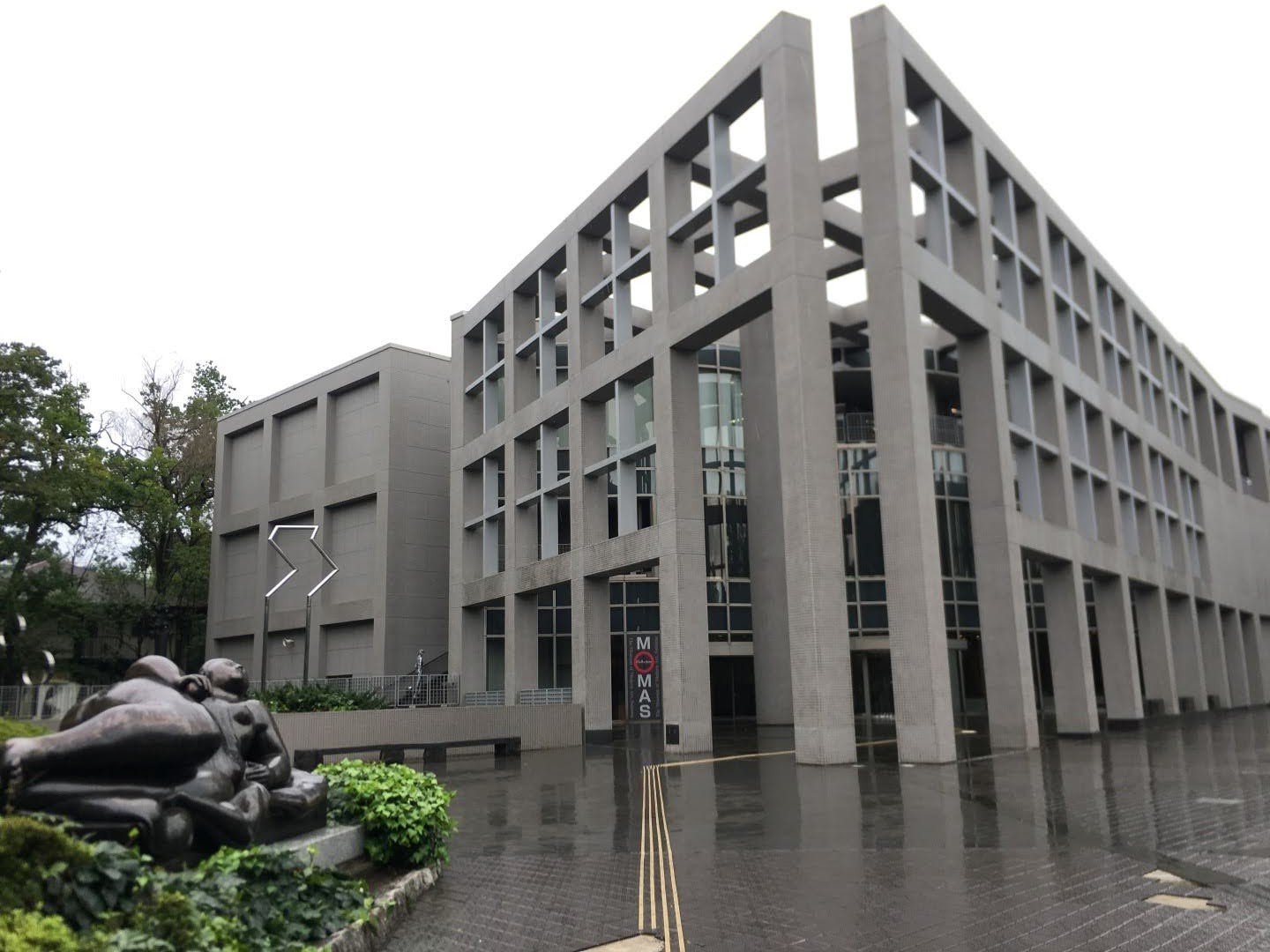
位於日本北浦和的埼玉近代美術館(MOMAS),是一座將黑川紀章(日本國家級別最高等級的國立新美術館設計者)的「共生」建築哲學與世界級藝術典藏完美揉合的感官殿堂。這座建築以嚴謹的幾何網格構築,卻在透明性與開放感中消解了藝術的門檻,讓參觀者在步入館內的那一刻,便開啟了一場穿越近代史的光影之旅。自 1982 年(昭和 57 年)11 月 3 日開館以來,這裡不僅是埼玉縣民的藝術心臟,更是日本現代美術館發展史上的重要地標。
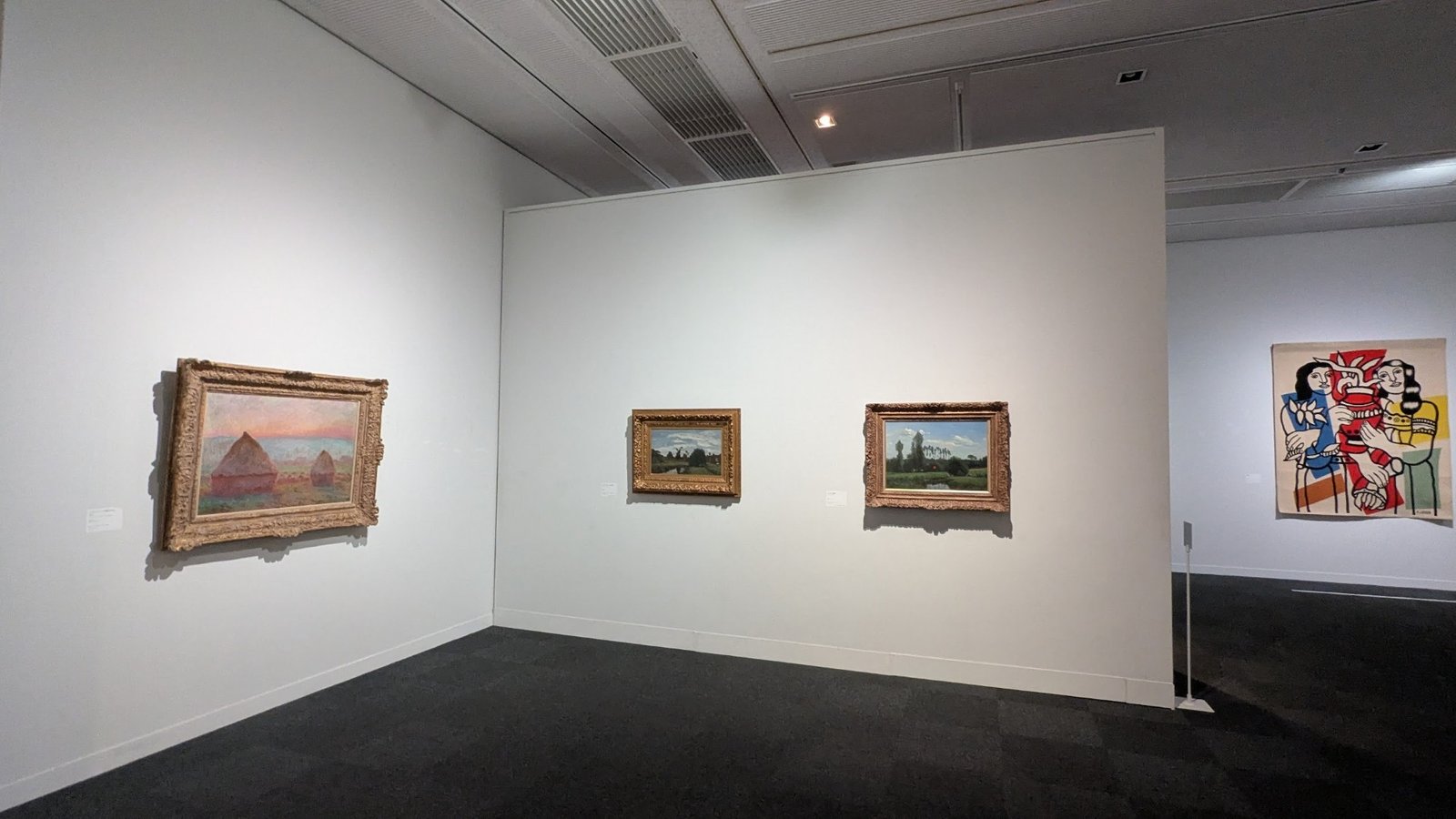
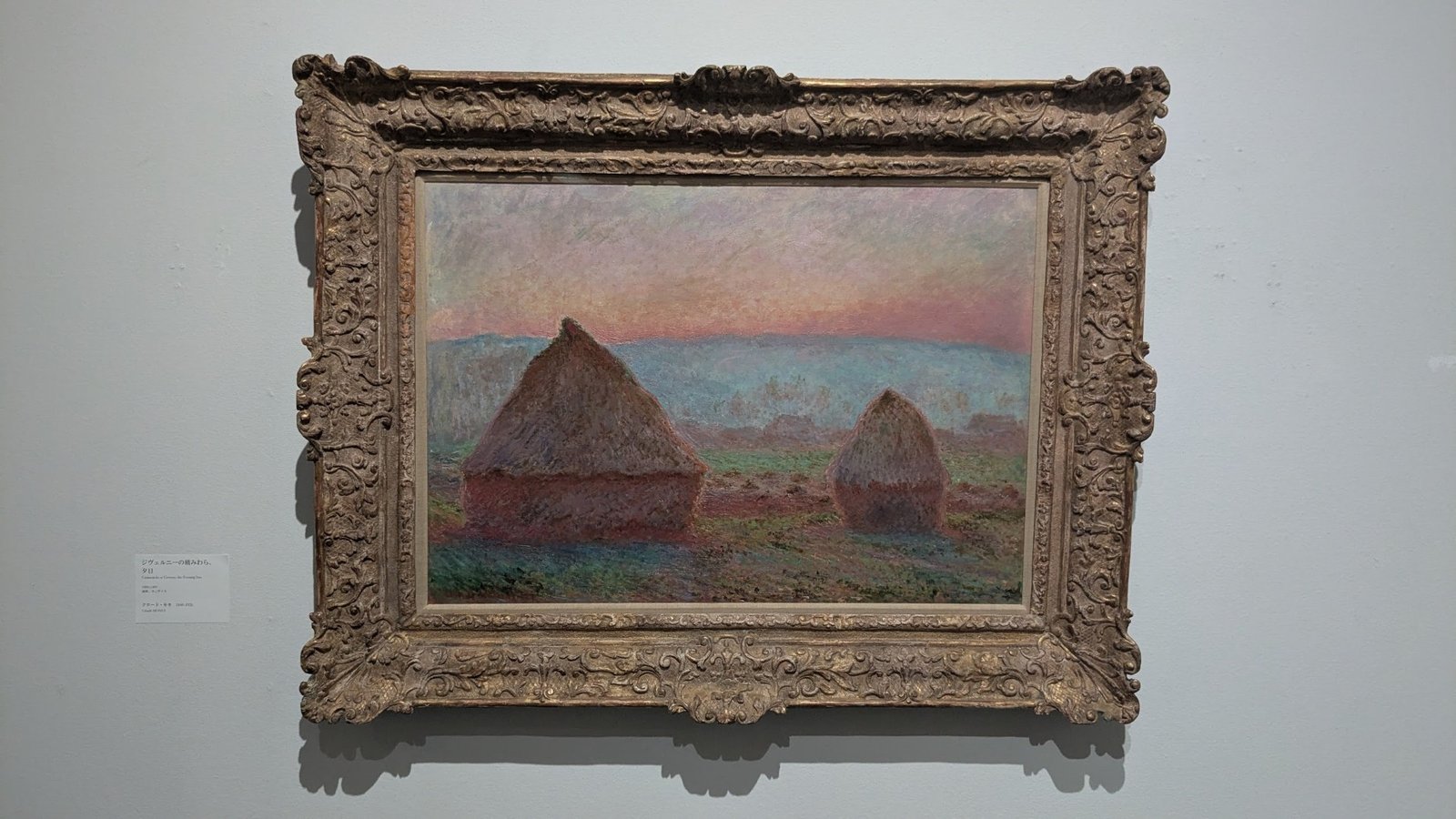
館內最受矚目的靈魂,莫過於克勞德·莫內筆下的《吉維尼的乾草堆,夕陽》,那抹捕捉瞬間永恆的餘暉,與馬克·夏卡爾筆下的夢幻詩意、巴勃羅·畢卡索對形式的解構、以及薩爾瓦多·達利的超現實夢境相映成趣,共同奠定了西方現代藝術的堅實底蘊。
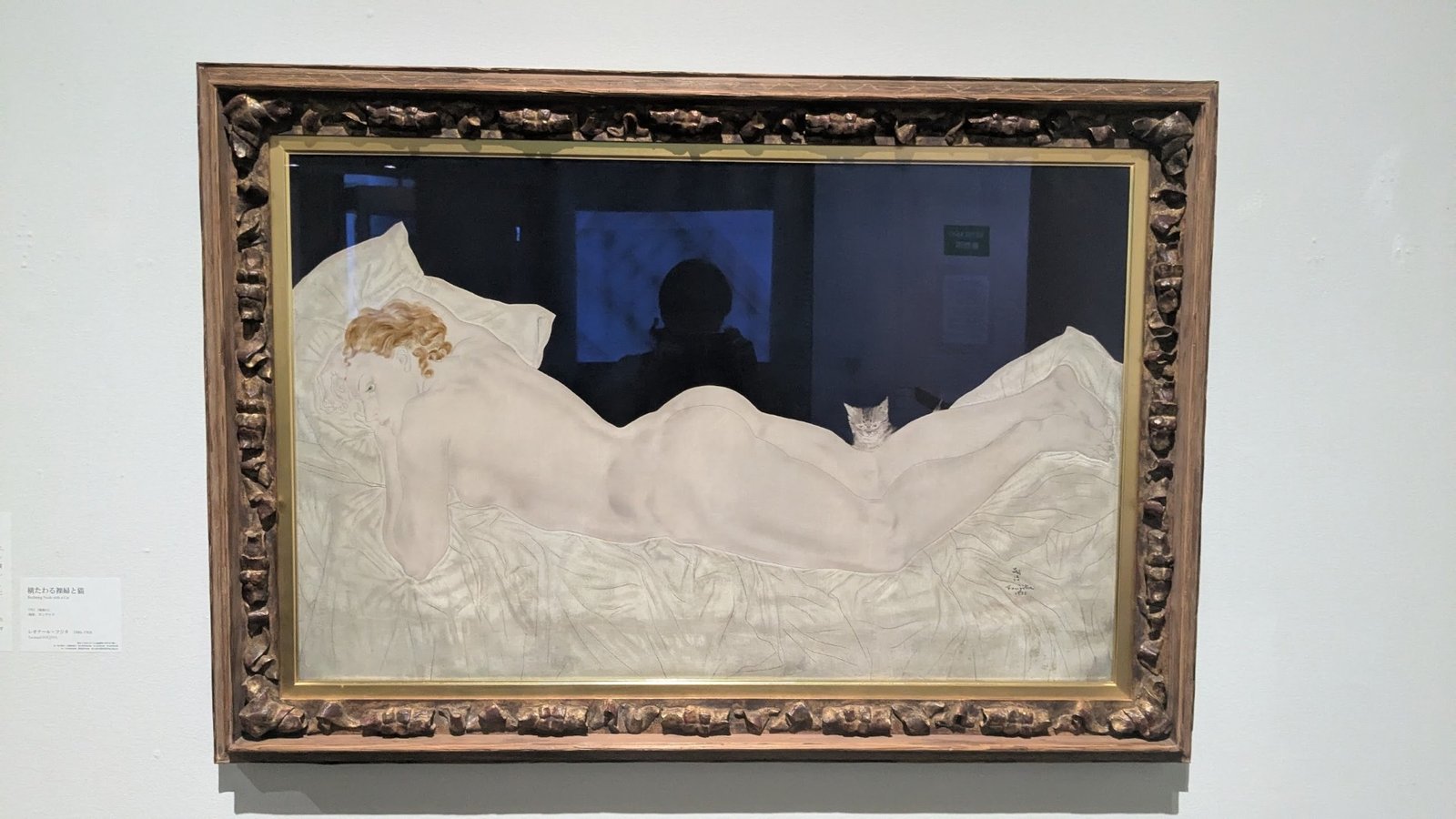
在此脈絡下,莫伊斯·基斯林那帶著憂鬱氣息的美感,與藤田嗣治優雅神祕的「乳白色肌膚」交織,展現了巴黎畫派跨越國界的藝術感染力。而費爾南多·波特羅那充滿膨脹體積感的幽默語彙,則為嚴肅的近代史增添了一抹溫暖的諷刺。
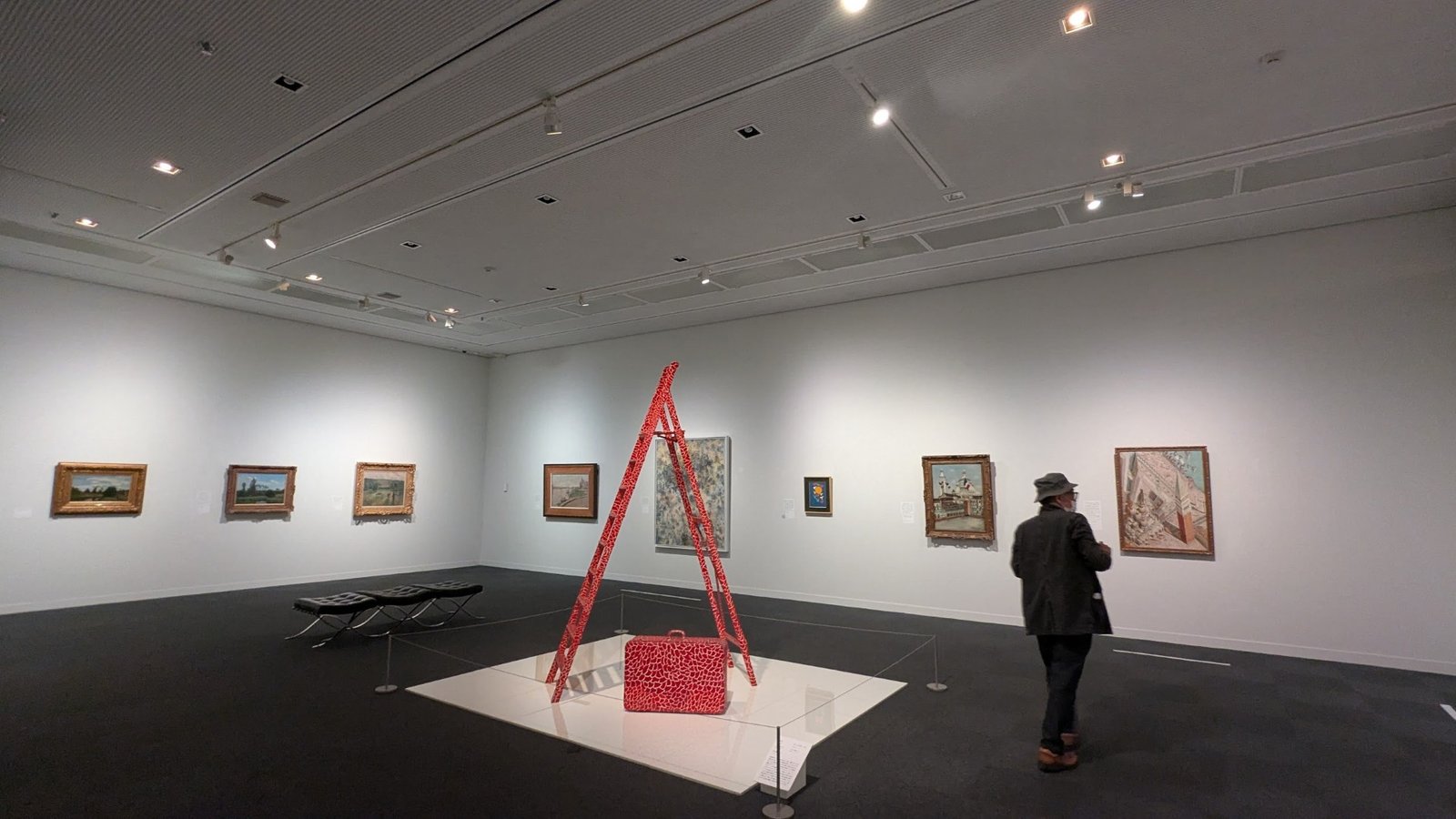
轉向東方,橫山大觀的宏大氣象與草間彌生那永無止盡的波點宇宙,在空間中形成了強烈的張力;作為館藏核心的瑛九,以其大膽的前衛實驗精神,與奧原晴湖、小村雪岱所代表的細膩日本審美相互呼應,勾勒出日本美術從傳統走向現代的清晰路徑。
美術館更令人稱道的是其「可坐的藝術」——透過蓋塔諾·佩謝對有機形式的探索,以及倉俁史朗那彷彿要消失在空氣中的透明詩意,名椅不再是冷冰冰的展示品,而是身體可以觸碰、入座的設計溫度。配合橋本真之在戶外延展的雕塑生命力,以及深受重森三玲景觀美學影響的空間佈局,這座美術館不僅是一處收納名作的容器,更是一個讓藝術、建築與日常生活在網格與綠意間交融共生的有機體,使其在國際藝術座標上,散發著獨一無二的知性光芒。它不同於傳統美術館的封閉與肅穆,反而以一種「開放」、「遊戲」甚至「挑釁」的姿態面對大眾。這座美術館的獨特之處,在於它是由日本代謝派建築大師黑川紀章設計的第一座美術館作品,更在於它擁有世界罕見的「椅子美術館」美譽,以及對「埼玉畫家」與西方現代大師作品的精準梳理。
埼玉近代美術館(MOMAS)自 1982 年開館至今已有超過 40 年歷史,舉辦過的個展數量極多,最具代表性且完整的歷年個展藝術家清單,依據年代與類型分類:
1980 - 1990 年代:奠定國際與前衛基礎
此時期美術館剛成立,引進了大量具備實驗性質與國際聲望的藝術家。
- 草間彌生 (Yayoi Kusama):1990 年代早期舉辦個展,展示其著名的油畫與軟雕塑。
- 詹姆斯·特瑞爾 (James Turrell):1997 年,「James Turrell: Where does the light in our dreams come from?」。
- 大衛·納許 (David Nash):1995 年,專注於木材自然雕塑的個展。
- 瑛九 (Ei-Q):1997 年,「光之化石:瑛九與物體攝影的世界」,是館方對這位在地大師的重要研究展。
- 唐納德·賈德 (Donald Judd):1999 年,「Donald Judd 1960-1991」大型回顧展。
- 尤根·克勞克 (Jürgen Klauke):1997 年,德國前衛攝影與行為藝術家。
- 詹姆斯·吉爾雷 (James Gillray):1997 年,英國諷刺漫畫大師個展。
- 田中安 (Yasushi Tanaka):1997 年,「畫家田中安:橫跨西雅圖與巴黎的夢想」。
- 路易斯·尼西澤 (Luis Nishizawa):1998 年,著名的墨西哥裔日籍藝術家回顧展。
2000 - 2010 年代:跨界與當代美學
此階段展覽更具多樣性,涵蓋了繪本、設計與雕塑。
- 元永定正 (Sadamasa Motonaga):具體派大師,曾在此展出其極具童趣且實驗性的繪本與平面作品。
- 立石大虎 (Tiger Tateishi):橫跨漫畫、藝術與設計的鬼才藝術家個展。
- 橋本真之 (Masayuki Hashimoto):以鍛造雕塑聞名,其作品常與美術館的開放空間對話。
- 重森三玲 (Sanrei Shigemura):雖然其主要成就為庭園設計,但館方曾針對其設計美學舉辦專題個人展。
2020 年代:成熟回顧與新生代對話
近年展覽著重於挖掘被忽視的近代大師,以及當代影像藝術。
- 岡部文明 (Fumiaki Okabe):2022 年,「馬戲團展:岡部文明的幻想世界」。
- 吉田克朗 (Katsuro Yoshida):2024 年,「觸碰物、風景與世界」大型回顧展。
- 木下佳通代 (Kazuyo Kinoshita):2024 年,探討存在與消失關係的個人回顧展。
- Nerhol (田中義久 & 飯田龍太):2025 年,「Nerhol:水平、垂直與有機」影像雕塑展。
- 山本容子 (Yoko Yamamoto):2025 年,出道 50 週年紀念展「山本容子的 1970 年代」。
- 橫尾龍彥 (Tatsuhiko Yokoo):2025 年,「冥想的彼方」大型專題回顧展。
常設性個人專題(長期展出)
雖然並非短期個展,但館內設有長期專題區,集中展示特定大師:
- 克勞德·莫內 (Claude Monet):圍繞《乾草堆》進行的常設研究展。
- 小村雪岱 (Komura Settai):定期舉辦其平面設計與裝幀藝術的專門展示。
 格柵中的光影詩篇:日本埼玉立近代美術館MOMAS的建築、館藏與人文精神
建築的哲學——黑川紀章與「共生」的空間
埼玉縣立近代美術館之所以在建築史上佔有一席之地,因為它是世界級建築家黑川紀章(Kisho Kurokawa, 1934-2007)設計的第一座美術館。這座建築不僅是展示藝術的容器,其本身就是一件巨大的現代藝術品。
 格柵中的光影詩篇:日本埼玉立近代美術館MOMAS的建築、館藏與人文精神
1. 代謝派(Metabolism)的遺產與轉化
黑川紀章是日本戰後建築運動「代謝派」的核心人物之一。代謝派主張建築應像生命體一樣,具有生長、變化和代謝的能力。然而,到了 1980 年代初期設計 MOMAS 時,黑川的思想已經從純粹的技術代謝論,轉向了更具文化深度的「共生哲學」(Philosophy of Symbiosis)。
在 MOMAS 的設計中,我們依然可以看見代謝派的影子,例如模組化的概念,但更多的是對「中間領域」與「曖昧性」的探索。黑川試圖在這座建築中實現自然與人工、內部與外部、西方幾何與東方美學的共生。
 格柵中的光影詩篇:日本埼玉立近代美術館MOMAS的建築、館藏與人文精神
2. 「格柵」:抽象的無限延伸
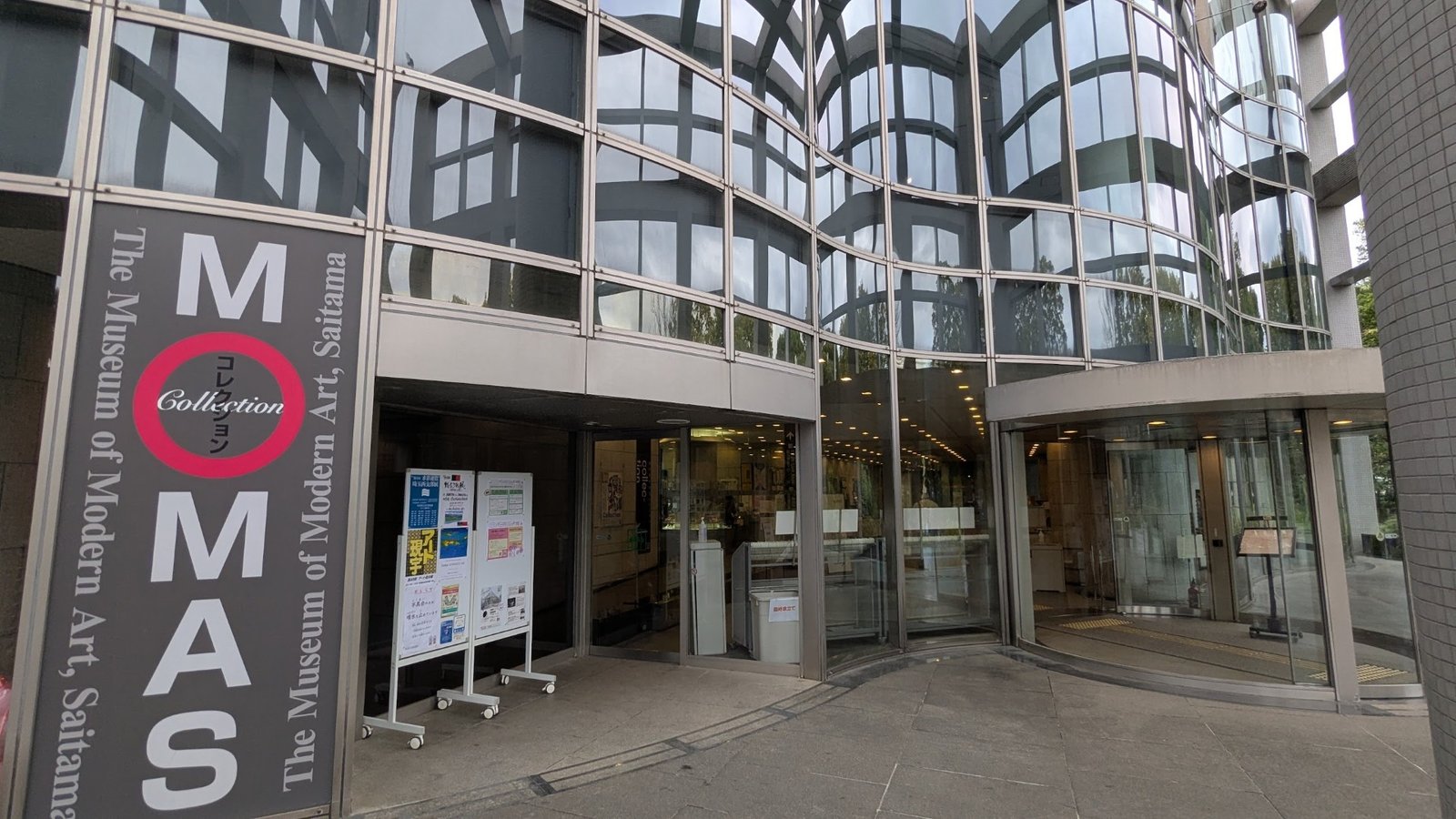
MOMAS 最顯著的視覺特徵,莫過於包裹著整個建築的灰白色「格柵」(Grid)結構。
- 幾何的秩序: 這些方格不僅是裝飾,它們定義了空間的秩序。黑川認為,方格是西方理性主義的象徵,但通過將其鏤空、延伸至建築主體之外,他打破了傳統建築的封閉性。
- 未完成的美學: 這些延伸到空中的樑柱與框架,彷彿建築仍在「生長」中,暗示了一種未完成的狀態。這種設計消解了建築的邊界,讓視線可以穿透結構看到天空與樹木,實現了建築與環境的模糊化。
 格柵中的光影詩篇:日本埼玉立近代美術館MOMAS的建築、館藏與人文精神
3. 「緣側」空間的現代詮釋
黑川紀章深受日本傳統建築中「緣側」(Engawa,即日式房屋外圍的走廊)啟發。緣側既不完全屬於室內,也不完全屬於室外,是一個緩衝的「中間領域」。
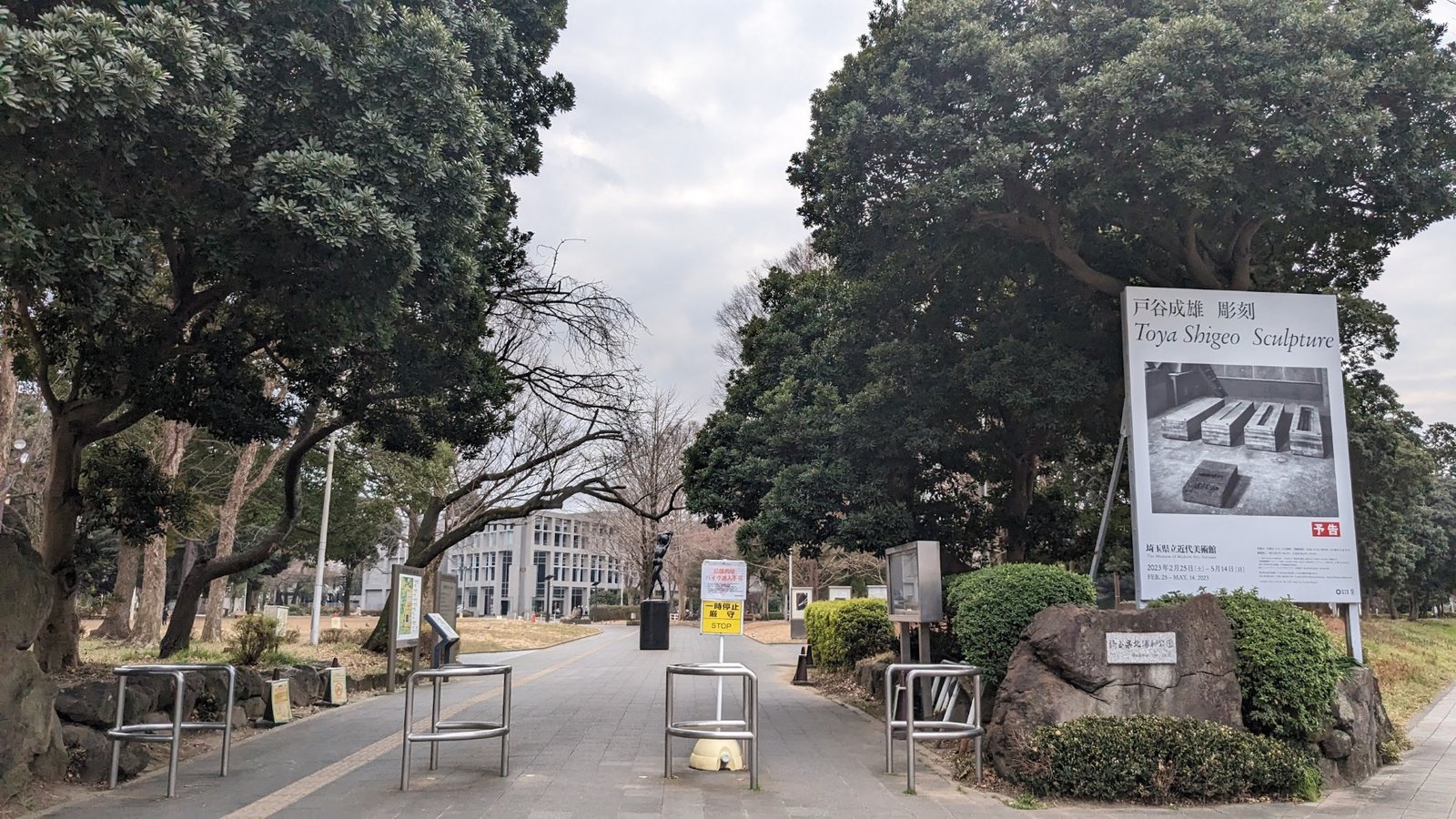
在 MOMAS,黑川設計了一個波浪狀的玻璃帷幕牆,以及穿插在公園綠地與建築本體之間的過渡空間。參觀者在進入展廳前,會先經過這些充滿光影變化的公共區域。這不僅降低了進入美術館的心理門檻,也創造了一種「在公園中漫步,不知不覺走進藝術」的體驗。
 格柵中的光影詩篇:日本埼玉立近代美術館MOMAS的建築、館藏與人文精神
4. 光的容器:中庭與動線
美術館內部設有一個巨大的挑空中庭(Atrium),這是整座建築的心臟。自然光透過幾何形狀的天窗灑落,隨著時間與季節的推移,光影在牆面與地面上繪製出不斷變化的圖形。黑川紀章精準地計算了光的角度,讓「光」成為引導參觀者動線的隱形嚮導。中央的樓梯不僅是垂直移動的工具,更像是一座雕塑,讓人在行進間能從不同高度俯瞰或仰望空間的層次。
 格柵中的光影詩篇:日本埼玉立近代美術館MOMAS的建築、館藏與人文精神
館藏精粹——從印象派到當代設計的對話
埼玉縣立近代美術館的收藏策略具有極高的學術價值。它不盲目追求數量的堆砌,而是聚焦於三條清晰的主軸:西方現代大師(從印象派到現代主義)、埼玉相關的日本近現代美術,以及獨樹一幟的椅子設計收藏。
 格柵中的光影詩篇:日本埼玉立近代美術館MOMAS的建築、館藏與人文精神
西方現代藝術的巨匠
MOMAS 收藏了多位對日本現代洋畫界產生深遠影響的西方大師作品。這些藏品不僅具有獨立的審美價值,更作為一個坐標系,用來對照日本近代美術的發展。
1. 克勞德·莫內(Claude Monet):《吉維尼的乾草堆》
這幅創作於 1885 年的作品是館內的鎮館之寶之一。莫內的《乾草堆》系列聞名於世,而 MOMAS 所藏的這件作品,捕捉了光線在草堆與周遭環境間的微妙顫動。對於深受印象派影響的日本洋畫壇來說,這件作品是理解「光」與「色」分割理論的最佳教科書。
2. 馬克·夏卡爾(Marc Chagall):《二重肖像》與《花束》
夏卡爾的作品以夢幻與愛為主題,深受日本觀眾喜愛。MOMAS 收藏的《二重肖像》(1917年)描繪了畫家與其愛妻貝拉。畫面中扭曲的空間、非理性的色彩與漂浮的人物,展現了立體主義與超現實主義對夏卡爾的影響,同時也保留了他獨有的猶太民族抒情性。
格柵中的光影詩篇:日本埼玉立近代美術館MOMAS的建築、館藏與人文精神
3. 巴勃羅·畢卡索(Pablo Picasso):《靜物》
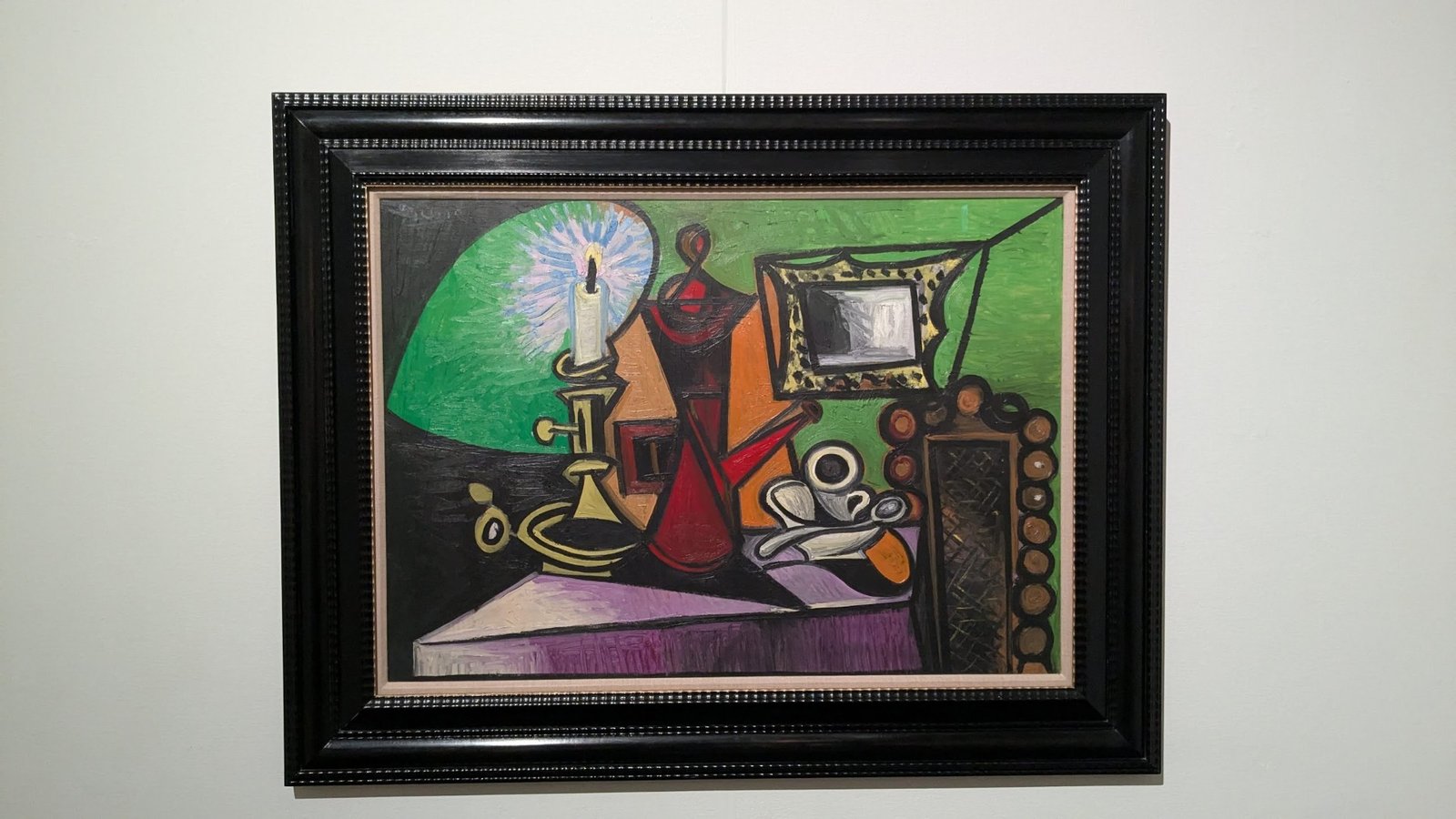
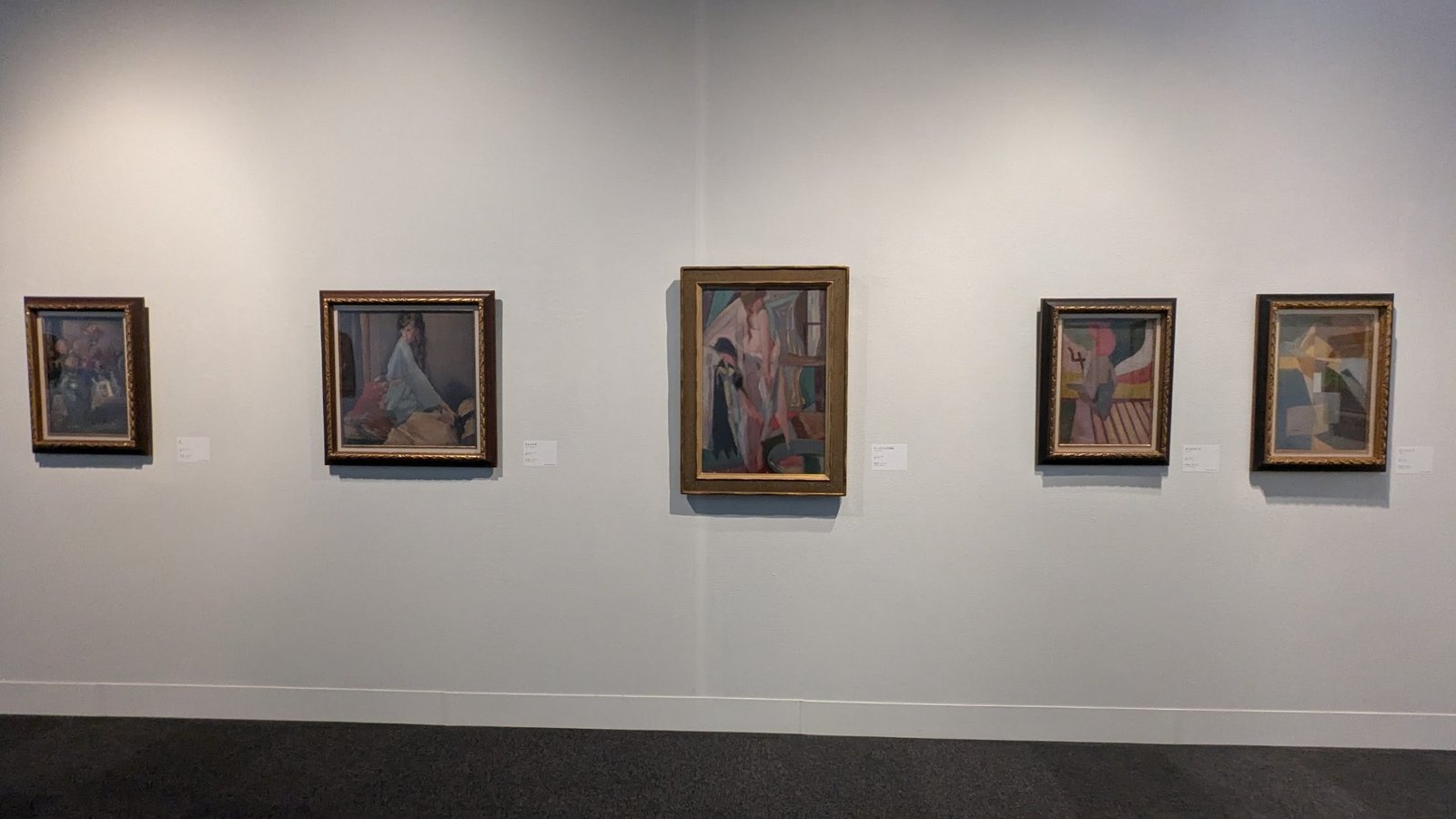
館藏中包含了畢卡索立體派時期的作品。透過對物體進行幾何拆解與重組,這件作品展示了 20 世紀藝術觀看方式的根本變革。這對於理解日本前衛藝術運動(如 MAVOMAVO (マヴォ) 是 1920 年代日本戰前活躍的 前衛藝術運動團體,由村山知義、柳瀨正夢等藝術家組成,帶有濃厚的達達主義色彩,深受蘇聯未來主義和歐洲超現實主義影響,活躍於繪畫、劇場、設計、文學等領域,出版《Mavo》期刊,是日本現代藝術史上的重要先驅。 等)如何吸收西方形式主義具有重要參照意義。
4. 莫伊斯·基斯林(Moïse Kisling):巴黎畫派的憂鬱
基斯林作為巴黎畫派(École de Paris)的代表人物,其作品具有獨特的憂鬱氣質與光滑的質感。MOMAS 收藏基斯林的作品,一方面是因為他與當時旅法的日本畫家(如藤田嗣治)有著密切的交集,另一方面也反映了昭和時期日本畫壇對巴黎畫派的推崇。
 格柵中的光影詩篇:日本埼玉立近代美術館MOMAS的建築、館藏與人文精神
埼玉的藝術靈魂——「浦和畫家」與在地脈絡
MOMAS 最核心的使命,是保存與研究與埼玉縣(特別是浦和地區)有淵源的藝術家作品。
1. 關東大地震與「鎌倉文士、浦和畫家」
1923 年關東大地震後,東京受創嚴重,許多藝術家為了尋求穩固的地盤與安靜的創作環境,紛紛移居到地質穩定且交通便利的浦和地區。這使得浦和成為了當時日本著名的藝術家聚落,被稱為「浦和畫家」(浦和アトリエ村)。MOMAS 系統性地收藏了這些畫家的作品,構建了日本近代美術史的重要篇章。
2. 瑛九(Ei-Kyu):前衛的探索者
瑛九(1911-1960)是日本戰後前衛藝術的重要先驅,他在埼玉縣浦和市度過了晚年。MOMAS 擁有全日本最完整的瑛九收藏。瑛九不拘泥於媒材,從油畫、攝影(光影畫 Photogram)到版畫皆有涉獵。他創立了「民主主義美術家協會Demokrato (民主美術協會) 是1950年代日本一個重要的前衛藝術團體,以追求個人創造力、表達自由、無權威為宗旨,成員包含著名的超現實主義畫家靉嘔(Ay-O),他們以色彩鮮豔的畫作和對傳統藝術的挑戰,特別是靉嘔後來發展出的彩虹系列與環境藝術,對現代藝術產生了深遠影響,是激浪派(Fluxus)的重要參與者,也是日本現代藝術史上的關鍵力量。」(Demokrato),對後世影響深遠。館藏中的瑛九點描法油畫,展現了他對光與宇宙秩序的獨特理解,其色彩的迷幻感預示了當代藝術的視覺特徵。
3. 田中保(Yasushi Tanaka):被遺忘的裸婦畫家
田中保是一位在生前於巴黎獲得高度讚譽,但在日本國內卻長期被遺忘的畫家。他並未定居埼玉,但 MOMAS 對其作品的發掘與收藏(主要源於埼玉縣收藏家的捐贈),使得這位風格獨特的畫家重回大眾視野。他筆下的裸婦具有一種豪放與野性,色彩運用大膽,與當時日本主流的學院派風格截然不同。
 格柵中的光影詩篇:日本埼玉立近代美術館MOMAS的建築、館藏與人文精神
4. 日本畫的革新:奧原晴湖與小村雪岱
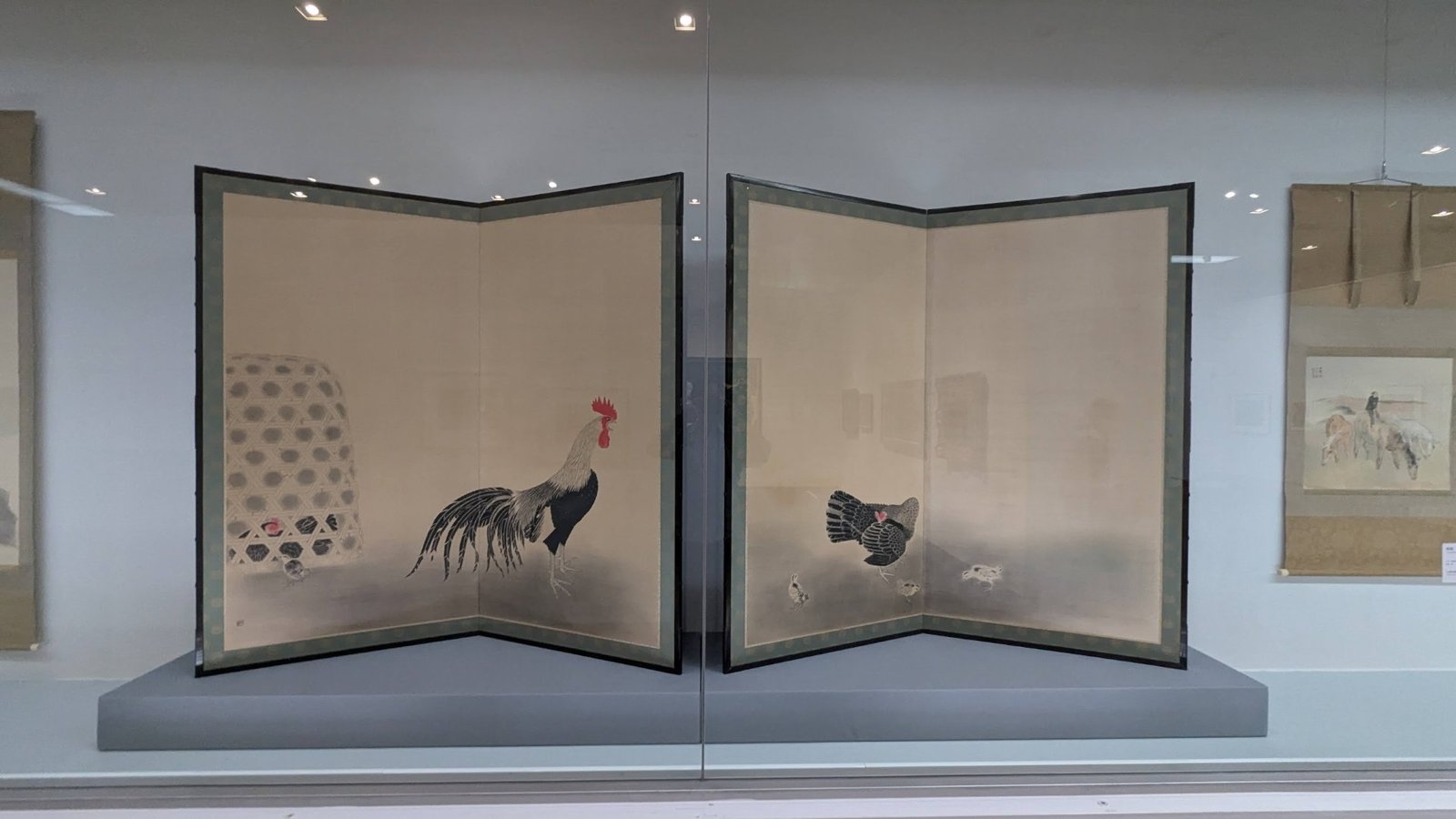
除了洋畫,MOMAS 也收藏了與埼玉有關的日本畫家作品。從幕末明治時期的南畫由江戶時代(西元1600年至1868年)中期盛行至大正時代(西元1912年至1926年)的日本繪畫風格。畫風的靈感來自中國文人學士,為少數知識份子而作的文人畫傳統。南畫有別於其他發展於主要日本畫室的風格,涵括各種技法、風格、題材,畫風自由而未訂標準規則。一般而言,南畫融合了繪畫、詩歌、書法,偏好細緻的筆法、單色或柔和的用色,並以抽象的形式呈現對自然的高度個人化觀點。家 奧原晴湖,到大正昭和時期以插畫和舞台設計聞名的小村雪岱,這些藏品呈現了日本傳統繪畫在現代化衝擊下的轉變與堅守。
 格柵中的光影詩篇:日本埼玉立近代美術館MOMAS的建築、館藏與人文精神
可以坐的藝術品——世界級的椅子收藏
如果說繪畫收藏是 MOMAS 的血肉,那麼「椅子」收藏就是它最獨特的骨架。MOMAS 被譽為「椅子的美術館」,這不僅是因為它收藏了大量名椅,更因為它實踐了「觸覺體驗」的博物館學理念。
1. 收藏理念:設計即藝術
MOMAS 認為,椅子是建築的縮影,也是與人體關係最密切的藝術形式。從 19 世紀末的新藝術運動到當代的後現代設計,館方系統性地搜集了設計史上的經典之作。
2. 「今日的座席」:打破「請勿觸摸」的禁忌
在大多數美術館,展品是神聖不可觸碰的。但在 MOMAS,館方在展廳走廊、休息區放置了許多設計師名椅的原作或高品質複製品,並允許參觀者自由坐下體驗。這一舉措打破了藝術與生活的隔閡。
- 蓋塔諾·佩謝(Gaetano Pesce)的《Up 5》(Donna):這張形似女性身體、連著一個球體的紅色扶手椅,是義大利激進設計的代表,象徵女性被束縛的處境。
- 瑪麗蓮·夢露紅唇沙發(Mae West Lips Sofa):達利(Salvador Dalí)設計的超現實主義經典,將性感與幽默轉化為傢俱。
- 倉俁史朗(Shiro Kuramata)的《How High the Moon》:用金屬擴張網製成的椅子,在光線下如同消逝的幽靈,展現了日本設計特有的「虛無」美學。
這項策展策略極具前瞻性,它讓觀眾用「身體」去記憶藝術,而不僅僅是用眼睛。
 格柵中的光影詩篇:日本埼玉立近代美術館MOMAS的建築、館藏與人文精神
領航者——歷任館長的視野與哲學
一座美術館的性格,往往由其館長奠定。MOMAS 的歷任館長多為兼具學術深度與公眾視野的藝術評論家或學者。
1. 早期奠基:本間正義(Masayoshi Honma)
作為首任館長(任期:1982-1994),本間正義確立了美術館的基礎方向。他不僅推動了對「浦和畫家」的在地研究,更重要的是,他確立了「向公園開放的美術館」這一親民路線,並大力支持「椅子收藏」這一獨特計畫,為 MOMAS 樹立了差異化的品牌形象。
2. 深化學術與國際化:建畠晢(Akira Tatehata)
建畠晢(任期:2005-2011,後任京都市立藝術大學校長、多摩美術大學校長)是日本當代著名的藝術評論家與詩人。
- 詩意的策展: 建畠晢本身是詩人,他的策展風格帶有一種文學性與敘事性。在任期間,他推動了許多將當代藝術與文學、哲學結合的展覽。
- 推動具體派(Gutai)與前衛藝術: 憑藉其深厚的學術背景,他強化了館內對於日本戰後前衛藝術(如瑛九、具體派)的研究深度,並積極將這些藝術家推向國際舞台。
- 公共推廣: 他致力於讓美術館成為「思想的廣場」,舉辦了大量的講座與研討會,提升了美術館的知識生產力。
3. 當代視野與公眾教育
近年來的館長與策展團隊,持續在「全球化」與「在地化」(Glocal)之間尋求平衡。他們不僅關注歐美當代藝術流派,更積極挖掘埼玉縣內年輕藝術家的潛力,舉辦「MOMAS 當代藝術系列」(MOMAS Contemporary)展覽,為新銳藝術家提供舞台。此外,針對兒童與社區的「博物館巡遊」(Museum Cruise)教育計畫,也成為了日本美術館教育的典範。
戶外雕塑與環境藝術——會呼吸的美術館
MOMAS 的藝術體驗並不侷限於牆內。黑川紀章的設計初衷就是讓美術館與北浦和公園融為一體,因此,戶外的雕塑公園也是美術館不可分割的一部分。
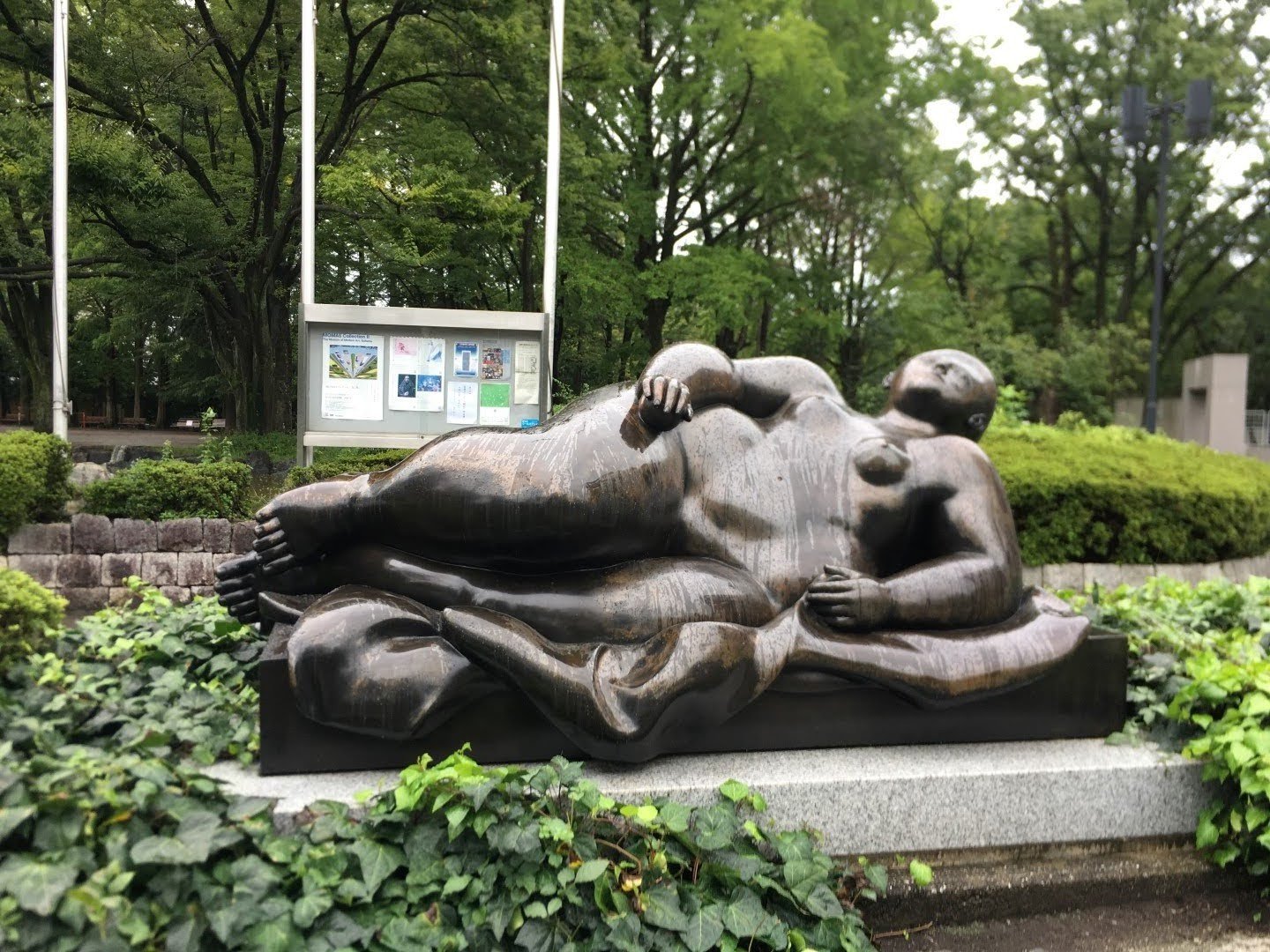
1. 費爾南多·波特羅(Fernando Botero):《裸婦》
這尊體態豐腴、充滿詼諧感的青銅雕塑,橫臥在綠色的草坪上,與黑川紀章幾何剛硬的建築形成有趣的對比,展現了拉丁美洲藝術的生命力。
2. 橋本真之(Masayuki Hashimoto):《果實中的木雷》
這是一件結合了自然形態與金屬質感的作品,安置在建築的過渡空間,呼應了公園的自然環境。
3. 重森三玲(Sanrei Shigemura):《地殼變動》
這件作品與黑川紀章的「共生」理念高度契合,彷彿是從地下生長出來的構造物,模糊了人造藝術與自然地景的界線。
公園內的音樂噴泉在特定時間會隨著古典音樂起舞,與周圍的雕塑群共同構成了一場視聽饗宴。這種將藝術置入市民日常休閒空間的做法,徹底實踐了「無牆美術館」的理想。
結論:持續代謝的藝術有機體
埼玉近代美術館(MOMAS)已經走過了四十多個年頭。從黑川紀章前衛的建築宣言,到歷任館長對「埼玉與世界」的對話建構,再到那一把把讓觀眾得以休憩沈思的名椅,MOMAS 證明了一座地方美術館可以擁有多麼宏大的視野。
它不僅僅是一個保存文物的倉庫,更是一個活著的有機體。它像黑川紀章所預言的那樣,持續地與周遭環境進行著「代謝」與「共生」。
- 在建築上,它示範了現代主義幾何如何與東方自然觀結合。
- 在館藏上,它證明了在地歷史(浦和畫家)與世界藝術史(印象派、超現實主義)可以平等對話。
- 在體驗上,它通過「椅子」這一媒介,讓藝術真正觸碰到了觀眾的身體。
對於任何一位造訪關東地區的藝術愛好者而言,埼玉縣立近代美術館都是一處不可錯過的聖地。在這裡,你可以坐在達利的紅唇沙發上,透過黑川紀章的格柵,凝視莫內筆下的光影,感受跨越時空的藝術共振。這正是 MOMAS 存在的意義——在方格的秩序中,譜寫出自由變幻的光影詩篇。
MOMAS 是 The Museum of Modern Art, Saitama(埼玉近代美術館)的英文縮寫
這個名稱不僅僅是一個縮寫,它在藝術界與建築界中還代表著以下三個層面的獨特定義與身份認同:
1. 名稱的構成
- Museum of Modern Art, Saitama = MOMAS
- 它位於日本埼玉縣埼玉市浦和區的北浦和公園內,於 1982 年開館。這個縮寫模仿了紐約現代藝術博物館(MoMA)的命名邏輯,但加上了 "S"(Saitama),強調其在地性。
2. 建築上的定義:黑川紀章的「共生」實驗場
在建築史的定義中,MOMAS 代表著**黑川紀章(Kisho Kurokawa)**設計的第一座美術館作品。
- 網格(Grid)美學: 它被定義為一座由抽象幾何網格構成的建築,象徵著西方現代主義的理性。
- 共生哲學: 它打破了美術館封閉的定義,透過延伸的樑柱與波浪狀玻璃牆,創造了建築與公園自然環境之間的「中間領域」(緣側空間),實踐了「自然與建築共生」的理念。
3. 功能上的定義:「椅子的美術館」
在博物館學與觀眾體驗的定義中,MOMAS 等同於「可以坐的美術館」。
- 不同於傳統美術館「請勿觸摸」的嚴肅定義,MOMAS 以收藏大量的世界級設計師名椅(如蓋塔諾·佩謝等人的作品)並允許觀眾實際乘坐而聞名。這重新定義了藝術品的展示方式——從單純的視覺觀賞轉變為身體的觸覺體驗。
4. 館藏定位:在地與國際的交匯點
MOMAS 的收藏定義了日本埼玉縣的藝術光譜:
- 在地脈絡: 系統性收藏「瑛九」及「浦和畫家」(關東大地震後移居浦和的藝術家群體)的作品。
- 國際視野: 收藏莫內、夏卡爾、畢卡索等西方現代大師作品,作為日本近代美術發展的對照座標。
總結來說,MOMAS 的定義是:
一座位於埼玉、由黑川紀章設計的現代美術館,它以獨特的網格建築、互動式的椅子收藏,以及「日本的藝術方舟」之姿,致力於消除藝術與大眾生活界線的文化地標。
埼玉縣立近代美術館(MOMAS)作為日本重要的公共美術館,其定位:
埼玉縣立近代美術館(MOMAS)作為日本重要的公共美術館,其定位主要在於「高水準的地域核心美術館」與「建築藝術地標」。在2025年的美術館評價體系中,其等級可從日本國內與國際兩個維度進行對比分析。
一、 日本國內美術館的等級與定位
在日本的美術館體系中,等級通常依據經營主體、館藏廣度及學術影響力來劃分。
- 官方地位:頂尖「縣立(公立)」級美術館
- MOMAS 屬於「都道府縣立」等級,是埼玉縣最高級別的現代藝術機構。雖然在行政資源上略次於「國立」機構(如東京國立近代美術館),但在地域性美術館中,它與橫濱美術館、兵庫縣立美術館等同屬一線公立美術館。
- 專業特色評價:全球罕見的「椅子美術館」
- 在日本藝術愛好者心中,MOMAS 因其獨特的「椅子的美術館」定位而獲得極高評價。該館打破傳統美術館「禁止觸摸」的框架,允許民眾親自試坐館內收藏的設計師名椅(如 Good Design Award 獲獎作品),這種互動性使其在全國同類館舍中極具差異化競爭力。
- 學術與展覽評價:現代藝術重鎮
- 館內常設展(MOMAS Collection)每年更換四次,以莫內(Monet)、畢卡索(Picasso)、夏卡爾(Chagall)等海外大師,以及瑛九(Ei-Kyu)等本土現代藝術家作品為核心,其策展深度在關東地區備受學界認可。
二、 全球美術館等級比對
若將 MOMAS 放入全球坐標系中,與畢卡索美術館、橫濱美術館都具備同樣等級,具有高質量的專題館藏與國際級大師精品。
三、 關鍵比對指標
- 建築價值:黑川紀章的成名作
- MOMAS 是代謝派大師黑川紀章設計的第一座美術館。其方格狀的建築語彙與北浦和公園的自然景觀融合,即使在落成40多年後的今天,依然被視為現代建築的傑作。在全球建築愛好者眼中,MOMAS 本身就是一件值得專程造訪的藝術品。
- 館藏深度:精品導向而非量化
- 雖然館藏總數約為4,200件,遠少於羅浮宮的35萬件,但 MOMAS 擁有的莫內《夕陽下的吉維尼乾草堆》等大作,確保了它在國際現代藝術中的發言權。
- 教育與公眾評價
- 與歐美頂尖美術館(如倫敦泰特美術館)相似,MOMAS 積極推動親子工作坊與市民參與,使其從傳統的「藝術展示廳」轉型為「藝術活動中心」。
總結評價:
作為2025年的當代視角,MOMAS 被評價為一間「具有建築靈魂、強調感官互動」的高品質公共美術館。它雖不具備全球 Tier 1 的規模,但在「現代椅子收藏」與「代謝派建築」這兩個特定領域,其等級位居全球前列。
埼玉近代美術館(MOMAS)常年舉辦展覽的核心藝術團體:
埼玉近代美術館(MOMAS)憑藉其專業的展覽空間,成為了埼玉縣內外藝術團體發表的最高殿堂。該館長期承載了多個具備歷史與公募性質的重量級團體。以下為在該館常年舉辦展覽的核心藝術團體:
兩大現代藝術支柱(當代與實驗風格)
這兩個團體是 MOMAS 展現現代藝術活力的代表:
- 現代美術家協會(現展 - Genten)埼玉支部
- 地位:日本歷史悠久的現代藝術公募團體。
- 展出特色:每年 3 月 固定舉辦「埼玉現展」。作品涵蓋油畫、現代平面作品、攝影及立體造型,風格多元且具前衛感。
- CAF.N(當代藝術聯盟・海王星)
- 地位:極具國際視野的當代藝術組織。
- 展出特色:通常於 11 月至 12 月 舉辦「CAF.N 埼玉展」。這是一個強調「當下性」的團體,常見大型空間裝置(Installation)、抽象繪畫與跨媒介實驗藝術,常與美術館的建築空間產生深度對話。
官方最大規模展覽
- 埼玉縣美術家協會(縣展 - Kenten)
- 地位:全日本規模最大的縣級官方公募展。
- 內容:每年 5 月至 6 月 舉行。包含日本畫、洋畫、雕刻、工藝、書道、攝影六大部門。這是全埼玉縣藝術家爭取最高榮譽(如縣知事賞)的舞台,展覽期間人潮最盛。
全國性美術團體的「埼玉支部」
許多日本全國性的美術協會每年會固定在此舉辦其分部展覽:
- 太平洋美術會(太平洋埼玉展):歷史悠久的寫實與洋畫團體,通常於 10 月 展出。
- 主體美術協會(主體美術武蔵野作家展):強調個性表現與寫實現代結合,通常於 4 月 展出。
- 新構造社(新構造埼玉支部展):包含繪畫、工藝與攝影,通常於 9 月 展出。
- 水彩連盟(埼玉西支部展):專注於水彩畫的藝術探索,多在 10 月 舉行。
書法與傳統/半傳統藝術
- 埼玉縣書道人連盟(埼玉書道展)
- 地位:埼玉縣被譽為「書法之鄉」,其規模極大。
- 內容:每年 9 月 展出,分為漢字、假名、近代詩文書等多種書法形態。
- 埼玉縣剪紙協會(彩之國埼玉剪紙展)
- 內容:每年的 3 月 左右展出,展現精湛的職人工藝與現代剪紙藝術。
展覽名稱:日本第49回琦玉現代藝術家展(埼玉現展)
展覽時間: 2026年3月3日(週二)~3月8日(週日)
展覽地點: 日本埼玉近代美術館MOMAS第3室・第4室
A Poem of Light and Shadow within the Grid: The Architecture, Collection, and Humanistic Spirit of Japan’s MOMAS, The Museum of Modern Art, Saitama
Written by Wang Muti
Preface: Japan’s Ark of Art
Located in Kita-Urawa, Japan, The Museum of Modern Art, Saitama (MOMAS) is a sensory sanctuary that perfectly fuses Kisho Kurokawa’s architectural philosophy of “symbiosis”—the same architect who designed Japan’s highest-ranking national art institution, The National Art Center, Tokyo—with a world-class art collection. Constructed through a rigorous geometric grid, this building nonetheless dissolves the threshold of art through its transparency and openness, so that the moment visitors step inside, they begin a journey of light and shadow that traverses modern history. Since opening on November 3, 1982 (Showa 57), it has served not only as the artistic heart of Saitama Prefecture, but also as an important landmark in the development of modern art museums in Japan.
The most captivating soul in the museum is undoubtedly Claude Monet’s Haystack at Giverny, Sunset. That afterglow, which captures eternity in a fleeting instant, converses with the dreamlike poetry of Marc Chagall, the deconstruction of form in Pablo Picasso, and the surreal dreamscapes of Salvador Dalí, together laying a solid foundation for Western modern art.
Within this context, the beauty tinged with melancholy in Moïse Kisling’s work intertwines with the elegant and mysterious “milky-white skin” of Tsuguharu Foujita, revealing the transnational force of the School of Paris. Meanwhile, the humorous vocabulary of inflated volume in Fernando Botero’s work adds a warm irony to the gravity of modern history.
Turning toward the East, the grand atmosphere of Yokoyama Taikan and the endless polka-dot cosmos of Yayoi Kusama generate a powerful tension in space; as the core of the collection, Ei-Q, with his bold avant-garde experimental spirit, resonates with the subtle Japanese aesthetics represented by Okuhara Seiko and Komura Settai, outlining a clear path by which Japanese art moved from tradition toward modernity.
What is especially admirable about the museum is its concept of “art you can sit on.” Through Gaetano Pesce’s exploration of organic form and Shiro Kuramata’s transparent poetry that seems to disappear into the air, iconic chairs are no longer cold display objects, but instead become designs whose warmth may be touched and inhabited by the body. Alongside the sculptural vitality extended outdoors by Masayuki Hashimoto, and a spatial layout deeply influenced by the landscape aesthetics of Mirei Shigemori, this museum is not merely a vessel for housing masterpieces, but an organism in which art, architecture, and daily life intermingle and coexist amid grid structure and greenery. In doing so, it radiates a unique intellectual brilliance across the international artistic map.
Unlike traditional museums marked by closure and solemnity, it instead faces the public with an attitude of “openness,” “play,” and even “provocation.” The uniqueness of this museum lies not only in the fact that it is the first museum designed by the great Japanese Metabolist architect Kisho Kurokawa, but also in its rare global reputation as a “museum of chairs”, and in its precise articulation of both the “Saitama painters” and Western modern masters.
Since its opening in 1982, MOMAS has now accumulated over four decades of history and has mounted a great number of solo exhibitions. The most representative and comprehensive list of major solo exhibition artists, categorized by period and type, is as follows:
1980s–1990s: Laying the Foundations of Internationalism and the Avant-Garde
This was the museum’s formative period, during which it introduced a large number of artists of experimental character and international stature.
- Yayoi Kusama: Held a solo exhibition in the early 1990s, showing her renowned oil paintings and soft sculptures.
- James Turrell: In 1997, James Turrell: Where Does the Light in Our Dreams Come From?
- David Nash: In 1995, a solo exhibition focusing on natural wood sculpture.
- Ei-Q: In 1997, Fossils of Light: Ei-Q and the World of Photograms, an important research exhibition dedicated by the museum to this local master.
- Donald Judd: In 1999, the large-scale retrospective Donald Judd 1960–1991.
- Jürgen Klauke: In 1997, solo presentation of the German avant-garde photographer and performance artist.
- James Gillray: In 1997, a solo exhibition of the British master of satirical caricature.
- Yasushi Tanaka: In 1997, Painter Yasushi Tanaka: Dreams Across Seattle and Paris.
- Luis Nishizawa: In 1998, a retrospective of the renowned Mexican-Japanese artist.
2000s–2010s: Interdisciplinarity and Contemporary Aesthetics
In this phase, exhibitions became more diverse, encompassing picture books, design, and sculpture.
- Sadamasa Motonaga: The Gutai master, whose playful and experimental picture books and two-dimensional works were exhibited here.
- Tiger Tateishi: Solo exhibition of the brilliant artist who traversed manga, art, and design.
- Masayuki Hashimoto: Known for forged sculpture, his work often entered into dialogue with the museum’s open spatial environment.
- Mirei Shigemori: Although best known for garden design, the museum once mounted a special exhibition dedicated to his design aesthetics.
2020s: Mature Retrospectives and Dialogue with the New Generation
Recent exhibitions have focused on rediscovering overlooked modern masters, as well as on contemporary image-based art.
- Fumiaki Okabe: In 2022, Circus Exhibition: The Fantastical World of Fumiaki Okabe.
- Katsuro Yoshida: In 2024, the major retrospective Touching Objects, Landscape, and the World.
- Kazuyo Kinoshita: In 2024, a solo retrospective exploring the relationship between existence and disappearance.
- Nerhol (Yoshihisa Tanaka & Ryuta Iida): In 2025, Nerhol: Horizontal, Vertical, and Organic, an exhibition of image sculpture.
- Yoko Yamamoto: In 2025, the 50th anniversary exhibition Yoko Yamamoto’s 1970s.
- Tatsuhiko Yokoo: In 2025, the major thematic retrospective Beyond Meditation.
Permanent Solo-Thematic Displays (Long-Term Installations)
Although not short-term solo exhibitions, the museum also maintains long-term thematic areas for specific masters:
- Claude Monet: A permanent research display centered on Haystack.
- Komura Settai: Periodic specialist displays of his graphic design and book design art.
The Philosophy of Architecture — Kisho Kurokawa and the Space of “Symbiosis”
The reason why The Museum of Modern Art, Saitama occupies an important place in architectural history lies in the fact that it was the first museum designed by the world-class architect Kisho Kurokawa (1934–2007). This building is not merely a container for exhibiting art; it is itself a gigantic modern artwork.
1. The Legacy and Transformation of Metabolism
Kisho Kurokawa was one of the central figures of the postwar Japanese architectural movement known as Metabolism. Metabolism argued that architecture should, like a living organism, possess the capacity for growth, change, and metabolism. Yet, by the early 1980s, when Kurokawa designed MOMAS, his thought had already moved beyond a purely technical theory of metabolism toward a more culturally profound “philosophy of symbiosis.”
In the design of MOMAS, one can still perceive traces of Metabolism, such as modular concepts, but more importantly there is a strong exploration of the “intermediate zone” and of ambiguity. Kurokawa attempted in this building to realize a symbiosis between nature and the artificial, interior and exterior, Western geometry and Eastern aesthetics.
2. The “Grid”: An Abstract Infinite Extension
The most striking visual feature of MOMAS is undoubtedly the gray-white grid structure enveloping the whole building.
- The order of geometry: These square modules are not merely decorative; they define the order of space. Kurokawa regarded the grid as a symbol of Western rationalism, yet by hollowing it out and extending it beyond the architectural body, he broke the closure of traditional architecture.
- An aesthetics of incompletion: The beams, columns, and frames extending into the sky make the building appear as if it were still “growing,” suggesting a state of incompletion. This design dissolves architectural boundaries, allowing the eye to pass through the structure toward the sky and trees, and thus blurring architecture and environment.
3. A Modern Interpretation of the “Engawa” Space
Kisho Kurokawa was deeply inspired by the Japanese traditional architectural concept of the engawa—the corridor-like zone around the outer edge of a Japanese house. The engawa belongs neither entirely to the inside nor entirely to the outside; it is a buffering “intermediate zone.”
At MOMAS, Kurokawa designed an undulating glass curtain wall and transitional spaces inserted between the greenery of the park and the body of the building. Before entering the galleries, visitors first pass through these public spaces rich in shifting light and shadow. This not only lowers the psychological barrier of entering an art museum, but also creates an experience of “strolling through the park and entering art almost without noticing.”
4. A Vessel of Light: The Atrium and Circulation
Inside the museum is a large open atrium, the heart of the entire structure. Natural light pours in through geometrically shaped skylights and, as time and season shift, light and shadow draw continuously changing patterns across the walls and floor. Kurokawa calculated the angle of light with precision, allowing “light” itself to become an invisible guide directing the path of visitors. The central staircase is not merely a tool of vertical movement, but resembles a sculpture, allowing people in motion to overlook or gaze upward at the spatial layers from different heights.
Collection Highlights — A Dialogue from Impressionism to Contemporary Design
The collecting strategy of The Museum of Modern Art, Saitama possesses a very high academic value. It does not blindly pursue quantity, but instead focuses on three clear axes: Western modern masters (from Impressionism to Modernism), modern and contemporary Japanese art related to Saitama, and a singular collection of chair design.
Masters of Western Modern Art
MOMAS collects works by many Western masters who exerted profound influence upon the Japanese world of modern Western-style painting. These works not only possess independent aesthetic value, but also serve as a coordinate system through which the development of Japanese modern art may be understood.
1. Claude Monet: Haystack at Giverny
This work, created in 1885, is one of the museum’s treasures. Monet’s Haystack series is world-famous, and the version in MOMAS captures the subtle vibration of light between the haystack and its surrounding environment. For the Japanese world of Western-style painting, deeply influenced by Impressionism, this work serves as the finest textbook for understanding the theory of the division of light and color.
2. Marc Chagall: Double Portrait and Bouquet
Chagall’s works, centered on dream and love, have long been beloved by Japanese audiences. MOMAS’s Double Portrait (1917) depicts the painter and his beloved wife Bella. The twisted space, irrational colors, and floating figures reveal the influence of Cubism and Surrealism upon Chagall, while also preserving his distinctive Jewish lyricism.
3. Pablo Picasso: Still Life
The museum’s holdings include a work from Picasso’s Cubist period. Through the geometric dismantling and recomposition of objects, this work demonstrates a fundamental transformation in the way art sees in the twentieth century. It thus serves as an important point of reference for understanding how Japanese avant-garde movements, such as MAVO, absorbed Western formalism.
4. Moïse Kisling: The Melancholy of the School of Paris
As a representative figure of the École de Paris, Kisling’s work possesses a unique melancholy and a smooth texture. MOMAS’s collection of Kisling reflects, on the one hand, his close intersections with Japanese painters in Paris at the time (such as Tsuguharu Foujita), and, on the other, the esteem in which the School of Paris was held within the Japanese art world during the Showa period.
The Artistic Soul of Saitama — “Urawa Painters” and Local Context
The most central mission of MOMAS is to preserve and research works by artists with deep ties to Saitama Prefecture, especially the Urawa region.
1. The Great Kanto Earthquake and the “Kamakura Writers, Urawa Painters”
After the Great Kanto Earthquake of 1923, Tokyo was heavily damaged, and many artists moved to the geologically stable and conveniently connected Urawa area in search of solid ground and a quiet place to work. As a result, Urawa became a major artistic enclave in Japan at the time, known as the “Urawa Painters” (Urawa Atelier Village). MOMAS has systematically collected the works of these artists, constructing an important chapter in the history of modern Japanese art.
2. Ei-Q: Explorer of the Avant-Garde
Ei-Q (1911–1960) was a major pioneer of postwar Japanese avant-garde art, and he spent his later years in Urawa, Saitama. MOMAS possesses the most complete Ei-Q collection in Japan. Ei-Q was not bound to a single medium; he worked across oil painting, photography (photograms), and printmaking. He founded the Demokrato (Democratic Artists Association), which exerted deep influence on later generations.
The pointillist oil paintings by Ei-Q in the collection reveal his unique understanding of light and cosmic order, and the psychedelic quality of his color anticipates the visual features of contemporary art.
3. Yasushi Tanaka: The Forgotten Painter of Nude Women
Yasushi Tanaka was a painter highly acclaimed in Paris during his lifetime, yet long forgotten in Japan. Although he did not settle in Saitama, MOMAS’s excavation and collection of his work—largely through donations from collectors in Saitama Prefecture—brought him back into public view. The nude women he painted possess a boldness and wildness, and his use of color is daring, standing in sharp contrast to the mainstream Japanese academic style of the time.
4. Innovation in Nihonga: Okuhara Seiko and Komura Settai
In addition to Western-style painting, MOMAS also collects works by Japanese-style painters connected to Saitama. From the Nanga tradition of the late Edo and Meiji period, represented by Okuhara Seiko, to Komura Settai, famous in the Taisho and Showa periods for illustration and stage design, these holdings reveal both the transformation and persistence of Japanese traditional painting under the pressures of modernization.
Artworks You Can Sit On — A World-Class Chair Collection
If the painting collection forms the flesh and blood of MOMAS, then its chair collection is its most distinctive skeleton. MOMAS is celebrated as a “museum of chairs,” not only because it houses a great number of iconic chairs, but because it practices a museological philosophy of tactile experience.
1. Collection Philosophy: Design as Art
MOMAS considers the chair to be a microcosm of architecture and the art form most intimately connected to the human body. From late nineteenth-century Art Nouveau to contemporary postmodern design, the museum has systematically collected classics of design history.
2. “Today’s Seats”: Breaking the Taboo of “Do Not Touch”
In most museums, exhibits are sacred and untouchable. At MOMAS, however, original designer chairs or high-quality reproductions are placed in corridors and rest areas, and visitors are allowed to sit and experience them freely. This initiative breaks down the barrier between art and life.
- Gaetano Pesce’s Up 5 (Donna): A red armchair shaped like a female body and attached to a spherical form, representing Italian radical design and symbolizing the condition of women under restraint.
- Mae West Lips Sofa: A surrealist classic designed by Salvador Dalí, transforming sensuality and humor into furniture.
- Shiro Kuramata’s How High the Moon: A chair made of expanded metal mesh that, under light, seems like a vanishing ghost, revealing the uniquely Japanese aesthetics of voidness.
This curatorial strategy is extremely forward-looking, for it allows the audience to remember art through the body, and not merely through the eyes.
Leaders — The Vision and Philosophy of Successive Directors
The character of a museum is often defined by its directors. MOMAS’s successive directors have largely been art critics or scholars possessing both academic depth and public vision.
1. Early Foundation: Masayoshi Honma
As the first director (1982–1994), Masayoshi Honma established the museum’s fundamental direction. He promoted research on the Urawa painters, but even more importantly, he set the approachable path of a “museum open to the park” and strongly supported the unique project of chair collecting, which established MOMAS’s differentiated identity.
2. Deepening Academia and Internationalization: Akira Tatehata
Akira Tatehata (2005–2011, later president of Kyoto City University of Arts and Tama Art University) is one of Japan’s leading contemporary art critics and poets.
- Poetic curatorship: Tatehata himself is a poet, and his curatorial style carries a literary and narrative quality. During his tenure, he promoted numerous exhibitions that connected contemporary art with literature and philosophy.
- Advancing Gutai and avant-garde art: Drawing on his deep academic background, he strengthened the museum’s research into postwar Japanese avant-garde art, such as Ei-Q and Gutai, and actively pushed these artists onto the international stage.
- Public outreach: He worked to make the museum a “public square of thought”, organizing numerous lectures and symposia that enriched the museum’s knowledge production.
3. Contemporary Vision and Public Education
In recent years, the museum’s directors and curatorial team have continued seeking a balance between globalization and glocality. They not only pay close attention to Euro-American contemporary art trends, but also actively uncover the potential of young artists within Saitama Prefecture, organizing the MOMAS Contemporary exhibition series to provide a platform for emerging artists. In addition, educational programs such as Museum Cruise, aimed at children and local communities, have become a model for museum education in Japan.
Outdoor Sculpture and Environmental Art — A Museum That Breathes
The artistic experience of MOMAS is not confined within walls. Kurokawa’s original intention was to integrate the museum with Kita-Urawa Park, and thus the outdoor sculpture park is an inseparable part of the museum.
1. Fernando Botero: Nude Woman
This bronze sculpture, plump in form and full of humor, reclines upon the green lawn and creates an interesting contrast with Kurokawa’s hard geometric architecture, revealing the vitality of Latin American art.
2. Masayuki Hashimoto: Wood Thunder in the Fruit
This work combines natural form and metallic texture, and is situated in one of the building’s transitional spaces, responding to the park’s natural environment.
3. Mirei Shigemori: Crustal Movement
This work resonates strongly with Kurokawa’s philosophy of symbiosis, appearing as though it had grown from beneath the ground and thus blurring the boundary between man-made art and natural landscape.
At certain times, the musical fountain in the park dances to classical music, creating, together with the sculptures around it, an audiovisual feast. This method of placing art into the everyday leisure space of the public fully realizes the ideal of a museum without walls.
Conclusion: An Artistic Organism in Continuous Metabolism
The Museum of Modern Art, Saitama (MOMAS) has now passed through more than forty years. From Kisho Kurokawa’s avant-garde architectural declaration, to the dialogue between Saitama and the world built by successive directors, and to the many iconic chairs that allow viewers to rest and reflect, MOMAS proves how grand the vision of a regional museum can be.
It is not merely a warehouse preserving works; it is a living organism. Just as Kurokawa predicted, it continues to engage in metabolism and symbiosis with its surrounding environment.
- In architectural terms, it demonstrates how modernist geometry can merge with an Eastern view of nature.
- In terms of its collection, it proves that local history (the Urawa painters) and world art history (Impressionism, Surrealism) can enter into equal dialogue.
- In terms of experience, it allows art truly to touch the body of the viewer through the medium of the chair.
For any art lover visiting the Kanto region, The Museum of Modern Art, Saitama is an unmissable sacred site. Here, one may sit on Dalí’s lips sofa, gaze through Kurokawa’s grid at the light and shadow in Monet’s paintings, and feel the resonance of art across time and space. This is precisely the meaning of MOMAS’s existence: to compose freely shifting poems of light and shadow within the order of the grid.
MOMAS as the English Abbreviation of The Museum of Modern Art, Saitama
This name is not merely an abbreviation; in the fields of art and architecture, it also represents three distinct layers of definition and identity:
1. Composition of the Name
- Museum of Modern Art, Saitama = MOMAS
- It is located inside Kita-Urawa Park, Urawa Ward, Saitama City, Saitama Prefecture, Japan, and opened in 1982. This abbreviation imitates the naming logic of the Museum of Modern Art in New York (MoMA), but adds the “S” of Saitama to emphasize local identity.
2. Architectural Definition: Kisho Kurokawa’s Experimental Field of “Symbiosis”
In architectural history, MOMAS signifies the first museum designed by Kisho Kurokawa.
- Grid aesthetics: It is defined as an architecture composed of abstract geometric grids, symbolizing the rationality of Western modernism.
- Philosophy of symbiosis: It breaks the closed definition of the museum through its extended beams and columns and its undulating glass wall, creating an intermediate zone between architecture and the park’s natural environment (an engawa-like space), thereby enacting the idea of symbiosis between nature and architecture.
3. Functional Definition: “The Museum of Chairs”
In museological terms and in terms of visitor experience, MOMAS equals “a museum you can sit in.”
- Unlike the stern traditional museum principle of “Do Not Touch,” MOMAS is famous for collecting large numbers of world-class designer chairs (including works by Gaetano Pesce and others) and allowing visitors to sit on them. This redefines the display of artworks—from purely visual appreciation to tactile bodily experience.
4. Collection Positioning: A Point of Convergence Between the Local and the International
MOMAS’s collection defines the artistic spectrum of Saitama Prefecture, Japan:
- Local context: It systematically collects works by Ei-Q and the Urawa painters (the artists who moved to Urawa after the Great Kanto Earthquake).
- International vision: It collects works by Western modern masters such as Monet, Chagall, and Picasso, using them as coordinates against which the development of modern Japanese art may be read.
In summary, MOMAS may be defined as follows:
A modern art museum located in Saitama and designed by Kisho Kurokawa, which—with its unique grid architecture, its interactive chair collection, and its status as “Japan’s ark of art”—serves as a cultural landmark devoted to erasing the boundary between art and public life.
The Positioning of The Museum of Modern Art, Saitama (MOMAS) as One of Japan’s Major Public Art Museums
As one of Japan’s important public art museums, The Museum of Modern Art, Saitama (MOMAS) is primarily positioned as a high-level regional core museum and an architectural landmark of art. Within the evaluative framework of museums in 2025, its standing may be compared and analyzed along both domestic Japanese and international dimensions.
I. Domestic Level and Position Within Japan
In the Japanese system of museums, levels are usually distinguished according to the governing body, the breadth of the collection, and academic influence.
- Official status: a top-tier prefectural (public) museum
MOMAS belongs to the prefectural-level category and is the highest-level modern art institution in Saitama Prefecture. While it stands slightly below national institutions such as the National Museum of Modern Art, Tokyo in administrative resources, among regional museums it belongs to the same front rank as the Yokohama Museum of Art and the Hyogo Prefectural Museum of Art. - Professional distinction: the globally rare “museum of chairs”
Among Japanese art lovers, MOMAS enjoys especially high esteem because of its distinctive identity as a museum of chairs. By breaking with the traditional museum rule of “no touching” and allowing the public to actually sit on designer chairs in the collection (including works recognized by the Good Design Award), MOMAS possesses a highly differentiated competitive strength among comparable institutions nationwide. - Academic and exhibition evaluation: a center of modern art
The permanent exhibition (MOMAS Collection) changes four times a year, centering on international masters such as Monet, Picasso, and Chagall, together with local modern artists such as Ei-Q. Its curatorial depth is widely recognized by academic circles in the Kanto region.
II. Comparison Within the Global Museum Hierarchy
If MOMAS is placed within a global coordinate system, it may be said to stand at a comparable level to institutions such as the Picasso Museum and the Yokohama Museum of Art, thanks to its high-quality thematic holdings and masterpieces by international masters.
III. Key Comparative Indicators
- Architectural value: a signature work by Kisho Kurokawa
MOMAS is the first museum designed by the Metabolist master Kisho Kurokawa. Its gridded architectural language merges with the natural landscape of Kita-Urawa Park and, even more than forty years after completion, is still considered a masterpiece of modern architecture. For architecture enthusiasts around the world, MOMAS itself is a work of art worth a special visit. - Depth of collection: quality-oriented rather than quantitative
Although its total holdings number around 4,200 works, far fewer than the Louvre’s 350,000, masterpieces such as Monet’s Haystack at Giverny, Sunset ensure MOMAS a voice within international modern art discourse. - Education and public evaluation
Like leading museums in Europe and America, such as Tate in London, MOMAS actively promotes workshops for children and civic participation, transforming itself from a traditional art exhibition hall into an art activity center.
Overall Assessment
From a contemporary perspective in 2025, MOMAS is evaluated as a high-quality public museum with an architectural soul and a strong emphasis on sensory interaction. Although it does not possess the scale of a global Tier 1 institution, in the specific fields of modern chair collecting and Metabolist architecture, it ranks among the world’s leading institutions.
The Core Art Groups That Regularly Exhibit at The Museum of Modern Art, Saitama (MOMAS)
Thanks to its professional exhibition spaces, The Museum of Modern Art, Saitama (MOMAS) has become the highest hall for the presentation of artistic groups from within and beyond Saitama Prefecture. Over the long term, it has hosted a number of heavyweight groups with historical significance and open-call structures. The following are the core art groups that regularly exhibit there:
Two Major Pillars of Modern Art (Contemporary and Experimental Styles)
These two groups represent the vitality of modern art as shown at MOMAS:
- The Modern Artists Association (Genten) – Saitama Branch
- Status: A long-established open-call modern art organization in Japan.
- Exhibition features: Every year in March, it regularly holds the Saitama Genten. Works include oil painting, contemporary two-dimensional work, photography, and three-dimensional form, with diverse and avant-garde styles.
- CAF.N (Contemporary Art Federation · Neptune)
- Status: A contemporary art organization with a highly international outlook.
- Exhibition features: Usually held from November to December as the CAF.N Saitama Exhibition. It emphasizes “presentness” and often features large-scale installation, abstract painting, and cross-media experimental art, frequently entering into deep dialogue with the museum’s architectural space.
The Largest Official Exhibition
- Saitama Prefectural Artists Association (Kenten)
- Status: The largest prefectural official open-call exhibition in Japan.
- Content: Held every year from May to June. It includes six divisions: Nihonga, Western-style painting, sculpture, crafts, calligraphy, and photography. This is the stage where artists across Saitama Prefecture compete for the highest honors, such as the Governor’s Prize, and it draws the largest crowds during the exhibition period.
“Saitama Branches” of Nationwide Art Associations
Many national Japanese art associations hold their branch exhibitions here each year:
- Taiheiyō Art Association (Taiheiyō Saitama Exhibition): A long-established realist and Western-style painting group, usually exhibiting in October.
- Shutai Art Association (Shutai Musashino Artists Exhibition): Emphasizes the combination of individual expression and modern realism, usually exhibiting in April.
- Shinkōzōsha (Shinkōzō Saitama Branch Exhibition): Includes painting, crafts, and photography, usually exhibiting in September.
- Watercolor Federation (Saitama West Branch Exhibition): Focused on artistic exploration in watercolor, usually held in October.
Calligraphy and Traditional / Semi-Traditional Arts
- Saitama Prefectural Calligraphers Federation (Saitama Calligraphy Exhibition)
- Status: Saitama Prefecture is celebrated as a home of calligraphy, and this exhibition is vast in scale.
- Content: Held every year in September, divided into such types as Chinese characters, kana, and modern poetic calligraphy.
- Saitama Prefectural Papercutting Association (Sai no Kuni Saitama Papercutting Exhibition)
- Content: Exhibited around March each year, presenting refined craftsmanship and modern papercutting art.
Exhibition Title: The 49th Saitama Modern Artists Exhibition in Japan (Saitama Genten)
Exhibition Period: March 3, 2026 (Tuesday) – March 8, 2026 (Sunday)
Exhibition Venue: Galleries 3 and 4, The Museum of Modern Art, Saitama (MOMAS), Japan
格子の中の光と影の詩篇――日本MOMAS埼玉県立近代美術館の建築、収蔵品、そして人文精神
執筆:王 穆提(WANG MUTI)
前言:日本の芸術方舟
日本・北浦和に位置する**埼玉県立近代美術館(MOMAS)は、黒川紀章(日本最高位の国立新美術館の設計者)の「共生」**建築哲学と、世界級の芸術コレクションとを見事に融合させた感覚の殿堂である。厳密な幾何学的グリッドによって構築されながらも、その透明性と開放感の中で芸術への敷居を解体し、来館者は足を踏み入れた瞬間から、近代史を横断する光と影の旅を始めることになる。1982年(昭和57年)11月3日の開館以来、ここは単に埼玉県民の芸術的心臓であるだけでなく、日本の近代美術館発展史における重要なランドマークでもある。
館内でもっとも注目される魂は、やはりクロード・モネによる**《ジヴェルニーの積みわら、夕陽》である。その一瞬に永遠を捉えた残照は、マルク・シャガールの夢幻的詩情、パブロ・ピカソの形式解体、そしてサルバドール・ダリ**の超現実的夢想と呼応し、共に西洋近代芸術の強固な基盤を築いている。
この文脈の中で、モイーズ・キスリングの憂愁を帯びた美感は、藤田嗣治の優雅かつ神秘的な**「乳白色の肌」**と交錯し、エコール・ド・パリの国境を超える芸術的感染力を示している。一方で、フェルナンド・ボテロの膨張した量塊感に満ちたユーモアの語彙は、重厚な近代史に温かな諷刺を添えている。
東方へ視線を転じれば、横山大観の壮大な気象と、草間彌生の終わりなき水玉宇宙が、空間の中で強い緊張を生み出している。収蔵の核心をなす瑛九は、その大胆な前衛実験精神によって、奥原晴湖や小村雪岱の代表する繊細な日本的美意識と響き合い、日本美術が伝統から近代へと歩んだ明晰な道筋を描き出している。
さらにこの美術館を際立たせているのは、その**「座れる芸術」という理念である。ガエターノ・ペッシェの有機的形態への探究、そして倉俣史朗の空気の中に消えていくかのような透明な詩情を通じて、名作椅子はもはや冷たい展示物ではなく、身体が触れ、腰掛けることのできるデザインの温度へと変わる。これに橋本真之の屋外へ延びる彫刻的生命力、さらに重森三玲**の景観美学に深く影響された空間構成が加わることで、この美術館は単なる名作収納の容器ではなく、芸術・建築・日常生活がグリッドと緑のあいだで共生的に溶け合う有機体となっている。そのため国際的な芸術座標の上で、類い稀な知的光芒を放っているのである。
それは従来の美術館のような閉鎖性や厳粛さとは異なり、むしろ**「開放」、「遊戯」、さらには「挑発」の姿勢で大衆に向き合っている。この美術館の独自性は、日本のメタボリズム派建築の巨匠・黒川紀章が設計した最初の美術館作品であることに加え、世界でも稀な「椅子の美術館」としての名声を持ち、さらに「埼玉画家」**と西洋近代巨匠たちの作品を精密に整理していることにある。
**埼玉県立近代美術館(MOMAS)**は1982年の開館以来、すでに40年以上の歴史を有し、多数の個展を開催してきた。もっとも代表的かつ包括的な歴年個展作家リストを、年代と類型に分けて整理すると以下の通りである。
1980〜1990年代:国際性と前衛性の基盤形成
この時期は美術館創設直後にあたり、実験的性格と国際的名声を備えた芸術家が数多く導入された。
- 草間彌生 (Yayoi Kusama): 1990年代初頭に個展を開催し、代表的な油彩やソフト・スカルプチャーを展示。
- ジェームズ・タレル (James Turrell): 1997年、「James Turrell: Where does the light in our dreams come from?」。
- デイヴィッド・ナッシュ (David Nash): 1995年、木材による自然彫刻に焦点を当てた個展。
- 瑛九 (Ei-Q): 1997年、「光の化石:瑛九と物体写真の世界」。この地元の巨匠に対する館の重要な研究展。
- ドナルド・ジャッド (Donald Judd): 1999年、「Donald Judd 1960–1991」大規模回顧展。
- ユルゲン・クラウケ (Jürgen Klauke): 1997年、ドイツの前衛写真家・パフォーマンス芸術家。
- ジェームズ・ギルレイ (James Gillray): 1997年、英国風刺漫画の巨匠による個展。
- 田中保 (Yasushi Tanaka): 1997年、「画家・田中保:シアトルとパリをまたぐ夢」。
- ルイス・ニシザワ (Luis Nishizawa): 1998年、著名なメキシコ系日系芸術家の回顧展。
2000〜2010年代:越境性と現代美学
この段階では展覧会の多様性が高まり、絵本、デザイン、彫刻までを含むようになった。
- 元永定正 (Sadamasa Motonaga): 具体派の巨匠であり、童心に満ちた実験的な絵本や平面作品を展示。
- 立石大河亞 / タイガー立石 (Tiger Tateishi): 漫画・美術・デザインを横断した鬼才の個展。
- 橋本真之 (Masayuki Hashimoto): 鍛造彫刻で知られ、その作品はしばしば美術館の開放空間と対話する。
- 重森三玲 (Sanrei Shigemura): 主な業績は庭園設計だが、そのデザイン美学を扱った特別個展が開催されたことがある。
2020年代:成熟した回顧と新世代との対話
近年の展覧会は、見過ごされてきた近代の巨匠の発掘と、現代映像芸術に重点を置いている。
- 岡部文明 (Fumiaki Okabe): 2022年、「サーカス展:岡部文明の幻想世界」。
- 吉田克朗 (Katsuro Yoshida): 2024年、「もの、風景、世界に触れる」大規模回顧展。
- 木下佳通代 (Kazuyo Kinoshita): 2024年、存在と消失の関係を探る個人回顧展。
- Nerhol (田中義久 & 飯田龍太): 2025年、「Nerhol:水平、垂直、そして有機」映像彫刻展。
- 山本容子 (Yoko Yamamoto): 2025年、デビュー50周年記念展「山本容子の1970年代」。
- 横尾龍彦 (Tatsuhiko Yokoo): 2025年、「瞑想の彼方」大規模特集回顧展。
常設的個人特集(長期展示)
短期個展ではないが、館内には特定の巨匠に集中した長期特集展示区画が設けられている。
- クロード・モネ (Claude Monet): 《積みわら》を中心とした常設研究展示。
- 小村雪岱 (Komura Settai): その平面デザインや装幀芸術の専門展示を定期的に実施。
建築の哲学――黒川紀章と「共生」の空間
埼玉県立近代美術館が建築史において一席を占める理由は、それが世界的建築家黒川紀章(Kisho Kurokawa, 1934–2007)の設計した最初の美術館だからである。この建築は単なる展示の器ではなく、それ自体が巨大な現代芸術作品なのである。
1. メタボリズム(Metabolism)の遺産と変容
黒川紀章は、日本戦後建築運動**「メタボリズム」の中核人物の一人であった。メタボリズムは、建築が生命体のように成長し、変化し、代謝する能力を持つべきだと主張した。しかし、1980年代初頭に MOMAS を設計した時点で、黒川の思想は純粋な技術的代謝論を離れ、より文化的深みを持つ「共生哲学」**へと移行していた。
MOMAS の設計には、モジュール化の概念などメタボリズムの影を見ることができるが、それ以上に目立つのは、**「中間領域」**と曖昧性の探究である。黒川はこの建築の中で、自然と人工、内部と外部、西洋幾何学と東洋美学の共生を実現しようとした。
2. 「格子」:抽象的な無限の延長
MOMAS のもっとも顕著な視覚的特徴は、建築全体を包み込む灰白色の**「格子(Grid)」**構造である。
- 幾何学の秩序: これらの格子は単なる装飾ではなく、空間の秩序を規定している。黒川は格子を西洋合理主義の象徴と考えたが、それを透かし、建築本体の外へまで延長することで、従来建築の閉鎖性を打ち破った。
- 未完の美学: 空中へ伸びる梁や柱、フレームは、まるで建築がなお**「成長」**しつづけているかのように見せ、未完成な状態を暗示する。この設計は建築の境界を解体し、視線が構造を透過して空や樹木へ至ることを可能にし、建築と環境の曖昧化を実現している。
3. 「縁側」空間の現代的解釈
黒川紀章は、日本の伝統建築における**「縁側(Engawa)」――日本家屋の外縁に沿った廊下状の空間――から深い影響を受けていた。縁側は完全に室内でもなく、完全に室外でもない、緩衝的な「中間領域」**である。
MOMAS において黒川は、波打つガラスカーテンウォールと、公園の緑地と建築本体のあいだに差し込まれた移行空間を設計した。来館者は展示室に入る前に、光と影の変化に満ちたこれらの公共空間を通過する。これは美術館に入る心理的敷居を下げるだけでなく、**「公園を散歩しているうちに、気づけば芸術の中へ入っている」**という体験を創り出している。
4. 光の器:アトリウムと動線
美術館内部には巨大な吹き抜けのアトリウムがあり、それが建築全体の心臓となっている。幾何学形の天窓から自然光が降り注ぎ、時間や季節の推移に応じて壁面や床面に絶えず変化する図形を描く。黒川紀章は光の角度を精緻に計算し、**「光」**そのものを観客の動線を導く見えない案内役に変えた。中央の階段は単なる垂直移動の装置ではなく、一つの彫刻のようでもあり、人々が移動しながら異なる高さから空間の層を見下ろしたり見上げたりできるようになっている。
収蔵の精華――印象派から現代デザインまでの対話
埼玉県立近代美術館の収集方針は極めて高い学術的価値を持つ。それは盲目的に量を積み上げるのではなく、三つの明確な軸に焦点を当てている。すなわち、西洋近代巨匠(印象派からモダニズムまで)、埼玉に関わる日本近現代美術、そして独自性の高い椅子デザインのコレクションである。
西洋近代芸術の巨匠たち
MOMAS は、日本の近代洋画界に深い影響を与えた西洋巨匠たちの作品を多数収蔵している。これらの所蔵品は独立した審美的価値を持つだけでなく、日本近代美術の発展を照らし出す座標系としても機能している。
1. クロード・モネ:《ジヴェルニーの積みわら》
1885年に制作されたこの作品は館を代表する至宝の一つである。モネの《積みわら》連作は世界的に有名だが、MOMAS 所蔵のこの一点は、積みわらと周囲の環境とのあいだで光が震える微細な瞬間を捉えている。印象派の影響を深く受けた日本洋画壇にとって、この作品は**「光」と「色」**の分割理論を理解する最良の教科書である。
2. マルク・シャガール:《二重肖像》と《花束》
夢幻と愛を主題とするシャガールの作品は、日本の観客に深く愛されてきた。MOMAS 所蔵の《二重肖像》(1917年)は、画家とその最愛の妻ベラを描く。ねじれた空間、非合理的な色彩、浮遊する人物像は、キュビスムとシュルレアリスムの影響を示しつつ、彼独自のユダヤ的抒情性を保持している。
3. パブロ・ピカソ:《静物》
館蔵にはピカソのキュビスム期の作品が含まれている。物体を幾何学的に解体し再構成することで、この作品は20世紀芸術における見ることの根本的変革を示している。これは、日本の前衛芸術運動(たとえば MAVO)が西洋形式主義をいかに吸収したかを理解するうえで重要な参照点となる。
4. モイーズ・キスリング:エコール・ド・パリの憂愁
エコール・ド・パリの代表的人物であるキスリングの作品は、独特の憂愁と滑らかな質感を備えている。MOMAS がキスリング作品を収蔵しているのは、一方では彼が当時パリに滞在していた日本人画家(たとえば 藤田嗣治)と密接な交差を持っていたからであり、他方では昭和期日本画壇におけるエコール・ド・パリへの強い憧憬を反映しているからである。
埼玉の芸術的魂――「浦和画家」と地域的文脈
MOMAS のもっとも中心的な使命は、埼玉県、とりわけ浦和地域にゆかりを持つ芸術家たちの作品を保存し、研究することである。
1. 関東大震災と「鎌倉文士、浦和画家」
1923年の関東大震災の後、東京は甚大な被害を受け、多くの芸術家たちは安定した地盤と静かな創作環境を求めて、地質的に安定し交通の便もよい浦和地域へ移住した。その結果、浦和は当時の日本で著名な芸術家集落となり、「浦和画家」(浦和アトリエ村)と呼ばれた。MOMAS はこれら画家たちの作品を体系的に収蔵し、日本近代美術史の重要な一章を構築している。
2. 瑛九(Ei-Kyu):前衛の探求者
**瑛九(1911–1960)**は日本戦後前衛芸術の重要な先駆者であり、晩年を埼玉県浦和市で過ごした。MOMAS は全国でもっとも充実した瑛九コレクションを有している。瑛九はメディアに拘泥せず、油彩、写真(フォトグラム)、版画にまで及んだ。また、**民主主義美術家協会(Demokrato)**を創設し、後代に深い影響を与えた。
館蔵の瑛九の点描法油彩は、光と宇宙秩序への彼の独自の理解を示し、その色彩の幻惑性は現代芸術的な視覚特性を予示している。
3. 田中保(Yasushi Tanaka):忘れられた裸婦画家
田中保は、生前パリで高く評価されながら、日本国内では長く忘れられていた画家である。彼は埼玉に定住してはいなかったが、MOMAS による作品の発掘と収蔵(主として埼玉県内コレクターの寄贈による)は、この独特な画家を再び公衆の視界へと呼び戻した。彼の描く裸婦は豪放で野性的な気配を持ち、色彩運用も大胆で、当時の日本の主流アカデミズムとは大きく異なっていた。
4. 日本画の革新:奥原晴湖と小村雪岱
洋画のみならず、MOMAS は埼玉に関わる日本画家の作品も収蔵している。幕末明治期の南画の系譜を引く奥原晴湖から、大正昭和期に挿絵や舞台意匠で名を馳せた小村雪岱に至るまで、これらの収蔵品は、日本伝統絵画が近代化の衝撃の中でいかに変容し、また守られたかを示している。
座ることのできる芸術作品――世界級の椅子コレクション
もし絵画コレクションが MOMAS の血肉であるならば、**「椅子」コレクションはその最も独自な骨格である。MOMAS は「椅子の美術館」として知られているが、それは単に多くの名椅子を所蔵しているからではなく、「触覚的体験」**という博物館学的理念を実践しているからである。
1. 収集理念:デザインは芸術である
MOMAS は、椅子を建築の縮図であり、人体ともっとも密接な関係を持つ芸術形式だと考えている。19世紀末のアール・ヌーヴォーから現代のポストモダン・デザインまで、館はデザイン史上の古典的作品を体系的に収集してきた。
2. 「今日の座席」:〈触らないでください〉の禁忌を破る
ほとんどの美術館では、展示品は神聖で触れてはならないものとされる。しかし MOMAS では、展示室の回廊や休憩スペースに多くのデザイナー椅子の原作または高品質複製品が置かれ、来館者が自由に座って体験できるようになっている。この試みは、芸術と生活の隔たりを打ち破る。
- ガエターノ・ペッシェ(Gaetano Pesce)の《Up 5》(Donna): 女性の身体を思わせる造形に球体がつながる赤いアームチェアであり、イタリア急進的デザインを代表し、拘束された女性の状況を象徴する。
- マリリン・モンローの赤い唇ソファ(Mae West Lips Sofa): **ダリ(Salvador Dalí)**が設計したシュルレアリスムの古典であり、官能性とユーモアを家具へと変換した作品。
- 倉俣史朗(Shiro Kuramata)の《How High the Moon》: エキスパンドメタルで作られた椅子で、光のもとでは消えゆく幽霊のように見え、日本デザイン特有の**「虚無」**の美学を示している。
このキュレーション戦略はきわめて先見的であり、観客に芸術を**「身体」**で記憶させるのであって、単に眼で見るだけにとどまらせない。
舵取り役――歴代館長の視野と哲学
一つの美術館の性格は、しばしば館長によって規定される。MOMAS の歴代館長は、多くが学術的深みと公共的視野を兼ね備えた美術評論家または研究者である。
1. 初期の基礎づくり:本間正義(Masayoshi Honma)
初代館長(任期:1982–1994)である本間正義は、美術館の基本的方向性を確立した。彼は**「浦和画家」の地域研究を推進しただけでなく、より重要なことに、「公園に開かれた美術館」という親しみやすい路線を定め、さらに椅子コレクション**という独自の計画を強力に支援し、MOMAS の差異化されたブランド・アイデンティティを形成した。
2. 学術の深化と国際化:建畠晢(Akira Tatehata)
建畠晢(任期:2005–2011、後に京都市立芸術大学学長・多摩美術大学学長)は、日本を代表する現代美術評論家であり詩人でもある。
- 詩的キュレーション: 建畠晢自身が詩人であり、そのキュレーションには文学性と叙事性が漂っている。在任中、彼は現代芸術と文学・哲学を結びつけた多くの展覧会を推進した。
- 具体派(Gutai)と前衛芸術の推進: 深い学術背景をもって、日本戦後前衛芸術(たとえば瑛九や具体派)に対する館内研究を強化し、これら芸術家を積極的に国際舞台へ押し出した。
- 公共普及: 美術館を**「思想の広場」**へと変えることに尽力し、多数の講演会やシンポジウムを開催して、館の知識生産力を高めた。
3. 現代的視野と公共教育
近年の館長とキュレーション・チームは、**「グローバル化」と「ローカル性(Glocal)」のあいだで均衡を探り続けている。彼らは欧米の現代芸術潮流に注目するだけでなく、埼玉県内の若い芸術家の可能性も積極的に発掘し、「MOMAS Contemporary」シリーズ展を開催して新鋭作家に舞台を提供している。さらに、子どもや地域社会を対象とした「ミュージアム・クルーズ(Museum Cruise)」**教育プログラムも、日本の美術館教育の模範となっている。
屋外彫刻と環境芸術――呼吸する美術館
MOMAS の芸術体験は壁の内側に限定されない。黒川紀章の設計意図そのものが、美術館と北浦和公園とを一体化させることにあったため、屋外彫刻公園もまた美術館の不可分の一部なのである。
1. フェルナンド・ボテロ(Fernando Botero):《裸婦》
豊満な身体と諧謔性に満ちたこのブロンズ彫刻は、緑の芝生の上に横たわり、黒川紀章の幾何学的で硬質な建築と興味深い対照をなして、ラテンアメリカ芸術の生命力を示している。
2. 橋本真之(Masayuki Hashimoto):《果実の中の木雷》
自然形態と金属的質感を結び合わせたこの作品は、建築の移行空間に設置され、公園の自然環境と呼応している。
3. 重森三玲(Sanrei Shigemura):《地殻変動》
この作品は黒川紀章の**「共生」**理念と高度に一致しており、まるで地下から生えてきた構造物のように見え、人工芸術と自然地景の境界を曖昧にしている。
公園内の音楽噴水は特定の時間にクラシック音楽に合わせて舞い、周囲の彫刻群とともに視聴覚の饗宴を構成する。このように芸術を市民の日常的な憩いの空間へと置く実践は、**「無壁美術館」**という理想を徹底的に実現している。
結論:代謝し続ける芸術有機体
**埼玉県立近代美術館(MOMAS)は、すでに四十年以上の歳月を歩んできた。黒川紀章による前衛的建築宣言から、歴代館長が構築してきた「埼玉と世界」**の対話、そして観客に休息と沈思をもたらす数々の名椅子に至るまで、MOMAS は地方美術館がいかに壮大な視野を持ちうるかを証明してきた。
それは単なる文化財保管の倉庫ではなく、生きた有機体である。まさに黒川紀章が予見したように、周囲の環境と絶えず**「代謝」し、「共生」**しているのである。
- 建築において、それはモダニズム幾何学がいかに東洋的自然観と結びつきうるかを示した。
- 収蔵において、それは地域史(浦和画家)と世界芸術史(印象派・シュルレアリスム)が対等に対話できることを証明した。
- 体験において、それは「椅子」という媒介を通して、芸術が実際に観客の身体に触れることを可能にした。
関東地方を訪れるあらゆる芸術愛好家にとって、埼玉県立近代美術館は決して見逃してはならない聖地である。ここでは、ダリの赤い唇ソファに座り、黒川紀章の格子越しにモネの描いた光と影を見つめ、時空を超える芸術の共鳴を感じることができる。これこそが MOMAS の存在の意味である――格子の秩序のなかに、自由に変幻する光と影の詩篇を奏でること。
MOMAS は The Museum of Modern Art, Saitama(埼玉県立近代美術館)の英語略称である
この名称は単なる略称にとどまらず、芸術界および建築界において、次の三つの独自な定義とアイデンティティを表している。
1. 名称の構成
- Museum of Modern Art, Saitama = MOMAS
- 日本・埼玉県さいたま市浦和区の北浦和公園内に位置し、1982年に開館した。この略称はニューヨーク近代美術館(MoMA)の命名論理を模倣しつつ、“S”(Saitama)を加えることで地域性を強調している。
2. 建築上の定義:黒川紀章による「共生」実験場
建築史の定義において、MOMAS は黒川紀章(Kisho Kurokawa)が設計した最初の美術館作品を意味する。
- グリッド美学: それは抽象幾何学グリッドによって構成された建築として定義され、西洋モダニズムの合理性を象徴する。
- 共生哲学: 延長された梁柱や波打つガラス壁を通して、美術館の閉鎖的定義を破り、建築と公園の自然環境のあいだに**「中間領域」(縁側的空間)を創出し、「自然と建築の共生」**という理念を実践している。
3. 機能上の定義:「椅子の美術館」
博物館学および観客体験の定義において、MOMAS は**「座ることのできる美術館」**と等価である。
- 伝統的な美術館における厳格な**「触らないでください」**という定義とは異なり、MOMAS は世界的デザイナーによる名椅子を多数収蔵し、来館者が実際に座ることを許可している。このことにより、芸術作品の展示方法は単なる視覚鑑賞から身体的触覚体験へと再定義されている。
4. 収蔵における位置づけ:地域と国際の交差点
MOMAS のコレクションは、埼玉県の芸術スペクトラムを定義している。
- 地域文脈: 瑛九および浦和画家(関東大震災後に浦和へ移住した芸術家集団)の作品を体系的に収蔵している。
- 国際的視野: モネ、シャガール、ピカソなど西洋近代の巨匠作品を収蔵し、日本近代美術発展の対照座標として機能している。
要約すれば、MOMAS の定義は次の通りである:
埼玉に位置し、黒川紀章によって設計された近代美術館であり、独自のグリッド建築、参加型の椅子コレクション、そして**「日本の芸術方舟」**としての姿を通じて、芸術と大衆の日常生活との境界を解消しようとする文化的ランドマークである。
埼玉県立近代美術館(MOMAS)が日本の重要な公共美術館として持つ位置づけ
**埼玉県立近代美術館(MOMAS)は、日本の重要な公共美術館として、主として「高水準の地域中核美術館」および「建築芸術のランドマーク」**として位置づけられる。2025年における美術館評価体系の中で、そのレベルは日本国内と国際の双方の次元から比較分析することができる。
一、日本国内における美術館の等級と位置づけ
日本の美術館体系において、等級は通常、運営主体、収蔵の広がり、学術的影響力によって区分される。
- 公式的地位:最上位の「県立(公立)」級美術館
MOMAS は**「都道府県立」レベルに属し、埼玉県でもっとも高位の現代芸術機関である。行政資源の面では東京国立近代美術館のような国立機関にやや及ばないが、地域美術館の中では横浜美術館や兵庫県立美術館**と同等の一線級公立美術館に属する。 - 専門的特色の評価:世界でも稀な「椅子の美術館」
日本の芸術愛好家の間で、MOMAS はその独特な**「椅子の美術館」という位置づけによって極めて高い評価を得ている。この館は、伝統的美術館の「触れてはならない」**という枠組みを破り、来館者が館内収蔵のデザイナー椅子に実際に座ることを許可している。このインタラクティブ性は、全国の同種館に対して際立った差異化競争力を与えている。 - 学術および展覧会評価:近代芸術の重要拠点
館内常設展(MOMAS Collection)は年4回入れ替えられ、モネ、ピカソ、シャガールなどの海外巨匠に加え、瑛九ら地域的近代作家を核としており、そのキュレーションの深度は関東地域で学術的に高く評価されている。
二、世界美術館レベルとの比較
もし MOMAS を世界的座標系の中に置くならば、ピカソ美術館や横浜美術館と同等レベルの位置づけを持ち、高品質な主題的コレクションと国際級巨匠の優品を備えている。
三、主要比較指標
- 建築価値:黒川紀章の代表作の一つ
MOMAS はメタボリズム派の巨匠・黒川紀章が設計した最初の美術館である。その格子状建築語彙は北浦和公園の自然景観と融合し、完成から40年以上を経た今日でもなお現代建築の傑作とみなされている。世界の建築愛好家にとって、MOMAS 自体が遠方から訪れる価値のある芸術作品である。 - 収蔵の深度:量ではなく質の志向
収蔵総数はおよそ4,200件であり、ルーヴル美術館の35万件には遠く及ばないが、モネの《夕陽のジヴェルニーの積みわら》のような大作は、MOMAS に国際近代芸術の中での発言力を保証している。 - 教育および公衆評価
ロンドンのテート美術館のような欧米の一流館に似て、MOMAS は親子ワークショップや市民参加を積極的に推進し、従来の**「芸術展示空間」から「芸術活動センター」**へと転換している。
総合評価
2025年の現代的視点から見て、MOMAS は**「建築的魂を持ち、感覚的相互作用を重視する」高品質な公共美術館と評価される。それは世界の Tier 1 規模には達しないものの、「現代椅子コレクション」と「メタボリズム建築」**という二つの特定領域において、世界の先頭集団に位置する。
埼玉県立近代美術館(MOMAS)で常年展覧会を行う中核的芸術団体
埼玉県立近代美術館(MOMAS)は、その専門的展示空間によって、埼玉県内外の芸術団体が発表するための最高殿堂となっている。この館は長年にわたり、歴史性と公募性を備えた複数の重量級団体を担ってきた。以下は、この館で常年展覧会を開催する中核芸術団体である。
二大現代芸術の支柱(現代・実験系)
これら二団体は、MOMAS における現代芸術の活力を示す代表である。
- 現代美術家協会(現展 - Genten)埼玉支部
- 地位: 日本で長い歴史を持つ現代芸術の公募団体。
- 展示特徴: 毎年 3月 に定期的に「埼玉現展」を開催。作品は油彩、現代平面作品、写真、立体造形を含み、多様かつ前衛的な趣を持つ。
- CAF.N(当代芸術連盟・海王星)
- 地位: 極めて国際的視野を備えた現代芸術組織。
- 展示特徴: 通常は 11月から12月 に「CAF.N 埼玉展」を開催する。「現在性」を強く打ち出す団体であり、大型インスタレーション、抽象絵画、複合メディア実験芸術がしばしば見られ、美術館建築空間と深い対話を行う。
最大規模の公式展覧会
- 埼玉県美術家協会(県展 - Kenten)
- 地位: 日本最大規模の県級公式公募展。
- 内容: 毎年 5月から6月 に開催。日本画、洋画、彫刻、工芸、書道、写真の六部門を含む。これは埼玉県全体の芸術家が最高栄誉(たとえば県知事賞)を競う舞台であり、会期中もっとも多くの人出を集める。
全国美術団体の「埼玉支部」
多くの日本全国組織の美術団体が、毎年ここでその支部展を定期開催している。
- 太平洋美術会(太平洋埼玉展): 歴史ある写実・洋画団体で、通常は 10月 に展示。
- 主体美術協会(主体美術武蔵野作家展): 個性表現と現代写実の結合を重視し、通常は 4月 に展示。
- 新構造社(新構造埼玉支部展): 絵画・工芸・写真を含み、通常は 9月 に展示。
- 水彩連盟(埼玉西支部展): 水彩画の芸術探究に特化し、多くは 10月 に開催。
書道および伝統/半伝統芸術
- 埼玉県書道人連盟(埼玉書道展)
- 地位: 埼玉県は**「書の里」**と称され、その規模は非常に大きい。
- 内容: 毎年 9月 に開催され、漢字、かな、近代詩文書など多様な書の形式に分かれる。
- 埼玉県切り絵協会(彩の国埼玉切り絵展)
- 内容: 毎年 3月 前後に開催され、高度な職人的技巧と現代切り絵芸術を示す。
展覧会名:日本第49回埼玉現代美術家展(埼玉現展)
会期:2026年3月3日(火)~3月8日(日)
会場:日本埼玉県立近代美術館 MOMAS 第3室・第4室